The Next Big Thing: Blog Hop!

Yeah, apparently there’s this new thing making the rounds known of late. Lord knows this here internet is filled with memes, but when you get tagged as part of a new one, you gotta go play. My thanks to Casey Sheridan for being the one to tag me, and now I go on to spread the word! Of course, it behooves me to post the rules of this particular meme. Here they are:

  • Give credit to the person/blog that tagged you (already done!)
  • Post the rules for this hop (in progress!)
  • Answer these ten questions about your current WIP (Work In Progress) on your blog
  • Tag five other writers/bloggers and add their links so we can hop over and meet them.

And now, here are the author questions which I shall begin to answer in sequential order:

  1. What is the working title of your book?
    Data Miners
  2. What genre does the book fall under?
    Thriller/suspense, but with some clear science fiction elements since a lot of it is speculative
  3. Which actors would you choose to play your characters for the movie rendition?
    C.S. Lee (who plays Vince Masuka on Dexter) as Yamal Pradchaphet, Lyndsy Fonseca as Agent Righetti, and Mila Kunis as Angela Thompson.
  4. What is the one-sentence synopsis of your book?
    A second-rate programmer by day and hacker by night finally stumbles onto a real-life conspiracy that is ten years in the making.
  5. Will your book be self-published or represented by an agency?
    Self-published to begin with, with the intent that it will be represented at some later date
  6. How long did it take you to write the first draft of your manuscript?
    Three y
  7. What other books would you compare this story to within your genre?
    If pressed, I’d say Neuromancer, Cryptonomicon, and Fierce Invalids Home From Hot Climates, the works that most directly inspired it.
  8. Who or What inspired you to write this book?
    Reading plenty of William Gibson and other thrillers about technological trends, cryptology and espionage.
  9. What else about your book might pique the reader’s interest?
    The book explores the mysteries of the human mind, with inspirations from Arthur Koestler, B.F. Skinner, and Gilbert Ryle; the concept of digital immortality; and several ongoing questions about what really happened to the Stealth Fighter that was shot down during the Kosovo War.

And last, but certainly not least, are the five people I want to tag next. Naturally, this is 100% volunteer participation, so if you can’t join, don’t worry about it:

Rami Ungar – http://ramiungarthewriter.wordpress.com
Nina D’Arcangela – http://sotetangyal.wordpress.com
Nicola Higgins – http://nicolahigginsfiction.wordpress.com
Lesley Carter – http://lesleycarter.wordpress.com
Margaret E. Alexander – http://addictivestory.wordpress.com

Thanks again to Casey, and hope everyone has a good week!

Favorite Cult Classics (Part the Second)

Welcome back! As promised, the second half of my nostalgic, cult classic favorites for you to peruse! Let me know what you think, and feel to add some contenders of your own. Cult hits are nothing if not personal, and what constitutes a classic is open to interpretation. Okay, six to ten, here goes:

2001: A Space Odyssey:
Yes, this movie deserves top billing for being a classic! And yet, the movie really doesn’t seem to garner much appreciation from audiences, not unless they are self-professed film buffs or hard sci-fi fans. Not sure I qualify for either, but I loved this movie for the simple reason that it was packed full of mind-blowing themes. Much like Akira, it was chock-full of things that got my young mind thinking and completely shaped my outlook on science fiction.

Sure, there are those who complain that this movie is boring and esoteric, but I found all that a fitting price for the kick-ass subject matter, not to mention the mind-blowing climax. You got a mystery, speculations about human evolution, ancient aliens, space exploration, and existential singularities! All the while, the weight of the philosophical implications are weighing at your mind…

And let’s not forget how inspiration this movie proved to be. Today, the concept of ancient astronauts, aliens who came to Earth millions of years ago and tampered with human evolution, has become all the rage. From Star Trek to Stargate, Battlestar Galactica to Prometheus, the concept of ancient astronauts has played out. And frankly, 2001 has them all beat! Between Kubrick and Clarke, their concept of the aliens and how they altered the course of evolution on Earth was the most realistic I have ever seen.

But I think what I liked best about was the fact that the movie was the subtle nature of the whole thing. At once speculative, philosophical, and visually stunning, this movie was characteristic of Kubrick, who preferred to convey things visually rather than coming out and telling people what was going on. You never really quite knew what happened during that eye-popping final scene, but those who love sci-fi and imaginative filmaking were sure to have ideas!

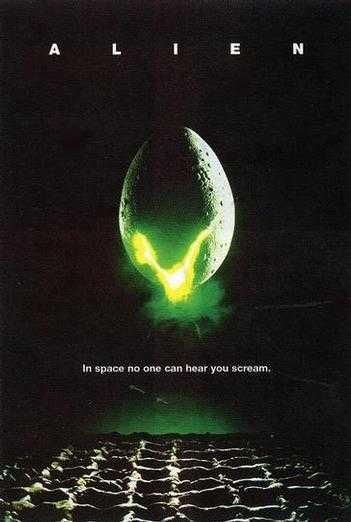
Alien:
Granted, this movie wasn’t exactly under-appreciated, but compared to the lavish attention the rest of the franchise has garnered- even though it was all downhill after Aliens – this first installment truly was the diamond in the rough. Not only did it have a cool concept, awesome set designs and a kick-ass back story, the direction and cinematography captures the story’s sense of dread and claustrophobia perfectly.

Little wonder then why this movie spawned an entire franchise, because it really did have everything. You had your blue-collar peeps working for the major interstellar company (Weyland-Yutani), a frightening discovery made on an uncharted planet, a mysterious derelict belonging to an unknown race, and a terrifying creature awakened from its slumber. And not just any kind of creature, but a complex symbiote that was designed for and possessed of a single purpose.

Or as Ash put it: “Perfect organism. Its structural perfection is matched only by its hostility.” He had a point didn’t he? In fact, all structures in this movie were pure genius, whether it was the Nostromo, the Derelict, or the Facehugger and Chestbuster combo. As with everything Scott does, attention to detail and the careful construction of a universe was paramount. Every set was richly detailed, well shot, and clearly made to elicit the right feel and impressions on the audience.

Much of the credit for this goes to H.R. Giger as well, the surrealist artist who brought Lovecraftian horror to the alien concept and set of the alien ship. Years later, I still find myself tuning in just to get a glimpse of that Gothic reconstruction, or to see the Space Jockey sitting in its chair, the tell-tale hole punching through its chest. Few movies have managed to capture that same sense of awe and wonder for me, with the possible exceptions of 2001 and Akira

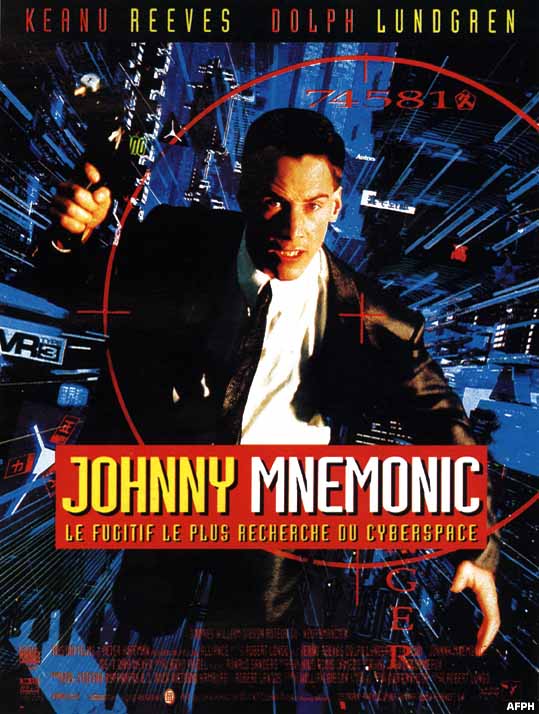
Johnny Mnemonic:
Some people might think I’m crazy for listing this movie as a personal classic, but it can’t be helped! And my reasons are pretty simple. On the one hand, this movie kind of has that “so bad, it’s good” thing going on, but at the same time, I also felt it possessed some real signs of quality. Sure, the acting was pretty wooden, the fight choreography total crap, and the low-budget nature apparent throughout. But it was still a pretty faithful adaptation of Gibson’s work and introduced to that world at a still-young age. Hence why I come back to it every few years just to see it again.

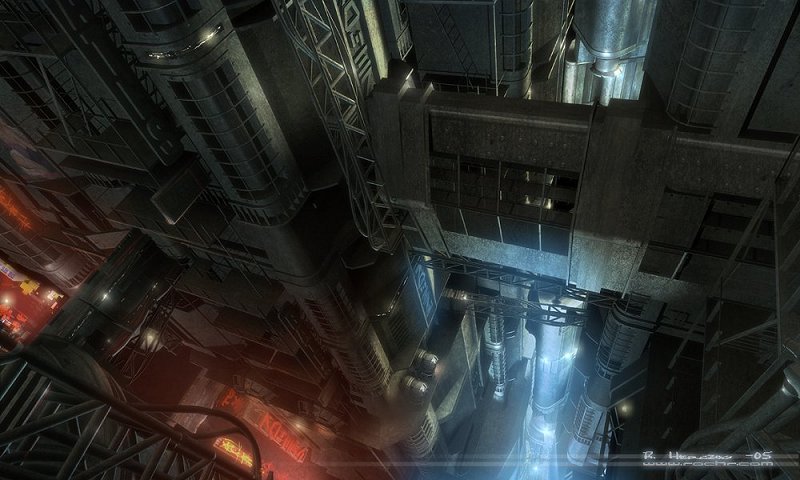
Filmed in the mid-90’s, this movie is an adaptation of the short story by William Gibson and previewed a lot of what he wrote in Neuromancer. For example, you’ve got the big bad corporations, the cyberspace jockeys, freelance assassins, Yakuza, and the character Molly Millions. Things are also set in “The Sprawl”, the megapolis that stretches from Boston to Atlanta and is contained in geodesic domes, and the look and feel is definitely of the cyberpunk variety.

Into all this, Gibson introduced the revolutionary concept of mnemonic couriers, people who have “wetwire” implants in their brains that allow them to carry vast quantities of data from point A to point B. Basically, these couriers are the answer of what to do in a world where information is the most precious commodity, and all databases are vulnerable to hacking and protected by “Black ICE” – hostile Intrusion Countermeasure Electronics (aka. viruses)

And, in keeping with Gibson’s style, the story involves a titanic corporation that is fighting to maintain its monopolistic grip, while freelancers, smugglers and assorted little people are fighting to undermine them and distribute the information freely. Naturally, the main character of Johnny is an unlikely hero who is forced to take a break from looking out for number one and help others for a change. Might sound cheesy, and a little cliche, but it works and delivers on Gibson’s style. At the very least, it’s a guilty pleasure flick for me.

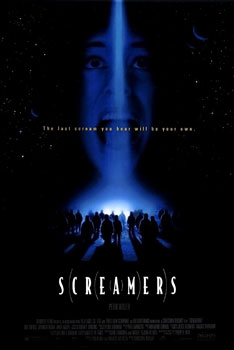
Screamers:
Now here’s a movie that’s high on the pleasure, low on the guilt. While a low-budget sci-fi flick that was (like Johnny Mnemonic) produced and filmed entirely in Canada, it had many signs of quality that immediately made it a cult hit. There’s the post-apocalyptic setting, the frightening tone, and the Cold War feel of the thing, updated for the 90’s. All the while, there is the knowledge that this is an adaptation of Philip K. Dick’s Second Variety, which sort of makes it a must-see of PKD fans.

Much like in the original story, the plot of the film involves a race of self-producing, self-upgrading machines that are designed to infiltrate enemy territory and eliminate all combatants. But of course, things begin to go awry when the people who produced them realize that they have upgraded to the point where they can impersonate human beings. And whereas the original story was set on Earth and took place between the US and Russia, the updated story takes place on Sirius 6b, a pining planet that became the front line between a the political-economic entity known as the NEB  and those who chose to resist its rule.

Personally, I felt the updated version works. Not only does the conflict seem more relevant, being between a mega-corporate entity and a coalition of workers and dissenters, but the off-world setting also feels more realistic. Perhaps it was the fact that in the post-Cold War world, nuclear war between two superpowers didn’t seem a likelihood anymore. Or it could just be that the whole NEB angle was reminiscent of Weyland-Yutani and Alien. All I know is, I liked it!

What’s more, a good deal of attention went into creating the setting and modelling the Screamers – aka. the automated machines that kill people. Designed to be the perfect terror weapons, they emit a high-pitched “scream” before making their attack, and can toy with their targets for some time before moving. This concept, combined with some good shooting, really created a sense of tension which is felt throughout. And of course, the paranoia which is engendered by the appearance of human-like machines was a very nice touch! A good movie, and a fitting adaptation which managed to capture PKD’s cautionary tale about the dangers of runaway progress.

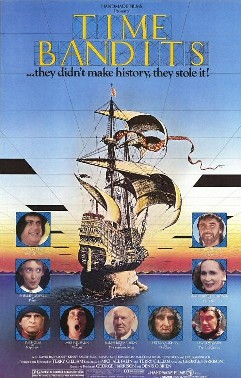
Time Bandits:
And last, here is the classic time traveling tale that I first saw in my childhood. Recently, my wife was told by a coworker that she should ought to see it, and my memory was jogged! Yes, this is indeed a cult classic, and one which is deserving of plenty of kudos and praise. Well cast, well written, witty and poignant, it’s one of those quintessential 70’s movies which has been rediscovered by several generations of film buffs and sci-fi fans.

The story opens with an imaginative and historically-minded child who lives in an overly-bourgeois neighborhood with his materially-possessed family. But upon realizing that there is a time-portal in his wall and that people from the past and future can come through it, his world is turned upside down. Quickly, he become the unwitting companion in a group of dwarves who are traveling through time, stealing precious artifacts, and being pursued by both the “Supreme Being” and an evil sorcerer.

Immediately, one can see the layered and inspired plot taking shape here. On the one hand, you have some decidedly Judea-Christian elements, plus a tale of childhood imagination and escapism. The dichotomy of the Supreme Being who possesses the power of time travel and the sorcerer who wants it for himself are representative of God and Lucifer, after a fashion. The dwarves who stole this power for themselves are a sort of Icaran allegory, or possibly Adam and Eve once they ate from the tree of knowledge. And ultimately, the way they are saved in the end from evil represents their redemption.

All the while we are left wondering if the boy is merely dreaming, or if what he is experiencing is real, which is an element that is intrinsic to all tales of childhood fantasies. On the one hand, the protagonists flights of fancy are seen as a weakness and immaturity to those around them, whereas we tend to see as it a rare gift to see past the surface. Should it all be a fantasy, then the story is left without a formal sense of resolution; but if it is real, then the hero has been vindicated and proven right. Appropriately, the movie plays with the two possibilities, going back and forth, but then giving strong hints at the end that it was in fact real. So really, you have a story that is inspired, imaginative, and also suspenseful!

___

Well, that’s my top ten list for the best cult classic movies of all time. What’s yours? I know I have a few in common with some people ’round these parts, and I also know that a few were previously unheard of. Hence why I want to here from others. I have a feeling there are some which I need to see and would very much enjoy. Already, I’m poised to watch Sunshine, A Boy and His Dog, and a few others which I’ve heard good things about. And I hope that in the course of swapping lists, I might be able to find a few more I’d like to see. Take care, and enjoy the rest of the long-weekend, those of who are reading this in Canada. As for the Yanks in the audience, and the rest of the world for that matter, enjoy the work week 😉

The Future Is Here: The EyeTap

There has been some rather interesting and revolutionary technology being released lately, and a good deal of it involves the human eye. First, there was the Google Glasses, then there were the VR contact lenses, and now the new EyeTap! This new technology, which is consistent with the whole 6th sense computing trend, uses the human eye as an actual display and camera… after a fashion.

Used in conjunction with a portable computer, the EyeTap combines the latest in display technology and Augmented Reality which allows for computer mediated interaction with their environment. This consists of the device taking in images of the surrounding area, and with the assistance of the computer, augment, diminish, or otherwise alter a user’s visual perception of what they see.

In addition, plans for the EyeTap include computer-generated displays so the user can also interface with the computer and do work while their AFK (Away From Keyboard, according to The Big Bang Theory). The figure below depicts the basic structure of the device and how it works.

Ambient light is taken in by the device just as a normal eye is, but are then reflected by the Diverter. These rays are then collected by a sensor (typically a CCD camera) while the computer processes the data. At this point, the Aremac display device (“camera” spelt backwards) redisplays the image as rays of light. These rays reflect again off the diverter, and are then collinear with the rays of light from the scene. The light which the viewer perceives is what is referred to as “Virtual Light”, which can either be altered or show the same image as before.

While the technology is still very much under development, it represents a major step forward in terms of personal computing, augmented reality, and virtual interfacing. And if this sort of technology can be permanently implanted to the human eye, it will also be a major leap for cybernetics.

Once again, Gibson must be getting royalties! His fourth novel, the first of the Bridge Trilogy, was named Virtual Light and featured a type of display glasses that relied on this very technology in order to project display images in the user’s visual field. Damn that man always seems to be on top of things!

And just for fun, here’s a clip from the recent Futurama episode featuring the new eyePhone. Hilarious, if I do so myself!


Immortality Is On The Way!

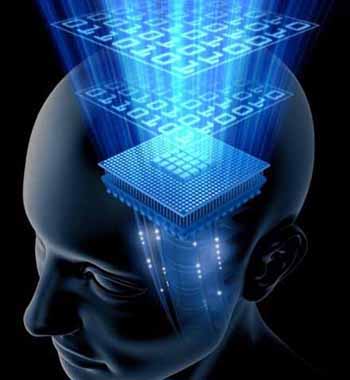
William Gibson must get a kick out of news items like these. According to a recent article over at IO9, it seems that an entrepreneur named Dmitry Itskova and a team of Russian scientists are developing a project that could render humans immortal by the year 2045, after a fashion. According to the plan, which is called the 2045 Initiative, they hope to create a fully functional, holographic avatar of a human being.

At the core of this avatar will be an artificial brain containing all the thoughts, memories, and emotions of the person being simulated. Given the advancements in the field of computer technology, which includes the Google Neural Net, the team estimates that it won’t be long before a construct can be made which can store the sum total of a human’s mind.

If this concept sounds familiar, then chances are you’ve been reading either from Gibson’s Sprawl Trilogy or Ray Kurzweil’s wishlist. Intrinsic to the former’s cyberpunk novels and the latter’s futurist predictions is the concept of people being able to merge their intelligence with machines for the sake of preserving their very essence for all time. Men like Kurzweil want this technology because it will ensure them the ability to live forever, while novelists like Gibson predicted that this would be something the mega-rich alone would have access to.

Which brings me to another aspect of this project. It seems that Itskova has gone to great lengths to secure investment capital to realize this dream. This included an open letter to roughly the world’s 1226 wealthiest citizens, everybody on Forbes Magazine’s list of the world’s richest people, offering them a chance to invest and make their mark on history. If any of them have already chosen to invest, it’s pretty obvious why. Being so rich and powerful, they can’t be too crazy about the idea of dying. In addition, the process isn’t likely to come cheap. Hence, if and when the technology is realized, the world’s richest people will be the first to create avatars of themselves.

No indication of when the technology will be commercially viable for say, the rest of us. But the team has provided a helpful infographic of when the project’s various steps will be realized (see above). The dates are a little flexible, but they anticipate that they will be able to create a robotic copy of a human body (i.e. an android) within three to eight years. In eight to thirteen, they would be able to build a robotic body capable of housing a brain. By eighteen to twenty-three, a robotic humanoid with a mechanical brain that can house human memories will be realizable. And last, and most impressive, will be a holographic program that is capable of preserving a person’s memories and neural patterns (aka. their personality) indefinitely.

You have to admit, this kind of technology raises an awful lot of questions. For one, there’s the inevitable social consequences of it. If the wealthiest citizens in the world are never going to die, what becomes of their spoiled children? Do they no longer inherit their parent’s wealth, or simply live on forever as they do? And won’t this cramp this style, knowing that mommy and daddy are living forever in the box next to theirs?

What’s more, if there’s no generational turn-over, won’t this effect the whole nature and culture of wealth? It is, by its very nature, something which is passed on from generation to generation, ensuring the creation of elites and their influence over society. In this scenario, the same people are likely to exert influence generation after generation, wielding a sort of power which is virtually godlike.

And let’s not forget the immense spiritual and existential implications! Does technology like this disprove the concept of the immortal soul, or its very transcendent nature? If the human personality can be reduced to a connectome, which can in turn be digitized and stored, then what room is left for the soul? Or, alternately, if the soul really does exist, won’t people who partake in this experiment be committing the ultimate sin?

All stuff to ponder as the project either approaches realization or falls flat on its face, leaving such matters for future generations to ponder. In the meantime, we shouldn’t worry to much. As this century progresses and technology grows, we will have plenty of other chances to desecrate the soul. And given the advance of overpopulation and climate change, odds are we’ll be dying off before any of those plans reach fruition. Always look on the bright side, as they say 😉

Mona Lisa Overdrive

Welcome back to the BAMA*! At long last, I’ve come to the end of William Gibson’s Sprawl Trilogy. For those who don’t remember, this began with Neuromancer and Count Zero many months ago. I had hoped to include this third and final review in short order, unfortunately other books got in the way. And by other books, I mean a tall stack that I’ve been reading, reviewing, and putting down to make room for even more! I tell ya, being a sci-fi reader/writer/reviewer can really burn your brain somedays!

Luckily, I concluded the book just yesterday and am ready to comment on it at last. And let me begin by saying that it’s very interesting, having read every novel that Gibson has written up until this point, to look back and see how his writing began and evolved over the years. It is also interesting to see how certain thematic elements which would appear in later trilogies – i.e. The Bridge and Bigend trilogies- made their first appearances.

Elements common to cyberpunk, such as high-tech and low liing, were common to all three books in this series, but were also an intrinsic part of Virtual Light, Idoru and All Tomorrow’s Parties. The stark divide between rich and the poor and the transformative power of wealth, so important to the Bigend Trilogy, was also to be found in these earliest works. And of course, stories focusing on freelancers who find themselves in the employ of enigmatic figures, and the power plays that go on behind the scenes between various brokers, were present in all of his novels to date.

However, after completing this novel, I can honestly say that I felt let down. Prior to reading it, I was told that it was the greatest of the Sprawl Trilogy, and the reviews claimed that it was Gibson’s “most engrossing story to date”. I came away feeling that it was less than engrossing and definitely not the best of the three. For one, it seemed lacking in much of the cool elements that made Neuromancer and Count Zero so very fun and intriguing.

However, before I get into all that, I should summarize what this book is about. Here goes…

Plot Synopsis:
The story, much like all of Gibson’s works, contains multiple threads that are interrelated and come together in the end. In the first, we see a Japanese girl named Kumiko, the daughter of a Yakuza boss who has decided to send her to London in the midst of a war between the various crime families.Her only companion is a construct named Colin, a personality that inhabits a portable Maas-Neotek biochip.

Once there, she makes the acquaintance of a freelancer named Sally Shears (aka. Molly Millions) who has been hired out by her father’s people to keep her safe. In addition, Sally is being blackmailed by Swain, the head of the London mob, who has ordered her to kidnap the famous simstim star Angie Mitchell and replace her with the a body double.

In thread two, we meet the intended double, a 16-year old prostitute named Mona from Florida who travels to New York with  Eddie (her pimp) after he closes some lucrative deal. However, when they arrive, Eddie is killed and Mona is forced to undergo the surgery that will make her look exactly like Angie, whom she knows from all her simstim movies and admires greatly. Angie’s back story, about how she was the daughter of the man who invented biochips and placed bioenhancements in her brain (all of which takes place in Count Zero) is all recounted, as is her failed relationship to Bobby (aka. “The Count”).

In thread three, we learn that Angie has returned from rehab after developing an addiction to a designer drug her company was supplying. After a brief stay in Malibu, she learns that it was someone in her inner circle who was giving her the drug in the hopes that it would alter her brain chemistry, thereby disrupting her ability to access cyberspace and communicate with the AI’s now living there (the lao, or Voodoo god personas the AI’s had taken on).

In the fourth and final thread, we are introduced to three residents who live together in an abandoned factory located in “The Solitude”, an uninhabited area in the Sprawl. Gentry is the defacto owner of the place, a cyberspace jockey preoccupied with the way it has changed since events in Neuromancer where AI’s began to permeate it. Slick is his roommate, a robotics enthusiast who builds giant battledroids with the help of his friend redneck friend Bird.

Things for them become interesting when Slick’s associate, Kid Afrika, drops off a man who’s permanently jacked into cyberspace and asks them to take care of him. He leaves the man (Bobby Newmark) and a registered nurse (Cherry) with instructions to keep them safe. After examining the aleph (a biochip with immense capacity) that he’s plugged into, Gentry learns that it is an approximation of the whole data of the matrix.This is where he has been living for the past few years after breaking up with simstim star Angie Mitchell.

In the course of the story, we also learn that Lady 3Jane has died and now inhabits the aleph as a construct. At some point, Bobby stole the aleph and now inhabits it with her. After checking in with her jockey friend, Tick, in London, Molly learns that 3Jane is behind the plot to kidnap Angie Mitchell and replace her, and begins to work to unravel these plans. She travels to New York to meet with the Finn, himself a construct now, and learns that since her operation to Straylight, things have been changing drastically in cyberspace.

Now, 3Jane is looking for revenge, and Angie is intrinsic to that plot. After recruiting Swain and key members of Angie’s entourage to help her, she attempts to conduct the kidnapping while Angie is in New York. However, Molly intervenes and grabs Angie and Mona, who is being set up to replace her, and begins to travel to the Solitude. Angie, under the influence of the lao, is directed to Factory to reunite Angie with Bobby.

Meanwhile, Kumiko, who is alone in London, goes to find Tick and find out what’s going on. Ever since Molly left, she is advised by her Maas-Neotek construct Colin to seek refuge from Swain. When she finds him, she too learns about how cyberpsace is changing and how a massive data profile has entered into the matrix (which turns out to be the aleph). When they jack in, they are pulled into the aleph with 3Jane who attempts to hold them prisoner.

Things come together when Molly arrives in the Factory and Sense/Net mercenaries begin to show up to take Angie back. Meanwhile, in the aleph, Colin comes to their rescue by neutralizing 3Jane’s control over the construct. He also reveals 3Jane[‘s motivations. In the wake of her death, after a life of pettiness, greed and obsessive control, she has become jealous of Angie Mitchell and her abilities. Molly, since they know each other from the Straylight run, is pretty much on her shit list as well!

In the end, Angie Mitchell and Bobby die together, but not before their personalities come together in the aleph, to be forever joined by 3Jane and the Finn. Mona is picked up Kid Afrika who assumes that she’s Angie Mitchell, and is taken off to take over her starlet life. Molly takes the aleph and travels off into the distance while Slick and Cherry get together and head off to start a new life together. And finally, Gentry, who refused to leave Factory, stays behind to contemplate the matrix’s growing complexity.

Meanwhile, a final mystery is resolved. Inside the aleph, Angie, Colin and Bobby are picked up by the Finn who explains how and why the Matrix changed. After Neuromancer and Wintermute at the end of the first novel, the combined AI indicated that there was another like him, a construct similar to the Matrix in Alpha Centauri. Apparently, after he went there, he came back changed and divided into the lao, and the Matrix itself changed. Now, the Finn is taking them there, to meet the alien cyberspace and all the mysteries it holds…

Summary:
As I may have said already, this book was my least favorite of the Sprawl Trilogy. That is not to say that I didn’t enjoy it, mind you. But it was diminished in that Gibson’s usual dark, gritty, and decidedly cyberpunk style – which ranges from opulent to gothic in its appraisal of technology and its impact on society – seemed to be watered down by a much cleaner narrative. In the end, it felt more like reading from the Bigend Trilogy, in that the settings and feel were quite similar.

Aside from taking place largely in London and New York, there was also a lot of buildup and not much in the way of action. And of course, the diversions into the fields of fashion, mass media and the cult of personality; these too felt like they would have been much more at home in the Bigend Trilogy. That was the trilogy that dealt with all these elements, whereas the Sprawl was all about the nitty-gritty, about cool gadgets, mercenaries, cyber-ninjas, deck jockeys, corporate bad guys, high-tech and low-life.

To top it all off, the ending felt quite abortive. Gibson is somewhat notorious for this, but whereas Neuromancer and Count Zero contained plenty of gun-toting and cyberspace runs, this book kept all the action til the very end. And at that point, it was complicated by a rather odd narrative structure and some pretty weak explanations. After learning that 3Jane was pulling all the strings and determined to wreak revenge, it seemed weak that it was all for the sake of punishing Angie out of jealousy.

If anything, I thought her motivations had to do with the Straylight run. That after fifteen years of waiting and plotting, she finally found Molly and decided to kill her and anyone else involved in changing the Matrix. To know that it was motivated by her jealousy of Angie’s abilities just rang hollow. In addition, I thought the usual motivations, like how the wealthy are constantly trying to cheat death, might have been a fitting motivation. I seriously thought at one point that her true intentions were to find herself a vessel, and Angie Mitchell proved to be the perfect choice due to the veves in her hand. Through these, 3Jane could simply download herself, provided she had her in custody and hooked up to the aleph… or something.

However, there was plenty of interest in between all that. While many chapters kind of dragged for me, I did enjoy the scenes where the history of the Tessier-Ashpool clan were reconstructed. The revelation about the Alpha Centauri matrix, which was only hinted at at the very end of the Neuromancer was also very cool. And the detailing of the lao and the evolution of the Matrix since Wintermute and Neuromancer came together, that too was interesting. In the end, I just wished there had been more of this.

And given that this novel did wrap up the previous two novels and brought closure to the whole Sprawl trilogy, I would highly recommend it. Regardless of whether or not it was the best or weakest of the three books, it is the final chapter and contains many important explanations and resolutions, without which the series would never be complete. On top of all that, it is hardly a weak read, and I know for a fact that many people consider it to be better than the others. So who am I to stand in anyone’s way of reading it?

Kudos to you William Gibson. I have now read every novel you wrote. I now move on to Burning Chrome and Johnny Mnemonic, plus any other bits of short fiction and thoughtful essays I can get my hands on. Despite all the little things I have come to criticize about your work, you remain one of the best and most important writers in this reader’s bookshelf! And if I really didn’t like you, why the hell do I model so much of my work on your prose? Like Aeschylus said of Homer, any work of mine dealing in cyberpunk and high-tech is pretty much the crumbs from your table!

Good day and happy reading folks!

What’s On…

If you’re like me, and suffer from what I assume is a form of literary ADD – where you can’t seem to commit to reading, or writing, one thing at a time – then it helps to take stock once in a while and make a list. At other times, its disconcerting, like whenever I check out my Goodreads account and see that a book I cracked over a year ago is still on my “Currently Reading” list.

But today I thought I’d combine that list with my list of upcoming reviews. As I’m sure I mentioned in a previous post or two, this vacay has been pretty good for scoring new books. I got some long 0verdue ones and managed to find at least one that has come highly recommended. To ensure that they don’t wind up in my pile, partially read and collecting dust, I thought I’d make a definitive list. That oughta help my ADD!

Editor’s Note: The author of this article is not a physician or psychiatrist and has no medical credentials whatsoever. He is thus in no position to diagnose, either in himself or others, any form of ADD or its hyperactive cousin, ADHD.

  1. Mona Lisa Overdrive – the final book in the Sprawl Trilogy by William Gibson. Due to diversions in reading The Hunger Games, Second Foundation and a slew of others, this book has remained opened far longer than it had to have been. I hope to finish it this or next week.
  2. Second Foundation – the third installment in the Foundation series, which I have been meaning to read for some time. As the (sort of) conclusion to the Foundation saga, and after reviewing the first two, it was only fitting that I find and tackle the third book. I say sort of because decades after finishing this third novel in the series, Asimov would finally cave to demands that he return to the series with three more books. Fans and publishers, what can you do?
  3. Martian Chronicles – this book I just picked up last week. After years of hearing great things and wanting to get into it, I finally procured a copy and began devouring it. I got half way through before the wife and I got back to civilization and it was forced to take its place in the queue. It’s a testament to Bradbury’s old school, accessible, yet still high-minded style that you can read through his works quickly and still feel like you’ve digested a lot. I look forward to finishing this one and borrowing freely from it 😉
  4. A Feast for Crows – my reading of this fourth installment in the Game of Thrones series has stalled for a few reasons. One, I got a little tired after the first three books, especially since all the main characters keep dying! Second, after three books of excitement and climactic battles, George RR Martin seemed to think that was needed was a book that contained all the scraps. Not a bad read by any measure, but it’s kind of like a serving of leftovers after three sumptuous banquets.
  5. We – the classic of classic by Yevgeny Zamyatin. Again, I cracked this book a long time ago and haven’t been able to get into it due to the myriad of books that have entered and left my reading pile in the interim.  I want nothing more than to finish it and give it its long overdue due! For crying out loud, this man practically invented the dystopian satire and inspired my heroes – Orwell and Huxley. If that doesn’t warrant a read, I don’t know what does!
  6. The Giver – here’s a book that my wife has been recommending for ages! Considered to be a classic of YA fiction, this novel is certainly a must-read for those looking to stay current on the genre. Having found a copy at my local Coles, right next to City of Ember, I decided it was time to have a looky-loo so that I knew what I was talking about next time I chose to include it in a review of current utopian/dystopian lit.
  7. Red Mars – holy crap has this one been on my shelf for a long time! I can’t tell you how many times I’ve picked it up and put it down. Which is really too bad. It’s definitely one of the more profound sci-fi books that I’ve ever read, but somehow, the style lends itself to a certain inaccessibility for me. I do enjoy reading it, but find that it doesn’t quite happen easily or organically. In that respect, Kim Stanley Robinson is not unlike William Gibson for me. I know I want to hear from them, and I do get through their books, but not with the ease and grace that I would something by Bradbury or Asimov.
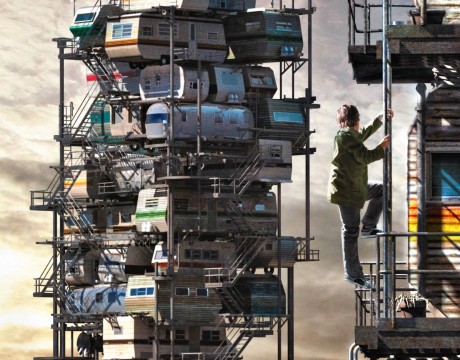
  8. Ready Player One – this one I bought alongside The Giver because I thought it was time to invest in something new. I tend to be reserved about buying the works of new authors, mainly because I don’t invest time and money in something which might prove to be disappointing or a flavor of the month kind of thing. However, I said ‘screw it’ this time around and picked this one up. And lo and behold, I discovered that it is actually a quite famous read, with the entire back of the dust jacket dedicated to the heaps of accolades that have been piled on it. Not only was it a manager’s pick at the Coles, it also comes recommended by my peeps over Io9.com. Them folks know their sci-fi, so I’m glad I went with my gut and checked this one out!
  9. Starfire – this hard sci-fi novel, by Charles Sheffield, is actually one I picked up in a laundry room at the park where my wife and I were staying in Lund. We had just returned from camping, were in the process of returning to civility (with showers and other amenities) and realized we still didn’t have anything to read! So I took a gander at this one, and after seeing that it was endorsed by Kim Stanley Robinson, I gave it a chance. I only got about 70 pages in before we had to leave and I chose not to take it (having nothing to exchange), but I was wrapped up enough in the plot that I decided I’d get a copy as soon as I could. Still looking, might have to go Amazon or Kindle on this bad boy, but I don’t intend to let it slip. The plot, which involves the creation of a massive orbital shield after A/B Centauri goes supernova, is quite interesting, and constructed using the latest in astronomical data. Check it out if you can!

Well, that about does it for me. Nine books in the reading list, not so bad. I could think of some more but… seriously, who the hell wants that kind of responsibility 😉

Upcoming Movies that Aren’t Reboots

Believe it or not, Hollywood actually has some movies that are now playing, or coming in the near future, that are not just reboots, reimaginings, or rehashings of old ideas. Much of this info comes from the online source Io9, and I have to say, I was quite impressed. To know that original ideas and long-overdue adaptations are actually in the works… wow. Still, don’t expect that this makes us even Hollywood! You’ve still wasted a ton of my and a good deal more people’s time and money!

Anyhoo, onto the list of coming or playing attractions:

Safety Not Guaranteed:


A time-traveller takes out an ad in the paper, looking for a companion to go back in time with him. A journalist, played by deadpan comedian Aubrey Plaza (of Parks and Recreation, Scott Pilgrim versus the World and Funny People), is tasked with finding a man who’s taken out the ad and determining just what his deal is. As time goes on, she becomes infatuated with the man because of his sincerity and the fact that he’s a true believer.

Produced by the same people who brought you Little Miss Sunshine and based on an actual ad, the movie explores the fine line between cynicism and realism, truth and belief. In the end, it remains a mystery whether or not the man is for real, and whether or not he is a harmless eccentric or a total nut! This movie has already been released and was screened at the 2012 Sundance Film Festival where it won the Waldo Salt Screenwriting Award.

The Prototype:


A story of a humanoid robot that contains the consciousness of its designer, a man obsessed with achieving the Singularity, as predicted by men like Ray Kurzweil. After a successful run where his mind is placed into “the prototype” robot, it escapes from its facility and is chased by government agents who believe it to be a malfunctioning military drone. Though it does look a tad cliche and over the top, it nevertheless explores some issues which are only increasing in relevance and getting closer and closer to being real.

Enders Game:
I’m not kidding! After decades of waiting, it seems that sci-fi geeks and Card fans will finally be getting a chance to see Ender adapted to the big screen. As someone who thoroughly enjoyed the original, but never got into the sequels, I can tell you that I will be waiting on this movie’s Nov. 2013 release date with eager anticipation.

According to the buzz, Director Gavin Hood (of Tstosi, Rendition and X-Men Origins:Wolverine) is taking great pains to keep it as loyal to the book as possible. In addition, such big names as Harrison Ford and Ben Kingsley are attached to play Colonel Graff and Mazer Rackham, and Asa Butterfield (of Hugo fame)will be playing the lead role of Ender Wiggin.

Life of Pi:
Now this is one I didn’t expect to see on the silver screen! Director Ang Lee, who brought us such hits as Crouching Tiger, Hidden Dragon, Brokeback Mountain and The Hulk will be directing this adaptation of Yann Martel’s magical novel about a boy, a lifeboat, and a handful of animals as they visit a strange island.

World War Z:
Not surprisingly, all this zombie-fanaticism of late has encouraged the good folks in LA LA land that it’s time to adapt one of the best zombie novels of all time. Written by Max Brooks, son of famed comedian Mel Brooks and master of all things zombie, the book tells the oral history of the Zombie War and was released as a follow-up to his satirical The Zombie Survival Guide.

According to the studio-related buzz, Marc Forster (Finding NeverlandThe Kite Runner, and Quantum of Solace) is slated to direct it, Michael Straczynski (creator of Babylon 5) is attached as a screenwriter, and actor Brad Pitt will be starring as the film’s protagonist. Clearly, these folks aren’t pulling punches with this adaptation. I look forward to seeing it sometime in 2013!

Hansel and Gretel: Witch Hunters
Look what you started, Abraham Lincoln: Vampire Hunter! Or was it you Snow White and the Huntsman with your decidedly violent take on a children’s classic? Perhaps it was Seth Grahame-Smith with his Pride and Prejudice and Zombies! I don’t know who’s to blame, but for some reason, it seems that fairy tales, classics of western lit and history are all getting the Buffy treatment these days.

But I digress, Jeremy Renner of The Avengers and the new Bourne Legacy movie stars alongside Gemma Arterton (Quantum of Solace and Clash of the Titans) in this sequel to the classic fairy tale. Apparently, the story takes place 15 years after the traumatic gingerbread house incident, and the now grown-up pair have become a leather-wearing witch hunting duo. Let’s just hope the producers of Van Hellsing don’t sue for plagiarism!

Neuromancer:
I almost jumped out of my seat when I read about this one, but then I noticed the production notes where it said that this movie hasn’t even been green-lighted yet. Ah well, fingers crossed it get’s made, because it would be about freaking time! Much like with Enders Game, fans of this sci-fi, cyberpunk classic have been waiting FOREVER to see a film adaptation! Several attempts have been made, but none have gotten off the ground.

But some details are forthcoming. For one, Vincenzo Natali, the brilliant Canadian writer/director who brought us Cube and Splice, is rumored to be the man who will direct this bad boy, should it ever get made. No other news yet, but my ear is firmly pressed to the ground and I will find out if it’s happening. Bank on it!

Snow Crash:
And another sci-fi movie that’s long overdue, but can never seem to get made! Well, it seems that writer/director Joe Cornish (Attack of the Block and The Adventures of Tin Tin) is set to adapt Neal Stephenson’s post-cyberpunk novel about the near future where America has been privatized, “franchulates” run everything, and a lone hacker named Hiro Protagonist investigates a potent new drug that infects users with a computer virus.

As a long0time fan of Stephenson’s, I for one will be awaiting this movie too with eager anticipation. In fact, I can scarcely believe that so many of my literary favorites are being adapted at the same time. One would think this was just a big tease, or some massive karmic payback!

Fingers crossed, people! Fingers crossed!

Happy Canada Day!

Hello and welcome to my Canada Day post! As it is the True North’s national birthday – commemorating the day when the original provinces came together and agreed on Confederation, the first act of national building and quasi-declaration of independence – I thought it fitting that I do a post honoring Canada’s contribution to the field of science fiction. The list is extensive, contrary to what you might you think, and includes some of the most critically acclaimed examples of literature, film and television in this genre. But like most things Canadian, it suffers from a potential lack of recognition. Well, I, as a patriotic (but not nationalistic!) individual, shall do my part to promote. Hell, one day I want to be on this list, so I better make sure people know about it 😉

First up, movies that were filmed, directed and produced right here in Canada, eh!

Scanners (1981):
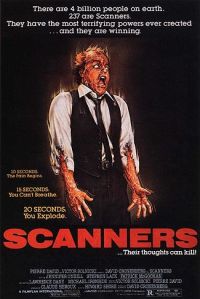
This film, directed by David Cronenberg, is considered a cult classic amongst fans of sci-fi and horror alike. In this movie, “Scanners” are people that exhibit powerful telepathic and telekinetic abilities who are being sought out by a corporation named ConSec, a purveyor of weapons and security systems. Ostensibly, their purpose is to register scanners so the public can be protected from them, but it is clear that they have a nefarious agenda as well.

The story revolves around two rogue scanners, the dangerous Darryl Revok (played by Michael Ironside) and the reclusive Cameron Vale (Stephen Lack). After a “demonstration” goes terrible wrong where Revok causes Dr. Ruth – head of ConSec’s scanner section – to explode, ConSec becomes dedicated to finding all rogue scanners and stamping them out. On their radar is Revok, a known and powerful scanner who is a homeless transient, moving from place to place in the hopes of staying ahead of corporate spies.

In the end, Vale finds himself trapped between Revok’s renegade faction on the one side and ConSec’s goons on the other. In the end, he is captured by Revok and learns that they are brothers, that Ruth is their father, and that all scanners are the result of drug trials involving pregnant women and ephemerol. This drug, which was designed to combat morning sickness (echoes of thalidomide), is the same one which they now use to control scanners.

Revok’s plan is to now use a captured shipment of the drug and administer it to countless pregnant women worldwide, thus creating an army of scanners. When he learns of this, Vale and Revok begin to fight each other using their powers. In the end, Vale defeats his brother and then assumes his likeness, thus putting him in charge of the rogue scanners. The story thusly ends on a cliffhanger note, with Vale’s intentions open to speculation.

This movie was not only a cult classic, but very heavily inspired. It’s investigation of psychic abilities, with corporate controllers, rogue telepaths, and drugs used to control them, would all show up in later franchises, particularly Babylon 5. In addition, that head exploding scene is considered an iconic imagine, one which has been referenced many times over on the silver screen. Consider the line from Wayne’s World where Garth appears to be having a nervous breakdown on TV and one of their cronies asks: “Did you see that movie Scanners where the dude’s head exploded?”

Johnny Mnemonic (1995):
Though it was widely considered one of the worst adaptations in science fiction history, Johnny Mnemonic was nevertheless a faithful representation of William Gibson’s original work (also a Canadian). Set in the “Sprawl” of the 21st century, the story is about a mnemonic courier who uses wetwire implants (i.e. cybernetic brain implants) to carry information around illegally. This is apparently a common practice in the world of the future, where corporate control is absolute and the most precious commodity is information.

Enter into this Johnny (Reaves), a courier who is given a job to carry a package that is twice the size of his capacity. He takes it, knowing the risk it will pose to his brain, because he’s looking for that final payoff which will allow him to have his implants removed and his memory restored. This is something all mnemonic carriers must go through, which is the sacrifice of their own memories in order to make room for all the pirated data they carry.

Quickly, Johnny realizes the package he contains is incredibly valuable, as Yakuza close in and murder his contacts. His own boss betrays him as well, forcing him to turn to a freelance ninja named “Sally Shears” (aka. Molly Millions) for help. Like him, she has enhancements which are beginning to mess with her body, and she recommends they get help from her friend Spider. As a doctor, he is used to dealing with nervous system illnesses, particularly NAS (nervous attenuation syndrome).

When they arrive, Johnny is informed that he is the one who hired him, and that the information he carries comes directly from the pharmaceutical giant Pharma-Kom’s labs. It is nothing less than the cure of NAS, and the company will kill to make sure it doesn’t get it out, seeing as how they make billions off of treatment and will lose out if it is cured. The race is then on for Johnny to download the cure onto the open Net, and with the help of a group of counter-culture fighters named Lo-Tek, they manage to do just that.

Though the movie was generally panned by critics and did quite poorly at the box office, it remains a cult classic to many because of its gritty, cyberpunk feel and faithful adaptation of Gibson’s characteristic themes. It also boasted an all-star cast, which included Keannu Reaves (Canuck!), Dolph Lundgren, Takeshi Kitano, Henry Rollins, Ice-T, Dina Meyer, and Udo Kier. On top of that, it also made use of pioneering special effects to give visual representation to Gibson’s concept of “cyberspace”, the movie also contained all the elements he so loves to include in his stories. Freelancers, Yakuza, mega-corporations, mercenaries, cybernetic enhancements, dirty environments, urban sprawl, hackers and techy geeks. This movie had all that, and is required viewing for fans of Neuromancer and Gibson’s Sprawl Trilogy.

Screamers (1995):
Here’s a cult classic I keep coming back to of late! Based on Philip K. Dick’s “Second Variety”, Screamers is another adaptation of classic sci-fi which was filmed, directed and financed here in the Great White North. And I mean that literally since most of the filming took place in a quarry in Quebec during the dead of winter. And though the story was updated for the post-Cold War world, set on a distant planet and being a war between corporate interests and quasi-national forces, the basic elements remained much the same.

Taking place in 2078 on a planet known as Sirius 6b, the story revolves around an ongoing war between two factions who are fighting for control of the planet. On the one side is the NEB (New Economic Bloc), a super-corporate entity that controls mining in outer space. On the other is the Alliance, a resistance formed out of the former miners and scientists from the colony.

After the NEB bombarded the planet with nukes, turning it into a radioactive wasteland that is perennially experiencing nuclear winter, the Alliance resorted to creating devices known as the “Autonomous Mobile Sword”, a race of self-replicating machines built by a self-sustaining underground factory. These weapons, which tunnel underground and use high-pitched sonic blasts to paralyze opponents, carry the nickname of “Screamers”.

The story opens when a NEB representative comes to the Alliance bunker offering a ceasefire. After investigating the situation, the Alliance commander JOe Hendricksson (played by Peter Weller, aka. Robocop) realizes that the war still rages back home and no one cares what happens to them anymore. He decides to take the NEB up on their offer to end the fight on Sirius 6b, but during his trip to the NEB bunker, learns that new breeds of Screamers are out there. After meeting with Jessica (Jennifer Rubin), the NEB mercenary commander, they attempt to investigate the Screamer factory and learn that there are in fact four varieties now, each of which is becoming more human!

They make it back to the Alliance bunker, only to see that it too has been overrun. In the end, only Hendrickson and Jessica survive and begin making their way to the emergency escape shuttle hidden in the nearby mountains. Once there, Hendrickson learns that Jessica herself is a Screamer when an identical model of her appears and attacks them. Apparently, she is the fifth variety and the most advanced model to date, one that bleed, cry, imitate human emotions, and even have sex. Jessica sacrifices herself to protect him, and Hendrickson learns that her mission was to find the escape shuttle and go back to Earth where they could be sterilizing it of all life as well.

This was in keeping with the Screamer new mandate which was to destroy all human life, not just their enemies. However, that ended when Jessica became over-sympathetic to Hendrickson and broke with her original programming, thus demonstrating the most human characteristic of all, that of empathy. Hendrickson then takes the shuttle himself and leaves the planet, bound for Earth, and safe in the knowledge that the Screamers will never get off Sirius 6b.

Thought it differed in many ways from the original PKD short story, the thematic nature of the movie was accurate. You have the idea of the Screamers, the automonous, self-replicating and intelligent machines that are left to their own devices and end up turning on their own masters. You have the concept of runaway technology erasing the line between what is real and fake. Thought it ended on a happy note, unlike “Second Variety” where a machine made it off planet, the movie still managed to deliver on its message. And it was pretty damn scary too boot!

Cube (1997):
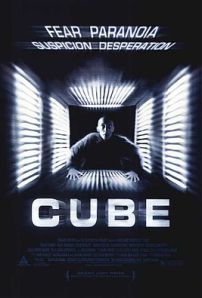
Here is another cult-classic that practically created its own sub-genre in science fiction film making. Directed by Vincenzo Natali and produced by the Canadian Film Centre as its first First Feature Project, Cube became an instant hit due to its paranoid, Kafkaesque feel and psychological thriller tone. Set inside a giant (you guessed it) Cube, made up of countless adjoining rooms that are numbered and contain different booby traps, the story revolves around a series of strangers who wake up inside and must find their way out.

What is immediately apparent to all the characters in the story is that they all possess different abilities and share the same story. Each and every one of them was carrying on with their daily lives, only to wake up and find themselves inside a cube-shaped room. None of them know each other or can remember how they got here, but once they found each other, they agree to work together and find the way out.

Amongst the captives is Quentin (Maurice Dean Wint), a charismatic police officer who takes command, Leaven (Nicole deBoer) a young mathematics student, Holloway (Nicky Guadagni), a doctor and conspiracy theorist, and Worth (David Hewlett), a pessimistic man who refuses to talk about himself. Quentin believes they all have a role to play, Holloway believes they are part of a government experiment, Leaven develops a theory that the room’s numbered in prime are the safe ones, and Rennes follows but seems skeptical of their chances.

As they continue, they find that Quentin’s theory about the prime numbered-rooms is flawed. Tensions also begin to rise within the group because of Holloway’s paranoia, Quentin’s controlling behavior, and Worth’s reticence. The group then experiences a bit of a breakdown, during which time Worth finally reveals that he was one of the architects who helped design the Cube. He never knew what it was for or who even commissioned it, the specs merely passed his desk and he added his own insight. He believes that essentially, the Cube created itself, the result of human stupidity and complacency.

However, Leaven concludes from Worth’s description that the numbers might actually be Cartesian coordinates, and the group begins working its way to one of the outer edges. They also come across a mentally challenged boy named Kazan, who Quentin wants to leave behind by Leaven insists they bring. But in time, their efforts prove futile when another feature of the Cube is revealed, the fact that it periodically shifts its rooms around. Another breakdowns occurs as Quentin becomes paranoid and shows his dark side. After a confrontation with Holloway, he lets her fall to her death, thinking she was out to get him.

The group begins to truly fall apart as Quentin’s true nature is revealed. It seems he is a violent man with a penchant for young girls, the reason why his wife left him with their kids. He begins to run the group through bullying and fear. But a ray of hope emerges when Leaven concludes that the numbers are not primes or coordinates by powers of prime numbers. She cannot calculate them, but the mentally challenged boy Kazan – an apparent autistic savant – can. They continue on their way and Worth incapacitates Quentin, who has now gone completely insane.

Eventually, they find their way to the outer edge and prepare to leave, but Worth wonders if it’s worth it considering that there is nothing out there but “boundless human stupidity”. They are about to step out when Quentin sets upon them. Leaven jumps in to help, and the three are pulled back in as the room’s once again shift. Kazan is left alone to walk out into the light of day, free of the Cube.

Where to begin? This story was a masterful piece of psychological thriller and paranoid fantasy! The fact that we never truly learn who built the Cube, what purpose the “test” really served, and the possibility that complacency and ineptitude is what built it not only makes for a mysterious story, but a big, fat existential allegory! For in the end, are we not all prisoners within a giant maze we can’t discern, who’s maker is unknown and who’s purpose in indistinct? Calling to mind Kafka, Sartre and the “Allegory of the Cave” – a la Socrates – these movie was not only a nail-biting thriller but a fittingly dark philosophical commentary.

Last Night (1998):
Filmed and set in Toronto by writer/actor/director Don McKellar, this apocalyptic sci-fi film tells the story of the last night on Earth, and shows various people choose to spend it. Though the date is not specified, and no explanation is given as to what calamity will be bringing the world to an end, it is made abundantly clear that it will be coming at the stroke of midnight, leaving everyone in the story only a few hours with which to live life to the fullest.

Naturally, the streets are filled with people who have decided to riot, loot and generally wreak havoc. But the main focus of the story is on the lives of various intersecting characters who have chosen to use their time more constructively. One is Patrick (played by McKellar himself), who lost his wife not long ago and is spending the time saying goodbye to family and friends, but who seems to want to spend the last of it alone.

His best friend Craig (Callum Keith Rennie) chooses to spend it in a non-stop sexual marathon as he attempts to fulfill every possible erotic desire he has, not to mention those of his partners. This includes having sex with his former French teacher, a black woman, a virgin, and just about any other scenario he can think of. When Patrick comes to say good-bye, he clumsily tries to encourage him to have sex with him as well. Patrick awkwardly declines, but Craig manages to get a sustained kiss out of him before he goes.

Meanwhile, Sandra (Sandra Oh), who has become stranded in the streets, meets up with Patrick and they get to talking. After realizing their time is short and they have only each other to spend their last hour with, they begin talking and sharing. Many times over, she insists that Patrick open up, saying “make me love you”. They agree to a suicide pact on the roof, listening to “Guantanamera” and drinking wine. In the end, they cannot shoot each other and end their time on the Earth with a heartfelt kiss.

The movie became an instant hit because of its personal nature and the realistic way in which it depicted the end of the world. By not specifying how the world was ending, McKellar kept the focus on the people themselves and how they chose to confront death, bringing out the very best and worst in themselves. While some chose to lose all control and commit murder, others chose to spend it with loves ones, or took a chance on forming new bonds with total strangers.

This last performance, between Sandra Oh and McKellar himself, was the most touching part of the film. We have two people who would never have known each other, both of whom experienced personal tragedy, and who came to experience one brief, shining moment of love – the most life affirming thing of all – before all life ended forever. So sad, yet so poignant. There wasn’t a dry eye in the house!

eXistenZ (1999):
From the same mind that brought you Scanners (David Cronenberg) comes this twisted psychological thriller about reality and the way technology affects our perception of the world around us. Featuring an all star cast that included Jude Law, Jennifer Jason Leigh, Sarah Polley, Don McKellar and Willem Dafoe, this movie received multiple awards and was well received by critics, though its box office gross was overshadowed somewhat by the release of the Matrix that same year.

Set in the not too distant future where organic game consoles known as “game pods” are all the rage, the story revolves around two game companies – Antenna Research and Cortical Systematics – who are competing to create the best in bioware. At the same time, a group of “realists” – people who are opposed to the technology because it “deforms reality” – are engaged in a guerrilla-style fight with both companies.

Enter into this Allegra Geller (Jennifer Jason Leigh), the greatest game designer in the world who works for Antenna and is testing her latest virtual reality game, eXistenZ. During a seminar, she is shot in the shoulder by a realist using an “organic gun” – a device which can pass through security checkpoints – and the console appears to be damaged. As a result, she must plug in and test it with a trusted person and asks Pikul (Jude Law), the security guard to join her.

As they enter the game, reality becomes increasingly distorted as the two undergo behaviors which seem odd to them but are “consistent with their characters.” At the same time, they are stalked by characters that appear to be Realist fighters who are trying to sabotage them. Geller eventually realizes that they have been double-crossed by the people who installed Pikul’s bioport, the interface which is inserted into a gamer’s lower back, in order to infect and destroy her game. On top of that, Cortical Systems personnel are also inside, looking to copy the game for their own purposes. Pikul then reveals that he is in fact a Realist agent who was sent to kill her. She answers by saying she knew for some time and detonating his bioport.

However, in a finay twist, the two then appear on a stage with the other main players from the game and realize they were all part of a virtual reality game called “tranCendenZ”. This game was being played by the cast,  mirroring the first scene, but with electronic devices rather than game pods. The real game designer, Nourish (played by McKellar), feels uneasy because the game started with the assassination of a game designer and had an overall anti-game theme that he suspects originated from the thoughts of one of the testers.

Pikul and Allegra approach him and ask him if he should pay for his “crimes” of deforming reality. As Merle (Sarah Polley), Nourish’s assistant, calls for security, Pikul and Allegra grab hidden pistols  and shoot Nourish and Merle to death. As with the other game, the other players appear more frozen than shocked, suggesting that they are still inside. Pikul and Allegra point their guns at another player, who is at first dismayed, but then asks if they are still in the game. Pikul and Allegra don’t know, and the last scene ends with the fear written on their faces.

Much like the Matrix and Inception, this movie was characterized by it’s mind-bending sequences and unpredictable twists, showing how one’s perception of reality can be distorted thanks to the effects of mind-bending technology. But whereas other films chose to delve into the relative aspects of it all or sought to make an existential point about mind control, Cronenberg’s aim was clearly in showing the dangers of such reality-based technologies by equating them with drugs. All throughout the film, the psychoactive nature of the game is played up, showing how the ability to distort reality and tamper with one’s own psyche can be an addictive form of entertainment. The dangers in this are obvious of course, in that one’s ability to tell reality from fantasy will be worn down, leading to potentially fatal consequences.

*          *          *

Well, that’s movies covered! It will take a few more days to cover the rest, respectively television and literature. These are even more fertile ground than films, so expect some detailed and lengthy posts. I will try to be brief as possible, but this is a tribute to my country of origin so don’t expect any topical treatments. No, sir! In the meantime, Happy Canada Day to all Canucks at home and abroad. Hope you are with the one’s you love and are having a good time. And to you Canada, happy 145th birthday! Cheers!

Sci-Fi Drugs

The other night, I had one of those moments. It was a moment where I found myself thinking about a cool concept and realized that it would make a damn fine post. It’s also one that interests me quite a bit and has even influenced my own writing. So as quickly as I could, I hopped on my laptop (even though it was 2am) and began making a list of all the sci-fi drugs I knew!

To me, the reasons for including drugs as part of a sci-fi franchise are obvious. For one, drugs and drug cultures are very much a part of our society, so it’s only natural that a sci-fi author should have something to say about it. As Gibson said, all sci-fi is really about the time in which it is written, ergo fictionalized drugs in future settings are really a reflection on the attitudes of today.

On the other hand, creating fictitious drugs and inventing subcultures that use them are a good way to give a story some realistic background. Wherever and whenever a story takes place, you have to assume that they will have narcotic substances there, and what form they take and how they go about dealing with them tells you much about that culture.

Either way, it’s a subject that has fascinated me for quite some time. So here are some highlights from the wold of sci-fi drugs!

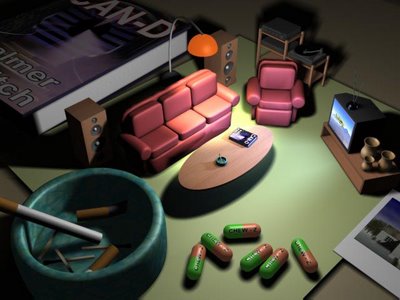
Can-D:
Here we have a designer drug that was created by none other than sci-fi great Philip K. Dick. As fans may know, this guy was somewhat of an expert on drugs, having taken part in the Californian drug counter-culture during the 60s and 70s. As a result, he had a lot to say about drug use, their impact, and drug policy.

In this particular case, the drug comes to us from the story of The Three Stigmata of Palmer Eldritch. Taking place in the 21st century, where global warming has sent millions of people off Earth to the hostile environments of the Solar System, people have turned to a combination of the drug Can-D and what are known as “layouts.”

Layouts are physical props intended to simulate a sort of alternate reality where life is easier than either the grim existence of the off-world colonies or life on Earth. By taking the drug in conjunction with the layouts, people are able to experience a sort of shared hallucinogenic state. This in turn has given rise to pseudo-religious cults that have grown up around the use of layouts and the drug, consisting of people who dream of better worlds than the one they are forced to endure.

Dancer:
To complete the semi-dystopian setting of his Bridge Trilogy, Gibson was sure to add a designer drug that was all the rage amongst Californians in the near future. The drug was named Dancer, a powerful and addictive hallucinogen that apparently came in the form of a red dust. People would take it orally, rub it on their gums, smoke it or snort it.

In short, Dancer was like a red cocaine, except that it caused hallucinations rather than manic behavior. People who consumed it would typically become euphoric and mellow, causing them to get all rhythmic and break into dance (hence the name). However, it was was also known to make people violent from time to time, which made it more akin to the the effects of PCP.

Inspired by California’s drug culture and the emergence of designer drugs in the early 90s, Dancer was clearly meant to serve as an allegory for multiple drugs, or as a prediction of what the next big craze could be.

Dust:
Fans of Babylon 5 ought to remember this one. Basically, the drug was a hot item on the black market because it had the ability to give users temporary telepathic powers. It was violently addictive, and known for giving a very powerful and unique high. However, in the course of trying to stop the Dust trade to B5, Psi Cop Bester acknowledged that the drug was originally created by the Psi Corps as a way of creating telepaths.

When they realized it didn’t work, the drug was abandoned, but made its way to the black market because of its obvious appeal. As a longtime fan of B5, I can honestly say it was elements like this that made me like the show. Not only was the concept and the name cool, the fact that it began as a government-sanctioned drug was also believable and clearly inspired by the history of many real-world drugs.

Neuroin:
Inspired by Philip K Dick’s short story, Minority Report was a quasi-dystopian future where the use of precognitives promised to eliminate all violent crime from society. But of course, there’s a dark side to all this, and it just happens to be linked to the underworld drug known as Neuroin, a powerful and addictive psychoactive substance.

Though it is never explained in any real detail, the name suggests that it is of the opiate family and possibly combined with a neural stimulant. In addition to being the drug of choice of the protagonist, it is also the very thing that created the precognitives in the first place. All three psychics were once children who suffered brain damage in utero as a result of their mothers’ neuroin use. Though damaged neurologically, a side effect was the development of precognitive powers, which the state began to use in order to engineer the process known as “PreCrime.”

Based on the film adaptation, the principal means of taking neuroin appears to be through a specialized inhaler. This would allude to the fact that neuroin was taken in vaporized form. In the end, this drug served as both a commentary on the dangers of escapism as well as a plot device. While neuroin was the reason for the precognitives existence, it was also how the main character chose to numb himself over the loss of his son.

Nuke:
The designer drug from Robocop 2, and one man’s attempt at achieving his dream of becoming a Jesus-like figure! Designed by Cain, Nuke was an extremely pleasurable and addictive substance that began making the rounds in Old Detroit by the second movie. Coupled with a Police strike and financial ruin, Nuke seemed to be the thing that would finally break Detroit and allow the greedy bastards at OCP to finally take over.

There are several kinds of Nuke, but by far the most popular variety comes in the form of the red sludge. This is known as Red Ramrod, and was followed shortly thereafter by White Noise, Blue Velvet, and Black Thunder. The color scheme alluded to Cain’s “patriotic” sentiments, as he was known to say that his drug was making “Made in America” mean something again.

Nuke comes only in liquid form and is taken by means of small needles that inject the drug directly into the bloodstream. Because of its highly pleasurable nature and chemical properties, only a few doses are needed before a person becomes hooked and will experience intense withdrawal if they don’t get a regular dose. A commentary on the emergence of designer drugs, it was also served as a means for making some tough observations on drug use and its effect on society.

Snow Crash:
This drug is, admittedly a little off the beaten path. Featured in the Neal Stephenson novel of the same name, Snow Crash was essentially an allegory for a system crash, but in neurological form. Taking the form of both an inhalant and a digital virus, the “drug” had the effect of rendering users docile, passive and babbling an idioglossia similar to speaking in tongues.

But of course, there was more to it than all that. Basically, Snow Crash was designed by an information tycoon named L. Bob Rife who wanted control over people’s minds and daily habits. Using a Sumerian tablet, he basically encoded the ancient “Enki virus” – a virus that altered humanity’s neurology and spawned modern languages. So really, he was looking to reverse the Babel myth, making humanity neurologically simpler and thus programmable.

In addition to being a commentary on the drug culture, Snow Crash was also an observation about the proliferation of computer viruses in the early 90s and an allegory on the similarities between ancient myth and modern technology. It was also pretty cool and weird!

Soma:
When it comes to designer drugs, Soma pretty much takes the cake. Derived from Aldous Huxley’s classic tale of dystopia and social engineering, Brave New World, Soma was the kind of drug that came with the label “good for what ails ya” and meant it literally. Designed to cure any and all emotional problems, the pill was mass produced and a key feature of the World State’s apparatus of social control.

Use of Soma is prescribed at a very young age to citizens of the World State, as soon as children are old enough to begin sleep conditioning. Slogans such as “a gram is better than a damn” are programmed into their minds so that they respond to emotional stress by simply popping a pill. This is often referred to as “taking a vacation”.

To illustrate the effects of the drug, Huxley relied on his own experience using mescalin and other drugs. Apparently, subjects using Soma would enter a dream-like state where everything became pleasant and agreeable, all their worries and unpleasant emotions melting away. This dream-like state could be discerned by observing a person’s eyes, which would become noticeably glazed.

In addition, though the state freely distributed the drug and there were no shortages, Soma was still designed to be non-addictive and with no harmful side effects. This, added to its effectiveness, made it the ultimate designer drug and a very effective means of social control. A commentary on the pharmaceutical industry of his day and on the drug culture of the 1920s and 30s, Soma remains the most popular example of a fictional sci-fi drug!

Spice:
Then again, the spice melange is pretty damn popular too. However, as the only drug on this list that is not designed or synthesized, and is by definition an “awareness narcotic,” Spice is really in a category of its own. Taken from the Dune series, Spice was the most precious resource in the universe in more ways than one.

For starters, Spice could only be found on one planet, the desert world known as Arrakis. Mining Spice was also a highly hazardous duty, due to the inhospitable climate of Arrakis and the presence of Sandworms. And given its many benefits, which included prolonged life and expanded awareness, it’s little wonder why it was so damned expensive!

A clear allegory for oil, all life and commerce in the Imperium of Dune revolved around Spice in one way or another. The Guild Navigators used it to achieve their limited prescience and guide ships through foldspace. The Bene Gesserit used it to enhance their mental and physical acuity and make contact with their “Other Memory”. And every house used it to improve their health and longevity. In short, without Spice, all trade and commerce in the universe would end and countless people would die.

And of course, there never would have been a Paul Mua’dib or a Leto II, and humanity would have died as a result! That’s quite a drug them people got there!

Substance D:
Once again, we have a fictitious drug that comes to us straight from the mind of Philip K Dick. Featured in his 1977 book A Scanner Darkly about the drug subculture of California, Substance D was a powerful psychoactive drug that also went by the name “Slow Death.” The name proved apt, as the drug was not only violently addictive, but resulted in brain damage due to overuse.

According to the story, Substance-D was synthesized from the fictitious blue flower Mors ontologica, which is Latin for “death of being”. In the course of the story, the protagonist – an undercover narcotics agent – becomes addicted to the drug, suffers brain damage and is sent to one of the new recovery centers (“New Path”) to get clean.

In time, he is given the task of working on one of their many farms and learns that these places serve as grow ops for the flower. Hence, we see that “New Path” is the source of Substance-D, and is therefore benefiting from both the drug and the harmful effect it has on society. A commentary on strong-arm governments and the pharmaceutical industry perhaps?

Final Thoughts:
When it comes to fictionalized narcotics, a few basic features become evident. For one, fictional drugs can take one of two forms, being either of the organic or synthetic (i.e. designer) variety. Second, their use as part of a story’s background is meant to call attention to our current drug wars, warts and all. But above all, they seem to serve as a form of social commentary by pointing to the ongoing nature of temptation, escapism and repression. On the one hand, human beings will always be looking for escapes and ways to ease the burden of existence. On the other, we are always likely to feel the need to control the flow of narcotic substances and legislate what people can and can’t put in their bodies.

Finally, I found that just about all the authors here were taking a descriptive, rather than prescriptive, approach. Essentially, they were content to sit back and make observations on the whole issue of drug use and moral legislation, rather than making pronouncements. This would seem the preferable option considering that you can’t really offer a clear resolution without sounding either enabling or preachy. Some say that drug use destroys society, other say that people have the right to put whatever they want in their bodes. And then there are those who say that human weakness is a constant, and that criminalizing such a thing turns a flaw into a war. Complicated!

On a brighter note, all this talk puts me in mind of my own fictional creations. Years back, when I was coming up with the concept for my Legacies story, I spent a fair bit of time pondering what kind of drugs people would be using in the relatively distant future. I think I might just dedicate a page or a post to just that topic. In truth, I’d like to know what people think about my inventions. Look for it, it shall be coming soon!

The Future Is Here: Google Glasses!

It’s like something out of a cyberpunk wet dream. Long the subject of speculative science fiction, it seems that we now have a working prototype for a set of goggles that can handle our wireless and networking needs. Merging the concepts of Augmented Reality with a Head-Mounted Display (HMD), Google has created what are now known as the “Google Glasses”.

Also known as “Project Glass”, this device is the first working model for what is often referred to as mobile computing. While still being tested, the project has been unveiled and Google Inc announced that they will now be conducting public trials to test their portability and ergonomics.

But of course, some of the terminology needs a little explanation. For example, augmented reality. By definition, this is the live direct, or indirect, view of the real world with computer generated imagery laid over top. One can be walking down the street or otherwise interacting with their world, but will also be able to view a desktop browser, a web page, or streaming video laid just overtop.

According to Google, the glasses will function much like an iPhone with the Siri application, in that wearers will be able to get onto the internet using voice commands. If this goes through, Apple Inc. will have its work cut out for it if they want to remain top dog in the technology race. I wonder what Steve Jobs would have made of this, may he rest in peace!

The project is just one of several being worked on by Google X Lab’s team of crack engineers, which includes Babak Parviz, an electrical engineer who has also worked on putting displays into contact lenses; Steve Lee, a project manager and “geolocation specialist”; and Sebastian Thrun, who developed Udacity education program as well as working on their self-driving car project.

Naturally, this news is causing a great deal of excitement, but I can’t help but wonder if certain people – not the least of which is William Gibson – aren’t getting just a tinge of self-satisfaction as well? You see, it was this Vancouver-based, American born purveyor of cyberpunk that predicted both the use of “cyberspace goggles” and augmented reality many years ago. The former were featured extensively in his Sprawl Trilogy and a similar device, known as Virtual Light glasses, made several appearances in his subsequent Bridge Trilogy.

What’s more, his latest books (known as the Bigend Trilogy) also made extensive mention of Augmented Reality before most people had heard of it. Beginning with Spook Country (2007), the second book in the series, he described an artist who used wireless signals and VR goggles to simulate the appearance of dead celebrities all over LA. This new type of touristic art, known as “locative art” was the first time AR was mentioned in a pop culture context. In his third book of the series, Zero History (2010), he mentions the technology yet again but says how it has been renamed “Augmented Reality” now that its more popular. As always, Gibson was on the cutting edge, or just ahead of the curve.

Click on the links below for a little “light reading” on the announcement:

https://plus.google.com/
http://bits.blogs.nytimes.com/2012/04/04/
http://www.washingtonpost.com/business/technology/