Nanotech News: Smart Sponges, Nanoparticles and Neural Dust!

nanomachineryNanotechnology has long been the dream of researchers, scientists and futurists alike, and for obvious reasons. If machinery were small enough so as to be microscopic, or so small that it could only be measured on the atomic level,  just about anything would be possible. These include constructing buildings and products from the atomic level up, with would revolutionize manufacturing as we know it.

In addition, microscopic computers, smart cells and materials, and electronics so infinitesimally small that they could be merged with living tissues would all be within our grasp. And it seems that at least once a month, universities, research labs, and even independent skunkworks are unveiling new and exciting steps that are bringing us ever closer to this goal.

Close-up of a smart sponge

Once such breakthrough comes from the University of North Carolina at Chapel Hill, where biomedical scientists and engineers have joined forces to create the “smart sponge”. A spherical object that is microscopic — just 250 micrometers across, and could be made as small as 0.1 micrometers – these new sponges are similar to nanoparticles, in that they are intended to be the next-generation of delivery vehicles for medication.

Each sponge is mainly composed of a polymer called chitosan, something which is not naturally occurring, but can be produced easily from the chitin in crustacean shells. The long polysaccharide chains of chitosan form a matrix in which tiny porous nanocapsules are embedded, and which can be designed to respond to the presence of some external compound – be it an enzyme, blood sugar, or a chemical trigger.

bloodstreamSo far, the researchers tested the smart sponges with insulin, so the nanocapsules in this case contained glucose oxidase. As the level of glucose in a diabetic patient’s blood increases, it would trigger the nanocapsules in the smart sponge begin releasing hydrogen ions which impart a positive charge to the chitosan strands. This in turn causes them to spread apart and begin to slowly release insulin into the blood.

The process is also self-limiting: as glucose levels in the blood come down after the release of insulin, the nanocapsules deactivate and the positive charge dissipates. Without all those hydrogen ions in the way, the chitosan can come back together to keep the remaining insulin inside. The chitosan is eventually degraded and absorbed by the body, so there are no long-term health effects.

NanoparticlesOne the chief benefits of this kind of system, much like with nanoparticles, is that it delivers medication when its needed, to where its needed, and in amounts that are appropriate to the patient’s needs. So far, the team has had success treating diabetes in rats, but plans to expand their treatment to treating humans, and branching out to treat other types of disease.

Cancer is a prime candidate, and the University team believes it can be treated without an activation system of any kind. Tumors are naturally highly acidic environments, which means a lot of free hydrogen ions. And since that’s what the diabetic smart sponge produces as a trigger anyway, it can be filled with small amounts of chemotherapy drugs that would automatically be released in areas with cancer cells.
nanorobotAnother exciting breakthrough comes from University of California at Berkeley, where medical researchers are working towards tiny, implantable sensors . As all medical researchers know, the key to understanding and treating neurological problems is to gather real-time and in-depth information on the subject’s brain. Unfortunately, things like MRIs and positron emission tomography (PET) aren’t exactly portable and are expensive to run.

Implantable devices are fast becoming a solution to this problem, offering real-time data that comes directly from the source and can be accessed wirelessly at any time. So far, this has taken the form of temporary medical tattoos or tiny sensors which are intended to be implanted in the bloodstreams. However, what the researchers at UofC are proposing something much more radical.

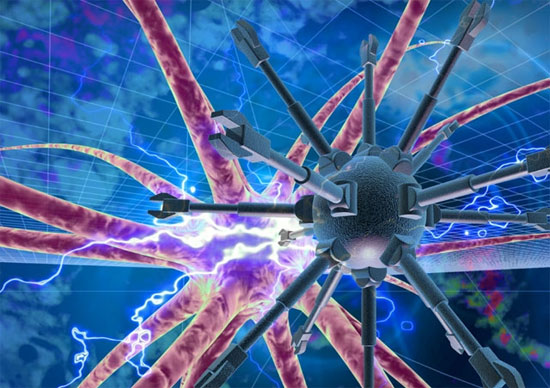
neural_dustIn a recent research paper, they proposed a design for a new kind of implantable sensor – an intelligent dust that can infiltrate the brain, record data, and communicate with the outside world. The preliminary design was undertaken by Berkeley’s Dongjin Seo and colleagues, who described a network of tiny sensors – each package being no more than 100 micrometers – in diameter. Hence the term they used: “neural dust”.

The smart particles would all contain a very small CMOS sensor capable of measuring electrical activity in nearby neurons. The researchers also envision a system where each particle is powered by a piezoelectric material rather than tiny batteries. The particles would communicate data to an external device via ultrasound waves, and the entire package would also be coated in a polymer, thus making it bio-neutral.

smart_tatoosBut of course, the dust would need to be complimented by some other implantable devices. These would likely include a larger subdural transceiver that would send the ultrasound waves to the dust and pick up the return signal. The internal transceiver would also be wirelessly connected to an external device on the scalp that contains data processing hardware, a long range transmitter, storage, and a battery.

The benefits of this kind of system are again obvious. In addition to acting like an MRI running in your brain all the time, it would allow for real-time monitoring of neurological activity for the purposes of research and medical monitoring. The researchers also see this technology as a way to enable brain-machine interfaces, something which would go far beyond current methods. Who knows? It might even enable a form of machine-based telepathy in time.

telepathySounds like science fiction, and it still is. Many issues need to be worked out before something of this nature would be possible or commercially available. For one, more powerful antennae would need to be designed on the microscopic scale in order for the smart dust particles to be able to send and receive ultrasound waves.

Increasing the efficiency of transceivers and piezoelectric materials will also be a necessity to provide the dust with power, otherwise they could cause a build-up of excess heat in the user’s neurons, with dire effects! But most importantly of all, researchers need to find a safe and effective way to deliver the tiny sensors to the brain.
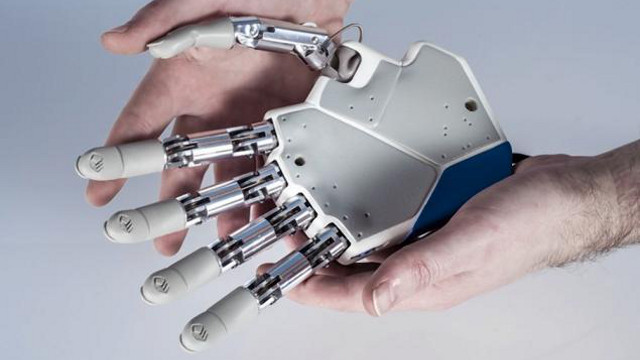
prosthetic_originalAnd last, but certainly not least, nanotechnology might be offering improvements in the field of prosthetics as well. In recent years, scientists have made enormous breakthroughs in the field of robotic and bionic limbs, restoring ambulatory mobility to accident victims, the disabled, and combat veterans. But even more impressive are the current efforts to restore sensation as well.

One method, which is being explored by the Technion-Israel Institute of Technology in Israel, involves incorporating gold nanoparticles and a substrate made of polyethylene terephthalate (PET) – the plastic used in bottles of soft drinks. Between these two materials, they were able to make an ultra-sensitive film that would be capable of transmitting electrical signals to the user, simulating the sensation of touch.

gold_nanoparticlesBasically, the gold-polyester nanomaterial experiences changes in conductivity as it is bent, providing an extremely sensitive measure of physical force. Tests conducted on the material showed that it was able to sense pressures ranging from tens of milligrams to tens of grams, which is ten times more sensitive than any sensors being build today.

Even better, the film maintained its sensory resolution after many “bending cycles”, meaning it showed consistent results and would give users a long term of use. Unlike many useful materials that can only really be used under laboratory conditions, this film can operate at very low voltages, meaning that it could be manufactured cheaply and actually be useful in real-world situations.
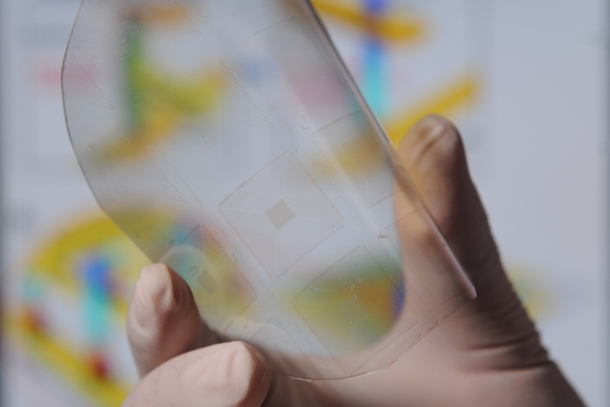
smart-skin_610x407In their research paper, lead researcher Hossam Haick described the sensors as “flowers, where the center of the flower is the gold or metal nanoparticle and the petals are the monolayer of organic ligands that generally protect it.” The paper also states that in addition to providing pressure information (touch), the sensors in their prototype were also able to sense temperature and humidity.

But of course, a great deal of calibration of the technology is still needed, so that each user’s brain is able to interpret the electronic signals being received from the artificial skin correctly. But this is standard procedure with next-generation prosthetic devices, ones which rely on two-way electronic signals to provide control signals and feedback.
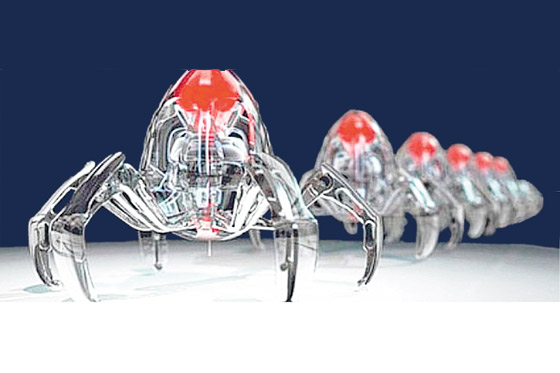
nanorobot1And these are just some examples of how nanotechnology is seeking to improve and enhance our world. When it comes to sensory and mobility, it offers solutions to not only remedy health problems or limitations, but also to enhance natural abilities. But the long-term possibilities go beyond this by many orders of magnitude.

As a cornerstone to the post-singularity world being envisioned by futurists, nanotech offers solutions to everything from health and manufacturing to space exploration and clinical immortality. And as part of an ongoing trend in miniaturization, it presents the possibility of building devices and products that are even tinier and more sophisticated than we can currently imagine.

It’s always interesting how science works by scale, isn’t it? In addition to dreaming large – looking to build structures that are bigger, taller, and more elaborate – we are also looking inward, hoping to grab matter at its most basic level. In this way, we will not only be able to plant our feet anywhere in the universe, but manipulate it on the tiniest of levels.

As always, the future is a paradox, filling people with both awe and fear at the same time.

Sources: extremetech.com, (2), (3)

The Future of Medicine: Engineered Viruses, Nanoparticles and Bio-Absorbable Circuits

medtechThe future that is fast approaching us is one filled with possibilities, many of which were once thought to be the province of science fiction. Between tricorders and other new devices that can detect cancer sooner and at a fraction of the cost, HIV vaccines and cures, health monitoring tattoos and bionic limbs, we could be moving into an age where all known diseases are curable and physical handicaps will be non-existent.

And in the past few months, more stories have emerged with provide hope for millions of people living with diseases, injuries and disabilities. The first came just over three weeks ago from University of California, Berkley, where researchers have been working with an engineered virus which they claim could help cure blindness. As part of a gene therapy program, this treatment has been shown to effectively correct a rare form of inherited blindness.

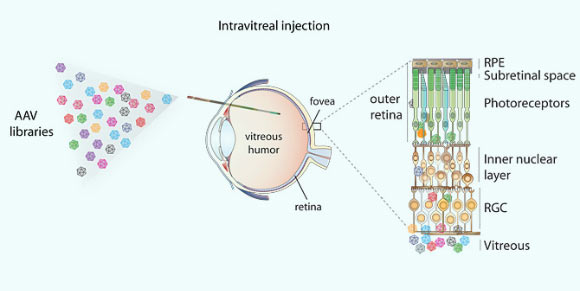
virus-sight1For the past six years, medical science has been using adeno-associated viruses (AAV) as part of a gene therapy treatment to correct inherited retinal degenerative disease. However, the process has always been seen as invasive, since it involves injected the AAVs directly into a person’s retina with a needle. What’s more, the rpocess has shown itself to be limited, in that the injected virus does not reach all the retinal cells that need repair.

But as Professor David Schaffer, the lead researcher on the project, stated in an interview with Science Translational Medicine:

[D]octors have no choice because none of the gene delivery viruses can travel all the way through the back of the eye to reach the photoreceptors – the light sensitive cells that need the therapeutic gene.

Building on this and many more years of research, Prof David Schaffer and his colleagues developed a new process where they generated around 100 million variants of AAV and then selected five that were effective in penetrating the retina. They then used the best of these, a strain known as 7m8, to transport genes to cure two types of hereditary blindness on a group of mice.

virus-sightIn each case, the engineered virus delivered the corrective gene to all areas of the retina and restored retinal cells nearly to normal. But more importantly, the virus’ ability to penetrate the retina on its own makes the process far less invasive, and will likely be far more cost-effective when adapted to humans. And the process is apparently very convenient:

[W]e have now created a virus that you just inject into the liquid vitreous humor inside the eye and it delivers genes to a very difficult-to-reach population of delicate cells in a way that is surgically non-invasive and safe. It’s a 15-minute procedure, and you can likely go home that day.

Naturally, clinical trials are still needed, but the results are encouraging and Professor Schaffer indicated that his team are busy at work, now collaborating with physicians to identify the patients most likely to benefit from this gene-delivery technique.

nanoparticles_miceNext up, there was the announcement back at the end of May that researchers from North Carolina State and University of North Carolina Chapel Hill had found yet another medical use for nanoparticles. In there case, this consisted of combating a major health concern, especially amongst young people today: diabetes.

In a study that was published in the Journal of Agricultural and Food Chemistry, the collaborating teams indicated that their solution of nanoparticles was able to monitor blood sugar levels in a group of mice and released insulin when their sugar levels got too high. Based on the results, the researchers claim that their method will also work for human beings with type 1 diabetes.

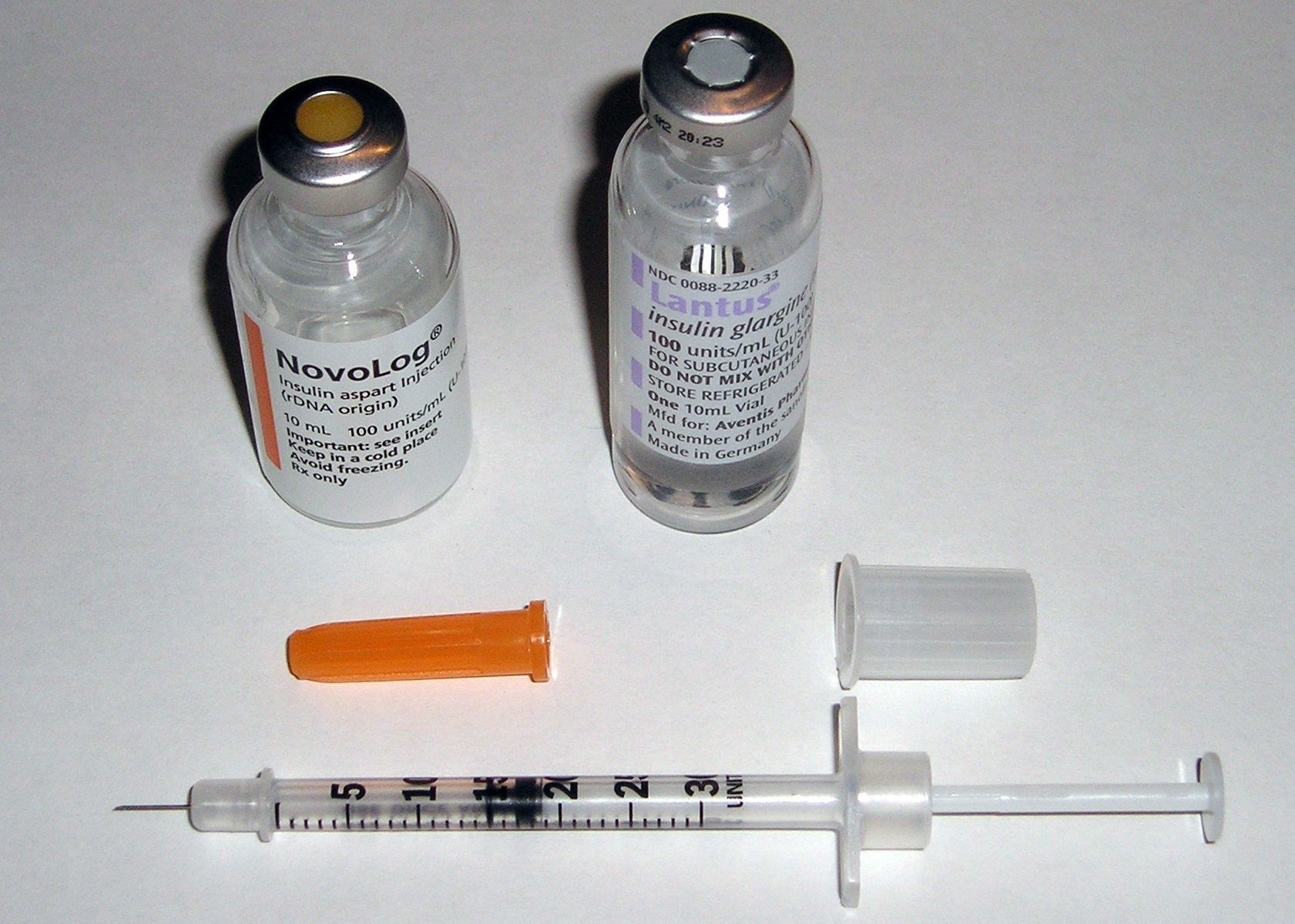
image descriptionEach of the nanoparticles have a core of insulin that is contained with a degradable shell. When glucose levels in the blood reach high concentrations spike, the shell dissolves, releasing insulin and lowering the subject’s blood sugar. The degradable nano-network was shown to work in mice where a single injection kept blood glucose levels normal for a minimum of 10 days.

While the exact cause of this kind of diabetes is unknown, the effects certainly are. Patients living with this genetically-acquired form of the disease require several shots of insulin a day to keep their blood sugar levels under control. And even then, blindness, depression and even death can still result. What’s more, if the insulin shots are specifically calculated for the individual in question, side-effects can occur.

???????????????????????????????Hence the genius behind this new method. Not only would it relieve people who have type 1 diabetes from constantly injecting themselves, it would also remove the need to monitor their own blood sugar levels since the nanoparticles would be controlling them automatically.

In a study published recently in the Journal of Agricultural and Food Chemistry, Zhen Gu, lead author of the study claimed that the technology functions essentially the same as a pancreas. Hence another benefit of the new method, in that it could make pancreatic transplants – which are often necessary for patients with diabetes – unnecessary.

biocircuitsAnd last, but certainly not least, comes from the University of Illinois where John Rogers are developing a series of bio-absorbable electronic circuits that could help us win the war on drug-resistant bacteria. As part of a growing trend of biodegradable, flexible electronic circuits that operate wirelessly, fighting “superbugs” is just one application for this technology, but a very valuable one.

For some time now, bacteria that is resistant to antibiotics has been spreading, threatening to put the clock back 100 years to the time when routine, minor surgery was life-threatening. Some medical experts are warning that otherwise straightforward operations could soon become deadly unless new ways to fend off these infections are found. And though bacteria can evolve ways of evading chemical assaults, they are still vulnerable to direct assault.

electronics_dissolvingThis is how the new bio-absorbable circuits work: by heating up the virus. Each circuit is essentially a miniature electric heater that can be implanted into wounds and powered wirelessly to fry bacteria during healing before dissolving harmlessly into body fluids once their job is done. While this might sound dangerous, keep in mind that it takes only a relatively mild warming to kill bugs without causing discomfort or harm to surrounding tissues.

To fashion the circuits, Rogers and his colleagues used layers of utra-thin wafers and silk, material so thin that they disintegrate in water or body fluids or (in the case of silk) are known to dissolve anyway. For the metal parts, they used extra-thin films of magnesium, which is not only harmless but in fact an essential nutrient. For semiconductors, they used silicon membranes 300 nanometres thick, which also dissolve in water.

In addition to deterring bacteria, Rogers says that implantable, bio-absorbable RF electronics could be used to stimulate nerves for pain relief, and to stimulate bone re-growth, a process long proven to work when electrodes are placed on the skin or directly on the bone. Conceivably they could also be used to precisely control drug release from implanted reservoirs.

In other words, this is just the beginning. When it comes to the future of medicine, just about any barrier that was once considered impassable are suddenly looking quite porous…

Sources: sci-news.com, stm.sciencemag.org, singularityhub.com, bbc.com/future

2013, As Imagined By 1988

bladerunnerTwenty-five years ago, Los Angeles magazine envisioned what the world would look like in the current decade. And unlike Blade Runner, they avoided the cool but standard science fiction allegories – like massive billboards, flying cars and sentient robots – and went straight for the things that seemed entirely possible by contemporary standards.

The cover story of the magazine’s April 3, 1988 edition showed a futuristic downtown L.A. crisscrossed with electrically charged, multi-tiered freeways permeated by self-driving cars. The article itself then imagined a day in the life of the fictional Morrow family of the L.A. suburb Granada Hills, as “profiled” by the magazine in 2013 by science fiction writer Nicole Yorkin.

LAtimes_2013aIronically, the magazine did not envision that it would one day go out of business, or that print media would one day be lurching towards extinction. Nevertheless, the fictional article and the world it detailed were interesting reading. Little wonder then why, earlier this month, the LA Times along with an engineering class at USC, revisited the archives to assess what it predicted correctly versus incorrectly.

Together, pro­fess­or Jerry Lock­en­our and his class made a list of the hits and misses, and what they found paints a very interesting picture of how we predict the future and how its realization so often differs from what we expect. Of the major predictions to be found in LA of the 2013, as well as in the lives of the Morrow family (get it?), here is what they got right:

Smart-Houses:
smart-house_vCe6I_25016In the article, the Morrows are said to begin every morning when their “Smart House” automatically turns on. This consists of all the appliances activating and preparing them breakfast, and no doubt turning on all the environmental controls and opening the shades to get the temperature and ambient lighting just right.

While this isn’t the norm for the American family yet, the past few years have proved a turning point for home devices hooking up with the Internet, to become more programmable and serve our daily needs. And plans are well under way to find a means of networking them all together so they function as one “smart” unit.

Self-Driving Cars:
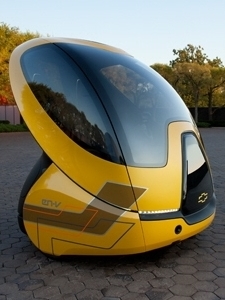
chevy_env_croppedThe writers of the article predicted that by 2013, cars would come standard with computers that control most of the settings, along with GPS systems for navigation. They also predict self-driving cars, which Google and Chevy are busy working on. In addition to using clean, alternative energy sources, these cars are expected to be able t0 self-drive, much in the same way a pilot puts their plane on auto-pilot. Drivers will also be able to summon the cars to their location, connect wirelessly to the internet, and download apps and updates to keep their software current.

But of course, they got a few things wrong as well. Here they are, the blots on their predictive record:

Homeprinted newspapers:
news_appThe article also predicts that each morning the Morrows would begin their day with a freshly printed newspaper, as rendered by their laser-jet printer. These would be tailor-made, automatically selecting the latest news feeds that would be of most interest to them. What this failed to anticipate was the rise in e-media and the decline of printed media, though hardly anyone would fault them for this. While news has certainly gotten more personal, the use of tablets, ereaders and smartphones is the way the majority of people now read their selected news.

Robot servants and pets:
kenshiro_smallIn what must have seemed like a realistic prediction, but which now comes across as a sci-fi cliche, the Morrows’ home was also supposed to come equipped with a robotic servant that had a southern accent. The family’s son was also greeted every morning by a robot dog that would come to play with him. While we are certainly not there yet, the concept of anthropomorphic robot assistants is becoming more real every day. Consider, for example, the Kenshiro robot (pictured at right), the 3D printed android, or the proposed Roboy, the Swiss-made robotic child. With all of these in the works, a robotic servant or pet doesn’t seem so far-fetched does it?

Summary:
Between these four major predictions and which came to be true, we can see that the future is not such an easy thing to predict. In addition to always being in motion, and subject to acceleration, slowing and sudden changes, the size and shape of it can be very difficult to pin down. No one can say for sure what will be realized and when, or if any of the things we currently take for granted will even be here tomorrow.

Alpha Moon Base at http://www.smallartworks.ca

For instance, during the 1960’s and 70’s, it was common practice for futurists and scientists to anticipate that the space race, which had culminated with humans setting foot on the moon in 1969, would continue into the future, and that humanity would be seeing manned outposts on the moon by and commercial space flight by 1999. No one at the time could foresee that a more restrictive budget environment, plus numerous disasters and a thawing of the Cold War, would slow things down in that respect.

In addition, most predictions that took place before the 1980’s completely failed to predict the massive revolution caused by miniaturization and the explosion in digital technology. Many futurist outlooks at the time predicted the rise in AI, but took it for granted that computers would still be the size of a desk and require entire rooms dedicated to their processors. The idea of a computer that could fit on top of a desk, let alone on your lap or in the palm of your hand, must have seemed farfetched.

CyberspaceWhat’s more, few could predict the rise of the internet before the late 1980’s, or what the realization of “cyberspace” would even look like. Whereas writer’s like William Gibson not only predicted but coined the term, he and others seemed to think that interfacing with it would be a matter of cool neon-graphics and avatars, not the clean, page and site sort of interface which it came to be.

And even he failed to predict the rise of such things as email, online shopping, social media and the million other ways the internet is tailored to suit the average person and their daily needs. When it comes right down to it, it is not a dangerous domain permeated by freelance hacker “jockeys” and mega-corporations with their hostile counter-intrusion viruses (aka. Black ICE). Nor is it the social utopia promoting open dialogue and learning that men like Bill Gates and Al Gore predicted it would be in the 1990’s. If anything, it is an libertarian economic and social forum that is more democratic and anarchistic than anyone could have ever predicted.

But of course, that’s just one of many predictions that came about that altered how we see things to come. As a whole, the entire thing has come to be known for being full of shocks and surprises, as well as some familiar faces. In short, the future is an open sea, and there’s no telling which way the winds will blow, or what ships will make it to port ahead of others. All we can do is wait and see, and hopefully trust in our abilities to make good decisions along the way. And of course, the occasional retrospective and issue congratulations for the things we managed to get right doesn’t hurt either!

Sources: factcoexist.com, LATimes.com

The Future is Here: The Personal Fitness Band

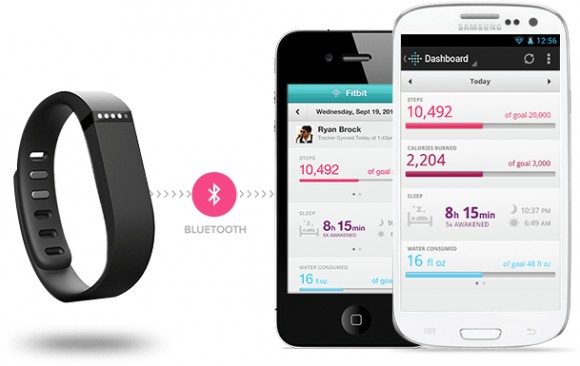
Fitbit-FlexOf all the important new gadgets to make it to the Consumer Electronics Show this year, one stood out as far as morning joggers and fitness gurus were concerned. It’s called the Fitbit Flex, an activity tracker designed to be worn all day and monitor movement, sleep, and calories burned. In an age where electronics are getting more personal, flexible, and wearable, it seems that fitness industry is determined not to be left behind.

While the concept of a wearable fitness tracker is not entirely new, the Flex incorporates a number of new developments in the field of personalized technology. For starters, as the name suggests, its a flexible bracelet that is comfortable enough to be worn all day long and malleable enough to stay firmly wrapped around your wrist. And unlike pedometers or heart rate monitors which monitor a single vital function or activity, the Flex is designed to monitor all simultaneously and in terms of the individuals stated fitness goals.

fitbit_flex_syncAnd to top it all off, the band uses a wireless Bluetooth connection to sync with PCs and smartphones. This last aspect is something Fitbit is quite proud off, as the Flex is the first fitness band to sync using the latest Bluetooth 4.0 standard. In addition, the company has announced that it will eventually support Bluetooth syncing of fitness data with Android devices once an update becomes available, hopefully by late January or early February.

nike-fuelband-01Already, other companies have released fitness monitors similar to this new product. The Nike Fuelband is one such competitor, a flexible band that also used LED lights to indicate heart rate, distance, and overall fitness performance. It is also designed to sync up with mobile devices using the Nike+ iPod accessory. What’s more, the company claims that the band and a users Nike+ account will keep long-term track of a person’s fitness and offer incentives (such as awards badges) and motivational tips.

jawbone-upA third contender is the Jawbone Up band, another monitoring band that is even slimmer and more ergonic, as far as wearing it all day is concerned. Like it’s co-competitors, it too is syncable to an iPhone thanks to its specialized app. But unlike the others, it is designed to literally be worn 24/7, thus painting a more complete picture of a person’s health and fitness. What’s more, it has no screen, making its results only available through syncing.

All told, these bands and those like them range in cost from $100 to $269.99, and are somewhat limited in that not all are Bluetooth capable or able to link up with devices other than iPhones or unless you have an account with them (Nike+ being the big example here). But of course, that’s par for the course when it comes to competition between designers, who only want you to use their products and those they have business ties with.

All that aside, these and other products like them made a big impact at CES this year because they signaled that the fitness industry is on board with some of the latest trends and innovations. As technology continues to improve, we can expect more and more of our needs and wants to be handled by portable, wearable and (coming soon!) implantable electronics that are capable of interfacing with external computers to monitor, store and share our data.

Source: news.cnet.com, (2), (3)

Microsoft Concept Video: The Future of Smartphones and Computers

futurvision5-550x321Ah, I imagine people are getting tired of these. But permit just one more! In the midst of so many new products and developments in the fields of smartphones, tablets, augmented reality, and wireless technology, Microsoft was sure to add its two cents. Releasing this concept video back in 2011, shortly after the Consumer Electronics Show, amidst all the buzz over flexible screens and paper-thin displays, Microsoft produced this short entitled “Productivity Future Vision”.

In addition to showcasing their Window Phone (shameless!), the video also features display glasses, “smart” windows, self-driving cars, 3D display technology, virtual interfacing, paper-thin and flexible display tablets, touchscreens, teleconferencing, and a ton of internet browsing and wireless connectivity. All of the technologies featured are those that are currently under development, so the video is apt in addition to being visually appealing.

But of course, the real purpose of this video is to demonstrating to the world that Microsoft can bring these technologies and build the future of business, travel, education and play. Or at the very least, they seeks to lay their claim to a good portion of it. It’s Microsoft, people, they didn’t get to being a mega-corporation by writing checks or playing nice.

And based on this video, what can be said about the future? All in all, it looks a lot like today, only with a lot more bells and whistles!

Cool Ships (volume V)

Back again! More ships, more designs, more franchises too. Like I said last time, there’s just no limit when you get right down to it. And in the course of doing my homework on cool sci-fi concepts, I’ve found that there are hundreds of franchises out there that I’ve never even heard of before. Of those I have heard of, I always seem to miss a few obvious candidates. That’s the beauty of ongoing segments though. Here are the latest, with some suggestions thrown in too 😉

Colonial Raptor:
Another late entry from the Battlestar Galactica universe, the updated version. Designed for reconnaissance, transport, atmospheric and space flight, and capable of making short range FTL jumps, the Raptor is the workhorse of the Colonial fleet and one of its most versatile vessels. Ordinarily, the Raptor is operated by a crew of two, one pilot and one Electronic Countermeasures Officer. Given it’s size and shape, it cannot launch from a launch tube and must take off and land from a Battlestar’s forward launch bay.

Having served with the Colonial fleet for over 40 years, making its debut in the first Cylon War, the versatility and reliability of this craft have prevented it from being phased out by newer generations of Colonial ships. During the second Cylon War, Raptors were used regularly in order to dust off survivors from Caprica and other colonies. Relying on a fly-by-wire system, rather than the new defense network systems, it also proved invulnerable to the virus the Cylon’s used to cripple the fleet.

Cygnus:
Now here’s one that people probably won’t remember. In fact, I didn’t recall it either until I did some reading and realized I had seen the movie which featured it – The Black Hole – as a child and quite enjoyed it. Though a little Buck Rogers-y by modern standards, the concept and the movie and this ship still stand the test of time.

Released in 1979 by Walt Disney Pictures, The Black Hole was one of many movies that sought to take advantage of the sci-fi craze that Star Wars had unleashed. The plot centers on a derelict ship, known as the Cygnus, which is run by an android crew and a brilliant (albeit mad) scientist named Doctor Hans Reinhardt.

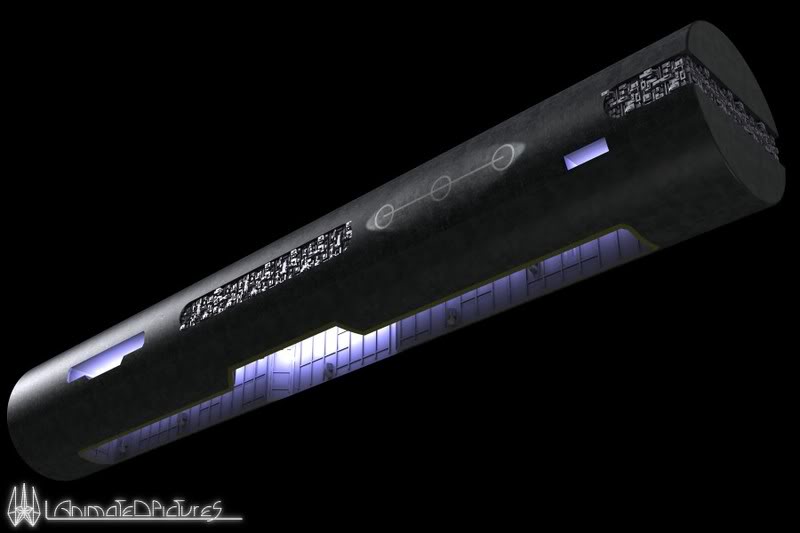
In addition to looking pretty cool, with its glowing transparent sections and old-school design, the Cygnus is apparently able to withstand the gravitational pull of black hole due to its ability to generate its own gravity well. In addition, its commander, Dr. Reinhardt, theorized that he would be able to fly it through a black hole and see once and for all what lay on the other side… It didn’t take, but still a cool idea!

Guild Heighliner:

Artist’s concept for a Guild Heighliner

Here’s one I couldn’t believe I had forgotten. In fact, I will accept any and all chastisements for my failure to include Dune craft in this series thus far. This can include physical beatings, just stay away from the nads… not quite done with those yet!

Anyhoo, when it comes to Dune ships, the Heighliner definitely takes the cake! Massive as all hell, this ship was the backbone of all commerce, diplomacy, travel and tourism in the Dune universe. Like all shipping, it was the exclusive property of the Spacing Guild and subject to their many controls, laws and whims.

Boasting Holtzman engines – a FTL drive system that was capable of “folding space” – the ship still required the services of a Guild Navigator. This person, a semi-prescient mutant due to years of living in a spice tank, would see a path through time and space and thus navigate the ship safely to its destination.

According to the original Dune, a single Heighliner was capable of lifting an entire planet’s worth of personnel, goods and supplies from one point in space to the next. As Duke Leto tells Paul in Part I of the story: “A Heighliner is truly big. Its hold will tuck all our frigates and transports into a little corner — we’ll be just a small part of the ship’s manifest.” Later in that same installment, House Harkonnen used a single Heighliner in order to lift an entire army to Arrakis for a surprise assault on the Atreides, and the cost was nothing short of punitive!

Given that the Heighliners are the sole means of commerce in a Empire as massive as that of the Dune universe, its little wonder why Heighliners are so freakishly big. Chartering one aint cheap, and if you do stowe aboard, you are expected to mind your business and wait until you arrive at your destination. Due to their high level of secrecy and sensitivity, no one is even allowed to venture beyond their own boarding craft when on a Heighlinger, and virtually no one outside of the Guild has ever seen a Guild navigator. Considered to be neutral territory by Imperial law, any and all acts of violence aboard Guild Heighliners carry stiff penalties.

Gunstar:
Ah, another childhood classic! Taken from the film The Last Starfighter, the Gunstar was the first line of defense of the Star League against the evil Xur and the Ko-Dan Armada. Sounds pretty cheesy, huh? Well, it was the eighties! And this was yet another Disney franchise that seemed to be riding in the Star Wars wake. Still, this movie was one the first to make extensive use of CGI (Tron being the only other) and had a none-too-bad storyline too boot!

Boasting multiple guns, missiles and a “Death Blossom” trick that is nothing short of devastating, the gun star is a rather unique and innovative design. Apparently, it was meant to be a class of ship that would never go out of style, merging functionality with lethality and being able to take on any class of enemy ship.

Every Gunstar is a two seater, with the starfighter (gunner) in front, and the navigator in the rear. While the navigator flies the ship, the gunner directs fire from a swivel chair, which gives them control over the ships moveable weapons batteries. Although it has no shielding to speak of, the hull is protected by armor plating which can withstand multiple direct hits. When cornered, it is also capable of unleashing the “Death Blossom” where it will begin to rotate at a furious speed and unleash gun and missile fire in all directions. This however, is considered a weapon of last resort, since it will drain the ship’s power supply completely.

Heart of Gold:
Now here’s an interesting, and highly improbably, entry! Coming to us straight out of The Hitchhikers Guide To The Galaxy, the SS Heart of Gold is rather unique in that it merged scientific theory with Douglas Adam’s notoriously quirky sense of humor.

Being a prototype vessel, it was the first ship ever in the universe to boast the “Infinite Probability Drive”. This drive system is essentially a Faster-Than-Light engine which is actually based in quantum theory. Essentially, the theory states that a subatomic particle is most likely to be in a particular place at a particular time, but that there is also a small probability of it being found very far from its point of origin. Thus, a body could travel from place to place without passing through the intervening space as long as it had sufficient control of probability.

Pretty cool huh? In the original radio series, the shape of the vessel was not specified. In the novelization of the series, it was described as a “sleek white running shoe”. For the sake of the movie, artists went with a tea-cup design, and added some brake lights for good measure. Originally built as part of a secret government project on the planet of Damogran, the ship was stolen by President Zaphod Beeblebrox during its launching ceremony and became the means through which the main characters began exploring the universe.

Minbari Cruiser:
Back once more to the B5 universe for another fine example of kick-ass shippery! Known officially as the Sharlin-class Warcruiser, this Minbari vessel is the mainstay of the Minbari fleet in the original series. Big, bold, stealthy, and packing a sh*tload of firepower, this vessel is veritable nightmare for all but the most powerful of races. Even Shadow vessels mind their business when some of these are in the field.

Making its appearance in season one of the show (episode 17: “Legacies”) and went on to become a regular feature. When Sheridan assumed command of the station in season two, the renegade cruiser Trigati was destroyed in the course of a standoff. After B5 broke away from Earth in season 3, a force of Sharlin cruisers arrived just in time to prevent the station from being captured by forces loyal to Clarke. Many went on to serve alongside Sherian and Delenn in the Shadow War and even went on to help liberate Earth from Clarke’s forces.

According to Delenn, Minbari ships do not rely on conventional engines like other ships. Instead, a system of gravitational and electromagnetic fields for propulsion, which have the added benefit of supplying artificial gravity. This frees up their ships from the needs of rotating sections and makes for a more effective combat platform. Sharlin cruisers also boast a significant amount of weaponry, which consists mainly of heavy beam cannons, but also includes missile launchers, neutron guns, and electro-pulse cannons.

During the Earth-Mimbari War, Earth Forces were completely outmatched by this class of Cruiser. In addition to being highly resistant to Earth force weapons, the Sharlin cruiser also boasted a stealth field which prevented Earth ships from being able to lock onto it. In the course of the war, only one human Captain ever survived combat with one, Captain John Sheridan. Relying on a phony distress signal and several well placed tactical nukes, Sheridan was able to lure the Black Star, the Minbari flagship, into a trap and destroy it. Though the Minbari considered it a cheap victory, Sheridan’s fame and renown quickly spread throughout the fleet.

During the battle of Sector 83, the Sharlin-class Cruiser proved an effective weapon against the Shadows. Although somewhat slow and providing a large target for Shadows, their powerful beam weapons were capable of destroying a Shadow ship unassisted. When protected by smaller, faster craft like the White Star, it proves to be a very effective combat platform.

Nebula-B Escort Frigate:
More Star Wars! God, I think I’m OD’ing on this franchise. But the sign says “Cool Ships” and this one is no exception. Known as the Nebula-class frigate, this ship is probably best remembered as the “Medical Frigate” which appeared in Empire and Jedi. 

Measuring some 300 meters long and designed to defend Imperial convoys from Rebel attacks, this ship was more famously used by the Rebellion as a hospital ship. During heavy fighting, Nebula-B’s would be on hand to pick up pilots that had ejected and provide them with life-saving assistance, ensuring that Rebel pilots could live to fight another day.

The most famous appearance of a Medical Frigate was during the Battle of Endor, when several medical frigates were on hand to service Rebel pilots who had been shot down by superior Imperial forces. It was also on board the Medical Frigate Redemption that Luke Skywalker received his prosthetic hand after losing it in a lightsaber duel to Vader.

In addition to providing escort and as a hospital ship, the Nebula-B was proved useful as a deep space scout and reconnaissance ship, due to its sophisticated sensors. During raiding missions or less intense combat operations, many also served as command ships given their speed and defensive capabilities. One weakness of the Nebula-B however was its thin fusilage. Though this made the ship an inexpensive vessel by most standards, it also made it a poor choice for heavy combat. Hence why it was relegated to support, scouting and medical roles.

The Nostromo:
You know, I really thought I covered this one already. I already mentioned how the Alliance Cruisers from Firefly appeared to be inspired by this baby. And it just makes sense that if you’re going to cover ships from the sequel, (the USS Sulaco and the Cheyenne Dropship) that you cover the original first. But alas, the Nostromo was somehow passed over by me, another act of wanton insensitivity! Beating shall continue until my attitude improves!

Okay, now that we got my punishment out of the way, allow me to pay this ship it’s due homage. The main set for the movie Alien, the USCSS Nostromo was a deep space commercial vessel which belonged to the Weyland-Yutani corp (much like everything else in this universe!).

Overall, the Nostromo was a curious design which made perfect sense from a space-faring point of view. Doing away with such things as streamlining and aerodynamic sleekness, the ship was well suited to deep-space travel and hailing. In addition, it was also taller than it was long, another common aspect to spaceships which are confined to the whole sea ship/airplane paradigm.

It’s massive refinery, which it towed behind, would process its manifest of mined ore while it made its way back to Earth from wherever it had been deployed. Thus, in addition to providing transport and amenities for a crew of miners and spacers, it was also a mobile refining platform that could deliver processed materials to factories rather than just unrefined ore.

While on return from the distant planet of Thedus, the Nostromo was rerouted to LV-426 where it picked up the alien organism known as a xenomorph. After all but one of the crew were killed the by creature, Ellen Ripley, the ship’s Warrant Officer, set the ship’s to self-destruct and escaped aboard the ship’s life craft with the crew cat, Jones. According to Weyland-Yutani execs, who were some pissed when she returned without her ship, the destruction of this vessel cost them 24 million in adjusted dollars. Damn penny-pinchers!

The Sathanas:
What do you call the most fearsome, intimidating and powerful ship in the universe, without being too obvious, that is? The Sathanas, that’s what! Being the Latin name for Satan, this title is very apt when applied to a massive juggernaut built by a race known as the the Shivans (i.e. Shiva, Hindu god of destruction).

This last entry, much like The Colossus and Deimos from my last list, comes to us from the game Freespace 2. Making its appearance midway through the game, this terrifying vessel was the most powerful space-faring ship ever encountered by the human race or its allies.

Boasting four massive beam cannons which are situated at the end of its claw like appendages, this ship best exemplifies the offensive fighting spirit. Jumping into a field of battle, it is capable of dealing devastating blows on a target head on, keeping its flanks and rear hidden from the enemy.

Above all, it is clear that the Shivan built the Sathanas to act as a terror weapon in addition to a capital ship. One look at its design confirms this, given its clawing appendages and thorny skin. Defeating this ship outright is quite difficult given its reinforced plating and terrible array of weapons. Disabling this ship, through EMP missiles and guns, is not much easier given the incredibly density of its hull and many redundant systems. In the end, the only way to beat it seems to be for lighter craft to take out its “claws” while heavier vessels strike at it from a distance. However, this still proves to be a suicidal mission given the Sathanas’ many missile and defensive batteries.

Ultimately, taking down this ship in the game is much like the real-life campaign to sink the Bismark. This dreadnought, which was the pride and joy of the German navy in WWII, also boasted massive weapons, a heavily armored hull and superior systems. In the end, the Royal Navy brought it down through a combination of luck, persistence, and careful engagements, taking their time to disable it and then closing in to pound it relentlessly! Hmmm. I guess good history makes for good gaming 🙂

Final Thoughts:/strong>
The suggestion box, as always, is still open. Thanks to Goran Zidar for suggesting the Gunstar, I knew I’d have to include it sooner or later and I’m glad someone asked. Anything else? I got another installment on the way, and probably a few more after that. No? Sigh, alright, bring on the beatings! No nads!