Game of Thrones (Season 2 Ep. 7)

Back with the lastest in Game of Thrones Season 2! As I finished with saying last time, it is by this latest episode in the series that the differences between book and series become most apparent. These were not a bad thing, mind you. But they did hint at a sort of pattern this time around.

Episode 7: A Man Without Honor:
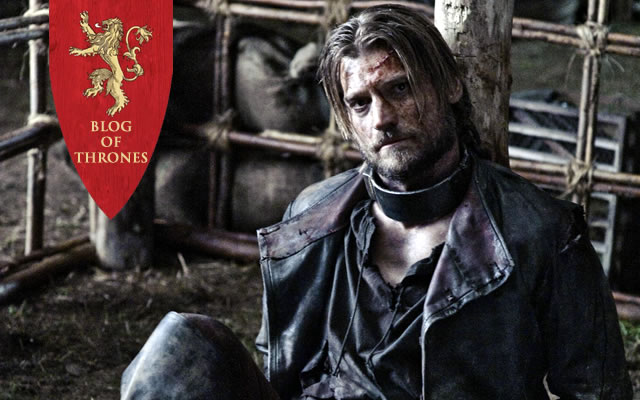
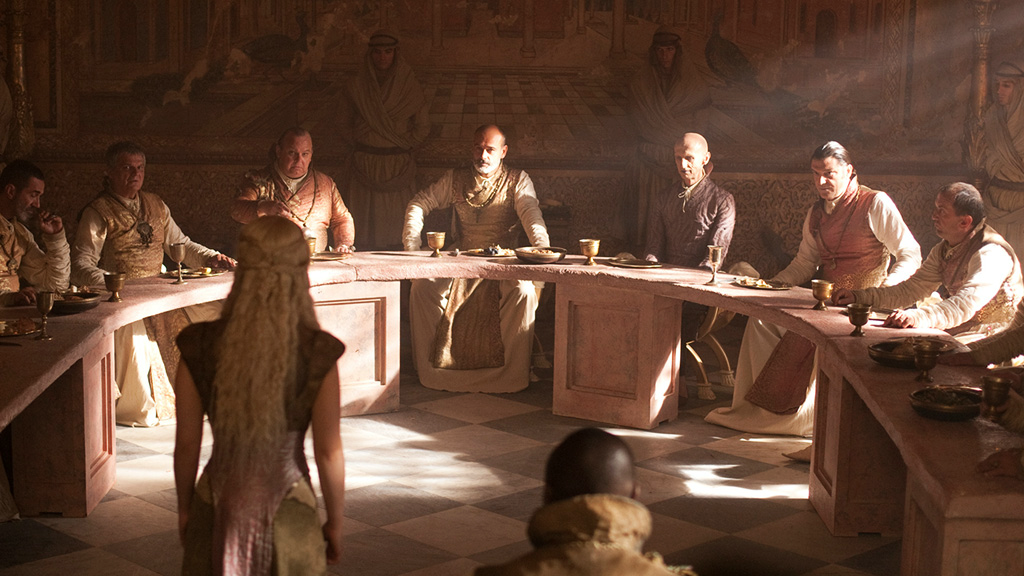
Theon begins looking for the escaped children, but to no avail. He decides to stage their deaths and sends news to Robb in the south. Daenerys begins looking for her dragons, only to find that she’s in the middle of a plot launched by Xaro and the Undying to seize control of Qarth. Robb travels from his encampment with Talisa to deliver his terms to the enemy, leaving Jaime behind to attempt his escape.

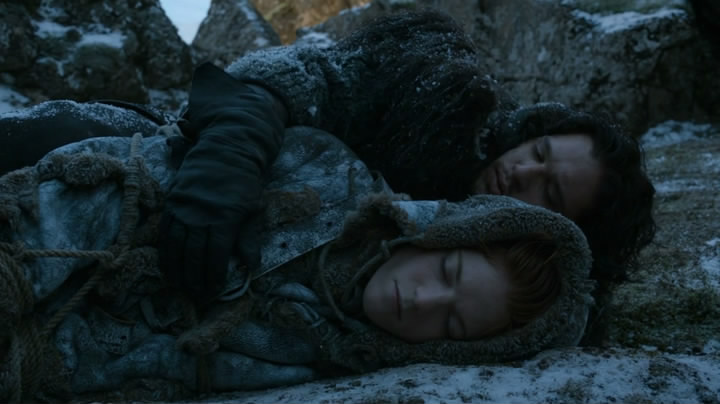
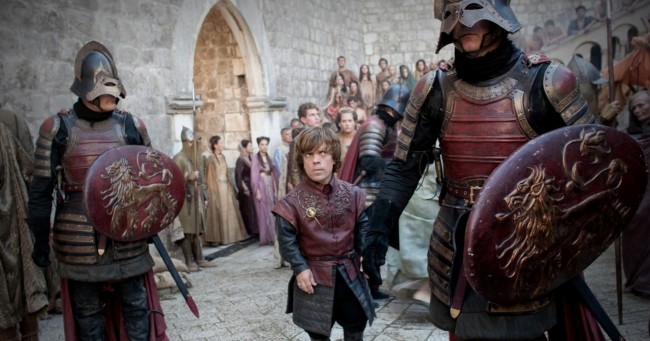
Meanwhile, war is on its way to King’s Landing. Tyrion and Cersei worry about Joffrey’s ability to lead. Sansa meanwhile reaches womanhood and is terrified that she must now bear Joffrey’s children. While trying to make his way back to their encampment, John Snow is taken captive by the Wildlings.

Good Points and Bad:
In short, the big threads from episodes 5 and 6 come together and the divergences really become clear. To break them down succinctly: Robb never left his encampment to deliver terms, thus giving Jaime a chance to escape. Nor did he kill his cousin in order to make this happen. To top it off, Catelyn did not let him go to keep the peace in the camp while Robb was away. All this happens quite differently in the text.

Robb is off on campaign, his romance happens off-camera, and he returns to learn that Catelyn has set Jaime and his cousin go with Brienne because the (fake) news of her son’s deaths has shaken her terribly. She wants her daughters back and is even willing to trust Jaime at his word, and Brienne to deliver him and bring her daughters back. And, as said before, this all took place at Riverrun, not in some encampment along the way.

Second, John did not get lost in the wilderness with Ygritte only to get captured by the Wildlings. He let her go, returned to his camp, and was only taken prisoner after they caught a glimpse of Mance Rayder’s forces and were overtaken. Before that, Qorin made John promise to allow himself to be taken and learn what he could about their plans. By being taken prisoner against his will, the subplot about John’s supposed defection is now gone.

Last, but not least, there was no plot by Xaro to take over Qarth. Nor was there any attempt to steal her dragons to lure into the House of the Undying. She accepted the invite and went in, and Xaro’s plot never went beyond offering her marriage. Clearly, they were trying to sex this plot line up since there really wasn’t much going in the book compared to the other threads. But this constitutes a major addition, not just a change.

Out of all this, I can see where things are going: John will now be a captive in the Wildlings camp and have to convince them he’s willing to betray his brothers. This was already present in the text, but part of what made it convincing was the fact that John had made a promise to Qorin. What’s more, Qorin died in a staged fight between them, which means they’ll have to find another way to kill him off in the show.

Daenerys plot thread will pretty much resolve itself given what happens next (no spoilers!), but this still feels like a major divergence. And the changes involving Jaime, Robb, and Catelyn will also re-converge with the set storyline easily enough, just the particulars have changed. For example, now it will just be Brienne and Jaime travelling south, which is fine considering that his cousin dies in transit anyway.

So aside from some necessary rescripting, the makers are still being faithful to spirit of the books, if not the word. What’s more, I find myself approving of some of the changes they’ve made. It honestly seems like the writers were looking for more plausible resolutions and explanations in a number of cases, not to mention opportunities to flesh out things which only get mentioned in the text.

And of course, the big battle at King’s Landing is still yet to come. Ohhhh, so exciting!

Cool Ships (volume VIII)

Battleship Yamato:
A couple times now I’ve given praise to ship designs that went beyond the usual airplane/ seafaring paradigm. But what can you say about a spaceship which is a carbon copy of a old sea battleship? I don’t know, gutsy maybe? That its paying homage to the original? That’s all I can really say on this one, since it is identical to its namesake from the Imperial Japanese Navy.

Taken from the anime series of the same name, the Yamato was a prototype ship which was built in secret by Earth forces in the ruins of the original. Using alien technology, it was the first Earth ship to boast FTL and a “wave-motion-gun”. These devices were meant to give it an edge in the ongoing war with a race known as the “Gamilons”.

Early in this war, the Gamilons had bombarded Earth with radioactive meteorites. The result was that all human settlements had to be moved underground. However, the radiation was slowly working its way down to the inhabitants, and the only hope for survival came in the form of a message from a distant star. After completion, the Yamato was meant to fly to this world and retrieve the device which apparently could cleanse Earth of its poisonous radiation.

Thus, the Yamato was created to perform a mission that meant the very survival of the human race. It’s drive system was to make sure it could make the trip, while its weapons were meant to ensure it could defend itself.

Cylon Heavy Raider:
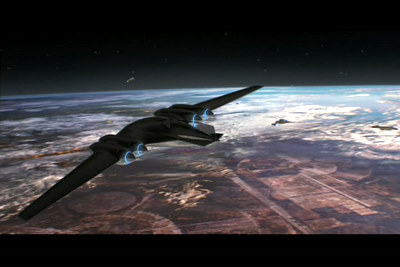
Another installment from the BSG universe, here we have the heavy hitter of the Cylon fleet, the dual purpose attack and transport craft, otherwise known as “the turkey”. Capable of atmospheric entry, space flight and FTL travel, the Heavy Raider is capable of attacking, transporting troops and conducting boarding operations.

Unlike the standard Raider, the heavy can either fly itself on autopilot or be piloted by actual an Centurion. However, its automated functions do not appear to be the result of a sentient nervous system. In terms of armaments and capacity, the heavy has six cannons mounted under its cockpit and its bay is capable of holding up to ten Centurions.

The Heavy Raider made its first appearance in season one (“Scattered”) when one crashed into the starboard flight pod. On Caprica, Sharon Valerii (Boomer) commandeers one to provide fire support to the resistance and save Starbuck as she escaped from a Cylon medical facility (“The Farm”). The Heavy Raider would go on to make several more appearances in the series, particularly whenever assault missions or heavy raids were concerned.

Quasar Fire-class Cruiser:
Once more onto the Star Wars universe, my friends! But this time, its into the expanded universe with a ship that is somewhat obscure by most standards. Known as the Quasar Fire-class cruiser, or Alliance Escort Carrier, this ship made its first appearance in the Thrawn Trilogy during the Battle of Bilbringi then again in the novel The Truce At Bakura.

Designed by the Sullustans as a cargo transport, many of these vessels were given to the Alliance and converted for combat. This consisted of stripping down the cargo bays and turning into hangars, and mounting defensive turrets at the front and rear.

Thought lightly armored, armed, and shielded, the Quasar’s small size and versatility make it a ship of choice for small fleets and minor attack forces. It’s six squadrons of fighters also give it an effective defensive screen, making it all the more suitable as a small fleet command ship.

The Leviathan:
Did I say once more, I meant twice… maybe more! And this one goes way back, to roughly 4000 years before events in the original movies. Officially known as an Interdictor-class cruiser, this vessel was the mainstay of the Republican navy during the time of the Mandalarion Wars and was featured heavily in Star Wars: Knights of the Old Republic.

During the outbreak of the Sith War which immediately followed, the Leviathan served as Darth Revan’s flagship. After he was captured by the Jedi Order, ownership of this vessel changed to Darth Malak. The ship was responsible for obliterating the surface of Taris and was later the site where Darth Revan, now working for the Jedi Order, confronted Darth Malak for the first time since his defection.

Measuring 600 meters in length, the ship carries an arsenal of 20 quad laser cannons, 4 turbolasers, 2 ion cannons, and four squadrons of fighters. Although somewhat mild by modern Star Wars standards, she was designed to be a forerunner to the modern Star Destroyer design.

Negh’var-class Cruiser:
Despite their brawling, yelling and terrible table manners, you gotta admit; the Klingons make a fine looking ship! And this is especially true of the Negh’var-class warship, the heaviest of the heavies in the Klingon armada, serving as the command ship on many different occasions (and in multiple universes).

Ships of this kind made their first appearance in the series finale of Star Trek: TNG when two attacked the USS Pasteur. Another appeared in DS9 when a changling posing as General Martok led the Klingon fleet against the Cardassian Union, and again against Deep Space 9 when the Federation chose to oppose the invasion. They also went on to play an important role in the Dominion War alongside Federation and Romulan warships.

In addition to the standard cloaking device, the Negh’var carries an impressive array of armaments, including two massive disruptor pods mounted underneath the ship’s wings. It also carries multiple photon torpedo launchers, and several smaller emitters mounted across the ship. She is also capable of standing toe to toe with most other ships in the Alpha Quadrant in terms of velocity, making it up to speeds of Warp 9.

Ornithopter:
Not long ago, I was lamented the fact that I kept forgetting to mention anything from the Dune universe. Now I can’t seem to do a single post without including a Dune ship! This time, its the ornithopter, the curious cool ship that’s perplexed readers and conceptual artists for some time.

The most common vessel in the Imperium, the ornithopter (or ‘thopter for short) was an extremely versatile vessel that served primarily as a cargo vessel and transport. In addition, they often served in a military capacity, being fitted with lasguns, bombs and missiles. This was particulalry the case during Paul Muad’ib’s uprising, when House Atreides ‘thopters were fitted for the assault on Arrakeen and the Imperial Palace.

According to numerous descriptions taken from the expanded Dune universe, the thopter was primarily powered by jet propulsion, but relied on a set of beating wings to maintain altitude and maneuver. The concept has gone through several renditions over the years, due to the many attempts to adapt Dune to the screen. In David Lynch’s 1984 movie adaptation, ‘thopters appeared as small, box-like crat with swept wings that retracted and deployed from the fuselage.

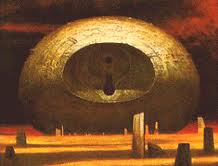
In the 2000 miniseries, they were pictured as vertical take off and landing craft with fans mounted in pivoting wings. The featured picture (shown above left) is taken from The Road to Dune and is an artists concept of what a ‘thopter would look like. Here, we see beating wings which deploy for takeoff and retract upon landing.

USNC In Amber Clad:
Feels like its been awhile since I included anything from the Halo universe. And so here’s the Reunion, a Vladivostok-class guided missile frigate. Though somewhat old and outclassed by modern Covenant standards, several frigates played a crucial role in the Great War against Covenant forces. One such vessel was the In Amber Clad.

Armed with 12 Point Defense Guns, 40 missile pods, 5 twin rail gun turrets, a magnetic accelerator cannon, a compliment of Shiva nuclear missiles and a full compliment of Marines, dropships and escort fighters, the In Amber Clad was considered the mainstay of the old Earth fleet. Capable of atmospheric entry and landing, this ship did not need to rely on drop pods or shuttles, and could land an entire Marine force by itself.

During the Covenant War, these frigates were replaced by the larger and more heavily armed Halcyon-class cruisers. However, the In Amber Clad managed to score a significant victory over the Covenant during the Battle of Installation 05. During the course of the battle, it served as the flagship and won the day when it crashed into the Covenant ship High Charity.

VF-1 Veritech:
As requested, I’ve finally found an example from the Robotech universe! And to be honest, I wondered how long it would take. Though I’m not too familiar with this franchise, the RPG is something I remember fondly from my childhood, and some of the designs still percolate in my consciousness.

One of which is this, the VF-1 Vertiech, also known as the “Valkyrie”. This battleoid, which was adapted from alien technology (known as Protoculture),was originally designed for hand-to-hand combat with aliens which were up to 15 meters in height, the Veritech and subsequent breeds of mechas became the new face of warfare.

Mechas can function in both the fighter and mech role. Capable of flying through space, atmospheres and fighting on land, the Veritech was one of the most versatile and maneuverable mechas in the known universe. With a flight speed of Mach 3 (in atmosphere), and a top speed of 100 km/h running, she is as fast as any land vehicle or aerospace vessel. In addition, the standard Veritech carries two high-powered lasers, head mounted laser cannons, guided missiles, a rotary cannon, and is even capable of engaging in hand to hand combat.

YT-2400 Corellian Freighter:
To finish, I’m in the mood for something Corellian! And so it’s back to the Star Wars universe for this one. Much like its predecessor, the YT-1300 (a.k.a. the Millennium Falcon), the 2400 was a class of light freighter that was fast, tough and endlessly modifiable. So like the Falcon, it was a favorite amongst smugglers, merchants and privateers.

Smaller and lighter than the 1300 series, the 2400 boasted only one servo-turret for defense in addition to its shield array and armor plating. However, this could easily be remedied with the addition of extra guns and missile launchers. And its ample hull space and engine power, the 2400’s could easily accommodate additional mounts and the added weight.

One such ship which acheived notoriety during the Galactic Civil War was the Outrider, the ship of famed smuggler Dash Rendar. This ship, like most other 2400’s, was heavily modified to accommodate additional systems and weapons. Clearly, when the Corellian shipyard designated this vessel as freight transport, it was a nod and a wink!

Thank you all and good hunting! See you in next time in volume 9!

Game of Thrones (Season 2 Ep.5&6)

Back with more from season two. Last time, things in the show left off with Theon Greyjoy heading for Winterfell, John and his brothers making camp in the Fist of the First Men, Arya being brought to Harrenhal to wait on Tywin Lannister, and the rivalry between Renly and Stannis Baratheon coming to a head. In episodes 5 and 6, we see these threads developed further and got some more twists along the way. As always, I felt that it was all a faithful if not a 100% accurate adaptation of the story.

Episode 5: The Ghost of Harrenhal
This episode was named in honor of the thread involving Arya and her incarceration in Harrenhal. While serving as Lord Tywin’s cupbearer, she meets up with Jaqen H’gar who tells her that he owes her three lives. She selects the first, the torture expert they call “The Tickler” and sees take him a terrible fall which breaks his neck. In the south, Renly Baratheon is killed by Melissandre’s dark shadow. Brienne is believed to be the culprit, forcing her to flee north with Catelyn Stark.

Tyrion learns of Cersei’s plan to use wildfire to defend King’s Landing and assumes control of the defense planning. To the North, John Snow meets Qorin Halfhand, the legendary man of the Night’s Watch, and joins him on patrol. On Pyke, Theon continues to have problems garnering respect from his Iron kin. He comes up with the bright idea to attack Winterfell once he’s drawn its host away.

In Qarth, Daenerys receives a proposal from the wealthy trader who took her in (Xaro Daxos). In exchange for her hand in marriage, she can have half his wealth, more than enough to buy all the ships she needs to travel back to Westeros. He is not the only one taking an interest however, as it is clear that the “Undying”, the mystics of Qarth, are also interested in the “Mother of Dragons”.

Episode 6: The Old Gods and New
While on partol with Qorin, John Snow and the brothers kill a Wildling party. A woman named Ygritte is taken captive, but escapes before John can execute her.After chasing her down, they are forced to spend the night in the wild together.

Theon manages to take Winterfell and demands its submission, which Bran is forced to give. He escapes later when Osha – the Wildling captive – seduces Theon and sneaks them to safety.

In King’s Landing, Myrcella is sent off to Dorne and an angry crowd tries to mob Joffrey and his family. Sansa is briefly captured, but the timely arrival of the Hound saves her. Arya is discovered stealing one of Tywin’s letters and must select her second victim for Jaqen. He dies on Tywin’s doorstep, making Tywin think they have an assassin in their midst.

Robb and Talisa continue to fall for each other, a growing source of concern for his mother. In Qarth, Daenerys continues to struggle to find financial backers of men who will give her the ships she needs. She returns to Xaro’s compound to find most of her host murdered and her dragons stolen…

Good Points and Bad:
Okay, this time around I thought I’d coalesce the good and bad points into one, mainly because they are similar. For starters, there is what they did faithfully. Renly’s death, Arya’s communion with Jaqen, the riot in the city, and Theon’s sack of Winterfell were all well within the parameters of the text. However, when it came to differences, they are bigger and more frequent.

For starters, the show continues to show Robb on campaign with his mother and Jaime in tow. In the novel, Jaime remained as a prisoner in Riverrun while Catelyn was in the south. Upon her return, she did not see Robb until he returned from campaigning, nor did anyone know about his relationship with Talisa until he returned. So putting them all together in one place was clearly a way to cut costs and simplify the shoots.

Second, at no point during Daenerys stay in Qarth were her dragons stolen. This seemed like an obvious attempt to add some drama and set up what happened in the next episode, another change which they thought to introduce. Third, there was the storyline with Ygritte. Suffice it to say, things deviated from the text. John did not chase Ygritte into the wilderness and spend a night full of temptations with her, he let her go. Later, they would be reunited, but as a result of something entirely different. Here too, I am restricted in what I can say because I don’t want to spoil things who haven’t seen episode 7 yet.But rest assured, I’ll explain all this in the next post.

Overall, I didn’t see too much wrong with any of these changes. As usual, they seemed like a way to compress certain elements of the plot and explain stuff that constituted background but was not actually dealt with in the text. However, the fact that they are starting to multiply is noticeable at this point, and has a way of giving geeks like myself pause 😉

Up next, episode 7!

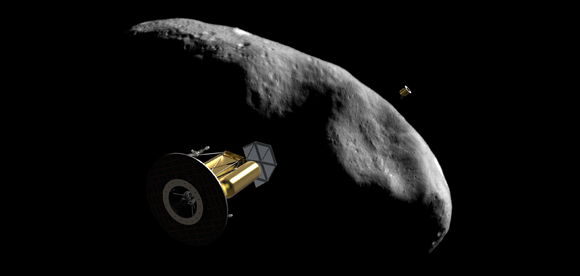
The Future is Here: Asteroid Mining!

The concept is not entirely new. In fact, it’s been a staple of science fiction for some time. Moving mining operations, refineries and even heavy industry to the Asteroid Belt as a way of reducing environmental stress and taking advantage of the sheer abundance of natural resources there. It was the concept behind Ben Bova’s The Asteroid Wars trilogy, and was even mentioned as early as 1898 in Garrett P. Serviss’ story Edison’s Conquest of Mars.

But as they say, science fiction leads to science fact. And when it comes to mining the asteroid belt, it seems some wealthy financiers and visionaries are hoping to get in on the ground floor. The company’s name is Planetary Resources, and its backers include James Cameron (of Aliens and Terminator fame) and Google founder Larry Page. Between these three forces, the idea and development capital are being made to being the commercial exploitation of our system’s many, many rocks.

The plan call for the development of viable space craft which will be able to fly out to the Belt, harvest materials, and then return. However, the long term projections involve the creation of mining colonies, heavily automated facilities that will be capable of taking in harvested rocks and ore and convert them to useable materials before they are ever brought back to Earth. After all, while every asteroid is a potential goldmine (literally!), the goal here is to eventually move the majority of the smelting and other potentially harmful operations off of Earth, into space and into orbit.

Click on the link below to read the full article and video below to learn the full extent of the company’s plans. Who knows? If the prospect looks good, maybe Cameron will want to buy the rights to Bova’s series and start making a series of promotional movies 😉

CBC News – Planetary Resources Inc.

http://www.cbc.ca/news/technology/story/2012/04/23/space-mining.html

Game of Thrones Season 2 (Episodes 3&4)

Games of Thrones is now well-passed the midway mark, and some things are becoming clear. Much like with season one, their are some changes, some additions and some subtractions, but the end product is still quite faithful. And with things coming to a head vis a vis the war in the south and things beyond the Wall, I thought it was time to delve back in and examine the various episodes so far.

Episode 3: What is Dead May Never Die
In King’s Landing, Tyrion begins to plot a series of alliances, and uses them to flush out Cersei’s informant, which turns out to be Grand Maester Pycelle. In the end, he chooses to send Myrbella, Cersei’s only daughter, to Dorne to marry the Prince of Sunspear. In the Stormlands, Catelyn arrives to entreat with Renly, who is moving towards King’s Landing with a huge force, but still must meet with his brother to decide who shall be king.

North of the Wall, Snow and the Brothers are forced to head north after Craster discovers John spying on him. Lastly, Arya’s group is attacked in the night by the Kingsgaurd and taken to Harrenhal. And on the Iron Isles, Theon Greyjoy arrives to find that his father plans to conquer the North, and decides to join him.

Right off the top of my head, I noticed several things which were consistent with the text. Tyrion’s ruse to flush out Pycelle for one, that was right out of the story and performed quite faithfully. The way he sought to find a position for Shae, his courtesan was trimmed down, but still quite accurate. And Theon’s perspective, the way he returned to Pyke to find that his family now considered him an outsider and the way he was torn, very true and bang on! Beyond that though, I noticed several big differences, but which worked out quite well in the end.

For starters, Arya was not taken prisoner so quickly after her party was discovered by the Kingsgaurd. After freeing Jaqen H’gar and the other prisoners, she, Gendry, Hot Pie and Lommy ended up making their own way north for some time before they were captured by the Mountain (Gregor Clegane), the Tickler, and his party. Only then were they brought to Harrenhal.

Also, the extended parts where we see Renly, Sir Loras and Margaery Tyrell talking about their plans and carrying on with their triangle, I’ll have to check, but I don’t recall any of that happening in the book. After Catelyn arrived in Renly’s camp, the majority of that thread was spent talking about Brienne, and the adversarial relationship between Renly and Stannis, and their negotiations for some kind of alliance. Some hints were given that Renly preferred the company of Sir Loras, but nothing of this sort was ever shown or talked about.

But this really didn’t matter. In the end, these changes were quite effective, either cutting down on things which really didn’t need to be shown or expanding on things which could use them. I even wondered when I read book II why the affair between Renly and Sir Loras wasn’t being detailed more now that he was getting married to Margaery. He marries the woman who’s brother he’s bedding, one would think this would raise certain complications, especially if she knew!

Episode 4: Garden of Bones
After wandering in the Red Waste for so long, Daenerys is invited to the great city of Qarth where her reputation as the “Mother of Dragons” is already gaining her notoriety. At King’s Landing, Tyrion and Bronn try to find a way to temper Joffrey’s cruelty for Sansa, whom he blames for Robb Stark’s latest victories.

In the Stormlands, Renly and Stannis meet for the first time and years and entreat with each other. However, talks break down when neither man is willing to give ground and Melissandre begins to unleash a dark power to kill him.

In Harrenhal, Arya and Gendry are placed in the docks to await torture. They are narrowly saved when Lord Tywin arrives and decides to put their talents to work. Theon still gets the short end of the stick from his father, who hands control of the bulk of their fleet over to his sister. He vows to outshine her however he can. And in the North, John and the Night’s Watch arrive at the ancient fortress known as The Fist of the First Men.

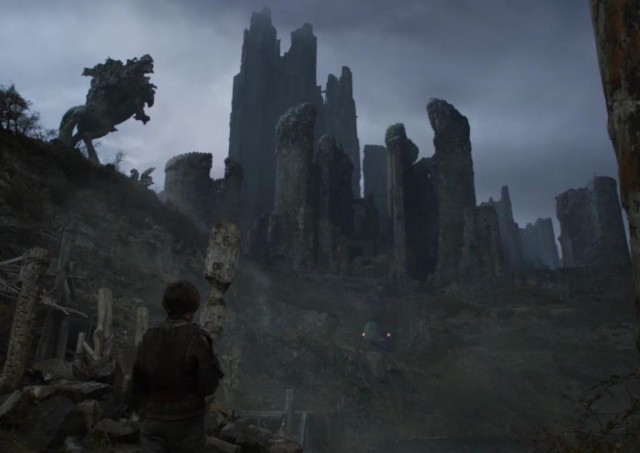
This episode was especially good in two respects. For one, it finally delved into the the thread involving Daenerys’ and her host after three episodes in which she was practically absent. Second, it was in this episode that audiences got to see Harrenhal for the first time, which I anticipated would be a challenge given the description of the massive but ruined fortress. Beyond that, the episode was the usual mix of changes and faithful adaptation that characterize this series.

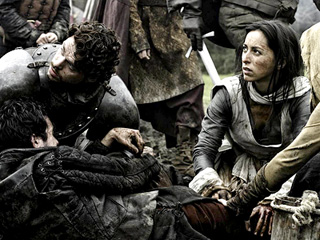
Of those changes: In this episode Robb gets to meet his future wife, Talisa Maegyr, while campaigning in the Lannister lands. This never happened in the book. In fact, we never even got to meet her until he returned to Riverrun and announced that he had taken a wife, thus endangering his alliance with House Frey.

There is also the scene where Joffrey decides to torture the two prostitutes which Tyrion sent him as a “gift”. This is actually an ongoing difference with the series, where the character of Ros continues to make appearances that never happened in the novel. I’m guessing this was an executive decision on behalf of the creators, who probably guessed that her perspective from season one was something worth continuing.

Finally, there was the scene where Davos Seaworth, Lord Stannis’ loyal Captain, travels with Melissandre to an underground passageway in order to unleash the dark shadow she carries within her. This scene actually took place later in the book when Stannis had unready assassinated his brother and was now using a similar shadow to kill the Lord of Stormwatch, the border fort which was holding out against him. This is why the shadow is being unleashed in an underground passageway, because it was the only way to get into the fort.

Instead, this is all amended in the show to make Renly the intended target while he is in his encampment in the Stormlands. Much like the way they trimmed the plot in episode 3 where Arya and Gendry are captured, they cut out a middle portion in order to make things conclude more quickly. This is not a bad thing, mind you. These and other scenes did a good job of adapting material from the text to the screen. And as usual, there is plenty which was accurate and praiseworthy. The depiction of Harrenhal, a massive burned fortress which Tywin Lannister commander his armies from, was beautifully shot in this episode.

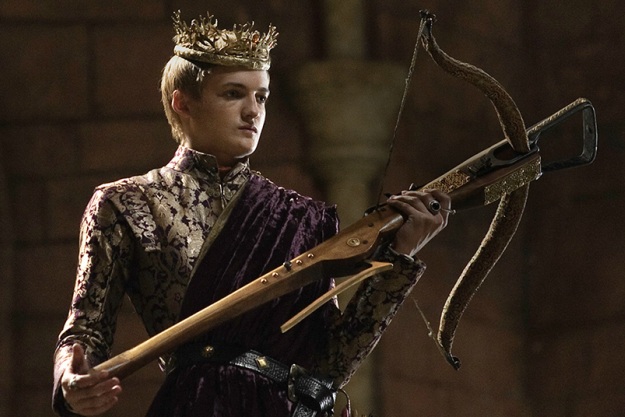
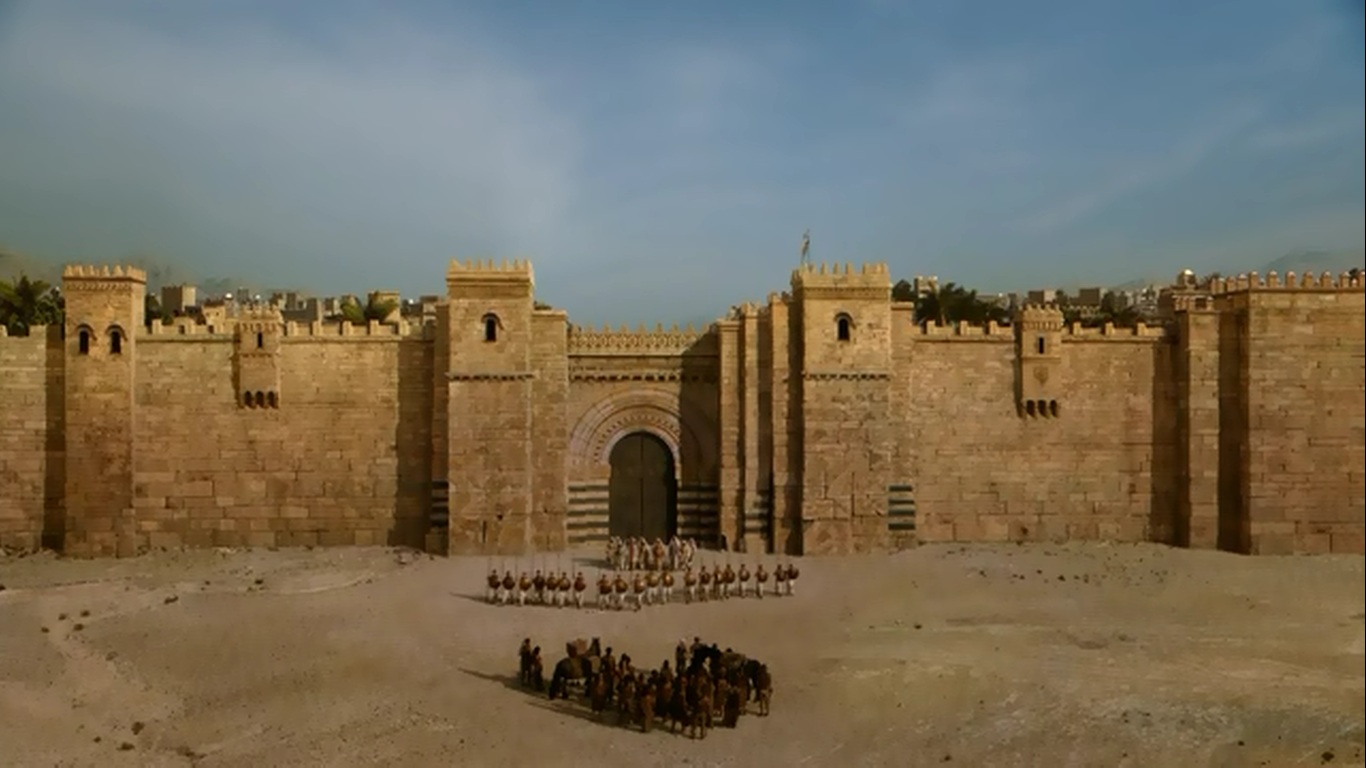
And though Qarth only got the barest introduction, it was a good start as far as depicting a near-Eastern inspired metropolis was concerned. The artists who detailed the cityscape were clearly inspired by Renaissance depictions of what ancient Alexandria, Babylon and other Oriental paradises were thought to look like. And of course, they way they depicted Joffrey’s sociopathic nature, which always seemed to involve a crossbow in the story… quite apt!

So far… so good. Stay tuned for my next post, in which I will cover episodes 5 and 6, where Ygritte and Qorin are introduced, Theon sacks Winterfell, and Arya gets a visit from an old friend who owes her one… or three. Stay tuned!

Crashland – Chapter 8, coming soon!

Things are once again picking up for the people of Crashland! The votes have once again come in and the readers have spoken. And as a result, Chapter 8 is on the way! Which means that the mysteries which have building since the beginning will soon be revealed.

But first, allow me to recap. Last time, the stories protagonist, William Holden, awoke to find himself in an abandoned subway with a group of strange men. His wounds were treated, and they wanted to know who he was. With the city degenerating into chaos, they were understandably reluctant to let just anyone in their camp and give them food, medicine and their trust. Holden knew that depending on what he told them, he might just be allowed to stay, or shot!

After telling them that he was a fictitious employee working for his own company (a lie), the one named Jacobs informed him that the city above them had descended into hell. Whatever hopes Holden had of finging aid and comfort, not to mention his family, were in vain. Holden didn’t take the news too well and began to experience a breakdown. This left Jacobs and his companions with a tough choice to make.

Jacobs boss, a man named Kurzweil, revealed that they knew who Holden really was and needed his help. The chapter ended before their identities could be revealed, but two things were clear: whatever they’ve got planned, it sounds big. And whoever they are, they mean business! In the next chapter, more will be revealed. How the world went to hell, who caused the infopocalypse, and how some plan to rebuild it.

So please, come on by and check it out. And, as usual, stay around to vote on what you want to see happen! It’s all happening over at Story Time!

Attack of the Clones. Here we go again…

Hello again! Here we are picking things up again with the Star Wars saga. Today, it’s the second installment in the prequel series, the ridiculously named Attack of the Clones. As I’m sure we all remember, Clones was the stuff of mixed reviews, some critics hailing its special effects and visual style, while others emphasized its flat dialogue and wooden romance.

But even more interesting was the fact that critics were torn over whether it was better or worse than the Phantom Menace. Not a good sign, and the butt of a LOT of jokes and debate. Hard to imagine that fanboys who were united in bashing the PM would find themselves fighting each other over which they thought sucked more!

But to be fair, there were some good points in this movie. So without further preamble, let’s get into it:

Plot Synopsis:
The movie opens with the crawl once again saying that there is a crisis. This time around, it’s the threat of Separatists – led by former Jedi Count Dooku – that’s making things problematic. And once again there is deadlock in the Senate over it. In any case, now-Senator Amidala comes to Coruscant to speak her peace on behalf of those who oppose taking strong measures, and an assassination plot gets underway.

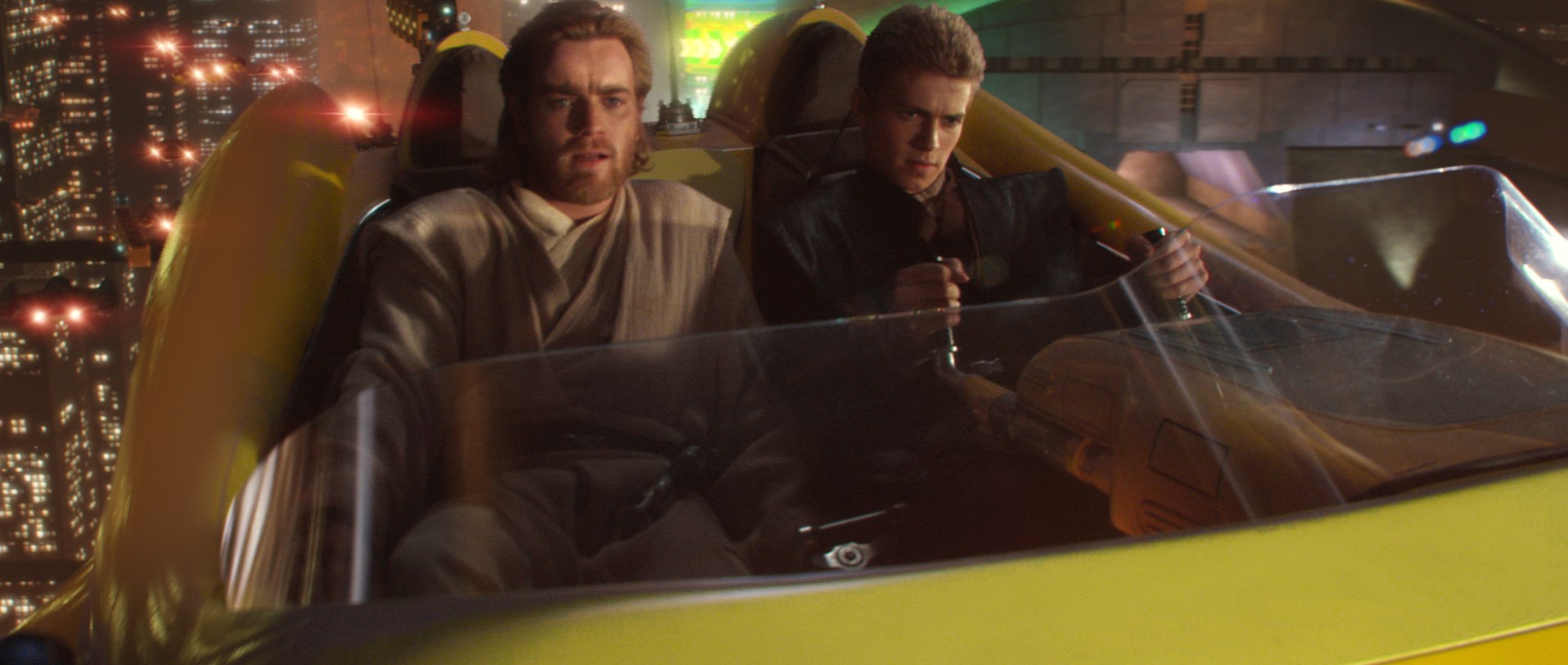
This prompts the Jedi order to send two old friends, Obi-Wan and Anakin, to provide her with added protection. Their introduction is rather painful to behold, as the hormonally raging Anakin begins relating how he hasn’t stopped dreaming of her and tries to make awkward conversation with her. He also picks a fight with his mentor, Obi-Wan, over what their mandate truly is. In the midst of all this, Jar Jar breaks the fourth wall by looking into the camera and smiling at the audience – a sort of, “I’m still here, bitches” for all the fanboys to see!

In another bit of “things to come”, we also learn that Anakin has been having dreams of another woman – his mother. He dreams that something terrible is going to happen, but in the meantime, they must focus on Padme, who’s assassin is still out there. For some reason, they decide to “use her as bait”, which consists of letting her sleep in a window-filled room with nothing but R2 as protection. Didn’t Obi-Wan say they weren’t supposed to be investigating, just protecting? Oh well…

In any case, her would-be assassin sends a probe with some poisonous slugs to attack her. Obi-Wan and Anakin kill said slugs, and Obi-Wan jumps through the window to grab the probe and ride it. Wait, didn’t he say they weren’t supposed to be investigating? Why’s he so determined to follow this probe then? Anakin grabs a speeder, they fly like mad, and chase the attacker through the city. Anakin reveals that this woman is a shape-shifter, a fact which seems superfluous, but whatever. They also performs some stunts that defy the laws of physics, but that’s also unimportant.

After reaching a bar, Obi-Wan and Anakin chase her inside and begin combing the crowd. After a quick re-enactment of the scene from A New Hope (where Obi-Wan sliced off another thugs hand), they drag the shape-shifter outside and learn she’s subcontracting. But of course, her contractor kills her before she can say her name. Obi-Wan, who for some reason was willing to chase the shapeshifter across the planet, just lets him go…

The Jedi Council decides its time to send Padme home, and that Anakin is to go with her. Meanwhile, Obi-Wan is to track down the assassin by himself, a quest which takes him to the world of Kamino. This decision to split them, far from making logical sense, seems more like an excuse to get Anakin and Padme alone. Why send a Padawan off on his own, especially when his master has such misgivings about his attitude and powers?

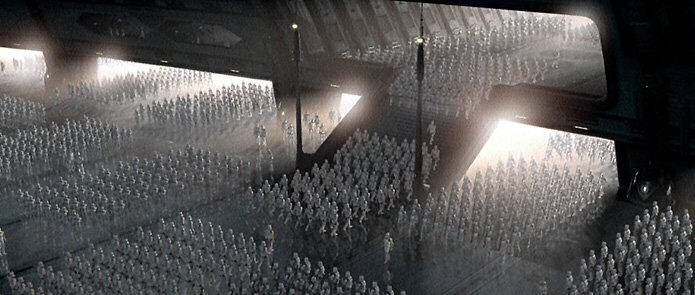
But anyhoo, things get kind of cool when Obi-Wan arrives on Kamino and learns that former Master Sifo Dyas ordered the creation of a clone army. This, combined with the fact that the location of the planet was removed from the Republic archives memory would seem to indicate that there is a conspiracy afoot. Obi-Wan then meets with the clone template, a bounty hunter named Jango Fett, and is convinced he’s found Padme’s would-be assassin. They fight, Jango escapes, and Obi-Wan pursues him to Geonosis.

Meanwhile, we get a string of scenes that are meant to elicit a romantic response. After following Padme around, complaining bitterly about Obi-Wan and professing his love in a series of ever creepier and wooden dialogue, Padme tells Anakin there’s no way. Why? She’s a Senator… Uh, what? Are Senators not allowed to date? Of course, Anakin can’t because he’s a Jedi, but the very fact that they’re talking about this would seem to indicate the feeling is now mutual. Seems sudden, but neither here nor there…

Arriving at Geonosis, where there’s a massive a droid-building colony, Obi-Wan gets into it with Jango and the Slave I. After thinking he’s killed him (Obi-Wan eludes death by copying Han’s hiding move from Empire), Jango proceeds to planet and Obi-Wan follows shortly behind. After wintessing a meeting between Dooku and the Separatists in which they plan their attack (using their droid and clone armies), Obi-Wan broadcasts his position and is then captured. He meets Dooku, who proceeds to tell him the truth, after a fashion…

He tells Obi-Wan there is a Sith in charge of the Senate, and that his plans are motivated to bring him down. He asks for Obi-Wan’s help, who in a move taken from Empire and Jedi, tells him he “will never join you”. Back on Naboo, Anakin continues to have bad dreams about his mom and decides he must go to Tatooine. He retraces her path, only to discover that she was taken in by some people from the movie – the Lars family, which includes the future Uncle Owen and Aunt Beru.

He learns she was taken by Sandpeople, and catches up with them just in time to watch his mother die, at which point, he and loses it! And I mean REALLY LOSES IT! In a scene we don’t get to see, Anakin takes out his lightsaber and kills the entire community of Sandpeople who kidnapped and tortured his mom, including the women and children. He returns to the Lars family dwelling and tells Padme of his mass murder, to which she replies that it’s no big deal.

I’m sorry, NO BIG DEAL?! Are you freaking kidding me? Seriously, this man just confessed to murdering women and children and all Padme can say is that “to be angry is to be human”? What kind of sociopathic, enabling bullshit is that? Is she so into bad boys that she’s willing to overlook this first-time offense? Or are they in such a hurry to get to the next scene that she’s just got to forgive and move on? And why the hell didn’t the Jedi Order even mention this on his return? We all saw Yoda sensing it? C’mon people!

Alright, moving on… Back on Coruscant, the news of a Separatist army explodes like a bombshell, with Palpatine once again exploiting it for personal gain. Thinking he’s doing the smart and noble thing, Jar Jar moves that Palpatine get emergency powers – a la Octavian – and his first act is to create an army for the Republic. Why they don’t have one already is beyond me, but who cares? Point is, Palpatine has got his way, and Yoda and Mace Windu decide its time to get involved.

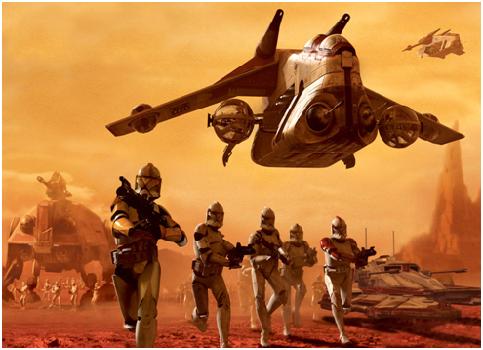
Anakin and Padme also get the distress signal from Obi-Wan and decide they will go save him. They arrive on Geonosis too and after a needless scene where they are almost killed in a robot factory, they too are captured. A scene ripped off from Gladiator follows, as they are reunited in a massive Colosseum-type arena to die in a public display. They escape and begin to wreak havoc, and are rescued just in time by the arrival of Mace and the Jedi Order. They fight to a standstill and are surrounded, when Yoda arrives with the Clone army and begins kicking some ass.

A big fight scene ensues on the open plains of Geonosis between droids and Clones, while Obi-Wan and Anakin chase Dooku down. He beats them both in a rather implausible scenario, first managing to cripple Obi-Wan without actually killing him or severing any of his limbs, and then cutting off Anakin’s arm (an obvious preview of the scene from Jedi). Yoda once again shows up to save the day, and in another scene from Jedi, Dooku does his lightning trick.

The fight ends with a stalemate, Dooku runs with Padme shooting at his ship. Once more, a scene from the originals is at work here, this time from Empire when Leia was shooting at the Slave I. But Dooku escapes, makes it back to Coruscant and tells Sideous (Palpatine) that the war is happening, as anticipated. He meanwhile sends the first batch of clones on their new Star Destroyer look-alikes, and Yoda laments that the Dark Side has fallen and “The Clones Wars” have begun.

The movie ends with Padme and Anakin back on Naboo, where they’ve decided to get married after all. But since it’s a secret wedding, the droids are the only parties in attendance. THE END!

What didn’t work:
Well, where to begin? I shan’t dwell on the wooden dialogue or the horrid lack of romantic tension, since those are the popular whipping posts of most critics when it comes to this movie. Instead, I’d like to stick to some of the more obvious weaknesses, those that become more clear with hindsight.

  1. The Set-Up: Things get rolling when we learn that an assassin is trying to kill Padme, presumably because she’s the voice of moderation between the Republic and the Separatists. However, things get really implausible, really fast. For one, why the hell did Jango Fett subcontract anyway. Why not simply kill her himself? And why did this lady use poisonous bugs when a simple bomb would have killed Padme instantly? We saw how easily that probe flew to her window, so why the slow, stupid and easily thwarted approach? Then came how Jango’s involvement led Obi-Wan on his wild goose chase. The only reason he knew to find him on Kamino was because he used a dart which was manufactured there. The only reason he know to fly to Geonosis was because Jango mentioned it to him. And why was Jango pulling double duty with the whole assassination thing anyway? If the Kaminos are such good cloners, anybody’s DNA would do and they could just enhance it. Having him do that and eliminate Padme was just a way to tie the two plots together really and make sure Obi-Wan could find out all that was going on.
  2. Love-Story Contrivances: I know, I said I wouldn’t mock the terrible dialogue, which I won’t. To me, the real weakness here was just how contrived and unnatural the whole love story seemed. Aside from a brief, age-inappropriate meeting ten years before, Anakin and Padme are practically strangers. Having Anakin say that he’s loved her ever since they met was completely forced. On top of that, the way they are sent to Naboo together and all the scenes of them doing lovers things: boating, playing in open fields, eating and retiring to the hearth – are all obvious attempts to try and force a sense of romance. That’s the key word here: force (no pun intended). Between Anakin constantly announcing his feeling for her and all the idyllic scenery they take in, it’s like Lucas was behind us constantly saying “Look, they’re in love!” In the original movie, Lucas took his time to build up the romance between Han and Leia. In the beginning, they couldn’t stand each other, but this concealed some genuine tension. In time, this flourished as they got to know each other and began to start acknowledging each others strengths. In the end, it was clear that their different backgrounds and personalities is what led to their attraction. Throw in some genuine crisis, and they realized they were in love. See? That’s a love story, not this!
  3. Unsubtle Dialogue: Again, said I would avoid talking about the wooden dialogue. Which I am, sort of! My gripe here is just how unsubtle and (again) forced it all was, which is something the critics really didn’t get into. Examples: in the beginning, Anakin announces that he loves Padme when talking with Obi-Wan and Jar Jar. When talking to Padme, Anakin announces that Obi-Wan is an unfair master who’s too hard on him. When sitting around the fire, Anakin announces how much he loves her. Finally, she announces her feelings back. And in this, they are hardly alone. All throughout the movie, actors announce what’s going on as a means to convey what’s happening and to make the audience feel the requisite emotions. Never is time taken to convey feelings, mood, or establish tension the old fashioned way. And this just makes for a bad movie! As Robot Satan said in Futurama: “You can’t have characters just announce their feelings! That makes me SO ANGRY!”
  4. Way Too Much: In the documentary of the making of Phantom Menace, there is a lovely scene where Lucas and his people are watching the screening and there’s this moment of “uh-oh” at the end. They then discuss how Lucas did too much and how that brought down the ending. You’d think between movie one and two, he would have learned from this, but no! In this movie, he tried to do way more. On top of showing how romance developed between Padme and Anakin, he’s also shoved in a big ol’ preview of Anakin’s descent to the Dark Side, how the Clones Wars started, and Palpatine’s evil rise to power. A lot of critics jumped on this, saying that the movie was too long and suffered from a sense of duty. And in that, they were profoundly right! Duty is another key word when describing this movie. Having spent movie one showing where Anakin came from, they now had to preview his fall, where the twins came from, and how the Clone Wars started all at once. And it made for a sloppy feel, with too much happening and things bouncing around from one thing to the next without any of it getting enough development.
  5. Recycling: But alas, all of these faults could have been mediated had it not been for the fact that there really didn’t seem anything new about these movies. All throughout, there is material which seems to serve no purpose than to satisfy origin stories or recapture elements of the first three movies. In Clones, Boba Fett, Luke’s surrogate parents, the Death Star and Vader’s robotic arm are all previewed, and that’s on top of the Clone Wars and the romance plot. Once more it’s like Lucas is behind us saying “Look! That’s how it happened!” But like everything else, it just feels forced. Why not let new characters have their time in the spotlight? Why is it necessary to use every character from the first three movies? And another thing, this movie, more than in the first, uses scenes from the originals like never before. I mean, its one thing to rip off other movies, like the arena scene from Gladiator, but Lucas was even ripping off himself! The scene in the bar where Obi-Wan cuts off the hunters arm, the scene where Obi-Wan hides his ship on the back of an asteroid, the scene where he tells Dooku he won’t turn, the scene with the lighting bolts, the scene at the end where Padma is shooting at Dooku’s ship. All of these are clearly meant to recapture the feeling of the original Star Wars, but they fell short for the simple reason that audiences wasn’t nearly as emotionally involved. There’s paying homage to an original, and then there’s recycling, and this was the latter!
  6. Lazy Shooting: Something else which became apparent by this movie was the lazy way in which it was shot. After Phantom, It was already obvious that Lucas loved to cram as much CGI into every frame as possible. Hell, that much was obvious with the Star Wars Gold Editions! But if you watch the movies again, pay close attention to how EVERY SINGLE scene is shot. In these, you have the actors either walking slowly across the stage or sitting down. Always. Two cameras capture all of their dialogue and exchanges, Camera one, camera two. Always. If they are walking and talking, they will always stop, turn, and go back and forth between camera one and two. Meanwhile, all visual effects and background are provided by a green screen and all CGI characters are represented by colored lights. There are virtually no props, no stand ins, and a minimum of real actors. This, I have learned, reflects Lucas’ preferred way of directing. He sits in his chair at the edge of the green screen and drinks his coffee while the actors interact with each other or lights which tell them where to look. They walk through, stop, turn, or stay seated, do their lines, and his two cameras capture everything. Action shots are handled in much the same way, with only the occasional close-up or distance shot. Unless of course the entire sequence is animated by CGI, which they usually are!
  7. Strengths? Not so much: The strong points about this movie, the ones that critics hailed, mainly had to do with vision and special effects. But here’s the thing: Lucas’ vision in this movie consisted of CGI environments that all seemed to be taken from other movies or real locations. That doesn’t seem very bold or original. And what’s more, even the special effects weren’t so innovative. Clones was launched during the summer of 2002, right about the time that Spider Man, Minority Report and Men in Black 2 were released, all of which made impressive use of CGI. So really, what was so stunning and unique about this movie’s visual effects? And if action was something else about this movie that people liked, consider that it came out at the same time as The Bourne Identity and XXX as well.  So really, this movie was not a stand-out, smash-hit, summer blockbuster. If anything, it was one hit in a summer full of them.

Well, that about covers the weaknesses of this movie. I did my best to avoid the cliched, beaten-to-death talking points, and yet I still feel I hit on them quite a bit. And I really went long there too didn’t I? And yet, I haven’t even mentioned what bothered me personally about this movie. But to do so means ditching all the civilized critique stuff and going all the way back to summer of 2000.

In was back then, between the first two movies movies, that Lucas seemed to be pulling an about face. A year after the Phantom Menace debuted, reassuring rumors began to circulate that Lucas claimed its sequel would be more dark, more realistic and more gritty, kind of like the way Empire was to the first movie. However, these hopes were shot when Lucas announced that the second movie would be a romance story at that Jar Jar would remain in the picture.

When asked about the fans hopes for something more adult and dark, he casually dismissed these and other criticisms by saying that Star Wars had always been a “Saturday morning serial for kids”. This above all else seemed to annoy me, and countless other fans, since it now seemed apparent that Lucas really didn’t care what his age old fans and was going to continue to do the things that was making the new movies incompatible with the old.

However, after movie two he seemed to sit up and take notice of just how annoyed the fans and critics were getting. With one movie left in the franchise, he seemed determined to give these objections some due before the sun set on the prequel trilogy. Of that, more next time. Stay tuned!


Cool Ships (volume VII)

Welcome to volume 7. Nuff chit chat, let’s get started!

The Blackbird:
Starting this list off right is the stealth ship from the updated Galactica universe. Christened the Laura, in honor of President Roslyn, this ship was the brainchild of engineer Galen Tyrol and his deck hands, who decided to build a new fighter from scratch to make up for their losses. Build for speed and skinned with carbon fiber instead of the usual metal, this ship proved to be invisible to both Colonial and Cylon tracking equipment, hence its designation as a stealth ship.

On her maiden voyage, Starbuck flew the Blackbird on an illegal reconnaissance mission to take pictures of the Cylon Resurrection ship that had been pursuing Galactica. The operation was a complete success, with Admiral Cain – the Pegasus’ CO – going as far to say that: “she flew right up their tailpipe and they didn’t even notice”.

As a result of the technical data obtained from this mission, a joint attack was planned between the Galactica and Pegasus to take the RS down. The Blackbird would go on to play a crucial role in this attack, using its stealth abilities to fly within a few meters of the RS and take out its FTL drive with a well-placed missile. Unfortunately, the Blackbird would suffer a fatal collision after performing this duty, and Captain Lee Adama, its pilot for the op, was almost killed.

Corellian Corvette:
Another mainstay of both the Rebel and Imperial fleets, this ship made its debut in the opening scene from Star Wars: A New Hope and has been with the franchise ever since. Otherwise known as a “Blockade Runner”, the CR90 corvette embodies the spirit of Corellian ship designs, boasting speed and versatility over size and raw firepower.

Because of its adaptability, another Corellian trademark, the CR90 could serve in a variety of roles. These ran the gambit from such mundane duties as freight hauling, to more dangerous assignments like raids and providing fighter escort. In some cases, they could even take on such high-profile missions as diplomatic envoys, carrying public officials to and from their assignments.

Because of these qualities, the CR90 had a long history of service in the Galaxy, serving in the navies of the Old Republic, the Galactic Empire, the Rebel Alliance, and the New Republic. Even after it was phased out of service, it remained a favorite among smugglers, pirates and smaller navies for some time.

Harbor Ship of Bentus:
Here is another feature from the Homeworld universe, the Harbor Ship of the alien race known as the Bentusi. Known for their focus on trade and supplying less advanced races with “short-jump” technology (i.e. FTL), the Bentusi soon found themselves caught in the middle of a series of interstellar conflicts between worlds.

As a result, the Harbor Ship was created, a mothership for the Bentusi fleet that was capable of housing, repairing and deploying smaller vessels. Thought not armed in any official capacity, it is the bulwark of the Bentusi armada and can be found wherever large-scale fleet deployments take place.

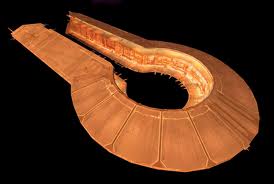
From what I can tell, this design was inspired by what historians believe the harbor of Carthage looked like. Much like the Harbor Ship, it was based on a sort of teardrop design, with a long entrance passage giving way to a sort of rotunda. This design, in addition to being aesthetically pleasing, also makes a lot of practical sense, ensuring that multiple ships are able to be serviced in a 360 degree arc rather than a series of enclosed bays.

Ixian No-Ship:
Another Dune entry which I failed to acknowledge in previous posts, can you believe it? Well, mistake remedied as of now, here is the No-Ship! Named for the fact that it is capable of shielding itself from prescient vision and other forms of detection, including sight. This all makes the No-Ship the ultimate in stealth technology, and led to its wide adoption by all factions in the Dune universe.

Based on the same technology which powered the No-Chamber, a device which the Ixians used to shield their inventions from Leto II’s prescience, No-Ships would become the mainstay of all fleets after his death. In addition to their stealthy characterisitics, they would also boast another invention that was proposed during the time of Leto II, the Ixian navigation machine. This device, which was capable of limited prescience, was able to guide these ships through foldspace without the need of a Guild navigator.

Much like Guild Heighliners, No-Ships appear to have massive capacities. In Heretics of Dune, the No-Ship which Miles Teg steals from the Honored Matres on Gammu apparently had a Great Hold which measured one kilometer in length. This hold was later used to transport an adult sandworms and several tons of its native sand off of Rakis before the HM’s destroyed it. In Chapterhouse and subsequent books, No-Ships served as the mainstay of the Bene Gesserit fleet as well as with all other factions.

The Pegasus:
Battlestar Galactica gave so many cool ship designs that its hard for me to know where to look next. But today, I thought I’d go for the obvious and cover the ultra-modern and behemoth-sized Pegasus, the other Battlestar to survive the destruction of the Twelve Colonies. As with the original, the Pegasus makes an appearance in the re-imagined series. And like everything else, its appearance received an update, as did the tone and nature of its crew.

Although networked like all other modern Colonial ships, the Pegasus survived the assault through sheer luck, having taken its systems down for a diagnostic before the first wave came. Since that time, it’s CO, Admiral Cain, had been fighting a guerrilla style war with the Cylons, attacking their holdings and raiding small convoys in order to keep them off balance.

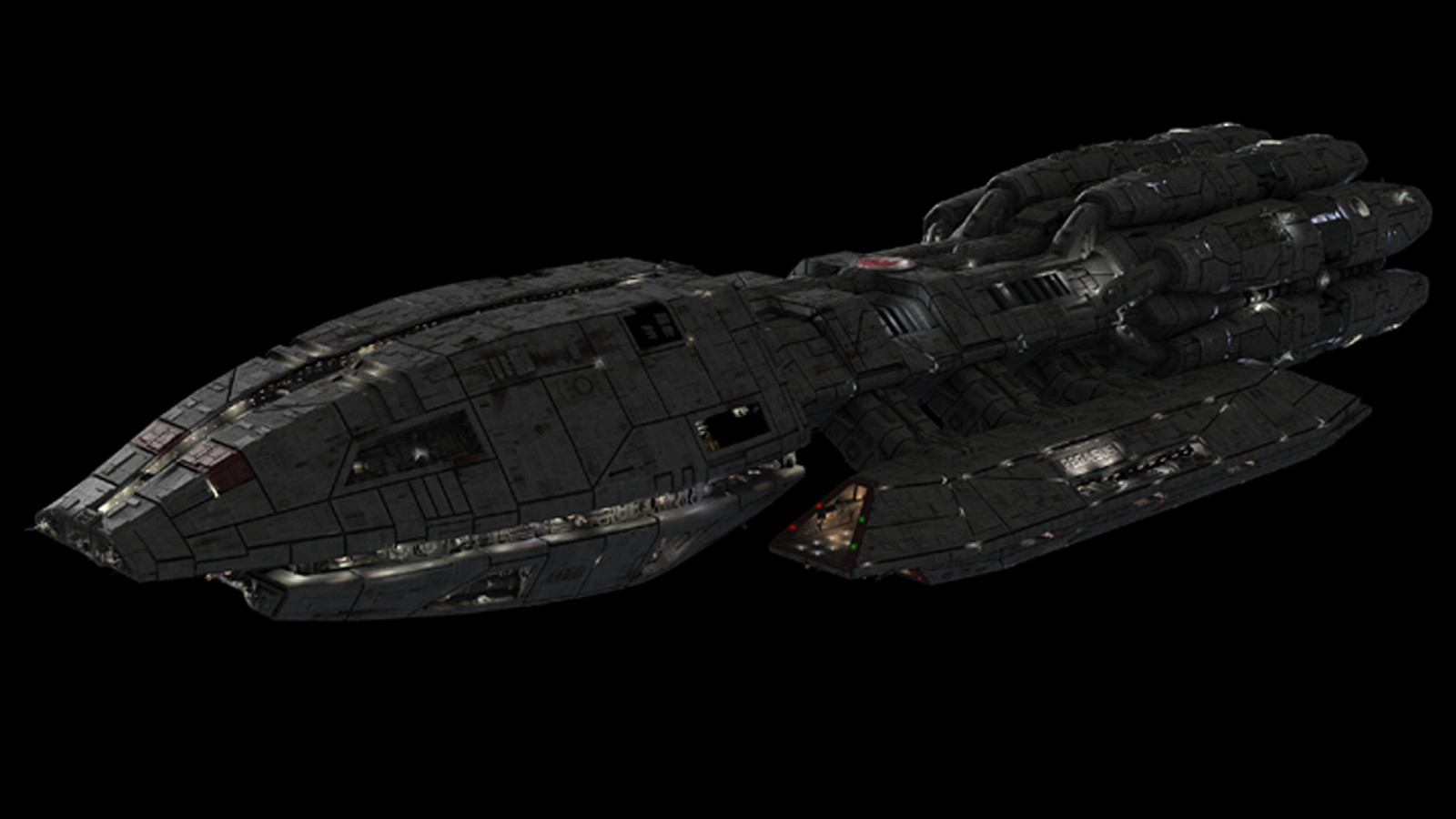
A mercury-class battlestar, the Pegasus was far more advanced and boasted significantly greater firepower than the Galactica.  In addition to its 30 defensive turrets, four heavy cannons, multiple missile launchers and compliment of nukes, its massive bays also hold 10 squadrons of Vipers, as well as dozens of Raptors and support craft. It also carries a series of Viper VII production facilities, meaning that it is capable of replenishing its losses.

With all of these attributes, the arrival of the Pegasus was a great boost to the Colonial fleet, adding a great deal of firepower, manufacturing and many of the latest ships to their arsenal. Nicknamed “The Beast”, the destruction of this ship over New Caprica was considered an immeasurable loss, though its sacrifice was hardly in vain.

Primus-class Battlecruiser:
Here we have another installment from the B5 universe, from the Centauri Republic to be specific. Known as the Primus-class Battlecruiser, this baby is renowned for packing firepower and artistic design into one package.

Discernible from its manta ray-like configuration, the Primus remains the mainstay of the Centauri navy even after two centuries of service. Although lightly armored, the ship boasts an impressive array of ion guns, a hyperspace drive, and artificial gravity for its crew.

Making its first appearance in season two of the show (“And Now For a Word”) when televised a standoff occurred outside the station between the Centauri and the Narn. In that battle, the cruiser in question was destroyed, but managed to inflict enough damage that the G’Quon class cruiser also blew up while attempting to make a jump. This demonstrated that the Primus, though an older design, was still capable of standing toe-to-toe with its Narn equivalent.

This encounter was followed up during the season two finale (“The Fall of Night”), when another such cruiser threatened the station when it was discovered that Sheridan was harboring a Narn heavy cruiser. This cruiser managed to inflict serious damage on the station before a squad of Starfuries and the station’s own defenses managed to destroy it.

Primus class cruisers would go on to make several appearances in the course of the show, serving throughout the Narn-Centauri war and even making an appearance during Sheridan’s war to liberate Earth. During the Alliance-Centauri war, these cruisers appeared to have been relegated to defensive duty, leaving offensive operations to the newer and lighter Vorchan-class cruisers.

USS Reliant:
Thank you to Victor for suggesting this one. I was wondering if I should go back to the original Star Trek for ideas, and this was just the push I needed to include some. And given that this ship made its appearance in Wrath of Khan, arguably the best of the bunch, I figured it would be the perfect candidate.

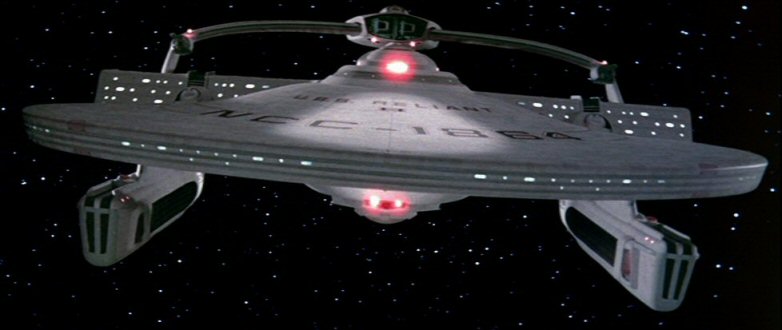
A Miranda-class starship, the Reliant possessed capabilities comparable to that of the USS Enterprise. She is best known for being the ship that was charged with investigating planets for the Genesis Project and then being commandeered by Khan Noonien Singh, a warlord from Earth’s Eugenics Wars who had been marooned on the planet for many years.

After commandeering the ship with his people, Khan used the Reliant to seize Genesis and attack the USS Enterprise. During their initial encounter, Khan was able to use surprise to disable and inflict considerable damage. He was only defeated when Spock, using the ship’s prefix code, was able to bring the Reliant’s shields down long enough for the Enterprise to strike back and take out its weapons and warp drive.

During their second confrontation, Kirk was able to lure Khan into the nearby Nebula where neither ship had the tactical advantage. There, the Enterprise was able to outmaneuver the Reliant and crippled her with a series of torpedoes and well placed phaser shots. Rather than face capture, Khan chose to initiate the Genesis’ self destruct sequence and nearly destroyed both ships in the process. The Enterprise narrowly escaped, thanks to Spock’s decision to sacrifice himself to bring the warp engines back on line.

Viscount-class Star Defender:
Last on the list is an entry which I’m personally impressed with. Known as a Star Defender, this class of Mon Calamari heavy cruiser comes from the Star Wars universe, and reminds us that not only the Empire was capable of creating some badass ships!

Commissioned during the time of the New Republic at the behest of Admiral Ackbar, the Star Defender was the Alliance’s answer to the Super Star Destroyer and other classes of Imperial terror weapons. Measuring 17 km in length and boasting over 5000 weapons turrets, this ship was more than a match for the Executor, Eclipse and any other vessel of similar size.

Like all Mon Calamari cruisers, this ship was studded with hangars and launch bays and could carry fourteen fighter squadrons, dozens of troops transports and any number of shuttles and support craft. It can also house over 12,000 troops and carries a standard crew of about 70,000. Though production of these vessels stalled due to the diminishing threat posed by the Empire after the Battle of Endor, the Thrawn crisis and the threat posed by the resurrected Emperor and his Eclipse dreadnoughts provided the final push.

Several versions of the Viscount class were commissioned for service over the years, including the Mon Remonda, pictured below.

Okay, that’s seven down. Do I really need to do an eighth? Ha! Just kidding, of course I do. Perhaps I’ll end this series at ten, or maybe it will become one of those things that slows down but never really goes away. As long as people keep suggesting things and I keep having ideas of my own, there’s no real end in sight! See ya next time 😀

Top 10 Most Nostalgic SF Games

Hey all. The other day, a revolutionary idea came to me. What with all the other sci-fi stuff I cover, why haven’t I made any mention of sci-fi videogames? Not sure, really, seems kinda obvious now that I think about it. God knows I love talking about the stuff that inspired me, and I’m not ashamed to admit it that sometimes, those things have been games.

Whether they were first-person shooters, space combat simulators, or strategy games, there are some games which have stuck with me over the years. It might have been their cool game-play, inspired backstories, or classic sci-fi elements. Who knows? Point is, I liked them then and, with some exceptions, I like them now.

Anyway, here are the top then that stand out in my mind, in ascending order:

10. Halo 2
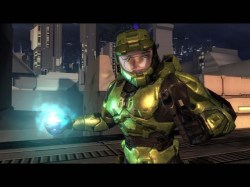
Granted, this game has not been with me too long, as I came to it a bit late in its existence. But I still count it among my top sci-fi nostalgic classics. And in that, I am hardly alone! For gamers, Halo 2 was one of the most anticipated sequels of the last decade. Combing kick-ass gameplay, a cool storyline, and some badass weapons and vehicles, Halo 2 remains a game that I can play over and over.

My favorite missions are the earliest ones when the Covenant are assaulting. Room to room and street to street combat with automatic weapons is much fun! And commandeering a Warthog and joyriding through the transit tunnels of New Mombasa? Pure action gaming art! And while I never really got into the multiplayer thing too much, I have to admit that it’s both extensive and endlessly entertaining.

In addition, I found the storyline highly respectable. In addition to having a classic sci-fi and space opera feel, it contained some genuinely respectable themes and plot devices. The whole backstory about the Forerunners was interesting; but then again, anything involving an ancient and extinct species who’s technology still litters the Galaxy is cool! And the way the Covenant theocracy was following what they believe to be the path to salvation, when in fact they were walking headlong into their graves – tell me that’s not significant!

9. Doom
Granted, it didn’t have the most inspired storyline, but do you think a 16 year old boy gives a damn about stuff like plot and character development? No, he cares about shooting guns and blowing shit up! And that’s precisely what this game was good for when I was a surly teen looking for some fun and adventure on my PC.

And in a lot of ways, this game was a pioneering piece of software. It’s first campaign was made available through shareware, it was one of the first first-person shooters of all time, and it established a new standard when it came to gore and violence.

Thousands of others would follow, each following Doom’s example of a varied arsenal, raw firepower and bloodletting! It was also spawn a slew of sequels, comics, and RPG, and even a horrible, horrible movie. It also provided me with the means to mispend my youth. Good job Doom!

8. Star Wars: Knights of the Old Republic
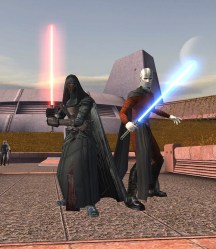
Speaking of time poorly spent, I can’t tell you how many hours I dedicated to playing this game when I first got it. As I recall, I was in my early 20’s at the time and living in a tiny bachelors apartment in Ottawa. One day this game came in the mail courtesy of one of my best friends (thanks Chi!). I spent the next three days playing it all the way through, pausing only to eat, sleep, and maintain some semblance of a life.

Yes, it was just that addictive. And all because it combined quest-based gameplay with lightsaber duels, a detailed universe, and a genuine Star Wars-esque storyline. Granted, its replay value is a little shaky given that most of the fun comes from completing quests and uncovering the whole mystery plot, but I still found ways to waste time with it!

Another appealing feature about this game was the fact that it took place during the Sith Wars, something that gets mentioned in the expanded universe but never really covered in any detail. So while you’re playing, you get the added benefit of having some important background info filled in for you. If you’re a Star Wars geek, which I admittedly am, this is kind of a big deal…

7. Starcraft
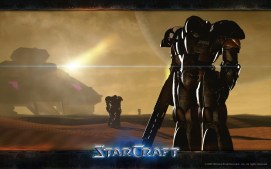
Granted, it took Blizzard FOREVER to make the sequel, but they been busy, what with Diablo, Warcraft, and all their various sequels. And in the meantime, they did give us that fantastic expansion pack to tide us over.

In any case, Starcraft has to be one of the most infinitely replayable games in the history of real-time strategy games. It’s creative, got a good storyline, and some genuinely awesome characters. The Terran Marines are delightful hicks, the Protoss religious zealots, and the Zerg horrifying beasts. What’s not to like? And let’s not forget the multiplayer, which kept gamers entertained for years after the original release date.

And as I said, the expansion pack was really great. As if the original storyline and units weren’t enough, they managed to make some truly worthy add ons with Brood War. I especially loved the Medics and the Dark Templar, the former making Marine shoot em ups more effective, and Dark Templars who’s dark look and hyperblades were just so cool. But the storyline was still what I liked best. Terran exiles, invading aliens, complicated alliances, double-crosses and intrigue. Can’t wait to see how what happens in SC II. Just need me a faster computer before I try to play the damn thing is all!

6. Command and Conquer
Speaking of real-time strategy games, the next up is the classic Command and Conquer! Though I didn’t take to the sequels so much, I thoroughly enjoyed this baby for like a whole summer between grades 11 and 12. And much like Starcraft, the multiplayer was the icing on the proverbial cake, taking all the guerrilla fighting and strategizing to new heights.

And the storyline, once again, is something which I certainly appreciated, being an alternate history and all. To break it down, the story takes place in a world where Hitler never came to power in Germany and Stalin became the big menace of the century in his absence. Once he was defeated, a global coalition known as GDI (Global Defense Initiative) was formed.

And in a way, the game predicted the “war on terror” a bit early, predicting that this coalition would have to fight against a multinational terrorist organization (Brotherhood of Nod) for global supremacy. This war was triggered by the arrival of an alien substance, known as Tiberium, to Earth, an organic-mineral compound that is also radioactive. Pretty cool, real science fictiony when you get right down to it. And the varied units were also neat, each side having their own distinct soldiers, vehicles and special abilities. These made things like rushing virtually impossible, as all units had their own strengths and weaknesses, and could not therefore make offensives unless they had support.

5. X-Wing
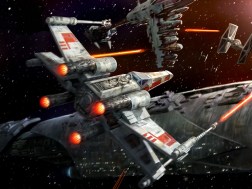
Another classic game and one of the most popular flight simulators of all time. Maybe it was because it combined space dogfights with the Star Wars universe. Maybe it was because every kid who grew up with the franchise wanted to fly X-wings and take down the Death Star. Who knows? Point is, it worked, and I for one got a real kick out of it.

Taking place before and during the events of the original movie, X-wing follows the exploits of a Rebel pilot who fights for the Alliance in a series of campaigns. These include raids, escort missions, seizure operations, reconnaissance, and ultimately, large scale assaults. While most missions involve piloting the venerable X-wing, you also get to fly A-wings, Y-wings, and even B-wings (in the expansion pack).

Over time, these campaigns culminate in an attack on the Death Star from the end of the first movie. In the expansion pack, the story continues with the evacuation of Yavin and the search to find a new base of operations, eventually leading to the establishment of a base on Hoth. These events, which took place between movies one and two, are fertile ground and get a good showing here. The same is true with all the early events of the franchise, stuff we hear about in the original movie and expanded source material, but never got to see.

One of the coolest things about this game was the details. When assaulting enemy ships, you could disable them as well as destroy them. This could include disabling subsystems with ion guns or missiles, or targeting things like engines and weapons and destroying them. When assaulting capital ships, you were also able to take out weapons and missile turrets, not to mention shield arrays. This made for a more realistic gameplay, something which other space combat games would emulate in years to come.

4. Wing Commander II
Coming in fourth on this list is the second installment in the Wing Commander series. Another space-combat simulator, this game emerged at about the same time as X-wing and was, at least in my neighborhood, its chief competitor for all the mispent hours we would play games!

In truth, I’m kind of hard pressed to pick one game in the series, since I loved the first three games. But when it comes right down to it, I think I spent the most amount of hours on this one, so WC II for the win! Picking up where the first one left off, this game in the series is set aboard the TCS Concordia and follows the exploits of the series’ protagonist Capt. Christopher Blair.

This is something that set the WC series apart from other space-combat simulators, which is the story-driven and personal nature of the game’s story. Even though the protagonist wasn’t given an official name until the third game (gamers got to use whatever name they wanted), everything centered around the life of this one person, their experiences being yours and helping to shape the course of the game.

In short, after being humiliated and demoted due to the destruction of your former ship, the Tiger’s Claw, you are relegated to a backwater assignment aboard a space station. You remain there, until the TCS Concordia shows up in-system looking for help. After defending her, you are transferred aboard her and become part of its campaign to fight the Kilrathi for control of the Enigma sector (if this is starting to sound familiar, then chances are you read my blurb on the Tiger’s Claw in the Cool Ships series).

In any case, by game’s end, you clear your name, defeat the Kilrathi, and gain control of the sector. Much fun! And because it was personally focused, you find yourself getting emotionally involved and being that much more concerned with winning each mission in your campaign. And of course, as with the first game in the series, this one also had spinoffs which added to the fun as well.

3. Wing Commander Privateer
Though this game bears the WC name, it was more of a spinoff than part of the series. And that’s one of the things I loved about it. Though connected to the main storyline, it was a standalone space combat simulator with a story of its own, and which delved into the world of pirates, smugglers and privateers.

Arriving in my game pile between WC II and just after Doom, I spent the better part of a year playing this game because it was just so replayable! What made it fun was the fact that with this installment in the WC universe, you were a private contractor, you pulled missions for hire, and you used your money to upgrade your ship and buy new ones altogether.

You also got to choose your focus in the game. You could become a merchant, a mercenary, both, and add to that with a little pirating and illegal trading. And of course, there was a larger story set to the backdrop of the Confederation-Kilrathi war and your own drive to get rich. Basically, it involved an ancient ship that was roaming around the quadrant, killing ships on both sides. If you chose to partake of this campaign, you followed clues, pulled jobs, and pieced together the mystery of the ship until it was destroyed.

But above all, the most cool aspect of the game was the richly detailed universe. There were literally dozens of systems and planets for you to venture to, as well as space stations and pirate hideouts. Every place had its own feel and aim, and the jobs you could pull on any given one were suited to match. Years later, I would remind myself of this game when it came time to develop my own sci-fi universe (again, the one I used to write Legacies).

2. Descent: Freespace
One such game was the smash hit and personal favorite of mine, Descent: Freespace. Released in 1999, this game remains one of the best fighter simulators I have ever seen. And I’m hardly alone in thinking that, seeing as how several games (including the online BSG game) have used its engine as a platform. Much like Half Life 2, this game has had many imitators and borrowers due to the sheer wickedness of its design.

But again, one of the things that I loved about this game was its backstory. Set in the 23rd century, the GTA (Galactic Terran Alliance) is at war with an alien race known as the Vasudans. This war has been ongoing and spans several star systems, with losses numbering in the millions. However, all this changes when a new race, known as the Shivans, appears suddenly and begins attacking both sides indiscriminately. After several attacks, the GTA and the Vasudans agree to put aside their differences and focus on this common threat, as the Shivans are clearly not playing favorites.

Also, the Shivans possess vastly superior technology. Their ships are shielded – something neither side has – and are very difficult to track on sensors. Their capital ships are also very tough and hard to disable, and their largest vessel, the Lucifer (expect to see it in the next Cool Ships installment) seems invulnerable to conventional attack. As a result, much of the game is spent conducting intel gathering and raids to procure pieces of the aliens technology. And things really escalate when the Lucifer discovers the location of Vasuda Prime and Earth.

What I loved about this game was how much it reminded me of Babylon 5 and the whole Earth-Minbari war, how Earth Force found itself so outmatched and struggled to try and find a way to beat Minbari technology. I often wondered if the game designers had been inspired by it, given the common elements. On top of that is the fact that you never really get to learn why the Shivans are attacking, or even what they look like. The mystery of who and what they are remains well into the sequel.

But even without all that, the gameplay itself was nothing short of awesome. The missions were realistic, the ships were realistic, and the space combat was realistic (and detailed). I’m not ashamed to admit that this game actually formed part of the basis for my own sci-fi creation, the novel Legacies and the kind of universe it was set in. Being gritty and realistic, I thought I’d found my perfect muse, and did my best to adopt, if not outright copy, a lot of its feel.

Ah yes, and according to an article I read recently, it appears that there might be a third installment at some point in the future. Efforts have kind of stalled, but apparently the developers who worked on the first two games said that they “would kill for a chance to develop Freespace 3.” Given how the sequel ended on a cliffhanger and just how kick-ass this series is, I count myself among them! Tell me who’s gotta go, I’ll take care of ’em!

1. Sid Meier’s Alpha Centauri
Finally, coming in at first place, is Sid Meier’s sci-fi spinoff, Alpha Centauri! Much like the Civilization series which bore his name (and which I adored!), this game was a turn-based strategy engine that focuses on civilization building and conquest, with the player choosing a faction and then ensuring that they become the dominant force in the game.

However, what set this game apart from the Civilization ones was its uniquely speculative and futuristic undertone. Based in part on the Civ games, this story is basically an extension of the original series, where games would end when a player either conquered the world or won the space race by sending a colony ship to Alpha Centauri.

But far from just picking up where these games left off, this game revolves around the idea that Earth was abandoned by the people on the colony ship because of its rampant overpopulation, war, famine, chaos and environmental destruction. This puts the stakes much higher, as the mission is not just to colonize but ensure the survival of the human race.

The story begins with the colonist splitting into five factions before they make “Planetfall”. These include the Morganites (a bunch of monopolistic capitalists), the Gaians (environmentalists), the Hive (totalitarians), the Believers (religious zealots), the Spartans (survivalists), the University (rationalists), and the Peacekeepers (humanitarians). Together, they represent the entirety of the human race, all its particular drives and obsessions. Their struggle clearly mirrors of that of humanity in the present day world.

On top of all that, there’s a planet-wide organisms which is made up of pink fungi and “mind worms”. This organism, as a whole, grows and evolves towards super-sentience every few million years as the planet’ sun reach perihelion. Naturally, this has coincided with the arrival of the colonists, and therefore poses a threat to their survival. So in addition to dealing with the threat of the other factions, there is added threat coming from the planet itself.

In the end, there are any number of ways to win the game. You can conquer the other factions, in which case it is reasoned that you will be able to face the growing threat from “planet” unimpeded. There is a an economic victory, in which a single faction corners the “energy market” (energy being the basis of currency on this world). Then you have diplomatic victory where you basically ally yourself with every faction left in the game, followed by the “transcendental” victory where you become the first faction to achieve union with the planetary organism.

This last option is the biggest and best, being the one that deals with the biggest problem of what to do about the planet and in such a way that ensures humanity’s virtual immortality. By merging humanities consciousness with the planetary organism, you not only achieve a degree of immortality, you also help ensure that the organism won’t regress this time around. And it gives you the highest final score, which is why I always preferred it.

And then there’s all the cool units you get to make. As with the other Civ games, new technologies give you the ability to craft new units. This grows more complex and varied the more technologies you unlock, giving you the means to equip units with new weapons, armor, and special abilities. But the best thing about this game, aside from all the classic sci-fi elements, is the inspired nature of it all. Some serious thought went into the technologies you research, as well as the philosophical models you can adopt.

I’m telling ya, its like some serious sci-fi geeks got together, read all the classics, swallowed the works of Sartre, Plato, Nietzsche, and then waded through the theories of Einstein and Hawkins. This game was a favorite of mine during the early 2000’s, and recently, I managed to get an a copy of it through Amazon.com and have been wasting time on it once more. I’m a happy manchild!

Okay, now I’m feeling kinda weird, geeky, and like I got some serious wasted time to make up for…  But hey, I’m not sorry! Like most people my age, I grew on the dubious combination of television, movies, and video games, with a few genuine experiences thrown in for good measure. If we can’t appreciate the stuff we wasted our youth on, then what good is it? Until next time 😉

Crashland – Chapter 7, Now appearing at Story Time!

Well, it was a hard slog, but Chapter 6 has finally concluded with a clear vote from audiences. After finding himself alive and patched up in an abandoned subway station, Holden realized he was in the custody of some rather strange agents. They wanted to know who he was, and intimated that depending on his answers, he might just live to see another day.

He lied and told them he was a simple engineer working for his company. He recounted events as best he could, but ended up realizing they knew more about him than he thought. After a terse conversation, he revealed that he was trying to find his way to the city center to find help and located his wife and family. The man speaking to him, named Jacobs, had bad news…

Yes, it seems audiences have decided that they want to see the story take a dark turn. After some time trying to make his way towards the only lights left on in the city, Holden was told that all he was looking at were some raging fires that were set by the mob. Facing a hopeless situation, Holden must now decide what to do, and its clear that his hosts are more than they appear to be…

Come on by and see what happens. Then, stick around to vote on what happens next! There’s more action, more danger, and more post-apocalyptic adventure to be had over at Story Time! And while you’re there, check out the new cover art for Goran’s Zidar’s serial novels, the YA mystery TJ Thirteen and the paranormal thriller Hunter.