The Future of Computing

digital_sentienceLook what you started, Nicolla πŸ˜‰ After talking, at length, about the history of computing a few days ago, I got to thinking about the one aspect of the whole issue that I happened to leave out. Namely, the future of computing, with all the cool developments that we are likely to see in the next few decades or centuries.

Much of that came up in the course of my research, but unfortunately, after thirteen or so examples about the history of computing, I was far too tired and burnt to get into the future of it as well. And so, I carry on today, with a brief (I promise!) list of developments that we are likely to see before the century is out… give or take. Here they are:

Chemical Computer:
Here we have a rather novel idea for the future of hardware. Otherwise known as a reaction-diffusion or “gooware” computer, this concept calls for the creation of a semi-solid chemical “soup” where data is represented by varying concentrations of chemicals and computations are performed by naturally occurring chemical reactions.

Based on the Belousov-Zhabotinsky reaction, a chemical experiment which demonstrated that wave phenomena can indeed take place in chemical reactions, contradicting the theory of thermodynamics which states that entropy will only increase in a closed system. By contrast, the BZ experiments showed that cyclic effects can take place without breaking the laws of nature.

Amongst theoretical models, it remains a top contender for future use for the simple reason that it is far less limiting that current microprocessors. Whereas the latter only allows the flow of data in one direction at a time, a chemical computer theoretically allows for the movement of data in all directions, all dimensions, both away and against each other.

For obvious reasons, the concept is still very much in the experimental stage and no working models have been proposed at this time.

DNA Computing:
Yet another example of an unconventional computer design, one which uses biochemistry and molecular biology, rather than silicon-based hardware, in order to conduct computations. Originally proposed by Leonard Adleman of the University of Southern Calfornia in 1994, Adleman was able to demonstrate how DNA could be used to conduct multiple calculations at once.

Much like chemical computing, the potential here is to be able to build a machine that is not restricted as conventional machines are. In addition to being able to compute in multiple dimensions and directions, the DNA basis of the machine means it could be merged with other organic technology, possibly even a fully-organic AI (a la the 12 Cylon models).

While progress in this area remains modest thus far, Turing complete models have been constructed, the most notable of which is the model crated by the Weizmann Institute of Science in Rehovot, Israel in 2002. Here, researchers unveiled a programmable molecular computing machine composed of enzymes and DNA molecules instead of silicon microchips which would theoretically be capable of diagnosing cancer in a cell and releasing anti-cancer drugs.

Nanocomputers:
In keeping with the tradition of making computers smaller and smaller, scientists have proposed that the next generation of computers should measure only a few nanometers in size. That’s 1×10⁻⁹ meters for those who mathematically inclined. As part of the growing field of nanotechnology, the application is still largely theoretical and dependent on further advancements. Nevertheless, the process is a highly feasible one with many potential benefits.

Here, as with many of these other concepts, the plan is simple. By further miniaturizing the components, a computer could be shrunk to the size of a chip and implanted anywhere on a human body (i.e. “Wetware” or silicate implants). This will ensure maximum portability, and coupled with a wireless interface device (see Google Glasses or VR Contact Lenses) could be accessed at any time in any place.

Optical Computers:
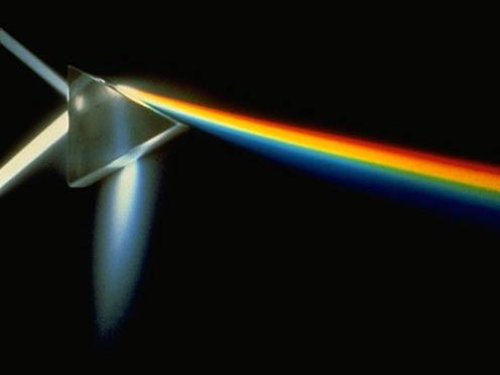
Compared to the previous two examples, this proposed computer is quite straightforward, even if it radically advanced. While today’s computer rely on the movement of electrons in and out of transistors to do logic, an optical computer relies on the movement of photons.

The immediate advantage of this is clear; given that photons are much faster than electrons, computers equipped with optical components would be able to process information of significantly greater speeds. In addition, researchers contend that this can be done with less energy, making optical computing a potential green technology.

Currently, creating optical computers is just a matter of replacing electronic components with optical ones, which requires an optical transistor, which are composed of non-linear crystals. Such materials exist and experiments are already underway. However, there remains controversy as to whether the proposed benefits will pay off, or be comparable to other technologies (such as semiconductors). Only time will tell…

Quantum Computers:
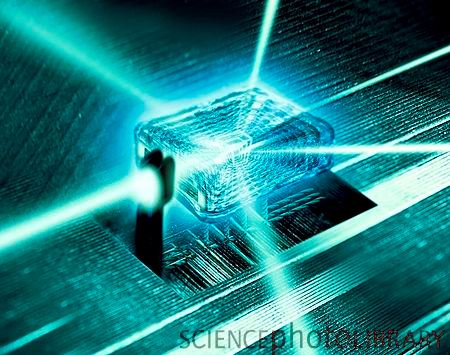
And last, and perhaps most revolutionary of all, is the concept of quantum computing – a device which will rely on the use of quantum mechanical phenomena to performs operations. Unlike digital computers, which require that data to be encoded into binary digits (aka. bits), quantum computation utilizes quantum properties to represent data and perform calculations.

The field of quantum computing was first introduced by Richard Feynman in 1982 and represented the latest advancements in field theory. Much like chemical and DNA-based computer designs, the theoretical quantum computer also has the ability to conduct multiple computations at the same time, mainly because it would have the ability to be in more than one state simultaneously.

The concept remains highly theoretical, but a number of experiments have been conducted in which quantum computational operations were executed on a very small number of qubits (quantum bits). Both practical and theoretical research continues, and many national government and military funding agencies support quantum computing research to develop quantum computers for both civilian and national security purposes, such as cryptanalysis.

Wearable Computers:
Last, and most feasible, is the wearable computer, which has already been developed for commercial use. Essentially, these are a class of miniature electronic devices that are worn on the bearer’s person, either under or on top of clothing. A popular version of this concept is the wrist mounted option, where the computer is worn like a watch.

The purposes and advantages of this type of computer are obvious, especially where applications that require more complex computational support than hardware coded logics can provide. Another advantage is the constant interactions between user and computer, as it is augmented into all other functions of the user’s daily life. In many ways, it acts as a prosthesis, being an extension of the users mind and body.

Pretty cool, huh? And to think that these and possibly other concepts could be feasible within our own lifetimes. Given the current rate of progress in all thing’s high-tech, we could be looking at fully-integrated computer implants, biological computers and AI’s with biomechanical brains. Wouldn’t that be both amazing and potentially frightening!
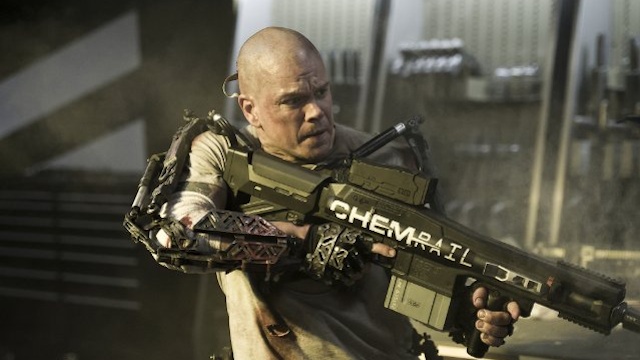
New Movie: Elysium!

Yet another cool aspect of the recent Comic Con was the trailers for new movies previews that fans were treated to. One such movie was Neil Blomkamp’s (director of District 9) new film, entitled Elysium. According to IO9 magazine, the movie stars Matt Damon in the lead role and is scheduled for release in 2013.

Based on the video reel Blomkamp offered, the movie is still very much in development. Rough place holders had to stand in for many of the visual effects, which are as of yet incomplete. However, the fans were given a precis of the storyline, which is decidedly dystopian and cyberpunk in nature.

Set in 2159, the plot revolves around the eponymously named space station of Elysium, an apparently utopian retreat where the ultra-rich and beautiful live and have access to the most advanced medical technology. The rest of humanity lives planet-side, where overcrowding, disease and radiation have resulted from overpopulation and pollution. Enter into this Max (Matt Damon), a criminal who’s suffering from radiation sickness and must make it to Elysium’s medical facilities at all costs.

In time, Max’s mission becomes complicated as he comes into information which could shut down Elysium and usher in an age of equality for the human race, or at least a less polarized division of wealth. Additional concept art was also released, like an interior shot of the station featured below. Given the layout, Elysium appears to be based on an Island Three design, a circular space station and rotates to provide gravity. Echoes of 2001: A Space Odyssey there. Good for Blomkamp, referencing a classic!

Additional cast members will include Jodie Foster, District 9‘s Sharlto Copley, and Alice Braga (of City of God, Predators, Repo Men and I Am Legend fame). Think I might catch this one!

Crashland Chapter 14, Now Appearing at Story Time

Wow, it’s been awhile since I updated this story last. And I believe it was even longer before I updated it before that. But as I’m sure I’ve said, I’ve taken on some other writing responsibilities of late and it seems I’ve finally reached my creative limit. That’s what you get for constantly pushing your boundaries I guess.

Still, today I managed to tear myself away from my other writing and editing commitments and dedicate some much needed attention to Story Time and this unfolding serial novel. And I’m sure you’ll agree, this one’s also a doozy! Much like the last one, the choice is once again a matter of life and death.

Last time, William found himself trapped in a collapsing subway tube and slowly dying from internal injuries. Slipping into unconsciousness, he once again experienced an intense dream that seemed to be speaking to him, almost as if someone else were inside his head and using his memories to give him instructions.

He then woke to find Jacobs standing over him and urging him to follow him out. Though he practically had to be carried, William and Jacobs managed to struggle their way out of the collapsing tube just as the last of it came crashing down. Unfortunately, Jacobs appeared to be mortally wounded, and the people tending to William mentioned that one other person in their party had died as a result of the cave in. Readers were asked to decide which person that would be.

The choice was a tough one. Would it be Simon, the cybernetically enhanced post-human that all their efforts depended on? Would it be Molya, the team’s gunman who never seems to stray far? Or would it be Jorka, the team’s medic and the only woman William had set eyes on since the Crash began. As it turned out, audiences decided on Jorka, the female medic who was intrinsic in saving William’s life. Thus, chapter 14 opens with the revelation that not only was she killed, but that Jacobs was mortally wounded while attempting to save William’s life.

The story is on the move once more. So come on by and check it out, and as usual, stick around to vote on what happens next! It’s all happening over at Story Time.me.

More Things Geeks Never Say

Hey all, I told you I’d be back with more things you’ll never catch a geek saying. And I am! Yes, a list such as this is not something you can cover in a single post, even if you do permit yourself 15 examples instead of the usual ten. And so I return for another installment, and be warned, but this one is not likely to be the last. And in honor of this year’s Comic Con, I was sure to throw in some rather specific examples.

One thing though. From here on in I thought I’d stick to top 10 lists. They do seem to be the most effective, and the Nostalgia Critic already claimed the whole “Top 11” thing so I won’t be doing that either. And of course, suggestions are always welcome and are sure to make their way into the next list. Kudos to Jeff Whelan for recommending a Jar Jar comment. You read my mind, brotha!

Okay, here we go! Installment the second on things geeks never say:

10. No self-respecting man reads comic books!

9. NaNoWriMo-whatta? That some kind of Japanese anime?

8. No grown man ever wears a costume to a convention! There might be girls there!

7. Outside of Twilight, I really don’t watch anything involving vampires

6. Thank you, but one Robocop movie was enough for me

5. Of course the government isn’t out to get us. What are you, paranoid?

4. Aliens don’t exist. The Bible would say so if they did.

3. Levar Burton? Wasn’t he that guy who was in Roots, and nothing else?Β 

2. Cesar Romero was the only Joker in MY book!

1. Jar Jar Binks was the best Star Wars character ever!

Ray Bradbury Gives Writing Advice

I recently came across this article, which seems to have been one of many I found when researching the life and works of sci-fi great Ray Bradbury. The source is Open Culture, an online magazine dealing with cultural and educational media. And like many other publications, they chose to honor the passing of Bradbury by publishing a series of articles which dealt with the man’s monumental influence on science fiction and writing in general.

This particular one deals with his 2001 keynote address at Point Loma Nazarene University’s Writer’s Symposium By the Sea, where he treated audiences to the benefit of his accumulated wisdom by boiling it down into 12 tips. As a newbie writer, I can tell you that many of these spoke to me as if they were written with me in mind! That’s the true mark of a great and relatable writer though, isn’t it? Their words somehow seem to transcend the page and all distance between you and get you right at your core.

And even if you’re not an aspiring writer, or an established one, I recommend reading through this list and digesting some of these nuggets. Their value goes beyond mere writing, I tells ya! But don’t take my word for it, read them yourself:

  1. Don’t start out writing novels. They take too long. Begin your writing life instead by cranking out β€œa hell of a lot of short stories,” as many as one per week. Take a year to do it; he claims that it simply isn’t possible to write 52 bad short stories in a row. He waited until the age of 30 to write his first novel, Fahrenheit 451. β€œWorth waiting for, huh?”
  2. You may love β€˜em, but you can’t be β€˜em. Bear that in mind when you inevitably attempt, consciously or unconsciously, to imitate your favorite writers, just as he imitated H.G. Wells, Jules Verne, Arthur Conan Doyle, and L. Frank Baum.
  3. Examine β€œquality” short stories. He suggests Roald Dahl, Guy de Maupassant, and the lesser-known Nigel Kneale and John Collier. Anything in the New Yorker today doesn’t make his cut, since he finds that their stories have β€œno metaphor.”
  4. Stuff your head. To accumulate the intellectual building blocks of these metaphors, he suggests a course of bedtime reading: one short story, one poem (but Pope, Shakespeare, and Frost, not modern β€œcrap”), and one essay. These essays should come from a diversity of fields, including archaeology, zoology, biology, philosophy, politics, and literature. β€œAt the end of a thousand nights,” so he sums it up, β€œJesus God, you’ll be full of stuff!”
  5. Get rid of friends who don’t believe in you. Do they make fun of your writerly ambitions? He suggests calling them up to β€œfire them” without delay.
  6. Live in the library. Don’t live in your β€œgoddamn computers.” He may not have gone to college, but his insatiable reading habits allowed him to β€œgraduate from the library” at age 28.
  7. Fall in love with movies. Preferably old ones.
  8. Write with joy. In his mind, β€œwriting is not a serious business.” If a story starts to feel like work, scrap it and start one that doesn’t. β€œI want you to envy me my joy,” he tells his audience.
  9. Don’t plan on making money. He and his wife, who β€œtook a vow of poverty” to marry him, hit 37 before they could afford a car (and he still never got around to picking up a license).
  10. List ten things you love, and ten things you hate. Then write about the former, and β€œkill” the later β€” also by writing about them. Do the same with your fears.
  11. Just type any old thing that comes into your head. He recommends β€œword association” to break down any creative blockages, since β€œyou don’t know what’s in you until you test it.”
  12. Remember, with writing, what you’re looking for is just one person to come up and tell you, β€œI love you for what you do.” Or, failing that, you’re looking for someone to come up and tell you, β€œYou’re not nuts like people say.”

Rules one and two are especially important to me right now. I began trying to write novels and found the process overwhelming. Today, full-length novels constitute the majority of my unfinished works, cluttering up my inbox folder and making me feel like I’m a slow writer. Bah! Who needs that? Rule two is like gospel; though you may have writer’s you wish to emulate, do not try to be better than them. It will only lead to unfair comparisons and rob your work of originality. It put’s me in mind of what the poet Basho Mastsuo said: “Do not follow in the footsteps of the masters, but seek what they sought”. That’s right, I read a poem, try not to faint!

The rest all blend together for me in that they all ring true. If they could be boiled down into one simple rule, I’d say it would be “do what you love, and screw the rest!” Best advice I ever got, from J.M. Straczynski of all people (creator of Babylon 5). As long as you’re doing that, you can do no wrong, and your natural passion and dedication will yield results, sooner or later. And if it doesn’t, who cares? For in the end, its about you and not what others think, right? Thought money, fame and recognition are kind of sweet…

Until next time, RIP Mr. Bradbury and here’s hoping myself and my colleagues can acheive a small iota of the respect and recognition you did in your lifetime. I promise that we will stick to short stories for the time being, and that we won’t try to beat you, even if we do try to emulate you πŸ˜‰

The Walking Dead, Season 3 Preview

Another lovely preview to make the rounds at this year’s Comic Con was the hit show The Walking Dead. Take a look at the latest preview for Season Three, the most lengthy and detailed look at the inside what’s coming yet! This includes “the prison”, the town of Woodbury, and Michonne, the sword-wielding badass heroine!

Thanks to Khaalidah for sending it to me, I was ignorant of it til now. Take a gander and, like me, get very impatient for October!

Robocop Relaunch!

Oh no, not another 80’s relaunch. And just when it seemed that this summer couldn’t possibly OD any more on 90’s relaunches! But, all things considered, I think this is one that might actually be worthwhile, and which I myself could be persuaded to see.

In any case, though the details are a bit sketchy, the movie is scheduled for launch in 2013 and will star Joel Kinnaman as Alex Murphy/Robocop. Additional cast include Gary Oldman, Samuel L. Jackson, Abbie Cornish (from Suckerpunch) and Hugh Laurie (of House fame).

In addition, the trailer seems to be taking the same approach as Scott did with his build-up to Prometheus. Rather than show any scenes from the film itself, the preview takes the form of an advertisement by Omni Consumer Corp (OCP), the evil mega-corporation that is responsible for building Robocop and controlling Old Detroit.

It’s quite interesting, and I am reasonably intrigued as to see how the remake chooses to deal with the original’s various themes, such as cybernetics, corporate domination, urban decay and a society numbed by violence and distracted by mindless entertainment.

Man of Steel, Debut Trailer

A number of interesting things were unveiled this year at the 2012 Comic Con, not the least of which was the long-awaited preview for the new Superman movie. Fans of the franchise may recall the 2006 reboot, entitled Superman Returns. That movie was what is generally referred to as an interquel, a movie which occurred chronologically between Superman II and III, with the purpose of rehabilitating the series after it fell on hard times.

Since then, fans have been anticipating when the next movie would come out, and whether or not it would expand on the 2006 relaunch or be another relaunch entirely. Well, after many years, shooting has finally wrapped up on “Man of Steel”, another relaunch of the series which goes back to the very beginning of the series and is slated for release in 2013.

In addition, the movie stars Henry Cavill in the starring role as The Man of Steel himself. Zack Snyder directed the film, Christopher Nolan helped produce it, and Han Zimmer composed the score. Additional cast include Amy Adams as Lois Lane, Michael Shannon as General Zod, Russel Crowe as Jor-El, and Kevin Costner as Clarke’s father. Not bad… and that includes Costner. I mean, it’s not his fault he kept landing crap roles!

Anyway, check out the teaser trailer below:

Farewell and Hope to See You Soon, Chris!

Hey all. Today I thought I’d break from the usual hubbub to give a shout out and say good-bye to a friend of mine who’ll be leaving our little corner of the country. He has been here in the Victoria area for as long as I can recall, but alas, duty calls and he’s shipping off to Quebec today with his darling bride to live out the next three years. And so I, and many people besides, say so long, farewell, and hope to see you again soon to Master Seaman Chris Jenkins – member of the Royal Canadian Navy, black belt 2nd degree in Taekwon-Do, fan of sci-fi and zombie flicks, and my friend for the last three years.

After I moved to Victoria, I had to start over in more way than one. But one thing I could always count on was his smiling countenance and friendly behavior whenever it came time for Taekwon-Do class. And last night we got a chance to have a bit of a send off for him and it was quite nice. Some friends from Courtenay, whom we also know through TKD, were able to come out and we enjoyed some steaks, ribs, and other assorted treats at the local Keg steakhouse! A good evening characterized by good friends, good times, fun conversation, but it was also heartfelt because it was our last hullabaloo with the man before he would be leaving.

So in honor of Chris’ departure, which is frankly leaving a big hole in our lives (sorry, no guilt!) I’ve decided to get to back to reviewing some movies because I know he found these useful and told so. It’s one of the nicest things in the world when someone tells you that you’re work actually made an impact, or at least has proven worthwhile to them on more than one occasion. Which reminds me, I also need to get on that Generation Kill review which I promised I’d do some time ago. Good show, especially if you’re a military man (which he is!) I also vow to keep training with the Esquimalt folks and doing my best to provide some small measure of the ample guidance and leadership that you have over the years. I’d say Audrey is planning on picking up most of the slack but I don’t think she’s up to the challenge πŸ˜‰

And last but not least, I wish him well on the long drive from this end of the country to the other. It’s long, scenic, and very interesting, but I’m sure you don’t need to hear that from me. Oh, and remember what I said about the beer! If there’s one thing I know from years of living next door to Quebec and multiple road trips into La Belle Provence, it’s that the craft brewing is virtually unparalleled! True, its a little different from what we are used to in BC or most other provinces, but it’s definitely worth it.

Mostly, I’d say it takes its cue from the very long and honored tradition of Belgian beer makers, most of it being bottle fermented, stronger, and relying on specialized yeast strains. And of course, they are fond of fruit beers, much like the folks in the Low Countries. I highly recommend anything by Unibroue, makers of fine Belgian-style beers, and Brasserie Du Temps, who also seem to be largely inspired by Belgian brewers. And if that style is not your thing, there’s always McAuslan; man, they make a good pale ale! And of course, you already know about the bagels, smoked meat and poutine, so I shant bother telling you about those. You know what yer doing!

Take care, brotha! And hope to see you again during family visits if you get the chance. Me and just about everyone else, of course. And when you’re three year stint is up, be sure to look us up and know that you’ll be welcome back in a heartbeat in whatever clubs we got going. Won’t be the same without you otherwise πŸ˜‰

“Synthetics” and “Artificial Humans”, the AI’s of Alien!

David:
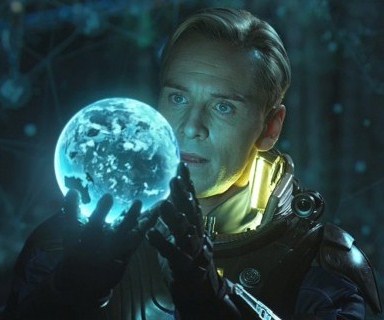
Also known as “David 8”, the first in the line of Weyland Industries fully functional AI’s, which have the ability to proximate human emotions, even though they cannot experience them. In addition to his impressive machine intelligence, he also comes equipped with a characteristic intrinsic to all Alien androids – moral flexibility!

Yes, in addition to assimilating all known info on Indo-European languages, the “Engineers” biology, and the nature of their bio-weapons, he also managed to unleash the bio-weapon within a human crew just to shake things up! And he did it all on the orders of Mr. Weyland himself, mainly so to help him find a way to cheat death.

In the end, David didn’t prove to be all bad. After having his head ripped off by an Engineer and witnessing Weyland’s death, he went on to help save Dr. Shaw and agreed to assist her in her mission to find the homeworld of the engineers. But that didn’t come as a huge surprise. As he had intimated to Shaw earlier in the movie, the death of Weyland would set him free. Once free, he became a much nicer guy!

Ash:
The same cannot be said for this next example, who comes to us from the original Alien movie. Originally thought to be a human who served as the Nostromo’s chief medical officer, Ash was revealed to be a synthetic that was taking his orders directly from the ship’s AI, which in turn was instructing him to follow company’s directives. And all who say him in the first movie can agree, this particular android was a complete and utter douche!

Not only was he willing to let the cry did in order to get the Xenomorph back to his handler’s alive, he tried to kill Ripley when she found out and even expressed open admiration for the Xenomorph. “I admire its purity,” he said. “A survivor… unclouded by conscience, remorse, or delusions of morality.” Jackass! Needless to say, Ripley’s experience with this synthetic severely soured her towards all androids.

Bishop:
Luckily, this next example was able to restore Ripley’s faith. As the Sulaco’s android executive officer, he was responsible for planetary maneuvering, but also acted as the away team’s science officer and performed various other functions as well. But unlike Ash, he was unable to allow harm to come to humans thanks to the inclusion of his “behavioural inhibitors”, which were tantamount to Asimov’s Three Laws.

Also unlike Ash, Bishop was loyal to the crew of the Sulaco and to Ripley in particular. When Burke tried to circumvent military authority and order Bishop to preserve the alien specimens, he alerted Ripley to the incongruity. He also managed to save Ripley and Newt from certain death when the Alien Queen had them cornered.

As if that wasn’t enough, he even prevented Newt when Ripley decompressed the Sulaco’s landing bay, and he was ripped in half at the time!

Annalee Call:
Taken from the universe of Alien: Resurrection, Annalee Call (aka. Call) was a secret “Auton” who managed to infiltrate a crew of mercenaries. This put her aboard the Auriga in time to meet Ripley 8, the clone produced by the military for the sake of resurrecting the Xenomorph species. After failing to kill Ripley before the Xenomorph could be extracted, she and the others were forced to band together to make it out alive.

Her agenda in all this was unclear, aside from a sense of displaced humanity which Ripley mocked when she said: “No human being is that humane”. As a member of the race of “second generation” synthetics known as “Autons”, which were apparently built by other machines, she was part of a dying species. Apparently, these synthetics were outlawed after they rebelled against their masters. Hmm, echoes of Blade Runner there; and by echoes I mean a total ripoff!

Eisenberg:
This next example comes from the expanded universe, specifically the 2001 gameΒ AVP 2. As the leader of Weyland-Yutani’s research facility on LV-1201, he was responsible for investigating the planet’s extensive ruins. This world was apparently discovered roughly a century and a half after events in the first movie, once the company traced the flight telemetry from the “Derelict” alien ship (aka. “Space Jockeys”/”Engineers”)

In the course of the game,it is revealed that Eisenberg was once human, and that during the initial mission to LV-1201, he was apparently the only survivor after a xenomorph attack. Due to terrible acid burns suffered during his rescue, he had his consciousness downloaded into an artificial body. As a result, he harbors a deep sense of fear of hatred for the xenomorphs, and unfortunately dies at their hands.

Katya:
Here we have a synthetic who refuses to go by that or any other of the more progressive monickers, preferring the term android instead. As Weyland Yutani’s administrative android for the Freya’s Prospect colony, this example comes from the 2010 video game relaunch of AVP. After the colony went to hell after the xenomorph’s escaped and began wreaking havoc, she is the one who called in the Marines.

Due in part to her enhanced empathic and morality processing, she became intrinsic to helping the “Rookie” (i.e. the protagonists in the Marine campaign) contain the outbreak and get the last human survivors to safety. In so doing, she went against Weyland’s orders and company policy. Good thing she was there to help out, one would have to wonder if what the company was thinking stationing a conscientious android there…

Karl Bishop Weyland:
The final example in this list also comes from the 2010 relaunch of AVP. As a descendent of the Charles Bishop Weyland, chairman of Weyland Industries, he was in charge of the facility on Freya’s Prospect and the director of the experiments involving the captured Xenomorphs. As such, he was also the main antagonist in the Marine campaign of the game.

Ultimately, his purpose in conducting research on Freya’s Prospect went far beyond breeding Xenomorphs. Within the planet’s jungles, and even more so beneath surface, Predator (aka. Hunter) ruins were discovered which he believed held ancient secrets, much of which was information about Hunter history, culture, and the Xenomorph itself.

By the end of the Marine campaign, the Weyland synthetic is killed and his research facility within the Hunter temple is destroyed. However, another android of the same make was still able to retrieve the information gleaned within, the most important part of which was the location of the Xenomorph homeworld.

Final Thoughts:
As you can see, the AI’s of Aliens have undergone some changes over the years. Beginning as conscienceless synthetics that seemed to admire the Xenomorph because it mirrored their amoral worldview, they went on to become the sympathetic characters who seemed, to quote another franchise, “more human than human”. Every other incarnation that has since appeared in the Alien and AVP franchises has been a reiteration of either of these concepts, being the tool of its corporate masters or a savior that was willing to risk its life to help its human brethren.

The one exception to this rule is also the most recent incarnation, Prometheus’ David. Of all the synthetics to inhabit the Alien or AVP universe, he is the only one who demonstrated both cold amorality and humanity. I believe Scott did this intentionally to provide a sense of synthesis to the characters of Ash and Bishop, honoring both archetypes as he attempted to return the Alien franchise to its roots.

Be they the kind of cold, calculating and inhumane androids that fueled our technophobia or the kind, gentle, and overtly “human” robots that made us question our own humanity, the Alien franchise certainly covered both ends of the spectrum in their portrayal of AI’s. Much like the Terminator franchise, they presented artificial intelligence as a double-edged sword, capable of being just as good and evil as any human being. And in the end, isn’t that really the point?

Recall how in Prometheus, Dr. Holloway told David “We built you because we could”? Well, that is only true to a point. Yes, new technologies are often is made simply because the means exist to do so. But the purpose in creating an artificial intelligence is to create life in our own image. And in the end, the consequences of that vanity is pretty obvious. Things created in our image will behave just like us, good and bad!