Classic sci-fi books, reviews, and the best of from a dedicated fan and author!
Author: storiesbywilliams
Matt Williams is a professional writer, science fiction author, and science communicator who currently writes for Universe Today, Interesting Engineering, Stardom Space, and Stellar Amenities. He is also the Director of Media Communications for Mars City Design and a member of Enterprise in Space and Explore Mars. His novels, The Formist Series, are available at Amazon.com and through Castrum Press. He lives with his wife and family on Vancouver Island in beautiful British Columbia.
Not long ago, NASA announced its plan to to visit an asteroid in our Solar System and towing it closer to Earth. And with their funding secure, NASA announced earlier this month that they had taken some key steps towards making this happen. The first came on Wednesday, May 15th, when the spacecraft that will be performing the mission – the Origins-Spectral Interpretation Resource Identification Security Regolith Explorer, or Osiris-Rex – got the green light for development.
The second came shortly thereafter, when NASA announced where the robot craft would be headed – the asteroid now known as Bennu. Originally known as 1999 RQ36, the rock was renamed as part of a contest involving suggestions from thousands of schoolchildren. It was a nine-year-old named Michael Puzio who suggested the name, claiming that the the Touch-and-Go Sample Mechanism (Tagsam) arm and solar panels on Osiris-Rex resembled the neck and wings of Bennu, better known as the Phoenix.
NASA claims that Bennu could hold clues to the origin of the solar system, hence why samples will be brought back to determine their composition. The new spacecraft will rendezvous with Bennu in 2018 and begin collecting measurements and samples of surface material, and then return to Earth by 2023. Ultimately, the mission is part of NASA’s larger aim at capturing an asteroid and towing it back it to Earth so that the entire body can be studied.
Of course, there are larger plans at work here too. NASA’s truly long-term aims also involve improving asteroid defense, which includes capturing asteroids that are on a potential collision course with Earth and towing them off course. And then there’s the plan to put astronauts on an asteroid by the 2020’s, establishing a Moon outpost in the same decade, and on Mars by 2030. In the end, all roads converge on putting boots on soil that is not of Earth!
And be sure to check out the video simulation of the Osiris-Rex in action, courtesy of NASA:
Sleep is a preoccupation the vast majority of human beings simply cannot shake. Unlike those lucky few who seem to be able to get by on a few hours a night, most people require a good eight hours of rest to be able to work, play, and function properly. Given that so much of our lives are spent in sleep – a full third, if we’re lucky – it’s little wonder then why the science of sleeping continues to fascinate us and garner so much attention.
Just this past April, Yukiyasu Kamitani and his colleagues at the ATR Computational Neuroscience Laboratories in Kyoto, Japan, announced that they were close to realizing their goal of being able to visualize people’s dreams. By this, of course, they meant the ability to take what a person was seeing while in deep REM sleep and project it onto a screen.
The process relies on a functional magnetic resonance imaging (fMRI) device, which examines the flow of blood in the brain to monitor activity. Using this data, the team then managed to create an algorithm that they claim can accurately display in real time what images are appearing in the subject’s dream. This is the first time, it is believed, that objective data has been collected from dreams.
But of course, the concept is predicated on the idea that when you experience a thought, your brain behaves in a specific, repeatable function. Assuming that this much is true, then the results could very well be quantifiable and rendered. The technology has already been demonstrated to work with a fair degree of effectiveness, as shown as the 2011 experiment at the University of California, where subjects watched movie trailers and had the images they were watching reconstructed.
And while some researchers are working on seeing dreams, others are working to reduce the time we spend doing it. Yes, given the hectic pace people who live in the modern, industrialized world are now forced to live by, there are actually research teams out there looking to find ways – pharmaceutical and neurological – to reduce our dependency on sleep.
The purpose is simple, to increase the amount of time we have in which live, produce and enjoy ourselves not by living longer, but by increasing the efficiency of sleep so we can spend more of our lives awake. In an extended essay that is available at Aeon magazine, Jessa Gamble – a writer specializing in the science of sleep – explains how new technologies could make this a reality.
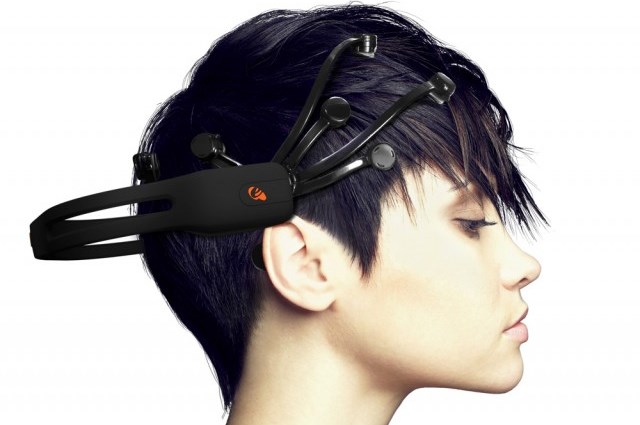
Such technologies include things like the Somneo Sleep Trainer, a special mask that is being developed by Advanced Brain Monitoring and DARPA to help US servicemen and women combat fatigue, sleep deprivation, and experience more restful sleeps when they take them. By using a device that combines an EEG monitor and a series of blue-LED lights to supress melatonin, the mask is able to restrict the wearer’s sleep to only the most restorative phases of sleep.
And then there is the technology of transcranial direct-current stimulation, which involves such devices as the tDCS headband. Here, an electrical current is sent through the sleep-important parts of the brain, specifically the dorsolateral prefrontal cortex. The mild stimulation augments awareness and allows subjects, according to Gamble, to “learn visual search skills at double the speed.” They also sleep better later on, with “briefer waking periods and longer deep-sleep sessions.”
A third potential technology that could be used is known as “transcranial magnetic stimulation” (TMS), a process which induces “slow-wave oscillations” in the brain, pushing the subject into a state of deep sleep in less time. Whereas the Somneo Sleep mask puts people into a lighter phase of sleep quicker, TMS will allow them to achieve a deeper state of sleep almost instantaneously. Add to that a better sleep cycle and better periods of wakefulness, and you’ve got what can only be described as “augmented sleep”.
But of course, this technology is being spearheaded for the sake of armed services, but has immense civilian applications as well. According to the CDC, roughly 30% of Americans live with less than adequate amounts of sleep, which drastically increases the risks of chronic disease. So realistically, this technology has the power to remediate the problem of those not getting enough sleep before it begins “enhancing” the sleep of others.
And I for one wonder where I might get myself a tCDS headband. While I have no intention of cutting down on the total number of hours I spend in the sack, I do like the idea of making the sleep I get more sound and my waking hours more wakeful. Then people can expect me to be a lot more productive. I know there have been some complaints about my output on this site lately 😉
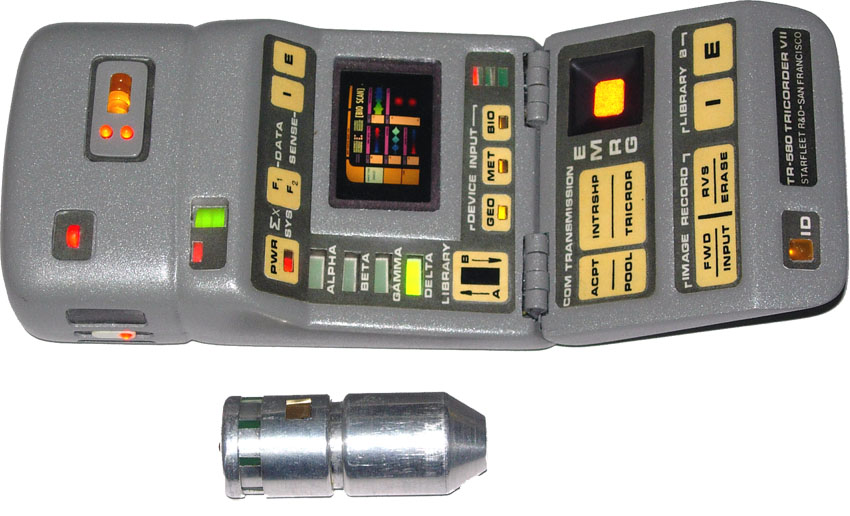
It was only a matter of time, I guess. But we really should have known that with all the improvements being made in biometrics and biotechnology – giving patients and doctors the means to monitor their vitals, blood pressure, glucose levels and the like with tiny devices – and all the talk of how it looked like something out of science fiction that it wouldn’t be long before someone took it upon themselves to build a device right out of Star Trek.
It’s known as a the Scanadu Scout, a non-invasive medical device that is capable of measuring your vitals simply by being held up to your temple for a mere 10 seconds. The people responsible for its creation are a startup named Scanadu, a group of research and medtech enthusiasts who are based at the NASA Ames Research Center. For the past two years, they have been seeking to create the world’s first handheld medical scanner, and with the production of the Scout, they have their prototype!
All told, the device is able to track pulse transit time (to measure blood pressure), temperature, ECG, oximetry, heart rate, and the breathing rate of a patient or subject. A 10 second scan of a person’s temple yields data that has a 99% accuracy rate, which can then be transmitted automatically via Bluetooth to the user’s smartphone, tablet or mobile device.
The device has since been upgraded from its original version and runs at a rate of 32 bits (up from the original 8). And interestingly enough, the Scouts now runs on Micrium, the operation system that NASA uses for Mars sample analysis on the Curiosity rover. The upgrade became necessary when Scanadu co-founder Walter De Brouwer, decided to add an extra feature: the ability to remotely trigger new algorithms and plug in new sensors (like a spectrometer).
One would think that working with NASA is effecting his thinking. But as Brouwer points out, the more information the machine is capable of collecting, the better is will be at monitoring your health:
If we find new algorithms to find relationships between several readings, we can use more of the sensors than we would first activate. If you know a couple of the variables, you could statistically predict that something is going to happen. The more data we have, the more we can also predict, because we’re using data mining at the same time as statistics.
One of the Scout’s cornerstone algorithms, for example, allows it to read blood pressure without the inflating cuff that we’ve all come to know and find so uncomfortable. In the future, Scanadu could discover an algorithm that connects, age, weight, blood pressure, and heart rate with some other variable, and then be able to make recommendations.
Everyone who pre-orders a Scout has their data sent to a cloud service, where Scanadu will collect it in a big file for the FDA. Anyone who opts-in will also gain access to the data of other users who have also elected to share their vitals. Brouwer explains that this is part of the products early mission to test the parameters of information sharing and cloud-medical computing:
It’s going to be a consumer product in the future, but right now we are positioning it as a research tool so that it can be used to finalize the design and collect data to eventually gain regulatory approval. In the end, you have to prove how people are going to use the device, how many times a day, and how they are going to react to the information.
In the future, De Brouwer imagines this kind of shared information could be used for population scanning, kind of like Google Flu Trends does, except with data being provided directly from individuals. The focus will also be much more local, with people using the Scout’s stats to able to see if their child, who suddenly has flu symptoms, is alone of ir other kids at their school are also sick. Pandemics and the outbreaks of fatal diseases could also be tracked in the same way and people forewarned.
Naturally, this raises some additional questions. With it now possible to share and communicate medical information so easily between devices, from people to their doctors, and stored within databases of varying accessibility, there is the ongoing issue of privacy. If in fact medical information can be actively shared in real-time or with the touch of a button, how hard will it be for third parties to gain access to them?
The upsides are clear: a society where health information is easily accessible is likely to avoid outbreaks of infectious disease and be able to contain pandemics with greater ease. But on the flip side, hackers are likely to find ways to access and abuse this information, since it will be in a public place where people can get at it. And naturally, there are plenty of people who will feel squeamish or downright terrified about the FDA having access to up-to-the-moment medical info on them.
It’s the age of cloud computing, wireless communications, and information sharing my friends. And much as people feel guarded about their personal information now, this is likely to take on extra dimensions when their personal medical info is added to the mix. Not a simple or comfortable subject.
But while I’ve still got you’re here, no doubt contemplating the future of medicine, take a look at this video of the Scanadu Scout in action:
Not that long ago, the CERN laboratory announced that they had found the first evidence of the Higgs Boson. After this momentous discovery, many were left wondering what would be next for CERN and their instrument, the Large Hadron Collider. While they had confirmed that what they had found was a Higgs Boson, it might not necessarily be the Higgs Boson. Other such particles might exist, and questions about how these particles interact and explain the nature of the universe still need to be unlocked.
Well, it just so happens that this past April, the researchers who run the Large Hadron Collider (LHC) decided to take it offline so they could give it some long-awaited upgrades. These upgrades will take two years and cost a pretty penny, but once they are done, the LHC will be almost doubled in power and be able to do some pretty amazing things. First, they will be able to see if their Higgs Boson is the real deal, and not some random subatomic particle simply imitating its behavior.
Peter Higgs (who proposed the Higgs boson), at the LHC
After that, according to CERN, they will take on the next big step in their ongoing research, which will consist consist of testing the theory of supersymmetry. Having demonstrated the Standard Model of particle physics to be correct, which the existence of the Higgs Boson confirms, they are now seeking to prove or disprove the theory that seeks to resolve its hierarchy problems.
Originally proposed by Hironari Miyazawa in 1966, the theory postulates that in nature, symmetry exists between two elementary particles – bosons and fermions – which are partnered to each other. Not only does this theory attempt to resolve theoretical problems stemming from the Standard Model (such as how weak nuclear force and gravity interact), it is also a feature of Superstring Theory, which attempts to explain how all the forces of the universe coexist.
For some time, scientists have been trying to ascertain how the four major forces of the universe – electromagnetism, strong nuclear forces, weak nuclear forces, and gravity – interact. Whereas the first three can be explained through quantum theory, the fourth remains a holdout, explainable in terms of Einstein’s Theory of Relativity, but inconsistent with quantum physics. Because of this, scientists have long sought out the missing pieces of the puzzle, hoping to find the subatomic particles and relational forces that could explain all this.
A number of theories have emerged, such as Superstring and Loop Quantum Gravity, but testing them remains a very difficult process. Luckily, by the time the LHC comes back online in 2015, not only will the researchers at CERN be able to confirm that they have found the real Higgs Boson, they will also have a far better shot at unlocking the greater mysteries of the universe…
Exciting news, I just wish it didn’t take so long to upgrade the darn thing! At this rate, it could be decades before we get to see gravitons, the other bosons, or whatever the heck those subatomic particles are that hold the universe together. I don’t know about you, but I’m eager to see how it all works!
Today was a red-letter day for Whiskey Delta and the dude who wrote it (that’d be me). According to Kindle Direct Publishing and Createspace, the combined sales of Whiskey Delta has just passed 1000 copies. And I’d like to take the opportunity to thank all the people who helped make it possible. I would name specific names, but at this point, that would be too many to count and I feel that everyone who’s been following this site since it went up has contributed to this milestone in one way or another.
So thanks are due to all! In fact, last night while I pondered the layout for book two, I decided that on the dedications page, I should make sure that the collective fanbase of Stories by Williams get a heartfelt thanks. So if you’re planning on buying a copy when it comes out (no pressure!) look for the part at the beginning where it says “Thank you to all the fans!”… or something like that. I will be talking ab0ut you people out there!
*Sidenote: In the future, you may notice me saying the following five words. They are sort of an inside joke, but also represent my long-term hopes for the series. It’s WD’s tagline, so expect to see if often in the future:
Well the votes are in, and by a margin of six to two, the third cover for Papa Zulu has beaten out all other contenders. And while I waiting, I managed to updated it a little, placing a few excerpts from the positive reviews the first book got on the back cover of the jacket. And so, when the second book hits the bookshelves in a few weeks, it will look like what you see above.
I also took the time to update the Whiskey Delta page over on the left there to show the book’s info. Now, whenever a new book is added, the publication date and a link will be added so people will know when it came out and where to buy it. As for those that are still in progress, there will be a projected publication date so people know when to expect it. Obviously, everything after the first two is still TBD for the time being, but give it time…
Oh, and I also came up with names and themes for the other books in the series. After Whiskey Delta and Papa Zulu, there’s Alpha Mike, which is already in production. Then there’s Hotel Tango, the proposed fourth installment which will be followed by the fifth and final book in the series, Zulu Alpha.
Stay tuned for updates! I’m not done with this zombie craze yet. And speaking of which, I got some new characters to announce. Stay tuned for the latest additions to the Zombie Warrior challenge as well…
By now, I imagine everyone is familiar with the Westboro Baptist Church, the notorious ultra-militant Christian cult best known for its slogan “God Hates Fags”. Well, it seems that the group has expanded its message of hate, no longer content to celebrate the deaths of gays or of US servicemen and women – with such slogans as “Thank God for dead soldiers” or “Thank God for IEDs”. Yes, it now seems they have widened their focus and chosen to embrace new tragedies in their quest to spread their message of hate.
These include such tragedies as the Newton, Connecticut shooting and the Oklahoma tornadoes. And while their efforts to protest the funeral of Principal Dawn Hochsprung – one of the many victims of the tragic school shooting – were thwarted by a group of good Samaritans, the group still managed to make some headlines for themselves with the creation of the website GodHatesOklahoma.com, claiming once again that the tragedy in Oklahoma was God’s judgement, and praising Him for taking the lives of the 24 people who were killed.
Luckily, the hacker community stepped in to teach these hate-mongers a lesson. Shortly after the website went up, all the original content was deleted and replaced with a picture of Jesus giving the Westboro Church the middle finger. The words ” “Westboro Faptist Church — Even Jesus Hates You” were added to let them know exactly who the Savior was cursing and why. (FYI: Faptist is a reference to the word “fap,” Internet slang for “masturbate”).
Clearly, the Westboro techs took the website down, because none of the content is avaiable for veiwing anymore. But according to some additional rumors, the person responsible was Jester, a relatively well-known hacker. This was indicated by the added message: “On the 8th day, God created hackers, and he saw that it was good. From the Gospel according to @th3j35t3r Redirecting in 5 seconds…….” After waiting, visitors were taken to a Red Cross donation site for victims of the storm.@th3j35t3r refers to Jester’s Twitter account, which contained the message: “Westboro Faptist ‘Church’ – My God loves everyone, especially you. You need it the most”, followed by a link to an article at The Daily Dot which acknowledged his efforts. It is unclear at this time if Westboro will attempt to put their site up again, but given their inferior programming skills, I would imagine they’d not want to tempt fate, or the hacking community, a second time.
And might I take this opportunity to commend Jester and those like him. This incident, much like Anonymous’ exposure of the internet predator who ruined Amanda Todd’s life, shows how hackers can be a truly positive influence on society. Much those people who originally came together at MIT to found the “Hacker Ethic”, these individuals are proof that some people are still capable using technology for good and not abusing their freedom.
With interactive maps becoming all the rage, I had a feeling it was only time before someone premiered an interactive browser that would let you explore the cosmos. And now there is, and it goes by the name 100,000 stars. Personally, I would have preferred Google Galaxy, like I suggested before, but forget it! You can’t teach these big time web developers anything 😉
In any case, 100,000 stars is an experiment for Chrome web browsers, but it will also work with Firefox, Safari, or just about any other WebGL you might have. Open it up, and you can see where our Solar System is in relation to the Orion Arm of the Milky Way Galaxy. Then zoom in to see the local star groups that are closest to us, our sun, and the planets and asteroids that make up our Solar System.
Also, I should note that the site provides a guided tour for the newly-initiated. I recommend you use that first, then try tinkering with the settings a little before mucking about to get a look at our little corner of the universe. The site can be a bit clunky at times, but keep in mind that there’s plenty of graphic info that’s being streamed at any given time. But if your machine and/or internet connection is faster than mine (a distinct possibility) you might have no trouble at all.
The practice of using UAV’s as part of a targeted strategy in Pakistan, Afghanistan, Somalia and Yemen has become so frequent that its come to characterize the Obama administration’s handling of the “War on Terror”. Reaction to this policy has been increasingly critical, due in no small part to unanswered questions surrounding civilian death tolls and the rapid escalation of deployment. In response, the Obama administration announced this past week that the surge is at an end.
In a speech made to the National Defense University in Washington on Thursday, Obama emphasized that from now on, the use of UAV’s would be in the hand of the military instead of clandestine intelligence organizations such as the CIA. He also indicated that the rules for launching the strikes would be stricter. For instance, there must be a “near certainty” that no civilians will be killed, and the strikes are to become less frequent.
While Obama would not declare an end to the war on terrorism, he did offer to work with Congress to constrain some of his own authorities for waging it, which may include the creation of a court modeled on the secretive one used by the NSA to oversea the surveillance of suspected foreign agents. He also expressed a preference to constrain “and ultimately repeal” the broad latitude of warmaking powers granted in the Authorization to Use Military Force (AUMF), an act that was created in 2001 by the Bush administration which is considered the wellspring of the “War on Terror”.
And above all, issues of legality are to take a backseat to the moral and ethical implications raised by ongoing use. Or as he put it: “To say a military tactic is legal, or even effective is not to say it is wise or moral in every instance.”
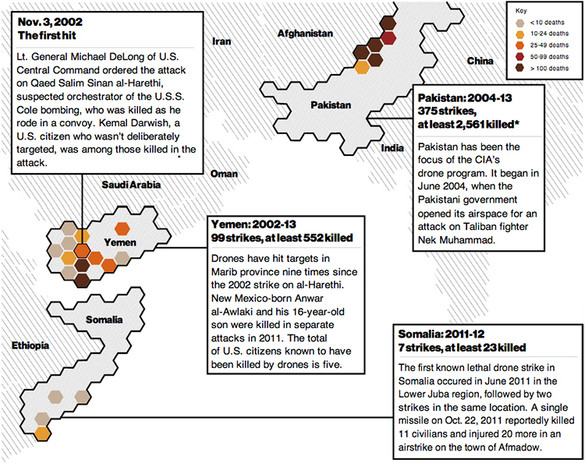
Naturally, a great many questions remain. In addition to how drones will be used in the years to come to combat terrorism and militants, there’s also questions surrounding their use thus far. Despite pledges made by Obama that changes will be made, the history of the program is still shrouded in mystery. Fittingly, Bloomberg Businessweek created a map to serve as a reminder of the scope of that program, calling it the first ever “comprehensive compilation of all known lethal U.S. drone attacks.”
It should be noted though that the numbers represent an estimate which were compiled with the help of the nonprofit Bureau of Investigative Journalism. Sources in Washington apparently offer a wide range of numbers, and the State Department remains hush hush on the issue of casualties. However, the estimates presented in this infographic still present a stark and sobering picture:
Yemen: at least 552 killed between 2002 and 2013. The site of the first ever drone strike in 2002.
Pakistan: at least 2,561 killed between 2004 and 2013.
Somalia: at least 23 killed between 2011 and 2012.
Naturally, it is hoped that Obama’s promise to curb the use of drones represents a renewed commitment to comply with international law, treaties and human rights. However, what was apparently missing from the speech was an indication about how easy it will be to get information about strikes that are made in the future. According to the New York Times’ Mark Mazzetti, who provided live analysis of the speech, Obama’s speech didn’t address the issue:
One of the big outstanding questions is just how transparent the Obama administration will be about drone strikes in the future. Will administration officials begin to publicly confirm strikes after they happen?
There was no mention of this in the speech, and it is telling that the president did not mention the C.I.A. at all. It seems quite certain that past operations in Pakistan, Yemen and elsewhere are not going to be declassified anytime soon.
Also, moving operations from the C.I.A. to the Pentagon does not automatically mean that the strikes will be publicly discussed. The Pentagon is carrying out a secret drone program in Yemen right now, and it is very difficult to get information about those operations.
So… promises to curb the use of drones have been made, as well as promises to create some kind of oversight for future operations. And this does seem consistent with many of the criticisms made about the ongoing war on terrorism, specifically the Bush administrations handling of it and how his reliance on special executive powers were unlawful and unconstitutional.
But until such time as information on how these strikes occur and who is being killed, the issue will remain a contentious and divisive one. So long as governments can wage war with automated or remote machinery and kill people without transparency and in secrecy, will this not constitute a form of illegal – or at the very least, a very opaque – warfare?
Sepsis, a full-body inflammatory state caused by infection, is a notorious killer, being both deadly and difficult to treat. As it stands, doctors use broad-spectrum antibiotics that have only a limited chance of success, and a misdiagnosis can cost a patient vital time. For military personnel serving overseas, where conditions are difficult and medical treatment not always readily available, it is a particular problem.
Hence why DARPA has been keen on finding new treatment options and contracted the Wyss Institute at Harvard University to the tune of $9.25 million to find it for them. Their solution: the “Spleen-on-a-Chip” – a blood-cleaning device that acts much like a kidney dialysis machine. Blood goes out through one vein, and back through another, but the real key is the magnetic nano-beads coated in a protein that binds to bacteria, fungi, parasites, and some toxins.
With these impurities coated in microscopic metal beats, the blood then flows through micro-channels in the device where a magnet pulls the pathogens free, leaving the blood clean. The technique also takes out dead pathogens (killed by antibiotics) that can also cause inflammations, if there are enough of them. In this way, it not only removes the cause of sepsis, but one of the common side-effects of conventional treatment.
Don Ingber, director of Wyss Institute for Biologically Inspired Engineering at Harvard, described the benefits of their Spleen-on-a-chip:
The idea with this therapy is that you could use it right away without knowing the type of infection. You can remove pathogens and infections without triggering that whole cascade that gets worse and worse.
Since it mimics the effects of a real spleen, many have taken to calling it a “biospleen”, indicating that it is a genuine biomimetic device. At the present time, Ingber and his associates are testing it on rats, with the hope of expanding their trials to larger animals, like pigs. But given the limits of their funding, Ingder estimates that it will be a good five years before a serviceable model is available to the public.
By that time, however, the biospleen may be just one of several organs-on-a-chip available for purchase. The Wyss Institute is hardly alone in developing biomimetics, and their spleen is just on of many devices they are working on. Ingber and his associates are currently working on the lung-on-a-chip and a gut-on-a-chip, devices that are able to oxygenate blood and process food into useable energy.
These latter devices will come in very handy for people with emphysema or other respiratory diseases, and people suffering from digestive problems or stomach cancer. And while larger aim, says Ingber, is to raise the effectiveness of drug testing and improve understanding of how the body reacts to disease, the potential is far more astounding. Within a few decades, we may be capable of getting our hands on machines that can compensate for any kind of limitation imposed by disease or our biology.
It’s a biomimetic future, people – technology imitating biology for the sake of creating enhanced biology.

 Not long ago, NASA announced its plan to to visit an asteroid in our Solar System and towing it closer to Earth. And with their funding secure, NASA announced earlier this month that they had taken some key steps towards making this happen. The first came on Wednesday, May 15th, when the spacecraft that will be performing the mission – the Origins-Spectral Interpretation Resource Identification Security Regolith Explorer, or Osiris-Rex – got the green light for development.
 NASA claims that Bennu could hold clues to the origin of the solar system, hence why samples will be brought back to determine their composition. The new spacecraft will rendezvous with Bennu in 2018 and begin collecting measurements and samples of surface material, and then return to Earth by 2023. Ultimately, the mission is part of NASA’s larger aim at capturing an asteroid and towing it back it to Earth so that the entire body can be studied.




















 Stories by Williams