
Smart fridges? Now I have seen everything!
Author: storiesbywilliams
Matt Williams is a professional writer, science fiction author, and science communicator who currently writes for Universe Today, Interesting Engineering, Stardom Space, and Stellar Amenities. He is also the Director of Media Communications for Mars City Design and a member of Enterprise in Space and Explore Mars. His novels, The Formist Series, are available at Amazon.com and through Castrum Press. He lives with his wife and family on Vancouver Island in beautiful British Columbia.
The Future is Here: The Sensory Prosthetic Hand
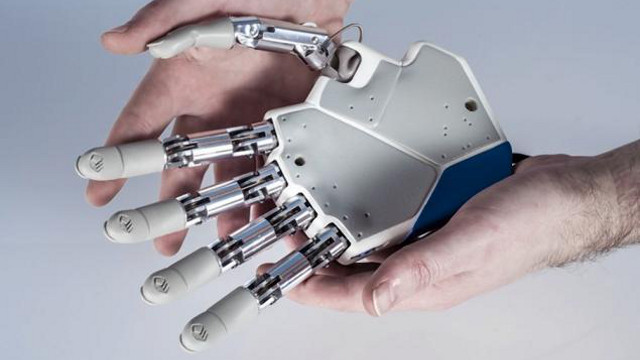 Much has been made of the advancements made in mind-controlled prosthetics lately. For many, the advancements made in this field have led to comparisons with the prosthetic hand that Luke Skywalker received at the end of the Empire Strikes Back. Remember that, how he got a robotic hand that not only looked real but also allowed him to feel pain? Well as it stands, we may be closer to that than previously thought.
Witness the new era of robo-prosthetic devices, ones that will not only restore motion to a amputees and people born without limbs, but also sensory perception! Developed by Silvestro Micera of the Ecole Polytechnique Federale de Lausanne in Switzerland, it’s the first prosthetic that will provide real-time sensory feedback to its owners. Later this year, a man by the name of Pierpaolo Petruzziello, who lost half his arm in a car accident, will receive the first of its kind, once all the tests are concluded.
 Much like the mind-controlled prosthetics that have been making the rounds in recent years, this new device is wired directly to the user’s nervous system with electrodes, allowing them to control its movement. However, in this updated model, the process works both ways. Once the hand’s electrodes are clipped onto two of the arm’s main nerves, the median and the ulnar nerves, it will form a cybernetic connection allowing for the fast and bidirectional flow of information between the patient’s nervous system and the artificial hand.
In this respect, the arm works much as a real one does, using electrical stimuli to both send commands and receive sensory information. Announcing the development of the hand at the recently concluded AAAS conference in Boston, Micera was sure to highlight this aspect of the prosthetic, claiming that increased sensory feelings will improve acceptance of artificial limbs among patients.
 Interestingly enough, this model is an updated version of one Micera and his team produced back in 2009, again for use by Petruzziello. He was able to move the bionic hand’s fingers, clench them into a fist and hold objects, and also reported feeling the sensation of needles pricked into the hand’s palm. However, this earlier version of the hand had only two sensory zones whereas the latest prototype will send sensory signals back from all the fingertips, as well as the palm and the wrists to give a near life-like feeling in the limb.
Once the hand and patient are united, he will wear it for a month in order to get a proper feel for the prosthetic and test out its many functions. Based on that test-drive, Micera hopes to develop a fully-functional and commercially viable model within the next two years.
Just think of it: prosthetics for amputees that will not only allow them to interact with their world again, but will provide them with the sensory information they need to actually feel like a part of it. One step closer to truly providing accident victims and people born without limbs a new and fully-functional lease on life. And perhaps to posthumanism as well!

Source: independent.co.uk, neurogadget.com
The Future is Here: Brain to Brain Interfaces!
 And I thought the month of February was an already exciting time for technological breakthroughs! But if a recent report from Nature.com is any indication, February will go down in history as the biggest month for breakthroughs ever! Why just last week, researchers in Natal, Brazil created the first ever electronic link between the brains of two living creatures.
The creatures in question were rats, and the link between their brains enabled one to help the other solve basic puzzles in real time — even though the animals were separated by thousands of kilometers of distance. The experiment was led by Miguel Nicolelis of Duke University, a pioneer in the field of brain-machine interfaces (BMIs), and a team of neurobiologists who’ve been working in the field for some time.
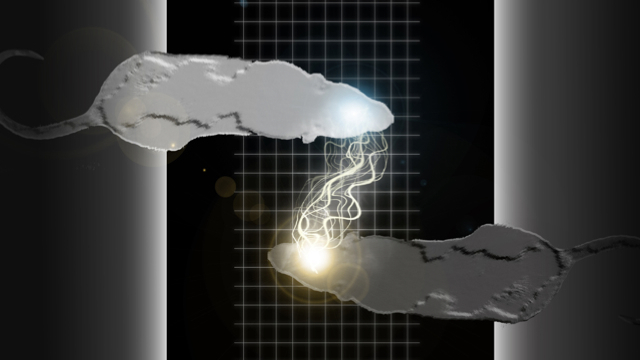 Here’s how it works: An “encoder” rat in Natal, Brazil, trained in a specific behavioral task, presses a lever in its cage which it knows will result in a reward. A brain implant records activity from the rat’s motor cortex and converts it into an electrical signal that is delivered via neural link to the brain implant of a second “decoder” rat. The second rat’s motor cortex processes the signal from rat number one and – despite being thousands of km away and unfamiliar with what rat one is up to — uses that information to press the same lever.
 Back in 2011, Nicolelis and his colleagues unveiled the first such interface capable of a bi-directional link between a brain and a virtual body, allowing a monkey to not only mentally control a simulated arm, but receive and process sensory feedback about tactile properties like texture. And earlier this month, his team unveiled a BMI that enables rats to detect normally invisible infrared light via their sense of touch.
However, this latest experiment really takes the cake. Whereas brain-machine interfaces have long been the subject of research, generally for the sake of prostheses, a brain-to-brain interface between two living creatures in something entirely new, especially one that enables realtime sharing of sensorimotor information. And while it’s not telepathy, per se, it’s certainly something close, what Nicolelis calls “a new central nervous system made of two brains.”
Obviously, this kind of breakthrough is impressive in its own right, but according to Nicolelis, the most groundbreaking application of this brain-net (or n-mind) is yet to come:
These experiments demonstrated the ability to establish a sophisticated, direct communication linkage between rat brains, so basically, we are creating an organic computer that solves a puzzle. We cannot predict what kinds of emergent properties would appear when animals begin interacting as part of a brain-net. In theory, you could imagine that a combination of brains could provide solutions that individual brains cannot achieve by themselves.
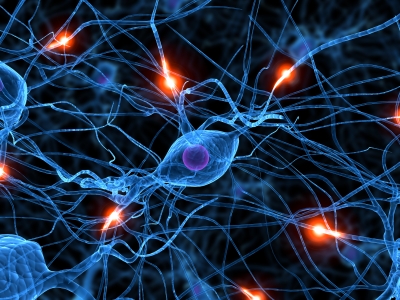 Naturally, there are some flaws in the process, which were made evident by the less-than-perfect results. For starters, the untrained decoder rats receiving input from a trained encoder only chose the correct lever around two-thirds of the time. Those results could not be the result of random odds, but they are also a far cry from the 95% accuracy where the signals were reversed, going from the untrained decoder to the trained encoder. As any student of science knows, one-way results are not the basis of a sound process.
And I imagine the people who are lobbying to make biosoldiers illegal and limit the use of autonomous drones will be on this like white on rice! Hence why we can probably look forward to many years of research and development before anything akin to human trials or commercial applications of this technology seem realizable.
And of course, there is a video demonstrated the mind link at work. a word of warning first though. If you’re an animal lover, like me, the video might be a little difficult to take. You be the judge:
Source: IO9, nature.com
The Walking Dead – Season 3 Episode 12
 Well I’ll be damned. Just last week I was complaining that the season was getting a bit stagnant. Then they go and pull one of these! An episode that really gets you in the gut and excites the hell out of ya! And to accomplish this feet of keeping fans interested and roped, they’ve gone back to the beginning of things with the series.
Last week, hints were given as to what was coming. Fearing diminishing supplies of guns and ammo, Rick, Michonne and Carl made plans to head back to Rick’s old hometown to see what they could dig up. And with the threads involving the prison and the town of Woodbury pretty much tied for now, what they find on their mission is the basis of this week’s entire episode.
Here’s what happened:
Clear:
 The episode opens with Rick, Carl and Michonne on the road together as they drive into town. On the way, they pass an uninfected man who begs them to stop, but they continue on. They come to a set of abandoned cars and stop to take on what they can find, and are set upon by Walkers. With barely a concern, they begin dispatching the Walkers, take what they need, and set off again. Once again, they are beset by the uninfected man and leave him behind.
From this opening scene, were are once again told a tale in very few words. After so much time spent being forced to fight and survive, they are immune to the pleas of outsiders looking for help and are free from fear. The habits have become so engrained that they come easily, as does turning a deaf ear to those they do not know or trust.
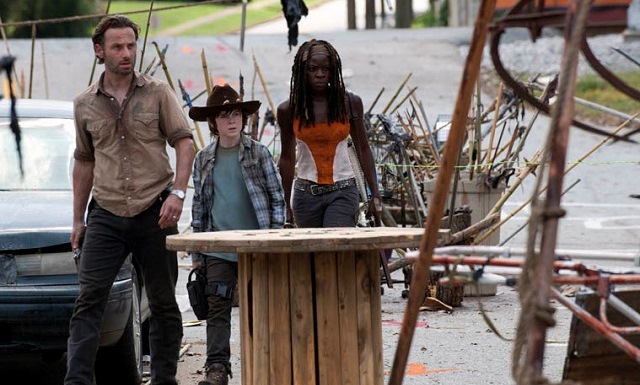 They come to town and begin inspecting the police station, which appears somewhat low on guns and ammo. Rick then decides to get a hold of the town’s gun registry, which they will then use to chase down all the firearms remain in town. When they reach the main road in town, they find a series of booby traps, sharpened stakes, and signs warning them to leave. Michonne observes that it looks like someone else has already made this place their home.
Without warning, they are spotted by a man on a roof who tells them to drop their weapons and get out. Not wanting to lose their weapons, or lives, they attempt to take him down with a little misdirection. Rick and Carl run and shoot while Michonne circles around to outflank him. However, the gunman is a step ahead and makes his way down to the street. Before he can shoot Rick, Carl pops out and shoots him in the stomach.
 After a quick search, Rick learns two important things. First, the man is wearing a vest and is only unconscious. Second, and more importantly, the man is none other than Morgan, the one who saved him after he woke up and wandered back from the hospital. They proceed to take him inside, noticing several booby traps, a massive arsenal, and tons of disturbing messages scrawled on the wall. Over and over again, the word “Clear” appears.
Carl says he’s going to make a run to the nursery store in the hopes of finding a crib for Judith. Michonne reasons he will need help and comes along, but Carl tries to get away the first chance he gets. When Michonne catches up to him and notices they’ve passed the nursery store, he reveals that there’s something else he wants for his sister first.
 He takes Michonne to cafe which appears to be filled with Walkers. After sending in a diversion, they run in to grab a picture from above the bar – apparently of Carl, Rick and Lori. However, the Walkers soon notice them, they have fight their way out, and the picture is left behind. Michonne does him the favor of retrieving it on her own, since Carl wants a photo so Judith can know what their mother looked like, and this is the only photo left.
Back in his home, Morgan wakes up and uses a stashed knife to cut his bonds. He then attacks Rick and wounds him, but Rick manages to get the upper hand point his gun in Morgan’s face. He begs Rick to shoot him, but Rick pleads with him to remember, which Morgan finally does. The key is the old walky-talky which Rick gave him, and Morgan begins to remember. He tells Rick he looked for him on the radio, but he wasn’t there. What’s more, he explains to him that his son is dead, and that it was his wife who did it.
 Rick invites Morgan to come with them, but Morgan refuses. He can tell Rick’s situation is less than ideal since he needs some of his guns. Rick assures him things will work out and he can get better, but Morgan is intransigent, saying he has to “clear”. Carl and Michonne rejoining him, carrying a crib. Carl pauses to apologize for shooting him, to which Morgan tells him to “never be sorry.
At the car, Carl let’s Rick know that he thinks Michonne might be one of them. She asks Rick if he sees people, to which she adds that she too used to talk to visions of her dead boyfriend. On the drive back to the prison, they pass the remains of the man they saw twice along the way, and stop to take his backpack.
Summary:
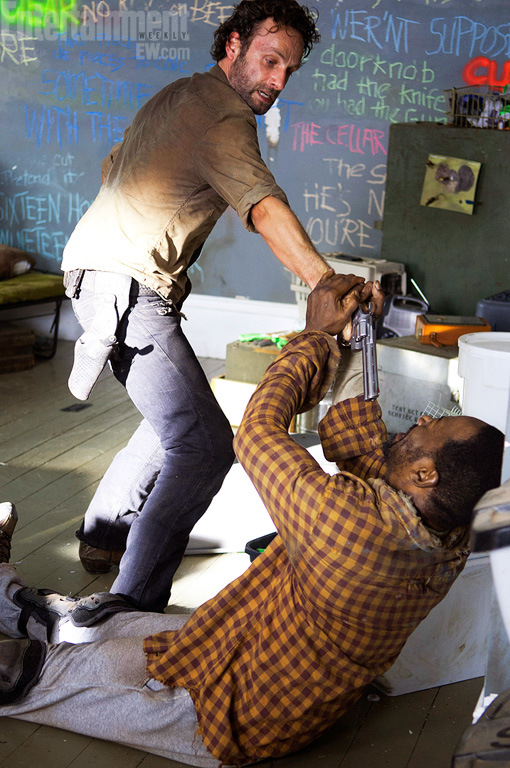 In case the intro wasn’t clear, this episode rocked for me. Even though it involved the reintroduction of an old character, it felt very much fresh and new and offered a much-needed diversion into the season. It was also nice that they brought back Morgan, considering that his character played a prominent role in the story at the beginning and was left very much unresolved.
After finding him and seeing what’s become of him, Rick also learns that he couldn’t bring himself to shoot his infected wife, and this is how Duane (his son) died. Because of this, he has become convinced that its only a matter of time before everyone will die. Many times over he says to Rick that “no one gets clear”. It’s not specified what he means by this, but if I were to guess, he means free and clear, as in safe and sound.
 Between that, the scene at the beginning where they twice turn away a man in need, and the final scene where they find his body and take his things; all of that manages to wrap the most predominant theme of the show up in a nutshell. That have been few episodes with this kind of tight narrative and consistency, demonstrating so succinctly that in this world, survival trumps morality, and sentimentality can mean death.
Yet, at the same time, they do their best to restore some degree of humanity and compassion through kind acts. Rick invites Morgan to come back with them, Carl struggles to get a photo of his mother for his sister, and Michonne helps him to recover something sentimental even though it means risking her life. And the way she begins to bond with Rick shows that human connections remain important in this world.
 And of course, it was exciting throughout, especially where Morgan’s traps and arsenal were concerned. After all this talk of shortages and supplies running low, it was good to see so many guns, sharpened steaks, grenades and bullets in one place. It is what I’d want to do in the event of a zombie apocalypse and he pulled it off. So… yeah, you go Morgan!
It also was nice to see Michonne get back to her cool, ass-kicking self. The way they humanized her was nice, though I thought it was a little out in left field. Yes, they’ve done this before, like how they revealed how hurt she was when Andrea chose to stay in Woodbury rather than go with her. And after all she’s been through, she deserves a little kind-heartedness. I just hope it doesn’t last long and she gets back to kicking ass soon!
And of course, with all the weapons and ammo they grabbed, they are sure to be that much more ready when the inevitable war comes. Next week promises to be confrontational, so it’s sure to be coming soon!
More News from Mars… Lots More!
 It’s a good thing I’ve come down with a cold and have little to do but sit at my computer. Because in the last week, some very interesting news stories have been piling up that just scream for recognition. And wouldn’t you know it, more than a few have to do with our big red neighbor Mars, that world many human beings will one day think of as home.
The first story comes to us from the Siding Spring Observatory in New South Wales, where noted astronomer Robert McNaught recently sighted an new comet. From his observations, the icy interloper appeared to have originated in the Oort Cloud – a hypothetical cloud surrounding the solar system and containing billions of icy planetesimals that were cast out from our Solar System billions of years ago.
 After news of the discovery was released, the astronomers at the Catalina Sky Survey in Arizona looked back over their observations to find “prerecovery” images of the comet dating back to Dec. 8, 2012. These observations placed the orbital trajectory of the comet – now known as C/2013 A1 – through the orbit of Mars on Oct. 19, 2014. This means, in essence, that this comet could very well strike the Red Planet late next year.
Luckily, NASA’s Jet Propulsion Laboratory has run the calculations and indicated that their close approach data suggests the comet is most likely to make a close pass of the Martian surface. And by close, they mean at roughly 0.0007 AU, or approximately 100,000 kilometers (63,000 miles) from the Martian surface. So in all likelihood, Curiosity and Opportunity will be safe from a serious impact that could turn them into scrap metal!
But of course, predicting its exact trajectory at this time is subject to guess work, and ongoing observations will be needed. No doubt, the predictions will be refined a the next 20 months go by, and we’ll know for sure if this comet plans to miss Mars completely, or slam head-on into the surface at 200,000 km/h (126,000 mph).
Source: news.discover.com, astroblogger.blogspot.ca
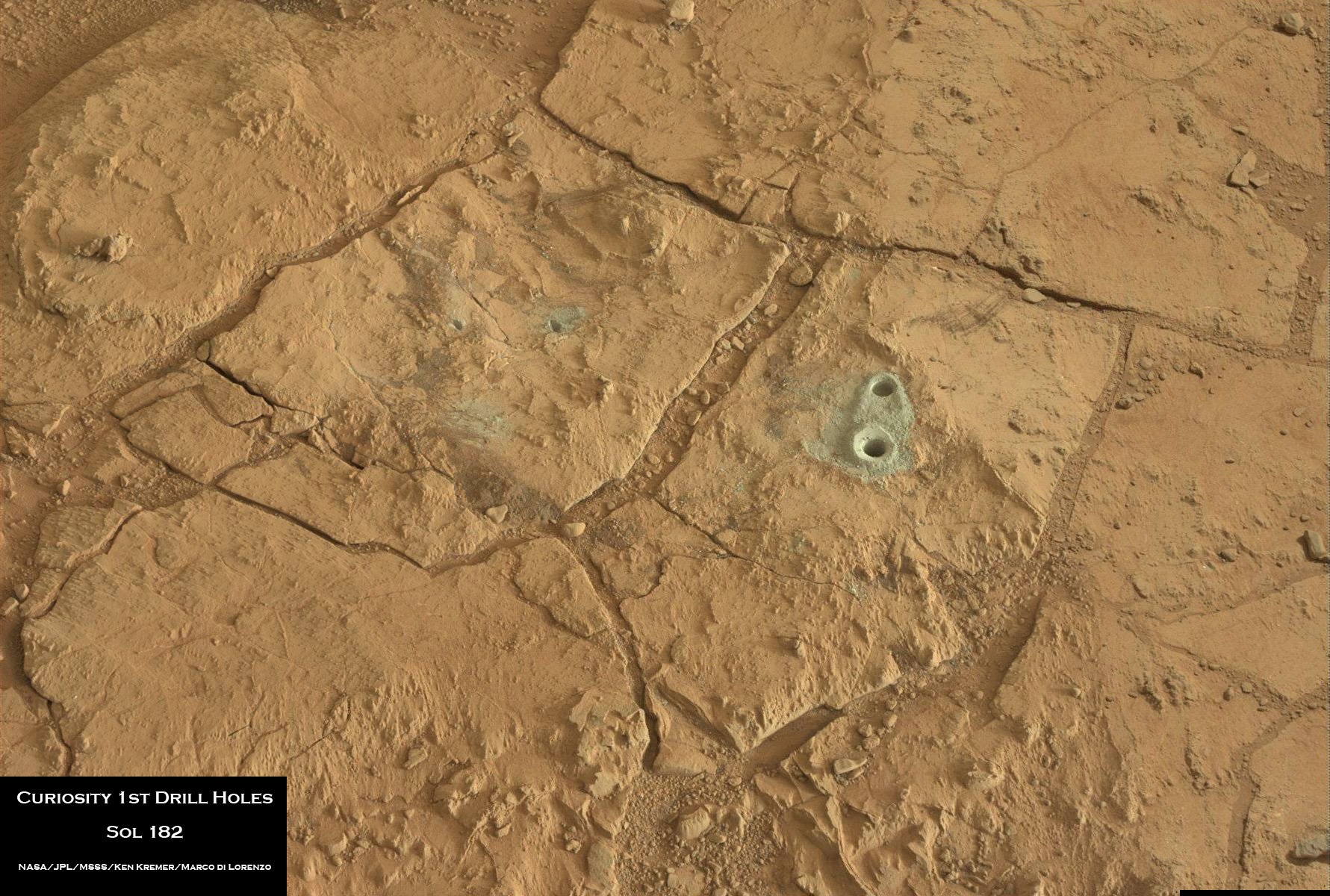 The second bit of news comes to us from the good-ole Curiosity Rover! Roughly four weeks after conducting the first drilling operation into the Martian surface, the Rover ate its first sample of the grey dust that resulted. The delivery of the two aspiring-sized tablets of dust took place on Feb. 22nd and 23rd respectively after the robotic arm delivered them into the rover’s Chemistry and Mineralogy (CheMin) and Sample Analysis at Mars (SAM) laboratories for analysis. Results expected in two weeks!
Among other things, the results from the analysis are expected to give clues as to what the color change between the red surface and the grey interior means. One theory is that it might be related to different oxidations states of iron that could potentially inform us about the habitability of Mars inside the rover’s Gale Crater landing site.
 At the same time, the Mars Science Laboratory team expects to find further evidence of what life was like in previous geological eras. The Curiosity team believes that the area inside the Gale Crater, known as Yellowknife Bay, experienced repeated exposure to flowing liquid water long ago when Mars was warmer and wetter – and therefore was potentially more hospitable to the possible evolution of life.
The rover will likely remain in the John Klein area for a month or more to obtain a more complete scientific characterization of the area which has seen repeated episodes of flowing water. Eventually, the six-wheeled mega rover will set off on a year long trek to her main destination: the sedimentary layers at the lower reaches of the 5 km (3 mile) high mountain named Mount Sharp.
Source: universetoday.com
 And last, but not least by any stretch of the imagination, is the discovery of “hieroglyphs” on the Martian surface. While they might appear like ancient glyphs to the untrained eye, they are in fact evidence of past subsurface water. The images were caught by the HiRISE camera on the Mars Reconnaissance Orbiter as it passed the surface area known as Amazonis Planitia.
Known as ‘rootless cones,’ these geological features are the result of an explosive interaction of lava with ground ice or water contained within the regolith beneath the flow. Vaporization of the water or ice when the hot lava comes in contact causes an explosive expansion of the water vapor, causing the lava to shoot upward, creating what appears to be a button hole on the surface.
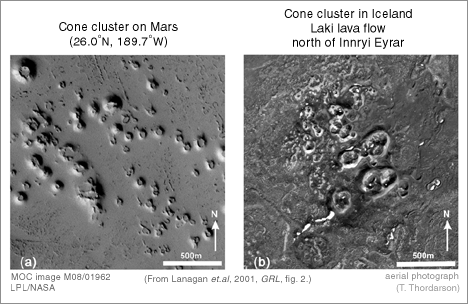 In the past, Mars scientists have used geological patterns on Earth to make sense of similar ones found on Mars. For example, when the Curiosity Rover discovered veins of hydrated calcium in the rock surface in the Gale Crater, they compared them to similar patterns found in Egypt to determine that they were the result of long-term exposure to water flows. In this case, the rootless cones found in Amazonis Planitia are comparable to those found in Iceland’s Laki Lava Flow (as seen above).
According to Colin Dunas, from the US Geological Survey, the cones are rather large and most likely very old:
“The cones are on the order of a hundred meters across and ten meters high. The age of these specific cones isn’t known. They are on a mid- to late-Amazonian geologic unit, which means that they are young by Martian standards but could be as much as a few hundred million to over a billion years old.”
 Only time will tell if any subsurface water is still there, and hence usable by future teams of terraformers and settlers. According to Dundas, the odds are not so good of that being the case. Given the surface depth at which the ice was found, not to mention that at the low latitude at which it was found (22 degrees north), shallow ground ice is unstable. Dundas added that since ice stability varies as the obliquity changes, it’s even possible that ice has come and gone repeatedly since the lava erupted.
Too bad. That could have come in really handy for hydroponics, fuel cells, and even restoring surface water to the planet. Guess future generations of Martians will just have to look for their ground and irrigation water elsewhere, huh? Just another challenge of converting the Red Planet to a green one, I guess 😉
Stay tuned for more news Mars. As it stands, there’s plenty to be had! Stick around!
Source: hirise.lpl.arizona.edu, universetoday.com
Real-Life Batman Found!
 It seems superheroes are becoming a real life phenomena, or at least vigilantes who insist on impersonating them. Not long ago, it was Pheonix Jones taking up the cause of justice in Seattle, and appealing to the public to join him. And now, over in Bradford, England, another would-be hero has shown up on the radar.
In an event that was caught on video, a man dressed as the “Caped Crusader” entered the Trafalgar House Police Station with a wanted man in tow, turned him over to police, and then disappeared into the night. Apparently, the wanted man in question was being sought by police in conjunction with theft and fraud, and was charged accordingly.
Despite speculation on some social media sites that the masked man might know the offender, or was himself known to police, the West Yorkshire Police spoke on record as saying:
“The person who brought the man in was dressed in a full Batman outfit. His identity remains unknown. We do not know the identity of the man dressed as Batman and do not know if he is friends with the man who was handed in.”
However, a local dress store owner believes she may have been the one to sell the costume to the local crime fighter. Kathryn Sutcliffe, of Kirkgate Market’s “The Joke Shop”, said she sold a Batman outfit to a man in his 20s a couple of days before the incident.
“Usually they want the Dark Knight costume but he wanted this one. He wanted the one with the muscly chest as well. It’s like the one Del Boy wears in Only Fools and Horses.”
Mrs Sutcliffe said the man had a local accent and was tall with curly black hair. She may be one of the few people who knows the Bradford Batman’s name, as he paid with a credit card and she has the receipt. But of course, she said she would keep his identity a secret.
Good for her! As we all know, art often imitates life. And in a world like ours, with such a rich tradition of superhero comics, movies, and television series’, the rules are pretty clear… with the exception of social media! Sure, we all know that you don’t go divulging a superhero’s identity and you don’t get in their way, but what are the rules regarding posting updates on Twitter and Facebook?
I’m thinking hating, second-guessing, jpegs and video clips are all fair game. Superheroes do depend on word of mouth-type publicity after all. But don’t post any info relating to their actual secret identity. That’s just plain wrong!
And a special shout-out to Nicola Higgins for bringing this story to my attention!
Source: BBC.news
Third article over at the CDM. And yes, the hackers were apparently traced back to an elite hacking unit. Scary!
Origins of Russian Meteor Found!
 Just over a week after a meteor exploded across the sky above the Chelyabinsk region of Russia, a group of astronomers published a paper that reconstructs where the rock came from. The men in question were Jorge Zuluaga and Ignacio Ferrin at the University of Antioquia in Medellin, Colombia. And the method they used was quite unconventional, and is perhaps a testament to the age we live in.
Basically, Zuluaga and Ferrin used the many sources of dashboard and security cameras that captured the event on film. Using the trajectories shown in the videos posted on YouTube, the researchers were able to calculate the trajectory of the meteorite as it fell to Earth and use it to reconstruct the orbit of the meteoroid before its fell to Earth and cause the shockwave that damaged buildings and shattered windows.
From their calculations, they were able to determine the height, speed and position of the meteorite as it fell to Earth. According to the team’s paper:
“…the Chelyabinski meteor started to brighten up when it was between 32 and 47 km up in the atmosphere. The velocity of the body predicted by our analysis was between 13 and 19 km/s (relative to the Earth) which encloses the preferred figure of 18 km/s assumed by other researchers.”
They then used software developed by the US Naval Observatory (called NOVAS) and the Naval Observatory Vector Astrometry to calculate the likely orbit. From all this, they came to the preliminary conclusion that the meteorite came from the Apollo class of asteroids, a well-known class of rocks that cross Earth’s orbit.
This conclusion has some worried, since the Apollo group, which orbits the Sun in the vicinity of Venus and Earth, contains over 2000 asteroids that are larger than 1 km in diameter. And considering that this one meteor, which measured between 17 and 20 meters, caused 1491 injuries and damage to over 4000 buildings in the area.
Lucky for us, NASA and every other space agency on the planet has some defensive strategies in mind. And of course, early warning is always the most important aspect of disaster preparedness. In the near future, we can expect some of the proposed observation satellites that will be going up to ensure there will be a better degree of early warning.
Source: universetoday.com
My next article at CDM!
Eyes in the Sky: The Future of Asteroid Defense
 With the recent passage of DA14 – an asteroid half as large as a football field and packing the power of a hydrogen bomb – and the rather explosive display that occurred above Russian skies, it’s little wonder then why NASA and other space agencies are publicizing various existing and proposed solutions to our “asteroid problem”.
Granted, there really isn’t much of a threat of an asteroid colliding with the Earth in the foreseeable future. And we also know that the meteor that graced the skies over the Urals was unrelated to the DA14 behemoth. But given that an impact could mean an Extinction Level Event, similar to the Cretaceous-Paleogene event that caused the extinction of the dinosaurs, a little planning doesn’t hurt.
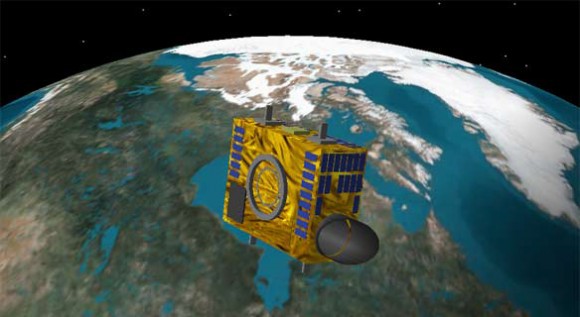 The first in a series of three existing or proposed designs is the NEOSSat – Short for Near-Earth Object Surveillance Satellite – that was built in Canada and was deployed last week on an Indian rocket with six others. In addition to watching space debris in orbit and tracking their movements, it will also be keeping a sharp eye out for asteroids that may swing by Earth in the future.
 Then there is the ESA’s proposed Asteroid Impact and Deflection Assessment mission (or AIDA), a group of planetary defense satellites that will are designed to collide with an asteroid, then push it off course. And after two years of planning, research teams from the US and Europe have selected the mission’s target – a so called ‘binary asteroid’ named Didymos – that AIDA will intercept when it passes the Earth by a mere 11 million km in 2022.
The third and final proposed solution is something that sounds ripped from the pages of a science fiction novel. Known as the DE-STAR, or Directed Energy Solar Targeting of Asteroids and exploRation, this satellite is essentially a orbiting laser that would be capable of destroying approaching asteroids 10 times larger than the DA14 and at a distance as far away as the Sun.
 Proposed by two California scientists – UC Santa Barbara physicist and professor Philip M. Lubin, and Gary B. Hughes, a researcher and professor from California Polytechnic State University – the satellite is designed to harness the power of the sun and convert it into a massive phased array of laser beams that can destroy asteroids that pose a potential threat to Earth. At the same time, it will be capable of changing an asteroid’s orbit – deflecting it away from Earth, or into the Sun.
Feel safer? Well, considering that the odds of Earth getting anytime soon are pretty low, and are likely to fall even farther once we get these rock killers destroyed. Once more, it seems that sane planning and sensible solutions are winning out over doomsday predictions. Good for us!
 Stories by Williams