Of DIY Cybernetics and Biohacking

transhuman3It seems that biohackers and enthusiasts of body augmentation could be setting a new trend, and doing it all from the comfort of their basements. That’s the essence of an article filed by Neal Ungerleider this past September, in which he stated that biohackers have not only cloned the innovation strategies of Silicon Valley, but could also be reshaping how technology is being created.

Amongst their efforts are such things as brain interfaces that can control video games with human thoughts, Bluetooth sensors that are meant to go under the skin and send vital signs to mobile phones, tissue engineering that can create in vitro “steaks” and leather, and devices that convert brainwaves into actual speech. These efforts are collaborative in nature and connect numerous basements, labs and research facilities together to share research, resources, and breakthroughs.

Those who take an active part in this trend are often known as grinders or biohackers, people who have chosen not to wait for cybenetic enhancements and body augmentation to become commercially available and seek to create them on their own.

According to Ungerleider:

“West Coast biohackers and grinders were the pioneers of this tech-driven, California brand of utopianism… For biohackers everywhere, augmentation of humanity itself—whether through technology or more traditional methods—is the primary goal. Common conversation points include DIY cyborgs, the quantified self, and diet…

“But a growing community on the East Coast—in greater New York, Boston, and Pittsburgh—is synthesizing Silicon Valley’s entrepreneurial DNA for its unique innovation model. Experimentation and science here is not only an exercise in advancing humanity through tech but is often applied toward creating viable cybernetic products for the market.”

One such group is Biohackers NYC, a group that was formed in 2012 largely in response to all the innovation that was taking place on the opposite coast. In additi0n to the initial startup group, it was joined by numerous startups, incubators, and workspaces scattered across the outer boroughs. As group founder and psychiatrist Lydia Fazzio claimed in an interview back in September:

“Our intent was to cover the spectrum of biohacking from manipulating non-human genomes to also the body and the mind. It’s a holistic approach to the meaning of biohacking, whether technology or nutrition. However you get there, we all have the innate potential to be an optimal functioning human in society. Our question is: How do we get there?”

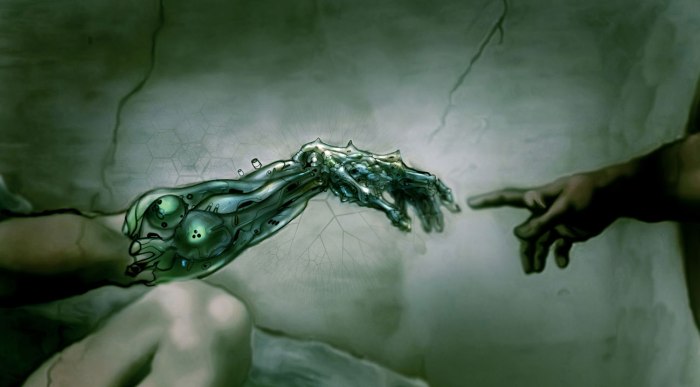
davinci_transhumanOne of the attractions of this new movement is that it allows the merger of skilled professionals and dedicated hobbyists a chance to collaborate on projects of mutual interest. It also takes advantage of new business and development models – i.e. crowdsourcing – which is made possible thanks to the digital revolution.

Already, message boards have sprung up that allow disparate “labs” to post information on their work and share with others who have similar interests and projects on the go. These include DIYbio, which deals with the larger field of DIY biotechnology labs; and biohack.me, where the possibilities of subdermal bone conduction headphones and echolocation implants are being contemplated.

TranshumanIn the end, this is really just a small part of a much larger movement, which takes on various names. On is transhumanism, a movement which believes that human limitations can and must be transcended with the help of technological innovation. Another is Singularitarianism, a movement popularized by such Futurists as Ray Kurzweil. These individuals believe that technology will (or has) reached the point where human beings can take control of their own mortality, abilities and evolution. While some are willing to wait, others are intent on making it happen sooner other than later.

Naturally, there is a great deal of skepticism towards this new trend. For one, there are countless people who believe it to be the stuff of “science fiction”, and not real science. But, as Ungerleider claims, this represents the culmination of trends that have been in the works for some time. What’s more, it represents the monetization and mass marketing of technologies which have been under development for many years. And in truth, the line between science fiction and science fact has always been a fine one. All that’s ever been needed for us to transcend it is for people to make it happen.

Sources: fastcompany.com, Wired.com, IO9.com

A Good Day To Die Hard

It must be trailer day today, as this is the second new movie trailer I find myself posting. But it can’t exactly be helped. Today, as I found myself sitting here, taking care of my sick wife, and enjoying Die Hard, I was reminded of a very important trailer I caught over the weekend. While watching Skyfall in the theater, an especially exciting and action packed preview came on that got my wife all excited.

At first, I was kind of thinking “Oh God, not another one”. But after a few seconds of intense action and lots of explosions, I got caught up in the fever and realized I wanted to see it too! I mean, why stop making them as long as formula still works and audiences can be expected to turn out in droves? Anyway, here it is, the second trailer to be released from the studio in recent months, and the one that confirms the date of release (Feb. 14th, 2013)

Scientists Raise the Alarm on Human Enhancements

enhancementThe concept of technological progress and its potential consequences has been the subject of quite a bit of attention lately. First, there was the announcement  from Harvard University and Human Rights Watch that a ban on killer robots was needed before the current pace of innovation led to the machines that could so without human oversight.

Then came the University of Cambridge’s announcement about the creation of the Center for the Study of Existential Risk (CSER) to evaluate new technologies. And last, there was the news the news that the DOD had signing a series of instructions to “minimize the probability and consequences of failures that could lead to unintended engagements,” starting at the design stage.

bionic_handConcordantly, back in early November, the Royal Society along with the Academy of Medical Sciences, British Academy, and Royal Academy of Engineering concluded a workshop called “Human Enhancement and the Future of Work” in which they considered the growing impact and potential risks of augmentation technologies. In their final report, they raised serious concerns about the burgeoning trend and how humanity is moving from a model of therapy to one in which human capacities are greatly improved. The implications, they concluded, should be part of a much wider public discussion.

Specifically, the report raised concerns on drugs and digital enhancements that will allow people to work longer, hard and faster. Such technologies could easily give rise to a culture of enhanced competitiveness, more than we currently know, where the latest in cybernetics, bionics and biomedical devices are used to gain and edge, not to remedy medical problems. Currently, things like bionic prosthesis are being created to aid amputees and injury victims; but as the technology improves and such devices become more effective than organic limbs, the purpose could change.

cyberpunk-eyeWhat’s more, there are the ethical implications of having such technology available to human beings. If people can upgrade their bodies to enhance their natural abilities, what will it means for those who get “left behind”? Will the already enormous gulf between the rich and poor expand even further and take on a new dimension? Will those who want to succeed in the business world be forced to scrounge so they can get the latest upgrades.

Or, as the panel’s final report put it:

“Work will evolve over the next decade, with enhancement technologies potentially making a significant contribution. Widespread use of enhancements might influence an individual’s ability to learn or perform tasks and perhaps even to enter a profession; influence motivation; enable people to work in more extreme conditions or into old age, reduce work-related illness; or facilitate earlier return to work after illness.”

At the same time however, they acknowledge the potential efficacy and demand for such technologies, prompting the call for open discourse. Again, from the report:

“Although enhancement technologies might bring opportunities, they also raise several health, safety, ethical, social and political challenges, which warrant proactive discussion. Very different regulatory regimes are currently applied: for example, digital services and devices (with significant cognitive enhancing effects) attract less, if any, regulatory oversight than pharmacological interventions. This raises significant questions, such as whether any form of self-regulation would be appropriate and whether there are circumstances where enhancements should be encouraged or even mandatory, particularly where work involves responsibility for the safety of others (e.g. bus drivers or airline pilots).”

In many ways, this report is overdue, as it is offering some rather obvious commentary on a subject which has been the subject of speculation and fiction for some time. For example, in the Sprawl Trilogy, William Gibson explored the idea of human enhancement and the disparity between rich and poor at length. In his world, the rich were ensured clinical immortality through AI and biotech while everyone else was forced to spend their savings just to afford the latest tech, merely so they could stay in the running.

However, just about all of the panel’s recommendations were most appropriate. They included further investigations into ensuring safety, affordability, and accessibility, not to mention that some of these enhancement technologies —  be they pharmaceutical, regenerative medicines, or cybernetics — should be regulated by the government. This last article is especially appropriate given the potential for personal misuse, not to mention the potential exploitation by employers.

With all the harm that could result from having technologies that could render human beings “postmortal” or “posthuman”, some degree of oversight is certainly necessary. But of course, the real key is a public educated and informed on the issue of cybernetics, bionics, and human enhancement, and what they could mean for us. As with so much else, the issue is one of choice, and awareness of what the consequences could be. Choose wisely, that’s the only guarantee! Hey, that rhymed… I smell a quote!

Source: IO9.com

New Man of Steel Trailer!

The first full-length trailer for the upcoming Man of Steel Superman relaunch is here. And the footage is really quite telling. We get a glimpse of Jor-El, Superman’s father, the antagonist General Zod, and the love interest of Lois Lane. There’s even footage of Superman’s homeworld, Krypton, being destroyed. For those who are especially excited, know that there’s just six more months before these goodies are delivered on the big screen – June 14th, 2013!

The Future is Here: Paper-Thin Smartphones!

paperthin_smartphoneAt last years Consumer Electronics show, the AMOLED flexible display concept was a huge hit. AMOLED – which stands for active-matrix organic light-emitting diode – is new a display technology that utilizes both organic compounds and an active matrix to form electroluminescent material and address pixels. But what is truly awesome about it is how it allows for displays that are both and flexible.

In the wake of that show, many developers have been presenting some cutting edge technologies and concepts that are still in development, but which build on the technology and are expected to be available within a few years time. One such concept comes from a collaborative group composed of researchers from Queens University’s Human Media Lab and the Motivational Environments Research Group from Arizona State. Their concept: the PaperPhone!

Like the Nokia Kinetic concept, a user is able to control through a series of bending and flexing gestures. The device’s internal circuit memorizes these gestures and responds accordingly whenever they are repeated. Ergo, if you register that earmarking is the command for making a call, the paper-thin phone will bring up a call prompt whenever you bend the corner. In addition, mp3’s will be available on the device, and presumably, internet access.

Paper-Thin-Pamphlet-Smartphone-Concept-2In addition to its ultra-thin profile, flexible nature and smartphone functions, this proposed design represents a growing trend in personal digital devices, which is towards the organic. In terms of design, interface and assembly, the eventual goal is devices that will be indistinguishable from organics. This could take the form of machinery composed of entirely out of “smart” DNA – aka. programmable biological cells –  hybrid devices that utilize organic compounds, and even machinery assembled by DNA structures.

Sure, this may seem like a long way from that eventual, lofty goal, but its certainly a step in that direction. And if technology can and will be manufactured with organic materials, there’s even a chance it could be used as biowaste when we’re done with them. Maybe even compost, assuming they can break down into soil-enriching organic compounds.

Keep your eyes open for more breakthroughs, they are sure to be coming soon. And while you’re at it, check out of the video of the PaperPhone in action!

3-D Printing Now Offering Cartiledge!

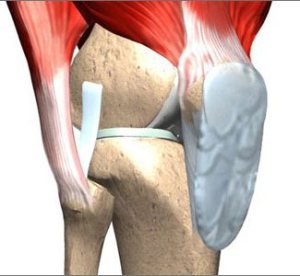
3-D cartilageSince it’s development as a viable technology, 3-D printing has presented us with some very interesting possibilities. In addition to objects made of plastic, metal, and possibly meat (a proposed idea still in development), printers may be used to create something else entirely: cartilage! Yes, in a recent announcement, scientists at the Wake Forest Institute of Regenerative Medicine claimed to have pioneered an approach to replace damaged cartilage.

The process combines two low-cost techniques – electronspinning and inkjet/bioprinting – to create the world’s first class of synthetic implantable biomaterial. The first is a method that that is used to create synthetic, polymer-based nanoscale-fibrous materials for implants and wound dressing, while the second is currently used to create tissue and organ material.

cartilage1Each process is viable, but comes with its own share of shortcomings. Electrospun materials typically don’t have the ability to promote cellular growth, nor do they have the flexibility needed for cartilage replacement. And inkjet printed materials lack the structure and strength needed to support the loads that cartilage carries. But by merging to two systems together, the researchers at Wake Forest to overcome these limitations and create something viable.

Their hybrid approach alternates microscopic layers of electrospun fiber and printed, living cartilage cells cultivated from rabbit ears, thus generating an artificial cartilage pad that is suitable for implanting. An eight-week study in mice showed that the implanted pads developed cellular structure similar to natural cartilage, while separate mechanical strength tests demonstrated that it was equivalent to the real thing.

For medical practitioners, the benefits of this breakthrough are obvious. Natural cartilage not only takes a long time to heal, it has almost no ability to regrow itself. At present, doctors rely on approach that combines removing small sections of damaged cartilage with microscopic grafts. However, neither of these methods are effective at restoring the cushioning, lubricating tissue that allows for full range of motion or impact on the limbs. What’s more, the long term effects of bone on bone contact can require eventual joint replacement.

Though the research is still in the early stages, the initial results have been quite positive. With time, and assuming the results continue to be as positive, we could be looking at a cheap and effective way to rehabilitate damaged limbs.

Source: Wired.com

News From The Center of the Galaxy!

sagittarius A_flareAt least once a day, the black hole that resides at the center of the Milky Way Galaxy – aka. Sagittarius A* – shoots out an x-ray flare. These flares range in luminosity and intensity, but are usually only on the magnitude of a few dozens times its normal output. However, back in February of 2012, astronomers using the Chandra X-Ray Observatory detected the brightest flare ever observed from the central black hole, measured at 150 times its normal output.

Located some 26,000 light years from Earth, Sagittarius A* emits X-rays on a regular basis, and no one is sure why. However, a group of researchers postulated that it may be the results of asteroids or planets that wander too close to the hole and are consumed. Essentially, they believe Sagittarius A* is taking in rocky objects, eating them up, and then shooting out x-rays as exhaust.

The supermassive black hole at the center of the Milky Way galaxy.According to Michael Nowak, a research scientist at MIT Kavli and co-author of a new paper in the Astrophysical Journal, a sudden increase in consumption might explain the flare. “Suddenly, for whatever reason, Sagittarius A* is eating a lot more,” he said. “One theory is that every so often, an asteroid gets close to the black hole, the black hole stretches and rips it to pieces, and eats the material and turns it into radiation, so you see these big flares.”

This is the standard procedure that astronomers use to detect black holes – i.e. by the light energy given off as they swallow nearby matter – since they are invisible to the naked eye. Not only are black holes notorious for consuming matter, even light and gravity, the very fabric of time and space, are consumed in their maws. However, through an x-ray telescope, the centers of galaxies can appear extremely bright, giving off massive amounts of energy as they devour their surroundings. As they age, they tend to slow down, consuming less and appearing fainter.

Another MIT alumnist, Frederick K. Baganoff, has been conducting observations on Sagittarius A* with the Chandra X-ray Observatory since 2003, and in that time he has noted some interesting things. For example, he calculated that, given the amount of gas in its surroundings, Sagittarius A* should be about a million times brighter than it is — a finding that suggested the black hole throws away most of the matter they would otherwise consume.

Or as he puts it: “Everyone has this picture of black holes as vacuum sweepers, that they suck up absolutely everything. But in this really low-accretion-rate state, they’re really finicky eaters, and for some reason they actually blow away most of the energy… We’re really studying the great escape, because most of the gas escapes, and that’s not what we expect.”

The physics that underlie this process are still a mystery, but researchers like Baganoff hope to learn more through more observation. In the end, the real pay off is that it will help us to understand the history of activity at the center of our Galaxy, a history which goes back billions of years and can tell us volumes about the formation of our Milky Way and even the universe itself.

News From The Red Planet!

mars_lifeIt’s been quite the busy month for NASA and the Curiosity Rover Team. In addition to the hectic research schedule and the excitement over all the potential finds, there’s also been a lot of planning as to what future mission will be like. Already, NASA announced that they plan to send another rover (InSight) to Mars in 2016, this one for the purpose of conducting interior planet studies. But given the success of Curiosity thus far, NASA announced recently that the multi-year, robotic rover program will continue, and will include an additional launch in 2020.

Apparently, this has much to do with the reelection of Barack Obama, whose commitment to space exploration also means that NASA can go ahead with its plans to create an outpost on the Moon. According to NASA Administrator Charles Bolden, this and the planned 2020 launch will ensure that “America remains the world leader in the exploration of the Red Planet, while taking another significant step toward sending humans there in the 2030s.”

The planned mission portfolio includes the Curiosity and Opportunity rovers, two NASA spacecraft and contributions to one European spacecraft currently orbiting Mars, the 2013 launch of the Mars Atmosphere and Volatile EvolutioN (MAVEN) orbiter to study the Martian upper atmosphere, the Interior Exploration using Seismic Investigations, Geodesy and Heat Transport (InSight) mission, and participation in the European Space Agency’s 2016 and 2018 ExoMars missions.

That alone is pretty exciting  news. But in and around these grand announcements, the Mars Science Labs also released some information a week ago concerning the Martian soil samples which were thought to contain organics. Though the samples did prove to be “earthshaking” as was hoped, they did present some rather interesting findings which are now being released.

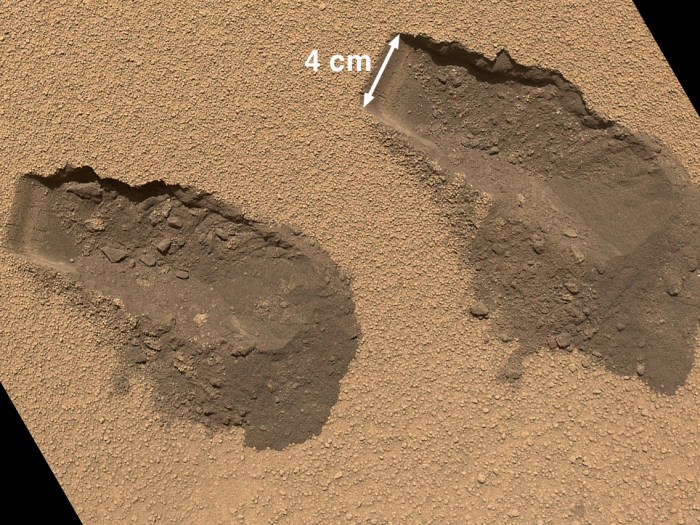
curiosity_samplesApparently, the samples taken with the “Rocknest” inside the Gale Crater showed signs of water, sulfur and chlorine-containing substances, among other ingredients, that were delivered by Curiosity’s arm to the analytical laboratory inside the rover. Lamentably, this does not confirm the existence of organic compounds, as the team hoped. But the find does confirm what Curiosity team and NASA scientists have been postulating for some time – which includes the existence of water on Mars and the existence of complex chemical compounds.

Also, it’s important to note that this kind of soil surveying was not possible with any previous rovers or exploratory missions in space. Curiosity is the first Mars rover that is able to scoop soil into analytical instruments and conducts tests in the way it has, so really, any findings should be considered a windfall. Detection of the substances during this early phase of the mission also demonstrated the ability of the rover laboratory to analyze diverse soil and rock samples, which will continue over the course of the next two years.

And as the team was sure to mention in a Tweet made shortly after the “earthshaking” discovery did not materialize, there’s still plenty of time to find all that they are looking for. Curiosity’s mission is far from over, and she will hardly be the last surveyor – man-made or manned – that will be roving the landscape of the Red Planet.

Source: NASA Jet Propulsion Laboratory

Nominated for Blog of the Year 2012!

Blog of the Year Award 6 star jpegIt’s just an honor to be nominated! Actually, its wonderful to be part of a community of people who inspire you, appreciate you, and share themselves with you. Getting nominated for an award is just a reminder of this process, and that’s what really nice about it.

So thank you so much to Renee Heath and Carolyne Page, the lovely ladies who are responsible for my nomination. You do such great work and are such great people, I hope to live up to your standard!

Like all Blogger Awards, the 2012 BOTY has rules which must be followed. They are as follows:

  1. Select the blog(s) you think deserve the ‘Blog of the Year 2012’ Award.
  2. Write a blog post and tell us about the blog(s) you have chosen – there’s no minimum or maximum number of blogs required – and ‘present’ them with their award.
  3. Please include a link back to this page ‘Blog of the Year 2012’ Award – http://thethoughtpalette.co.uk/our-awards/blog-of-the-year-2012-award/ and include these ‘rules’ in your post (please don’t alter the rules or the badges!).
  4. Let the blog(s) you have chosen know that you have given them this award and share the ‘rules’ with them.
  5. You can now also join our Facebook group – click ‘like’ on this page ‘Blog of the Year 2012’ Award Facebook group and then you can share your blog with an even wider audience.
  6. As a winner of the award – please add a link back to the blog that presented you with the award – and then proudly display the award on your blog and sidebar … and start collecting stars…!

Well then, here’s to the people I wish to nominate for this years “Blog of the Year”!

  1. Raven Lunatick – Science fiction, fantasy, and weird-stuff enthusiast, this woman and indie writer is a real go getter who regularly produces flash fiction and interesting articles on the world of weird and scary things! Also, her selfless dedication to protecting the rest of us from such literature as Fifty Shades of Grey cannot be under-appreciated. Man, this woman is a trooper!
  2. Rami Ungar – Dedicated indie writer, sci-fi fan and enthusiast of all things geeky, like me! Our paths are converging in many, weird ways, makes me think our destinies might be intertwined… spooky! And of course, he’s got a superhero alter ego – Revenger codename: Judgement!
  3. Audrey Johnson – World traveler, social activist, humanist and all around adventurer, there’s very little Audrey hasn’t seen and done, and hearing about it is a real treat 😉 Also, were it not for her constant encouragement, writers like me couldn’t produce.
  4. Nicola Higgins – Fellow writer, sci-fi geek, futurist and martial artist, Nicola is also a regular favorite of mine. And it’s not just because we have so much in common… necessarily 😉  Read her stuff, you’ll see what I mean!
  5. Lady Romp – Dedicated intellectual, fashionista, pop culture commentator, and speaker for women everywhere. Her philosophical investigations, social commentary and inspirational quotes are always interesting to read.
  6. Mike’s Craft Beer – One of the best reviewers of beer and craft brewing I’ve known who’s passion and knowledge for the malted nectar of the gods is even greater than my own!
  7. Khaalidah – The hardworking wife, mother, medical practitioner, writer and self-professed geek! I nominate her pretty regularly, but there’s a reason for that 😉 Her ongoing dedication to life, plus her thoughts on the world, on literature, on science fiction, and her active involvement in writing with myself and others is an inspiration. Oh, and did I mention her Revenger alter ego is the Veiled Tsunami?
  8. Greta van der Rol – Action, science fiction and romance are this ladies trademark styles, and her passion for the written word (especially the production thereof) is encouraging and astounding. Hope to rival her vast collection of tomes one day!
  9. Nina D’Arcangela – The Dark Angel lady – which is not only the meaning of her last name but her alter ego (she’s part of the Revengers too!) – her regular infusions of deep, gothic poetry and literature are nothing if not spine-tingly-dingly! But somehow, she still manages to be a bright and spunky lady and a breath of fresh air!

Congrats to all of you and all of us! I’m sure we deserve it (darn tootin’ we do!)

NASA’s Next Mission to the Moon

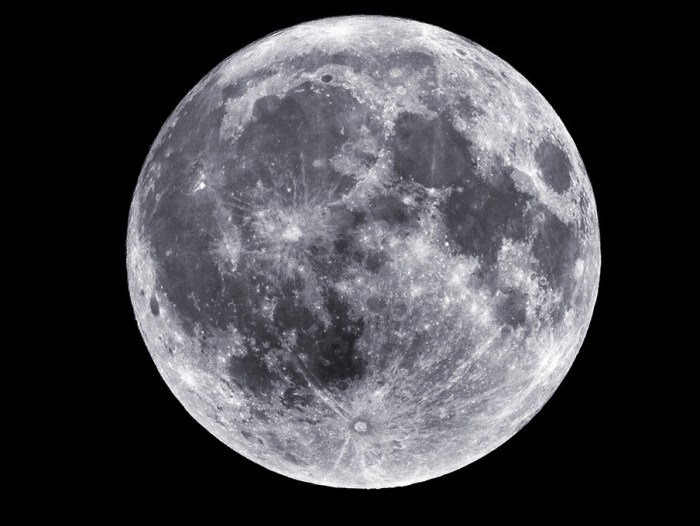
moonThe buzz about NASA is that the human race is once again going to the moon, and planning to stay there! According to space policy expert John Logsdon, there are plans to establish a manned base on the dark side of the moon under the Obama administration. He further indicated that with the election pending, this news has been kept under wraps. But with Obama now secure in a second term, it is expected that there will be an announcement soon.

“NASA has been evolving its thinking, and its latest charts have inserted a new element of cislunar/lunar gateway/Earth-moon L2 sort of stuff into the plan,” said Logsdon in a recent interview with SPACE.com. “They’ve been holding off announcing that until after the election, noting that NASA’s mission, direction, and budget could have been revised under a Romney administration.”

For those who have been following the Obama administration’s plans for space, this should not come as a surprise. In 2010, the president signed the NASA 2010 Authorization Act into law, a bill which freed up $60 billion for NASA through 2013. This move was intended to reignite space exploration at a time when the US found itself lagging behind Russia, China, the European Union and India in terms of bold new space projects.

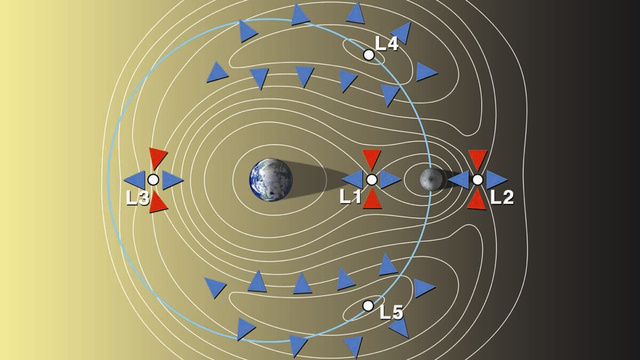
These project include a planned asteroid visit by 2025 and a manned mission to Mars in 2030. A manned outpost at the Earth-moon L2 “gateway” (shown in the diagram below) could serve as an important stepping stone to the outer solar system. But right now, NASA’s eyes are firmly fixed on Mars itself, since a manned mission is the next logical step in their research of the Red Planet.

NASA_moon“There are many options – and many routes – being discussed on our way to the Red Planet. In addition to the moon and an asteroid, other options may be considered as we look for ways to buy down risk – and make it easier – to get to Mars.” At a conference held this past September, NASA deputy chief Lori Garver went even further to outline NASA’s goals for the coming years:

“We just recently delivered a comprehensive report to Congress outlining our destinations which makes clear that SLS  – NASA’s new heavy-lift “Space Launch System” – will go way beyond low-Earth orbit to explore the expansive space around the Earth-moon system, near-Earth asteroids, the moon, and ultimately, Mars. Let me say that again, we’re going back to the moon, attempting a first-ever mission to send humans to an asteroid and actively developing a plan to take Americans to Mars.”

Suffice it to say, NASA is happy the election turned out the way it did. With their budget secure, the course of future space exploration has been set and remains in effect. Who’s to say where it will take us beyond Mars? To the Jovian satellites of Europa, Ganymede and Io? The Saturnalian moons of Titan, Rhea, Dione and Enceladus? I call Gliese 581 after that. I want to know for sure if the fourth planet (the setting of our story Yuva) is inhabitable or not already!

These are exciting times we live in, aren’t they?

Source: IO9, Space.com