The Hunger Games You Didn’t See

You know how Hollywood will announce an upcoming movie, and will usually precede any trailers by releasing special info like who’s attached to direct and who will be starring in it? Believe it or not, there’s actually an interesting selection process that leads up to this. Yeah, I was surprised too. Given what I’ve learned from Entourage and Hollywood’s many movies about itself, I would have thought that the whole process was done behind closed doors, and involved a bunch of sleazy executives, some martinis and many, many lines of coke!

But according to a recent article from Blastr, the process is a bit more complicated. It seems that prospective directors are also expected to make pitches to the producers, and often do so in the form of videos. When The Hunger Games was first being conceived, that’s precisely what prospective director Kevin Tancharoen did. Tancharoen is relatively new to Hollywood, the man behind the 2009 remake of Fame and the guy who has been on the radar of the sci-fi fan universe ever since he released a test film for the proposed Mortal Kombat: Rebirth film.

The trailer featured below is the mashup he created to show to the producers. It features footage from numerous movies, including Harry Potter, Serenity, Gladiator, Ultra Violet, X-Men, 300, Lord of the Rings, and a slew of other science fiction and action films. In the background you hear key lines of dialogue featured from the original novel, giving a sense of context and direction to the montage. Having watched it, I can tell you that it’s not bad, provided you don’t mind that not a single scene is original! Of course, Tanchareon didn’t get the job. But there’s still the sequel to think of…

Which reminds me, I’m due to review the movie they did make. I finally got around to watching it, and I think it would be nice to do a blow by blow comparison between it and the original novel. Expect it soon!


The First Science Fiction Novel Ever?

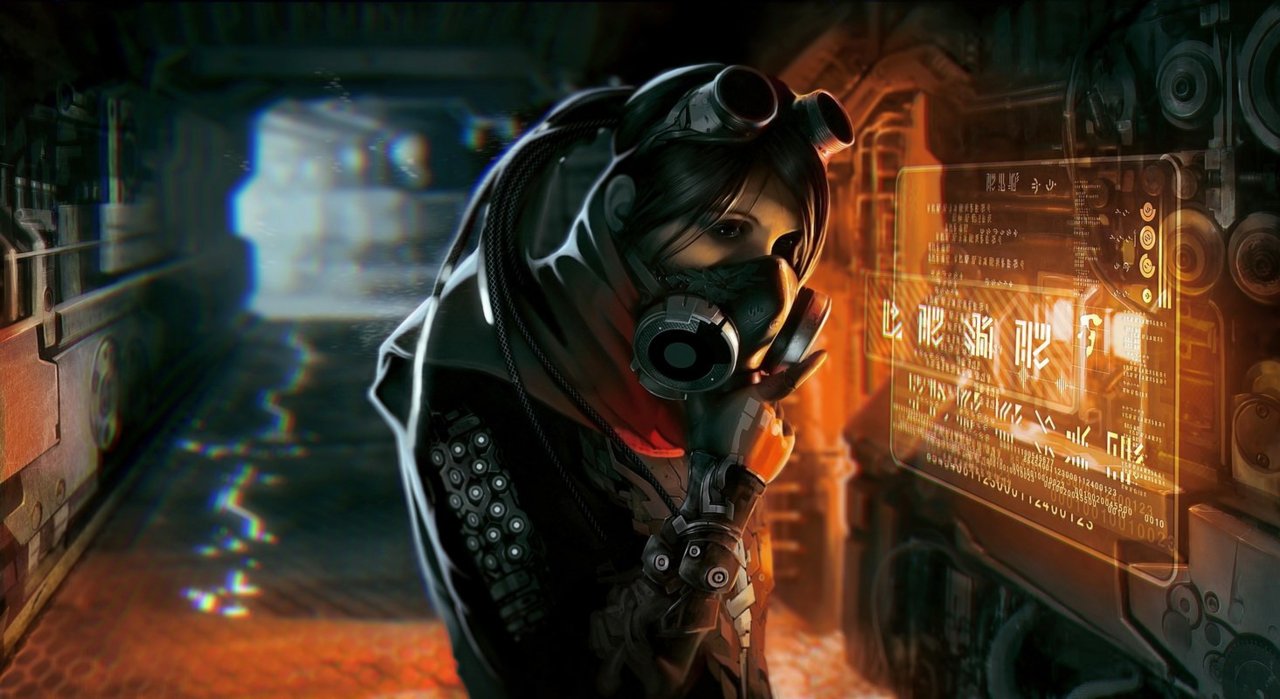
What do you think of when you hear the words Sci-Fi? Chances are, the words inspire images such as the one above, of nightmarish landscapes featuring clogged streets, flying cars, neon lights and massive skyscrapers. Or possibly you’re partial to the more utopian visions, with space travel, beautiful arcologies and happy shiny people who want for nothing and treat each other with peace and civility.

All good, but chances are, no one thinks of medieval literature from the Islamic world when they hear that term. Chances are no one thinks of anything other than the industrial age, of men like H.G Wells and Jules Verne. For most of us, these are the people who pioneered the field of science fiction, no doubt about it. But amongst scholarswho specialize in tracing literary genres to their roots, one book stands out as the possible progenitor of them all; a little known novel by the name of Theologus Autodidactus.

Outside of antiquarians and theologists, not many people have heard of this story, and up until a few weeks ago, I hadn’t either. So you can imagine my surprise when I learned about it. To me, science fiction was not something that could have predated the scientific revolution, or the age of industry when steam locomotives, steam ships, and a revolutionary understanding of the world and man’s place in it inspired flights of fancy which went well beyond our world. And yet, as it turns out, a manuscript which was written sometime in the 13th century by an Islamic scholar living in Egypt.

His pen name was Ibn al-Nafis (nee Ala-al-din abu Al-Hassan Ali ibn Abi-Hazm al-Qarshi al-Dimashqi), and he was what westerners would later refer to as a “Renaissance Man”. Not only was he an expert physician he also studied jurisprudence, literature and theology and became an expert on the Shafi’i school of jurisprudence before he died. In addition to writing many treatises on medicine, one of which was made famous for being the first in which pulmonary circulation of the blood was mentioned, he also wrote extensively on law and the world’s first coming of age tale/science fiction novel Al-Risalah al-Kamiliyyah fil Siera al-Nabawiyyah, which translated into Latin is known as Theologus Autodidactus.

Plot Summary:

Broken down succinctly, the story revolves around a protagonist named Kamil, an adolescent feral child who at the beginning of the story finds himself spontaneously transported to a cave on a deserted island. Almost immediately, it is clear that the boy is an autodidactic, a self-directed learner who has mastered several fields through independent learning.

Over time, he is met by several castaway who get shipwrecked on the island, learning and sharing from them. In time, the castaways band together to make a ship and agree to take Kamil with them back to civilization. As they return to the world of man, Kamil begins to see all the works of man, learns of philosophy, law and medicine remaining a self-directed learner all the while) and comes to several conclusions.

As he grows, he is taught the value of jurisprudence, religion, the necessity of the existence of God, and the value of the sciences, arts, and all other things that make man civilized. His own coming of age is reflected in explorations of the origin of man, the current state of the world, and predictions of the future. Towards the end, the plot develops from this coming-of-age scenario and begins to incorporate several new elements, such as the the end of the world, doomsday, resurrection and afterlife are predicted and scientifically explained using his own empirical knowledge of biology, astronomy, cosmology and geology.

Summary:
Ultimately, Ibn al-Nafis described his own work as a defense of “the system of Islam and the Muslims’ doctrines on the missions of Prophets, the religious laws, the resurrection of the body, and the transitoriness of the world”. Essentially, this meant presenting rational arguments for religious ideas, such as bodily resurrection and the immortality of the human soul, using both demonstrative reasoning and literary examples to prove his case. In this respect, he was not unlike Thomas Aquinas and a host of other western scholars from the High Middle Ages, men who would similarly try to defend reason based on faith and use empirical knowledge to defend the existence of a spiritual, universal order.

However, what set Ibn al-Nafis’ work apart was the way in which he expressed his religious, scientific and philosophical views through a fictitious narrator who went on to experience what the world had to offer. Rather than writing things in treatise form, which was the style for most philosophers of the day, he chose to do what only a select few of his contemporaries did and tell the story through a narrator who’s own journey illustrated one’s own journey of discovery. In that respect, he was like Voltaire, who’s fictional Candide had to venture out into the world in order to realize the truth about life and the order of things, though their conclusions were vastly different.

And finally, fact that he chose to speculate about what the future held, up to and including the apocalypse itself, is what makes this work classifiable as science fiction. Here, he was most comparable to men like H.G. Wells and Verne, men who looked to the future in the hopes of illustrating the current state of humanity and where it was likely to take them. And though these, and later generations of individuals, often had a negative appraisal of such things, Iban al-Nafis’ was arguably positive. His exploration was designed to affirm belief in the existence of something greater than material nature, but provable using the same basic laws.

I can’t imagine being able to find a copy of this book any time soon. It’s not like Amazon has copies on hold for anyone looking to a little cross-cultural antiquities reading. I checked, they really don’t! Still, I’d consider it a boon to find a translation and read the whole story for myself. What I little I learned can’t possibly capture the historic and cultural importance of the novel. Something to add to the reading list, right next to The Peach Blossom Spring and Beowulf!

Crashland – Chapter 16, Now Available At Story Time!

Alright! It’s been many weeks, but I finally got back to Crashland! I had been hoping to tackle it while on vacay up in Comox, but like many of my projects, it just didn’t happen. But back in my home, where I get most of my writing done, I back on that horse and updated it at last! Good thing too because I was worried people were starting to lose interest. So, here’s where things left off…

Last time around, Holden woke up to find that the subway tube had collapsed, that Jacobs was seriously injured and the medic named Jorka was dead. All of this was being laid at his feet by the new commander, a man named Kurzweil. After talking it over with Molya, the squad’s chief enforcer, Kurzweil ordered him to administer a drug that would put Holden in a coma so they could do their operation without him.

Molya, however, had other plans. Bringing the syringe to Holden, he told him to sneak into Kurzweil’s quarters and administer the drug to him in his sleep. Though he does not fully understand why Jacobs insists on making Holden a part of their operation, he is willing to give them the benefit of the doubt. What’s more, he is not willing to contravene Jacobs orders when he’s not even awake and able to defend them. Holden agreed to the plan and set off to find Kurzweil in his quarters, where he is about to find the man asleep and defenseless, or so he thinks…

Come on by and see what happens. Then stick around to vote on the next outcome. It’s all happening over at Story Time.me!

3D Meat, On the Way

According to a series of articles in your local science periodicals, a billionaire by the name of Peter Thiel has donated a small fortune to a series of biotechnology startups, one of which is researching ways to “print” 3D meat. The name of the company is Modern Meadow, a Missouri-based startup that believes 3D printing could be the answer to meeting (I swear, no pun!) the world’s high demand for meat.

The process involves the careful layering of mixed cells in a specific structure, thus rendering an in-vitro meat product. Thanks to Thiel’s donation of 350,000 dollars, they hope to create a prototype very soon – which will consist of a sliver of meat that measures two centimeters by one centimeter and is less than half a millimeter thick. Not the biggest slice of meat you ever saw, but as they say, start small!

If feasible, this concept will be a boon for food production and green initiatives. For decades now, vegetarians and environmentalists have been toying with the idea of artificially produced meat for a number of reasons. For the former, the benefits include a source of protein that doesn’t involve animal cruelty. For the latter, it means providing for Earth’s voracious appetite for meat – roughly 240 billion kilograms a year – without the need to clear rainforests for pasture land or the dangers of producing new and deadly diseases. Within the last thirty years, the world has seen outbreaks of Mad Cow Disease, Hoof in Mouth Disease, and Avian Bird Flu, all due to globalization and increased demands for meat.

Modern Meadow explained these advantages in a recent submission to the United States Department of Agriculture:

“The technology has several advantages in comparison to earlier attempts to engineer meat in vitro. The bio-ink particles can be reproducibly prepared with mixtures of cells of different type. Printing ensures consistent shape, while post-printing structure formation and maturation in the bioreactor facilitates conditioning.”

As for the rest of us, there’s just the question of what it would mean to actually eat this stuff. Are we comfortable with meat created by a machine? The company admits that this is one of the biggest challenges facing them and the development of this process. In a separate statement they claimed:

“The consumer acceptance of such products may not be without challenges. We expect it will first appeal to culinary early-adopter consumers and the segment of the vegetarian community that rejects meat for ethical reasons. With reduction in price, it can reach the masses with religious restrictions on meat consumption (people restricted to Hindu, Kosher, Halal diets) and finally populations with limited access to safe meat production.”

I like the sound of that, especially the part where low cost means better access. And in truth, the process could be made incredibly affordable once all the components are perfected, tested and become regular items manufactured by components industries. Unlike a lot of the technologies that I’ve been hearing about of late, this is not one that will appeal only to the super-rich and powerful. And there’s an upside to the planet and it’s developing nations, ones which are forced to destroy their environments for the sake of providing cheap sources of meat and poultry.

Still, not sure how I’d feel about this stuff if and when it shows up on the shelf at the local grocery store. Then again, if it meets all the right safety and health standards and the price is right, I’ll give it a shot!

Winston Agonistes, Finished!

It’s done! After weeks and weeks of writing, editing and running by my peers, my short story contribution for the Yuva Anthology is finally done. Entitled “Winston Agonistes”, the story tells the tale of synthetic human (i.e. AI) who is in the employ of the planetary government. His basic programming centers around the a social science known as Ethical Calculus, a means by which he is able to calculate the outcomes of decisions.

In any case, the story takes a turn when Winston meets another synthetic named Yohanley, an AI who’s been around a lot longer than him. At first, it seems that Yohanley intends to mentor him on what it means to be an artificial human. However, as time goes on, he realizes that Yohanley is in possession of a terrible secret, one which goes to the heart of the planet’s colonization efforts.

When Winston realizes what it is, he faces a terrible dilemma. Compelled to assess the outcomes of ethical decisions, he can see no outcome in which things turn out well. The only question is who it will endly badly for, himself and his mentor, or an entire species!

Expect more updates on the Yuva project soon, including samples from our newest writers, more artwork, and maybe even a surprise or two. The full anthology is due to be released in January 2013. Look for it online and (God willing) your local bookstore!

The Future is Here: The Airport Virtual Assistant

You ever walk into a Walmart, look at the greeter and think to yourself, “I bet a hologram could do that guy’s job.” Yeah, I’m guessing probably not, huh? But in all seriousness, these individuals and other members of the service industry may find themselves being declared redundant pretty soon. Thanks to the introduction of the AVA (Airport Virtual Assistant) by airportONE, the job of being the happy, smiling face that people see when they arrive and leave and get their helpful info from may soon be filled by a virtual lady. That’s right, holograms are taking our jobs!

Already, the technology has been installed in three major New York City Airports, including La Guardia, Newark, and JFK. Washington Dulles and Boston Logan are following suit, and expect to have theirs up and running soon. At present, the capabilities of the AVA are limited to reciting a 90 second loop of general airport information to anyone looking for guidance. However, airportONE is looking to expand on that by adding voice-recognition software and a fully interactive program which can answer people’s questions. They also plan to make future versions multilingual so that they can assist international travelers.

According to the company’s own promotional material, which isn’t creepy at all, the benefits of this technology are obvious:

“She works 24 hours a day, seven days a week and doesn’t charge for overtime. She never gets sick and doesn’t require a background check.”

Isn’t that exactly what Mr. Dyson, the guy who built Skynet, said in Terminator 2? Anyone remember how that out? And according to airportONE, plans are underway to create new and different models that can be used in hospitals, business offices, stores and museums. Very soon, the entire service industry could be outsourced once more… to a land of microchips and directed photons.

So far, reaction to the AVA has been a bit mixed. But I can imagine what the folks at South Park have to say about this act of technological outsourcing!

Envisioning Emerging Technology

Where are we headed when it comes to technology? Which fields will advance before others? When will certain devices and tools be available? How long before we can expect things like flying cars, interactive holograms, space travel, and intelligent robots? These are the questions currently being addressed by Envisioning Technology and its founder, Mitchell Zappa.

The purpose is pretty straightforward: by examining the wider context, one can see not only where technology is going in the near future, but how developments in one field will stimulate others. Once we have a better understanding of what lies ahead, according to Zappa, we can make better decisions of what to create today.

To illustrate this, ET has prepared a helpful interactive infographic, one which allows users to hover over an item and see a detailed description. The target dates range from 2012 to 2040, beginning with tablets and cloud computing and culminating in the development of Avatars, Space Elevators, and AIs. Some additional predictions include:

  • 2018: Self-driving cars
  • 2019: Space tourism
  • 2026: Domestic robots
  • 2030: Blood-powered displays embedded into human skin
  • 2033: Remote presence
  • 2035: Human missions to Mars
  • 2035: Thorium reactors
  • 2036: Space elevators
  • 2036: Climate engineering
  • 2037: Anti-aging drugs
  • 2039: Nanotechnology utility fogs
  • 2040: Arcologies (massive cities)

For a more detailed breakdown and description, check out the infographic below, or follow the link to the website for a more detailed interactive experience:

Immortality Is On The Way!

William Gibson must get a kick out of news items like these. According to a recent article over at IO9, it seems that an entrepreneur named Dmitry Itskova and a team of Russian scientists are developing a project that could render humans immortal by the year 2045, after a fashion. According to the plan, which is called the 2045 Initiative, they hope to create a fully functional, holographic avatar of a human being.

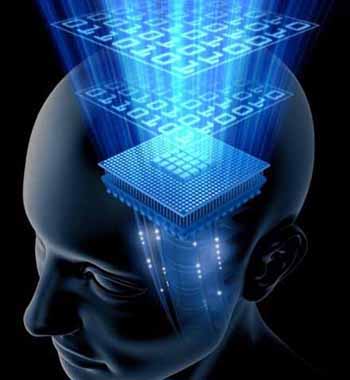
At the core of this avatar will be an artificial brain containing all the thoughts, memories, and emotions of the person being simulated. Given the advancements in the field of computer technology, which includes the Google Neural Net, the team estimates that it won’t be long before a construct can be made which can store the sum total of a human’s mind.

If this concept sounds familiar, then chances are you’ve been reading either from Gibson’s Sprawl Trilogy or Ray Kurzweil’s wishlist. Intrinsic to the former’s cyberpunk novels and the latter’s futurist predictions is the concept of people being able to merge their intelligence with machines for the sake of preserving their very essence for all time. Men like Kurzweil want this technology because it will ensure them the ability to live forever, while novelists like Gibson predicted that this would be something the mega-rich alone would have access to.

Which brings me to another aspect of this project. It seems that Itskova has gone to great lengths to secure investment capital to realize this dream. This included an open letter to roughly the world’s 1226 wealthiest citizens, everybody on Forbes Magazine’s list of the world’s richest people, offering them a chance to invest and make their mark on history. If any of them have already chosen to invest, it’s pretty obvious why. Being so rich and powerful, they can’t be too crazy about the idea of dying. In addition, the process isn’t likely to come cheap. Hence, if and when the technology is realized, the world’s richest people will be the first to create avatars of themselves.

No indication of when the technology will be commercially viable for say, the rest of us. But the team has provided a helpful infographic of when the project’s various steps will be realized (see above). The dates are a little flexible, but they anticipate that they will be able to create a robotic copy of a human body (i.e. an android) within three to eight years. In eight to thirteen, they would be able to build a robotic body capable of housing a brain. By eighteen to twenty-three, a robotic humanoid with a mechanical brain that can house human memories will be realizable. And last, and most impressive, will be a holographic program that is capable of preserving a person’s memories and neural patterns (aka. their personality) indefinitely.

You have to admit, this kind of technology raises an awful lot of questions. For one, there’s the inevitable social consequences of it. If the wealthiest citizens in the world are never going to die, what becomes of their spoiled children? Do they no longer inherit their parent’s wealth, or simply live on forever as they do? And won’t this cramp this style, knowing that mommy and daddy are living forever in the box next to theirs?

What’s more, if there’s no generational turn-over, won’t this effect the whole nature and culture of wealth? It is, by its very nature, something which is passed on from generation to generation, ensuring the creation of elites and their influence over society. In this scenario, the same people are likely to exert influence generation after generation, wielding a sort of power which is virtually godlike.

And let’s not forget the immense spiritual and existential implications! Does technology like this disprove the concept of the immortal soul, or its very transcendent nature? If the human personality can be reduced to a connectome, which can in turn be digitized and stored, then what room is left for the soul? Or, alternately, if the soul really does exist, won’t people who partake in this experiment be committing the ultimate sin?

All stuff to ponder as the project either approaches realization or falls flat on its face, leaving such matters for future generations to ponder. In the meantime, we shouldn’t worry to much. As this century progresses and technology grows, we will have plenty of other chances to desecrate the soul. And given the advance of overpopulation and climate change, odds are we’ll be dying off before any of those plans reach fruition. Always look on the bright side, as they say šŸ˜‰

Great Day!

Good news everybody! Thanks to my good friend Thomas Saxon, who recommended I check out the social utility site Reddit, I now have a whole new forum to publicize my writing. Ever since I began posting links to my articles there, I’ve picked up an additional infusion of traffic. In fact, as of 10:30pm this evening, I reached 1370 hits, with more than half of it coming from Reddit itself! And that was day one. I can’t wait to see what day two holds…

I don’t know about you but 1370 hits equals a great day for me. In honor of that I thought I might share my favorite music video of all time, which just happens to be “Great Day” by Lonely Island. When I first saw it, I laughed so hard I started coughing profusely. Hope you enjoy it as much as I did. And to those of you who follow me, let me recommend Reddit as a utility. Just add it to your publicity settings and link to it whenever you publish an article you’re particularly proud of.

The Future is Here: Cyborg Flesh!

My thanks to Futurist Foresight for turning me onto this article. I would have reblogged, but it was just easier to follow the links and post on my own. You may recall some weeks back when the news hit the airwaves, about how researchers at Caltech developed the medusoid, a cybernetic jellyfish that was capable of mimicking the behavior of the original. Well, it turns out bioengineers at Harvard University have gone a step a further.

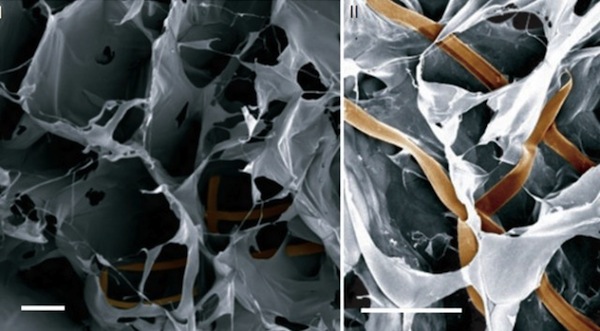
Merging the neurons, muscle cells, and blood vessels of various rats with nanowires and transistors that can monitor bioelectric impulses, these researchers were able to create the world’s first hybrid living/electronic cells. Much like the medusiod, the cells were controlled through electrical impulses, which allowed them to function like normal cells, except controlled via a computerized interface.

In time, they anticipate that this will lead to the development of nanotechnology that will allow them to make subtle changes in a person’s biochemistry. More than that, they could become the basis of tiny medical machines, such as microscopic pacemakers, or as microcircuits for prosthetics and silicate implants. On top of all that, this research is a big step along the road to the development of nanorobots, machines so tiny that they alter or maintain a person’s health at a cellular level.

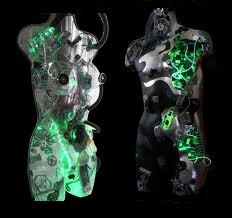
“It allows one to effectively blur the boundary between electronic, inorganic systems and organic, biological ones,” said Charles Lieber, the team leader in an interview with New Scientist. And he’s absolutely right. With developments such as these and the boundaries they are pushing, human-machine interface, implant technology, robotic prosthetics and upgrades, and even the merging of our minds with computers could all be on the horizon. For some, this will mean the arrival of the long awaited Homo Superior, the new age man. For others, its a chance to tremble at the specter of a cybernetic future!

Both are fine choices, whatever floats your boat šŸ˜‰