Five Technologies for the Developing World

Developed-and-developing-countriesWhen it comes to providing energy in the “developed world”, the challenge is in finding ways to generate electricity, heat, and cooling in a way that will not burden our environment. Whereas providing these things in the past has never been much of a challenge, finding ways to meet future demand in a way that is sustainable and renewable often is. Lucky for us, we have the means to meet this challenge head on.

But in the “developing world”, where the infrastructure does not readily exist, populations continue to grow exponentially, and the concerns about the natural environment are quite grave already, the challenge of providing for people’s basic needs presents a significant challenge. At the same time however, it presents an opportunity for creative solutions.

What follows is just a few examples of what engineers and designers have come up with in recent years. These devices are especially innovative because they are capable of increasing the supply of safe, cheap energy on a user-by-user basis, bypassing the years it takes to extend a power grid to remote places, the resources needed to increase a country’s energy production capacity, or the environmental damage involved.
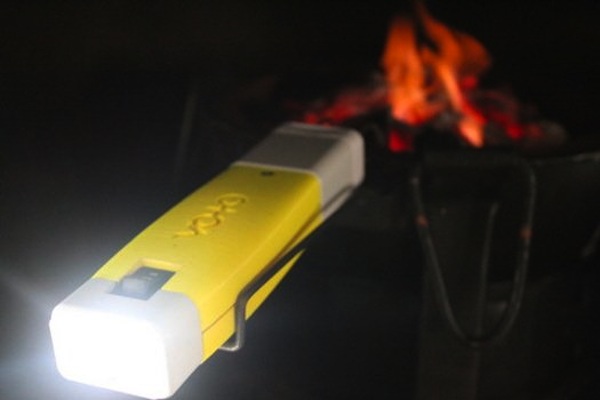
Voto-Stove1. The Voto: Millions of people around the world use coal or wood-fired stoves to provide for their cooking and heating needs. Developed by the company Point Source Power, the VOTO converts the energy these fires release as heat into electricity, which can power a handheld light, charge a phone or even charge a spare battery. Initially designed for backpackers and campers, the company is also trying to find a way to make it accessible to residents of the developing world, where it will be much more useful.

2. Window Socket: Here we have what is perhaps the simplest solar charger in existence. Simply attach the suction cup to a window or any sun-exposed surface, let sit for 5 to 8 hours, and the solar panels will store enough electricity to power a device for up to ten hours. Created by Kyuho Song and Boa Oh of Yanko Design to resemble a normal wall outlet as closely as possible, the charger can be taken and used anywhere, making it truly versatile.

window_socket33. The Berkeley-Darfur Stove: In recent years, health researchers have come to the conclusion that open-fire stoves lead to millions of deaths in the developing world. Hence this design by Potential Energy, a nonprofit dedicated to adapting and scaling technologies to help improve lives in the developing world. Featuring a tapered wind collar, a small fire box opening, nonaligned air vents that reduce the amount of wind allowed to stoke or snuff the fire, and ridges that ensure the optimal distance between the fire and pot, this stove is safe, fuel-efficient, and requires less wood to power. Over 25,000 units have been distributed to the Darfur region and Ethiopia so far.

gravitylight4. Gravity Light: Along with wood-burning stoves, kerosene-burning lamps are also a major health concern because of the fumes they create. Hence the simple and elegant solution known as the Gravity Light. Developed by the research initiative deciwatt.org, the device is powered by attaching a 20 lbs bag or rocks or dirt to a cord and then lifting it into place. The potential energy stored in that lifting motion is then gradually converted to electricity as the the bag descends over the course of about 30 minutes, powering a light or other electrical device in that time.

5. SOCCKET: Soccer is easily the most popular sport in the world, with millions of people playing daily. And in an attempt to turn this daily activity into an efficient form of energy that would replace kerosene lamps, Uncharted Play, a for-profit social enterprise, has created a ball that uses a kinetically-powered pendulum to generate and store electricity. After about 30 minutes of play, the ball stores enough energy to power an attachable LED lamp for 3 hours. Development of the product was funded via Kickstarter, and the first ones will ship in the next few weeks. A percentage of all retail sales will go to providing SOCCKETs to schools in the developing world.

two_SOCCKETsWhen it comes right down to it, these devices are especially innovative because of the way they marry  new technology to basic utility. In the end, what people get are things that are simple to use, effective, clean, and safe. And if history and sociological research have taught us anything, it’s that little things that make life healthier and easier have a profound impact on the lives of people.

Combined with large-scale concept (like 3D-printed structures) simple solutions like these are likely to make a big difference in the lives of millions of people. By ensuring that people have access to lighting and heating that does not compromise their health, is better for their environment, and less-labor intensive and expensive, the daily grind that characterizes far too many people’s existence is sure to get easier and allow for new opportunities.

Though they might seem like minor improvements, incremental changes have a way of adding up and can lead to serious and positive social change. And I for one am eager to see it happen!

Source: blogs.smithsonianmag.com

Judgement Day Update: The Human Brain Project

brain_chip2Biomimetics are one of the fastest growing areas of technology today, which seek to develop technology that is capable of imitating biology. The purpose of this, in addition to creating machinery that can be merged with our physiology, is to arrive at a computing architecture that is as complex and sophisticated as the human brain.

While this might sound the slightest bit anthropocentric, it is important to remember that despite their processing power, supercomputers like the D-Wave Two, IBM’s Blue Gene/Q Sequoia, or MIT’s ConceptNet 4, have all shown themselves to be lacking when it comes to common sense and abstract reasoning. Simply pouring raw computing power into the mix does not make for autonomous intelligence.

IBM_Blue_Gene_P_supercomputerAs a result of this, new steps are being taken to crate a computer that can mimic the very organ that gives humanity these abilities – the human brain. In what is surely the most ambitious step towards this goal to date, an international group of researchers recently announced the formation of the Human Brain Project. Having secured the $1.6 billion they need to fund their efforts, these researchers will spend the next ten years conducting research that cuts across multiple disciplines.

This will involve mapping out the vast network known as the human brain – a network composed of over a hundred billion neuronal connections that are the source of emotions, abstract thought, and this thing we know as consciousness. And to do so, the researchers will be using a progressively scaled-up multilayered simulation running on a supercomputer.

Human-Brain-project-Alp-ICTConcordant with this bold plan, the team itself is made up of over 200 scientists from 80 different research institutions from around the world. Based in Lausanne, Switzerland, this initiative is being put forth by the European Commission, and has even been compared to the Large Hadron Collider in terms of scope and ambition. In fact, some have taken to calling it the “Cern for the brain.”

According to scientists working on the project, the HBP will attempt to reconstruct the human brain piece-by-piece and gradually bring these cognitive components into the overarching supercomputer. The expected result of this research will be new platforms for “neuromorphic computing” and “neurorobotics,” allowing for the creation of computing and robotic architectures that mimick the functions of the human brain.

^According to a statement released by the HBP, Swedish Nobel Laureate Torsten Wiesel had this to say about the project:

The support of the HBP is a critical step taken by the EC to make possible major advances in our understanding of how the brain works. HBP will be a driving force to develop new and still more powerful computers to handle the massive accumulation of new information about the brain, while the neuroscientists are ready to use these new tools in their laboratories. This cooperation should lead to new concepts and a deeper understanding of the brain, the most complex and intricate creation on earth.

Other distinguished individuals who were quoted in the release include President Shimon Peres of Israel, Paul G. Allen, the founder of the Allen Institute for Brain Science; Patrick Aebischer, the President of EPFL in Switzerland; Harald Kainz, Rector of Graz University of Technology, Graz, Austria; as well as a slew of other politicians and academics.

Combined with other research institutions that are producing computer chips and processors that are modelled on the human brain, and our growing understanding of the human connectome, I think it would be safe to say that by the time the HBP wraps up, we are likely to see processors that are capable of demonstrating intelligence, not just in terms of processing speed and memory, but in terms of basic reasoning as well.

At that point, we really out to consider instituting Asimov’s Three Laws of Robotics! Otherwise, things could get apocalyptic on our asses! 😉


Sources:
io9.com, humanbrainproject.eu
, documents.epfl.ch

The Future is Here: Jetpack Rentals!

jetlevIt’s official, commercial jetpacks are here! And while they might not use rockets, or be available for general purchase, they are still a pretty amazing joyride from the looks of it. Basically, the packs use pumped water from a backpack through a hose connected to a small, unmanned boat. Users are then hurled into the air, and with the adjustment of attitude controls, are able to fly around in circles.

So far, there are two models that are showing up in major vacation destinations like San Diego, Key West, Florida, Myrtle Beach, and Cancun, Mexico. There’s the Jetlev, which can lift a person 9 metres in the air, and the Flyboard, which looks like a small snowboard attached to a hose and can propel riders 14 metres in the air. To give you some perspective, that’s about the height of a three and four storey building, respectively.

jetlev2Promotional videos have been turning up by the hundreds on Youtube, Hulu, Dailymotion, and other video-sharing websites, and the hits are reaching into the millions. Clearly, these jetpacks are the newest thing when it comes to water sports and adventure reaction, but they are raising their fair share of environmental concerns as well.

In Hawaii for example, where the jetpacks are expected to make an appearance very soon, the concerns of fishermen and ocean enthusiasts prompted the state Department of Land and Natural Resources to call a public meeting about the devices last month. The department’s top enforcement officer, Randy Awo, expressed alarm about unsafe maneuvers, such as riders diving into the water next to moving boats.

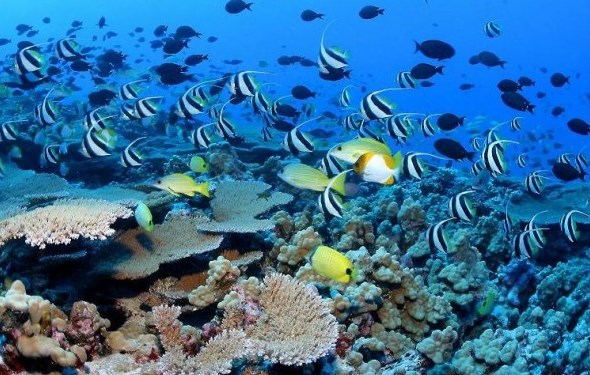
????????In addition, fishermen are concerned that the noise will disrupt their livelihood. In this, they are joined by University of Hawaii coral scientist Bob Richmond, who told officials that the noise the devices make could cause fish to avoid areas that are too loud. He’s also worried that fish and coral larvae could get pumped through some of the equipment and die.

But of course, solutions and regulations are being proposed, such as setting aside areas for recreational use that are far removed from fishing waters and coral habitats. The same is likely to be the case in other parts of the world where conservation and fishing are major concerns, but tourist dollars are heavily sought after.

hawaii-coral-reef-600x404In the meantime though, adventure enthusiasts and futurists can draw some encouragement from this, since it demonstrates that we are clearly living in a time when devices that seem like they are right out of the annals of science fiction are becoming a reality!

And be sure to check out the video of Myrtle Beach jetpack adventures, showing a Jetlev R200 in action:


Sources:
cbc.ca, myrtlebeachjetpackadventures.com

New Movie Trailer – 300: Rise of an Empire

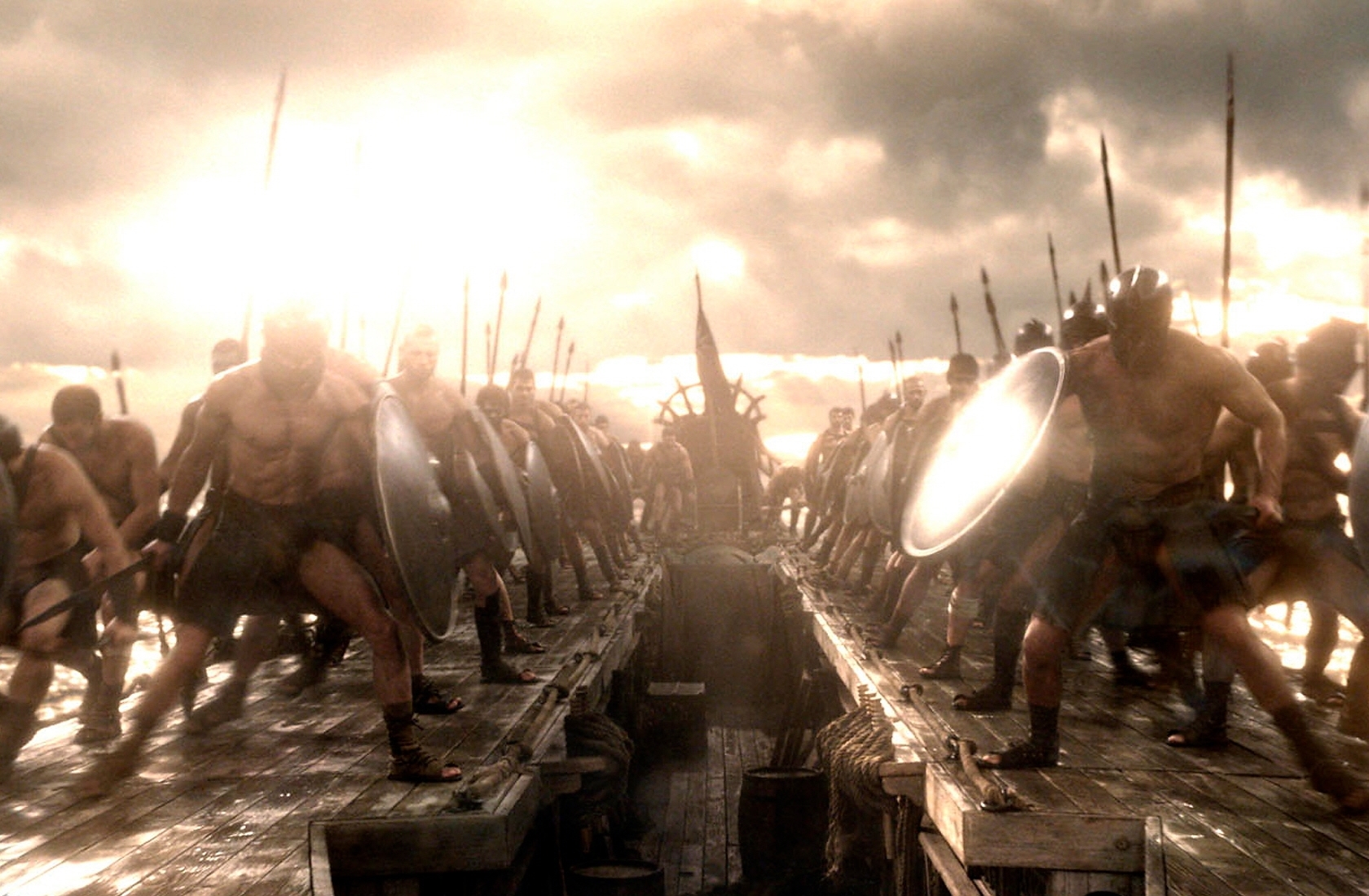
300-rise-of-an-empire-thumbIt seems that Zack Snider and Frank Miller are back for another round of comic book adaptations! After bringing us 300, Watchmen, Sucker Punch, and Man of Steel, Snider has signed on for a sequel named 300: Rise of an Empire. This time around, the movie will adapting material from Frank Miller’s own comic sequel to 300, which was entitled “Xerxes”.

As you can see from the trailer, Lena Headey is back to reprise her role as Queen Gorgo of Sparta, while Roderigo Santoro is back as well, reprising the role of the ridiculously tall and pierced man-god Xerxes. David Wehnam is reprising the role of the narrating Dilios. Meanwhile, the beautiful Eva Green plays Artemisia, Xerxes’ ally and naval commander, and Sullivan Stapleton plays General Themosticles – commander of the Greek navy.

300-Rise-of-an-Empire1As you can also see, the movie picks up where events in the first movie left off, after the Battle of Thermopylae where King Leonidas and his 300 were eventually wiped out. In adapting real history to an over-the-top format yet again, Snider and Miller give us a souped-up version of the Battle of Salamis, the war at sea that followed shortly thereafter.

This confrontation between the Greek and Persian navies occurred off the tip of the Greek mainland, just 20 km away from Athens which had been abandoned to the Persians. It was a desperate fight, but in the end, the Greeks proved victorious, using the home field advantage to trap and defeat the larger Persian forces.

300-Rise-of-An-Empire3In many ways, this battle would prove to be the beginning of the end for the Persian army, since defeat at sea now meant they could no longer launch offensives into the Peloponnese (home of Sparta and where the Greek Allies were now based) by both land and sea. Marching across the thin and fortified isthmus of Corinth would prove slow and difficult, and Thermopylae had demonstrated that frontal assaults against fortified phalanxes were not effective.

In addition, Xerxes now feared the Greeks could mount a naval offensive on the Hellespont (the land bridge between modern day Turkey and Greece) and cut off his forces from their overland supply routes. On top of that, he was dealing with rebellions within the conquered territories and had to tend to those as well.

300: BATTLE OF ARTEMESIUMAs a result, the war would consist of sieges against rebelling states until the decisive land battle of Plataea, north of Athens, (shown at the end of 300) and the naval battle at Mycale off the coast of Turkey would take place a year later and drive the Persians out of Greece and the Aegean for good.

Honestly, not sure if I’ll catch this one. Sure, the last one was cinematic action porn, and fun if you ignored the historical inaccuracies and alleged attempts to draw a connection between the past and the “war on terror”. But I think its fair to say this is Snider and Miller’s attempt to cash in again and really doesn’t have much magic to it. And without Gerard Butler screaming martial slogans, it just seems flat.

“THIS IS SPARTAAAA!” No, this is a sequel. And oftentimes, they suck! But then again, I do love the history and there have been cases where the sequel was even better than the original… we shall see! And of course, we can all enjoy the trailers in the meantime!

Walking Dead Issue 113 Is Out!

walking-dead-113After many months of waiting, and doing as many comparative reviews between the comic and show to pass the time, the latest issue of the Walking Dead is finally out! And I’m looking forward to this and the next issue, as they provide the thrilling conclusion to yet another action-packed volume! This volume is entitled March to War, the 19th in the ongoing series, and it will be interesting to see just how much father he goes with it…

Without giving too much away, I would like to share with people what happens after the story involving the prison and the Governor ended. In terms of the comics, this would mean everything that took place after Volume 8 – Made to Suffer. In terms of the show, this covers all the material that is to come after season three, though there are likely to be some big time departures. So perhaps the spoiler alert is premature…

the_walking_dead_48In any case, after the prison fell in the comic book and Lori and their baby was killed, Rick and Carl stumbled around the wilderness for some time. They eventually made their way back to Hershel’s farm, where they found the members of their crew that had left after the Governor’s first assault. Andrea and Dale were there too, which brought every surviving member of their crew back together.

After being joined by some wanderers, they began working their way to the East Coast (for reasons that shall remain a secret). After realizing the journey was not going to work out (secret!), they eventually found there way to another settlement and began to make a life for themselves again. Naturally, complication ensue, but all seems relatively good until they meet a new enemy, one that (as Khaalidah said) made “the Guv look like a little girl in a tutu.”

the-walking-dead-112-coverBoy was she right! People died, main character people, and all hope seemed lost. But of course, Rick had a plan and they began putting it into action. And after many issues of  trying to buy time and get ready, the stage is finally set for a big showdown. No telling how it will go, and as of the last issue, Rick found himself in some serious hot water with their newfound enemy.

This is also important to me because I’m thinking that as of issue 114, the conclusion to Volume 19, I might hang up reading the series for awhile. It’s been a blast, but its like watching an entire series on DVD and then being forced to wait a full year for a new season to air. It’s frustrating! Far better to get into something else and come back to it later, am I right?

The Future is Here: Memory Implants Now Possible!

?????????????????????The concept of implanting a person with false memories has been featured in many a science fiction franchise. Between Philip K. Dick’s “We Can Remember it for you Wholesale” (which was the basis for Total Recall), the cult-hit Dark City, and the more recent Inception, the idea that memories could be tampered with – thus showing how reality and experience are subjective – has a long history.

And now it seems that once again, science fiction has proven to be the basis of science fact. As a result ongoing collaboration between the Japanese Riken Brain Science Institute and MIT’s Picower Institute for Learning and Memory, a process has been devised for planting specific false memories into the brains of mice.

memory_implantsThis breakthrough, in addition to being mind-blowing and kind of scary, is also likely to seriously extend our understanding of memory. The ability to learn and remember is a vital part of any animal’s ability to survive, but with human beings, it also plays a major role in our perception of what it is to be human. What’s more, disorders effecting the human brain and memory have been growing considerably in recent decades.

These range from Alzheimer’s disease, where the abilities to make new memories and to place one’s self in time are seriously disrupted, to Post-Traumatic Stress Disorder, in which a memory of a particularly unpleasant experience cannot be suppressed. Such disorders are a powerful force driving research into discovering how healthy memory functions so that we can diagnose and treat problems before they become too serious.

Mouse-Hippocampus1In their previous work, researchers from the Picower Center for Neural Circuit Genetics were able to identify an assembly of neurons in the brain’s hippocampus that held a memory engram – a cell containing data about a sequence of events. In recalling a memory, the brain uses this data to reconstruct the associated events, but this reconstruction often varies from what actually occurred.

Working from this, the researchers were able to locate and identify the neurons encoding a particular engram (a specific set of memories) through the use of optogenetics. This technique is a relatively new neuromodulation process that uses a combination of genetic modification and optical stimulation to control the activity of individual neurons.ChR_memoryAfterward, they were able to genetically engineer the hippocampal cells of a new strain of mouse so that the cells would form a light-sensitive protein called a channelrhodopsin (ChR). These proteins activate neurons when stimulated by light, thus ensuring that specific memories could be triggered by exposing someone implanted with them to a light source.

Next, the researchers conducted a series of behavioral experiments in order to identify the set of brain cells that were active only when a mouse was learning about a new environment. The genes activated in those cells were then coupled with the light-sensitive ChR and monitored during the next phase of the experiment, where the mice were placed in a series of boxes.

memory_implants1In the first box, the mice were exposed to a safe environment, during which time the neurons that were actively forming memories were labelled with ChR, so they could later be triggered by light pulses. In the second box, mice were treated to a series of mild foot shocks, which created a negative association, while at the same time, a pulsing light was used to trigger their memories of being in the first box.

When the mice were returned to the first box, in which they had only pleasant experiences, they clearly displayed fear/anxiety behaviors. In short, the fear that they had learned in a separate environment was now falsely associated with the safe environment. Whats more, the false fear memory could be reactivated at will in any environment by triggering the neurons associated with that false memory.

brain-activityWhat this demonstrated was that the recall of this false memory drove an active fear response that was indistinguishable from a real memory. And according to Steve Ramirez, a graduate student in the Tonegawa lab and the lead author of the paper, the experiment provided some real insight into the nature of memory:

These kinds of experiments show us just how reconstructive the process of memory actually is. Memory is not a carbon copy, but rather a reconstruction of the world we’ve experienced. Our hope is that, by proposing a neural explanation for how false memories may be generated, down the line we can use this kind of knowledge to inform, say, a courtroom about just how unreliable things like eyewitness testimony can actually be.

Granted, it might not sound like Total Recall or Inception, but the basic premise is the same. And note how in those movies, no explanation was given as to how these false memories were fashioned – nor could they be, since no means yet existed. But now, using this technique, memories could be fashioned in one person, and then implanted in another.

total-recall-originalFrightened yet? Well, you should be! If memory is one of the very things that define us as human beings, and we can’t be sure if the memories we have are real, our own, or someone else’s, then how can we be sure of anything? How do we even know who we are? Man, I’d be writing this into a story outline right now if it hadn’t already been done to death!

Until next time, guard your experiences and memories jealously! You never know when someone might try to come along and steal them…

Sources: gizmag.com, io9.com

Apocalypse News: Sun’s Magnetive Field about to Flip

sun_magneticfieldThe sun is set to reverse its polarity in the next few months, something that occurs at the height of every Solar Cycle. The resulting ripple effect will be felt all across the Solar System and will even be detectable by the far-away Voyager probes. However, scientists are telling us not to fret, as this event will not lead to the end of the world.

In truth, the Sun’s reversal of polarity is something that occurs every 11 years. And the shift won’t spark an increase in powerful solar storms or other events that could have a damaging effect on Earth and its inhabitants, say the researchers. One such researcher is Phil Scherrer, a solar physicist at Stanford University, who insisted “The world will not end tomorrow.”

NASAsolar_radiationIn addition, from a human perspective, the effects of the field shift will likely be slight and even beneficial. For example, the polarity reversal will cause the “current sheet” – an enormous surface extending out from the solar equator on which the sun’s rotating magnetic field has induced an electric current – to become much wavier.

This crinkled current sheet, in turn, will provide a better barrier against galactic cosmic rays, high-energy particles that are accelerated to nearly the speed of light by faraway star explosions. Galactic cosmic rays can damage spacecraft and hurt orbiting astronauts who don’t get to enjoy the protection of Earth’s thick atmosphere. So for space exploration, at any rate, this is certainly good news.

Sun's Heliospheric-current-sheetAccording to Todd Hoeksema, director of Stanford’s Wilcox Observatory, a drop in galactic cosmic ray levels could also have a subtle impact on weather here on Earth.

One of the things that helps clouds form and lightning to flash is cosmic-ray ionization of things in the Earth’s atmosphere. So when the cosmic-ray intensity is lower, it means you have fewer places where lightning will occur, and so the storms will probably be a little less intense.

He added, however, that it’s pretty much a speculative endeavor at this point, as no conclusive link has ever been demonstrated between cosmic rays and the weather.

In any case, during a reversal, the sun’s polar magnetic fields weaken all the way down to zero, then bounce back with the opposite polarity. Researchers will keep a keen eye on just how strong this recovery is over the next two years or so. The sun has been quiet during its current 11-year activity cycle, which is known as Solar Cycle 24. So it would be particularly interesting to see a strong field emerge after the impending flip.

sun_magneticfield1Dean Pesnell, a project scientist for the space agency’s Solar Dynamics Observatory spacecraft at NASA’s Goddard Space Flight Center, the Sun’s latest field is likely to be a good indicator of what the next solar cycle is going to do. During its most recent cycle, known as Solar Cycle 24, the sun was rather quiet, so what happens next ought to be interesting:

If it quickly goes to a high value, then that tells us the next cycle will be high. We’ve had several of these solar minimums, and each time the polar field has been weaker. And each time, the next cycle has been a little bit weaker. So it would be nice to see one where the polar field strength was higher, and the next cycle was higher as well.

So rest easy, folks. No apocalyptic scenarios are likely to result from this latest, all-too-common solar phenomena. If anything, it will provide research benefits for scientists and aid in space exploration – especially for companies looking to mount missions to Mars in the next 11 years and trying to figure out a way around that tricky radiation problem.

As for the rest of us, we’re likely to maybe get a little break on the weather front. Maybe not. Kind of disappointing when you think about it…

But at least there’s a helpful video provided by Space.com. Enjoy!


Source:
space.com

The Future of Transit: Elon Musk’s Hyperloop

hyperloopThe high-speed transit tube. It’s been a staple of science fiction for many years. Remember the tubes cars in Logan’s Run, the elevators in the Jetsons, or the tubes that shoot people around New New York in Futurama? Much like flying cars, they are a feature of a futuristic society that people have been waiting on. And thanks to Elon Musk, it might finally be coming true.

Yes, the same man that brought us the Tesla electric car, PayPal, and SpaceX is now working on a design for a high-speed transit system that works the same way as the pneumatic tube. In a series of statements and documents released yesterday, the billionaire entrepreneur unveiled his concept for a tube that could whisk passengers between Los Angeles and San Francisco in just 30 minutes – half the time it takes an airplane.

hyperloop1In the newly released documents, Musk outlined the basic design, which would consist of a low-pressure steel tube that houses capsules which move back and forth. The aluminum capsules (or pods) would have skis on the bottom containing holes that pump out air, creating an air cushion. They would be propelled forward with magnets found on the skis as well as an electromagnetic pulse generated by a series of electric motors.

Linear electric motors placed at each destination would slow the pods down by absorbing their kinetic energy. That energy would then be put back into battery packs and used to accelerate the next pods, or stored for future use. Solar panels on top of the tubes would also provide energy. The pods, which have room for 28 people each, could leave every 30 seconds – transporting up to 7.4 million people on each route (SF to LA or vice versa).

hyperloop2At 1290 kilometers per hour (800 mph) the above ground Hyperloop system would be dramatically faster than a bullet train or even an airplane. Alongside boats, planes, trains and automobiles, Musk claims that the train would constitute a “fifth form” of transportation. And of course, safety would be paramount, with each pod being spaced apart by 8 km (5 miles), and the system would have an emergency brake.

The system would also be designed to deal with seismic shifts, which are common in California. In order to mitigate earthquake risk, the system would be built on pylons (the tube wouldn’t be rigidly fixed at any point). Adjustable lateral and vertical dampers would be placed inside the pylons to “absorb the small length changes between pylons due to thermal changes, as well as long form subtle height changes.”

hyperloop3What’s more, Musk was sure to play up the comfort value of the ride:

Once you’re traveling the speed you wouldn’t notice the speed at all. It would be really smooth, like you’re riding on a cushion of air. Maximum G-force of about half a G, comparable to what you might feel in an airplane but far less than what you would feel in a rollercoaster. Really quiet.

Musk estimates that price tag per ride would be $20 per person, making the Hyperloop more reasonably priced than train, plane, or automobile. The whole project would cost an estimated $6 billion if it contained “people-only pods,” but would be priced at $10 billion if it had pods for both people and cars.

As it stands, its not entirely clear when the Hyperloop would be up and running. What’s more, its unclear what tole Musk would play in its creation. Since he is currently occupied with developing things like a nationwide Supercharger network for Tesla and launching satellites with SpaceX, he thinks it could be three to four years before a demo could be finished. As for a full system that would run from LA to San Francisco, that could take between seven to ten.

hyperloop4In any event, the concept is open-source, and Musk is calling on inventors, engineers and investors to get involved. Given that it is a rather elegant solution to the problem of transit, such an idea is not likely to remain idle for too long. Originally inspired by the sad state of $70 billion California’s high-speed rail initiative, the Hyperloop could easily prove to be another transportation initiative that is never completed. At the same time, it might prove to be a “leapfrog maneuver”, bypassing lightrail completely and ushering in something better.

It might sound like a fantasy, but Musk has a reputation for making the impossible a reality. What’s more, engineers from both Tesla and SpaceX have been working on the concept for close to a year and some are now dedicated to it full-time. And given that nations like China, India, Russia and the EU are in need of expanded transit systems, don’t be surprised if we see something similar emerging overseas.

And be sure to enjoy this video of the concept, courtesy of Elon Musk and CBC news:


Sources: cbc.ca, fastcoexist.com

Epic Rap Battles of History – History Edition

epic_rap_battlesWelcome to the third and final compilation for Epic Rap Battles of History. After covering science and science fiction, I thought it was high time I wrap things up by honoring the historical aspect of the comedy troupe. After all, one of the things that makes these set ups funny is the way they weave fact with unadulterated silliness to make people laugh.

And so, here are the top picks for their rap battles that were truly historical and satirical. Granted, not all of the characters featured here are real, some are historical and/or cultural constructs, and some are just the product of a famous sci-fi geek’s imagination. But I think you’ll agree that it still counts!

Skits of note include Adam vs. Eve (the timeless battle of the sexes), Barack Obama vs. Romney (a 2012 election special), Columbus vs. Capt. Kirk, Dr. Seuss vs. Shakespeare, Gandhi vs. Martin Luther King Jr (featuring comedy duo Key and Peele), and Moses vs. Santa Claus (featuring Snoop Dogg, aka. Snoop Lion). Enjoy!

Adam vs. Eve:


Barack Obama vs. Mitt Romney:


Columbus vs. Captain Kirk:


Dr. Seuss vs. Shakespeare:


Gandhi vs. Martin Luther King Jr.:


Moses vs. Santa Claus:

Climate Change, In Song!

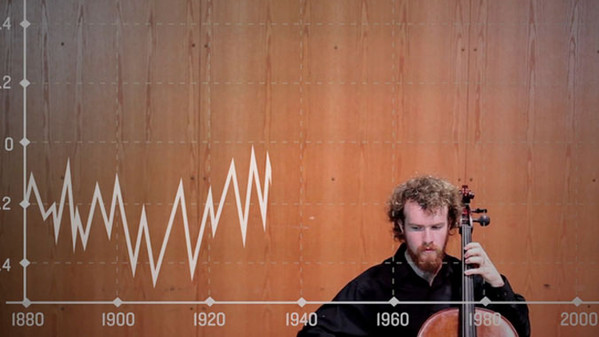
daniel_crawford_4858Climate Change is a daunting phenomena, a severe problem that is threatening our planet but which remains inaccessible and invisible for many people. Part of the problem is condensing all the facts, figures and studies into a coherent, easy-to-understand form that people can see and understand. Not the easiest thing to do, and even the famous hockey-stick shaped graphs appear to be falling short.

Luckily, artists like cellist Daniel Crawford are stepping in to fill the role of scientific interpreter. Committing the most alarming portion of that hockey stick to music, he shows just how alarming this trend is. He calls it “A Song of Our Warming Planet”, where notes are matched to temperatures, one for each year since 1880.

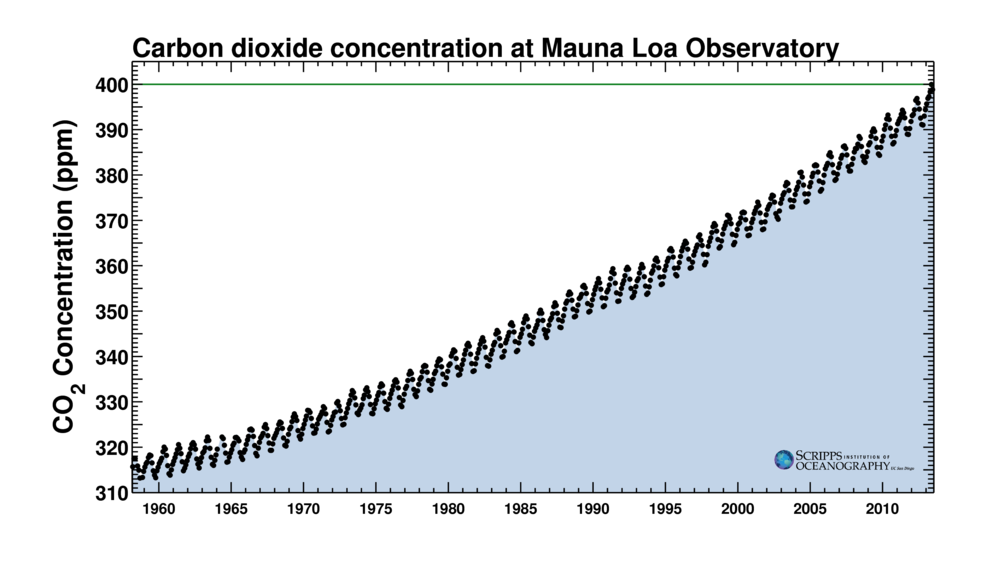
keeling_curveAs the average global temperature increases by 0.8 Celsius (1.4 Fahrenheit) and atmospheric carbon dioxide levels increase by more than 40%, the song climbs from the low, open C to the high end of its register, sounding, in one commenter’s estimation, “like a woman screaming.” And the video ends with the chilling text:

Scientists predict the planet will warm by another 1.8 degrees Celsius (3.2 degrees Fahrenheit) by the end of this century. This additional warming would produce a series of notes beyond the range of human hearing.

Scary stuff. Check out the video below, and then be sure to look around this site for some of the more positive news on the issue. I don’t like sending people away gloomy!


Sources:
fastcoexist.com, vimeo.com