Climate Crisis: The Smog Vacuum

china smog 2013 TV bldgIn recent years, strategies aimed at combating Climate Change have evolved to become a two-pronged attack. In addition to finding ways to reduce how much we pollute, a number of methods are being devised to deal with the pollution we have already created. And one such device is being deployed to where it is needed the most: Beijing.

For many years now, China’s capitol has been notorious for its poor air quality. But last Tuesday, in the northeast city of Harbin, roads, schools and even the local airport were closed for two days straight due to a thick, choking haze that was due to unseasonably warm temperatures and very little wind coinciding with the smoke from local farmer’s burning straw and the initiation of Harbin’s coal-powered municipal heating system.

https://i0.wp.com/beijingcream.com/wp-content/uploads/2013/10/Harbin-smog-5.jpgThe resulting haze measured 1000 micrograms per cubic meter. That’s three times the concentration deemed hazardous by the World Health Organization, and many dozen times what is considered safe. To remedy the situation, city authorities are now coordinating with Dutch designer Daan Roosegaarde to launch what he calls an “electronic vacuum cleaner” to suck up 50 meter-high cylinders of polluted air.

Two weeks ago, Roosegarde successfully demonstrated his smog machine in a 25 square meter room, in which he used an electrostatic field from copper coils to magnetize and pull down pollution from the air above. The effect could be replicated, he says, if those coils were deployed in public spaces. Now, Roosegaarde is working with Bop Ursem, a professor at the Technical University of Delft, to scale up the technology in Beijing.

https://i0.wp.com/cdni.wired.co.uk/620x413/k_n/Lidi%20en%20Daan%20-%20testing%20smog.jpgRoosegaarde has had experience working with electrostatic fields in the past. Last year, he proposed using electromagnetic charging strips to charge cars on “smart,” communication-enabled highways, which won the designer an INDEX award in 2013. He also claims the project is safe, “pacemaker proof”, and really no different than the waves of WiFi downtown areas are already inundated with.

In addition, electrostatic air filtering is already used on a much smaller scale, in hospitals where clean air is a matter of hygiene and sanitation. But part of Roosegaarde’s challenge will be creating a clean 50-by-50 meter space, controlling for factors like wind. He also concedes that his smog machine won’t solve the problem of all of Beijing’s pollution, but is meant to serve as an awareness-raising exercise.

https://i0.wp.com/i.telegraph.co.uk/multimedia/archive/02709/harbin2_2709592b.jpgAs for the resulting particles that are collected from the air, Roosegaarde believes they could be refashioned into useable products, such as jewelry. But as he himself put it, the concept is about dealing with a serious problem in a practical, new way:

I think it’s quite feasible in a weird way. Every project has its beauty and bullshit, so to speak. Of course you’ll have influences like wind, how high is the smog, but these are the pragmatics. In principle, this is doable… It is a statement to show [that] this is the new world, why do we accept the old world? In a world which is changing, it’s all about finding the missing links between imagination and innovation, between science and art.

Given the historic problem of smog in cities like New York, Los Angeles, Mexico City, London, and Southeast Asia, the concept is likely to catch on. While it is primarily intended on removing harmful particulates, like heavy metals and toxic chemicals, it stands to reason that such devices will be paired with Carbon Capture technology to ensure that all harmful pollutants are scrubbed for our cities air.

trafficReducing the amount of pollution we have to contend with while making sure we generate less. At this point in the game, it’s the only way the worst effects of Climate Change will be avoided in the coming decades. Stay tuned!

Sources: fastcoexist.com, cnn.com

Winning Ideas: The Bodyheat Powered Flashlight!

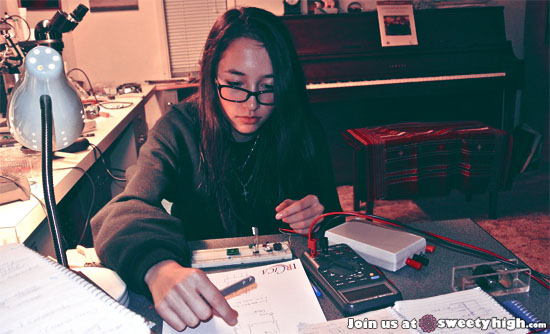
body_heat_flashlightEvery year, IT giant Google holds an online competition open to students aged 13-18 from around the globe to come up with new and challenging scientific ideas. And this year, one the winners just happens to hail from my hometown of Victoria, British Columbia. Her name is Ann Makosinki, a 15 year old high school student who invented a way to power a flashlight using only the warmth of your hand.

She claimed a trophy made of Lego for the 15-16 age category at an awards gala that was held on Monday, Sept. 23rd. Her prizes were a $25,000 scholarship and a “once-in-a-lifetime experience” from either CERN (the European Organization for Nuclear Research), LEGO or Google. Quite the impressive accomplishment for a 11th grader, but then again, Makosinki has been a scientist at heart ever since she was a little kid.

google-science-fair-winners-2013For starters, when other children were playing with toy cars and dolls, she busied herself with transistors and microcircuits. What’s more, by Grade 6, she began submitting projects to science fairs and began showing an interest in alternative energy. Still, Makosinki was surprised to be getting an award, given her competition. As she said:

I’m in shock, I’m in shock. It’s actually kind of embarrassing because I didn’t even change [before the awards ceremony]. I didn’t even comb my hair or anything. I must have looked like an absolute mess on stage because I didn’t expect to go up at all.

As for the invention itself, it is easy to see why she won. Basically, it is an LED flashlight that relies on the thermoelectric effect to generate electricity when held. This is done through a series of devices that are known as Peltier tiles, which produce electricity when heated on one side and cooled on the other. The tiles are fixed to the outside of the flashlight while the tube itself is hollow.

peltier-figure-9When held one side of the Peltier tiles are heated by the warmth of the person’s hand, air flowing through the hollow tube helps keep the other side cool. This combination of body heat and air cooling allows enough power to be generated to maintain a steady beam of light for 20 minutes. And all without the need for batteries and the resulting ewaste when they go dead.

Makosinki came up with the idea while researching different forms of alternative energy a few years ago. Already, she had experimented with Peltier tiles for her Grade 7 science fair project. While researching her project, she thought of them again as a way to potentially capture the thermal energy produced by the human body. After doing some calculations, she found that the amount of energy produced by a person’s hand was theoretically sufficient to power an LED light.

ann_makosinksiHowever, putting it into practice proved somewhat more difficult. After buying some Peltier tiles on eBay, she tested them and found that while they generated more than enough power, the voltage produced was only a fraction of what she needed. She rectified this problem after doing some further research, where she discovered that the addition of transformers could be used to boost the voltage.

She spent months doing research on the internet, experimenting with different circuits and even building her own transformers, which still didn’t provide enough voltage. In the end, she came across an article on the web about energy harvesting that suggested an affordable circuit that would provide the voltage she needed when used with a recommended transformer. Finally, the circuit worked.

ann_makosinksi1Makosinski admitted there were points in the experiment when she thought it would never work. But as she said:

You just kind of have to keep going. This took quite awhile ’cause I had to do it during the school year as well and I had homework, plays, whatever that I was also doing.

After making it to the Google Science Fair, she and her colleagues spent the day presenting at Google’s headquarters in Mountain View, California. Here, the 15 judges – which included scientists from a variety of fields, science journalists, an astronaut, and a former Google Science Fair winner – witnessed their creations and tried to determine which held the most promise.

The other winners included Viney Kumar, an Australia student who captured the 13-14 age category for an Android app that warns drivers of an approaching emergency vehicle more than a minute in advance, in order to help clear a path for it. And then there was Elif Bilgin of Turkey, a 16-year old who took home the Scientific American Science in Action Prize and the Voter’s Choice Award for inventing a way to make plastic from banana peels.

Ann-Makosinski-Google-Science-Fair-2The Grand Prize for the 17-18 age category went to Eric Chen, a 17 year old student from San Diego who is researching a new kind of anti-flu medicine using a combination of computer modelling and biological studies. He received the top prize of a $50,000 scholarship and a 10-day trip to the Galapagos Islands.

Alas, Makosinki felt the best part of the competition was getting to meet the other finalists in person at last.

It’s just so inspiring to see other people who are kind of like me and kind of want to make a difference in the community not just by talking about it but by actually doing stuff.

What’s next for the young inventor? Personally, I hope Makosinki and her fellow prize winners will be forming their own research group and looking for new and exciting ways to come up with renewable energy, recycling, vaccinations, and electronics. What do you think Makonsinky, Kumar, Bilgin, Chen? That’s what Andraka and his fellow finalists did after winning ISEF 2012, and they seem to be doing pretty good. So… hintedy, hint hint!

And be sure to enjoy this video of Ann Makosinki showing off her invention, courtesy of Technexo:


Sources:
cbc.ca, (2), gizmag.com, technexo.com, huffingtonpost.ca

Powered by the Sun: New Film Increases Solar Efficiency

sun_magneticfieldWith every passing year, solar power is getting cheaper and more efficient. And with every development that brings costs down and increases electrical yields, the day that it comes to replace fossil fuels and coal as the primary means of meeting our power needs gets that much closer. And with this latest development, this changeover may be coming sooner than expected.

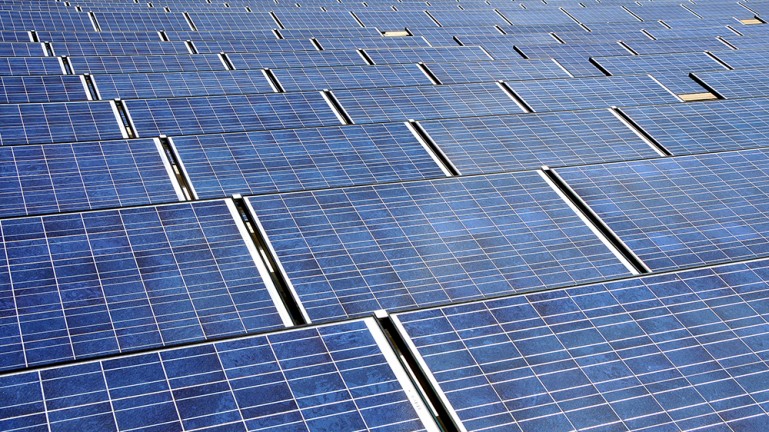
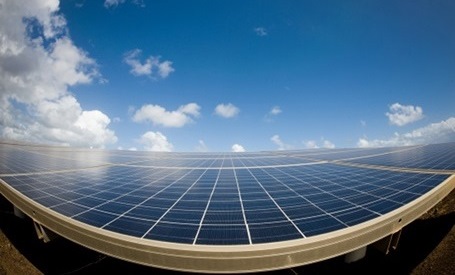
It comes from North Carolina State University where researchers have developed a new system for strengthening the connections between stacked solar cells which could allow cells to operate at concentrations of up to 70,000 suns while minimizing wasted energy. This is especially good news seeing as how stacked cells are already an improvement over conventional solar cells.solar_panelStacked solar cells are made up of several cells that are placed one on top of the other, an arrangement that allows up to 45 percent of the absorbed solar energy to be converted into electricity. This is a significant improvement over single-junction solar cells which have a theoretical maximum conversion rate of 33.7 percent, and is made possible by the fact a stack formation prevents heat from being lost between panels.

The team at NCSU discovered that by inserting a very thin film layer of gallium arsenide into the connecting junction of stacked cells, they can eliminate energy loss ever further. The idea was inspired by the fact that cells typically start to break down at the connection junctions once they reach concentrations of 700 suns. With the addition of gallium arsenide in these spots, the connections become stronger, and all without sacrificing absorption.

solar_cell1Dr. Salah Bedair, a professor of electrical engineering at NCSU and senior author of the paper on this research:

Now we have created a connecting junction that loses almost no voltage, even when the stacked solar cell is exposed to 70,000 suns of solar energy. And that is more than sufficient for practical purposes, since concentrating lenses are unlikely to create more than 4,000 or 5,000 suns worth of energy.

At the moment, this technology is geared towards large scale solar power operations. Stacked cells are usually used in conjunction with optical concentration devices, such as Fresnel lenses, and mounted on a dual-axis solar trackers that keep the cell facing the Sun’s rays during daylight. So basically, we’re not likely to be seeing this technology available for local use. But it would be surprising if domestic consumers weren’t likely to benefit from it all the same.

solar_cell_galliumAs Dr. Bedair explained, the adoption of the technology will mean lower costs for the energy industry, and smaller arrays which will mean less land that needs to be set aside for use:

This [system] should reduce overall costs for the energy industry because, rather than creating large, expensive solar cells, you can use much smaller cells that produce just as much electricity by absorbing intensified solar energy from concentrating lenses. And concentrating lenses are relatively inexpensive.

What’s more, gallium arsenide is not exactly cheap to produce at the time. However, with constant refinements being made in industrial production processes, we can expect the cost of these to come down as well. As with everything else with solar power and renewable energy, its only a matter of time…

Source: gizmag.com

Climate Crisis: A Hurricane-Ready New York Waterfront

terreformONE_harborIn addition to causing extensive damage, Hurricane Sandy demonstrated just how woefully prepared people in New York for major storm surges. When the water began rising back in October, due to intense rainfall and wind, there was little in the way to stop it or break in the incoming flow. As such, plans are now being considered for creating a buffer zone to protect the city from future storms.

Mitch Joachim, the co-founder of Terreform ONE, has a rather novel suggestion for how this could be done. Basically, he wants to submerge old Navy ships in the New York Harbor, creating a “riparian buffer zone” that could better handle large volumes of water. This is just one of many projects his company is involved in, which include improving transportation links in Red Hook and Governor’s Island, and ecologically engineering Brooklyn’s Navy Yard.

terreformONE_harbor1According to Joachim, their firm hit on the idea of using ship hulls to create a walkway that rises up from the harbor floor. In addition to providing protection for New Yorkers, he claims it would be cosmetically pleasing as well:

We thought one way to make gabions really quick is to take hulls from ghost fleets, cut them into sections, and then puzzle-fit the geometry together. It allows over time the transformation of that landscape. Over years of sediment building up, you would have environments that privilege humans at certain points of the day. But then as tide changes occur, you would have aqueous environments that privilege other life besides humans. 

Basically, the walkway would help keep rising tides back in the near future, and would serve as a natural habitat once the tides rise and move in to claim them. By cutting the hulls into clam-like shapes, the organization says that New York could restore a diversified structure to its waterfront, slowing the water before it makes land.

terreformONE_harbor2Joachim points out that dumping junk into New York waterways has a long history, much of it constructive in nature. Parts of Manhattan, like Battery Park City, were built on land created artificially from construction waste. And sinking ships is already one means of disposal, for the sake of creating artificial reefs. The only other method is what is known as “ship breaking”, which is far worse.

This methods of retiring ships involves cutting ships up for scrap and then recycling the usable steel parts. This practice is both environmentally unsound and can lead to toxic chemicals leeching into the ocean, which is why the majority of ship breaking operations occur in developing countries, such as Bangladesh, India, China, Pakistan and Turkey.

terreformONE_harbor3So in addition to offering protection to coastal cities that are currently ill-prepared for the worst effects of Climate Change, reusing ships to augment the world’s harbor fronts could also help reduce the environmental stress we place on other coastlines. It’s like repurposing one problem to deal with two more. Quite clever, when you think about it!

Source: fastcoexist.com

Powered by the Sun: Bringing Solar to the Developing World

Magnificent CME Erupts on the Sun - August 31All over the world, the goal of bringing development to impoverished communities and nations – but in ways that won’t cause additional harm to the natural environment – remains problematic. As the cases of China and India demonstrate, the world’s fastest growing economies in the 21st century, rapid industrialization may bring economic development, but it comes with a slew of consequences.

These include urban sprawl, more emissions from cars and public transit, and the poisoning of waterways through toxic runoff, chemicals and fertilizers. With seven billion people living in the world today, the majority of which live in major cities and are dependent on fossil fuels, it is important to find ways to encourage growth that won’t make a bad situation worse.

solar_quetsolBut to paraphrase an old saying, crisis is the mother of creative solutions. And amongst forward-looking economist and developers, a possible solution is take the latest advancements in solar, wind, tidal power and biofuels, and tailor them to meet the needs of local communities. In so doing, it is hoped that the developing world could skip over the industrial phase, reaping the benefits of modernization without all the dirty, unhealthy consequences.

Two such men are Juan Rodriguez – a young man who was studying for his business administration at the Universidad Francisco Marroquin in and cut his teeth working for major multinationals like Pampers, Pepto Bismol and Pantene – and his childhood friend Manuel Aguilar, a Harvard graduate with a degree in astrophysics who had gone on to manage a global hedge fund.

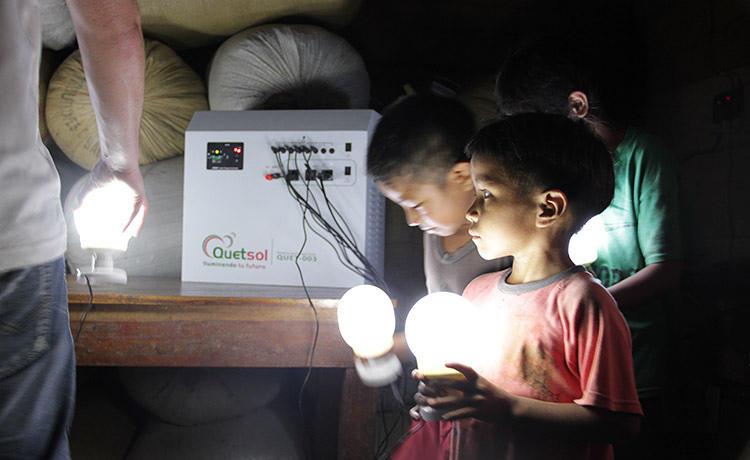
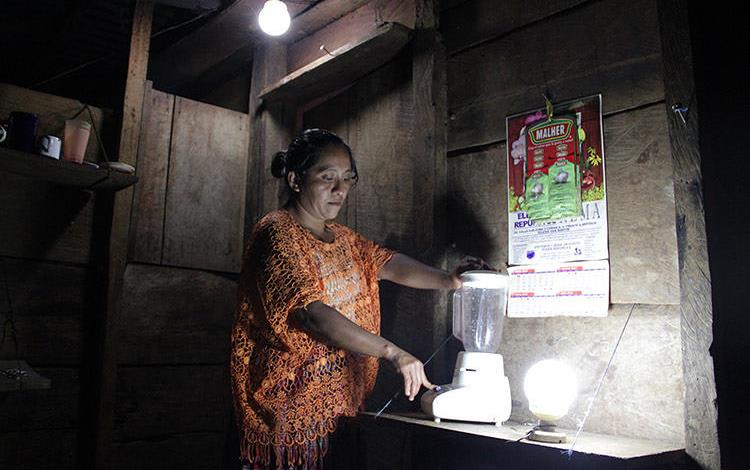
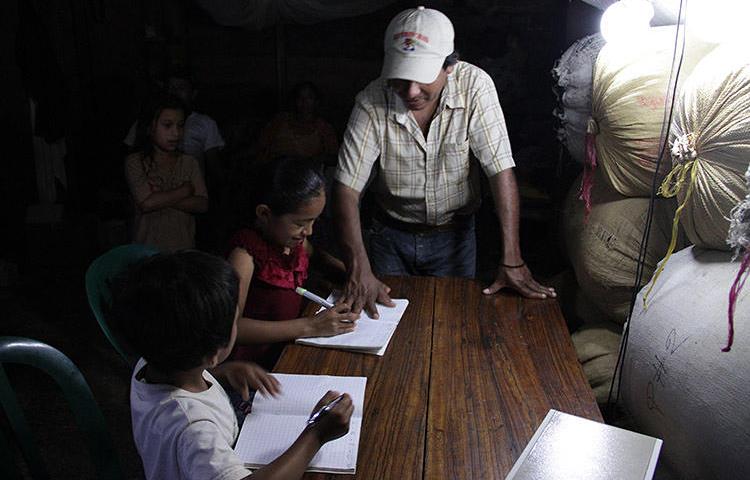
solar_quetsol1Three years ago, the two agreed that they were looking for something else and began investigating renewable energy. The result was Quetsol, a company that uses solar energy to improve the quality of life of poor communities living off the electrical grid. In Rodriguez’s and Aguilar’s native Guatemala, such poverty is widespread, with close to 20% of the population living without electricity and relying primarily on candles for light.

This picture of poverty is not exactly news. But after spending a year visiting close to 100 such communities, Rodriguez and Aguilar began to get a clear picture of why solar hadn’t yet succeeded. As Rodriguez put it:

Going to a community and talking about solar power isn’t like going into a community and talking about space travel. It is something that people have already seen, because NGOs have donated solar systems to these communities for decades. In many cases, the systems worked perfectly, but eventually the batteries died, and nobody was there to service them.

solar_quetsol2There solution was to start from the bottom up, using the free-market principle of adapting their approach to meet local needs. This would involve identifying communities before visiting them, taking into account how many people were living without electricity, and what the housing situation was like. When they then visited these communities, they sought out community leaders and held public meetings to learn about them and present their ideas.

Buildings relationships with local communities was a challenge, but so was creating a product for a market whose needs ranged from basic lighting and cell phone charging to powering a refrigerator all day. What they found was that unelectrified communities were relying on terribly inefficient means, ranging from diesel generators to walking to the nearest electrified community to plug in a phone.

solar_quetsol3What was resulted was a Solar Kit, consisting of a 10W Solar Panel, a control box with 7 Amp Battery, 2  LED Bulbs  (and a third optional bulb), and a universal cell phone charger. This kit has the ability to provide five hours of electricity to a house made up of two rooms that measure roughly 25 square meters (225 square feet) each. This is the typical design of homes in rural Guatemala, with one room serving as the bedroom and the other as the kitchen.

With that done, they began working on their sales strategy. Initially, this consisted of working with microfinance credit institutions to help families and communities purchase their solar kits. But after watching too many credit applications get rejected, they took a page from the telecom companies that have made cell phones ubiquitous in Guatemala, Basically, they switched to a pay-as-you-go plan.

solar_quetsol4Today, Quetsol employs a staff of 20 people and boasts board members like Google’s Tom Chi. There product line has also expanded, with the Q1 Solar Kit being supplemented by the Q3, a heavier model that boasts a 75W solar panel, an 85 Amp Battery, and five LED bulbs. The Q2 Kit – a middle of the road model with a 30W panel, 34 amp battery and 3 bulbs – is soon to be released.

But most importantly of all, they have electrified more than 3,500 homes in Guatemala thus far. But that is just a drop in the bucket compared to their long-term goal. Basically, the organization is viewing Guatemala as a stepping stone to all of Latin America as well as Africa by 2015. By 2016, they’d like to tackle the nearly 700 million off-the-grid homes in Asia.

Might sound ambitious, but Rodriguez and Marroquin feel they have the business acumen and social entrepreneurial savvy to pull it off. And given their background and business model, I’d say they are about right. Combined with other technologies that merge local needs with clean, efficient, and renewable means, development in the developing world might actually be an eco-friendly possibility.

Sources: fastcoexist.com, quetsol.com


Stopping Fukushima Leaks with a Giant Ice Wall

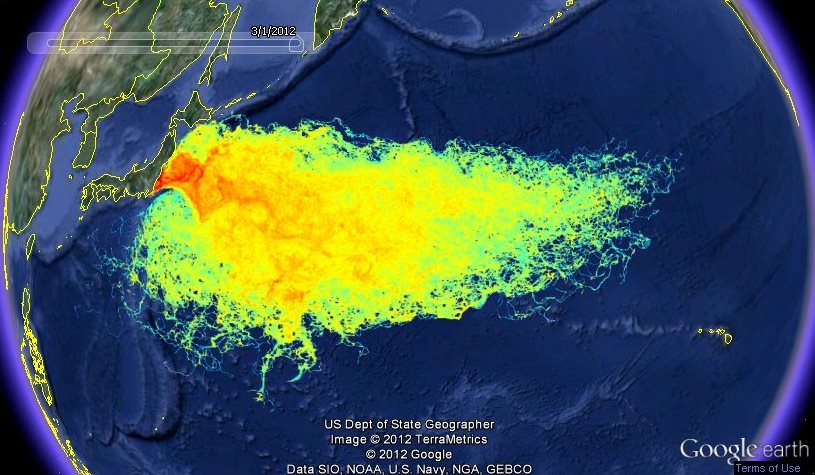
fukushima_icewallFor years, scientists and environmentalists have worried about the long-term fallout of the Fukushima Dai-Ichi nuclear accident. And after a month of radioactive water leaking from the plant, the Japanese government has announced the construction of a giant, $470 million ice wall to stop it from filtering into the surrounding environment and the sea. This announcement was made shortly after another leak was discovered over the August long weekend.

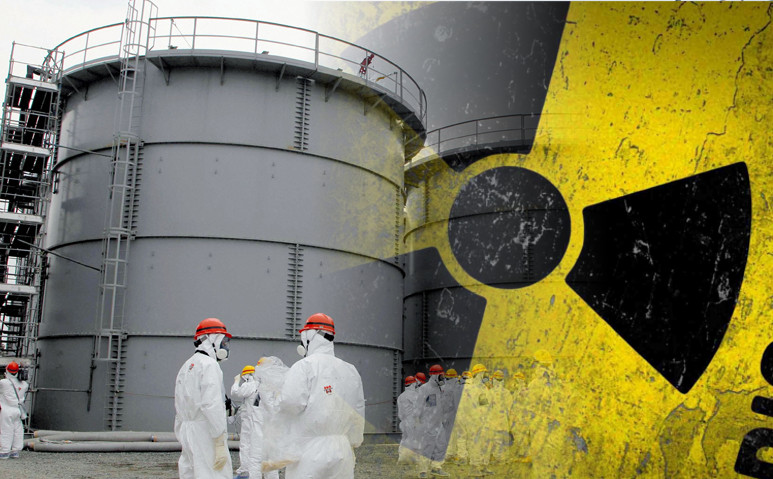
This came only two weeks after Tokyo Electric Power Co. (TEPCO) revealed that some 300 tons of radioactive water had disappeared from a steel tank at the site. Shunichi Tanaka, chairman of the Japanese Nuclear Regulation Authority then announced at a press conference the following Monday that a small leak had sprung from a connecting pipe between some of the emergency storage tanks constructed in the wake of the tsunami.

fukushima_leakTEPCO added that more radiation had been discovered near other storage tanks, pointing to the possibility of further leaks. Hence the decision to create a freeze wall, which would attempt to keep the leaks from getting into the groundwater and wreaking havoc all across the Pacific Ocean. According to the Associate Press:

The ice wall would freeze the ground to a depth of up to 30 meters (100 feet) through a system of pipes carrying a coolant as cold as minus 40 degrees Celsius (minus 40 Fahrenheit). That would block contaminated water from escaping from the facility’s immediate surroundings, as well as keep underground water from entering the reactor and turbine buildings, where much of the radioactive water has collected.

The project, which TEPCO and the government proposed in May, is being tested for feasibility by Japanese construction giant Kajima Corp. and is set for completion by March 2015.

Might sound a bit hokey, but this isn’t the first time that officials have tried using a giant frozen wall as a stopgap measure, or even the first time one was used to contain nuclear contaminants. In 1996, Tennessee’s Oak Ridge National Laboratory used an ice wall to keep radioactive waste from leaking into a creek.

fukushima_reactorIn England and Wales, freeze walls have been used in mining operations for almost half century, and are being used to isolate arsenic trioxide leftover from an abandoned gold-mining operation in Canada’s Northwest Territories. And Moretrench, a company that worked on Oak Ridge, is creating a freeze wall pilot for containing contamination from the Albertan tar sands.

This latter project has served as a model for the current Fukushima freeze wall project. Earlier this year, TEPCO engineers also visited Hanford, Washington, to learn about nuclear containment techniques. There, engineers are still at work decommissioning the original nuclear reactors used to create plutonium for the atom bomb dropped on Nagasaki in 1945, and the government has spent $16 billion to clean up the leaks that have since resulted.

fukushima_accidentHowever, according to the Associated Press, the decision to put a freeze wall in place also appears to be motivated by the imminent deadline for the Olympic Committee to choose a city for the 2020 games. Since Japan is looking to host, any ongoing environmental issues could sully their chances. However, as far as long term containment goes, this option may prove effective at averting a long-term ecological disaster.

What’s more, if the cooling system to keep the barrier of insulated ice intact fails, any leaks or cracks will freeze to the wall, stopping the possibility of the further contamination. In addition, as demonstrated by the Oak Ridge Wall, an ice wall has incredible longevity. Years after it was decommissioned and remediated, the government was still hauling solid ice out of the ground.

So it would not be unreasonable to expect that it will hold long after the reactor leak is contained and worries about contamination are no longer an issue.

Source: fastcoexist.com

Climate Crisis: The Pacific Ocean’s Cooling Effect

pacific1Climatologists and environmental scientists have been cataloging the global warming trend for decades, examining multiple fields of data that show fluctuations over a period of eons. And despite what appears to be a consistent trend warming that has been taking place since the 18th century – when levels of atmospheric CO2 began to climb steadily – there have been anomalies in the data.

One period was the three decades that fall between the 1940’s and 1970’s when no significant terrestrial warming took place, and the Pacific Ocean was anomalously cold. The Pacific is somewhat of a wild card when it comes to our climate, since it is responsible for the weather patterns known as El Niño and La Niña that can swing global average temperatures by as much as 0.3 degree Celsius.

Global_Temperature_Anomaly_1880-2012.svgFor the past decade or so the tropical Pacific has again gone cold and a new study suggests that it may once again be related to the recent “pause” in global warming of average temperatures. Although the past decade also qualifies as the hottest on record, the trend has been milder than expected, with average surface temperatures plateauing for many years.

This is in stark contrast to the end of the 20th century, when rising concentrations of greenhouse gases in the atmosphere accelerated warming to new heights. To explain this, climate scientists Shang-Ping Xie and Yu Kosaka of the Scripps Institution of Oceanography at the University of California looked to the Pacific Ocean, using observable data and an advanced computer model.

NASA_global_warming_predThe latter came from the US Department of Commerce’s Geophysical Fluid Dynamics Laboratory computer model of the oceans and atmosphere. By adding in sea-surface temperatures of an oceanic area covering roughly 8 percent of the globe, the researchers were able to mimic the recent hiatus in global warming as well as weather phenomena like the prolonged drought in the southern US.

The results were published in the Aug. 29th edition of Nature Magazine. In it, Xie observed that the “tropical Pacific is the engine that drives the global atmosphere and climate. There were epochs of accelerated and stalled warming in the past.” This included the pause in a global warming trend between the 1940s and 1970s, which has often been attributed to sunlight-blocking air pollution from Europe, the Soviet Union and the US.

Pollution over Mexico CityOther factors have also been considered – volcanoes, an unusually weak solar cycle, air pollution from China – when looking at restraining trends in global warming. Some of the observed climate effects may also stem from other ocean dynamics such as variations in the mixing of surface and deep ocean waters. And the meltdown of significant ice from Greenland or Antarctica might even cool oceans enough to offset the extra heat trapped by rising levels of greenhouse gases for a time.

What is less clear at this point is what is driving cycles of cooling and heating of tropical Pacific Ocean waters. But it is clear that the cool Pacific pattern cannot persist forever to cancel out the extra heat trapped by rising CO2 concentrations, Xie notes. As climate modeler Gavin Schmidt of the NASA Goddard Institute for Space Studies recently stated:

We need updates to the forcings and a proper exploration of all the different mechanisms together. This has taken time but will happen soon-ish.

global-warming-trends_lrgAnd despite any pause in the trend toward hotter temperatures, the first decade of the 21st century was still the hottest recorded decade since the 1880s, and it included record heat waves in Russia and the US as well as a precipitous meltdown of Arctic sea ice and surging sea level rise. Atmospheric concentrations of CO2 touched 400 parts per million on Mauna Loa in May, a first in the time line of human existence.

A cooler Pacific due to prolonged La Niña activity may have restrained global warming for the past decade or so, but it is unlikely to last. As Xie noted:

This effect of natural variability will be averaged out over a period of 100 years. and cannot argue away the threat of persistent anthropogenic warming that is occurring now.

These warnings are key since any changes or anomalous readings are often seized upon by Climate Change deniers as evidence that the problem does not exist, is not man-made, or is at least not as severe as otherwise predicted. But in the coming decades, even the most benign scenarios are still fraught with peril. If the worst is to be averted, extensive and positive changes need to be made now.

Source: news.cnet.com, nature.com

Towards a Cleaner Future: The Cactus-Inspired Oil Skin

???Oil spills are a very difficult problem. In addition to being catastrophic to the local environment, they are also incredibly difficult to clean up. After a spill occurs, some always stays on the surface while the rest forms heavy droplets and sink downwards, either becoming suspended in the water or falling to the bottom. Getting at these bits of the slick is difficult, and current methods are neither cost effective nor environmentally friendly themselves.

For example, the containment booms and chemical dispersants that BP used after the Deepwater Horizon spill were highly ineffective, as anyone who followed the news of the spill will recall. Because of that disaster, and others besides, numerous solutions have been proposed to deal with spills in the future – ranging from filters, to tiny submarines, and oil-eating bacteria.

artificial_cactusBut most recently, a group of researchers from the Chinese Academy of Sciences have suggested a nature-inspired solution. Their concept calls for droplet-collecting “skins” modeled after cactus plants. In the desert, these pants collect moisture when condensation covers the tips of their spines and then falls under its own weight to the base and gets absorbed by the plant.

Working from this, the Chinese researchers created their own “cactus skin” – artificial cone-shaped needles made of copper and coated in silicone that. When submerged in water, the half-millimeter spikes draw down oil droplets and collect them at the bottom. According to the researchers, the method is good for 99% of oil-water mixes and works with several types of oil.

chinese_academy_of_scienceThe research appeared in the latest issue of the journal Nature Communications. According to the paper:

Underwater, these structures mimic cacti and can capture micron-sized oil droplets and continuously transport them towards the base of the conical needles. Materials with this structure show obvious advantages in micron-sized oil collection with high continuity and high throughput.

The researchers think the device could also be used in the open air to remove fine droplets released with sprays. This way, they would be able to neutralize a good portion of oil released by malfunctioning rigs before it began polluting our oceans and waterways. On top of that, research at the Academy, specifically in the Institute of Chemistry, has revealed that this same concept might provide a solution to the problem of city pollution.

Between all of this, we could be seeing artificial cactuses in city environments very soon. Just not as potted plants and in the desert! And it does say much about our biomimetic future, where we are becoming increasingly dependent on solutions born of nature to solve our environmental problems.

Sources: fastcoexist.com, inhabitat.com, scmp.com

The Future is Here: The Electric Highway!

electric_carCharging electronic vehicles while they on the move is not a new idea. In fact, in Vancouver, BC, the entire public transit system runs on a series of electronic lines that power the buses. And in French cities, the entire tram system runs on a wireless system, one which is six million kilometers in length. In the former case, the buses are kept in contact with power lines overhead, while the latter uses metal bars running underneath.

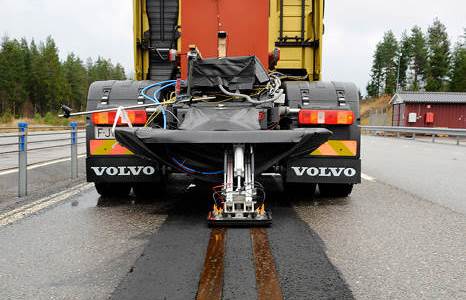
Applying the same concept, Volvo has designed a new highway system in Sweden that will keep electric cars running on long-distance trips. Led by Mats Alaküla, researchers are looking at these types of “conductive charging,” both where vehicles would stay in continuous contact with the power supply. Both methods are being tested on the new system, which consists of a 400-meter track near Gothenburg.

volvo_highwayBehind the research is the assumption that an electric car’s batteries will not provide the required range for long-distance driving, especially where long-haul trucks are concerned. City driving is one thing, but in order for electric vehicles to expand beyond urban centers, bigger and better methods need to be devised.

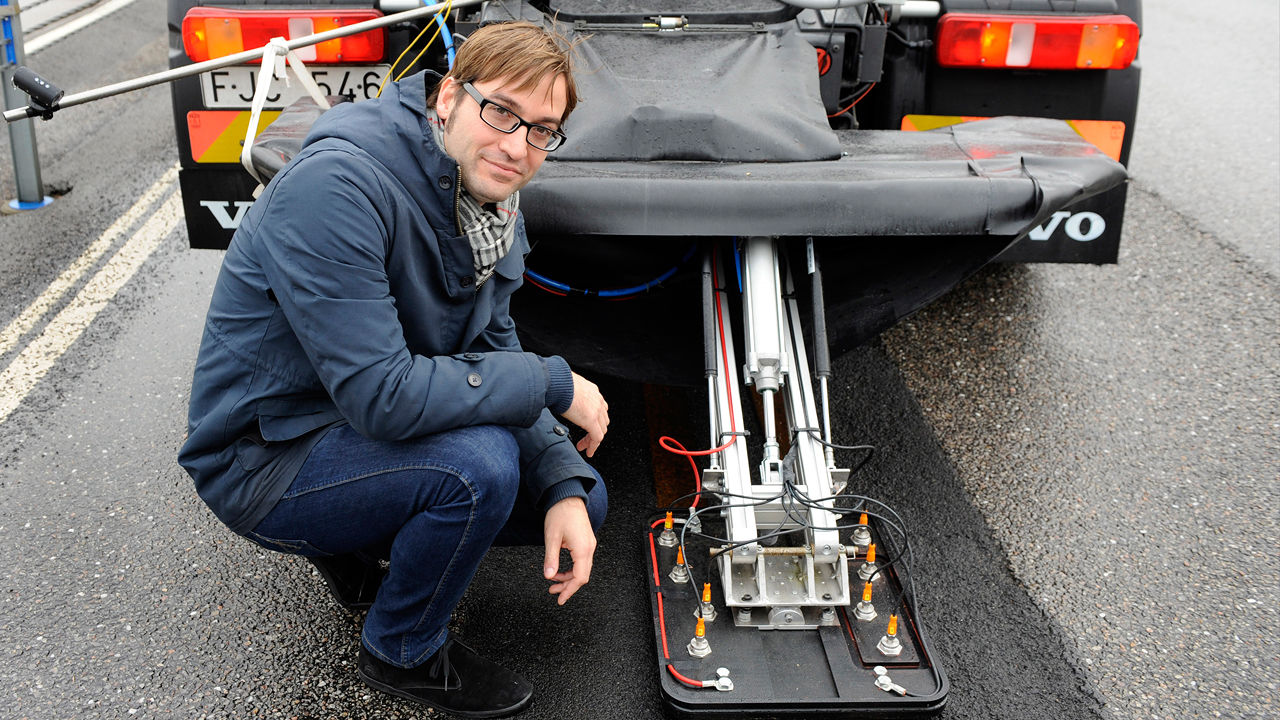
Alaküla says the important part of the second system is “the pick-up” – i.e. the connector between the vehicle and the ground. Unlike trams that stay in a fixed position, this line needs to be able to compensate for cars and trucks changing lanes. He describes the set-up as an “industrial robot sitting upside down”, though it more akin to a robotic arm.

volvo_highway1The arm moves a meter each way to compensate for movement within the lane, and retracts when the driver changes lanes, redeploying once they’ve back on the track. As Alaküla describes it:

If you imagine two lanes, the power system would be in the right lane. The pick-up keeps in contact with the supply, until you keep moving sideways. Then, the truck will go to the battery. When you go back, it automatically identifies the track, and reconnects.

And for those who worry that electric tracks are going to make highways unsafe for pedestrians, Alaküla insisted that the system only electrifies sections of the track when vehicles pass at a certain speed. To electrocute yourself, a pedestrian would need to step out in front of a fast-moving vehicle, which would kind of render the whole thing moot!

electric-highwaySo far, trucks have been able to get up to speeds of 80 km/h (50 mph) on the Volvo stretch, and Alaküla expects the work to continue for another year before his team takes the concept to a full road. Eventually, he thinks the concept could be used for anything bigger than a motor-bike – from cars and buses to different types of trucks.

And they not alone in their research efforts. Volvo’s rival Scania are themselves testing technology based on inductive charging where the charge is transferred via an electromagnetic field and does not require physical contact. Between these three methods and other emerging technologies that seek to make highway driving “smart”, the future of long-distant driving is likely to become a much cleaner, more efficient affair.

Source: fastcoexist.com

Climate Crisis: Climate Bomb in the Arctic?

icecapThe northern polar regions are considered by many to be the main battle grounds when it comes to Climate Change. The slow melting of the planet’s ice caps are rapidly melting, which in turn leads to increasing sea levels, and an increase in the amount of solar radiation our oceans absorb. However, according to a new theory, the disappearance of the ice sheet might also release a “time bomb” of greenhouse gas.

The theory appeared in recent paper submitted to the journal Nature. which argued that warming temperatures could release 50 billion tons of methane currently frozen in the Arctic seabed. Because methane is a potent greenhouse gas, such a huge release could drastically speed up the rate at which the sea ice retreats, the amount of solar energy that the ocean absorbs, and exacerbate the ongoing melt.

NASA_global_warming_predIt could also mean global temperatures rising more quickly, moving the world’s climate past generally-agreed-upon “tipping point” limits. Using the same methodology as the Stern Review, a landmark study from 2006. the papers authors  – Gail Whiteman, Peter Wadhams, and Chris Hope of Cambridge University – put a price tag on the potential damage:

The release of methane from thawing permafrost beneath the East Siberian Sea, off northern Russia, alone comes with an average global price tag of $60 trillion in the absence of mitigating action–a figure comparable to the size of the world economy in 2012 (about $70 trillion). The total cost of Arctic change will be much higher.

Using various scenarios, they say the methane could take from 10 to 50 years to emerge. But they’re clear about who’ll be hit hardest:

The economic consequences will be distributed around the globe, but the modeling shows that about 80% of them will occur in the poorer economies of Africa, Asia and South America. The extra methane magnifies flooding of low-lying areas, extreme heat stress, droughts and storms.

This is certainly consistent with existing Climate Change scenarios that predict the presence of severe drought in Central and South America, sub-Saharan Africa, and South and East Asia – the most populous regions of the Earth accounting for roughly 3 billion people.

Pollution over Mexico CityHowever, there are those who dispute this theory beyond the usual crop of Climate Change deniers. According to these dissenting views, the methane is unlikely to escape to the atmosphere as quickly as the paper predicts, and that some of it could be broken down in the ocean.

But Nafeez Ahmed, director of the Institute for Policy Research and Development, says these skeptics are relying on outdated models. The reality on the ground, as captured by scientists with the International Arctic Research Center, is that temperatures are rising faster than elsewhere and that current ice melt is consistent with the methane effect.

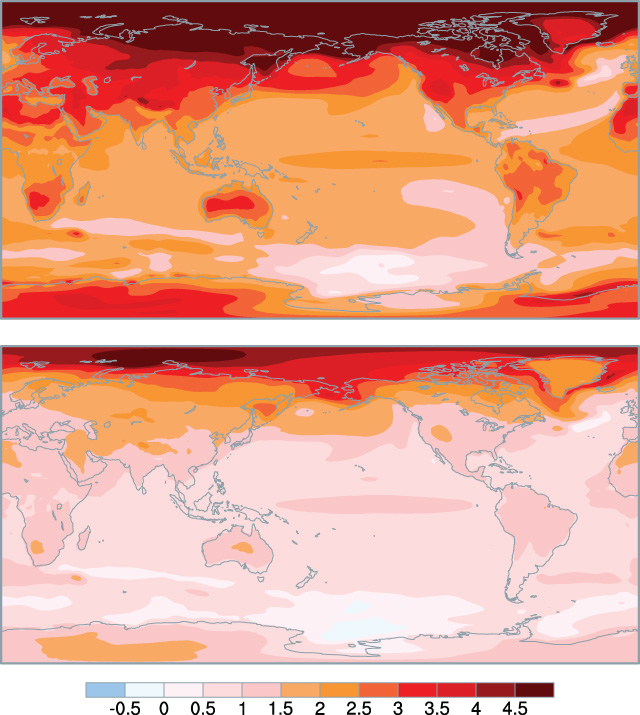
Global_Warming_Predictions_MapTo make matters worse, even if the methane emerges slowly, it would still be catastrophic. The research performed by Whiteman, Wadham, and Hope shows that the effects will be the same, regardless of whether or the methane is released over a 50 year period or a 10 year period. The key is mitigating factors, which call for immediate and ongoing intervention to ensure that worst doesn’t happen.

Bad news indeed, and it further demonstrates the dangers of what is referred to as a the “feedback mechanism” of Climate Change. As things get worse, we can expect the rate at which they get worse to increase at every step. And considering the likely social, political and economic impact of these changes, the ramifications of these new predictions are dire indeed.

Source: fastcoexist.com