NYC’s Futuristic Pool: Cleans Water Before You Swim

exorcisepool-perspective-poolWater pollution is one of the most serious environmental concerns facing the planet, and as with most things environmental, the culprit is urban sprawl. Take Newtown Creek in the Brooklyn neighborhood of East Williamsburg, which is one of the smelliest and dirtiest watersheds in the world. In addition to oil and industrial contaminants, the watershed is heavily burdened by the worst byproduct of urban living there is: sewage.

At present, storm water combines with the local sewage in a pipe-overloading combination that sends over a billion gallons of wastewater into the creek each year. Unlike industrial chemicals, which can be captured and treated to render it harmless, urban sewage is created in volumes that are extremely difficult to manage. And for most cities, the option of simply dumping it in the ocean is too attractive to pass up.

exorcisepool-treatmentHowever, architect Rahul Shah has a bold solution for dealing with this problem: Build a swimming pool. The Exorcise Pool – which Shah proposed for his master’s thesis at Parsons The New School For Design – wouldn’t use water directly from the Newtown Creek, its water supply would be the same, and its purpose would be both to mitigate and reveal the woeful state of local water pollution.

Instead, Shah’s project would divert an estimated 76,000 cubic feet per year of run-off into “bioswales”: ravines full of cattails, bulrush, and algae that would both absorb and carry water downhill. These bioswales would replace sidewalks on eight blocks of East Williamsburg, covered by grates where there are garages or doors to warehouse apartments.

exorcisepool-exteriorWater not absorbed by the plants would be carried to a series of water treatment technologies, using everything from algae to UV light to a bed full of reeds that will help trap solids. Ultimately, the water would not be clean to the point of drinkability, but would be safe as anything found in a pond. And in addition to drawing attention to the state of the river, the purpose, according to Shah, would also be to “showcase of different methods of water treatment.”

But of course, the main attraction, once all this water is treated, would be a series of patio misters and a public pool. The misters, according to Shah, will act as a sort of “test of faith”, where people decide to take a leap by letting treated water touch their skin. After that tentative step, they will have the option of swimming in it.

exorcisepool-showerAnd though the project is not being realized just yet, it stands as a suggestion of how to repurpose and redesign urban structures that were once sources of pollution into something healthier and more natural. In many ways, it calls to mind the work of the design firm Terreform ONE – which is seeking to convert Brooklyn’s Naval Yard into a vast greenspace through living architecture – or New York’s real estate firm Macro Sea, which began converting old dumpsters into mobile swimming pools back in 2011.

In the end, its all about converting the problem into a solution. Repurposing and redesigning the older, dirtier habitats of the past and turning them into something that actively cleans up the despoiled environment is much cheaper and easier than bulldozing and redeveloping them, after all.

And it also serves to remind us of how large urban environments are a part of the solution as well. With many people crammed close together amidst such sprawling infrastructure, the challenge of meeting future demands for space and clean living is visible and direct. As such, it has a hand in leading to innovative solutions and bright ideas.

Sources: fastcoexist.com, terreform.org, macro-sea.com
Powered by the Sun: Sun-Made Hydrogen Fuel

solar2It’s been known for some time that our future may hinge on the successful development of solar power. Despite it being a clean, renewable alternative to traditional, dirtier methods, the costs associated with it have remained prohibitive.  Which is why, in recent years, researchers and developers have been working to make it more efficient and bring down the costs of producing and installing panels.

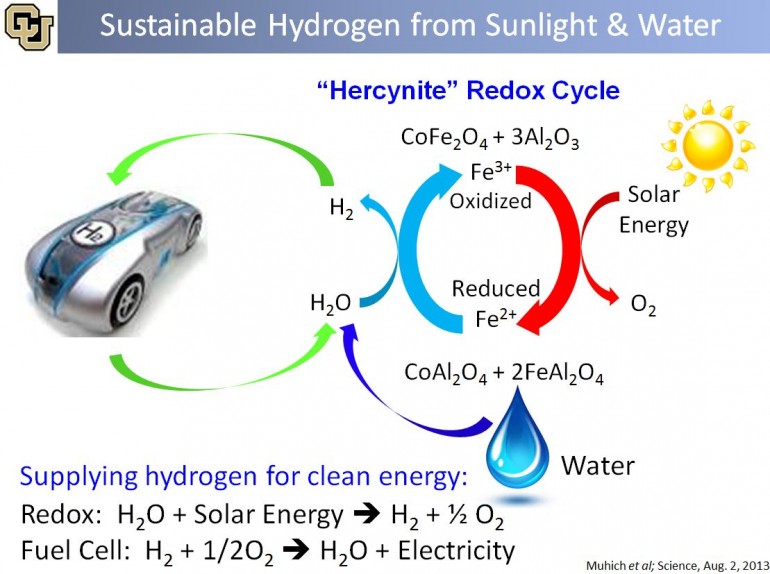
But a new technique developed by the University of Colorado Boulder may have just upped the ante on solar-powered clean energy. Using concentrated sunlight in a solar tower to achieve temperatures high enough to drive chemical reactions that split water into its constituent oxygen and hydrogen molecules, the team claims that solar energy may now be used to cheaply produce massive amounts of hydrogen fuel.

hydrogenfuelThe team’s solar thermal system concentrates sunlight off a vast array of mirrors into a single point at the top of a tall tower to produce very high temperatures. When this heat is delivered into a reactor full of metal oxides, the oxides heat up and release oxygen. This leaves the reduced metal oxides in a different state and ready to bind with new oxygen atoms.

Steam is then introduced into the reactor, which can also be produced by heating water with sunlight. This vaporized water then interacts with oxides, which draw oxygen atoms out of the water molecules leaving behind hydrogen molecules. These molecules can then be collected and harvested as hydrogen gas, and placed in storage containers for export.

solar_beadsGranted, the concept of using solar energy and heat to create hydrogen fuel is not new. Earlier this year, teams from the University of Delaware and Harvard already proposed using solar arrays and small panels (artificial leaves) to separate hydrogen from water. And solar thermal tower power plants have been in use in some parts of the world for years now.

But there are several key difference that set the University team’s concept apart. In a standard solar power tower, sunlight is concentrated about 500 to 800 times to reach temperatures around 500º C (932 º F) to produce steam that drives a turbine to generate electricity. However, splitting water requires temperatures of around 1,350º C (2,500º F), which is hot enough to melt steel.

hydrogenfuel-2To get those kinds of temperatures, the team added additional mirrors within the tower to further concentrate the sunlight onto the reactor and the active material. But the big breakthrough came about when the team discovered certain active materials that allowed both these chemical reactions (reducing the metal oxide and re-oxidizing it with steam) to occur at the same temperature.

As Charles Musgrave, Professor of Chemical and Biological engineering at CU-Boulder, explains it:

You need this high temperature both to give you the driving force to drive the chemical reactions and also the kinetics to make the reactions go fast enough to make the process practical. We determined that both reactions could be driven at the same temperature of about 2,500° F (1,371° C). Even though we run at a constant and lower temperature we still generate more hydrogen than competing processes.

Though they have yet to produce a working model, the concept has a big advantage over other methods. By eliminating the time and energy required for temperature swings, more hydrogen fuel can be created in any given amount of time. Another advantage it has over other renewable technologies, such as wind and photovoltaics, is that it uses sunlight directly to produce fuel rather first converting sunlight into electricity, which reduces overall efficiency.

solar_array1The team believes that a site with five 223 m (732 ft) tall towers and about two million sq m (21.5 million sq ft) of heliostats on 485 ha (1,200 acres) of land could generate 100,000 kg (222,460 lb) of hydrogen per day, which is enough to run over 5,000 hydrogen-fuel cell buses daily. Or as Alan Weimer, the research group leader, put it:

Our objective is to produce hydrogen (H2) at $2/kg H2. This is equivalent to about US$2/gallon (3.7 L) of gasoline based on mileage in a fuel cell car versus a combustion engine today.

Not a bad substitute for gasoline then, is it? And considering that the production process relies on only the sun – once the multi-million dollar infrastructure has been built of course – it will be much more cost effective for power companies than offshore drilling, frakking and pipelines currently are. Add to that the fact that its far more environmentally friendly, and you’ve an all around winning alternative to modern day fuels.

Source: gizmag.com

Five Technologies for the Developing World

Developed-and-developing-countriesWhen it comes to providing energy in the “developed world”, the challenge is in finding ways to generate electricity, heat, and cooling in a way that will not burden our environment. Whereas providing these things in the past has never been much of a challenge, finding ways to meet future demand in a way that is sustainable and renewable often is. Lucky for us, we have the means to meet this challenge head on.

But in the “developing world”, where the infrastructure does not readily exist, populations continue to grow exponentially, and the concerns about the natural environment are quite grave already, the challenge of providing for people’s basic needs presents a significant challenge. At the same time however, it presents an opportunity for creative solutions.

What follows is just a few examples of what engineers and designers have come up with in recent years. These devices are especially innovative because they are capable of increasing the supply of safe, cheap energy on a user-by-user basis, bypassing the years it takes to extend a power grid to remote places, the resources needed to increase a country’s energy production capacity, or the environmental damage involved.

Voto-Stove1. The Voto: Millions of people around the world use coal or wood-fired stoves to provide for their cooking and heating needs. Developed by the company Point Source Power, the VOTO converts the energy these fires release as heat into electricity, which can power a handheld light, charge a phone or even charge a spare battery. Initially designed for backpackers and campers, the company is also trying to find a way to make it accessible to residents of the developing world, where it will be much more useful.

2. Window Socket: Here we have what is perhaps the simplest solar charger in existence. Simply attach the suction cup to a window or any sun-exposed surface, let sit for 5 to 8 hours, and the solar panels will store enough electricity to power a device for up to ten hours. Created by Kyuho Song and Boa Oh of Yanko Design to resemble a normal wall outlet as closely as possible, the charger can be taken and used anywhere, making it truly versatile.

window_socket33. The Berkeley-Darfur Stove: In recent years, health researchers have come to the conclusion that open-fire stoves lead to millions of deaths in the developing world. Hence this design by Potential Energy, a nonprofit dedicated to adapting and scaling technologies to help improve lives in the developing world. Featuring a tapered wind collar, a small fire box opening, nonaligned air vents that reduce the amount of wind allowed to stoke or snuff the fire, and ridges that ensure the optimal distance between the fire and pot, this stove is safe, fuel-efficient, and requires less wood to power. Over 25,000 units have been distributed to the Darfur region and Ethiopia so far.

gravitylight4. Gravity Light: Along with wood-burning stoves, kerosene-burning lamps are also a major health concern because of the fumes they create. Hence the simple and elegant solution known as the Gravity Light. Developed by the research initiative deciwatt.org, the device is powered by attaching a 20 lbs bag or rocks or dirt to a cord and then lifting it into place. The potential energy stored in that lifting motion is then gradually converted to electricity as the the bag descends over the course of about 30 minutes, powering a light or other electrical device in that time.

5. SOCCKET: Soccer is easily the most popular sport in the world, with millions of people playing daily. And in an attempt to turn this daily activity into an efficient form of energy that would replace kerosene lamps, Uncharted Play, a for-profit social enterprise, has created a ball that uses a kinetically-powered pendulum to generate and store electricity. After about 30 minutes of play, the ball stores enough energy to power an attachable LED lamp for 3 hours. Development of the product was funded via Kickstarter, and the first ones will ship in the next few weeks. A percentage of all retail sales will go to providing SOCCKETs to schools in the developing world.

two_SOCCKETsWhen it comes right down to it, these devices are especially innovative because of the way they marry  new technology to basic utility. In the end, what people get are things that are simple to use, effective, clean, and safe. And if history and sociological research have taught us anything, it’s that little things that make life healthier and easier have a profound impact on the lives of people.

Combined with large-scale concept (like 3D-printed structures) simple solutions like these are likely to make a big difference in the lives of millions of people. By ensuring that people have access to lighting and heating that does not compromise their health, is better for their environment, and less-labor intensive and expensive, the daily grind that characterizes far too many people’s existence is sure to get easier and allow for new opportunities.

Though they might seem like minor improvements, incremental changes have a way of adding up and can lead to serious and positive social change. And I for one am eager to see it happen!

Source: blogs.smithsonianmag.com

Climate Change, In Song!

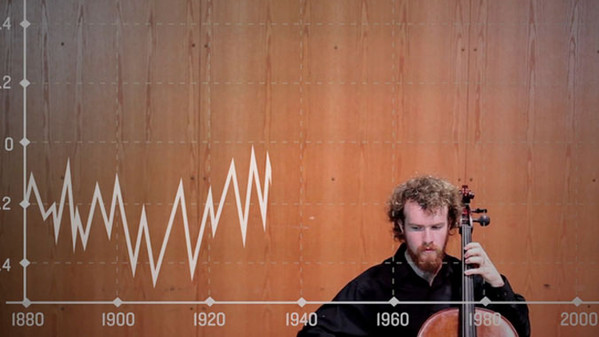
daniel_crawford_4858Climate Change is a daunting phenomena, a severe problem that is threatening our planet but which remains inaccessible and invisible for many people. Part of the problem is condensing all the facts, figures and studies into a coherent, easy-to-understand form that people can see and understand. Not the easiest thing to do, and even the famous hockey-stick shaped graphs appear to be falling short.

Luckily, artists like cellist Daniel Crawford are stepping in to fill the role of scientific interpreter. Committing the most alarming portion of that hockey stick to music, he shows just how alarming this trend is. He calls it “A Song of Our Warming Planet”, where notes are matched to temperatures, one for each year since 1880.

keeling_curveAs the average global temperature increases by 0.8 Celsius (1.4 Fahrenheit) and atmospheric carbon dioxide levels increase by more than 40%, the song climbs from the low, open C to the high end of its register, sounding, in one commenter’s estimation, “like a woman screaming.” And the video ends with the chilling text:

Scientists predict the planet will warm by another 1.8 degrees Celsius (3.2 degrees Fahrenheit) by the end of this century. This additional warming would produce a series of notes beyond the range of human hearing.

Scary stuff. Check out the video below, and then be sure to look around this site for some of the more positive news on the issue. I don’t like sending people away gloomy!


Sources:
fastcoexist.com, vimeo.com

Climate Crisis: NASA’s Projected Changes

NASA_global_warming_predAs the world’s foremost space agency, NASA has been at the forefront of climate research for many decades. Their contributions to this field of science has helped to shape our understanding of the planet’s past and has led to our current understanding of the Greenhouse Effect, Global Warming, and Climate Change. As a result, they are committed to educating the public about what’s in store for our blue planet in the near future.

Below are two videos that were recently released by NASA’s Goddard Space Flight Center. Both briefly, but succinctly, provide visualizations of what an average temperature increase of up to 5.5 Celsius (8 degrees Fahrenheit) and the resulting effect on weather patterns would look like, which is expected to happen by the end of the 21st century.

These visualizations – which highlight computer model projections from the draft National Climate Assessment – show how average temperatures and precipitation patterns could change across the U.S. in the coming decades under two different scenarios. As you can see, both predict significant warming and drying as a result of increased concentrations of CO2 in the upper atmosphere.

Projected Temperature Change by 2100:


Projected Precipitation Change by 2100:


The visualizations, which combine the results from 15 global climate models, present projections of temperature and precipitation changes from 2000 to 2100 compared to the historical average from 1970 -1999. They were produced by the Scientific Visualization Studio at NASA’s Goddard Space Flight Center, Greenbelt, Md., in collaboration with NOAA’s National Climatic Data Center and the Cooperative Institute for Climate and Satellites, both in Asheville, N.C.

Speaking on the subject of these videos, Allison Leidner, Ph.D. – a scientist who coordinates NASA’s involvement in the National Climate Assessment – said:

These visualizations communicate a picture of the impacts of climate change in a way that words do not. When I look at the scenarios for future temperature and precipitation, I really see how dramatically our nation’s climate could change.

But of course, these visualizations only tell part of the story. Far from this being a geographically restricted phenomena, residents inside the US are likely to be less severely hit than those people living in Sub-Saharan Africa, the Mediterranean, the Middle East, Central Asia, India and East Asia, where the problems of flooding, water loss, famine and drought area already common.

Add to this flooding coastlines, invasive parasites and diseases, militarized borders, potential skirmishes over dwindling resources, and a refugee crisis the likes of which the world has never seen, and you get a pretty good idea of why this issue matters as much as it does. The next century is going to be an interesting time. Here’s hoping we survive it!

Source: nasa.gov

Tatooine to be Reclaimed by the Desert

Mos_Espa_2All across North and Sub-Saharan Africa, desertification threatens farm land, pastures, townships and even cities, triggering food and water shortages and threatening wildlife. But in a startling twist, it now seems that this ecological phenomena is threatening an iconic movie set, one which science fictions fans should instantly recognize.

Yes, in the deserts of Tunisia, the town of Mos Espa is about to be reclaimed by the desert. This set was first constructed by George Lucas and his crews to act as the skyline for Tatooine in Star Wars Episode I: The Phantom Menace. Serving as the fictional home of Anakin Skywalker, it was here that Qui-Gon Jinn and Padme first met the cloyingly sweet blonde kid that would one day become the most evil man in the universe

mos_espa

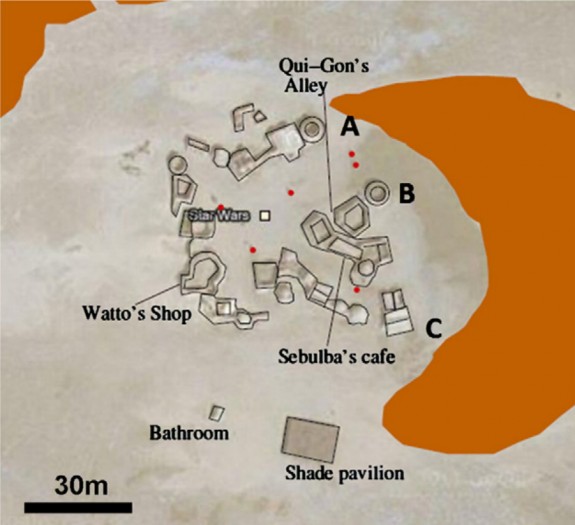
And in a new study, lead by Ralph Lorenz of John Hopkins University, researchers have found that sand dunes are swiftly encroaching on the old Star Wars set and threatening to consume it. Since Mos Espa was first constructed in 1997, some sixteen years ago, Lorenz and his researchers have calculated that the sand dunes have moved a total of 130 meters.

mos_espa_dunesNote the satellite images to the left, which display the Mos Espa set in 2004 and 2009 as seen from Google Earth. Between the two, one can see how the large dune wall to the right of the compound is weakened over time, and dust and sand blowing in from the desert is able to make its way into the town proper.

You can also see how the buildings are harder to make out in the 2009 image, a result of them being slowly covered by airborne sand. In time, this will reach the point where the huts are no longer visible, and will likely collapse under the weight of the desert.

The aim of this study, far from inciting Star Wars fandom to mount a campaign, was to track the progress of desertification in the Maghreb nation. One of the benefits of the Mos Espa construction,  as far as Lorenz and his geomorphologists were concerned, was that it gave them a steady frame of reference. Since their interest is in understanding how sand dunes move, the Star Wars set gave them a good way to see changes in dune location.

Mos Espa layout
Mos Espa layout

The report outlined the likely consequences of the approaching dunes, and what they would mean for future generations of Tatooine-tourists:

Should the barchan that forms the focus of this paper overrun the Mos Espa set, many buildings will be temporarily buried.

Their rather flimsy construction will mean roofs will likely collapse, degrading the attraction of the site when the dune moves on. This has already been seen at a smaller film set (‘Repro Haddada’…sometimes referred to online as the ‘slave quarters’)

…This structure was overrun by a barchan around 2004, and has been substantially demolished, although it is still an object of pilgrimage by Star Wars fans, who also admire the barchans a few hundred meters to the south, which are prominent in several scenes of the movie.

They were also sure to point out that even if Mos Espa survives the swiftly advancing dune, the town is still likely doomed, as other patches of desert are encroaching from other directions as well:

In the long run, Mos Espa is still threatened: the large barchan (big enough to totally submerge the site) looms about 500 m to the east. In fact this dune is often driven over en route to the Mos Espa site, reportedly by ~80% of the visiting vehicles. Although the imminent threatening barchan and other effects may degrade the site on this timescale anyway, at the observed migration rate of ~6 m/yr, this large barchan will begin overrunning the site in about 80 years.

Sad news for fandom and sci-fi geeks. But I guess it just goes to show you, nothing lasts forever. But more importantly, it demonstrates one of the principle issues of Climate Change and the planets rapidly-changing ecology. So perhaps this will have the positive effect of making more people sit up and notice, and maybe even mobilize a few to action.

After Climate Change is an issue that effects, and threatens, us all. And against enemies like world hunger, displacement, drought, famine, and flooding, we need all the help we can get! So at the risk of sounding cliche, let me just say: May the Force be with us!

Source: blogs.smithsonianmag.com

Towards a Greener Future: The Desalination Chip

?????????????????????????????????????????When it comes to providing for the future, clean, drinkable water is one challenge researchers are seriously looking into. Not only is overpopulation seriously depleting the world’s supply of fresh water, Climate Change threatens to make a bad situation even worse. As sea levels rise and flooding threatens population centers, water tables are also drying up and being ruined by toxic chemicals and runoff.

One idea is to take sea water, which is in growing supply thanks to the melting polar ice caps, and making it drinkable. However, desalination, in its traditional form, is an expensive and difficult process. Typical large-scale desalination involves forcing salt water through a membrane are costly, can be fouled, and which require powerful pumps to circulate the water.

desalination_chipHowever, scientists from the University of Texas at Austin and Germany’s University of Marburg are taking another approach. Working with a process known as “electrochemically mediated seawater desalination”, they have developed a prototype plastic “water chip” that contains a microchannel which branches in two, separating salt from water chemically without the need for membranes.

The process begins with seawater being run into the microchannel where a 3-volt electrical current is applied. This causes an electrode embedded at the branching point of the channel to neutralize some of the chloride ions in the water, which in turn increases the electrical field at that point. That area of increased current, called an ion depletion zone, diverts the salt to one branch in the channel while allowing the water to continue down another.

waterchip-1In its present form, the system can run on so little energy that a store-bought battery is all that’s required as a power source. Developed on a larger scale, such chips could be employed in future offshore developments – such as Lillypad cities or planned coastal arcologies like NOAH, BOA, or Shimizu Mega-City – where they would be responsible for periodically turning water that was piped in from the sea into something drinkable and useable for crops.

Two challenges still need to be overcome, however. First of all, the chip currently removes only 25 percent of the salt from the water. 99 percent must be removed in order for seawater to be considered drinkable. Second, the system must be scaled up in order to be practical. It presently produces about 40 nanoliters of desalted water per minute.

That being said, the scientists are confident that with further research, they can rectify both issues. And with the involvement of Okeanos Technologies – a major desalination research firm – and the pressing need to come up with affordable solutions, it shouldn’t be too long until a fully-scaled, 99 percent efficient model is developed.

Source: gizmag.com

Climate Crisis: Coming Trends in CO2

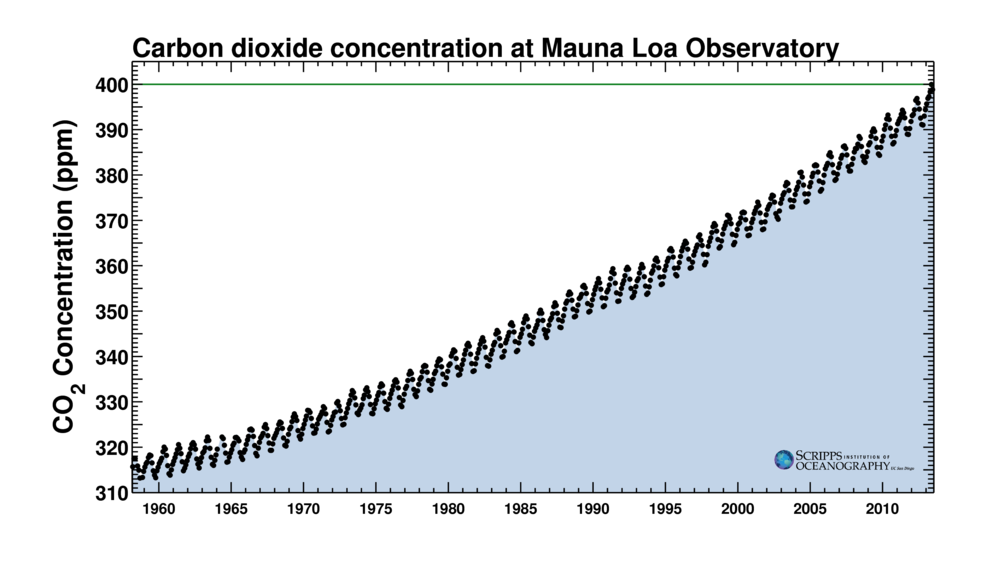
Pollution over Mexico CityGood news everybody! Okay, not exactly good, but it is news, and on a rather important subject. Recently, the National Oceanic and Atmospheric Administration (NOAA) announced that the Manua Loa observatory in Hawaii had recorded atmospheric levels of carbon dioxide which exceeded 400 parts per million. This represented a major milestone, one which climatological researchers and scientists have feared for some time.

However, they have since amended that statement, saying that the readings were a fraction of a point lower at 399.89 ppm. Not exactly a reason to celebrate, and not that surprising either, since individual readings at any of NOAA’s observation stations are subject to revision on a regular basis. And regardless of whether or not the 400 ppm milestone has been passed, scientists are still adamant that this reading is cause for concern.

keeling_curveAs has been stated repeatedly, when it comes to the buildup of human created greenhouse gases, it is the rate of increase which is most important. That rate, which is measured by the Keeling Curve, shows that atmospheric CO2 levels are rising at unprecedented rates, driven largely by the burning of fossil fuels over the past two centuries.

Originally pioneered by scientist Charles D. Keeling in 1958 , this curve is the longest-running tally of carbon dioxide levels in the atmosphere and is maintained by the Scripps Institution of Oceanography in San Diego. The saw-tooth pattern of the incline reflects small seasonal variations within the long-term upward trend, which peak annually around the month of May.

Combining this studies conducted on glacial melting patterns, pollination patterns, geological and oceanographic surveys, a long-term picture emerges. For the past 800,000 years, CO2 levels have never exceeded 300 ppm, and there is no known geologic period in which rates increased as sharply as they are now. That level was at about 280 ppm at the advent of the Industrial Revolution in the 18th century, the period when the burning of fossil fuels began to soar.

trafficScripps geochemist Ralph Keeling, who has taken over the Keeling curve measurement from his late father, had this to say about the news:

I wish it weren’t true, but it looks like the world is going to blow through the 400-ppm level without losing a beat. At this pace we’ll hit 450 ppm within a few decades.

Tim Lueker, an oceanographer and carbon cycle researcher who is a longtime member of the Scripps CO2 Group, also weighed in on the significance of these latest readings:

The 400-ppm threshold is a sobering milestone and should serve as a wake-up call for all of us to support clean-energy technology and reduce emissions of greenhouse gases before it’s too late for our children and grandchildren.

What’s especially frightening about a rating of 400 ppm is the fact that planet Earth has not experienced that kind of CO2 concentration for over 3 million years, during the Pliocene Era. At that time, sea levels were between 60 and 80 feet higher than their current levels. If sea levels rise by this much in the coming decades, roughly 1 billion of the Earths inhabitants will be left homeless.

climate_changetideAdd to this the widespread droughts, wildfires and flooding taking place in inland communities, where unpredictable weather will cause rivers to overflow erode river banks and turn millions more into refugees. And as crops fail due to increased heat and depleted topsoil, the ability to feed the world’s population will also begin to plummet.

Of course, these are the most dire predictions and are often used to remind us just how important it is to clean up our act before its too late. Researching and developing cleaner methods is one approach, as is finding ways to capture the carbon emissions we are generating on a daily basis. But in the end, the greatest weapon in our arsenal is and always will be public awareness.

Consider yourselves informed. Now go spread the word!

In the meantime, enjoy this animated “Carbon Tracker” graph that shows us the time history of atmospheric carbon dioxide – courtesy of the National Oceanic & Atmospheric Administration.


Source:
articles.latimes.com
, esrl.noaa.gov, keelingcurve.ucsd.edu

Climate Crisis: City Farms

dragonfly-vertical-farm-for-a-future-new-york-1Hello again, folks. As you all know, this summer has brought some rather dire news on the climate front as unpredictable weather patterns have led to flooding in many parts of the world. And as climatological researchers and scientists have predicted, this is just the tip of the iceberg, as rising global temperatures will lead to melted icecaps, higher sea levels, severe droughts, wildfires and coastal storms.

But as I always like to point out, there are solutions to these problems, or at least ways to mediate them. Given the central role played by overpopulation and urban sprawl in climate change, many of these proposed solutions have to do with finding new ways to house, feed, and provide from future generations – ones which emphasize sustainability and clean energy.

city_farmsWhen it comes to feeding future generations of people, the question of what will be on the menu and where it comes from are paramount. In recent decades, massive crop failures, protracted droughts, and numerous food-borne disease outbreaks caused by microbes such as salmonella, E. coli, toxoplasma and listeria have forced people to contemplate where their food comes from and how it is produced.

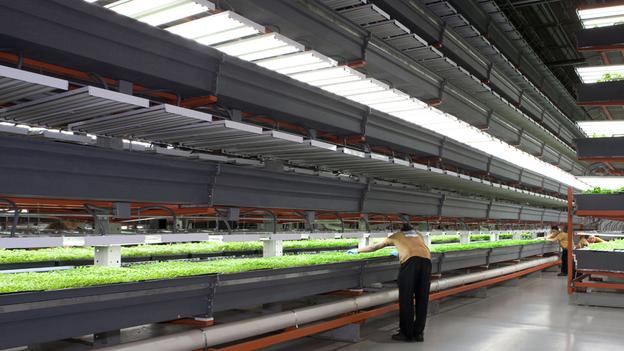
The proposed solution is to rethink farming, moving out of the old paradigm of farming the lands around human settlements and moving them inside. These city-based agricultural projects include rooftop gardens, rooftop greenhouses, planting beds, empty lots as farmland, and vertical farms that occupy tall buildings and abandoned warehouses. Collectively, these examples show the validity of growing food in the city. Not only could be they be carried out efficiently, but they could also operate without the pollution associated with outdoor farming.

city_farms1In truth, the concept is not entirely new, as “victory gardens” or other variants have been a means of producing agricultural goods whenever national farms found themselves overburdened. These were all the rage in Britain, Canada, the US and Germany during World War I and II when naval blockades and military demand forced people to plant their own vegetables in their backyards.

In addition, after the collapse of the Soviet Union, Cuba found itself in a serious agricultural crisis. As a result, they turned to a vast network of ‘organoponicos’ – growing food for city dwellers in spare plots. These miniature agricultural operations not only staved off starvation and malnutrition during times of shortages, but became a model for sustainable local efforts that are currently being used around the world.

city_farms2For example, in Wilcox, Arizona, their is the EuroFresh Farms indoor-operation – a 318 acres (1.3 square km) of one-storey-high hydroponic greenhouses that supplies fresh tomatoes and cucumbers.  Similarly, the FarmedHere operation in Bedford Park, Illinois consists of a 8,360 square meter (90,000 square foot) empty warehouse that is several storeys tall that produces tilapia, a variety of leafy green vegetables, and several value-added products.

And in Sweden, the company known as Plantagon is building a vertical farm in the city of Linkoping, and has partnered with a Chinese company to research similar methods for the state of China. In addition, limited forms of vertical farming also exist in Japan, Korea, Singapore, the United States, and Canada, with new farms being planned for a number of cities in the United States.

city_farms4As always, technological innovation is assisting in the process. This includes such things as grow lights that have replaced expensive fluorescent fixtures with light-emitting diodes that can be adapted to emit light spectra tailored for growing green plants. In addition to costing less to run, their yields are demonstrably higher, especially where leafy greens and tomatoes are concerned.

Another concept which is being embraced is aquaculture – indoor fish hatcheries – which could provide meat protein to go with all these vegetables. Such operations include Hazorea Acquatics, a koi farming operation, as well as the carp and mullet farm pictured below, both of which are located in Israel . Similar operations are popping up in the US, Netherlands, Denmark, Scotland and Canada, where barramundi, sturgeon, tilapia, eels, catfish, trout and salmon are being raised.

city_farms5Looking to the long-run, urban agriculture has the potential to become so pervasive within our cities that by the year 2050 they may be able to provide its citizens with up to 50% of the food they consume. In doing so, ecosystems that were fragmented in favor of farmland could be allowed to regain most of their ecological functions, forests could recover, and the impact on the environment would very beneficial, for the planet as well as humanity.

In addition to ensuring that the greatest consumers of CO2 – trees and other flora – could re-advance on the landscape, allowing natural spaces to recover from the damages of agriculture would also bring countless species back from the brink of extinction. Loss of habitat is one of the chief causes of wildlife becoming endangered, and farm runoff is one of the greatest factors effecting our rivers and fish stocks.

Combined with water treatment and recycling that also happens on-site, solar, wind and peizoelectric power, and carbon capture that can turn CO2 into biofuel, skyscrapers and urban environments may very well advance to become at the forefront of the sustainability, environmental and clean energy movement. What was once the problem would thus become the solution. Truly innovative…

Source: bbc.com/future

The Future is Here: The Smog-Eating Building

pollution_eatingbuildingFor many years now, urban planners and architects have been looking for ways to merge the concept of carbon capture and building designs to combat airborne pollutions in cities. With global temperatures climbing, CO2 levels reaching 400 parts per million in the upper atmosphere, urban air quality indexes as high as 700, and the ensuing health problems that come with it, its clear something must be done.

Mexico City is no stranger to air pollution, being one of the most heavily and densely populated cities in the world. According to researchers from the University of Salzburg, Mexico City has high concentrations of nearly every major harmful airborne pollutant – including sulfur dioxide, nitrogen oxides and carbon monoxide – but by far the worst problem is the massive cloud of smog that hangs over it almost every day.

pollution_eating2Little wonder then why the Berlin-based design firm Elegant Embellishments was hired to create the cities first pollution-eating edifice. Known as the Torre de Especialidades, a tower which surrounds an existing hospital, the building is shielded with a facade of Prosolve370e, a new type of tile whose special shape and chemical coating can help neutralize the chemicals that compose smog.

Impressively, the 100m facade removes enough smog to compensate for the emissions of 8,750 cars driving a day. And the process is both simple and twofold: the paint applied to the tiles is made from titanium dioxide, a pigment used to make things like sunscreen white that happens to double as a catalyst in certain chemical reactions. When UV light cuts through smoggy air and hits the titanium dioxide on the tiles, a chemical reaction occurs between the tiles and chemicals in the smog – like mono-nitrogen oxides.

pollution_eating1The end result of the reaction is that the smog is broken down into small amounts of less noxious chemicals, including calcium nitrate (a salt used in fertilizers), carbon dioxide, and water. The titanium dioxide itself remains unaffected, so it can keep making reactions happen. But beyond the chemical process is the design itself, which is especially important.

As Elegant Embellishments co-founder Allison Dring explains:

The shapes slow wind speeds and create turbulence, for better distribution of pollutants across the active surfaces. The omni-directionality of the quasicrystalline geometry is especially suitable to catch things from all directions.

So, the shape of the tile scatters more light and collects more pollutants, which means more chemical reactions. But they’re also beautiful, a strategic decision by Elegant Embellishments to attach the technology the an aesthetic that is immediately evident and accessible to the public. In addition to doing something about the problem, explains Dring, the design acts as a beacon for change.

Source: fastcoexist.com, prosolve.elegantembellishments.net