Artificial Trees to Fight Climate Change?

The indices of Climate Change have been growing in the past few decades, culminating in some serious trends that have left the scientific community worried and the general public far from calm. In addition to Arctic sea ice levels reaching a record low and record high temperatures being set during the summer, North Americans also experienced the worst wildfire season in recorded history. Over a million acres of forest burned up in the US alone, but the extended range of the fires reached from as far south as Texas to as far north as Nunavut.

For many years now, those on the forefront of climate science have been arguing that things will get a lot worse before they get better, and argue that some drastic geoengineering projects might be the only way to avert disaster. Many of these involve advanced climate science, such as evaporating more water around the mid-latitudes or “capturing” carbon in the upper atmosphere and converting it to harmless compounds. But as Gaia Vince, a science writer from BBC’s Future pointed out, the solution may be as a simple as improving upon an existing “carbon capture” technology, otherwise known as the Tree.
For some time now, climatologists and naturalists have understood the role that trees, plants, algae and plankton play in the carbon cycle. Unfortunately, the long life-cycle of trees, and the various ecological issues surrounding the artificial stimulation of algae and plants, make this aspect of ecoengineering somewhat impractical. What’s more, the growing demand for agricultural space is also putting pressure on existing green spaces. As our population continues to grow and more farmland is needed to provided for them, simply planting plants and trees more may not even be an option.

Luckily, there is an invention that takes all this into account and provides a possible solution: the artificial trees. Designed by Klaus Lackner, director of the Lenfest Center for Sustainable Energy at Columbia University, this “tree” is capable of absorbing CO2 from the air using “leaves” that are 1,000 times more efficient than the real thing, but at the same time does not require exposure to sunlight in order to carry out the process.

As Vince himself describes them: “The leaves look like sheets of papery plastic and are coated in a resin that contains sodium carbonate, which pulls carbon dioxide out of the air and stores it as a bicarbonate (baking soda) on the leaf. To remove the carbon dioxide, the leaves are rinsed in water vapour and can dry naturally in the wind, soaking up more carbon dioxide.”
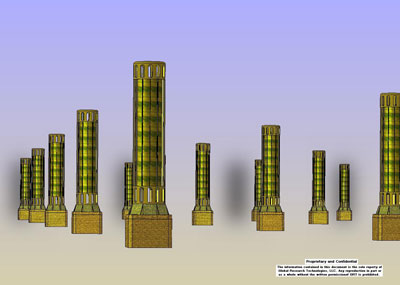
Based on Lackner calculations, a single tree would be capable of removing one tonne of carbon dioxide from our atmosphere in a single day. By that reckoning, a forest of ten million would be able to remove 3.6 billion tonnes of carbon dioxide in a single year, the equivalent of about 10% of our global annual carbon dioxide emissions. One hundred million would solve our emission crisis altogether!

As for the resulting mass that the process creates, Lackner claims that could be turned into liquid fuels to power vehicles. In fact, when CO2 and water are combined, the end result is what is known as syngas, a fuel that is easily converted into methanol and diesel. So basically, while the artificial trees are scrubbing the air of fossil fuel emissions, they are also actively creating the means to generate more fossil fuel. Might seem ironic, but this in turn will allow humanity to keep using their carbon engines, all the while knowing that they are producing less than the trees are extracting. This will give the scientists of the world more time to invent a clean alternative to the fossil fuel engine, and that by the time they do it won’t already be too late.

Although some question the viability of this entire process, mainly where the issue of total cost is concerned, Lackney stresses that as global fuel supplies dwindle, fuel companies will see the wisdom in buying into this process, mainly because it offers them the possibility of fuel retention. Yes, by investing in artificial trees, oil and gas companies will be able to turn their own carbon emissions back into hydrocarbon fuel. Which will come in handy if the oil runs out as quickly as some analysts say it will. In addition, us consumers can expect a break the pump if it all goes well!

Does this strike you as ironic, or just a weird and interesting take on recycling? Who knows? All that is certain is that the technology is making some pretty bold forecasts, and if it should prove successful, we are likely to see a great deal of investment towards this new method. I can see it now, countless roofs and skyscrapers with fields of artificial trees lining their roofs. Water circulation systems that capture the CO2 once its sucked off the leaves and then channeled down to the fuel cells in the basement. And the rest trucked off by trucks that bear the logo of Haliburton, Shell, and Petro Canada. And for once, the drivers won’t feel a lick of shame!
The Future is Here: The Robotic Wheelchair!

For years, people with wheelchairs have been forced to endure limitations imposed by the environment and their fellow human beings. In addition to such natural obstacles as uneven terrain and rocky grounds, there is also the matter of stairs and inaccessible areas. As it turns out, that may be coming to an end! Recently, the Chiba Institute of Technology unveiled a new wheelchair concept that incorporates leg-like motion. It’s known as the wheelchairbot, a robotic chair that can tackle obstacles ordinary wheelchairs cannot.

The key is the five axes its base rotates on, allowing individual wheels to be lifted off the ground and moved in a walking style. It can tackle steps and various other obstacles whilst remaining stable, and can even line its wheels up and extend stabilizers to the left and right, enabling it to turn a circle. This makes it easy to reverse, even in a narrow space. In addition, the chair has a series of sensors that can detect incoming obstructions and deal with them automatically.

Check out the video below for a demonstration of the wheelchairbot in action. I think you’ll agree, the concept shows some serious promise, and may even be a big step towards making all areas accessible to all people!

The Future is Here: Insect Biobots!

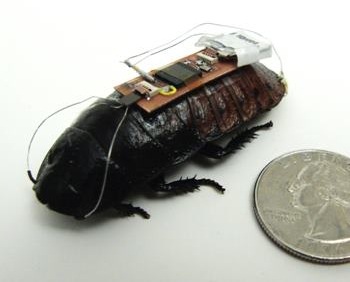
One small step for man, one giant leap for man-machine interface! Or man-roach interface, I guess! It seems that researchers at the iBionicS lab at North Carolina State University have created a remote-control system to stimulate and steer cockroaches. This report came at the 34th Annual International Conference of the IEEE Engineering in Medicine & Biology Society last month, and represents quite the step forward for cybernetics.

In short, the research team equipped a Madagascar hissing cockroach with a circuit board that connects directly to its antennae. It’s a well known fact that cockroaches, in addition to being nuclear war-resistant, use their two antennas to find their way around. By sending electrical signals to one or the other, they were able to steer the cockroach as it made its way around.

To be fair, this is not the first case of insect cyborgs being developed. In 2009, the researchers at iBionicS unveiled a similar program using remote-controlled hawk moths. In that same year, the University of California, Berkeley, and the University of Michigan presented their collaborate project: remote-controlled beetles! Here, the beetles had electrodes wired into their brains and flight muscles which were used to command them to take off and steer them while in the air.

Interestingly enough, research in both of these latter cases was being funded by the Defense Advanced Research Projects Agency (DARPA) with the goal of creating remote-controlled insects could go where humans cannot and aid in search-and-rescue or even spy missions. You’ve heard of UAV’s, aka. spy drones, doing reconnaissance, right? Well look out! The next time you see a flying beetle or a hawk moth, you could be on someone’s camera. Smile before you step on it!

And be sure to check out the video below of iBionicS lad testing their remote-control roach steering system.

Source: Discover Magazine

The Future is Here: Electronics that Dissolve

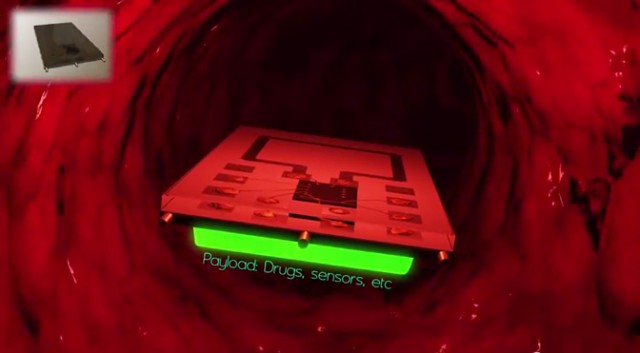
electronicsIt is no secret that research into nanotechnology is bearing fruit these days. Back in February, both Standford and MIT unveiled implantable devices which would be capable of delivering drugs directly into the human blood stream and detecting health problems. However, despite all the progress being made in terms of nano-miniaturization, there are still numerous barriers which need to be overcome.

For example, having microelectronics in the body, while initially beneficial, might prove problematic with time. What’s to happen when they are finished their jobs, become obsolete, or simply stop working after awhile? As anyone who’s ever owned a computer, PDA, mobile device or laptop can tell you, the stuff breaks! And if it does happen to live past its warranty, chances are it will be obsolete in six months… tops!

Such machines need a way to be removed, but given their size (o.oooooooo1 meters), that’s not exactly practical. And even if it were, there’s the question of disposal. Once commercially viable, there are likely to be billions of nanomachines in circulation. Even at their miniscule scale, such machinery could pose environmental hazards, especially if its likely to malfunction. Ever heard of Grey Goo? Well that’s a scenario that researchers have to consider.

Luckily, researchers at the University of Illinois have come up with a possible solution: electronics that dissolve! Composed of silicon, magnesium, magnesium oxide and contained within a protective layer of silk, these “transient electronics” are built to melt away just as soon as their tasks are complete.

In the process, they will reduce or remove the need to pass or surgically remove medical implants. Using rats as test subject, the researchers built their implants out of extremely thin sheets of silicon called nanomembranes to get the electronics to dissolve in hours or days instead of years.

Of course, the medical applications are clear. Already, electronics are being tailor made for the delivery of drugs, sensors implanted in internal organs to monitor of problems, and temperature monitors created to safeguard against infection and disease. Combined with external sensors, doctors would be able to do a full medical workup within seconds, and much of the guess work involving symptoms and patient history could be eliminated. Exploratory surgery could also become a thing of the past, since doctors would be able to use internal sensors to diagnose unexplained problems.

The researchers also used silk collected from silkworm cocoons to control the speed of disintegration. This is part of a growing field of electrical engineering that seeks to create biodegradable microchips and other electronics, in part for the sake of implantation but also to ensure the elimination of computer waste.

Such waste, which includes disposable cell phones, cameras, and computers, currently accounts for 50 million tons of waste a year. Sixty percent of that is produced in the US, but could rise by as much as 500 percent over the next decade in developing nations such as India and China. Designing these types of components now could ensure the aversion of a possible ecological disaster.

Source: news.cnet.com

Worlds First Medimachine!

Medimachine: noun, a nanotechnological device used for medical applications. Granted, that’s not a working definition, but it does encompass what the technology is all about. And, as it happens, researchers at Standford created the world’s first device which is capable of traveling through the human bloodstream and which is controlled and powered wirelessly just this past year.

This development came in the midst of a similar significant development over at MIT. In January of this year, they announced that they had developed the world’s first implantable microchip that could deliver drugs directly into the bloodstream. This chip is also controlled wirelessly, and is the first step towards remote implants that could contain an entire pharmacy.

According to Ada Poon, the lead developer of the Standford team, the next step in the development of this device will be creating models that incorporate sensors and drug delivery systems for the ultimate in pin-point accurate medicine. If successful, Poon and her team could very well be responsible for creating the prototype device that will inspire entire generations of medical machines that are conducting exploratory exams, cleaning our arteries, removing tumors, destroying pathogens and viruses, and even repairing internal injuries.

And just think, if this development triggers further research and development, it could very well lead to nanomachines which are capable of making even tinier nanomachines. These devices could in turn manipulate matter on the mitochondrial level, correcting faults in our DNA and turning harmful or unwanted cells into something more useful for our bodies.

Just another step on the road to transhumanism and post-mortality!

Source: Extremtech.com

Plurality: A Concept Movie

Just found this on IO9, a new 14 minute concept movie about the future of New York City. According to the film, it’s 2023, and the introduction of a brand new technology – the Betham Grid – has made things like credit cards, ID cards, and keys obsolete. In essence, the Grid is a massive DNA scanner and social network, with readouts on every public surface in the city. Touch a door, a hand rail, or even a wall, and the Grid reads your DNA, identifies you and pinpoints your location.

Naturally, this has simplified life in many respects. In others, it turned NYC into something of a “Big Brother” state. Crime has dropped to previously unheard of levels, identity theft has become impossible, but the right to privacy remains in a state of limbo. And befitting all potentially dystopian scenarios, there’s a twist, which is alluded to in the name. Ultimately, the question remains, what is the ultimate cost of safety?

Take a look, and take note of all the attention to detail that runs throughout. Director Dennis Lui was sure to incorporate as many examples of futuristic technology as possible, from holographic display glass, to cars with Heads-Up Displays, to augmented reality glasses. The production values are also very impressive.

Arcology and Climate Change

arcology_hexahedronThe other day, I finally got around to dedicating a post to Paolo Soleri and the concept of Arcology, something which has fascinated me for some time. But of course, I couldn’t do justice to it all in just one post, so rather than mention every example for arcologies that I could find, I chose a select few and planned to talk about the others later. You wouldn’t believe the amount of information that I’ve found since!

Initially, I thought only a few architecture firms and city planners were considering 3-D cities; but as it turns out, there are a dozen plans under consideration and more coming every day! From New Orleans to Haiti, from Shanghai to Dubai, the world abounds with plans for possible future cities that will take advantage of 3-D planning, sustainable resource management and green technology. This last aspect is key, seeing as how the vast majority of these plans are all inspired by one thing: Climate Change!

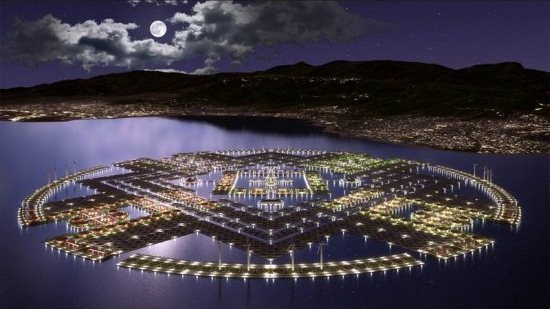
Take this concept for example: the Lillypad City. A revolutionary idea designed for dealing with the worst ravages of climate change in the coming decades, the LC is basically a floating city that is immune to things like coastal flooding and rising sea levels. According to many worst-case scenarios, these are expected to rise in excess of a meter by 2030. Coastal areas will be flooded and entire islands will disappear beneath the waves, leaving millions homeless and displaced. The Lillypad City is a possible solution: a self-contained environment built along coastal shelves and harbors, capable of supporting 50,000 people in an environment that’s ecologically friendly.

A similar concept is NOAH – or New Orleans Arcology Habitation, designed by Kevin Schopfer . An aptly named structure, NOAH is a proposed solution of what to do about coastal flooding and the ongoing problem of rebuilding New Orleans. At over 90oo square kilometers and designed to hold 40,000 residents, the pyramid shaped arcology will also boast shopping centers, 3 hotels, 1,500 timeshare units, parking for 8,000 cars, cultural spaces, public works, schools, an administrative office, and a health care facility.

All of this built upon a floating base with an open-wall structure, which will make it resistant to all forms of weather and immune to rising tides. In addition, the city will boast the latest in green technology, thus eliminate the carbon footprint of its residents. These will include internal electric transport links, secured wind turbines, solar panels and river based water turbines for electricity generation, fresh water reclamation and storage systems, grey water treatment, sky garden heating/cooling vents.

If NOAH catches on, there are even plans to build one on the banks of the Mississippi, where flooding is expected to occur, displacing people up and down the interior US.

And speaking of rebuilding, Haiti continues to suffer from the damage suffered from the 2010 Earthquake. Luckily, there are no shortages of creative ideas of what to deal with this and the likelihood of future earthquakes and flooding. Harvest City is one such idea, a city built on a series of islands capable of supporting 30,000 residents.

Based on the principles of arcology, this city is designed to be sustainable, ensuring adequate food production for all its residents while also providing employment and industry. If feasible, such a city could be indispensable to Haiti’s recovery and ensuring the survival of its people in the long run.

And then there’s the BoA, which is short for Boston Arcology. Much like many of it’s predecessors, the purpose here is to address the problem of urban sprawl in a way that does not impact the existing city, either by expanding into surrounding green space or renovating it’s aging, historic core. Built into Boston Harbor, this uniquely shaped structure will house 15,000 people and will also hold hotels, offices, retail spaces, museums, condominiums, and even a new city hall.

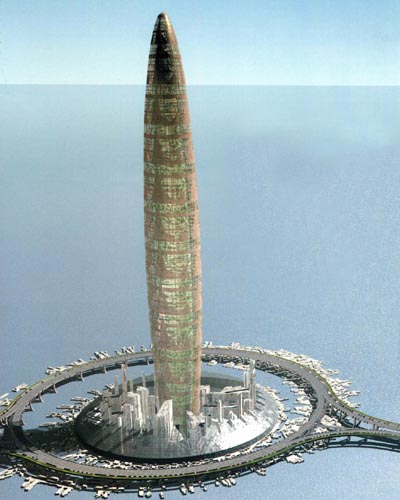
And speaking of 3-Dimensional, check out this baby: the proposed Bionic Tower! A vertical city measuring some 1,228 meters high and being able to house approximately 100,000 people, the Bionic Tower is yet another proposed solution of what to do about the twin problems of overpopulation and pollution.

And at the heart of it all lies the concept of merging bioscience with existing high-tech, meaning that the building will house extensive green-spaces, nature preserves, and its own water reclamation and bio-fuel systems.

Originally proposed at a lecture entitled “Conquest of Vertical Space in the 21st Century – International Conference on Multipurpose High-Rise Towers and Tall Buildings” in London, October, 1997, the project has since begun formal development, and garnered the interest of city planners and developers in both Shanghai and Hong Kong.

Japan is following suit. As already mentioned, the Shimizu Mega-City Pyramid is being slated for development in Tokyo Bay. However, within Tokyo’s urban center, there are also plans for the creation of a vertical city, known as Sky City 1000. Measuring 1000m high, hence the name, the supertall skyscraper would house 35,000 residents and 100,000 workers. The design consists of 14 concave dish-shaped “Space Plateaus” that are stacked one upon the other and held together by a series of vertical struts. Each plateau is designed to contain greenspaces, offices, commercial facilities, schools, theaters, residential spaces, and other modern amenities.

Back to Dubai, where arcology is just one of many inspirations for new construction projects, we have the “Dubai Ziggarut”. A proposed Carbon-Neutral habitat proposed by design firm Timelinks, this eco-pyramid is expected to house 1 million people once completed. Power is to be provided by steam, wind, solar panels and other natural resources, ensuring complete electronic self-sufficiency. The tightly knit city will also feature a super efficient public transportation system that runs both horizontally and vertically, and plans are being drawn up to utilize both public and private green spaces for agricultural opportunities.

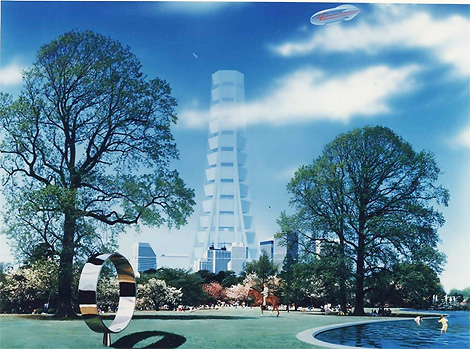
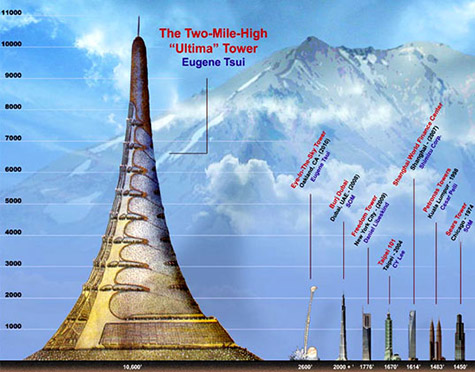
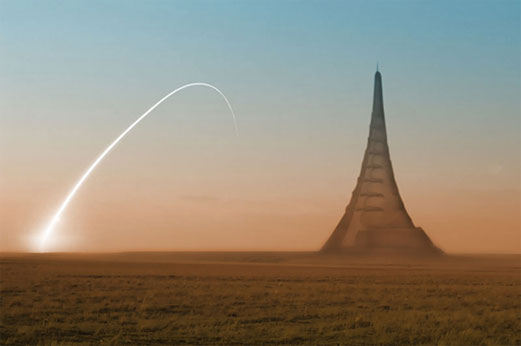
And last, but certainly not least, there is the proposed design for the “Ultima Tower”. A massive edifice, measuring some 3200 meters in height, this supertall skyscraper was first proposed in 1991 by Eugene Hui as a way of tackling the planet’s sustainability problems.  At this height, it would be the tallest building ever created by human beings, should it ever be built.

The interior of the structure would measure some 140,000,000 m2 and would be capable of supporting 1 million people. Relying on atmospheric pressure difference between the bottom and the top of the tower to create electricity and vast interior green space, the building would contain several “mini-ecosystems”.

Combined with water treatment and reclamation facilities, it would be capable of sustaining its inhabitants, perhaps without any outside help. Given the sheer cost of the structure (150 billion US dollars), it remains strictly theoretical. However, as time moves on and the problems of overpopulation and climate change continue, this tower may very well be making an appearance on the landscape!

That about does it for now. As I said before, its a rich and fertile concept! And given the pace of technological change and climate change, its becoming more likely with every passing day. Will it make a difference? Will it help us whether the storm, or help reverse the process? Hard to say. All we know is, living in sustainable communities that are self-sufficient and protected from external threats is far better than the alternative.

Poalo Solari and the Birth of Arcology

Arcology: noun (plural arcologies) an ideal integrated city contained within a massive vertical structure, allowing maximum conservation of the surrounding environment. Origin: 1969: blend of architecture and ecology.

The question of what to do about Earth’s growing population – 7 billion and counting – and the environmental impact it is having has been on the minds of city planners, environmentalists, and global leaders for qu9ite some time. Far from it being a simple matter of determining how we are going to feed new every mouth we create, there’s also the question of how to provide for their other basic needs.

In the 20th century alone, humanity grew by multiplication factor of six. Cities expanded, suburban developments went up, and inner cities were “rezoned” and redeveloped in order to make room for them. When horizontal space became an issue, vertical structure were adapted, incorporating sky scrapers and massive high-rises. In addition, cities, counties and entire nations needed to find more sources of fresh water to address their health and sanitation needs, more landfills to accommodate waste, and more green spaces to grow food. In time, it soon became clear that this increased output of human beings and their various wastes was causing irreparable harm to the planet.

By the turn of the century, the projections only became worse, thanks in large part to the ongoing industrialization of developing nations. In these parts of the world, where a full third of the human race resides, the impact of so many new power plants, urban developments, superhighways, and fossil-fuel burning cars could not be underestimated. The problem of providing space for our people and seeing to their needs in a way that is sustainable in the long term has only become more pressing as a result.

As it turns out, the answer may lie in a concept developed in the 1960’s by a man named Paolo Soleri. An architect of Italian descent who studied at the feet of architect Frank Lloyd Wright, he is credited with coining the term “arcology”, a new form of architecture that plotted the creation of three-dimensional hyperstructures that would be self-sufficient, and in some cases, self-contained. Primarily proposed as a means to combat two-dimensional urban sprawl, arcologies were also meant to economize on transportation, energy use, commerce and agriculture. All needs, which included the need to reduce waste and impact on the environment, were incorporated in his new designs. And on top of that, they would be beautiful as well as very, very big.

One of his first designs was for a city-structure named Babel (or IID as it’s officially designated). This design called for a flared cylinder of apartments sitting in a saucer-shaped base, complete with commercial, civil spaces, and public areas. The estimated population for this monster design was 550,000 people – the population of a major city – but placed in an edifice 1900 meters high and 3000 meters at its widest point.

Close-ups of the design show the immense attention to detail that Soleri’s featured in his drawings. From housing, to production centers to water treatment and waste disposal, nothing was overlooked. And just in case you’re having problems imagining the scale, he features a picture of the Empire State building for a size comparison.

And then there was Hexadredon, an incredible geometric mountain resting on three immense supports. Accommodating over 170,000 people, it measured a mere 800 meters by 800 meters (640 square km). On top of all that, it looks immensely artistic, incorporating such design features as massive pyramids, support columns, and rotundas. In reality, it looks more like an ancient temple than a three-dimensional city.

His many other concepts involved cities adrift on water, built into canyons, or on the side of cliffs. As far as Soleri was concerned, nothing was off limits. Any and all geographic features and landscapes, including the ocean itself, could be built into human habitats. Though it remained somewhat speculative for its time, Soleri’s ideas formed the basis for a great deal of speculative writing and urban planning.

For instance, in Japan, urban planners have proposed a future city development to deal with urban sprawl in Tokyo – known as the Shimizu Mega-City Pyramid. As it stands, much of Tokyo Harbor is artificial, composed of fill in order to accommodate Japan’s growing population and industrial centers. This further expansion calls for the creation of a massive pyramid measuring 730 meters high, 8 square kilometers at the base, and capable of housing 750,000 people. All told, it would be roughly 14 times the size of the pyramid of Giza.

In addition, there is the proposed building project in Moscow known as “Crystal Island”. Measuring in at a whopping 2500 square kilometers at its base and 450 meters high, it will be the single largest structure on Earth, if and when it is completed. Shaped like a massive tent, the superstructure of the proposed design acts as a sort of second skin to the main building, creating a thermal buffer and shielding the interior from Moscow’s harsh weather.

In addition, this second skin will adjust with the seasons and sealed in winter to minimise heat loss, while opened again in summer to naturally cool the interior. Power would also be provided by built-in wind turbines and solar panel, as well as a series of renewable energy solutions. On top of all that, the design incorporates an existing park, which provides a range of activities, including cross-country skiing and skating. Construction was officially postponed in 2009 due to the economic crisis, but is expected to resume in the coming years.

Last, but not least, there is the planned community of Masdar City, which I wrote about in a previous article. Though not technically an arcology in the sense of a three-dimensional colossal environment, the design nevertheless incorporates all other aspects of Soleri’s concept. These include renewable energy sources, sustainable resource management, mass-transit, recycled water, and a range of other green technologies.

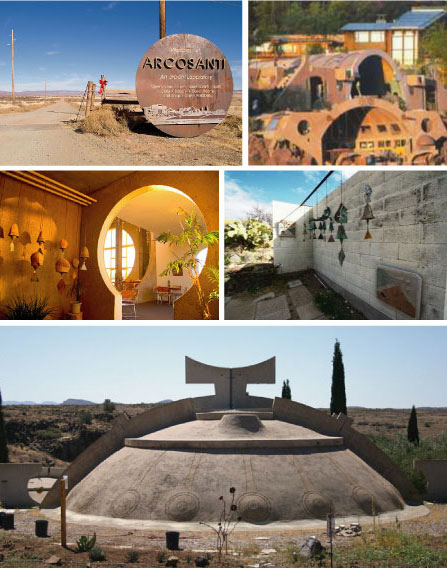
Today, the planned city of Arcosanti, which Soleri himself began construction on in 1970, remains an unfinished testament to his work and his genius. Located in central Arizona, just 110 km north of Phoenix, this work-in-progress incorporates Soleri’s unusual design features and, though uncompleted, remains a testament to his vision.

Check out this video from Arcosanti website, which featured Solari’s design for the mega-city Nudging Space:

The Future Of Education

Hi all, and welcome to the third and final installment in the “Envisioning Technology” series. Today, it’s the “Future of Education Technology” that’s up for all to see. Much like their speculative work on Future Tech and the Future of Medicine, they present us here with an infographic that shows the interrelated fields of educational technology and how growth in one will inevitable lead to change in others.

On the one hand, we see a gradual transition from the Classroom (i.e. traditional educational environment) to the Studio environment, where a peer and group dynamic becomes the focus, rather than classic teacher-student transmission. In the final environment, learning becomes Virtual, divorced from any specific geographical context – i.e. it happens wherever you are, not just in a classroom or academic institution.

Also, through an incorporation of various education and education-related technologies, six steps are discerned within this process. As usual the entire process is traced from the present day to 2040, with many of the necessary technologies already in existence or in the process of development.

As a teacher, I was rather fascinated to see this, as it illustrates much of what was being espoused when I was still in teacher’s college. Back then, the concept of the post-modernist classroom was all the rage, even though there were many who insisted that this movement had passed.

Intrinsic to the concept was the deconstructing the traditional learning paradigm and even the classroom environment. Openness was the new rule, individuation the new philosophy and building on a student’s existing knowledge and experience, rather than simply handing them the curriculum and evaluated their assimilation thereof.

Naturally, many of us felt the same about all the concepts and ideas that were being thrown at us, in that they seemed highly idiosyncratic and theoretical. Missing from just about all the articles, studies and lectures we heard on the subject was mention of how this was to be done. Lectures on applied technology and new methods, on the other hand, seemed much more effective. Whereas the theory seemed to be commenting on trends that were happening, or still needed to happen, these lectures seemed to be showing us how.

Kind of makes you think… and in a way, I’m reminded of what men like George Orwell said. In 1984 (Goldstein’s Manifesto, to be specific), he claimed that the advent of modern industry and education had removed the basis of class distinction and elitism. By the 20th century, when totalitarian philosophies emerged, humanity was closer to the state of true equality that Marx predicted than ever before. Granted, that road has been fraught with bumps and attempts at subversion, but the general trend seems pretty clear.

Perhaps we’re seeing something of the same thing here with the emergence of IT and what people like Foucault, Derrida and Habermas predicted. The breakdown of singular standards, the opening of discourse, the plurality of perspective and opinions. Perhaps they weren’t just speaking off the cuff or stuck in an esoteric bubble. Maybe they were just picking up on trends which were yet to come to true fruition.

Makes me think, at any rate. But then again, that’s the point isn’t it?

Envisioning The Future of Health Technology

My thanks, yet again, to Futurist Foresight for providing the link to this fascinating infographic, which is the work of the good people at Envisioning Technology. People may remember this website from their work on “Envisioning Emerging Technology”, an infographic from a previous article which addressed the likelihood of interrelated technological developments in the coming decades. As a trend forecasting studio, compiling information and predictions into reports and tables in pretty much what these guys do. What a cool job!

In any case, here we have a table representing the future of health technology, as predicted by ET. Diving their findings into the fields of Augmentation, Biogerontology, Diagnostics, Telemedicine, Treatments, and Regeneration respectively, they attempt to show how small advancement in the near future will branch outwards to more radical ones in the not-too-distant future. The rough dates correspond to their previous graphic, starting with modern day research and culminating in 2040.

And of course, the infographic also shows how developments in all these fields over time will be interrelated, corresponding to different sub fields and becoming part of the ever-expanding field of advanced medicine. These sub fields include:

  • 3D Printing
  • Big Data
  • Cryonics
  • Life Extension
  • mHealth (health services supported by mobile devices)
  • Remote Virtual Presence
  • Neuroprosthetics
  • Sensors
  • Sensory Augmentation
  • Synthetic and Artificial Organs

Some inventions that are predicted include the Tricorder, 3D printed organs, artificial limbs, artificial eyes, cryogenic freezing, gene therapy, AI therapists, robotic nurses, robot surgery, implanted sensors, and exoskeletons. Wow, tricorders, really? In truth, I am often alarmed at what will be possible in the near future, but knowing that advancements are around the corner that could make life a lot healthier and happier for so many people gives me hope. Until next time!