Powered by the Sun: New Film Increases Solar Efficiency

sun_magneticfieldWith every passing year, solar power is getting cheaper and more efficient. And with every development that brings costs down and increases electrical yields, the day that it comes to replace fossil fuels and coal as the primary means of meeting our power needs gets that much closer. And with this latest development, this changeover may be coming sooner than expected.

It comes from North Carolina State University where researchers have developed a new system for strengthening the connections between stacked solar cells which could allow cells to operate at concentrations of up to 70,000 suns while minimizing wasted energy. This is especially good news seeing as how stacked cells are already an improvement over conventional solar cells.solar_panelStacked solar cells are made up of several cells that are placed one on top of the other, an arrangement that allows up to 45 percent of the absorbed solar energy to be converted into electricity. This is a significant improvement over single-junction solar cells which have a theoretical maximum conversion rate of 33.7 percent, and is made possible by the fact a stack formation prevents heat from being lost between panels.

The team at NCSU discovered that by inserting a very thin film layer of gallium arsenide into the connecting junction of stacked cells, they can eliminate energy loss ever further. The idea was inspired by the fact that cells typically start to break down at the connection junctions once they reach concentrations of 700 suns. With the addition of gallium arsenide in these spots, the connections become stronger, and all without sacrificing absorption.

solar_cell1Dr. Salah Bedair, a professor of electrical engineering at NCSU and senior author of the paper on this research:

Now we have created a connecting junction that loses almost no voltage, even when the stacked solar cell is exposed to 70,000 suns of solar energy. And that is more than sufficient for practical purposes, since concentrating lenses are unlikely to create more than 4,000 or 5,000 suns worth of energy.

At the moment, this technology is geared towards large scale solar power operations. Stacked cells are usually used in conjunction with optical concentration devices, such as Fresnel lenses, and mounted on a dual-axis solar trackers that keep the cell facing the Sun’s rays during daylight. So basically, we’re not likely to be seeing this technology available for local use. But it would be surprising if domestic consumers weren’t likely to benefit from it all the same.

solar_cell_galliumAs Dr. Bedair explained, the adoption of the technology will mean lower costs for the energy industry, and smaller arrays which will mean less land that needs to be set aside for use:

This [system] should reduce overall costs for the energy industry because, rather than creating large, expensive solar cells, you can use much smaller cells that produce just as much electricity by absorbing intensified solar energy from concentrating lenses. And concentrating lenses are relatively inexpensive.

What’s more, gallium arsenide is not exactly cheap to produce at the time. However, with constant refinements being made in industrial production processes, we can expect the cost of these to come down as well. As with everything else with solar power and renewable energy, its only a matter of time…

Source: gizmag.com

The Future is Here: Self-Healing Polymer

t1000I’ve heard of biomimetics – machinery and synthetics that can imitate organic materials – but this really takes the cake! In an effort to pioneer components and devices that would posses the regenerative powers of skin, a Spanish researcher Ibon Odriozola – who works for the CIDETEC Centre for Electrochemical Technologies in Spain – has created a polymer that could lead to a future where repairing machinery is as easy as suturing an open wound.

Comprised of a poly (urea-urethane) elastomeric matrix, the material is basically a network of complex molecular interactions that will spontaneously cross-link to “heal” most any break. In this context, the word “spontaneous” means that the material needs no outside intervention to begin its healing process, no catalyst or extra reactant.

healing-polymer-headerTo experiment with the material, Odriozola cut a sample in half with a razor blade at room temperature. And in just two hours, the cut healed itself with 97% efficiency. The reaction, called a metathesis reaction, has led Odriozola to dub the material his “Terminator” polymer, in reference to you-know-who (pictured above). Though the transition process takes a little longer, and involves polymers instead of metal, the basic principle is the same.

Unlike other self-healing materials, this one requires no catalyst and no layering. In addition to being very impressive to behold, this technology can extend the life spans of plastics that are under regular stress.  The group’s main goal now is to make a harder version, perhaps one that could be formed into such parts itself. As it exists today, the polymer is squishy and somewhat soft.

???????????In addition, a good self-healing material like this is a boon for ongoing efforts to find a viable material for artificial skin. Self-healing technology could also open the door to growth materials, as new units of the matrix could be incorporated as the material stretches and tears on the microscopic level. This would be especially useful when it comes to artificial skin, since it could grow over time and remove the need for replacement.

And if the healing mechanism proves strong enough, it could even be used as an adhesive or a sealant in other materials and even electronics. Just think of it! Everything from windows, to personal devices, to joints that are in need of padding. A simple injection of this type of material, and the breaks and aches go away. And given the progress being made with androids and life-like robots, its use as a source for artificial skin could go a long way to making them anthropomorphic.

And as usual, there’s a cool demonstration video. Enjoy!


Source: extremetech.com

The Future is Here: The Pilotless Fighter Jet

QF-16sGoogle may be developing driverless robot cars, but Boeing already has a small fleet a fighter jets that do not require a human pilot. These retired and refurbished QF-16s were turned into special drone craft for use by the US Air Force. But before anyone gets nervous, it should be noted that these specialized drones are strictly flying targets that are meant to assist with aerial combat training.

The test flight of one of the QF-16s took place last week and included an auto-take off and landing as well as an array of aerial maneuvers. The highlights of this test flight were a barrel roll while pulling 7 G’s, climbing to an altitude of 12,000 meters (40,000 feet) and accelerating to a speed of Mach 1.47. All the while, the plane was controlled by two Air Force test pilots on the ground.

drone-strikeIncorporating the latest in unmanned controls, these fighter jets will act as more realistic targets than the older generation of QF-4 unmanned aircraft – which are refurbished F-4 Phantoms. Whereas these Vietnam-era fighter craft are incapable of keeping up with modern designs, F-16s are capable of supersonic speeds and 9-G performance, which should help hone pilots for real-world combat missions.

While this is in many ways is just an upgrade on existing methods, it also represents a big step forward in terms of automation and drone warfare. With greater refinements in the technology and a more effective range, it may be possible to remotely pilot any and all combat aircraft in the not-too-distant future. Unmanned Aerial Vehicles (UAVs) may come to mean all aircraft, and not just Reapers and Predators (pictured above).

And of course, Boeing has produced a video of the QF-16s test flight. Enjoy!


Source: news.cnet.com

More News in Quantum Computing!

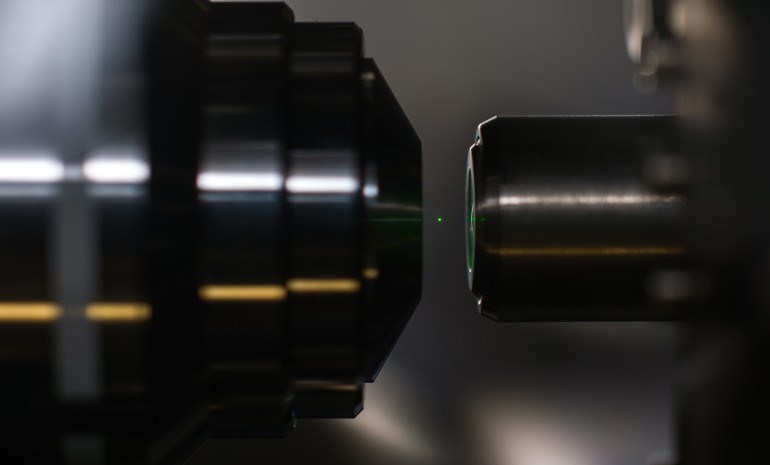
quantum-computers-The-Next-GenerationRecently, a team of researchers at the University of Rochester conducted an experiment where they managed to suspend a nano-sized diamond in free space with a laser. The purpose of the experiment was to measure the amount of light emitted from the diamond, but had the added bonus of demonstrating applications that could be useful in the field of quantum computing.

For those unfamiliar with the concept, quantum computing differs from conventional computing since it does not rely on sending information via a series of particles (electrons) through one-way channels. Instead, quantum computing relies on the process of beaming the states of particles (i.e. a photons quantum properties) from one location to the next.

nanodiamondSince this process occurs faster than the speed of light (as no movement takes place) and qubits (quantum bits) have the ability to be in more than one state simultaneously, computations done using this model would be exponentially faster. But despite many advancements made in recent years, the field remains largely theoretical and elusive.

To conduct their experiment, the researchers focused a laser into a 25 cm (10 inch) chamber and then sprayed an aerosol containing dissolved nanodiamonds inside. These nanodiamonds were attracted to the laser in a technique known as “laser trapping”, until a single particle was isolated and made to levitate. Once the tiny gem was levitating in free space, the researchers used another laser to make defects within the diamond emit light at given frequencies.

nanodiamond1This process is known as photoluminescence – a form light emission that is caused by defects in the tiny diamond that allows for the absorptions of photons. When the system is excited, it changes the spin; and when the it relaxes after the change, other photons are emitted. This occurs because nitrogen atoms replace some of the carbon atoms in the diamond. Once the nitrogen is nested in the diamond’s atomic structure, it is possible to excite electrons with a laser.

According to the researchers, this photoluminescence process has the potential to excite the system and cause what is known as Bohr spin quantum jumps, which are changes in spin configuration of the internal defect. This occurs because nitrogen atoms replace some of the carbon atoms in the diamond. Once the nitrogen is nested in the diamond’s atomic structure, it is possible to excite electrons with a laser.

????????????????????In addition, the potential also exists to turn the nanodiamond into an optomechanical resonator. According to Nick Vamivakas, an assistant professor of optics at the University of Rochester, these are structures in which the vibrations of the system can be controlled by light. Optomechanical resonators have the potential to be used as incredibly precise sensors, which could lead to uses in microchips.

In addition, these resonator systems have the potential to create Schrödinger Cat states, which are typically not found in microscopic objects. As anyone who’ familiar with Futurama or Big Bang Theory may recall, this refers to the thought experiment where a cat is inside a box with poison, and until someone opens the box and determines its whereabouts, the cat could be considered simultaneously both alive and dead.

^Being able to stimulate matter so that it can exist in more than one state at any given time is not only revolutionary, it is a clear step towards the creation of machines that exploit this principle to perform computations. According to Nick Vamivakas, an assistant professor of optics at the University of Rochester, explained:

Cat or cat-like states contradict our everyday experiences since we do not see common things in quantum states. The question is: where is this boundary between microscopic and macroscopic? By generating quantum states of larger and larger objects, we can hone in on a boundary … if there is one.

Naturally, the Rochester team is still a long way from achieving their big breakthrough, and Vamivakas himself admits that he does not know how far away a quantum computing truly is. In terms of this latest experiment, the team still needs to cool the crystal better, which they are hoping can be achieved with a few technical improvements. And then they hope to find a better way of running the experiment than spraying nanodiamond dust into a tube.

In the meantime, check out this video of the experiment. It promises to be “illuminating” (sorry!):


Source:
gizmag.com

The Future is Here: The Insight Neuroheadset

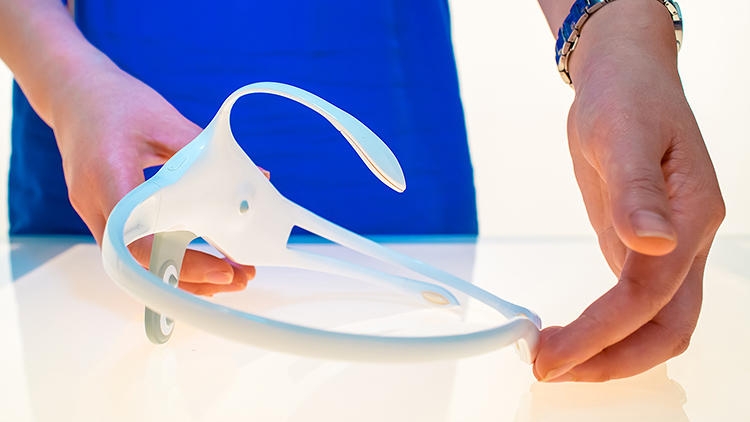
Emotiv_insightPortable EEG devices have come a long way in recent years. From their humble beginnings as large, wire-studded contraptions that cost upwards of $10,000, they have now reached the point where they are small, portable, and affordable. What’s more, they are capable of not only reading brainwaves and interpreting brain activity, but turning that activity into real-time commands and controls.

Once such device is the Emotiv Insight, a neuroheadset that is being created with the help of a Kickstarter campaign and is now available for preorder. Designed by the same company that produced the EPOC, an earlier brain-computer interface (BCI) that was released in 2010, the Insight offers many improvements. Unlike its bulky predecessor, the new model is sleeker, lighter, uses five sensors instead of the EPOC’s fourteen and can be linked to your smartphone.

Emotiv_insight_EPOCIn addition, the Insight uses a new type of hydrophilic polymer sensor that absorbs moisture from the environment. Whereas the EPOC’s sensors required that the user first apply saline solution to their scalp, no extra applied moisture is necessary with this latest model. This is a boon for people who plan on using it repeatedly and don’t want to moisten their head with goo every time to do it.

The purpose behind the Insight and EPOC headsets is quite simple. According to Tan Le, the founder of Emotiv, the company’s long term aim is to take a clinical system (the EEG) from the lab into the real world and to democratize brain research. As already noted, older EEG machines were prohibitively expensive for smaller labs and amateur scientists and made it difficult to conduct brain research. Le and his colleagues hope to change that.

emotiv_insight1And it seems that they are destined to get their way. Coupled with similar devices from companies like Neurosky, the stage seems set for an age when brain monitoring and brain-computer interface research is something that is truly affordable – costing just a few hundred dollars instead of $10,000 – and allowing independent labs and skunkworks to contribute their own ideas and research to the fore.

As of September 16th, when the Kickstarter campaign officially closed, Emotiv surpassed its $1 million goal and raised a total of $1,643,117 for their device. Because of this, the company plans to upgrade the headset with a six-axis intertial sensor – to keep track of the user’s head movements, gait, tremor, gestures, etc. – a microSD card reader for added security, and a 3-axis magnetometer (i.e. a compass).

woman-robotic-arm_650x366In some cases, these new brain-to computer interfaces are making it possible for people with disabilities or debilitating illnesses to control robots and prosthetics that assist them with their activities, rehab therapy, or restore mobility. On a larger front, they are also being adapted for commercial use – gaming and interfacing with personal computers and devices – as well as potential medical science applications such as neurotherapy, neuromonitoring, and neurofeedback.

Much like a fitness tracker, these devices could let us know how we are sleeping, monitor our emotional state over time, and make recommendations based on comparative analyses. So in addition to their being a viable growth market in aiding people with disabilities, there is also the very real possibility that neuroheadsets will give people a new and exciting way to interface with their machinery and keep “mental records”.

Passwords are likely to replace passthoughts, people will be able to identify themselves with brain-activity records, and remote control will take on a whole new meaning! In addition, mental records could become part of our regular medical records and could even be called upon to be used as evidence when trying to demonstrate mental fitness or insanity at trials. Dick Wolf, call me already! I’m practically giving these ideas away!

And be sure to enjoy this video from Emotiv’s Kickstarter site:


Sources: fastcoexist.com, kickstarter.com

The Future is Here: Radiowave-Powered Devices

radio-waves-airwaves-spectrumIt sounds like something out of science fiction, using existing existing internet electromagnetic signals to power our devices. But given the concerns surrounding ewaste and toxic materials, anything that could make an impact by eliminating batteries is a welcome idea. And if you live in an urban environment, chances are you’re already cloaked in TV and radio waves invisible that are invisible to the naked eye.

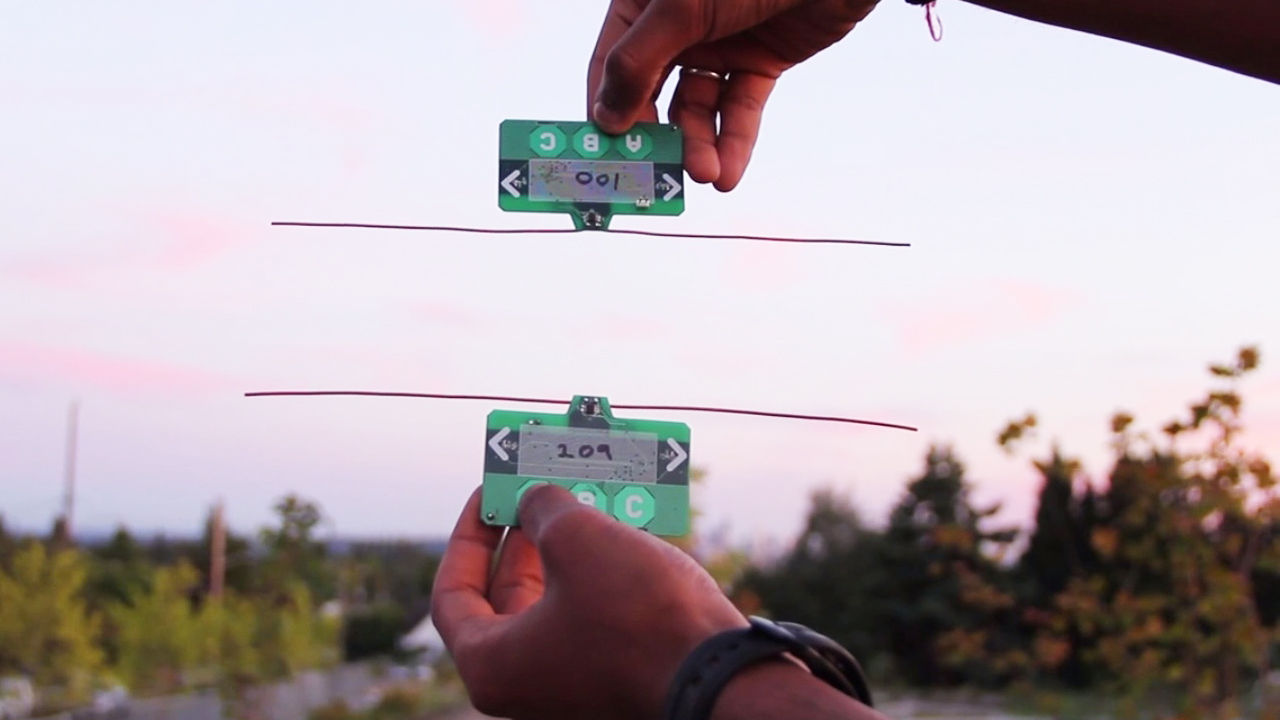
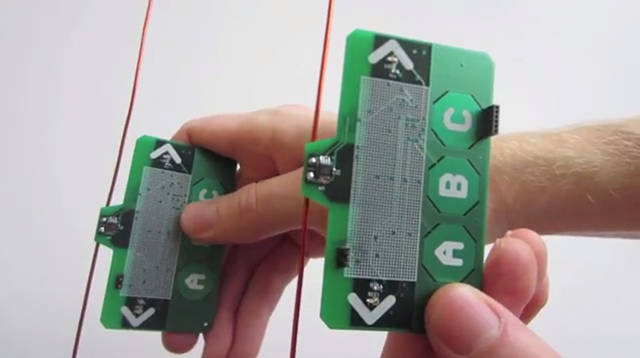
And that’s precisely what researchers at the University of Washington have managed to do. Nine months ago,  Joshua Smith (an associate professor of electrical engineer) and Shyam Gollakota (an assistant professor of computer science and engineering) started investigating how one might harvest energy from TV signals to communicate, and eventually designed two card-like devices that can swap data without using batteries.

wireless-device1Running on what the researchers coined “ambient backscatter,” the device works by capturing existing energy and reflecting it, like a transistor. Currently, our communications and computing devices require a lot of power, even by battery, in order to function. But as Gollakota explains, all of these objects are already creating energy that could be harnessed:

Every object around you is reflecting signals. Imagine you have a desk that is wooden, and it’s reflecting signals, but if you actually make [the desk] iron, it’s going to reflect a much larger amount of energy. We’re trying to replicate that on an analog device.

The new technique is still in its infancy, but shows great promise. Their device transfers data at a rate of one kilobit per second and can only transmit at distances under 2.5 feet. Still, it has exciting implications, they say, for the “Internet of things.” The immediate use for this technology, everything from smart phones to tablets and MP3 players, is certainly impressive.

wireless-deviceBut on their website, the team provides some added examples of applications that they can foresee taking advantage of this technology. Basically, they foresee an age when backscatter devices can be implanted in just about anything ranging from car keys and appliances to structural materials and buildings, allowing people to find them if they get lost, or to be alerting people that there’s some kind of irregularity.

As Smith claimed on the team’s website:

I think the Internet of things looks like many objects that kind of have an identity and state–they can talk to each other. Ultimately, I think people want to view this information… That’s part of the vision. There will be information about objects in the physical world that we can access.

The energy harvester they used for the paper, which they presented at the Association for Computing Machinery’s Special Interest Group on Data Communication in Hong Kong, requires 100 microwatts to turn on, but the team says it has a design that can run on as low as 15 microwatts. Meanwhile, the technique is already capable of communicating location, identity, and sensor data, and is sure to increase in range as efficiency improves.

vortex-radio-waves-348x196The University of Washington presentation took home “best paper” in Hong Kong, and researchers say they’re excited to start exploring commercial applications. “We’ve had emails from different places–sewer systems, people who have been constrained by the fact that you need to recharge things,” Gollakota says. “Our goal for next six months is to increase the data rate it can achieve.”

Combined with Apple’s development of wireless recharging, this latest piece of technology could be ushering in an age of  wireless and remotely powered devices. Everything from smartphones, tablets, implants, and even household appliances could all be running on the radio waves that are already permeating our world. All that ambient radiation we secretly worry is increasing our risks of cancer would finally be put to good use!

And in the meantime, enjoy this video of the UofW’s backscatter device in action:

The Future is Here: World’s First “Invisible” Building

tower-infinity-seoul-south-koreaAll over the globe, governments and design firms are looking to create living examples of arcologies. Merging next-generation architectural with ecological sustainability, this futuristic concept is now becoming a reality, with projects ranging from Masdar Eco City in Dubai, to Crystal Island in Moscow, and China’s Shanghai Tower.

Not to be outdone, South Korea has proposed an equally audacious building plan that calls for the construction of a 450 meters tower that uses the latest in optical technology to render itself virtually invisible. Known as Tower Infinity, or City Tower, the building will be located in Cheongna (near the Incheon Airport just outside of Seoul) and will use the same technology that military contractors do to create “adaptive camouflage”.

F:tower infinityemailout120612 to gdskti-INVISIBIL-RESOLUTIThis involves fitting the building with a high-tech LED facade that integrates projectors and 18 strategically placed optical cameras. These cams will snap real-time pictures of the area directly behind the building, digitally stitch them into a panorama, and project them back onto the building’s reflective surface. This will create the illusion that viewers are looking straight through the building, making it appear to blend into the skyline at certain times of day.

According to GDS – the design firm behind Tower Infinity’s creation – the purpose of the building is largely symbolic. According to their website:

The tower subtly demonstrates Korea’s rising position in the world by establishing its powerful presence through diminishing its presence. Korea will have the unique position of having the ‘best’ tower by having an ‘anti-tower.

tower_infinityAnd while no word has been given yet on the relationship between the structure’s invisibility and planes from the nearby airport, it seems logical to stress that the building’s “invisibility cloak” is not perfect, nor is it meant to be. While it is able to generate an image that allows it to blend into the natural environment more readily, the building still leaves a translucent outline when at full power.

GDS also indicated that the purposes of the building go beyond the symbolic. In addition to showcases Korea’s presence in the global economy, the technology can be used for advertising and entertainment. As the company said in a statement:

This same technology also allows the tower to become a 450-meter-tall billboard screen and urban focal point for all arriving at Incheon,

The tower will house a 4D theater, a water park, landscaped gardens, and the third-highest observation deck in the world. Basically, it is intended as a tourist mecha in addition to everything else, which makes sense given its strategic location close to a major airport.

Source: cnet.news.com, gdsarchitects.com

World’s Thinnest Wireless Touch Surface

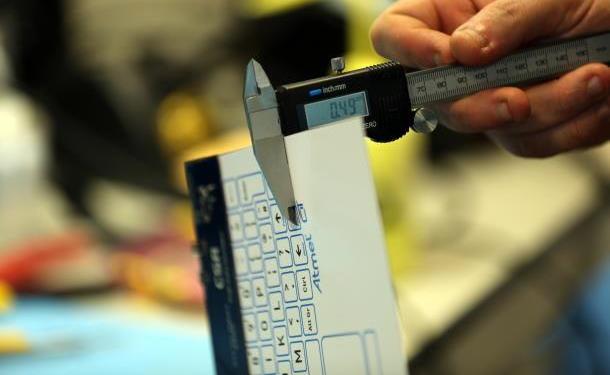
csr_ultra_thin_keyboard.png_610x378It was inevitable really, what with the ongoing trend of making electronics smaller, thinner, and more ergonomic. Yes, it seems that this latest prototype keyboard/touch surface is not only incredibly thin but virtually weightless and very energy efficient. Built by CSR using Bluetooth Smart technology, this wireless keyboard does not rely on batteries and is less than 0.5 mm thick.

This makes the prototype the thinnest touch surface and computer interface in the world to date. Relying on a combination of microcircuits, it was also produced using an additive printing technique from Conductive Inkjet Technology and Atmel touch sensors. By relying on 3D printing technique, the technology can be scaled for different sizes and purposes.

csr_ultra_thin_keyboard_thickness_610x407The obvious use for the technology development is as an extremely thin and lightweight keyboard, but it could also be designed as an extended touch surface that can respond to swipes, pinches, or stylus input. With additional micro-circuitry, it could even be adapted to respond to bending and flexing, like many prototype surfaces that are currently in development for smartphones and tablets.

CSR is promoting the prototype as “the world’s thinnest wireless touch interface.” Though it’s not quite paper-thin, it’s getting awfully close. The keyboard was unveiled at this year’s International Fiscal Association, a consumer electronics show that was held in Berlin from the 6th to the 11th, alongside many new and exciting technologies and devices (more on that later).

Naturally, CSR intends to work with developers to bring the technology to market in the near future.

Source: news.cnet.com

The Future of Electronics: Touch Taiwan 2013!

touch-taiwan_amoledEvery year, companies from all over the world that are dedicated to creating touch surfaces, displays, and personal digital devices convene on Taipei Taiwan for the International Touch Panel and Optical Film Exhibition – otherwise known as Touch Taiwan. Running from August 28th to 30th, visitors were treated to over 1000 exhibition booths that showcased the latest from developers in touch panels, OLED, flexible displays and optical films.

One such company is AUO, a display company based in Taiwan, which is working on flexible, ultra-thin technology. Much like the AMOLED (Active-Matrix Organic Light Emitting Diode) display Nokia showcased at CES in Las Vegas last year, the AUO exhibit showed a series of screens that could be bent, but would still broadcast a crystal clear imagine with 512 pixels per inch.

This is in keeping with the apparent “pixel race” that is on, where developers are trying to outdo each other in sheer pixel density. 512 seems to be the current high, though that can be expecting to change soon! And though the AUO displays seen here are not yet been available on a specific device, it is clear that future devices will look something like this:

AUO Ultra-Thin Display Tech:


Another big hit at the show were display glasses. Clearly, the consumer electronics industry is now in a race to create the next generation of Google Glass, looking for ways to improve on the existing technology by making it smaller, cheaper, and the images sharper. That was the rationale behind CPT’s display booth, where a series of display glasses were shown that relied on a “smartbox” displays rather than display lenses.

As you can see, the smartbox resides in the upper right corner of the glasses, which a person can consult whenever they are out and about. Simply look to your upper right to get a desktop image or browse, and look away to see the rest of the world. The goal here is clearly utilitarian, with CPT hoping to create something that could beam images into your eye without fear of distraction.

What’s impressive about this is the fact that CPT was able to use AMOLED technology to create detailed, multi-colored images with 200 ppi in a smartbox display that was only half an inch big. The technology is ready to ship, so expect to see a wider range of display glasses at your electronics store soon!

CPT AMOLED Smart Glass:


Aside from AMOLED technology are the equally important developments being made in Micro-Light Emitting Diode (or MLED) technology, which offers the same benefits as LEDs but in a much smaller package which relies on significantly less power. The company leading the charge here is ITRI, a research division of the Taiwanese government that also creates consumer electronics.

So far, the display is monochromatic, as you can see from the video below. However, ITRI expects to have a full-color version ready towards the end of 2013. Have a gander:

ITRI MicroLED Display:


And then there was Corning Glass, which once again made big waves with the display of their “Gorilla Glass”, a next-generation type of display glass developed with Microsoft. As their promotional video from last year demonstrated (“A Day with Glass”), the company hopes that this new type of display surface will one day be integrated into all walks of life because of its sheer versatility.

And aside from the usual benefit being offered – a thin surface that is sensitive to touch commanders and offers high-definition imagery – Gorilla Glass (as its name suggests) is also highly resistant to damage. Whereas other makers are focusing on small devices that can withstand damage by being flexible, Corning and Microsoft are thinking big and resilient. Check out the video:

Gorilla Glass Demo:


If it were not already clear from all the new devices making it to the street in recent years, these exhibitions certainly confirm that the future is getting increasingly digitized, personalized, ergonomic, and invasive! And the devices powering this future, allowing us to network and access untold amounts of information at any moment in our day, are looking more and more like something out of a William Gibson or Charles Stross novel!

If I weren’t such a sci-fi geek, I might be worried!

Sources: mobilegeeks.com, displaytawain.com, chaochao.com.tw

The Future is Here: The Flying Car!

spinner-blade-runner1Its finally here, after decades of promises and failures to deliver. And yes, this vehicle is probably not quite what you’re were envisioning when you heard the words “flying car”. But the Terrafugia Transition still fits the bill. Making its first appearance at the EAA AirVenture in Oshkosh, Wisconsin over the summer, the Terrafugia team conducted a demonstration that showcased what the vehicle can do.

This included two 20 minute test flights as well a demonstration of how the Transition’s wings can be folded up, which allows the Transition to roll around in one configuration and fly in another. Classed as a light sports plane by the United States Federal Aviation Administration (FAA), this ability also makes the Transition a road-legal vehicle.

terrafugia-public-1Technically, it isn’t a flying car so much as a roadable airplane capable of carrying a pilot/driver and one passenger. But that’s what makes the concept so workable. With a plane that is capable of making its way through that “last mile” between a small airport and their destination, it eliminates the need for haulers and motor scooters to move planes into their hangar bays.

The plane is the result of seven years of development, and began flight testing just last year. Some modifications have been since to improve handling. And with some additional development, the Terrafugia could become the prototype for a Spinner-type flying vehicle and the mainstay of urban transport in the not-too-distant future.

terrafugia-publicIn a public statement, the company behind the vehicle said:

Terrafugia made a dream come true at this year’s EAA AirVenture Oshkosh. The Transition performed its first public demonstrations for the aviation community during the show. Flown and driven by Phil Meteer, our Chief Test Pilot and Flight Test Coordinator, the Transition showed the crowd what it’s capable of on Monday (July 29) afternoon and Wednesday (July 31) evening. The 20-minute demonstrations included flight maneuvers over show center, converting from airplane to car, and driving along the flight line.

And of course, there’s a video of the flight demonstration. Check it out:


Source:
gizmag.com