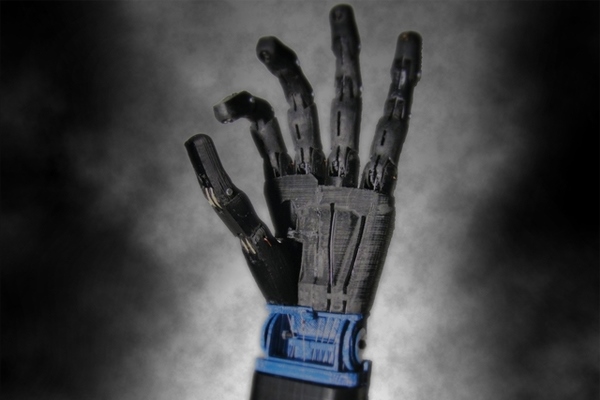
The Future is Here: The 3D-printed Robotic Hand

robotic_handThe field of robotic has been advancing by leaps and bounds in recent years, especially where robotic limbs and prosthetics are concerned. But until recently, cost has remained an issue. With top of the line bionic limbs – like the BeBionic which costs up to $35,000 = most amputees simply can’t afford them. Little surprise then why there are many efforts to create robotic limbs that are both cheaper and more accessible.

Last month, DARPA announced the creation of a robotic hand that could perform complex tasks, and which was made using cheap electronic components. And then there’s Robohand, the online group that creates 3D-printed robotic hands for children with a free, open-source 3D-printing pattern available on Thingiverse for people who wish to make their own.

robotic_hand2

And now, Christopher Chappell of the U.K. wants to do take things a step further with his “Anthromod”. Using Kickstarter, a crowdfunding website, he has started a campaign for a 3D-printed robotic hand that is a little bit more sophisticated than the Robohand, but would cost around $450. In short, the proposed design offers the ambulatory ability of a bionic limb, but at a cost that is far more affordable.

To break it down, the arm uses a tendon system of elastic bands with the movement being provided by five Hobby Servos, which are in turn built out of off-the-shelf electronics. Wearers will be able to move all four of the units fingers, thumb and wrist, once the sensors have been calibrated, and the software to control the hand and EEG sensors is available online for free. This all adds up to a unit that is not only more affordable, but easy to assemble, repair and maintain.
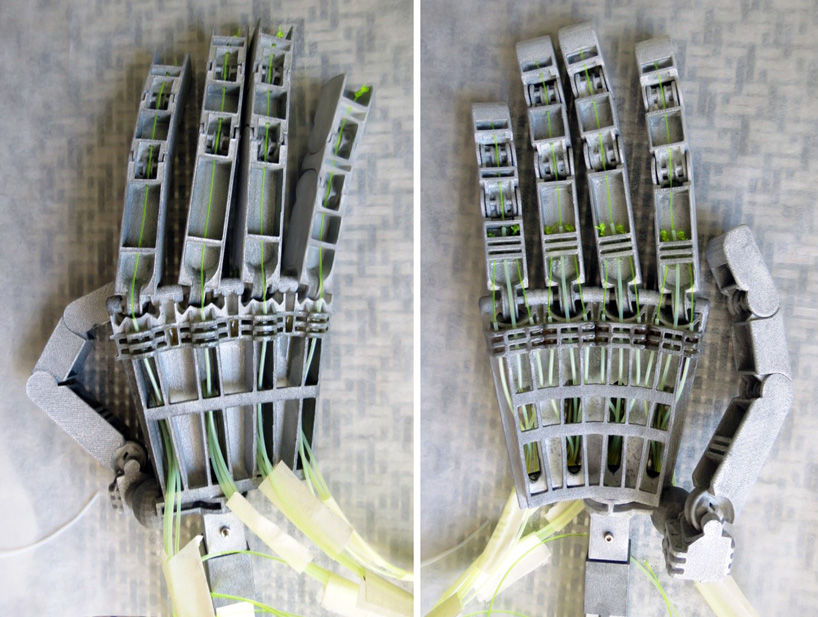
robotic_hand3On their Kickstarter page, Chappell describes his campaign and their long-term goals:

Our Kickstarter campaign is to develop a humanoid robotic hand and arm that is of far lower cost than any other available. We believe that this will open up robotics to a far wider market of makers and researchers than has ever been possible. This should then trigger an explosion of creativity in the areas of robotics, telepresence and ultimately prosthetics.

Much like the InMoov, a 3D printed android with limited function, the Anthromod represents an age of robotics that are accessible to the public. And with time, its not hard to imagine an entire line of enhancements and robotics, such as household servants and cybernetic components, that could be manufactured in-house, provided you’re willing to shell out the money for a industrial-sized 3D printer!

To check out the Anthromod website, click here. And be sure to check out the video below of their hand in action.

Note: As of this article’s writing, Chappell and his colleagues passed their goal of £10,000 and reached a whopping total of £12,086 (18,808 dollars US). Congratulations folks!


Sources:
news.cnet.com, kickstarter.com


New Movie Trailer: Ender’s Game

enders_game3

As promised, it’s here! After months of making fans wait, and producing a teaser for the trailer itself, the studio that is adapting Orson Scott Card’s seminal novel has finally released the first full-length trailer. In this minute and a half preview, we get a look at Ender (played by Asa Butterfield), Colonel Graff (Harrison Ford), Mazer Rackham (Ben Kingsley), as well an inside look at the Battle School, and an eyeful of action sequences.

Having read this book many years back and seeing what the big deal was, I’m pretty stoked about it making it to the big screen. I expect a faithful adaptation that will be awesome to behold, but I don’t want to jinx it. So don’t quote me on that. Official release date is November 1st, 2013, so we got a bit of a wait ahead. In the meantime, enjoy the trailer!

Judgement Day Update: The Tool-Using Robot Hand

darparobot

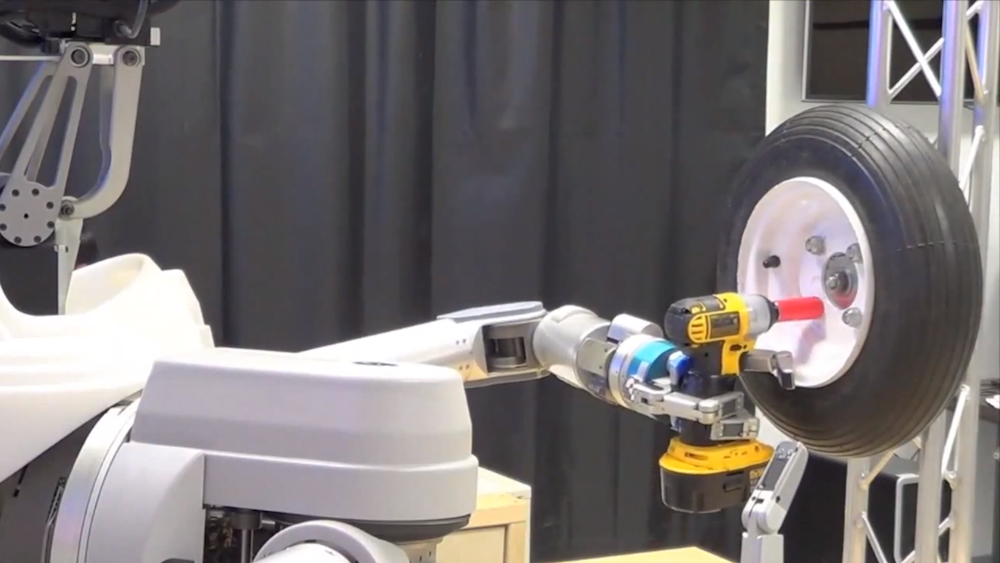
As if robotics weren’t advancing fast enough, what with robotic astronauts or androids that can be 3D printed, it seems that DARPA has developed a robotic hand that can perform complex, dextrous tasks. But to make matters worse, this particular robot can be cheaply produced. Up until now, cost has remained a factor in the creation of robotic limbs that are capable of matching human skill. But from now on, we could very well be seeing robots replacing skilled labor on all fronts!

As we’re all no doubt aware, one of the key differences between humans and other mammals is the use of tools. These not only allowed our earliest ancestors the ability to alter their environment and overcome their disadvantages when faced with larger, deadlier creatures. They also allowed homo sapiens as a species to gain the upper hand against other species of hominids, those who’s brains and hands were not as developed as our own.

darparobot1

So what happens when a robot is capable of matching a human being when it comes to a complicated task – say, like changing a tire – and at a cost most businesses can afford? To add insult to injury, the robot was able to conduct this task using tools specifically designed for a human being. But of course, the purpose was not to demonstrate that a robot could replace a human worker, but that it was possible to create more dextrous prosthetics for the sake of replacing lost limbs.

Ordinarily, such machinery would run a person a good $10,000, but DARPA’s new design is estimated at a comparatively modest $3000. This was made possible by the use of consumer-grade tech in the construction process, such as cameras from cellphones. And in addition to being able to work with tools, the robot can perform more intricate maneuvers, such as handling an object as small as a set of tweezers.

LS3-AlphaDog6reduced

However, DARPA was also quick to point out that the robot shown in the video featured below is actually an older model. Since its creation, they have set their sights on loftier goals than simple tool use, such as a robot that can identify and defuse Improvised Explosive Devices (IEDs). Much like many of their robotic projects, such as the Legged Squad Support System (LS3), this is part of DARPA’s commitment to developing robots that will assist future generations in the US army.

So if you’re a member of a pit crew, you can rest easy for now. You’re job is safe… for the moment. But if you’re a member of a bomb squad, you might be facing some robotic competition in the near future. Who knows, maybe that’s a good thing. No one likes to be replaced, but if you’re facing a ticking bomb, I think most people would be happier if the robot handled it!

And in the meantime, check out the video of the robotic hand in action:

Source: Extremetech.com

Towards a Cleaner Future: The Bloom Aquatic Habitat

bloom_habitatWhen it comes to addressing Climate Change, scientists have known for some time that changing our habits is no longer enough to meet the challenge. In addition to adopting cleaner fuels and alternative energy, carbon capture – removing carbon dioxide gas from the air – will have to become an active part of our future habits. In addition to geoengineering processes, such as introducing sulfur dioxide into the upper atmosphere, carbon capturing technologies will likely need to be built into our very habitats.

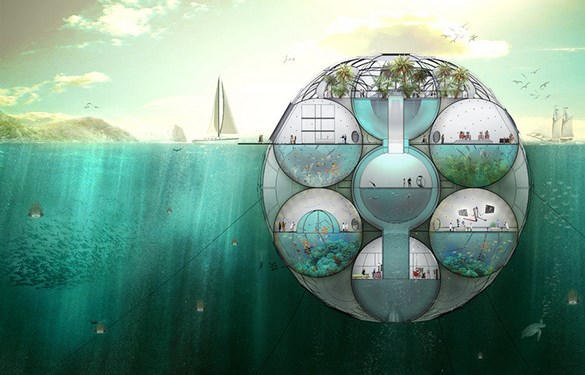
And that’s where the Bloom comes in, an artificial coastline habitat that will also generate carbon-consuming phytoplankton. In a world characterized by rising ocean tides, shrinking coast lines, changing climates, and extreme weather, a water-based living space that can address the source of the problem seems like an ideal solution. In addition to being waterborne, the Bloom is hurricane proof, semi-submersible, and even consumes pollution.

bloom_underwaterDesigned by the French firm Sitbon, these structures are a proposal for a research station moored to the seabed with a system of cables and would both house researchers and grow carbon-dioxide absorbing phytoplankton. While it’s more of an experiment than a vision for what housing looks like in the future, their goal is to install them in the Indian Ocean as part of an attempt to monitor tsunamis and absorb carbon dioxide.

Alongside skyscrapers that utilize vertical agriculture, carbon-capturing artificial trees, and buildings that have their own solar cells and windmills, this concept is part of a growing field of designs that seeks to incorporate clean technology with modern living. In addition, for those familiar with the concept of an Arcology, this concept also calls to mind such ideas as the Lillypad City.

arcology_lillypad

In this case and others like it, the idea is building sustainable habitats that will take advantage of rising sea levels and coastlines, rather than add to the problem by proposing more urban sprawl farther inland. As the creators wrote in a recent press statement:

Bloom wishes to be a sustainable answer for rising waters by decreasing our carbon footprint while learning to live in accordance with our seas. Every factory would have its own bloom allowing it to absorb the CO2 that it created.

And even if it doesn’t pan out, funding for the design and its related technologies will lead to innovation in the wider field of sustainable architecture and clean energy. And who knows? Might make some really awesome seaborne property!

Source: fastcoexist.com

Powered by the Sun: Solar Powered Aircraft!

Magnificent CME Erupts on the Sun - August 31The year of 2013 has proven to be an exciting time for solar power. Not only are developments being made to bring down the cost of solar cell production, as well as improve their yield and storage. A number of solar powered applications are also being produced which demonstrate just how versatile solar energy can be. And strangely enough, a good deal of them appear to have wings.

The first is the Solar Impulse, a solar powered plane that began conducting a cross-country promotional flight before taking off for a trip around the world. Officially launched back in 2003, this brainchild of Bertrand Piccard – grandson of the legendary balloon aviator Auguste Piccard – just a few years after he himself completing a round-the-world balloon flight. It was in the course of making this flight that Piccard realized just how dependent the world still is on fossil fuel, and sought to create a plane that needed no fuel whatsoever.

solar_impulse

Building on concepts like NASA’s Helios Prototype – another solar electric-powered flying wing designed to operate at high altitudes for long periods of time – Piccard and his colleague André Borschberg (a pilot and engineer) managed to create a prototype by 2009. They received financing and technology from a number of private companies, including Deutsche Bank, Omega SA, Solvay, Schindler, Bayer MaterialScience, and Toyota.

Naturally, the development of the prototype has been having an effect across a wide range of industries, and those who participated in making it a reality are reaping the benefits. Already the materials used in the creation in the airframe are being considered for use in refrigerators, and the lithium-ion batteries used in the second craft are expected to power everything from cell phones to cars in coming years.

solar_impulse_flightAlready, the plane has made numerous flights. The first flight took place on July 7th-8th, 2010 and lasted 26 hours, including nearly nine hours of night flying. In 2012, Piccard and Borschberg conducted successful solar flights from Switzerland to Spain and Morocco. The cross-country flight began on May 1st, with the first leg starting in San Fransisco and concluding in Pheonix to significant fanfare.

The flight is expected to last several more weeks and involve numerous stops before concluding in New York. The worldwide flight using the 2nd version of the craft, originally slated for 2014, is expected to take place in 2015. Those looking to keep track of the “Across America” mission can do so on their website. During the next legs of the flight, Piccard will be making landings in Dallas, St. Louis, Washington D.C., and New York.

solar_impulse_arrUltimately, flying the plane is still a very challenging feet. The airframe is extremely light, which means it is sensitive to turbulence and wind. That means it needs to take off and land in calm weather, and the plane can’t fly at all through big thunderstorms. And as Piccard himself notes:

If you fly it like a normal airplane you overcontrol, you cannot steer and land. You need to learn how to be extremely careful, make little moves with the control, and wait until a reaction comes. You have to anticipate enormously, and it’s not very stable, so you need to fly with the rudders.

But ultimately, the goal is not to create a fleet of solar-powered planes. As Piccard himself noted, the goal here is to stimulate “innovation for clean technology and energy”. Alas, there are some benefits to this plane that no other aviator can brag about. For one, the plane can theoretically fly forever since its fuel is provided by the sun and its batteries have demonstrated the ability to keep it going at night.

As Piccard described it: “It’s a feeling of freedom.” I can imagine!

Sources: fastcoexist.com, solarimpulse.com, nasa.gov

More News!

zombie_graveyardGood morning all! Once more, I have some good news from the world of publishing and zombie writing! First up, my newest book to hit the shelves, Whiskey Delta, has just passed 650 sales. Woohoo and woohoo! And yet, I am mourning the fact that the people I dedicated it to are unable to read it yet. C’mon people, you got to get on that! Uh, but you might want to wait until I finish with all the edits.

Speaking of which, the creation of Whiskey Delta’s 2nd edition is coming along nicely. My trusty editor and I have polished the first quarter of the book, which seems to account for the majority of the typos and errors.  But of course, we won’t stop until it’s done. And then I plan to get on the second installment and make sure it is in prime shape before it’s release. I am hoping it is received well, since the sequel came up in more than one review.

And in other news, I just bought a copy of World War Z. It only seems fair that I read the book of the man who got me off my ass and made me publish this work (with Rami’s help of course). It was actually during a conversation with a teaching colleague of mine that I finally decided to buy a copy. I was telling her about my story, and she brought up Max Brooks. As I waited for her to finish, I began chuckling to myself. She paused asked me what was so funny, to which I replied “you’re going to laugh”.

I then proceeded to tell her how a friend of mine (hi again Rami!) mentioned me to Max Brooks and how he went on to mention my name and the name of my story in his speech. She laughed, and then told me exactly how awesome his book is. I’m only a few sections into it, but I can tell you she was right. The book is a work of genius, much as the reviews would have us all believe. If y0u”re looking for a good read and a twist on the zombie apocalypse, I say invest in a copy!

The GPS Armband: The Aid Workers Best Friend

gps_armbandForeign aid workers often face extreme perils as a result of their job. Especially those who choose to monitor civil rights situations in foreign countries, where military dictators, corrupt police and/or wartime conditions pose a constant threat to their well-being. Luckily, Civil Rights Defenders – a Swedish civil rights advocacy group – has a proposed solution to this problem: The Natalia Project.

The project takes its name from Natalia Estemirova, a social worker who was kidnapped and swiftly murdered while investigating human rights violations in Chechnya in 2009. In her honor, Civil Rights Defenders announced a new piece of technology designed to prevent similar crimes in the future. Basically, its a GPS-equipped armband that immediately sends a signal back home and via social media to alert the wearer’s friends and colleagues the moment they go missing.

RUSSIA-OPPOSITION-PROTEST-CRIMEThe group says that had such technology been available at the time, Estemirova’s life could’ve been saved since the authorities could have been made aware of her disappearance immediately after her kidnapping. So far, the group has distributed five armbands and plans to equip 55 civil rights field workers with them over the next year and a half, if the project can find enough funding to produce them en masse.

In a statement, the group released information about the project and what it means:

…the Natalia Project bracelet has the capability to inform of an attack to potentially millions of people within seconds, by using Facebook and Twitter. The bracelet uses a mobile signal as notification of an attack and issues a real-time GPS location of the victim directly to Civil Rights Defenders’ headquarters. Nearby contacts will also be alerted so that they can act instantly, and the alarm is also forwarded to social media followers.

Looking ahead, I have to wonder if this same technology might not be incredibly useful in helping to address kidnapping here at home. In Canada, First Nations communities continue to be plagued by disappearances, particularly involving young women. All too often, these people are never found, or when they are, are shown to have been victims of terrible hate crimes.

Missing-Justice-web-sliderWhat’s more, investigations are often complicated by the prejudicial attitudes authorities have, and an inherent distrust of First Nation communities towards said authorities. As it stands, the federal government is under pressure to launch an investigation into these disappearances because of the nature of it and these complications. But with locators and the ability to know when a person is kidnapped, this problem could begin to be curbed and even eliminated altogether.

In addition, vacationers could also feel more protected when traveling abroad. The problem of kidnapping and ransoms in foreign lands, especially those marred by human trafficking, drugs, poverty, and corruption, are well known. With a GPS/GSM armband, alerts could be given out immediately, saving investigators much time and even helping them to locate the person in question.

As we all know, time is a factor when a person is kidnapped. Anything that helps families, communities and authorities even the odds against traffickers and abusive regimes would be a welcome thing indeed.

To learn more about The Natalia Project, Civil Rights Defenders, or even to donate, click here to visit their website.

Sources: fastcoexist.com, natalia.civilrightsdefenders.org

The Future is Here: Passthoughts Replace Passwords

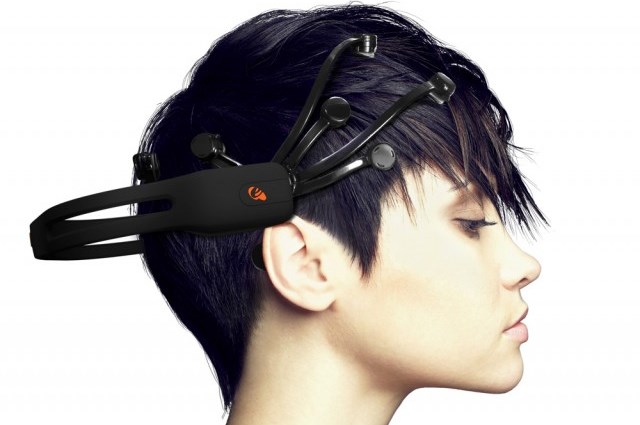
tcdsYou’ve heard of the Muse Headband, or perhaps the Neurosky Mindwave; devices that measure your brainwaves? Well as it happens, researchers at UC Berkley are using the technology to pioneer and new and revolutionary concept: passthoughts! Whereas accessing your computer, tablet or smartphone now is a matter of typing passwords on a (sometimes terribly small) keyboard, in the future it could be as easy as putting on a band and thinking.

Basically, the concept calls for the use of a mind-reading headband as a biometric identifier. Much like a person’s DNA or the blood vessels in their retina are specific to that individual, brainwaves also seem to be unique and can be used to identify them. An especially useful fact, if you want to log into a computer or otherwise prove your identity. Unlike passwords, credit card info or social security numbers, brainwaves cannot be stolen or faked… yet!


neurosky
To do this, the Berkeley researchers used a $100 commercial EEG (electroencephalogram), in this case the Neurosky. This device resembles a Bluetooth headset, with the slight difference of it having a single electrode that rests on your forehead and measures your brainwaves. These are then transmitted via a Bluetooth to a nearby computer. Much like a clinical EEG, the system has an error rate of less than 1%, but requires a single electrode instead of between 32 and 256.

To develop the brain-biometric process, participants were asked to complete seven different tasks with the EEG equipped. Three of the tasks were generic, requiring the participants to focus on breathing in and out, imagine moving their finger up and down, and listening for an audio tone. The other four tasks required participants to focus on an individual/personalized secret, such as singing a song of their choice, or performing a repetitive action.

brainwavesWhile performing these tasks, their brainwaves were monitored for heuristic patterns. And as it turns out, all seven tasks — even just sitting there and focusing on your own breathing — provided enough information to authenticate the subjects identity. So when it comes right down to it, this means of identifying oneself works effectively, and eliminates the need for passwords and could provide another layer of identity protection. All for the onetime price of $100.

But of course, there are some issues. For one, the bulk and unaesthetic nature of the EEG and the accuracy of the system, but these are both remediable. As it stands, no one would really want to wear a Neurosky EEG in public, but if the electrode were concealable – say, within a Bluetooth headset – this wouldn’t be a problem. As it stand, accuracy is the far more important issue. While a 99% accuracy rate is good, it is not good enough for serious and possibly security-based applications.

?????????????????But looking forward, it is not hard to imagine that the accuracy of the system will increase, as EEG hardware and biometric algorithms improve in quality. It is also very easy to imagine smartphones that can identify their users through their brainwaves, provided they are wearing a Bluetooth headset with an EEG equipped. In addition, computers that come equipped with headbands so people can log in and start working simply by sitting down and issuing the proper thoughts.

Thinking truly long-term, its not hard to imagine that the headband itself will be done away with in favor of a wireless EEG implanted underneath the skin. Much in the same way that these are allowing people to control robotic limbs, they may also allow us to log into computers, type documents, surf the net, and play video games with just our thoughts. Move over Xbox Connect! Here comes Xbox Thinx (patent pending!)

my_future_office_by_ishmakey-d3l9n3t

Source: Extremetech.com

The World’s First Completely 3D-Printed Gun

liberatorSince it’s inception, 3D printing has offered people a wide range of manufacturing possibilities, ranging from the creation of intricate prototypes to drugs and even human tissue. However, one of the most controversial manufactured items to come from the technology has been what the Texas-based organization known as Defense Distributed refers to as “Wiki-weapons”, guns that can be made by anyone using downloaded blueprints and a public printer.

DD_gunsNot long ago, the group announced that they had successfully created a working AR-15 assault weapon using some printed parts. This drew sharp criticism from advocates of gun control, in part because the same weapon was used in the Newton, Connecticut school shooting. However, Cody Wilson, founder of DD, announced that they would continue to pursue their goal of making printed guns, stating that their commitment to the 2nd Amendment took precedence over a single tragedy.

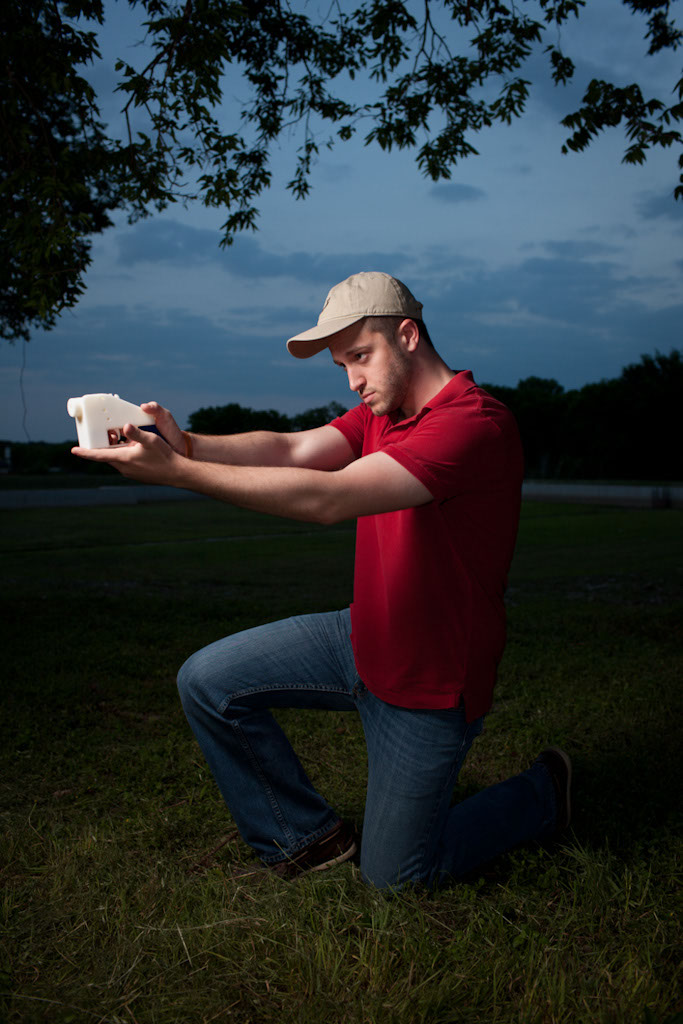
And now, it appear that they have gone a step further, unveiling the world’s first fully 3D-printed weapon. Save for a nail which is used as the firing pin, the gun is made up entirely of printed parts, can fire normal ammunition and is capable of making it past a metal detector. It’s called the Liberator, the product of eight months of labor by Cody and his group, and named in honor of the one-shot pistols that were airdropped by the Allies on France during the Second World War.

DD_liberatorIn an interview with Forbes, Cody and his group demonstrated their first test firing, which was a success. He also claimed that the Liberator will be capable of connecting to different barrels, allowing it to fire various calibers of ammunition. He also plans to publish the files necessary to print it at home as well as details on its operation so that anyone can produce their own.

This is all in keeping with Cody’s vision – being a hardcore libertarian and anarchist – to create a class of weapon that anyone can produce, circumventing the law and the regulatory process. At the same time though, Distributed Defense did decide to include a small chunk of metal in the final design to ensure that the gun couldn’t pass through a metal detector undetected. This is in compliance with the Undetectable Firearms Act, and may have been motivated by the group’s sagging public image.

Defense_DistributedHowever, this has not stopped the group from obtaining a federal firearms license this past March, making it a legal gun manufacturer. And once the file is online, anybody will be able to download it. What’s more, all attempts to limit DD’s activities, which include printing firms purging gun parts from their databases, has made Cody even more eager to pursue his aims. In a statement made to Forbes magazine, he said:

You can print a lethal device. It’s kind of scary, but that’s what we’re aiming to show… Everyone talks about the 3D printing revolution. Well, what did you think would happen when everyone has the means of production? I’m interested to see what the potential for this tool really is. Can it print a gun?

Well, Mr. Wilson, we’re about to find out! And if I were a betting man, I would say it the “potential” will include more unregistered firearms, a terrorist act or shooting that will involve a partially printed weapon, and Wilson’s continued intransigence to reform his ways, citing the 2nd Amendment as always. Libertarians are nothing if not predictable!

Sources: tech.fortune.cnn.com, forbes.com


New Trailer: True Blood, Season Six

true_bloodWhen it comes to shows that seem to love making fans wait, True Blood is in a category reserved for shows like The Walking Dead and Game of Thrones. Naturally, it takes time to produce big-budget, cable miniseries, especially ones with big name actors, writers, producers and crews who aren’t used to churning out the slop network television specializes in.

Still! It sucks when you find yourself having to repeatedly check IMDB just so you can be reminded how painfully long you have to wait for a new season. Lucky for fans of this and the other aforementioned shows, there appears to be some overlap. TWD just wrapped up season 3, GOT is just half done their third season, and True Blood will be airing on June 16th. So even when one is making us wait, at least one is stepping up to provide.

In any case, True Blood‘s new season promises a lot of things. After last season’s big climax, where Bill Compton drank the blood of Lilith and became some sort of uber-vampire, people were scared. And even though its leaders were mostly killed off, it’s clear that the civil war between Sanguinistas (vampire supremacists) and Integrationists is still raging, with the powers that be intervening and taking the offensive against vampires on all sides.

And then there’s Sookie and her Faerie brethren who find themselves caught in the middle. And the mystery of who killed her folks appears to be nearing revelation, and all other threads showed some hint of further development. In short, plenty of action left to be had…

So if you like vampires, mythical creatures, plenty of gore and nudity, but can’t stand the saccharine tone of Twilight and other YA vampire crap, I recommend checking it out. Now if they could all stop broadcasting new episodes on the same night – Sunday, I’d be in business! Even when you’re just downloaded, it creates a crowded schedule 😉 Enjoy the trailer!