The Future is Here: Using 3D Printing and DNA to Recreate Faces

strangervisions-1In what is either one of the most novel or frightening stories involving 3D printing and genetic research, it seems that an artist named Heather Dewey-Hagborg has been using the technology to recreate the faces of litterbugs. This may sound like something out of a dystopian novel – using a high-tech scenario to identify perpetrators of tiny crimes – but in fact, it is the basis of her latest art project.

It’s known as Stranger Visions, a series of 3D printed portraits based on DNA samples taken from objects found on the streets of Brooklyn. Using samples of discarded gum and litter collected from the streets, a her work with a DIY biology lab in Brooklyn called Genspace – where she met a number of biologists who taught her everything she now knows about molecular biology and DNA – she was able to reconstruct what the strangers looked like and then printed the phenotypes out as a series of 3D portraits.

According to Dewey-Hagborg, the inspiration for this project came to her while waiting for a therapy session, when she noticed a framed print on the wall that contained a small hair inside the cracked glass. After wondering who the hair belonged to, and what the person looked like, she became keenly aware of the genetic trail left by every person in their daily life, and began to question what physical characteristics could be identified through the DNA left behind on a piece of gum or cigarette butt.

strangervisions-3In a recent interview, Dewey-Hagborg explained the rather interesting and technical process behind her art:

So I extract the DNA in the lab and then I amplify certain regions of it using a technique called PCR – Polymerase Chain Reaction. This allows me to study certain regions of the genome that tend to vary person to person, what are called SNPs or Single Nucleotide Polymorphisms.

I send the results of my PCR reactions off to a lab for sequencing and what I get back are basically text files filled with sequences of As, Ts, Cs, and Gs, the nucleotides that compose DNA. I align these using a bioinformatics program and determine what allele is present for a particular SNP on each sample.

strangervisions-5

Then I feed this information into a custom computer program I wrote which takes all these values which code for physical genetic traits and parameterizes a 3d model of a face to represent them. For example gender, ancestry, eye color, hair color, freckles, lighter or darker skin, and certain facial features like nose width and distance between eyes are some of the features I am in the process of studying.

I add some finishing touches to the model in 3d software and then export it for printing on a 3d printer. I use a Zcorp printer which prints in full color using a powder type material, kind of like sand and glue.

The resulting portraits are bizarre approximations of anonymous people who unknowingly left their genetic material on a random city street. Naturally, there are plenty of people who wonder how accurate her approximations are. Well, according to Dewey-Hagborg, the portraits bear a “family resemblance” to the subject, and at this time, no person has never recognized themselves in any of her exhibitions. Yet…

strangervisions-4And of course, there are limitations with this sort of phenotype-DNA identification. For starters, it is virtually impossible to determine the age of a person from their DNA alone. In addition, facial features like scars and hair growth cannot be gauged, so Dewey-Hagborg casts each portrait as if the person were around 25 years of age.

And yet, I cannot help but feel that there is some awesome and terrible potential in what Dewey-Hagborg has created here. While her artistic vision had to do with the subject of identity and anonymity in our society, there is potential here for something truly advanced and invasive. Already it has been considered that DNA identification could be the way of the future, where everyone’s identity is kept in a massive database that can either be used to track them or eliminate as suspects in criminal cases.

But in cases where the person’s DNA is not yet on file, police would no longer need to rely on sketch artists to identify potential perps. Instead, they could just reconstruct their appearances based on a single strand of DNA, and use existing software to correct for age, hair color, facial hair, scars, etc, and then share the resulting images with the public via a public database or press releases.

strangervisions-2And as Dewey-Hagborg’s own project shows, the potential for public exposure and identification is huge. With a sophisticated enough process and a quick turnover rate, cities could identity entire armies of litterbugs, polluters, petty criminals and even more dangerous offenders, like pedophiles and stalkers, and publicly shame them by posting their faces for all to see.

But of course, I am forced to acknowledge that Dewey-Hagborg conducted this entire project using a DIY genetics lab and through her own ardent collection process. Whereas some would see here an opportunity for Big Brother to mess with our lives, others would see further potential for a democratic, open process where local communities are able to take genetics and identification into their own hands.

Like I said, the implications and potential being shown here are both awesome and scary!

Source: thisiscolossal.com

Hacker Wars: Hacker Breaches U.S. Army Database

Hackers-With-An-AgendaIt appears that the ongoing campaign of cyber warfare has claimed yet another victim, once again a government institution. In the latest in a long series of institutions and organizations plagued by cyber crime, the U.S. Army Corps of Engineers announced that back in January, a hacker compromised a U.S. Army database that holds sensitive information about vulnerabilities in U.S. dams.

The database in question was the U.S. Army Corps of Engineers’ National Inventory of Dams, a source that contains information about 79,000 dams throughout the US and tracks such information as the number of estimated deaths that could occur if a specific dam failed. It’s accessible to government employees who have accounts, and non-government users can query the database, but are not permitted to download data from it.

hacker_damThe breach was first reported by Free Beacon, a non-profit online publication, and has since been confirmed by the Army Corps of Engineers. Pete Pierce, a spokesman for the ACE, released a statement, saying that:

The U.S. Army Corps of Engineers is aware that access to the National Inventory of Dams (NID), to include sensitive fields of information not generally available to the public, was given to an unauthorized individual in January 2013 who was subsequently determined to not to have proper level of access for the information. [U.S. Army Corps of Engineers] immediately revoked this user’s access to the database upon learning that the individual was not, in fact, authorized full access to the NID.

The Corps of Engineers further indicated on their website that account usernames and passwords had since changed “to be compliant with recent security policy changes.”

Unnamed U.S. officials told the Free Beacon that the breach was traced to “the Chinese government or military cyber warriors,” but offered no information to support the claim. It is well known by intrusion specialists that hackers can use proxy servers or hijacked computers to conduct a breach and make it look as if the source was a specific country or individual.

hackers_securityMichelle Van Cleave, a former senior adviser to the Executive Agent for Homeland Security and Department of Defense and a former consultant to the CIA, went on record as saying that the breach appeared to be part of an effort to collect “vulnerability and targeting data” for future cyber or military attacks, though she didn’t say how she came to this conclusion.

If the intrusion was the work of the Chinese military, then it’s possible this was nothing more than a fact-finding mission on their part, designed to gather information on America’s infrastructure and hydroelectric facilities. The far worse possibility was that this was the result of private hackers, who sought to obtain information about US dams are part of a planned attack, looking to see which dam would cause the most harm if it were disabled by a physical or cyber-attack.

Whether it was the result of government-sponsored hackers, private hackers, or potential terrorists, it is clear that in the wake of the recent intrusions into US government databases, and the recent bombing in Boston, that security forces in the US will be on the lookout for similar breaches. In an age of electronic warfare, the best defense is not a good offense, but the ability to identity enemies and deploy countermeasures.

Source: Wired.com

Big News!

zombie-attackGood news from the my small corner of the indie publishing world. My latest book, Whiskey Delta has just sold over 500 copies, including ebooks and paperback! Yaaaaay! And what excites me about this is the fact the vast majority of those sales happened since the 21st of April. That means that over 400 books were moved in the last two weeks. I can only assume that this means the popularity of it is growing.

And to add to the good news ball, I got another four-star review, which in addition to being nice, put the book’s overall rating back to 3 and a half stars. Once again, the reviewer was sure to mention quality of story combined with poor editing. I’ll let him tell you:

FINALLY! A zombie story where the US Military is not hopelessly inept, but is instead taking the war to the enemy and doing a damn good job. I choose to look past the vast amount of editing needed… and instead focus on a kick-butt military adventure during a zombie apocalypse. Fun, exciting, great action, and characters that you get to know and even care about–what more can I say? Buy it, enjoy it, ignore the typos and other errors and just get into one of the better examples of military adventure/zombie apocalypse cross-overs out there.

Now that was exactly the kind of review I was looking for! And rest assured, sir, the editing is being done! I’ve managed to clean up three chapters so far and noticed that the most glaring mistakes seemed to be in the first chapter itself. Not good! Not good at all… But rest assured, the 2nd edition will be clean, and the second book immaculate! I’m taking steps right now to procure a professional editor so the quality of my books won’t be left in my (incapable) hands!

The Future is Here: The Hybrid Tank!

hybrid_IFVIt’s a strange thing when military planners and environmentalists find themselves seeing to eye to eye. And yet, the latest crop of proposals being considered by the Pentagon to replace their aging vehicles includes a design for a hybrid tank. Designed to replace the venerable M2 Bradley Infantry Fighting Vehicle, the GFV (Ground Fighting Vehicle) is a gas-electric hybrid that will save the army on gas and reduce their impact on the environment.

In truth, the GFV is but one of several clean energy alternatives that is being considered by the Pentagon. As far as they are concerned, the next-generation of military hardware will need to take advantage of advances made in solar, electric, hybrid and other technologies. But of course, this is not motivated out of a desire to save the environment, but to save on fuel costs.

hybrid_IFVsideWith peak oil supplies diminishing worldwide and the only remaining sources confined to geopolitcally unstable regions, the current high-cost of gasoline is only likely to get worse in the near future. What’s more, the Pentagon and every other army in the developed world understands the dangers of Climate Change, with most scenarios taking into account dwindling fuel supplies and wars being fought for what little will be left. Little wonder then why they would consider cutting their consumption!

As for the GFV, the design calls for a large, highly modifiable ground combat vehicle that grew out of years of military and defense contractor studies. Designed by BAE Systems, the engine is the result of collaboration with a number of firms who helped adapt the design of a civilian hybrid gas-electric engine. Compared to competing designs, it presents a number of advantages.

hybrid_IFVfrontIf BAE’s proposal is adopted by the military, the Defense Department is expected to save approximately 20% on its fuel costs, compared to an alternate GCV vehicle design that uses traditional propulsion. Additional advantages include the ability to switch to pure electric mode for short periods of time, the elimination of significant heat traces from the battlefield, and the ability to operate more quietly at night.

In a recent interview, BAE Systems’ Mark Signorelli further indicated the advantages of the design:

There are also 40% fewer moving parts with higher reliability, requiring less maintenance and decreasing vehicle lifetime cost. Vehicle acceleration, handling and dash speed are improved even over fuel hungry turbine systems. Finally, the system’s ability to provide large amounts of electrical power accommodates the integration of future communications and weapons technology for the next 30 to 40 years.

What’s more, the GFV is capable of undergoing extensive modification, which is a strength in and of itself. With just a few added accessories, the vehicle can work as a tank, hence why it is named a Ground Fighting Vehicle (GFV) and not an Infantry Fighting Vehicle (IFV), which is specifically designed to transport and defend infantry.

hybrid_IFVfleetThe vehicle can also be augmented with electric armor, jammers, and experimental energy weapons thanks to the in-vehicle electric power source. Most of these weapons are currently being developed by the military and are expected to be making the rounds in the not-too-distant future. As such, BAE also stressed that their vehicles could be operational for decades to come without becoming obsolete.

So telling when the decision will be made, thanks to the vagaries of politics and the military-industrial complex. However, the scuttlebutt indicates that the odds of the BAE design being adopted are good, and the company spokespeople indicated that the first GFV’s could be rolling off the line by 2020 and fielded by 2022. I guess Prius owners will have new reasons to brag!

Source: fastcoexist.com

News From Space: SpaceShipTwo Completes First Test Flight!

spaceshiptwo_flightWell, technically this news come from the lower atmosphere, but seeing as how the ultimate purpose is to get into space, I think it qualifies. Earlier this week, Virgin Galactic made history when it’s aerospace carrier, SpaceShipTwo, conducted its first powered test flight and broke the sound barrier. As the latest in a long series of successful flights, it shouldn’t be too long before Virgin Galactic conducts its maiden flight and flies actual passengers into low orbit.

The test flight took place on Monday as the plane took off from the Mojave Air and Space Port in southern California, not far from where the Bell X-1 piloted by the then Capt. Chuck Yeager first broke the sound barrier in 1947. This latest test comes on the heels of the SS2’s first glide test with its rocket engine on board, which it conducted back in December of 2012, and its first glide flight in 2010.

spaceshiptwoThe flight began after the SS2 was carried to a ceiling of 14,300 meters (47,000 feet) by its mothership, WhiteKnightTwo, where it was then released at 7:48 a.m. PDT. Shortly thereafter, pilots Mark Stucky and Mike Alsbury ignited the rocket engine and accelerated to a speed of Mach 1.2 as they climbed to over 17,000 meters (55,000 feet). According to Virgin Galactic, the rocket burn lasted 16 seconds, and demonstrated the efficacy of their engine design.

Granted, in order to get into the realm of the sub-orbital, the engine will have to make longer burns, most likely in the vicinity of 80 or 90 seconds. SS2’s predecessor, SpaceShipOne, had to run its engine this long in order to break the 100 kilometer (328,000 feet) back in 2004, when it reached what the international community holds as the accepted altitude for reaching the soft edge of space.

spaceshiponeIt’s has been over eight years since Virgin Galactic’s space tourism program began, and though progress has come slower than planned, Branson was nevertheless enthusiastic about the flight test and expressed his feelings on his blog after the flight:

It marks the moment when we put together two key elements of our spaceflight system – the spacecraft and its rocket motor, which have both been tested extensively by themselves over several years. And start the phase of testing that will demonstrate our vehicle’s ability to go to space (hopefully later this year).

More than 500 people have signed up for sub-orbital rides aboard the six passenger SpaceShipTwo once it becomes operational. Those who go will have the chance to float weightlessly for a few minutes while enjoying the spectacular view of the edge of space. Tickets go for $200,000 a pop, quite the price tag for a plane flight. But in return, those who go will get to experience something only astronauts have ever had the pleasure of.

Richard Branson has said all along that he plans on being on the maiden voyage, something he reiterated after the test flight was done:

Like our hundreds of customers from around the world, my children and I cannot wait to get on board this fantastic vehicle for our own trip to space and am delighted that today’s milestone brings that day much closer.

Check out the video of the SpaceShipTwo conducting its first engine test below:


Powered by the Sun: The Artificial Leaf

solar_power1Despite progress made in recent decades, solar power still has some obstacles to overcome before it can be completely adopted. Thanks to several innovations, the price of manufacturing and installing solar panels has dropped substantially, intermittency remains a problem. So long as solar power remains limited by both geography and weather, we can expect to remain limited in terms of use.

And short of building Space-Based Solar Power (SBSP) arrays, or producing super-capacitor batteries with graphene – both of which are being explored – the only other option is to find ways to turn solar power into other forms of usable fuel. When the sun isn’t shining, people will need something else to power their homes, appliances, heating and AC. And given that the point is to reduce pollution, it will also have to be clean.

??????And that’s precisely what Daniel Nocera and his team are doing over at the University of Harvard. Their “artificial leaf” – a piece of silicon (solar cell) coated with two catalysts – is a means of turning sunshine into hydrogen fuel. Basically, when sunlight shines in, the leaf splits the water into bubbles of hydrogen and oxygen on each side, which can then be used in a fuel cell.

Efforts in the past to build similar solar cells have faltered, due largely to the costs involved. However, with the price of solar-related materials dropping in recent years, this latest device may prove commercially viable. And built to a larger scale, the device could provide a super-cheap and storable energy source from which could then be piped off and used in a fuel cell to make electricity. And combined with arrays of solar panels, we could have the energy crisis licked!

artificial-leafNocera and his team first announced the technology back in 2011, back when he was still a chemist at MIT. Since that time, they have published a follow-up paper showing how the team has improved the leaf’s efficiency, laying out future challenges, and how these might be overcome. Foremost amongst these are a field trial, with the eventual aim of building a commercial device for the developing world.

Beyond that, Nocera hopes to commercialize the technology through his company, the Massachusetts-based Sun Catalytix. Once realized, he plans to to put his dream of giving the poor “their first 100 watts of energy” into action. Here’s hoping he succeeds. The poor need power, and the environment needs a break from all our polluting!

Thank you all for reading the latest installment of PBTS! And be sure to check out this video of the artificial leaf in action:

News From Space: Meteors Hits Saturns’ Rings

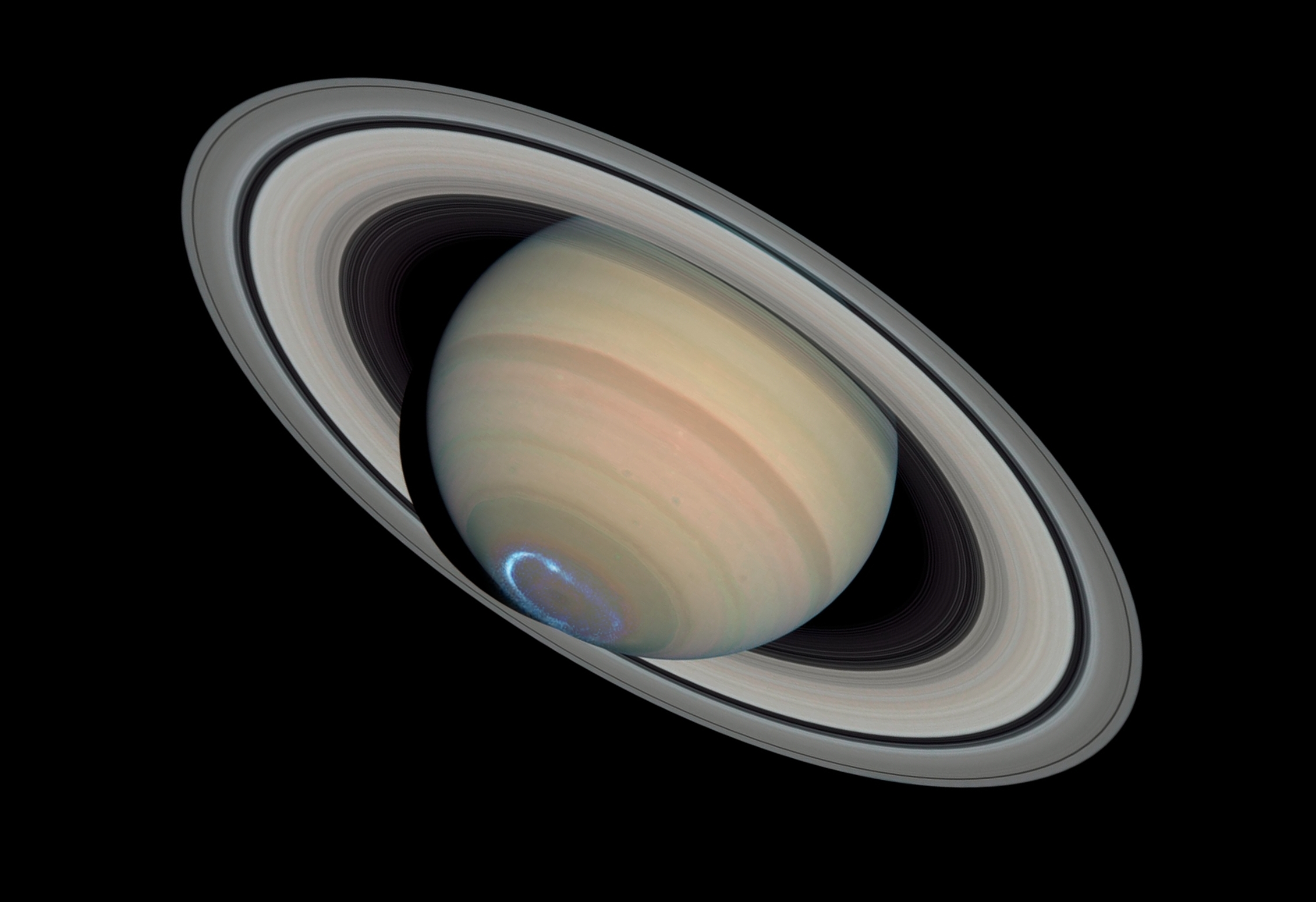
Saturn_with_aurorasFor some time, scientists have been aware of the fact that Earth, the Moon, and every body in our Solar System is subject to impacts by meteors, asteroids and comets. And sometimes, on rare occasions, we get to watch it happen, and its a pretty spectacular sight.  Now, for the first time ever, the Cassini spacecraft has provided direct evidence of small meteoroids crashing into Saturn’s rings.

In addition to being a pretty spellbinding site, studying the impact rate of meteoroids from outside the Saturnian system presents scientists with the opportunity to study how planets in our Solar System are formed. This is due to Saturn’s rings, which act a very effective detector of surrounding phenomena, including the interior structure of the planet and the orbits of its moons.

Linda Spilker, Cassini project scientist at NASA’s Jet Propulsion Laboratory in Pasadena, Calif, spoke on record about the observed impacts:

These new results imply the current-day impact rates for small particles at Saturn are about the same as those at Earth — two very different neighborhoods in our solar system — and this is exciting to see. It took Saturn’s rings acting like a giant meteoroid detector — 100 times the surface area of the Earth — and Cassini’s long-term tour of the Saturn system to address this question.

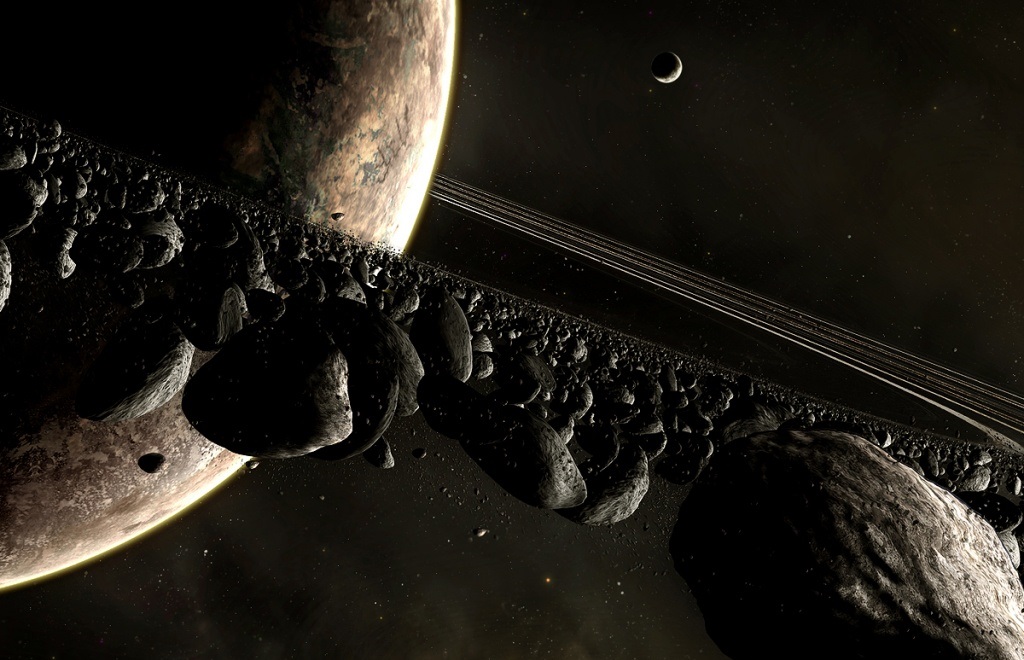
asteroid_belt1In the past, changes in the disposition of Saturn’s rings indicated that impacts were taking place. One such example came in 1983, when an extensive corrogation of 19,000 km (12,000 miles) across the innermost rings told of a very large meteoroid impact. And after the Saturnian equinox back in summer of 2009, astronomers were able to detect a great deal of debris left behind by several meteoroids striking the rings.

However, as Matt Tiscareno, a Cassini scientist at Cornell University explains, this was the first time the impacts were observed directly:

We knew these little impacts were constantly occurring, but we didn’t know how big or how frequent they might be, and we didn’t necessarily expect them to take the form of spectacular shearing clouds. The sunlight shining edge-on to the rings at the Saturnian equinox acted like an anti-cloaking device, so these usually invisible features became plain to see.

Comet1What’s more, Tiscareno and his colleagues were also to come up with some rather new and interesting theories about Saturn itself and how it came to be. Jeff Cuzzi, a Cassini interdisciplinary scientist specializing in planetary rings and dust at NASA’s Ames Research Center, explains:

Saturn’s rings are unusually bright and clean, leading some to suggest that the rings are actually much younger than Saturn. To assess this dramatic claim, we must know more about the rate at which outside material is bombarding the rings. This latest analysis helps fill in that story with detection of impactors of a size that we weren’t previously able to detect directly.

Meteoric impacts and asteroids have been taking place since the formation of our Solar System. In addition to having a serious impact (no pun) on the formation of the planets, they have also played a prominent role in the evolution of life here on planet Earth. And with the expansion in space exploration afforded to us by space probes, satellites, and planetary rovers, we can expect to witness more of these events firsthand.

Source: universetoday.com

The Future is Here: The Neuromimetic Processor

Neuromorphic-chip-640x353It’s known as mimetic technology, machinery that mimics the function and behavior of organic life. For some time, scientists have been using this philosophy to further develop computing, a process which many believe to be paradoxical. In gleaming inspiration from the organic world to design better computers, scientists are basically creating the machinery that could lead to better organics.

But when it comes to Neuromoprhic processors, computers that mimic the function of the human brain, scientists have been lagging behind sequential computing. For instance, IBM announced this past November that its Blue Gene/Q Sequoia supercomputer could clock 16 quadrillion calculations per second, and could crudely simulate more than 530 billion neurons – roughly five times that of a human brain. However, doing this required 8 megawatts of power, enough to power 1600 homes.

connectomeHowever, Kwabena Boahen, a bioengineering professor at Stanford University recently developed a new computing platform that he calls the “Neurogrid”. Each Neurogrid board, running at only 5 watts, can simulate detailed neuronal activity of one million neurons — and it can now do it in real time. Giving the processing to cost ratio in electricity, this means that his new chip is roughly 100,000 times more efficient than other supercomputer.

What’s more, its likely to mean the wide-scale adoption of processors that mimic human neuronal behavior over traditional computer chips. Whereas sequential computing relies on simulated ion-channels to create software-generated “neurons”, the neuromorphic approach involves the flow of ions through channels in a way that emulates the flow of electrons through transistors. Basically, the difference in emulation is a difference between software that mimics the behavior, and hardware.

AI_picWhat’s more, its likely to be a major stepping stone towards the creation of AI and MMI. That’s Artificial Intelligence and Man-Machine Interface for those who don’t speak geek. With computer chips imitating human brains and achieving a measure of intelligence which can be measured in terms of neurons and connections, the likelihood that they will be able to merge with a person’s brain, and thus augment their intelligence, becomes that much more likely.

Source: Extremetech.com

More Reviews Are In!

Whiskey_Delta

Hi folks. As the title suggests, more reviews have come in for Whiskey Delta and the sale figures are going up! Unfortunately, that’s where the good news ends. Of those buyers who chose to offer opinions about my book, the same combination of “good story, but needs some serious editing” was apparent in their comments.

Here’s what the latest reviewers had to say (note the first review has been shortened due to it being very wordy!):

An exciting and well told story (4.0 out of 5 stars):
This is a great book – exciting storyline driven by gripping and well laid out plot lines that keep the reader ‘on the edge of their seats’ right to the end. Even better is the superb characterization of the two main characters and also the driver Whitman, however, considering the small number of characters in the book, I thought the author could have spent a bit of extra ‘fleshing’ out of some of the others a bit more.

The reason the book was a four star not a five star, was that it had simply the worst editing I have come across on Kindle and I am not someone who cares that much about the odd misspelling or use of ‘their’ when you mean ‘there’ and so on as I am usually so lost in the story I barely notice… I must say though, that I am very happy that I did overcome my ‘scruples’ and bought the book in the end as the story was completely riveting from start to finish and the writing itself – aside from typos and little slip ups are all forgotten when caught up in the thrilling ride the author takes you on. Highly recommend it.

Not bad huh? The full length comment contained traces of displeasure about the lack of editing, but the overall feeling is that I wrote something pretty good. Well get a load of what this guy had to say:

Not a grammar Nazi but…, (2.0 out of 5 stars)
By Heuchler:
Thought it was a decent story, but the editing or the lack thereof killed it for me. Ever dozen pages seems to have a spelling or grammar mistake. Even basic things that could be caught with spell-check are there, which leaves me wondering how they were not caught.

Again, not to be petty, but the “not grammar Nazi” made some typos of his own there. And I know I’m going to hell for saying this, but with a name like Heuchler, that last thing you want to make is a Nazi reference!

Still, after reading these, it tore it for me. Whiskey Delta needs to be cleaned up and re-released! The public is speaking with one voice on this, and those who are giving it low marks are starting to bring down the overall rating. As it stands, WD is ranked 3.0 stars out of 5 and that’s just not acceptable. For any indie looking to establish a reputation and garner sales, a 3.5 or higher seems like the desirable place to be in.

What’s more, three copies have been returned after purchase. I can only assume they started reading and were deterred by the errors. And though this represents a mere 1% margin, it doesn’t seem too acceptable to me at this juncture. Barring accidental purchases, every copy sold should stay sold, in my opinion.

Lucky for me, I won’t have to take it down to fix it up, but it will mean the updated version will be clearer and (hopefully) polished whereas the ones that are currently selling will not. I can live with that, and hope the market won’t really notice much. Right now, the sales and positive reviews have me highly jazzed about prepping and releasing the second installment and working on the third. But for that to work, I need the first installment to be as good as it can be and get better reviews.

News from the Red Planet: Mars’ Bygone Atmosphere

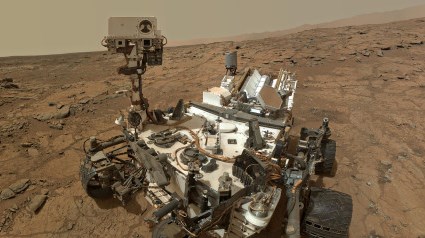
??????In this latest video update from the Mars Science Laboratory team, Ashwin Vasavada, the mission’s Deputy Project Scientist, discusses the recent findings by the Curiosity Rover. As always, these include ongoing studies of Mars atmosphere, in addition to soil and rock analysis, to determine what the Martian landscape may have looked like millions of years ago.

And in its latest research breakthrough, the rover has determined that Mars doesn’t have the same atmosphere it used to. Relying on its microwave oven-sized Sample Analysis at Mars (SAM) instrument, the rover analyzed a sample of Martian air early in April, and the results that came back provided the most precise measurements ever made of in the Martian atmosphere.

SolarConjunctionWhat it noticed in particular was the isotopes of Argon, a basic element that is present in Earth’s atmosphere, Jupiter’s and even the Sun. In Mars case, the mix of light and heavy Argon – two different isotopes of the element – is heavier than in all the other cases. What this suggests is that the Martian atmosphere has thinned over the course of the past few million years.

This data conclusively confirms another long-held suspicion by scientists, that Mars did indeed have an atmosphere capable of supporting life. Alongside the voluminous evidence obtained by Curiosity for the existence of water, we now know that Mars may have supported life at one time, and that it did not always have the arid, cold climate it now does. More good news for those looking to build a case for settling there one day…

solarConjunction02Check out the video below to hear Ashwin Vasavada speak about these latest findings, including the Solar Conjunction which kept them from communicating with the Rover until today. Now that the conjunction has ended, we can expect plenty more updates and interesting finds from the rover. Who knows? Maybe even some evidence about the existence of a Martian civilization.

Don’t be looking at me like that! It could happen…


Source: universetoday.com