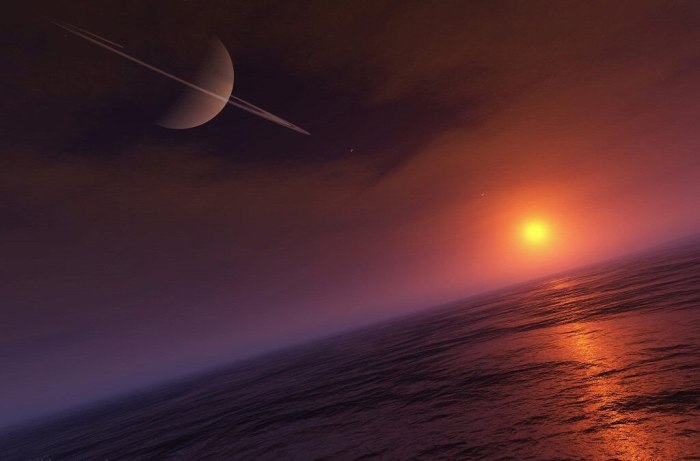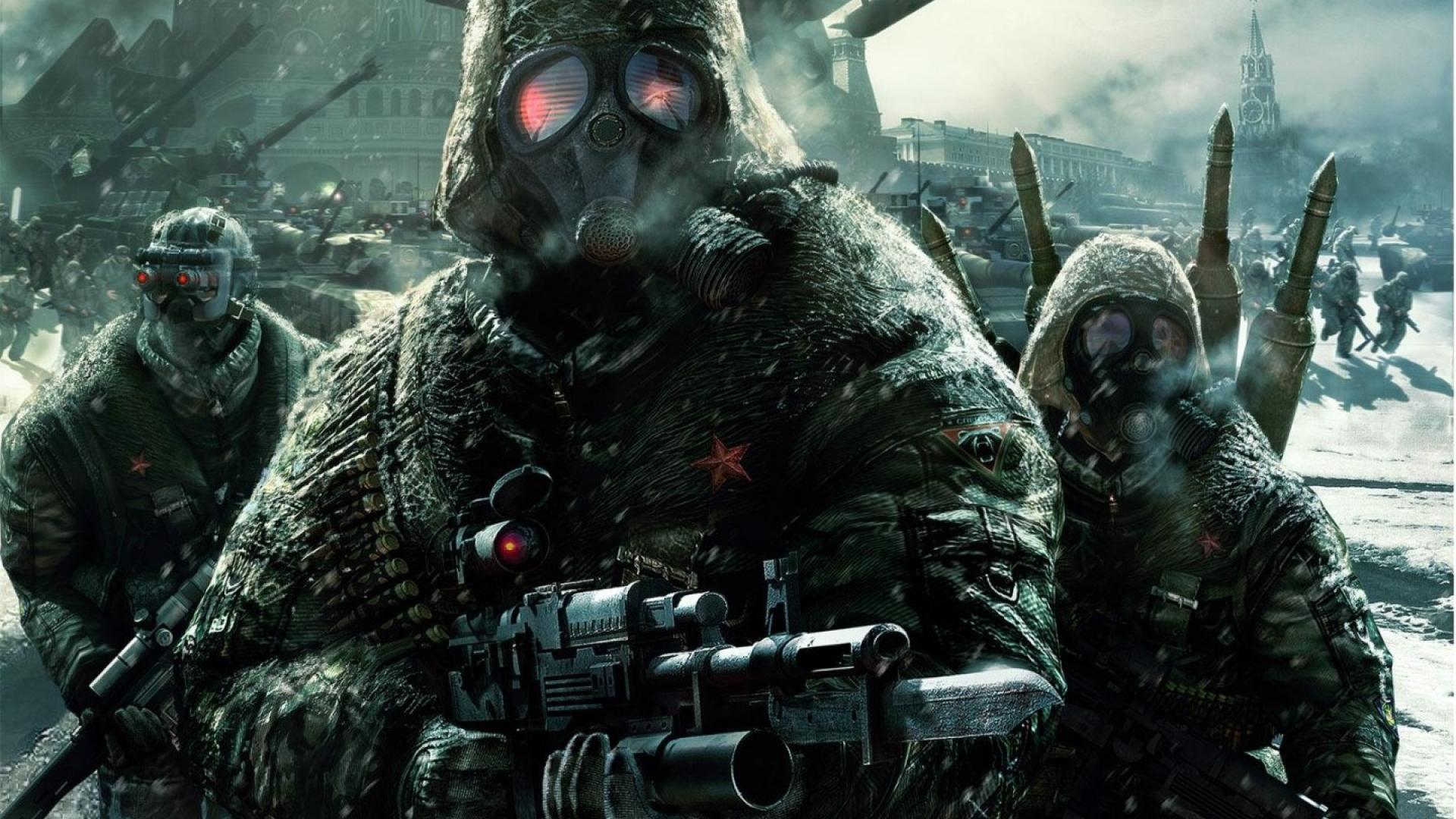
Good News… Of A Promotional Nature!

Good News… Of A Promotional Nature!

As I’ve been talking about non-stop for the past few months, I got a novel in the works. As of the writing of this post, I’ve written 25 chapters and almost 50,000 words (that terrible middle part!) But what I haven’t shared yet is that some lovely websites have promised to promote it as soon as its done. This is a first for me, and something that I’m really looking forward to!

Truth is, this wouldn’t be possible were it not for the professional writing I’ve been doing for the past year and a half. And it all started a few months ago when I was busy updating an article (How Long Does It Take To Get To The Nearest Star). The article was a few years out of date at this point, and my boss wanted it expanded to include all the cool theoretical methods that have been proposed over the past few decades.

daedalus-saturn-9
Artist’s concept of the Project Daedalus spacecraft, with a Saturn V rocket standing next to it for scale. Credit: Adrian Mann

While researching the topic to find out how long it would take a nuclear-powered spaceship to make the journey, I stumbled across Futurism.com and saw that they had reposted the old version of the article. I also noticed that they had reposted a few articles done by little ol’ me, which include the very first article I wrote back in Oct of 2014 (about hibernation technologies for a trip to Mars).

While telling them that a newer version would be coming out, the manager and I got to talking. I asked them if they would appreciate some articles on terraforming, and happened to mentioned that I was writing a book where that was a major theme. To my surprise, they expressed interest in both things, and asked if they could interview me when the book was done.

Naturally, I was worried they thought I was someone who was… you know, a big deal! I was sure to point out that this book was fiction and not some professional treatise. I’m not exactly Mike Brown or Neil DeGrasse Tyson here. But they said it was cool! Then I pointed out that I didn’t have a publisher lined up, and it might very well be indie published in the end. They said that this was cool too!

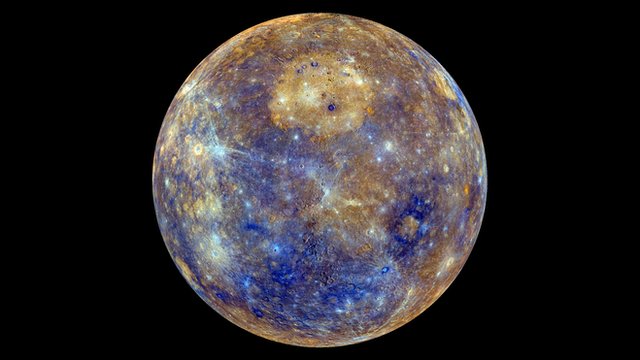
mercury_map
Color-enhanced map of Mercury. Credit: NASA/JPL

Suffice it to say, I was surprised and flattered. And after talking this over with my boss (I wanted his permission to write content that would be put on another site, he said that was cool!), he told me that Universe Today would be promoting the hell out of it too. I was honored. At no point did I ask or expect that the people I work for would be promoting something I wrote on my own time. But of course, I was sure to let them know that the work I was doing for them is what inspired it.

Were it not for all the research I had been doing about the Solar System and articles I was writing about its various planets, the story would not exist. It actually all started with the article I wrote on Mercury, in fact. Learning about its extremes in temperature, its richness in minerals, its very slow rotation, and its icy poles all made me think that a mining colony would be possible there someday. Especially if it were a penal colony!

Bottom line, when the book is finished, two prominent websites are going to be making a big deal out of it. How cool is that?

And just in case anyone is interested, those terraforming article are now finished and up at Universe Today. There are three in the series now, starting with a rundown of the topic, and ones on how it could be done on Venus and Mars. Next up, the Moon, followed by Mercury and the Outer Solar System. Feel free to leave comments too, especially constructive ones. 🙂

The Definitive Guide To Terraforming

How Do We Terraform Venus?

How Do We Terraform Mars?


The Cronian Incident – Setting The Scene

The Cronian Incident – Setting The Scene

In my last post, I explained how I was struggling with my latest story. Particularly, it has been the task of setting the scene over and over again that’s been tiring me out. Luckily, I’m beginning to get to work again, thanks to getting a second (or third) wind. But the challenge is still a big one, so I thought I might share some of what I’ve working on and see if it helps break the logjam.

As I also mentioned last time, there are four major settings in The Cronian Incident. These consist of the planet’s Mercury, a space elevator above Mars, Jupiter’s moon of Callisto, and Saturn’s moon of Titan. Establishing these places as backdrops for the story presented many opportunities. You have to think about how people would go about colonizing and living on these worlds.

But there’s also the fun that comes from figuring out what a culture that evolved to live on these planets and moons would look like. What languages do they speak? What religions do they practice? What does their clothing look like, what kind of music do they listen to? And what kinds of technology do they rely on?

mercury_mapMercury:
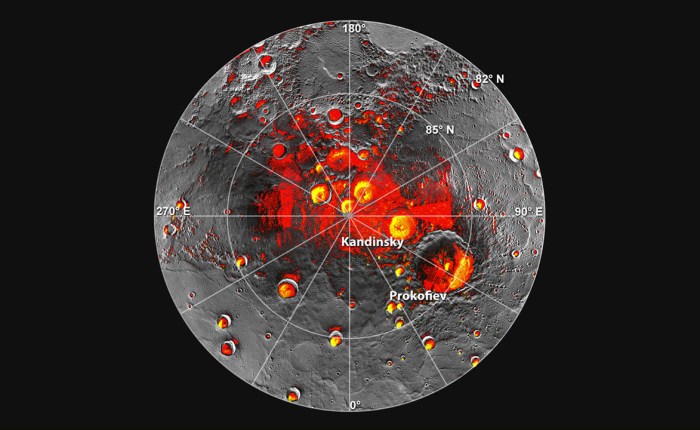
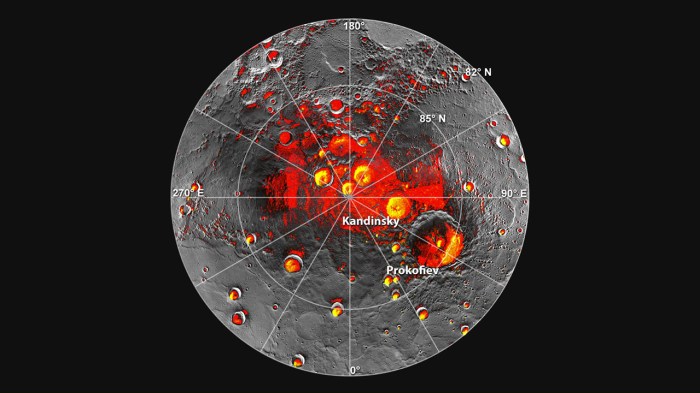
The story opens on the planet Mercury, where mining crews diligently travel out onto the dark side of the planet, extract ore, and then return to the northern polar region. This area, which is permanently shaded, is the only part of the planet which is inhabited – after a fashion. In truth, no one really calls the planet home. But there are facilities located in the large craters, where convicts and temporary laborers harvest minerals, energy, and ice.

For the miners, their facility is located in the Prokofiev crater, which one of the larger craters in the northern polar region. It is here where miners return with their hauls of ore, which is then processed and fired into space by the Sling – a magnetic accelerator that shoots it into orbit. Some food is grown on site, most of it is shipped in, and water is sourced locally from the ice deposits. And all waste products are recycled to provide the bare necessities of life.

It is a dark place, where convicts and laborers are housed four to a room and are administered regular doses of antidepressants (to address their natural feelings of isolation and lack of natural sunlight). Convicts also have the added bonus of being equipped with “Spikes”, a neural implant that monitors their aggression levels and incapacitates them if they ever attempt to do anything violent.

And just in case they attempt anything illegal, the convict population can be confined to solitary cells, where the room’s are entirely nondescript, tiny, especially dark, and they have no company at all except for their demons.

mars_life

Mars:
Along with Earth, the Moon, and Venus, Mars is part of the Triumvirate – a loose alliance that embraces the most advanced worlds in the Solar System. Over 50 million people live on its surface, whereas a few million more live in orbital habitats and the Ares Installation, which sits atop The Drift (the planet’s space elevator). This installation is essentially an O’Neil Cylinder (though its more like an O’Neil can) that consists of two “hemispheres” that rotate in opposite directions- simulating gravity up to the standard Martian 0.376 g.

This self-contained world is divided into Sadak, the Hindi word for road (which is one of the official languages on Mars). Each Sadak has its share of domiciles, parks, recreation facilities, and aerodromes, where people go to test out their personal fliers. At the “southern” end of the facility is Sadak Lovelock, which is the home of the Chandrasekhar clan. Within the Formist faction, the people dedicated to terraforming Venus and Mars, they are kind of a big deal. In tall towers that face towards the planet below (which is visible through massive panels) they plot the transformation of the Red Planet into a green planet.

Lovelock is named in honor of James Lovelock, the British scientist who co-authored The Greening of Mars (one of the seminal works about terraforming). It is here that the elder Chandrasekhar (Piter Chandrasekhar) lives in what is known as a Heilig Room. Also known as a Lattice Quantum Chromodynamics environment, this room allows Piter – who is basically an upload at this point in time – to assume physical form and interact with simulated environments.

Terrafomed Mars by ittiz
Terrafomed Mars. Credit: ittiz/deviantart.com

When Ward (the MC) meets him in this environment, he gets treated to familiar places from Piter’s life. This includes Mombasa, where Piter lived and worked during the mid-21st century, helping to create the coastal Lillypad city of Kimbilio. He then gives him a vision of Mars, of how it will look once the Formists are finished transforming it into a world with oceans, vegetation, and a breathable atmosphere.

Callisto:
In part III, Ward reaches the Jovian system – aka. the system of Moons that orbit Jupiter. His first stop is the moon of Callisto, which is the outermost of the Jovians. It is a cold, frozen world with virtually no atmosphere. All major settlements consist of sealed domes that were built into the moon’s massive craters. The largest of these is the moon’s capitol of Valhalla, which was built Callisto’s massive multi-ring impact crater of the same name.

The city consists of several rings, each of which is named after a different world of the Norse mythology. Working from the outermost ring, there is Vanaheim (where the spaceport is located), Alfheim, Midgard, Jotunheim, Svartalfheim, Nidavellir, Niflheim and Muspelheim. When travelling through the city to find an old friend, Ward stops in Niflheim. It just so happens to be one of the city’s poorer districts, where the moon’s radical elements (known as the Aquiline Front) live.

Credit: Kees Veenenbox/space4case.com
View above a methane lake on Titan. Credit: Kees Veenenbox/space4case.com

Titan:
Last, there is the Cronian moon (Saturn’s moon) of Titan, where Ward inevitably goes to determine what happened to the man he’s trying to find. Much like the other moons of the outer Solar System, Titan is a world who’s surface consists mainly of ice. But unlike the other moon’s, Titan has a dense atmosphere of nitrogen, methane and other hydrocarbons. It’s surface is also covered in lakes of liquid methane, which is one of the planet’s chief exports.

The capitol of this world Huygens, a domed city named in honor of the moon’s discoverer (Christiaan Huygens). Located near the moon’s equator, this city is home to the moon\s main spaceport and is also the economic and administrative center of the entire Cronian system. As such, both the offices of the Cronian Union and the system’s more radical element – the Centimanes – are located here.

The city is also home to the infamous “Yellow Light District”, a pleasure dome that caters to every appetite imaginable. Naturally, I make sure that Ward visits here at some point, hoping to learn what he can from the moon’s many “pleasure technicians”. And of course, what he learns will both shock and intrigue him.


That’s what I got so far. And as I said, it’s been quite exhausting creating it all. I can only hope that the interest people derive from reading it will be proportional to the amount of energy it takes to write it all down!


The Cronian Incident – Halfway Done!

According to the Science Fiction and Fantasy Writers of America, a work needs to be over 40,000 words long to be classified as a “novel”. This is just one standard, but right now, it’s an important one as far as I am concerned. Why? Two reasons: one, its what the SFSWA uses to classify books when considering them for a Nebula Award. Since science fiction is my chosen genre, I got to think these people know what they are talking about.

Second, and perhaps more importantly, it is because my WIP, The Cronian Incident, just passed this milestone. At present, the novel is 22 chapters and just over 43,000 words in length. And I’m only about halfway done! Problem is, this is where I begin to feel the crunch with most novels. Halfway is a bad point to be in when you’re me, because you’re feeling the weight of all that you’ve created so far, and are really aching to get to the finish line!

sb10067155f-001

In the meantime, I am busy exploring the various aspects of Part III of the book, otherwise known as “Jovians”. In this part, the story’s MC, Jeremiah Ward, has traveled to the Jovian moon of Callisto (the fourth large moon of Jupiter) to meet his associate in the investigation. It is also here that he meets an old contact of his from his police-work days, and tries to learn more about the people he is working for.

One of the things that makes this challenging is that I spent the past few months developing characters and the settings of two different worlds. The story began on Mercury, moved to Mars, and now, its in orbit around Jupiter. From the surface of a cratered, hostile world, to a space elevator in orbit of Mars, and now to a frozen moon around a gas giant. Gah! I think I’ve officially OD’d on setting!

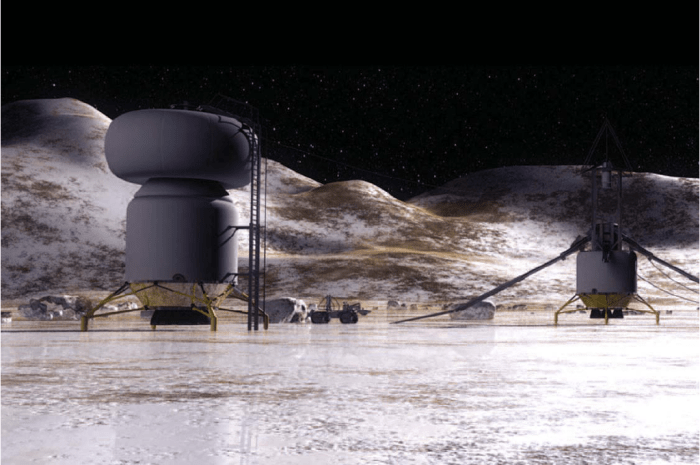
A possible base on the surface of Callisto. Credit: NASA
Artist’s impression of a possible base on the surface of Callisto. Credit: NASA

But I shall persevere. I’ve put too much into this idea to abandon it halfway, and this is one novel that I am determined to see through to completion! So – and I apologize in advance for this – expect to hear me blab a lot about it in the weeks and months to come. And you can bet I will be blabbing non-stop about it once its finished. Thanks to all those who are still paying attention 🙂


The Cronian Incident – Part II Complete!

The Cronian Incident – Part II Complete!

Hey folks! In recent months, I’ve hit two milestones in the writing of my novel. The first occurred weeks ago, when I chose to change the title. The second, and more important, is that book is now half done. Yes, with part II of the story complete, and approximately 40,000 words down on paper, the novel is now halfway towards completion. That means this book is not only out of the crib and walking, its off and running. Now it just needs to avoid any nasty spills and it will be in business!

But first, let me explain why I renamed it. Basically, this book is about an “incident” that takes place on one of Saturn’s moons (Titan). Here, a high-profile figure connected to terraforming interests on Mars goes missing. The investigation into this mysterious disappearance takes the investigator (Jeremiah Ward) from Mercury, to Mars, and then to Jupiter’s moon of Callisto before moving on to Titan. Since the focus of the investigation is on the these two moons, I decided to use the name “Jovian”, since this term applies to any moon that orbits a gas giant.

Jupiter's larger (Galilean) moons, Callisot, Europa, Io and Ganymede. Credit: NASA
Jupiter’s larger (Galilean) moons, from left to right – Callisto, Europa, Io and Ganymede. Credit: NASA

But eventually, I found this name to be problematic. For one, the larger moons that orbit Jupiter – Io, Europa, Ganymede and Callisto – are often referred to as “The Jovian Moons” (derived from Jove, the archaic name for Jupiter). While they are more properly known as “The Galilean Moons” (after their discoverer, Galileo), the name is applicable here more than with any other moon in the Solar System. Specifically, Saturn’s moons are properly called Saturnian or Cronian.

Another reason I wanted to call it the Jovian Incident was because I wanted it to be a compact volume consisting of three parts. Part I (Hermians) takes place on Mercury and shows the life of convict laborers; Part II (Martians) shows what life is like on a planet in the inner Solar System; and Part III (Jovians) covers all the action taking place in the outer Solar System and shows how people in this part of the universe live.

However, I finally realized this structure wouldn’t fly. For one, it would cause confusion to say the incident was “Jovian” when the moon where it happened on is called Cronian in the book. Second, I knew the three part structure wouldn’t fly, since it would mean Part III would likely be longer than Parts I and II combined. So I decided to add a Part IV (“Cronians”), and rename the book “The Cronian Incident”.

Saturn's moon Titan, which figures prominently in the story. Credit: NASA
Saturn’s moon Titan, which figures prominently in the story. Credit: NASA

And with Part II complete and Part III underway, I have covered all the necessary exposition and background, and am now moving onto the action part of the story. I would say this is where the fun part begins. But as I am sure many would agree, once you are half done a project, completing it somehow feels more difficult. For me, starting something is the easy part. Building on that foundation is also fun. But getting it from a work-in-progress to a finished work, that’s the hard part!

So feel free to wish me luck. Also, thanks for staying abreast of my progress. For those who had a helping hand, I intend to make this book available, free of charge, once its ready. And unlike some of the thing I wrote, it should work out to a (relatively) compact 80,000 words. No tomes here!

More to follow, stay in touch!

Top Image Credit: Lightfarm Studios

The Cronian Incident – Factions in the Future


future_city
Future City [3] by josueperez79 at deviantart.com
Hi again folks! I’m back with some thoughts from my most recent story project – The Jovian Incident. I know, what else is new, right? Writing can be a self-indulgent process. But if there’s one thing I’ve learned, its that sharing helps when it comes to developing a story. It helps you articulate your thinking and ideas, especially if respected peers tell you what they think (hint, hint!)

As I also learned a long time ago, any science fiction piece that deals with the distant future has to take into account how human beings in the future go about organizing themselves. In this future world, what are the political blocs, the alliances, the rivalries – the ways in which people are united and divided? Well, I gave that a lot of thought before sitting down to pen the book (which is into chapter 11 now). And this is the basic breakdown I came up with.

Extro Factions:
For starters, people in the future I am envisioning are tentatively divided into those that live in the inner and outer Solar Systems. But that geographic divide is merely representative of a much bigger issue that divides humanity. Whereas the people living on Earth, Mars and Venus largely fall into the category of “Extro” (i.e. Extropian, people who embrace the transhuman ethic) people in the outer Solar System live simpler, less augmented and enhanced lives (“Retro”).

But within this crude division between people who believe in going beyond their biological limitations and those who believe in respecting them, there are plenty of different social, political and ideological groups to be found. Here’s a rundown on them, starting with the Extro factions…

The Formists:
Founded by Piter Chandrasekhar, one of the first colonists of Mars, the Formists are a faction dedicated to the full-scale terraforming of the Red Planet. The purpose of this, obviously, is to allow for full-scale colonization, which is something that remains impossible at this point in the story. All inhabitants on Mars lived in sealed domes, all transit takes place in pressurized tubes or on flyers, and anyone venturing out onto the surface is forced to wear a pressure suit with life-support systems.

Mars_terraforming
Mars Terraformed by Daein Ballard

Currently, the Formist faction is run by Emile Chandrasekhar, Piter’s grandson. And for the past few decades, they have been busy procuring resources from the outer Solar System to aid in the terraforming process. This includes supplies of methane, ammonia, ices, and lots and lots of comets.

However, they are also busy trying to ensure that the process will have a minimal impact on the settlements and those living within them. Altering the planet’s atmosphere will definitely have a significant impact on the landscape in the short-term, such as sublimating all the water ice in the Martian soil and in the polar caps. Once that water begins to flow, much of the surface will find itself being swallowed up by newly-created oceans. So naturally, the Formists must proceed slowly, and make sure all settlements on Mars agree to their plans.

While the Formist faction is largely centered on Mars, they have counterparts on Venus as well – known as The Graces (after the children of Aphrodite). Here, the process is significantly different, and involves converting the existing atmosphere rather than increasing its density. But the goal is the same: to one day make Venus a living, breathing world human beings can set foot on.

The Dysonists:
Among the Extros, there are also those who believe humanity’s future lies not in the stars or in the terraforming the Solar System’s planets, but in the space that surrounds our Sun. They are known as the Dysonists, a faction that is intent on building a massive swarm of structures in the inner Solar System. For some, this calls for a series of rings which house the inhabitants on their inner surface and provide gravity through endless rotation.

fractal_dyson_sphere_by_eburacum45-d2yum16
This artist’s concept of a Dyson sphere is via SentientDevelopments.com

For other, more ambitious Dysonists, the plan involves massive swarms of computronium that will contain a sea of uploaded personalities living in simulated environments. Both the swarms and the powerful bandwidth that connects them will draw energy from the Sun’s rays. These individuals consider themselves to be the more puritan of Dysonists, and believe those who advocate buildings rings structures are more properly known as Nivenists.

The process of converting all the “dumb matter” in the Solar System into smart matter has already begun, but in limited form. Within a few generations, it is believed that the Sun will be surrounded by a “Torus” of uploaded minds that will live on while countless generations come and go. Dysonists and their enclaves can be found on Near-Earth Asteroids, in the Main Asteroid Belt, and with committed supporters living on Venus, Mars, Earth, the Moon, and Ceres.

The Habitationists:
Inspired by Gerard K. O’Neill, the inventor of the O’Neill Cylinder, the Habitationists began as an architects dream that quickly expanded to fill all of known space. In the 21st century, Earthers looking to escape the growing population crisis began migrating to space. But rather than looking to live on distant worlds or the Moon, where the environment was harsh and the gravity limited, they decided to set up shop in orbit. Here, supplies could be shipped regularly, thanks to the advent of commercial aerospace, and gravity could be simulated at a full g thanks to rotating toruses.

By the mid 22nd century, Low Earth Orbit (LEO) Habs had become all the rage and the skies became somewhat saturated. The existence of Earth’s space elevator (The Spindle) only made deploying and supplying these Habs easier, and a steady drop in the costs of manufacturing and deploying them only made them more popular. As such, Terran architect Hassan Sarawak, who had designed many of the original habitats in space, began to busy himself designing a new series of Habs that would allow human beings to live in space anywhere in the Solar System.

Lightfarm Studios
Artistic impression of the inside of an O’Neil Cylinder. Lightfarm Studios

By the end of the 22nd century, when the story takes place, large cylinders exist in several key places in the Solar System. Most are named in honor of either their founders, those who articulated the concept of space habitats, or those who believed in the dream of colonizing space itself (and not just other planets and moons).  These places are thusly named O’Neil’s Reach, Clarkestown, Sawarakand, and New Standford.

The Seedlings:
As the name would suggest, the Seedlings are those intrepid Extropians who believe humanity should “seed” the galaxy with humanity, spreading to all solar systems that have confirmed exoplanets and building settlements there. But in a slight twist, they believe that this process should be done using the latest in nanotechnology and space penetrators, not slow interstellar ships ferrying human colonist and terraformers.

To the Seedlings, who can be found throughout the inner Solar System, and on some of its most distant moons, the idea is simple. Load up a tiny projectile-ship with billions of nanobots designed to slowly convert a planet’s climate, then fire it on a trajectory that will take it to an exoplanet many generations from now. Then, prepare a ship with colonists, send it on its merry way into space, and by the time they reach the distant world, it will be fully prepared for their arrival.

utility_fog
At this point in the story, the Seedlings first few missions are still in the planning stages. They’ve got the technology, they’ve got the know-how, and they know where the right candidate planets are located. All they need to do know is test out their machines and make sure the process works, so that they won’t be sending their colonists into a deathtrap.

Sidenote: this idea is actually one I explored in a short story I am trying to get published. If all goes well, I am the short story and this full-length idea can be connected as part of a singular narrative.

Retro Factions:
And now we come to the people who live predominantly in the outer Solar System, the folks who found life on Earth and the inner worlds unlivable thanks to its breakneck pace and the fact that life was becoming far too complicated. These are the people whom – for religious, personal, or moral reasons – chose to live on the frontier worlds in order to ensure something other than humanity’s survival as a species. For these people, it was about preserving humanity’s soul.

Organics:
In the mid to late 21st century, as biotech and cybernetics became an increasingly prevalent part of society, a divide began to emerge between people who enhanced their biology and neurology and those who did not. While the former were in the minority for the first few decades, by the latter half of the 21st century, more and more people began to become, in essence, “transhuman” – (i.e. more than human).

Cyber_Girl
Cyber Girl by Fausto De Martini

At the same time, fears and concerns began to emerge that humanity was forsaking the very things that made it human. With lives becoming artificially prolonged, human parts being swapped for bionic or biomimetic implants, and brains becoming enhanced with neural implants and “looms”, humanity seemed on course to becoming post-human (i.e. not human at all).

And while the concerns were justified, few who could afford such enhancements seemed to be willing to forsake the convenience and necessity they represented. In a world where they conferred advantage over the unenhanced, choosing not to augment one’s body and mind seemed foolish. But between those who could not afford to, those who were forbidden to, and those who chose not to, eventually a new underclass emerged – known as “Organics”.

Today’s organics, who live predominantly in the outer Solar System or isolated pockets in the inner worlds, are the descendants of these people. They live a simpler life, eschewing most of the current technology in favor for a more holistic existence, depending on various levels of technology to maintain a certain balance.

Fundies:
Naturally, human beings in the late 22nd century still have their faiths and creeds.  Despite what some said in previous centuries, mankind did not outgrow the need for religion as it began to explore space and colonizing new worlds. And when the Singularity took place in the mid 21st century, and life became increasingly complex, enhanced, and technologically-dominated, the world’s religiously-devout began to feel paradoxical. On the one hand, religion seemed to be getting more unpopular and obsolete; but at the same time, more rare and precious.

The-Common-Foundations-of-Religions-and-Theology-Evolutionary-Tree-of-Religions
To be fair, there was a time when it seemed as though the prediction of a religion-less humanity might come true. In the early to mid 21st century, organized religion was in a noticeable state of decline. Religious institutions found it harder and harder to adapt to the times, and the world’s devout appeared to be getting increasingly radicalized. However, in and around all of these observable trends, there were countless people who clung to their faith and their humanity because they feared where the future was taking them.

In the current era, the outer Solar System has become a haven for many sects and religious organizations that felt the Inner Worlds were too intolerant of their beliefs. While there will always be people who embrace one sort of faith or another on all worlds – for instance, billions of Extros identify as Gnosi or Monist – the majority of devout Kristos, Sindhus, Mahavadans, Mahomets, and Judahs now call the worlds of Ganymede, Callisto, Europa, Titan, Rhea, Iapetus, Dione, Tethys, Titania, Oberon, Ariel and Umbriel home.

The vast majority of these people want to live in peace. But for some, the encroachment of the Inner Worlds into the life and economies of their moons is something that must be stopped. They believe, as many do, that sooner or later, the Extro factions will try to overtake these worlds as well, and that they will either be forced to move farther out, colonizing the moons of Neptune and the Kuiper Belt, or find homes in new star systems entirely. As such, some are joining causes that are dedicated to pushing back against this intrusion…

Chauvians (Independents):
Many in the past also thought that nationalism, that sense of pride that is as divisive as it is unifying, would also have disappeared by this point in time. And while humanity did begin to celebrate a newfound sense of unity by the late 21st century, the colonizing of new worlds had the effect of creating new identities that were bound to a specific space and place. And given the divisive political climate that exists in the late 22nd century, it was only natural that many people in the Outer Worlds began preaching a form of independent nationalism in the hopes of rallying their people.

Révolution_de_1830_-_Combat_devant_l'hôtel_de_ville_-_28.07.1830
Collectively, such people are known as “Chauvians“, a slight bastardization of the word “Jovian” (which applies to inhabitants of any of the outer Solar System’s moons). But to others, they are known simply as Independents, people striving to ensure their worlds remain free of external control. And to those belonging to these factions, their worlds and their people are endangered and something must be done to stop the intrusion of Extros into the outer Solar System. For the most part, their methods are passive, informative, and strictly political. But for others, extra-legal means, even violent means, are seen as necessary.

Examples include the Children of Jove and the Aquilan Front, which are native to the Galilean moons of Jupiter. On the Cronian moons, the Centimanes are the main front agitating for action against the Extros. And on the Uranian moons, the organizations known as The Furies and the Sky Children are the forces to be reckoned with. Whereas the more-moderate of these factions are suspected of being behind numerous protests, riots, and organized strikes, the radicals are believed to be behind the disappearance of several Extro citizens who went missing in the Outer Worlds. In time, it is believed that a confrontation will occur between these groups and the local authorities, with everyone else being caught in the middle.


And those are the relevant players in this story I’m working out. Hope you like them, because a few come into play in the first story and the rest I think could become central to the plots of any future works in the same universe. Let me know what you think! 🙂


The Cronian Incident – The Inspiration Process

Saturn's moon Titan, which figures prominently in the story. Credit: NASA
Saturn’s moon Titan, which figures prominently in the story. Credit: NASA

Good news from my escritoire people! That’s writing desk for those of you who don’t speak French and/or are uncultured ;). The story, which I recently talked about, is coming along nicely. The other night, I put the finishing touching on Chapter 5, am now busily writing Chapter 6, and am starting to feel like this idea has legs. Now, I just need to make sure it can walk on its own. Because believe it or not, good ideas write themselves.

So here’s one of the biggest issues I’ve been wresting with so far for the story. And it’s an issue so very difficult and controversial that it deserves to be in all-caps and have line all to itself…

DRUG ABUSE!

In this story, I’ve made a big deal about the fact that the main character – Jeremiah Ward – is a former investigator who was disgraced. The reason for this has to do with an addiction that he developed as a result of his work and living the Extro lifestyle. Basically, I decided that he began taking a narcotic substance which, in his day and age, triggers feelings of euphoria and a sense of being “outside of time”. All it needs is a name…

While discussing the idea with a friend, they surprised me by saying that what i described sounding a lot like their own experience. As I put it, the character of Ward developed a substance abuse problem in the course of his career because after living for many decades with implants, neural augmentation, and biomedical enhancements – all of which were required in order for people to “keep up” with the rapid pace of change – he routinely felt the need to balance himself out. In the words I have planned for the story, he claimed that the drugs “made him feel more real”.

She immediately understood what I meant, and went on to tell me about how in her own previous job (a very high-stress and difficult profession) she had developed an addiction for opiates. Like so many people who work in fields like the military, police work, medical care, emergency services, criminal justice, counseling, etc., drugs, alcohol, and other substances can become a crutch. Something you take just to get through the day and forget that tomorrow, you have to go back into it.

I drew that inspiration from stories I’ve heard about people who need to take medications regularly in order to avoid becoming erratic, depressed, or manic. I know a little bit about this myself, and have friend who require it to a far greater extent. The difficulty of taking anti-depressant, anti-psychotics, and the like is that while they help balance you out, you can sometimes feel like you’re not feeling natural or normal.

Many a time I have wished I could remember what it was like when I was younger, before I began struggling with OCD. While I can’t remember a time when I didn’t exhibit the symptoms of this disorder, there was a time when things like panic attacks, depression, high-anxiety and worrying over nothing were not a going concern. Things that set me off today were mere bothers back then, and I didn’t worry about half the things I worry about now. Truth is, I wish there was a pill that I could take that would make it all go away…

And that, I think, is the mentality behind substance abuse. It’s also what I think makes it so dangerous.

In any case, that’s the characters back story. It explains his fall from grace, his current circumstances (at the beginning of the story, he’s on a penal colony on Mercury) and offers a chance for redemption. All that’s left is to write about his journey from darkness to light, and come up with a name for the drug.

Seriously, any suggestions?

Oscar Mike – Making Progress

Power of WordsHey folks! Back with some good news on the creative writing front. A few weeks ago, I was given a bit of a reprieve when I took a step back from my responsibilities as Communications Manager with my friend’s startup company (Green Water Solution). As you may recall, they are the makers of the the ReFlow grey-water recycling toilette, a device that turns your bath water into toilet water to save about 40% of fresh water consumption.

And after two successful media blitz’s, I told the boss man I would like to step back and relegate myself to helping instead of being in charge. This I did largely because it was cutting into my article writing and teaching, which he totally understood. And with some of the time it freed up, I managed to get a little work done on my two biggest writing projects – Reciprocity and Oscar Mike.

Oscar MikeIn the case of the former, this involved ironing out the plot, selecting an antagonist, and finishing off the first five chapters. In the case of the latter, it meant polishing off a few chapters, and doing some research into where the third and fourth book in the series will go. The credit for this plot-related research goes to a newfound friend, Laurie Snyder.

After joining a Facebook discussion group called “Faith or Fact”, we got into a discussion and I noticed she was with the USAF and served in Colorado Springs. This is a location I was considering for the plot of the third book, so naturally I started asking questions about the armed forces and what life is like where she serves. What she revealed to me was most interesting!

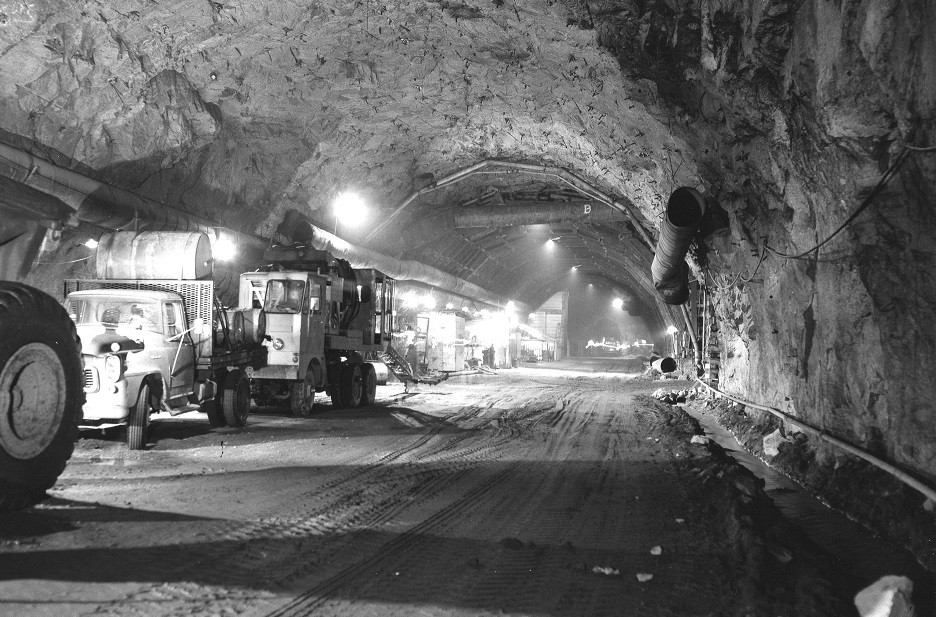
cheyenne_mountainNot only is Colorado Springs home to several major airbases, it is also not far from the Cheyenne Mountain Complex. For those of you who didn’t grow up during the Cold War, see Terminator 3, or watch Star Gate, perhaps some explanations are necessary. Cheyenne Mountain is the site the military installation and nuclear bunker that served as the nerve center for NORAD (the North American Aerospace Defense Command) during the Cold War, as well as numerous other defense and emergency services today.

The reason I thought this location might be useful to the plot of Oscar Mike is because of it’s proximity to New Mexico, where the series has been taking place so far. I knew that there were military bases in this city, but when she told me about Cheyenne Mountain, I seriously needed to slap myself upside the head! ***Spoilers ahead, so if you’re planning on reading Oscar Mike, you might want to tune out now…***

post-apocalyptic_soldier2Basically, I decided that for a third story-twist, the Rattlesnakes (i.e. the main characters of the story) would come into some frightening information about how the zombies migrate and the likelihood that they’d be moving north – through New Mexico and the American Southwest – in the near future. However, this information also came with an upside, in that the people who knew of this had also found a potential weakness to the zombies.

For years, military scientists had been working to discern a means of taking out zombie hordes that would not pose a significant risk to civilians. Being such a terrible pandemic, which turned every populated area into a battleground between infected and uninfected, they knew that any weapon of mass destruction – i.e. chemical, biological, nuclear, or incendiary – would cause massive collateral damage and civilian casualties.

shutterstock_102844133However, one weapon proved to be most effective against zombies while sparing humans, provided they had basic protection – nerve gas! Reasoning that the zombie virus infected the nerve stem and turned its victims into atavistic, blood-thirsty cannibals, it seems logical that an agent that attacked the nervous system directly and disrupted nerve signals would neutralize them.

Their hypothesis proved correct, and once the Rattlesnakes (aka. the main characters) learned of this, the task of finding an adequate store of nerve agents became paramount. As a result, the Rattlesnakes set out to establish contact with other military elements that are still active, and not hostile. To the north, Peterson Air Force Base is still believed to be intact, though direct communications had not taken place for some time.

A mission is therefore planned which will send a team of grunts there to re-establish contact, or take possession of the base should it prove to have fallen. Once that is done, they will need to get their assess to Cheyenne Mountain and retrieve the stores of chemical weapons that are believed to still be cached inside. Ultimately, what they find there will tell them much about the war, the pandemic, and the politics that have set in amidst all the chaos.

shutterstock_99981176After the events in Papa Zulu, where military elements out of the east attacked the Rattlesnakes (hoping to steal their research on a vaccine) the Rattlesnakes were left with a whole lot of unanswered questions. And while it was clear that Major General Thur (“The Mage”) knew something about it, he is unable to provide them since he was severely wounded in the attack and remains in a coma. So book three, I am hoping, will fill in all the blanks I’ve deliberately left so far.

And I had to admit, the idea that nerve gas could be a potential instrument for winning the war seemed like an interesting twist too. One of the most heinous and terrible weapons ever created, now offering humanity with a chance for salvation. And naturally, there are those who are thinking of misusing it, allowing their own bitterness and hatred towards the zombies to consume them and commit great evil. What do you think?

At the moment, book three – aka. Oscar Mike – is about half done. I am hoping to get it all done before the summertime and finally put it on the shelves. For those who’ve been following the series regularly (though they are few in number, but strong in their commitment) I feel I’ve kept them waiting unfairly. A writer should never keep his audience in suspense for years on end, even if he is rich enough to get away with it (finish them books, George RR Martin!)

Reciprocity – Making Progress

future-city-1Hey all. Just wanted to let people know that I’m still around. And as luck would have it, I’ve found myself with some free time; free time that I’ve put towards creative writing again! In the past two weeks in fact, I have come up with a lot of new ideas for both Oscar Mike and (more importantly) Reciprocity. On this latter project, I’ve spent the past few days working through the half-written spots, and now I have a full five chapters done.

More importantly, I have revised the overall plot yet again. The last time I did this (not that long ago), I chose to change the nature of the antagonist to that of a Chinese ex-pat who was a former member of Unit 61398 – the People’s Liberation Army’s cyber warfare division. His name was Shen, and his plot involved a string of kidnapping, double-dealing, and cyber-terrorism that threatened to change the global geopolitical balance.

I liked this idea because I felt that after a good deal of research, the focus of the story should be on post-communist China, where a great deal of social confusion and economic turmoil was leading to the emergence of a semi-fascist state. In a pattern that is reminiscent to modern-day Russia, Shen sought to take advantage of these changes in order to unleash a massive cyber attack.

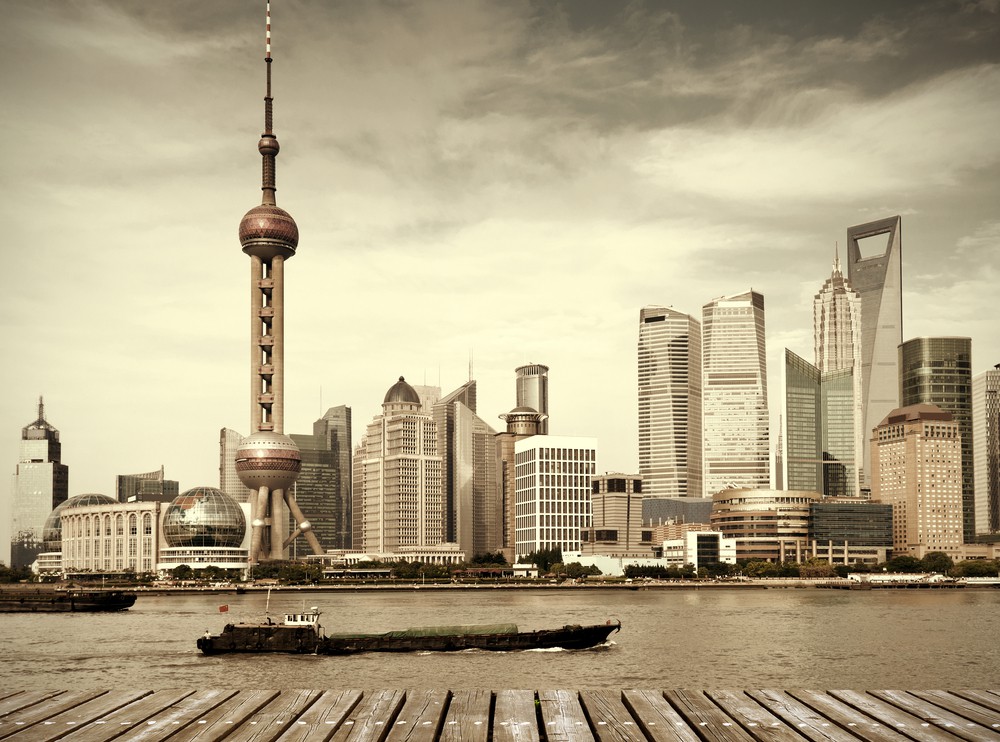
The downtown district of Shanghai. One of many locations in the story.
The downtown business district of Shanghai. One of many locations in the story.

This would have the effect of completely preoccupying the west, disabling the US Pacific Fleet, and allowing China’s new government to occupy Taiwan and the South China Sea, thus asserting their territorial sovereignty over the region. While this was interesting (at least to me), it still fell short. What I really wanted was an antagonist in the story that would make the focus be all about the two greatest issues we will be facing in the not-too-distant future.

These issues are none other than climate change, which will result in more in the way of droughts, wildfires, flooding, coastal storms, tornadoes, and diminishing resources; and technological progress, which will result in the pace of change and getting faster and faster to the point of total unpredictability.

For awhile, I’ve been writing about these subjects, and they were supposed to be the centerpiece of the story. So here’s the new plot, in a nutshell: The year, same as always, is 2030. A technological magnate’s child disappears while slumming in the Pacific Northwest in what appears to be an act of kidnapping. However, his disappearance is in fact orchestrated as part of a complex cyber intrusion designed to steal company data.

InternettrafficThe man leading this theft – who is known only as Zeke – intends to leverage this data in mainland China, where a former member of Unit 61398, now himself a technological magnate, is in possession of a quantum-based cyber virus of last resort, a weapon that was created for a war that never happened. This virus is known as “Baoying”, which in Chinese, loosely translates to Reciprocity.

Zeke knows about this weapon because he spent years developing contacts around the world, bringing together gun runners, terrorists, socialist and anarchist militias, and Chinese ex-pats that reaches from Central Asia and the Middle East all the way to South America and the South Pacific. Though separated by ideological differences, these organizations are united in wanting to see an end to the status quo.

Zeke, however, has his own agenda. A one-time member of the technological magnates he is now using as pawns, he saw so much of the world and witnessed atrocities firsthand. He also witnessed how the privilege of developed countries is paid for in the blood of others. After a scandal in which he publicly aired all of his companies many shady dealings, his partners crucified him and cast him to the fringes of society.

^In an age where the richer nations are facing the prospect of limitless energy, quantum computing, abundant resources and post-mortality while other states are failing due to displacement and mass starvation, Zeke is hoping to level the playing field once and for all. He is a genius and a man moved by a personal sense of justice. But most of all, he is a man dealing with terrible demons and some deep trauma that he can’t begin to suppress.

This kind of plot, I think, works so much better. The antagonist seems much more socially relevant, the story more focused on the big issues I like to explore, and it all seems a little less hawkish than a story where the Chinese are essentially the bad guys. But most of all, I envisioned a climactic scene where the antagonist – while explaining his motivations – says something like this:

I want a future I can control. I want a future where I have a choice. I am sick of unpredictability, or chaos and confusion. I’m sick of people being left behind, and our world being torn apart. Tomorrow, everyone will find themselves on common footing. Tomorrow, we will begin thinking towards our common future.

Try getting something like that out of a former communist who just wants to see his country win a war! Well, that’s the idea as I see it right now. What do you think? Sound good?

Reciprocity – First Peek, Part II

shutterstock_204508153

The air stunk of mildew of cigarettes. At least in the front foyer. Farther inside, the aroma of cooking smells and latrines began to intensify and take precedence. The interior floor space looked gutted, nothing but concrete floors and beams with barely any demarcation between one section and the next. In a central beam that lay several dozen meters inside, a large monitor had been mounted that was tuned to the local news.

The reporter recapped the game-winning goal by Villanueva, then quickly moved on to cover the displacement camps in Darwin clashing with police. After a few introductory words Shen could not hear, they moved to aerial footage of people with tan-complexions rioting, overturned cars and fires, and light-skinned police retaliating with shields and batons.

They passed many improvised rooms as they walked through the building proper. Tall stacks of crates or sheets of plywood, drywall or corrugated plastic that denoted the boundaries of different rooms. And inside, those who were at home sat huddled before monitors or gas stoves, cooking their afternoon meals or engaged in some online gaming. In one, a young lady as busy pleasuring and older man. Both parties looked up to acknowledge them as they passed a bead curtain that acted as the doorway, and then went right back to their carnal activity.

“This way,” said Shen, as they neared the stairwell at the end. The smell of mildew followed them, and on every stoop, a new waft of cooking smells. By the time they reached the fourth floor, the density decreased and it looked as if the entire space was dominated by one living area.

Not far from the doorway, two young toughs sat on some stacked plastic crates and exchanged words. The taller one wore a faux leather vest, what appeared to be tā moko ink on his arm. The smaller one wore a white tank and jeans, and his eyes glowed with a band of copper that indicated he had displays. Both jumped to their feet as soon as Shen and Ping walked in.

The tall one snapped his fingers, alerting three more youths in the room to approach them. Shen noticed the ink on his arm beginning to change shape, the intricate system of lines morphing to form something entirely different.

When the tall one spoke, he did so in Tagalog. “Ano ang gusto mo, tao?”

A small field of green characters formed in the lower right lens of Shen’s glasses.

What do you want, man?

“Is Wáng around?” he replied in Mandarin. He directed it to the smaller one, who immediately accessed a translation app and relayed it to the tall one. He stuck to Tagalog, and replied just as curtly.

“Siya ay hindi dito!”

He is not here!

Shen looked to Ping and reached into his pocket. Everyone reacted at once, pulling out assorted handguns and pointing them at him. Ping moved too, producing the impact gun he had inside his jacket. The weapon clacked loudly as he whipped it out, it’s targeting laser focused on the forehead of the shorter man.

“Stop!” Shen yelled.

The tall one’s ink had changed again. The line segments now converged to form the face of an angry tiger, mouth agape, fangs fully bared. Its purpose was clear to him now.

Dynamo ink, adrenal-activated, he thought. A way of letting people know exactly how pissed he was. He imaged there were many kids in Tondo that had them, perhaps it was a local gang’s calling card. Understandable that Wang had taken to hiring a few for security.

“Everyone just relax,” he said, raising his free hand defensively while the other slowly withdrew something from his jacket pocket. The tall one moved quickly to fetch what he’d removed as soon as it was clear.

A small folding leather case which he opened and examined. The display card inside read off a designation for a unit that no longer existed, and an army that went by a new name. But the identification and the picture were clear enough. A look confusion was the tall one’s reaction, which he directed at Shen. Shen nodded to him, motioning to the far end of the floor space, where he imaged Wáng would be.

“Go on. He’ll know what it means.”

The tall one said something to the others in Tagalog, and then ventured to the back, disappearing behind a large partition wall. All the weapons remained trained on them while they waited. Shen stood perfectly still and never stopped smiling. Ping, meanwhile, kept his weapon trained on the short one, his finger gently resting against the gun’s trigger. He, in turn, was now aiming his Glock squarely back at Ping.

Shen knew that if things went south, Ping would be the first to get a shot off. The make and model of the pistols the boys had indicated that they were old-world relics, double actions pistols with casings. No digital architecture in their design. In the time it took them to squeeze their triggers and ignite a single round, Ping’s weapon would have accelerated a full burst of caseless slugs into the short one’s forehead.

Of course, he also knew that that would be the only shot Ping could get off. Regardless of how fast the boy was, they had three more weapons aimed at them. And Shen knew he could only disarm one before the remaining three got a shot or two off at him.

Shooting first didn’t count much when you were horribly outgunned. Luckily, the tall one emerged again from behind the partition and yelled to his friends.

“Sabi niya ang mga ito ay okay!”

He says they are okay!

Shen smiled. He nodded to the men around him, who looked slightly dejected as they lowered their weapons. Ping lowered his as well and began to follow, when the tall one made an addendum.

“Siya ay nag-iiwan sa kanyang baril dito!”

He leaves his gun here!

Shen sighed and looked to Ping, nodding to his weapon. Ping didn’t argue, and flipped it around to pass it off to the nearest of Wáng’s henchmen. While reluctant, he didn’t appear particularly worried. He knew that the second any one of them tried to turn it on him, they’d receive a 2000 volt surprise.

Without further delay, they made it past the partition wall, and into the far end of the fourth floor. Shen immediately became aware of a long counter positioned next to the partition, and a large workstation pushed back against the far wall. Another thug-like man with dynamos was standing behind the counter, while at the workstation, a single Chinese national sat amidst a pile of scattered components and tools.

From the looks of things, he had been working on a wrist-mounted portable before they had arrived. Now, his eyes were fixed on Shen’s little “gift”. A monocle sat over one eye, but he wasn’t using it at the moment. As he gazed at the old credentials, no augments, apps or mediation were needed to make sense of it. Everything about it was known to him, as was the message it carried.

“Comrade Shen,” he said in Mandarin, his voice tired and harsh.

“Comrade Wáng,” he replied. “It’s been a long time.”

“Not long enough.” He kept his eyes fixed downward. “I can only imagine you coming here means that you are in some kind of trouble.”

Shen chuckled and advanced towards Wáng several paces. The man at the counter kept eying him carefully, his right hand clenching at something underneath. He paid him no mind, leaving that for Shen to do as he followed behind.

“Strictly speaking, I am no trouble. Nothing new, at least, old friend. But there have been some developments. Things which I need to speak to you about.”

Wáng looked at him momentarily, a look of bitter mistrust in his one eye. He looked back to the credentials quickly, and removed the monocle. His eyes took on a faraway look then, an expression that seemed to contain equal measures of nostalgia and sadness.

“Do you remember the day when we you first became a member of the unit?” he asked.

Shen took that as an invitation to come closer. “Yes, I do.”

“You should,” said Wáng, a trace of bitterness returning to his face. “For you, it was not as long ago. When I joined, the unit was still in its infancy. The concept of warfare not fought with tanks, bombs and assault rifles was still alien to most in the army. But those higher up had wisdom enough to know that information was the new measure of a nation’s wealth. It only served to reason that it would become the basis of warfare as well.”

Shen advanced the last few steps that stood between them.

“Methods that are not characterized by the use of the force of arms, nor by the use of military power, nor even by the presence of casualties and bloodshed, are just as likely to facilitate the successful realization of the war’s goals, if not more so,” Shen said, reciting the famous quote.

“You remember?” Wáng’s face momentarily brightened.

“Of course I do.” Shen replied, keeping his tone as even as he could. “And it’s what brings me here.”

Wáng removed the monocle and began to look at him ominously. He gave a quick glance at the man behind the counter, who stirred ever so slightly. Ping stood tensely by, poised to strike at the man with whatever weapons he still had at his disposal. At the moment, that was just his hands and feet. Perhaps it was time to get the point.

“I need to find Li.”

“Oh?” said Wáng. “I assume you mean our mutual acquaintance, from the old days?” Shen nodded. “I haven’t seen him in years.”

Shen removed his glasses and rubbed his tired eyes. It had been a long day, and there were limits to his patience as well. “I know you make regular trips to the mainland, old friend. And I know that you’ve met with members of the unit on your trips before.”

Wáng cocked an eyebrow. “You’ve been spying on me?”

“Not necessary, or possible given my current circumstances. But I do hear things. And I know that you facilitate entry to the mainland for people looking to get back into Zǔguó. I am one such person.”

Wáng nodded. “I also hear things, Comrade. And I find it hard to understand why you would want to return a place that does not welcome you. If anyone at Interior knew you were setting foot on native soil, they would surely have you shot on sight.”

“I know,” said Shen. “But I know that you can help with that.”

“What is it that you think I can do?”

“I will need biometric IDs for myself and the young one here, ones which I know you can provide. And I need you to facilitate a meeting with Li. I will take care of the rest, and see to it that you come away all the richer for it.”

“What do you want from Li?” he asked finally.

Shen inhaled deeply and looked him in the eye as he said it. “Boaying.”

Wáng went silent for a moment and looked caught between disbelief and amusement. Eventually, he opted for the latter and began laughing.

“Boaying does not exist, old friend. It was lost with the ‘restructuring’, like so much else. I’m sorry you wasted your time –”

Shen raised his hand to interject. “I know that is not true. I know that certain copies were made and that Li had access. If you could just –“

“What you are asking for is not possible!” Wáng said, cutting off all talk. “And even if it were, I would be hard pressed to think of anything that would justify the risk for me.”

“Oh?” said Shen, genuinely surprised. “I can think of much and more in that regard. I would imagine you would leave this hovel behind in a heartbeat if you could afford to do so. And I know that Comrade Li would be most grateful to you once he hears what I have to offer. He has accrued great wealth and power back home.”

“Quite,” said Wáng, rather bitterly. “Such are the rewards for those who ingratiated themselves with the new government.”

“Yes, but his power currently has limits. What I am proposing to him could potentially benefit him more than anything the Tuánjié zhèngfǔ has given to him. And knowing that you helped facilitate would put him in your debt for life.”

Wáng once again looked caught, this time between disbelief and anger. Mentioning his current surroundings, and raising the issue of Li’s own status back home was sure to do that. For a moment, neither man said anything. The silence only broke when Wáng looked in Ping’s direction and frowned.

“This one I do not recognize. He is new, yes?”

“He is that, yes.” Shen replied.

Wáng shook his head, drew in a deep breath and spat it out like it was bile. “He’s not even old enough to remember, is he? In fact, he looks barely old enough to know anything of what you are talking about.”

“Do not speak about me like I’m not even here!” Ping stepped forward with his hands curled into fists. The man behind the counter removed the submachinegun he had been concealing until now and aimed it at squarely at Ping. A small laser sight beamed in the dusty air, painting a small, steady dot on his right temple.

Shen looked at him angrily. Wáng could only respond with laughter.

“You see? He exhibits the petulance of the new generation. No deference at all.”

Ping face turned red and he was prepared to say something obscene, but thought the better of it. At this point, he had another gun aimed at him and was too far away to do anything about it. Shen was thankful at least that cooler heads were prevailing and the latest in Wáng’s group of thugs hadn’t lost control yet.

“One generation plants the trees, and another gets the shade,” Shen said, hoping to get them back on track. “Perhaps the fault lies in the world we left for them. It has corrupted them with excess and makes them forget.”

“Perhaps.” Wáng turned his attention back to the materials on his desk and began to tinker with them quietly. “But it too late to help that now. The world has moved on without us. My advice to you, Comrade, is to accept that.”

Shen waited momentarily. He was sure his old colleague would have more to say. When nothing came, he stepped back from the table and turned to Ping.

“I shall be in the city for a few more days. Please let me know if you reconsider.”

Wáng kept his eyes on his work and didn’t bother to reply. Shen turned to leave, but paused to say one last thing.

“Life certainly has not worked out the way any of us planned, old friend. Despite what you might think of the path I have chosen, I know that we share the same sense of loss. All that I ask is that you consider helping me right that wrong, and leave something better for those who follow in our footsteps.”

Wáng still would not acknowledge him. But Shen knew he had absorbed everything he had just said and that it made an impression. He came about again and walked by Ping, who seemed surprised and a bit beleaguered to see that they were leaving. Following Shen out, they returned to the thugs that guarded the stairwell where he retrieved his weapon. Stern glances were exchanged between them as they walked out, but Ping ignored them. His only concern at the moment was keeping up with Shen, and asking him the obvious once they were well out of earshot.

“Is that it? We’re just leaving?”

Shen slid his glasses back on and powered them back up. He had a number of new messages, all encrypted. No doubt, they were from his contacts back east. “He will come around. Just give him some time to think it over.”

“And what if he doesn’t?”

Shen smiled. “You do not know him as I do. He will not pass up an opportunity to place Li in his debt. And he is not as satisfied with his current predicament as he would pretend. He just does not want to admit as much openly. Give him time.”

Ping sighed, checking his weapon to make sure Wáng’s men hadn’t stripped it of its magazine. He was pleased to see that all the slugs were still there. “In the meantime, what do we do?”

They had come to the ground floor, where Shen stopped and turned to look at him. “Same as always,” he said. “We stay with those who would harbor us, and hope that no one in Beijing realizes we are here. Otherwise, we can expect to be returning to Zǔguó ahead of schedule.”

Reciprocity – First Peek

shutterstock_117410959Happy Holidays everyone! Hope this post finds everyone safe, snug and warm in their homes, preferably surrounded by loved ones and lots of new swag! While I’m on break from my writing jobs, I thought I’d switch gears and get back to my personal writing for a bit.

And as luck would have it, I made some headway with my latest story idea – the near-future thriller Reciprocity – and I thought I’d share some of it. So far, I’ve got a few introductory chapters, and a prologue that introduces the antagonist. So, over the next few days, I thought I might share some of this work and see how it stacks up.

Here is the first snippet, which takes place in the Philippines in the year 2029. Enjoy!

*               *               *

Manila, Philippines, Asia-Pacific Economic Cooperative

He was bathing in a sea of connectivity, looking out onto the second skin that blanketed the Earth. There was virtually no corner of it now that wasn’t covered, but finding oneself in a major city was like standing directly in a pivot. After spending many weeks off the grid, it was like stepping back into the light of day after days in a dark cave. His entire body awash with high-fidelity photonic light and a microwave glow.

He felt like his skin should be burning, and yet it wasn’t…

Setting his glasses to normal view, the microwave landscape disappeared and was replaced by the stark, colorful reality of the favela. At once, his sense adjusted the combination of movement and sound that was so common to such places. A world of congestion, decay, and waste, yet teeming with so much life. Shen remembered coming to the region before, back in the day before reality could be mediated and augmented.

Now, the unseen energy and information that coursed through the landscape was illustrated in any number of ways.

At the moment, it took the form of a dozen colorful overlays that played across his contacts. He looked left and right along the thoroughfare and was awarded with helpful icons and some less-than-helpful adverts. Compared to the Metro area, the visual landscape here was not nearly as cluttered. But there were still tourist markers and small tags that he could access if he so chose. Slum tourism had become its own business of sorts, a form of adventure tourism that appealed to the reckless and irresponsible.

And for their convenience, Tondo’s checkered past and the locales that had played a role were mapped out and catalogued. They walked a few more blocks, sticking to the overhang that shaded them from the beating sun. Bagyó season was fast approaching, and the air had taken on a sticky, wet quality. For those unaccustomed, it could be the most stifling thing in the world. But for expats accustomed to venturing across the Pacific, it was within the realm of the ordinary.

They passed several rows of vendors; men, women and children who had brought their stands directly out into the street, offering large piles of oranges, bananas, watermelon, dragonfruit, mangosteens, and lychees. Farther on, they were hit with the scent of fresh and rotted produce, and the stands changed their offering to provisions of cassava, okra, pak choi, and bitter melon.

Much like the clothiers, toy sellers and peddlers or wearables that resided not far away, they would be sitting on the very edge of the streets until the weather turned. Until the rain began to pelt down with incredible fury and the flooding began. A tenacious folk, and one that seemed to respond to escalating catastrophes like the coming and going of the tide.

“Is that it?” asked Ping, pointing to a hazy standing structure at the end of the block.

Shen squinted to allow his contacts to zoom in on the building, shrouded by dew and smog. An icon appeared over top that read Cathay Towers, and a small stub explaining the nature of the housing project and how its status was currently listed as Postponed Indefinitely.

“Yes, it is,” Shen replied, tapping on his glasses again to adjust the display. He cycled to IR and noted the sheer number of heat signatures located on the first three floors. “Looks like Wáng has found himself a colorful place to live.”

“Is it safe to just walk in?”

Shen looked to the fourth floor, noted the few bodies that were standing about. Another tap and the display adjusted again, aided by the small sensor suite attached to the outer frame. He zoomed and adjusted until the scanner had just the right resolution, producing signature of a different kind and in different color. Opal and green came together to indicate the outline of weapons, all small arms from the look of it.

“There’s not many protecting him. And their weapons are antiquated. We’ll have no trouble.”
They pressed on, moving through the sea of humanity and commerce. Upon reaching the thoroughfare that ran perpendicular to them, they passed into a different crush. Countless vehicles, smart and dumb, forced them to pick up their feet and weave through the tangled mass of metal and plastic. The shouts of vendors were replaced by cab drivers and commuters exchanging expletives in Tagalog, Spanish and English – often in the same sentence.

At the front entrance, a large set of double doors that were permanently open, they paused. Shen touched the small protrusion in his jacket pocket to make sure it was still there. An odd thing to do, but if things went awry in there, it was his assurance that they might make it through.

He looked to Ping, who appeared to be doing the same. Except in his case, his fingers tapped against the PDW stashed under his coat and next to his hip. In a pinch, he knew the boy could be counted on to retrieve it and squeeze off a maelstrom before anyone else got a shot. Hopefully, his old friend would be in a talking mood and it wouldn’t come to that.

“You ready?” he asked. Ping nodded, a look of hard resolve on his face. “Good. Stay close and try not to be appalled by what you see inside.”