Okay, that title might be a bit of a mislead, but after years of developing the technology, it seems that we might have something which is essentially the next best thing. Until recently, 3D printers were designed for use exclusively by trained technicians. And despite the ease with which modern 3D printers can be used, it is still difficult to design and prep the requisite models, which still requires expertise in modelling software.
But that too could be changing, thanks to the new MakerBot’s Digitizer Desktop 3D Scanner. Designed to supplement their printer (the Replicator 2) this device is capable of scanning any object, creating a three-dimensional model, and then uploading it to your printer where it will then be molded into solid form, bit by bit. In effect, people can now create objects as easily as they could print off an inkjet document.
The Digitizer was revealed for the first time at the South by South West (SXSW) Conference in Austin, Texas earlier today, where emerging technologies are being showcased alongside the latest in entertainment and music. And while the device was merely a prototype, one which is still undergoing testing and refining, MakerBot announced that they plan to begin commercial production very soon.
Which makes it official. Human beings now have access to Replicator technology and is one step closer to living in a Star Trek universe! Granted, were not quite to the point where we can generate anything, including food and precious metals, but this latest development has revealed to us a future where DIY can encompass just about anything. If a an appliance breaks in your home, just scan the faulty component and download it into your printer. No need to contact the manufacturer and activate that troublesome warranty!
Foods comes out here, waste goes in the recycling unit!
Naturally, there are concerns about the controversy this will create as well. While the Digitizer Desktop 3D Scanner will certainly be another big step towards making 3D printing more accessible, it’s also sure to add fuel the debate over the legality and copyright issues of duplicating real world objects. What’s more, the cost of each unit (most likely a few thousand dollars each) is pretty prohibitive for most households, raising the question of real access.
Nevertheless, this is still pretty exciting news. Since the beginning of recorded history, our collective economic models have been based on the idea of resource scarcity. But with further refinements and the ability to generate objects out of more materials (including the organic), all our economic models are likely to change and we could very well be embarking on a future where scarcity has effectively become obsolete.
Yes, with a little more time, research and cool gadgets, we could be witnessing the collapse of financial history. Where all units of value will be made useless and as a species, we’ll be one step closer to economic equilibrium! And I have to admit, this is one area of change that I find exciting, as opposed to scary!
The coming Singularity… the threshold where we will essentially surpass all our current restrictions and embark on an uncertain future. For many, its something to be feared, while for others, its something regularly fantasized about. On the one hand, it could mean a future where things like shortages, scarcity, disease, hunger and even death are obsolete. But on the other, it could also mean the end of humanity as we know it.
As a friend of mine recently said, in reference to some of the recent technological breakthroughs: “Cell phones, prosthetics, artificial tissue…you sci-fi writers are going to run out of things to write about soon.” I had to admit he had a point. If and when he reach an age where all scientific breakthroughs that were once the province of speculative writing exist, what will be left to speculate about?
To break it down, simply because I love to do so whenever possible, the concept borrows from the field of quantum physics, where the edge of black hole is described as a “quantum singularity”. It is at this point that all known physical laws, including time and space themselves, coalesce and become a state of oneness, turning all matter and energy into some kind of quantum soup. Nothing beyond this veil (also known as an Event Horizon) can be seen, for no means exist to detect anything.
The same principle holds true in this case, at least that’s the theory. Originally coined by mathematician John von Neumann in the mid-1950’s, the term served as a description for a phenomenon of technological acceleration causing an eventual unpredictable outcome in society. In describing it, he spoke of the “ever accelerating progress of technology and changes in the mode of human life, which gives the appearance of approaching some essential singularity in the history of the race beyond which human affairs, as we know them, could not continue.”
The term was then popularized by science fiction writer Vernor Vinge (A Fire Upon the Deep, A Deepness in the Sky, Rainbows End) who argued that artificial intelligence, human biological enhancement, or brain-computer interfaces could be possible causes of the singularity. In more recent times, the same theme has been picked up by futurist Ray Kurzweil, the man who points to the accelerating rate of change throughout history, with special emphasis on the latter half of the 20th century.
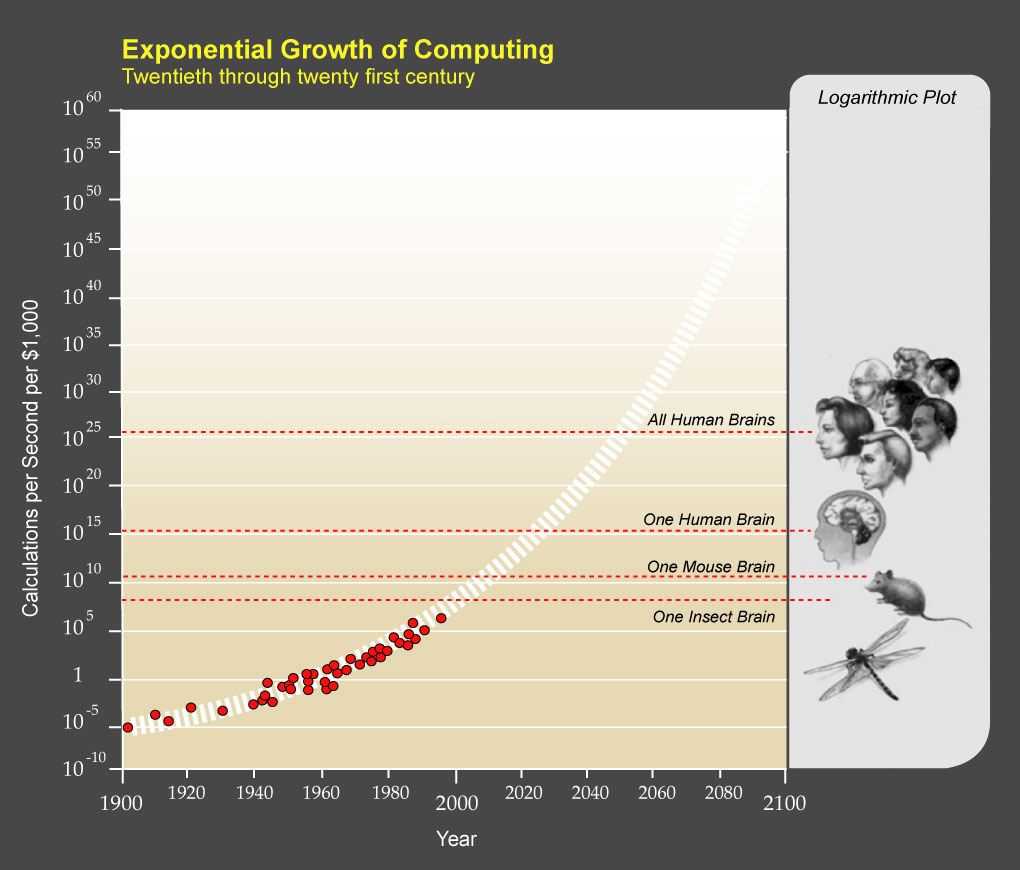
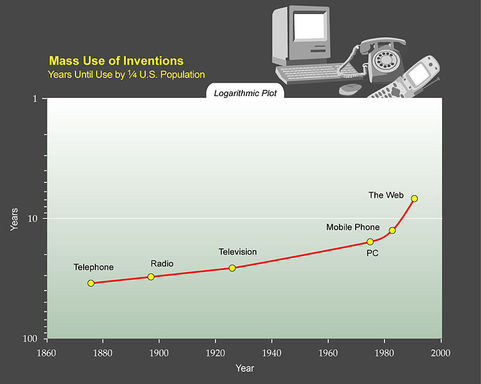
In what Kurzweil described as the “Law of Accelerating Returns”, every major technological breakthrough was preceded by a period of exponential growth. In his writings, he claimed that whenever technology approaches a barrier, new technologies come along to surmount it. He also predicted paradigm shifts will become increasingly common, leading to “technological change so rapid and profound it represents a rupture in the fabric of human history”.
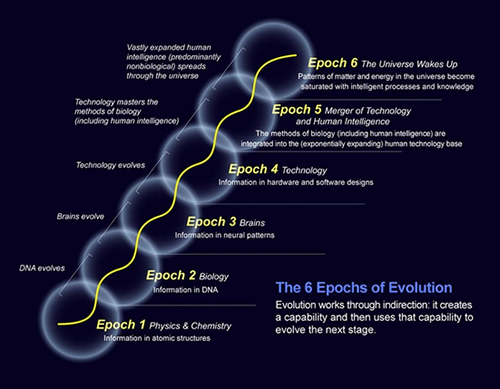
Looking into the deep past, one can see indications of what Kurzweil and others mean. Beginning in the Paleolithic Era, some 70,000 years ago, humanity began to spread out a small pocket in Africa and adopt the conventions we now associate with modern Homo sapiens – including language, music, tools, myths and rituals.
By the time of the “Paleolithic Revolution” – circa 50,000 – 40,000 years ago – we had spread to all corners of the Old World world and left evidence of continuous habitation through tools, cave paintings and burials. In addition, all other existing forms of hominids – such as Homo neanderthalensis and Denisovans – became extinct around the same time, leading many anthropologists to wonder if the presence of homo sapiens wasn’t the deciding factor in their disappearance.
And then came another revolution, this one known as the “Neolithic” which occurred roughly 12,000 years ago. By this time, humanity had hunted countless species to extinction, had spread to the New World, and began turning to agriculture to maintain their current population levels. Thanks to the cultivation of grains and the domestication of animals, civilization emerged in three parts of the world – the Fertile Crescent, China and the Andes – independently and simultaneously.
All of this gave rise to more habits we take for granted in our modern world, namely written language, metal working, philosophy, astronomy, fine art, architecture, science, mining, slavery, conquest and warfare. Empires that spanned entire continents rose, epics were written, inventions and ideas forged that have stood the test of time. Henceforth, humanity would continue to grow, albeit with some minor setbacks along the way.
And then by the 1500s, something truly immense happened. The hemispheres collided as Europeans, first in small droves, but then en masse, began to cross the ocean and made it home to tell others what they found. What followed was an unprecedented period of expansion, conquest, genocide and slavery. But out of that, a global age was also born, with empires and trade networks spanning the entire planet.
Hold onto your hats, because this is where things really start to pick up. Thanks to the collision of hemispheres, all the corn, tomatoes, avocados, beans, potatoes, gold, silver, chocolate, and vanilla led to a period of unprecedented growth in Europe, leading to the Renaissance, Scientific Revolution, and the Enlightenment. And of course, these revolutions in thought and culture were followed by political revolutions shortly thereafter.
By the 1700’s, another revolution began, this one involving industry and creation of a capitalist economy. Much like the two that preceded it, it was to have a profound and permanent effect on human history. Coal and steam technology gave rise to modern transportation, cities grew, international travel became as extensive as international trade, and every aspect of society became “rationalized”.
By the 20th century, the size and shape of the future really began to take shape, and many were scared. Humanity, that once tiny speck of organic matter in Africa, now covered the entire Earth and numbered over one and a half billion. And as the century rolled on, the unprecedented growth continued to accelerate. Within 100 years, humanity went from coal and diesel fuel to electrical power and nuclear reactors. We went from crossing the sea in steam ships to going to the moon in rockets.
And then, by the end of the 20th century, humanity once again experienced a revolution in the form of digital technology. By the time the “Information Revolution” had arrived, humanity had reached 6 billion people, was building hand held devices that were faster than computers that once occupied entire rooms, and exchanging more information in a single day than most peoples did in an entire century.
And now, we’ve reached an age where all the things we once fantasized about – colonizing the Solar System and beyond, telepathy, implants, nanomachines, quantum computing, cybernetics, artificial intelligence, and bionics – seem to be becoming more true every day. As such, futurists predictions, like how humans will one day merge their intelligence with machines or live forever in bionic bodies, don’t seem so farfetched. If anything, they seem kind of scary!
There’s no telling where it will go, and it seems like even the near future has become completely unpredictable. The Singularity looms! So really, if the future has become so opaque that accurate predictions are pretty much impossible to make, why bother? What’s more, will predictions become true as the writer is writing about them? Won’t that remove all incentive to write about it?
And really, if the future is to become so unbelievably weird and/or awesome that fact will take the place of fiction, will fantasy become effectively obsolete? Perhaps. So again, why bother? Well, I can think one reason. Because its fun! And because as long as I can, I will continue to! I can’t predict what course the future will take, but knowing that its uncertain and impending makes it extremely cool to think about. And since I’m never happy keeping my thoughts to myself, I shall try to write about it!
So here’s to the future! It’s always there, like the horizon. No one can tell what it will bring, but we do know that it will always be there. So let’s embrace it and enter into it together! We knew what we in for the moment we first woke up and embraced this thing known as humanity.
And for a lovely and detailed breakdown of the Singularity, as well as when and how it will come in the future, go to futuretimeline.net. And be prepared for a little light reading 😉
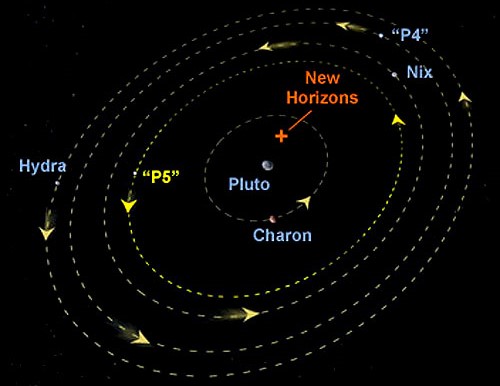
For roughly a month now, the SETI Institute (Search for Extra-Terrestrial Intelligence) has been holding an online poll – appropriately named Pluto Rocks! – to help them name Pluto’s smallest moons, officially designated P4 and P5. Discovered in 2011 and 2012 respectively, an online poll ran up until the end of February, at which point researcher and co-discoverer Mark Showalter took the names before the International Astronomical Union (IAU) to finalization.
Although there were several choices for for Pluto’s fourth and fifth moon, it was P4 that became the focus of a great deal of attention. Of all the names for this space rock, two top contenders came out on top: Vulcan and Cerberus. Out of a whopping 450,324 people who took part in the poll overall, 174,062 voted for Vulcan, effectively putting it in the top spot. This was perhaps due to a little Twitter intervention by Mr. William Shatner.
When the contest began back, it seemed that two camps emerged as the forerunners for naming the rock. On the one hand, there were the Trekkies who seemed determined to name P4 after famed-character Spock’s homeworld. On the other, there those who belong to IAU camp, who favored the classical Greek name of the beast that guarded the entrance to the underworld.
After just a few days in, William Shatner, Mr. James T. Kirk himself, proposed the name Vulcan, and not just because of the connection to his show. In Roman mythology, Pluto (aka Hades in the Greek pantheon) was the God of the underworld and Vulcan was one of his sons. Cerberus might have been more appropriate since this beast was Pluto’s/Hades companion, but the connection still works, and provides a nice little tie-in to one of the most popular science fiction shows of all time.
Fans and Trekkies worldwide rallied, and as of Feb. 25th, Vulcan had a comfortable lead over Cerberus and Styx, which were vying for the 2nd place position. SETI has now advised that people be patient, as it will take another months or two for the names of the two moons to be finalized and selected. However, barring any major objections or upheavals, I think it’s fair to say that P4 and P5 will henceforth be named Vulcan and Kerberos.
And I have to say, this is fascinating news in more ways than just one. Not only does it demonstrate that our collective knowledge of the outer Solar System is growing. It also demonstrates how henceforth, astronomical studies and cataloging may become a much more democratic affair. Once considered the province of academics and scholars, space exploration may truly be an open field in the future, subject to mass participation.
Oh, and congrats to Mr. Shatner for his enduring influence, to Mr. Nimoy for the shout-out, and to Trekkies the world over for showing what a committed fandom made up of millions of geeks can do! And may all the people who bullied you for your interests and keen intellectual skills consider what a force you’ve become and cower in fear!
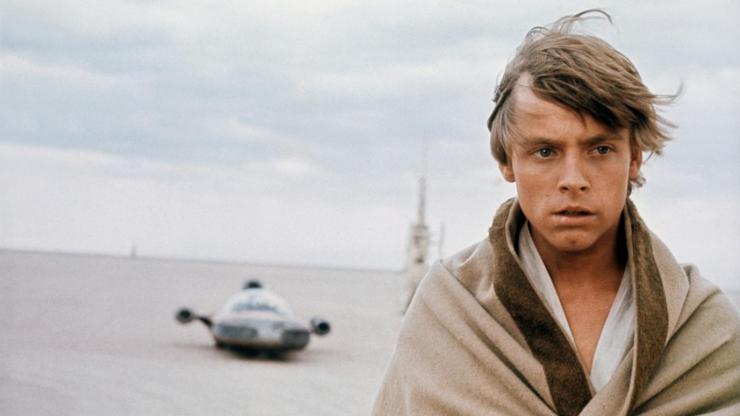
Ever since Mark Hamil announced that he would be returning to the Star Wars universe, courtesy of Disney and Lucas’ multi-billion dollar payout, fans have been wondering exactly how the aging star could reprise a role that occurred over thirty years ago. Well as it happens, Hamil had his own thoughts on the subject, and shared them during a recent interview with Comingsoon.net.
In essence, he believes that the new stories will be focusing on the offspring of the original cast, rather than simply picking up where the old stories left off. This would put Luke in a senior role, making him the sort of mentor figure that Obi-Wan was to him:
I’m assuming, because I haven’t talked to the writers, that these movies would be about our offspring — like my character would be sort of in the Obi-Wan range [as] an influential character. … When I found out [while making the original trilogy] that ultimate good news/bad news joke – the good news is there’s a real attractive, hot girl in the universe; the bad news is she’s your sister – I thought, ‘Well, I’m going to wind up like Sir Alec [Guinness]. I’m going to be a lonely old hermit living out in some kind of desert igloo with a couple of robots.
He was also keen to give some pointers to Abrams, the director of the new trilogy. Of particular interest was the fact that he advised that the new director steer away from a rather controversial aspect of Lucas’ newer films, which many fans felt placed special effects above substance and elbow-grease.
I said to George that I wanted to go back to the way it was, in the sense that ours was much more carefree and lighthearted and humorous – in my opinion, anyway….hope they find the right balance of CGI with practical effects. I love props, I love models, miniatures, matte paintings — I’m sort of old school. I think if you go too far in the direction of CGI it winds up looking like just a giant a video game, and that’s unfortunate.
Sage advice. In Hamil’s day, the sets were made to look like Franz Oz and Jim Henson were in charge, not a million computer geeks saturating every single frame with digital effects while actors spoke to tennis balls suspended from strings.
But most important of all, Hamil was sure to let people know that he hopes and intends to have all of the original cast back for another swing. Rumors abounded after he signed on to the project that others might be as well, which he quashed. However, he did let people know that he hoped they would:
Another thing I’d want to make sure of is are we going to have the whole gang back? Is Carrie and Harrison and Billy Dee and Tony Daniels, everybody that’s around from the original [returning]? I want to make sure that everybody’s on board here, rather than just one.
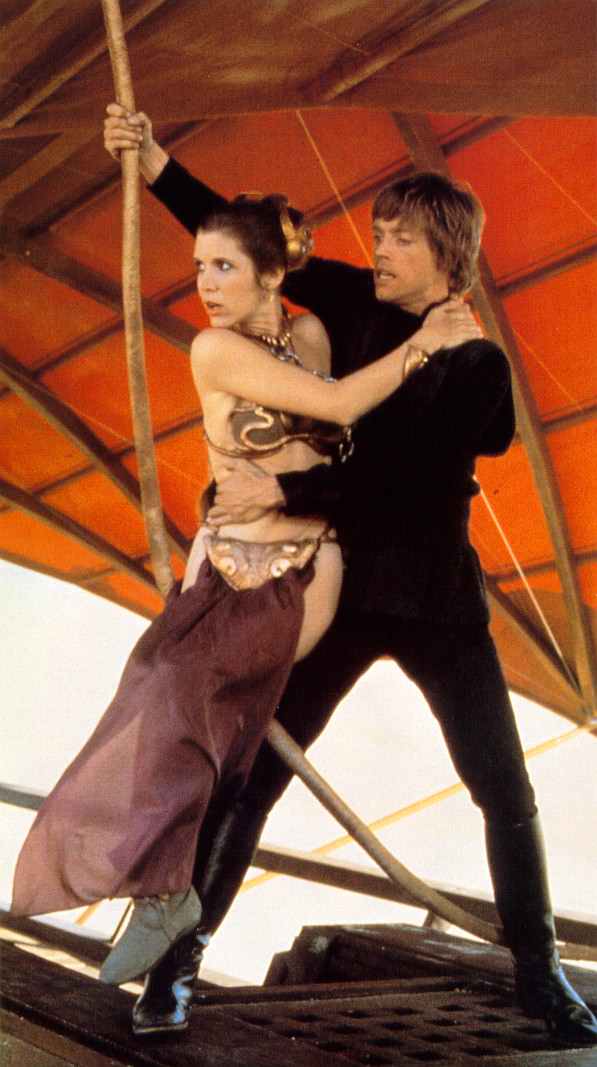
And as it turns out, he may get his way yet. In a more recent interview with Palm Beech Illustrated, Carrie Fisher announced that she will be joining her “brother” as part of the cast and reprising her role as Princess Leia. In the course of a little QandA with the magazine, she was quite direct about what her plans were with the new movies. And she was more than a little cheeky about what it might look like:
Disney is going to continue the Star Wars saga, producing movies set to hit theaters starting in 2015. Can you confirm whether you’ll reprise the role of Princess Leia?
Yes.
What do you think Princess Leia is like today?
Elderly. She’s in an intergalactic old folks’ home [laughs]. I just think she would be just like she was before, only slower and less inclined to be up for the big battle.
And still wearing the bagel buns?
The bagel buns and the bikini, because probably she has sundowners syndrome. At sundown, she thinks that she’s 20-something. And she puts it on and gets institutionalized.
Solid enough for ya? So if I’m not mistaken, that just leaves and aging Harrison Ford, Billy Dee Williams, Frank Oz and a few extras to wear the Chewbacca, C3P0 and R2D2 suits, assuming the originals have retired. How hard could that be? Disney’s at the helm, not Lucas, and they’re sure to pay through the nose to get the old nostalgic-cast factor going. So c’mon, people, you got something better to do?
Ever wonder what it would be like to be Darth Vader while he was kicking some Jedi ass? Well, the stunt people over at Geeks of Doom decided to put together a lovely first-person video that gets you about as close as you can to the real experience. The entire thing was caught on a GoPro camera, was choreographed using those kick-ass lightsaber replicas that light up and add sound, and took only about half an hour to film. Impressive!
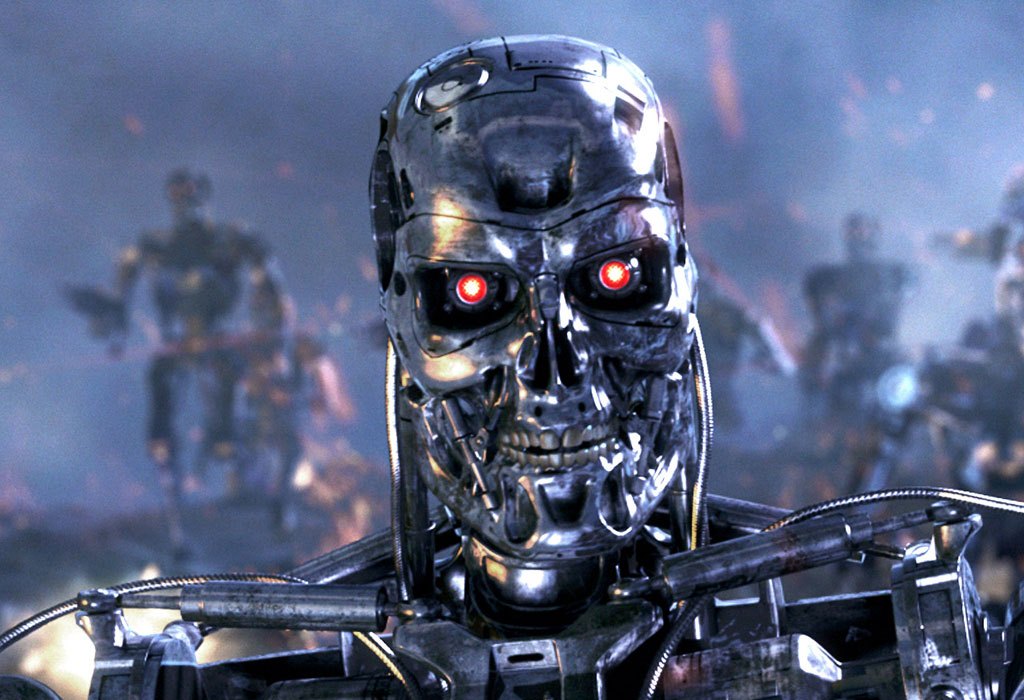
As usual, HISHE has graced us with a silly, scathing and common-sense analysis of how a movie franchise was so full of plot holes so big, you could drive a truck through them! And in this installment, they tackle the ongoing (and worsening) Terminator series. Lucky for all of us this franchise is getting a reboot, because the last two movies really did a number on its credibility!
And doing a little crossover with Back to the Future, they pretty much tackled the central premise which emerged with the ongoing Terminator movies. Why send killing machines back in time to epochs that are closer and closer to the future in question? Why not go back in time to when they were a toddler and still toilet training? You could catch them while they’re on the potty instead of all grown up and qualified to use firearms!
If there’s one thing that’s become an annoying cliche in commercial science fiction movies, and even some novels, it’s the idea of a super-advanced alien race that come to Earth, proceeds to kick ass, but then gets beaten by a ragtag bunch of superheroes by the most implausible means. You know what I’m talking about, the big evil monsters from another planet who seem to have armies, navies and nuclear arsenals beat, but then succumb to germs, basic hacking, and inferior weaponry.
Having grown up with a lot of bad science fiction, I could name a few titles from my childhood which, looking back, kind of insulted my intelligence. But as I’ve gotten older, the list has grown and expanded. And I really thought it was time I did a list that presents all of the bad stories, movies and television arcs that I’ve witnessed over the years, the ones that extra-terrestrial would definitely get a kick out of if ever they saw them. Hopefully, they wouldn’t conclude we humans actually think like this, and hence would be that much easier to conquer!
And here they are, in order of awfulness. The list of incompetent alien invaders!
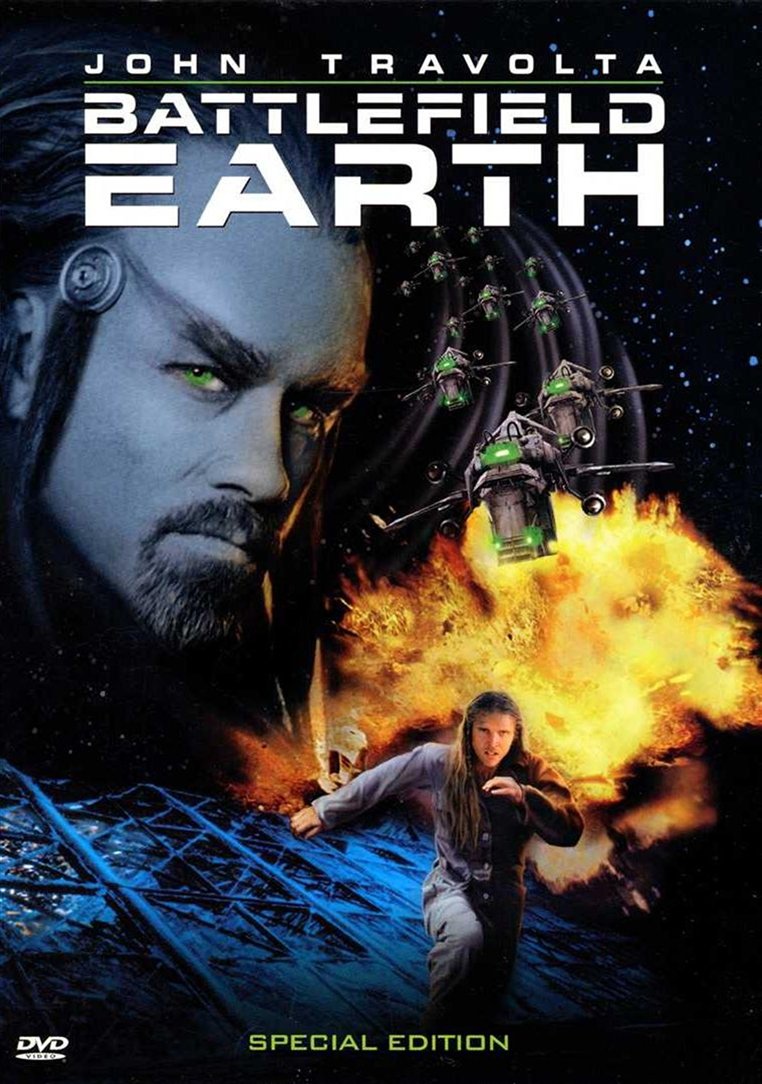
1. Battlefield Earth: I start with this movie for obvious reasons. As far as logic and plot development were concerned, this movie could not have been more insulting to aliens! Not only was their own ineptitude galactic in proportions, but it flew in the face of everything we were told during the first half of the movie (or quarter of the book). Yes, L. Ron Hubbard (the inventor of Scientology) isn’t exactly known for being the most rational of human beings, but even he was out to lunch on this one!
For starters, it is established early on that the Psychlos – an alien civilization of clawed Rastafarians – have conquered Earth by the year 3000. But in the course of the story, we learn through the main character that it was extremely easy for them to do it. Using their superior technology, Earth’s armies, navies and air forces fell to the invasion after a mere 9 minutes! That’s quite the ass-whooping!
And yet, a group of tribal kinsmen are able to not only defeat the occupying Psychlos, but destroy their entire homeworld in the course of an uprising. How, you might ask? Well, as it turns out, Terl, the governor of Earth – played by director and Hubbard acolyte John Travolta – facilitated it all by giving Johnny Goodboy Tyler (the protagonist of the story) all the lucrative info on their race so he could become a foreman for a private gold mining operation, but in turn used it to train a resistance.
In the course of so doing, Tyler was able to trick Terl into accepting gold from Fort Knox, where he used 1000-year old simulators to train his ragtag misfits in how to use equally old Harriers, missiles, and even a nuke, which they then teleportedto the Psychlo home planet in the midst of their rebellion. Oh yeah, did I forget to mention that the Psychlos atmosphere ignites when it comes into contact with radiation? Yeah, that’s kind of important, because it resulted in the full-scale destruction of their home world!
Ignoring for a fact that the physics of this makes absolutely no sense, Hubbard’s tale basically asserts that by relying on the same technology that couldn’t last ten minutes against a bunch of alien invaders in the first place, a bunch of hill people did what ever army on Earth could not and killed off a far more advanced species. How did these Psychlos conquer Earth in the first place? They are not only breathe air that’s the equivalent of dry tinder of gasoline, they’re dumber than dirt!
2. Independence Day: Here we have another instance where audiences were presented with an alien menace that appeared unassailable in the first act of the movie, but then proved to be total pushovers. As the first Roland Emmerich disaster flick to grace the silver screen in America, this movie made a ton of money and set the arc for Emmerich’s career. Fun and silly, it sucked as far as realism and suspension of disbelief were concerned. For me, what endures about this movie is how fun it is to make fun of!
Basically, the aliens come to Earth in a massive mothership that begins deploying smaller motherships across the globe. Using our own satellites to sync up, they begin a countdown to Armageddon and start blowing up every major city on the planet. The only person who seems to notice the countdown ahead if time is a lone cable repair man, and not the NSA, CIA, MI6 or any other covert spy agency on the planet!
All counter-attacks fail, as it seems the alien ships have shields – these big green walls that protect them from our missiles. Nukes are even useless against them. All hope seems lost until, contained within Area 51, this same cable man comes up with an idea… He’s going to download a virus to the alien mothership using his Macbook and set off a nuke inside it. With the help of a fighter pilot who seems oddly and suddenly qualified to fly a captured alien ship, they fly into space, make it aboard the mothership, and begin their hack job.
And while the alien’s shields are down, what remains of Earth’s air forces mount a counter-attack that goes off quite well. It seems that without their shields, the alien fighters are a bunch of total wimps! And the smaller motherships, all you got to do is find a alcoholic, traumatized crop duster to fly a plane up their main gun shaft and the whole thing will blow up! Oh, and the hacker team, they make it out before the nuke goes off and somehow crashland without dying. Hurray for xenocide!
So basically, our species was on the verge of being exterminated, only to be saved by a cable man, a NASA reject, and a drunken crop duster with PTSD. Brent Spiner was right, it WAS just a matter of getting around their technology! And how easy was that? Yeah, they got interstellar spaceships, laser beams and shields, but the bastards can’t even erect a firewall to stop a single hacker? And speaking of those laser beams, turns out all you got to do is stick your finger in the barrel and the whole ship will blow up!
3. Battle: Los Angeles Here we have another instance where aliens attack, manage to do untold amounts of damage, but then seem to succumb when a small band of heroes come together and put their minds to the task of beating them. And in this case, the aliens didn’t even really have an Achilles heel. They just seemed to become beatable once the Marines figured out their physiology, technology and basic tactics, which was surprisingly easy…
It’s almost summer in LA, and a grizzled veteran who’s traumatized over the recent loss of his platoon is about to quit the service. But of course, hostile aliens land off the coast and throw a wrench in his retirement plans! And instead, he is deployed to the city to defend against the first wave of the assault, and is quickly trapped with what remains of his platoon behind the enemy’s lines.
There, they begin to figure out the enemy. This consists of first performing a recreational autopsy on one to find out how to kill it. Turns out all you have to do is shoot them “to the right of the heart”. So, in the chest then? No wonder all the other soldiers couldn’t kill them! They were aiming for the groin! Fleeing with some civilians in tow, they also systematically discover all their other weaknesses…
This includes the fact that the alien airdrones are drawn to their radio transmissions and that all their drones are controlled by some central command module. After realizing they are on their own because the Air Force aint coming, they divert to find the module and then destroy it. All the alien drones are deactivated, the Marines are rescued, and a counter-attack is now underway to clear the last of them. But of course, the Marines refuse to sit this one out and selflessly volunteer to go back in…
So the lesson here is, when entire armies fail and fall back, its a small group of heroes that will save the day. Not bad, but how is it a bunch of grunts in the field are able to figure out how an enemy arsenal works while the higher ups basically have their thumbs up their asses the whole time? Funny how that always seems to be the case!
And sure, I get that the leader of these heroes would be a scarred man seeking redemption, but are we to believe that a man who lost his entire platoon to insurgents would have no trouble leading a handful of people to victory over a far more advanced alien species? Something just doesn’t add up here…
4. Signs: I remember the days when M. Night Shyamalan was considered a big deal, and not some dude past his prime who made a string of critically-panned movies. Yes, in addition to being hellbent on starring in his own films and using material that seemed marginal (comic book heroes, monsters, aliens and ghosts), he also seemed to have a real hard on for stories that were full of holes!
And this movie was no exception, adding to an already rich tradition of scary aliens who don’t seem to have a clue when it comes to conquering planet Earth. The story starts out clear enough, with “signs” of an impending invasion by alien beings. And of course, the heroes here are a single family made up of people strangely qualified to defeat them – a priest who’s lost his faith after losing his wife, a psychic daughter, an asthmatic son, and former baseball player who swings at everything.
When the aliens show up, it turns out his dying wife’s words were a prophecy on how to beat back in the invasion. First, hit them in the head with a bat, they hate that! Then, rely on your sons asthma to prevent him from inhaling their toxic vapors. And finally, realize your daughter’s desire to keep glasses of water around the house are a defensive mechanism, since water is toxic to them.
Really? So these things can travel light years to our planet for the sake of terrorizing and killing us, but are vulnerable to a blows in the head from a blunt object and a liquid that covers 70% of our planet and permeates the air. What kind of invaders are these? Are these the same ones who were defeated in the Simpsons by a “board with a nail?”
Also, did they not notice ahead of time that the most basic element, next to the air itself, was fatal to them? What is it with alien invaders not doing their due diligence? How is it that we here on Earth are able to notice lakes of sulfuric acid on Venus, despite having never landed there, but aliens can’t notice the equivalent on a planet they are actively invading? Kang, Kodos… get off our planet!
5. Battleship: Next up, we have the movie that dared to ask the age old question: “what do you get if you cross Transformers with Independence Day?” The answer being, the same old story of unlikely heroes beating an alien menace, but with a twist! This one is set at sea. And if that wasn’t enough, it also stars Rihanna, who proved once again that there are some singers who should stick to what they’re good at and avoid crossing over!
And much like in Battle: LA, we once again have aliens landing in the sea and wreaking havoc on nearby city – this time in Honolulu. After trapping and destroying the US and Japanese naval ships in the vicinity, the alien ships take control of the communications array on the nearby island of Oahu. A single vessel, captained by a LT after his brother (the Captain) is killed, manages to survive and continues the fight…
This includes the US naval ship taking out two of the alien ships and capturing an alien to learn that they are vulnerable to sunlight. On land, a veteran and quadruple amputee in recovery also figures out what the aliens are doing with the array. Apparently, they are using it to summon more of their ships to Earth. So on land and at sea, we have unlikely heroes who begin unraveling the aliens’ plans.
Using the aliens rather pedestrian weakness to their advantage, the US naval ships manage to blind the last of the smaller alien ships with sunlight and destroy it. However, it too is sunk, but they manages to survive and gets back to base to commandeer the USS Missouri, the last remaining US Battleship in existence. Bringing her out of retirement, they use her big guns to take out the alien ships shields, allowing the Air Force to finish her off.
Following this, the Lieutenant is promoted and given a ship of his own to command. Him and Rihanna also arrange to get married. Hurray! Planet Earth is saved and everybody’s getting laid! And once again, it seems that if you’re a reluctant hero, or you’ve got vengeance on your mind, you can beat the odds and overcome a vastly superior alien foe. Never mind that a small fleet was useless against this enemy, or that your vessel is dangerously out of date even by Earth standards!
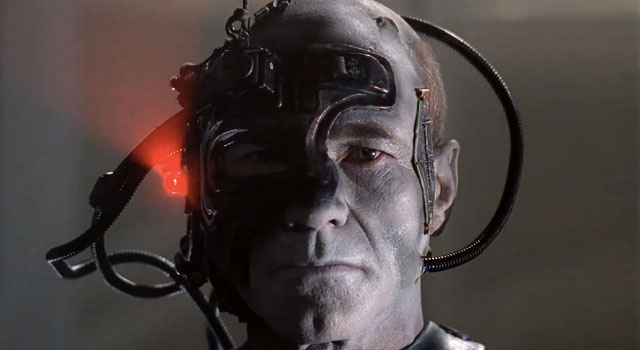
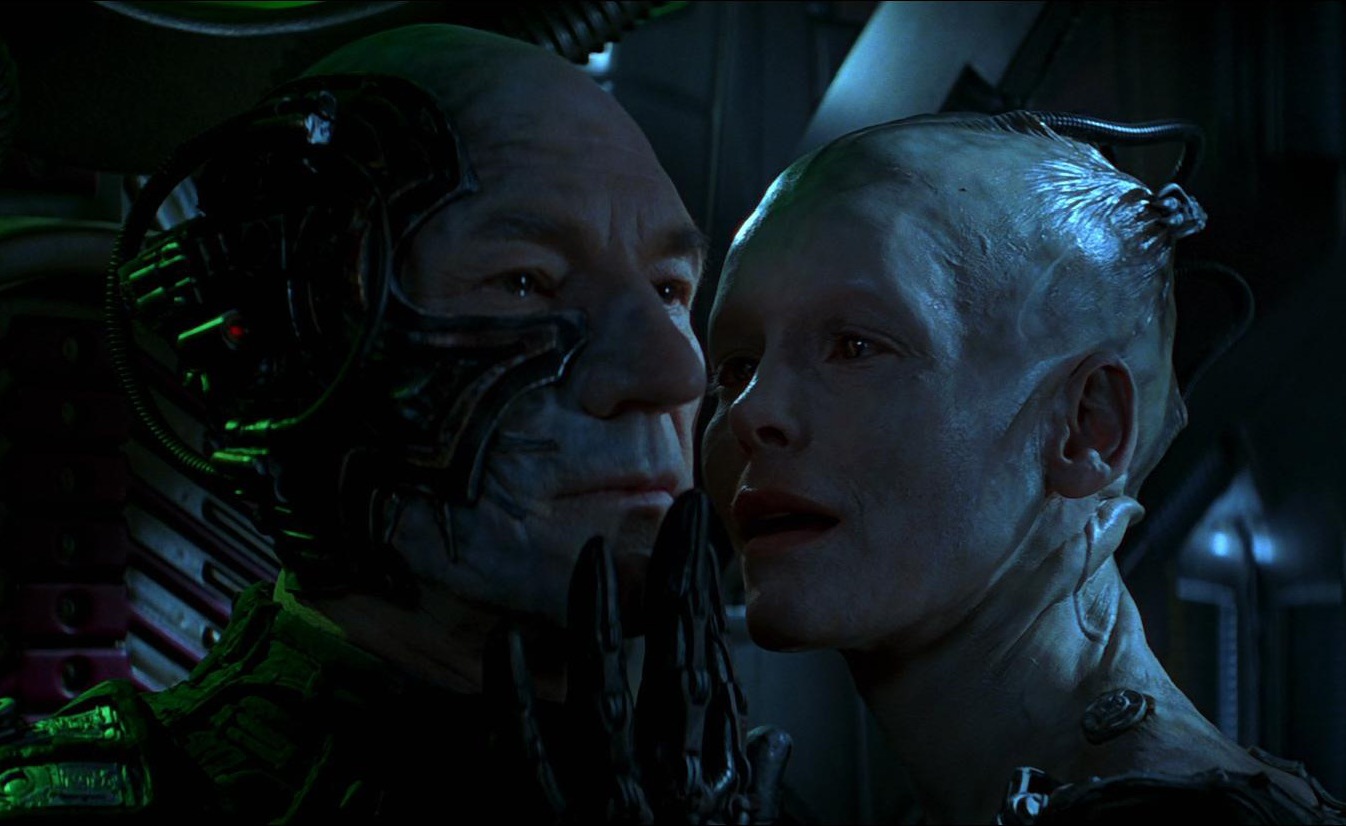
6. The Borg (Star Trek: TNG): Here we have a truly chilling and frightening alien menace that started out as a credible threat, but quickly degenerated into a nuisance that was eventually beaten through some unlikely twists! I can still remember when the Borg were first presented in the second and third season of TNG, just how tough and scary they seemed! How they went from this from the clumsy, easily-fooled menace led by a “Queen” towards the end is a mystery…
As Guinan said during their introductory episode, the Borg are a collective “made up of organic and artificial life which has been developing for thousands of centuries.” In addition to being virtually indestructible and entirely collectivized, they are hellbent on assimilating all known lifeforms and technology they come across. This makes them an inevitable threat, one which Q believes they are unprepared to face.
Hence, he arranges for a little face-to-face between them and the Enterprise, and it doesn’t go too well. In addition to finding that their weapons are virtually ineffective against a Borg ship, they also learn that these ships are capable of healing from battle damage, are faster and far more coordinated than their own; and most importantly, that they are crewed by a relentless enemy. They narrowly survive, and only because of Q’s intervention.
Their second confrontation happens shortly thereafter, when a Borg Cube is dispatched to Federation space to begin assimilating them. After an initial encounter with the vessel, Picard is captured and assimilated. The crew learns that he is now part of the Borg and that his knowledge has been absorbed. As the Borg vessel begins advancing on Earth, the Federation loses 39 ships in an attempt to stop it.
In the end, they manage to stop it by recapturing the Captain, tapping into the Borg neural net, and commanding them to go to sleep. The Borg ship self-destructs, realizing their collective has been intruded and they are vulnerable. It is for this reason, and this reason alone, that humanity survives its first engagement with the Borg and lives to fight another day. Scary stuff, and doesn’t bode too well for the future!
Immediately thereafter, the Borg ceases to become a serious threat. Not appearing again until the end of Season 5, at which point Roddenberry had died, the Enterprise discovers a single stranded Borg and rescue him, plotting to return him to the collective carrying a virus. However, they soon realize the lone Borg, who’ve they’ve humanized by naming him “Hugh”, is no longer a Borg per se, and cannot commit to the plan. Instead, they learn that Hugh’s individuality have spread throughout the collective, causing chaos.
Thereafter, the Borg made no real appearance in the series until the spinoff series Voyager, where they make numerous appearances before being vanquished. First, they are shown to be fighting a losing war against beings from a parallel dimension where space is fluid and technology is organic in nature. The Voyager crew assists the collective against this common threat, and gains 7 of 9 as a crewmember.
In subsequent episodes and seasons, Voyager wages a one-ship war with the collective as they flee back to Federation space. They manage to outwit the Borg Queen (weren’t they supposed to be a collective?) time after time, stealing a trans warp coil from her, saving a group of resistance fighters from the collective’s grasp, and coordinating their efforts with a future Janeway to not only make it home, but crash the entire collective with a virus.
From invincible enemy that spoke with one voice, to a bunch of dumb drones led by a megalomaniacal queen that made deals and was easily tricked, the Borg was a truly awesome concept that degenerated into a sort “Evil the Cat” that became all-too-human. Ironic, and quite disappointing really. Much like many elements of the show, this was one of Roddenberry’s babies that seemed to suffer in his successor’s hands.
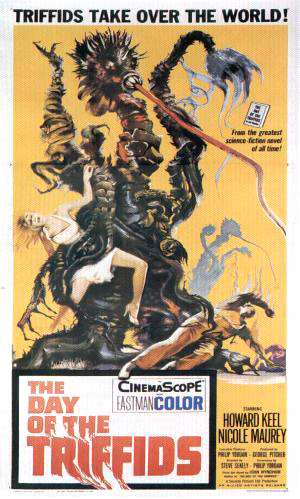
7. The Day of the Triffids: Although based on a novel that ended quite differently, the film adaptation of this novel has gone down in history as a case of aliens that seemed so menacing, but proved to be very dumb. Written by John Wyndham, the author that brought us The Chrysalids, the story considers the possibility of an alien invasion that doesn’t involve tripods, motherships or little green men armed with ray guns.
No, in the end, Windham’s invasion was much more subtle, patient, and far more effective. It begins when the triffids, a race of seemingly intelligent, aggressive plants that begin popping up all over the world. Initially thought to be the result of bioengineering within the USSR (a possible commentary on Lysenkoism), the venomous plants are soon revealed to be the first wave in an alien invasion.
After being blinded by contact with one of the plants, the main character awakens in the hospital to find it deserted. He begins to walk through the streets of London, apparently surrounded by other blind people. He soon comes upon a group of people who still have their sight and are planning on establishing a colony to repopulate the human race.
In time, it is made clear that the triffids are causing the environment to change, effectively terraforming Earth to become more like the alien environment they are used to. They continue to advance and eventually surround the small home the main characters make for themselves. But at the same time, the main characters learns that a colony has been formed on the Isle of Wight, which is removed from the infestation, where people are attempting to continue the fight.
In creating this story, Wydnham acknowledged a great debt to H.G. Wells’ War of the Worlds; though in this novel, the aliens are not foiled. However, in the film adaptation of the novel, the triffids are eventually foiled by a very likely source: salt water! Yes, it seems that an invasive species chose to attack a planet where the majority of the surface is covered by something entirely poisonous to them.
Little wonder then why Shyamalan chose water as his aliens’ weakness. He was ripping off a classic movie! Too bad it was an unfaithful adaptation of the original novel. He could have avoided making one of several bad movies!
8. The War of the Worlds: We come to it at last, the original story that inspired an entire slew of classic alien invasion tales. Written in 1895-97, H.G. Wells’ The War of the Worlds not only introduced the world to the concept of a “Martian invasion”, it set the tone for all subsequent generations of paranoia and fear regarding extra-terrestrial life. This was not an intended consequences of his work, mind you, just a side-effect of what was arguably a brilliant novel.
Told from a first-person point of view, the story follows a philosophically-inclined author who witnesses the invasion firsthand. It all begins shortly after an observatory notes the appearance of several “explosions’ on the surface of Mars. Shortly thereafter, the narrator is one of many people to notice the arrival of a meteor which turns out to be a large cylinder. When the cylinder opens, disgorging tripods that begin incinerating everything with heat rays.
More cylinders begin falling all over Southern England, laying waste to military units and communities. After meeting up with an artilleryman, the narrator finds out that he has become cut off from his wife, and reroutes to try and find her. People begin to evacuate London, and British forces are able to bring down some of the tripods, but eventually, all organized resistance ceases.
In their wake, the Martian begin to unleash a species known as Red Weed, a native martian plant that begins altering the Earth’s ecology. Of the narrator’s companions, a curate and the artilleryman, the former comes to see the invasion as a herald of the Apocalypse, while the latter begins to advocate that humanity rebuild civilization underground. He eventually leaves both behind and returns to London, where he finds the aliens dead due to infectious disease.
At once brilliant and original, Wells story has undergone extensive scrutiny over the years. It’s plot and thematic makeup have led many critics to wonder what its central message was, whether it was meant as a sort of cautionary tale, an historical allusion, or an indictment on British colonial policy. As part of the larger trend of invasion literature, there were also many who thought that the aliens represented an actual enemy (i.e. Germany), and the point was merely to stoke fears about the possibility of an actual world war.
Summary: In the end, it seems pretty obvious that when it comes to alien invasion stories and movies, everyone is picking at the crumbs from Wells’ table. As one of the first stories involving war between humanity and extra-terrestrials, it was also the first to introduce the world to the concept of a seemingly unassailable alien menace that was brought down because of an Achilles heel.
And without fail, it now seems like just about every purveyor of science fiction has followed in his footsteps. Whether it’s Verhoeven’s disaster porn, classic B-movie adaptations, new generations of speculative sci-fi novels, or mainstream TV shows, the concept of a fearsome, super-advanced species that initially has the edge on humanity, only to be foiled by superior… whatever, is destined to be all the rage!
And much like Wells War, one can’t help but wonder about the psychology and deeper sociological implications of that. Do such ideas remain popular with us as part an enduring xenophobic tendency, or are they part of some deeper destructive impulse, where we just love to see civilization as we know reduced to ashes? In some respects, you might say this a healthy sublimation of that desire, where we allow others to do what we secretly desire, right before we pay them back in full!
I’m thinking this is getting a little too intellectual given the subject matter I started with. This was supposed to about clueless aliens and how these stories and film parody them. Once again, I sincerely hope that if there are aliens out there who are able to listen in on our radio, television and movie transmissions, that they take all of this entertainment with a massive grain of salt.
I think I speak for all of humanity when I say we don’t need no invasions anytime soon! Come back after we’ve developed our own death rays!
Now here’s an alien that isn’t defeated so easily!
God, I’ve been wanting to post this for a long time. Thought the episode is at least two years old, it still brings a smile to my face when I think about it. Not only is it a hilarious spoof on a cartoon that I watched as kid, it also manages to do a hilarious crossover with one of the best post-apocalyptic movies of all time! And when it comes right down to it, what is Inspector Gadget if not a clumsy, oafish version of a Terminator?
There have been several moments in this show’s history that I’ve found pretty damn hilarious. Between spoofing superheroes, comic books, Star Wars, Star Trek, and just about anything having to do with the 80’s, how could I not love this show? Relying on Seth Green’s usual combination of outlandish wit and a load of pop culture references, this clip is sure to please! If you haven’t seen it, do so now. I guarantee if you grew up in the 80’s, it’ll make your day!
Oh how the Sith have fallen, to degenerate to petty theft like this! But if this recent news report is any indication, Darth Maul has gone full-Dark Side with this one! It all took place during the morning hours of the morning in San Diego this past Monday, when an assailant wearing a Maul mask robbed a 7-11 with a semi-automatic handgun.
As if that wasn’t enough, the same assailant proceeded to rob two more stores in the vicinity, all within the space of two hours. The entire thing was caught by store cam and the police indicated that he was still at large, and suspected of robbing another store on the previous Saturday.
Personally, I got to wonder what could be so bad in a man’s life that he feels the need to drag the name of a proud Lucas villain through the mud! Sure, the movie he starred in basically sucked, so says the majority of Star Wars fandom, but none could deny that Maul himself was a total badass! What’s more, he would never rob a convenience store with a gun. Slash it up with a lightsaber and kill everyone inside? Perhaps. But I think we can all agree, petty theft is beneath a Sith warrior!
Here we have a video game concept that was proposed by Studio Gigante for the Xbox gaming system. Merging Mortal Kombat/Street Fighter style fights with Star Wars characters and lightsaber moves, the idea never made it to the production line. In fact, until the other day, no one outside of those who worked on it knew this proposed Star Wars combat game even existed.
But thanks to a recent tweet by Josh Tsui, currently of Robomodo and co-founder of the studio that made it, the demonstration video is now making the rounds. As the demo shows, it was a game that was meant to incorporate lightsaber duels, Force moves and some limited hand to hand fighting. You played as your favorite character within various Star Wars settings and, presumably, made you way up to the boss (smart money said it was either the Emperor or Yoda, depending on whether your character was good or evil).
Why he chose to do it on Valentines Day is anybody’s guess, but I’m thinking that might just be coincidental. Nothing says love like a simulated lightsaber in your gut!