The Future is Here: Aerographite!

According to a recent story on CBC.ca, a new material has been developed which is the currently renowned for being the lightest material in the world. Known as Aerographite, the material is composed of carbon and weighs roughly one-seventy-fifth that of Styrofoam.

Created by researchers working at the Technical University of Hamburg-Harburg (TUHH) and Christian-Albrechts University of Kiel, this material is also said to be flexible, stable, water resistant, and a good conductor of electricity. It might sound like no big deal, but ultra-light substances that are composed of basic elements are things which were predicted to accompany the development of nanotechnology.

You see, at the micro level aerographite resembles a network of porous carbon tubes (pictured at right), which calls to mind the concept of the carbon nanotube. Much like the Buckminsterfullerene, this microscopic structure is predicted to be the mainstay of construction someday, just as soon as we can create nanomachines capable of erecting buildings!

And just think of it, diamonds are essentially carbon that has been layered and then super-compressed to become a near-indestructible material. If you have the ability to assemble tiny atomic structures made out of carbon, you can essentially create not only create diamonds, but also objects that are both extremely light and highly resilient. And just so you know, the researchers who produced aerographite have indicated that it can be compressed without damage.

Okay, it’s not exactly a technological revolution, but it is a step in that direction. Yep, soon enough we’ll be able to erect buildings simply by dumping some grey goo on the ground and watching a building sprout up. And unlike our current edifices of concrete, steel and glass, will be composed of different configurations of carbon and other primary elements. They will be stronger, lighter, able to endure indefinitely, maybe even capable of upgrades!


Of Terraforming

Several scientific subjects have piqued my interest as of late, particularly the ones that relate to the colonization of other planets. And there are plenty of good reasons for this. First off, NASA has been talking at length about a possible Mars mission which will be begin in 2030. Second, the topic is central to the novel my group and I are writing. And third, because it’s what I do. I’m a geek, dammit! Do I really need any other reason?

So in honor of this fertile and increasingly relevant topic, I thought I’d dedicate a post to the science of terraforming and its depiction in popular culture. Like the majority of your more radical ideas, the concept first appeared around the turn of the 20th century. As part of the larger trend of exploring planetary colonization, several historical developments contributed to this phenomena.

Foremost amongst them was the closure of the American frontier by 1900 and the partitioning of Africa in 1905. With the “Age of Discovery” officially over, scientists and dreamers began to look farther abroad for the next place to move to. Refinements in the fields of metallurgy, chemistry, and astronomy also contributed to the idea that planets like the Moon, Mars, Venus, Europa, Ganymede, and even other star systems, could be colonized.

And thanks to the advent of the Space Race, the Apollo missions, and Eco-engineering in the latter half of the 20th century, scientists have begun to take a serious look at terraforming, particularly in regards to Mars. While the practicality, feasibility and affordability are all still being debated, the very fact that there is a serious scientific debate would seem to indicate that it may very well be done someday.

And so, here is a list of science fiction novels from the last century that have explored the idea of terraforming. Once again, I hope you enjoy reading about them as much as I enjoyed researching them, and incorporating some of what they taught me!

Last and First Men:
This future history by Olaf Stapledon, released in 1930, is the first time that the terraforming of Venus is made in fiction. This was only a fragment of the larger story, which focuses on human evolution over the course of two billions years. Nevertheless, the move to Venus is an intrinsic part of the story involving the “Fifth Men”, who are forced to relocate after Earth becoming uninhabitable.

This occurs only after humanity pushes the local inhabitants to extinction after a protracted war. Afterward, they begin the process of transforming Venus to meet their needs. Like all early accounts, the description was hampered by the fact that knowledge of Venus was highly inaccurate. For example, Stapledon’s account has Venus covered in oceans, rather than the pits of sulfuric acid which are now known to be there.

Farmer in the Sky:
Here we have Robert A. Heinlein’s 1950 story which focuses on a family which has moved to Ganymede, which is in the process of being terraformed. Earth is overcrowded in this day and age, and farming colonies are being established in Jupiter’s moon to help provide much needed food supplies.

The process of creating the new farms is explained in some detail. For example, the topsoil is created from scratch by pulverizing boulders and lava flows, and seeding the resulting dust with carefully formulated organic material. Pressurized housing is erected to ensure that new arrivals are able to adjust, since the atmosphere is not fully breathable. And Ganymede is shielded from Jupiter’s intense radiation by a massive heat shield.

Hints are even given that establish that Ganymede once boasted an indigenous civilization, or was at least visited by one in the past. This includes a working land vehicle that has many legs, essentially a large metal centipede.

The Sands of Mars:
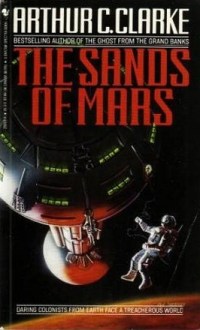
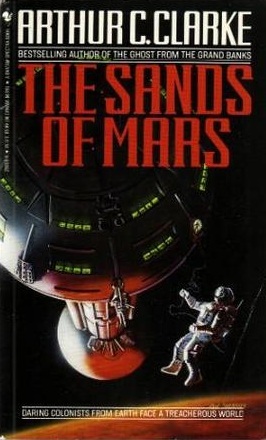
Next we have Arthur C. Clarke’s 1951 novel, which happened to be his first published work. And curiously enough, it is written from the point of view of a famous science fiction author. A case of art imitating life, or art as wish fulfillment? In any case, the setting is a research facility on Mars, which is in the process of terraforming so it will be able to become a self-sufficient colony.

Based on Clarke’s descriptions, this terraforming process (known as “Project Dawn”) involves some rather curious steps. The first is the ignition of the moon Phobos so that it will become a second “sun” for Mars. It will burn for at least one thousand years and the extra heat, combined with the mass production of the oxygen-generating plants, will eventually make the Martian atmosphere breathable for humans.

In many respects, this served as a preview for the plot of 2001: A Space Odyssey and it’s sequel 2010: Odyssey Two (see below).

The Martian Way:
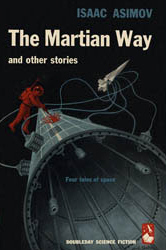
In keeping with the tradition of sci-fi greats, this next novel was written by Isaac Asimov and first published in 1952. The story is told from the point of view of Scavengers, Mars-born humans who spend their time scouring space for the spent lower stages of spacecraft. This sort of lifestyle, making do with less and toughing things out, is known as the “Martian Way”.

At this point, Mars is still very much dependent on Earth for water shipments, which are used for fuel as well as consumption. Life takes a turn for a worse when an ambitious Earth politician decides to cut of the “Wasters”. In response, the protagonists come up with an ambitious plan, to fly to Saturn’s Rings and tow back an asteroid made of pure ice.

The trip is difficult and takes many months, but the Martian Scavengers manage to snag an asteroid that will supply two hundred years worth of water. This, they begin to use to transform the ecology of Mars, and turn the tables on the Earth government.

The Psychotechnic League:
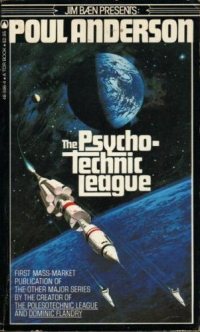
Written by Poul Anderson over the course of two decades, the Psychotechnic League refers to a series of novels and short stories that are set in the same universe. Of all these stories, two in particular deal with the terraforming of Solar Planets. In “The Big Rain”, Venus is being terraformed, a process of planetary engineering that takes several centuries to complete.

In “The Snows of Ganymede”, the focus shifts to the Jovian moon where scientists are able convert the planet to the point where it experiences seasons similar to Earth. This, in addition to Mars, Venus and several other Solar Planets, all come together in time to form the Solar Union. Because of Anderson’s realistic description, the term “big rain” became associated with scientific terraforming models.

The Space Odyssey Series:
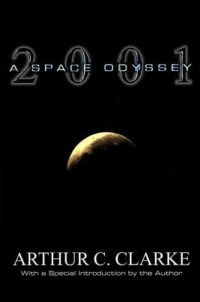
Arthur C. Clarke’s series, which began with the novelization of the classic film 2001: A Space Odyssey, revolves around the terraforming of Europa by a super advanced race. Known as the Firstborn, these aliens use the Monoliths to travel throughout the universe to foster the development of sentient life. Millions of years after fostering the development of high-order primates on Earth, they shifted their focus to Europa, Jupiter’s ice moon.

Much as in “Sands of Mars”, the process involved the creation of a “second sun”, this time involving Jupiter. In the first novel, the story ends with David Bowman, the only astronaut to survive an exploratory mission to Jupiter after their ships AI (the HAL 9000) malfunction and kills the crew.
When he arrives, he discovers a Monolith in orbit around Europa and disappears without a trace shortly thereafter.

In 2010: Odyssey Two, a second mission is mounted to determine the whereabouts of the first. When the joint US-Soviet mission arrives at Europa, they come to realize that the planet is showing signs of life. They also learn that the Monoliths are in the process of turning Jupiter into a sun so that Europa’s icy surface will evaporate and form an atmosphere, allowing all the life contained underneath to emerge and grow.

In the subsequent novels, Europa is revisited after its transformation is complete. Although sentient life does not appear to be possible, the planet does boast an atmosphere and vast oceans, which teem with sluggish sulfur-based lifeforms. In the end, after the Monoliths are convinced that humanity deserves a reprieve, and they land on Europe to commence building peaceful relations with the Europan life forms.

Mars Trilogy:
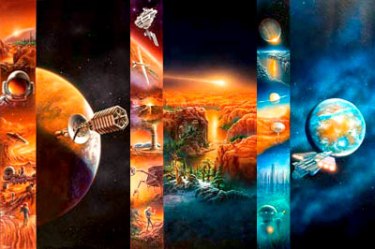
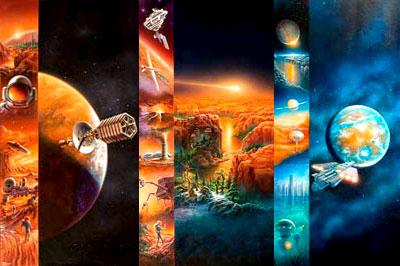
We finish with the most recent and profound example of all, the Mars Trilogy by Kim Stanley Robertason. The trilogy’s three works – Red Mars, Green Mars, Blue Mars – all focus on the ongoing efforts to transform Mars from an arid, hostile world with barely any atmosphere to a lush, hospitable planet capable of supporting human life.

The first novel deals with the initial colonization effort, which begins with the crew of the Ares, a ship carrying 100 scientists drawn predominantly from the US and the Soviet Union. Upon arriving, the crew builds the first settlement, known as Underhill, as well as colonies on the hollowed out asteroid-moon of Phobos.

After debating what is to be done with Mars, whether to turn it “Green” or leave it “Red”, the United Nations Organization Mars Authority (UNOMA) eventually opts for the “Green” option and terraforming begins. This process involves the drilling of “moholes” in the surface to release subsurface heat to thicken the atmosphere and the detonation of nuclear devices deep in the sub-surface permafrost to release water.

Green Mars, which begins 50 years after events in the first novel, during the dawn of the 22nd century. At this point in time, the Martian landscape is evolving thanks to the expansion of plant life, hence the name. The process is stimulated though the use of continent-sized orbital mirrors which focus sunlight to and away from various sectors of the planet, to melting the northern polar ice cap, and digging moholes deep enough to form volcanoes.

In the third and final installment, Blue Mars, long-term terraforming has created atmospheric pressure and temperature conditions that allow for the presence of liquid water on the planet’s surface, forming rivers and seas. This all takes place over the course of the following century, long after Earth has flooded and revolutions have displaced corporate control of the planet. Because of this, Mars has become the principle planet of the Solar System.

Summary:
Terraforming efforts have come a long way in fiction, and hopefully some day soon they will be realizable. Even though the concept remains highly speculative at this point, all proposed efforts are currently focused on Mars. In all ways that count, Mars has everything we would need to make it suitable for human habitation. This includes water, in the presence of the frozen ice caps and possibly underground rivers, and high concentrations of carbon and oxygen in the form of CO2, nitrogen, and gravity to keep the atmosphere anchored.

And most importantly of all, Mars’ atmosphere closely resembles that of Earth several billions of years ago. In time, due to the development of photosynthetic bacteria, enough oxygen was produced to allow for the development of animals. Though the careful introduction of similar bacteria and plants to Mars surface, humans could speed that process along and eventually create a breathable atmosphere. This, in turn, will allow for the creation of an ozone layer and weather patterns. Combined with the melting of the polar ice and underground aquifers, this will lead to surface water in the form of rivers, streams and oceans.

Anthology Sample: “Swan Song”


Hello all. There’s plenty of things happening on the Anthology front! More authors, more contributions, and more final drafts being produced. As it happens, our good contributor and friend here, Melanie Edmonds, has just finished work on her story “Swan Song”. This is the third installment in Part II of the anthology, which deals with the final mission of the Colony Ships.

The story takes place roughly 100 years after Planetfall is made, when the Avincenna, Taftazani, and Kashani delivered the first wave of colonists to Yuva. Those who crewed them have lived a comparatively empty existence ever since, being unable to live planetside due to the intense gravity and finding little else of value to do since.

Edmonds take us into the world of these people and inside the ships as they perform their final duty to the colony and embrace their destiny. Here is the first section of the story, fresh from the digital press!

They say there is a swan that is silent for its whole life. It grows and loves and does all the swan-like things, but it does not utter a sound. Then, the moment before it dies, it opens its throat, and not even the vacuum of space can swallow the beauty of its song.

*          *          *          *

[The image broadcast across the Yuva networks is dominated by the great globe of her sun, Gliese 581. Nearing the glow, three shapes track slowly and majestically. Their silhouettes are familiar, for they are the great colony ships.]

[Transmission Voiceover]

“It has been ten years since we arrived here. Ten years since we slowed our ships and woke our children. Ten years since we put a stake in this planet and said, ‘this is our new home’. This is Yuva.”

*          *          *          *

Avicenna, Bridge
Gliese 581 – 20 minutes

“Final corrections made. We’re on approach vector.” Pilot Gnana Tanaq slid her hands off the controls. This is the last time I’ll do this, she thought. “Inertia will carry us in, now.”

The first time she touched the console, her hands were smooth and soft, barely out of puberty. Now, sixty-four years later, they were wrinkled and worn, though they still curled around the grips easily. Just as she had worn shiny spots into the plastic, so the grips had worn her hands into control-friendly curves. Pilots’ claws, some people called them. She bore hers proudly.

Behind her, she felt Jackson sigh and loosen his grip on his console. “So, that’s it, then.”

“Yup.”

“How long?”

Gnana glanced down at the readouts scrolling before her. “Not long. Twenty minutes, maybe, depending on how quickly the gravity pulls us in.” She turned her chair so she could see him. “You’re the navigator, though.”

Jackson didn’t even bother to check his readings. He shrugged. “Sounds right.”

She smiled at him, dark skin crinkling around her eyes. “I know, I know: it goes against everything you believe in to navigate purposefully into something.”

He wrinkled his nose and his moustache twitched. “I keep wanting to tell you to alter course. Can’t help it.”

Gnana laughed softly, but there was no real humour in it. The forward viewports were unshuttered and Gliese 581 filled the entire window. Its orange glow lit the Bridge as if it was already on fire.

With a sigh, she unclipped the tether that held her to the chair and pushed over to where Jackson floated. She covered his hand with hers and his head dipped slightly in acknowledgement. The sunlight was turning his hair red, like it had been years ago. Gnana used to joke that he was the whitest man she’d ever met, so pale he wasn’t even freckled. Like her, he’d spent his whole life in space behind radiation shielding; his skin had never felt the real touch of a sun. Another twenty minutes would change that.

She turned her attention forward. It was hard to look at the Bridge now; it wasn’t the home she had known anymore. She had expected memories to crowd in here, but instead, all she saw was gaps. The holes where missing stations once were: communications, cryonics, long-range sensors. The stripped-down environmental console and the bare patches of decking where chairs used to be; the only one remaining was hers, because the pilot still needed it for this final journey. Even navigation was stripped down.

This room used to be busy with bodies, full of shifting console displays and the shadows of the crew. Now, it was just her and Jackson.

Gnana glanced sideways and saw Jackson frowning. “Still angry that he chose not to come?” She didn’t have to say who she meant; he knew.

Jackson’s expression scrunched down. “His place is here.”

“It was his choice.” Gnana’s tone was non-committal; in truth, she wasn’t sure what she thought about the captain’s decision.

Three days ago, she had agreed with Jackson: the captain was a coward who refused the honourable path. They had all known this was a likely end to this journey when they signed on, but he had chosen to stay on the orbital platforms, training the colonists in… she wasn’t even sure what.

Then, the night before they departed on their final voyage, she had seen the captain at a bar. It was the only time in her life she had ever seen him drunk, and it wasn’t pretty. He had slurred goodbye to her and hugged her – hugged her – and she had seen it in his eyes. It tore him up to deny his duty but he wasn’t ready to stand on his ship and sail into the sun for the last time; there was still living left for him to do.

She couldn’t begrudge him that. He was younger than the other captains, though his time commanding the Avicenna meant he would never be able to step foot on the planet below. The toll of space on bones and organs meant the gravity would kill him, slowly and painfully. But he could have a life on the orbital platforms, maybe even lead the colonial effort the way he had led the ship.

She had considered staying too, but the only position open for her was as a shuttle pilot. It wasn’t anything like flying the Avicenna, though, and even a short atmospheric stay caused her pain. The last time, she’d had a bone-deep ache for two weeks afterwards, making her hands shake so badly that she couldn’t fly at all.

Besides, she was tired. This was her last flight, and it seemed fitting to her that it was with her baby, her ship, the machine that spoke to her through her hands on its controls.

With a sigh, she lifted her gaze to the sun burning before them.

“Look on the bright side,” she said to Jackson without looking. “Maybe you’ll finally get a tan.”

And that’s from Part II of the novel, so suffice it to say, we’re making headway! Stay tuned for more!


The Future of Computing

digital_sentienceLook what you started, Nicolla 😉 After talking, at length, about the history of computing a few days ago, I got to thinking about the one aspect of the whole issue that I happened to leave out. Namely, the future of computing, with all the cool developments that we are likely to see in the next few decades or centuries.

Much of that came up in the course of my research, but unfortunately, after thirteen or so examples about the history of computing, I was far too tired and burnt to get into the future of it as well. And so, I carry on today, with a brief (I promise!) list of developments that we are likely to see before the century is out… give or take. Here they are:

Chemical Computer:
Here we have a rather novel idea for the future of hardware. Otherwise known as a reaction-diffusion or “gooware” computer, this concept calls for the creation of a semi-solid chemical “soup” where data is represented by varying concentrations of chemicals and computations are performed by naturally occurring chemical reactions.

Based on the Belousov-Zhabotinsky reaction, a chemical experiment which demonstrated that wave phenomena can indeed take place in chemical reactions, contradicting the theory of thermodynamics which states that entropy will only increase in a closed system. By contrast, the BZ experiments showed that cyclic effects can take place without breaking the laws of nature.

Amongst theoretical models, it remains a top contender for future use for the simple reason that it is far less limiting that current microprocessors. Whereas the latter only allows the flow of data in one direction at a time, a chemical computer theoretically allows for the movement of data in all directions, all dimensions, both away and against each other.

For obvious reasons, the concept is still very much in the experimental stage and no working models have been proposed at this time.

DNA Computing:
Yet another example of an unconventional computer design, one which uses biochemistry and molecular biology, rather than silicon-based hardware, in order to conduct computations. Originally proposed by Leonard Adleman of the University of Southern Calfornia in 1994, Adleman was able to demonstrate how DNA could be used to conduct multiple calculations at once.

Much like chemical computing, the potential here is to be able to build a machine that is not restricted as conventional machines are. In addition to being able to compute in multiple dimensions and directions, the DNA basis of the machine means it could be merged with other organic technology, possibly even a fully-organic AI (a la the 12 Cylon models).

While progress in this area remains modest thus far, Turing complete models have been constructed, the most notable of which is the model crated by the Weizmann Institute of Science in Rehovot, Israel in 2002. Here, researchers unveiled a programmable molecular computing machine composed of enzymes and DNA molecules instead of silicon microchips which would theoretically be capable of diagnosing cancer in a cell and releasing anti-cancer drugs.

Nanocomputers:
In keeping with the tradition of making computers smaller and smaller, scientists have proposed that the next generation of computers should measure only a few nanometers in size. That’s 1×10⁻⁹ meters for those who mathematically inclined. As part of the growing field of nanotechnology, the application is still largely theoretical and dependent on further advancements. Nevertheless, the process is a highly feasible one with many potential benefits.

Here, as with many of these other concepts, the plan is simple. By further miniaturizing the components, a computer could be shrunk to the size of a chip and implanted anywhere on a human body (i.e. “Wetware” or silicate implants). This will ensure maximum portability, and coupled with a wireless interface device (see Google Glasses or VR Contact Lenses) could be accessed at any time in any place.

Optical Computers:
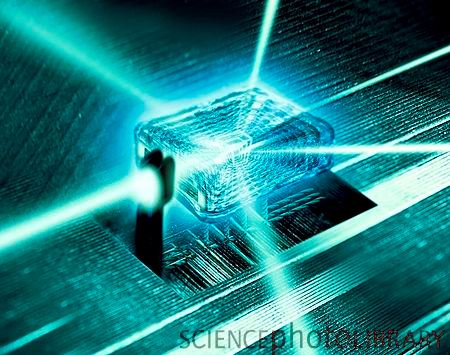
Compared to the previous two examples, this proposed computer is quite straightforward, even if it radically advanced. While today’s computer rely on the movement of electrons in and out of transistors to do logic, an optical computer relies on the movement of photons.

The immediate advantage of this is clear; given that photons are much faster than electrons, computers equipped with optical components would be able to process information of significantly greater speeds. In addition, researchers contend that this can be done with less energy, making optical computing a potential green technology.

Currently, creating optical computers is just a matter of replacing electronic components with optical ones, which requires an optical transistor, which are composed of non-linear crystals. Such materials exist and experiments are already underway. However, there remains controversy as to whether the proposed benefits will pay off, or be comparable to other technologies (such as semiconductors). Only time will tell…

Quantum Computers:
And last, and perhaps most revolutionary of all, is the concept of quantum computing – a device which will rely on the use of quantum mechanical phenomena to performs operations. Unlike digital computers, which require that data to be encoded into binary digits (aka. bits), quantum computation utilizes quantum properties to represent data and perform calculations.

The field of quantum computing was first introduced by Richard Feynman in 1982 and represented the latest advancements in field theory. Much like chemical and DNA-based computer designs, the theoretical quantum computer also has the ability to conduct multiple computations at the same time, mainly because it would have the ability to be in more than one state simultaneously.

The concept remains highly theoretical, but a number of experiments have been conducted in which quantum computational operations were executed on a very small number of qubits (quantum bits). Both practical and theoretical research continues, and many national government and military funding agencies support quantum computing research to develop quantum computers for both civilian and national security purposes, such as cryptanalysis.

Wearable Computers:
Last, and most feasible, is the wearable computer, which has already been developed for commercial use. Essentially, these are a class of miniature electronic devices that are worn on the bearer’s person, either under or on top of clothing. A popular version of this concept is the wrist mounted option, where the computer is worn like a watch.

The purposes and advantages of this type of computer are obvious, especially where applications that require more complex computational support than hardware coded logics can provide. Another advantage is the constant interactions between user and computer, as it is augmented into all other functions of the user’s daily life. In many ways, it acts as a prosthesis, being an extension of the users mind and body.

Pretty cool, huh? And to think that these and possibly other concepts could be feasible within our own lifetimes. Given the current rate of progress in all thing’s high-tech, we could be looking at fully-integrated computer implants, biological computers and AI’s with biomechanical brains. Wouldn’t that be both amazing and potentially frightening!

New Movie: Elysium!

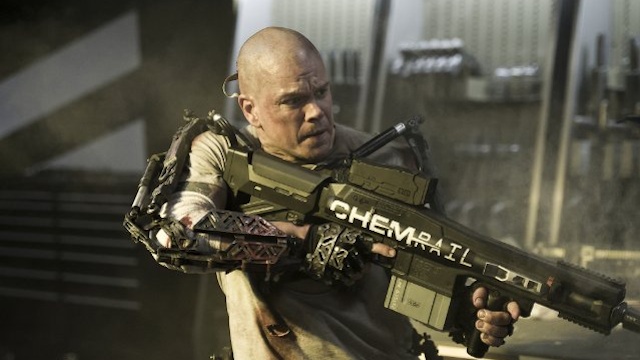
Yet another cool aspect of the recent Comic Con was the trailers for new movies previews that fans were treated to. One such movie was Neil Blomkamp’s (director of District 9) new film, entitled Elysium. According to IO9 magazine, the movie stars Matt Damon in the lead role and is scheduled for release in 2013.

Based on the video reel Blomkamp offered, the movie is still very much in development. Rough place holders had to stand in for many of the visual effects, which are as of yet incomplete. However, the fans were given a precis of the storyline, which is decidedly dystopian and cyberpunk in nature.

Set in 2159, the plot revolves around the eponymously named space station of Elysium, an apparently utopian retreat where the ultra-rich and beautiful live and have access to the most advanced medical technology. The rest of humanity lives planet-side, where overcrowding, disease and radiation have resulted from overpopulation and pollution. Enter into this Max (Matt Damon), a criminal who’s suffering from radiation sickness and must make it to Elysium’s medical facilities at all costs.

In time, Max’s mission becomes complicated as he comes into information which could shut down Elysium and usher in an age of equality for the human race, or at least a less polarized division of wealth. Additional concept art was also released, like an interior shot of the station featured below. Given the layout, Elysium appears to be based on an Island Three design, a circular space station and rotates to provide gravity. Echoes of 2001: A Space Odyssey there. Good for Blomkamp, referencing a classic!

Additional cast members will include Jodie Foster, District 9‘s Sharlto Copley, and Alice Braga (of City of God, Predators, Repo Men and I Am Legend fame). Think I might catch this one!

More Things Geeks Never Say

Hey all, I told you I’d be back with more things you’ll never catch a geek saying. And I am! Yes, a list such as this is not something you can cover in a single post, even if you do permit yourself 15 examples instead of the usual ten. And so I return for another installment, and be warned, but this one is not likely to be the last. And in honor of this year’s Comic Con, I was sure to throw in some rather specific examples.

One thing though. From here on in I thought I’d stick to top 10 lists. They do seem to be the most effective, and the Nostalgia Critic already claimed the whole “Top 11” thing so I won’t be doing that either. And of course, suggestions are always welcome and are sure to make their way into the next list. Kudos to Jeff Whelan for recommending a Jar Jar comment. You read my mind, brotha!

Okay, here we go! Installment the second on things geeks never say:

10. No self-respecting man reads comic books!

9. NaNoWriMo-whatta? That some kind of Japanese anime?

8. No grown man ever wears a costume to a convention! There might be girls there!

7. Outside of Twilight, I really don’t watch anything involving vampires

6. Thank you, but one Robocop movie was enough for me

5. Of course the government isn’t out to get us. What are you, paranoid?

4. Aliens don’t exist. The Bible would say so if they did.

3. Levar Burton? Wasn’t he that guy who was in Roots, and nothing else? 

2. Cesar Romero was the only Joker in MY book!

1. Jar Jar Binks was the best Star Wars character ever!

Ray Bradbury Gives Writing Advice

I recently came across this article, which seems to have been one of many I found when researching the life and works of sci-fi great Ray Bradbury. The source is Open Culture, an online magazine dealing with cultural and educational media. And like many other publications, they chose to honor the passing of Bradbury by publishing a series of articles which dealt with the man’s monumental influence on science fiction and writing in general.

This particular one deals with his 2001 keynote address at Point Loma Nazarene University’s Writer’s Symposium By the Sea, where he treated audiences to the benefit of his accumulated wisdom by boiling it down into 12 tips. As a newbie writer, I can tell you that many of these spoke to me as if they were written with me in mind! That’s the true mark of a great and relatable writer though, isn’t it? Their words somehow seem to transcend the page and all distance between you and get you right at your core.

And even if you’re not an aspiring writer, or an established one, I recommend reading through this list and digesting some of these nuggets. Their value goes beyond mere writing, I tells ya! But don’t take my word for it, read them yourself:

  1. Don’t start out writing novels. They take too long. Begin your writing life instead by cranking out “a hell of a lot of short stories,” as many as one per week. Take a year to do it; he claims that it simply isn’t possible to write 52 bad short stories in a row. He waited until the age of 30 to write his first novel, Fahrenheit 451. “Worth waiting for, huh?”
  2. You may love ‘em, but you can’t be ‘em. Bear that in mind when you inevitably attempt, consciously or unconsciously, to imitate your favorite writers, just as he imitated H.G. Wells, Jules Verne, Arthur Conan Doyle, and L. Frank Baum.
  3. Examine “quality” short stories. He suggests Roald Dahl, Guy de Maupassant, and the lesser-known Nigel Kneale and John Collier. Anything in the New Yorker today doesn’t make his cut, since he finds that their stories have “no metaphor.”
  4. Stuff your head. To accumulate the intellectual building blocks of these metaphors, he suggests a course of bedtime reading: one short story, one poem (but Pope, Shakespeare, and Frost, not modern “crap”), and one essay. These essays should come from a diversity of fields, including archaeology, zoology, biology, philosophy, politics, and literature. “At the end of a thousand nights,” so he sums it up, “Jesus God, you’ll be full of stuff!”
  5. Get rid of friends who don’t believe in you. Do they make fun of your writerly ambitions? He suggests calling them up to “fire them” without delay.
  6. Live in the library. Don’t live in your “goddamn computers.” He may not have gone to college, but his insatiable reading habits allowed him to “graduate from the library” at age 28.
  7. Fall in love with movies. Preferably old ones.
  8. Write with joy. In his mind, “writing is not a serious business.” If a story starts to feel like work, scrap it and start one that doesn’t. “I want you to envy me my joy,” he tells his audience.
  9. Don’t plan on making money. He and his wife, who “took a vow of poverty” to marry him, hit 37 before they could afford a car (and he still never got around to picking up a license).
  10. List ten things you love, and ten things you hate. Then write about the former, and “kill” the later — also by writing about them. Do the same with your fears.
  11. Just type any old thing that comes into your head. He recommends “word association” to break down any creative blockages, since “you don’t know what’s in you until you test it.”
  12. Remember, with writing, what you’re looking for is just one person to come up and tell you, “I love you for what you do.” Or, failing that, you’re looking for someone to come up and tell you, “You’re not nuts like people say.”

Rules one and two are especially important to me right now. I began trying to write novels and found the process overwhelming. Today, full-length novels constitute the majority of my unfinished works, cluttering up my inbox folder and making me feel like I’m a slow writer. Bah! Who needs that? Rule two is like gospel; though you may have writer’s you wish to emulate, do not try to be better than them. It will only lead to unfair comparisons and rob your work of originality. It put’s me in mind of what the poet Basho Mastsuo said: “Do not follow in the footsteps of the masters, but seek what they sought”. That’s right, I read a poem, try not to faint!

The rest all blend together for me in that they all ring true. If they could be boiled down into one simple rule, I’d say it would be “do what you love, and screw the rest!” Best advice I ever got, from J.M. Straczynski of all people (creator of Babylon 5). As long as you’re doing that, you can do no wrong, and your natural passion and dedication will yield results, sooner or later. And if it doesn’t, who cares? For in the end, its about you and not what others think, right? Thought money, fame and recognition are kind of sweet…

Until next time, RIP Mr. Bradbury and here’s hoping myself and my colleagues can acheive a small iota of the respect and recognition you did in your lifetime. I promise that we will stick to short stories for the time being, and that we won’t try to beat you, even if we do try to emulate you 😉

Robocop Relaunch!

Oh no, not another 80’s relaunch. And just when it seemed that this summer couldn’t possibly OD any more on 90’s relaunches! But, all things considered, I think this is one that might actually be worthwhile, and which I myself could be persuaded to see.

In any case, though the details are a bit sketchy, the movie is scheduled for launch in 2013 and will star Joel Kinnaman as Alex Murphy/Robocop. Additional cast include Gary Oldman, Samuel L. Jackson, Abbie Cornish (from Suckerpunch) and Hugh Laurie (of House fame).

In addition, the trailer seems to be taking the same approach as Scott did with his build-up to Prometheus. Rather than show any scenes from the film itself, the preview takes the form of an advertisement by Omni Consumer Corp (OCP), the evil mega-corporation that is responsible for building Robocop and controlling Old Detroit.

It’s quite interesting, and I am reasonably intrigued as to see how the remake chooses to deal with the original’s various themes, such as cybernetics, corporate domination, urban decay and a society numbed by violence and distracted by mindless entertainment.

Man of Steel, Debut Trailer

A number of interesting things were unveiled this year at the 2012 Comic Con, not the least of which was the long-awaited preview for the new Superman movie. Fans of the franchise may recall the 2006 reboot, entitled Superman Returns. That movie was what is generally referred to as an interquel, a movie which occurred chronologically between Superman II and III, with the purpose of rehabilitating the series after it fell on hard times.

Since then, fans have been anticipating when the next movie would come out, and whether or not it would expand on the 2006 relaunch or be another relaunch entirely. Well, after many years, shooting has finally wrapped up on “Man of Steel”, another relaunch of the series which goes back to the very beginning of the series and is slated for release in 2013.

In addition, the movie stars Henry Cavill in the starring role as The Man of Steel himself. Zack Snyder directed the film, Christopher Nolan helped produce it, and Han Zimmer composed the score. Additional cast include Amy Adams as Lois Lane, Michael Shannon as General Zod, Russel Crowe as Jor-El, and Kevin Costner as Clarke’s father. Not bad… and that includes Costner. I mean, it’s not his fault he kept landing crap roles!

Anyway, check out the teaser trailer below: