New Movie Trailer: Europa Report

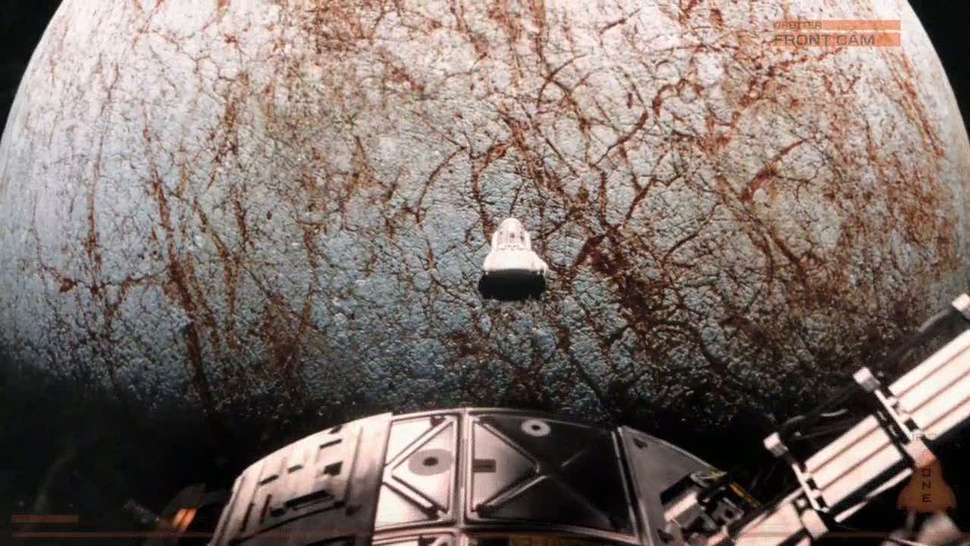
europa_reportOrdinarily, I like to show movie previews before the movie has been released. This time around, I’m a little behind the curve. But my thanks to Rami for bringing this movie to my attention, since it seems like just the thing for us sci-fi geeks and buffs. It’s called the Europa Report, a near-future speculative science fiction film that follows in the vein of the 2001: A Space Odyssey and the Blair Witch Project.

Taking place in 2061, the story follows a group of astronauts who are sent on a private venture to Jupiter’s moon of Europa to investigate it for signs of life. Naturally, things go wrong, lives are lost, and the footage of their mission becomes the basis of a “report” that people back at Earth pour over, hoping to find some answers to the mystery of what happened.

The film was officially released just under two weeks ago, on August 2nd, and has received some pretty kick-ass reviews. Over at space.com, they claimed the movie was “One of the most thrilling and realistic depictions of space exploration since Moon or 2001: A Space Odyssey”, while IO9’s Annalee Newitz wrote of the film:

The representations of Jupiter and Europa in this film come directly from real satellite imagery gathered by NASA, and the journey to Europa itself is both realistic and gorgeous. There’s a lesson here about how dramatic tension and brilliant concept design, even on an indie budget, can create a sense of wonder rivaling that of a VFX blockbuster. And the payoff at the end is electrifying.

Hot damn, that’s a good endorsement! As for me, and I imagine Rami, I plan to see it and offer a review of my own! A movie like this couldn’t be more timely. Already, long-term plans are being made to send a lander or a space penetrator to Europa to have a gander at what lies beneath its icy veil. And I look forward to the day when the reality of that planet and all the speculative fiction can get together and compare notes!

Source: IO9.com

The Future is Here: Memory Implants Now Possible!

?????????????????????The concept of implanting a person with false memories has been featured in many a science fiction franchise. Between Philip K. Dick’s “We Can Remember it for you Wholesale” (which was the basis for Total Recall), the cult-hit Dark City, and the more recent Inception, the idea that memories could be tampered with – thus showing how reality and experience are subjective – has a long history.

And now it seems that once again, science fiction has proven to be the basis of science fact. As a result ongoing collaboration between the Japanese Riken Brain Science Institute and MIT’s Picower Institute for Learning and Memory, a process has been devised for planting specific false memories into the brains of mice.

memory_implantsThis breakthrough, in addition to being mind-blowing and kind of scary, is also likely to seriously extend our understanding of memory. The ability to learn and remember is a vital part of any animal’s ability to survive, but with human beings, it also plays a major role in our perception of what it is to be human. What’s more, disorders effecting the human brain and memory have been growing considerably in recent decades.

These range from Alzheimer’s disease, where the abilities to make new memories and to place one’s self in time are seriously disrupted, to Post-Traumatic Stress Disorder, in which a memory of a particularly unpleasant experience cannot be suppressed. Such disorders are a powerful force driving research into discovering how healthy memory functions so that we can diagnose and treat problems before they become too serious.

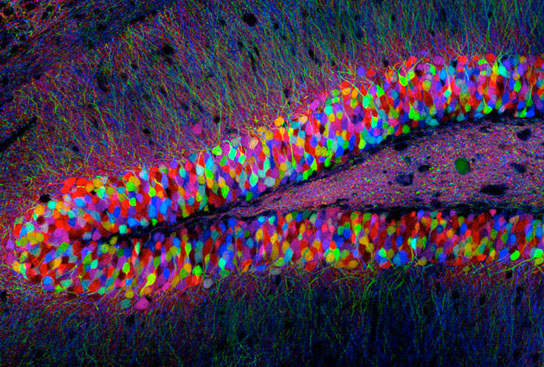
Mouse-Hippocampus1In their previous work, researchers from the Picower Center for Neural Circuit Genetics were able to identify an assembly of neurons in the brain’s hippocampus that held a memory engram – a cell containing data about a sequence of events. In recalling a memory, the brain uses this data to reconstruct the associated events, but this reconstruction often varies from what actually occurred.

Working from this, the researchers were able to locate and identify the neurons encoding a particular engram (a specific set of memories) through the use of optogenetics. This technique is a relatively new neuromodulation process that uses a combination of genetic modification and optical stimulation to control the activity of individual neurons.ChR_memoryAfterward, they were able to genetically engineer the hippocampal cells of a new strain of mouse so that the cells would form a light-sensitive protein called a channelrhodopsin (ChR). These proteins activate neurons when stimulated by light, thus ensuring that specific memories could be triggered by exposing someone implanted with them to a light source.

Next, the researchers conducted a series of behavioral experiments in order to identify the set of brain cells that were active only when a mouse was learning about a new environment. The genes activated in those cells were then coupled with the light-sensitive ChR and monitored during the next phase of the experiment, where the mice were placed in a series of boxes.

memory_implants1In the first box, the mice were exposed to a safe environment, during which time the neurons that were actively forming memories were labelled with ChR, so they could later be triggered by light pulses. In the second box, mice were treated to a series of mild foot shocks, which created a negative association, while at the same time, a pulsing light was used to trigger their memories of being in the first box.

When the mice were returned to the first box, in which they had only pleasant experiences, they clearly displayed fear/anxiety behaviors. In short, the fear that they had learned in a separate environment was now falsely associated with the safe environment. Whats more, the false fear memory could be reactivated at will in any environment by triggering the neurons associated with that false memory.

brain-activityWhat this demonstrated was that the recall of this false memory drove an active fear response that was indistinguishable from a real memory. And according to Steve Ramirez, a graduate student in the Tonegawa lab and the lead author of the paper, the experiment provided some real insight into the nature of memory:

These kinds of experiments show us just how reconstructive the process of memory actually is. Memory is not a carbon copy, but rather a reconstruction of the world we’ve experienced. Our hope is that, by proposing a neural explanation for how false memories may be generated, down the line we can use this kind of knowledge to inform, say, a courtroom about just how unreliable things like eyewitness testimony can actually be.

Granted, it might not sound like Total Recall or Inception, but the basic premise is the same. And note how in those movies, no explanation was given as to how these false memories were fashioned – nor could they be, since no means yet existed. But now, using this technique, memories could be fashioned in one person, and then implanted in another.

total-recall-originalFrightened yet? Well, you should be! If memory is one of the very things that define us as human beings, and we can’t be sure if the memories we have are real, our own, or someone else’s, then how can we be sure of anything? How do we even know who we are? Man, I’d be writing this into a story outline right now if it hadn’t already been done to death!

Until next time, guard your experiences and memories jealously! You never know when someone might try to come along and steal them…

Sources: gizmag.com, io9.com

George Takei’s Proposal for the 2014 Winter Olympics

Sochi-2014-Olympic-StadiumThe build-up towards the Sochi Winter Games has been fraught with controversy, thanks to Russia’s recent passage of numerous laws which amount to persecution of its resident gay population. As a result of this, numerous pro-GLBT groups from around the world have proposed various boycotts. Like most issues involving human rights and sanctions, it is a sticky one without much in the way of clear solutions.

But first, some background on the issue seems needed. Though homosexuality was decriminalized after the fall of the Soviet Union in1991, more recent laws passed by numerous states, and now being advocated federally by Vladimir Putin, have led to concerns and criticisms that the country is slouching towards extreme social conservatism again.

russia-gay-law-olympics.siThese include the recent ban on “homosexual propaganda” that has been passed in numerous regions and is being proposed by Putin’s allies in the country’s federal Parliament. This law would effectively make it illegal for gay people to express themselves publicly, which would include admitting to being gay, or demanding equality or reform for same-sex couples at home or abroad. In effect, it would criminalize the act of being openly gay.

To make matters worse, this legislative ban has been linked to an upsurge in homophobia that led to a dozen murders and an unspecified number of assaults last year. Though obtaining accurate numbers is difficult, since victims are afraid to come forward, next of kin are reluctant to admit homophobia was a cause, and enforcement of hate crime laws remains tentative.

russia-gay-law-crackdownThis has led many people worldwide to propose boycotts against Russia, ranging from Russian vodka, to the Sochi Olympics themselves. However, there are those who are quick to point out that such a boycott would only punish the athletes who have worked very hard to get to the Olympics, and really won’t help the Russian gay community at all.

What’s more, if human rights issues are a reason to boycott the Olympics, what are we to think of Beijing hosting the 2008 Summer Games? In addition to its ongoing occupation of Tibet, China maintains a human rights record that is deplorable by most standards, and actively deprives its citizens of numerous human rights on a daily basis. But no boycotts were mounted there, leading some to conclude that one here would be unfair.

Luckily, George Takei has offered a possible way out of this dilemma: let Vancouver host the 2014 Winter Games. At the website for Allegiance: A New American Musical, which stars the openly gay actor and activist, he posted an appeal to people all over the world to not boycott the games, but instead to demand that they be moved to another venue.

George TakeiTitled “It’s Time to Move the Olympics”, Takei cites Russia’s Sports Minister recent confirmation that the country intends to enforce these new laws against visiting LGBT athletes, trainers and fans. This means that anyone attending the Olympics could be arrested, fined and deported for the simple act of waving a rainbow flag. Because of this, he says that it’s time for the IOC to reconsider Sochi as a location.

Instead, Takei and others believe that the games should be moved to Vancouver since “all of the facilities are still in good condition, so this would likely be the easiest of possible alternatives.” In addition to sending a clear message about human rights, the games could proceed and the athletes would not be penalized. People who are interested in signing the petition can do so by clicking here.

And as someone who witnessed the 2010 games firsthand, thought they were awesome, and saw how we came away from it all with plenty of debt, I can certainly see the value in this. We already have the structures, and would love another infusion of tourist dollars and international attention. Despite whatever logistical and financial considerations that will need to be ironed out in the meantime, I’d say it’s a win-win situation.

sochi-2014-takeiSidenote: According to Reuters, Russia has since denied that the “homosexual propaganda laws” will be enforced during the games. In a statement made by Igor Ananskikh, the head of the Russian Duma Committee on physical training, sports and youth, he claimed that:

The Olympics is a major international event. Our task is to be as politically correct and tolerant as we can be. That’s why we made the decision not to raise this issue during the Games.

This contradicts a statement made by Russian Sports Minister Vitaly Mutko, who said previously that no concessions would be made to foreign athletes and visitors to the Sochi Olympics:

No one is forbidding an athlete with non-traditional sexual orientation from coming to Sochi, but if he goes onto the street and starts propagandizing it, then of course he will be held accountable.

So the official story at this point is that Russia will NOT be enforcing its anti-GLBT laws to visiting athetes. No doubt, this overruling was the result of political pressure, as the Duma does not want to see Russia deprived of hosting a major international event for any reason. As years of languishing in obscurity Russia, much like China, can be counted on to jealously guard its newfound sense of status and grab any opportunity it can to advance it.

vancouver-2010-olympics-opening-ceremonyNo telling how this will work out. But in the meantime, I’m hoping Vancouver gets to host the Winter Games twice in a row! That would be some kind of record, and considering all the golds Canada took home last time, I imagine we’d be in good spirits!

Sources: allegiancemusical.com, rt.com, amnesty.org

Isaac Asimov’s Second Foundation – A Review

foundation_coversAt long last – after a year of reading it in small snippets between reading, writing and editing – I finally completed Second Foundation. As the third novel published in the Foundation series, it effectively ended the series, though it was followed up by two sequels and several prequels that expanded on the universe further.

However, given that it would be roughly 30 years until Asimov produced another Foundation novel and pressure from the fan community (and a hefty advance from the publisher) were the only reasons for it, many fans come to see Second Foundation as the final installment in what was effectively a trilogy.

I am one such person. And now that I’ve finished Second Foundation, I feel that the series is complete. And I’m rather dying to do a review, seeing as how the books been with me so long and it’s been months since I reviewed an actual novel. On top of all that, its taken me so long to finish this series that I feel a little embarrassed. Thank God the international society of sci-fi geeks doesn’t actually exist, or they’d kick me out for sure!

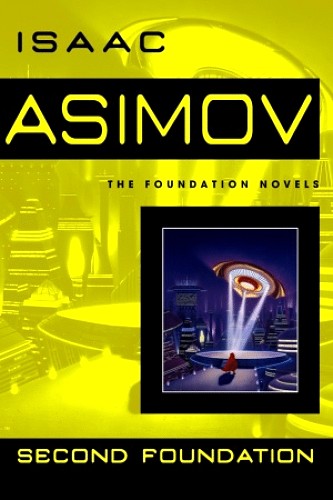
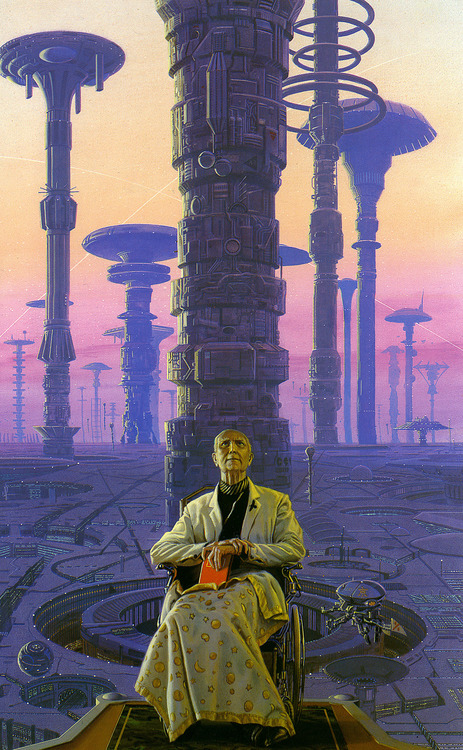
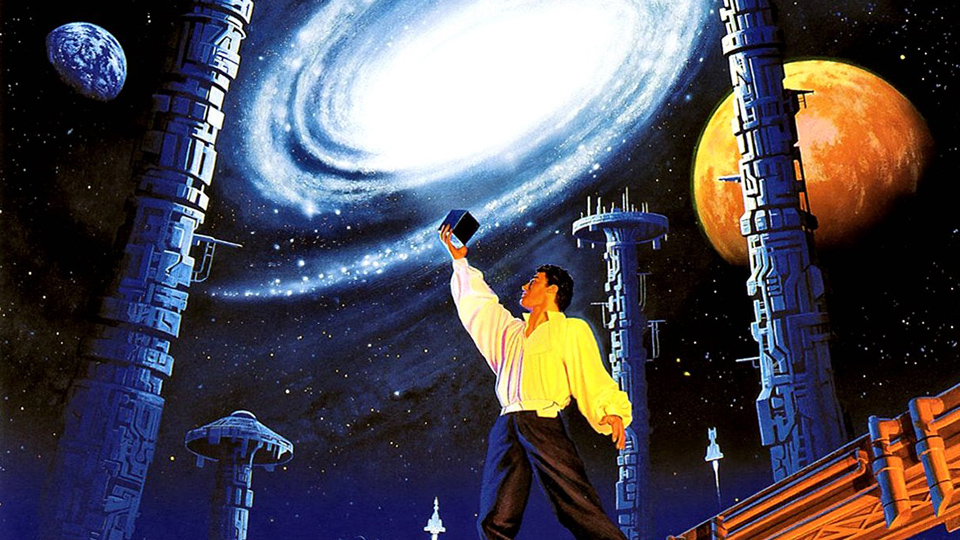
Sidenote: Before I begin, note the cover art that is featured at the top there. Over the years, many different covers have been produced, and the current cover for Second Foundation is the one you see below. However, I wanted to feature these ones since they give such a wonderful representation to the original trilogy.

In the first, you see Seldon sitting in front of the Imperial City of Trantor in the days before its decline. In the second, you see the Mule playing his instrument, sitting before a Trantor that lies in ruins. In the third and final, you see Arkady Darrel standing on a Trantor that has reverted to its natural state centuries later, the aged ruins lying well off in the distance. Once you read the full trilogy, you can see just how picture-perfect these representations are.

Plot Synopsis:
second-foundationMuch like Foundation and Empire, the book is divided into two parts, with the first dealing with the Mule’s ongoing search for the Second Foundation. This part opens a few years after the Mule’s trip to Trantor, during which time, his identity was revealed and his attempts to find the answer in the Imperial library were narrowly foiled.

Now in charge of a vast empire centered on the world of Kalgan, he sets out again, sending his fleet in all directions to locate and destroy this last challenge to his power. Knowing the a confrontation is inevitable, the executive council of the Second Foundation meets and decides to allow the Mule to find them, “in a sense”.

The search begins when Bail Channis, an officer recruited by the Mule because he exhibits an “unconventional mind”. He is sent out with Han Pritcher, an officer the Mule knows to be loyal but fears has been ineffective due to his own influence over the man. Together, they travel to the remote world of Rossem where, following clues left behind by Seldon (that the Second Foundation is at “Star’s End”), Channis believes they are hiding.

foundation_muleWhen they arrive, they find a backward, agrarian world where the locals are hospitable, but very little appears to be happening. Suspecting a trap and that Channis is in fact a Second Foundation agent, the Mule travels in secret to Rossem and reveals himself, thinking he has caught Channis and the Second Foundation off guard. However, he quickly realizes it is he who has stepped into a trap when the First Speaker emerges to save Channis.

The two do battle but in the end, the First Speaker emerges victorious by altering the Mules psyche, which prompts him to return to Kalgan and live out the rest of his days as a benevolent ruler. The story ends with another interlude in which the Executive Council celebrates their victory and now plots to get the Foundation back on track.

Part II takes place sixty years later, and fifty-five years after the death of the Mule by natural causes. The members of the First Foundation, led by Dr. Darrel, are now aware that the Second Foundation is out there and secretly discuss how they are exerting influence over their world. This is demonstrated by conducting electroneurology scans, which shows that key members of government have had their minds altered.

second_foundation_warMeanwhile, the Foundation is also embroiled in an ongoing conflict with the new ruler of Kalgan, who wants to reclaim the glory of the Mule by reconquering the Foundation and subjugating it to his will. Their fleet meets with early success and managed to cordon off Foundation space, but their fortunes soon change when the Foundation fleet surrounds them in a major battle.

In the midst of the war, the Foundation decides to send an emissary – Homir Munn, a noted Mule memorabilia collector – to Kalgan to investigate what the Mule learned about the Second Foundation in his final years. Darrel’s daughter, Arkady, sneaks aboard his ship to accompany him, since she is fascinated by the subject of the Second Foundation and Seldon’s plan, and because she is tired of being kept out of the loop by her father.

secondfoundation_arkadyIn the end, Munn is taken prisoner and interrogated by the Kalganian commander, but gives up nothing beyond stating that his purpose was to find clues to the location of the Second Foundation. Arkady is forced to flee, and on the advice of the Commander’s mistress, heads for the spaceport and flies with a family back to Trantor. To her surprise, she realizes that the mistress is a member of the Second Foundation, and that they are manipulating things on Kalgan.

From Trantor, she sends her father a message and tells him the Second Foundation are on Terminus. Once again going by clues left behind by Seldon, that the Second Foundation was at “the other end of the Galaxy”, she tells him that a circle has no end. Ergo, she concludes that they must have been on Terminus all along, where they could monitor the Foundation and Seldon’s Plan up close. In the midst of this, the Foundation fleet outflanks the Kalganians and wins the war.

With the war over and the Foundation victorious. Munn then returns to Terminus and tells them the Second Foundation could not exist. Darrel rightly then reveals that he has suspected all along that Munn has been manipulated by the Second Foundation, and conducts a brain scan to prove it. He then reveals that his work has yielded a telepathic jamming device, which they then turn on.

foundation_seldonThe 50 or so Second Foundation agents that are on Terminus are thus revealed and arrested. Reasoning that they are now neutralized, and with the war over,  the Foundation is now free to expand and build the Second Empire. However, in a final twist, another interlude takes place where the First Speaker is conversing with a student, where it is revealed that everything has proceeded by their design.

After neutralizing the Mule, the Second Foundation knew that Seldon’s plan was hanging by a thread, hence they manipulated things to ensure that it would proceed on track again. This included pushes the Kalganians into war with them, and then seeing to their defeat, and letting the Foundations find some of their agents and presume to have neutralized with them. It’s also revealed that they had a hand in grooming Arkady Darrel, and that Trantor is the real home, with Star’s End being a veiled reference to the old Imperial saying “all road’s lead to Trantor”.

Summary:
I can honstly say that after many years of stalling and waiting, finishing the original trilogy was quite the relief. And for the most part, I enjoyed the third installment in the original three-act play. However, there were some weaknesses that did not go unnoticed, and some of Asimov’s little idiosyncrasies which I’ve come to expect over the years.

For example, the first story is somewhat dry. Rather than there being any real intrigue and action, the entire section consists of a sort of final, half-hearted act made up of mind games. This certainly feels like the case when during the final chapter, where both Channis and Pritchard, followed by the Mule and the First Speaker, are embroiled in a type of mind war. It’s a constant case of “I got you”, “no, I got you!” kind of thing.

foundationAnd this is how the Mule is defeated and the greatest threat to Seldon’s Plan is neutralized. After being portrayed in the second book as the one factor that Seldon did not plan for, a titanic force that was overwhelming the Foundation and its armies, his ultimate demise seemed rather undramatic. Granted, this was something that needed to be secretive and behind-the-scenes, but it felt it rushed and kind of forced.

The second story is much better, containing plenty of intrigue, action, and crisis. And the story flowed quite nicely, beginning at a time when the Foundation feels secure in itself, but a small band of specialists understand that this is not the case, and then culminating in a war and a big reveal. And here, the twists serve a better purpose, showing how the Foundation thinks they’ve neutralized the threat, never to learn that they’ve been helpfully misled.

foundation_forwardBut once again, there was a sense of things being forced and rushed. Towards the end, people are once again revealing that they knew things all along, were better prepared than they had any right to be, and could solve everything with the push of a button or a last minute decision. This time around, its the First and the Second Foundations involved in a case of strategic and mental Jiujitsu, and it feels like there’s a few too many reversals.

However, that doesn’t detract much from the ending, which feels like a good completion to the series. After establishing the Foundation in the first book and showing to the progression of Seldon’s Plan, to throwing it into disarray in book two, by this final act, it now appears that the Plan is fully restored and all the principal actors have done their part.

hari_seldonAnd as the book states by quoting the Encyclopedia Galactica, the war between Kalgan and the Foundation would be the last major conflict before the rise of the Second Empire. Ergo, it would smooth sailing from here on in. As I said already, Asimov claimed that the remainder of the series was motivated by pressure from fans and the publisher, so I tend to think of these three books as the series in its entirety. And I think the way he ended it here was effective and satisfying. No need for sequels or prequels beyond this point!

So if you haven’t read this series yet, I recommend you get on it. While it may have some flaws and apparent idiosyncrasies, it remains a classic of science fiction and one of the most brilliantly original series available. Hence why I felt I needed to read it, and why you should too. Especially if you consider yourself any kind of sci-fi fan or geek!

Epic Rap Battles of History – Sci-Fi Edition

epic_rap_battlesRound two for Epic Rap Battles! This time around, I figured I should do a compilation of all their best sci-fi battles, arranged in alphabetical order. These include Batman vs. Sherlock Holmes, Darth Vader vs. Hitler (1 and 2), Doc Brown vs. Doctor Who, and finishes off with the classic Master Chief vs. Leonidas.

Enjoy!

Batman vs. Sherlock Holmes:


Darth Vader vs. Hitler:


Darth Vader vs. Hitler 2:


Doc Brown vs. Doctor Who:


Master Chief vs. Leonidas:

Tatooine to be Reclaimed by the Desert

Mos_Espa_2All across North and Sub-Saharan Africa, desertification threatens farm land, pastures, townships and even cities, triggering food and water shortages and threatening wildlife. But in a startling twist, it now seems that this ecological phenomena is threatening an iconic movie set, one which science fictions fans should instantly recognize.

Yes, in the deserts of Tunisia, the town of Mos Espa is about to be reclaimed by the desert. This set was first constructed by George Lucas and his crews to act as the skyline for Tatooine in Star Wars Episode I: The Phantom Menace. Serving as the fictional home of Anakin Skywalker, it was here that Qui-Gon Jinn and Padme first met the cloyingly sweet blonde kid that would one day become the most evil man in the universe

mos_espa

And in a new study, lead by Ralph Lorenz of John Hopkins University, researchers have found that sand dunes are swiftly encroaching on the old Star Wars set and threatening to consume it. Since Mos Espa was first constructed in 1997, some sixteen years ago, Lorenz and his researchers have calculated that the sand dunes have moved a total of 130 meters.

mos_espa_dunesNote the satellite images to the left, which display the Mos Espa set in 2004 and 2009 as seen from Google Earth. Between the two, one can see how the large dune wall to the right of the compound is weakened over time, and dust and sand blowing in from the desert is able to make its way into the town proper.

You can also see how the buildings are harder to make out in the 2009 image, a result of them being slowly covered by airborne sand. In time, this will reach the point where the huts are no longer visible, and will likely collapse under the weight of the desert.

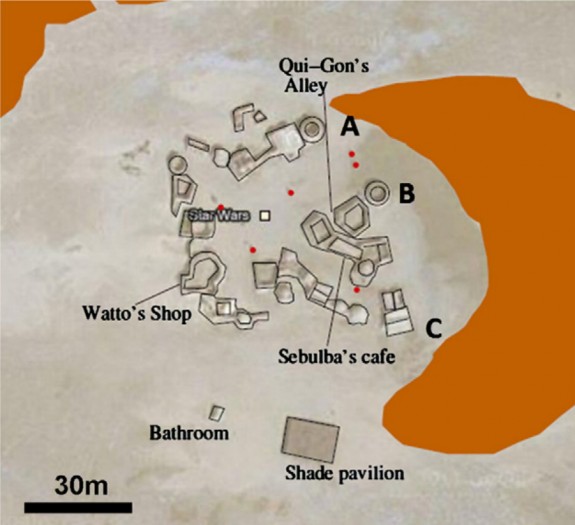
The aim of this study, far from inciting Star Wars fandom to mount a campaign, was to track the progress of desertification in the Maghreb nation. One of the benefits of the Mos Espa construction,  as far as Lorenz and his geomorphologists were concerned, was that it gave them a steady frame of reference. Since their interest is in understanding how sand dunes move, the Star Wars set gave them a good way to see changes in dune location.

Mos Espa layout
Mos Espa layout

The report outlined the likely consequences of the approaching dunes, and what they would mean for future generations of Tatooine-tourists:

Should the barchan that forms the focus of this paper overrun the Mos Espa set, many buildings will be temporarily buried.

Their rather flimsy construction will mean roofs will likely collapse, degrading the attraction of the site when the dune moves on. This has already been seen at a smaller film set (‘Repro Haddada’…sometimes referred to online as the ‘slave quarters’)

…This structure was overrun by a barchan around 2004, and has been substantially demolished, although it is still an object of pilgrimage by Star Wars fans, who also admire the barchans a few hundred meters to the south, which are prominent in several scenes of the movie.

They were also sure to point out that even if Mos Espa survives the swiftly advancing dune, the town is still likely doomed, as other patches of desert are encroaching from other directions as well:

In the long run, Mos Espa is still threatened: the large barchan (big enough to totally submerge the site) looms about 500 m to the east. In fact this dune is often driven over en route to the Mos Espa site, reportedly by ~80% of the visiting vehicles. Although the imminent threatening barchan and other effects may degrade the site on this timescale anyway, at the observed migration rate of ~6 m/yr, this large barchan will begin overrunning the site in about 80 years.

Sad news for fandom and sci-fi geeks. But I guess it just goes to show you, nothing lasts forever. But more importantly, it demonstrates one of the principle issues of Climate Change and the planets rapidly-changing ecology. So perhaps this will have the positive effect of making more people sit up and notice, and maybe even mobilize a few to action.

After Climate Change is an issue that effects, and threatens, us all. And against enemies like world hunger, displacement, drought, famine, and flooding, we need all the help we can get! So at the risk of sounding cliche, let me just say: May the Force be with us!

Source: blogs.smithsonianmag.com

Cool Video: “Kara”, by Quantic Dream

KaraI just came across this very interesting video over at Future Timeline, where the subject in question was how by the 22nd century, androids would one day be indistinguishable from humans. To illustrate the point, the writer’s used a video produced by Quantic Dream, a motion capture and animation studio that produces 3D sequences for video games as well as their own video shorts and proprietary technologies.

The video below is entitled “Kara”, a video short that was developed for the PS3 and presented during the 2012 Game Developers Conference in San Francisco. A stunning visual feet and the winner of the Best Experimental Film award at the International LA Shorts Film Fest 2012, Kara tells the story of an AX 400 third generation android getting assembled and initiated.

Naturally, things go wrong during the process when a “bug” is encountered. I shan’t say more seeing as how I don’t want to spoil the movie, but trust me when I say it’s quite poignant and manages to capture the issue of emerging intelligence quite effectively. As the good folks at Future Timeline used this video to illustrate, the 22nd century is likely to see a new type of civil rights movement, one which has nothing to do with “human rights”.

Enjoy!

What Would Hyperspace Really Look Like?

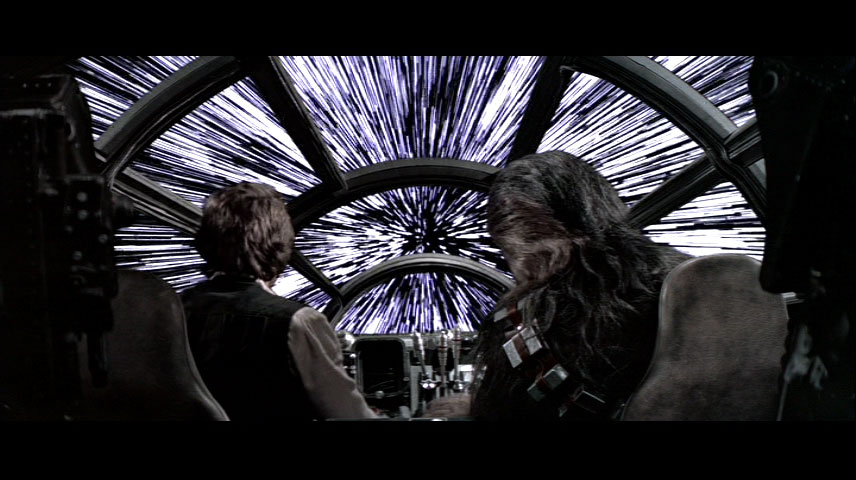
hyperspaceRemember those iconic scenes in Star Wars when the Millennium Falcon made the jump to hyperspace? Remember how cool it looked when the star field stretched out and then the ships blasted off? And of course, every episode of Star Trek was punctuated by a jump to warp, where once again, the background stars seemed to stretch out and then hurl on past the Enterprise.

Yes, for generations, this is how people envisioned Faster-Than-Light travel. Whether it consisted of rainbow-colored streaks shooting past, or a quick distortion followed by a long, blue tunnel of bright light, these perceptions have become a staple of science fiction. But one has to wonder… in a universe where FTL was really possible, would it really look anything like this?

hyperspace3Using Einstein’s Theory of Relativity, four students from the University of Leicester produced a paper in January of last year where they theorized what a jump to light-speed would really look like. Based on the theory that the speed of light is the absolute threshold at which elementary particles can move in this universe, the four students – Riley Connors, Katie Dexter, Joshua Argyle, and Cameron Scoular – claimed that a ship that can exceed c would have an interesting view.

In short, they claim that the crew wouldn’t see star lines stretching out past the ship during the jump to hyperspace, but would actually see a central disc of bright light. This is due to the Doppler effect, specifically the Doppler blue shift, that results in the wavelength of electromagnetic radiation, including visible light, shortening as the source of the light moves towards the observer.

Hyperspace. Nuff said?

As the ship made the jump to hyperspace, the wavelength of the light from the stars would shift out of the visible spectrum into the X-ray range. Meanwhile, Cosmic Background Radiation (CBR), which is thermal radiation that is spread fairly uniformly across the universe and is thought to be left over from the Big Bang, would shift into the visible spectrum, appearing to the crew as a central disc of bright light.

What’s more, even a ship like the Millennium Falcon would require additional energy to overcome the pressure exerted from the intense X-rays from stars that would push the ship back and cause it to slow down. The students say the pressure exerted on the ship would be comparable to that felt at the bottom of the Pacific Ocean.

red-shift-03However, if the ship in question took its time getting up to speeds in excess of the speed of light, there would be some interesting visual effects. Given how light and the color spectrum works, as a ship continued to speed up, the stars in front of the ship would experience blueshift (shifting towards the blue end of the spectrum), while those behind it would experience redshift (shifting towards the red end).

But the moment the threshold of light speed was passed, background radiation would be all that was left to see. And once that happened, the crew would experience some rather intense radiation exposure. As Connors put it:

If the Millennium Falcon existed and really could travel that fast, sunglasses would certainly be advisable. On top of this, the ship would need something to protect the crew from harmful X-ray radiation.

And as Dexter suggested, referring to Disney’s purchase of Lucasfilm for a cool $4.05 billion: “Disney should take the physical implications of such high speed travel into account in their forthcoming films.” I won’t be holding my breath on that one. Somehow, star lines look so much cooler than a mottled, bright disc in the background, don’t you think?

Hyperspace_HomeOneSources: gizmag.com, le.ac.uk.com

New Anthology Sample: Arrivals!

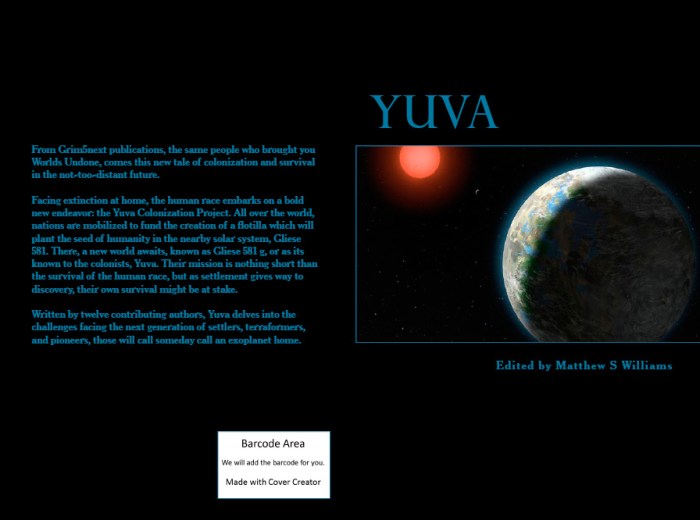
Yuva_coverWow, its been awhile since I’ve posted anything from my group’s Yuva anthology. But that’s been the nature of my writing in these past few weeks, picking up projects I haven’t been working on lately and getting busy on them! And one of the fruits of these labors is the next installment in the short story “Arrivals”.

It came after I finished reading over my friends’ proposal for another story – Amber Iver’s and Goran Zidar’s “Ember Storm”. Somehow, reading another’s work always seem to help stoke the creative fires. And since “Arrivals” has been sitting on my desk without improvement for months now, I figured it was time to dust it off and make some headway!
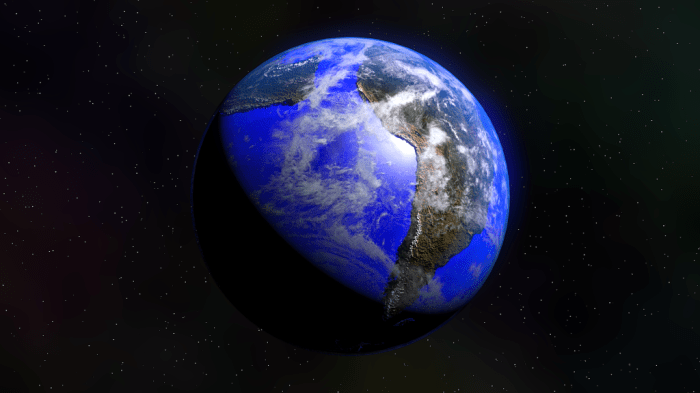
YuvaAs the story that starts off part III of the anthology, “Arrivals” deals with the Second Wave of colonists who come to the planet of Yuva some 200 years after the first Terraformers set foot on the planet. Naturally, this new group of settlers is fare more advanced than the first, and has made the trip in less time thanks to the superiority of their next-generation, interstellar space ships.

The first segment of the story, which I posted back in March, dealt with the signal from these distant ships being received. This second part deals with the repercussions, as the Yuvan authorities come to see the ships in distant space and realize they will be arriving in orbit within two years time. Preparations need to be made, and the possibilities need to be addressed.

Will these new “arrivals” be friendly, or hostile? Are they simply people looking to join the first wave in creating a new home, or are they intent on pushing them out of the way? And just as importantly, what news and developments are they bringing with them from Earth, a world the Yuvan people have not heard from in over two centuries?

Planetary Research Council
Zarmina, Vogt

Anuja Padda tapped the table before her, loud enough so that everyone arranged in the circle would hear her and come to attention. Slowly, the many conversations that were passing between the board’s various members came to an end and they looked in her direction.

“Good morning, all. I thank you all for coming, especially those who joining us from overseas. I think we can all agree, we meet here under some rather extraordinary circumstances.”

There were mumbles of agreement from all around the table. Padda continued.

“And though I’m sure everyone has had a chance to review the information, I know my colleagues won’t fault me for reviewing our situation for the sake of posterity. Future generations will certainly appreciate it.”

That got a few snickers, and some people looking around the expanse of the room. From multiple angles, holorecording devices were capturing their every word, gesture and nuance. Someday, posterity would be looking back on the recordings made, and she was determined to give them a good show.

She cleared her throat and started from the beginning. “Less then twenty-four hours ago, a remote monitoring station on the western coast on Bonfils reported receiving some anomalous readings. The station assessed the readings and determined that they were in fact a transmission, which appeared to be coming from an extra-planetary source.”

She paused for emphasis. The next segment of her introduction required a few seconds grace, given the heady nature of it all.

“Ever since we arrived on this planet almost two centuries ago, we’ve entertained the notion that one day, another flotilla would follow in our wake, bringing a second wave of colonists to this world. Yesterday, we finally heard from them. And today, we will receive our first glimpse of them.”

The room’s lights suddenly went dark and a million specks of light slowly began to appear around them and grow in luminosity. The image that was now filling the Council meeting room could be seen in every Planetary Research office on the planet, the video feeds that were being captured from orbit streaming in through their own holodisplay devices.

Raising her hands and the image responded, the holodisplay reading the embedded sensors in her fingertips and responding to her manipulations. The image began to move and zoom in on a particular region of space. Holding her left hand steady to prevent lateral movement, she pulled her right hand back several times, increasing the magnification on the desired region. Three grey blobs appeared in this area, indiscernible and bland, until the image improved the resolution.

What they saw then instantly amazed and left them all speechless.

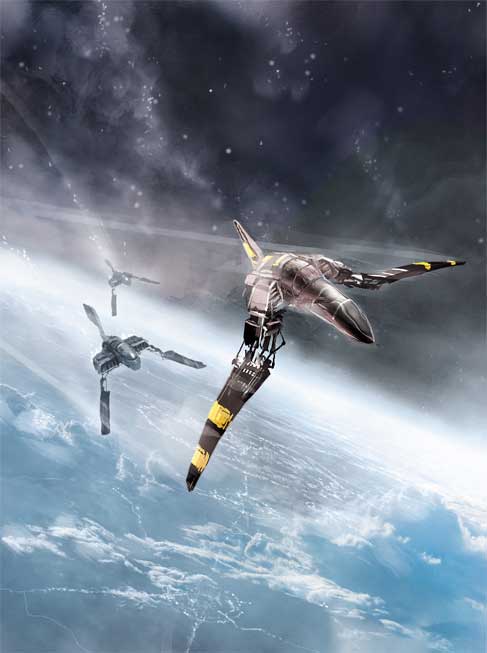
There, at the center of the room and hovering above their heads, were the mottled images of three large space-born craft. Their edges were sharp, their profiles long and contoured. There was no mistaking them for asteroids or any other kind of stellar mass.

“The image quality leaves something to be desired, but as you can see, we are detecting three ships flying in a wedge formation.”

“In other words,” said Councilor Moltke from the other side of the room, “a formation and disposition which matches our arrival exactly.”

Padda nodded, as did numerous others who continued to watch with awe. Within seconds, questions began to follow.

“How long until they get here?”

“Our scopes indicate that at their present velocity, they will arrive in orbit of Yuva in just over two years’ time.”

“What was the message they sent?”

“We don’t know yet, as it was encrypted using a rather complex cipher. But our technicians are sure we can decode it before long. Most likely, it’s a message of greeting.”

“The ships they are using, they’re faster than the ones that brought us here, yes?”

Padda turned to address this question, though it was more of an observation. Given their apparent distance and the timeframe she gave them, one could not help but draw that conclusion.

“Yes, they do appear to be using a form of propulsion technology that is superior to the one that powered the Avincenna, , and . This should come as no surprise, given that they’ve had well over a century to refine their methods.”

“And what of their intent?”

Padda looked around the room to find the source of the question. It appeared to be coming from the back wall, an alcove which was temporarily shaded due to the display of lights above. As the speaker stepped forward, she suppressed the urge to sigh and greeted them politely.

“Minister Astrakhan, this is a surprise. We weren’t expecting a visitor from Planetary Defense.”

“Perhaps if you had invited us to this session,” he said dryly, moving closer to the center of the room. “Nevertheless, my question still stands. What is their intent?”

Padda cleared her throat. “We can’t be sure at this time. However –”

“All we really know is that have a flotilla of ships arriving in our system from Earth. They are more advanced than we are, they have sent a message we can’t interpret, and yet we assume that they are here bringing a new wave of colonists who plan to peacefully integrate into our society.” He stopped and looked at the display; nodded, as if appraising the image and finding something within it that he approved of. “Have you even considered the possibility that their intent might be hostile?”

Padda shook her head. She tried to respond, but incredulity prevented her from finishing her sentence. “I’m sorry, I –”

“It’s not unheard of for new waves of colonists to displace those that came before them,” he continued. “Or have you forgotten your Earth history?”

Padda’s face went warm. “I haven’t forgotten anything sir.”

“Ah, then you recall the last time in Earth’s history when exploration and colonization took place? During the 18th century, many waves of Europeans arrived on the shores of what they liked to refer to as ‘The New World’. In the north, settlers landed in large numbers along the eastern shores, and after clearing the lands of its native inhabitants, subsequent waves of settlers triggered a series of conflicts. Colonies switched hands as their respective nations demanded the right to control the lands that were already spoken for.”

Padda once again suppressed a sigh.

“You’re saying you think these colonists are here to push us out? Or demand we submit to their authority?”

“And why not?” he asked, turning around to face her. If they do possess superior technology, what’s to stop them?”

Low murmurs began to erupt around the room, growing in intensity as more people joined the chorus. It wasn’t long before she could hear remarks being shouted in Astrakhan’s direction. All the while, he continued to look at Padda, a cold stare on his face.

All too quickly, she remembered exactly why she hadn’t invited him to this meeting. She knew he would be likely to raise some pessimistic possibilities. Unfortunately, not inviting him had had the effect of exacerbating the situation. Amidst their awe and distraction, he had managed to sneak in and stir the pot even more.

“Excuse me, everyone!” she said finally. Slowly, silence returned to the room. “Let us not get carried away with speculation. Minister Astrakhan, it is your contention that we do not know what these ships and their crews are doing here, correct?”

“It is not my contention, Madame Councilor. It is a fact.”

She smiled. “Then it would be foolish of us to be taking an alarmist position, would it not? If we are indeed ignorant, we shouldn’t allow such ignorance to manifest itself in fear.”

No one chuckled, but she felt the room respond favorably to her remark. The only one who didn’t appear impressed was Astrakhan. Despite his next words, his face registered no reaction to her rebuttal.

“Indeed, Councilor. It would be foolish to assume the worse anymore than it would to assume the best. Perhaps we can agree then that more information is needed?”

Padda nodded silently. She sensed there was more coming, something she wasn’t going to think too highly of.

“A good first step would be to decode the message they sent. I recall you saying it had a rather advanced encryption?”

“That is correct. A quantum encryption that will take some time to crack.”

“Good…” Astrakhan brought his hands together in front of him. “Then might I suggest Planetary Defense and Resources arrange for a collaborative effort. Between our two ministries, we could be able to dedicate all our quantum processors to the task and break their codes that much quicker.”

Padda was about to respond in the affirmative, but was interrupted by Moltke.

“A valid suggestion, Minister. But might I suggest that we extend that collaboration to include all major settlements? Between all of us, we have over a dozen processors that could be networked and dedicated to the task.”

Astrakhan quickly turned around to confront Moltke. “That would require breaching whatever security we have in place with this matter. The entire planet would be made aware of the arrival of these ships.”

Stepping into the light, Moltke spread his hands in a gesture of defeat. “They are likely to have heard of it already, Minister. If we want them to remain informed and calm on the subject, I can think of no better idea than to get in front of the story. Besides, if Planetary Defense is determined to learn of their intentions is what we want, then any measure that could accomplish this task sooner is in order.”

Astrakhan bristled noticeably, then turned back to look at Padda. His face was still painfully neutral, but she could tell from his body language that Moltke had ruffled his feathers.

“I shall have to speak to my superiors, and of course the Planetary Council will need to be informed, and will retain final approval of anything we propose.”

Padda smiled, inwardly suppressing a sense of sardonic joy. “Yes, they will, Minister. I commend you and my colleague on the sensible recommendations made here today.”

Astrakhan left without further incident. The mood lightened the moment he was gone and the rooms main doors slid shut behind him. Within seconds, murmurs began to erupt again. It wasn’t long before questions began to be asked as well.

“There’s the matter of their arrival,” said another Councilor. “What shall we do to prepare?”

“A welcoming committee?” said another.

“What about a series of shuttles going into orbit to greet them?” said Moltke.

Several heads turned to him and began muttering curiously.

“An orbital meet and greet?” said Padda. “Not a bad idea, but we would still be waiting a full two years before they would be close enough for our standard aerospace jets to reach them.”

“Perhaps then we should prepare something with greater range and capability,” Council Mond suggested, their resident expert on aerospace. “If they are going to be two years in coming, we could dedicate the next year to developing shuttles that could meet them half way.” Everyone in the room began to voice their approval of this idea. Mond took that as an invitation to continue. “Until now, we’ve had no reason to build ships that were built specifically for space travel. But between the orbital stations and our resources here on the surface, we have the capability to build a series of shuttles that could be sent from orbit to meet them in space before they reach our world.

This produced additional hums and vocalizations of assent. Eventually, numerous people looked to Padda again to see if she agreed. After a brief consideration, she nodded approvingly.

“A good idea,” she said. “And one I’m sure Minister Astrakhan will be suggesting himself. No doubt he would emphasize that we need to get a look at these people before we allow them to set foot on our planet.”

“Looks like Planetary Defense and Research will be collaborating on something else.”

Everyone chuckled at Moltke’s remark.

New Trailer: Elysium!

ElysiumHey folks. Here we have the third trailer for the upcoming movie Elysium, which is set to be released on August 9th. I’m sure everyone’s familiar with the plot already. And if not, this trailer does a pretty good job of getting you up to speed. So enjoy it, because after the disappointing Man of Steel and an adaptation of Ender’s Game which I don’t plan on seeing, this movie may be all that’s left to fill my quota of summer sci-fi blockbusters!