Since the beginning of civilization, building hasn’t evolved much. In fact, archaeological digs show that between the Early Paleolithic and today, construction has moved at a snail’s pace. And while change has certainly sped up within the past few centuries – with mud and stone giving way to bricks and cement and thatch and wood giving way to steel and shingles – the fundamental techniques and concepts remain largely unchanged.
However, a radical shift may soon be underway where traditional factories will give way to biological ones, and the processing of raw materials using hands and tools will be replaced by an active collaboration between human architects and cells specifically programmed to create building materials. In this new age, biology, rather than machining, will be the determining factor and buildings will be grown, not assembled.
Already, biological processes have been used to manufacture medicine and biofuels. But the more robust materials for everyday life – like roofs, beams, floor panels, etc – are still the domain of factories. However, thanks to researchers like David Benjamin – a computational architect, professor at Columbia University, and the principal of the The Living (a New York architectural practice).
The purpose of The Living’s research is to redirect and engineer biological processes and then capture them using computational models. The end result is what is known as “human-cell collaboration”, where humans specify the shape and properties of a desired material and computers translate them into biological models. Patterned “sheets” of bacterial cells are then grown in the lab, determining the final design based on what was encoded in the DNA.
Emerging software, says Benjamin, will soon allow architects to create multi-material objects in a computer, translate these into biological models, and let biology finish the job. This will be done in laboratories, growing them under carefully engineered conditions, or tweaking the DNA to achieve precisely the right result before deploying them to build.
At the moment, Benjamin and his colleagues are working with plant cells known as xylem – the long hollow tubes that transport water in plants. These are being designed as computer models and grown in a Cambridge University lab in conjunction with various species of engineered bacteria. In addition, they are working with sheets of calcium and cellulose, seeking to create structures that will be strong, flexible, and filigreed.
And of course, Benjamin and The Living are hardly alone in their endeavors. Living Foundries Program, for example, is a a Department of Defense initiative that is hoping to hasten the developmental process and create an emergent bio-industry that would create “on-demand” production and shave decades and millions of dollars off the development process.Naturally, the process is far from perfect, and could take another decade to become commercially viable. But this is a relatively short time frame given the revolutionary implications. This, in turn, may open up what the former U.S. energy secretary Stephen Chu has called the “glucose economy,” an economic system powered largely by plant-derived sugars grown in tropical countries and shipped around the world, much as we do with petroleum today.
Once factories switch to sugar as a primary energy source, and precisely engineered bacteria become the means of manufacture, the model of human civilization may flip from one powered by fossil fuels to one running largely on biologically captured sunlight. It’s one of the hallmarks of the future, where programmed biology is used to merge the synthetic with the biological and create a “best of both worlds scenario”.
In the meantime, check out this conceptual video by one of Benjamin’s collaborators about the future of bio-building. And be sure to check out some of the The Living’s other projects by clicking here.
The northern polar regions are considered by many to be the main battle grounds when it comes to Climate Change. The slow melting of the planet’s ice caps are rapidly melting, which in turn leads to increasing sea levels, and an increase in the amount of solar radiation our oceans absorb. However, according to a new theory, the disappearance of the ice sheet might also release a “time bomb” of greenhouse gas.
The theory appeared in recent paper submitted to the journal Nature. which argued that warming temperatures could release 50 billion tons of methane currently frozen in the Arctic seabed. Because methane is a potent greenhouse gas, such a huge release could drastically speed up the rate at which the sea ice retreats, the amount of solar energy that the ocean absorbs, and exacerbate the ongoing melt.
It could also mean global temperatures rising more quickly, moving the world’s climate past generally-agreed-upon “tipping point” limits. Using the same methodology as the Stern Review, a landmark study from 2006. the papers authors – Gail Whiteman, Peter Wadhams, and Chris Hope of Cambridge University – put a price tag on the potential damage:
The release of methane from thawing permafrost beneath the East Siberian Sea, off northern Russia, alone comes with an average global price tag of $60 trillion in the absence of mitigating action–a figure comparable to the size of the world economy in 2012 (about $70 trillion). The total cost of Arctic change will be much higher.
Using various scenarios, they say the methane could take from 10 to 50 years to emerge. But they’re clear about who’ll be hit hardest:
The economic consequences will be distributed around the globe, but the modeling shows that about 80% of them will occur in the poorer economies of Africa, Asia and South America. The extra methane magnifies flooding of low-lying areas, extreme heat stress, droughts and storms.
This is certainly consistent with existing Climate Change scenarios that predict the presence of severe drought in Central and South America, sub-Saharan Africa, and South and East Asia – the most populous regions of the Earth accounting for roughly 3 billion people.
However, there are those who dispute this theory beyond the usual crop of Climate Change deniers. According to these dissenting views, the methane is unlikely to escape to the atmosphere as quickly as the paper predicts, and that some of it could be broken down in the ocean.
But Nafeez Ahmed, director of the Institute for Policy Research and Development, says these skeptics are relying on outdated models. The reality on the ground, as captured by scientists with the International Arctic Research Center, is that temperatures are rising faster than elsewhere and that current ice melt is consistent with the methane effect.
To make matters worse, even if the methane emerges slowly, it would still be catastrophic. The research performed by Whiteman, Wadham, and Hope shows that the effects will be the same, regardless of whether or the methane is released over a 50 year period or a 10 year period. The key is mitigating factors, which call for immediate and ongoing intervention to ensure that worst doesn’t happen.
Bad news indeed, and it further demonstrates the dangers of what is referred to as a the “feedback mechanism” of Climate Change. As things get worse, we can expect the rate at which they get worse to increase at every step. And considering the likely social, political and economic impact of these changes, the ramifications of these new predictions are dire indeed.
Io, the innermost of Jupiter’s four largest moons, has always been a source of wonder for astronomers and scientists. In addition to its pockmarked and ashen surface, it is the most volcanically active object in the Solar System, with about 240 active regions. This is due to the immense tidal forces that Jupiter provides, which create oceans of lava beneath the surface and huge volcanoes blasting it hundreds of kilometers into space.
Naturally, these eruptions are not visible directly from Earth unless one is using infrared cameras. But recently, a new series of eruptions were observed by Dr. Imke de Pater, Professor of Astronomy and of Earth and Planetary Science at the University of California in Berkeley. She was using the Keck II telescope on Mauna Kea in Hawaii on August 15, 2013 when it immediately became apparent something big was happening at Io.
In a telephone interview with Universe Today, de Pater claims this eruption is one of the top 10 most powerful eruptions that have been seen on Io, and she just happened to have the best seat in the house to observe it.
When you are right at the telescope and see the data, this is something you can see immediately, especially with a big eruption like that. It is a very energetic eruption that covers over a 30 square kilometer area. For Earth, that is big, and for Io it is very big too. It really is one of the biggest eruptions we have seen.
However, the fact that it occurred in the Rarog Patera region of Io, aptly named for a Czech fire deity, is somewhat unusual. While many regions of Io are volcanically active, de Pater said she’s not been able to find any other previous activity that has been reported in the Rarog Patera area, which the team finds very interesting.
According to Ashley Davies of NASA’s Jet Propulsion Laboratory in Pasedena, California, Rarog Patera was identified as a small, relatively innocuous hot spot by the Galileo spacecraft during its encounter with the Jovian moon during the late 90’s. However, the observations made indicated that the volcanic activity was at a level way, way below what was seen on Aug 15.
Though we cannot see the eruptions directly, observation using the Keck telescope in the past have ascertained there are likely fountains of lava gushing from volcanically active fissures. But unlike volcanic eruptions here on Earth, which are already awesome and frightening to behold, eruptions on Io would be roughly 1000 times as powerful.
And since Io has no atmosphere to speak of, and the planet’s mass is significantly less than that of Earth’s (0.015 that of Earth’s to exact), the lava shoots off into space. Thus, for anyone standing on the moon’s surface, the result would look very much like a space launch at night, with plumes of flames reaching from the ground and extending indefinitely into the sky.
As de Pater further indicated in the course of her interview, volcanic activity remains quite unpredictable on the Jovian moon:
We never know about eruptions – they can last hours, days months or years, so we have no idea how long it will stay active. but we are very excited about it.
No data or imagery has been released on the new eruption yet since the team is still making their observations and will be writing a paper on this topic. One thing is clear at this point, though. Despite its mysterious nature, Io still has a few surprises left for Earth scientists.
And for more information on the mysterious planet of Io, check out this Astronomycast podcast, featuring an interview with Dr. Pamela Gay of Southern Illinois University:
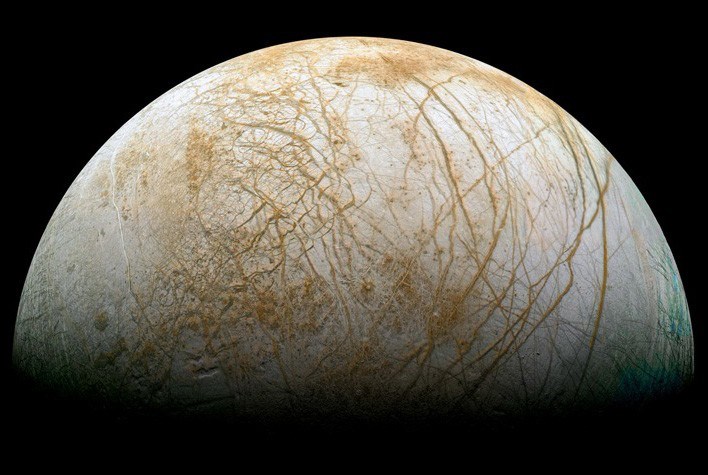
It’s one of Jupiter’s four largest moons, named the Jovians by the famed astronomer – Galileo Galilee – who first discovered them. And from all outward appearances, the moon is an icy, inhospitable place, with surface temperatures never reaching above -160º C (-256º F). Yet, beneath that frozen outer shell is believed to be a liquid, saltwater ocean, one that draws warmth from its orbit around Jupiter.
If this should indeed be the case, then Europa would be about the best candidate for extraterrestrial life in the Solar System, albeit in microbial form. For decades now, NASA has been working under that assumption and preparing for the day that it might be able to send an expedition or probe to confirm it. And it now seems that that day may be on the horizon.
According to NASA, this would likely take the form of a robot lander. Much like Curiosity, Opportunity, and other robotic research vehicles, it would packed with a variety of sensors and analytical equipment. But of course, the nature of that equipment would be specifically tailored to answer a series of unknowns pertaining to Europa itself.
Overall, the lander would have three priorities: discover the makeup of minerals and organic matter present on the moon; examine the geophysics of the ice and the ocean underneath; and determine how the geology looks (and therefore how it might have evolved) at a human scale on the surface. Basically, it would all boil down to looking at chemistry, water and energy – in other words, the conditions necessary for life.
And though NASA has not announced any official dates, it has begun to speak of the idea an indication of intent. A new article by NASA scientists published in the peer-reviewed journal Astrobiology entitled Science Potential from a Europa Lander set out their research goals in more detail, and speculated how they might be practically achieved.
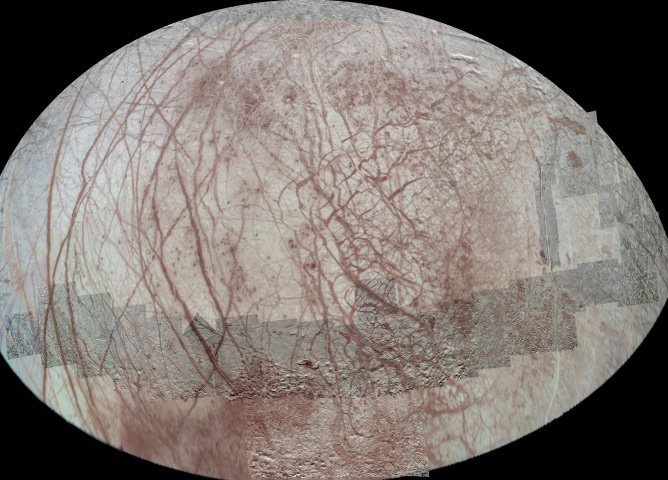
One area of focus would be Europa’s distinctive linear surface cracks which are believed to be the result of tidal forces. Europa’s eccentric orbit about Jupiter causes very high tides when the moon passes closest to the gas giant, so it is thought that this process would generate the heat necessary for simple life to survive. NASA thinks the cracks could contain biological makers, molecules indicating the presence of organic life, which have come from the ocean.
But of course, plotting a mission is not as simple as simply launching a robot into space. To ensure that such a mission would maximize returns requires that a “scientifically optimized” landing site be identified, and to do that, Europa’s surface must be thoroughly surveilled. Thus far, the little we know and think about Europa is based on a handful of flybys by Voyager 2 in the 70s and the Galileo probe in the 90s.
Lead author Robert Pappalardo of NASA’s Jet Propulsion Laboratory summed up the situation as follows:
There is still a lot of preparation that is needed before we could land on Europa, but studies like these will help us focus on the technologies required to get us there, and on the data needed to help us scout out possible landing locations. Europa is the most likely place in our solar system beyond Earth to have life today, and a landed mission would be the best way to search for signs of life.
At the present time, NASA’s exploratory itinerary is quite packed. In addition to wanting to tow an asteroid closer to Earth to study it, launching two more rovers to Mars, constructing a settlement on the far side of the Moon, and conducting a manned mission to Mars, it’s safe to say that a robot lander on Europa won’t be happening for some time.
But of course, the plans are in place and moving forward with every passing year. NASA is certainly not going to pass up a chance to examine one of the Solar Systems best candidates for extra-terrestrial life, and we can certainly expect more deep-space probes to be launched once Cassini is finished shooting pictures of Saturn.
I am willing to bet good money that any future probe sent into the outer reaches of the Solar System will be tasked with taking high-resolution photos of Europa as part of its mission. And from that, we can certainly expect NASA, the ESA, and even the Chinese, Russians and Indians to start talking turkey within our lifetimes.
What do you think? 2035 seem like a safe bet for a Europa lander mission?
It’s been known for some time that our future may hinge on the successful development of solar power. Despite it being a clean, renewable alternative to traditional, dirtier methods, the costs associated with it have remained prohibitive. Which is why, in recent years, researchers and developers have been working to make it more efficient and bring down the costs of producing and installing panels.
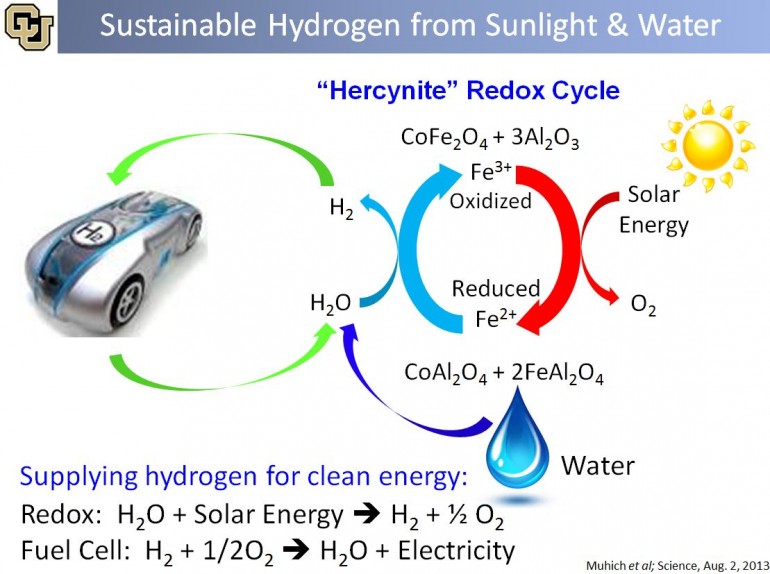
But a new technique developed by the University of Colorado Boulder may have just upped the ante on solar-powered clean energy. Using concentrated sunlight in a solar tower to achieve temperatures high enough to drive chemical reactions that split water into its constituent oxygen and hydrogen molecules, the team claims that solar energy may now be used to cheaply produce massive amounts of hydrogen fuel.
The team’s solar thermal system concentrates sunlight off a vast array of mirrors into a single point at the top of a tall tower to produce very high temperatures. When this heat is delivered into a reactor full of metal oxides, the oxides heat up and release oxygen. This leaves the reduced metal oxides in a different state and ready to bind with new oxygen atoms.
Steam is then introduced into the reactor, which can also be produced by heating water with sunlight. This vaporized water then interacts with oxides, which draw oxygen atoms out of the water molecules leaving behind hydrogen molecules. These molecules can then be collected and harvested as hydrogen gas, and placed in storage containers for export.
Granted, the concept of using solar energy and heat to create hydrogen fuel is not new. Earlier this year, teams from the University of Delaware and Harvard already proposed using solar arrays and small panels (artificial leaves) to separate hydrogen from water. And solar thermal tower power plants have been in use in some parts of the world for years now.
But there are several key difference that set the University team’s concept apart. In a standard solar power tower, sunlight is concentrated about 500 to 800 times to reach temperatures around 500º C (932 º F) to produce steam that drives a turbine to generate electricity. However, splitting water requires temperatures of around 1,350º C (2,500º F), which is hot enough to melt steel.
To get those kinds of temperatures, the team added additional mirrors within the tower to further concentrate the sunlight onto the reactor and the active material. But the big breakthrough came about when the team discovered certain active materials that allowed both these chemical reactions (reducing the metal oxide and re-oxidizing it with steam) to occur at the same temperature.
As Charles Musgrave, Professor of Chemical and Biological engineering at CU-Boulder, explains it:
You need this high temperature both to give you the driving force to drive the chemical reactions and also the kinetics to make the reactions go fast enough to make the process practical. We determined that both reactions could be driven at the same temperature of about 2,500° F (1,371° C). Even though we run at a constant and lower temperature we still generate more hydrogen than competing processes.
Though they have yet to produce a working model, the concept has a big advantage over other methods. By eliminating the time and energy required for temperature swings, more hydrogen fuel can be created in any given amount of time. Another advantage it has over other renewable technologies, such as wind and photovoltaics, is that it uses sunlight directly to produce fuel rather first converting sunlight into electricity, which reduces overall efficiency.
The team believes that a site with five 223 m (732 ft) tall towers and about two million sq m (21.5 million sq ft) of heliostats on 485 ha (1,200 acres) of land could generate 100,000 kg (222,460 lb) of hydrogen per day, which is enough to run over 5,000 hydrogen-fuel cell buses daily. Or as Alan Weimer, the research group leader, put it:
Our objective is to produce hydrogen (H2) at $2/kg H2. This is equivalent to about US$2/gallon (3.7 L) of gasoline based on mileage in a fuel cell car versus a combustion engine today.
Not a bad substitute for gasoline then, is it? And considering that the production process relies on only the sun – once the multi-million dollar infrastructure has been built of course – it will be much more cost effective for power companies than offshore drilling, frakking and pipelines currently are. Add to that the fact that its far more environmentally friendly, and you’ve an all around winning alternative to modern day fuels.
The concept of implanting a person with false memories has been featured in many a science fiction franchise. Between Philip K. Dick’s “We Can Remember it for you Wholesale” (which was the basis for Total Recall), the cult-hit Dark City, and the more recent Inception, the idea that memories could be tampered with – thus showing how reality and experience are subjective – has a long history.
And now it seems that once again, science fiction has proven to be the basis of science fact. As a result ongoing collaboration between the Japanese Riken Brain Science Institute and MIT’s Picower Institute for Learning and Memory, a process has been devised for planting specific false memories into the brains of mice.
This breakthrough, in addition to being mind-blowing and kind of scary, is also likely to seriously extend our understanding of memory. The ability to learn and remember is a vital part of any animal’s ability to survive, but with human beings, it also plays a major role in our perception of what it is to be human. What’s more, disorders effecting the human brain and memory have been growing considerably in recent decades.
These range from Alzheimer’s disease, where the abilities to make new memories and to place one’s self in time are seriously disrupted, to Post-Traumatic Stress Disorder, in which a memory of a particularly unpleasant experience cannot be suppressed. Such disorders are a powerful force driving research into discovering how healthy memory functions so that we can diagnose and treat problems before they become too serious.
In their previous work, researchers from the Picower Center for Neural Circuit Genetics were able to identify an assembly of neurons in the brain’s hippocampus that held a memory engram – a cell containing data about a sequence of events. In recalling a memory, the brain uses this data to reconstruct the associated events, but this reconstruction often varies from what actually occurred.
Working from this, the researchers were able to locate and identify the neurons encoding a particular engram (a specific set of memories) through the use of optogenetics. This technique is a relatively new neuromodulation process that uses a combination of genetic modification and optical stimulation to control the activity of individual neurons.Afterward, they were able to genetically engineer the hippocampal cells of a new strain of mouse so that the cells would form a light-sensitive protein called a channelrhodopsin (ChR). These proteins activate neurons when stimulated by light, thus ensuring that specific memories could be triggered by exposing someone implanted with them to a light source.
Next, the researchers conducted a series of behavioral experiments in order to identify the set of brain cells that were active only when a mouse was learning about a new environment. The genes activated in those cells were then coupled with the light-sensitive ChR and monitored during the next phase of the experiment, where the mice were placed in a series of boxes.
In the first box, the mice were exposed to a safe environment, during which time the neurons that were actively forming memories were labelled with ChR, so they could later be triggered by light pulses. In the second box, mice were treated to a series of mild foot shocks, which created a negative association, while at the same time, a pulsing light was used to trigger their memories of being in the first box.
When the mice were returned to the first box, in which they had only pleasant experiences, they clearly displayed fear/anxiety behaviors. In short, the fear that they had learned in a separate environment was now falsely associated with the safe environment. Whats more, the false fear memory could be reactivated at will in any environment by triggering the neurons associated with that false memory.
What this demonstrated was that the recall of this false memory drove an active fear response that was indistinguishable from a real memory. And according to Steve Ramirez, a graduate student in the Tonegawa lab and the lead author of the paper, the experiment provided some real insight into the nature of memory:
These kinds of experiments show us just how reconstructive the process of memory actually is. Memory is not a carbon copy, but rather a reconstruction of the world we’ve experienced. Our hope is that, by proposing a neural explanation for how false memories may be generated, down the line we can use this kind of knowledge to inform, say, a courtroom about just how unreliable things like eyewitness testimony can actually be.
Granted, it might not sound like Total Recall or Inception, but the basic premise is the same. And note how in those movies, no explanation was given as to how these false memories were fashioned – nor could they be, since no means yet existed. But now, using this technique, memories could be fashioned in one person, and then implanted in another.
Frightened yet? Well, you should be! If memory is one of the very things that define us as human beings, and we can’t be sure if the memories we have are real, our own, or someone else’s, then how can we be sure of anything? How do we even know who we are? Man, I’d be writing this into a story outline right now if it hadn’t already been done to death!
Until next time, guard your experiences and memories jealously! You never know when someone might try to come along and steal them…
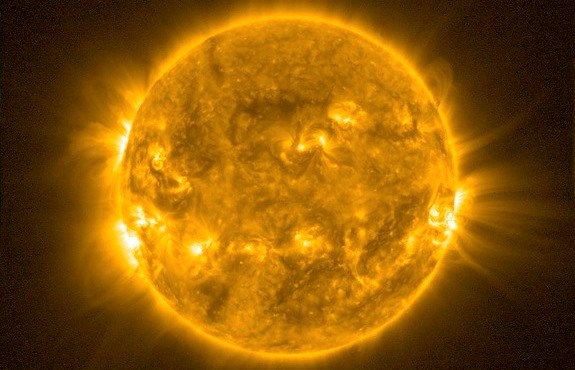
The sun is set to reverse its polarity in the next few months, something that occurs at the height of every Solar Cycle. The resulting ripple effect will be felt all across the Solar System and will even be detectable by the far-away Voyager probes. However, scientists are telling us not to fret, as this event will not lead to the end of the world.
In truth, the Sun’s reversal of polarity is something that occurs every 11 years. And the shift won’t spark an increase in powerful solar storms or other events that could have a damaging effect on Earth and its inhabitants, say the researchers. One such researcher is Phil Scherrer, a solar physicist at Stanford University, who insisted “The world will not end tomorrow.”
In addition, from a human perspective, the effects of the field shift will likely be slight and even beneficial. For example, the polarity reversal will cause the “current sheet” – an enormous surface extending out from the solar equator on which the sun’s rotating magnetic field has induced an electric current – to become much wavier.
This crinkled current sheet, in turn, will provide a better barrier against galactic cosmic rays, high-energy particles that are accelerated to nearly the speed of light by faraway star explosions. Galactic cosmic rays can damage spacecraft and hurt orbiting astronauts who don’t get to enjoy the protection of Earth’s thick atmosphere. So for space exploration, at any rate, this is certainly good news.
According to Todd Hoeksema, director of Stanford’s Wilcox Observatory, a drop in galactic cosmic ray levels could also have a subtle impact on weather here on Earth.
One of the things that helps clouds form and lightning to flash is cosmic-ray ionization of things in the Earth’s atmosphere. So when the cosmic-ray intensity is lower, it means you have fewer places where lightning will occur, and so the storms will probably be a little less intense.
He added, however, that it’s pretty much a speculative endeavor at this point, as no conclusive link has ever been demonstrated between cosmic rays and the weather.
In any case, during a reversal, the sun’s polar magnetic fields weaken all the way down to zero, then bounce back with the opposite polarity. Researchers will keep a keen eye on just how strong this recovery is over the next two years or so. The sun has been quiet during its current 11-year activity cycle, which is known as Solar Cycle 24. So it would be particularly interesting to see a strong field emerge after the impending flip.
Dean Pesnell, a project scientist for the space agency’s Solar Dynamics Observatory spacecraft at NASA’s Goddard Space Flight Center, the Sun’s latest field is likely to be a good indicator of what the next solar cycle is going to do. During its most recent cycle, known as Solar Cycle 24, the sun was rather quiet, so what happens next ought to be interesting:
If it quickly goes to a high value, then that tells us the next cycle will be high. We’ve had several of these solar minimums, and each time the polar field has been weaker. And each time, the next cycle has been a little bit weaker. So it would be nice to see one where the polar field strength was higher, and the next cycle was higher as well.
So rest easy, folks. No apocalyptic scenarios are likely to result from this latest, all-too-common solar phenomena. If anything, it will provide research benefits for scientists and aid in space exploration – especially for companies looking to mount missions to Mars in the next 11 years and trying to figure out a way around that tricky radiation problem.
As for the rest of us, we’re likely to maybe get a little break on the weather front. Maybe not. Kind of disappointing when you think about it…
But at least there’s a helpful video provided by Space.com. Enjoy!
As the world’s foremost space agency, NASA has been at the forefront of climate research for many decades. Their contributions to this field of science has helped to shape our understanding of the planet’s past and has led to our current understanding of the Greenhouse Effect, Global Warming, and Climate Change. As a result, they are committed to educating the public about what’s in store for our blue planet in the near future.
Below are two videos that were recently released by NASA’s Goddard Space Flight Center. Both briefly, but succinctly, provide visualizations of what an average temperature increase of up to 5.5 Celsius (8 degrees Fahrenheit) and the resulting effect on weather patterns would look like, which is expected to happen by the end of the 21st century.
These visualizations – which highlight computer model projections from the draft National Climate Assessment – show how average temperatures and precipitation patterns could change across the U.S. in the coming decades under two different scenarios. As you can see, both predict significant warming and drying as a result of increased concentrations of CO2 in the upper atmosphere.
Projected Temperature Change by 2100:
Projected Precipitation Change by 2100:
The visualizations, which combine the results from 15 global climate models, present projections of temperature and precipitation changes from 2000 to 2100 compared to the historical average from 1970 -1999. They were produced by the Scientific Visualization Studio at NASA’s Goddard Space Flight Center, Greenbelt, Md., in collaboration with NOAA’s National Climatic Data Center and the Cooperative Institute for Climate and Satellites, both in Asheville, N.C.
Speaking on the subject of these videos, Allison Leidner, Ph.D. – a scientist who coordinates NASA’s involvement in the National Climate Assessment – said:
These visualizations communicate a picture of the impacts of climate change in a way that words do not. When I look at the scenarios for future temperature and precipitation, I really see how dramatically our nation’s climate could change.
But of course, these visualizations only tell part of the story. Far from this being a geographically restricted phenomena, residents inside the US are likely to be less severely hit than those people living in Sub-Saharan Africa, the Mediterranean, the Middle East, Central Asia, India and East Asia, where the problems of flooding, water loss, famine and drought area already common.
Add to this flooding coastlines, invasive parasites and diseases, militarized borders, potential skirmishes over dwindling resources, and a refugee crisis the likes of which the world has never seen, and you get a pretty good idea of why this issue matters as much as it does. The next century is going to be an interesting time. Here’s hoping we survive it!
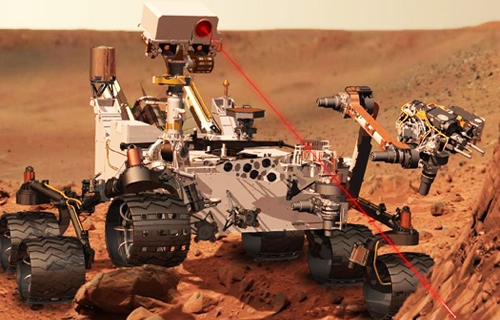
Two days ago, the Mars Rover known as Curiosity celebrated a full year of being on the Red Planet. And what better way for it to celebrate than to revel in the scientific discoveries the rover has made? In addition to providing NASA scientists with years worth of valuable data, these groundbreaking finds have also demonstrated that Mars could once have supported past life – thereby accomplishing her primary science goal.
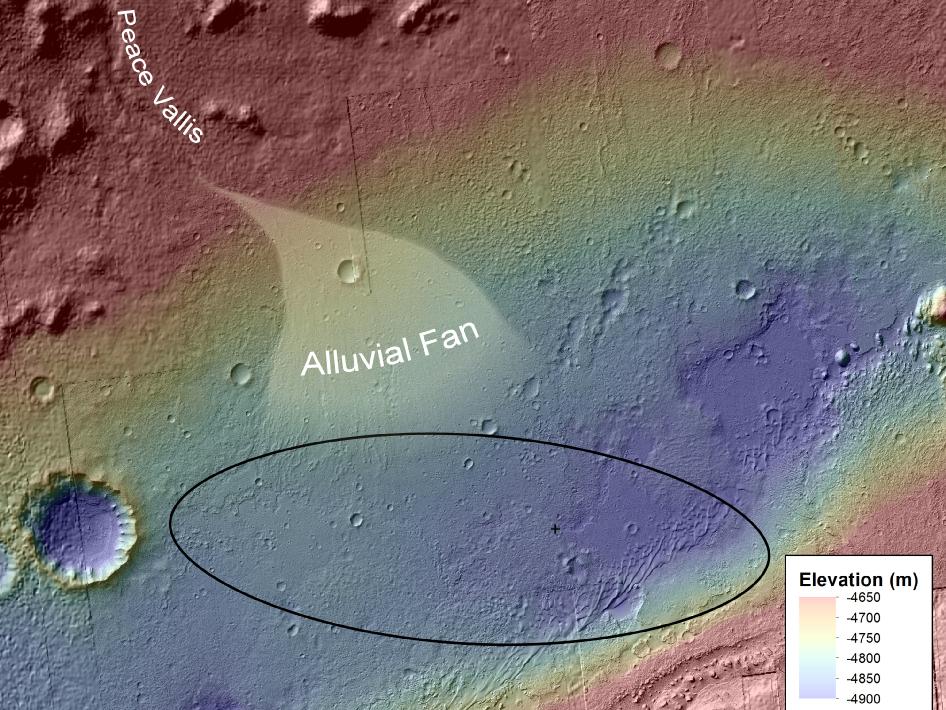
And it appears that the best is yet come, with the rover speeding off towards Mount Sharp – the 5.5 km (3.4 mile) high mountain dominating the center of the Gale Crater – which is the rover’s primary destination of the mission. This mountain is believed to contain vast caches of minerals that could potentially support a habitable environment, thus making it a veritable gold mine of scientific data!
To take stock of everything Curiosity has accomplished, some numbers need to be tallied. In the course of the past year, Curiosity has transmitted over 190 gigabits of data, captured more than 71,000 images, fired over 75,000 laser shots to investigate the composition of rocks and soil, and drilled into two rocks for sample analysis by the SAM & CheMin labs housed in her belly.
On top of all that, the rover passed the 1 mile (1.6 km) driving mark on August 1st. Granted, Mount Sharp (aka. Aeolis Mons) is still 8 km (5 miles) away and the trip is expected to take a full year. But the rover has had little problems negotiated the terrain at this point, and the potential for finding microbial life on the mountain is likely to make the extended trip worthwhile.
But even that doesn’t do the rover’s year of accomplishments and firsts justice. To really take stock of them all, one must consult the long-form list of milestones Curiosity gave us. Here they are, in order of occurrence from landing to the the long trek to Mount Sharp that began last month:
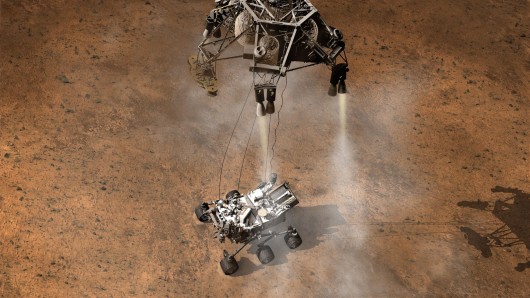
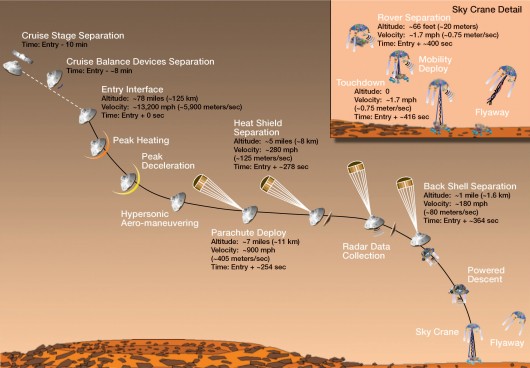
1. The Landing: Curiosity’s entrance to Mars was something truly new and revolutionary. For starters, the distance between Earth and Mars at the time of her arrival was so great that the spacecraft had to make an entirely autonomous landing with mission control acting as a bystander on a 13-minute delay. This led to quite a bit a tension at Mission Control! In addition, Curiosity was protected by a revolutionary heat shield that also acted as a lifting body that allowed the craft to steer itself as it slowed down in the atmosphere. After the aeroshell and heat shield were jettisoned, the rover was lowered by a skycrane, which is a rocket-propelled frame with a winch that dropped Curiosity to the surface.
2. First Laser Test: Though Curiosity underwent many tests during the first three weeks after its landing, by far the most dramatic was the one involving its laser. This single megawatt laser, which was designed to vaporize solid rock and study the resultant plasma with its ChemCab system, is the first of its kind to be used on another planet. The first shot was just a test, but once Curiosity was on the move, it would be used for serious geological studies.3. First Drive: Granted, Curiosity’s first drive test was more of a parking maneuver, where the rover moved a mere 4.57 m (15 ft), turned 120 degrees and then reversed about 2.4 m (8 feet). This brought it a total of about 6 m (20 ft) from its landing site – now named Bradbury Landing after the late author Ray Bradbury. Still, it was the first test of the rover’s drive system, which is essentially a scaled-up version of the one used by the Sojourn and Opportunity rovers. This consists of six 50 cm (20-in) titanium-spoked aluminum wheels, each with its own electric motor and traction cleats to deal with rough terrain.
4. Streams Human Voice: On August 28, 2012, Curiosity accomplished another historical first when it streamed a human voice from the planet Mars back to Earth across 267 million km (168 million miles). It was a 500 kilobyte audio file containing a prerecorded message of congratulations for the engineers behind Curiosity from NASA administrator Charles Bolden, and demonstrated the challenges of sending radio beams from Earth to distant machines using satellite relays.
5. Writes a Message: Demonstrating that it can send messages back to Earth through other means than its radio transmitter, the Curiosity’s treads leave indentations in the ground that spell out JPL (Jet Propulsion Lab) in Morse Code for all to see. Apparently, this is not so much a gimmick as a means of keeping track how many times the wheels make a full revolution, thus acting as an odometer rather than a message system.
6. Flexing the Arm: Curiosity’s robotic arm and the tools it wield are part of what make it so popular. But before it could be put to work, it had to tested extensively, which began on August 30th. The tools sported by this 1.88 m (6.2-ft) 33.11kg (73 lb) arm include a drill for boring into rocks and collecting powdered samples, an Alpha Particle X-ray Spectrometer (APXS), a scooping hand called the Collection and Handling for In-Situ Martian Rock Analysis (CHIMRA), the Mars Hand Lens Imager (MAHLI), and the Dust Removal Tool (DRT).
7. Discovery of Ancient Stream Bed: Curiosity’s main mission is to seek out areas where life may have once or could still exist. Therefore, the discovery in September of rocky outcroppings that are the remains of an ancient stream bed consisting of water-worn gravel that was washed down from the rim of Gale Crater, was a major achievement. It meant that there was a time when Mars was once a much wetter place, and increases the chances that it once harbored life, and perhaps still does.
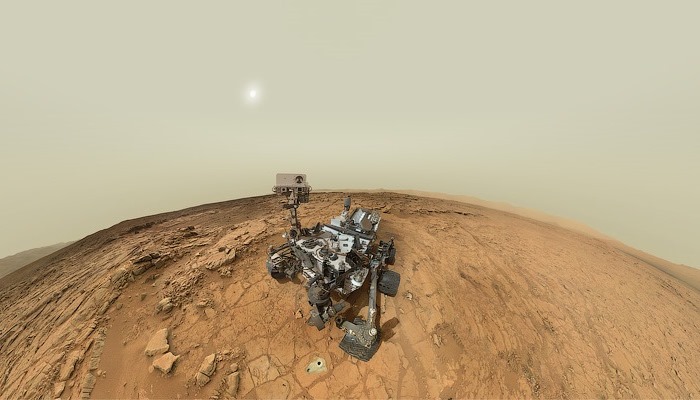
8. First Drilling: In February, Curiosity conducted the first robot drill on another planet. Whereas previous rovers have had to settle for samples obtained by scooping and scraping, Curiosity’s drill is capable of rotational and percussive drilling to get beneath the surface. This is good, considering that the intense UV radiation and highly reactive chemicals on the surface of Mars means that finding signs of life requires digging beneath the surface to the protected interior of rock formations.9. Panoramic Self Portrait: If Curiosity has demonstrated one skill over and over, it is the ability to take pictures. This is due to the 17 cameras it has on board, ranging from the black and white navigation cameras to the high-resolution color imagers in the mast. In the first week of February, Curiosity used its Mars Hand Lens Imager to take 130 high-resolution images, which were assembled into a 360⁰ panorama that included a portrait of itself. This was just one of several panoramic shots that Curiosity sent back to Earth, which were not only breathtakingly beautiful, but also provided scientists with a degree of clarity and context that it often lacking from images from unmanned probes. In addition, these self-portraits allow engineers to keep an eye on Curiosity’s physical condition.
10. Long Trek: And last, but not least, on July 4th, Curiosity began a long journey that took it out of the sedimentary outcrop called “Shaler” at Glenelg and began the journey to Mount Sharp which will take up to a year. On July 17, Curiosity passed the one-kilometer mark from Bradbury Landing in its travels, and has now gone more than a mile. Granted, this is still a long way from the breaking the long-distance record, currently held by Opportunity, but it’s a very good start.
Such was Curiosity’s first 365 days on Mars, in a nutshell. As it enters into its second year, it is expected to make many more finds, ones which are potentially “Earthshaking”, no doubt! What’s more, the findings of the last year have had an emboldening effect on NASA, which recently announced that it would be going ahead with additional missions to Mars.
These include the InSight lander, a robotic craft which will conduct interior studies of the planet that is expected to launch by 2016, and a 2020 rover mission that has yet to be named. In addition, the MAVEN (Mars Atmosphere and Volatile Evolution) orbiter as just arrived intact at the Kennedy Space Center and will be blasting off to the Red Planet on Nov. 18 from the Florida Space Coast atop an Atlas V rocket.
These missions constitute a major addition to NASA’s ongoing study of Mars and assessing its past, present and future habitability. Between rovers on the ground, interior studies of the surface, and atmospheric surveys conducted by MAVEN and other orbiters, scientists are likely to have a very clear picture as to what happened to Mars atmosphere and climate by the time manned missions begin in 2030.
Stay tuned for more discoveries as Curiosity begins its second year of deployment. Chances are, this year’s milestones and finds will make this past years look like an appetizer or a warm-up act. That’s my hope, at any rate. But considering what lies ahead of it, Curiosity is sure to deliver!
In the meantime, enjoy some of these videos provided by NASA. The first shows Curiosity’s SAM instrument singing “happy birthday” to the rover (though perhaps humming would be a more accurate word):
And check out this NASA video that sums up the rover’s first year in just two minutes:
Stem cell research has been expanding impressively in recent years, and the range of applications has been growing accordingly. And while all are impressive and useful, some are – admittedly – odd and even a tad gross. One such application is the one that was recently unveiled in China, where a team of biologists are using stem cells harvested from human urine to grow structures in mice that resemble teeth.
The team, led by Duanqing Pei and Jinglei Cai from the Guangzhou Institute of Biomedicine and Health, had announced back in 2011 that it had successfully reprogrammed skin-like cells from the kidneys, found in urine, to turn into pluripotent stem (iPS) cells. As researchers have known for some time, these iPS cells can be tweaked to become pretty much any human cell in the body.
In a paper produced by the Guangzhou biomedical team – which appeared in the peer-reviewed, open access journal Cell Regeneration last week – they claim the ability to “regenerate teeth with patients’ own cells” is an “ideal solution” to the loss of teeth through accidents or disease. As just one of many applications of stem cell research, the aim is to create synthetic biological tissues that can replace artificial implants.
Once the cell sheets formed into epithelial tissue – the kind of cells found in human skin and teeth – they implanted them with tissue from the jaw of a mouse embryo (to encourage it to grow into a tooth) in the kidney of a mouse. Three weeks later, they noted that the human tissue had turned into cells called ameloblasts that secrete enamel, the hard, bone-like substance on the outside of the tooth.
The result was a series of tooth-like structures which possessed the hardness “found in the regular human tooth”, which were then harvested. Assuming that this approach could be scaled to involve dozens of mice across thousands of labs, artificial teeth could be mass produced and then be made available to dental clinics all over the world.
However, the real innovation came with the new method that the research team devised to get around some flaws in the traditional method. This method, which involves inserting the stem cells into blanket cells via a genetically engineered retrovirus, can lead to a destabilization of the cell genome, rendering the tissue unpredictable, susceptible to mutations and thus a liability.
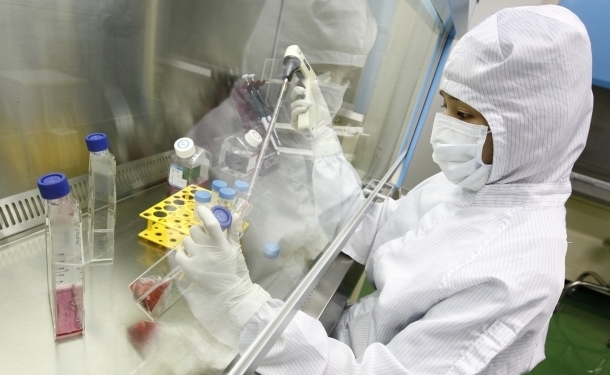
Hence why Pei and his team opted for another route, one which they claim presents a safer, faster alternative. Having extracted kidney epithelial cells from the urine of three donors, the team used vectors — a type of DNA molecule useful in transporting genetic information from cell to cell. This allowed them to transport the genetic information without having to integrate the new genes into the chromosome of the kidney cell.
According to their paper, this process may be partly responsible for the aforementioned mutations in the first place. And once they tested out their new process, it took only 12 days for the pluripotent stem cells to form in a petri dish – roughly half the time it takes using the traditional approach.
William Stanford – a University of Ottawa researcher who holds a Canada Research Chair in integrative stem cell biology – indicated that their approach is not entirely now. Growing various kinds of human tissues inside a mouse kidney is a common technique used by stem cell biologists, Stanford said. In the course of doing so, researchers will occasionally grow what looks like teeth by accident.
However, the Guangzhou team have modified the technique to grow teeth intentionally. And their approach is an improvement in that it does not require skin samples to be harvested by the human subject (a common practice at the moment). Using urine-harvested stem cells only requires that they pee into a cup, and the turnaround time is a matter of weeks instead of months.
Good news for anyone who is missing some chomper, or feels self-conscious about crooked or chipped teeth and can’t afford those expensive, porcelain implants. What’s more, teeth are really just the tip of the iceberg. In time, other organic tissues could be grown as well, allowing for further developments in the already exciting field artificial organ generation.

 Since the beginning of civilization, building hasn’t evolved much. In fact, archaeological digs show that between the Early Paleolithic and today, construction has moved at a snail’s pace. And while change has certainly sped up within the past few centuries – with mud and stone giving way to bricks and cement and thatch and wood giving way to steel and shingles – the fundamental techniques and concepts remain largely unchanged.
 Already, biological processes have been used to manufacture medicine and biofuels. But the more robust materials for everyday life – like roofs, beams, floor panels, etc – are still the domain of factories. However, thanks to researchers like David Benjamin – a computational architect, professor at Columbia University, and the principal of the The Living (a New York architectural practice).
 Emerging software, says Benjamin, will soon allow architects to create multi-material objects in a computer, translate these into biological models, and let biology finish the job. This will be done in laboratories, growing them under carefully engineered conditions, or tweaking the DNA to achieve precisely the right result before deploying them to build.
 Naturally, the process is far from perfect, and could take another decade to become commercially viable. But this is a relatively short time frame given the revolutionary implications. This, in turn, may open up what the former U.S. energy secretary Stephen Chu has called the “glucose economy,” an economic system powered largely by plant-derived sugars grown in tropical countries and shipped around the world, much as we do with petroleum today.


















 The result was a series of tooth-like structures which possessed the hardness “found in the regular human tooth”, which were then harvested. Assuming that this approach could be scaled to involve dozens of mice across thousands of labs, artificial teeth could be mass produced and then be made available to dental clinics all over the world.

 Stories by Williams