
 In preparation for the 25th anniversary of the Tiananmen Square Massacre (aka. the June 4th Incident), Chinese authorities decided to begin blocking Google. It’s believed that the blockade is tied to this week’s 25th anniversary of the 1989 Tiananmen Square Massacre where the People’s Liberation Army cracked down on pro-democracy demonstrators. Each year, the Chinese government censors the web in an effort to limit protests against the thwarted uprising.
Aside from Google, several internet services were blocked or censored in advance, including social networks and other web communication tools. Though the Chinese government has not yet confirmed this, countless Chinese users have discovered Google’s services to be inaccessible since the last week of May. In addition, a report from GreatFire.org claimed that the government appeared to have begun targeting Google Inc’s main search engine and Gmail since at least the last week of May, making them inaccessible to many users in China.
 The report added that the last time it monitored such a block was in 2012, when it only lasted 12 hours. At is states:
It is not clear that the block is a temporary measure around the anniversary or a permanent block. But because the block has lasted for four days, it’s more likely that Google will be severely disrupted and barely usable from now on.
Asked about the disruptions, a Google spokesman said: “We’ve checked extensively and there’s nothing wrong on our end.” And Google’s own transparency report, which shows details about its global traffic, showed lower levels of activity from China starting from about Friday, which could indicate a significant amount of disruption. Other major social media sites – such as Twitter and Facebook and Google’s own Youtube – are already blocked in the country.
 Of course, this should come as no surprise, given the way this anniversary is received by Chinese officials. For the ruling Communist Party, the 1989 demonstrations that clogged Tiananmen Square in Beijing and spread to other cities remain taboo, particularly on their 25th anniversary. When June rolls around each year and the Tiananmen Square Massacre is commemorated around the world, including in Hong Kong, China’s ruling party typically conducts a web crackdown.
It’s not uncommon for Chinese censors to block certain comments from being made even on China-based company services, like Weibo, China’s own version of Twitter. And China also applies pressure to search engines like Baidu in their country in order to ensure that censorship filters are in place. And as with previous years, the run-up to the anniversary has been marked by detentions, increased security in Beijing and tighter controls on the Internet.
 This year, the detainees included prominent rights lawyer Pu Zhiqiang and Chinese-born Australian artist Guo Jian, a former Chinese soldier who last week gave an interview to the Financial Times about the crackdown. And as usual, the Chinese government made a statement in which it once again defended its decision to use military force against the pro-democracy demonstrators who gathered in the Square twenty-five years ago.
The statement came from Foreign Ministry spokesman Hong Lei during a daily news briefing, in which he said:
The Chinese government long ago reached a conclusion about the political turmoil at the end of the 1980s. In the last three decades and more of reform and opening up, China’s enormous achievements in social and economic development have received worldwide attention. The building of democracy and the rule of law have continued to be perfected. It can be said that the road to socialism with Chinese characteristics which we follow today accords with China’s national condition and the basic interests of the vast majority of China’s people, which is the aspiration of all China’s people.
 On the subject of why Google was being targeted, Hong said only that the government “manages the Internet in accordance with the law”, which is consistent with the state’s position with all web-based censorship. When asked about the jailing of dissidents, Hong replied that “In China there are only law breakers — there are no so-called dissidents.” He also stressed once again that all departments of the Chinese government “consistently act in accordance with the law.”
For years now, Google has had a contentious relationship with China, which began with the company had once offering its search services to the world’s second largest economy. However, due to issues over censorship, Google decided to move its Chinese search engine to Hong Kong, effectively allowing them to operate outside the rules and regulations of the Chinese government. But as China demonstrated these past few weeks, it still has the ability to block the flow of traffic from Hong Kong into the mainland.
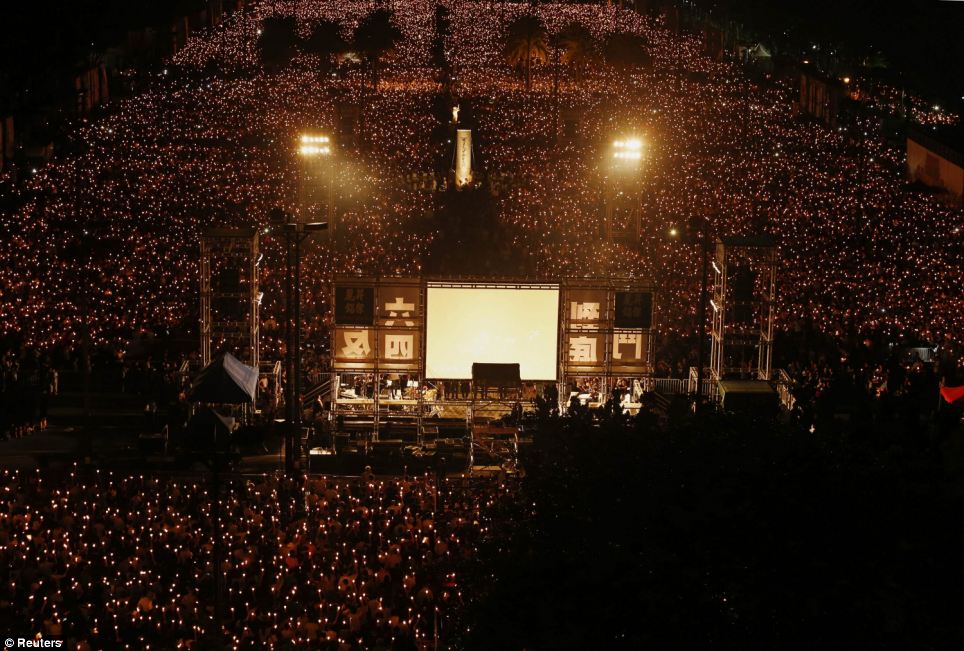 It also aptly demonstrated just how much it fears the specter of Tiananmen Square, even some twenty-five years later. From clamping down on their people’s ability to learn more about the massacre, to clamping down on even the possibility of protest in advance, to continually denying any wrongdoing and suppressing information on the number of people killed, the legacy of Tiananmen Square continues to expose the blatant hypocrisy and denial of the Communist Party of China.
If history has taught us anything, it is that the fall of a dictatorship usually begins with one terrible mistake. The state of China committed that mistake a quarter of a century ago, and since then has relied on state-sanctioned economic growth in order to justify its existence. But in so doing, they’ve essentially created a Catch 22 for themselves. Continued economic growth ensures greater material wealth for more and more of its people. And a burgeoning digital-age economy means more and more access to information for its citizens.
In short, the CPC is screwed. And I for one would be happy to see them gone! Lord knows they deserve it, and the Chinese people would be better off without them, no matter what they try to insist. So on this historic anniversary of the Tiananmen Massacre, I invite the CPC to EAT A DICK! And to the people still living under their hypocritical rule, please know that you are not alone. Hang in there, and wait for the day when these bastards join all the other reprehensible dick-heads on the ash heap of history!
Sources: cnet.com, reuters.com, (2)
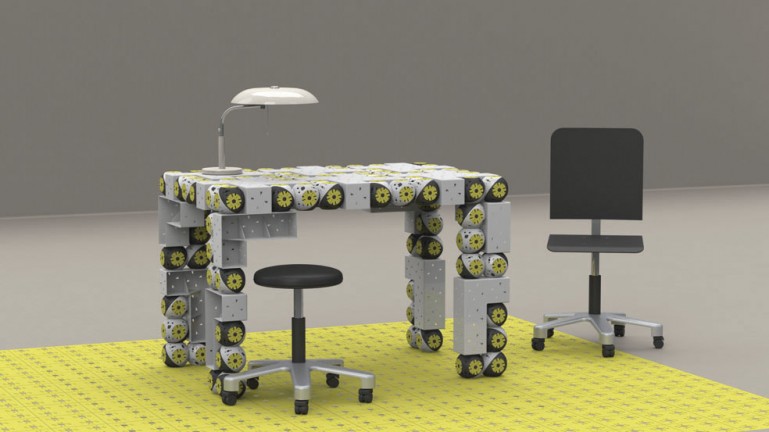
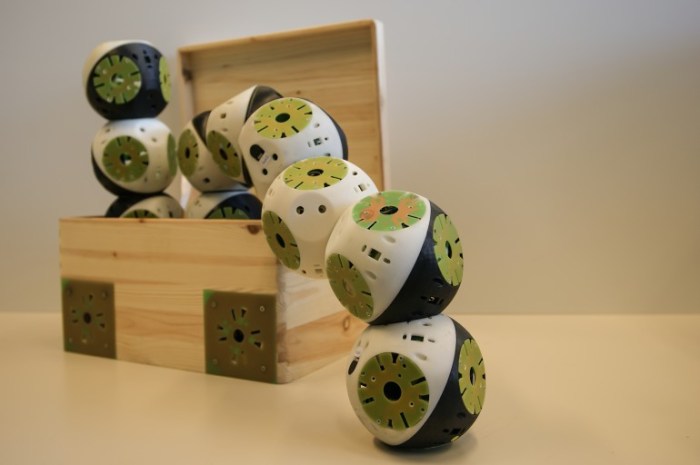 Like LEGO bricks, Roombots can be stacked upon each other to create various structures and/or combined with furniture and other objects, changing not only their shape, but also and functionality. For instance, a person lying down on a Roombot bed could slowly be moved into a seated position, or a table could scoot over to a corner or tilt itself to help a book slide into a person’s hands. The team has solved a number of significant milestones, such as the having the Roombots move freely, to bring all this multi-functionality closer.
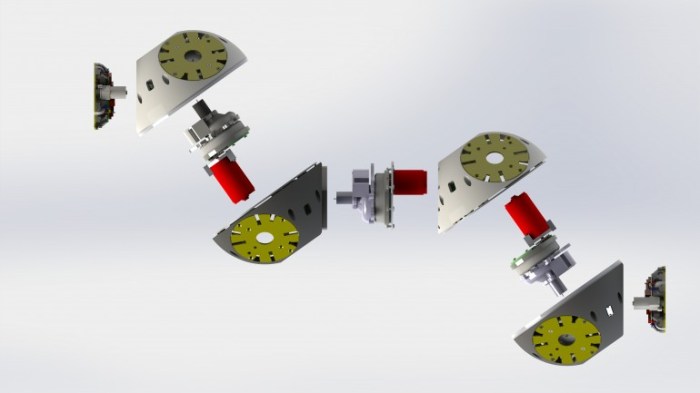 The Roombots can even climb up a wall or over a step, when the surface is outfitted with connector plates. They’re are also capable of picking up connector plates and arranging them to form, say, a table’s surface. Massimo Vespignani, a PhD student at BioRob, explained the purpose of this design and the advantages in a recent interview with Gizmag:
 The range of applications for these kind of robotics is virtually infinite. For example, as seen in the video below, a series of Roombots as feet on a table that not only let it move around the room and come to the owner, but adjust its height as well. Auke Ijspeert, head of the Biorob, envisions that this type of customization could be used for physically challenged people who could greatly benefit from furniture that adapts to their needs and movements.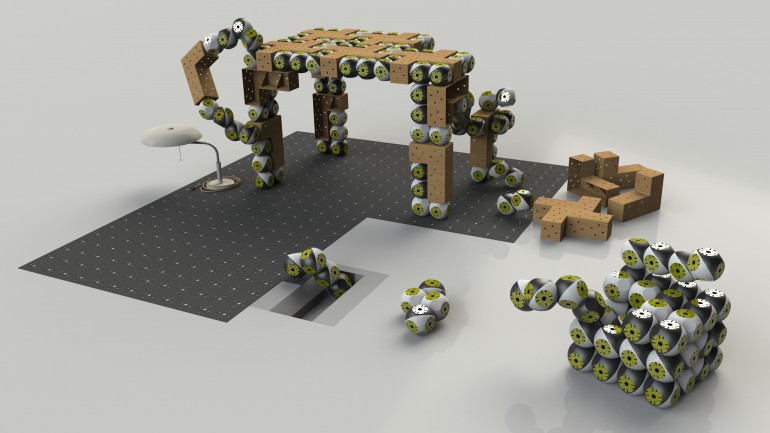





 Other notable features include the propellent, which is a pair of non-cryogenic liquids – monomethyl hydrazine for the fuel and nitrogen tetroxide for the oxidizer. These are hypergolic, meaning that they ignite on contact with one another, which helps the SuperDraco to restart multiple times. It’s also built to be deep throttled, and can go from ignition to full throttle in 100 ms. But what really sets the SuperDraco apart is that is has 200 times the power of the Draco engine, which works out to 7,440 kg (16,400 lbs) of thrust.
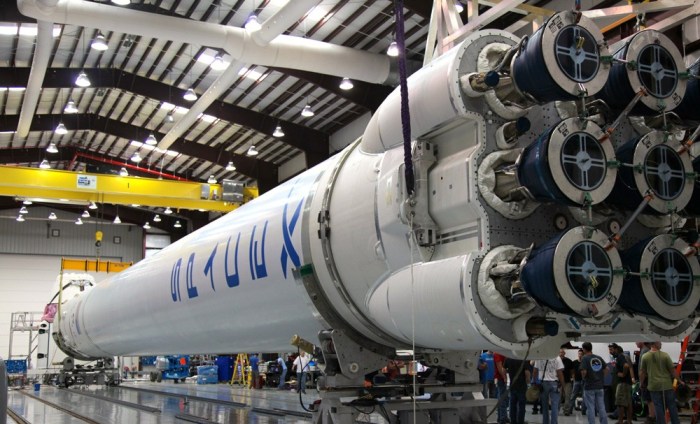 Eight engines firing for five seconds are enough to carry the capsule safely away from the booster with 120,000 lb of axial thrust. In addition, the eight engines also provide a high degree of redundancy should one or more engines fail. But what’s really ambitious about the SuperDraco is that, like the Falcon 9 booster, the Dragon is designed to ultimately return to its spaceport under its own power and land with the precision of a helicopter, and it’s the power and control of the SuperDraco that makes this possible.
 But equally impressive was the unveiling of the Dragon V2 manned space capsule, which took place at a brief media event at SpaceX’s Hawthorne, California headquarters at the end of May. This larger, more powerful version of the reusable Dragon capsule will one day carry astronauts to the International Space Station (ISS) and return to Earth to land under its own power. This latest development brings the company one step closer towards its ultimate goal of a fully reusable manned capsule capable of making a powered landing.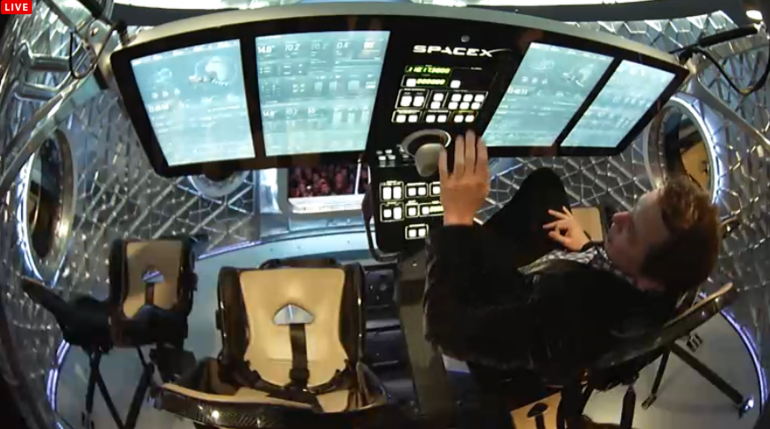

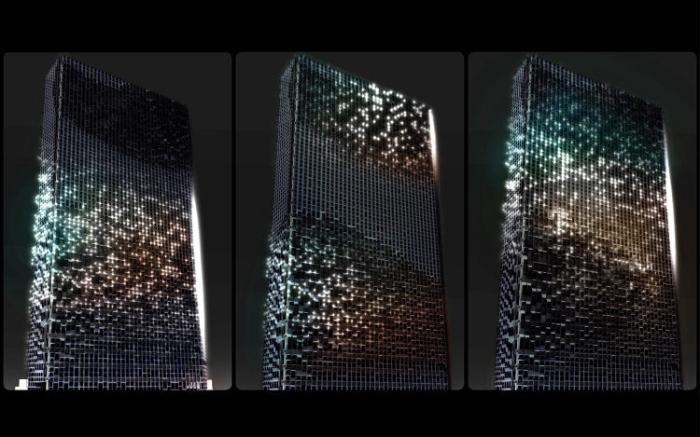 Even though the most recently-built skyscrapers are helping change things by employing renewable energy and sustainable methods – like the




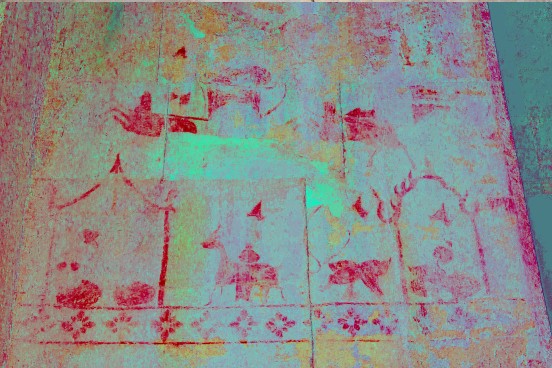
 And though researchers can’t be sure exactly when the paintings were created, Tan speculates that the most elaborate artworks may have been commissioned by Cambodia’s King Ang Chan, who made an effort to restore the temple during his reign between 1528 and 1566. During this time, unfinished carvings were completed and Angkor Wat began its transformation into a Buddhist pilgrimage site, which are confirmed by some of the newly revealed paintings that show Buddhist iconography.
 In so doing, he demonstrated that the nervous system was like a computer terminal through which you could deliver commands to stop a problem, like acute inflammation, before it starts, or repair a body after it gets sick. His work also seemed to indicate that electricity delivered to the vagus nerve in just the right intensity and at precise intervals could reproduce a drug’s therapeutic reaction, but with greater effectiveness, minimal health risks, and at a fraction of the cost of “biologic” pharmaceuticals.
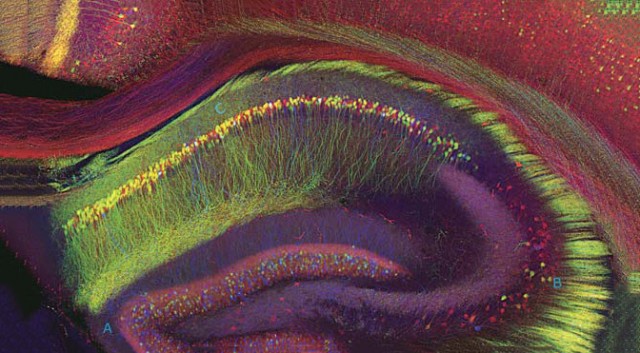 Impressive as this may seem, bioelectronics are just part of the growing discussion about neurohacking. In addition to the leaps and bounds being made in the field of brain-to-computer interfacing (and brain-to-brain interfacing), that would allow people to control machinery and share thoughts across vast distances, there is also a field of neurosurgery that is seeking to use the miracle material of grap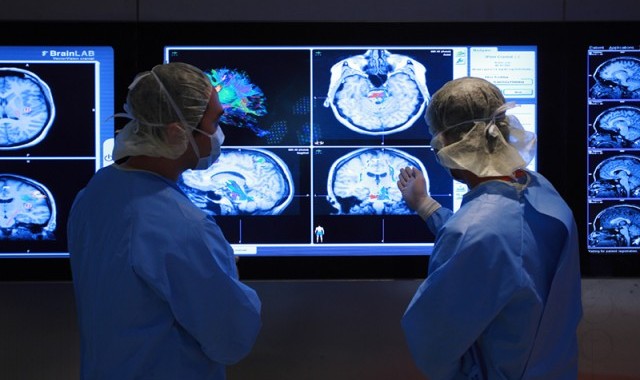



 In the end, neuromorphic chips and technology are merely one half of the equation. In the grand scheme of things, the aim of all of this research is not only produce technology that can ensure better biology, but technology inspired by biology to create better machinery. The end result of this, according to some, is a world in which biology and technology increasingly resemble each other, to the point that they is barely a distinction to be made and they can be merged.




 Hyper Filter Skyscraper: Designed by Umarov Alexey of Russia, the Hyper Filter Skyscraper recognizes the threat of environmental pollution and seeks to merge carbon capture technology with the building’s design. Under today’s levels of pollution, harmful substances spread over hundreds of kilometers and a whole region and even a country could represent a single pollution source. Hence the plan to place a air-scrubbing building at the heart of the problem – an urban core.
 Manuel Gea González Hospital: Located in Mexico City, this hospital was unveiled last year. The building features a “smog-eating” façade that covers 2,500 square meters and has titanium dioxide coating that reacts with ambient ultraviolet light to neutralize elements of air pollution, breaking them down to less noxious compounds like water. This was Berlin-based Elegant Embellishment’s first full-scale installation, and its designers claim the façade negates the effects of 1,000 vehicles each day.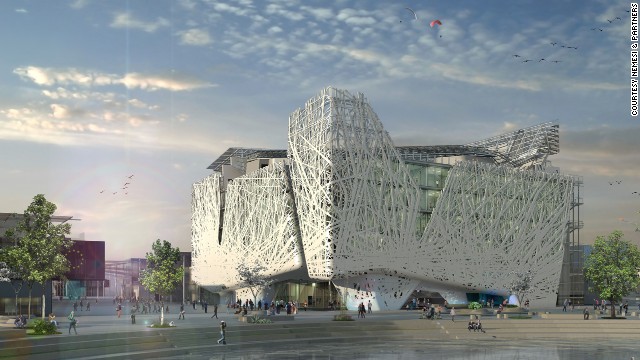
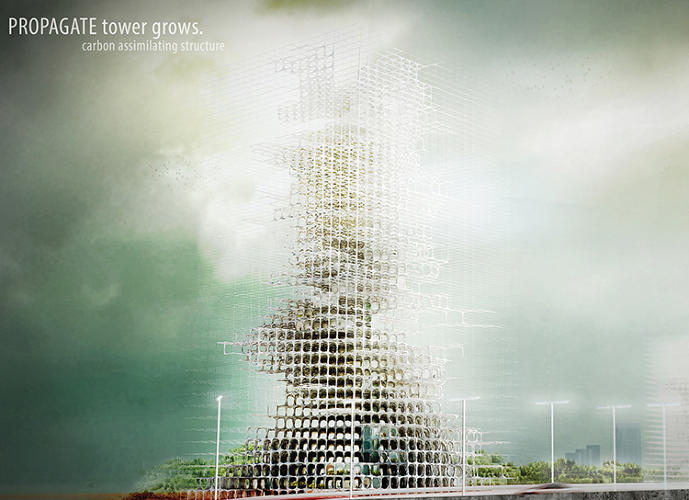 A simple vertical grid scaffold forms the framework and takes all the ingredients it needs for material propagation from the surrounding environment. Individual living spaces are built within this gridwork, which creates open square spaces between lattices that can then be filled by tenements. Its pattern of growth is defined by environmental factors such as wind, weather, and the saturation of carbon dioxide within the immediate atmosphere.


 Stories by Williams