Robot Snakes to Explore Mars?

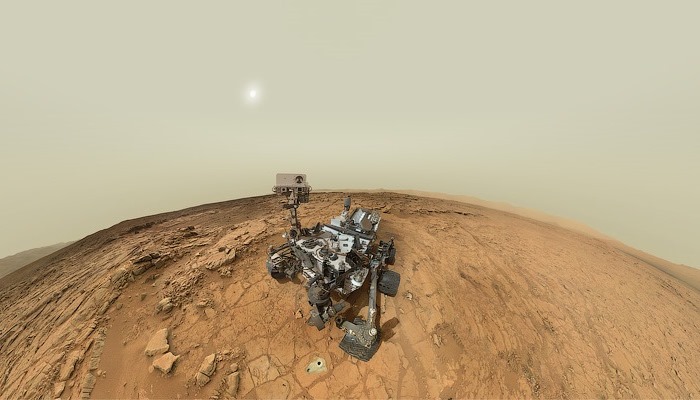
curiosity_sol-177-1The recent discoveries and accomplishments of the Curiosity and Opportunity rovers have been very impressive. But for some, these successes have overshadowed the limitations that are part of the rover designs. Yes, despite their complexity and longevity (as evidenced by Opportunity’s ten years of service) the robot rovers really aren’t that fast or agile, and are limited when it comes to what they can access.

Case in point, Curiosity is currently on a year-long trek that is taking it from the Glenelg rocky outcropping to Mount Sharp, which is just over 8 km (5 miles) away. And where crevices, holes and uneven terrain are involved, they’ve been known to have trouble. This was demonstrated with the Spirit Rover, which was lost on May 1st, 2009 after getting stuck in soft soil.
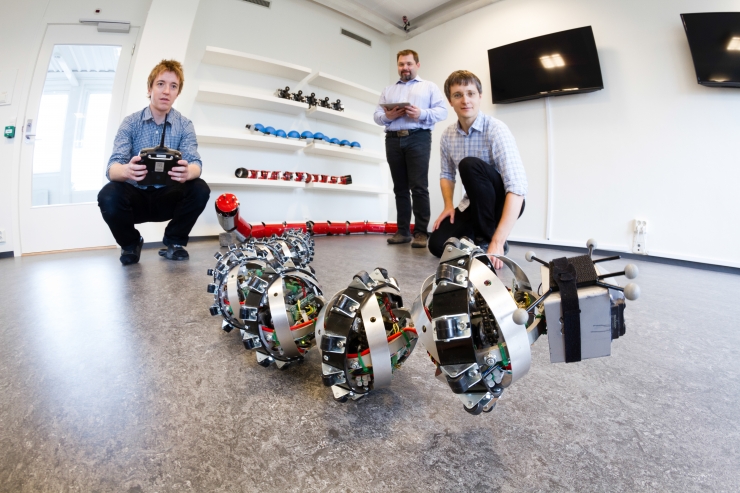
robotsnakesAs a result, the European Space Agency is planning on a sending a different type of rover to Mars in the future. Basically, their plan calls for the use of robot snakes. This plan is the result of collaborative study between the ESA and SINTEF – the largest independent research organization in Scandinavia – that sought to create a rover that would be able to navigate over long distances and get into places that were inaccessible to other rovers.

They concluded that a snake-like robot design would open up all kinds of possibilities, and be able to collect samples from areas that other rovers simply couldn’t get into. In addition to being able to move across challenging surfaces, these snake-bots would also be able to tunnel underground and get at soil and rock samples that are inaccessible to a land rover. Curiosity, which despite its advanced drill, is limited in what it can examine from Mars’ interior.
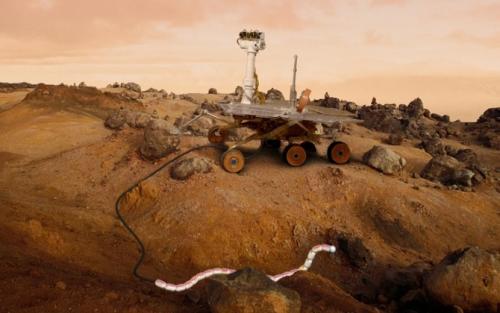
robotsnakes1The researchers envisage using the rover to navigate over large distances, after which the snake robot can detach itself and crawl into tight, inaccessible areas. A cable will connect the robot to the vehicle and will supply power and tractive power – i.e. it can be winched back to the rover. Communication between the pair will be also be facilitated via signals transmitted down the cable.

According to Pål Liljebäck, one of the researchers developing the snake robot at SINTEF, the challenge presents several opportunities for creative solutions:

We are looking at several alternatives to enable a rover and a robot to work together. Since the rover has a powerful energy source, it can provide the snake robot with power through a cable extending between the rover and the robot. If the robot had to use its own batteries, it would run out of power and we would lose it. One option is to make the robot into one of the vehicle’s arms, with the ability to disconnect and reconnect itself, so that it can be lowered to the ground, where it can crawl about independently.

An additional benefit of this rover-snake collaboration is that in the event that the rover gets stuck, the snake can be deployed to dig it out. Alternately, it could act as an anchor by coiling itself about a rock while the rover using the cable as a winch to pull itself free.
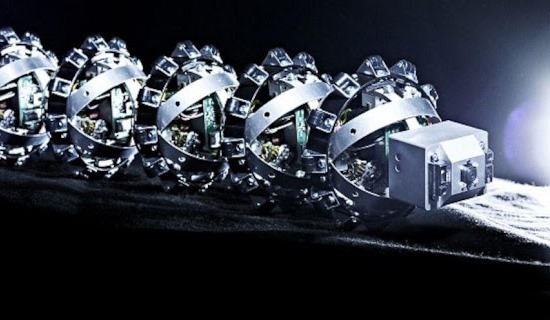
robotsnake2Liljebäck and his colleague, Aksel Transeth, indicate that SINTEF’s Department of Applied Cybernetics has been working closely with the Norwegian University of Science and Technology’s (NTNU) Department of Engineering Cybernetics for many years. However, it was only recently that these efforts have managed to bear fruit in the form or their robot snake-rover design, which they hope will trigger a long-term partnership with the ESA.

In addition to researching rover design, Transeth, Liljebäck and other researchers working with the ESA are looking for ways to bring samples from Mars back to Earth. At present, soil and other materials taken from Mars are analyzed on board the rover itself, and the results communicated back to Earth. If these samples could be physically transported home, they could be studied for years to come, and yield much more fascinating information.

And be sure to enjoy this video of the robot snake in action:


Sources: dvice.com, sintef.no, phys.org,

The researchers are busy working on a feasibility study assigned to them by the ESA. The ESA and the researchers believe that by combining a rover that can navigate over large distances with a snake robot that can crawl along the ground and can get into inaccessible places, so many more possibilities could be opened up.

Synchronized VR Triggers Out of Body Experiences

Louish.Pixel
“Spirit Levitation: Out of Body Experience” by Loutish.Pixel

An out-of-body experience (OBE) is one of the most mysterious and inexplicable things a human being can endure. But thanks to new science, triggering one may be as easy as getting a person to watch a video of themselves with their heartbeat projected onto it. According to the study, it’s easy to trick the mind into thinking it belongs to an external body and manipulate a person’s self-consciousness by externalizing the body’s internal rhythms.

These findings were made by a team consisting of Dr Jane Aspell – Senior Lecturer in Psychology at Anglia Ruskin University in the UK – and Lukas Heydrich, a Phd Student at the Ecole Polytechnique Fédérale de Lausanne (EPFL) in Switzerland. Together, the two set out to see find how our internal organs contribute to bodily self-consciousness and whether they can be manipulated to induce an OBE.

electrocardiogramThe underlying goal, according to Ruskin, was finding out how our body merges information such as the visual, auditory, and olfactory with information coming from within. How this leads to the perception we call “reality”, and how it could be altered, is what is being studied here for the first time;

If you think about your body, you have several sources of information about it: you can see your hands and legs, you can feel the seat you’re sitting on via vision, you know you are standing upright thanks to your sense of balance etc. There is also a vast number of signals being sent to your brain from inside of your body every second that you are alive: about your heartbeat, your blood pressure, how full your stomach is, what electrolytes are in your blood, how fast you are breathing.

For their experiment, they attached 17 participants to electrocardiogram sensors and had them view videos of their own bodies through virtual reality goggles so that their body appeared to be two meters (6.5 ft) in front of them. Participants were then shown their own heartbeats in the form of a flashing outline around their “body doubles” that pulsed in sync with their own.

outofbody-1After a few minutes, many of the participants reported sensations of being in an entirely different part of the room rather than their physical body and feeling that their “selves” were closer to their virtual doubles. According to the team, this is the first study that clearly shows how visual signals containing information about the body’s internal organs (i.e. heartbeat) can change their perception of themselves. As Aspell put it:

It confirms that the brain is able to integrate visual information with cardiac information. It seems that the brain is very sensitive to patterns in the world which may relate to self – when the flashing was synchronous with the heartbeat this caused changes to subjects’ self-perception.

While it may sound like technologically-inspired mysticism, the research has several medical applications. One option is to help people with distorted views of themselves – i.e. anorexia, bulimia or other perceptual disorders – to connect with their actual physical appearance. Aspell is currently studying “yo-yo” dieters and says she plans to continue investigating how the internal body shapes who we are.

The Swiss National Science Foundation and the Fondation Bertarelli supported the study which is slated for publication in the APS journal Psychological Science.

Source: gizmag.com

Powered by the Sun: Bringing Solar to the Developing World

Magnificent CME Erupts on the Sun - August 31All over the world, the goal of bringing development to impoverished communities and nations – but in ways that won’t cause additional harm to the natural environment – remains problematic. As the cases of China and India demonstrate, the world’s fastest growing economies in the 21st century, rapid industrialization may bring economic development, but it comes with a slew of consequences.

These include urban sprawl, more emissions from cars and public transit, and the poisoning of waterways through toxic runoff, chemicals and fertilizers. With seven billion people living in the world today, the majority of which live in major cities and are dependent on fossil fuels, it is important to find ways to encourage growth that won’t make a bad situation worse.

solar_quetsolBut to paraphrase an old saying, crisis is the mother of creative solutions. And amongst forward-looking economist and developers, a possible solution is take the latest advancements in solar, wind, tidal power and biofuels, and tailor them to meet the needs of local communities. In so doing, it is hoped that the developing world could skip over the industrial phase, reaping the benefits of modernization without all the dirty, unhealthy consequences.

Two such men are Juan Rodriguez – a young man who was studying for his business administration at the Universidad Francisco Marroquin in and cut his teeth working for major multinationals like Pampers, Pepto Bismol and Pantene – and his childhood friend Manuel Aguilar, a Harvard graduate with a degree in astrophysics who had gone on to manage a global hedge fund.

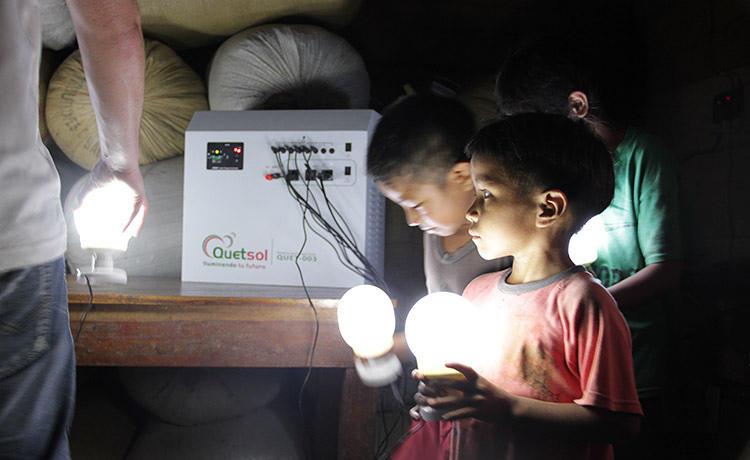
solar_quetsol1Three years ago, the two agreed that they were looking for something else and began investigating renewable energy. The result was Quetsol, a company that uses solar energy to improve the quality of life of poor communities living off the electrical grid. In Rodriguez’s and Aguilar’s native Guatemala, such poverty is widespread, with close to 20% of the population living without electricity and relying primarily on candles for light.

This picture of poverty is not exactly news. But after spending a year visiting close to 100 such communities, Rodriguez and Aguilar began to get a clear picture of why solar hadn’t yet succeeded. As Rodriguez put it:

Going to a community and talking about solar power isn’t like going into a community and talking about space travel. It is something that people have already seen, because NGOs have donated solar systems to these communities for decades. In many cases, the systems worked perfectly, but eventually the batteries died, and nobody was there to service them.

solar_quetsol2There solution was to start from the bottom up, using the free-market principle of adapting their approach to meet local needs. This would involve identifying communities before visiting them, taking into account how many people were living without electricity, and what the housing situation was like. When they then visited these communities, they sought out community leaders and held public meetings to learn about them and present their ideas.

Buildings relationships with local communities was a challenge, but so was creating a product for a market whose needs ranged from basic lighting and cell phone charging to powering a refrigerator all day. What they found was that unelectrified communities were relying on terribly inefficient means, ranging from diesel generators to walking to the nearest electrified community to plug in a phone.

solar_quetsol3What was resulted was a Solar Kit, consisting of a 10W Solar Panel, a control box with 7 Amp Battery, 2  LED Bulbs  (and a third optional bulb), and a universal cell phone charger. This kit has the ability to provide five hours of electricity to a house made up of two rooms that measure roughly 25 square meters (225 square feet) each. This is the typical design of homes in rural Guatemala, with one room serving as the bedroom and the other as the kitchen.

With that done, they began working on their sales strategy. Initially, this consisted of working with microfinance credit institutions to help families and communities purchase their solar kits. But after watching too many credit applications get rejected, they took a page from the telecom companies that have made cell phones ubiquitous in Guatemala, Basically, they switched to a pay-as-you-go plan.

solar_quetsol4Today, Quetsol employs a staff of 20 people and boasts board members like Google’s Tom Chi. There product line has also expanded, with the Q1 Solar Kit being supplemented by the Q3, a heavier model that boasts a 75W solar panel, an 85 Amp Battery, and five LED bulbs. The Q2 Kit – a middle of the road model with a 30W panel, 34 amp battery and 3 bulbs – is soon to be released.

But most importantly of all, they have electrified more than 3,500 homes in Guatemala thus far. But that is just a drop in the bucket compared to their long-term goal. Basically, the organization is viewing Guatemala as a stepping stone to all of Latin America as well as Africa by 2015. By 2016, they’d like to tackle the nearly 700 million off-the-grid homes in Asia.

Might sound ambitious, but Rodriguez and Marroquin feel they have the business acumen and social entrepreneurial savvy to pull it off. And given their background and business model, I’d say they are about right. Combined with other technologies that merge local needs with clean, efficient, and renewable means, development in the developing world might actually be an eco-friendly possibility.

Sources: fastcoexist.com, quetsol.com


News from Space: Curiosity Finds Water!

curiosity_drillsGood news (and bad) from the Red Planet! According to NASA, an examination of the fine-grained soil particles extracted by Curiosity, scientists have concluded that roughly 2 percent of Martian surface soil is made up of water. Though they did not find any traces of organic particles, this latest find confirms that water not only used to exist on the surface of the planet, but can still be found within.

These results bode well for future manned missions to Mars, wherein astronauts could mine the soil for water and study it to advance their understanding of Mars’ history. The findings, which were published today in the journal Science are part of a five-paper segment that began back in August of 2012 and is dedicated to Curiosity’s ongoing mission.

curiosity_drilling2Laurie Leshin, dean of the School Science at Rensselaer Polytechnic Institute and lead author of the paper, said in a NASA press release:

One of the most exciting results from this very first solid sample ingested by Curiosity is the high percentage of water in the soil.

These tests were conducted using the rover’s Sample Analysis at Mars (SAM), a collection of instruments that includes a gas chromatograph, a mass spectrometer, and a tunable laser spectrometer. The first soil samples were collected back in February when the rover used its drill tool for the first time and created a series of holes that were a little over 6 centimeters (2.5 inches) deep and collected the fine dust that resulted.

SAM_NASAOnce placed into the SAM assembly, the samples were heated to 835 degrees Celsius (1,535 degrees Fahrenheit). The gases that were released – which included significant portions of carbon dioxide, oxygen, and sulfur compounds – were then analyzed. The Mars Science Laboratory (MSL) also noticed that quantities of gaseous carbonite were found, which would suggests the presence of water in the Martian soil.

These positive findings were quite welcome, especially in light of the disheartening news last week that Curiosity has yet to crack the methane mystery. Back in 2003, scientists observed methane plumes coming from the planet, a strong indicator of microbial life, which sent scientific and professional interest in finding life on the red planet soaring.

Since that time, no traces of methane have been found, and it was hoped that Curiosity would finally locate it. However, the lack of methane thus far indicates that the rover has little chance of finding existing microbial life on the planet. But the existence of water in such great quantities in the surface soil brings scientists one step closer to piecing together the planet’s past potential for harboring life.

Curiosity_drillingsPaul Mahaffy, a lead investigator for SAM at NASA’s Goddard Space Flight Center, had this to say:

This work not only demonstrates that SAM is working beautifully on Mars, but also shows how SAM fits into Curiosity’s powerful and comprehensive suite of scientific instruments… By combining analyses of water and other volatiles from SAM with mineralogical, chemical, and geological data from Curiosity’s other instruments, we have the most comprehensive information ever obtained on Martian surface fines. These data greatly advance our understanding surface processes and the action of water on Mars.

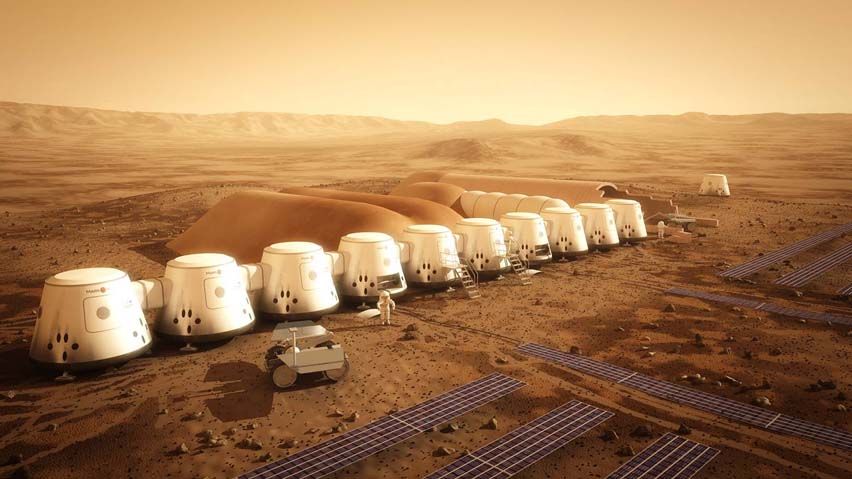
Given the renewed interest of late in manned missions to Mars – from nonprofit organizations like Mars One, privatized transportation companies like SpaceX, and the unofficial plans to mount a manned mission to Mars by 2030 by NASA – these findings are reassuring. In addition to providing fuel for hydrogen fuel cells for a return craft, subsurface water will be a boon for settlers and terraformers down the road.

mars-one-brian-versteegLeshin confirmed a cubic foot of soil, as opposed to the tiny sample Curiosity analyzed, could yield nearly 2 pints of condensation when heated. So volunteers who are planning on signing up with Mars One, pack your buckets and stoves and be prepared to do a lot of condensing! And perhaps we can expect “moisture farms” to become the norm on a colonized Mars of the future.

Source: news.cnet.com

The Future is Here: The Pilotless Fighter Jet

QF-16sGoogle may be developing driverless robot cars, but Boeing already has a small fleet a fighter jets that do not require a human pilot. These retired and refurbished QF-16s were turned into special drone craft for use by the US Air Force. But before anyone gets nervous, it should be noted that these specialized drones are strictly flying targets that are meant to assist with aerial combat training.

The test flight of one of the QF-16s took place last week and included an auto-take off and landing as well as an array of aerial maneuvers. The highlights of this test flight were a barrel roll while pulling 7 G’s, climbing to an altitude of 12,000 meters (40,000 feet) and accelerating to a speed of Mach 1.47. All the while, the plane was controlled by two Air Force test pilots on the ground.

drone-strikeIncorporating the latest in unmanned controls, these fighter jets will act as more realistic targets than the older generation of QF-4 unmanned aircraft – which are refurbished F-4 Phantoms. Whereas these Vietnam-era fighter craft are incapable of keeping up with modern designs, F-16s are capable of supersonic speeds and 9-G performance, which should help hone pilots for real-world combat missions.

While this is in many ways is just an upgrade on existing methods, it also represents a big step forward in terms of automation and drone warfare. With greater refinements in the technology and a more effective range, it may be possible to remotely pilot any and all combat aircraft in the not-too-distant future. Unmanned Aerial Vehicles (UAVs) may come to mean all aircraft, and not just Reapers and Predators (pictured above).

And of course, Boeing has produced a video of the QF-16s test flight. Enjoy!


Source: news.cnet.com

News From Space: Manned Europa Mission!

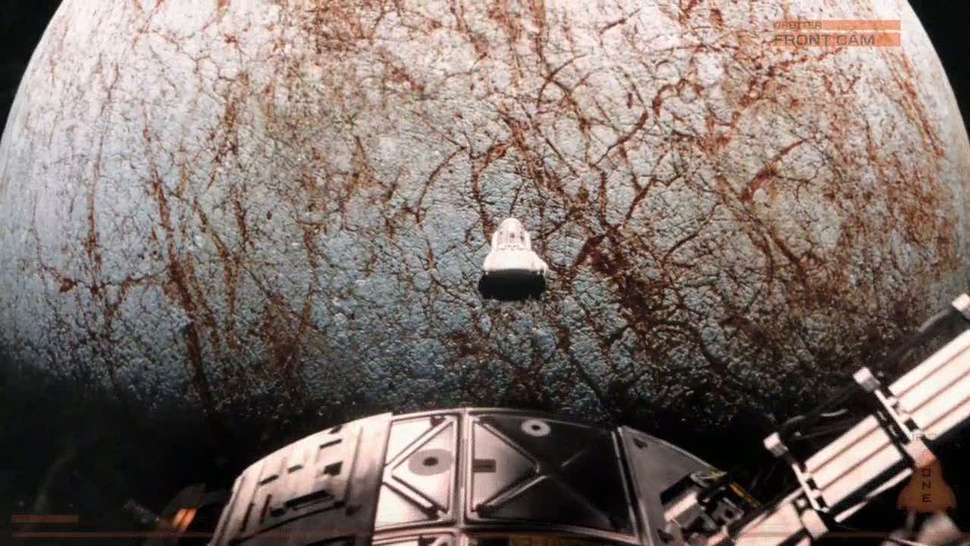
europa-landerWith so much attention focused on Mars in recent years, the other planets of the Solar System have a hard time getting noticed. But lately, Europa has found itself the subject of some interest. In addition to NASA proposing to send a lander there in the near future, a private space organization is thinking of mounting a manned mission to the Jovian moon in search of knowledge and extra-terrestrial life.

This organization is known as Objective Europa, a group made up of  volunteer scientists, conceptual artists, and social-media experts. At the moment, they exist only on the internet. But with time and financial backing, they hope to form a volunteer corps of settlers that would make a one-way trip to Europa and settle the planet while they researched it.

europa-lander-2Inspired by the recent missions to Mars, Objective Europa also believes a mission to this moon would be worthwhile since it is a far better candidate for extra-terrestrial life. Mars, though it is thought to have once hosted life, is a barren and dry world in its present state. Though many are holding out for the discovery of organic particles in the near future, the likelihood of finding any complex organisms larger than a microbe remains extremely low.

Not surprisingly, their group has attracted some big-name celebrities. This includes Kristian von Bengtson, a Danish architect and co-founder of Copenhagen Suborbitals, a nonprofit focused on launching humans into space. Then there’s Michele Faragalli, a rover mobility specialist for a NASA private contractor. Scientist and diver Pierre-Yves Cousteau, son of legendary explorer Jacques Cousteau, is also on the team as an ambassador for the group.
europa_reportCurrently, the group is in Phase 1 of their plan, which is geared towards the gathering of ideas. Towards this end, they have opened up a variety of research topics for discussion on their website. These include investigating the feasibility of a manned mission versus a robotic mission, launch vehicle studies, and cost analysis.Future phases would involve raising funds, and prototyping and testing technology.

What’s more, while they have not yet stated outright how they plan to fund the mission, it seems likely at this point that crowdfunding and sponsorship will come into play. As the goal statement reads on their site:

“Our purpose is to establish the foundation for and carry out a crewed mission to Jovian ice moon Europa through international crowd-research and participation.”

mars-one-brian-versteegIf this is beginning to sound a little bit like Mars One – a similar space organization looking to send volunteers to Mars – then chances are you’ve been paying attention! In terms of their purpose, objectives, and the fact that the trips they are planning would be a one-way, the two organizations are very similar. But even more interesting is what these and other space organizations like them represent.

In an age when private space travel and exploration are beginning in earnest, crowdfunded, volunteer groups are emerging with the common goal of making things happen ahead of anyone else’s schedule. Whereas space was once the exclusive province of government-sanctioned and funded agencies, now the public is stepping in to assume a measure of control.

And thanks to new media and communications, the money, talent, and energy needed are all available. It’s just a matter of bringing them all together!

Source: news.cnet.com

A Kinder, Gentler Internet: California’s “Erase Button”

cyber bullyingIn the early nineties, the internet was greeted with immense optimism and anticipation. Scarcely a week went by without some major personality – Al Gore and Bill Gates come to mind – championing its development, saying it would bring the world together and lead to “the information age”. After just a few years, these predictions were being mocked by just about everyone on the planet who had access.

Rehtaeh_ParsonsYes, despite all that has been made possible by the internet, the heady optimism that was present in those early days seem horribly naive by today’s standards. In addition to making virtually any database accessible to anyone, the world wide web has also enabled child pornographers, hate speech, conspiracy theorists and misinformation like never before.

What’s more, a person’s online presence opens them to new means of identity theft, cyberbullying, and all kinds of trolling and harassment. Who can forget the cases of Amanda Todd or Rethaeh (Heather) Parsons? Two young women who committed suicide due to relentless and disgusting bullying that was able to take place because there simply was no way to stop it all.

amanda_toddsuicide.jpeg.size.xxlarge.letterboxAnd with the ever expanding online presence of children and youths on the internet, and little to no controls to monitor their behavior, there are many campaigns out there that hope to reign in the offenders and protect the users. But there are those who have gone a step further, seeking to put in place comprehensive safeguards so that trollish behavior and hurtful comments can be stopped before it becomes a permanent part of the digital stream.

One such person is California Governor Jerry Brown, who recently signed a bill into law that requires all websites to provide an online “erase button” for anyone under 18 years of age. The stated purpose of the law is to help protect teens from bullying, embarrassment and harm to job and college applications from online posts they later regret. The law, which is designated SB568, was officially passed on Sept. 23rd and will go into effect Jan 1st, 2015.

kid-laptop-156577609_610x406Common Sense Media, a San Francisco based non-profit organization that advocates child safety and family issues, was a major supporter of the bill. In a recent interview, CEO James Steyer explained the logic behind it and how it will benefit youths:

Kids and teens frequently self-reveal before they self-reflect. In today’s digital age, mistakes can stay with and haunt kids for their entire life. This bill is a big step forward for privacy rights, especially since California has more tech companies than any other state.

The law is not without merit, as a 2012 Kaplan survey conducted on college admissions counselors shows. In that study, nearly a quarter of the counselors interviewed said they checked applicants’ social profiles as part of the admission process. Of those counselors, 35% said what they found – i.e. vulgarities, alcohol consumption, “illegal activities” – negatively affected their applicants’ admissions chances.

smartphoneteensBut of course, the bill has its share of opponents as well. Of those who voted against it, concerns that the law will burden websites with developing policies for different states appeared to be paramount. Naturally, those who support the bill hope it will spread, thus creating a uniform law that will remove the need to monitor the internet on a state-by-state basis.

At present, major social media sites such as Facebook, Twitter, Instagram and Vine already allow users of any age to delete their posts, photos and comments. California’s “eraser button” law requires that all websites with users in the state follow this policy from now on. And given the presence of Silicon Valley and the fact that California has one of the highest per capita usages of the internet in the country, other states are sure to follow.

facebook-privacyThe new law also prohibits youth-oriented websites or those that know they have users who are minors from advertising products that are illegal to underage kids, such as guns, alcohol and tobacco. Little wonder then why it was also supported by organizations like Children NOW, Crime Victims United, the Child Abuse Prevention Center and the California Partnership to End Domestic Violence.

In addition to being a legal precedent, this new law represents a culmination of special interests and concerns that have been growing in size and intensity since the internet was first unveiled. And given the recent rise in parental concerns over cyberbullying and teen suicides connected to online harassment, its hardly surprising that something of this nature was passed.

Sources: news.cnet.com, cbc.ca, huffingtonpost.com

More News in Quantum Computing!

quantum-computers-The-Next-GenerationRecently, a team of researchers at the University of Rochester conducted an experiment where they managed to suspend a nano-sized diamond in free space with a laser. The purpose of the experiment was to measure the amount of light emitted from the diamond, but had the added bonus of demonstrating applications that could be useful in the field of quantum computing.

For those unfamiliar with the concept, quantum computing differs from conventional computing since it does not rely on sending information via a series of particles (electrons) through one-way channels. Instead, quantum computing relies on the process of beaming the states of particles (i.e. a photons quantum properties) from one location to the next.

nanodiamondSince this process occurs faster than the speed of light (as no movement takes place) and qubits (quantum bits) have the ability to be in more than one state simultaneously, computations done using this model would be exponentially faster. But despite many advancements made in recent years, the field remains largely theoretical and elusive.

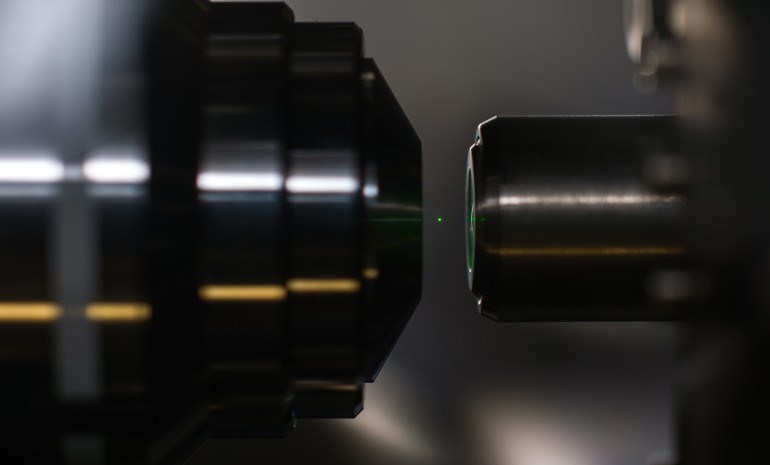
To conduct their experiment, the researchers focused a laser into a 25 cm (10 inch) chamber and then sprayed an aerosol containing dissolved nanodiamonds inside. These nanodiamonds were attracted to the laser in a technique known as “laser trapping”, until a single particle was isolated and made to levitate. Once the tiny gem was levitating in free space, the researchers used another laser to make defects within the diamond emit light at given frequencies.

nanodiamond1This process is known as photoluminescence – a form light emission that is caused by defects in the tiny diamond that allows for the absorptions of photons. When the system is excited, it changes the spin; and when the it relaxes after the change, other photons are emitted. This occurs because nitrogen atoms replace some of the carbon atoms in the diamond. Once the nitrogen is nested in the diamond’s atomic structure, it is possible to excite electrons with a laser.

According to the researchers, this photoluminescence process has the potential to excite the system and cause what is known as Bohr spin quantum jumps, which are changes in spin configuration of the internal defect. This occurs because nitrogen atoms replace some of the carbon atoms in the diamond. Once the nitrogen is nested in the diamond’s atomic structure, it is possible to excite electrons with a laser.

????????????????????In addition, the potential also exists to turn the nanodiamond into an optomechanical resonator. According to Nick Vamivakas, an assistant professor of optics at the University of Rochester, these are structures in which the vibrations of the system can be controlled by light. Optomechanical resonators have the potential to be used as incredibly precise sensors, which could lead to uses in microchips.

In addition, these resonator systems have the potential to create Schrödinger Cat states, which are typically not found in microscopic objects. As anyone who’ familiar with Futurama or Big Bang Theory may recall, this refers to the thought experiment where a cat is inside a box with poison, and until someone opens the box and determines its whereabouts, the cat could be considered simultaneously both alive and dead.

^Being able to stimulate matter so that it can exist in more than one state at any given time is not only revolutionary, it is a clear step towards the creation of machines that exploit this principle to perform computations. According to Nick Vamivakas, an assistant professor of optics at the University of Rochester, explained:

Cat or cat-like states contradict our everyday experiences since we do not see common things in quantum states. The question is: where is this boundary between microscopic and macroscopic? By generating quantum states of larger and larger objects, we can hone in on a boundary … if there is one.

Naturally, the Rochester team is still a long way from achieving their big breakthrough, and Vamivakas himself admits that he does not know how far away a quantum computing truly is. In terms of this latest experiment, the team still needs to cool the crystal better, which they are hoping can be achieved with a few technical improvements. And then they hope to find a better way of running the experiment than spraying nanodiamond dust into a tube.

In the meantime, check out this video of the experiment. It promises to be “illuminating” (sorry!):


Source:
gizmag.com

Judgement Day Update: Artificial Muscles for Robots

artificial-muscle-1It’s a science fiction staple, the android or humanoid robot opens up its insides to reveal a network of gears or brightly-lit cables running underneath. However, as the science behind making androids improves, we are moving farther and farther away from this sci-fi cliche. In fact, thanks to recent advancements, robots in the future may look a lot like us when you strip away their outer layers.

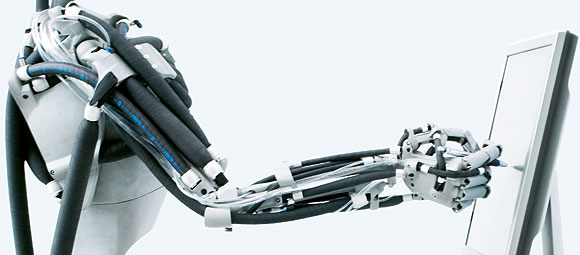
It’s what is known as biomimetics, the science of creating technology that mimics biology. And the latest breakthrough in this field comes from National University of Singapore’s Faculty of Engineering where researchers have developed the world’s first “robotic” muscle. Much like the real thing, this artificial tissue extends to five times its original length, has the potential to lift 80 times its own weight.

???????????????????????In addition to being a first in robotics, this new development is exciting because it resolves a central problem that has plagued robots since their inception. In the 1960s, John W. Campbell Jr, editor of Analog Science Fiction magazine, pointed out this problem when he outlined a scenario where a man is chased across rough country by a mad scientist’s horde of killer robots.

In this scenario, the various models that were chasing the man were stymied by obstacles that the he could easily overcome, such as sinking in mud, jumping over logs, getting around rocks, or tangled up in bushes. In the end, the only robots that were capable of keeping up with him were so light and underpowered that he was able to tear them apart with his bare hands.

robot_muscleThis is a far cry from another science fiction staple, the one which presents robots as powerful automatons that can bend steel girders and carry out immense feats of strength. While some robots certainly can do this, they are extremely heavy and use hydraulics for the heavy lifting. Pound for pound, they’re actually very weak compared to a human, being capable of lifting only half their weight.

Another problem is the fact that robots using gears and motors, pneumatics, or hydraulics lack fine control. They tend to move in jerky motions and have to pause between each move, giving rise to a form of motion that we like to call “the robot”. Basically, it is very difficult to make a robot that is capable of delicate, smooth movements, the kind humans and animals take for granted.

kenshiroFor some time now, scientists and researchers have been looking to biomimetics to achieve the long sought-after dream of smaller, stronger robots that are capable of more refined movements. And taken in tandem with other development – such as the Kenshiro robot developed by roboticists at the University of Tokyo – that time might finally be here.

Developed by a four-person team led by Dr. Adrian Koh – from the NUS Engineering Science Program and Department of Civil and Environmental Engineering – the new artificial muscle is an example of an electroactive polymer. Basically, this is a combination dielectric elastomer and rubber that changes shape when stimulated by an electric field. In this respect, the artificial muscle is much like an organic one, using electrical stimulus to trigger movement.


robot-arm-wrestling-03-20-09Robots using artificial muscles would be a far cry from clanking mechanical men. They would be much more lifelike, capable of facial expression and precise, graceful movements. They would also have superhuman strength, yet weigh the same as a person. In addition, the polymer used to fabricate the muscles may have more general applications in machines, such as cranes.

An added bonus of the polymer is that is can convert and store energy, which means it’s possible to design robots that power themselves after charging for only minutes. In a statement released by his department, Dr. Koh highlighted the benefits of the design and what it is capable of doing:

Our novel muscles are not just strong and responsive. Their movements produce a by-product – energy. As the muscles contract and expand, they are capable of converting mechanical energy into electrical energy. Due to the nature of this material, it is capable of packing a large amount of energy in a small package. We calculated that if one were to build an electrical generator from these soft materials, a 10 kg (22 lb) system is capable of producing the same amount of energy of a one-ton electrical turbine.

AI_robotDr. Koh also indicated that robots equipped with these types of muscles “will be able to function in a more human-like manner – and outperform humans in strength.” Theoretically, such polymer-based tissues could extend to ten times their original length and lift up to 500 times its own weight, though the current version isn’t anywhere near that limit just yet.

In the meantime, Dr Koh and his team have applied for a patent for the artificial muscle and are continuing work on it. They predict that within five years they could have a robot arm that is half the size and weight of a human arm, yet could win an arm wrestling match. And the applications are limitless, ranging from robotic servants to search and rescue bots and heavy robot laborers. And let’s not forget that cybernetic arms that boast that kind of increased strength are also likely to become a popular prosthetic and enhancement item.

And for those who are naturally afraid of a future where super-human robots that have the strength to tear us limb from limb are walking among us, let me remind you that we still have Asimov’s “Three Laws of Robotics” to fall back on. Never mind what happened in the terrible movie adaptation, those laws are incontrovertible and will work… I hope!

Sources: gizmag.com, engadget.com, 33rdsqaure.com

Digital Eyewear Through the Ages

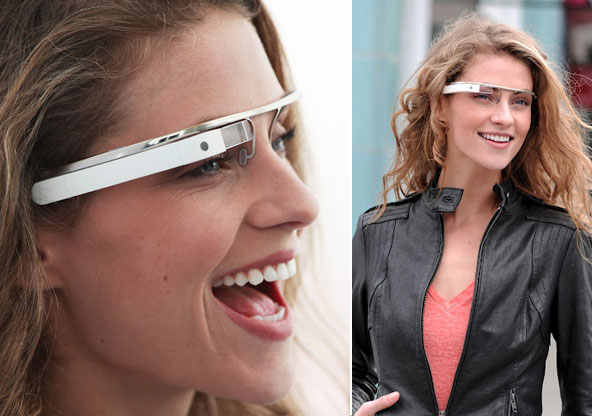
google_glassesGiven the sensation created by the recent release of Google Glass – a timely invention that calls to mind everything from 80’s cyberpunk to speculations about our cybernetic, transhuman future – a lot of attention has been focused lately on personalities like Steve Mann, Mark Spritzer, and the history of wearable computers.

For decades now, visionaries and futurists have been working towards a day when all personal computers are portable and blend seamlessly into our daily lives. And with countless imitators coming forward to develop their own variants and hate crimes being committed against users, it seems like portable/integrated machinery is destined to become an issue no one will be able to ignore.

And so I thought it was high time for a little retrospective, a look back at the history of eyewear computers and digital devices and see how far it has come. From its humble beginnings with bulky backpacks and large, head-mounted displays, to the current age of small fixtures that can be worn as easily as glasses, things certainly have changed. And the future is likely to get even more fascinating, weird, and a little bit scary!

Sword of Damocles (1968):
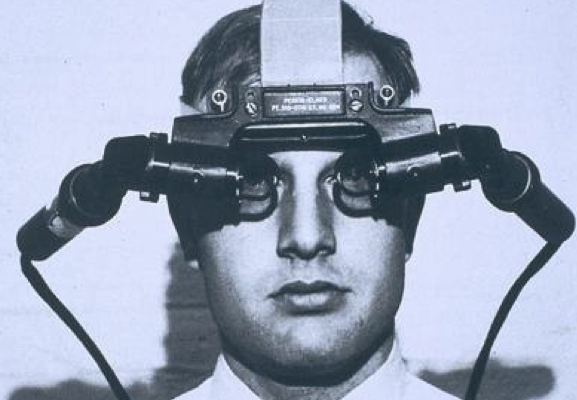
swordofdamoclesDeveloped by Ivan Sutherland and his student Bob Sprouli at the University of Utah in 1968, the Sword of Damocles was the world’s first heads-up mounted display. It consisted of a headband with a pair of small cathode-ray tubes attached to the end of a large instrumented mechanical arm through which head position and orientation were determined.

Hand positions were sensed via a hand-held grip suspended at the end of three fishing lines whose lengths were determined by the number of rotations sensed on each of the reels. Though crude by modern standards, this breakthrough technology would become the basis for all future innovation in the field of mobile computing, virtual reality, and digital eyewear applications.

WearComp Models (1980-84):
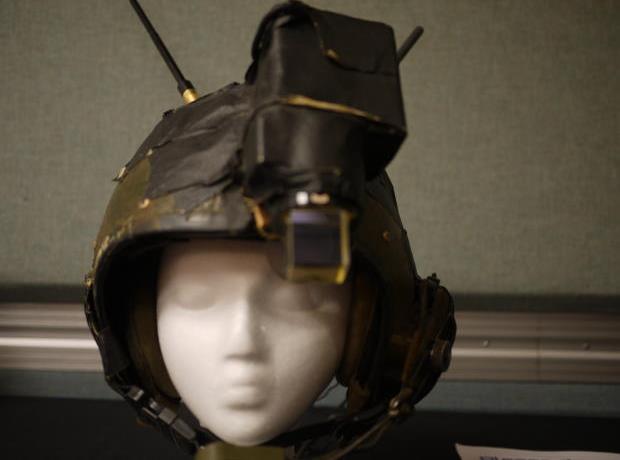
WearComp_1_620x465Built by Steve Mann (inventor of the EyeTap and considered to be the father of wearable computers) in 1980, the WearComp1 cobbled together many devices to create visual experiences. It included an antenna to communicate wirelessly and share video. In 1981, he designed and built a backpack-mounted wearable multimedia computer with text, graphics, and multimedia capability, as well as video capability.

Wearcomp_4By 1984, the same year that Apple’s Macintosh was first shipped and the publication of William Gibson’s science fiction novel, “Neuromancer”, he released the WearComp4 model. This latest version employed clothing-based signal processing, a personal imaging system with left eye display, and separate antennas for simultaneous voice, video, and data communication.

Private Eye (1989):
Private_eye_HUDIn 1989 Reflection Technology marketed the Private Eye head-mounted display, which scanned a vertical array of LEDs across the visual field using a vibrating mirror. The monochrome screen was 1.25-inches on the diagonal, but images appear to be a 15-inch display at 18-inches distance.

EyeTap Digital Eye (1998):
EyeTap1
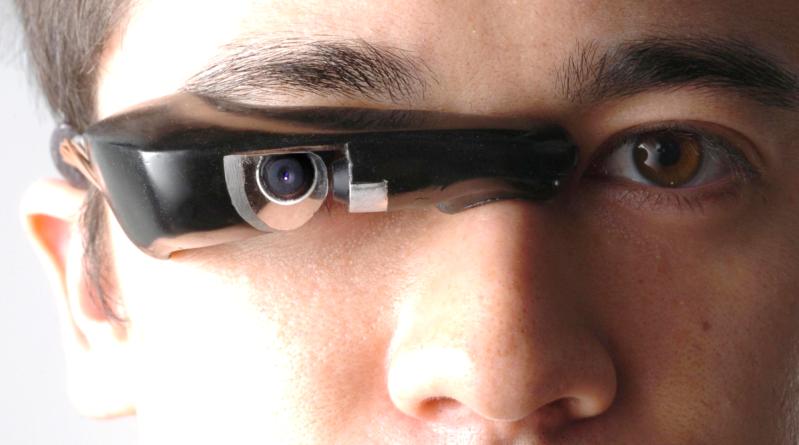
Steve Mann is considered the father of digital eyewear and what he calls “mediated” reality. He is a professor in the department of electrical and computer engineering at the University of Toronto and an IEEE senior member, and also serves as chief scientist for the augmented reality startup, Meta. The first version of the EyeTap was produced in the 1970’s and was incredibly bulky by modern standards.

By 1998, he developed the one that is commonly seen today, mounted over one ear and in front of one side of the face. This version is worn in front of the eye, recording what is immediately in front of the viewer and superimposing the view as digital imagery. It uses a beam splitter to send the same scene to both the eye and a camera, and is tethered to a computer worn to his body in a small pack.

MicroOptical TASK-9 (2000):
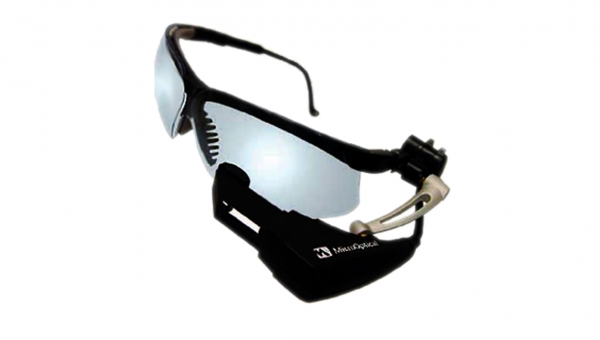
MicroOptical TASK-9Founded in 1995 by Mark Spitzer, who is now a director at the Google X lab. the company produced several patented designs which were bought up by Google after the company closed in 2010. One such design was the TASK-9, a wearable computer that is attachable to a set of glasses. Years later, MicroOptical’s line of viewers remain the lightest head-up displays available on the market.

Vuzix (1997-2013):
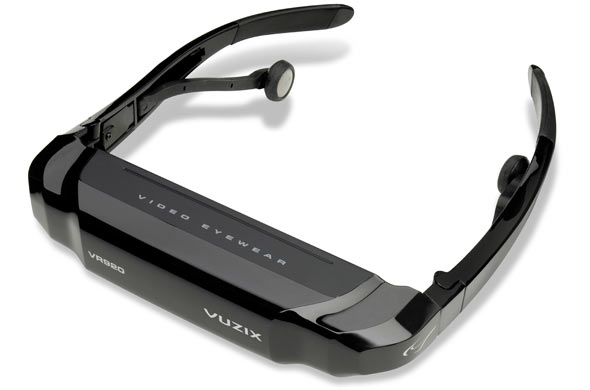
Vuzix_m100Founded in 1997, Vuzix created the first video eyewear to support stereoscopic 3D for the PlayStation 3 and Xbox 360. Since then, Vuzix went on to create the first commercially produced pass-through augmented reality headset, the Wrap 920AR (seen at bottom). The Wrap 920AR has two VGA video displays and two cameras that work together to provide the user a view of the world which blends real world inputs and computer generated data.

vuzix-wrapOther products of note include the Wrap 1200VR, a virtual reality headset that has numerous applications – everything from gaming and recreation to medical research – and the Smart Glasses M100, a hands free display for smartphones. And since the Consumer Electronics Show of 2011, they have announced and released several heads-up AR displays that are attachable to glasses.

vuzix_VR920

MyVu (2008-2012):
Founded in 1995, also by Mark Spitzer, MyVu developed several different types of wearable video display glasses before closing in 2012. The most famous was their Myvu Personal Media Viewer (pictured below), a set of display glasses that was released in 2008. These became instantly popular with the wearable computer community because they provided a cost effective and relatively easy path to a DIY, small, single eye, head-mounted display.myvu_leadIn 2010, the company followed up with the release of the Viscom digital eyewear (seen below), a device that was developed in collaboration with Spitzer’s other company, MicroOptical. This smaller, head mounted display device comes with earphones and is worn over one eye like a pair of glasses, similar to the EyeTap.
myvu_viscom

Meta Prototype (2013):
Developed by Meta, a Silicon Valley startup that is being funded with the help of a Kickstarter campaign and supported by Steve Mann, this wearable computing eyewear ultizes the latest in VR and projection technology. Unlike other display glasses, Meta’s eyewear enters 3D space and uses your hands to interact with the virtual world, combining the benefits of the Oculus Rift and those being offered by “Sixth Sense” technology.
meta_headset_front_on_610x404The Meta system includes stereoscopic 3D glasses and a 3D camera to track hand movements, similar to the portrayals of gestural control in movies like “Iron Man” and “Avatar.” In addition to display modules embedded in the lenses, the glasses include a portable projector mounted on top. This way, the user is able to both project and interact with computer simulations.

Google Glass (2013):
Google Glass_Cala
Developed by Google X as part of their Project Glass, the Google Glass device is a wearable computer with an optical head-mounted display (OHMD) that incorporates all the major advances made in the field of wearable computing for the past forty years. These include a smartphone-like hands-free format, wireless internet connection, voice commands and a full-color augmented-reality display.

Development began in 2011 and the first prototypes were previewed to the public at the Google I/O annual conference in San Francisco in June of 2012. Though they currently do not come with fixed lenses, Google has announced its intention to partner with sunglass retailers to equip them with regular and prescription lenses. There is also talk of developing contact lenses that come with embedded display devices.

Summary:
Well, that’s the history of digital eyewear in a nutshell. And as you can see, since the late 60’s, the field has progressed by leaps and bounds. What was once a speculative and visionary pursuit has now blossomed to become a fully-fledged commercial field, with many different devices being produced for public consumption.

At this rate, who knows what the future holds? In all likelihood, the quest to make computers more portable and ergonomic will keep pace with the development of more sophisticated electronics and computer chips, miniaturization, biotechnology, nanofabrication and brain-computer interfacing.

The result will no doubt be tiny CPUs that can be implanted in the human body and integrated into our brains via neural chips and tiny electrodes. In all likelihood, we won’t even need voice commands at that point, because neuroscience will have developed a means to communicate directly to our devices via brainwaves. The age of cybernetics will have officially dawned!

Like I said… fascinating, weird, and a little bit scary!

‘High Dynamic Range’