News From Space…X!

spaceX_elonmuskForgive the pun, but it was just too easy! Yes, SpaceX is once again making news with its Grasshopper reusable rocket system, which set the record for highest altitude ascended. On its sixth jump, which took place on June 14th, the rocket made it to a height of 325 meters (1066 feet) above the Earth and remained airborne for a minute and 8 seconds.

With each jump and new record set, Grasshopper and its inventors are bringing the age of affordable, commercial space flight that much closer. Seeing as how the goal is to send a rocket into orbit it and bring it back in one piece, this latest milestone might sound modest. But a quick look at each successive jump clearly shows that the Vertical Takeoff Vertical Landing (VTVL) rocket is making serious progress, and in a short stretch of time.

spacex_grasshopperConsider the first jump which took place in September of 2012, where the rocket reached a height of 1.8 meters (6 feet) and remained aloft for three seconds. Sounds pretty meager, no? But less than two months later, the rocket was able to remain in the air for 8 seconds and reached a height of 5.4 meters (17.7 feet).

On its third run, performed in December of 2012, the rocket got 40 meters (131 feet) into the air, remained there for 29 seconds, and happened to be the first test flight where a cowboy mannequin was strapped to the rocket. On the fourth and fifth try, which were performed in March and April of this year, the rocket reached a height of 80 and then 250 meters (262 and 820 feet), remaining airborne for 34 and then 61 seconds.

Grasshopper-rocketThis not only confirms that the rocket’s progress is exponential when it comes to height, but that its thrust-to-weight ratio has been improving vastly. Another big milestone here was the fact that for the first time, the rocket made use of its full navigation sensor suite with the F9-R closed loop control flight algorithms.

In previous tests, the rocket relied on other rocket sensors which were not as accurate, but this time around, SpaceX was directly controlling the rocket based on these new sensor readings, a move which has increased the level of accuracy in sensing the distance between Grasshopper and the ground.

To quote Nietzsche: “He who would learn to fly one day must first learn to stand and walk.” At this rate, averaging for the total rate of increase, I’d say the Grasshopper should be reaching Low-Earth Orbit (2000 km above sea level) by its 11th or 12th jump. And using the same figures, I figure the jump will be taking place sometime in May 2014. Somebody ought to be organizing a pool!

Source: IO9.com, SpaceX.com

Climate Crisis: City Farms

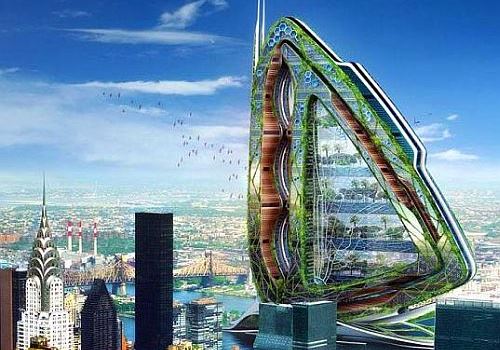
dragonfly-vertical-farm-for-a-future-new-york-1Hello again, folks. As you all know, this summer has brought some rather dire news on the climate front as unpredictable weather patterns have led to flooding in many parts of the world. And as climatological researchers and scientists have predicted, this is just the tip of the iceberg, as rising global temperatures will lead to melted icecaps, higher sea levels, severe droughts, wildfires and coastal storms.

But as I always like to point out, there are solutions to these problems, or at least ways to mediate them. Given the central role played by overpopulation and urban sprawl in climate change, many of these proposed solutions have to do with finding new ways to house, feed, and provide from future generations – ones which emphasize sustainability and clean energy.

city_farmsWhen it comes to feeding future generations of people, the question of what will be on the menu and where it comes from are paramount. In recent decades, massive crop failures, protracted droughts, and numerous food-borne disease outbreaks caused by microbes such as salmonella, E. coli, toxoplasma and listeria have forced people to contemplate where their food comes from and how it is produced.

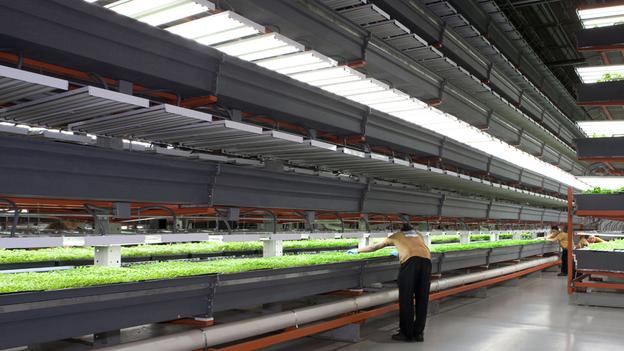
The proposed solution is to rethink farming, moving out of the old paradigm of farming the lands around human settlements and moving them inside. These city-based agricultural projects include rooftop gardens, rooftop greenhouses, planting beds, empty lots as farmland, and vertical farms that occupy tall buildings and abandoned warehouses. Collectively, these examples show the validity of growing food in the city. Not only could be they be carried out efficiently, but they could also operate without the pollution associated with outdoor farming.

city_farms1In truth, the concept is not entirely new, as “victory gardens” or other variants have been a means of producing agricultural goods whenever national farms found themselves overburdened. These were all the rage in Britain, Canada, the US and Germany during World War I and II when naval blockades and military demand forced people to plant their own vegetables in their backyards.

In addition, after the collapse of the Soviet Union, Cuba found itself in a serious agricultural crisis. As a result, they turned to a vast network of ‘organoponicos’ – growing food for city dwellers in spare plots. These miniature agricultural operations not only staved off starvation and malnutrition during times of shortages, but became a model for sustainable local efforts that are currently being used around the world.

city_farms2For example, in Wilcox, Arizona, their is the EuroFresh Farms indoor-operation – a 318 acres (1.3 square km) of one-storey-high hydroponic greenhouses that supplies fresh tomatoes and cucumbers.  Similarly, the FarmedHere operation in Bedford Park, Illinois consists of a 8,360 square meter (90,000 square foot) empty warehouse that is several storeys tall that produces tilapia, a variety of leafy green vegetables, and several value-added products.

And in Sweden, the company known as Plantagon is building a vertical farm in the city of Linkoping, and has partnered with a Chinese company to research similar methods for the state of China. In addition, limited forms of vertical farming also exist in Japan, Korea, Singapore, the United States, and Canada, with new farms being planned for a number of cities in the United States.

city_farms4As always, technological innovation is assisting in the process. This includes such things as grow lights that have replaced expensive fluorescent fixtures with light-emitting diodes that can be adapted to emit light spectra tailored for growing green plants. In addition to costing less to run, their yields are demonstrably higher, especially where leafy greens and tomatoes are concerned.

Another concept which is being embraced is aquaculture – indoor fish hatcheries – which could provide meat protein to go with all these vegetables. Such operations include Hazorea Acquatics, a koi farming operation, as well as the carp and mullet farm pictured below, both of which are located in Israel . Similar operations are popping up in the US, Netherlands, Denmark, Scotland and Canada, where barramundi, sturgeon, tilapia, eels, catfish, trout and salmon are being raised.

city_farms5Looking to the long-run, urban agriculture has the potential to become so pervasive within our cities that by the year 2050 they may be able to provide its citizens with up to 50% of the food they consume. In doing so, ecosystems that were fragmented in favor of farmland could be allowed to regain most of their ecological functions, forests could recover, and the impact on the environment would very beneficial, for the planet as well as humanity.

In addition to ensuring that the greatest consumers of CO2 – trees and other flora – could re-advance on the landscape, allowing natural spaces to recover from the damages of agriculture would also bring countless species back from the brink of extinction. Loss of habitat is one of the chief causes of wildlife becoming endangered, and farm runoff is one of the greatest factors effecting our rivers and fish stocks.

Combined with water treatment and recycling that also happens on-site, solar, wind and peizoelectric power, and carbon capture that can turn CO2 into biofuel, skyscrapers and urban environments may very well advance to become at the forefront of the sustainability, environmental and clean energy movement. What was once the problem would thus become the solution. Truly innovative…

Source: bbc.com/future

The Future of Medicine: Engineered Viruses, Nanoparticles and Bio-Absorbable Circuits

medtechThe future that is fast approaching us is one filled with possibilities, many of which were once thought to be the province of science fiction. Between tricorders and other new devices that can detect cancer sooner and at a fraction of the cost, HIV vaccines and cures, health monitoring tattoos and bionic limbs, we could be moving into an age where all known diseases are curable and physical handicaps will be non-existent.

And in the past few months, more stories have emerged with provide hope for millions of people living with diseases, injuries and disabilities. The first came just over three weeks ago from University of California, Berkley, where researchers have been working with an engineered virus which they claim could help cure blindness. As part of a gene therapy program, this treatment has been shown to effectively correct a rare form of inherited blindness.

virus-sight1For the past six years, medical science has been using adeno-associated viruses (AAV) as part of a gene therapy treatment to correct inherited retinal degenerative disease. However, the process has always been seen as invasive, since it involves injected the AAVs directly into a person’s retina with a needle. What’s more, the rpocess has shown itself to be limited, in that the injected virus does not reach all the retinal cells that need repair.

But as Professor David Schaffer, the lead researcher on the project, stated in an interview with Science Translational Medicine:

[D]octors have no choice because none of the gene delivery viruses can travel all the way through the back of the eye to reach the photoreceptors – the light sensitive cells that need the therapeutic gene.

Building on this and many more years of research, Prof David Schaffer and his colleagues developed a new process where they generated around 100 million variants of AAV and then selected five that were effective in penetrating the retina. They then used the best of these, a strain known as 7m8, to transport genes to cure two types of hereditary blindness on a group of mice.
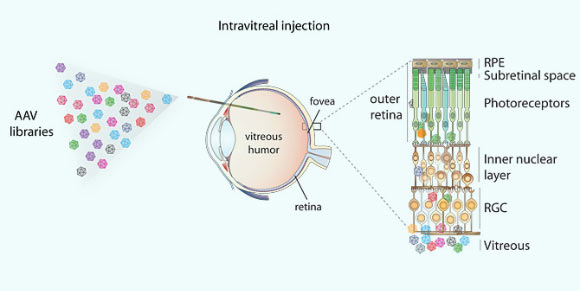
virus-sightIn each case, the engineered virus delivered the corrective gene to all areas of the retina and restored retinal cells nearly to normal. But more importantly, the virus’ ability to penetrate the retina on its own makes the process far less invasive, and will likely be far more cost-effective when adapted to humans. And the process is apparently very convenient:

[W]e have now created a virus that you just inject into the liquid vitreous humor inside the eye and it delivers genes to a very difficult-to-reach population of delicate cells in a way that is surgically non-invasive and safe. It’s a 15-minute procedure, and you can likely go home that day.

Naturally, clinical trials are still needed, but the results are encouraging and Professor Schaffer indicated that his team are busy at work, now collaborating with physicians to identify the patients most likely to benefit from this gene-delivery technique.

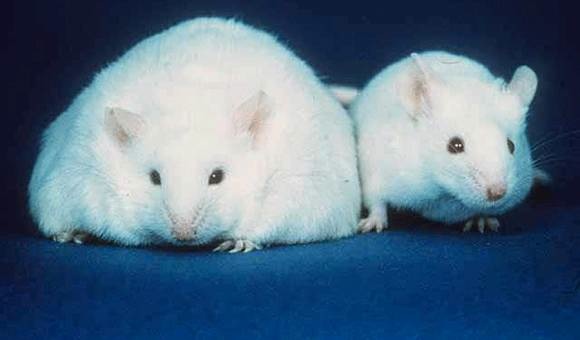
nanoparticles_miceNext up, there was the announcement back at the end of May that researchers from North Carolina State and University of North Carolina Chapel Hill had found yet another medical use for nanoparticles. In there case, this consisted of combating a major health concern, especially amongst young people today: diabetes.

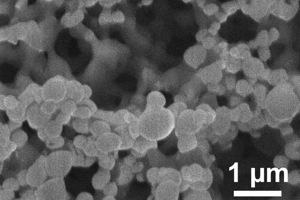
In a study that was published in the Journal of Agricultural and Food Chemistry, the collaborating teams indicated that their solution of nanoparticles was able to monitor blood sugar levels in a group of mice and released insulin when their sugar levels got too high. Based on the results, the researchers claim that their method will also work for human beings with type 1 diabetes.

image descriptionEach of the nanoparticles have a core of insulin that is contained with a degradable shell. When glucose levels in the blood reach high concentrations spike, the shell dissolves, releasing insulin and lowering the subject’s blood sugar. The degradable nano-network was shown to work in mice where a single injection kept blood glucose levels normal for a minimum of 10 days.

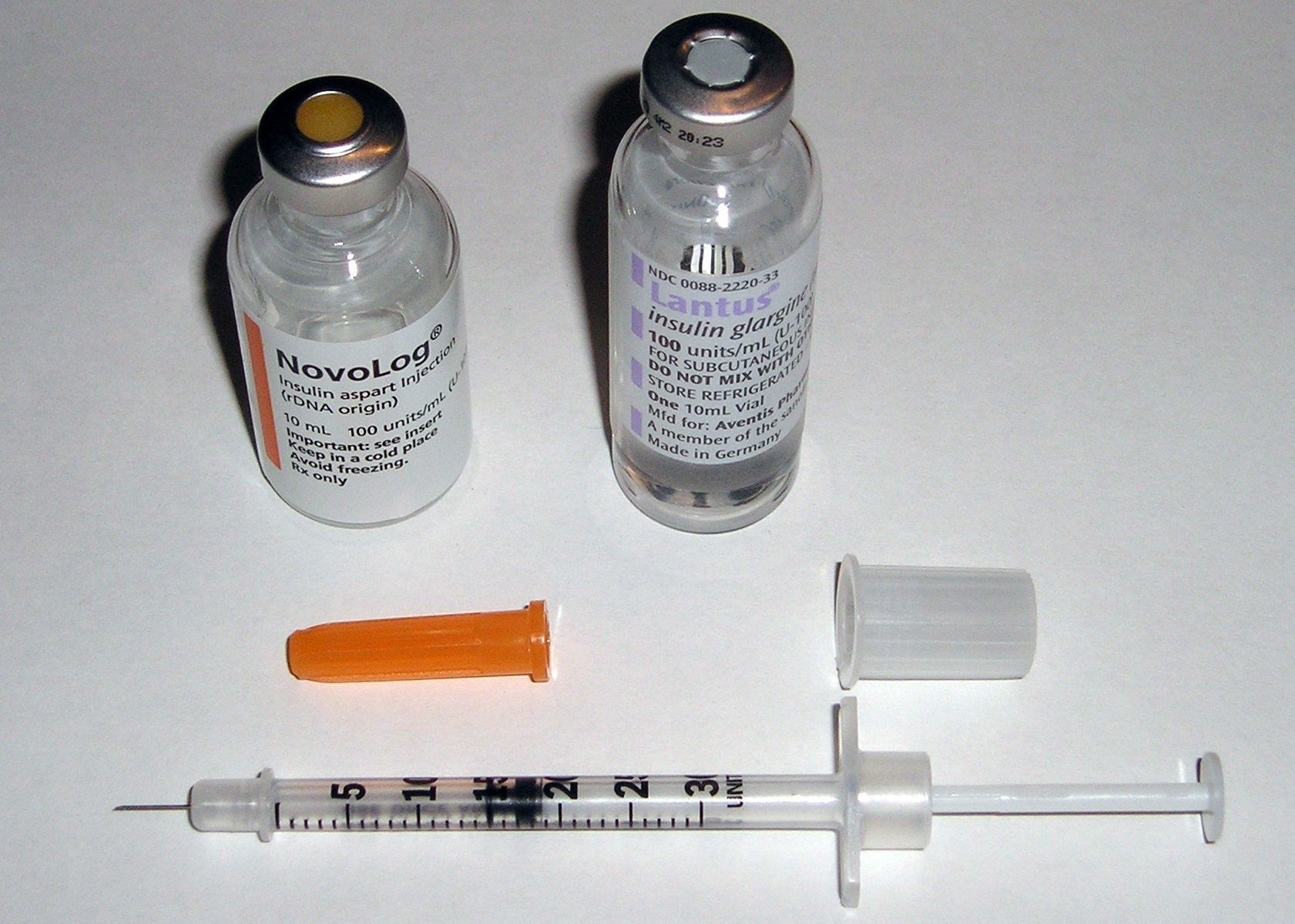
While the exact cause of this kind of diabetes is unknown, the effects certainly are. Patients living with this genetically-acquired form of the disease require several shots of insulin a day to keep their blood sugar levels under control. And even then, blindness, depression and even death can still result. What’s more, if the insulin shots are specifically calculated for the individual in question, side-effects can occur.

???????????????????????????????Hence the genius behind this new method. Not only would it relieve people who have type 1 diabetes from constantly injecting themselves, it would also remove the need to monitor their own blood sugar levels since the nanoparticles would be controlling them automatically.

In a study published recently in the Journal of Agricultural and Food Chemistry, Zhen Gu, lead author of the study claimed that the technology functions essentially the same as a pancreas. Hence another benefit of the new method, in that it could make pancreatic transplants – which are often necessary for patients with diabetes – unnecessary.

biocircuitsAnd last, but certainly not least, comes from the University of Illinois where John Rogers are developing a series of bio-absorbable electronic circuits that could help us win the war on drug-resistant bacteria. As part of a growing trend of biodegradable, flexible electronic circuits that operate wirelessly, fighting “superbugs” is just one application for this technology, but a very valuable one.

For some time now, bacteria that is resistant to antibiotics has been spreading, threatening to put the clock back 100 years to the time when routine, minor surgery was life-threatening. Some medical experts are warning that otherwise straightforward operations could soon become deadly unless new ways to fend off these infections are found. And though bacteria can evolve ways of evading chemical assaults, they are still vulnerable to direct assault.

electronics_dissolvingThis is how the new bio-absorbable circuits work: by heating up the virus. Each circuit is essentially a miniature electric heater that can be implanted into wounds and powered wirelessly to fry bacteria during healing before dissolving harmlessly into body fluids once their job is done. While this might sound dangerous, keep in mind that it takes only a relatively mild warming to kill bugs without causing discomfort or harm to surrounding tissues.

To fashion the circuits, Rogers and his colleagues used layers of utra-thin wafers and silk, material so thin that they disintegrate in water or body fluids or (in the case of silk) are known to dissolve anyway. For the metal parts, they used extra-thin films of magnesium, which is not only harmless but in fact an essential nutrient. For semiconductors, they used silicon membranes 300 nanometres thick, which also dissolve in water.

In addition to deterring bacteria, Rogers says that implantable, bio-absorbable RF electronics could be used to stimulate nerves for pain relief, and to stimulate bone re-growth, a process long proven to work when electrodes are placed on the skin or directly on the bone. Conceivably they could also be used to precisely control drug release from implanted reservoirs.

In other words, this is just the beginning. When it comes to the future of medicine, just about any barrier that was once considered impassable are suddenly looking quite porous…

Sources: sci-news.com, stm.sciencemag.org, singularityhub.com, bbc.com/future

Building the Future: 3D Printing and Silkworms

arcology_crystalWhen it comes to building the homes, apartment blocks and businesses headquarters of the future,  designers and urban planners are forced to contend with a few undeniable realities. No only are these buildings going to be need to be greener and more sustainable, they will need to be built in such a way that doesn’t unnecessarily burden the environment.

Currently, the methods for erecting a large city building are criminally inefficient. Between producing the building materials – concrete, steel, wood, granite – and putting it all together, a considerable amount of energy is expended in the form of emissions and electricity, and several tons of waste are produced.

anti-grav3d2Luckily, there are many concepts currently on the table that will alter this trend. Between using smarter materials, more energy-efficient design concepts, and environmentally-friendly processes, the future of construction and urban planning may someday become sustainable and clean.

At the moment, many such concepts involve advances made in 3-D printing, a technology that has been growing by leaps and bounds in recent years. Between anti-gravity printers and sintering, there seems to be incredible potential for building everything from settlements on the moon to bridges and even buildings here on Earth.

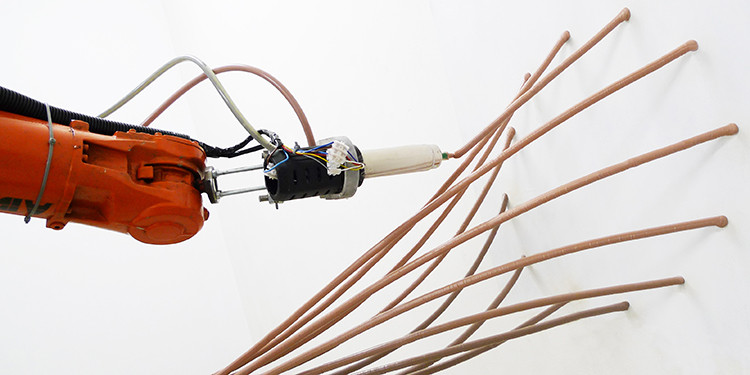
bridge_3One case in particular comes to us from Spain, where four students from the Institute for Advanced Architecture of Catalonia have created a revolutionary 3-D printing robot. It’s known as Stone Spray, a machine that can turn dirt and sand into finished objects such as chairs, walls, and even full-blown bridges.

The brainchild of Anna Kulik, Inder Prakash, Singh Shergill, and Petr Novikov, the robot takes sand or soil, adds a special binding agent, then spews out a fully formed architectural object of the designers’ choosing. As Novikov said in an interview with Co.Design:

The shape of the resulting object is created in 3-D CAD software and then transferred to the robot, defining its movements. So the designer has the full control of the shape.

robot-on-site_0So far, all the prototypes – which include miniature stools and sculptures – are just 20 inches long, about the size of a newborn. But the team is actively planning on increasing the sizes of the objects this robot can produce to architectural size. And they are currently working on their first full-scale engineering model: a bridge (pictured above).

If successful, the robot could represent a big leap forward in the field of sustainable design. Growing a structure from the earth at your feet circumvents one of the most resource-intensive aspects of architecture, which is the construction process.

And speaking of process, check out this video of the Stone Spray in action:


At the same time, however, there are plans to use biohacking to engineer tiny life forms and even bacteria that would be capable of assembling complex structures. In a field that closely resembles “swarm robotics” – where thousands of tiny drones are programmed to build thing – “swarm biologics” seeks to use thousands of little creatures for the same purpose.

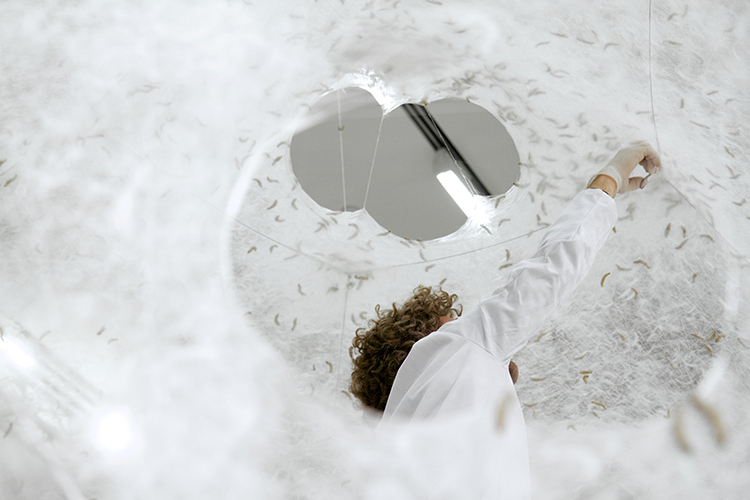
silkpavilionMIT has taken a bold step in this arena, thanks to their creation by the Mediated Matter Group that has rebooted the entire concept of “printed structures”. It’s called the Silk Pavilion, a beautiful structures whose hexagonal framework was laid by a robot, but whose walls were shell was created by a swarm of 6,500 live silkworms.

It’s what researchers call a “biological swarm approach to 3-D printing”, but could also be the most innovate example of biohacking to date. While silkworms have been used for millennia to give us silk, that process has always required a level of harvesting. MIT has discovered how to manipulate the worms to shape silk for us natively.

silkpavilion-2The most immediate implications may be in the potential for a “templated swarm” approach, which could involve a factory making clothes just by releasing silkworms across a series of worm-hacking mannequins. But the silkworms’ greater potential may be in sheer scale.

As Mediated Matter’s director Neri Oxman told Co.Design, the real bonus to their silkworm swarm its that it embodies everything an additive fabrication system currently lacks. 

It’s small in size and mobile in movement, it produces natural material of variable mechanical properties, and it spins a non-homogeneous, non-woven textile-like structure.

What’s more, the sheer scale is something that could come in very handy down the road. By bringing 3-D printing together with artificial intelligence to generate printing swarms operating in architectural scales, we could break beyond the bounds of any 3-D printing device or robot, and build structures in their actual environments.

silkpavilion-1In addition, consider the fact that the 6,500 silkworms were still viable after they built the pavilion. Eventually, the silkworms could all pupate into moths on the structure, and those moths can produce 1.5 million eggs. That’s enough to theoretically supply what the worms need to create another 250 pavilions.

So on top of everything else, this silkworm fabrication process is self-propagating, but unlike plans that would involve nanorobots, no new resources need to be consumed to make this happen. Once again, it seems that when it comes to the future of technology, the line between organic and synthetic is once more blurred!

And of course, MIT Media Lab was sure to produce a video of their silkworms creating the Silk Pavilion. Check it out:


Sources:
fastcodesign.com, (2)

Feeding the Future: 3D Printing to End World Hunger?

3DfoodThe Systems & Materials Research Corporation, a 3D printing development firm, received a lot of attention after it became revealed that NASA had hired him (to the tune of $125,000) to develop a printer that could create pizza. Looking ahead to the era of deep-space exploration, NASA wanted something that could provide its astronauts with food that was tasty, nutritious, and not subject to a shelf life.

But to Anjan Contractor, the head of SMRC, 3D printing also presents a solution to a much more terrestrial problem: world hunger. He sees a day when every kitchen has a 3D printer, and the earth’s 12 billion people feed themselves customized, nutritionally-appropriate meals synthesized one layer at a time, from cartridges of powder and oils they buy at the corner grocery store.

3dfood1Contractor’s vision would mean the end of food waste, because the powder his system will use is shelf-stable for up to 30 years. Each cartridge, whether it contains sugars, complex carbohydrates, protein or some other basic building block, would therefore be fully exhausted before ever needing to be returned to the store. So in addition to providing for our daily needs, this process would also eliminate a massive proportion of the waste we generate on a daily basis.

In addition, the proliferation of food synthesizers is also likely lead to new and diverse ways of producing the basic calories on which we rely. Since a powder is a powder, the inputs could be anything that contain the right organic molecules. And with open source software, where people can upload and download recipes all the time, people will have a chance to get creative and expand the repertoire.

OLYMPUS DIGITAL CAMERAAnd in addition to alleviating hunger, there is the added (and arguably bigger) bonus of relieving pressure on the natural environment. Already, environmentalists are gravelly concerned about the amount of land that is consumed every year by urban sprawl. But even more disconcerting is the amount of land, forests, wetlands, and natural habitats, that are consumed and destroyed by the need to farm food for these environments, and dispose of their waste.

And he is hardly alone when it comes to the concept of turning powdered ingredients and pastes into food. The Dutch holding company known as TNO Research, which owns several technology firms, has also been contemplating the possibilities of turning any food-like starting material into an edible meal. According to an outline provided by their researchers, 3D printed meals of the future could include any of the following “alternative ingredients”:

  • algae
  • duckweed
  • grass
  • lupine seeds
  • beet leafs
  • insects

As long as the biological properties of the base materials are appropriate – meaning they have the requisite carbohydrates, protein, fatty acids, etc – than it should be possible to synthesize just about anything.

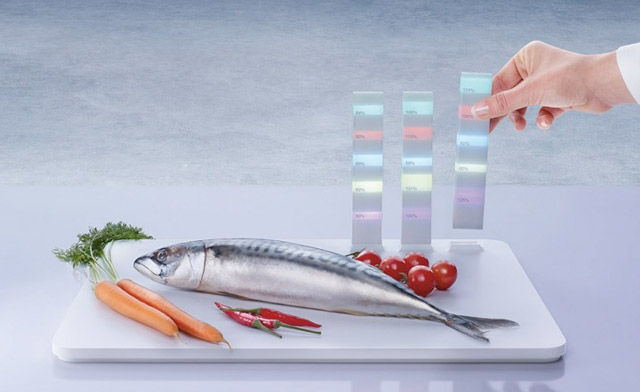
3dfood2In addition, companies like Philips and institutions like MIT have been working on the concept of food printers for many years. In Philip’s case, this research led to the creation of the Diagnostic Kitchen program. This led to ideas for a Food Printer, which was inspired by the concept of ‘molecular gastronomists’, chefs who deconstruct meals and then reassemble it in completely different ways.

In much the same way, a Food Printer would take various edible ingredients and then combine and ‘print’ them in the desired shape and consistency. The nutritional value and relevance of what was being ‘printed’ would also be adjusted based on input from the diagnostic kitchen’s nutrition monitor. If, for example, you were trying to carbo-load for an athletic event, wanted to build muscle, or lower your cholesterol, you could tweek the levels of carbs, protein, or fatty acids to suit your needs.

MIT_3DprinterAnd there’s the Cornucopia,  a 3D printer that was unveiled by MIT’s gastronomy geeks back in 2010. Here, a series of refrigerated food canisters provide the food ingredients, which are then deposited into a built-in mixer which delivers concoctions that can be either heated or cooled thanks to a temperature controlled print head. A touch screen allows users to dial in what they want, and adjust ingredients to get the desired end.

Granted, there are those who won’t likely see this as an appetizing prospect. But as Contractor notes, that’s probably because they haven’t tried the high-end stuff yet. As the technology improves, attitudes about printed food products are likely to change. What’s more, he also believes overpopulation might add a little incentive to the mix:

I think, and many economists think, that current food systems can’t supply 12 billion people sufficiently. So we eventually have to change our perception of what we see as food.

Quite right. When the world is bursting at the seems and so many people are forced to live together in close quarters, hardly anyone is likely to raise a fuss about assembled food. Not when the alternative is an empty belly or a planet that will collapse from the weight of so much farming and waste. So if you’re the kind of person who likes their meat, veggies and fruits to be farmed locally and organically, you may want to consider moving to the country!

And be sure to check out this concept video produced by NTO that showcases the future of 3D printing, which of course includes food production:


Source:
qz.com, popucity.net, geek.com

Climate Crisis: Population Growth in Coming Years

trafficWhen it comes to populations and environmental problems, cities are at the very heart of the issue. Not only are they where the majority of humanity lives, a reality which will only get worse as time goes on, they are also the source of most of our pollution, waste, and land use. People require space to live and work, as well as food, water and

Last year, the world’s population increased to 7 billion, which represents a seven-fold increase in the space of the last two centuries. What’s more, the proportion of people living in urban centers (as opposed to rural) shot up from 3% to almost half of the world’s people. This rate of population growth and redistribution is unprecedented, and is not likely to slow down anytime soon.

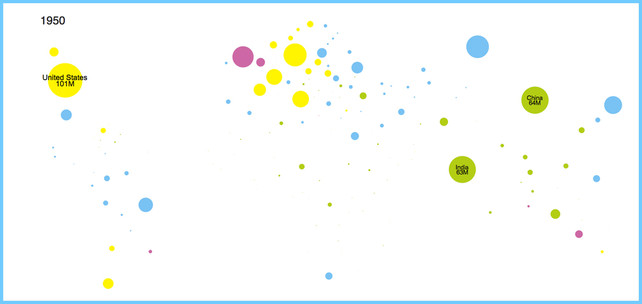
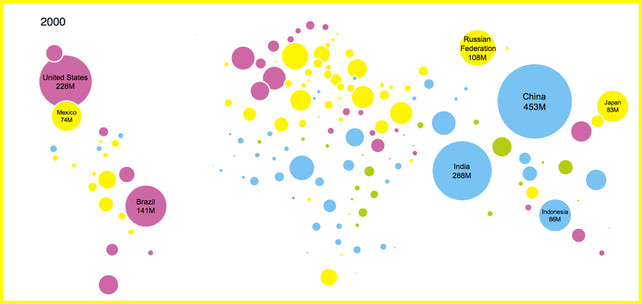
urbanworld_50Consider the following series of infographics which were released by Unicef with the help of the design studio Periscopic. Titled “An Urban World”, they illustrate the issues of population growth and distribution. This interactive, HTML5 visualization of the world covers the years of 1950-2050. But rather than showing our geographic boundaries, every country* is depicted only by their population living in urban environments.

As you can see, each country is represented by a circle that depicts the number of people living in urban environments. As these populations grow, the circles get bigger. And as urban populations get more dense, the circles shift from green to blue to yellow to fuchsia. Immediately, a glaring fact is made clear: the problem is getting worse and at an alarming rate.

urbanworld_2000In addition, there are several nuggets of info which are staggering and particularly worrisome. For example, by 2050, both China and India will have about a billion people living in cities alone. In addition, since the 1990s, more than 75% of the U.S. population has lived in cities. At one time, the US was an outlier in this regard, but found ourselves joined over the next two decades by France, Spain, the U.K., Mexico, Korea, Australia, and Brazil.

But of course, this growth need not be a bad thing. When all is said and done, humanity has a choice. One the one hand, these megacities can take the form of smartly scaled communities of loosely populated expanses and efficient agriculture. On the other, they could easily take the form of urban slums and underdeveloped countrysides that are stricken by poverty and filthy.

urbanworld_2050It’s a complex issue, no doubt about it, especially when you consider the flip side to the whole equation. As the saying goes, every new life means a new mouth to feed, but also a pair of working hands. What’s more, studies have shown that people living in cities tend to be far more energy efficient, and that energy surplus is usually directed toward more and more technological growth and innovation.

Seen in this light, the massive cities of the future could be hubs for the ongoing development of new energies and creative living solutions. And with more people living in large, connected, interdependent environments, the more business startups, ideas, and contributions were likely to get. Part of the reason we have seen so much progress in solar, piezoelectric motors, and bio-electricity is because of this trend. More growth will conversely mean more clean energy.

overpopulation Quite the paradox, really. Who knew people could be both the cause and solution to the world’s worst problem! In the meantime, feel free to head on over to the Unicef site and watch this interactive infographic. Just press play, and watch the cities of the world swell at the edges, competing for room on the page as they compete for room on this planet.

Also, be sure to take a gander at this infographic from BBC Future that demonstrates the current population of the world’s major cities per square meter, the projected population per square meter by 2050, and the livability rating of the city in question. They even provide some context at the bottom by showing the size of relative spaces – from prison cells to Olympic swimming pools, and comparing that to the average space an urban dweller enjoys.

city_spaces
Sources:
bbc.com, fastcodesign.com
, unicef.org

Climate Crisis: Living, Breathing Cities of the Future

future-city2The human race has been thinking the way it lives in the past few decades, due mainly to a number of challenges posed by climate change and resource development. This is not only an environmentally and socially responsible idea, its an absolute necessity given the sheer number of people that live in urban sprawl, and the many more that will need homes, sanitation, food and energy in the near future.

And a number of interesting concepts are being proposed. Using striking technological breakthroughs across multiple fields of study, designers are moving closer to making lightweight buildings that can move, and perhaps even think and feel. Instead of hard, polished building faces, emerging prototypes from some of the world’s research centers suggest future cities that would resemble living, breathing environments.

masdar_city1To break it down succinctly, urban environments of the future will be built of “smarter” materials, will most likely be constructed using advanced techniques – possibly involving robots or bacteria – and will be powered by greener, more sustainable means. Sanitation and irrigation will also be provided and involve a fair degree of recycling, and food will be grown in-house.

And while much of this will be accomplished with good old-fashioned plumbing, air vents, and electrical circuits, a good deal more could come in the form of structures that are made to resemble and even behave like living organisms. Might sound like a distant prospect or purely theoretical, but in fact many of these ideas are already being implemented in existing and planned cities around the world.

Scale_model_Masdar_cityFor example, the planned community of Masdar City in Abu Dhabi, designer Alexander Rieck has helped create a vast central cluster of opening and closing solar powered “sunflower” umbrellas that capture the sun’s rays during the day and fold at night, releasing stored heat in a continual cycle. In addition, the concept of the Wind Stalk is being pursued to generate wind-farms which don’t rely on turbines, and look just like standing fields of grass.

Another project comes from the American designer Mitchell Joachim of Terreform ONE (Open Network Ecology), who’s plans for a vast site covering Brooklyn’s Navy Yard call for the engineering of living tissues into viable buildings. This would involve concepts like his “living tree house” which involves building a human habitat by merging the construction process with the surrounding environment.


Such a project not only presents a way of building structures in a way that is far more energy-efficient, but also fully-integrated into the ecology. In addition, they would even be able to provide a measure of food for their inhabitants and be able to clean the local air thanks to the fact that they are made from carbon-capturing trees and plants.

And there was this project by Near-Living Architecture which was recently shown at the London Building Centre Gallery. Here we see a floating canopy of aluminum meshwork fitted with dense masses of interconnected glass and polymer filters that houses a carbon-capture system that works in much the same way that limestone is deposited by living marine environments.


Within each cell of the suspended filter array, valves draw humid air through chemical chambers where chalk-like precipitate forms, an incremental process of carbon fixing. This is not only an example of how futures of the city will help remove pollution from the air, but how buildings themselves will merge biological with artificial, creating a sort of “biomimetic building”.

What it all comes down to is breaking with the conventional paradigm of architecture which emphasizes clean, linear structures that utilize idealized geometric shapes, highly processed materials, and which create sanitary artificial environments. The new paradigm calls for a much more holistic approach, where materials are more natural (built of local materials, carbon, or biomimetic compounds) forms are interwoven, and the structures function like organics.

future_city1All of this cannot come soon enough. According to a recent UN report, three-quarters of humanity will live in our swelling cities by 2050.The massive influx to our planet’s urban populations could create a whole host of problems – from overcrowding to air pollution, extra stress on natural resources and loss of habitats to grow more food. The most obvious solution to this problem is to make sure that these future cities are part of the solution, and not more of the same dirty living spaces that generate megatons of waste and pollution year after year.

Hope you’re enjoying this “Climate Crisis” segment, and that its not getting anybody down. Granted, its a heavy subject, but crises have a way of bringing the best and brightest people and ideas to the fore, which is what I hope to present here. By addressing our present and future needs with innovative concepts, we stand to avert disaster and create a better world for future generations.

Up next, I plan to take a look at some of the air-cleaning building designs that are currently being produced and considered. Stay tuned!

Sources: bbc.com, (2)

Powered By The Sun: Solar-Plane Heads to Washington

solar_power1It’s known as the Solar Impulse, a solar-powered airplane that for the past few weeks has been accomplishing an historic first. After touching down at Washington’s Dulles International Airport, the plane and its pilot – André Borschberg, co-founder and CEO of Solar Impulse – completed the fourth leg of their historic flight that has taken them across the US.

The plane took off from Lambert-St.Louis International Airport early Friday morning with Borschberg at the controls. But before heading all the way to Washington, the Solar Impulse made a quick pit stop at Cincinnati Municipal Lunken Airport to avoid “challenging weather.” Bertrand Piccard, pilot and Solar Impulse’s other co-founder, took over the aircraft in Cincinnati and completed the flight to Washington Dulles International Airport on the following day.

solar_impulse_washThe Solar Impulse HB-SIA plane started its journey across America at Moffett Field in Mountain View, California, on May 3. On a mission to promote the importance of clean technology, the solar-powered plane made stops in Phoenix, Dallas, and St. Louis. Having completed the leg to DC, the fifth and final leg of the flight will take place early next month and will end at JFK Airport in New York.

The aircraft is powered by 12,000 solar cells that are built into its wings. These in turn charge its lithium batteries, enabling the plane to fly both day and night for up to 26 hours at a stretch without any on-board fuel. With a wingspan of just over 63 meters (208 feet) and a weight of 1600 kilos (3,527 pounds), it is as wide as a large passenger jet and weighs about as much as a small car.

Andre Borschberg, Bertrand PiccardOnce completed, this flight will not only enter the history books as the longest continuous flight done using clean energy, it will also demonstrate the usages of solar power. And the applications which it will promote are extensive, ranging from solar-powered cars to houses, appliances, devices, and just about anything else… under the sun. I’m sorry, bad pun!

Source: news.cnet.com, (2)

Latest in 3D Printing: Invisibility Cloaks and Mind-Controlled Printers

anti-grav3d3-D printing continues to grow by leaps and bounds, being used to generate anything from components and models to complex machines and living tissues. And as the technology improves, the applications continue to grow and coalesce with developments made in other fields of scientific research. And in the last month alone, there have been a number of announcements that have both scared and impressed.

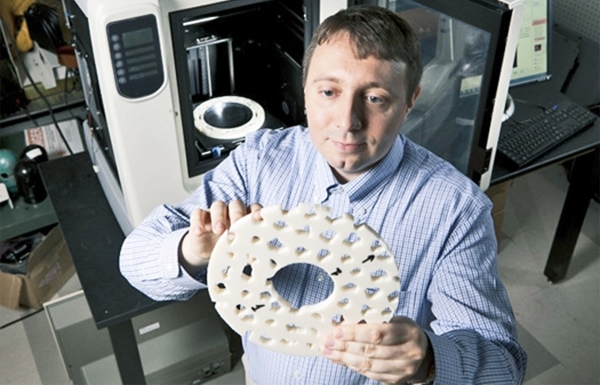
The first came from Duke University, where engineers have made yet another breakthrough. Seven years ago, they demonstrated their first “invisibility cloak” in a laboratory. Now, thanks to 3D printing, the fabrication process is a lot more accessible. And while invisibility might be a bit of a misnomer, that’s precisely what this object does as far as microwave radiation is concerned.

3dprinted_invisibilityThe object, which resembles a frisbee, has a large hole in the center, with seemingly random holes in the disc. The size, shape, and placement of these holes have actually been determined to disguise any object placed in the center hole from microwave beams, making it appear as though the object isn’t there. At present, the invention is limited in terms of practical use, but the design team believes this object has great potential.

According to Yaroslav Urzhumov, an assistant research professor in electrical and computer engineering at Duke, the technology could be used to create a polymer-based cloaking layer just 1 inch thick, wrapped around a much larger object. From this, they hope to eventually be able to create a material that will operate in higher wavelengths, including the visible light spectrum.

INVISIBILITY-CLOAKMeanwhile, the team’s creation of the disc using a 3-D printer means the technology is now much more accessible. Urzhumov went as far to say the he believes that anyone with access to a 3D printer will have the ability to create something similar at home. In time, this could mean anyone would have the ability to create a full-spectrum invisibility cloak at home too. Good news for anyone looking to hide from surveillance drones or cameras!

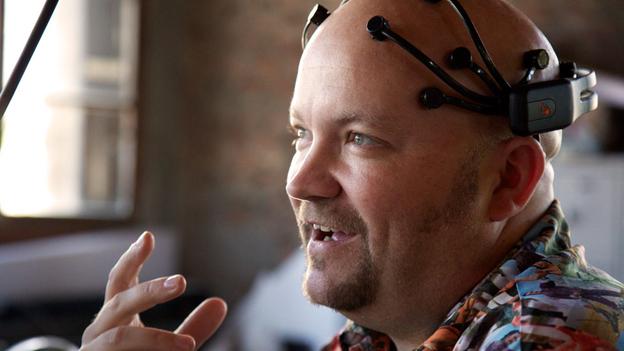
The second bit of news is even more impressive, and potentially frightening. It comes to us from Santiago Makerspace, a technology and design studio located in the heart of the Chilean capital where a designer created a 3D printed object using only their thoughts. The designer in question was George Laskowsky, Chief Technical Officer of Thinker Thing, a Chilean start-up that is developing a mind-controlled 3D printing system.

3dprinted_thought1The purpose behind Laskowsky’s work is simplification: while 3D printing has been growing and making design and fabrication easier and more accessible. However, mastering the design software is still a difficult challenge, especially for young children. That’s where Tinker Thing comes in, which seeks to develop the means to help children unleash their inner creativity.

Bryan Salt, CEO of Thinker Thing, expands on this, stating that there has not been enough work done on adapting the software for popular use. His company is looking to make it open and accessible so that it can be used to create items for one the largest markets for consumer products – children’s toys:

What is the point of these printers if my son cannot design his own toy? I realised that while there were a lot of people talking about the hardware of the printer no-one really seemed to be talking about how to actually use it.

3dprinted_toys1The software that makes this possible – Emotional Evolutionary Design (EED) – works by interpreting its users’ thoughts to make fantastical designs for toys and other objects. As part of the Monster Dreamer Project, Chilean children will get the first opportunity to try it out during tour of schools in the country at the end of this month.

Combined with Emotiv EPOCH (an EEG headset), a computer and a 3D printer, the children running Monster Dreamer will be presented with a series of different body shapes in bubbles. These will mutate randomly, with built-in rules preventing them from becoming too abstract. As different brain states such as excitement or boredom generate specific patterns of brain activity, the computer can identify the shapes associated with positive emotional responses.

3dprinted_toysThe favored shapes will grow bigger on the screen, while the others shrink. The biggest shapes are combined to generate a body part, and the process is repeated for different body parts until the monster is complete. The final result should be a unique 3D model that is ready for printing as a solid object. In essence, a child will create a tailor-made toy based solely on their emotional reactions to what they see.

Amazing the direction things are taking, isn’t it? One of the greatest appeals of 3D printing is the way which it is making technology and industry far more accessible and open to people.What began with items that would only interest engineers and design firms is now expanding to include just about any type of consumer product we can imagine, and comes with the ability to tailor make them at home, giving the average consumer immense control over the process.

future-city3Though an individual printer may still cost more than the average person is willing to spend, in time, they will likely come down in price and become like any other computer accessory – i.e. printers, faxes, modems, wireless routers. What’s more, we are likely to see a situation where communal labs, such as those found in a university or internet cafe, come equipped with one in the next few years.

In a way, it would not be a fevered dream to imagine that this could very well be the curtain raiser for a new age, an age when the means of production is literally in the hands of every person. If we are capable of printing food and buildings as well as toys and components, we would also be looking at an age when scarcity is a thing of the past and society is truly democratic and open. And all without the need for violence and forcible redistribution…

I can’t tell you how preferable it is to think about this stuff and not the current pace and effects of Climate Change. Sometimes, the only way to have hope for the future is to keep things positive and contemplate the happier possibilities. Here’s hoping smarter heads and brighter prospects prevail!

Sources: cnet.news.com, bbc.com

News 2050: Towers, Hypersonic Jets, Digital Eyes

BrightFuture Came across these in a recent research stint. It’s from BBC Future’s “What if?” section and is segment that deals with the coming decades, entitled News 2050. In a series of mock newscasts, they address likely scenarios from the future, looking at everything from emerging technology to environmental, social and political issues.

Here’s a sampling of what they’ve covered so far:

The world’s first 10,000 meter tower:

Hypersonic flights take-off:

Digital Eye Unveiled:


Pretty cool huh? And fun and educational. I’ll be looking for more of these segments from now on…