Tweeting Aliens: The Lone Signal Array

gliese-581-eIn what could be called a case of serious repurposing – beating swords into plowshares and so forth – or something out of science-fiction, a crowdfunded project has sought to turn a Cold War era dish into a deep-space communications array. This array will send messages to that’s relatively near to us, and potentially inhabited. And assuming anything sufficiently advanced lives there, we could be talking to them soon enough.

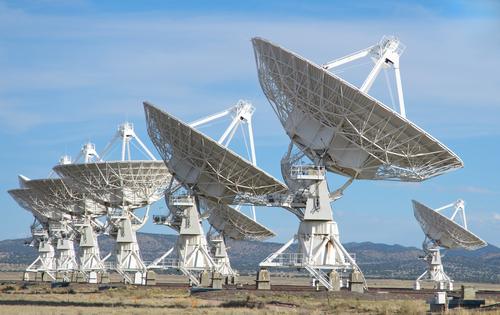
dishantennaThe project is known as Lone Signal, a crowdfunded effort to send a continuous stream of messages to the folks at Gliese 526, a red dwarf star 17.6 light-years away in the constellation of Bootes (aka Wolf 498). And the dish with which they intend to do this is known as the Jamesburg Earth Station, a nuke-proof satellite relay station in California that dates from the 1960s and even helped broadcast images of Neil Armstrong on the moon.

Long Signal, it should be noted, is the brainchild of The Blue Marble Space Institute of Science, non-profit virtual research institute that networks scientists from across the globe and multiple disciplines for the purpose of expanding the boundaries of knowledge, science and astronomy and promoting an open dialogue on the subject of exploration and settlement.Towards this end, they arranged for a 30-year lease on the Cold War-era dish (for a cool $3 million) and set up a project that will allow participants who contribute money to send a personalized message into space.

exoplanetsUltimately, they plan to direct two beams at Gliese 526: a continuous wave with fundamental physics laws and basic information about Earth, and another consisting of crowdsourced greetings. The project is open to anyone and a series of initial short message (the equivalent of a 144-character tweet) will be available free of charge. Subsequent messages, images, and longer greetings, however, will cost money (about $1 for four texts) that will help the project fund itself.

The project’s website also lets participants track their messages and share them via social media, dedicate messages to others, and view signal stats. In an interview with Universe Today, Lone Signal co-founder Pierre Fabre, told people:

Our scientific goals are to discover sentient beings outside of our solar system. But an important part of this project is to get people to look beyond themselves and their differences by thinking about what they would say to a different civilization. Lone Signal will allow people to do that.

Indeed. Nothing like the prospect of facing another life form, a potential space invader even, to make people forget about all their petty bickering!

Gliese_581_-_2010As our knowledge of the universe expands, we are becoming aware of the existence of more and more exoplanets. Many of these exist within the Habitable Zones of their parent star, which means two things. On the one hand, they may be candidates for potential settlement in the future. On the other, they may already be home to sentient life. If said life is sufficiently advanced, its entirely possible they could be looking back at us.

For some time, the human race has been contemplating First Contact with potential extra-terrestrial life, which was the very purpose behind the creation of NASA’s SETI (Search for Extra-Terrestrial Intelligence) program in 1961. The Pioneer space probes were another attempt at making contact, both of which carried small metal plaques identifying their time and place of origin for the benefit of any other spacefarers that might find them in the distant future.
SETIFollowing in that tradition, Voyager 1 and 2 space probes contained even more ambitious messages, otherwise known as the Golden Record. These phonograph records – two 12-inch gold-plated copper disks – contained both sounds and images selected to portray the diversity of life and culture on Earth that would give any civilization that found them a good idea of what the people of Earth were capable of.

The contents of the records were selected for NASA by a committee chaired by Carl Sagan of Cornell University, and consisted of 115 images and a variety of natural sounds – surf, wind, thunder, birds, whales, and other animals. To this they added musical selections from different cultures and eras, and spoken greetings from Earth-people in fifty-five languages, and printed messages from then-President Carter and U.N. Secretary General Waldheim.

golden_record_cover_smIn this respect, Lone Signal represents the latest step in promoting contact and communication with other life forms. And in keeping with the trend of modern space exploration, it is being opened to the public via crowdfunding and personalized messages. But unlike SETI, which lost its government funding in 1995 and had to turn to private supporters, crowdfunded space exploration is something directly accessible by all citizens, not just corporate financiers.

Update: The Lone Signal project is now operational and on 9:00 PM EDT Monday, June 17 at a press event in New York, the team announced the transmission of the first interstellar message. The message was sent by none other than Ray Kurzweil, noted Futurist and science guru. That message was then read during his welcome talk to the Singularity University class of 2013, from the Computer History Museum in Mountain View, California:

Greetings to Gliese 526 from Singularity University. As you receive this, our computers have made us smarter, the better to understand you and the wisdom of the universe.

What he means by this is that by the time the message is recieved – roughly 18 years from now, assuming it ever is – humanity is likely to have taken the first steps towards merging our brains with computers via biotech, artificial intelligence, or other means of computer-assisted brain augmentation. At least, that’s what guys like Kurzweil hope for.

Other “alpha beamers” — including Dan Aykroyd, Alicia Keys, and Jason Silva — also sent beams Monday night. And for the time being, anyone can send a “crowdsourced” 144-character beam and pic. Better get on it before they start charging. If texting and phone rates are any indication, the price is likely to go up as the plan improves!

And be sure to enjoy this promotional video from Lone Signal:


And also check out this time-lapse video of the Jamesburg Earth Station in operation:

Sources: cnet.news.com, universetoday.com, voyager.jpl.nasa.gov, bmsis.org, kurzweil.net

3D Printing to Turn Aircraft Carriers Into Mobile Factories

nimitz-class-carrier-640x424It’s no secret that NASA has turned to 3D printing as a way of opening up new frontiers of space exploration and resolving potential problems – like building moon bases or feeding astronauts. And now, it seems that the only other organization that can rival the space agency in terms of funding and scale – the US Navy- has something similar in mind.

The US Navy already boasts most of the world’s largest moveable structures – the Nimitz-class aircraft carrier taking the cake. Whats more, modern aircraft carriers are basically floating cities already, complete with conventional manufacturing facilities to provide a good portion of what the crew might need while at sea. It therefore makes perfect sense to incorporate a high-quality 3D printer into the mix.

F_35_navyWhile the ultimate goal may be the ability to print actual replacement fighters and ordinance, the current plan is to incorporate printers that can print off replacement parts and possibly even small drones. With the technology already in place, it is not difficult to imagine a carrier, or perhaps even a large land vehicle, outfitted with a high-quality 3D printer, several tons of raw materials, and a few pre-fabricated cameras and circuit boards.

What’s more, this could also make transport of basic supplies more efficient, holding powder and casing materials separately and combining them to make bullets and munitions as needed, rather than storing them in a way that takes up vast amounts of space. Researchers at Virginia Tech even told the Armed Forces Journal that they believe 3D printing could produce high-quality propellants themselves – meaning an aircraft carrier could produce its own supplies of fuel and missiles.

cyber-war-1024x843This idea drives home a number of things that are likely to become the mainstay with military technology. One is the increasing gap between the military haves and have-nots, and the increasing importance of cyber warfare in the modern world. No army or insurgent militia is likely to be able to withstand a mobile drone factory, nor is a nation that does not possess the technology be able to compete with one that does.

At the same time, simple defects, caused by cybernetic intrusion, could render such a mobile factory useless and counterproductive. In any future arms race between nations where 3D manufacturing is part of the arsenal, hacking will certainly be a factor. And last, but certainly not least, the ability to independently produce components, weapons and tools also opens up the possibility to create fully-autonomous ships and bases, complete with recycling programs that can turn waste into reusable raw material.

Cuban-Missile-CrisisSuch are the concerns of today’s military and all those who need to plan for the future. And as always, the prospects are frightening for all – not only because they make the nature of future conflicts uncertain, but because any serious advancement on one side is likely to cause others to scramble to get their hands on it as well. As any student of history knows, arms races lead to escalation and increased tension, and those rarely end well!

Source: extremetech.com

The Future is Here: The Cybernetic “Third Eye”

neil_harbissonAchromatopsia is a rare form of color blindness that effects one in thirty-five thousand people. One such individual is Neil Harbisson, who was born with the genetic mutation that rob him of the ability to see the world in anything other than black and white. But since 2004, he has been able to “hear” color, thanks to a body modification that has provided with him with a cybernetic third eye.

EyeborgThis device is known as the “eyeborg”, and given that it constitutes a cybernetic enhancement, some have taken to calling Harbisson a genuine cyborg. For others, he’s an example of a posthuman era where cybernetic enhancements will be the norm. In either case, the function of the eyeborg works was described in the following way in an article by Nautilus entitled “Encounters with the Posthuman”:

It transposes color into a continuous electronic beep, exploiting the fact that both light and sound are made up of waves of various frequencies. Red, at the bottom of the visual spectrum and with the lowest frequency, sounds the lowest, and violet, at the top, sounds highest. A chip at the back of Harbisson’s head performs the necessary computations, and a pressure-pad allows color-related sound to be conducted to Harbisson’s inner ear through the vibration of his skull, leaving his outer ears free for normal noise. Harbisson, who has perfect pitch, has learned to link these notes back to the colors that produced them.

Harbisson’s brain doesn’t convert those sounds back into visual information, so he still doesn’t know exactly what the color blue looks like. But he knows what it sounds like. As he explained to an audience at a TED Talks segment, he used to dress based on appearances. Now, he dresses in a way that sounds good. For example, the pink blazer, blue shirt and yellow pants he was wearing for the talk formed a C Major chord.

neil_harbisson1This may sound like an abstract replacement for actual color perception, but in many ways, the eyeborg surpasses human chromatic perception. For example, the device is capable of distinguishing 360 different hues, he can hear ultraviolet and infrared. So basically, you don’t need a UV index when you have the cybernetic third eye. All you need to do is take a look outside and instantly know if you need sunblock or not.

These and other extension of human abilities are what led Harbisson to found the Cyborg Foundation, a society that is working to create cybernetic devices that compensate for and augment human senses. These include the “fingerborg” that replaces a finger with a camera, a “speedborg” that conveys how fast an object is moving with earlobe vibrations and–according to a promotional film–a “cybernetic nose” that allows people to perceive smells through electromagnetic signals.

steve-mann1In addition to helping people become cyborgs, the foundation claims to fight for cyborg rights. While this might sounds like something out of science fiction, the recent backlash against wearers of Google glasses and the assault on Steve Mann are indications that such a society is increasingly necessary. In addition, Harbisson wants to find ways to fix devices like his eyeborg permanently to his skull, and recharge it with his blood.

For more information on the eyeborg and Project Cyborg, check out Harbisson’s website here. Neil Harbisson’s Project Cyborg promotional video is also available on Vimeo. And be sure to watch the video of Neil Harbisson at the TED Talks lecture:


Sources:
fastcoexist.com, nautil.us, eyeborgproject.com

World’s Most Advanced Microscope – Now In My Hometown!

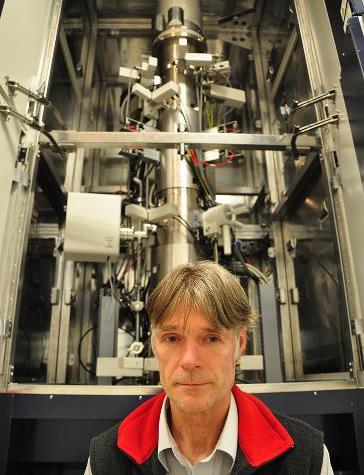
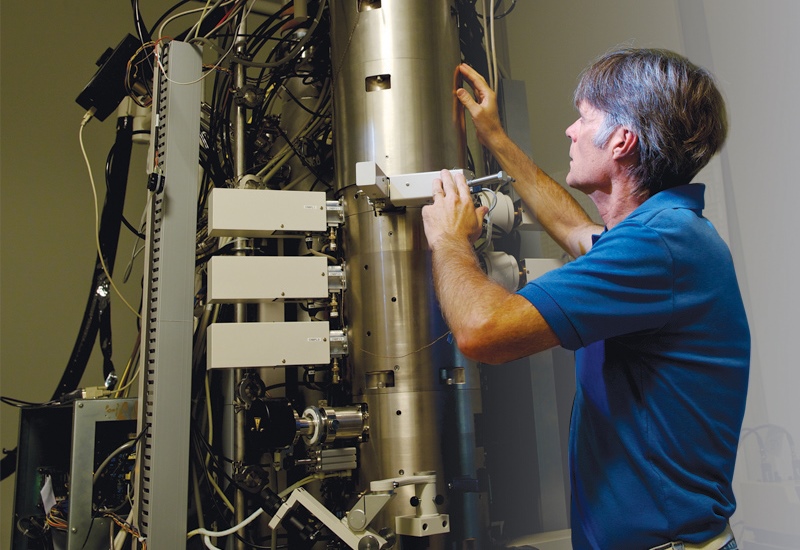
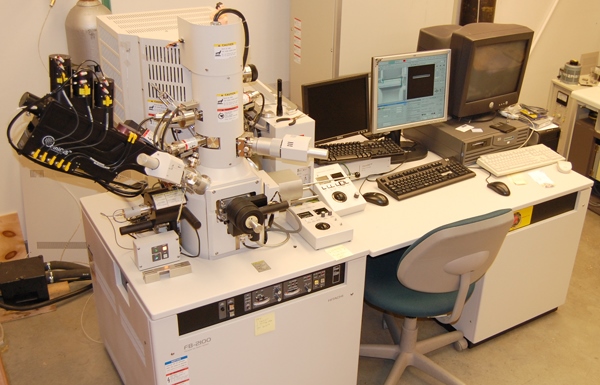
Uvic_microLess than one month ago, the University of Victoria – located just 20 km from where I live – made history when its Scanning Transmission Electron Holography Microscope (STEHM) went online and began taking pictures. The microscope, which is located in the vault beneath the University, conducted its first operation by zapping a fleck of gold and producing the world’s most highly magnified image.

The nondescript shot of gold atoms proved what many were already hoping for – that his STEHM is indeed the most powerful in the world, even during its “tuning” phase. Built by Hitachi High Technologies Canada, the STEHM is a one-of-a-kind machine and is the highest-resolution microscope ever built, designed to allow researchers to see things at a magnification up to 20 million times larger than the human eye can see.

Uvic_micro2Apparently, the image of the gold atoms resolved at 34 picometres, thus breaking the record for highest resolution shot ever made by an electron microscope. Previously, this record was held by the This beats out the Lawrence Berkley National Laboratory in California which took an image at a resolution of 49 picometres. A picometre, it should be noted, is a trillionth of a meter, and a gold atom is about 332 picometres in diameter.

Rodney Herring, a professor of mechanical engineering and director of UVic’s Advanced Microscopy Facility, had this to say about the image in an interview with Saanich News:

For me it was a relief. I’d been telling everybody this could potentially have the best resolution and be the most powerful microscope in the world. But it wasn’t proven yet. Now we’ve got information down to 34 picometres and we aren’t done yet. We are still tuning the lab.

Uvic_micro3With the tuning and testing phase complete, Herring and his associates launched the microscope this month. The university had hoped to open the lab to outsider researchers this past winter, but the microscopes assembly and calibrations have been so maddeningly complicated that any such plans have been stalled and it only recently became operational. However, as Herring noted, tons of researchers are already lined up and looking to use it.

Literally everyone- from engineers, physicists, and chemists, to biologists and medical researchers – are looking to use the microscope to advance the sciences of medical and environmental diagnostics, communications, computers, alternative energy and manufacturing. However, the potential scientific breakthroughs for such a machine are yet to be fully contemplated, and present many exciting possibilities.Uvic_micro1All told, this machine will be able to probe and create 3D images of items like brain neurons and their synapses and muscle tissue, or probe microchip circuitry assembled at nearly the atomic level. Herring said the machine could create “pico technology,” where devices would be made one atom at a time.

This research would prove to be a boon for many areas of science, but especially for nanotechnology. Chemistry professor Alex Brolo oversees nanotechnology development related to items like medical sensors and solar cells at UVic, and said the STEHM will be critical in creating more precise devices, and without having to use powerful electron microscopes elsewhere in Canada.

solar_beadsAnd considering that more and more technology is being scaled at the nano level, any advancements made in this field would be both lucrative and incredibly significant. As it stands, the STEHM is the only microscope of its kind because of its complexity, and because of this, Hitachi has indicated that it does not plan to manufacture another like it anytime soon.

All of this puts the Advanced Microscopy Facility, and the University of Victoria in general, in a pretty comfortable position. For what could be years to come, they will have the most advanced microscope in the world at their disposal and be able to take part in some serious scientific advances. What’s more, they will surely be suffocated by petitions from research labs and scientists looking to get access to it.

Sometimes, it pays to have the most powerful microscope on the block!

Sources: vicnews.com, communications.uvic.ca

Food From Space: NASA’s 3D Pizza Printer

3DpizzaNASA has made some buzz with its announcement to print 3D pizza in space. And while this might sound like an awesome and appetizing use of the pioneering technology, it also has some pretty exciting implications for space exploration. For decades, astronauts have relied on freeze dried and thermostabilized food to meet their nutritional needs. But with 3D printing being considered, astronauts of the future could be using something akin to a replicator out of Star Trek.

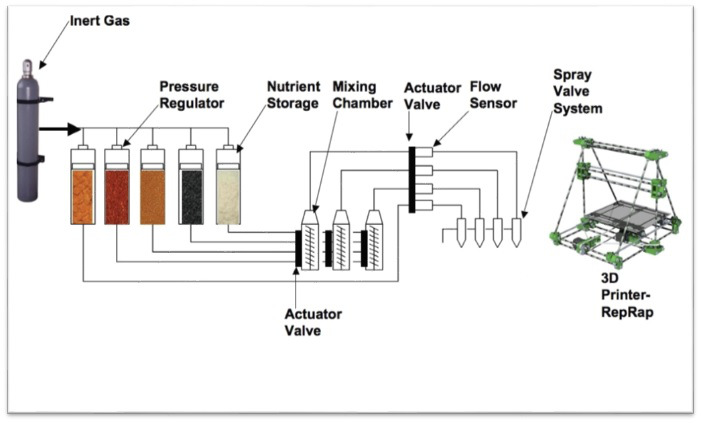
Earlier this month, Quartz broke the news that NASA’s Systems & Materials Research Corporation received a $125,000 grant to spend six months building a prototype of a 3-D food printer- one that will be able to print out a tasty pizza before venturing on to other food items. According to his NASA proposal, the printer spits out starches, proteins, fats, texture, and structure, while the inkjet sprays on flavor, smell, and micronutrients.

3d-pizza_printerThe pizza printer is the brainchild of Anjan Contractor, a mechanical engineer at the Systems & Materials Research Corporation who has long worked on 3-D printing technologies. In an interview with Quartz, he explained the process:

It works by first “printing” a layer of dough, which is baked at the same time it’s printed, by a heated plate at the bottom of the printer. Then it lays down a tomato base, “which is also stored in a powdered form, and then mixed with water and oil,” says Contractor. Finally, the pizza is topped with the delicious-sounding “protein layer,” which could come from any source, including animals, milk or plants.

As already mentioned, astronauts currently rely on food that is freeze dried prepackaged so that it can be eaten in microgravity. Astronauts get supplies when necessary from the International Space Station, where cargo vehicles transport their “fresh” food. But future astronauts who go to more distant places, like Mars, won’t be able to resupply. And that’s where the Advanced Food Project really comes into play.

pizzaWhen considering missions to Mars and farther into space, multiple issues need to be addressed. Grace Douglas, an Advanced Food Technology Project scientist at NASA, explains what these are and how 3D food can address them:

This is the only food that the crew members will have, so it needs to maintain its nutrition content for the length of the mission, and it has to be acceptable. If they don’t want to eat it, they won’t eat enough… 3-D food printers are looking at providing powdered forms of ingredients, and these would not be processed ahead.

That’s a good thing: minimally processed food has more nutrients, and it’s tastier. It also allows for even more options than what’s available today. And to address another key problem – printing in microgravity – NASA already has the option of using some of the more advanced prototypes.

anti-grav3d2Consider the Mataerial, a recently-developed 3D printer that is capable of printing in zero-gravity. NASA is exploring other processing technologies outside of the 3-D printing realm as well. High-pressure processing, which uses high pressures with a low-heat treatment to sterilize foods, is one option. Another is microwave sterilization–a process that uses high-heat treatments for a shorter period of time.

These latter technologies would make fresh foods accessible by ensuring that they are perfectly sterile, thus removing the need for food that needs to be dried or processed in advance. While all three technologies are still in the early phases of development, Douglas and others expect that they will off the ground and running by the time a manned mission to Mars is being planned.

And space is really just the tip of the iceberg when it comes to printing food. Here on Earth, it is a potential solution for ending world hunger. But that’s another, very interesting story. Stay tuned for it…

In the meantime, watch this video of a 3-D printer creating chocolate:


Sources:
fastcoexist.com, qz.com

NASA’s Vision: Robots to Help Mine Asteroids

asteroid_mining_robotIn a recent study, NASA shared a vision that sounds like something out of a science fiction novel. Basically, the plan calls for the creation of robots that could be sent to a nearby asteroid, assemble itself, and then begin mining the asteroid itself. The scientists behind this study say that not only will this be possible within a few generations of robotics, but will also pay for itself – a major concern when it comes to space travel.

A couple of factors are pointing to this, according to the researchers. One, private industry is willing and able to get involved, as attested to by Golden Spike, SpaceX and Planetary Resources. Second, advances in technologies such as 3-D printing are making off-world work more feasible, which can be seen with plans to manufacture a Moon base and “sintering”.

asteroidsBut also, humanity’s surveys of space resources – namely those located in the asteroid belt – have revealed that the elements needed to make rubber, plastic and alloys needed for machinery are there in abundance. NASA proposes that a robotic flotilla could mine these nearby space rocks, process the goods, and then ship them back to Earth.

Best of all, the pods being sent out would save on weight (and hence costs) by procuring all the resources and constructing the robots there. They caution the technology won’t be ready tomorrow, and more surveys will need to be done of nearby asteroids to figure out where to go next. There is, however, enough progress to see building blocks. As the agency stated in their research report:

Advances in robotics and additive manufacturing have become game-changing for the prospects of space industry. It has become feasible to bootstrap a self-sustaining, self-expanding industry at reasonably low cost…

asteroid_belt1Phil Metzger, a senior research physicist at NASA’s Kennedy Space Center, who led the study, went on to explain how the process is multi-tiered and would encompass several generations of progress:

Robots and machines would just make the metal and propellants for starters… The first generation of robots makes the second generation of hardware, except the comparatively lightweight electronics and motors that have to be sent up from Earth. It doesn’t matter how much the large structures weigh because you didn’t have to launch it.

A computer model in the study showed that in six generations of robotics, these machines will be able to construct themselves and operate without any need of materials from Earth.

asteroid_foundryAt least two startups are likely to be on board with this optimistic appraisal. For example, Deep Space Industries and Planetary, both commercial space companies, have proposed asteroid mining ideas within the past year. And since then, Planetary Resources has also unveiled other projects such as a public space telescope, in part for surveying work and the sake of prospecting asteroids.

And this latest research report just takes thing a step farther. In addition to setting up autonomous 3D manufacturing operations on asteroids, these operations would be capable of setting themselves up and potentially upgrading themselves as time went on. And in the meantime, we could look forward to a growing and increasingly complex supply of manufactured products here on Earth.

Source: universetoday.com

The Future is Here: Lab-Grown Burgers!

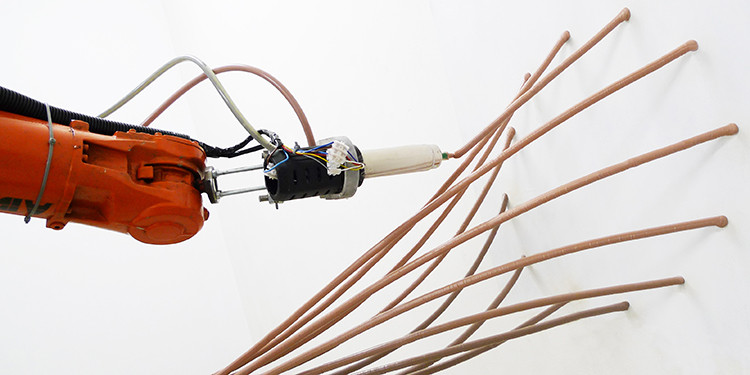
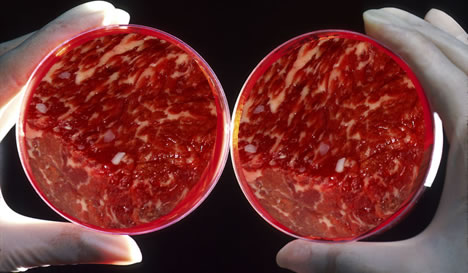
labmeat1Artificially-created meat has long been the dream of futurists and researchers, a means of solving world hunger and improving health at the same time. Efforts to create it using 3D printing are coming along, but another research firm has offered a different approach – in vitro grown meat. And at the same time, this lab-grown alternative offers consumers the chance to improve their health by eating something more nutritionally balanced.

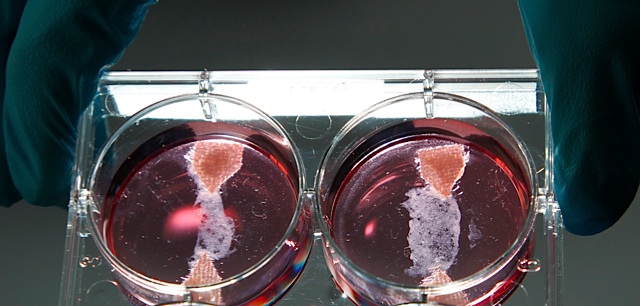
The breakthrough comes to us from a group of researchers led by Mark Post, a Vascular Physiology professor at the University of Maastricht in the Netherlands. To make the burger, he and his team began with a kind of stem cell called a myosatellite cell that is taken from a cow’s neck. These cells are then placed in growth medium that the researchers have formulated to allow them to grow and divide. The resulting cells are grown into 20,000 strips of muscle tissue which are assembled into beef.

labmeat0This is an encouraging development for a number of reasons. First of all, a 2011 joint-research study between the University of Oxford, University of Amsterdam, and a number of environmental research organizations, cultured meat required up to 45 percent less energy and up to 96 percent less water to produce, generated up to 96 percent less greenhouse gases and, without animal herds of flocks to tend to, requires 99 percent less land.

Second, Post’s recipe for a lab-grown beef burger contains no fat, compared to its rather fatty organic  counterpart. And while fat is responsible for giving a burger much of its taste, Post insists that his recipe tastes “tastes reasonably good.” In the coming weeks Post plans on cooking his burger at an event in London where participants will try the in vitro meat – adding salt and pepper to taste.

labmeatHowever, the process is not completely devoid of reliance on actual cows. As already mentioned, the original stem cells that make the process possible have to come from a living cow. In addition, the muscle cells were grown in fetal calf serum, a necessity at this point since the process is still in its infancy. It’s hoped that in the future the burger can be produced without any material of animal origin.

And of course, the technology needs to become way more scalable before it can be considered viable. For example, between the cost of extracting the fetal cow tissue and turning it into meat in a lab, a single burger took roughly $325,000 to produce. But ultimately, this feat was all about pushing the boundaries and challenging notions of what is possible.

3d_meat In addition, as technology improves and the process is refined, costs will come down. And as Post said in an interview, the point of developing this process was to demonstrate that it can be done:

Let’s make a proof of concept, and change the discussion from ‘this is never going to work’ to, ‘well, we actually showed that it works, but now we need to get funding and work on it.’

While it may be several more years before in vitro burgers replace old fashioned farmed burgers, but the feat is a delicious victory for environmentalists and scientists alike in search for alternate ways to feed the world’s addiction to meat.

Funny, all this talk of lab-grown meat is giving me a sense of deja vu. Didn’t somebody write a story about this exact kind of thing not that long ago? Oh yeah… it was me! Well that’s just great, now I got to sue J.J. Abrams and the University of Maastricht? Lord, why do you torment me so?

Sources: singularityhub.com, pubs.acs.org

The Future is Here: The Electric Hover-Bike!

flyingbikeInventors Chris Malloy and Mark DeRoche turned quite a few heads back in 2012 when they displayed their hoverbike prototypes to the world. But, you know how it is with cool, new ideas. Its only a matter of time before  it catches on and others are coming up with their own versions of it. And that’s exactly what happened at Prague convention center this week, where a design firm unveiled their own concept of the hoverbike.

The design firms goes by the name of Design Your Dreams Flying Bike, an amalgamation of three Czech engineering firms who joined together to fulfill a shared childhood dream. Last June, the firm shared their design specs for the electric bike which would be capable of vertical takeoff and hover-flight. And less than a year later, their efforts have resulted in something functional, and very, very cool!

flyingbike_conceptGranted, the prototype isn’t quite as sleek and sophisticated as the original drawings themselves. But the project is still in the early phases, and already it has shown that the concept works. Using six horizontally mounted propellers, the 220-pound electric bike was able to lift itself into the air while an engineer on the ground controlled it with a handheld remote.

According to Milan Duchek of Design Your Dreams, the prototype will fly remotely with a dummy on the seat for now, but a version that can be piloted by a human will be ready this fall. In addition, the design team said that the final product should be as easy to maneuver as a regular bicycle, but will also have the ability to fly for between three and five minutes, using solely electric power. It will include “foolproof” stability control for takeoff and landing, and a fly-by-wire system that isn’t susceptible to outside interference.

speeder_bike1 Though the prototype bike looks like a homemade version of something out of Star Wars, the designers told the press that their inspiration came from two Czech works of science fiction: a series of books by Jaroslav Foglar about a boy with a flying bicycle, and a 1966 Karel Zeman film based on a Jules Verne novel.

Bad news though: even when the flying bike is complete, it won’t be available for commercial use. According to the engineers who built it, the purpose of the project was to bring a flying bike to fruition to see if the technology would work. Or as DYD engineer Ales Kobylik said:

Our main motivation in working on the project was neither profit nor commercial interest, but the fulfillment of our boyish dreams.

Hard to argue with that kind of logic. But for those who absolutely must own one, early indications put the cost of the prototype in the low five-figures – say, anywhere from $10,000 to $30,000. Make the team an offer, we’ll see what they have to say 😉 In the meantime, check out this video of the hoverbike performing a demonstration in Prague:


Sources:
wired.com, (2)


Towards a Cleaner Future: The Strawscaper and The Windstalk

strawscaperAs the world’s population continues to grow and climate change becomes a greater and greater problem, urban planners and engineers are forced to come up with increasingly creative solutions. On the one hand, the population is expected to rise to an estimated 8.25 billion people by 2030 and 9.25 by 2050, and they will need places to live. On the other, these people will require energy and basic services, and these must be provided in a way that is clean and sustainable.

One such solution is known as the Strawscaper. The brainchild of designer Rahel Belatchew Lerdel, this building would be able to provide its own electricity using only wind and a series of piezoelectric fronds that rustle in the wind. Thanks to this method, the building would get all the power it needs from wind passing through its exterior, and would therefore not need to be attached to the city grid.

strawscaper2In a press release by Belatchew labs, Rahel claimed that the inspiration “came from fields of wheat swaying in the wind”. He also described the building he envisions as one that would give “the impression of a body that is breathing”. Details as to how it would generate its own electricity were also described:

By using piezoelectric technology, a large number of thin straws can produce electricity merely through small movements generated by the wind. The result is a new kind of wind power plant that opens up possibilities of how buildings can produce energy.

strawscaper1The full plan calls for the completion of the Söder Torn, a building in Stockholm that began construction in 1997 but was forcibly scaled down after its architect, Henning Larsen, lost control of the project. Completing it at this point would involve adding an additional 14 stories, thus bringing it from 26 to 40, and adding the piezoelectric fronds to make it electrically self-sufficient.

Though piezoelectricity has never been used in this way, the concept is well understood and backed by a number of research reports. In addition, Belatchew is not the only one considering it as a possible means of generating clean energy. Over in Masdar City, a planned community in Abu Dhabi, something very similar is being proposed to suit their energy needs.

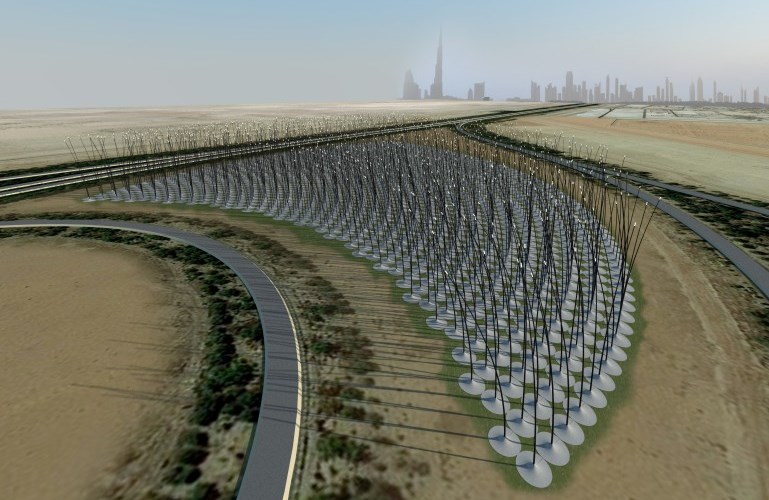
windstalkIt’s known as the Windstalk, another means of generating electricity from wind without the needs for turbines. Though wind farms have long been considered an effective means of generating sustainable energy, resident living near large-scale operations have voiced concerns about the aesthetics and low-frequency vibrations they claim are generated by them. Thus, the concept of the Windstalk, created by New York design firm Atelier DNA.

The concept consists of 1,203 carbon fiber reinforced resin poles which stand 55 meters (180 feet) high and are anchored to the ground in concrete bases. The poles measure 30cm (12 in.) in diameter at the base and taper up to a diameter of 5cm (2 in.) at the top. Each pole is packed with piezoelectric ceramic discs, between which are electrodes that are connected by cables that run the length of each pole.

windstalk-2Thus, instead of relying on turbines to move magnets and create electrical current, each pole merely sways in the wind, compressing the stack of piezoelectric discs and generating a current through the electrodes. And just to let people know how much – if any – power the poles are generating, the top 50cm (20 in.) of each pole is fitted with an LED lamp that glows and dims relative to the amount of electrical power being generated.

As a way to maximize the amount of electricity the Windstalk farm would generate, the concept also places a torque generator within the concrete base of each pole. As the poles sway, fluid is forced through the cylinders of an array of current generating shock absorbers to convert the kinetic energy of the swaying poles into additional electrical energy. But of course, storage is also an issue, since wind power (like solar) is dependent on weather conditions.

windstalk-3Luckily, the designers at Atelier DNA have that covered too. Beneath a field of poles, two large chambers are located, one on top of the other. When the wind is blowing, part of the electricity generated is used to power a set of pumps that moves water from the lower chamber to the upper one. Then, when the wind dies down, the water flows from the upper chamber down to the lower chamber, turning the pumps into generators.

At the moment, the Windstalk concept, much like the Strawscaper, is still in the design phase. However, the design team estimates that the overall electricity output of the concept would be comparable to that of a conventional wind turbine array because, even though a single wind turbine that is limited to the same height as the poles may produce more energy than a single Windstalk, the Windstalks can be packed in much denser arrays.

Though by all accounts, the situation with our environment is likely to get worse before it gets better, it is encouraging to know that the means exist to build a cleaner, more sustainable future. Between now and 2050, when the worst aspects of Climate Change are expected to hit, the implementation of a better and more sustainable means of living is absolutely crucial. Otherwise, the situation will continue to get worse indefinitely, and the prospects of our survival will become bleak indeed!

Sources: fastcoexist.com, gizmag.com

Ending Cancer: Cell-Phone Sized Cancer Detector!

ISEF2012-Top-Three-WinnersThe name Jack Andraka is already one that researchers and medical practitioners are familiar with. Roughly a year ago, the 16-year old boy developed a litmus test that was capable of detecting pancreatic cancer, one of the most lethal forms of the disease and one of the most difficult to treat. And given that his method was 90% accurate, 168 times faster than current tests and 1/26,000th the cost, it’s title wonder why he’s considered something of a wonder kid.

Well, it seems boy genius is at it again! Shortly after receiving first place at the 2012 Intel International Science and Engineering Fair (ISEF), Andraka assembled a crack team of young scientists and began working on a handheld, non-invasive device that could help detect cancer early on. Much like Scanadu, the company that recently release a sensor for testing vitals, Andraka and his team were looking to create a genuine tricorder-like device.

Tricorder X_prizeAnd while their group – known as Generation Z and which was formed from the other 2012 finalists – is working towards such a device, Andraka presented his own concept at this year’s ISEF. Apparently, what he built is modeled on a tradition raman spectrometer –  a device that can be used to detect explosives, environmental contaminants, and cancer in the human body.

A conventional raman spectrometer is extremely delicate, can be as large as a small car, and cost up to $100,000. By contrast, the one designed by Andraka costs only $15 and is the size of a cell phone. According to Andraka, a raman spectrometer works by “[shooting] a powerful laser at a sample and tells the exact chemical composition.” Such a device also relies on a liquid nitrogen cooled photodector to examine the chemical composition of whatever material is currently being examined.

Those powerful lasers alone can cost up to $40,000, so Andraka swapped out the big lasers for an off-the-shelf laser pointer and replaced the photodetector with an iPhone camera. According to Andraka, the results are comparable, at a fraction of the size and, more importantly, the cost. So once more, the boy genius has presented medical science with a cheap, effective means of early detection, something which could save lives and millions in health care costs.

Tricorder XAndraka admits that this device was pretty much all his, but he plans to incorporate it into the tricorder design that he and his colleagues in Generation Z are developing. Once realized, the resulting device will be competing for the Tricorder X Prize – a ten million dollar grant that is given to any entrant that can create a handheld mobile platform that can diagnose 15 diseases across 30 patients in just three days.

But of course, they will have some stiff competition, not the least of which will come from Scanadu, which just happens to have the backing of NASA’s Ames Center.  But then again, the world loves an underdog. And when it comes to medical devices, cancer, and other diseases of the body, its clear that Andraka and his peers are just getting started!

And be sure to check out this video with highlights from the 2013 ISEF:


Sources:
fastcoexist.com(2)