Towards a Cleaner Future: The Molten Salt Reactor

nuclear-power

What if you heard that there was such a thing as a 500 Megawatt reactor that was clean, safe, cheap, and made to order? Well, considering that 500 MWs is the close to the annual output of a dirty coal power station, you might think it sounded too good to be true. But that’s the nature of technological innovations and revolutions, which the nuclear industry has been in dire need of in recent years.

While it is true that the widespread use of nuclear energy could see to humanity’s needs through to the indefinite future, the cost of assembling and maintaining so many facilities is highly prohibitive. What’s more, in the wake of the Fukushima disaster, nuclear power has suffered a severe image problem, spurred on by lobbyists from other industries who insist that their products are safer and cheaper to maintain, and not prone to meltdowns!

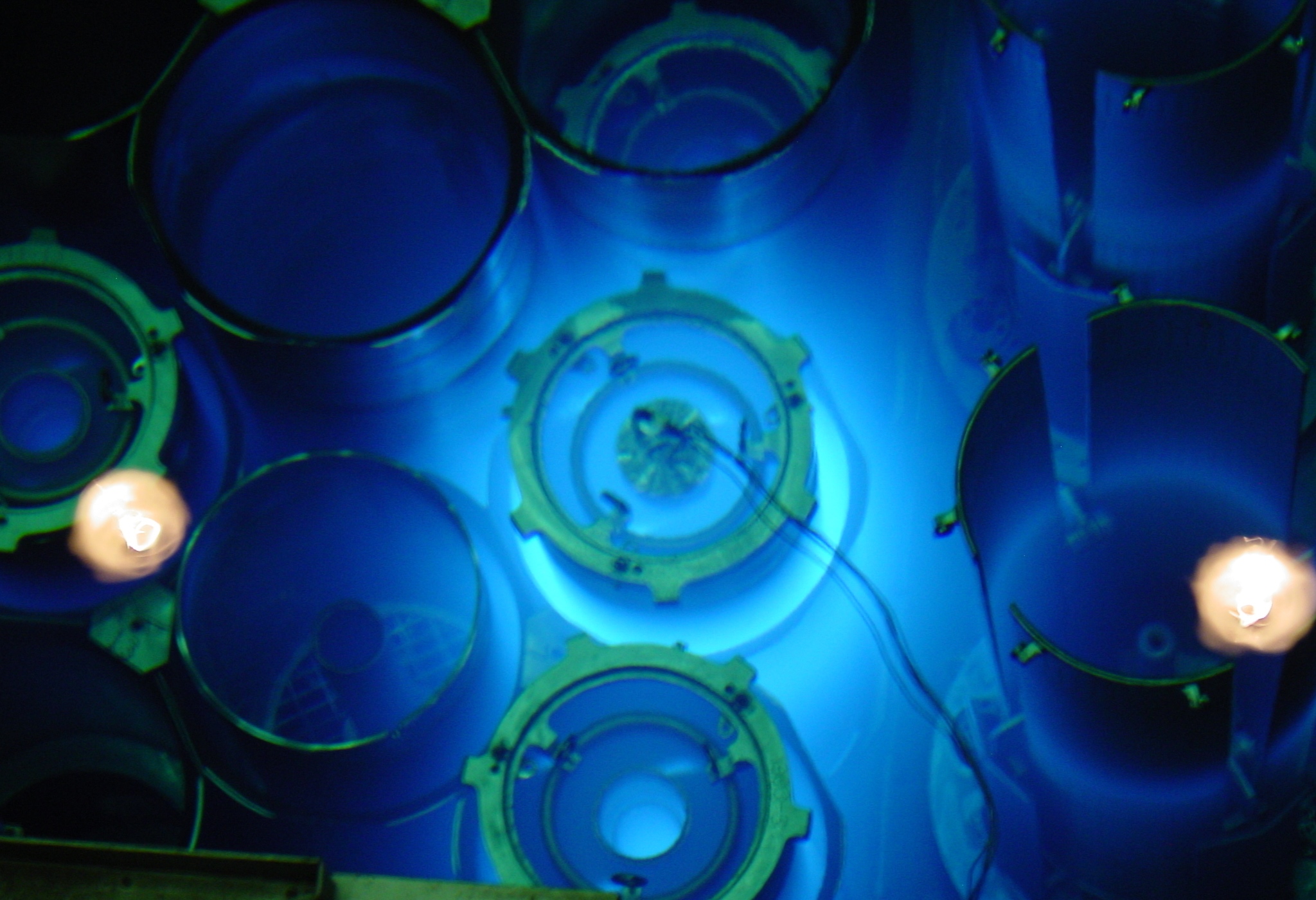
Nuclear MOX plant : recycling nuclear waste : Submerged Spent Fuel Elements with Blue Glow

As a result of all this, the stage now seems set for a major breakthrough, and researchers at MIT and Transatomic’s own Russ Wilcox seems to be stepping up to provide it. Last year, Wilcox said in an interview with Forbes that it was “a fabulous time to do a leapfrog move”. Sounded like a bold statement at the time, but recently, Transatomic went a step further and claimed it was mobilizing its capital to make the leap happen.

Basically, the plan calls for the creation of a new breed of nuclear reactor, one which is miniaturized and still produces a significant amount of mega-wattage. Such efforts have been mounted in the past, mainly in response to the fact that scaling reactors upwards has never resulted in increased production. In each case, however, the resulting output was quite small, usually on the order of 200 MW.
???????????????????????????????

Enter into this the Transatomic’s Molten Salt Reactor (MSR), a design that is capable of producing half the power of a large-scale reactor, but in a much smaller package. In addition, MSRs possess a number of advantages, not the least of which are safety and cost. For starters, they rely on coolants like flouride or chloride salts instead of light or heavy water, which negates the need to pressurize the system and instantly reduces the dangers associated with super-heated, pressurized liquids.

What’s more, having the fuel-coolant mixture at a reasonable pressure also allows the mixture to expand, which ensures that if overheating does take place, the medium will simply expand to the point that the fuel atoms too far apart to continue a nuclear reaction. This is what is called a “passive safety system”, one that kicks in automatically and does not require a full-scale shutdown in the event that something goes wrong.
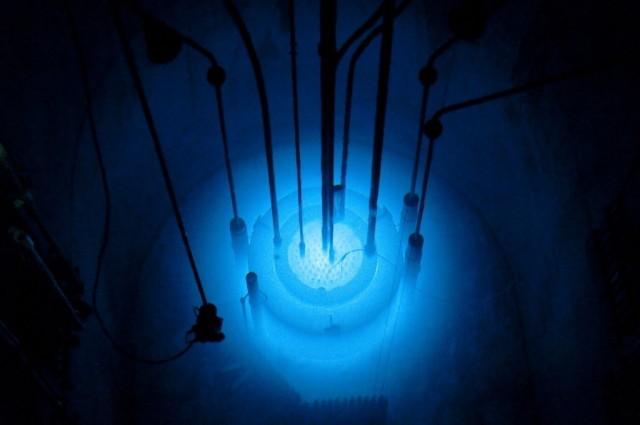
moltensalt_reactor1

Last, but not least, is the addition of the so-called freeze plug – an actively cooled barrier that melts in the event of a power failure, leading all nuclear material to automatically drain into a reinforced holding tank. These reactors are “walk away safe,” meaning that in the event of a power failure, accident, or general strike, the worst that could happen is a loss of service. In a post-Fukushima industry such disaster-proof measures simply must be the future of nuclear power.

Then, there is the costs factor. Transatomic claims their reactor will be capable of pumping out 500 megawatts for a total initial cost of about $1.7 billion, compared to 1000 megawatts for an estimated $7 billion. That’s about half the cost per megawatt, and the new reactor would also be small enough to be built in a central factory and then shipped to its destination, rather than requiring a multi-year construction project to build the plant and reactor on site.

The project has raised $1 million dollars of investment so far, and Transatomic appears to be putting all their eggs in this one basket. Their researchers also claim their design is production-ready and they are just waiting for orders to come in. And given the current energy crisis, it’s not likely to be long before government and industry comes knocking!

Source: Extremetech.com
The Future is Here: The RP-VITA Robo-doc

RP-VITA

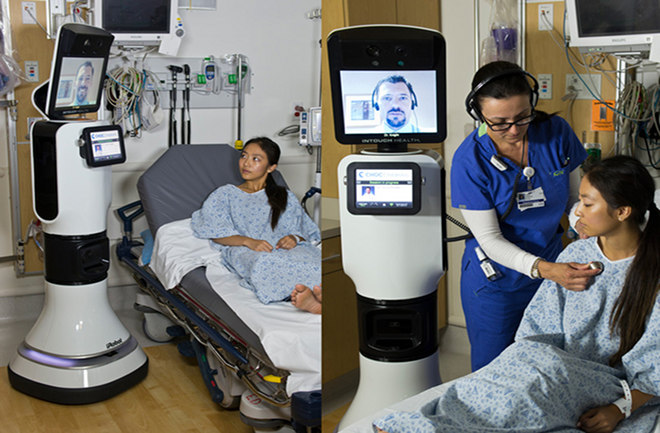
Just to put some fears to rest right away, I should inform you that the RP-VITA, aka. the robo-doc, is not actually a robotic doctor. What it is is a revolutionary new telepresence robot that allows doctors to examine and treat patients from a distance. Earlier this year, the design received approval from the FDA, and has since been picked up by seven hospitals across the United States and one in Mexico City.

RP-VITA, which stands for Remote Presence Virtual + Independent Telemedicine Assistant, was developed collaboratively by iRobot and InTouch Health. InTouch Health specializes in telemedicine, the pursuit of bringing telepresence technology to medical centers all around the world. As for iRobot, they are predominantly known for making the Roomba robotic vacuum cleaner, not to mention the Robotic Fabricator – the world’s first robot-assisted 3D printer.

rp-vita1

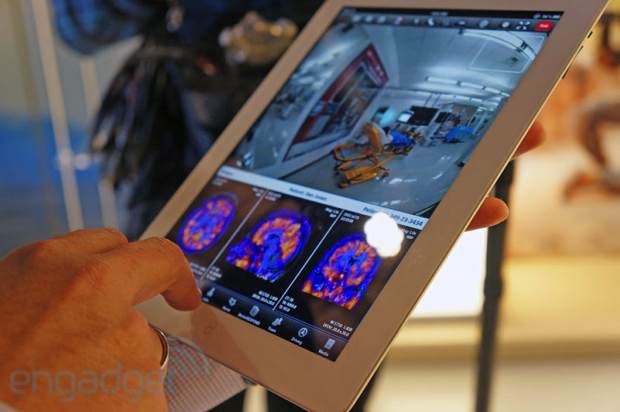
As seen in the pics above, the 5-foot robot is basically a roving Webcame that projects a remote doctor’s face and voice for interaction with patients, doctors and nurses. It is also iPad-controlled, but can navigate hospital wards autonomously and even find patients on its own, since it has a map that’s integrated with hospital wards. This makes it the first telepresence robot that’s functions promise not to disrupt existing hospital procedures.

rp-vita_portraitAnd since the RP-VITA was designed with telepresence in mind, it has had no trouble merging in with existing programs such as TeleStroke, TeleICU, TelePsych, and TelePediatric. All of these programs specialize in connecting medical specialists to patients even though they are not on sight. But by adding mobility to the equation, the robot offers a good deal of enhancement to these programs by being able to go where its needed and free up patient care space.

In a press release statement, iRobot and InTouch quoted Paul Vespa, director of neurocritical care at the Reagan Center, citing the benefits of this new robot:

During a stroke, the loss of a few minutes can mean the difference between preserving or losing brain function… The new technology enables me to concentrate on caring for my patient without being distracted by the need to set up and manage its technological features.

So for those fearing that this was the beginning of the end, or that robots were being entrusted with life and death decisions effecting human being, rest assured that this is merely an example of enhancing patient care and that human controllers are still (largely) in control of the process. We’re safe for now…

Source: news.cnet.com


Preventing the Apocalypse: NASA’s Asteroid Lasso Mission

asteroid_lasso

Shortly after that large meteor hit Russia, President Obama and NASA administrator Charles Bolden both announced that work would begin on a series of asteroid tracking technologies that would ensure that more severe Earth collisions would be prevented. Earlier this month, Bolden spoke at the Mars Summit in Washington, D.C. and said that a robotic spacecraft mission is currently being planned with this goal in mind.

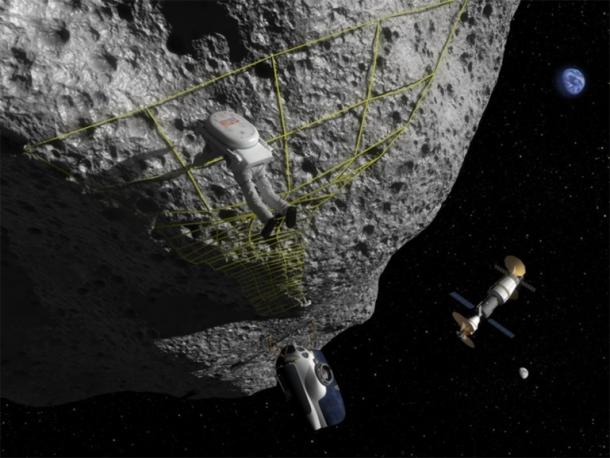
The plan calls to mind such films as Armageddon and Deep Impact, but differs in that it involves lassoing an asteroid instead of detonating a small nuke inside it. The ultimate goal here is to tow an asteroid out of the path of Earth, but then to deposit it in orbit so that it can be visited by astronauts. These astronauts will then collect samples and conduct research that could one day assist in a mission to Mars or save Earth from a catastrophic collision.

Asteroid-Toutatis

This is in keeping with the Obama administrations’ pledge of putting a man on a near-Earth asteroid by 2025 and a manned mission to Mars by 2030. It’s also in the same vein as NASA’s plan to catch and deposit an asteroid around the Moon, an idea that was proposed back in January of this year as part of the agencies plan to establish an outpost at Lagrange Point 2 early in the next decade.

And even though NASA has expressed that the massive 22 million ton asteroid Apophis will not impact planet Earth in 2036, it didn’t rule out that other, smaller rocks could possibly reach us in that time. Capturing them and towing them to where they could be safely deposited in orbit would present many opportunities, not the least of which could be commercial.

asteroid_foundry

For example, asteroid prospecting is slated to begin in 2015, with companies like SpaceX and Deep Space Industries leading the charge. Once property rights are assigned to various celestial bodies, these and other companies hope to send missions out to mine them and establish automated 3D manufacturing facilities, places that use “sintering” to process ore into metal and other materials that can then be shipped back.

NASA’s science mission directorate associate administrator John Grunsfeld also spoke about the importance of the lasso mission at the Human to Mars Summit on Monday. Above all else, he emphasized the importance of using the knowledge and skills gained from the research to achieve the long-term goal of survival:

We have a pretty good theory that single-planet species don’t survive. We don’t want to test it, but we have some evidence of that happening 65 million years ago [when an asteroid killed much of Earth’s life]. That will happen again someday … we want to have the capability [to leave the planet] in case of the threat of large scale destruction on Earth.

Yeah, its a rocky universe. And if we intend to survive in it, we had best learn how to deflect, capture and destroy any that come our way and get too close. And of course, we need to learn how to harness their endless supply of minerals and trace elements.

asteroid_belt1Source: news.cnet.com

Drone Wars: X-47B Makes First Successful Landing

X-47B_over_coastline

The X-47B, also known as the Unmanned Combat Air System (UCAS), is the world’s first and only stealth autonomous drone. Late last year, it accomplished a first when it was placed aboard the USS Harry Truman, mainly to see if it would remain in place as the ship conducted maneuvers. This was the first in a series of trials to see if the new naval drone can take off and land from an aircraft carrier.

And earlier this month, it achieved another when it performed its first arrested landing. Basically, this involves a plane landing and grabbing hold of an arresting cable with a tailhook, simulating what happens aboard a carrier deck. This marked an important milestone in the development of the UCAS by proving that it is capable of landing at sea. Later this month, it will complete the final trial when it takes part in a catapult launch from the deck of the USS George H.W. Bush.

???????????????????

For some time now, the development of autonomous aerial drones has been the subject of concern, both from human rights groups and concerned citizens who worry about putting the power to kill into the hands of machines. The use of less sophisticated UAVs, such as the MQ-9 Reaper and the MQ-1 Predator, has already attracted considerable attention and criticism due to questions about their killing power and how they are being used.

However, these two weapons systems both have the distinction of being controlled by a remote operator, not by an on-board computer. By removing a human being from the process altogether, many fear that things will only get worse. Up until now, the US Navy and other branches of the armed services, both within the US and abroad, have had people making the decision to use lethal force. This has ensured a degree of oversight and culpability, but with autonomous machines, that will no longer be the case.

hellfire

What’s more, if this technology is ever used against the citizens of the country that employ them, the people will have a much harder time holding those responsible to account. In response to these concerns, the Pentagon announced last Thanksgiving that it would be taking measures to ensure that, where life-and-death decisions were concerned, a human controller would always be at the helm.

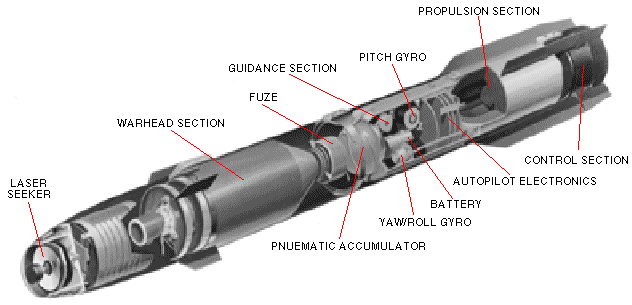
What’s more, the Navy has offered its assurances to the public that the X-47B is not intended for operational use, but is part of a program geared toward the creation of other unmanned carrier-based aircraft programs. However, with some modifications, the unit would be capable of being outfitting with weapons mounts that would be capable of supporting missiles and bombs, at which point any legal barriers could easily find themselves being removed.

And as always, there are those who worry that giving machines the ability to kill without human oversight is a threat in and of itself. Forget about the government being culpable, what’s to happen when said machines decide to launch nukes at Russia so that the counter-attack will kill its enemies over here? Find John Conner, people, he’s our only hope!

terminator_1

Source: news.cnet.com

Environment Alert: Atmospheric CO2 Reaches Record High

airpollutionIt’s no secret that humanity, like all terrestrial organisms, has a symbiotic relationship with the Earth’s environment. And whereas the fortunes of entire civilizations and species once depended upon the natural warming and cooling cycle, for the past few centuries, human agency has an increasingly deterministic effect on this cycle. In fact, since the beginning of the Industrial Revolution, just 250 years ago, human industry increased the levels of carbon dioxide in the atmosphere by more than 40 percent.

And now, it seems that humanity has reached a rather ignominious and worrisome milestone. Working at the Mauna Loa Observatory, an atmospheric research facility, scientists announced Friday that for the first time in millions of years, the level of the carbon dioxide in the atmosphere had reached 400 parts per million on average over the course of a full 24-hour day. The last time there were these kinds of CO2 levels was approximately 3 million years ago, and that has many worried.

co2_levelsFor some time now, climatological scientists have warned of the dangers of reaching this limit, mainly because of the ecological effects it would have. The Kyoto Protocol, an attempt during the late-90s to curb fossil fuel emissions on behalf of the industrialized nations of world, specifically set this concentration as a target that was not to be surpassed. However, with nations such as Canada, the US and China expressing criticism or pulling out entirely, it was clear for some time that this target would not be met.

And as mentioned already, the planet has not seen these kind of CO2 levels since the Pliocene Era, a time of warmer temperatures, less polar ice, and sea levels as much as 60 to 80 feet higher than current levels. If conditions of this nature are permitted to return, the human race could be looking at some very serious problems in the near future.

trafficFor starters, much of the world’s population and heavy industry is built along coastlines. With sea levels reaching an additional 60-80 feet, several million people will be displaced over the course of the next few decades. What’s worse, inland areas that have river systems connected to the sea are likely to experience severe flooding, leading to more displacement and property damage.

Those areas that find themselves far from the coast are likely to experience the opposite effects, increased heat and dryness due to increased temperatures and the loss of cloud cover and precipitation. This in turn will result in widespread drought, wildfires, and a downturn in food production. And let’s not forget that rising temperatures also mean the spread of disease and parasites, ones that are typically confined to the tropical areas of the world.

china smog 2013 TV bldgIf any of this is starting to sound familiar, it’s because that is precisely what has been happening for the past few decades, and with increasing frequency. Record hot summers, food shortages in several parts of the world, flooding, wildfires, hurricanes, the West Nile Virus, Avian Bird Flu, Swine Flu, SARS, rising sea levels – these are all symptoms of a world where increasing output of Greenhouse Gases mean increasing temperatures and ecological effects.

But of course, before anyone feels like the situation is hopeless, this news does come with a silver lining. For one, the confirmation that we have now reached 400 ppm is likely to spur governments into greater action. Clearly, our current means are not working for us, and cannot be counted on to see us into the future. What’s more, a number of clean energy concerns are well under way, providing us with viable and cost effective alternatives.

solar_array1

The growth in solar energy in just the last few years has been staggering, and carbon capture technology has been growing by leaps and bounds. What’s more, upstarts and clean energy labs no longer need government support, though public pressure has yeilded several positive returns in that area. Even so, crowd-funding is ensuring that growth and innovation that would not be possible a few years ago is now happening, so we can expect the current rate of progress to continue here as well.

And of course, geoengineering remains a viable possibility for buying our planet some time. In addition to clean energy (putting less CO2 in the air), and carbon capture (removing the CO2 there), there are also a number of possibilities for Global Dimming – the opposite of Global Warming – to slow down the process of transformation until we can get our act together. These include evaporating oceanic water to lower sea levels and ensure more cloud cover, triggering algae blooms to metabolize more CO2, and dumping sulfur dioxide (SO2) in the air to combat the warming effect.

But in the end, nothing short of serious and immediate changes will ensure that decades and centuries from now, the ecological balance – upon which all species depend – is maintained. Regardless of whether you think of humanity as the masters or the children of this planet, it’s clear we’ve done a pretty shitty job in both capacities! It’s time for a change, or the greatest natural resource in our corner of the universe, Earth itself, is likely to die out!

Source: fastcoexist.com

Judgement Day Update: Robots for Kids

kids_robotRobots are penetrating into every aspect of life, from serving coffee and delivering books to cleaning up messes and fighting crime. In fact, the International Federation of Robotics reported that worldwide sales of robots topped $8.5 billion in 2011, totaling an estimated 166,028 robots sold. And with all the advances being made in AI and musculoskeletal robots, its only likely to get worse.

Little wonder then why efforts are being made to ensure that robots can effectively integrate into society. On the one hand, there’s the RoboEarth Cloud Engine, known as Rapyuta, that will make information sharing possible between machines to help them make sense of the world. On the other, there’s items like this little gem. It’s called the Romo, and its purpose is to teach your kids about robotics in a friendly, smiling way.

romo2Scared yet? Well don’t be just yet. While some might think this little dude is putting a happy face on the coming robocalypse, the creators have stated that real purpose behind it is to inspire a new, younger generation of engineers and programmers who can help solve some of the world’s technical problems in areas like health care and disaster relief.

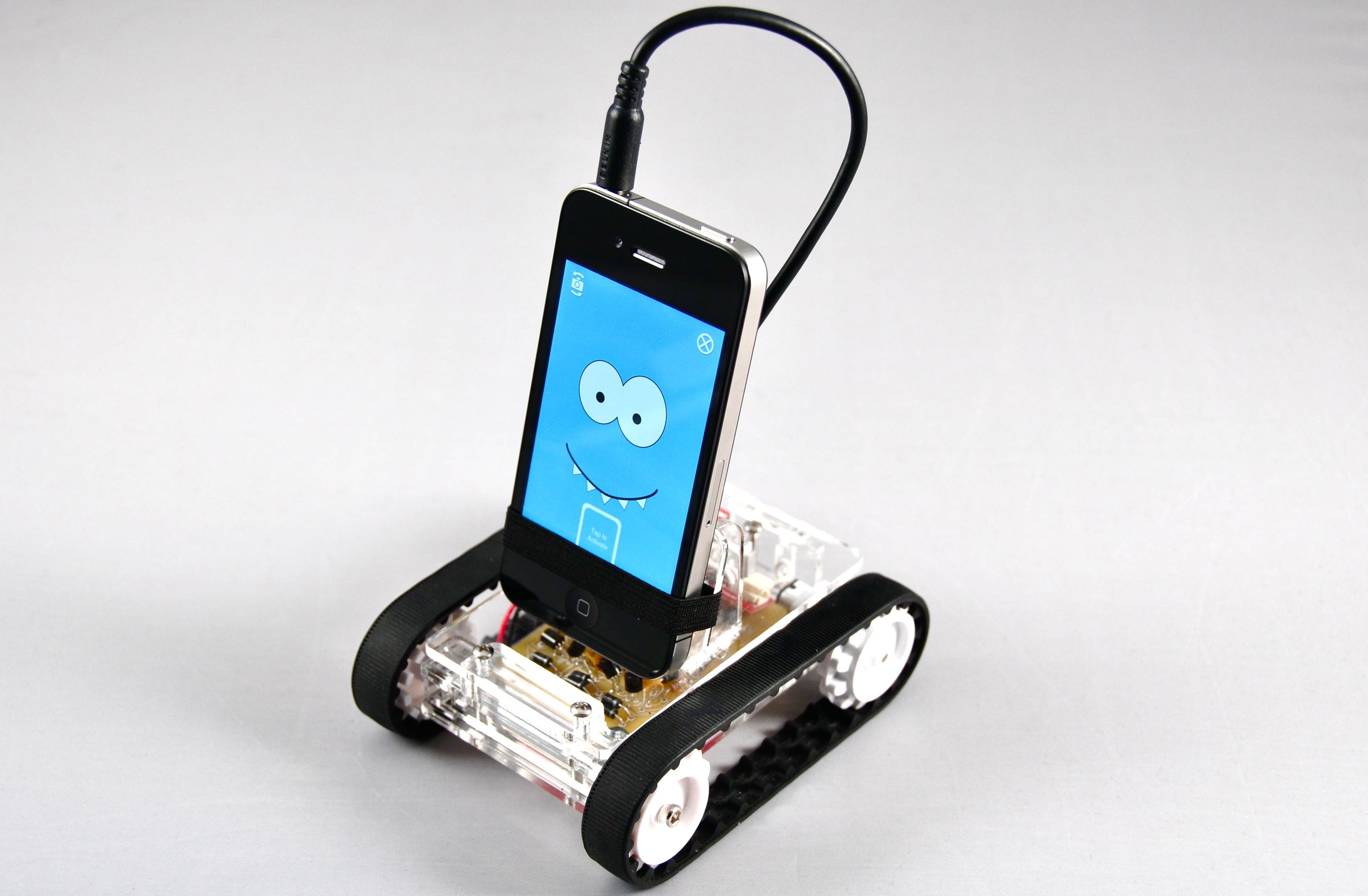
Created by Las Vegas-based startup Romotive, this little machine uses the computing power of iOS devices as his brain. Basically, this means that you can remotely control the bot with your smartphone. Simply plug it in to the robot’s body and activate the app, and you get his blue, smiling face. Designed for use by kids, its program comes down to a simple series of if-then dependencies.

romo1In short, Romo can be programmed to recognize faces and respond to visual or auditory clues. The most common reaction is a smile, but the Romo can also looked surprised and doe-eyed. And with regular app and software updates, the Romo is predicted to get smarter and more sophisticated with time.

To realize their goal of creating a child-friendly robot, the company launched a campaign on Kickstarter back in October of 2011 with a goal of raising the $32,000 they would. After less than two years, they have received a total of 1,152 donations totaling some $114,796. Available in stores, at $149 a pop (smartphone not included), the makers hope that Romo will become the first truly personal robot.

Still, never too soon to start your Judgement Day planning. Stock up on EMPs and ammo, it’s going to be a rough Robopocalypse! And be sure to check out the company website by clicking here.

terminator1Source: fastcoexist.com, kickstarter.com

Update: 3D-Printed Gun Faces Crackdown

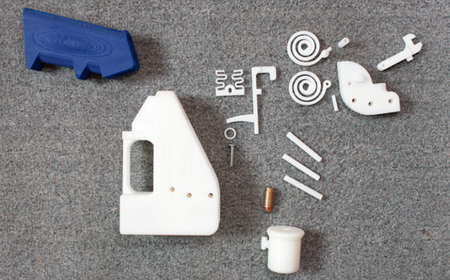
defense-distributed-liberator,Z-M-383602-13Just a few days ago, Defense Distributed announced the creation of the world’s first gun that is made entirely out of 3D-printed parts. And as anticipated, it didn’t take long for a crackdown to ensue. The group’s leader Cody Wilson, after conducting the first successful firing test of “The Liberator”, claimed that the blueprints would be uploaded to the open-source website Defcad so they would be available to anyone.

Yesterday, less than a week after the announcement was made, Mr. Wilson claimed that Defcad is “going dark” at the request of the U.S. Department of Defense Trade Controls. Defense Distributed runs the website, which has been a provider of weapons-related 3D printer blueprints since the group was founded.

Defense Distributed new magazines

As of yesterday, the site contained only a brief message explaining why it the Liberator blueprints were no longer available:

Defcad files are being removed from public access at the request of the U.S. Department of Defence Trade Controls. Until further notice, the United States government claims control of the information.

The group’s twitter feed also contained the following message:

#DEFCAD has gone dark at the request of the Department of Defense Trade Controls. Take it up with the Secretary of State.

The weapon itself was the result of eight months of research and testing on behalf of Wilson and his group. In that time, the group has become a source of controversy due to their dedication to making blueprints for printable gun parts available online. These include components for AR-15 assault weapon and extended magazines for an AK-47 assault rifle.

defense_distmagHowever, the Liberator, named in honor of the single-shot pistols that were dropped on France during the Second World War, was the first set of blueprints that was made entirely out of ABS plastic, making it the first open-source “Wiki-weapon” that would be available to anyone with the means to print it.

As a result of their commitment to open-source weaponry, Defense Distributed has become the subject of penalties and restrictions. In fact, Defcad was created after Makerbot Industries chose to purge all of the group’s gun blueprints from the website. Shortly after they test-fired an AR-15 that included printed parts, Wilson and his associates also had their 3D printer, which they had been leasing, seized.

defense_dist1This latest decision targets their activities at their source. However, the decision to take the plans off of Defcad did not present an estimated 10,000 downloads. However, it is not clear if those who obtained the plans will be able to print them off at their local printing shop. Only those who already possess a 3D printing unit, which is likely to run them between $1000 and $3000 dollars will be able to produce their own version of the Liberator.

In short, this issue is not yet resolved. Knowing Wilson and his admirers, open-source, printable weapons are likely to remain a contentious issue for some time to come…

Source: cbc.ca

Towards a Cleaner Future: Generating Electricity with Steps

pavegen1

This years Boston Marathon was the site of a terrible tragedy, as runners reaching the finish line were met with the worst terrorist attack on American soil since September 11th took place. Not only was this gruesome attack an injustice of immense proportions, it also overshadowed an important story that took place overseas, one which also involved a marathon and a potential breakthrough for renewable energy.

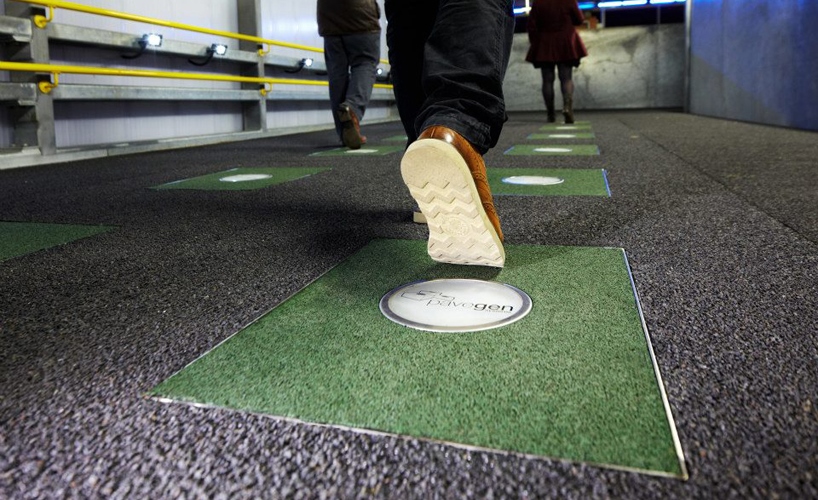
Here, the runners and spectators who waited at the finish line were also privy to something unexpected. But in this case, it involved a series of rubber panels which turned the runners steps into actual electricity. Known as Pavegen, a material invented by 27 year-old Laurence Kemball Cook and composed of recycled tires, this demonstration was the largest test to date of the experimental technology. And though the results were modest, they do present a frightening amount of potential for clean, renewable energy.

pavegen4

Essentially, a single step on a Pavegen pad is said to generate up to 8 watts of electricity per second. Based on that, and at a speed of one step a second, it would take a single pedestrian 40 minutes to charge a smartphone. However, a small army of pedestrians could generate considerably more – say for example, 50,000+ people taking part in a marathon.

Here too, the results fell short of their intended goal. Schneider Electric – who commissioned the project – held a contest on Facebook and said if they generated over 7 kilowatt-hours of energy, they would make a donation to Habitat for Humanity. As it turned out, all those runners generated more like two-thirds of that: 4.7 kilowatt-hours. Still, the potential is there.

pavegen5

Already the Simon Langton Grammar School for Boys in Kent, England, has contracted with Pavegen to become the site of the first permanent installation of the material. And as the video below demonstrates, it has the ability to at least generate enough power to keep the lights on in a building where hundreds of people take thousands of steps daily.

Given time and some improvement in the yield of the pads, this technology could very well take its place alongside solar, wind, and other renewable sources of power that will bring electricity to the cities of the future. Imagine it if you will, entire sidewalks composed of electricity-generating material, turning every step its pedestrians take into clean energy. I for one think that’s the stuff of bona fide science fiction story (it’s mine, you can’t have it!).

And be sure to check out this promotional video from Pavegen who filmed their floor at work in Simon Langton:


Source:
fastcoexist.com

The Future is Here: Self-Healing Computer Chips

computer_chipIt’s one of the cornerstones of the coming technological revolution: machinery that can assemble, upgrade, and/or fix itself without the need for regular maintenance. Such devices would forever put an end to the hassles of repairing computers, replacing components, or having to buy new machines when something vital broke down. And thanks to researchers at Caltech, we now have a microchip that accomplish one of these feats: namely, fix itself.

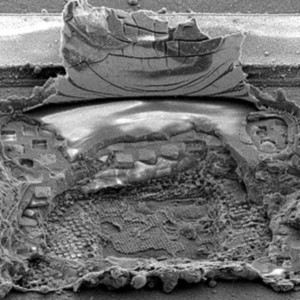
The chip is the work of Ali Hajimiri and a group of Caltech researchers who have managed to create an integrated circuit that, after taking severe damage, can reconfigure itself in such a way where it can still remain functional. This is made possible thanks to a secondary processor that jumps into action when parts of the chip fail or become compromised. The chip is also able to tweak itself on the fly, and can be programmed to focus more on saving energy or performance speed.

computer_chip2In addition, the chip contains 100,000 transistors, as well as various sensors that give it the ability to monitor the unit’s overall health. Overall, the microchip is comparable to a power amplifier as well as a microprocessor, the kind of circuit that processes signal transmissions, such as those found in mobile phones, as well as carrying out complex functions. This combined nature is what gives it this self-monitoring ability and ensures that it can keep working where other chips would simply stop.

To test the self-healing, self-monitoring attributes of their design, Hajimiri and his team blasted the chip with a laser, effectively destroying half its transistors. It only took the microchip a handful of milliseconds to deal with the loss and move on, which is an impressive feat by any standard. On top of that, the team found that a chip that wasn’t blasted by lasers was able to increase its efficiency by reducing its power consumption by half.

healingchipGranted, the chip can only fix itself if the secondary processor and at least some of the parts remain intact, but the abilities to self-monitor and tweak itself are still of monumental importance. Not only can the chip monitor itself in order to provide the best possible performance, it can also ensure that it will continue to provide a proper output of data if some of the parts do break down.

Looking ahead, Hajimiri has indicated that the technology behind this self-healing circuit can be applied to any other kind of circuit. This is especially good news for people with portable computers, laptops and other devices who have watched them break down because of a hard bump. Not only would this save consumers a significant amount of money on repairs, replacement, and data recovery, it is pointing the way towards a future where embedded repair systems are the norm.

And who knows? Someday, when nanomachines and self-assembling structures are the norm, we can look forward to devices that can be totally smashed, crushed and shattered, but will still manage to come back together and keep working. Hmm, all this talk of secondary circuits and self-repairing robots. I can’t help but get the feeling we’ve seen this somewhere before…

t1000-ressurect_3135628_GIFSoup.com

Sources: Extremetech.com, inhabitat.com

People Shooting at You: There’s an App For That!

gun-firing

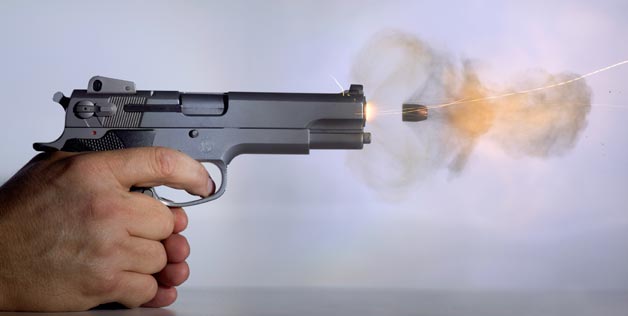
If the collapse of gun legislation in the US concerns you, fear not! Computer engineers at Vanderbilt University have developed a lightweight module that works in combination with a smartphone. This device, which about the size of a pack of cards, can pick up the “sonic signature” of a gun going off, and then sense shockwaves from the bullet. It sends the combined information to an Android phone, where it is plotted on a map.

So if you’re on the street and find yourself caught in the middle of a gang war, or are just randomly targeted by a sniper or gunman on a psychotic break, you will be able to pinpoint where the bullets are coming from. This should come in handy if you plan on returning fire. But if you’re planning on sitting tight and letting the police handle it, that’s good too. Chances are, they’ll have their own units on them, as will soldiers.

gang_violence

The device is essentially a commercialized version of military technology under development by DARPA. And aside from ordinary citizens, it’s likely to be picked up for use by bodyguards and the police. Earlier versions were tested with the US armed forces, but the team has since developed two versions of the device, one for commercial use that requires four units to located where a shooter is coming, and the militarized version that requires only two.

These and other subsequent versions are likely to be incorporated into all Future Force Warrior designs, giving soldiers the ability to detect where snipers and enemy combatants are shooting at them from. These are likely to come handy in densely populated areas, or in areas where insurgents and guerrillas constitute the majority of enemy combatants – as has been the case in Iraq and Afghanistan.

ghost_recon_future_soldier-1920x1080

Granted, a far easier solution would solution would be to get the guns off the streets. But seeing as how that’s not likely to happen anytime soon, due in large part to the powerful pro-gun lobby in Washington, people may want to invest in some of these boxes. After all, if there’s a lesson in the most recent deadlock, it is that citizens have the right to protect themselves. This way, they can do so without having to buy a hand gun, assault weapon, or body armor!

Source: fastcoexist.com