Cyberwars: The Biggest Cyber Attack in History?

cyber_virusIt’s been declared: the largest cyber attack in the history of the internet is happening right now. But you can forget about the US and China, this one is going on between private organizations, both of whom . In short, the fight comes down to Cyberbunker – a decommissioned NATO bunker located just outside of Kloetinge in the Netherlands – and a non-profit anti-spam organization named Spamhaus.

But first, a little background information is required for those of us not well-versed in the comings and goings of cyberwarfare (I include myself in this mix). Cyberbunker, as its name suggests, is an internet service provider and data haven that hosts websites and data stores for various companies. Founded in 1998, it began with the mission of hosting companies and protecting their data-assets from intrusion and attack.

cyberbunkerSpamhaus, on the other hand, is a non-profit that tracks internet addresses that are sources of email spam, and adds their addresses to a blacklist. Companies that use this blacklist—which include pretty much every email provider and most internet service providers on the planet—automatically block those addresses. Hence, to be blacklisted by this organization is to have your bottom line seriously effected.

The conflict between these two belligerents began in 2011, when Spamhaus began targeting Cyberbunker through one of its clients – and internet service provider named A2B. At the time, Spamhaus was trying to convince said provider that Cyberbunker was a haven for spam email, which led A2B to drop them as a client. Shortly thereafter, Cyberbunker moved onto a new internet service provider, leaving Spamhaus free to blacklist them directly.

Spamhaus attack … did it affect you?When they did, Cyberbunker responded in a way that seemed to suggest they wanted to live up to the reputation Spamhaus was bestowing on them. This involved massive retaliation by launching a cyberattack of some 300 billion bits of data per second, designed to clog Spamhaus’s connection to the internet and shut down their infrastructure.

Might sound like a tiff between two internet companies and nothing more. But in truth, this attack was so big that it began affecting service for regular people like you and me who happen to rely on some of the internet connections the attack is commandeering. In short, millions were effected by this “largest attack in internet history”, as their internet slowed down and even shorted out. Some even went as far as to say that it “almost broke the internet”.

internetBut for many others, this attack went unnoticed. In fact, according to an article by Gizmodo, most people were relatively unaffected. While some companies, like Netlix, reported sluggish streaming, they did not go down, mega net-enterprises such as Amazon reported nothing unusual, and organizations that monitor the health of the web “showed zero evidence of this Dutch conflict spilling over into our online backyards”.

In short, the attack was a major one and it had a profound impact on those sites it was directed at, and the collateral damage was noticeable. But aside from that, nothing major happened and this tiff remains a war between an organization known for spamming and one known for targeting them. And it shows no signs of slowing down or stopping anytime soon.

computer-virus.istockAccording to Patrick Gilmore, chief architect at the internet hosting service Akamai who was interviewed by the New York Times, the bottom line for CyberBunker is that “they think they should be allowed to spam.” CyberBunker is explicit on its homepage that it will host anything but child pornography and “anything related to terrorism.”

So while this latest incident did not cause “Infopocalype”, it does raise some interest questions. For one, how hard is it to wage a full-scale cyberwarfare in this day and age? Apparently, it is rather easy to create massive networks of “zombie PCs and use them to carry out related attacks, not to mention cheap since the hardware and software is hardly sophisticated.

cyber-war-1024x843And as it stands, numerous groups, including military hackers, are engaged in a back and forth with government and industrial giants that involves stealing information and spying on their activities. If things were to escalate, would it not be very easy for hackers or national cyberwarfare rings – especially ones operating out of China, Israel, Iran, Russia or the US – to try and shut down their enemies infrastructure by launching terabytes of useless data at them?

Oh, I shudder to think! An entire nation brought to its heels by adds for Russian brides, discount watches and cheap Viagra! But for the moment, it seems this latest apocalyptic prediction has proven to be just as flaccid as the others. Oh well, another day, another dollar…

Sources: qz.com, gaurdian.co.uk, gizmodo.com

The Future of Medicine: The Breathalyzer Cancer Test

cancer_cellAs any medical practitioners will tell you, when it comes to cancer, early detection is key. And interestingly enough, there are a number of ways to do this. In addition to visual identification (i.e. change in skin pigment), or feel (i.e. noticing lumps), there is also the means of olfactory detection. Apparently, on top of its many other noticeable effects, cancer emits a smell which can lead to early detection and treatment.

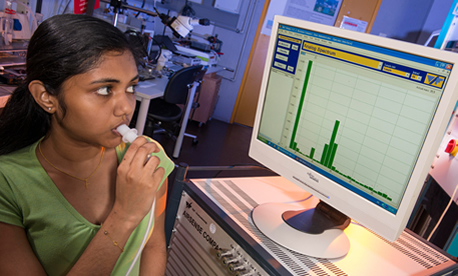
Over the years, a great deal of anecdotal and clinical research has shown that dogs are capable of sniffing out cancer in patients. Building on this knowledge, a group of scientists from Israel and China and working at Technion (the Israel Institute of Technology) have developed a stomach-cancer-sniffing device made out of nanomaterials that essentially works the same way as a breathalyzer.

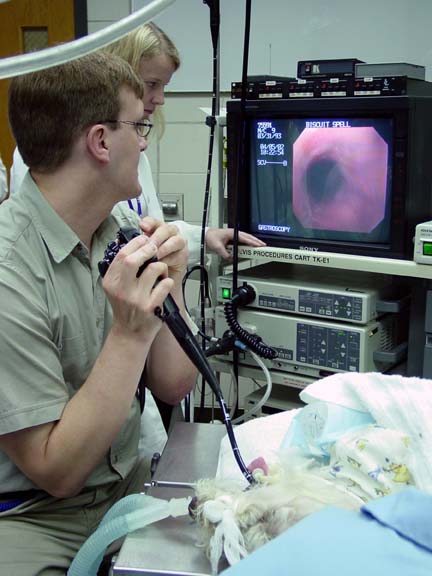
Cancer patientsIn an initial screening test, the device was used on 130 patients and was over 90% accurate in detecting not only the existence of cancer, but determining what stage it was in. Compared to conventional methods, which involves inserting a flexible tube that is inserted through the patient’s nose and into their digestive system, this test is far less invasive and unpleasant.

endoscopy 2What’s more, this process – known as endoscopy – is quite expensive, making a comparatively cheap breathalyzer even more attractive to both doctor’s and patients. And of course, this test is generally used when the patient begins showing signs of being in an advanced stage of cancer development, and is therefore not part of an early detection regimen.

In an interview with the British Journal of Cancer, Professor Hossam Haick, lead researcher from the Technion, desribed the benefits of their new device:

The promising findings from this early study suggest that using a breath test to diagnose stomach cancers, as well as more benign complaints, could be a future alternative to endoscopies… Nevertheless, these results are at an early stage and support the concept of a breath test to detect stomach cancers but further validations are needed… But if found to be accurate enough, the nanomaterial breath test presents a new possibility for screening a population for stomach cancer, which would hopefully lead to earlier diagnosis of the disease.

cancer_breathalyserIn an interview with the Guardian, Kate Law, the director of clinical research at Cancer Research UK, said the test could lead to earlier detection of stomach cancer, which could save lives:

The results of this latest study are promising – although large-scale trials will now be needed to confirm these findings. Only one in five people are able to have surgery as part of their treatment as most stomach cancers are diagnosed at stages that are too advanced for surgery. Any test that could help diagnose stomach cancers earlier would make a difference to patients’ long-term survival.

Naturally, Professor Haick admitted that more testing is needed before this can become a regular practice, but both he and his staff are encouraged by their results thus far. What’s more, they clearly have the support of many doctors in the field who see this test as an effective and preferable means of diagnosing cancer over conventional methods.

So for intents and purposes, it would not be farfetched to imagine that during your a trip to see your doctor, he or she might tell you to insert a tube into your mouth and blow, just to make sure you stomach tissue was healthy, pink, and cancer free!

Sources: fastcoexist.com, guardian.co.uk


The Future is Here: Thinx Underwear!

thinx_mainThere are those who believe that underwear can change the world. And when you consider the way that young girls are disadvantaged, disrespected, and neglected worldwide, you have to believe they’re onto something. In many poverty-stricken countries, young women are disadvantaged simply by being young women, and because of a lack of health and medical services as well as sanitary products.

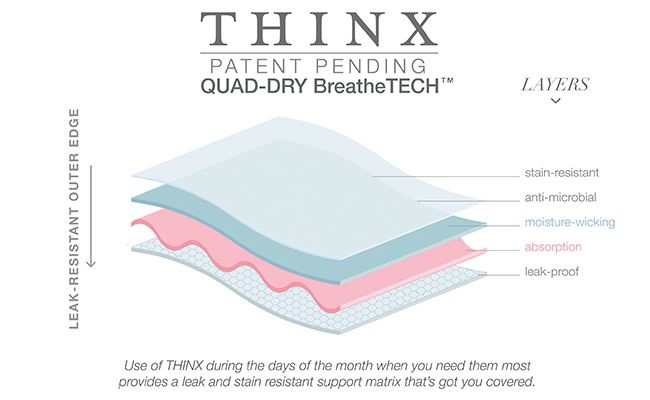
And that’s one of the reasons that Antonia, Miki and Radha Agrawal decided to come up with the product known as the Thinx. After a series of harrowing experiences and inspiration gained from traveling abroad, they developed the idea for a leak/stain-resistant, anti-microbial, and moisture-wicking underwear. And with a little crowdfunding through Kickstarter ($130,000 to be exact), they were able to make it a reality.

thinxThe women also partnered with Uganda-based organization AFRIpads, which creates washable pads for women in developing countries so they don’t have to miss work or school for a week each month. For each pair of underwear Thinx sells, it donates enough money for AFRIpads to create seven pads for young women in their country.

And as a final boost, the women beat out another 145 entrepreneurs in a contest held by the online marketplace known as the Daily Grommet, to have their product sold on the online marketplace, promoted in the media and be featured on the funding website Indiegogo. Here, the ladies appear together to offer their thoughts on insights on how their product can help change the world, as well as relating the story of how they came came up with it.

afripad

So in addition to showing how new media and international marketing to help change the world, this also demonstrates the power of crowdfunding and taking socially-conscious, sustainable ideas directly to the marketplace. What an age we live in! And one also has to consider what this case demonstrates about small things making big impacts.

In addition to helping women in the industrialized world avoid embarrassment and infection, it also will help girls abroad overcome the disadvantages that are so often heaped upon them because of their gender. And this comes not long after the development of the Smart Bra, a revolutionary undergarment that helps women beat breast cancer through early detection. Who say’s underwear can’t change the world?

And be sure to check out the video of the Agrawal sisters Indiegogo interview:


Source:
shethinx.com, fastcompany.com
, indiegogo.com

The Future is Here: The Smart Bandage!

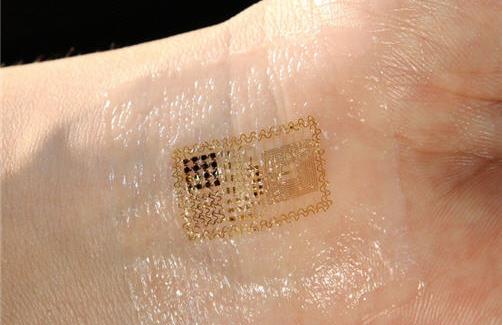
electronic_skin_patchWith recent advances being made in flexible electronics, researchers are finding more and more ways to adapt medical devices to the human body. These include smart tattoos, stretchable patches for organs, and even implants. But what of band-aids? Aren’t they about due for an upgrade? Well as it happens, a team of chemical engineering at Northeastern University are working towards just that.

Led by associate professor Ed Goluch, the team is working towards the development of a “smart bandage” that will not only dress wounds, but can monitor infections and alert patients to their existence. Based around an electrochemical sensor that is capable of detecting Pseudomonas aerug­i­nosa – a common bacteria that can kill if untreated – this bandage could very prove to be the next big step in first aid.

smart_bandaidAccording to Goluch, the idea came to him while he was studying how different bacterial cells behave individually and he and his colleagues began speaking about building other types of sensors:

I was designing sensors to be able to track individual cells, measure how they produce different toxins and compounds at the single-cell level and see how they change from one cell to another and what makes one cell more resistant to an antibiotic.

Naturally, addition research is still needed so that smart band-aids of this kind would be able to detect other forms of infections. And Goluch and his colleagues are quite confident, claiming that they are adapting their device to be able to detect the specific molecules emitted by Staphylococcal – the bacteria responsible for staph infections.

???????????????????????????????So far, Goluch and his team have tested the system with bacteria cultures and sensors. The next step, which he hopes to begin fairly soon, will involve humans and animals testing. The professor isn’t sure exactly how much the sensor would cost when commercialized, but he believes “it’s simple enough that you’d be able to integrate it in a large volume fairly cheap.”

At this rate, I can foresee a future where all first-aid devices are small patches that are capable of gathering data on your wounds, checking your vitals, and communicating all this information directly to your PDA or tablet, your doctor, or possibly your stretchable brain implant. I tell ya, it’s coming, so keep your apps up to date!

Source: factcoexist.com


News From Space: The NASA-Funded Fusion Rocket

fusion-rocket-university-of-washington-640x353NASA scientists have been saying for some time that they plan to send a manned mission to Mars by 2030. At the same time, space adventurist Dennis Tito and his company Inspiration Mars want to send a couple on a flyby of the Red Planet in 2018. With such ambitions fueling investment and technological innovation, its little wonder why people feel we are embarking on the new era of space exploration.

However, there is one sizable problem when it comes to make the Mars transit, which is the wait time. In terms of Tito’s proposed flyby, a trip to Mars when it is in alignment with Earth would take a total 501 days. As for NASA’s round-trip excursions for the future, using current technology it would take just over four years. That’s quite the long haul, and as you can imagine, that longer transit time has an exponential effect on the budgets involved!

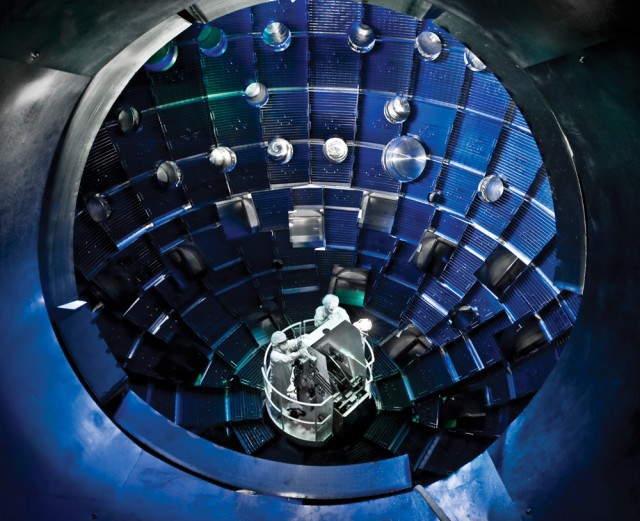
Mars_landerBut what if it were possible to cut that one-way trip down to just 30 days. That’s the question behind the new fusion rocket design being developed at the University of Washington and being funded by NASA. Led by John Slough, this team have spent the last few years developing and testing each of the various stages of the concept and is now bringing the isolated tests together to produce an actual fusion rocket.

The challenge here is to create a fusion process that generates more power than it requires to get the fusion reaction started, a problem which, despite billions of dollars of research, has eluded some of the world’s finest scientists for more than 60 years. However, researchers continue to bang their head on this proverbial wall since fusion alone – with its immense energy density – appears to be the way of overcoming the biggest barrier to space travel, which is fuel weight and expense.

spacecraft_marsUltimately, the UW fusion rocket design relies on some rather simple but ingenious features to accomplish its ends. In essence, it involves a combustion chamber containing rings made of lithium and a pellet of deuterium-tritium – a hydrogen isotope that is usually used as the fuel in fusion reactions. When the pellet is in the right place, flowing through the combustion chamber towards the exhaust, a huge magnetic field is triggered, causing the metal rings to slam closed around the pellet of fuel.

These rings then implode with such pressure that the fuel compresses into fusion, causing a massive explosion that ejects the metal rings out of the rocket and at 108,000 km/h (67,000 mph) and generating thrust. This reaction would be repeated every 10 seconds, eventually accelerating the rocket to somewhere around 320,000 km/h (200,000 mph) — about 10 times the speed of Curiosity as it hurtled through space from Earth to Mars.

NASA_fusionchamberHowever, things still remain very much in the R&D phase for the fusion rocket. While the team has tested out the imploding metal rings, they have yet to insert the deuterium-tritium fuel and propel a super-heated ionized lump of metal out the back at over 100,000 kilometers and hour. That is the next – and obviously a very, very – big step.

But in the end, success will be measured when it comes to two basic criteria: It must work reliably and, most importantly, it must be capable of generating more thermal energy than the electrical energy required to start the fusion reaction. And as already mentioned, this is the biggest challenge facing the team as it is something that’s never been done before.

However, most scientific minds agree that within 20 years at least, fusion power will be possible, and the frontiers it will open will be vast and wonderful. Not only will we be able to fully and completely lick the problem of clean energy and emissions, we will have rockets capable of taking us to Mars and beyond in record time. Deep space flight will finally become a possibility, and we may even begin considering sending ships to Alpha Centauri, Bernard’s Star and (fingers crossed!) Gliese 581!

daedalus_starship_630pxSource: Extreme.tech

The Future is Here: Web-Based “Brain” for Robots

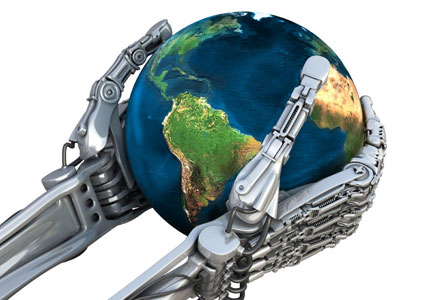
AI_robotMy gratitude once again to Nicola Higgins for beating me to the punch yet again! I hope she doesn’t mind that I’m totally posting a separate article, but something like this is just too good to reblog! In what is sure to excite Singularitarians and Futurists and scare the holy bejeezus out of technophobes and those fearing the Robopocalypse, a new web-based artificial brain went online recently, allowing robots to share information and seek help whenever they need it.

It’s called Rapyuta (or the The RoboEarth Cloud Engine), a part of the European Robo Earth project that began in 2011 with the hope of standardizing the way robots perceive the human world. Basically, it is an online database that robots can consult in order to get information about their world and help them make sense of their experiences, post-activation.

robot_internetThe name Rapyuta is taken from the Japanese film by Hayao Miyazaki known as Castle in the Sky, and refers to a place where all the robots live. The project, which involves researchers at five separate European research labs, has produced the database as well as software that robot owners can upload to their machines so that they can connect to the system at any time.

You might say the “brain” is an expression of sympathy for robots, who are no doubt likely to find the world intimidating and confusing once they come online. Now, instead of every robot building up their own idiosyncratic catalog of how to deal with the objects and situations it encounters, Rapyuta would be the place they ask for help when confronted with a novel situation, place or thing.

googlecarIn addition, the web-based service is able to do complicated computation on behalf of a robot. For example, if it needs to work out how to navigate a room, fold an item of clothing or understand human speech, it can simply do an online consultation rather than try to figure it out on its own. In addition, it is believed that robots will be cheaper thanks to this system since it will mean they won’t need to carry all their processing power on board.

Looking ahead, Mohanarajah Gajamohan, technical head of the project at the Swiss Federal Institute of Technology in Zurich, says that the designers believe the system could be particularly useful for drones, self-driving cars or other mobile robots who have to do a lot of number crunching just to get round.

internetDr Heico Sandee, Robo Earth program manager at the Dutch University of Technology in Eindhoven, also highlighted the economic benefits of this new concept. “On-board computation reduces mobility and increases cost,” he said, adding that as wireless data speeds increase, more and more robotic thinking could be offloaded to the web.

But above all, the aim here is about integration. As robots become more and more common and we human beings are forced to live with them amongst us, there could be difficulties. Without access to such a database, those involved in the project and roboticists at large fear that machines will remain on production lines and never live easily alongside humans.

robots_earthAs for those who support and await the Technological Singularity, this could be one such means through which it is achieved. The idea of machines that are capable of network and constantly upgrade their software is a step in the direction of machines that are capable of self-assembling, evolving and upgrading themselves constantly, which will basically result in a rate of progress that we can currently predict.

But on the other side of the debate, there are those who say this smacks of a Skynet-like supercomputer that could provide machines with the means to network, grow smarter, and think of ways of overthrowing their human masters. While I don’t consider myself the technophobic sort, I can certainly see how this invention could be perceived that way.

robots_ideaCreating a means for robots to communicate and contribute to a growing sense of knowledge, effectively letting them take ownership of their own world, does seem kinda like the first step in creating a world where robots no longer need human handlers. Then again, if we’re going to be creating AI, we might want to consider treating them like sentient, dignified beings beforehand, and avoiding any “controversy” when they begin to demand them later.

Gotta admit, when it comes to technophobes and paranoiacs, this kind of stuff is certainly fertile territory! For more information on the Rapyuta Engine, simply click here. And may God help us all!

terminator_judgement_daySource: bbc.co.uk

Powered by the Sun: Nanotech Solar Cells

???????????????????????????????????????????????????????????????????????????????????????????????????????????????????????????????????????????????????????????????????????????????????????????????????????????????????????????????????????????????????????????????????????????????????????????????????????????????????????????????????????????????????????????????????????????????????????????????????????????????????????????????????????????With every passing year, interest in solar power has been growing by leaps and bounds. Given the impacts of Climate Change, widespread droughts, tropical storms, wildfires and increasing global temperatures, this should not come as a surprise. But an equally important factor in the adoption of clean energy alternatives has to do with improvements that are being made which will make it more efficient, accessible, and appealing to power companies and consumers.

Three such recent developments come to us from Standford, MIT, and the Neils Bohr Institute, respectively; where researchers have announced new ways using nanoprocesses to boost the yield of individual solar cells. In addition to cutting costs associated with production, installation, and storage, increasing the overall electrical yield of solar cells is a major step towards their full-scale implementation.

solar_nanoFirst, there’s MIT’s new concept for a solar cell, which uses nanowires to massively boost the efficiency of quantum dot photovoltaic cells. Quantum dots – which are basically nano-sized crystals of a semiconducting material – are already being considered as an alternative to conventional silicon cells, since they are cheaper and easier to produce.

However, until recently they have been a letdown in the efficiency department, lagging significantly behind their silicon counterparts. By merging zinc oxide nanowires into the design of their quantum dot photovoltaic cells, the MIT researchers were able to boost the current produced by 50%, and overall efficiency by 5%.  Ultimately, their goal is to get that up to 10%, since that is considered to be the threshold for commercial adoption.

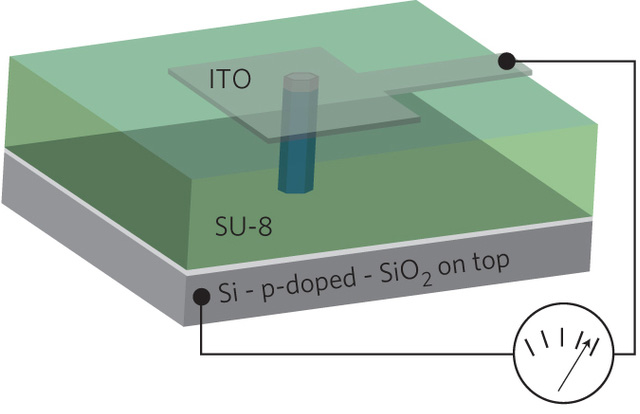
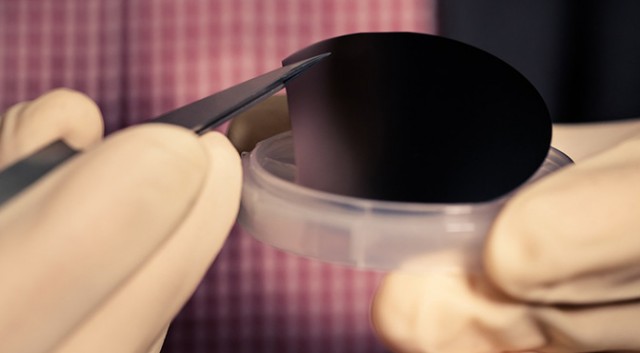
gallium-arsenide-nanowire-solar-cellMeanwhile, researchers at the Niels Bohr Institute in Denmark and EPFL in Switzerland announced that they have built solar cells out of single nanowires. In this case, the process involved growing gallium-arsenide (GaAs) wires on a silicon substrate, and then completing the circuit with a transparent indium tin oxide electrode, which are currently employed in the creation of photovoltaic cells and LEDs on the market today.

Prior to these development, nanowires were being researched mainly in conjunction with computer chips as a possible replacement for silicon. But thanks to the combined work of these researchers, we may very well be looking at solar cells which are not only hair-thin (as with the kind being developed by Penn State University) but microscopically thin. And much like the research at the University of Oslo involving the use of microbeads, this too will mean the creation of ultra-thin solar cells that have a massive energy density – 180 mA/cm2, versus ~40 mA/cm2 for crystalline silicon PVs.

solar_boosterAnd last, but not least, there was the announcement from Stanford University of a revolutionary new type of solar cell that has doubled the efficiency of traditional photovoltaic cells. This new device uses a process called photon-enhanced thermionic emission (PETE) that allows for the absorption of not only light, but heat. This combination makes this new type of cell the equivalent of a turbocharged solar panel!

pete-photovoltaic-thermionic-diagram-stanfordIn conventional cells, photons strike a semiconductor (usually silicon), creating electricity by knocking electrons loose from their parent atoms. The PETE process, on the other hand, uses the gallium arsenide wafer on top gather as much sunlight as possible, creating a lot of excited electrons using the photovoltaic effect. The underside, which is composed of nanoantennae, emits these photoexcited electrons across a vacuum to the anode with gathers them and turns them into an electrical current.

Beneath the anode is a of heat pipe that collects any leftover heat which could be used elsewhere. One of the easiest applications of PETE would be in concentrating solar power plants, where thousands of mirrors concentrate light on a central vat of boiling water, which drives a steam turbine. By concentrating the light on PETE devices instead, Stanford estimates that their power output could increase by 50%, bringing the cost of solar power generation down into the range of fossil fuels.

Though there are still kinks in their design – the cell has a very low 2% rate of energy efficient thus far – the researchers at Stanford are making improvements which are increasing its efficiency exponentially. And although their planned upgrades should lead to a solar cell capable of operating in extremely hot environments, they stress that the goal here is to build one that is capable of gathering power in non-desert environments, such as Spaced-Based solar arrays.

Combined with improved production methods, storage capacities, and plans to mount solar arrays in a variety of new places (such as on artificial islands), we could be looking at the wholesale adoption of solar power within a few years time. Every day, it seems, new methods are being unveiled that will allow Solar to supplant fossil fuels as the best, cheapest and most efficient means of energy production. If all goes as planned, all this could be coming just in time to save the planet, fingers crossed!

Sources: Extremetech.com, (2)

Towards a Cleaner Future: Fuel Cell Breakthrough!

hydrogen-fuel-cellOne of the greatest challenges facing renewable energy is making it affordable and cost effective, to the point where it will naturally offset such sources as fossil fuels and coal. And when it comes to hydrogen fuel cells, a recent development may have accomplished just that. Quite surprising when you consider that it came from Alberta, home of the Athabasca Oil Sands and an output of roughly 4 million barrels of crude a day.

It all happened late last month, when researchers at the University of Calgary published a paper in the Journal of Science that they had come up with a much cheaper and easier way to build an electrolyzer. This is the device that uses electricity to break up water into hydrogen and oxygen, which are then used to power hydrogen fuel cells.

Picture shows the refuelling hydrogen syFor some time now, these fuel cells have been considered the most promising means of powering automobiles with a clean, renewable energy source. By recombining the two basic elements of hydrogen and oxygen, energy is generated and the only waste product is water. The only difficulty is the means of production, as electrolyzers often depend on expensive and sometimes toxic metals.

The most common of current methods involves the use of expensive rare earth metals in precise crystalline arrangements to catalyze, or speed up, the reaction. But with the new process developed by Chris Berlinguette and Simon Trudel comes into play, which involves catalyzers built out of common metals without the need for the crystal structure, the process will not only be vastly simplified but extremely cheaper.

solar_arrayBased on the estimates presented in their paper, Trudel and Berlinguette estimate that their new eletrolyzer will deliver results comparable to current techniques but at a cost of about one-one-thousandth the norm. The implications for clean, renewable energy,  such as wind or solar generators, could be enormous. Not only would it be far cheaper and more efficient, there would be far less toxic waste materials produced.

Not only that, but another major stumbling block for clean energy could be overcome. As is the case with just about any type of renewable power source – wind, solar, tidal – is that it is dependent on conditions which limit when power can be generated. But stored hydrogen energy can be used at anytime and could easily replace gas and coal, just as long as the production process is cost-effective.

hydrogencarAs Berlinguette himself pointed out, making and electrolyzer cost-effective means being able to produce power on demand and to scale:

If you think of a wind turbine producing electricity at two o’clock in the morning, there’s no one around to actually use that electricity, so it just gets dumped. If you could set that up with an electrolyzer, you could convert that electricity into hydrogen, then the next day, when there is demand, you can sell that electricity at a premium during periods of high demand.

In anticipation of the inevitable investment this will attract, Berlinguette and Trudel have already formed a company called FireWater Fuel Corp. to market their work and expect to have a commercially available electrolyzer by next year. So for those of you with money to invest and a socially-responsible, environmental outlook, get out your check books out and be prepared to invest!

Source: huffingtonpost.ca


The Future is Here: The Air Scrubbing Skyscraper!

aircleaning_skyscraperAir pollution has always been a problem in urban centers. But with the massive industrialization and urban expansion taking place in some of the most heavily populated regions of the world (China and India being foremost), the issue of how to deal with increasing emissions is especially important. And more and more, researchers and environmentalists are considering options that hits air pollution where it lives.

Two such individuals are Danny Mui and Benjamin Sahagun, a pair of architects who have devised a rather novel concept for dealing with the thick layers of carbon dioxide pollution that are so common to major urban centers. In essence, it is a pair of buildings that scrub CO2 emissions from the air, and thus marries the concept of Carbon Capture technology to urban planning.

artificial_trees1Dubbed the CO2ngress Gateway Towers, the concept involves two crooked buildings that are outfitted with a filtration system. This system then feeds the captured CO2 to algae grown in the building which then converts into biofuels for use in vehicles. In this respect, it is not unlike the artificial tree concept designed by Klaus Lackner, director of the Lenfest Center for Sustainable Energy at Columbia University.

Much like these “trees”, the carbon capture technology involves using a entirely natural process to absorb CO2 from the air and then combine it with water, thus causing a chemical reaction that results in a fossil fuel precursor which can easily be converted. This fuel can then be consumed as gasoline or ethanol, thus giving people the ability to keep burning fossil fuels while they research cleaner, more sustainable sources of fuel.

aircleaning_skyscraper3Ultimately, the idea here is not to offer a be-all, end-all solution to the problem, but rather to buy the human race time to clean up its act. And by ensuring that carbon capture technology is available in large urban dwellings, they are looking to ensure that one of the many symptoms of urban sprawl – i.e. large urban dwellings – are part of the solution.

Said Mui and Sahagun on the Council on Tall Buildings and Urban Habitat (CTBUH) website:

The scrubbers are the first step in a process that generates fuel for a fleet of eco-friendly cars for building residents. The system raises public awareness of air pollution and its impact on the health of Chicagoans.

aircleaning_skyscraper1Aside from the scrubbers, the buildings boast some other impressive features to cut down on urban annoyances. These include the “double skin facade”- two layers of windows – that can cut down on outside traffic noise. In addition, the spaces on either side of the buildings’ central elevator core can be used as outdoor terraces for residents.

Apparently, Mui and Sahagun worked on the project while students at the Illinois Institute of Technology, where it earned them an honorable mention in the 2012 CTBUH student competition. According to Mui, they created the structure after the semester ended, but there are no immediate plans to build it.

aircleaning_skyscraper2However, given the growing interest in arcologies and urban structures that reduce our impact on the environment, it is likely to garner serious interest very soon. Especially in China, where air pollution is so severe that it causes up to 750,000 deaths from respiratory illness a year and cities are still growing, buildings like this one could easily become the stone that kills two birds.

Sources: factcoexist.com, bbc.com

Of Cybernetic Hate Crimes

Google Glass_CalaLast week, a bar in Seattle banned the use of Google Glass. The pub declared on their Facebook page that if anyone wanted to order a pint, they had better remove their $1500 pair of augmented reality display glasses beforehand. Citing the glasses potential to film or take pictures and post them on the internet, the bar owner unflinchingly declared that “ass-kickings will be encouraged for violators.”

This is the second case of what some are dubbing a new wave of “Cybernetic hate crimes”. The first took place back in July 2012 when Steve Mann, a Canadian university professor known as the “father of wearable computing”, was physically assaulted at a McDonalds in Paris, France. In this case, three employees took exception with his wearable computer and tried to physically remove it, an impossibility since it is permanent screwed into his head, and then three him out of the restaurant.

steve-mann1Taken together, these two incidents highlight a possible trend which could become commonplace as the technology grows in use. In some ways, this is a reflection of the fears critics have raised about the ways in which these new technologies could be abused. However, there are those who worry that these kinds of fears are likely to lead to people banning these devices and becoming intolerant to those who use them.

By targeting people who employ augmented reality, bionic eyes, or wearable computers, we are effectively stigmatizing a practice which may become the norm in the not too distant future. But Google responded to the incident with optimism and released a statement that cited shifting attitudes over time:

It is still very early days for Glass, and we expect that as with other new technologies, such as cell phones, behaviors and social norms will develop over time.

smartphonesYes, one can remember without much effort how similar worries were raised about smartphones and camera phones not that long ago, and their use has become so widespread that virtually all doubts about how they might be abused and what effect they would have on social norms have gone quiet. Still, doubts remain that with the availability of technologies that make it easier to monitor people, society is becoming more and more invasive.

But to this, Mann, responds by raising what he had always hoped portable computing would result in. Back in the 1970’s when he first began working on the concept for his EyeTap, he believed that camera-embedded wearables could be both liberating and empowering. In a world permeated by security cameras and a sensory-sphere dominated by corporate memes, he foresaw these devices a means for individuals to re-take control of their environment and protect themselves.

EyeTapThis was all in keeping with Mann’s vision of a future where wearable cameras and portable computers could allow for what he calls sousveillance — a way for people to watch the watchers and be at the ready to chronicle any physical assaults or threats. How ironic that his own invention allowed him to do just that when he himself was assaulted!

And in the current day and age, this vision may be even more important and relevant, given the rise in surveillance and repressive measures brought on in the wake of the “War on Terror”. As Mann himself has written:

Rather than tolerating terrorism as a feedback means to restore the balance, an alternative framework would be to build a stable system to begin with, e.g. a system that is self-balancing. Such a society may be built with sousveillance (inverse surveillance) as a way to balance the increasing (and increasingly one-sided) surveillance.

Raises a whole bunch of questions, doesn’t it? As the issue of dwindling privacy becomes more and more of an issue, and where most people respond to such concerns by dredging up dystopian scenarios, it might be helpful to remind ourselves that this is a form of technology that rests firmly in our hands, the consumers, not those of an overbearing government.

google_glass_banBut then again, that doesn’t exactly ease the fears of a privacy invasion much, does it? Whether it is a few functionaries and bureaucrats monitoring us for the sake of detecting criminal behavior or acts of “sedition”, or a legion of cyberbullies and gawking masses scrutinizing our every move, being filmed and photographed against our will and having it posted is still pretty creepy.

But does that necessitate banning the use of this technology outright? Are we within our rights, as a society, to deny service to people sporting AR glasses, or to physically threaten them if they are unable or unwilling to remove them? And is this something that will only get better, or worse, with time?

Sources: IO9, (2), news.cnet.com, eecg.toronto.edu