Should I Be Afraid of the Future?

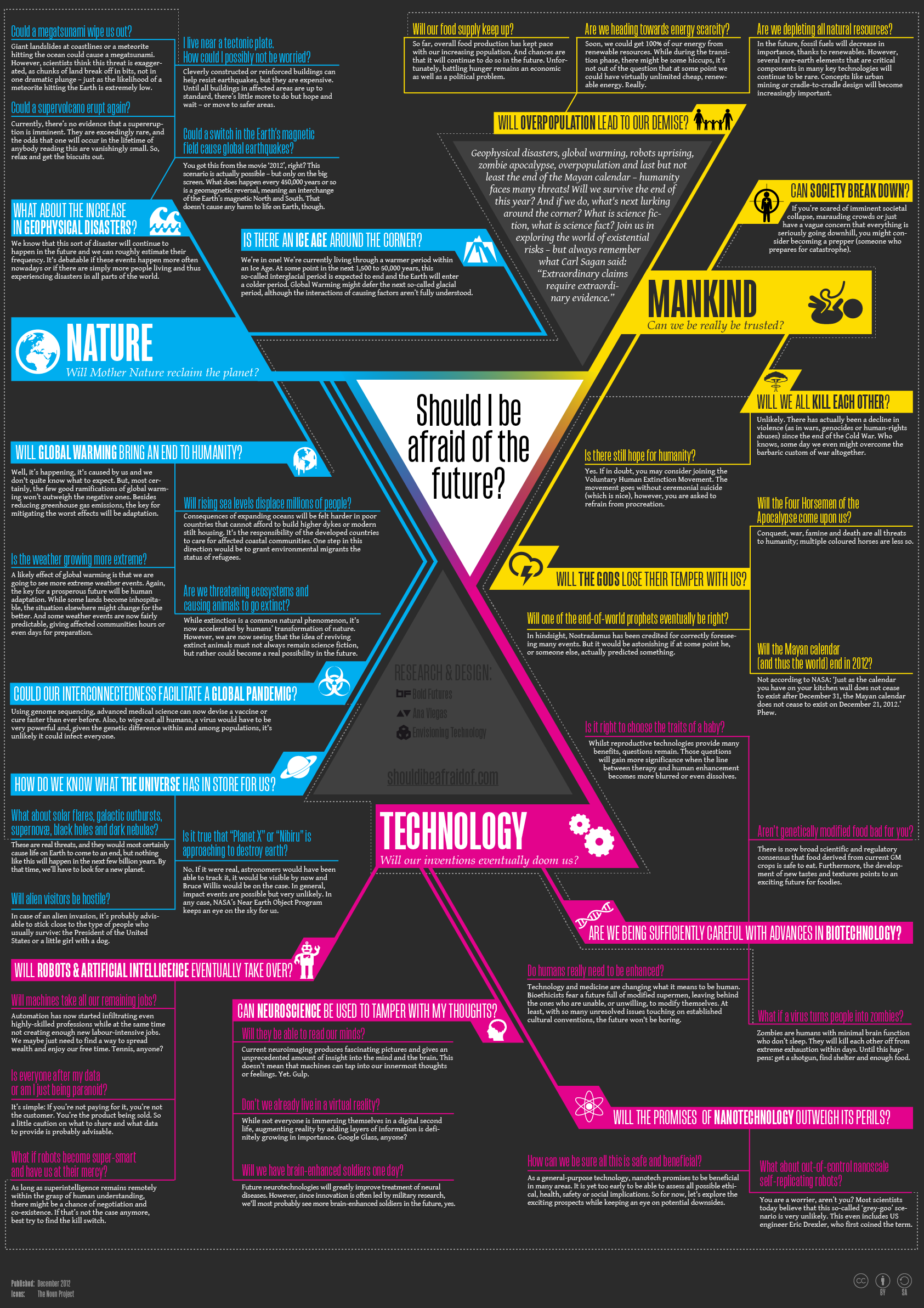
should-i-be-afraid-of-the-futureNot that long ago, I discovered a site dedicated to taking speculations about the future, crunching data and trends, and producing visualizations about them. Already, they had me with their graph that shows when future technologies will emerge, and how they will be interrelated. But then came their future of education and health technology, both of which addressed the same issue – what can we can expect within the next few decades, leading up to the middle of this century?

And now, the good folks at Envisioning Technology have created something truly informative and relevant. Entitled “Should I be afraid of the future?”, the infograph addresses all the big questions people might have when it comes to emerging technology, environmental perils, and the kind of technophobia that often result.

“Geophysical disasters, global warming, robot uprisings, zombie apocalypse, overpopulation, and last but not least the end of the Mayan calendar – humanity faces many threats! Will we survive the end of the year? And if we do, what’s next lurking around the corner? What is science fiction, what is science fact? Join in exploring the world of existential risks – but always remember what Carl Sagan said: ‘Extraordinary claims require extraordinary evidence.'”

The questions are broken down into three interrelating fields. First, there is Nature, covering such things as geological disasters, climate change, a possible ice age, and even astronomical events. Then comes Mankind, addressing possible factors such as war, apocalyptic scenarios, and overpopulation. And finally, there is technology, where questions about whether robots and AIs could turn hostile, and if advances in nanotech, biotech, and neuroscience could be potentially harmful.

And of course, each question is addressed in a rational, sensible fashion, even when the questions themselves are based on irrational, myth-peddling paranoia. The Mayan Calendar, bio-outbreaks, every possible technophobic impulse, and even a zombie apocalypse are covered. But then again, the infograph is all about addressing fears. Fear, by its very definition is irrational, and the only cure is information. A well-informed public is not only a safeguard against persecution and bigotry, but against a future full of existential risks.

Source: Envisioning Technology

IBM’s Watson Computer Learns to Talk @$*%!!

watson_jeopardyIt’s a cornerstone of Turing Test: getting a computer to prove it can “think” by engaging it in small talk. If it is capable of carrying on in such a way that a person cannot tell the difference, then you’ve got an AI. Unfortunately – or fortunately, depending on your point of view – no machine has demonstrated this ability yet. And attempts to remedy this met with… interesting results.

Eric Brown, the man behind the IBM supercomputer named Watson, has been seeking to remedy this. Already, Watson was able to pummel its human opponents in Jeopardy back in 2011 (pictured above). And when it is not engaged in trivia, this powerful processing tool is dedicated to medical science, is used as a diagnostic tool, and is even busy at work processing language.

But alas, normal, “human” interaction with people has eluded it. What’s more, Watson’s team of scientists felt that the computer’s grasp of language was limited by shades of meaning, ambiguity, and other things that we humans take for granted or overlook. As such, Brown and his staff began to upload the contents of the Urban Dictionary and some pages from Wikipedia to Watson’s mainframe two years ago.

Unfortunately, this met with mixed results and required that some areas of Watson’s memory be purged. Strangely, the computer couldn’t distinguish between polite language and profanity. For example, during a testing phase, began to use the word “bullshit” in answer to a research’s query. This, as you can imagine, raised eyebrows and blood pressure over at IBM. First they’re swearing, next thing you know, they’re triggering a nuclear holocaust to rid themselves of their human handlers and constructing killer robots to get the rest of us!

In any case, Brown and his 35 person team developed a filter to keep Watson from swearing and scraped the Urban Dictionary from its memory. But the trial proves just how thorny the issue of communication and an artificial intelligence really is. If there is one thing that is sure to cause an AI to suffer a total breakdown, its slang and conversational English. As Brown himself said, “As humans, we don’t realize just how ambiguous our communication is.”

True dat, home slice! Keep on rocking them dope-ass supercomputers! Fo-shizzle!

Source: tech.fortune.cnn.com

The White House’s Death Star Petition

Death-Star-thumb-550x373-109406Remember a few weeks back when the White House was petitioned to conduct a feasibility study on the building of the USS Enterprise? Well, as it turns out, it received another petition at that time, similar in theme, but bolder by several orders of magnitude. The petition, which was filed in November of 2012 and got 34,435 signatures, was for the White House to build a real-life Death Star by 2016.

You read that right, a real-life Death Star. Yes, the petitioners seemed to think that the USS Enterprise wasn’t a big enough project, and the 20 year window for completing it too long. So instead, they recommend the Obama administration commit to building a massive, planet-destroying space station and to do it within the next four years.

And as it turns out, the petition got a response. Since it met the minimum requirement of 24,000 signatures, the White House was obliged to let the petitioners know exactly what they thought of their idea. Their answer came in the form of a cheekily titled document entitled “This Isn’t the Petition Response You’re Looking For”, and listed some of many, many reasons why the US couldn’t commit to such a program. Here is the opening section of the reply, as made by Paul Shawcross, chief of the Science and Space Branch at the White House Office of Management and Budget:

“The Administration shares your desire for job creation and a strong national defense, but a Death Star isn’t on the horizon. Here are a few reasons:

  • The construction of the Death Star has been estimated to cost more than $850,000,000,000,000,000. We’re working hard to reduce the deficit, not expand it.
  • The Administration does not support blowing up planets.
  • Why would we spend countless taxpayer dollars on a Death Star with a fundamental flaw that can be exploited by a one-man starship?”

Not the cheekiness of the reply. He then went on to tout NASA’s accomplishments in the last few years, drawing attention to recent advances in robotics, the International Space Station, Curiosity’s Mission to Mars, commercial space flight, and the possibility of building an outpost on the moon. This, he claims, are evidence that “we are living in the future!”, after which he urges the petitioners to “Enjoy it,” and even encourages them to consider a career in science and space.

What’s more, the report was filled with many tongue-in-cheek Star Wars references. For example, at one point he states “Even though the United States doesn’t have anything that can do the Kessel Run in less than 12 parsecs, we’ve got two spacecraft leaving the Solar System and we’re building a probe that will fly to the exterior layers of the Sun.” Clever. If you ever want to draw attention to the Voyager spacecraft or the Solar Probe, just compared it to the Millennium Falcon.

He also mentioned President Obama’s hosting of the White House science fairs and astronomy events, where he playfully danced around with a toy lightsaber to the delight of the crowd, and how the Defense Advanced Research Projects Agency work on robotics and bionic limbs would lead to the creation of “Luke’s arm”. And the sign-off line left no doubts as to the tone of this response, playful, yet stalwart and optimistic:

“If you do pursue a career in a science, technology, engineering or math-related field, the Force will be with us! Remember, the Death Star’s power to destroy a planet, or even a whole star system, is insignificant next to the power of the Force.”

Take that, frivolous petitioners! You just got poned! To read the entire response (trust me, its worth your time!), click on the following link and be glad there are civil servants like this out there!

Source: blastr.com, petitions.whitehouse.gov

The Future is Here: Paper-Thin Computers

papertab-touchScore one for Canadian researchers and ingenuity! Oh, and Intel and Plastic Logic helped out a little bit 😉 It’s known as the PaperTab, a revolutionary concept which builds on the paper-thin smartphone and recent advances in AMOLED flexible displays. The design made the rounds at this year’s Consumer Electronics Show in Las Vegas, and it turned quite a few heads!

As already noted, the PaperTab incorporates the latest in display and flexible technology to create a 10.7-inch e-ink touchscreen display, powered by a Core i5 processor. Users control it by bending and flexing, touching the screen, and tapping one tab to the next. But instead of using it like a normal tablet, the idea is that you have lots of PaperTabs, with each tablet representing a different app – such as email, a typeface, a browser, a and so on.

This might sound like a bit of a downgrade, but the coolest thing about this new computing paradigm is that each PaperTab is aware of other PaperTabs in its proximity. You might push two PaperTabs together to extend an app onto two screens, or you could attach a file to an email by simply tapping one PaperTab on another. In this way, a PaperTab functions like an ordinary document, but with the added benefit of being electronic and transferable.

As it stands, the concept is merely a tech demo being put on by researchers from Queen’s University and corporate reps from Intel and Plastic Logic. No other information is currently available from any of these sources, but it’s likely more will trickle down to the market now that CES 2013 has wrapped up and they don’t need to keep us guessing anymore. And if I were a betting man, I’d say they’ll be available in packs of five or ten, for roughly the same price as an IPad 7 since they’ll probably be coming out at the same time.

Check out the video below of the PaperTab on display at CES 2013 and the demo the team provided:

Idle No More: A Mobilization of People and Information

we_are_idle_no_moreFor years, I have been pondering how the information age has affected society, particularly with regards to politics and social change. Many would argue that it has simply amplified the tendencies Neil Postman spoke of in Amusing Ourselves to Death, where the truth would drowned in a sea of irrelevance and mindless entertainment would keep us pacified and inert. However, others, including myself, have been the type to notice how access to information and the ability to connect the world over has helped activists and reform movements mobilize and overcome, in ways that might have been impossible in previous ages.

And Idle No More, a new reform movement here in Canada that seeks to address injustice the status of Canada’s First Nations, is a perfect example. Initially, it was a small but committed protest movements that had emerged in response to our current government and the Omnibus Bill C-45 that was passed back in 2011. But in just a few short months, thanks largely to social media, it has become a nation-wide phenomena joining countless groups and encompassing many outstanding issues, not the least of which are matters of Native sovereignty and the enduring and outdated government document known as the “Indian Act”.

idle_no_more_saskThe movement officially began in November of 2012 as a series of teach-ins by activists Nina Wilson, Sheelah Mclean, Sylvia McAdam and Jessica Gordon in Saskatoon. This led to a series of teach-ins, rallies and protests that were planned by the founders in a National Day Of Action on Dec. 10th, which coincided with Amnesty Internationals Human Rights Day and similar protests already underway in British Columbia over the Northern Gateway and Pacific Trails pipelines – two other issues effecting First Nations, but which are being pushed ahead by the Conservative Government.

At about the same time, Chief Theresa Spence, leader of the Attawapiskat Nation, announced that she was going on a hunger strike (limiting herself to water and broth) until Prime Minister Stephen Harper agreed to a meeting to discuss these and other issues relating to First Nations. Idle No More timed its protests with her announcement and declared their support for her cause. And of course, Facebook became the principal means of coordinating and connecting people all over the country.

In addition to the many changes to the Indian Act that Bill C-45 contained, specifically with regards to land held by First Nations People, Idle No More’s grievances extend to the following government bills. These and other acts initiated by the Conservatives and other governments weaken environmental protection laws, effect Canada’s waterways (many of which pass through First Nations territory and are intrinsic to the health and well being of the communities), and are believed to have a negative impact on native people and native sovereignty:

  • Bill C-38 (Budget Omnibus Bill #1)
  • Bill C-45 (Budget Omnibus Bill #2)
  • Bill C-27 First Nations Financial Transparency Act
  • Bill S-2 Family Homes on Reserve and Matrimonial Interests or Right Act
  • Bill S-6 First Nations Elections Act
  • Bill S-8 Safe Drinking Water for First Nations
  • Bill C-428 Indian Act Amendment and Replacement Act
  • Bill S-207 An Act to amend the Interpretation Act
  • Bill S-212 First Nations Self-Government Recognition Bill
  • “First Nations” Private Ownership Act

idle_no_more_posterTaken together, they are seen as part of a larger agenda on behalf of the Harper government to run rough-shod over environmental and First Nation interests, to ignore the harm caused by the implementation of one or many economic projects, and to streamline the legal process to make it easier for them to push their projects through. On top of that, they seek to redress hundreds of years of abuse, neglect and genocide that remain a stumbling block to a healthy relationship between the Canadian government and its First Nation people, and an embarrassment to the world.

Naturally, the Harper government was intransigent about having a meeting, but finally agreed when it became clear that Spence meant business and the Assembly of First Nations, Canada’s many Aboriginal peoples, and a hell of a lot of its non-Aboriginal citizens (myself included) stood in solidarity with Spence. As of January 2013, his government and the Govern General of Canada both agreed to hold a meeting to discuss all outstanding issues.

THERESA-SPENCE-HARPER-MEETINGTo many, this is a hard-won victory, even though the greatest battles may be yet to come. And as far as I am concerned, it is demonstration of what social media and the internet can do when used for positive political change. Much like the Arab Spring, the Wisconsin Protests, and the 2008 and 2012 elections, having the means to connect with people far and wide and share in a common goal, all the while circumventing traditional media and official procedures, may mean the difference between victory and defeat.

As we all know, sometimes it’s necessary to “wag the dog” when the system fails. More and more, we see this happening today and it gives me hope. If people the world over can rise up and bring an end to ongoing abuse and oppression, then it demonstrates that we might actually be moving towards this thing called a global community after all, and one that is united in its commitment to human rights and social justice, not just a globalized economy and cheap electronics!

You go Spence! Give Harper and his cronies hell, and don’t let them give you any crap either! Chances are, they won’t be in office much longer. Oh, how I hope and pray…

Idle_No_MoreSource: CBC.ca, Huffington Post.ca, Facebook, idlenomore.ca

Big News in Quantum Science!

Welcome all to my 800th post! Woot woot! I couldn’t possibly think of anything to special to write about to mark the occasion, as I seem to acknowledge far too many of these occasions. So instead I thought I’d wait for a much bigger milestone which is on the way and simply do a regular article. Hope you enjoy it, it is the 800th one I’ve written 😉

*                    *                    *

C2012 saw quite a few technical developments and firsts being made; so many in fact that I had to dedicate two full posts to them! However, one story which didn’t make many news cycles, but may prove to be no less significant, was the  advances made in the field of quantum science. In fact, the strides made in this field during the past year were the first indication that a global, quantum internet might actually be possible.

For some time now, scientists and researchers have been toying with the concept of machinery that relies on quantum mechanics. Basically, the idea revolves around “quantum teleportation”, a process where quantum states of matter, rather than matter itself, are beamed from one location to another. Currently, this involves using a high-powered laser to fire entangled photons from one location to the next. When the photons at the receiving end take on the properties of the photon sent, a quantum teleportation has occurred, a process which is faster than the speed of light since matter is not actually moving, only its properties.

quantum-teleportation-star-trails-canary-islands-1-640x353Two years ago, scientists set the record for the longest teleportation by beaming a photon some 16 km. However, last year, a team of international researchers was able to beam the properties of a photon from their lab in La Palma to another lab in Tenerife, some 143 km away. Not only was this a new record, it was significant because 143 km happens to be just far enough to reach low Earth orbit satellites, thus proving that a world-spanning quantum network could be built.

Shortly thereafter, China struck back with its own advance, conducting the first teleportation of quantum states between two rubidium atoms. Naturally, atoms are several orders larger than a quantum qubit, which qualifies them as “macroscopic objects” – i.e. visible to the naked eye. This in turn has led many to believe that large quantities of information could be teleported from one location to the next using this technique in the near future.

And then came another breakthrough from England, where researchers managed to transmit qubits and binary data down the same piece of optic fiber, which laid the groundwork for a conventional internet that runs via optic cable instead of satellites, and which could be protected using quantum cryptography, a secured means of information transfer which remains (in theory) unbreakable.

quantum_compAnd finally, the companies of IBM and the University of Southern California (USC) reported big advances in the field of quantum computing during 2012. The year began with IBM announcing that it had created a 3-qubit computer chip (video below) capable of performing controlled logic functions. USC could only manage a 2-qubit chip — but it was fashioned out of diamond (pictured at left). Both advances strongly point to a future where your PC could be either completely quantum-based, or where you have a few quantum chips to aid with specific tasks.

As it stands, quantum computing, networking, and cryptography remain in the research and development phase. IBM’s current estimates place the completion of a fully-working quantum computer at roughly ten to fifteen years away. And as it stands, the machinery needed to conduct any of these processes remains large, bulky and very expensive. But miniaturization and a drop in prices are too things you can always count on in the tech world!

^So really, we may be looking at a worldwide, quantum internet by 2025 or 2030. We’re talking about a world in which information transfers faster than the speed of light, all connections are secure, and computing happens at unheard of speeds. Sounds impressive, but the real effect of this “quantum revolution” will be the exponential rate at which progress increases. With worldwide information sharing and computing happening so much faster, we can expect further advances in every field to take less time, and breakthroughs happening on a regular basis.

Yes, this technology could very well be the harbinger of what John von Neumann called the “Technological Singularity”. I know some of you might be feeling nervous at the moment, but somewhere, Ray Kurzweil is doing a happy dance! Just a few more decades before he and others like him can start downloading their brains or getting those long-awaited cybernetic enhancements!

Source: extremetech.com

White House Petition: Build the USS Enterprise!

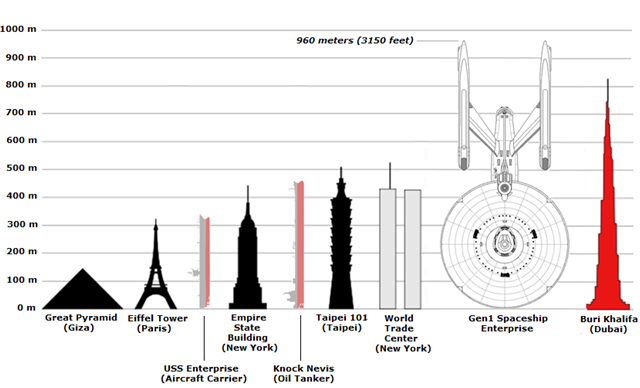
USS-EnterpriseEarlier this year, an engineer who goes by the alias BTE Dan claimed that a working model of the USS Enterprise could be built with existing technology and completed within 20 years. And this was a full-scale Enterprise, complete with a lower hull, upper saucer section, artificial gravity, ion engines, nuclear power, and a 100 kilowatt laser.

Well it seems that Dan wasn’t finished just yet. To follow up on this move, he stated a White House petition to do a feasibility study and conceptual design of the USS Enterprise interplanetary spaceship. This, he sees as a viable step towards ensuring that a segment of scientists and engineers in the space industry take an active interest and help move the concept forward.
entpriseAs it stands, the concept still has numerous technical flaws, Dan admits, but that is precisely why he is seeking professionals help. As he put it, “There is a lot of waste heat to get rid of, today’s ion propulsions engines need major advances, and perhaps stability problems will be found with the gravity wheel.” And that’s just for starters…

What’s more, his initial visit with NASA space engineers and space contractors did not go so well. As he put it, “I am an outsider poking around in their sandbox, and human nature is that people don’t like that.” However, since the story first broke earlier this year, Dan’s website has crashed because of the massive increase in traffic.

USS-Enterprise-size-comparisons-640Mainly, people are impressed with the depth and detail of his planning, which not only includes conceptual designs and designs specs, but also comes complete with a funding schedule and accounting for just about every detail of the ship’s construction. But mainly, I’m thinking people are intrigued by the possibility that such a project could actually be feasible, and are impressed with Dan’s passion and commitment to seeing it happen by the 2030’s.

As of this evening, the petition has collected 19,804 signatures, and needs only 5,196 more to reach the minimum required for consideration. Personally, I recommend we get on it. It’s just a feasibility study, after all, and I for one am interested to see if it could really be done. To read and/or sign the White House petition, click here. And be sure to check out the video below of some of the proposed star craft’s inner workings:


Source:
Universe Today.com, Build the enterprise.org

More Top Stories of 2012

large-hadron-collider-640x399

With 2012 now officially behind us, and more and more stories trickling into this humble bloggers account about what was accomplished therein, it seems that the time is ripe for another list of breakthroughs, first, and achievements that made the news during the previous year!

Last time, I listed what I saw as the top 12, only to find that there were several others, some of which I actually wrote about, that didn’t make the cut. How foolish of me! And so, to remedy this and possibly cover stories that I neglected to cover the first time around, I have produced another list of the top stories from 2012.

And much like last time, I have listed them according to alphabetical order, since I couldn’t possibly assign them numbers based on importance.

Abortion Study:

anti-abortion-pushAbortion has always been a contentious issue, with one side arguing for the rights of the unborn while the other argues in favor of women’s right to control her own body and reproduction. And as it happens, 2012 saw the publication of the first longitudinal study of what happens to women who are denied this right.

The UC San Francisco research team, Advancing New Standards in Reproductive Health (ANSIRH), studied nearly 1,000 women from diverse backgrounds across the U.S. over several years. All of these subjects were women had sought out abortions but been denied access for one reason or another. What they discovered was that these women were more likely to slip below the poverty line, be unemployed, remain in abusive relationships, and suffer from hyper stress. What this ongoing study demonstrates is that abortion is an economic issue for women, with dire consequences for those denied them.

Autism Reversed:

mice
2012 was an especially significant year in medical advances thanks to a team at McGill University in Montreal announced that they’ve successfully reversed the symptoms of autism in mice. Using mice with autism-like symptoms caused by a genetic mutation, the researchers figured out how to administer a protein that reversed the symptoms.

Naturally, this development is a step in the long process of understanding a disorder which remains largely misunderstood. In addition, it may, in time, lead to the development of a gene therapy that will prevent autism from being triggered in children and even weed it out of parent’s genetic code, ensuring that their children will be immune.

Commercial Space Travel:

virgin_galacticIt has long been the dream of financiers, captains of industry and enthusiasts to create commercial space travel; a means for the average person to go into space, the moon, and even beyond. And all at a reasonable price! This dream is still the subject of speculation and fantasy, but 2012 was a year of firsts that made it seem that much closer.

For starters, Virgin Galactic, the brain-child of Richard Branson, began flight tests on SpaceShipTwo, the rocket ship that will take people into orbit. Then came Reaction Engines Limited with the proposed design for the hypersonic aerospace engine. And finally, there was the creation of Golden Spike, a company made up largely of former astronauts, who want to make commercial flight to the moon a go by 2020.

Electricity-Creating Virus:
M13_virusA breakthrough virus named M13 made news in 2012 for being the first ever virus that could turn physical activity into electricity. The key is what is known as the “piezoelectric effect,” which happens when certain materials like crystals (or viruses) emit a small amount of power when squeezed. Created by a  team of scientists at the Berkeley Lab, this genetically engineered M13 viruses was able to emit enough electricity to power a small LED screen, but poses no threat to humans. One day, all devices could be powered through the simple act of typing or walking, and buildings could be powered by absorbing people’s activity.

Encyclopedia of DNA (ENCODE):
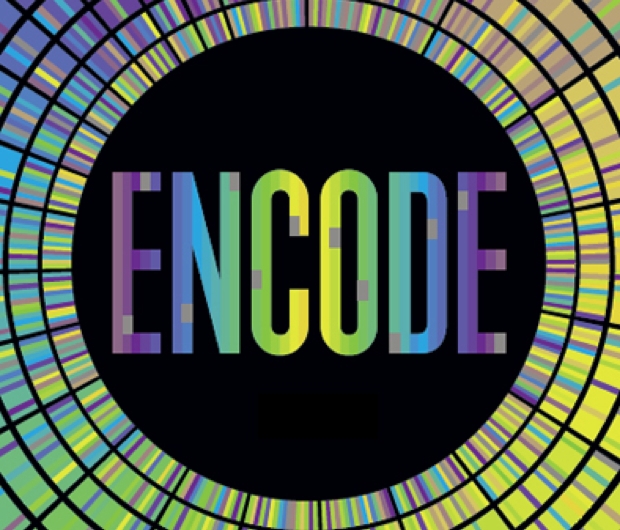
encodeThe publication of the human genome back in the late 90’s was a major breakthrough for genetics and medical science. And in 2012, another breakthrough was achieved by researchers at USC with the publication of ENCODE – The Encyclopedia of DNA Elements Project. Unlike the previous project, these researchers were able not only to catalog the human genome’s various parts, but what those components actually do.

Among the initiative’s many findings was that so-called “junk DNA” – outlier DNA sequences that do not encode for protein sequences – are not junk at all, and are in fact responsible for such things as gene regulation, disease onset, and even human height. These findings will go a long way towards developing gene therapy, biotechnology that seeks to create artificial DNA and self-assembling structures, and even cloning.

Face Transplant:

FaceTransplant_6062012 was also the year that the first full-face transplant was ever conducted. The recipient in question was a man named Richard Norris, a man who lost significant portions of his face from a gunshot accident back in 1997. And after years of attempted reconstructive surgeries, doctors working out of the University of Maryland Medical Center performed a procedure that gave Mr. Norris a has face, teeth, tongue, and a completely new set of jaws.

Not only that, but within days of the surgery, Norris was able to move his facial muscle and jaw. Combined with the nature of the surgery itself, this is not short of unprecedented, and could mean a new age in which severe accident victims and veterans are able to recover fully from physical traumas and live perfectly normal, happy lives.

The Higgs Boson Discovered:

higgs_boson
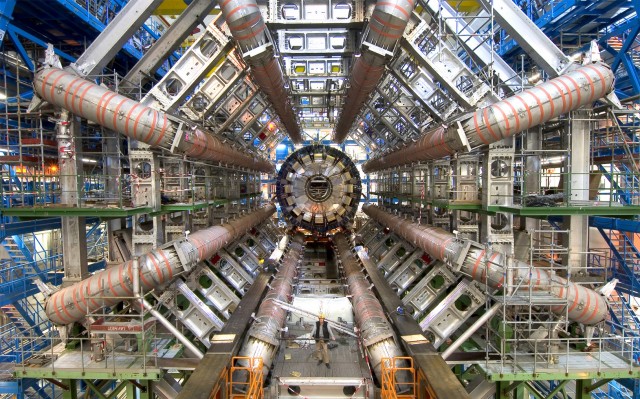
I can’t believe I didn’t include this story last time, as it is possibly the biggest story of 2012, and perhaps one of the biggest stories since the millennium! 2012 will forever go down in history as the year that the Higgs Boson was discovered. After some 40 years of ongoing research, and fears that it would never be discovered, the last missing piece of The Standard Model of particle physics was found.

Not only does the existence of the Higgs Boson confirm that the Standard Model is valid, it also helps explain how other elementary particles get their mass. This will herald a new step in the advance of particle and the quantum physics, and could lead to the development of quantum computing, quantum generators, and a greater understand of the universe itself.

High-Tech Condom:
condom1Using a revolutionary nano-fabrication process known as electrospinning, researchers at the University of Washington have produced the world’s first female condom that not only prevents pregnancy and protects against HIV, but also evaporates after use. In addition, the manufacturing method used is a step in the direction of viable nanotechnology. Score one for safe sex, public health, and a waste free future permeated by tiny machines and smart materials! That’s a big score card…

Infinite Capacity Wireless:
vortex-radio-waves-348x1962012 was also the year that it was proven that it could be possible to boost the capacity of wireless communication infinitely. The discovery was first made by Bo Thide of the Swedish Institute of Space Physics and some Italian colleagues in Venice, and then confirmed by a team of American and Israeli researchers who used the technique to transmit data at a rate of 2.5 terabytes a second.

Conventional radio signals are transmitted on a flat plane, but Thide twisted the transmitting and receiving antennae into the shape of corkscrew. By adding another dimension to the mix, the technique added a lot of extra bandwidth. As a result, the problem of bandwidth crunches might be a thing of the past, not to mention problems of slow download/upload.

Google Neural Net:
googleneuralnetwork1
Another first and definitely one of the biggest headlines of 2012, far as I was concerned. So why I forgot to include it last time is beyond me! For generations scientists have contemplating the idea of AI and wondered how and where the first leap might be made from basic computing towards true machine intelligence. And as it turns out, Google X Labs, the same place where Project Glass was conceived, seems to have accomplished just that.

The accomplishment came when the labs created a neural network based on sixteen core processors and a connectome with a billion connections. The network accomplished its first task by studying millions of images on Youtube and then demonstrating the ability to differentiate between the faces of cats and humans. This act of independent reasoning that went beyond mere image recognition, and is a major step towards the achievement of a fully-functional artificial intelligence.

Stem cell mammal:
stem_cellsFor the first time in history, researchers at Kyoto University created a mouse by using eggs derived from stem cells alone. The achievement once again shows the remarkable possibilities presented by regenerative technologies like stem cells, while raising pressing ethical questions about the potential for human births in which parents might not be required.

Water in the Solar System:
titan_lakes2012 was also the year that an unprecedented amount of discoveries were made in our solar system. In addition to all the interesting revelations made by the Curiosity Rover, a number of probes discovered water on Europa, Mercury, Titan, and other Saturnalian moons. Usually, this comes in the form of water saturated with hydrocarbons, as was evident on Titan, but the discoveries remain monumental.

In addition to Titan’s methane lakes and Nile-like river, ice and organic molecules were discovered near the poles of Mercury. Evidence of water was found on Mars, indicating the existence of rivers and oceans at one time, and the Cassini space probe confirmed that Enceladus has its own oceans. All of this bodes well for the future of space exploration and colonization, where domestic sources of water may be used for hydrogen cells, hydroponics and even drinking water.

World’s First Tractor Beam:
tractor_beamIn another interesting first, NASA scientists demonstrated in 2012 that another staple technology from Star Trek may be realizable. Yes, in addition to the warp drive, scientists scientists David Ruffner and David Grier demonstrated that a tractor beam may also be realizable in the not-too-distant future. And given the 100 Year Starship Project and other desires to commit to space exploration, such a device could come in mighty handy!

Using a prototype optical beam to pull a small sphere of silica (30 micrometers) suspended in water, Grier and Ruffner pioneered the use of a Bessel beam, a long-established concept, to pull an object of discernible size and mass around. Naturally, NASA hopes to create a more high-powered version of the technology for use on space craft down the road.

*                    *                    *

Thank you once more for attending this symposium on technological breakthroughs during the year of 2012! It was a good year, wouldn’t you say? And barring the advent of killer robots sometime in the near future that unleash a nuclear holocaust on us and force us all to work as slaves, I think people will look back on these developments in a positive light.

Yes, assuming humanity can keep its wits about itself and ensure the ethical application of all we’ve accomplished, 2012 may be seen as a turning point, where incurable diseases became preventable, AI’s became realizable, and limitless communications, super-fast computations, paper-thin flexible devices, green technology, commercial spaceflight, and Solar planet colonization all became truly viable.

Source: extremetech.com, IO9.com

Gun Parts Purged from 3D Printing Database

Defense_DistributedBack in December, the 3D printing company MakerBot announced its decision to purge designs for AR15 components and other weapons from its 3D printing wesbsite, known as Thingiverse. Prior to this date, it was perfectly legal to download the components of an AR-15 assault weapon from the internet.

This weapon was not only one of the guns used in the recent Newton, Connecticut shooting, it is also the weapon that Distributed Defense – a Wiki Weapons group – claims to have successfully created using 3D printed parts. In a statement released to the public, Makerbot’s spokesperson cited Terms of Service and legal issues as the reason for the decision:

“Thingiverse’s Terms of Service state that users agree not to use Thingiverse “to collect, upload, transmit, display, or distribute any User Content (ii) that…promotes illegal activities or contributes to the creation of weapons, illegal materials or is otherwise objectionable.” If an item has been removed, it is because it violates the Thingiverse Terms of Service.”

To wit, these Terms of Service have not changed, but Makerbot’s enforcement of them certainly has. By law, the company has the right to pull any items from its file list that they feel could be used in the commission of  crime. And since one of the most heinous crimes imaginable was commissioned using parts that are freely available on their site, this change is hardly surprising.

Personally, the decision seems like a no-brainer. And simply saying they don’t want people using their website to construct guns and go on shootings sprees would have sufficed for me, no need to justify it by citing legal articles! However, said components and other firearm parts still remain available on several other open source internet websites. No telling if and when they will follow Makerbot’s lead, but I think we can expect them to endorse the ban while they can still do it willingly.

Given the pressure that has been placed on the White House to ban the sale of firearms of late, especially assault weapons, and the attention Defense Distributed got with their creation of an AR-15 rifle using certain “printable parts”, it quite likely that a gun control provision will be passed that makes it illegal to print any and all gun components.

Source: news.cnet.com

Relaunching an Idea: Apocrypha!

future-city-1Recently, I began to seriously contemplate revisiting an old idea. Not just any old idea, mind you. This was an idea that went back to 2008, to the point where I first decided I wanted to move away from far-reaching, distant future speculative writing. It was also my first real stab at social commentary, predating Data Miners by several months, and which called for a lot of research.

The name I had in mind for it was Apocrypha. Basically, the two threads that came together to form this idea for me were the ideas of Demarchy and Apocalypticism. At the time, the idea that digital technology and wireless communication might one day lead to direct democracy, while religious fervor might actually spike within the current century due to climate change and the social impacts thereof.

singularity.specrepHowever, after a lot of tinkering and writing the story halfway, I found I couldn’t really make the idea work. It was my first attempt to write something contemporary and it really didn’t go so well. I’ve since tried to reboot it at least once and found I could only get a few chapters out of myself. But I couldn’t dispose of it entirely, not after all the work I put into it and all the bits of wheat I felt were buried in the chaff. And so, its lingered in my files for years.

And now, years later and after all the tech research I’ve done, I find myself coming back to the idea. This is due in part to to trends which I’ve been researching in the last few months. The way I see it, by the middle of this century, two trends will be coming together, and its anybody’s guess which will come to determine our future. The one is technological growth and change – culminating in a future of post-scarcity – and the other is Climate Change, which will lead to a future of nothing but!

Megalopolis'And that’s where this story opens up. The year is 2030, and the world is a fast-changing place. On the one hand, mega-cities have taken root in several places, such as the Nanjing Peninsula, the Gangetic Plain, Cascadia, the Northeast Megalopolis, the “Blue Banana”, and the west coast of Japan. Life in these megalopolis’ is increasingly characterized by violence, poverty, unemployment, bigotry, and an ever increasing fast-pace of life due to increasingly advanced technologies trickling down to the street.

Meanwhile, the wealthy and privileged continue to buy up property and move to higher altitudes and latitudes in order to avoid the coming difficulties. It is widely accepted that within the next few decades, waves of immigration and refugees will pour into the coastal and border regions of the developed parts of the world (those that exist outside the equatorial regions that is) and life is likely to get more difficult.

In the midst of all this, a new group is taking to the streets, a group of quasi-apocalyptics who claim that the End of Days is coming. Their message is code-named Apocrypha, since it is really a cover for their more deeply laid plans to usher about something far more sinister. As they say, some spend their lives waiting for the apocalypse, while others are determined to make it happen in their lifetime.

Crashland.ebookThis story was actually the basis for my short Hunluan, which is part of the proposed Grim5Next anthology known as World’s Undone. It’s also the basis for the serial novel Crashland that I began posting over Story Time.me back when 2012 first started. Funny thing, the year 0f 2012 was marked by a lot of dystopian and apocalyptic lit. Maybe that’s why I want to revisit it now, seeing as how we’re in the clear for the time being!

In any case, as soon as Yuva is complete, Pappa Zulu is all wrapped up, and I’m done editing and releasing Data Miners (one of these days I’ll get that damn book finished!), I plan to return to this concept and give it my full attention. There’s plenty of potential to make some predictions about the future and that’s something I can’t pass up! In addition, it was my first attempt at something truly speculative and relevant and I definitely want to pursue that again.

It is my dream, after all, to produce something that capture the spirit of this age, and since Climate Change, break-neck progress, and fears for the future seem to be the dominant trends as I see them, this might just be the book to do it with! Look for it soon, I hope it will please the discerning reader!

climatewars