“A Day Made of Glass”: The Future of Touchscreens

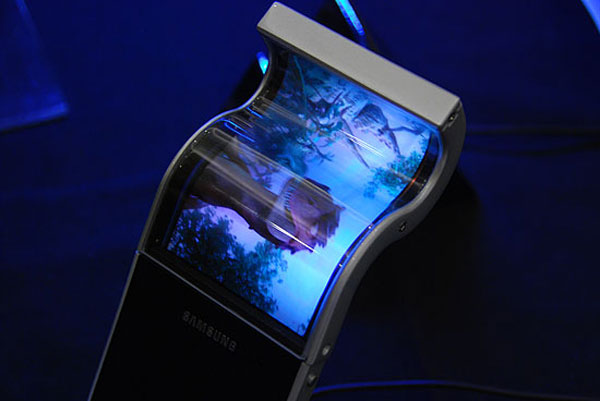
Earlier this week, I came across some interesting news regarding the creation of flexible, paper-thin displays. Known as AMOLED technology, companies like Samsung, Sony, Nokia, and other communication giants were all working towards the development of digital devices that would be controlled through manipulation and not touch. In addition, they would thinner and lighter than any and all previous digital devices, and virtually immune to destruction.

Well it seems that touch screens are not to be outdone yet. In the midst of all the fanfare about the future of communications and information technology, a company by the name of Corning had its own vision of things to come. In their world, display screens can and will be built into panes of what they call “Gorilla Glass”. These panes could be the screen on your next smartphone, or the window in your bathroom, the panels in your car, on a wall in the street, or the basis of portable computing.

Just imagine, information kiosks on the street made out of large panels of illuminated glass, tablets that are less than a centimeter thick and completely transparent, and a handheld mirror that can also receive text messages, email and incoming calls. Much like flexible displays, this sounds like something out of a truly awesome science fiction novel, or a somewhat awesome Hollywood approximation thereof.

For some time, speculative writers have predicted that the future of computing will lie in “smart surfaces” and “smart materials” that are composed of computers and displays so tiny, that any flat surface can be made into a dynamic display device or interface. Once again, it seems that reality is catching up to fiction, and not a moment too soon either! I don’t know about you, but it’s nice to learn about technological innovation that doesn’t evoke feelings of dystopia or apocalypticism.

Check out the video below to see what Corning has in mind and how they will likely effect future generations and how they interact with their everyday environment:

China’s First Aircraft Carrier Landing

China has been featured quite a bit in the news lately due to the rapid pace of its industrial, urban and technological development. However, one area which has not ceased to garner attention has been the parallel growth in its military industries. Whether it is the development of digital soldiers, stealth fighters, or naval vessels, any movement in these areas is bound to make analysts and defense planners in the West nervous.

For example, last year China finished the aircraft carrier which it had purchased fourteen years ago from the Ukraine, an aged Soviet-era vessel that they renamed the Liaoning. However, as Wired magazine columnist David Axe reported, the carrier was “a piece of junk”, and therefore not worth stressing over. Thought its engines were running and it was outfitted with the latest in anti-aircraft artillery, it was still an old model that was not up to the latest western standards.

But just two days ago, China managed to make its first aircraft carrier-based landing, a move which demonstrates that not only is the carrier sea worthy, but capable of deploying combat-ready planes into the Pacific. After deploying from its naval base in Northern China, the Liaoning began conducting take-off and landing drills using a J-15 fighter, a Chinese variant on the Russian SU-33 Flanker D. After performing a successful takeoff from the carrier, the fighter managed to circle back and perform a perfect landing. This was part of a series of exercises designed to test the aircraft carrier’s capabilities as part of China’s ongoing efforts to enhance their navy and “protect national sovereignty” at sea.

Naturally, the news has some people worried, as this development comes at a time when China is engaged in some territorial disputes with Japan over control of several islands in the East China Sea. What’s more, the Liaoning’s deployment took place amidst rumors that China is in the process of building its own carriers, which are expected to be ready by 2015. However, given the fact that the US still boasts a technological and numerical edge, and China is still several years away from deploying a fully combat-effective aircraft carrier the Pacific, few people are genuinely frightened.

In the end, all sides agree that this is a largely symbolic achievement on China’s part, and an indication that it is joining the ranks of global powerhouses in more ways than one.

Source: Huffington Post

The Future is Here: Flexible Displays!

It’s like something out of a Neal Stephenson novel, or possibly movies like Minority Report or Red Planet. A display which you can not only morph and twist, but which is barely thicker than a piece of paper. Yes, some pretty impressive developments have been making the rounds in the world of displays of late, most of which are coming to an electronics store near you!

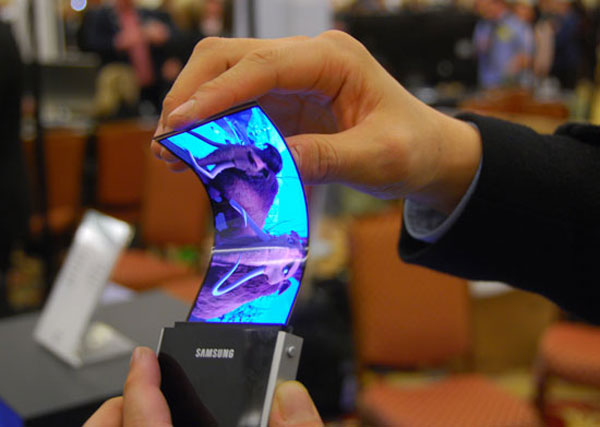
Many of these products were displayed last year at the 2011 Consumer Electronics Show in Las Vegas, where Samsung unveiled its revolutionary new AMOLED display on a number of items. AMOLED, which stands for active-matrix organic light-emitting diode, is a process where organic compounds are used to form the electroluminescent material while an active matrix takes care of pixelation and display.

The result is a display that can be twisted and shaped without fear of breaking the display, or ruining the picture quality. At CES, many of the displays came on hand-held devices, all of which boasted displays that were almost paper-thin and could be bent, hammered, and still maintain their picture. Check out the video below to see a few such items on display, which have since become commercially available, at least in some discerning sectors of the market.


But what is really exciting about this news is that it is not reserved to any one company. During 2011, virtually all technology firms with a hand in portable devices, laptops and tablets had their own ideas on new-age flexible displays that utilized AMOLED technology. Nokia has its own concept for the “Kinetic Device”, which it demonstrated at the Nokia World Conference in London this past September. This flexible phone is controlled not by touching the screen, but by manipulating the body itself. Check out this video of a demo of the Kinetic running Windows Phone OS.


Megagiants Sony, 3M and Microsoft are also on board, producing videos of products that are under development that utilize holographic technology, bendable displays, and all kinds of neat and futuristic concepts to produce the next great leap in gaming, personal computing, and communications. After viewing the majority of them, it seems clear that the future envisioned here will involve ultra-light, transparent devices that are extremely portable and merged with items we were on our person in the course of everyday life.

We can also expect things like windows and panes of glass to carry displays and interfaces as well, allowing people to get directions and access public databases just about anywhere. Consider the following video as an example of what’s in store. Not to left behind in the speculative department, Samsung produced this video of what they felt the future of tablets would look like:


You know the old saying, the truth is stranger than fiction? Well in this case, it seems the truth is catching up to the fiction. It’s nice when that happens, even if it comes a little bit later than expected. Now if someone would just invent a damn flying car already, we’d be in business!

Source: Huffington Post Tech

The Future Is Here: Oakley Airwave Goggles!

Remember Project Glass, the Google glasses that featured a heads-up-display and the option for augmented reality? Yeah, that was quite the big ticket news item for fans of cyberpunk and people who felt smartphones were becoming a little passe. Well, it seems that the world of sporting goods doesn’t want to be left out of the loop either!

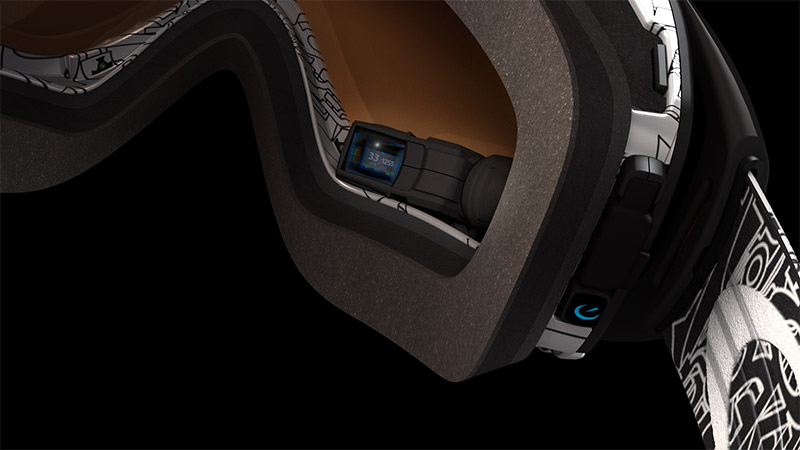
They are known as the Oakley Airwave goggles, a set of eye wear that allows skiers to to consult stats on a heads-up-display while they are on the sloped. Amongst the information that skiers can project into their field of view are such stats as distance, temperature, speed and altitude. In addition, the goggles have a wireless connection feature which will keep the user apprised of their incoming calls and text messages. No word yet if emails will be included, but one thing at a time I guess 😉

I can remember my father telling me that you could tell if a person was important based on whether or not they carried a cell phone. According to him, unimportant people carried cell phones to look important; whereas important people didn’t need them because people waited on them. Having one only meant that you were on call wherever you were. And I don’t know about you, but the slopes is one place I don’t want to be reached! That’s why I go there in the first place!

Still, it’s a cool concept as far as hands free communication and networking are concerned. Coupled with Project Glass and other such products, this new wave of devices is paving the way for a future in which cell phones are obsolete. I imagine Apple and Blackberry are going to have something to say about this, or possibly an even more revolutionary product in mind. Only time will tell…

Check out this video of the goggles in action:

Source: news.cnet.com

Future Timeline

This has been sitting in my box of ideas for quite some time, a website that produces videos dedicated to predicting future trends. Awhile back, I came across it while searching on the subject of the Technological Singularity, and was pretty intrigued by what I saw. Not only was this website dedicated to predicting major technological developments in the near future, the ones that would culminate in the Singularity, but was even considering humanity’s prospects as a species in the far, far future. After taking a look around I thought to myself: “truly, this is the stuff of speculative science-fiction.”

To get a breakdown of what the makers of this site predict, check out the videos posted below, as compiled by HayenMill at Youtube. A self-professed amateur historian and futurist, HayenMill took the liberty of combining the Future Timeline predictions, year by year, covering the three decades that will take us from the beginning of 2010 to 2040, by which time all the current trends of the world will reach a full, fevered pitch. These include the problems of overpopulation, climate change, the shift of economic power from the US to Asia, and the growth of information, medical, and bio technology, as well as the development of AI and commercial spaceflight.

Check them out, and for a more detailed breakdown of future events, go to futuretimeline.net. Trust me when I say that the group’s predictions range far and wide, but which are also highly detailed, at least when pertaining to this century! You can take me at my word when I say that I will be doing my best to incorporate as many of these ideas as possible into my own writing!


The Future is Here: Invisibility Cloaks (Cont’d)

An update on the ongoing efforts to create invisibility technology has been bearing some pretty interesting fruit. Earlier this year, scientists at Berkeley announced that they were working on a suit that would be capable of bending light around it. Unlike adaptive camouflage, this technology would not merely broadcast a background image to conceal a soldier, but would render them virtually invisible to the naked eye.

Well guess what? Scientists at Duke University have finally created a cloak that works. Granted, it is only capable of concealing objects on the centimeter-scale, it is the only cloak of its kind that is capable of channeling incident light around itself, creating perfect invisibility. In all previous cases, the devices created reflected a certain degree of incident light, leaving the concealed object disguised but discernible.

In addition to the small scale on which it functions, the cloak has a few additional drawbacks. For now, the Duke invisibility cloak only works with microwave radiation; and perhaps more importantly, the cloak is unidirectional, meaning it only provides invisibility from one very specific direction. But that should hardly matter, seeing as how such a device even exists. With a little time, development, and a big fat DARPA contract, soon we may be seeing cloaking devices that are capable of concealing something as large as a person, a vehicle or even a building.

The Duke cloaking device, pictured at left, is composed of metamaterials – an artificial, man-made material that almost always have a negative refractive index. A negative refractive index allows for the creation of some interesting things, such as superlenses that go beyond the diffraction limit; or in this case, invisibility cloaks. Due to their unusual index, they are capable of refracting light around an object so a viewer does not see the object, but what is behind the object.

But in addition to metamaterials, the compositional materials also need a to be arranged in such a way that the illusion is perfect. After all, a 3D object has multiple sides, and the wearer has to be expected to turn a corner and change direction at some point. All previous designers in this case have struggled to fashion metamaterials that bend waves around corners without causing reflections. In this case, it was researcher Nathan Landy, a Duke University student, who arranged the metamaterials into the shape of a diamond to acheive the desired effect, since diamonds are apparently the best shape for minimizing reflections.

According to the Duke team, the next step is to expand on their design and make their cloak omnidirectional, meaning that it can bend light around the object from all directions. Don’t worry, I’m thinking some rather interested parties (i.e. every high-tech developer and military on the planet) is likely to be knocking on their door real soon!

Source: Extreme Tech

The Future is Here: The Perpetual Motion Pacemaker!

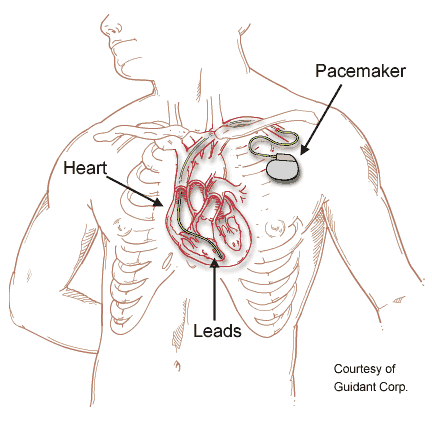
According to the Laws of Thermal Dynamics, there is no such things as perpetual motion. However, engineers at the University of Michigan seemed to have created a device which defies that rule. Not only that, they seem to have overcome one of the pacemakers greatest drawbacks, i.e. the fact that it requires batteries to keep working. Utilizing a process known as piezoelectricity – electricity generated by pressure and/or external force – they have created the world’s first pacemaker which is powered by the beating of one’s heart.

pacemaker1This is an exciting development for obvious reasons: by creating a pacemaker which can utilize the vibrations in the chest cavity to power itself, this device can function indefinitely. As long as the user’s heart keeps beating, the pacemaker will continue to assist the heart in maintaining its rhythm. Hence the concept of perpetual motion, where feedback is used to keep things going for an infinite duration.

Currently, pacemakers are powered by batteries which have a duration of a few years. This requires that patients undergo surgery regularly in order to keep their pacemakers in working order. According to M. Amin Karami, the lead researcher, “Many of the patients are children who live with pacemakers for many years,” he said. “You can imagine how many operations they are spared if this new technology is implemented.”

The piezoelectric pacemaker is about the size of a regular battery, and has been tested extensively. According to Karami, it was able to generate create enough electricity from as few as 20 beats per minute, or as many as 600, to maintain a healthy heartbeat. However, there are still likely to be many years of testing before it is approved for medical use.

But most exciting is the implications this pacemaker has for other biomedical devices such as dispensers and sensors – all of which would live under our skin and be powered by our body heat and movements. Image if everyone was born with a defibrillator/pacemaker implanted in their chest. Surely, death from heart disease would drop substantially, and people would even be able to jack their heart rate up in emergency situations.

Check out this video of the piezoelectric pacemaker in action.


Source: Extreme Tech

Obama’s Reelection Breaks Social Media Records

News of Obama’s reelection has certainly been met with some strong emotions. In addition to the extreme laments of certain die-hard conservatives – Trump has called for revolution, Glenn Beck has told conservatives that “Doomsday is here”, and some going as far as to proclaim the death of God – a  number of social media records have been broken.

Amongst them was the Facebook photo of Obama embracing his wife, which received the most “Likes” than anything posted on the social media website. As of writing this article, it has reached a total of 4,394,634, beating out Justin Bieber, Gangnam Style, and countless photos of cute kittens.

The same photo was posted on Twitter, where it broke another record for the most retweeted picture ever. Here again, it beat out Bieber for the numer one spot, grossing 814,121 retweets versus Bieber’s compartively modest 223,598. Also of interest is Mitt Romney’s “Thank You” photo, which garnered 910,738 Likes, less than a quarter of Obama’s victory embrace. Once again, this gap would seem to demonstrate the importance of new media in the realm of politics, and how the Obama camp has the edge.

The Future Is Here: Bionic Hands!

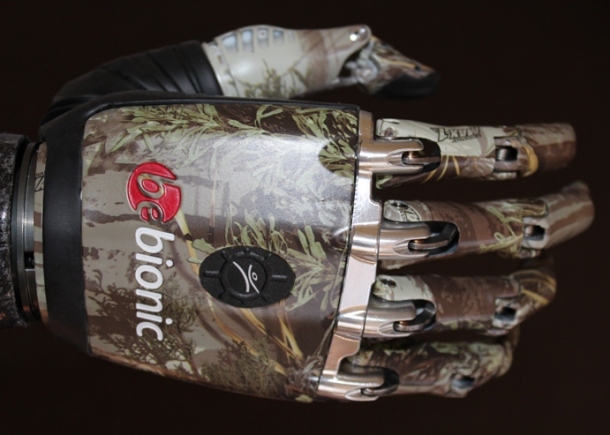
Behold, the latest in bionic technology! The bebionic 3 model prosthetic hand, by the RSL Steeper company! Encased in an aluminum chassis, boasting improved electronics, a redesigned thumb, and new motors that increase the power grip, this hand was first unveiled at the American Orthotic Prosthetic Association (AOPA) Conference in Boston this past September. Since that time, amputees have been obtaining the hand and incorporating it into their daily lives. And the results are quite encouraging!

In addition to being able to do delicate work, like handle eggs and fine china without breaking them, the hand is also capable of performing a power grip that is capable of generating 31.5 pounds of force. That’s quite the Kung Fu grip, just in case you were wondering. And in “hook” mode, the hand is able to bear a load of 99 pounds. So, though it doesn’t have quite the same dexterity or free range of motion as an organic hand, the bebionic is capable of performing all the basic tasks, and is pretty powerful to boot!

Much like the bionic leg which was popularized by Zak Vawter’s historic climb last weekend, the bebionic works by reading the nerve impulses from the wearer’s arm skin. These are amplified by the arm’s electronics and translated into one of 14 possible grip configurations. These different grips are uploaded to the hands internal memory and users are able to cycle through them to determine which grip they want for which purpose. For instance, a mouse-clicking action makes the thumb grip a mouse, while the index finger clicks the left button. The “precision open grip” can be used to grab small objects and the “tripod grip” can be used to write with a pen.

Currently, and depending on its configuration, the hand costs clinical centers between $25,000 and $35,000. In time, and as it becomes available for public purchase, the price is likely to come down somewhat. Still, such a revolutionary device will not come cheap for many years to come. It also comes available in a range of colors and designs, including snow and jungle camouflage and tiger stripes, as well as realistic silicone skin coverings. See the video below for some examples.

Combined with other advances in the field of bionics and prosthetic devices, the bionic hand presents some new and very exciting possibilities. For one, technologies like ReWalk and other exoskeletons are making it possible for paraplegics to walk again, while sophisticated wheelchairs like the wheelchairbot are making stairs and obstacles passable. Coupled with bionic limbs that are giving full ambulatory motion back to amputees, we could be looking at a future where robotic enhancements can restore any and all ability to accident victims, combat veterans and people born with physical deformities.

In addition, the most audacious developments, such as bionic enhancements or robot chairs that read brain waves directly, giving full motion to quadriplegics and the ability to communicate fully to people with degenerative conditions is still yet to come! Once such technologies are readily available and commercially viable, we might even be seeing the emergence of a cybernetics industry, where people can receive enhancements that not only restore abilities, but greatly enhance them. Artificial limbs the enhance strenght and speed, artificial eyes that enhance vision and provide projected images and augmented reality displays, and even silicate implants that enhance brain function and make people smarter.

Homo Superior people… I just got goosebumps!

And while we’re waiting on all that to happen, check out this promo video for the latest bebionic model:


And here’s a video of the bebionic going through a battery grip pattern tests:

Microchips Made With DNA!

It seems IBM is deep at work developing a revolutionary new method for assembling microchips. This process will involve using self-assembled DNA nanostructures to create microchips and chip components. Or, to put it more dramatically, DNA would be used as a sort of “origami”, serving as a sort of scaffolding in the arrangement of nanotubes and allowing the company to develop microchips that are smaller and much less expensive to produce.

But of course, the long-term goal is much more ambitious. According to Greg Wallraff, a scientist working with IBM, the “goal is to use these structures to assemble carbon nanontubes, silicon nanowires, quantum dots. What we are really making are tiny DNA circuit boards that will be used to assemble other components.” In short, this could be not only a step towards bioassembly, nanotechnology, and even quantum computing.

For some time now, scientists have been experimenting with DNA as an assembler for microcircuits. One such individual is Paul W. K. Rothemund, a research associate at the California Institute of Technology, who developed DNA origami back in 2006. This involved taking a long strand of viral DNA, putting into a 2 or 3-D shape, and then holding it together with shorter strands of DNA. In this way, he was able to create shapes such as triangles, stars and smiley faces, according to his Caltech Web site.

Based on this process, complex DNA nanostructures are made in solution and then applied to surfaces which have designated “sticky spots” to ensure that they hold a specific configuration. Once the scaffold is in place, molecules of polymer, metal and other materials can then be guided into place, assembled from the cellular level outward. According to Rothemund, there are still some problems that need to be worked out and it is likely to be another 10 years before the process is entirely viable.

Still, for enthusiasts of bioware, biotech, and nanotechnology, this is exciting news. To know that we could be just ten years away from components assembled by nanostructures composed of living material, a stepping stone towards machinery composed entirely of DNA structures or nanomachines themselves… like I said, exciting!

Source: findingdulcinea.com