It is no secret that breast cancer is a major disease, accounting for 22.9% of all cases and leading to the death of approximately 500,000 women a year. With one in eight women being effected worldwide at some point in their life, early detection is key. Up until recently, these took the form of doctor exams or self-examinations. However, within a few years, there may very well be an early detection system that women can wear and which never stops working.
It’s known as the Breast Tissue Screening Bra, or Smart Bra as many like to call it. Developed in 2008 by the company First Warning Systems, in Reno, Nevada, the bra is designed act as a continuous exam device. As an alternate to self-exams and the somewhat controversial mammography, early tests indicated that it may actually be the most effective form of cancer screening to date.
The bra accomplishes all this by relying on a series of internal sensors and pattern recognition software. By detecting tiny temperature changes that occur as blood vessels grow and feed tumors, the bra is able to identify the presence of tumors while still in early formation, and up to six years before they would be detectable by mammogram and twelve years before they could be removed by surgery.
Thus far, First Warning Systems has conducted three clinical trials using a total of 650 participants. So far, the results have been favorable, with the bra showing a 92.1 percent level of accuracy in detecting and classifying tumors. This is compared to a 70 percent accuracy rating as seen in routine mammograms. At present, the company plans to being releasing the bra in Europe by 2013 and, pending FDA approval, in the United States by 2014.
Personally, I don’t think this product can reach the market soon enough. With luck, it could very well signal a new era in the ongoing struggle to put an end to cancer. And who knows? If this works out, perhaps a similar garment could be developed for men, a pair of shorts that help with the screening of testicular and prostate cancer. Combined with nanomachines that are capable of monitoring our hearts, brains, lungs, pancreas and other internal organs, we may very well be able to stop cancer through early detection and prevention.
Here’s hoping! Meanwhile, check out this video of the Smart Bra’s design and workings.
It is no secret that research into nanotechnology is bearing fruit these days. Back in February, both Standford and MIT unveiled implantable devices which would be capable of delivering drugs directly into the human blood stream and detecting health problems. However, despite all the progress being made in terms of nano-miniaturization, there are still numerous barriers which need to be overcome.
For example, having microelectronics in the body, while initially beneficial, might prove problematic with time. What’s to happen when they are finished their jobs, become obsolete, or simply stop working after awhile? As anyone who’s ever owned a computer, PDA, mobile device or laptop can tell you, the stuff breaks! And if it does happen to live past its warranty, chances are it will be obsolete in six months… tops!
Such machines need a way to be removed, but given their size (o.oooooooo1 meters), that’s not exactly practical. And even if it were, there’s the question of disposal. Once commercially viable, there are likely to be billions of nanomachines in circulation. Even at their miniscule scale, such machinery could pose environmental hazards, especially if its likely to malfunction. Ever heard of Grey Goo? Well that’s a scenario that researchers have to consider.
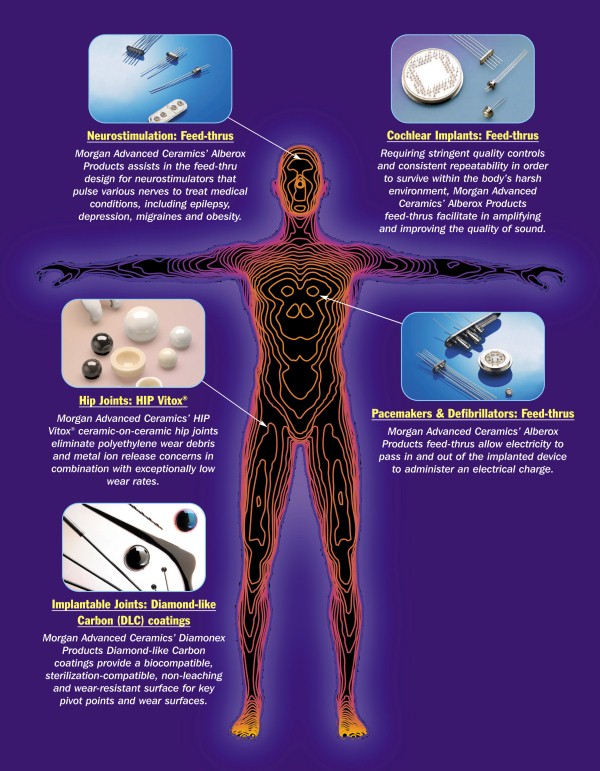
Luckily, researchers at the University of Illinois have come up with a possible solution: electronics that dissolve! Composed of silicon, magnesium, magnesium oxide and contained within a protective layer of silk, these “transient electronics” are built to melt away just as soon as their tasks are complete.
In the process, they will reduce or remove the need to pass or surgically remove medical implants. Using rats as test subject, the researchers built their implants out of extremely thin sheets of silicon called nanomembranes to get the electronics to dissolve in hours or days instead of years.
Of course, the medical applications are clear. Already, electronics are being tailor made for the delivery of drugs, sensors implanted in internal organs to monitor of problems, and temperature monitors created to safeguard against infection and disease. Combined with external sensors, doctors would be able to do a full medical workup within seconds, and much of the guess work involving symptoms and patient history could be eliminated. Exploratory surgery could also become a thing of the past, since doctors would be able to use internal sensors to diagnose unexplained problems.
The researchers also used silk collected from silkworm cocoons to control the speed of disintegration. This is part of a growing field of electrical engineering that seeks to create biodegradable microchips and other electronics, in part for the sake of implantation but also to ensure the elimination of computer waste.
Such waste, which includes disposable cell phones, cameras, and computers, currently accounts for 50 million tons of waste a year. Sixty percent of that is produced in the US, but could rise by as much as 500 percent over the next decade in developing nations such as India and China. Designing these types of components now could ensure the aversion of a possible ecological disaster.
Medimachine: noun, a nanotechnological device used for medical applications. Granted, that’s not a working definition, but it does encompass what the technology is all about. And, as it happens, researchers at Standford created the world’s first device which is capable of traveling through the human bloodstream and which is controlled and powered wirelessly just this past year.
This development came in the midst of a similar significant development over at MIT. In January of this year, they announced that they had developed the world’s first implantable microchip that could deliver drugs directly into the bloodstream. This chip is also controlled wirelessly, and is the first step towards remote implants that could contain an entire pharmacy.
According to Ada Poon, the lead developer of the Standford team, the next step in the development of this device will be creating models that incorporate sensors and drug delivery systems for the ultimate in pin-point accurate medicine. If successful, Poon and her team could very well be responsible for creating the prototype device that will inspire entire generations of medical machines that are conducting exploratory exams, cleaning our arteries, removing tumors, destroying pathogens and viruses, and even repairing internal injuries.
And just think, if this development triggers further research and development, it could very well lead to nanomachines which are capable of making even tinier nanomachines. These devices could in turn manipulate matter on the mitochondrial level, correcting faults in our DNA and turning harmful or unwanted cells into something more useful for our bodies.
Just another step on the road to transhumanism and post-mortality!
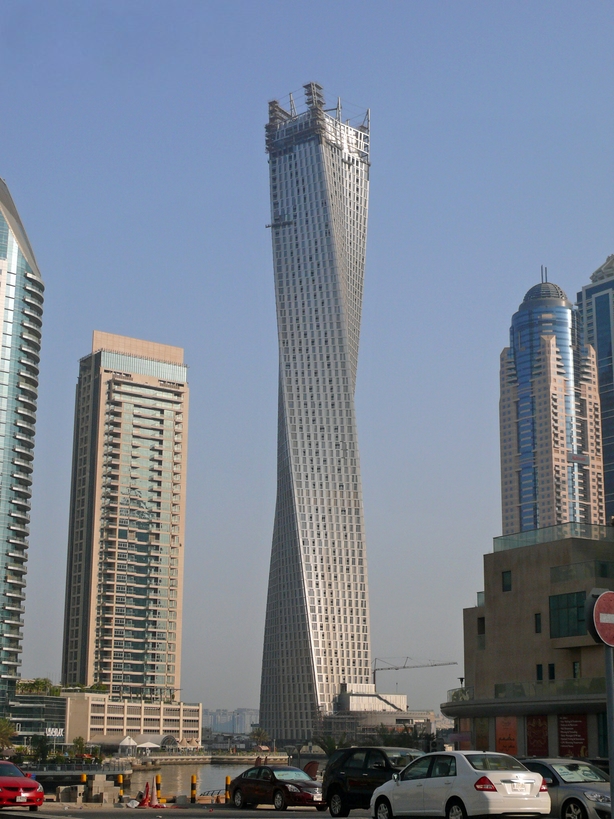
Behold, a building measuring some 73 stories, roughly a third of a kilometer in height. Now imagine that it has a twist of 90 degrees built into its frame, basically forming a corkscrew or the shape of a piece of fusilli. Now imagine, on top of all that, that it rotates, thus ensuring that the twist in the frame is perpetually twisting. Located in Dubai, the Infinity Tower is not only part of that city’s extensive building program. Once completed, it will be the tallest the building in the world to be helical in shape and to rotate.
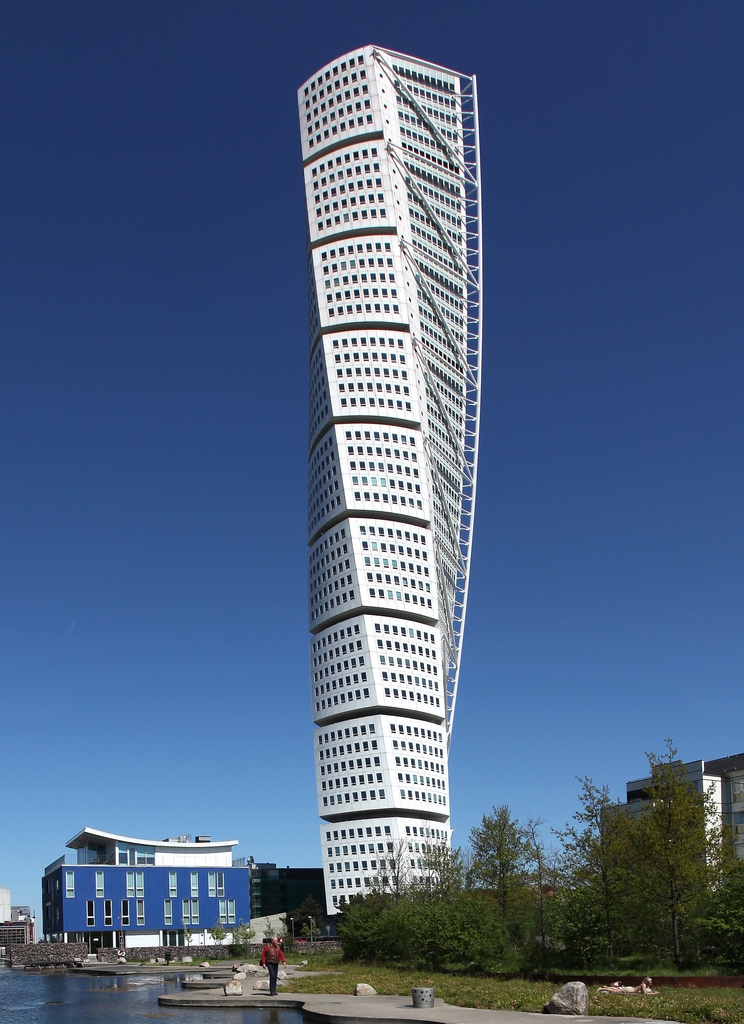
And Infinity is hardly the only one of its kind, being very similar in concept to the HSB Turning Torso in Malmö, Sweden. At 190 meters and 54 stories, this helical building, is the tallest building in Scandinavia, and the third tallest in Europe. Similar projects have been under construction in Doha and elsewhere, where twisting structures have also been proposed.
Yes, the age of dynamic architecture appears to be upon us ladies and gentlemen. Buildings that move, either in their entirety, or from floor to floor, are now seriously being proposed. What’s more, they present an opportunity to incorporate green technology – such as solar panels and wind turbines since any dynamic building would require its own power source.
Check out the video below for some cool footage on Infinity and other dynamic building concepts:
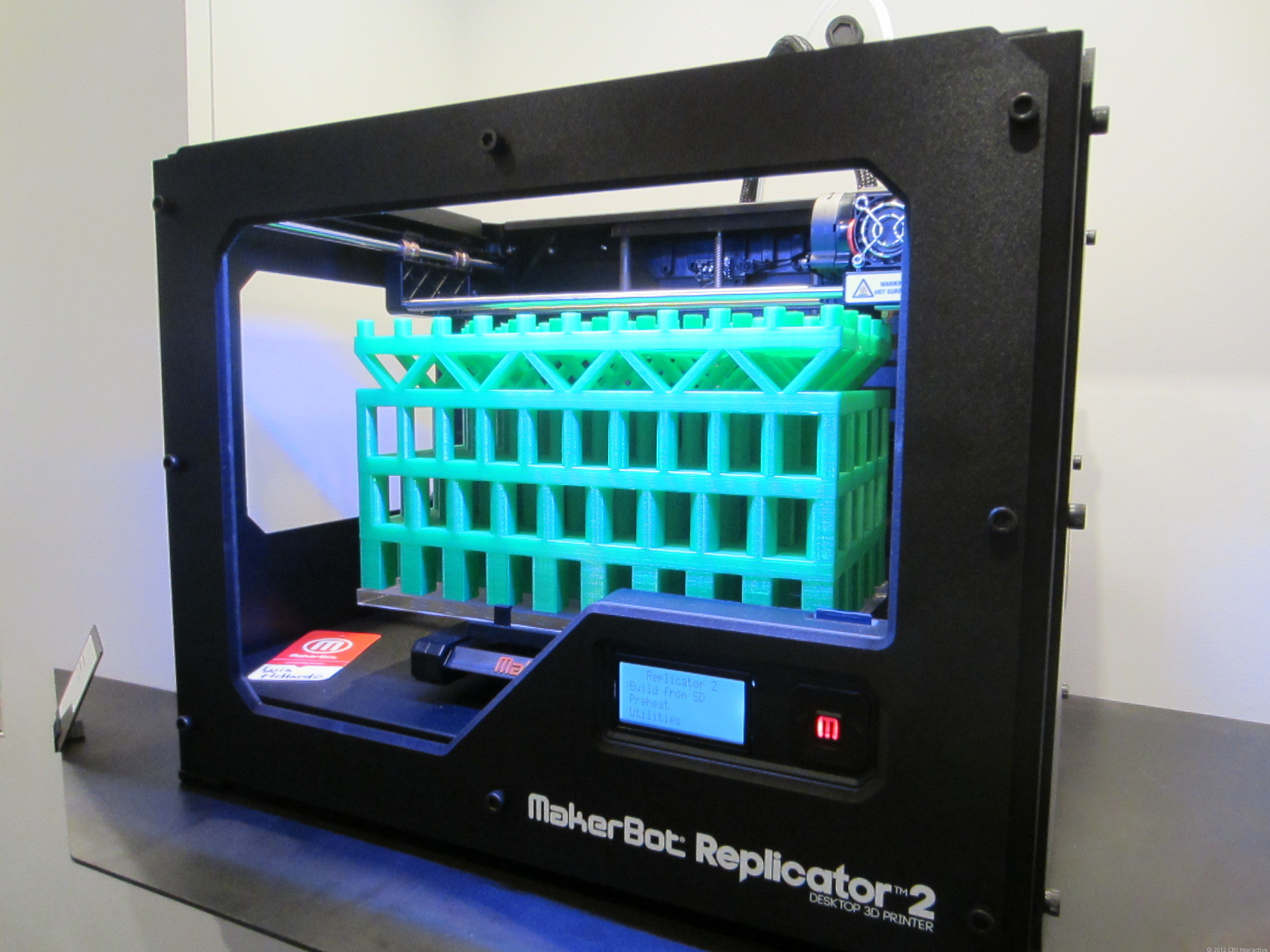
For those familiar with 3D Printing, there’s some good news to be had. It seems that the New York-based manufacturer MakerBot recently announced the creation of a retail version of the technology. Known as the Replicator 2 (a clear shout-out to Star Trek), this new model is an improvement on their prototype, and will be affordable enough for your average corner store to stock.
Selling for $2,199, the Replicator 2 costs about as much as high-end Xerox machine, but can do so much more. According to factory specs, it boasts a 100 micron printing resolution, a build volume of 410 cubic inches (11.2 inches long by 6 inches wide by 6.1 inches high) and comes in a powdered steel frame. Those specs are clear upgrades from those of the older model, which had a 250 micron print resolution, a wooden frame, and a 300-cubic-inch build volume.
Naturally, I imagine that some people are wondering if this in fact the beginning of Replicator technology. Sure, it’s a far cry from a matter compiler that can create food, drinks, and consumer products from scratch, but it is a start, isn’t it? And if what we’ve been told about the cultivation of organic material for printing 3-D meat is true, it won’t be long before various edibles are on the menu. 7-11 is likely to be backed up then, huh? Selling, Slurpies, milk, candy and fresh-printed meat! Oh, the future is… weird!
And for those unfamiliar with 3D printing, check out this video below. It is sure to impress!
Ever since man began killing man in an organized fashion – i.e. the rise of armies – political and military leaders have struggled with the problem of how to keep them supplied. As Napoleon himself stated in the early 19th century, “An army marches on its stomach”. Since his time, things have not improved drastically. Even with the advent of the steam train, trucks and airplanes, a fully-loaded soldier must still carry upwards of 90 lbs of equipment on their backs. Not an easy task, especially when marching through particularly hot, wet, or rugged terrain.
Well it just so happens that DARPA and the United States Marine Corps might be in possession of something that can help real soon. A few years back, they awarded a contract to an engineering firm named Boston Dynamics to develop a prototype for Darpa’s Legged Squad Support System (LS3). This system calls for a walking quadruped robot that will augment squads by being able to carry equipment autonomously over the kinds of complex terrain where traditional tactical vehicles can’t go.
The walker will reportedly be able to carry a payload of 40o pounds over as much as 20 miles and provide 24 hours of self-sustained capability. In addition, it requires no drivers or remote controllers, since it will be fitted with remote sensors that will allow it to follow the team leader, and a GPS so it can travel to predesignated coordinates. Already, the prototype LS3 has taken its first steps, and the USMC hopes to have some in the field sometime this decade.
One has to wonder… is the beginning of AT-AT walkers and other Star Wars stuff? If so, then I’m thinking we might just be seeing some prototypes for hover cars and lightsabers very soon. Like many fanboys, I was a little kid when the originals came out. Now, like them, I’m in my thirties and thinking I’ve waited long enough! Check out the video below to see the LS3 in action:
Just found this on IO9, a new 14 minute concept movie about the future of New York City. According to the film, it’s 2023, and the introduction of a brand new technology – the Betham Grid – has made things like credit cards, ID cards, and keys obsolete. In essence, the Grid is a massive DNA scanner and social network, with readouts on every public surface in the city. Touch a door, a hand rail, or even a wall, and the Grid reads your DNA, identifies you and pinpoints your location.
Naturally, this has simplified life in many respects. In others, it turned NYC into something of a “Big Brother” state. Crime has dropped to previously unheard of levels, identity theft has become impossible, but the right to privacy remains in a state of limbo. And befitting all potentially dystopian scenarios, there’s a twist, which is alluded to in the name. Ultimately, the question remains, what is the ultimate cost of safety?
Take a look, and take note of all the attention to detail that runs throughout. Director Dennis Lui was sure to incorporate as many examples of futuristic technology as possible, from holographic display glass, to cars with Heads-Up Displays, to augmented reality glasses. The production values are also very impressive.
A robot and an astronaut shake hands… That might sound like the set up for a really cheesy joke, but in fact, it was a moment in history. Back in February of this year, a first occurred when Daniel Burbank. the commander of the International Space Station, shook hands with the first ever Robonaut. Controlled by ground crews, and currently lacking in full-body motion – they aint got no legs! – this does represent a big step forward in robotics.
As things stand, it is not yet clear if this represents a plan to “unman” space, or just supplement astronauts with humanoid machines that are capable of performing rote tasks and the more labor intensive aspects of space travel. But given the fact that space travel still requires adaptation and flexibility as much as calculations and precision, and that no amount of remote control can equal the thrill of actually being there, I’m thinking human astronauts are going to be around for a long time.
Check out this video of the Robonaut and Burbank making their historic handshake!
To say that Richard Branson is an eccentric billionaire or oddball visionary would be the understatement of the century. Though not formally educated in business or economics, he’s got a knack for investing in new and relevant things, and always seems to be able to turn a profit while doing it. So it’s little wonder then why he started Virgin Galactic, a private aerospace company that is offering patrons their first shot at sub-orbital flights.
The idea commercial space ships has been in development for some time, with Branson committing a great deal of his empire’s investment capital and research funds towards this end. In 2008, these efforts bore fruit with the first flight of the White Knight Two launcher craft, known officially as the VMS Eve. This plane, also known as a “mothership”, is a four-engine, twin-fuselage craft with an extended wing base and two air crews. As the name suggests, it acts as a launching platform for the aerospace vehicle itself, which deploys once the WK2 is fully airborne.
Then, in December of 2009, Virgin unveiled the suborbital space ship, known as SpaceShip Two. Ever since 2004, Branson’s company ran test flights using a smaller model, but decided to upgrade to a larger, twin-pilot model for long-term commercial use. By February 2012, SpaceShipTwo had completed 15 test flights and an additional 16 glide tests, the last of which took place in September 2011.
In the end, the process is pretty simple and borrows from NASA’s long-standing practice of launching their space shuttles by piggybacking them onto commercial craft. In this case, the process involves the WK2 flying the SS2 to deployment altitude where it will then be released and take over its own flight using its rocket engines. The SS2 will then fly to an altitude of 100 km (330,000 feet) above see level. After performing a circuit in near-zero gravity, it will deploy its wings and glide back to Earth.
No firm schedule has been given as to when commercial flights will commence, but given the pace at which things are moving, it would not be farfetched to think that they are likely to begin before the decade is out. In addition, no word has been given on when exactly it will affordable for the vast majority of people to use this service, or when aerospace terminals will be built into existing international airports.
As it stands, tickets for the maiden voyage go for a whopping $200,000 US or £121,000, and 400 seats have already been spoken for, largely by public figures and international tycoons. The flight will be two hours end-to-end, and will involve six minutes of weightlessness once its reaches maximum altitude. Seems like a lot of money for something that only lasts six minutes; but hey, people have spent way more on far less!
Also, check out the promotional video from Virgin Galactic’s own website. I think you’ll agree, though they may oversell the significance of this by just a bit, the production values are still pretty damn good!
The other day, I finally got around to dedicating a post to Paolo Soleri and the concept of Arcology, something which has fascinated me for some time. But of course, I couldn’t do justice to it all in just one post, so rather than mention every example for arcologies that I could find, I chose a select few and planned to talk about the others later. You wouldn’t believe the amount of information that I’ve found since!
Initially, I thought only a few architecture firms and city planners were considering 3-D cities; but as it turns out, there are a dozen plans under consideration and more coming every day! From New Orleans to Haiti, from Shanghai to Dubai, the world abounds with plans for possible future cities that will take advantage of 3-D planning, sustainable resource management and green technology. This last aspect is key, seeing as how the vast majority of these plans are all inspired by one thing: Climate Change!
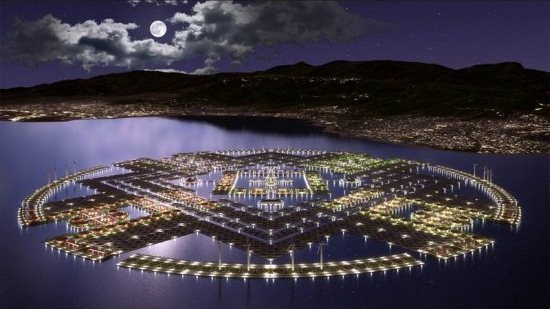
Take this concept for example: the Lillypad City. A revolutionary idea designed for dealing with the worst ravages of climate change in the coming decades, the LC is basically a floating city that is immune to things like coastal flooding and rising sea levels. According to many worst-case scenarios, these are expected to rise in excess of a meter by 2030. Coastal areas will be flooded and entire islands will disappear beneath the waves, leaving millions homeless and displaced. The Lillypad City is a possible solution: a self-contained environment built along coastal shelves and harbors, capable of supporting 50,000 people in an environment that’s ecologically friendly.
A similar concept is NOAH – or New Orleans Arcology Habitation, designed by Kevin Schopfer . An aptly named structure, NOAH is a proposed solution of what to do about coastal flooding and the ongoing problem of rebuilding New Orleans. At over 90oo square kilometers and designed to hold 40,000 residents, the pyramid shaped arcology will also boast shopping centers, 3 hotels, 1,500 timeshare units, parking for 8,000 cars, cultural spaces, public works, schools, an administrative office, and a health care facility.
All of this built upon a floating base with an open-wall structure, which will make it resistant to all forms of weather and immune to rising tides. In addition, the city will boast the latest in green technology, thus eliminate the carbon footprint of its residents. These will include internal electric transport links, secured wind turbines, solar panels and river based water turbines for electricity generation, fresh water reclamation and storage systems, grey water treatment, sky garden heating/cooling vents.
If NOAH catches on, there are even plans to build one on the banks of the Mississippi, where flooding is expected to occur, displacing people up and down the interior US.
And speaking of rebuilding, Haiti continues to suffer from the damage suffered from the 2010 Earthquake. Luckily, there are no shortages of creative ideas of what to deal with this and the likelihood of future earthquakes and flooding. Harvest City is one such idea, a city built on a series of islands capable of supporting 30,000 residents.
Based on the principles of arcology, this city is designed to be sustainable, ensuring adequate food production for all its residents while also providing employment and industry. If feasible, such a city could be indispensable to Haiti’s recovery and ensuring the survival of its people in the long run.
And then there’s the BoA, which is short for Boston Arcology. Much like many of it’s predecessors, the purpose here is to address the problem of urban sprawl in a way that does not impact the existing city, either by expanding into surrounding green space or renovating it’s aging, historic core. Built into Boston Harbor, this uniquely shaped structure will house 15,000 people and will also hold hotels, offices, retail spaces, museums, condominiums, and even a new city hall.
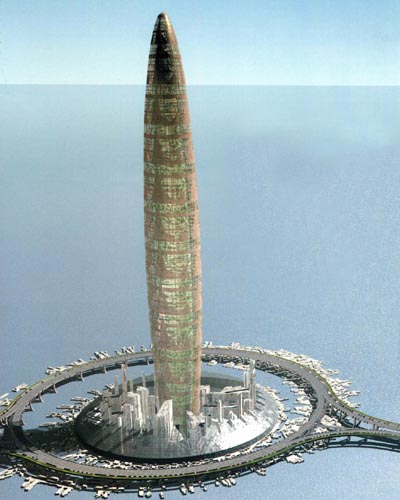
And speaking of 3-Dimensional, check out this baby: the proposed Bionic Tower! A vertical city measuring some 1,228 meters high and being able to house approximately 100,000 people, the Bionic Tower is yet another proposed solution of what to do about the twin problems of overpopulation and pollution.
And at the heart of it all lies the concept of merging bioscience with existing high-tech, meaning that the building will house extensive green-spaces, nature preserves, and its own water reclamation and bio-fuel systems.
Originally proposed at a lecture entitled “Conquest of Vertical Space in the 21st Century – International Conference on Multipurpose High-Rise Towers and Tall Buildings” in London, October, 1997, the project has since begun formal development, and garnered the interest of city planners and developers in both Shanghai and Hong Kong.
Japan is following suit. As already mentioned, the Shimizu Mega-City Pyramid is being slated for development in Tokyo Bay. However, within Tokyo’s urban center, there are also plans for the creation of a vertical city, known as Sky City 1000. Measuring 1000m high, hence the name, the supertall skyscraper would house 35,000 residents and 100,000 workers. The design consists of 14 concave dish-shaped “Space Plateaus” that are stacked one upon the other and held together by a series of vertical struts. Each plateau is designed to contain greenspaces, offices, commercial facilities, schools, theaters, residential spaces, and other modern amenities.
Back to Dubai, where arcology is just one of many inspirations for new construction projects, we have the “Dubai Ziggarut”. A proposed Carbon-Neutral habitat proposed by design firm Timelinks, this eco-pyramid is expected to house 1 million people once completed. Power is to be provided by steam, wind, solar panels and other natural resources, ensuring complete electronic self-sufficiency. The tightly knit city will also feature a super efficient public transportation system that runs both horizontally and vertically, and plans are being drawn up to utilize both public and private green spaces for agricultural opportunities.
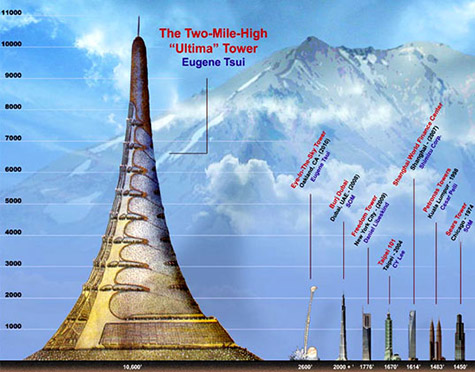
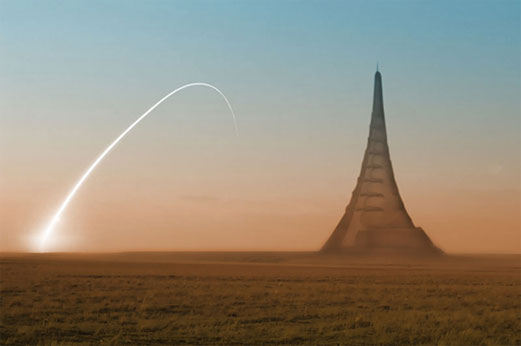
And last, but certainly not least, there is the proposed design for the “Ultima Tower”. A massive edifice, measuring some 3200 meters in height, this supertall skyscraper was first proposed in 1991 by Eugene Hui as a way of tackling the planet’s sustainability problems. At this height, it would be the tallest building ever created by human beings, should it ever be built.
The interior of the structure would measure some 140,000,000 m2 and would be capable of supporting 1 million people. Relying on atmospheric pressure difference between the bottom and the top of the tower to create electricity and vast interior green space, the building would contain several “mini-ecosystems”.
Combined with water treatment and reclamation facilities, it would be capable of sustaining its inhabitants, perhaps without any outside help. Given the sheer cost of the structure (150 billion US dollars), it remains strictly theoretical. However, as time moves on and the problems of overpopulation and climate change continue, this tower may very well be making an appearance on the landscape!
That about does it for now. As I said before, its a rich and fertile concept! And given the pace of technological change and climate change, its becoming more likely with every passing day. Will it make a difference? Will it help us whether the storm, or help reverse the process? Hard to say. All we know is, living in sustainable communities that are self-sufficient and protected from external threats is far better than the alternative.

 It is no secret that breast cancer is a major disease, accounting for 22.9% of all cases and leading to the death of approximately 500,000 women a year. With one in eight women being effected worldwide at some point in their life, early detection is key. Up until recently, these took the form of doctor exams or self-examinations. However, within a few years, there may very well be an early detection system that women can wear and which never stops working.
 The bra accomplishes all this by relying on a series of internal sensors and pattern recognition software. By detecting tiny temperature changes that occur as blood vessels grow and feed tumors, the bra is able to identify the presence of tumors while still in early formation, and up to six years before they would be detectable by mammogram and twelve years before they could be removed by surgery.







 Stories by Williams