In a recent study, NASA shared a vision that sounds like something out of a science fiction novel. Basically, the plan calls for the creation of robots that could be sent to a nearby asteroid, assemble itself, and then begin mining the asteroid itself. The scientists behind this study say that not only will this be possible within a few generations of robotics, but will also pay for itself – a major concern when it comes to space travel.
A couple of factors are pointing to this, according to the researchers. One, private industry is willing and able to get involved, as attested to by Golden Spike, SpaceX and Planetary Resources. Second, advances in technologies such as 3-D printing are making off-world work more feasible, which can be seen with plans to manufacture a Moon base and “sintering”.
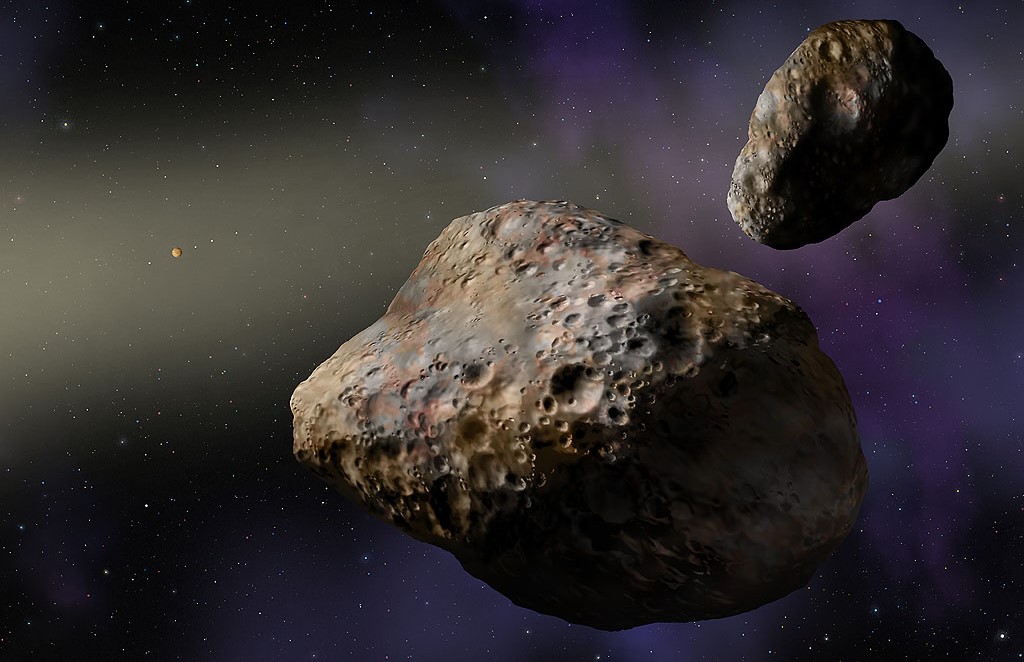
But also, humanity’s surveys of space resources – namely those located in the asteroid belt – have revealed that the elements needed to make rubber, plastic and alloys needed for machinery are there in abundance. NASA proposes that a robotic flotilla could mine these nearby space rocks, process the goods, and then ship them back to Earth.
Best of all, the pods being sent out would save on weight (and hence costs) by procuring all the resources and constructing the robots there. They caution the technology won’t be ready tomorrow, and more surveys will need to be done of nearby asteroids to figure out where to go next. There is, however, enough progress to see building blocks. As the agency stated in their research report:
Advances in robotics and additive manufacturing have become game-changing for the prospects of space industry. It has become feasible to bootstrap a self-sustaining, self-expanding industry at reasonably low cost…
Phil Metzger, a senior research physicist at NASA’s Kennedy Space Center, who led the study, went on to explain how the process is multi-tiered and would encompass several generations of progress:
Robots and machines would just make the metal and propellants for starters… The first generation of robots makes the second generation of hardware, except the comparatively lightweight electronics and motors that have to be sent up from Earth. It doesn’t matter how much the large structures weigh because you didn’t have to launch it.
A computer model in the study showed that in six generations of robotics, these machines will be able to construct themselves and operate without any need of materials from Earth.
At least two startups are likely to be on board with this optimistic appraisal. For example, Deep Space Industries and Planetary, both commercial space companies, have proposed asteroid mining ideas within the past year. And since then, Planetary Resources has also unveiled other projects such as a public space telescope, in part for surveying work and the sake of prospecting asteroids.
And this latest research report just takes thing a step farther. In addition to setting up autonomous 3D manufacturing operations on asteroids, these operations would be capable of setting themselves up and potentially upgrading themselves as time went on. And in the meantime, we could look forward to a growing and increasingly complex supply of manufactured products here on Earth.
Artificially-created meat has long been the dream of futurists and researchers, a means of solving world hunger and improving health at the same time. Efforts to create it using 3D printing are coming along, but another research firm has offered a different approach – in vitro grown meat. And at the same time, this lab-grown alternative offers consumers the chance to improve their health by eating something more nutritionally balanced.
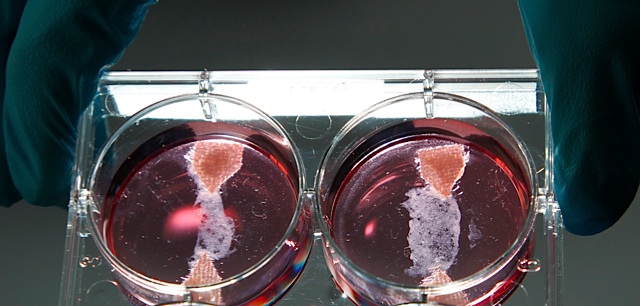
The breakthrough comes to us from a group of researchers led by Mark Post, a Vascular Physiology professor at the University of Maastricht in the Netherlands. To make the burger, he and his team began with a kind of stem cell called a myosatellite cell that is taken from a cow’s neck. These cells are then placed in growth medium that the researchers have formulated to allow them to grow and divide. The resulting cells are grown into 20,000 strips of muscle tissue which are assembled into beef.
This is an encouraging development for a number of reasons. First of all, a 2011 joint-research study between the University of Oxford, University of Amsterdam, and a number of environmental research organizations, cultured meat required up to 45 percent less energy and up to 96 percent less water to produce, generated up to 96 percent less greenhouse gases and, without animal herds of flocks to tend to, requires 99 percent less land.
Second, Post’s recipe for a lab-grown beef burger contains no fat, compared to its rather fatty organic counterpart. And while fat is responsible for giving a burger much of its taste, Post insists that his recipe tastes “tastes reasonably good.” In the coming weeks Post plans on cooking his burger at an event in London where participants will try the in vitro meat – adding salt and pepper to taste.
However, the process is not completely devoid of reliance on actual cows. As already mentioned, the original stem cells that make the process possible have to come from a living cow. In addition, the muscle cells were grown in fetal calf serum, a necessity at this point since the process is still in its infancy. It’s hoped that in the future the burger can be produced without any material of animal origin.
And of course, the technology needs to become way more scalable before it can be considered viable. For example, between the cost of extracting the fetal cow tissue and turning it into meat in a lab, a single burger took roughly $325,000 to produce. But ultimately, this feat was all about pushing the boundaries and challenging notions of what is possible.
In addition, as technology improves and the process is refined, costs will come down. And as Post said in an interview, the point of developing this process was to demonstrate that it can be done:
Let’s make a proof of concept, and change the discussion from ‘this is never going to work’ to, ‘well, we actually showed that it works, but now we need to get funding and work on it.’
While it may be several more years before in vitro burgers replace old fashioned farmed burgers, but the feat is a delicious victory for environmentalists and scientists alike in search for alternate ways to feed the world’s addiction to meat.
Funny, all this talk of lab-grown meat is giving me a sense of deja vu. Didn’t somebody write a story about this exact kind of thing not that long ago? Oh yeah… it was me! Well that’s just great, now I got to sue J.J. Abrams and the University of Maastricht? Lord, why do you torment me so?
While I have yet to see the first installment, and generally disapproved of Peter Jackson’s decision to release this comparatively short story as a trilogy, I would be remiss if I didn’t post about the new trailer. And as you can from see from this 2 minute spot, the next installment promises plenty of action, adventure, and some serious divergences from the source material.
In the last movie, the characters had just survived their encounter with the cave Orcs, Bilbo found the One Ring and “won” it from Gollum, and the company was on its way to Mirkwood. In this installment, things appear to climax when the band of merry dwarves, a hobbit and a wizard reach Smaug’s lair. Some serious changes are showcased with the addition of Legolas (who wasn’t even in the first book), mini battles that didn’t happen, and lots more portentous talk that connects it all to the original trilogy.
And word around the campfire is this is what Jackson really has planned for the rest of the series – Game of Thrones-like diversions from Tolkien’s text that are clearly designed to sex the material up, hint at what was to come with the War of One Ring, and make the whole thing feel like a fantasy miniseries instead of a single story. While I’m sure I’m going to catch the entire trilogy at some point, I might sit the theatrical version out again…
But that’s just me! Enjoy the trailer and, if you’re so inclined, the movie on the silver screen!
On June 16th, 1963, in what was to become a first amongst firsts, Russian Cosmonaut Valentina Tereshkova made history by being the first woman to go into space. Today, exactly fifty years later, Tereshkova’s achievements continue to serve as a reminder that all people – regardless of their gender – are capable of doing just about anything. And at the age of 76, Tereshkova lives on as a national and historic icon, inspiring younger generations of women to follow their dreams.
On Friday, President Vladimir Putin praised Tereshkova during a meeting at his residence. Tereshkova was on hand for the event, which was covered by several major networks and global news agencies, during which time Putin awarded her accomplishments in space by giving her the Order of Alexander Nevsky for meritorious public service, one of the highest Russian honors.
Her historic flight came a little more than two years after the Soviet Union put the first man – Cosmonaut Yuri Gagarin – into orbit. Shortly thereafter, Soviet space officials started considering a space mission by a woman, seeing it as another chance to advertise the nation’s prowess. Much like Gagarin, Tereshkova was part of the Vostok program, the earliest Soviet space missions, and her flight (Vostok-6) was the final mission of the program.
Vostok-6 rocket
Of over four hundred candidates, Tereshkova was selected for a number of reasons. In addition to conforming to the height and weight specifications needed to fit within the Vostok capsule, she was also a qualified parachutist – which given the nature of the Vostok space craft (the re-entry craft was incapable of landing) was absolutely essential. But perhaps most important reason was her background, since she was the daughter of war hero Vladimir Tereshkova who died in Finland during the Second World War.
To make the mission even more spectacular for propaganda purposes, Moscow decided to score another first by making it the first simultaneous flight of two spaceships. Valery Bykovsky blasted off aboard the Vostok-5 ship on June 14, 1963, and Tereshkova followed him on June 16. During her flight, Tereshkova orbited the Earth forty-eight times and spent almost three whole days in space.
Vostok-6 craft
Aside from some nausea, which she would later claim was the result of tainted food, she maintained herself for the full duration and successfully parachuted down upon re-entry. Her landing was a little rough, however, and she experienced some serious bruising of her face. Tereshkova also claimed that during the flight, she noticed a fault in the ship’s controls, which she corrected to prevent from being stranded in space.
With this single flight, Tereshkova logged more flight time than the combined times of all American astronauts who had flown before that date. Tereshkova also maintained a flight log and took photographs of the horizon, which were later used to identify aerosol layers within the atmosphere. Many of the details of her flight, including her nausea, the technical problems, and the hard landing she made, were kept a secret until the collapse of the Soviet Union, since government officials feared they would expose flaws in their program.
Tereshkova received a hero’s welcome after the flight and was showered with awards. A few months later she married cosmonaut Andrian Nikolayev with Soviet leader Nikita Khrushchev presiding over the wedding party. She now holds a Parliament seat on the ticket of the main Kremlin party, serving as deputy chairman of the foreign affairs committee in the lower house.
Tereshkova’s story is all the more poignant due to the fact that none of the other planned missions involving female cosmonauts took place and the Soviet’s cancelled the pioneering woman cosmonaut program in 1969. It would be many years before another woman would go into space, once again with the Soviet space program when Svetlana Savitskaya participated in the Soyuz-T7/T5 space mission on August 19th, 1982. Less than a year later, Sally Ride would become the first American woman to go into space as part of the STS-7 mission that went up on Jun. 18, 1983.
However, as time progressed, more and more women have come to join the space profession, and Tereshkova has been on hand to honor some of them. One such person was South Korea’s first astronaut, biosystems engineering student Yi So-Yeon (picture above). Tereshkova is seen accompanying her while she boards the spacecraft that would take her to the ISS on April 8th, 2008 from the Baikonur Cosmodrome in modern-day Kazakhstan.
Since her time, a total of 56 women have gone into space, and that doesn’t even count the female astronauts who have taken part in mission that didn’t go up or offered technical assistance to crewed missions from the ground. In all cases, these women owe an undeniable debt to Tereshkova, the first woman to enter what was (and still is) considered a man’s profession and who helped pave the way for all those that followed.And in what is an interesting twist, the anniversary of her spaceflight comes just days after the release of a series of declassified documents which reveal the truth of Yuri Gagarin’s death. This seems appropriate since Tereshkova and Gagarin’s stories are connected in so many ways. In truth, it’s virtually impossible to speak of one without mentioning the other, as their careers and destinies were so very intertwined.
In addition to both individuals being pioneering space cosmonauts with the Soviet space program, Gagarin’s death also led to some serious changes in Tereshkova’s career in space. Though she remained an important figure within the program, she was barred from taking part in any more space missions, and for obvious reasons. Having lost one historic figure to tragic circumstances, the Soviet government did not want to lose her as well.
However, Tereshkova expressed nothing but relief to hear the truth about Gagarin’s death, which was apparently caused by a mid-air collision when another pilot accidentally steered his jet plane into the path of Gagarin’s training plane. After 45 years of official silence on the matter, she claimed that “The only regret here is that it took so long for the truth to be revealed. But we can finally rest easy.”
At 76, she is still a model of dignity and class, and in pretty good health too for someone her age! I think I speak for all of us in wishing her many more years of health, happiness and accomplishments. One of the most tragic realities of our time is the loss of people who not only witnessed major turning points in history, but made them happen. As such, I hope the world can continue to hang on to Valentina a little while longer…
Edward Snowden, the man who blew the whistle on the NSA and its domestic surveillance program – aka. PRISM – has reemerged to reveal some additional secrets. It seems that in addition to spying on their own citizens, the NSA has been using its resources to spy on tens of thousands of operations around the world. Not surprising, but what Snowden revealed showed that when it comes to nations like China, surveillance was just the tip of the iceberg.
Snowden, who has been hiding in Hong Kong since May 20th, revealed in an interview on Thursday with the South China Morning Post that the NSA has been hacking computers in Hong Kong and mainland China since 2009. Among the targets in Hong Kong were the Chinese University of Hong Kong, public officials, businesses and even students in the city.
All told, Snowden estimated that there are more than 61,000 NSA hacking operations globally, with at least hundreds of targets in Hong Kong and on the mainland. The tactics, he claimed, involve selecting large targets and infiltrating in many places at once:
We hack network backbones – like huge internet routers, basically – that give us access to the communications of hundreds of thousands of computers without having to hack every single one.
Snowden also explained his motivation for blowing the whistle on the NSA’s foreign operations. It seems that in light recent tensions between the US and China, which has been characterized by ongoing accusations and recrimination, he felt the need to tell the truth behind the lies. As he told the SCMP, his motivation was based on:
the hypocrisy of the U.S. government when it claims that it does not target civilian infrastructure, unlike its adversaries….Not only does it do so, but it is so afraid of this being known that it is willing to use any means, such as diplomatic intimidation, to prevent this information from becoming public.
Though Snowden also discussed possible plans to seek asylum in Iceland or elsewhere during an interview last week, he told the SCMP that he’s staying put in Hong Kong for now. He emphasized that his stay in China was not an attempt to avoid justice, but to reveal criminal behavior. He also expressed admiration for countries that have offered asylum (such as Russia), claiming that he was “glad there are governments that refuse to be intimidated by great power.”
The Guardian newspaper, which has published information from documents leaked by Snowden, has said that it has more than a thousand other documents that Snowden managed to smuggle out or download from the NSA using a series of laptops and a thumb drive. These documents are to be disclosed in the coming weeks, according to the paper, so more revelations are expected to come.
Though there are those who question his motivations and methods, no one can deny that thanks to Snowden, some very questionable behavior has been revealed that involved people at the top echelons of government. One can’t help but be reminded of Richard Clarke, former head of the NSA, who came forward in 2004 to testify before to the 9/11 Commission and reveal the extent to which the Bush Administration failed to prevent the largest terrorist attack in history, or how it sought to pin that attack on the Iraqi government.
And for those who have lived long enough to remember, these events also call to mind the Pentagon Papers of 1969. In this case, it was another whistle blower named Daniel Ellsberg who, through the publication of hundreds of government documents, revealed that the US government had been lying about the Vietnam war, the number of casualties, and the likelihood of its success. And let’s not forget former FBI Ass. Dir. Mark Felt – aka. “Death Throat” – the man who blew the whistle on the Nixon Administration.
In the end, whistle blowers have a long history of ending wars, exposing corruption, and force administrations to take responsibility for their secret, unlawful policies. Naturally, there were those who are critical men such as Felt, Clarke, and Ellsberg, both then and now, but they have never been able to refute the fact that the men acted out of conscience and achieved results. And while I’m sure that their will be fallout from Snowden’s actions, I too cannot dispute that what he did needed to be done.
As Edmund Burke famously said: “The only thing necessary for the triumph of evil is for good men to do nothing.”
Last weekend, while the wife, our friend and I were all watching the new Star Trek movie, a number of trailers came on that made us antsy for other “coming attractions”! One of them was one I instantly recognized and began saying the title of long before they flashed it across the screen. Months back, when this movie was first announced, I posted the trailer here because it looked to have all the things I love in sci-fi story. And they have since come out with a longer, more detailed trailer which I share now…
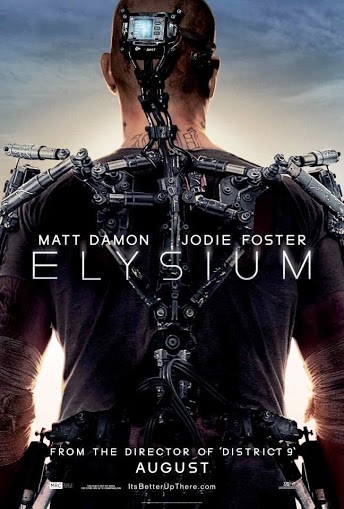
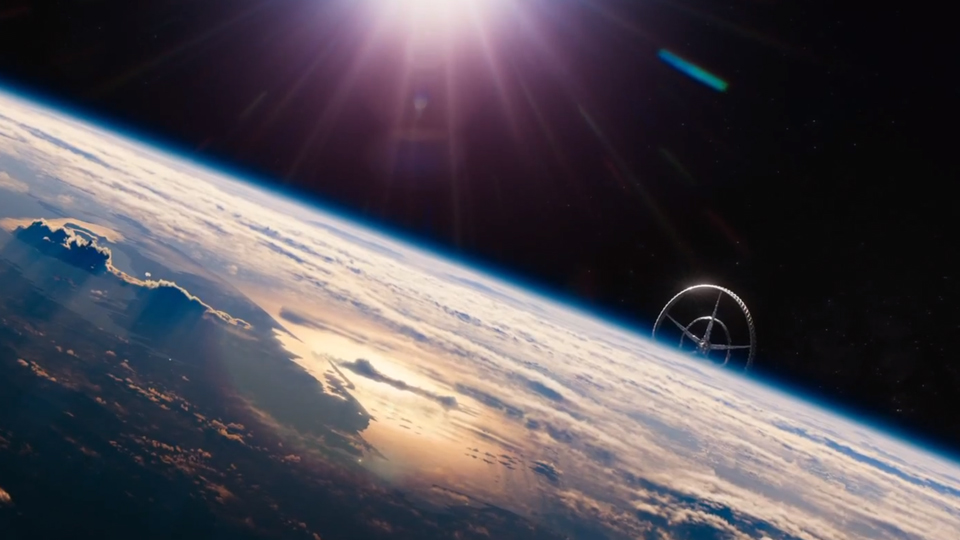
Elysium tells the story of a dystopian future, set in 2154, where the wealthy and privileged live in an orbital colony that is peaceful, serene, idyllic, and sees to all their needs (and looks a lot like the station from Space Odyssey). Meanwhile, the remaining 99% of humanity live planetside, where pollution, environmental collapse and economic ruin have made Earth into a veritable hellhole.
Enter into this Max De Costa (played by a cueballed Matt Damon), a man who is near death who comes to learn of a secret that could topple the whole system and achieve a degree of social justice. In order to do this, he has to break into Elysium, a facility that is heavily guarded and run by Secretary Rhodes (Jodie Foster), and undergoes a radical surgery to get an exoskeleton and some powerful weaponry permanently attached.
Directed by Neil Blomkamp – the South-African director who brought us District 9 and provided visual effects for such shows as Star Gate: SG-1, Smallville and Dark Angel – this movie clearly boasts the same kind of gritty, realistic texture he has come to be known for. And after the 2008 Financial Crisis and the subsequent Occupy Movement, it’s message is pretty timely and likely to be well-received.
As for me? You can keep your social commentary and comparisons to other movie franchises, I wanna see me some exoskeleton battles! Enjoy the trailer:
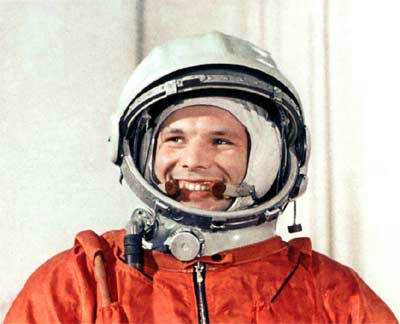
On the morning of April 12, 1961, Soviet cosmonaut Yuri Gagarin lifted off aboard Vostok 1 to become the first human in space, becoming an instant hero to many and an historic figure. Tragically, his life was cut short when just seven years later (on March 27th, 1968) the MiG-15 UTI he was piloting crashed. Ever since, his death has been shrouded in confusion and controversy, with many theories being posited as to what actually cause.
And now, some 45 years after the fact, the details about what really happened to cause the death of the first man in space have come out — from the first man to go out on a spacewalk, no less. In an article published online on Russia Today, former cosmonaut Aleksey Leonov — who performed the first EVA on March 18, 1965 — has revealed details about the accident that killed both Yuri Gagarin and his flight instructor Vladimir Seryogin in March 1968.
A soft-spoken and well-mannered man, Gagarin began his journey into space in 1960 when he and 19 other pilots were selected to take part in the Soviet space program. Just three years after making history with the launch of the first artificial satellite into space (Sputnik-1), the Russians were eager to follow this up with a mission that would put a man into low-Earth orbit.
After a grueling selection process involving physical and psychological tests, Gagarin was selected to take the pioneering flight inside the Vostok-1 space capsule. The launch, which was eagerly monitored by people all over Russia and around the world, took place at exactly 9:07 am local time (06:07 UT) on 12 April 1961. After spending just under two hours in orbit, the capsule made reentry, Gagarin exited it and parachuted to the ground, landing at around 11:05 am (08:05 UT) in a farmer’s field outside of Engels.
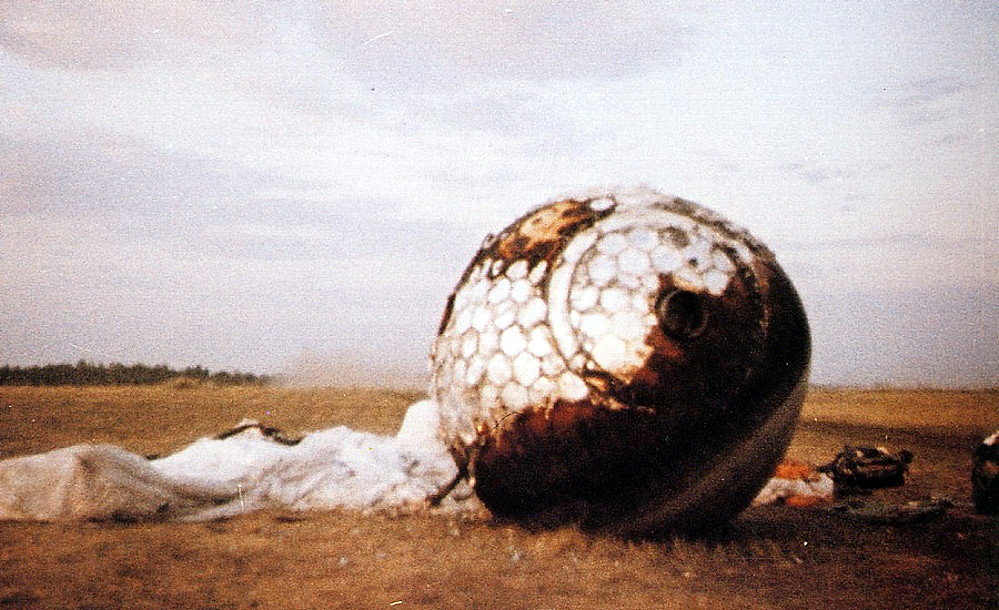
Observing the landing of Vostok-1 were two school girls, who recalled the site of the capsule hitting the ground with a combination of fascination and fear:
It was a huge ball, about two or three metres high. It fell, then it bounced and then it fell again. There was a huge hole where it hit the first time.
Elsewhere, a farmer and her daughter observed the strange scene of a figure in a bright orange suit with a large white helmet landing near them by parachute. Gagarin later recalled:
When they saw me in my spacesuit and the parachute dragging alongside as I walked, they started to back away in fear. I told them, ‘Don’t be afraid, I am a Soviet like you, who has descended from space and I must find a telephone to call Moscow!’
After the flight, Gagarin became a worldwide celebrity, touring widely abroad to promote the Soviet’s accomplishment in putting a man into space. Upon returning home, he found himself relegated to training and other tasks, due in part to the death of his friend, Vladimir Komarov in the first flight involving a Soyuz spacecraft. Shortly thereafter, he began to re-qualify to become a fighter pilot, and died during one of his training flights.
Officially, reports about Gagarin and Seryogin’s death claim that the plane crashed when Gagarin manuevered the two-seated training version of the MiG-15 fighter craft to avoid a “foreign object”. The report does not specify what this object was, but the term refers to anything from balloons and flocks of birds to airborne debris or another airborne craft. And as you can imagine, people have made some very interesting suggestions as to what this object could have been.
Now, a declassified report, which Leonov has been permitted to share, shows what actually happened during the training flight. Apparently, an “unauthorized Su-15 fighter” flew too close to Gagarin’s MiG, disrupting its flight and sending it into a spin. In his article, Leonov went on to explain in further detail:
In this case, the pilot didn’t follow the book, descending to an altitude of 450 meters. While afterburning the aircraft reduced its echelon at a distance of 10-15 meters in the clouds, passing close to Gagarin, turning his plane and thus sending it into a tailspin — a deep spiral, to be precise — at a speed of 750 kilometers per hour.
The pilot of the SU-15 survived the incident, is apparently still alive, and was not named – a condition of Leonov’s permission to share the information.
Afterwards, the first woman into space, Valentina Tereshkova (also a Soviet cosmonaut) was officially grounded by the government after Gagarin’s death to avoid a loss of another prominent cosmonaut. After the revelation was made about the true cause of Gagarin’s death, she responded by saying that the details come as a bittersweet relief. “The only regret here is that it took so long for the truth to be revealed,” Tereshkova said. “But we can finally rest easy.
Indeed. Rest in peace, Yuri. Like many who have since come and gone, you’re a part of an extremely select few who went into space at a time when doing so was still considered by many to be an impossible dream. And regardless of the Cold War atmosphere in which this accomplishment occurred, it remains an historic first and one of the greatest accomplishments ever made by a human being.
This year has led to some very interesting things for this blog of mine, and that’s just been in the past sixth months. In addition to hitting some milestones, like passing 250,000 hits, 1000 posts, and 2000 followers, it was also the second anniversary of this blog’s creation. And on top of all that, it was the year that Whiskey Delta was published and sold its first 1000 copies (1167 and counting!)
But there’s one item that kind of got lost in the mix. Back in April, I took part in the April 2013 A to Z Challenge, where bloggers are expected to produce 26 pieces of flash fiction with the short space of 30 days. Though I came to the challenge a little late and started at G, I was pretty thankful for the opportunity to create short pieces that really explored the kind of subjects and writing I want to tackle.
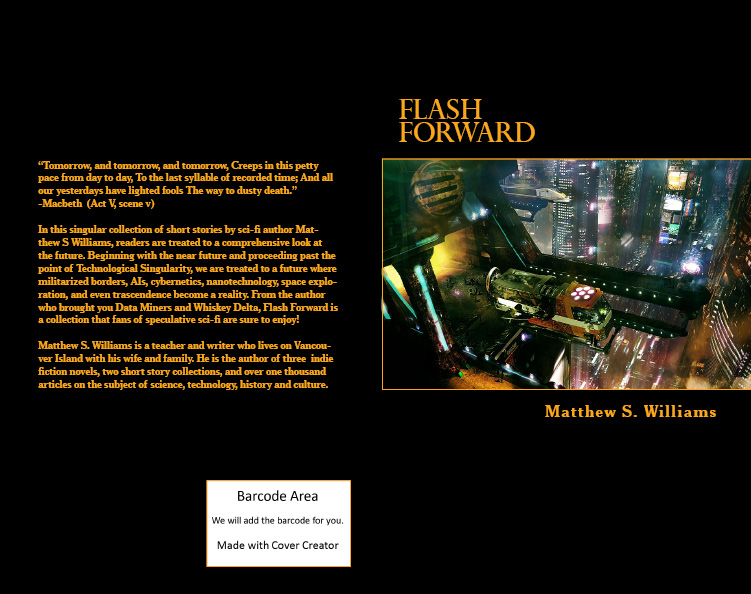
And the end result was a slew of shorts I wanted to put together in a single volume. At the time, I was still struggling with a title, and considered Fast Forward or Tomorrow(cubed) to be the front place runners. Neither one really worked though, since one has been used by many different people and the other was impossible to put on a front cover. However, I have since found a title that works and is – at present – unclaimed. Flash Forward!
As you can see below, I have worked up the cover based on Alex Popescu’s awesome artwork. Everything else fell into place behind, and I am still in the process of adding stories to it. No telling when that will finished though, since I currently have a number of other projects on my plate which demand completion – Pappa Zulu edits, writing and editing the Yuva anthology, and a crap load of other smaller tasks. However, I hope to get it done before the year is out.
Also, after finishing the A to Z challenge, I thought that I might try to keep the train going by doing flash fiction as a regular thing. Originally, I planned to do a Flash Friday, like many indie authors I follow. However, I have since lost the groove and kind of pooped out on the first installment, which was to be named Arcology since I thought I should go back and cover all the letters I missed during the A to Z challenge (in my case, A to F).
But there’s time and I would still like to do it. So I put it to my friends, colleagues and followers who take the time to read this thing known as Stories By Williams, do you think it could stand to have a Flash Friday segment? Perhaps not something that’s not even so rigidly scheduled; say just a Flash Fiction segment every once in awhile?
I think it would be good as a way of exploring some small ideas that crop up and wouldn’t get exposure otherwise. That’s was what I liked about the A to Z challenge and it might be good to make it a regular feature. And who knows? I even could guest feature some other writer’s bits from time to time as well.
Inventors Chris Malloy and Mark DeRoche turned quite a few heads back in 2012 when they displayed their hoverbike prototypes to the world. But, you know how it is with cool, new ideas. Its only a matter of time before it catches on and others are coming up with their own versions of it. And that’s exactly what happened at Prague convention center this week, where a design firm unveiled their own concept of the hoverbike.
The design firms goes by the name of Design Your Dreams Flying Bike, an amalgamation of three Czech engineering firms who joined together to fulfill a shared childhood dream. Last June, the firm shared their design specs for the electric bike which would be capable of vertical takeoff and hover-flight. And less than a year later, their efforts have resulted in something functional, and very, very cool!
Granted, the prototype isn’t quite as sleek and sophisticated as the original drawings themselves. But the project is still in the early phases, and already it has shown that the concept works. Using six horizontally mounted propellers, the 220-pound electric bike was able to lift itself into the air while an engineer on the ground controlled it with a handheld remote.
According to Milan Duchek of Design Your Dreams, the prototype will fly remotely with a dummy on the seat for now, but a version that can be piloted by a human will be ready this fall. In addition, the design team said that the final product should be as easy to maneuver as a regular bicycle, but will also have the ability to fly for between three and five minutes, using solely electric power. It will include “foolproof” stability control for takeoff and landing, and a fly-by-wire system that isn’t susceptible to outside interference.
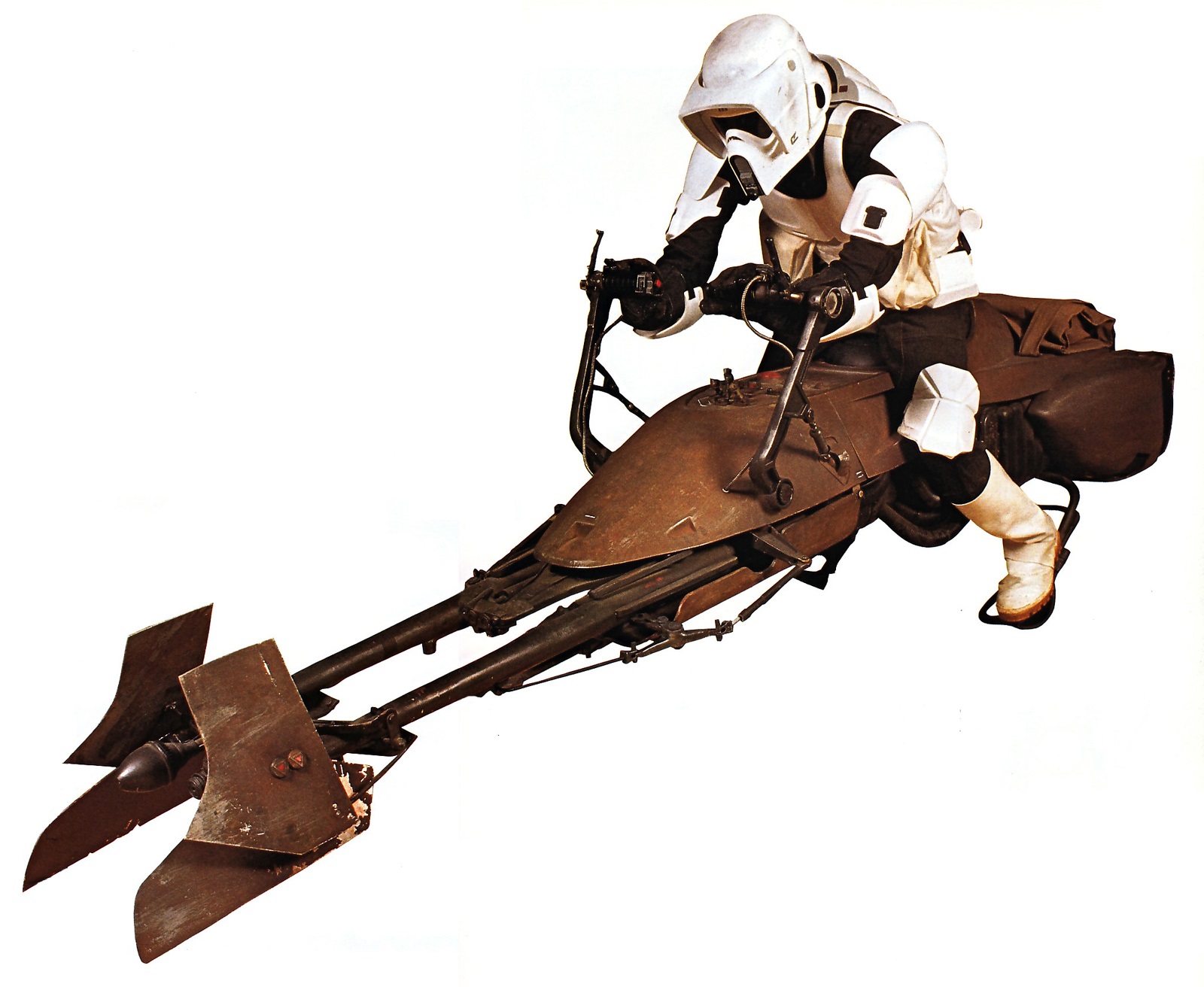
Though the prototype bike looks like a homemade version of something out of Star Wars, the designers told the press that their inspiration came from two Czech works of science fiction: a series of books by Jaroslav Foglar about a boy with a flying bicycle, and a 1966 Karel Zeman film based on a Jules Verne novel.
Bad news though: even when the flying bike is complete, it won’t be available for commercial use. According to the engineers who built it, the purpose of the project was to bring a flying bike to fruition to see if the technology would work. Or as DYD engineer Ales Kobylik said:
Our main motivation in working on the project was neither profit nor commercial interest, but the fulfillment of our boyish dreams.
Hard to argue with that kind of logic. But for those who absolutely must own one, early indications put the cost of the prototype in the low five-figures – say, anywhere from $10,000 to $30,000. Make the team an offer, we’ll see what they have to say 😉 In the meantime, check out this video of the hoverbike performing a demonstration in Prague:
Synthetic biology – also known as biohacking – is an emerging and controversial scientific field that uses gene-writing software to compile DNA sequences. And thanks to a recent ruling handed down by the US Supreme Court, it is a process which is now entirely legal. All told, the potential applications of synthetic biology are largely useful, leading to lifesaving cures, or altered crops that survive in any environment.
However, there are numerous potential (and potentially harmful) commercial applications that could emerge from this as well. One such advancement comes from a DIY synthetic biology lab known as Glowing Plant, one that specializes in synthetic bio hacking. Basically, the project was one of many that emerged out of Singularity University – a research institute dedicated future technologies today.
Glowing Plant was originally created to show the power of DIY synthetic biology, and has since sets its sights on developing a species of glowing house plant for consumers. To fund their goal, they opened up a Kickstarter campaign – the first of its kind – with the goal of $65,000. Based on research from the University of Cambridge and the State University of New York, the Glowing Plants campaign promised backers that they would receive seeds to grow their own glowing Arabidopsis plants at home.
Glowing Plant also announced that if the campaign reaches its $400,000 stretch goal, glowing rose plants will also become available. As of the publication of this article, they passed that goal with a whopping $484,013 from a total of 8,433 backers. It seems there are no shortage of people out there who want to get their hands on a glowing house plant.
But Glowing Plant, the laboratory behind the project, has no intention of stopping there. As Antony Evans, co-founder of the project explained:
We wanted to test the idea of whether there is demand for synthetic biology projects. People are fundamentally excited and enthusiastic about synthetic biology.
Given the thousands of people backing the project, I’d say he’s right! But rest assured, Evans and his team have no intention of stopping there. The ultimate goal is to create larger species of glowing plants.
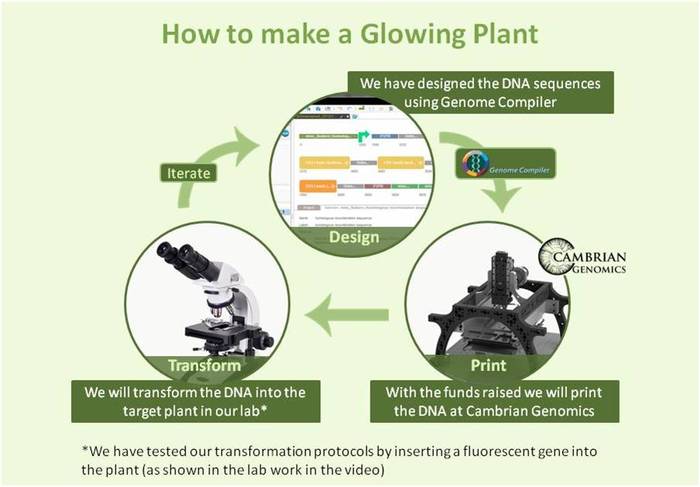
The method used to achieve this is really quite interesting. It starts with the team downloading the luciferase-lucifern genes – the firefly DNA that allows them to glow – into a Genome Compiler, and then rewiring the DNA so that the proteins can be read by plants. The DNA sequences are then sent off to DNA printing company Cambrian Genomics, which has developed a relatively low-cost laser printing system. Those sequences are printed, put on a little spot of paper, and mailed back to the team.
After that, the team relies on one of two methods to transmit the firefly DNA into the Arabidopsis’ themselves. One way is to use a bacteria solution that is capable of injecting its own DNA into plants and rewriting theirs, which then causes the altered plants to germinate seeds of the new glowing strain. The other involves gold nano-particles coated with a DNA construct that are then fired at the plant cells, which are then absorbed into the plant chromosomes and alters their DNA.
This second method was devised to do an end run around specific Department of Agriculture regulations that govern the use of viruses or other pathogens to modify DNA. Though technically legal, the process has attracted resistance from environmental groups and the scientific community, fearing that the DNA of these altered plants will get into the natural gene pool with unknown consequences.
In fact, an anti-synthetic biology group called ECT has emerged in response to this and other such projects – and is centered in my old hometown of Ottawa! They have countered Glowing Plant’s Kickstarter campaign (which is now closed) with a fundraising drive of their own, entitled “Kickstopper”. In addition, the group has started a campaign on Avaaz.org to force the Supreme Court to reconsider the ruling that allows this sort of bioengineering to take place.
At present, their fundraising campaign has raised a total of $1,701 from 58 backers – rougly 9% of its overall goal of $20,000 – and their Avaaz campaign has collected some 13,000 signatures. With 36 days left, there is no telling if they’re efforts will succeed in forcing a legal injunction on Glowing Plant, or if this is the first of many synthetic biology products that will make it to the market through private research and crowdfunding.
A fascinating time we live in, and potentially frightening…

 In a recent study, NASA shared a vision that sounds like something out of a science fiction novel. Basically, the plan calls for the creation of robots that could be sent to a nearby asteroid, assemble itself, and then begin mining the asteroid itself. The scientists behind this study say that not only will this be possible within a few generations of robotics, but will also pay for itself – a major concern when it comes to space travel.
 But also, humanity’s surveys of space resources – namely those located in the asteroid belt – have revealed that the elements needed to make rubber, plastic and alloys needed for machinery are there in abundance. NASA proposes that a robotic flotilla could mine these nearby space rocks, process the goods, and then ship them back to Earth.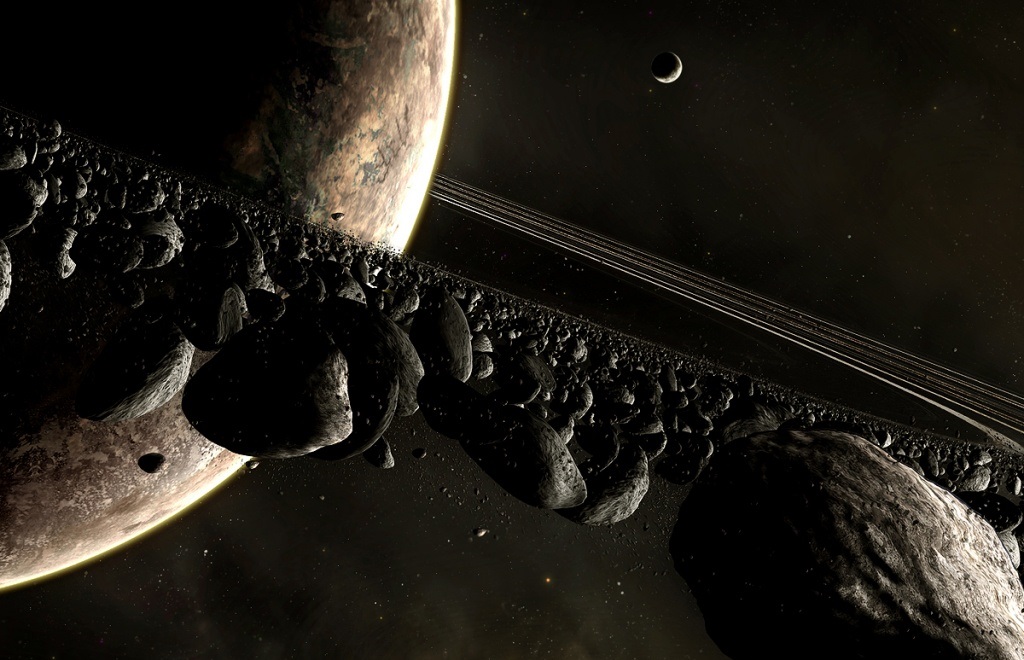

















 Stories by Williams