Game of Thrones – Season 3 Episode 9

Game-of-Thrones-Season-3-game-of-thrones-33779424-1600-1200Wow… This week’s episode of Game of Thrones certainly made the waves and shocked the pants off of numerous fans. One episode shy of the season finale, and the episode writers decided to reveal one of the bloodiest scenes from the series. All I can say is wow! My condolences to the fans who didn’t see this one coming. I wish I could have warned you, but you know how spoilers are! And I thought it best if you saw it for yourself.

Lord know I too was wondering how they would go about presenting the “Red Wedding”, a climactic part of the third book. And wouldn’t you know it, it just happened to be the bloodiest scene to date for the miniseries. Fitting, seeing as how its description was nothing short of brutal and shocking in the original novel. And much like with Ned Stark’s death, it left fans aghast and traumatized…

But of course, Robb’s death wasn’t the only highlight of the episode, and there is still plenty more bloody goodness to be had. So for those who are having second thoughts about watching after this episodes horrific twist for the Starks, I can only insist that you stick with it. Bad people will die too before its all over…

The Rains of Castamere:
got3_rainsThe episode opens with Robb and his bannerman arrived at the Twins to meet with Lord Walder Frey. After trotting out his daughters to recieve Robb’s apology, he inspects Talisa Maegyr and makes some extremely vulgar comments. Meanwhile, Edmure Tully is sure to keep a close eye on the Frey girls, as he knows that he is betrothed to one of them. However, their initial meet and greet ends before he can, and the date for the wedding set!

On the night of, as Robb’s camp is liquored and fed outside, Frey introduces his daughter to Edmure, who is pleasantly surprised. They say their vows, are joined in the sight of the Seven, and the festivities commence. Dinner is served, the wine flows in abundance, and the band plays merrily while everyone dances and carries on. A toast is made by Walder, and the bedding ceremony is called for!

got3_rains5Over in Yunkai, Daenerys’ and her captains, which now includes Daario Naharis, prepare to invade the city. He suggests using a rear gate that is frequented by his men when seeking ladies of the night. Volunteering to lead Grey Worm and Ser Mormont inside, he plots to open the gates from within and let the Unsullied inside to sack the city before its defenders realize they are under attack.

Moving at night, Daario is true to his word and enters the back gate, kills the guards, and leads Grey Worm and Selmy inside. They are attacked by several more guards once inside, and hope seems lost… Many hours later, Selmy, Grey Worm and Daario return to Daenerys, claiming victory and presenting her with the Harpy flag of the city. Yunkai is now hers to rule and the slaves are set free!

got3_rains2Not far away, John and the Wildling party led by Tormund come upon a horse-breeders farm. Finding one man there alone, they plot to kill the man and take the horses, but John insists they leave the old man alive. He is ignored, but managed to alert the man’s horses before they get the drop on him, and the old man escapes. His other horses are taken and several of the Wildlings go after him.

Just south of the Wall, Bran and his companions find their way to “The Gift”. land that was entrusted to the Night’s Watch by Brandon the Builder. Finding an abandoned windmill, they decide to take shelter for the night and wait out a storm. They notice the horse breeder riding by, and have the perfect spot to watch as he is overtaken by the Wildlings. Hodor’s yelling begins to give them away to the Wildling party. He is stopped only when Bran uses his “skinchanging” technique to invade his skin and take command of him.

got3_rains1When John and the rest catch up with them, John is told to kill the old man as a test of loyalty. John is unable, and Ygritte steps in and kills him with an arrow. Tormund orders John dead and begins fighting with them, and is saved by the intervention of Bran and Rickon’s direwolves, whom Bran managed to take control of with his skills again. However, Orell manages to get his hawk to deal some gashes on John, and he rides away injured, leaving Ygritte behind.

In the windmill, Bran says his goodbyes to Osha and Rickon. After saying yet again that she won’t go beyond the Wall, Bran tells her that she need not come. And Rickon he insists needs to stay behind, due to the dangers they are likely to face. He leaves them then, ordering them to head to House Umber’s holdings. Since they are the bannermen of the Starks, he knows they will keep him safe.

got3_rains6In the Riverlands, Arya and Ser Sandor “The Hound” learn of the wedding as they get closer to the Twins. They arrive just in time to find that the outside of the castle grounds is littered with tents and men, Robb’s entire host which has been billeted there for the evening and is raucously partying. Inside, Edmure and his new wife are taken from the hall to be bedded, and things quickly turn bad!

The band, which until now was providing joyous music, begins playing “The Rains of Castamere” and the doors are shut. They then produce crossbows and lets loose on Robb and his bannermen.Talisa is stabbed to death in her stomach, killing their unborn child, and Robb is hit by several bolts.

Outside, Sandor comes up to the gate and is refused entrance. Sensing a chance to escape, Arya jumps from Sandor’s cart and tries to flee, making her way to the nearest table with Stark bannermen. However, she comes upon them just in time to see Frey’s men begin killing them and to watch Robb’s direwolf get killed. She is narrowly saved when Sandor, having come back for her, hits her over the head and carries her away…

Catelyn tries to take Walder’s wife hostage, but succumbs to grief when Roose Bolton returns to finish Robb with a stab to the heart. She cuts the wife’s throat, and then has her own cut by one of Frey’s men. The episode ends with her bleeding from the neck and collapsing to the floor, her face stricken with grief…

got3_rains4

Summary:
Like I said… wow. Having read the books, I was somewhat prepared for the event, but that didn’t make it any easier to watch. Not only did they convey the “Red Wedding” in all its horror, they even upped the ante by adding an extra horrorific. In the novels, you see, Talisa was not at the wedding, and was therefore not amongst the victims. Which meant that no one stuck a blade in her belly and murdered her unborn child. That was truly horrible and bloody, and makes me want to see Walder’s head smashed with a rock!

But that would be nothing new. Both the Freys and the Boltons are scum and deserve to die in terrible ways. Guess we’ll all just to have to wait to see that one take place. And in the meantime, like I said, there’s several more not-so-horrific things which need to happen. And some comments I want to make on this episode…

Aside from the bloody resolution to the Stark’s campaign to avenge Lord Eddard Stark and establish a “King in the North” (which I still think sucked!), there was Robb’s journey north and John’s all-important escape from the Wildlings. After being lost to his brothers for so long, he is now free to return to them, and knows the Wildlings plan of attack. And said attack is coming soon!

In addition, Daenery’s private little empire now accounts for Yunkai and her power is growing. Now, only the port city of Mereen remains, with its vast array of ships and slaves to be freed. And of course, there’s plenty of intrigue still to be had in King’s Landing, where – as is the them for the end of this season – another wedding is about to commence. And believe me when I tell you, it too is going to have its share of surprises!

And this week, I’ve decided not to be so nitpicky. If there’s one thing I’ve noticed, its that the show has a way of taking changes and steering them back into the fold. For example, Roose’s Bolton earlier betrayal of letting Jaime go now makes sense in the context of his betrayal at the wedding, which was true to the novel. In addition, having Talisa around for much of the show now, and having her at the wedding, made for a much more emotionally-involved spectacle when she died.

And sure, the part involving Daenerys’ forces infiltrating Yunkai, that too happened differently in the book. You see, in the novel, Selmy had been in disguise prior to this point and his the true identity had just been revealed. At the same time, she learned that Mormont was originally involved in the plot to poison her after she married Drogo. Incensed, she sent both men into the city using the sewers and managed to take it from the inside. Here, they changed that, but I would imagine they’ll steer things back soon enough.

And Catelyn did not take Walder’s wife hostage in the book, but rather his “simple” son, who due to Walder’s cruel and inhumane nature proved to be a lousy hostage. But that mattered little in the face that performance. Her anguish was palatable as her son died and she sliced the poor girl’s throat out of anger and grief, only to then die herself and look almost indifferent about it.

And David Bradley was just so believable as the miserable and loathsome Walder, I almost forgot how much I hated him as he watched everyone die. The only downside was how it overshadowed everything else in this episode, including John Snow abandoning the Wildlings, which included the woman he loves, and who loves him…

But who could expect anything to compare to that bloody, awful wedding? Though heartrending and horrible to behold, I respect the hell out of the actors and writers for how they conveyed it. The subtle addition of “The Rains of Castamere”, where no one said that it was playing, they merely trusted the audience to make the connection, was quite brilliant. And we already know from last episode the significance of this song that tells of a great House falling due to its ambition.

Like I said, there’s plenty more to behold, and its all coming in the season finale. Trust me, traumatized fans. You’ll want to keep watching!

The Future of Cities and Urban Planning

future-city-1With the development of vertical farms, carbon capture technology, clean energy and arcologies, the future of city life and urban planning is likely to be much different than it does today. Using current trends, there are a number of people who are determined to gain some understanding of what that might look like. One such group is Arup, a design and engineering firm that produced a mockup that visualizes what urban environments will look like in 2050.

Based on the world as it is today, certain facts about the future seem relatively certain. For starters, three-quarters of the population will live in cities, or 6.75 billion of the projected 9 billion global total. In addition, everyone will have grown up with the Internet, and its successors, and city residents will have access to less natural resources than they do today, making regeneration and efficiency more of a priority.

Add to this several emerging technologies, and our urban environments are likely to look something like the building mockup below. As you can see, it has its own energy systems (“micro-wind,” “solar PV paint,” and “algae facade” for producing biofuels). There is an integrated layer for meat, poultry, fish, and vegetable farming, a “building membrane” that converts CO2 to oxygen, heat recovery surfaces, materials that phase change and repair themselves, integration with the rest of the city, and much more.

future_urban_planning

Most futuristic of all is the fact that the structure is completely modular and designed to be shifted about (by robots, of course). The building has three layer types, with different life-spans. At the bottom is a permanent layer – with a 10 to 20-year lifespan – which includes the “facade and primary fit-out walls, finishes, or on-floor mechanical plant” – and a third layer that can incorporate rapid changes, such as new IT equipment.

As Arup’s Josef Hargrave described the building when unveiling the design:

[A]ble to make informed and calculated decisions based on their surrounding environment… [a] living and breathing [structure] able to support the cities and people of tomorrow.

In short, the building is designed with personal needs in mind, based on information gleamed from a person’s behaviors, stated preferences, and even genetic information.

aircleaning_skyscraper3But what is even more interesting is how these buildings will be constructed. As countless developments are made in the field of robotics, biotechnology and nanotechnology, both the materials used and the processes involved are likely to be radically different. The rigid construction that we are used to is likely to give way to buildings which are far more flexible, adaptive, and – best of all – built by robots, drones, tiny machines and bacteria cultures.

Once again, this change is due mainly to the pressures that are being placed on urban environments, and not just technological advances. As our world becomes even more densely populated, greater proportions of people live in urban environments, and resources become more constrained, the way we build our cities must offer optimum efficiency with minimal impact.

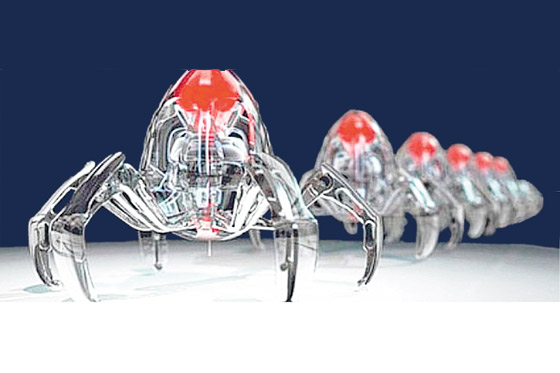
nanomachineryTowards this end, innovations in additive manufacturing, synthetic biology, swarm robotics, and architecture suggest a future scenario when buildings may be designed using libraries of biological templates and constructed with biosynthetic materials able to sense and adapt to their conditions.

What this means is that cities could be grown, or assembled at the atomic level, forming buildings that are either living creatures themselves, or composed of self-replicated machines that can adapt and change as needed. Might sound like science fiction, but countless firms and labs are working towards this very thing every day.

It has already been demonstrated that single cells are capable of being programmed to carry out computational operations, and that DNA strains are capable of being arranged to carry out specialized functions. Given the rapid progress in the field of biotech and biomimetics (technology that imitates biology), a future where the built environment imitates organic life seems just around the corner.

biofabrication For example, at Harvard there is a biotech research outfit known as Robobees that is working on a concept known as “programming group dynamics”. Like corals, beehives, and termite colonies, there’s a scalar effect gained from coordinating large numbers of simple agents to perform complex goals. Towards this end, Robobees has been working towards the creation of robotic insects that exhibit the swarming behaviors of bees.

Mike Rubenstein leads another Harvard lab, known as Kilobot, which is dedicated to creating a “low cost scalable robot system for demonstrating collective behaviors.” His lab, along with the work of researcher’s like Nancy Lynch at MIT, are laying the frameworks for asynchronous distributed networks and multi-agent coordination, aka swarm robotics, that would also be capable of erecting large structures thanks to centralized, hive-mind programming.

nanorobot1

In addition to MIT, Caltech, and various academic research departments, there are also scores of private firms and DIY labs looking to make things happen. For example, the companies Autodesk Research and Organovo recently announced a partnership where they will be combining their resources – modelling the microscopic organic world and building bioprinters – to begin biofabricating everything from drugs to nanomachines.

And then there are outfits like the Columbia Living Architecture Lab, a group that explores ways to integrate biology into architecture. Their recent work investigates bacterial manufacturing, the genetic modification of bacteria to create durable materials. Envisioning a future where bacterial colonies are designed to print novel materials at scale, they see buildings wrapped in seamless, responsive, bio-electronic envelopes.

ESA_moonbaseAnd let’s not forget 3D printing, a possibility which is being explored by NASA and the European Space Agency as the means to create a settlement on the Moon. In the case of the ESA, they have partnered with roboticist Enrico Dini, who created a 3-D printer large enough to print houses from sand. Using his concept, the ESA hopes to do the same thing using regolith – aka. moon dust – to build structures on Earth’s only satellite.

All of these projects are brewing in university and corporate labs, but it’s likely that there are far more of them sprouting in DIY labs and skunkworks all across the globe. And in the end, each of them is dedicated to the efficiency of natural systems, and their realization through biomimetic technology. And given that the future is likely to be characterized by resources shortages, environmental degradation and the need for security, it is likely to assume that all of these areas of study are likely to produce some very interesting scenarios.

As I’ve said many times before, the future is likely to be a very interesting place, thanks to the convergence of both Climate Change and technological change. With so many advances promising a future of post-scarcity, post-mortality, a means of production and a level of control over our environment which is nothing short of mind-boggling – and a history of environmental degradation and resource depletion that promises shortages, scarcity, and some frightening prospects – our living spaces are likely to change drastically.

The 21st century is going to be a very interesting time, people. Let’s just hope we make it out alive!

Sources: fastcoexist.com, (2)

Judgement Day Update: The Robotic Bartender and DARPA’s Latest Hand

robot_bartenderRobots have come a long way in recent years, haven’t they? From their humble beginnings, servicing human beings with menial tasks and replacing humans on the assembly line, they now appear poised to take over other, more complex tasks as well. Between private companies and DARPA-developed concepts, it seems like just a matter of time before a fully-functioning machine is capable of performing all our work for us.

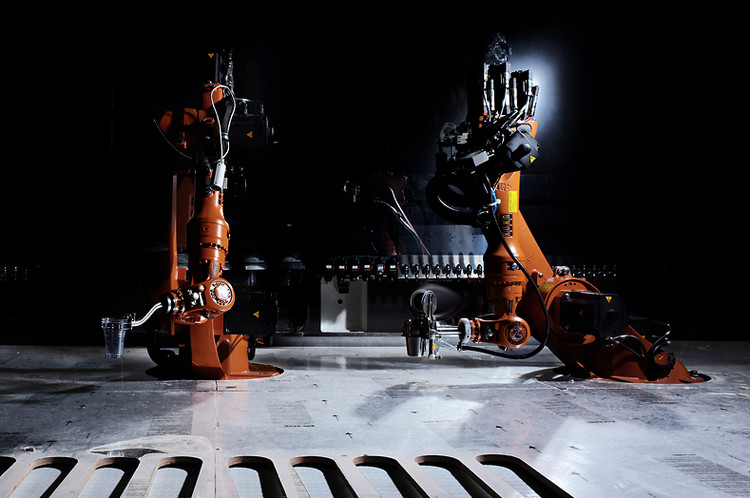
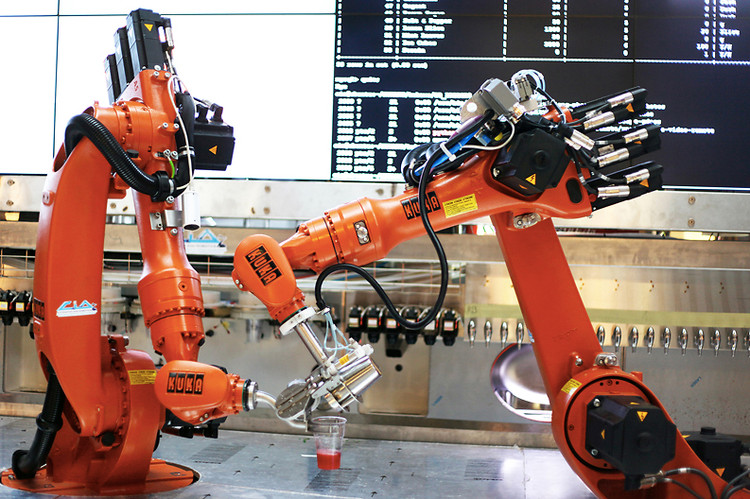
One such task-mastering robot was featured at the Milan Design Week this year, an event where fashion tales center stage. It’s known as the Makr Shakr, a set of robotic arms that are capable of mixing drinks, slicing fruit, and capable of making millions of different recipes. The result of a collaborative effort between MIT SENSEable City Lab and Carlo Ratti Associati, an Italian architecture firm, this robot is apparently able to match wits with any human bartender.

robot_bartender1While at the Milan Design Week, the three robotic arms put on quite the show, demonstrating their abilities to a crowd of wowed spectators. According to the website, this technology is not just a bar aid, but part of a larger movement in robotics:

Makr Shakr aims to show the ‘Third Industrial Revolution’ paradigm through the simple process design-make-enjoy, and in just the time needed to prepare a new cocktail.

In a press release, the company described the process. It begins with the user downloading an app to create their order to the smartphone as well as peruse the recipes that other users have come up with. They then communicate the order to the Makr Shakr and “[the] cocktail is then crafted by three robotic arms, whose movements reproduce every action of a barman–from the shaking of a Martini to the muddling of a Mojito, and even the thin slicing of a lemon garnish.”

robot_bartender2Inspired by the ballerina Roberto Bolle, whose “movements were filmed and used as input for the programming of the Makr Shakr robots”, the arms appear most graceful when they do their work. In addition, the design system monitors exactly how much booze each patron is consuming, which, in theory, could let the robot-bartenders know when it’s time to cut off designers who have thrown back a few too many.

Check out the video of the Makr Shakr in action:


Another major breakthrough comes, yet again, from DARPA. For years now, they have been working with numerous companies and design and research firms in order to create truly ambulatory and dextrous robot limbs. In some cases, as with the Legged Squad Support System (LS3), this involves creating a machine that can carry supplies and keep up with troops. In others, this involves the creation of robotic hands and limbs to help wounded veterans recover and lead normal lives again.

And you may recall earlier this year when DARPA unveiled a cheap design for a robotic hand that was able to use tools and perform complex tasks (like changing a tire). More recently, it showcased a design for a three-fingered robot, designed in conjunction with the firm iRobot – the makers of the robotic 3D printer – and with support from Harvard and Yale, that is capable of unlocking and opening doors. Kind of scary really…

DARPA_robot

The arm is the latest to come out of the Autonomous Robotic Manipulation (ARM) program, a program designed to create robots that are no longer expensive, cumbersome, and dependent on human operators. Using a Kinect to zero in on the object’s location before moving in to grab the item, the arm is capable of picking up thin objects lying flat, like a laminated card or key. In addition, the hand’s three-finger configuration is versatile, strong, and therefore capable of handling objects of varying size and complexity.

When put to the test (as shown in the video below), the hand was able to pick up a metal key, insert it into a lock, and open a door without any assistance. Naturally, a human operator is still required at this stage, but the use of a Kinect sensor to identify objects shows a degree of autonomous capability, and the software behind its programming is still in the early development phase.

And while the hand isn’t exactly cheap by everyday standards, the production cost has been dramatically reduced. Hands fabricated in batches of 1,000 or more can be produced for $3,000 per unit, which is substantially less than the current cost of $50,000 per unit for similar technology. And as usual, DARPA has its eye on future development, creating hands that would be used in hazardous situations – such as diffusing IEDs on the battlefield – as well as civilian and post-combat applications (i.e. prosthetics).

And of course, there’s a video for the ARM in action as well. Check it out, and then decide for yourself if you need to be scared yet:


Sources:
fastcoexist.com, singularityhub.com
, makrshakr.com

The Arkyd 100: Crowdfunding Space Exploraiton

ARKYD-in-SpacePlanetary Resources made quite the impression last year when they announced their plans to begin prospecting near-Earth asteroids with in the intention of mining them in the near future. Alongside such companies as SpaceX and Golden Spike, they are part of a constellations of private interests looking to establish commercial space travel and tourism. But their latest proposal goes a step further, bringing crowdfunding and the realm of space exploration together.

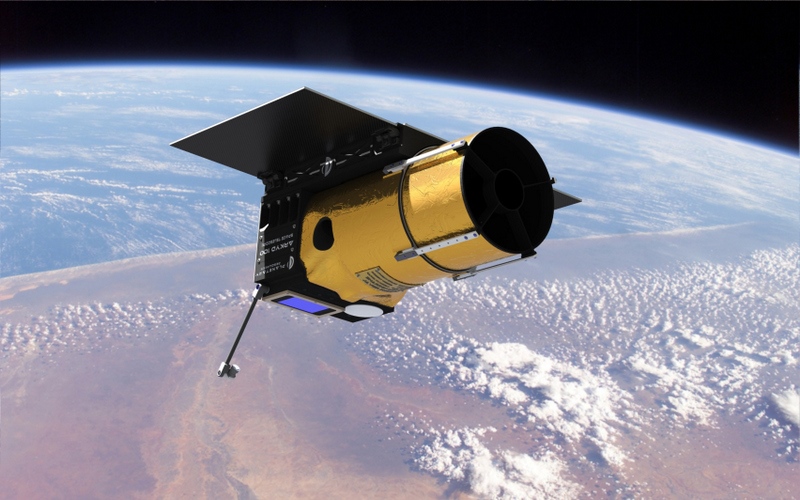
That’s the idea behind a Kickstarter campaign that the company began to raise money for a crowdfunded space telescope. Known as the Arkyd 100, the company claims that this new telescope will provide unprecedented public access to space and place the most advanced exploration technology into the hands of students, scientists and a new generation of citizen explorers.

asteroid_miningTo make their campaign successful, they need to raise $1 million in Kickstarter pledges by the end of June 2013. Once the telescope is up and running, it will allow them to better map the asteroid belt, thus assisting them in finding the rocks they want to mine for precious metals and trace elements. And with public financial backers making it happen, anyone pledging money will be able to own a piece of the prospector!

During a webcast on May 28th to announce the Kickstarter campaign, Chris Lewicki, President and Chief Engineer for Planetary Resources, gave a rundown on the details of the telescope. And interestingly enough, the Planetary Resources’ technical team that designed it also worked on every recent U.S. Mars lander and rover. So if you do choose to invest, you will do so with the knowledge that the same people who helped build the Opportunity and Curiosity rovers are behind this project. If that doesn’t inspire investor confidence, I don’t know what will!

ARKYD-Space-SelfieA wide array of scientists, space enthusiasts and even Bill Nye the Science Guy have voiced their support for Planetary Resources’ new public space telescope. And those who invest will have the chance of recouping certain rewards, depending on how much they choose to pledge. Those pledging the minimum donation of $25 will receive the “Your Face in Space” benefit, where you will have you picture placed on the Arkyd and receive a picture of said photo the telescope with Earth in the background. Higher pledges will provide access to the telescope for students and researchers worldwide.

After less than 2 hours into their campaign, Planetary Resources had raised over $100,000. And as of this article’s writing, just one day shy of a week, the campaign has reached $710,945 of their $1 million goal, and they still have 27 days left. I guess people want a piece of this project. And who can blame them, since it is a scientific and historic first!

Check out the promotional video for the Arkyd and Planetary Resources below. To make a donation or get information about the Kickstarter campaign, visit the campaign page here.


Source:
universetoday.com

Reviews Got You Down?

thumbs upIn a word. Yes.

Whiskey Delta has been racking up its share of reviews lately. Unfortunately for me, the majority of them have been rather punitive of late. Despite the release of the 2nd edition, a thoroughly cleansed and updated version of the story, the book continues to get slammed because of what I can only assume are the weaknesses to be found in the first edition.

In total, six people have added their reviews of the book in recent weeks, and four of those six gave it two stars out of five. And, as usual, three of those four had the same things to say, just worded differently:

Good story, bad editing.

You ever hear something so many times it lost all meaning to you? Or so many times that you swore the next person who said it would receive a thorough thrashing? Well, that’s kind of how I feel about these. But don’t take my word for it, here’s what they had to say:

Proofread!:
There is actually a decent story here, but it gets lost due to a strong need of proofreading. Needs more than just computer spell checking.

William Boyles

Good story, awful editing:
This is a solid zombie story – the story gets 3 or 4 stars – but give us a break with the sloppy editing. At least pretend to care about the finished product. The punctuation mistakes, grammatical errors, and spelling mistakes make parts of the book unreadable and confusing. You have seen this complaint several times in the reviews – how hard is it to go through the book, clean it up, and re-post it? The author and publisher should be embarrassed by the condition of the editing. It is the worst I have ever seen in a purchased work.

Justins Are Cool

Good story, horrible editing:
The story itself is good enough to keep you engaged but the editing made it a chore to finish. Misspelled words, missing words, bad grammar all through out took so much away from this book.

Jackie L. Willis Jr. “waterboyjlw”

Ah, and check out this gem. This is the only thoroughly bad review Whiskey Delta has picked up since it was published. And for some reason, this person gave it the same rating as all those above who thought the story was good but the editing was bad. That seem right to you?

boring:
boring and poorly written. Story didn’t flow and there was no cohesive story line. I guess what can I expect for a couple bucks.

Gil L Nicholas

In truth, this wouldn’t bother me so much if these rating weren’t hurting sales, or if these early reviews weren’t weighing down the overall rating. As much as I wanted to believe that the publication of the 2nd Edition might be a fresh start, every review contributes to the overall rating. And now, the book’s overall review now stands at a middling 3.1 stars out of 5. At this rate, I’ll need at least half a dozen five star reviews just to bring it back up to something respectable.

Luckily for me, there’s been some light at the end of this tunnel. In the same stretch of time, two 4 star reviews came in. There was this one, which I can only assume was for the 1st edition, and from a person who didn’t choose to knock me a whole bunch of stars over editing issues:

good book
Great story with interesting people. Spell check was poorly done and many editing issues were present. Would like a sequel

-Light

And then there was this one, which actually sounded like it might be from the 2nd edition since editing didn’t even come up in the review. In fact, this person chose to focus on matters pertaining to the plot and story, God bless their hearts!

good read but…..
Interesting story, but how do they have so many new guys in their unit? Where are they getting the replacements??
Pro’s- The military isn’t completely useless, a strong female character, interesting story
Con’s- The story starts somewhere in the middle and ends before the story seems done.

-DawnG

So that’s where things stand for this book right now. More good news, an advance proof of Papa Zulu arrived the other day and I’m getting down to editing it. By the time it is spruced up, say in a month or so, I hope to deliver on a sequel that is clean and proper coming out of the gate!

Maybe then this bad mojo will dissipate and I can get to entertaining fantasies of becoming a successful author and writer, the kind that has money, power, and access to the depths of sleaze that these things provide! Well… I’ll settle for money and power, thank you very much! Until next time…

zombie_keepcalm

The Future is Here: The Anti-Gravity 3D Printer

anti-grav3d2Three-dimensional printing is without a doubt one of the greatest growth industries of the 21st century. And yet, surprisingly enough, there are those who seem to think that there is room for improvement when it comes to current concepts and designs. Two such individuals are Petr Novikov and Saša Jokic, a group of architecture students who recently began interning at the Joris Laarman Lab in Amsterdam. While there, they came up with a revolutionary method for 3D printing that reboots the concept!

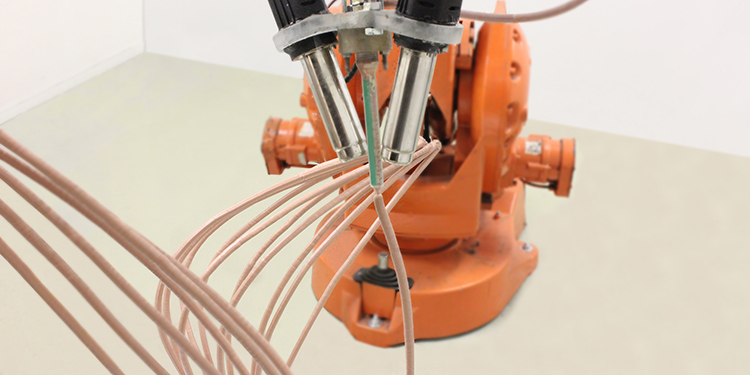
It’s called Mataerial, a new and patented process where polymers are squeezed from a nozzle similar to how bakers squeeze icing from a tube to frost a cake, except there’s a robot involved. Ultimately, their concept was based on the fact that all conventional printing works with layers, which they considered grossly inefficient. Not only do such methods require the presence of a support structure, they also take additional time, materials, and increase the risk of damage if the object is removed from its support structure.

anti-grav3d1As Novikov explains:

The material that comes out of the nozzle is still kind of viscous–It’s not a liquid already but its not a solid material, so what we wanted to do is make it solid the same exact moment it comes out of the nozzle. And that’s the hardest part. Because if it solidifies before it comes out of the nozzle, then its going to make a clog… but if it solidifies after it leaves the nozzle, than its going to be weak and fall down.

The key was to find two liquid polymers that, when mixed, quickly harden, which allows for mid-air solidification. They’re calling the resulting method “Anti-Gravity Object Modeling,” since the material’s just-in-time solidification eschews the need for any sort of support structure. The new method is exciting for a number of reasons. The first is scale, in that this method could be adapted for manufacturing large and well as small scale objects easily.

anti-grav3dDepending on the size of nozzle used, the technology could be used to print materials and objects that are on the scale of millimeters (like components for consumer electronics), 3D models (the kinds that are printed by standard professional printers), or larger objects such as furniture or even parts used in large-scale architectural construction. Basically, anything from the tiniest object to the largest structure could be created by robots equipped with specialized nozzles and Mataerial printers.

But perhaps most exciting is the possibility that this new method would be able to print objects in low or even zero gravity. Given NASA’s recent interest in building a Moon base using 3D printing, such a process could come in mighty useful. Already, the technology known as “sintering” has been considered for the purposes of building a Lunar settlement, but given its “anti-gravity” application, the Mataerial process just might have a shot at winning some lucrative contracts.

In fact, Navikov indicates that they considered the possibility and put it to the test. As he indicated: “We did an investigation and we are pretty sure that this could be used as 3-D printer in zero gravity.” Did you get that NASA? Anyway to make this technology work with regolith? Regardless, it sure could be useful here on planet Earth!

Source: fastcoexist.com

Asteroid 1998 QE2 Flies Past Earth

1998_QE2Today, at approximately 20:59 GMT, a rock so big that it has its own moon safely flew past Earth. It’s name is 1998 QE2, an asteroid that is roughly 500,000 times larger than the one which made that near-Earth flyby back in February. But of course, scientists had been letting the public know well in advance that this one would miss us to, and by a much wider margin.

In fact, whereas the last rock missed us by a mere 27,700km (17,200mi), this one passed at a much safer distance of about 5,800,000 km (3,600,000 miles). Good news for anyone who’s been caught up in all the asteroid/meteoroid frenzy of late. And while it might seem that a lot more stellar objects have been hurling towards us lately, a simple review of our Solar Systems turbulent history will confirm that this is pretty much business-as-usual.

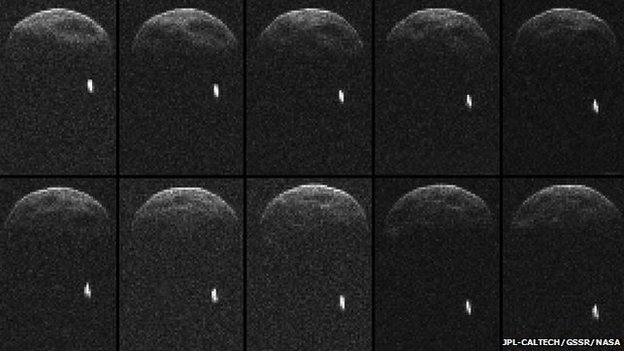
1998_QE2_caltechWhat’s more, this most recent flyby provided scientists and astronomers with yet another opportunity to study an asteroid as it passed close to Earth. Using radar telescopes, they were due to record a series of high-resolution images, the purpose of which was to study what the asteroid was made of and where exactly in the Solar System it came from.

Prof Alan Fitzsimmons, an astronomer at Queen’s University Belfast, said:

It’s a big one. And there are very few of these objects known – there are probably only about 600 or so of this size or larger in near-Earth space… We already know from the radar measurements, coupled with its brightness, that it appears to be a relatively dark asteroid – that it’s come from the outer part of the asteroid belt.

What’s more, the curious nature of the asteroid – in that it has its own moon – is something which makes it a scientific curiosity. Approximately 15% of asteroids have the mass that they are capable of supporting their own satellite, but rarely does one fly this close to Earth. Early observations of this “moon” indicated that it is roughly 600m in diameter, and would have been visible during the flyby to amateur astronomers with a sufficient enough telescope.

1998_QE2_trajAfter this, asteroid 1998 QE2 will hurtle back out into deep space where it will stay for some time. In fact, Friday’s visit was the closest it has been to Earth for at least two centuries. And not surprisingly, researchers are becoming increasingly interested in potential hazards in space. So far they have counted more than 9,000 near-Earth asteroids, and they spot another 800 new space rocks on average each year.

And given the potential for harm if one made contact with Earth, as they have been known to do in the past, the information gleamed from observation and study is sure to come in handy as far as planetary defense is concerned. As Fitzsimmons himself pointed out about this particular asteroid:

…if something this size did hit us one day in the future, it is extremely likely it would cause global environmental devastation, so it is important to try and understand these objects.

Source: bbc.co.uk

Supercomputer Creates Atomic Model of HIV

DNA-1The ongoing fight to end HIV has been a long and arduous one, but progress is being made. In addition to potential treatments being created that have shown promise, there are also efforts being mounted to understand how the virus works at an atomic level. This is great news, for as any practitioner of medicine will tell you, understanding a disease and knowing how to strike at the heart of it is the key to stopping it and making sure future generations don’t have to fear it.

In recent years, several major breakthroughs were announced for the treatment of HIV, treatments which many heralded as cures. In January of last year, the Danish Research Council awarded funding to a group of researchers who demonstrated that HIV could be “flushed” from infected cells where it tends to congregate and protect itself. Combined with vaccinations that turbocharge the body’s immune system, this method proved effective at eliminating the HIV virus in infected cells.

HIV-budding-ColorAnother came back in November, when researchers at Caltech were even able to successfully spawn a significant amount of HIV antibodies in lab mice by using a new approach, known as Vectored ImmunoProphylaxis (VIP). An inversion of the traditional vaccination method, this new method produced plenty of HIV-preventing antibodies which they believed could be fashioned into a  vaccine.

And finally, there were the experiments being conducted over at the Washington University School of Medicine, where researchers designed a solution that employed bee venom and a nanoparticle delivery system. Knowing that bee venom is capable of killing HIV, and that the virus is thousands of times smaller than your average cell, the solution proved quite effective at filtering out the virus and killing it while leaving surrounding tissue unharmed. Taken together, these two proposed solutions have left many thinking a cure is just around the corner.

blue-waters-super-computer-at-petascale-020908Nevertheless, in order for this virus to truly be beaten, we need to understand it better. Hence why a group of scientists – using the University of Illinois’ “Blue Waters” supercomputer — have developed a new series of computer models that are finally giving researchers an atomic-level look at the formidable barrier mechanism enclosing the heart of the virus.

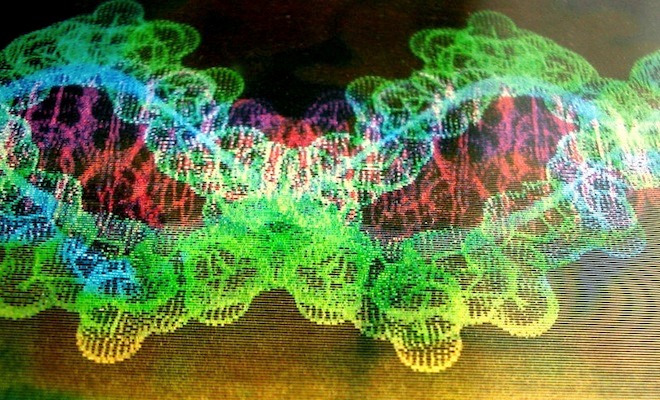
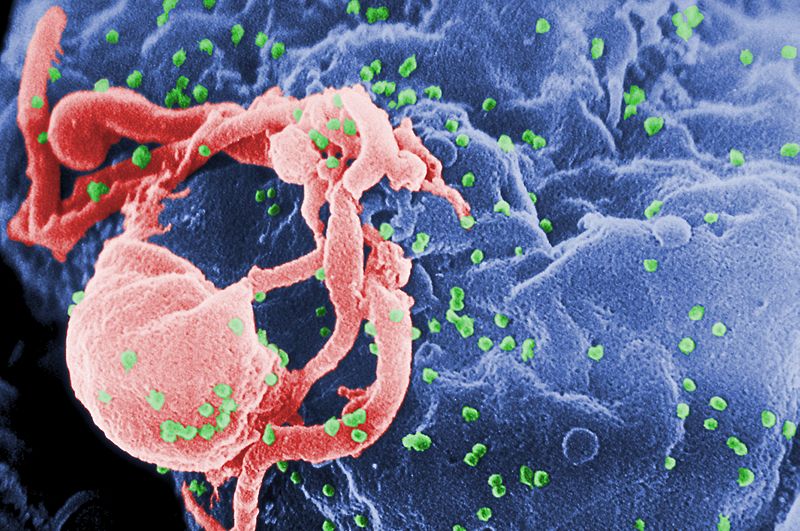
For example, its been known for some time that the HIV virus it’s covered in several layers of protective proteins. But beneath that outer shell resides a conical structure called the capsid, which houses the virus’ payload of genetic material. (See diagram below.) When HIV invades a cell, it’s the capsid that opens up to initiate the takeover process, allowing the virus to replicate inside the healthy host cell. Better understanding of how this mysterious delivery system operates could be one of the final steps to finding a cure.

HIVAnd that’s where the modelling software really comes into play. How and when the HIV cell opens to deliver the capsid has long eluded researchers, and as Klaus Schulten, a physicist that was part of the team that modeled the virus, pointed out: “The timing of the opening of the capsid is essential for the degree of virulence of the virus.”

Using the Blue Waters, Schulten and his associates managed to map out the model all 64 million of the capsid’s atoms. Through countless simulations, they also discovered that the capsid’s microscopic outer casing is composed of 216 hexagon-shaped proteins that fit together in a honeycomb formation. These hexagonal structures are what give the capsid it’s tough outer shell and allow it to be such a harmful and insidious killer.

AIDS_memorialThis painstakingly delicate process would have been unthinkable until just a few years ago, and represents the most complete picture of the HIV virus to date. What’s more, knowing what HIV looks like at the atomic level will help scientists to understand the timing of the virus’ delivery system. Since the opening of the virus’ protective layer is when it’s most vulnerable, Schulten and his colleagues hope to determine the precise timing of this event so a treatment can be developed that could attacks the virus at this exact moment.

Think of it as throwing a bomb into the mouth of a terrible war machine, right as it opens up its armored maw to bite you! Better yet, think of it as another step on the road to ending one of the greatest plagues humankind has ever had to deal with. Safety for the future, and justice for the victims!

Sources: popularscience.com, theweek.com, (2)

More Terminator 5 News!

terminator1Despite rumors that T5 was stuck in a development phase known as “development hell”, Mr. Terminator himself recently came forward to offer an update which set the record straight put fans of the franchise in a much better mood. In a recent interview with Metro magazine, Arnold Schwarzenegger claimed that the movie was on track and that they are busy writing the script for it as we speak.

In addition, he claimed that other projects which will be involving him in the next few months were green lighted and getting the go-ahead. This included the much-anticipated T5, as well as some other sequel/relaunches:

We’re writing it now. There are three projects being written that involve me. One is Terminator 5, the other is a Conan movie that Universal is doing and there’s the sequel to Twins, which is called Triplets. We’ll all look quite different in that. The third triplet is Eddie Murphy, so figure that one out.

Really? Still doing the Conan relaunch, huh? And Twins too? Wow, these are a few candidates for download! I can see the Conan relaunch making sense, given how poorly the last relaunch did. But isn’t there a statute of limitations on how many times you can relaunch a series? Or did I just make that up?

terminator2In any case, no indications have been given yet as to what role Arnie himself will be playing. No doubt that is a detail which the studio will keep closely guarded until they finish hammering out the script, or figure it out for themselves! But we can safely assume that he was referring to Patrick Lussier and Laeta Kalogridis when he referred to the writers.

One thing is clear. Whatever they make couldn’t be much worse than the last two Terminator movies. Let’s just hope they ditch the continuity thing and go back to their roots on this one. That’s what Superman Returns did and I can’t recommend it enough. Though not everyone liked that relaunch, it did present a good idea for franchises that were tired and washed up: Make a movie that picks up where the last good one left off and pretend like the abortive sequels never happened.

And while they’re at it, do you think could Hollywood should relaunch Predator and Alien, preferably to a point before AVP was spawned? There’s a concept that has huge potential, but for some reason can’t seem to express it on the silver screen!

avp-alien-pov1Source: IO9.com