Hacker Wars: Westboro Baptists Church Gets Jestered!

jester_westboroBy now, I imagine everyone is familiar with the Westboro Baptist Church, the notorious ultra-militant Christian cult best known for its slogan “God Hates Fags”. Well, it seems that the group has expanded its message of hate, no longer content to celebrate the deaths of gays or of US servicemen and women –  with such slogans as “Thank God for dead soldiers” or “Thank God for IEDs”. Yes, it now seems they have widened their focus and chosen to embrace new tragedies in their quest to spread their message of hate.

These include such tragedies as the Newton, Connecticut shooting and the Oklahoma tornadoes. And while their efforts to protest the funeral of Principal Dawn Hochsprung – one of the many victims of the tragic school shooting – were thwarted by a group of good Samaritans, the group still managed to make some headlines for themselves with the creation of the website GodHatesOklahoma.com, claiming once again that the tragedy in Oklahoma was God’s judgement, and praising Him for taking the lives of the 24 people who were killed.

Hackers-With-An-AgendaLuckily, the hacker community stepped in to teach these hate-mongers a lesson. Shortly after the website went up, all the original content was deleted and replaced with a picture of Jesus giving the Westboro Church the middle finger. The words ” “Westboro Faptist Church — Even Jesus Hates You” were added to let them know exactly who the Savior was cursing and why. (FYI: Faptist is a reference to the word “fap,” Internet slang for “masturbate”).

Clearly, the Westboro techs took the website down, because none of the content is avaiable for veiwing anymore. But according to some additional rumors, the person responsible was Jester, a relatively well-known hacker. This was indicated by the added message: “On the 8th day, God created hackers, and he saw that it was good. From the Gospel according to @th3j35t3r Redirecting in 5 seconds…….” After waiting, visitors were taken to a Red Cross donation site for victims of the storm.hackers_security@th3j35t3r refers to Jester’s Twitter account, which contained the message: “Westboro Faptist ‘Church’ – My God loves everyone, especially you. You need it the most”, followed by a link to an article at The Daily Dot which acknowledged his efforts. It is unclear at this time if Westboro will attempt to put their site up again, but given their inferior programming skills, I would imagine they’d not want to tempt fate, or the hacking community, a second time.

And might I take this opportunity to commend Jester and those like him. This incident, much like Anonymous’ exposure of the internet predator who ruined Amanda Todd’s life, shows how hackers can be a truly positive influence on society. Much those people who originally came together at MIT to found the “Hacker Ethic”, these individuals are proof that some people are still capable using technology for good and not abusing their freedom.

Sources: mashable.com, huffingtonpost.com

100,000 Stars: An Interactive Exploration of the Milky Way

100,000starsWith interactive maps becoming all the rage, I had a feeling it was only time before someone premiered an interactive browser that would let you explore the cosmos. And now there is, and it goes by the name 100,000 stars. Personally, I would have preferred Google Galaxy, like I suggested before, but forget it! You can’t teach these big time web developers anything 😉

In any case, 100,000 stars is an experiment for Chrome web browsers, but it will also work with Firefox, Safari, or just about any other WebGL you might have. Open it up, and you can see where our Solar System is in relation to the Orion Arm of the Milky Way Galaxy. Then zoom in to see the local star groups that are closest to us, our sun, and the planets and asteroids that make up our Solar System.

Also, I should note that the site provides a guided tour for the newly-initiated. I recommend you use that first, then try tinkering with the settings a little before mucking about to get a look at our little corner of the universe. The site can be a bit clunky at times, but keep in mind that there’s plenty of graphic info that’s being streamed at any given time. But if your machine and/or internet connection is faster than mine (a distinct possibility) you might have no trouble at all.

Simply click here and start exploring!

Source: thisiscolossal.com

Drone Wars: New Promises, Same Problems

(U.S. Air Force photo/Staff Sgt. Brian Ferguson)(Released)The practice of using UAV’s as part of a targeted strategy in Pakistan, Afghanistan, Somalia and Yemen has become so frequent that its come to characterize the Obama administration’s handling of the “War on Terror”. Reaction to this policy has been increasingly critical, due in no small part to unanswered questions surrounding civilian death tolls and the rapid escalation of deployment. In response, the Obama administration announced this past week that the surge is at an end.

In a speech made to the National Defense University in Washington on Thursday, Obama emphasized that from now on, the use of UAV’s would be in the hand of the military instead of clandestine intelligence organizations such as the CIA. He also indicated that the rules for launching the strikes would be stricter. For instance, there must be a “near certainty” that no civilians will be killed, and the strikes are to become less frequent.

predator_profileWhile Obama would not declare an end to the war on terrorism, he did offer to work with Congress to constrain some of his own authorities for waging it, which may include the creation of a court modeled on the secretive one used by the NSA to oversea the surveillance of suspected foreign agents. He also expressed a preference to constrain “and ultimately repeal” the broad latitude of warmaking powers granted in the Authorization to Use Military Force (AUMF), an act that was created in 2001 by the Bush administration which is considered the wellspring of the “War on Terror”.

And above all, issues of legality are to take a backseat to the moral and ethical implications raised by ongoing use. Or as he put it: “To say a military tactic is legal, or even effective is not to say it is wise or moral in every instance.”

Naturally, a great many questions remain. In addition to how drones will be used in the years to come to combat terrorism and militants, there’s also questions surrounding their use thus far. Despite pledges made by Obama that changes will be made, the history of the program is still shrouded in mystery. Fittingly, Bloomberg Businessweek created a map to serve as a reminder of the scope of that program, calling it the first ever “comprehensive compilation of all known lethal U.S. drone attacks.”

drone_map

It should be noted though that the numbers represent an estimate which were compiled with the help of the nonprofit Bureau of Investigative Journalism. Sources in Washington apparently offer a wide range of numbers, and the State Department remains hush hush on the issue of casualties. However, the estimates presented in this infographic still present a stark and sobering picture:

  • Yemen: at least 552 killed between 2002 and 2013. The site of the first ever drone strike in 2002.
  • Pakistan: at least 2,561 killed between 2004 and 2013.
  • Somalia: at least 23 killed between 2011 and 2012.

drone_map1Naturally, it is hoped that Obama’s promise to curb the use of drones represents a renewed commitment to comply with international law, treaties and human rights. However, what was apparently missing from the speech was an indication about how easy it will be to get information about strikes that are made in the future. According to the New York Times’ Mark Mazzetti, who provided live analysis of the speech, Obama’s speech didn’t address the issue:

One of the big outstanding questions is just how transparent the Obama administration will be about drone strikes in the future. Will administration officials begin to publicly confirm strikes after they happen?

There was no mention of this in the speech, and it is telling that the president did not mention the C.I.A. at all. It seems quite certain that past operations in Pakistan, Yemen and elsewhere are not going to be declassified anytime soon.

Also, moving operations from the C.I.A. to the Pentagon does not automatically mean that the strikes will be publicly discussed. The Pentagon is carrying out a secret drone program in Yemen right now, and it is very difficult to get information about those operations.

So… promises to curb the use of drones have been made, as well as promises to create some kind of oversight for future operations. And this does seem consistent with many of the criticisms made about the ongoing war on terrorism, specifically the Bush administrations handling of it and how his reliance on special executive powers were unlawful and unconstitutional.

But until such time as information on how these strikes occur and who is being killed, the issue will remain a contentious and divisive one. So long as governments can wage war with automated or remote machinery and kill people without transparency and in secrecy, will this not constitute a form of illegal – or at the very least, a very opaque – warfare?

Sources: wired.com, fastcoexist.com, businessweek.com

The Future of Medicine: The Spleen-On-A-Chip

spleen_on_a_chipSepsis, a full-body inflammatory state caused by infection, is a notorious killer, being both deadly and difficult to treat. As it stands, doctors use broad-spectrum antibiotics that have only a limited chance of success, and a misdiagnosis can cost a patient vital time. For military personnel serving overseas, where conditions are difficult and medical treatment not always readily available, it is a particular problem.

Hence why DARPA has been keen on finding new treatment options and contracted the Wyss Institute at Harvard University to the tune of $9.25 million to find it for them. Their solution: the “Spleen-on-a-Chip” – a blood-cleaning device that acts much like a kidney dialysis machine. Blood goes out through one vein, and back through another, but the real key is the magnetic nano-beads coated in a protein that binds to bacteria, fungi, parasites, and some toxins.

bloodstreamWith these impurities coated in microscopic metal beats, the blood then flows through micro-channels in the device where a magnet pulls the pathogens free, leaving the blood clean. The technique also takes out dead pathogens (killed by antibiotics) that can also cause inflammations, if there are enough of them. In this way, it not only removes the cause of sepsis, but one of the common side-effects of conventional treatment.

Don Ingber, director of Wyss Institute for Biologically Inspired Engineering at Harvard, described the benefits of their Spleen-on-a-chip:

The idea with this therapy is that you could use it right away without knowing the type of infection. You can remove pathogens and infections without triggering that whole cascade that gets worse and worse.

Since it mimics the effects of a real spleen, many have taken to calling it a “biospleen”, indicating that it is a genuine biomimetic  device. At the present time, Ingber and his associates are testing it on rats, with the hope of expanding their trials to larger animals, like pigs. But given the limits of their funding, Ingder estimates that it will be a good five years before  a serviceable model is available to the public.

blood_vialsBy that time, however, the biospleen may be just one of several organs-on-a-chip available for purchase. The Wyss Institute is hardly alone in developing biomimetics, and their spleen is just on of many devices they are working on. Ingber and his associates are currently working on the lung-on-a-chip and a gut-on-a-chip, devices that are able to oxygenate blood and process food into useable energy.

These latter devices will come in very handy for people with emphysema or other respiratory diseases, and people suffering from digestive problems or stomach cancer. And while larger aim, says Ingber, is to raise the effectiveness of drug testing and improve understanding of how the body reacts to disease, the potential is far more astounding. Within a few decades, we may be capable of getting our hands on machines that can compensate for any kind of limitation imposed by disease or our biology.

It’s a biomimetic future, people – technology imitating biology for the sake of creating enhanced biology.

Source: fastcoexist.com

The Future is Here: The Mantis Hexapod Tank!

MantisWhen it comes to vehicles of the future, which may or may not include militarized land-crawlers, hexapods seem to be the way to go! Remember Project Hexapod and their Kickstarter-funded concept, Stompy? Well, it turns out an animatronics and special-effects designer who’s movie credits include “Prometheus” and “Lost in Space”  has produced his own. It’s known as Mantis, and while it may not be the first hexapod robot he’s ever built, it is the first giant-sized version.

The product of four years of research and development, Denton has managed to create what he claims is the biggest operational hexapod in the world. Measuring some 2.8 meters (9.2 feet) in height and weighing in at a hefty1815 kilos (2 tons), the giant robot is powered by a 2.2-liter turbo diesel engine and is designed to take on any type of terrain. But given the fact that it relies on six articulating legs to get around, that shouldn’t come as a surprise.

In addition, it can be controlled remotely via Wi-Fi, but why do that when you can climb into the cockpit and operate it like a true cartoonish supervillain? Naturally, you won’t seem so intimidating since the speed and power are still pretty limited, but the machine is relatively new. And in truth, hexapod technology is still in its early phases. We might have to wait a few more years before the nuclear-powered, missile-toting version is available.

According to the Mantis Web site, the hexapod is available for private hire, custom commissions, events, and sponsorship. Much like Stompy, Mantis is not intended for general sale, so don’t make any plans to ride one to work in the near future either. But you might want to earmark some of your savings for the commercial model that’s sure to be released sometime in the 2020’s.

And be sure to check out the video of the Mantis in action:


Source:
news.cnet.com

Going to Mars: Now Taking Volunteers, Names and Poems

mars_lifeLooking at my site, I’ve come to notice that news concerning the Red Planet has been a bit sparse of late. Lucky for me, I had several interesting stories sitting in my inbox which were just waiting to be read, and more than a few had to do with Earth’s closest neighbor. And as we are all no doubt aware, there are quite a few of us here on Earth that believe that she is the future of planetary exploration and colonization.

But would it surprise you to know that there are plans to visit Mars that go beyond NASA’s projected mission of 2030, which will involve sending live astronauts for the first time? Take the Mars One Project as an example. Conceived by Dutch entrepreneur Bas Landorp, this project involves using existing technology and private sponsorship to fund a one-way trip to Mars and establish the first permanent settlement there by 2023, thus putting them ahead of NASA’s plans to send explorers there by almost a decade.

mars-one-brian-versteegAnnounced back in January, the project put out an open call for volunteers, and some 80,000 people have applied thus far. Thirty-five of those applicants hail from my own country (Canada), with the vast majority of them being men who are still in their 20’s. Those who apply are apparently asked some rather grueling and personal questions designed to test their aptitude and beliefs, which includes the meaning of life itself. I’m guessing more than one person answered “space exploration”!

The first things to be sent will be the modules themselves, followed shortly thereafter by the first of six teams, with each team of four arriving every two years. In time, the home base would consist of habitation modules with oxygen, water and provisions, but would expand to include solar panels. Landorp has also indicated that primary funding will come from an as-yet-unspecified “global media event” that will feature the astronauts and their preparation.

In short, it’s like a reality TV event featuring the first people who will make the seven month trip.

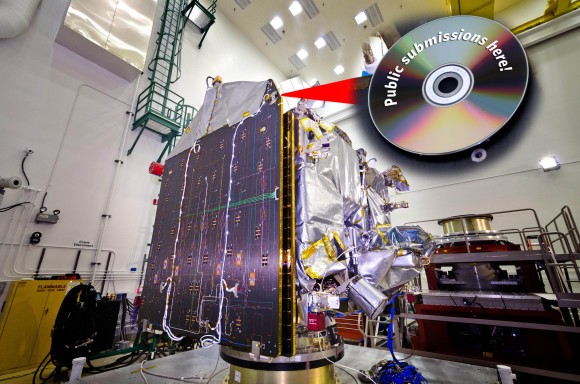
??????????????????????????????But for those who don’t feel like making the trip, or who would like to send something to Mars other than themselves, there’s also NASA’s MAVEN mission. As part of the “Going to Mars” campaign that is being managed by the University of Colorado at Boulder’s Laboratory for Atmospheric and Space Physics (CU/LASP), the MAVEN mission is a chance for the general public to send their name and a short poem to the Red Planet via NASA’s latest Mars satellite.

MAVEN – which stands for Mars Atmosphere and Volatile EvolutioN – is due to be launched in November from the Florida Space Coast. Attached to the front of the orbiter will be a DVD featuring the names of everyone who applies to take part in the campaign. In addition, of those poems submitted (which is to be written in the form of a haiku), three will be selected for the mission as well.

MAVEN_DVD-580x384

Voting will be done by the public online, and over 1 million people have already submitted their names. The rules for the contest can be found on the mission website here. Children are allowed to participate, but must do so through a participant of 18 years of age or older, preferably a parent or guardian. Activity opened at the beginning of the month and ends July 1st, so get your names of poems in soon!

Since the campaign and contest are open to people of all ages, walks of life, and is indiscriminate of education or qualification, it’s a pretty good way for the public to participate in the ongoing exploration of space and our Red planetary neighbor. And when considered alongside the many and increasing private efforts to send people to Mars, it says about the increasingly democratic nature of space exploration.

Sources: cbc.ca, universetoday.com, lasp.colorado.edu

Dredd 2.0: A Fan-Made Sequel

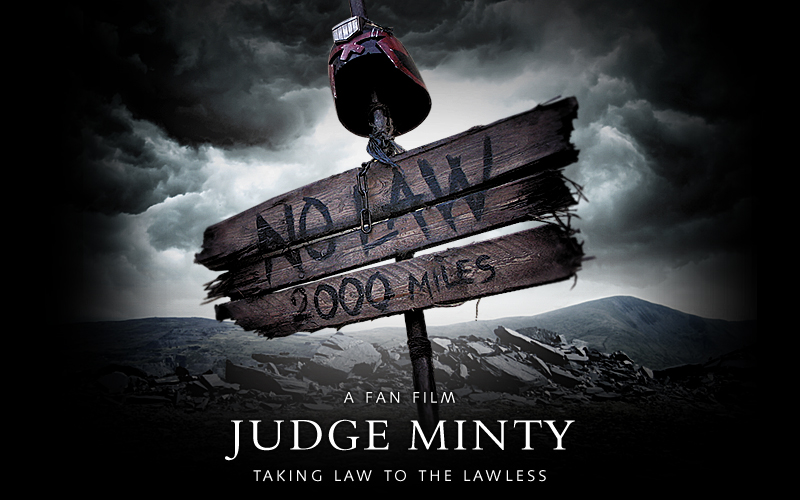
judge_mintyIt really says something about the world we live in, specifically about the democratic nature of media and technology, when fans can step up and make the movies that conventional studios fail to produce. That’s what happened with this 27 minute short known as Judge Minty, the fan-made sequel to last year’s Dredd relaunch. Despite its poor performance at the box office, the remake of the comic book classic garnered some positive reviews and attracted a fan following.

dredd_10And this sequel is already on its way, following the trail blazed by the first. Based on the minor character from the 2000AD comic series, this fan film tells the story of an aging Judge forced to face his own weakness. After being injured on the job, he is forced to take the long walk into the Cursed Earth and finish his days as all Judges do, bringing law to the land of the lawless.

Though it is only 27 minutes short, the makers managed to pack a hell of a lot of action into that space of time. And for a fan film, the production values are quite high. Granted, it doesn’t quite capture the same dirty, gritty feel that the first did so successfully. But then again, we’re talking about a fan-made film. You gotta take what you can get!

And clearly, the people at 2000AD think it’s great because they signed off on it. And the makers are even planning some screenings at a few fan cons. Sure, we may not be able to look forward to an official sequel, but this sure as hell beats having to watch the Sylvester Stallone adaptation! Enjoy…


Source:
Blastr.com


Bad News From Space!

Kepler-telescope-580x448Between the Mars rovers, deep space probes, and long-term plans to mine asteroids and colonize Earth’s neighbors, there’s just no shortage of news from space these days. Unfortunately, not all of it is good. For instance, NASA recently announced that the Kepler space telescope, which was launched back in 2009 for the purpose of identifying Earth-like exoplanets, is suffering from malfunctions and may be broken down.

And in the course of its operational history, it did manage to identify a number of exoplanets that existed within the habitable zones of their parent stars. In fact, it had found a total of 2,740 candidate exoplanets spread across 2,046 stars systems, and a confirmed total of 132 that have the potential to support life. Unfortunately, during the early month of April during its weekly communication, NASA  found that the space observatory was in safe mode, a sign that something was amiss.

keplerAfter looking into the problem, they realized that it had lost its ability to precisely point toward stars because one of the reaction wheels – devices which enable the spacecraft to aim in different directions without firing thrusters – had failed. This was especially bad since last year an different wheel failed, meaning it only had two wheels remaining. The probe needs at least three working in order to properly aim itself, but now that seems impossible.

But the Kepler team said there are still possibilities of keeping the spacecraft in working order, or perhaps even finding other opportunities for different scientific pursuits. Either way, the team is not ready to throw in the towel on the telescope. And since NASA already approved to keep the mission going through 2016, a lot is still riding on it remaining functional.

Charles Sobeck, the Kepler deputy project manager, addressed the team’s efforts to get the telescope working again during their daily briefing earlier in May:

Initially, they did see some movement on the wheel but it quickly went back to zero speed, indicative of internal failure on the wheel. Our next step is to see what we can do to reduce the fuel consumption, as we would like to extend the fuel reserve as long as we can.

In terms of the malfunctioning wheel, he indicated that there are a few things they can still do to get it working again. One possibility is “jigging it” or running it in reverse.

We can try jiggling it, like you’d do with any wheel here on Earth, commanding it to move back and forth, so we can try to bring the wheel back in service. Or perhaps since wheel #2 hasn’t been turned on for eight months, it may come back if we turn it on. It will take us awhile to come up with a plan.

Sobeck also explained they are currently using thrusters to stabilize the spacecraft, and in its current mode, the onboard fuel will last for several months. But they hope to soon put the spacecraft into what is called a “Point Rest State” – a loosely-pointed, thruster-controlled state that minimizes fuels usage while providing a continuous X-band communication downlink. This ought to keep the fuel consumption down to the point where the telescope could keep going for several more years.

kepler47.jpgWhat’s more, the team also indicated that there is still terabytes of information gathered by the probe that has yet to be sifted through. They estimate that it will take at least two years for them to process it all and determine what other exoplanets exist nearby in our galaxy. And as Paul Hertz – NASA’s astrophysics director – put it, with the work it has already performed, Kepler has essentially carried out its task:

We’ll continue to analyze the data to get the science that Kepler was designed to do. Even though Kepler is in trouble, it has collected all the data necessary to answer its scientific objectives. Kepler is not the last exoplanet mission, but the first. It has been a great start to our path of exoplanet exploration.

In the end, its too soon to say if Kepler is deep in space (literally), or just experiencing a lull while her technicians get her back on track. And even if this does prove to be the end of her, the many thousands of planet she managed to identify during her years of service will certainly prove useful to humanity as we begin to set our sights on interstellar exploration and, God willing, colonization. And I imagine more than a few will bare the proud name of Kepler, in honor of her namesake and the telescope itself!

Sources: universetoday.com, Wired.com

Game of Thrones – Season 3 Episode 8

Game-of-Thrones-WallpaperThe season is almost done, and some big climaxes are coming! And without giving too much away, let me just say that I’m looking forward to seeing Robb’s wedding, Joffrey’s wedding, and the Wildling’s assault on Castle Black. I predict the season will end with the weddings happening simultaneously, and perhaps the assault happening next episode.

Could be wrong, but anyone who’s read Storm of Swords – and knows that the next season will be tackling the latter half of it – knows that at this point, those will be the season enders. But before that can happen, there’s all that took place during this week’s episode. Here’s what I thought of it as well…

Seconds Sons:

got3_sons3The episode opens with Arya and Sandor Clegane, who as we saw last time kidnapped her from the Brothers Without Banners. After stopping her from trying to kill him with a rock, he tells her that he is bringing her to The Twins so he can collect the reward from her mother and brother. She also learns that they are traveling here because her uncle, Edmure Tully, is to be wed to Walder Frey’s eldest daughter.

We then go to Yunkai, where Daenerys is meeting with the Captain’s of the Second Sons, the mercenary army for which the episode is named. After looking into the matter concerning Yunkai’s supposed “friends”, Daenerys entreats with the leaders of the sellsword armies the city has paid off to fight for them. She offers them a chance to fight for her, but its clear there’s to be no deal had with their Captain, Mero of Bravos. However, their Lieutenant, Daario Naharis, seems much more amenable to her…

GOT3_sonsBack at their camp, Mero and the others discuss how they will kill her, and they agree that they will have to assassinate her. Daario draws the short straw (in this case a coin) and is sent in to kill her. Sneaking into her tent while she’s taking a bath, he puts a knife to Missandei’s throat. With her attention fixed on him, he presents his Captain’s heads at her feet and declares his loyalty and the Second Sons to her.

In King’s Landing, the preparations are set for the wedding between Sansa to Tyrion and the entire court is in attendance. Cersei and Maergery naturally take the opportunity to exchange false pleasantries, and Cersei is sure to threaten her. Since he had her father killed, Joffrey gives Sansa away. He also takes the opportunity to embarrass his uncle  by removing his stool, thus making it nearly impossible for him to place his cloak on her.

got3_sons1The wedding is naturally an uncomfortable affair as Tyrion proceeds to get very drunk and gets a stern talking from his father. Joffrey then announces the “bedding ceremony”, but Tyrion says there will be done, prompting threats and insults. Tywin intervenes and says they will dispense with the ceremony and Tyrion takes Sansa away to their bedroom. Sansa undresses and prepares to “do her duty”, but Tyrion tells her to stop and proceeds to pass out.

At Dragonstone, Melissandre arrives with Gendry and presents him to Stannis. They prepare him for the sacrifice, which at the moment consists of giving him a room, a bath, and some clean clothes. Below, in the dungeons, Davos continues to learn to read and is visited by Stannis himself. He tells Davos he will be set free, and of their plans to sacrifice Gendry and why. He agrees to set Davos free, provided he doesn’t raise a hand to her again. He agrees, but vows to go on counseling Stannis as he sees fit.

got3_sons4Melissandre also takes the opportunity to meet with Gendry and begins plying him with wine and talk of her God and the destiny Gendry has. And as usual, she seduces and has sex with him, then ties him down and applies leaches to his skin. Davos and Stannis then enter, and she reveals that what she has prepared is a demonstration for Davos’ benefit. Stannis takes the leeches, now engorged on “King’s Blood”, and burns them, uttering the names of his enemies – Balon Greyjoy, Robb Stark, and Joffrey Baratheon.

Whitewalker1In the far north, Sam and Gilly continue to head south towards the Wall. They come upon a shed and decide to set camp for the night. When night falls, they discuss giving her boy a name, and the screaming of countless crows can be heard. Sam goes out to look, and the crows go silent as a White Walker appears. Gilly believes its come for her baby, and after being tossed aside, Sam stabs it with the dragonglass knife he’s kept, which shatters it like ice…

Summary:
Not a bad episode this week, and after seeing it I really have only one complaint, and a few compliments. I’ll cover the complaint first since its a quick one, and I know that’s it’s already been harped on and even spawned an internet meme. And that has to do with the decision to cast Daario as a clean-shaven pretty boy.

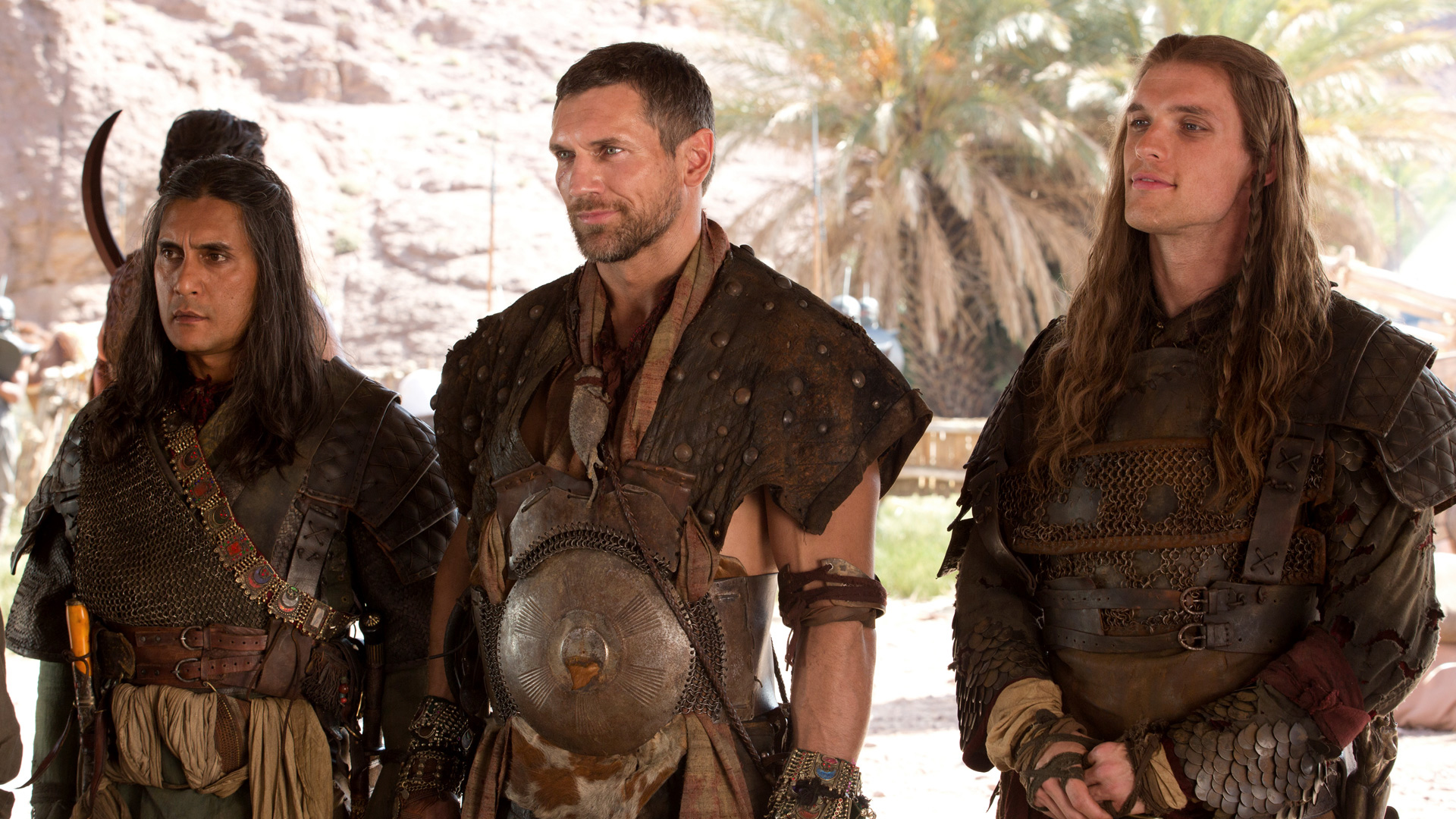
In the book, Daario had a long beard that was died purple and braided, much like his hair. This was in keeping with the Tyroshi fashion, as he is from the free cities. What’s more, he wasn’t a Lieutenant in the Second Sons, but the Captain of the Stormcrows, a entirely separate group of mercenaries. On top of that, they were one of three companies that was contracted to defend Yunkai, and his decision to deliver the heads of the other Captains turned the tide in Daenerys’ favor during her siege of the city.

But of course, budgets meant they had to cut this down to one group of mercenaries, and I’m sure the actor’s inability to grow a beard had something to do with his clean-shaven look. Aside from that, I really didn’t have much in the way of complaints. In fact, I liked what else they did, which was to take changes made previously and use them quite effectively to advance the story.

For example, the writer’s took the Gendry plot line, which seemed to be going nowhere for me, and steered it back in the main storyline very well. In the book, the blood sacrifice shown here actually did take place and did involve one of Robert’s bastards. Davos didn’t agree with it, but it took place anyway, during which time Stannis cursed the names of his enemies and asked for their death.

Naturally, the books contained far more characters and the series writers no doubt felt that they had to take an existing character rather than introducing someone new and unheard of until now. This was not only understandable, but it worked quite well. And it portends something very important which will be coming up soon. No spoilers, just wait for it…

And of course, the episode ended with something I’ve been waiting for for a long time! I was hoping to see the scene where Sam stabbed a White Walker with his dragonglass blade for awhile now. In truth, he did it before his brothers were lost to him at Craster’s Keep, which was how they learned that the White Walkers are vulnerable to both dragonglass and Valyrian Steel. It’s also how Sam picked up the nickname of “Sam the Slayer”.