In preparation for the 25th anniversary of the Tiananmen Square Massacre (aka. the June 4th Incident), Chinese authorities decided to begin blocking Google. It’s believed that the blockade is tied to this week’s 25th anniversary of the 1989 Tiananmen Square Massacre where the People’s Liberation Army cracked down on pro-democracy demonstrators. Each year, the Chinese government censors the web in an effort to limit protests against the thwarted uprising.
Aside from Google, several internet services were blocked or censored in advance, including social networks and other web communication tools. Though the Chinese government has not yet confirmed this, countless Chinese users have discovered Google’s services to be inaccessible since the last week of May. In addition, a report from GreatFire.org claimed that the government appeared to have begun targeting Google Inc’s main search engine and Gmail since at least the last week of May, making them inaccessible to many users in China.
The report added that the last time it monitored such a block was in 2012, when it only lasted 12 hours. At is states:
It is not clear that the block is a temporary measure around the anniversary or a permanent block. But because the block has lasted for four days, it’s more likely that Google will be severely disrupted and barely usable from now on.
Asked about the disruptions, a Google spokesman said: “We’ve checked extensively and there’s nothing wrong on our end.” And Google’s own transparency report, which shows details about its global traffic, showed lower levels of activity from China starting from about Friday, which could indicate a significant amount of disruption. Other major social media sites – such as Twitter and Facebook and Google’s own Youtube – are already blocked in the country.
Of course, this should come as no surprise, given the way this anniversary is received by Chinese officials. For the ruling Communist Party, the 1989 demonstrations that clogged Tiananmen Square in Beijing and spread to other cities remain taboo, particularly on their 25th anniversary. When June rolls around each year and the Tiananmen Square Massacre is commemorated around the world, including in Hong Kong, China’s ruling party typically conducts a web crackdown.
It’s not uncommon for Chinese censors to block certain comments from being made even on China-based company services, like Weibo, China’s own version of Twitter. And China also applies pressure to search engines like Baidu in their country in order to ensure that censorship filters are in place. And as with previous years, the run-up to the anniversary has been marked by detentions, increased security in Beijing and tighter controls on the Internet.
This year, the detainees included prominent rights lawyer Pu Zhiqiang and Chinese-born Australian artist Guo Jian, a former Chinese soldier who last week gave an interview to the Financial Times about the crackdown. And as usual, the Chinese government made a statement in which it once again defended its decision to use military force against the pro-democracy demonstrators who gathered in the Square twenty-five years ago.
The statement came from Foreign Ministry spokesman Hong Lei during a daily news briefing, in which he said:
The Chinese government long ago reached a conclusion about the political turmoil at the end of the 1980s. In the last three decades and more of reform and opening up, China’s enormous achievements in social and economic development have received worldwide attention. The building of democracy and the rule of law have continued to be perfected. It can be said that the road to socialism with Chinese characteristics which we follow today accords with China’s national condition and the basic interests of the vast majority of China’s people, which is the aspiration of all China’s people.
On the subject of why Google was being targeted, Hong said only that the government “manages the Internet in accordance with the law”, which is consistent with the state’s position with all web-based censorship. When asked about the jailing of dissidents, Hong replied that “In China there are only law breakers — there are no so-called dissidents.” He also stressed once again that all departments of the Chinese government “consistently act in accordance with the law.”
For years now, Google has had a contentious relationship with China, which began with the company had once offering its search services to the world’s second largest economy. However, due to issues over censorship, Google decided to move its Chinese search engine to Hong Kong, effectively allowing them to operate outside the rules and regulations of the Chinese government. But as China demonstrated these past few weeks, it still has the ability to block the flow of traffic from Hong Kong into the mainland.
It also aptly demonstrated just how much it fears the specter of Tiananmen Square, even some twenty-five years later. From clamping down on their people’s ability to learn more about the massacre, to clamping down on even the possibility of protest in advance, to continually denying any wrongdoing and suppressing information on the number of people killed, the legacy of Tiananmen Square continues to expose the blatant hypocrisy and denial of the Communist Party of China.
If history has taught us anything, it is that the fall of a dictatorship usually begins with one terrible mistake. The state of China committed that mistake a quarter of a century ago, and since then has relied on state-sanctioned economic growth in order to justify its existence. But in so doing, they’ve essentially created a Catch 22 for themselves. Continued economic growth ensures greater material wealth for more and more of its people. And a burgeoning digital-age economy means more and more access to information for its citizens.
In short, the CPC is screwed. And I for one would be happy to see them gone! Lord knows they deserve it, and the Chinese people would be better off without them, no matter what they try to insist. So on this historic anniversary of the Tiananmen Massacre, I invite the CPC to EAT A DICK! And to the people still living under their hypocritical rule, please know that you are not alone. Hang in there, and wait for the day when these bastards join all the other reprehensible dick-heads on the ash heap of history!
Robotic arms and other mechanisms have long been used to make or assemble furniture; but thus far, no one has ever created robots that are capable of becoming furniture. However, Swiss researchers are aiming to change that with Roombots, a brand of reconfigurable robotic modules that connect to each other to change shape and transform into different types of furniture, based on the needs and specifications of users.
Created by the Biorobotics Laboratory (BioRob) at École polytechnique fédérale de Lausanne (EPFL), the self-assembling Roombots attach to each other via connectors which enables them to take on the desired shape. The team’s main goal is to create self-assembling interactive furniture that can be used in a variety of ways. They were designed primarily for the sake of helping the disabled or elderly by morphing to suit their needs.
Like LEGO bricks, Roombots can be stacked upon each other to create various structures and/or combined with furniture and other objects, changing not only their shape, but also and functionality. For instance, a person lying down on a Roombot bed could slowly be moved into a seated position, or a table could scoot over to a corner or tilt itself to help a book slide into a person’s hands. The team has solved a number of significant milestones, such as the having the Roombots move freely, to bring all this multi-functionality closer.
Each 22 cm-long module (which is made up of four half-spheres) has a wireless connection, a battery, and three motors that allow the module to pivot with three degrees of freedom. Each modules also has retractable “claws” that are used to attach to other pieces to form larger structures. With a series of rotations and connections, the modules can change shape and become any of a variety of objects. A special surface with holes adapted to the Roombots’ mechanical claws can also allow the modules to anchor to a wall or floor.
The Roombots can even climb up a wall or over a step, when the surface is outfitted with connector plates. They’re are also capable of picking up connector plates and arranging them to form, say, a table’s surface. Massimo Vespignani, a PhD student at BioRob, explained the purpose of this design and the advantages in a recent interview with Gizmag:
We start from a group of Roombot modules that might be stacked together for storage. The modules detach from this pile to form structures of two or more modules. At this point they can start moving around the room in what we call off-grid locomotion…
A single module can autonomously reach any position on a plane (this being on the floor, walls, or ceiling), and overcome a concave edge. In order to go over convex edges two modules need to collaborate…
The advantage would be that the modules can be tightly packed together for transportation and then can reconfigure into any type of structure (for example a robotic manipulator)…
We can ‘augment’ existing furniture by placing compatible connectors on it and attaching Roombots modules to allow it to move around the house.
The range of applications for these kind of robotics is virtually infinite. For example, as seen in the video below, a series of Roombots as feet on a table that not only let it move around the room and come to the owner, but adjust its height as well. Auke Ijspeert, head of the Biorob, envisions that this type of customization could be used for physically challenged people who could greatly benefit from furniture that adapts to their needs and movements.
As he said in a recent statement:
It could be very useful for disabled individuals to be able to ask objects to come closer to them, or to move out of the way. [They could also be used as] ‘Lego blocks’ [for makers to] find their own function and applications.
Meanwhile, design students at ENSCI Les Ateliers in France have come up with several more ideas for uses of Roombots, such as flower pots that can move from window to window around a building and modular lighting components and sound systems. Similar to the MIT’s more complex self-assembling M-Blocks – which are programmable cube robots with no external moving parts – Roombots represent a step in the direction of self-assembling robots that are capable of taking on just about any task.
For instance, imagine a series of small robotic modules that could be used for tasks like repairing bridges or buildings during emergencies. Simply release them from their container and feed them the instructions, and they assemble to prop up an earthquake-stricken structure or a fallen bridge. At the same time, it is a step in the direction of smart matter and nanotechnology, a futuristic vision that sees the very building blocks of everyday objects as programmable, reconfiguring materials that can shape or properties as needed.
To get a closer, more detailed idea of what the Roombot can do, check out the video below from EPFL News:
Yesterday evening, an additional review came in for Papa Zulu – another five star one! And I was not really surprised, as the review came from a friend/fan of mine who has been following my zombie writing for a while now. But that hardly diminished what her review meant to me. And I swear without reservation that her review was in no way biased because of our friendship. In truth, we are friends through a mutual friend and barely knew each other before she started reading my work.
Anyhoo, this is what she had to say:
Without reservation, I heartily recommend Papa Zula and its predecessor.,
A true page-turner full of gripping martial action, starring realistic and well-developed characters, Papa Zulu is a great follow-up to Whiskey Delta.
Set in the zombie apocalypse, the story focuses on a conflict between two surviving militant factions – one that is working towards stopping the spread of the virus by creating a vaccine, and the other towards getting their hands on this vaccine – through whatever means possible – for mysterious and dark ends.
Throughout the story zombies pose an ever-present threat. Williams puts a fresh and terrifying spin on our flesh-eating foes, who display an eerie intelligence, making them much more than mindless. Think ambushes. Strategy. Zombie hoards with tactical sense.
All in all a riveting tale of intrigue and battle, Papa Zulu will leave you eager for the next in the series!
It’s no nice when people like what you have to offer. Makes the whole enterprise worthwhile! And after some of the mixed reviews I received for the first book, three consistently good ones is a really nice change of pace! Stay tuned, hopefully more book-related news is on the way!
After a week’s hiatus, the episode that fans of the GOT series eagerly awaited finally aired this past Sunday. And true to form, it all came down to the most anticipated fight scene of the season – between Prince Oberyn Martell (aka. The Red Viper) and Ser Gregor Clegane (aka. The Mountain). And having just watched it, I can honestly say that it was a perfect example of everything the show has done right and wrong this season.
You know what, let’s not drag this out. Plenty of time to praise and criticize this episode after I’m done recapping it!
The Mountain and the Viper: The episode opens in Moletown, where Gilly is struggling to fit in with her new surroundings and companions. During a night of drunken festivities, she hears a noise coming from outside, and knows to be afraid. Within minutes, the Wildling party consisting of Ygritte, Tormund, and the Thenns attacks and overruns the entire place. Gilly manages to hide beneath the floor boards while the others die, and Ygritte takes notice of her, only to spare her and tell her to keep quiet.
At the Wall, news of the attack is received with anger and grief. Sam suspects that Gilly was killed and blames himself for sending her there. However, his brothers console him by telling him that Gilly has seen worse, surviving both Craster’s abuse, the forced march south, and an encounter with a White Walker before making it to the safety of the Wall with him. The brothers are angry that they cannot ride out to stop it, and Jon estimates that Mance’s army is nearing them.
In Slaver’s Bay, Missandei and Grey Worm appear to be experiencing a budding romance. After seeing her naked and washing in the stream, Grey Worm comes to apologize, only to learn that Missandei does not feel offended at all. Meanwhile, Ser Barristan recieves a copy of Jorah’s royal pardon from Robert, proof that he was conspiring with the Iron Throne to spy on Daenerys. When news of this is brought to her, she banishes Mormont from her court.
In the North, Theon is tasked by Ramsay Snow to go to Moat Cailin as Theon Greyjoy and deliver his terms of peace. In exchange for their surrender, the Ironborn – who are sick and dying in Moat Cailin – are promised to be received mercifully. They accept, but Ramsay promptly has them all flayed. He then presents the standard to his father Roose, who renames him Ramsay Bolton and designates him as the proper heir to their house.
In the Eyrie, Baelish is entreating with the lords of the Vale after Lady Arryn’s death. He claims her death was a suicide, but they are unconvinced. They bring in Sansa, whom they believe to be his daughter Alayne, and ask for her version of events. She confesses that she is in fact Sansa Stark, and claims that Lady Arryn committed suicide out of jealousy for her. Baelish asks her why she did this, and she claims it was out of personal interest and self-preservation.
Impressed with her, Petyr takes Robin into the Vale to learn how to be a lord after securing permission from the other lords to do so. Sansa, who now appears darker and more confident, goes with them. Nearby, Arya and the Hound are seen entering the Vale and are stopped at the Bloody Gate. When the Hound asks for permission to enter and speak to Lady Arryn about having her niece in his care, he is told that Lady Arryn is dead. Arya begins to laugh uncontrollably at the news, though the Hound is hardly amused himself.
In King’s Landing, the trial by combat finally begins. Tyrion talks to Jaime beforehand, and then goes to the ring. Oberyn is dressed in light raiment and armed with a spear, whereas the Mountain comes in full armor wielding his giant sword. Oberyn is supremely confident, and puts on a display of skill by wielding his spear around in front of the crowd. The fight begins, and he tells Gregor who he is and why he has come – namely, to kill him for murdering his sister and her children.
Oberyn proves equal to the Mountain and outmaneuvers him at every turn, all the while taunting him with the same lines over and over: “You raped her. You killed her. You murdered her children.” Soon, the Mountain gets enraged, is stabbed, and begins to falter. Oberyn finishes it with a powerful stab to his chest, and then demands he confess before he dies. Clegane manages to trip up Oberyn and then smashes his face with his bare hands, and then falls back down again. Tywin declares Tyrion guilty and sentences him to death.
Summary: Let me be blunt. The fight scene was the obvious highlight of this episode, and it was pretty damn badass! This scene was definitely one of the high points of book III, and also one of those terribly sad George RR Martin moments where he kills off a beloved character! Still, the way Pedro Pascal and Hafþór Júlíus Björnsson portrayed “The Mountain” and “The Red Viper” (not to mention the fight choreography) was nothing if not spot on.
However, the entire episode up until that point was long, boring, and more often than not, unnecessary. All throughout, it was packed with material that didn’t happen in the books, was supposed to have happened a long time ago, was not supposed to happen until book V, or just served no real purpose. The only exception to this being where Theon and Ramsay traveled to Moat Cailin to deliver the terms of surrender, which actually happened in the book and was accurately conveyed.
Everything else was a repeat of all that they’ve done wrong this season. First, the attack of Moletown, for example, never happened in the book, and Gilly was never there to begin with. And Jon Snow and the brothers saying they can’t ride out to meet this threat because “it’s what they want” seemed quite dumb in light of recent events. In episode four, Jon is given permission to ride north to kill mutineers; but now, suddenly, he doesn’t want to move, and they are told to stay put and not venture out. Weak!
Second, there was no relationship between Missandei and Grey Worm in the novels and this seemed like nothing more than a pointless aside to shore up material for the Daenerys thread. And considering that the Unsullied have no genitals for exactly this reason, it really makes no sense that Grey Worm would be entertaining romantic notions about Missandei. And they even acknowledge this, but undercut it by having Missandei say that she actually doesn’t know if they take off the “pillar and the stones” when they castrate them. Again, weak!
Third, the whole thread involving Sansa, Baelish and the Vale was vastly rewritten. In the novels, Baelish blamed her death on a court musician, who he knew had made a pass at Sansa. After having the poor boy tortured to within an inch of his life and his eyes plucked out, the boy confessed and was executed. Sansa went along with the story, but mainly out of necessity and fear. She did not lie for him so boldly and change into this darker, more sinister version of herself. Thought I have to admit, it was cool to see them doing this with her. I am guessing all her victimhood and crying was growing tiresome for viewing audiences.
Also, the way Daenerys learns of Mormont’s betrayal was something that was supposed to have happened much sooner. As I mentioned a previous review – episode three, “Breaker of Chains” – it was during the siege of Mereen that she learned that Mormont had been working for King Robert, and of Ser Selmy’s (who had been posing as Whitebeard) true identity. It was for this reason she sent them into the sewers to open Mereen’s gates so it could be sacked. After this, she pardoned Selmy, but exiled Mormont because she grew tired of his advances.
But that was a minor issue compared to the rest. Really, the fight scene was the high point whereas everything else was just a lot of boring stuff leading up to it. Even the part where Jaime and Tyrion are talking while they wait for the fight to begin, holy shit that was boring! What purpose did that long story about their simple cousin serve? The last time I heard such pointless dialogue was in The Expendables when Randy Couture needlessly drones on about an experience he had involving a college roommate talking about his cauliflower ear!
And all this is reminding me of what I was saying last season. You know, how changes in season two necessitated changes in season three? Well its the same now. Since they chose to cut book III – A Storm of Swords – in half and make two seasons out it last season, it has left them having to pad this season just to make ten episodes out of it. And to do this, they’ve either had to add stuff that didn’t happen or mine material from book V in order to get it.
It’s understandable, there was too much material for ten episodes, not enough for twenty. And I’m guessing they wanted to give George RR Martin more time to write. But if this means the highlights of this season are going to be things that don’t even fit into the context of the larger story or feel like afterthought to the main plot, doesn’t it make things seem kind of dumb? Ah, whatever, I’ve grown cynical and more than a little elitist with this show, I’ve found.
So perhaps I’ll just not review next season and go back to waiting for book VI – The Winds of Winter – to finally come out. Which, by the way Mr. RR Martin, when will that be???
This August, the Curiosity Rover will be celebrating its second anniversary of roving around the Red Planet. And ever since it made landfall, Curiosity and the Mars Science Laboratory has repeatedly uncovered signs that Mars was once very like Earth. Basically, it has become undeniable that water once flowed freely over the surface of this barren and uninhabitable world. And this finding, much to the delight of futurists and sci-fi enthusiasts everywhere, is likely to pave the way for human settlement.
Liquid water disappeared from Mars’ surface millions of years ago, leaving behind tantalizing clues about the planet’s ancient past—clues that the MSL has been deciphering for the past 22 months. This began last year when Curiosity found rounded pebbles in the Glenelg region, an indication that a stream once flowed at the site. This was followed by the discovery of rocky outcroppings where the remains of an ancient stream bed consisting of water-worn gravel that was washed down from the rim of Gale Crater.
The rover has since moved to a location about 6.5 kilometers (4 miles) away from the Gale Crater landing site, where scientists expect to make even more discoveries. The new location is named Kimberly, after a region of northwestern Australia. As Dawn Sumner, a UC Davis geology professor and co-investigator for NASA’s Mars Science Laboratory team, explained:
Our findings are showing that Mars is a planet that was once a whole lot like Earth. All the rocks we’ve seen on this mission are sediments that have been deposited by water. We’ve found almost no sandstone deposited by wind.
Sumner is working from Curiosity mission control at NASA’s Jet Propulsion Laboratory in Pasadena while on sabbatical from UC Davis, exploring whether the planet ever had an environment capable of supporting microbial life. She is also one of several UC scientists and engineers who have been vital to the success of the Curiosity mission, which is part of NASA’s long-term plan to pave the way for sending astronauts to Mars.
In that vein, research continues here on Earth to see exactly what kind of life can survive in the harsh Martian environment. And now, research suggests that methanogens – among the simplest and oldest organisms on Earth – could survive on Mars. These microorganisms are typically found in swamps and marshes, where they use hydrogen as their energy source and carbon dioxide as their carbon source to produce methane (aka. natural gas).
As an anaerobic bacteria, methanogens don’t require require oxygen or organic nutrients to live, and are non-photosynthetic. Hence, they would be able to exist in sub-surface environments and would therefore be ideal candidates for life on Mars. Rebecca Mickol, a doctoral student in space and planetary sciences at the University of Arkansas, subjected two species of methanogens to Martian conditions to see how they would fair on the Red Planet.
These strains included Methanothermobacter wolfeii and Methanobacterium formicicum, both of which survived the Martian freeze-thaw cycles that Mickol replicated in her experiments. This consisted of testing the species for their ability to withstand Martian freeze-thaw cycles that are below the organisms’ ideal growth temperatures. As she explained it:
The surface temperature on Mars varies widely, often ranging between minus 90 degrees Celsius and 27 degrees Celsius over one Martian day. If any life were to exist on Mars right now, it would at least have to survive that temperature range. The survival of these two methanogen species exposed to long-term freeze/thaw cycles suggests methanogens could potentially inhabit the subsurface of Mars.
Mickol conducted the study with Timothy Kral, professor of biological sciences in the Arkansas Center for Space and Planetary Sciences and lead scientist on the project. She presented her work at the 2014 General Meeting of the American Society for Microbiology, which was held from May 17th to 20th in Boston.
The two species were selected because one is a hyperthermophile, meaning it thrives under extremely hot temperatures, and the other is a thermophile, which thrives under warm temperatures. Since the 1990s, Kral has been studying methanogens and examining their ability to survive on Mars. In 2004, scientists discovered methane in the Martian atmosphere, and immediately the question of the source became an important one. According to Kral:
When they made that discovery, we were really excited because you ask the question ‘What’s the source of that methane?. One possibility would be methanogens.
Understanding the makeup of Mars atmosphere and ecology is another major step towards ensuring that life can exist there again someday. From Red Planet, to Blue Planet, to Green Planet… it all begins with a fundamental understanding of what is currently able to withstand the Martian environment. And once this foundation is secured, our ecologists and environmental engineers can begin contemplating what it will take to create a viable atmosphere and sustainable sources of water there someday.
SpaceX has been providing a seemingly endless stream of publicity lately. After months of rocket testing and sending payloads to the International Space Station, they are now unveiling the latest in some pretty impressive designs. This included the SuperDraco, a new attitude-control thruster; and the new Dragon V2 – a larger, more powerful, and manned version of the reusable Dragon capsule. These unveilings came within a short space of each other, largely because these two developments will be working together.
The first unveiling began back in February, when SpaceX announced the successful qualification testing of its SuperDraco rocket engine. Designed to replace the Draco engines used for attitude control on the Dragon orbital spacecraft, the SuperDraco will act as the Dragon’s launch emergency escape system, as well as giving it the ability to make a powered landings. Since that time, the company has announced that it will be added to the new Dragon capsule, which was unveiled just days ago.
The SuperDraco differs from most rocket engines in that its combustion chamber is 3D printed by direct metal laser sintering (DMLS), where complex metal structures are printed by using a laser to build the object out of metal powders one thin layer at a time. The regeneratively-cooled combustion chamber is made of inconel; a family of nickel-chromium alloy that’s notable for its high strength and toughness, and is also used in the Falcon 9’s Merlin engine.
Elon Musk, SpaceX’s Chief Designer and CEO, had this say about the innovation behind the new rocket:
Through 3D printing, robust and high-performing engine parts can be created at a fraction of the cost and time of traditional manufacturing methods. SpaceX is pushing the boundaries of what additive manufacturing can do in the 21st century, ultimately making our vehicles more efficient, reliable and robust than ever before.
Other notable features include the propellent, which is a pair of non-cryogenic liquids – monomethyl hydrazine for the fuel and nitrogen tetroxide for the oxidizer. These are hypergolic, meaning that they ignite on contact with one another, which helps the SuperDraco to restart multiple times. It’s also built to be deep throttled, and can go from ignition to full throttle in 100 ms. But what really sets the SuperDraco apart is that is has 200 times the power of the Draco engine, which works out to 7,440 kg (16,400 lbs) of thrust.
The SuperDraco’s main purpose is to provide attitude control for the Dragon capsule in orbit and during reentry, as well as acting as the craft’s launch escape system. Unlike previous US manned space capsules of the 1960s and ‘70s, the next version of the Dragon won’t use a tower equipped with rocket motors to carry the capsule away in case of a launch accident. The SuperDraco can be used at any point in the launch from pad to orbit, not just during the first minutes of launch, as the towers were.
Eight engines firing for five seconds are enough to carry the capsule safely away from the booster with 120,000 lb of axial thrust. In addition, the eight engines also provide a high degree of redundancy should one or more engines fail. But what’s really ambitious about the SuperDraco is that, like the Falcon 9 booster, the Dragon is designed to ultimately return to its spaceport under its own power and land with the precision of a helicopter, and it’s the power and control of the SuperDraco that makes this possible.
SpaceX is even looking beyond that by planning to use the SuperDraco engine for its Red Dragon Mars lander; an unmanned modification of the Dragon designed for exploring the Red Planet. The SuperDraco will make its first flight on a pad abort test later this year as part of NASA’s Commercial Crew Integrated Capabilities (CCiCap) initiative. Using 3D printing to cut the cost of production is in keeping with Musk’s vision of reducing the associated costs of spaceflight and putting rockets into orbit.
But equally impressive was the unveiling of the Dragon V2 manned space capsule, which took place at a brief media event at SpaceX’s Hawthorne, California headquarters at the end of May. This larger, more powerful version of the reusable Dragon capsule will one day carry astronauts to the International Space Station (ISS) and return to Earth to land under its own power. This latest development brings the company one step closer towards its ultimate goal of a fully reusable manned capsule capable of making a powered landing.
Billed as a “step-change in spacecraft technology,” the Dragon V2 that Musk unveiled is larger and more streamlined than the first Dragon, with a cabin large enough to accommodate up to seven astronauts for several days in orbit comfortably. The interior is outfitted with touchscreen control panels and a more sophisticated piloting system, so it can dock with the space station autonomously or under the control of the pilot instead of relying on one of the ISS’s robotic arms.
For returning to Earth, the Dragon V2 has the third version of the PICA-X heatshield, which is SpaceX’s improvement on NASA’s Phenolic Impregnated Carbon Ablator (PICA) heat shield. Another nod to reusability, this shield is about to carry out more flights before needing a refit since it ablates less than previous versions. And of course, the capsule will be outfitted with eight SuperDraco engines, which give it a combined thrust of almost 60,000 kgs (131,200 lbs).
However, Musk points out that Dragon V2 still carries a parachute, but that’s only a backup system, similar to the analog joystick and manual controls that are available in the cockpit. Like these, the parachute is only meant for use in the event of a malfunction of the SuperDraco engines, which can still make a landing if two of the eight engines fail. If the landing is successful, Musk says that all the Dragon V2 needs to fly again is refueling.
And the arrival of these new machines couldn’t have been more timely, given the termination of NASA’s cooperation with Roscosmos – Russia’s federal space agency. With reusable craft that are produced by the US and that can be launched from US soil, Russia’s aging Soyuz rockets will no longer be necessary. So much for the trampoline idea!
And of course, there are videos of the rocket test and the unveiling. Enjoy!
In our ongoing drive to find ways to meet energy demands in a clean and sustainable way, solar power is the clearly the top contender. While inroads have certainly been made in terms of fusion technology, the clean, abundant, and renewable power that can be derived from our sun seems to hold the most promise. In addition to the ever-decreasing costs associated with the manufacture and installation of solar cells, new applications that are appearing all the time that allow for greater usage and efficiency.
Consider the following example that comes from Seoul, Korea, where Hanwa – the largest solar company in the world – has chosen to retrofit its aging headquarters with a solar facade that will provide both for the buildings needs and cut down on energy costs. Having been built in the 1980’s, the Hanwa building is part of a global problem. High-rise buildings suck up around 16% of the world’s energy, and most were built to specifications that do not include sustainability or self-sufficiency.
Even though the most recently-built skyscrapers are helping change things by employing renewable energy and sustainable methods – like the Pertamina Energy Tower in Jakarta – that still leaves tens of thousands of inefficient giant buildings on the ground. And rather than tear them down and erect new buildings in their place, which would be very wasteful and inefficient, it is possible to convert these buildings into something cleaner and less reliant on other external sources of electricity.
Basically, the plan calls for plastering the 29-story building with three-hundred new solar panels. These will be placed on the sunniest spots to harvest energy, and other strategically placed panels will automatically adjust to help keep the interior cool but bright with natural light. New high-performance windows will save more energy. In total, though the final details are still in progress, the retrofit may save well over a million kilowatt-hours of electricity each year.
In theory, say designers from Amsterdam-based UNStudio, this type of facade could be added onto any skyscraper. As the researcher explains:
It would be the principles that could be applied of course and not the design, as every building has its own context, program, size, view corridors, orientation etc. which would affect the design parameters differently. Each building would be unique and would require a tailored approach.
Retrofitting old skyscrapers is an important way for cities to fight climate change, say engineers from ARUP, which worked with UNStudio on optimizing the design. And it’s usually a better solution than building something brand new. Accroding to Vincent Cheng, who led the project from ARUP’s Hong Kong studio, retrofitting is a better option for old skycrapers, both in “terms of reducing embodied carbon emission and waste elimination.”
At the other end of things, there are the ongoing efforts to expand solar power production to the point that it will supersede coal, hydro, and nuclear in terms of electrical generation. And that’s the idea behind the Solar Downdraft Tower, a proposed installation some 686 meters (2,250 feet) in height with 120 huge turbines and enough pumping capacity to keep more than 2.5 billion gallons of water circulating. In terms of output, it would generate the equivalent of wind turbines spread over 100,000 acres, or as big as the Hoover Dam.
The process is quite simple: water is sprayed at the top, causing hot air to become heavy and fall through the tower. By the time it reaches the bottom, it’s reaching speeds of up to 80 km (50 miles) per hour, which is ideal for running the turbines. The immediate advantage over standard solar and wind energy is the plant runs continuously, day and night. This addresses the issue of intermittency, which remains a problem with solar and wind generation.
Basically, solar and wind farms cannot provide if the weather is not cooperating, or if the solar cells become covered in dust or sand. But as long as the local environment remains warm enough – a near certainty in the deserts of Arizona – the tower will continue to produce power. Best of all, the plant itself runs under its own generated energy – with approx. 11% of the output being used to power the pumps – and aboutt three-quarters of the water is collected at the bottom.
According to Ron Pickett, CEO of Solar Wind Energy Tower (the Maryland company behind the design):
This is totally clean energy that actually makes money. It makes energy at a cost comparable to if you were using natural gas to power a plant.
The simplicity of the technology is also a major selling point. For more than a century, people have been working on variants of solar wind towers. In the 1980s, engineers in Spain built a 195 meter (640-foot) test tower that pushed air upwards through turbines and generated power for seven years until it fell over in a storm. The tougher issue is the enormous expense, which is an inevitable result of building something so big. According to Picket, the Arizona project is likely to cost as much as $1.5 billion to build.
However, Solar Wind Energy recently jumped two hurdles to getting the tower realized. First, it won a development rights agreement from San Luis, a city on the Mexico border, that included a deal with the local utility to purchase power, and the rights to the 2.5 billion gallons of water necessary to the project. It also reached an agreeing with National Standard Finance, an infrastructure fund, for preliminary funding that will begin to pay for generating equipment and related costs.
Solar Wind Energy also has plans to see similar towers build in Chile, India, and the Middle East, places that are also well suited to turn warm air temperatures into electrical power. And they are hardly alone in looking for ways to turn solar power into abundant electricity in ways that are technically very simple. As the 2010s roll on, we can expect to see more and more examples of this as renewables make their way into the mainstream.
In the meantime, check out this video from Solar Wind Energy that details how their Tower concept works:
Every year, millions of visitors flock to Angkor Wat – an ancient temple in modern-day Cambodia and the heart of the one-time capitol of the Khmer Empire. There, they marvel at the 900-year-old towers, a giant moat and the shallow relief sculptures of Hindu gods, and the intricate architecture and carvings. However, until very recently, they were unaware of the paintings on the temple walls, representations of daily life that were hiding in plain sight.
Built between A.D. 1113 and 1150, Angkor Wat stood at the center of Angkor, the capital of the Khmer Empire. The 500-acre (200 hectares) complex, one of the largest religious monuments ever erected, originally served as a Hindu temple dedicated to the god Vishnu, but was transformed into a Buddhist temple in the 14th century. Since that time, the temple has become a symbol of national pride for Cambodia and the source of much archaeological and historical research and speculation.
Thanks to digitally enhanced images, some tw0-hundred detailed murals have bee revealed that depict elephants, deities, boats, orchestral ensembles and people riding horses — all of which were invisible to the naked eye. According to the researchers who uncovered it, many of the faded markings could be graffiti left behind by pilgrims after Angkor Wat was abandoned in the 15th century. However, the more elaborate paintings may be relics of the earliest attempts to restore the temple.
The paintings were first noticed by Noel Hidalgo Tan, a rock-art researcher of the Australian National University in Canberra, while he was working on an excavation at Angkor Wat in 2010. After first spotting the red and black pigment on the walls of the monument, he decided to investigate further. After scientists took pictures using an intense flash, they then used a tool from NASA to digitally enhance the colors of the images.
To make these paintings visible, Tan and his associates used a technique called Decorrelation Stretch Analysis, which exaggerates subtle color differences. This method has become a valuable tool in rock-art research, as it can help distinguish faint images from the underlying rock. It has even been used to enhance images taken of the Martian surface by NASA’s Opportunity rover when conducting surface studies and geological analysis.
According to Antiquity, a quarterly archeology review, what they found was 200 depictions of ancient life. These included paintings of elephants, lions, the Hindu monkey god Hanuman, boats and buildings — perhaps even images of Angkor Wat itself. Tan went back to the site to conduct a more methodical survey in 2012 with his Cambodian colleagues from APSARA (Authority for the Protection and Management of Angkor and the Region of Siem Reap).
Some of the most detailed paintings, the ones located at the top of the temple, are passed by literally thousands of visitors every day, but the most elaborate scenes are effectively invisible to the naked eye.
One chamber in the highest tier of Angkor Wat’s central tower, known as the Bakan, contains an elaborate scene of a traditional Khmer musical ensemble known as the pinpeat, which is made up of different gongs, xylophones, wind instruments and other percussion instruments. In the same chamber, there’s an intricate scene featuring people riding horses between two structures, which might be temples. As Tan explained:
A lot of the visible paintings on the walls have been previously discounted as graffiti, and I certainly agree with this interpretation, but there are another set of paintings discovered from this study that are so schematic and elaborate that they are likely not random graffiti, but an attempt to decorate the walls of the temple.
Christophe Pottier, an archaeologist and co-director of the Greater Angkor Project who was not involved in the new study, agreed that these more complex murals show deliberate intention and can’t be interpreted as mere graffiti. Pottier, however, added that the discovery of hidden paintings isn’t all that surprising. Though they haven’t been studied systematically before now, several traces of paintings have been found at the temple during the last 15 years.
And though researchers can’t be sure exactly when the paintings were created, Tan speculates that the most elaborate artworks may have been commissioned by Cambodia’s King Ang Chan, who made an effort to restore the temple during his reign between 1528 and 1566. During this time, unfinished carvings were completed and Angkor Wat began its transformation into a Buddhist pilgrimage site, which are confirmed by some of the newly revealed paintings that show Buddhist iconography.
Ultimately, getting an accurate look at ancient heritage sites and representations is only one of the benefits of this new process. In addition, there is the potential for heritage conservation. With countless sites around the world being threatened by war, environmental issues, and neglect, getting a digital record of pictures like these will ensure that the works of ancient peoples to chronicle their lives and express themselves artistically will be preserved, long after the physical objects are gone.
And I’m back with the sixth and final installment in the 2014 Williams’ Family Eurotrip! And luckily, this one should prove to be the shortest, since our adventures during these last few days really don’t require any historical background. In reality, our last five days in Paris were spent seeing sight after sight, walking the city, drinking up the local culture and relaxing. So there’s plenty to describe and share, but most of it speaks for itself!
Monday, April 21st – Friday, April 25th – Paris and Nanaimo:
The Seine and the Pont de Sully in the distance
As so often happens on a trip, Monday was a day set aside for doing laundry and making sure our wardrobe lasted to the end. So, after breakfast at the hotel, we ventured down to the laundromat and figured out how to work the archaic machines. My mother seemed to remember, as this was the exact same laundromat she had used when she came to France with my sister in 1990 (did I mention they stayed at the same hotel too?) Anyhoo, Carla and I decided we would go for a run while our clothes washed and dried. This took us from our hotel down to the Seine, where we then headed south along the water to get the bridge that would take us to the Bastille Square. This was something we did not get to see the day before on our bus tour, so we decided now would be a good opportunity.
Very quickly, we noticed that the air quality was different than what we were used to. Living in small town BC, our outdoor runs are always characterized by meadow air intermixed with ocean breezes. But Paris, with its many million vehicles and mass transit system, can be forgiven for not being so pure. But of course, the sights were much more plentiful. Along the Seine, between the Pont de la Tournelle and the Pont de Sully, we saw the Statues en Plein Air art exhibit that runs along the south side. I have to admit, I didn’t examine the artwork much, but what I did see seemed very “moderne”.
Bastille Square and the July Column
After crossing the Pont de Sully, we ran up Boulevard Henry IV and reached the Place de la Bastille. The July Monument stood in the center of a roundabout, which we ran around to get a good look of! At the base, the inscription of July 1830 appears in gold, commemorating the July Revolution – otherwise known as the Second French Revolution. The square is jam packed with stores, cafes, cobblestone walk ways, and straddles three separate arrondissements (districts), with half a dozen other landmarks located nearby.
After rounding the Square and running back the way we came, and saw something a little odd. On the Seine, right next to the Pont de Sully, a group of police divers were out in a zodiac, their truck parked on the walkway next to the water. The divers pulled what looked like a body out of the water, and once they got it aboard, one of them began doing chest compressions. I chose to interpret this as an training exercise where the rescue divers were pulling a mannequin out of the water and practicing CPR. But Carla remains convinced that they were pulling a jumper out of the water and trying to resuscitate him. We’re still divided on this…
Statue of Charlemagne. Can you see any similarities?
Anyway, we arrived back at the laundromat a little while later and helped my folks escort our clothing home. It was nice to be able to get a second round out of our gear, we changed and showered, and walked to the Ile de la Cite. It was our hope to see Notre Dame’s interior; unfortunately, the lineup was prohibitively long! But it was Easter Monday, so that didn’t come as a huge surprise. So we decided we’d try again on the morrow and decided to carry on to our next destination.
Luckily enough, we were able to snap plenty of picks of the Cathedral, the Square of Jean XXIII, and the awesome statute of Charlemagne that sits out in front. For those who don’t know, he was the Carolingian (aka. Frankish) king who reigned during the late 8th and early 9th century, became Emperor of a western Europe and even led campaigns against the Moors in Spain. Naturally, I had to get a picture of him for our album. But I asked Carla to also take one of me standing in front of the statute because I really liked the look of his beard, and hoped people might see some similarities.
The Palais de Justice
And so we decided to carry on to the Louvre. But first, we needed some lunch. This we found at a restaurant sitting next to the Palais de Justice nearby, which was temporarily closed to the public for renovations. After some sandwiches and coffee, we proceeded to check out the Marche aux Fleurs (Flower Market) next to us, which was jam packed with animals – including some livestock – and carried on. After crossing another bridge, we landed on the east side of town and walked up the Quai de la Megisserie.
As it turned out, was also packed with animals! And by that I mean, pet stores. I’m not sure how many hours we spent visiting each and every one of these, but it was a few. But I guess that’s what happens when you take cat owners and animals lovers away from their pets! After shaking off the guilt of not being able to take every puppy and kitten home with us, we continued on our way to the Louvre, which was just a few more blocks away.
Outside the Louvre
Entering the museum was a bit of a task. First, we had to walk through the former Palace grounds, which is jam packed with vendors – people selling miniature Eiffel Towers and even one guy roasting chestnuts! – and then into the main grounds where the glass pyramid (as shown above) sits. Here, the lineups and crowds were to be found, and lots of signs out telling us to keep an eye on our handbags (thieves and purse cutters like to work there!)
But surprisingly, the wait time was only a half hour or so, and the lineup not as unbelievably long as we suspected. And before we knew it, we were inside and going down the escalator to the entrance foyer. To be fair, everyone in the family had been to the Louvre before, save me. So I was naturally quite impressed when we got inside and looked around. Many escalators ran from the ground to this area, and there were literally hundreds of people crowded in there. And from this spot, multiple staircases lead up to the adjoining floors where all the exhibits that cover the entirety of human civilization are kept.
The Ancient Near East Exhibit
We grabbed out tickets, some maps, and looked for our way out. After perusing the layout and debating what we’d like to see first, we decided to head over to the ancient world exhibits. We started with the Ancient Near East, which was filled with examples of ancient Mesopotamian sculptures, stone work, mosaics, and statues. As we walked through the many connected rooms, we were treated to pieces of the region’s later history, dating back as far as 7000 BCE and spanning the civilizations of Ancient Sumeria, Babylon, Iran and the Levant.
Now I’m not exaggerating in the slightest when I say that everything we saw was pretty damn kickass and impressive! But of particular interest, at least to me, were the Stele’s and tablets that contained ancient Sumerian and Babylonian script. And when I finally found the Stele showing the Code of Hammurabi and the tablets with the sections of the code written on it, I was sure to snap some pictures of them! This, and other examples of ancient writings, are amongst the most important historical objects in existence, and it was kind of mind-blowing being in their presence for the first time.
Code of Hammurabi Stele, front end
As you can see from the photo above, the front end of the Stele (which is sometimes referred to as a “fingernail” because of its shape) shows Hammurabi sitting on his throne where he is dispensing the law to what appears to be a Babylonian subject. Beneath that, the code is listed in its entity, setting out various rules of jurisprudence, religion, trade, slavery, the duties of workers, the distribution of food, and the punishment for infractions. Click on the pictures to get a better look.
We then doubled-back and went through the Greek antiquities, where my wife asked that we snap a photo of Aphrodite (aka. Venus de Milo) since this was the one major exhibit she missed on her previous trip. Like most of the main exhibits in the museum, get a close look at this one proved tricky. But I somehow managed to get a few shots using her iPod Touch camera, and some of them weren’t too blurry. Check it out below:
Venus de Milo
After working our way through the 18th-19th century French Sculptures wing, we doubled back to the Pharaonic Egyptian wing to see the statue of Ramses II. This area also proved to be pretty crowded! And it was here, amidst several sphinx statues, Egyptian columns, and some tall walls designed to look like massive sandstone brickwork, that we got a look at the famous Pharaoh who is chronicled by Egyptian, Biblical, and Greek sources, and who was caricatured by English Romantic poet Percy Bysshe Shelley in his poem “Ozymandias”.
And yet, I have to say, this statue was not that impressive. Seating in the corner next to many others and flanked by columns and big walls, he seemed like merely a part of the larger exhibit and not the focal point, as the map would seemed to suggest. But this came as no huge surprise, considering that his significance – while great in terms of Egyptian history – is a bit uncertain as far as Biblical and western sources are concerned. To this day, there is no actual proof that this is the man Noah said “let my people go” to, or that the Egyptian captivity actually happened. But what can you do?
The consecration of Emperor Napoleon I
After this, we began making the long trek to the 1st floor so we could see the piece de resistance, the Mona Lisa! Given the size of the palace and the layout, this was no easy task, and we had to weave our way about while someone stood in the front with the map open, calling out directions and making sure we all stayed together in the midst of the crowds. But we succeeded, and found ourselves just one room over from the Mona Lisa.
However, I insisted we pause for second to witness some of the 19th century French Paintings, which this room was dedicated to. Mainly because it was here that the painting of The consecration of Emperor Napoleon I was to be found (seen above). As a historian, this painting was of great interest to me and the events it captured were nothing if not extremely relevant. So after getting a good shot of the rather massive painting, we proceeded into the densely-packed Mona Lisa exhibit.
Da Vinci’s Mona Lisa
As expected, it was very difficult to get a clear shot of this historic portrait, and the one seen below was about the best we could manage. So thick was the crowd that the only way to get a photo was to hold your camera up high and snap one from a few meters away. The painting was also significantly smaller than I expected, and was kept behind protective wall of glass. But after a few quick pics, we decided we’d done all we could and decided to call it a day! Our feet and knees were hurting, and we were all pretty tired.
After returning to the hotel, we decided to have a low key dinner consisting of food that was bought at a patisserie shop on the way back. Between some baked quiches, sandwiches, delectable deserts, and a few bottles of Leffe Brune, we were all sated and didn’t even need to go out for dinner that night. However, I was determined to check out some of the bars down the street, and the wife and I concluded the evening with a few pints at some of the local pubs.
Inside the Mayflower
This included the Mayflower, which was about a block away from us and had some wonderful Belgian beers that I know and love on tap. But being an English-themed pub, they served them in pint glasses! This is pretty impressive when you consider that Belgian ales – most of which are centuries-old operations run by Abbeys and Monasteries – range from 6-10% alcohol and accordingly come in 330 ml bottles or are served in chalice glasses. As such, a full pint (568 ml or 20 oz) of this kind of beer is likely to pack a serious wallop!
After a few of these, we proceeded to the next stop down the street, a place known as Teddy’s, where I drank a bit more. I was determined to try all of the taps I did not recognize and could not easily find back home. After we did this, we headed back to the hotel for some hard sleep. Unfortunately, we had a freak accident in our room which made the next few days a little bit difficult. Basically, I was reading from my iPad in bed, and when my wife – who was laying next to me – turned to look up at it, the corner of it got her in the eye. To make matters worse, I freaked out and dropped it, making a bad situation even worse!
Pantheon, front entrance
We lay up in bed for awhile while she tried to nurse her throbbing eye. After finally getting to sleep, she woke up the next day with a terrible headache and throbbing eye pain. And that is how Carla got a black eye in Paris! As a result of it, we cancelled out plans with my folks for the day and took it easy. After a late morning and breakfast, we walked around the Latin Quarter, bought lunch from a local market, and walked down to the Pantheon, which was also just a few blocks away from the hotel. Situated next to the Law School of the Universite de Paris and the Lycee Henry IV, the place was packed with students eating lunch, and the smell of weed was in the air!
Originally built as a church dedicated to St. Genevieve, the Pantheon has changed quite a bit over the centuries and now functions as a secular mausoleum containing the remains of several distinguished French citizens – among them such greats as Voltaire, Jean-Jacques Rousseau, Victor Hugo, Emile Zola, Louis Braille, and Marie Curie. We never did get inside, but we enjoyed the lovely walk, and even managed to squeeze in a quick visit to a British-themed local pub called the Bombardier. Then, it was back to the hotel, dinner with my folks at the Petit Gaston (for the second time), and to promptly to bed. Because on Wednesday, we had another big day!
Notre Dame, front exterior
It consisted of us visiting the place we saw on the bus tour on foot, or at least as we possible could in a single day. We had hoped to do much of this on Tuesday, but Carla’s eye injury – which I will forever carry a terrible shame for! – put a hold on that. But feeling so much better, we decided to give it a go and proceeded first to the Notre Dame Cathedral. Since it was no longer Easter Weekend, we figured we stood a better chance of getting in. And lo and behold, we did! Despite the long line ups, the crowd proceeded inside at a rapid pace and we found ourselves stepping into this ancient cathedral before long.
Once inside, we were treated to the musty smell, the sounds of chanting, light streaming in from countless stain glass windows, and plenty of amazing art and architecture. As usual, my father explained all features and told us exactly how it differed from the Cathedrals at Chartres and Bayeux. Not surprisingly, this one was the largest we visited to date, and I was sure to get one of the commemorative gold coins from the machine near the entrance. This upped my collection of these tourist keepsakes to four, with coins from the Juno Beach Museum, the Caen Memorial Museum, the Bayeux Tapestry Museum, and the Notre Dame Cathedral.
Notre Dame, interior
And then, it was off to the Tour Eiffel, which we hoped to be able to ascend and catch sight of the city from on high. However, when we arrived, the lineups proved to be absolutely terrible, and one of the stairwells that connects to the first landing was closed. However, we did catch some lovely break dancers putting on a show at the foot of the tower. We also got to see several soldiers wandering with their FAMAS assault rifles hanging over their shoulders. Similar to what we saw at Charles de Gaulle, this is apparently what passes for normal in Paris. For this humble Canuck, this was a little frightening and but also freaking cool!
So we meandered around the tower for awhile, checked out the Field of Mars located nearby, and walked the entire length of it and rubbed shoulders with some interesting people along the way. We also snapped about half a dozen pics of the Tower itself, including the WIlliams’ family portrait shown below. Once we reached the far end of the field, we rounded the Academie Militaire and proceeded on foot to our next destination – the UNESCO Headquarters. As a heritage register officer, Carla was keen on seeing this place.
The folks and I in front of the Tour Eiffel
This took some time, and we once again stopped at a roadside restaurant to get some lunch. And I got to say, the building itself was pretty un-ostentatious compared to some of what we’d already seen. But our visit just happened to coincide with a series of displays for International Book and Copyright Day. Trust me, this is actually a lot more fun than it sounds! As we walked down the hallway, we passed dozens of exhibits celebrating different books, styles of writing, animation, and the like. Carla and I sat down at one of the Calligraphy boots, which taught Georgian style writing, and began to learn.
This included the proper way to apply ink to a traditional calligraphy pen and write letters and symbols in the Georgian style. This part was definitely fun, and Carla and I did pretty well for ourselves! She’s a quick study, and calligraphy is kind of my thing. The instructor noted this, and told Carla “Il est fort” (he’s strong) with a degree of wonder and pride in his voice. I didn’t tell him that I’ve actually been doing it for year, even though my preferred style is Black Letter Gothic and I have no formal training.
Musee D’Orsay, top floor interior
And then, for our last stop, we went back along the Seine and stopped in at the Musée d’Orsay. Another line, another long wait, and we were inside, surrounded by Paris’ premier museum of sculpture and art. Carla and my mother sure enjoyed this part. Unfortunately, I had had too much sun that day and my feet were too tired for me to really getting into the spirit of things. Still, it was impressive to see so many impressionist paintings, sculptures, and in one place. Van Gogh was unfortunately not available, since his work was part of a special exhibit. Still, we spent some serious time in the converted train station, and took some rather magnificent pics before finally calling it a day.
We walked back to the hotel along Boulevard St. Germaine, the Seine-adjacent strip that is packed with stores, restaurants, and greenery. We stopped by the 2 Magots (pronounced maj-oats), a restaurant frequented by Hemmingway in his day. Across the street, we also caught a glimpse of the apartment where existentialist philosopher Jean Paul Sartre and philosopher and renowned feminist writer Simone de Beauvoir lived. It really is amazing sometimes how little you have to do in Paris to experience some serious history.
Boulevard St. Germaine
After another sleep, we prepared for our penultimate day Paris. This would consist of us taking in some final sights and sounds and then checking in at one of the airport hotels for the night. For my choice, I asked that we go to the Musee du Moyenne-Ages, the museum of Medieval History on Rive Droite (northern side) of the Seine, which was on the way towards the destination my mother and wife so wanted to see – Les Galleries Lafayette (the freakishly big department store near the Opera Nationale de Paris).
I have to say though that the former was a bit of a letdown. Having expected a large museum similar to the ones we had been seeing all throughout Europe, one containing tons of artifacts and displays recreating the period in question, what we got was basically a collection of medieval statues, architecture and sculpture. Only one room, at the tail end of the museum, contained any arms, armor, or artifacts that weren’t structural in nature (seen below). While this was still very interesting, I could not help but feel disappointed.
Musee du Moyenne-Ages
Where were all the swords, armor, livery, and seige engines? Where were the maps that showed the Battle of Hastings, Agincourt, the Crusades and the seige of Constantinople? Where were the recreated manuscripts of Aristotle and other classic texts that were being preserved by monasteries? Where were the displays of what everyday life was like for men, women and children of all walks of life? This is a museum dedicated to one of the most brutal, interesting, and pivotal periods in European history, last roughly 1000 years (5th to 15th century) and encompassing the fall of the Roman Empire to the “discovery” of the New World and the beginning of the Renaissance. Why it was jam-packed with the same stuff found at the Musee D’Orsay or the Louvre?
Ah well, you get the point. After leaving here, we pressed on to the 9th arrondisement and the Galeries Lafayette. This massive department store that encompasses several floors of a domed building, and is jam-packed with clothing outlets, cafes, shoe stores, and just about every other kind of apparel store imaginable. My mother and wife were quite happy wandering around and checking things out, while my father and I were just generally bored, tired, and grumbling. But we did our best, since this last visit in Paris was all about the women getting to explore a major landmark.
Galleries Lafayette, interior
Still, I can’t emphasize enough how much I hate shopping, at least when I’m not buying anything. But therein lies the problem, I guess. I believe shopping is about buying things and leaving. My wife believes its about trying things on, looking for deals, and endlessly perusing what’s available. When this is happening, I quickly run out of patience and enthusiasm, my feet get sore, my head begins to ache, and I desperately want to go “do something”. Yeah, I’m not good company on these sorts of things.
Still, as you can see from the pics (above and below), the place was very opulent and I would not deny that it was something we needed to see before we left. And then, it was a trip on Le Metro to the airport, where we were serenaded by a gentlemen and his accordion. I tell ya, these are the kind of things you really need to see while in Paris. The entire time he played, and he was pretty damn good too, it was like I could hear the soundtrack to an old Parisian movie, or any movie set in Paris that is trying to go for that romantic feel.
Galleries Lafayette, domed ceiling
Once we reached Charles de Gaulle, again, we hopped the shuttle bus that took us to our hotel a few klicks away. Naturally, the international airport has several major chains set up a short ride away and shuttles countless people too and from the place on a daily basis. We checked in, ate at the hotel restaurant, and went to bed early. This was essential given that we had an early morning, and 20 hours of flight time and layovers to look forward to!
This time around, it was easier since we the eventual jet lag kind of worked in our favor. No overnights and by the time we landed, it would be late at night so we could get swiftly to sleep. And while the layovers SUUUUUCKED – three hours in Toronto and Vancouver respectively – the flights were easy enough to get through. Fourteen hours of flying time doesn’t seem so bad when you got plenty of movies and cable Tv shows to watch. And I managed to catch a few I’ve been meaning to see, like Anchorman 2, Pacific Rim, Catching Fire.
The view from the Mill Bay Ferry, taking us home to Brentwood Bay!
And when it ended, we found ourselves in Nanaimo and ready to hit the hay! A long and sound sleep, and we had breakfast with my parents, discussed our trip, and lamented how we would miss getting up every morning, having breakfast together, and then going out to see historic sites. But we all agreed, we were ready to get home and we missed out cats! So after packing up and saying goodbye for the last time, we hit the island highway and drove off in separate directions.
And I have to say, readjusting to life here at home has been quite difficult. After you see so much of history commemorated, honored, preserved and remembered, with battles that shook the world, wars that changed the course of history, and monuments, artifacts, buildings and entire cities that have stood for thousands of years, domestic life can seem pretty damn humdrum. Lucky for us, we have our photo collections, our keepsakes, our memories and our stories. And sharing them like this with the outside world has been a fun way for me to remember it all.
The Boy, SO happy to see us!
So thanks for reading and I hope that someday in the not-too-distant future, I get to share something equally engrossing and awesome with you all! Carla and I of course have our plans, and we’ve already been talking to my folks about our next trip together, where it will take us, and how we’re going to do it all up right this time! So expect to hear more at some point, and as always, I would like to remind people how important it is to remember all that has happened in the past century to make this world a safer and better place.
I guess there’s no way to end this other than to close with the very sentiments that started it all…
It is one of the hallmarks of our rapidly accelerating times: looking at the state of technology, how it is increasingly being merged with our biology, and contemplating the ultimate leap of merging mind and machinery. The concept has been popular for many decades now, and with experimental procedures showing promise, neuroscience being used to inspire the next great leap in computing, and the advance of biomedicine and bionics, it seems like just a matter of time before people can “hack” their neurology too.
Take Kevin Tracey, a researcher working for the Feinstein Institute for Medical Research in Manhasset, N.Y., as an example. Back in 1998, he began conducting experiments to show that an interface existed between the immune and nervous system. Building on ten years worth of research, he was able to show how inflammation – which is associated with rheumatoid arthritis and Crohn’s disease – can be fought by administering electrical stimulu, in the right doses, to the vagus nerve cluster.
In so doing, he demonstrated that the nervous system was like a computer terminal through which you could deliver commands to stop a problem, like acute inflammation, before it starts, or repair a body after it gets sick. His work also seemed to indicate that electricity delivered to the vagus nerve in just the right intensity and at precise intervals could reproduce a drug’s therapeutic reaction, but with greater effectiveness, minimal health risks, and at a fraction of the cost of “biologic” pharmaceuticals.
Paul Frenette, a stem-cell researcher at the Albert Einstein College of Medicine in the Bronx, is another example. After discovering the link between the nervous system and prostate tumors, he and his colleagues created SetPoint – a startup dedicated to finding ways to manipulate neural input to delay the growth of tumors. These and other efforts are part of the growing field of bioelectronics, where researchers are creating implants that can communicate directly with the nervous system in order to try to fight everything from cancer to the common cold.
Impressive as this may seem, bioelectronics are just part of the growing discussion about neurohacking. In addition to the leaps and bounds being made in the field of brain-to-computer interfacing (and brain-to-brain interfacing), that would allow people to control machinery and share thoughts across vast distances, there is also a field of neurosurgery that is seeking to use the miracle material of graphene to solve some of the most challenging issues in their field.
Given graphene’s rather amazing properties, this should not come as much of a surprise. In addition to being incredibly thin, lightweight, and light-sensitive (it’s able to absorb light in both the UV and IR range) graphene also a very high surface area (2630 square meters per gram) which leads to remarkable conductivity. It also has the ability to bind or bioconjugate with various modifier molecules, and hence transform its behavior.
Already, it is being considered as a possible alternative to copper wires to break the energy efficiency barrier in computing, and even useful in quantum computing. But in the field of neurosurgery, where researchers are looking to develop materials that can bridge and even stimulate nerves. And in a story featured in latest issue of Neurosurgery, the authors suggest thatgraphene may be ideal as an electroactive scaffold when configured as a three-dimensional porous structure.
That might be a preferable solution when compared with other currently vogue ideas like using liquid metal alloys as bridges. Thanks to Samsung’s recent research into using graphene in their portable devices, it has also been shown to make an ideal E-field stimulator. And recent experiments on mice in Korea showed that a flexible, transparent, graphene skin could be used as a electrical field stimulator to treat cerebral hypoperfusion by stimulating blood flow through the brain.
And what look at the frontiers of neuroscience would be complete without mentioning neuromorphic engineering? Whereas neurohacking and neurosurgery are looking for ways to merge technology with the human brain to combat disease and improve its health, NE is looking to the human brain to create computational technology with improved functionality. The result thus far has been a wide range of neuromorphic chips and components, such as memristors and neuristors.
However, as a whole, the field has yet to define for itself a clear path forward. That may be about to change thanks to Jennifer Hasler and a team of researchers at Georgia Tech, who recently published a roadmap to the future of neuromorphic engineering with the end goal of creating the human-brain equivalent of processing. This consisted of Hasler sorting through the many different approaches for the ultimate embodiment of neurons in silico and come up with the technology that she thinks is the way forward.
Her answer is not digital simulation, but rather the lesser known technology of FPAAs (Field-Programmable Analog Arrays). FPAAs are similar to digital FPGAs (Field-Programmable Gate Arrays), but also include reconfigurable analog elements. They have been around on the sidelines for a few years, but they have been used primarily as so-called “analog glue logic” in system integration. In short, they would handle a variety of analog functions that don’t fit on a traditional integrated circuit.
Hasler outlines an approach where desktop neuromorphic systems will use System on a Chip (SoC) approaches to emulate billions of low-power neuron-like elements that compute using learning synapses. Each synapse has an adjustable strength associated with it and is modeled using just a single transistor. Her own design for an FPAA board houses hundreds of thousands of programmable parameters which enable systems-level computing on a scale that dwarfs other FPAA designs.
At the moment, she predicts that human brain-equivalent systems will require a reduction in power usage to the point where they are consuming just one-eights of what digital supercomputers that are currently used to simulate neuromorphic systems require. Her own design can account for a four-fold reduction in power usage, but the rest is going to have to come from somewhere else – possibly through the use of better materials (i.e. graphene or one of its derivatives).
Hasler also forecasts that using soon to be available 10nm processes, a desktop system with human-like processing power that consumes just 50 watts of electricity may eventually be a reality. These will likely take the form of chips with millions of neuron-like skeletons connected by billion of synapses firing to push each other over the edge, and who’s to say what they will be capable of accomplishing or what other breakthroughs they will make possible?
In the end, neuromorphic chips and technology are merely one half of the equation. In the grand scheme of things, the aim of all of this research is not only produce technology that can ensure better biology, but technology inspired by biology to create better machinery. The end result of this, according to some, is a world in which biology and technology increasingly resemble each other, to the point that they is barely a distinction to be made and they can be merged.

 In preparation for the 25th anniversary of the Tiananmen Square Massacre (aka. the June 4th Incident), Chinese authorities decided to begin blocking Google. It’s believed that the blockade is tied to this week’s 25th anniversary of the 1989 Tiananmen Square Massacre where the People’s Liberation Army cracked down on pro-democracy demonstrators. Each year, the Chinese government censors the web in an effort to limit protests against the thwarted uprising.
 The report added that the last time it monitored such a block was in 2012, when it only lasted 12 hours. At is states:
 Of course, this should come as no surprise, given the way this anniversary is received by Chinese officials. For the ruling Communist Party, the 1989 demonstrations that clogged Tiananmen Square in Beijing and spread to other cities remain taboo, particularly on their 25th anniversary. When June rolls around each year and the Tiananmen Square Massacre is commemorated around the world, including in Hong Kong, China’s ruling party typically conducts a web crackdown.
 This year, the detainees included prominent rights lawyer Pu Zhiqiang and Chinese-born Australian artist Guo Jian, a former Chinese soldier who last week gave an interview to the Financial Times about the crackdown. And as usual, the Chinese government made a statement in which it once again defended its decision to use military force against the pro-democracy demonstrators who gathered in the Square twenty-five years ago.
 On the subject of why Google was being targeted, Hong said only that the government “manages the Internet in accordance with the law”, which is consistent with the state’s position with all web-based censorship. When asked about the jailing of dissidents, Hong replied that “In China there are only law breakers — there are no so-called dissidents.” He also stressed once again that all departments of the Chinese government “consistently act in accordance with the law.”
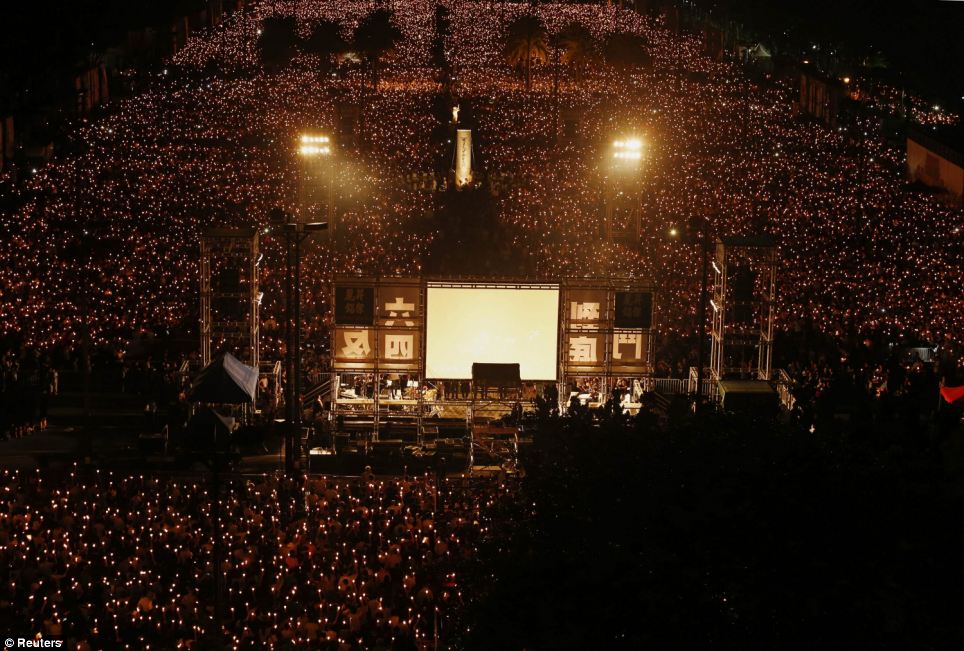 It also aptly demonstrated just how much it fears the specter of Tiananmen Square, even some twenty-five years later. From clamping down on their people’s ability to learn more about the massacre, to clamping down on even the possibility of protest in advance, to continually denying any wrongdoing and suppressing information on the number of people killed, the legacy of Tiananmen Square continues to expose the blatant hypocrisy and denial of the Communist Party of China.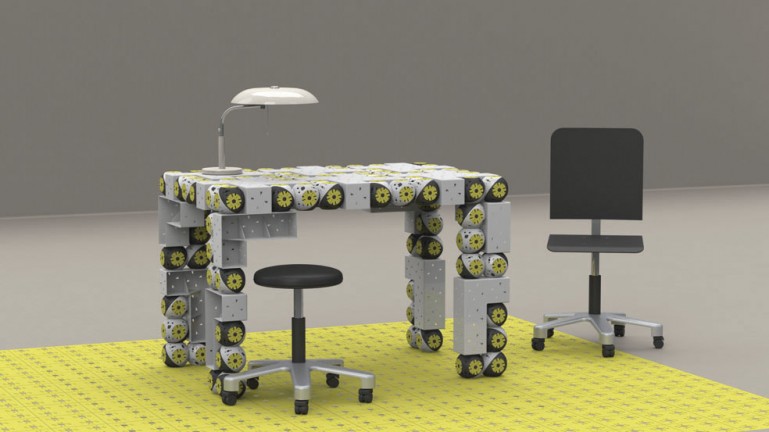
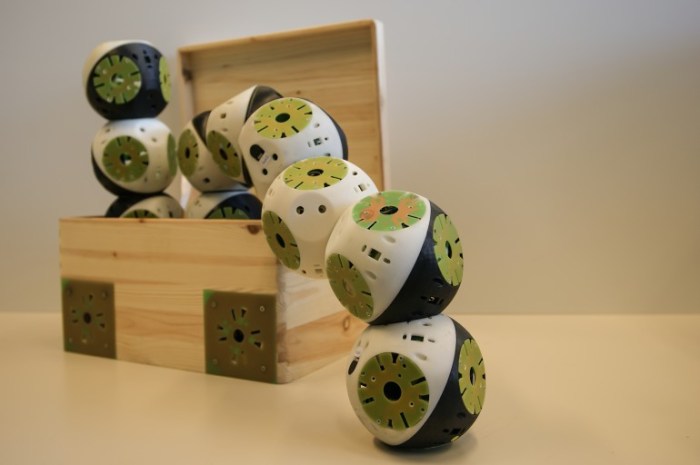 Like LEGO bricks, Roombots can be stacked upon each other to create various structures and/or combined with furniture and other objects, changing not only their shape, but also and functionality. For instance, a person lying down on a Roombot bed could slowly be moved into a seated position, or a table could scoot over to a corner or tilt itself to help a book slide into a person’s hands. The team has solved a number of significant milestones, such as the having the Roombots move freely, to bring all this multi-functionality closer.
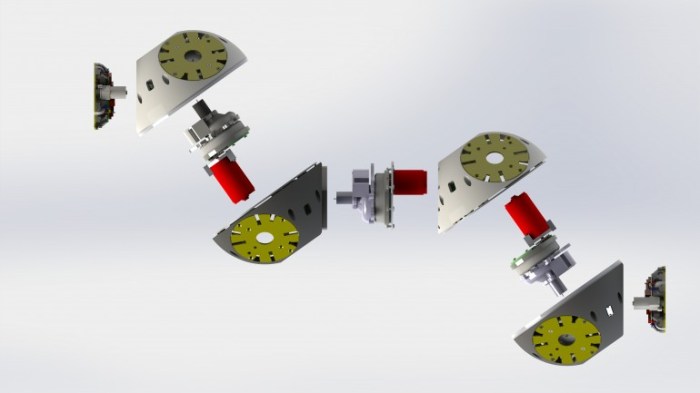 The Roombots can even climb up a wall or over a step, when the surface is outfitted with connector plates. They’re are also capable of picking up connector plates and arranging them to form, say, a table’s surface. Massimo Vespignani, a PhD student at BioRob, explained the purpose of this design and the advantages in a recent interview with Gizmag:
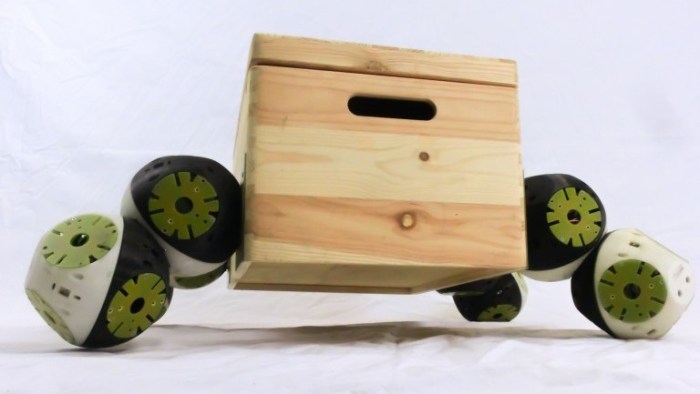 The range of applications for these kind of robotics is virtually infinite. For example, as seen in the video below, a series of Roombots as feet on a table that not only let it move around the room and come to the owner, but adjust its height as well. Auke Ijspeert, head of the Biorob, envisions that this type of customization could be used for physically challenged people who could greatly benefit from furniture that adapts to their needs and movements.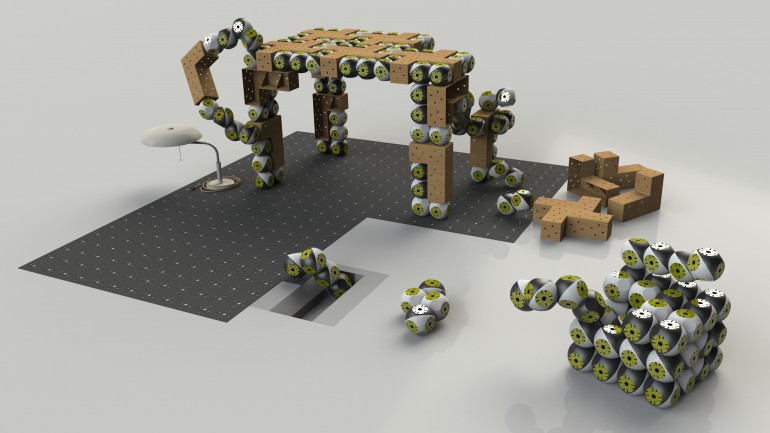






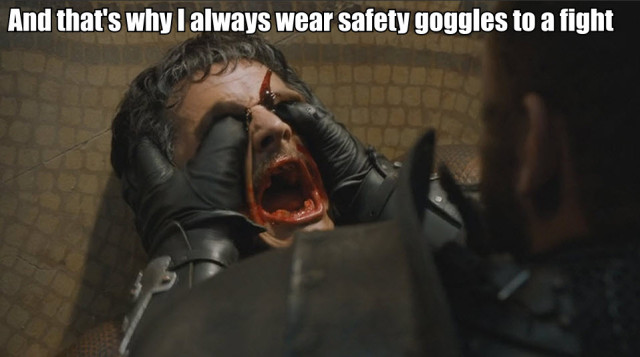





 Other notable features include the propellent, which is a pair of non-cryogenic liquids – monomethyl hydrazine for the fuel and nitrogen tetroxide for the oxidizer. These are hypergolic, meaning that they ignite on contact with one another, which helps the SuperDraco to restart multiple times. It’s also built to be deep throttled, and can go from ignition to full throttle in 100 ms. But what really sets the SuperDraco apart is that is has 200 times the power of the Draco engine, which works out to 7,440 kg (16,400 lbs) of thrust.
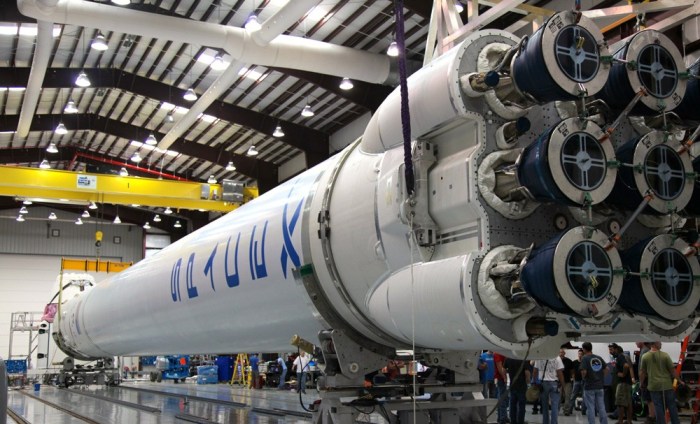 Eight engines firing for five seconds are enough to carry the capsule safely away from the booster with 120,000 lb of axial thrust. In addition, the eight engines also provide a high degree of redundancy should one or more engines fail. But what’s really ambitious about the SuperDraco is that, like the Falcon 9 booster, the Dragon is designed to ultimately return to its spaceport under its own power and land with the precision of a helicopter, and it’s the power and control of the SuperDraco that makes this possible.
 But equally impressive was the unveiling of the Dragon V2 manned space capsule, which took place at a brief media event at SpaceX’s Hawthorne, California headquarters at the end of May. This larger, more powerful version of the reusable Dragon capsule will one day carry astronauts to the International Space Station (ISS) and return to Earth to land under its own power. This latest development brings the company one step closer towards its ultimate goal of a fully reusable manned capsule capable of making a powered landing.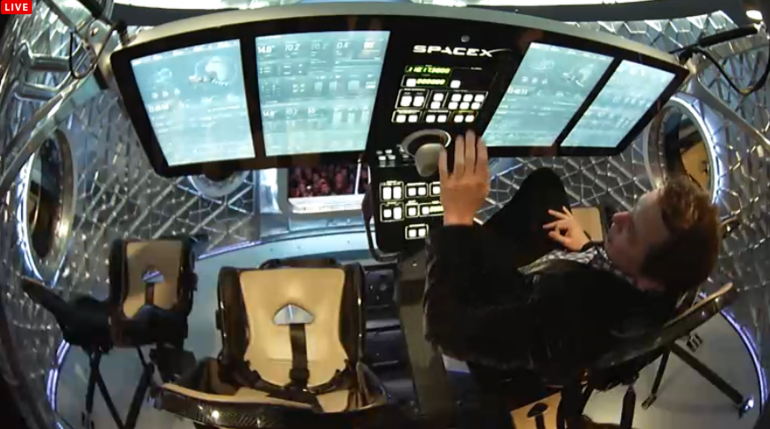

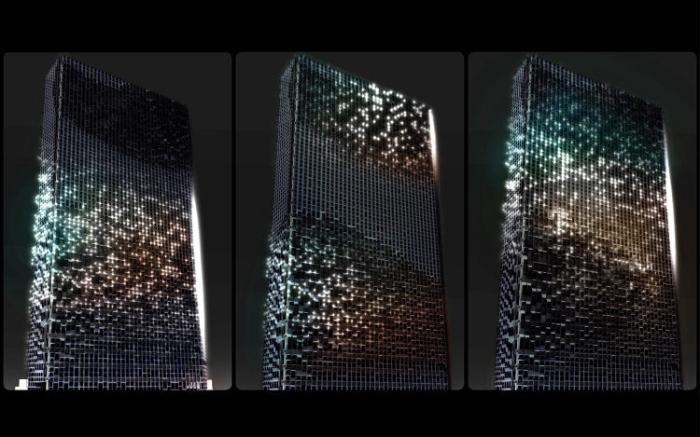 Even though the most recently-built skyscrapers are helping change things by employing renewable energy and sustainable methods – like the
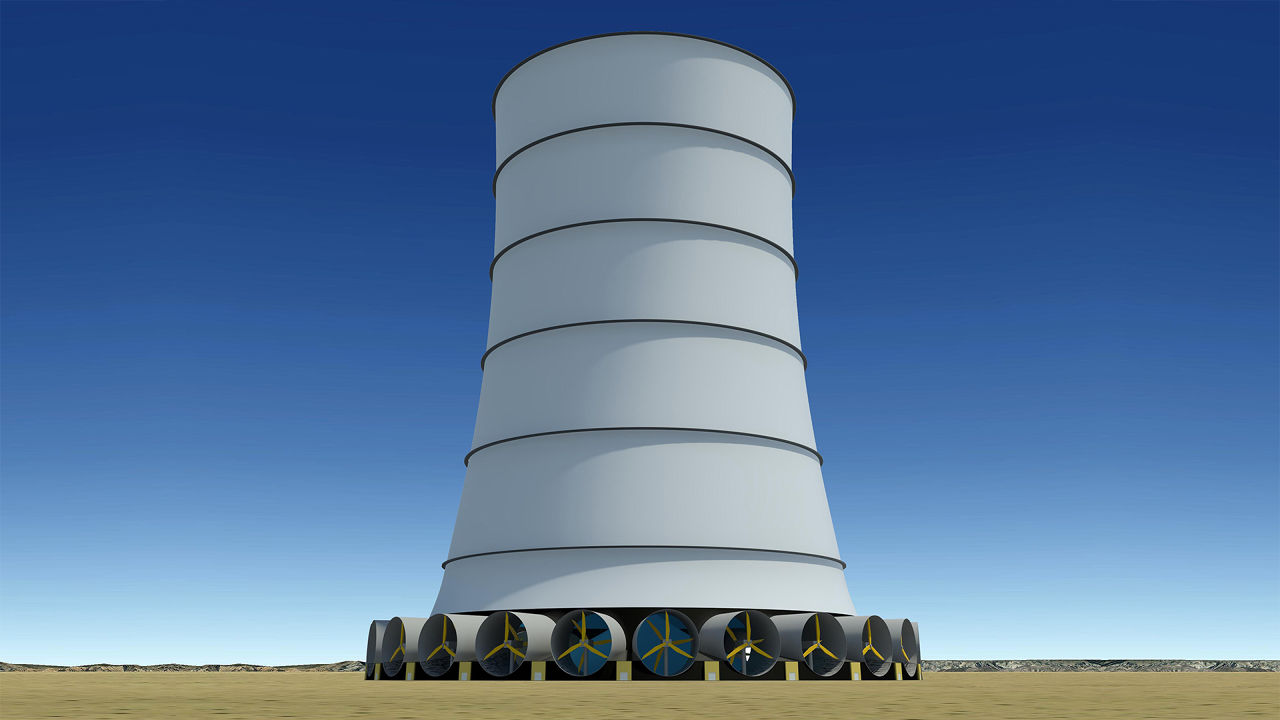

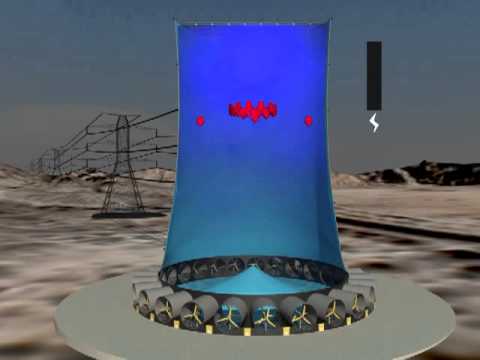



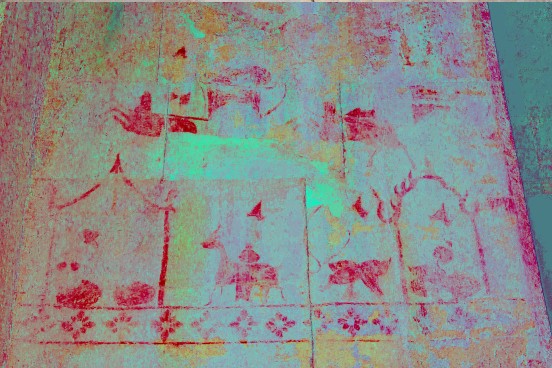
 And though researchers can’t be sure exactly when the paintings were created, Tan speculates that the most elaborate artworks may have been commissioned by Cambodia’s King Ang Chan, who made an effort to restore the temple during his reign between 1528 and 1566. During this time, unfinished carvings were completed and Angkor Wat began its transformation into a Buddhist pilgrimage site, which are confirmed by some of the newly revealed paintings that show Buddhist iconography.

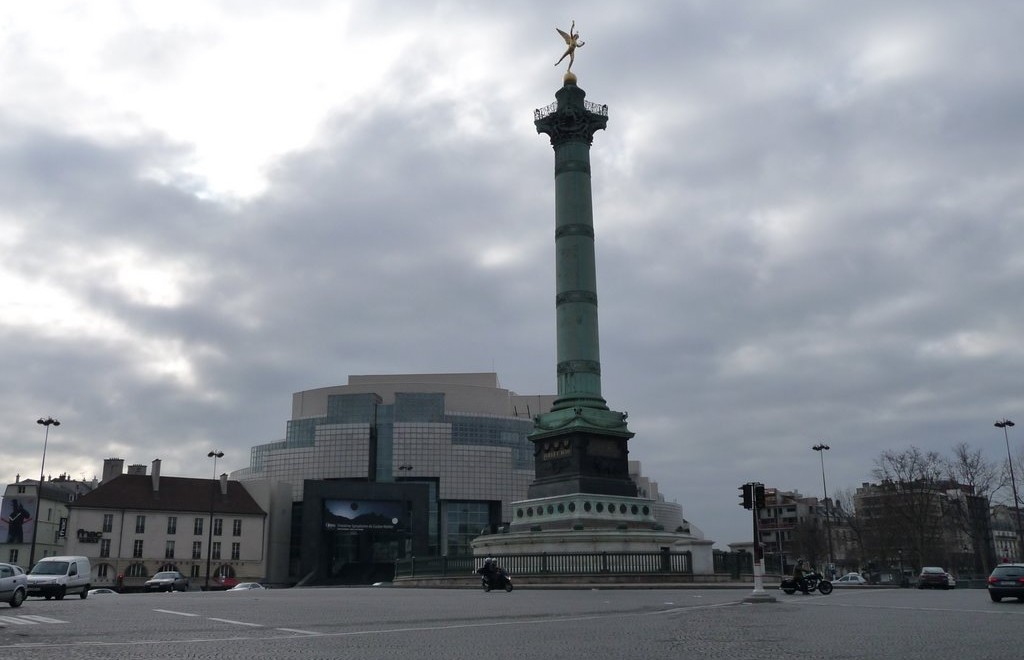


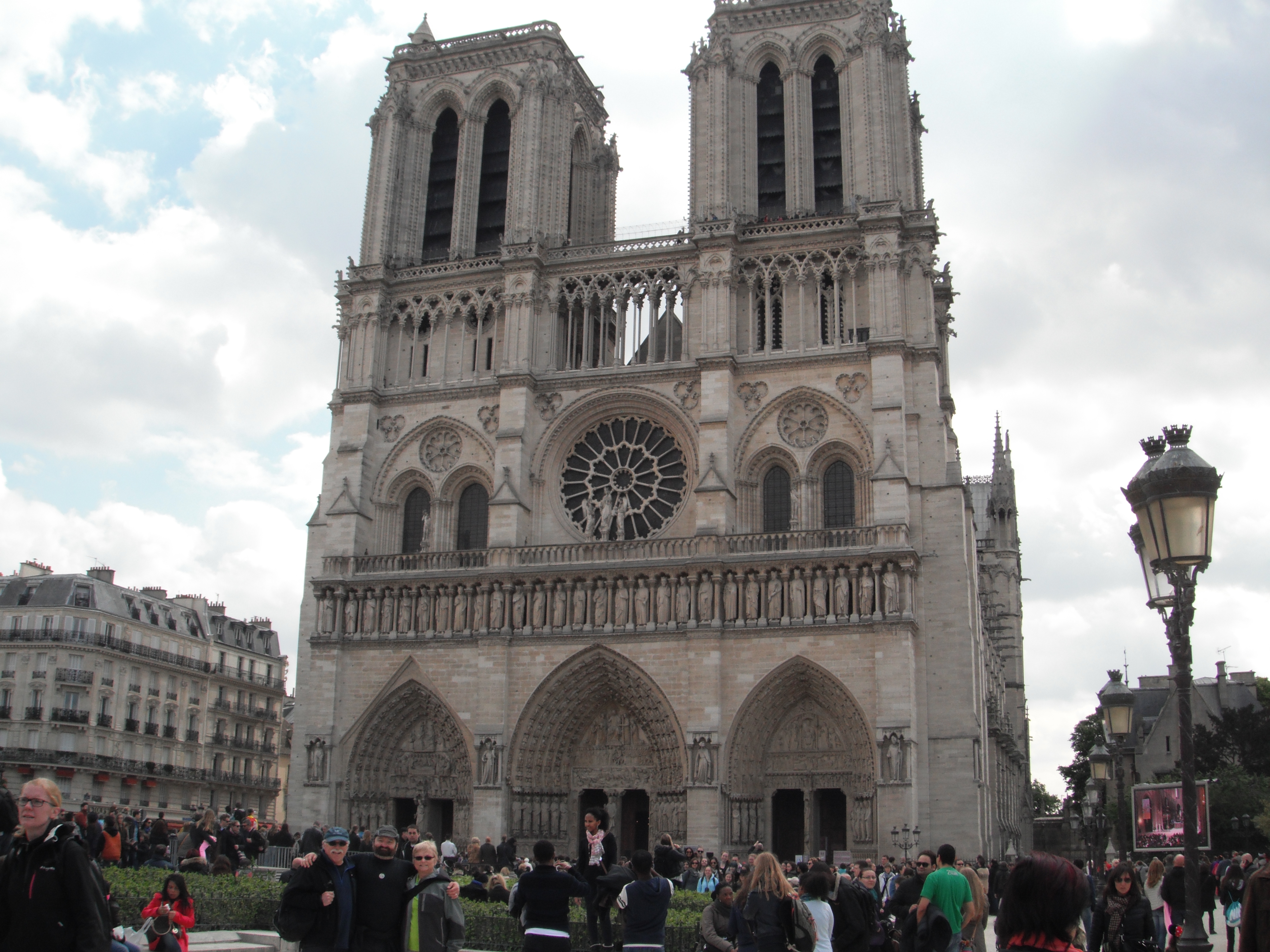
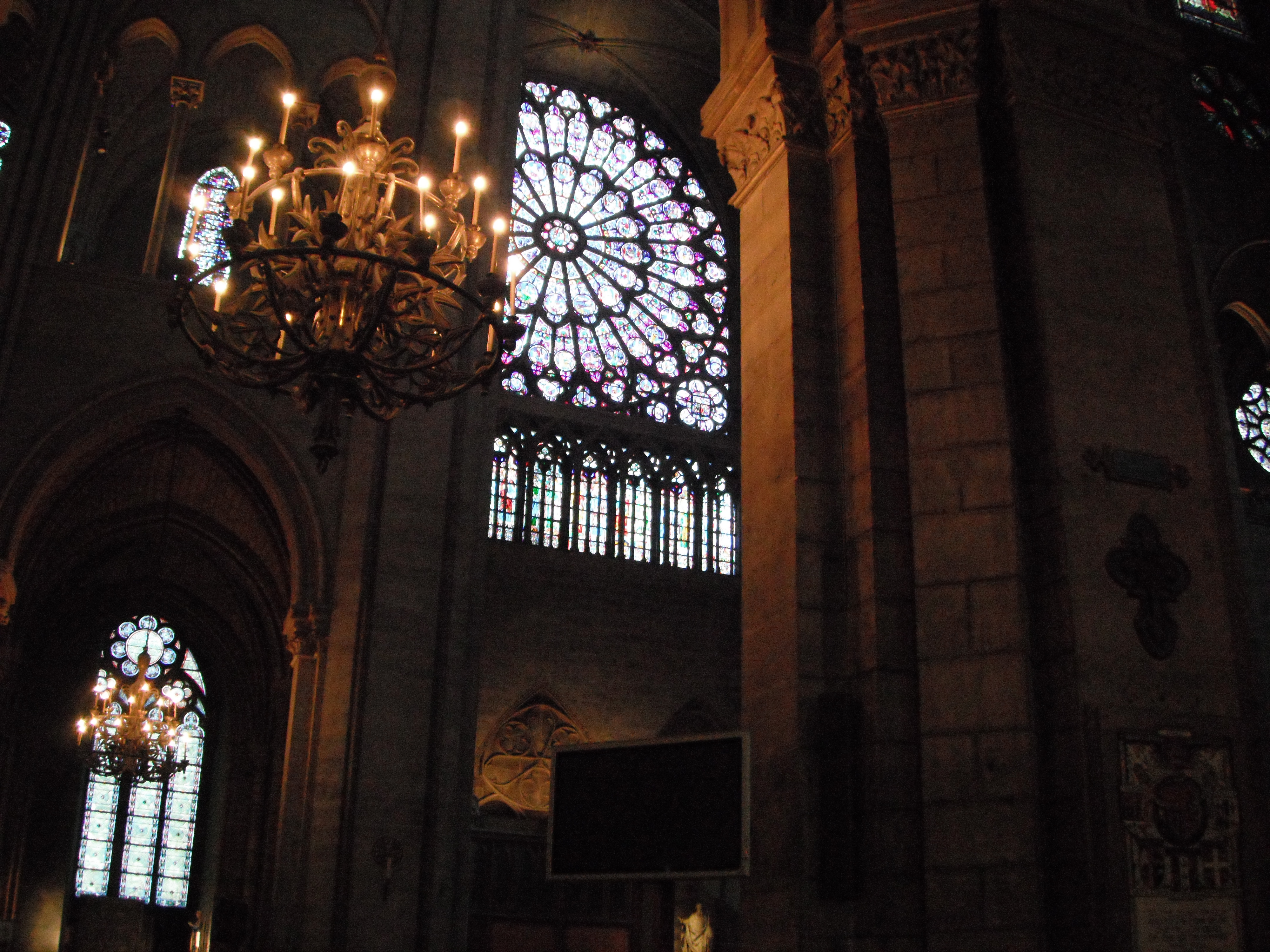

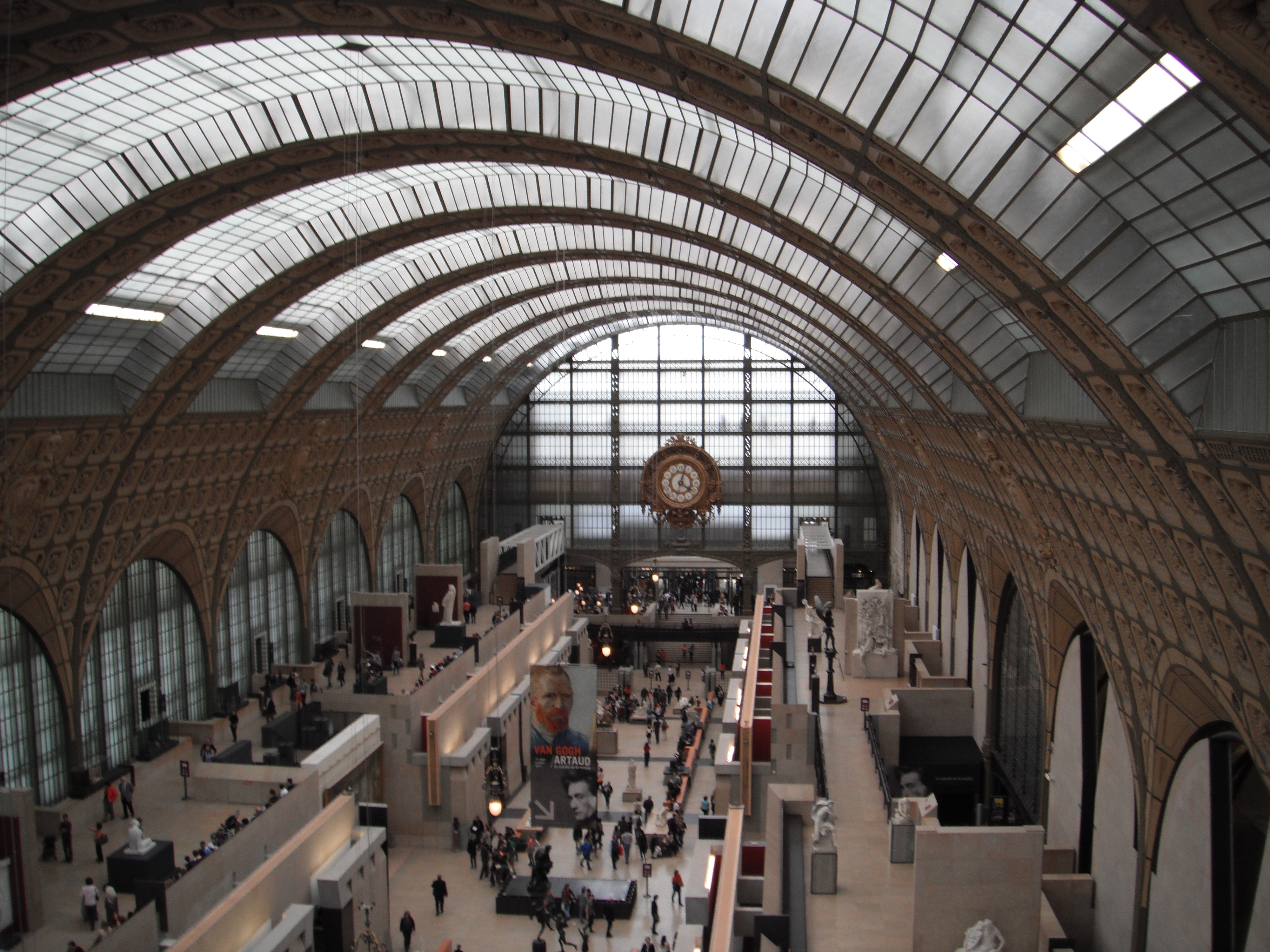
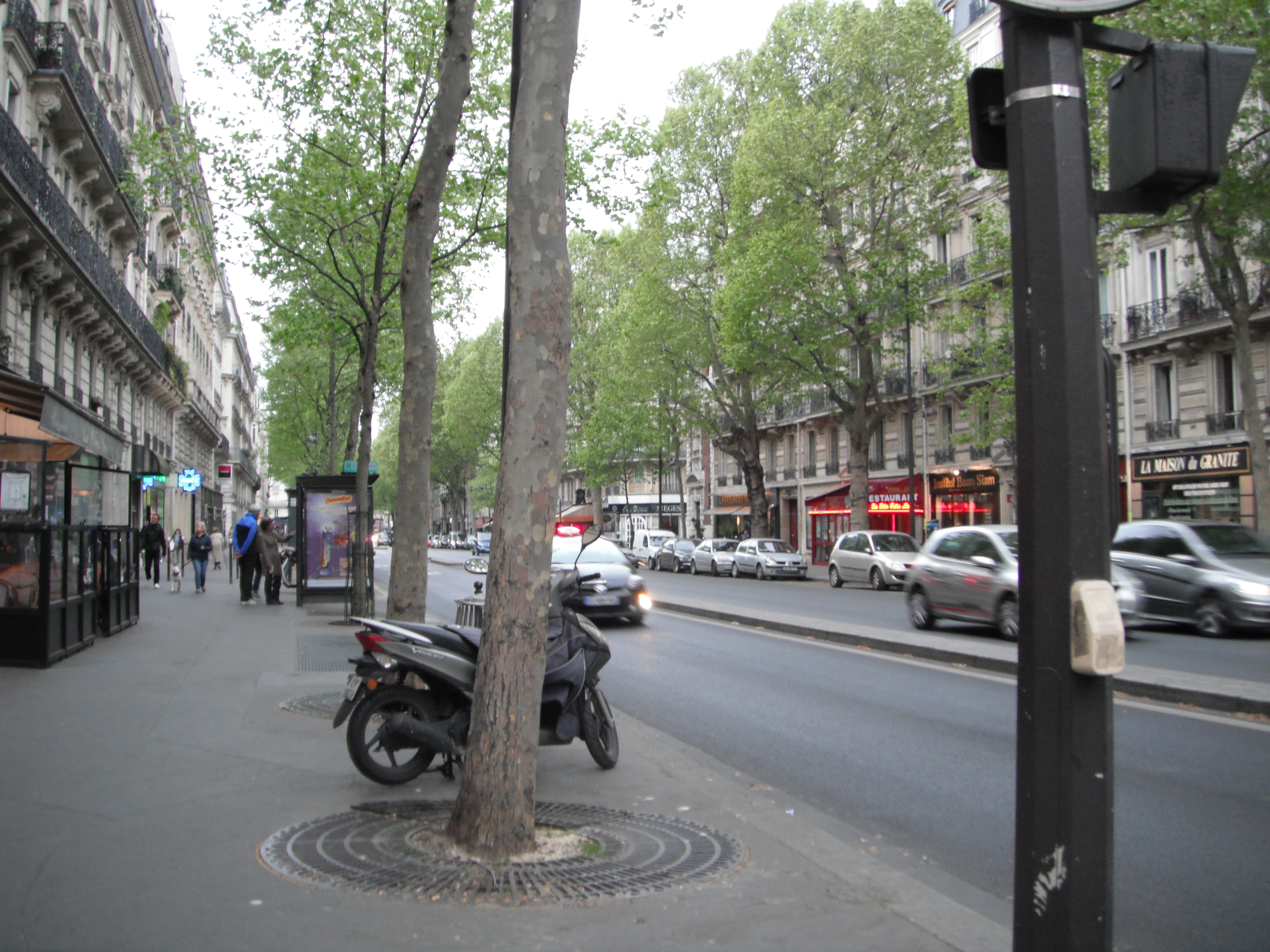

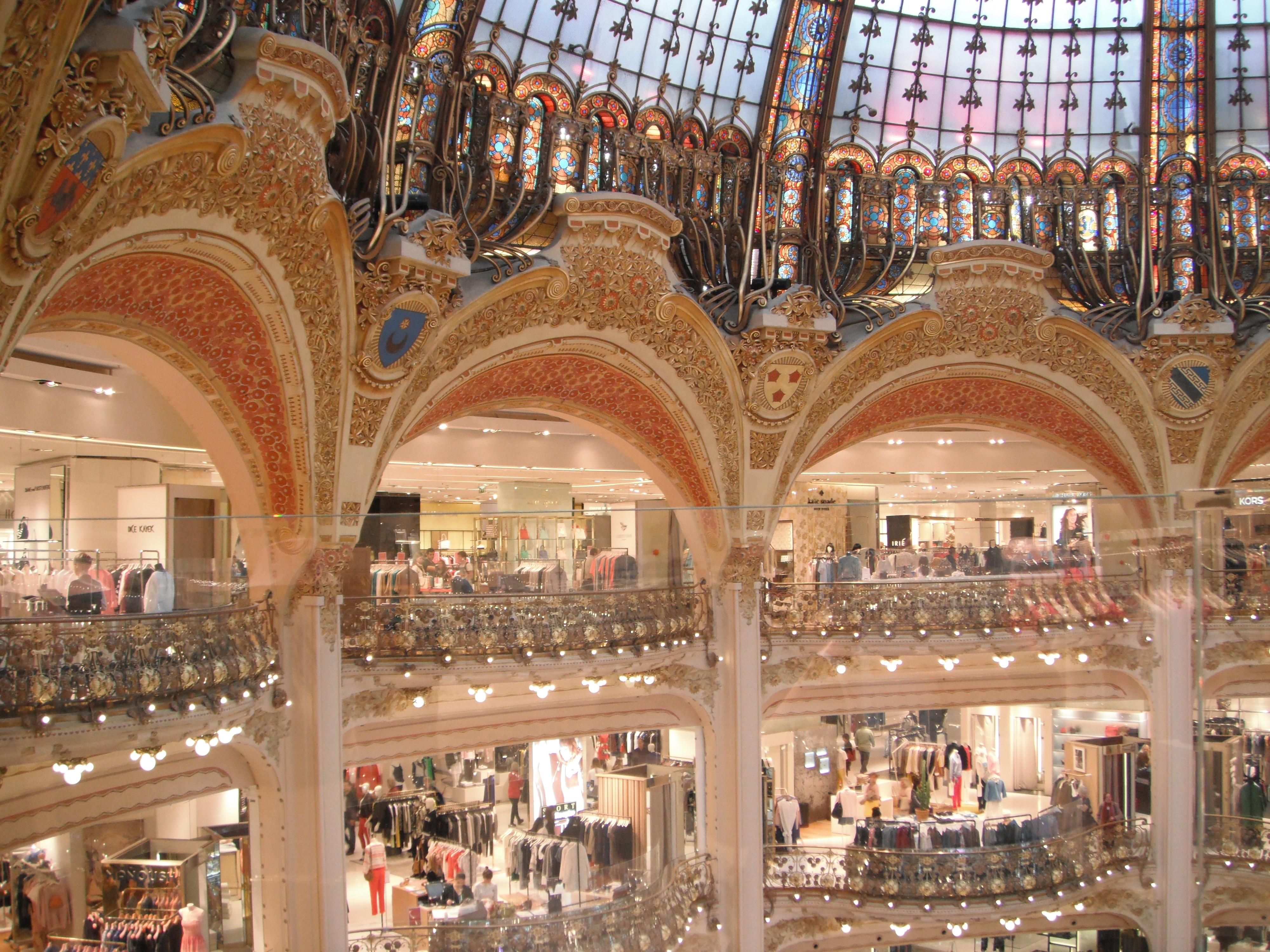
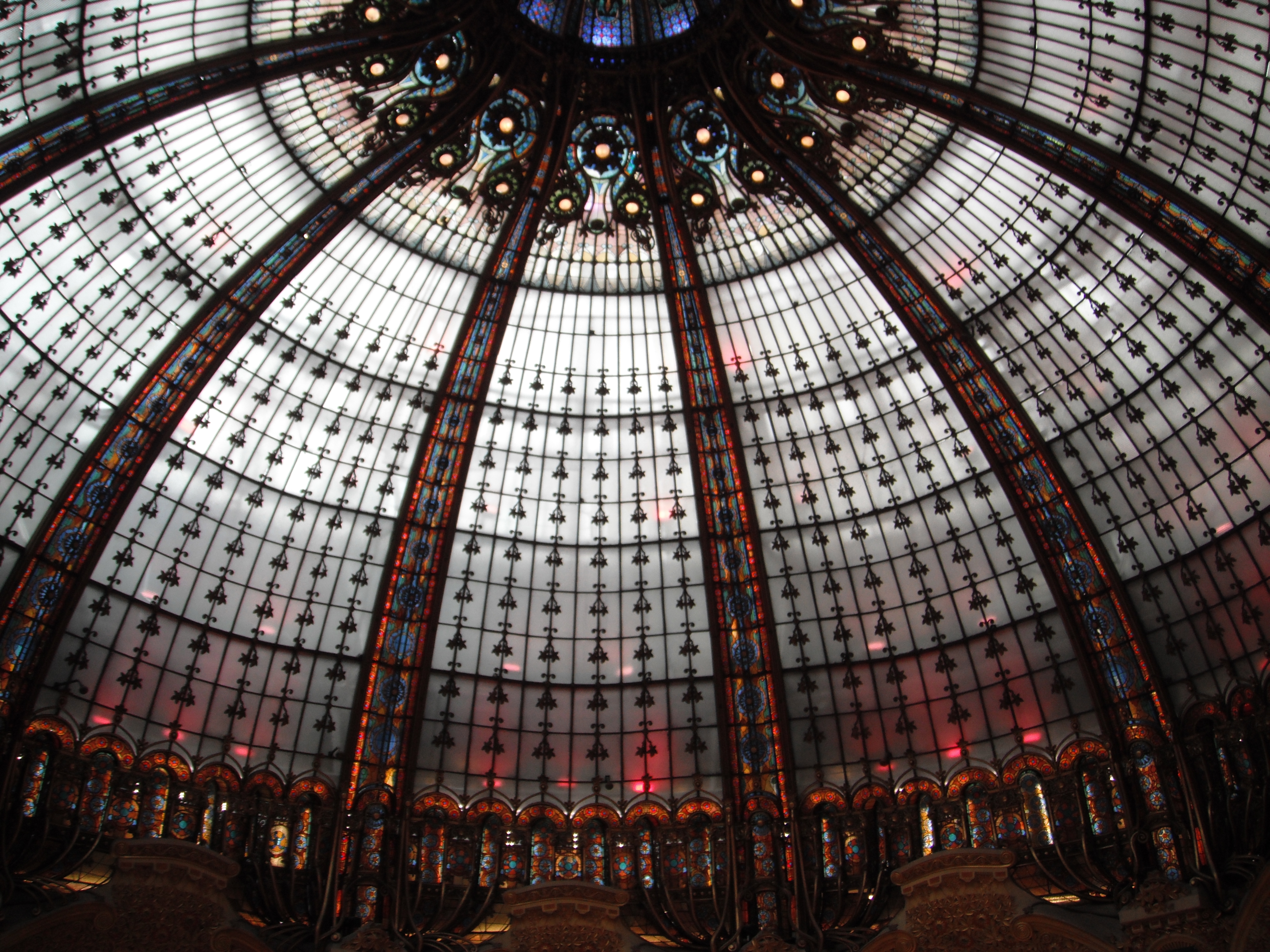



 In so doing, he demonstrated that the nervous system was like a computer terminal through which you could deliver commands to stop a problem, like acute inflammation, before it starts, or repair a body after it gets sick. His work also seemed to indicate that electricity delivered to the vagus nerve in just the right intensity and at precise intervals could reproduce a drug’s therapeutic reaction, but with greater effectiveness, minimal health risks, and at a fraction of the cost of “biologic” pharmaceuticals.
 Impressive as this may seem, bioelectronics are just part of the growing discussion about neurohacking. In addition to the leaps and bounds being made in the field of brain-to-computer interfacing (and brain-to-brain interfacing), that would allow people to control machinery and share thoughts across vast distances, there is also a field of neurosurgery that is seeking to use the miracle material of grap



 In the end, neuromorphic chips and technology are merely one half of the equation. In the grand scheme of things, the aim of all of this research is not only produce technology that can ensure better biology, but technology inspired by biology to create better machinery. The end result of this, according to some, is a world in which biology and technology increasingly resemble each other, to the point that they is barely a distinction to be made and they can be merged.
 Stories by Williams