A Tribute to Nelson Mandela (1918 – 2013)

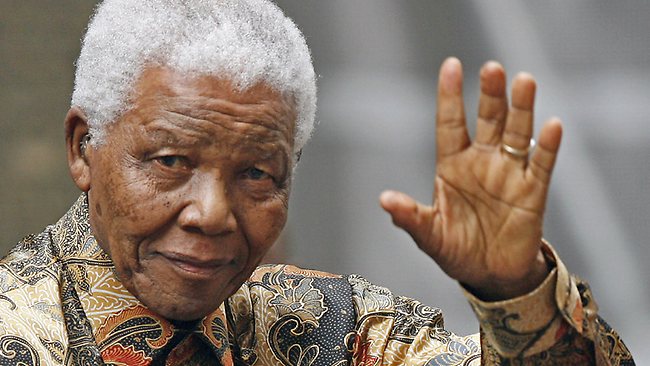
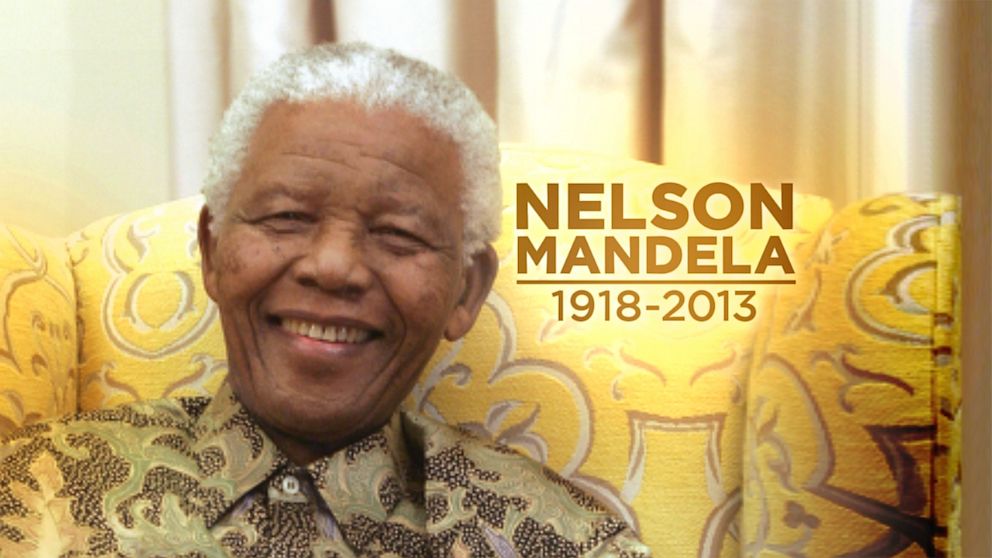
nelson_mandelaThis week, former president, activist, and “father of the nation” Nelson Mandela died in his home in Houghton, Johannesburg. Having spent the last few years battling with failing health, he finally succumbed to a lung infection and passed away, surrounded by his family. He was 95 years of age, and his life and accomplishments reach far beyond the nation that considered him its mentor, leader, and father figure.

Today, in response to the news of his passing, President Zuma has announced a national mourning period of ten days, with the main event being an official memorial service to be held at the FNB Stadium in Johannesburg on December 10th, 2013. Mandela’s body will lie in state from the December 11th to 13th at the Union Buildings in Pretoria and a state funeral will be held on December 15th.

mandela_southafricaAs current President Jacob Zuma said today of South Africa’s founding President, he was an:

international icon who was a symbol of reconciliation … love, human rights and justice in our country and to the world. The outpouring of love … illustrates the caliber of leader that Madiba was …, The week of mourning will also celebrate a life well lived.

Mandela’s grandson, Mandla Mandela, said he was strengthened by the knowledge that his grandfather was finally resting.  He also said that the late statesman was the embodiment of strength, struggle and survival. As a grandfather, Mandela would always be remembered as kind-hearted, generous and wise. Mandla also expressed gratitude for the national and international support his family had received during Mandela’s long health problems.

mandela_RIPIn a statement, the grandson of the elder statesman said the following:

All that I can do is thank God that I had a grandfather who loved and guided all of us in the family. The best lesson that he taught all of us was the need for us to be prepared to be of service to our people… We in the family recognize that Madiba belongs not only to us but to the entire world. The messages we have received since last night have heartened and overwhelmed us.

Zelda la Grange, Mandela’s personal assistant for almost two decades, said the elder statesman inspired people to forgive, reconcile, care, be selfless, tolerant and to maintain dignity no matter what the circumstances. She said in a statement:

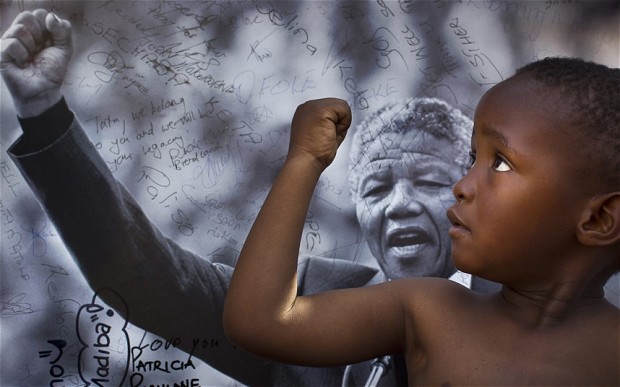
His legacy will not only live on in everything that has been named after him, the books, the images, the movies. It will live on in how we feel when we hear his name, the respect and love, the unity he inspired in us as a country, but particularly how we relate to one another.

mandela_tutuIn a church service in Cape Town, retired archbishop Desmond Tutu – another major South African activist and humanitarian who embodies the spirit of reconciliation and tolerance – said the anti-apartheid leader who became South Africa’s first black president would want South Africans themselves to be his “memorial” by adhering to the values of unity and democracy that he embodied.

Recalling how Mandela helped unite South Africa as it dismantled apartheid, and prepared for all-race elections in 1994, Tutu said that: “All of us here in many ways amazed the world, a world that was expecting us to be devastated by a racial conflagration.” In closing his prayer, Tutu said: “God, thank-you for the gift of Madiba.” Mourners also gathered outside Mandela’s former home on Vilakazi Street in the city’s black township of Soweto.

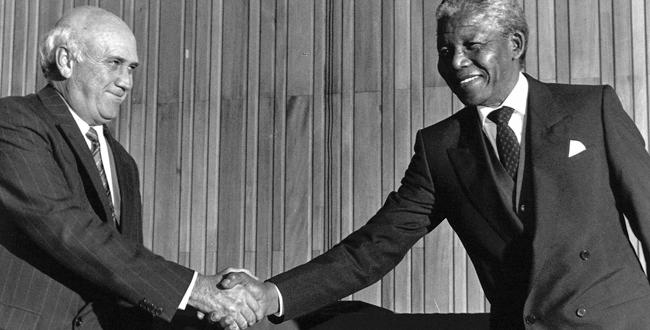
mandela_deKlerkeAlso speaking of Mandela’s legacy was F.W. de Klerk, South Africa’s last apartheid-era president who negotiated an end to apartheid with Mandela. By finding common cause in often tense circumstances, the two men shared the Nobel Peace Prize in 1993. In summarizing Mandela’s legacy, de Klerk told eNCA television: “Never and never again should there be in South Africa the suppression of anyone by another.”

Helen Zille, leader of the country’s official opposition party, the Democratic Alliance, and premier of the Western Cape, the only province not controlled by the ANC, commented:

We all belong to the South African family — and we owe that sense of belonging to Madiba. That is his legacy. It is why there is an unparalleled outpouring of national grief at his passing. It is commensurate with the contribution he made to our country.

mandela_RIP1Mandela leaves behind a legacy that is virtually unparalleled in modern history, comparable only to Martin Luther King Jr. and Mohandas Gandhi. Also known as “Madiba” – a clan name that is considered of greater importance than a surname in Mandela’s ancestral Xhosa culture – Mandela was not South Africa’s first black President, but the first man to be elected in a fully representative election.

Having spent his life fighting against Apartheid, Mandela’s also spent his time as President – from 1994 to 1999 – focusing on dismantling the legacy of apartheid through tackling institutionalized racism, poverty and inequality, and fostering racial reconciliation. From 1991 to 1997, he also served as President of the African National Congress (ANC) and was the  Secretary General of the Non-Aligned Movement – a group of states not aligned to any specific power bloc – from 1998 to 1999.

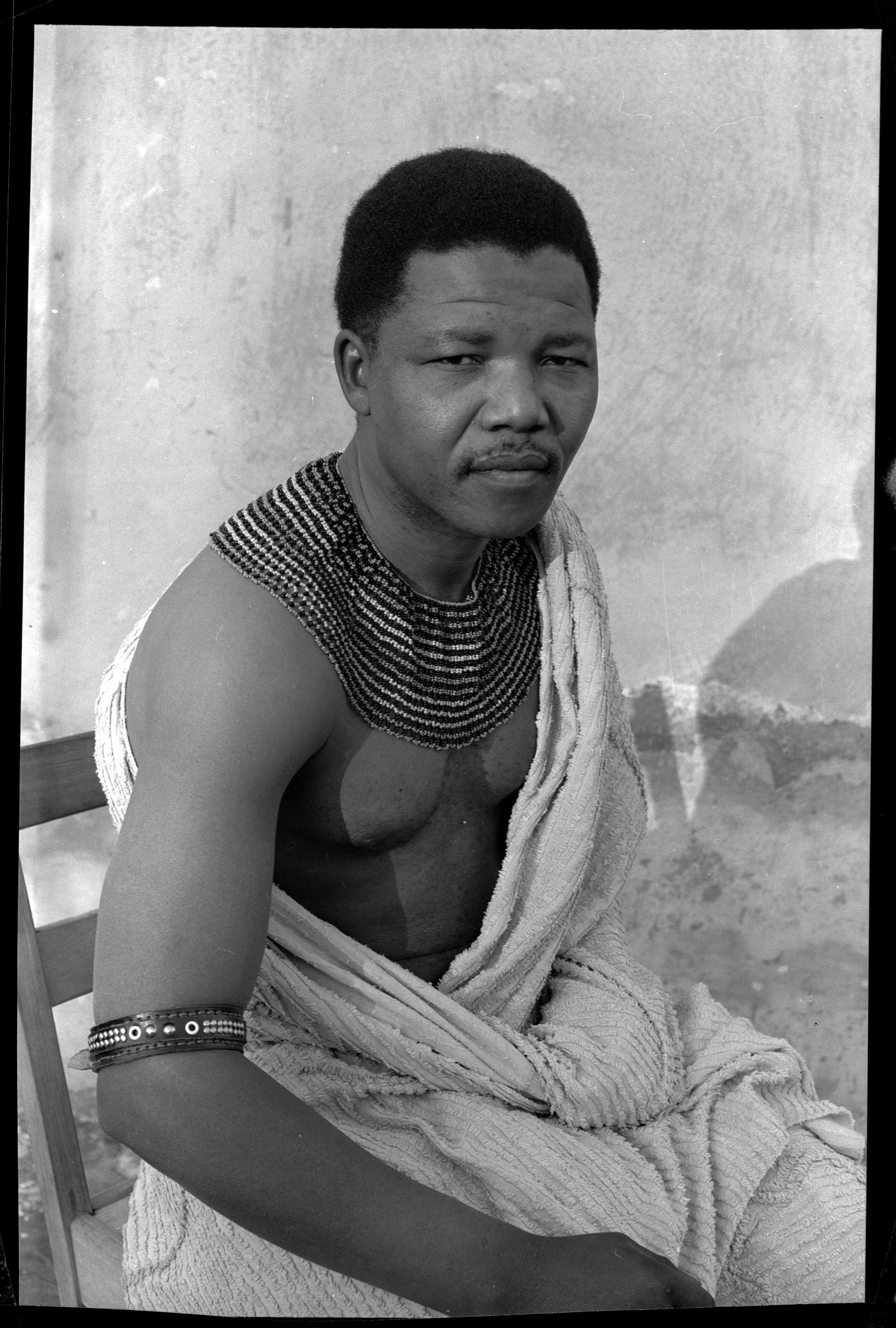
Nelson-Mandela-by-Eli-Weinberg-1961But what is especially poignant and significant about Mandela’s life is the fact that from 1964 to 1990 (a period of 27 years) he conducted his campaign for reform and racial inclusion from a prison cell. After being arrested for high treason against the government. This was the culmination of many years of agitation and resistance against a government that was becoming increasingly racist and authoritarian, and opposed to the winds of change that had been blowing through the country for years.

Due to his involvement with the ANC and the organization’s adoption of increasingly militant tactics in order to fight against the Nationalist pro-apartheid government, and its institution of martial law, Mandela was convicted of sabotage and conspiracy to overthrow the government and made one of his famous “I am prepared to die” speech (inspired by Castro’s “History will absolve me” speech):

During my lifetime I have dedicated myself to this struggle of the African people. I have fought against white domination, and I have fought against black domination. I have cherished the ideal of a democratic and free society in which all persons live together in harmony and with equal opportunities. It is an ideal which I hope to live for and to achieve. But if needs be, it is an ideal for which I am prepared to die.

Despite official censorship, this speech and the trial proceedings were broadcast around the world and numerous organizations – including the United Nations and the Word Peace Council – petitioned the South African government for clemency. These were ignored, and Mandela spent the next 27 years in a series of prisons before finally being released in 1990.

ApartheidSignEnglishAfrikaansUpon his release, Mandela went back to advocating against apartheid and found a willing partner in President F.W. de Klerk. Together, and over the course of three years from 1990 to 1993, they dismantled the racialist apparatus of power installed by the Nationalist Party and opened up the franchise to all South Africans. In the 1994 General Election, the first free and open election in South Africa’s history, Mandela ran and won, becoming the first black president in the country’s history.

And despite what many observers and angry Afrikaners believed, that the election of a black president would signal a race war, Mandela presided over a period of peace and reconciliation between all of the nation’s people. Though the transition was not easy and there were bumps along the way, the next five years were marked overwhelmingly by progress and optimism as the country moved towards a truly free and open state.

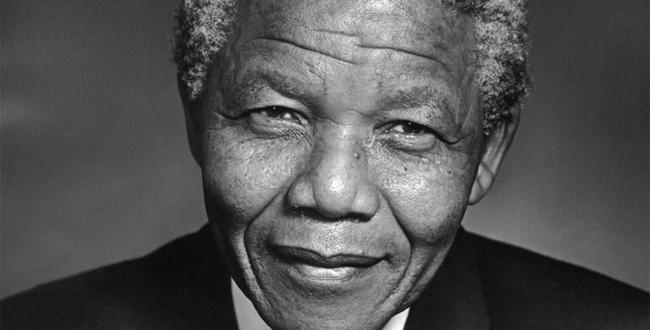
mandela_lifeFrom all this, Nelson Rolihlahla “Madiba” Mandela has forever been known as a man who defied the odds and remained stalwart in his commitment to improve the lives of his people, regardless of their race, creed, ethnicity, or background. In response to his passing, the Nelson Mandela Foundation – a charity devoted to social justice, peace, human rights and democracy – posted the following message on its website:

It is with the deepest regret that we have learned of the passing of our founder, Nelson Rolihlahla Mandela – Madiba. The Presidency of the Republic of South Africa will shortly make further official announcements.

We want to express our sadness at this time. No words can adequately describe this enormous loss to our nation and to the world.

We give thanks for his life, his leadership, his devotion to humanity and humanitarian causes. We salute our friend, colleague and comrade and thank him for his sacrifices for our freedom. The three charitable organisations that he created dedicate ourselves to continue promoting his extraordinary legacy.

Many world leaders are expected to converge on South Africa to witness the funeral of this elder statesman and advocate for peace and human rights, amongst them President Barack Obama and Canadian Prime Minister Stephen Harper. They will be joined by people from all over the world who will bear witness to the passing of a man who is sure to be remembered as one of history’s greatest.

Rest in peace Madiba. The world was made better because of your time within it. And we could sure use more people like you as we step into the future!

Sources: cbc.ca, (2), nelsonmandela.org, businessinsider.com
Climate Crisis: Illustrative Video of Impending Disaster

IPCC2012_vid3Recently, the United Nation’s Intergovernmental Panel on Climate Change released its 2012 report, which contained some rather stark observations and conclusions. In addition to reconfirming what the 2007 report said about the anthropogenic effects of CO2 emissions, the report also tackled speculation about the role of Solar Forcing and Cosmic Rays in Global Warming, as well as why warming has been proceeding slower than previously expected.

In the end, the report concluded that certain natural factors, such as the influence of the Sun and Cosmic Rays in “seeding clouds”, were diminishing, and thus have a negative effect on the overall warming situation. In spite of that, global temperatures continue to increase, due to the fact that humanity’s output of greenhouse gases (particularly CO2) has not slowed down one bit in recent years.

IPCC2012_vidThe report also goes on to explain detailed scenarios of what we can expect in the coming decades, in extreme and extensive detail. However, for those who have neither the time, patience, or technical knowledge that wade through the report, a helpful video has been provided. Courtesy of Globaia,this four minute video sums up the facts about Climate Change and how it is likely to impact Earth’s many inhabitants, human and otherwise.

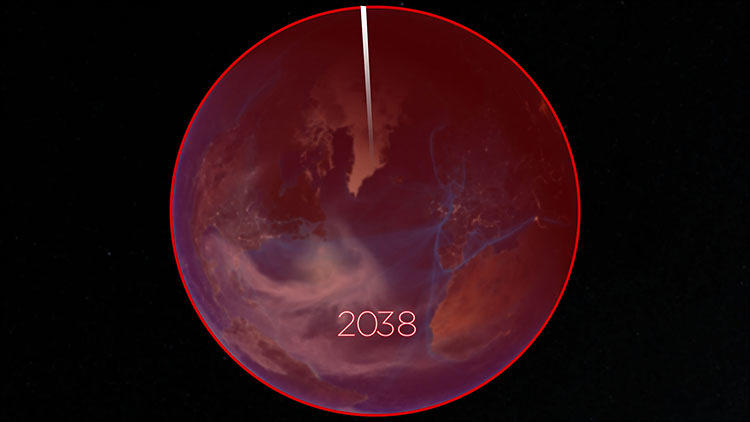
Needless to say, the facts are grim. By 2050, if humans remain on their current path, global temperatures will rise more than two degrees Celsius above what it’s been for most of human history. By 2100, it might even climb four degrees. The IPCC report, and this video, confirm what we’ve been hearing everywhere. Arctic sea ice is disappearing, sea levels are rising, storms are getting more destructive, and the full extent of change is not even fully known.

IPCC2012_vid6As the organization that put together this data visualization along with other scientists, Globaia says that it created this video as a call to action for policymakers. Felix Pharand-Deschenes, who founded the Canadian nonprofit company and animated the video, claims that:

If we are convinced of the seriousness of the situation, then political actions and technological fixes will result,” says  “But we have to change our minds first. This is the reason why we try to translate our terrestrial presence and impacts into images–along with the physical limits of our collective actions.

But of course, there’s still hope. As Pharand-Deschenes went on to say, if we can summon up a “war effort,” and work together the way World War II-era citizens did, we could still manage to the social systems that are largely responsible for the problem. This includes everything from transportation and energy to how we grow our food, enough to stay below a two degree rise.

IPCC2012_vid5Of course, this is no small task. But as I love to remind all my readers, research and efforts are happening every day that is making this a reality. Not only is solar, wind and tidal power moving along by leaps and bounds, becoming profitable as well as affordable, we are making great strides in terms of Carbon Capture technology, alternative fuels, and eco-friendly living that are expected to play a huge role in the coming decades.

And though it is often not considered, the progress being made in space flight and exploration also play a role in saving the planet. By looking to make the process of sending ships and satellites into space cheaper, concepts like Space-Based Solar Power (SBSP) can become a reality, one which will meet humanity’s immense power demands in a way that is never marred by weather or locality.

IPCC2012_vid4Combined with sintering and 3-D printing, asteroid prospecting and mining could become a reality too in a few decades time. Currently, it is estimated that just a few of the larger rocks beyond the orbit of Mars would be enough to meet Earth’s mineral needs indefinitely. By shifting our manufacturing and mining efforts offworld with the help of automated robot spacecraft and factories, we would be generating far less in the way of a carbon footprint here on Earth.

But of course, the question of “will it be enough” is a burning one. Some scientists say that an increase of even two degrees Celsius is more than Earth’s creatures can actually handle. But most agree that we need to act immediately to prepare for the future, and that one of the things standing in the way of action is the fact that the problem seems so abstract. Luckily, informational videos like this one present the problem is clear and concise terms.

ipcc2012_vid1The IPCC reports that we only have 125 billion tons of CO2 left to burn before reaching the tipping point, and at current rates, that could happen in just over two decades. Will we have a fully renewable-powered, zero-carbon world by then? Who knows? The point is, if we can get such a task underway by then, things may get worse before they get better, but they will improve in the end. Compared to the prospect of extinction, that seems like a bargain!

In the meantime, check out the video – courtesy of Globaia and the International Geosphere-Biosphere Programme (IGBP) – and try to enjoy it despite its gloomy predictions. I assure you, it is well worth it!


Source:
fastcoexist.com


The Future is Here: The DARPA/BD Wildcat!

BD_atlasrobotThe robotics company of Boston Dynamics has been doing some pretty impressive things with robots lately. Just last year, they unveiled the Cheetah, the robotics company set a new land speed record with their four-footed robot named Cheetah. As part of DARPA’s Maximum Mobility and Manipulation program, the robotic feline demonstrated the ability to run at a speed of 45.06 km/h (28 mph).

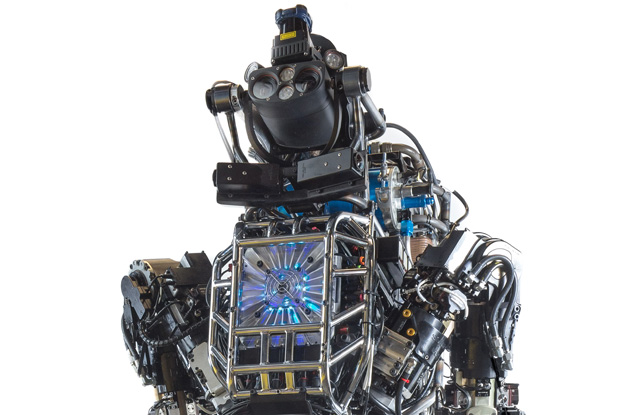
And in July of this year, they impressed and frightened the world again with the unveiling of their ATLAS robot – a anthropomorphic machine. This robot took part in the DARPA Robotics Challenge program. capable of walking across multiple terrains, and demonstrated its ability to walk across multiple types of terrain, use tools, and survey its environment with a series of head-mounted sensors.

Atlas_robotAnd now, they’ve unveiled an entirely new breed of robot, one that is capable of running fast on any kind of terrain. It’s known as the WildCat, a four-legged machine that builds on the world of the Legged Squad Support System (LS3) that seeks to create a robot that can support military units in the field, carrying their heavy equipment and supplies over rugged terrain and be operated by remote.

So far, not much is known about the robot’s full capabilities and or when it is expected to be delivered. However, in a video that was released in early October, Boston Dynamics showed the most recent field test of the robot to give people a taste of what it looks like in action. In the video, the robot demonstrated a top speed of about 25 km/h (16 mph) on flat terrain using both bounding and galloping gaits.

Cheetah-robotFollowing in the footsteps of its four-legged and two-legged progeny, the WildCat represents a coming era of biomimetic machinery that seeks to accomplish impressive physical feats by imitating biology. Whereas the Atlas is designed to be capable of doing anything the human form can – traversing difficult terrain, surveying and inspecting, and using complex tools – the Cheetah, LS3, and WildCat draw their inspiration from nature’s best hunters and speed runners.

Just think of it: a race of machines that can climb rocky outcroppings with the sure-footedness of a mountain goat, run as fast as a cheetah, stalk like a lion, bound like an antelope, and swing like a monkey. When it comes right down to it, the human form is inferior in most, if not all, of these respects to our mammalian brethren. Far better that we imitate them instead of ourselves when seeking to create the perfect helpers.
LS3-AlphaDog6reducedIn the end, it demonstrates that anthropomorphism isn’t the only source of drive when it comes to developing scary and potential doomsday-bating robots! And in the meantime, be sure to enjoy these videos of these various impressive, scary, and very cool robots in action:

WildCat:


Cheetah:


Atlas:


Source:
universetoday.com, bostondynamics.com

News From Space: China’s Jade Rabbit Moon Rover

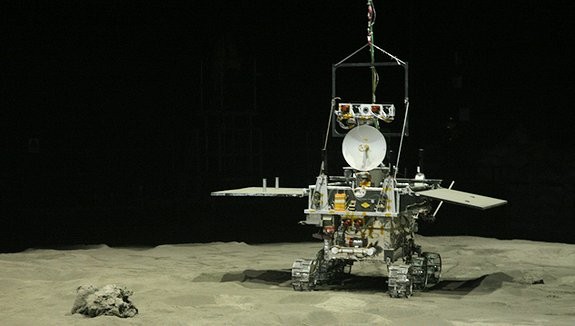
change'e3Earlier this week, China took another step towards becoming a major power in space with the launch of the Chang’e-3 lunar probe. On board this vehicle is the Yu Tu (Jade Rabbit) lunar rover, a vehicle that is designed to deploy from the vehicle once it reaches lunar orbit and explore the surface independently. If all continues to go to plan, the Chang’e-3 will reach the Moon by December 14th, and its arrival will certainly be historic.

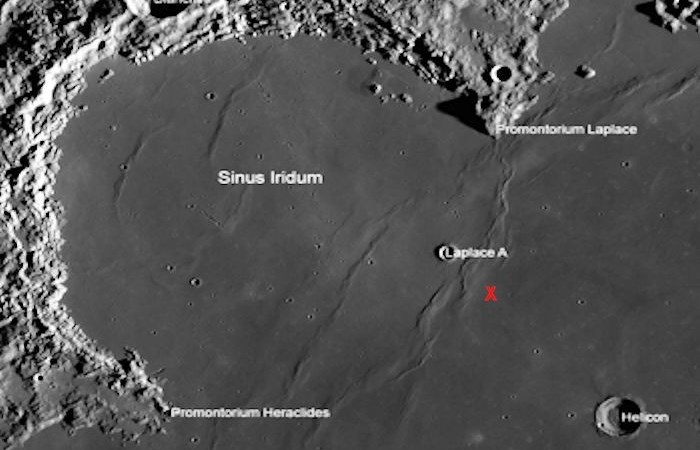
For starters, the probe’s landing in Sinus Iridum, a basaltic lava plane in the Moon’s northern hemisphere, will be the first spacecraft to make a soft landing on the Moon in 37 years. In addition, it will the be the first time China has landed a spacecraft and a rover on the Moon. This is the latest in the Chang’e program, a series of robotic and human missions that ultimately seeks to put Chinese cosmonauts on the Moon.

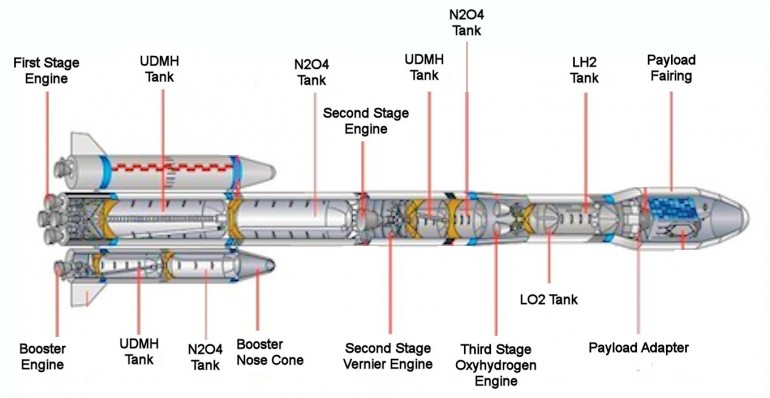
change'e3_2The Chang’e-3 mission incorporates two major components – the Lander and the Jade Rabbit rover, which is named after the companion of the Moon goddess Chang’e in Chinese mythology. The three-stage Chang Zheng 3B (Long March 3B) launch vehicle that is being used to send the Chang’e-3 probe to the Moon is roughly a functional equivalent of SpaceX’s Falcon 9 rocket, the heaviest rocket in their fleet.

After launching on Monday from the Xichang Satellite Launch Centre, the rocket was placed into an Earth-Moon transfer orbit and conducted its first separation. Shortly thereafter, its second stage engines were engaged to effect course corrections and bring the lander and rover into lunar orbit. Then came two crucial burns from the third stage engines, which put the Chang’e-3 probe into a parking and then highly elliptical translunar orbit.

change'e3_3Throughout all this, the probe slept, and will continue to do so until it burns its own engines to enter lunar orbit tomorrow.Then will come the tricky bit, landing safely without any input from controllers on Earth. This requires a combination of inertial guidance, extremely precise range and velocity measurements, image recognition, and a pretty fast computer – not to mention a certain amount of luck.

Once landed, the six-wheeled rover will begin exploring the surface and collecting soil samples for analysis. As with other rovers, energy will be provided by a series of solar panels and information obtained during its mission will be sent back to Earth for further analysis. In addition, real-time video and pictures will be captured by the rover’s arsenal of cameras, all of which will be sent back to Earth and shared via Chinese media outlets.

change'e3_1In addition to being a first for China’s space program, the Jade Rabbit also has the added distinction of being outfitted with what is arguably the most sophisticated scientific equipment of any previous rover. Most notable is a powerful ground-penetrating radar capable of penetrating up to 30 meters (100 ft) of lunar soil or about 100 m (330 ft) of lunar crustal material, and analyzing the underlying structure.

The rover is also equipped with an Alpha Particle X-ray Spectrometer (APXS) that uses particle-induced X-ray emission and X-ray fluorescence to determine the abundance of elements within rock and soil samples. The instrument can also find hidden materials, such as water of crystallization, which is otherwise difficult to detect remotely. Finding water on the Moon is an ongoing objective for space agencies, and crucial to plans for future settlement.

change'e3_4Then there is the Lunar Ultraviolet Telescope (LUT), which is designed to act as the first long-term astronomical observatory to ever be placed on the Moon’s surface. The vacuum environment and slow rotation of the lunar environment make an ideal location for near-UV observations that cannot be carried out from beneath the Earth’s obscuring atmosphere.

Another optical instrument is the Extreme Ultraviolet Camera intended to monitor the Earth’s plasmasphere, which is a magnetically active region within the magnetosphere but above the ionosphere. It works by viewing light with a wavelength of 30.5 nm which is scattered from helium ions in the plasmasphere. The lander is also hosting several other cameras and a lunar soil probe.

china-lunar-lander-rover-launch-jade-rabbit-13As already stated, the landing site for Chang’e-3 is in the general area of Sinus Iridum, a northwestern extension to the Mare Imbrium basaltic plane which is surrounded from the northeast to the southwest by the Montes Jura mountain range. A precise location has not yet been announced by Chinese authorities, but it has been widely speculated that it will take place within the vicinity of crater Laplace A – a crater that is about 9 km in diameter.

This is certainly an exciting time, as we are likely to learn plenty of new things about the Moon in the next few weeks! And in the meantime, be sure to check out this animation of the Change’e-3 entire mission- from launch to touchdown and deployment on the Moon, courtesy of RyukyuSARs:


Sources: gizmag.com, nasaspaceflight.com

The Future of Money

future_money4The good people over at Envisioning Technology – the independent research organization based on Brazil – have produced yet another intriguing infographic. As some of you may recall, whenever ET has released a new inforgraphic, I’ve been right there to post about it. So far, they have produced graphics addressing the future of Technology, Education, Health, and Finance.

There latest graphic is similarly significant and addresses the future of something that concerns and effects us all: money. Entitled “The Past, Present and Future of Money”, this graph looks at the trends affecting the buying, selling and investment patterns of people over time, contrasting three trends that are interwoven and have moved between centralized, decentralized, and distributed monetary systems.

future_money1In this scenario, centralized tendencies refer to networks where the nodes are connected through dense centers (aka. urban environments), which rely on hierarchically structures institutions (i.e. banks) and require legal tender (physical money). This sort of system relies on an ordered distribution of power, one that generally favor the connected few, and which emerged with the advent of modern industrial civilization.

Decentralized tendencies are those which are based on networks where nodes connect in clusters, that have irregular distributions of power, and favor the selected individual. As the graph shows, these types of networks predate centralized networks, taking the form of bartering and commodities in earliest times, but which have emerged yet again in the modern era and are predicted to continue to grow.

PrintExamples of current and future trends here include crowdsourcing, crowdfunding, banking APIs (Application Programming Interfaces), microfinance, and collaborative consumptions – where access is developed so that consumers can lend, swap, barter, share, and gift products. Whereas this model predates centralized tendencies, it is once again emerging with decentralizing potential of digital technology and open-source databases.

In the third and final method, one which is emerging, is the distributed network of money. These are networks where nodes connect independently, where power is distributed horizontally, and which favor the entire network. This trend began as a result of global real-time communications (i.e. the internet, satellite communications, etc.), and which are expected to expand.

future_money2Combining the concepts of attention economies, digital currencies, peer-to-peer communications, and digital wallets, the essence of this final stage is a network economy that is controlled by individuals, not financial institutions or corporations. In addition, currencies are based shared belief in their value, transactions occur between individuals, and physical currencies are replaced by digital ones.

Other trends that are incorporated and cross-referenced into this infographic include global population versus the number of people per capita who have online access. As it stands, less than half the world’s 7 billion people currently have access to the internet, and are hence able to take part in the decentralizing and distributed trends affecting money. However, the infographic predicts that by 2063, nearly 90% of the world’s 10 billion people will be online.

future_money_bitcoinLike many predictions that I’ve come to know and respect, this latest infographic from ET gives us a glimpse of a future where a Distributed model of politics, economics and technological development – otherwise known as Democratic Anarchy – will be the norm. It’s an exciting possibility, and places history in a new and interesting light. In short, it makes one reconsider the possibility that true socialism might exist.

While this was crudely predicted by Karl Marx, the basic concept is quite intriguing when considered in the context of current trends. What’s more, subsequent thinkers – Max Weber, Proudhon, Gramsci and George Orwell – refined and expressed the principle more eloquently. Nowhere was this more apparent than in the Goldstein Manifesto in 1984, where Orwell addressed how the process of industrial civilization was making class distinction virtually unnecessary.

the_future_of_money_timelineSource: envisioning.io/money/

The Future is Here: 4-D Printing

4dprintingmaterial3-D printing has already triggered a revolution in manufacturing by allowing people to determine the length, width and depth of an object that they want to create. But thanks to research being conducted at the University of Colorado, Boulder, a fourth dimension can now be included – time. Might sounds like science fiction, until you realize that the new manufacturing process will make it possible to print objects that change their shape at a given time.

Led by Prof. H. Jerry Qi, the scientific team have developed a “4D printing” process in which shape-memory polymer fibers are deposited in key areas of a composite material item as it’s being printed. By carefully controlling factors such as the location and orientation of the fibers, those areas of the item will fold, stretch, curl or twist in a predictable fashion when exposed to a stimulus such as water, heat or mechanical pressure.

4dprintingmaterial1The concept was proposed earlier this year by MIT’s Skylar Tibbits, who used his own 4D printing process to create a variety of small self-assembling objects. Martin L. Dunn of the Singapore University of Technology and Design, who collaborated with Qi on the latest research, explained the process:

We advanced this concept by creating composite materials that can morph into several different, complicated shapes based on a different physical mechanism.

This means that one 4D-printed object could change shape in different ways, depending on the type of stimulus to which it was exposed. That functionality could make it possible to print a photovoltaic panel in a flat shape, expose it to water to cause it to fold up for shipping, and then expose it to heat to make it fold out to yet another shape that’s optimal for catching sunlight.

4dprintingmaterial2This principle may sound familiar, as it is the basis of such sci-fi concepts as polymorphic alloys or objects. It’s also the idea behind the Milli-Motein, the shape-shifting machine invented by MITs Media Labs late last year. But ultimately, it all comes back to organic biology, using structural biochemistry and the protein cell as a blueprint to create machinery made of “smart” materials.

The building block of all life, proteins can assume an untold number of shapes to fulfill an organism’s various functions, and are the universal workforce to all of life. By combining that concept with the world of robotics and manufactured products, we could be embarking upon an era of matter and products that can assume different shapes as needed and on command.

papertab-touchAnd if these materials can be scaled to the microscopic level, and equipped with tiny computers, the range of functions they will be able to do will truly stagger the mind. Imagine furniture made from materials that can automatically respond to changes in pressure and weight distribution. Or paper that is capable of absorbing your pencil scratches and then storing it in its memory, or calling up image displays like a laptop computer?

And let’s not forget how intrinsic this is to the field of nanotechnology. Smarter, more independent materials that can change shape and respond to changes in their environment, mainly so they can handle different tasks, is all part of the Fabrication Revolution that is expected to explode this century. Here’s hoping I’m alive to see it all. Sheldon Cooper isn’t the only one waiting on the Technological Singularity!

Source: gizmag.com

The Walking Dead – Season 4 Episode 8

wd4_toofar_titleWe come to the mid-season finale at last! And what began as a bit of question mark has now come full circle and ended in a way that was consistent with the source material. At least in theory. As I’m sure I’ve said a million times by now, season three ended in a way that was not only different from the comics, but WAY different. And because of that, I was really wondering what would happen this season.

At first, it looked like they were going to go with a simple route, kill off all the new people to the prison and have them abandon it. Instead, they exploited a loophole in the original text to make it so the Governor would come back, albeit with a different army and some new hardware, and attempt to take the prison by force once again.

This has brought the show back to where it left off, or rather where it stopped following the original script and began dragging things out. Granted, there were some significant differences yet again, but the theme of things is basically back to where it was by the end of Volume 8: Made to Suffer. As such, I tuned in this week with big anticipation…

Too Far Gone:
wd4_toofar1The episode opens with a quick recap of how the Governor found himself outside of the prison last episode, faced with Michonne and Hershel as they disposed of their dead. After taking them both hostage, things cut back to his camp, where he is busy explaining to his own people that they need to find a safer place to live, how the prison is being held by evil people, and how they can take it without bloodshed.

He then goes off to prepare and talks to his prisoners, Michonne and Hershel. While the former threatens him, the latter tries to talk him down and find a way to live in peace. But of course, the Governor rebuffs this, saying they can’t possibly live together in peace, and will do anything to protect his own. He meets with Lilly and Meghan one last time and says goodbye.

wd4_toofarOver at the prison, Glenn is still recovering from the flu and Rick finally tells Daryl about how he let Carol go. Daryl is upset, but the bigger concern appears to be how Tyreese will deal with the news. They find him below, and he shows them what someone did with the remains of a rat and thinks whoever is responsible is the one luring Walkers to the fence. They are about to tell him about Carol, when they hear a loud crash and the walls shake…

They run outside and the see the Governor’s army, complete with the tank, arrayed at the gates. The Governor asks him to come down and talk. Rick replies that he is not solely in charge any more, and the Governor drags out Hershel and Michonne and puts them on their knees. Rick is then given the ultimatum: leave by sundown and no one gets hurt.

wd4_toofar3Back at the Governor’s camp, Lilly sees a Walker step into the river and begin walking across towards them, but is relieved when is is washed away. Meghan is busy digging in the mud and digs up a sign which reads “Warning Flash Flood”. An arm then reaches out of the mud and grabs her. Lilly shoots the Walker, but not before it manages to bite Meghan’s shoulder.

While Rick and the Governor parlay, Daryl talks to Sasha and Tyreese about getting their people onto a bus and out the back, quietly brings out their weapon’s stash and starts discreetly arming their people. Down at the fence, Walkers begin to converge, and the Governor tells him that the longer they wait, the harder it will be for Rick and his people to get out safely.

wd4_toofar4Daryl and Carl take aim from the fence and wait, while Lizzy and Mika bring Judith out to the bus. They are told to load up, but Lizzy suggests they get guns and try to help out. Rick suggests that they live together in peace, but the Governor once again rejects this – citing what happened at Woodbury and Andrea. Rick finally says they are not leaving, end of story, and if they start shooting, it will only draw Walkers into the prison.

The Governor responds by drawing Michonne’s sword and threatening to cut Hershel’s head off. Rick pleads with the Governor’s people to see reason, saying that no matter what they’ve done to survive, they “aren’t too far gone”. The Governor says “Liar” and slices Hershel’s neck open. Everyone opens fire, Rick draws is pistol and falls back to cover, and both he and the Governor are wounded.

???????????????????????????????????????????????????????????????????????????????????????????????????????????????????????????????????????????????????????????Michonne rolls away and cuts her bonds, killing one man in the process, and the Governor pulls Hershel aside and finishes cutting off his head. When he looks up, he sees Lilly standing before him with Meghan’s dead body. Tara meanwhile throws her gun down and tries to reason with Alisha, telling her this is not what they signed on for. The Governor shoots Meghan’s body, and then orders everyone to drive through the fence and kill everyone.

The tank drives through the fence and begins opening fire on the buildings. The prison crew begin falling back, and Maggie and Beth begin herding people onto a bus to escape. Maggie is told Beth went to look for Judith and is caught outside as the bus leaves. She, Sasha and Bob falls back again. Rick tackles the Governor and the two begin to fight in the yard. Cornered, Daryl uses a Walker that’s been drawn by the noise as cover and takes out several of the Governor’s people with a grenade.

wd4_toofar6In the confusion, Tara runs off and Tyreese is pinned, but Lizzy and Mika intervene and shoot his attackers, which includes Alisha. Walkers begin to converge on the yard from all directions and feed off the dead bodies. In the yard, the Governor gets the upper hand on Rick and seems poised to deliver the death blow, but is impaled from behind by Michonne, who has retrieved her sword.

Daryl converges on the tank and drops a grenade down its cannon. Mitch manages to get out in time, but Daryl takes him out with an arrow to the chest. Beth finds Axel and they head off to find the survivors who didn’t make it onto the bus. Rick stumbles back into the yard and finds Carl shooting Walkers. He asks him where Judith is and the two find her bassinet sitting empty and bloody on the ground.

The Governor, still alive, looks up to see Lilly above him, and she shoots him in the face. The chess piece that Meghan made for him, with one eye blackened out, is then trampled underfoot by a herd of Walkers that are now converging on the prison. Crying and disheveled, Rick and Carl head into the woods. Rick tells Carl “don’t look back”

Summary:
the-walking-dead-governorattacksOverall, I was pretty damn impressed with this midseason finale. Full of action, destruction, and consequence, it was what the Season Three finale should have been but wasn’t. Not only did the Governor finally attack the prison in a way that mirrored the comic, people died – including himself – and things ended on a very sad note. I honestly didn’t think the show’s producers would have the guts to do it up like this, but they did!

Not only that, but a lot of key elements from the original comic were there. The way the governor pulled up with an militarized, mobilized force that included an armored vehicle: check! The way he executed a hostage in order to get Rick to comply: check! The way Judith died as a result of the confused, chaotic mess: check! The Governor being shot by one of his own after they realized what a monster he was: check!

the-walking-dead-lorisdeathHell, they even included some of the original dialogue from the comic, almost word for word, to make this finale more genuine. The way the Governor motivated his people by claiming Rick and his followers were evil, murdering folks who had “mutilated” him was there. Of course, in the original comic, the Governor was less an arm, one eye, and his genitals, so it made more sense coming from that guy, but whatever…

The way the episode ended with Rick telling Carl, “don’t look back” was also straight from the comic. However, there too it was a bit more meaningful since Carl and him had lost both Lori AND Judith. But considering that the show’s producers actually killed off Judith was so ballsy that I didn’t care about that difference at all. Honestly, I can’t foresee how “Little Ass Kicker” could have survived under the circumstances, so I don’t imagine that was a misdirect and we’ll learn she’s just fine when the show starts up again.

the-walking-dead-governor-killthemallBut above all, I am impressed that they closed the chapter on the prison as they did. I thought for sure that season four (or at least this half of it ) would end with them willingly abandoning the prison because of disease and falling gates. Them being forced to flee because the gates were crushed and the place overrun in the wake of the Governor’s attack is in keeping with the script, something I thought they had abandoned.

And I have to admit that I’m kind of impressed with how they managed to do all this. At the end of last season and for all of this one, I’ve been complaining how they abandoned the original comic. But in truth, the show’s writers and producers were exploiting a loophole. You see, in the comic, the Governor’s assault didn’t happen all at once, but in three separate attempts. At first, he pulled up with his attack force and they were forced to withdraw.

the-walking-dead-tyreese-dies1The second time around, he tried to get in using a hostage (Tyreese, in this case), which failed when Rick would not open the gates and he decapitated the poor man for all to see. On the third occasion, he ordered his tank to crush the fence and brought the attack inside the prison grounds, which ended in his and just about everyone else’s death.

In the show, something similar has now occurred. The Governor’s first attempt took place at the midseason finale of Season Three, where him and his men shot up the front yard of the prison and let some Walkers in. The second was the abortive assault that sent his people running and made him snap and shoot them all. This third attempt, which took place months later, mirrored his last push, and ended in much the same way.

the-walking-dead-governorsdeathGranted, there were several scriptural differences, like how Tyreese didn’t die, or how Michonne stabbed him before he was shot, how Lori, Andrea, and Dale were already dead, and the like. But the basic tenor and tone was the same. So let me upgrade my critical stance of what they were doing from “going totally off script” to merely “dragging things out” yet again. Seriously, what should I have expected, given that this is precisely what they did with the two previous seasons?

And there were some badass bits to how they ended things. Daryl taking down that tank with a grenade down its cannon and finishing off Mitch (I hated that dumbass!), how Michonne finally impales the Governor after waiting so long to finish him, and how they actually killed off main characters like Hershel and Judith, and didn’t leave things open ended the way they’ve done so often before.

wd4_toofar6So the Governor is finally dead, and the prison story arc is finally over. And now, much like Volume 9: Here We Remain,  Rick are Carl will now be wandering in the wilderness while Rick tries to get his shit together, before meeting up with the others to resume their little experiment in post-post-apocalyptic living. This time around, more people will be alive since more people got away, but the show is effectively back on the right page!

The rest, in this case at least, is properly summed up with a Walking Dead internet meme:

Rick_Grimes_Carl_Grimes_-_The_Walking_Dead

Major biological discovery…inside the Chernobyl reactor??

Could it be?

unitedcats's avatarDoug's Darkworld

pripyat.jpg
The abandoned town of Pripyat, the Chernobyl reactor in the background.

There has been an exciting new biological discovery inside the tomb of the Chernobyl reactor. Like out of some B-grade sci fi movie, a robot sent into the reactor discovered a thick coat of black slime growing on the walls. Since it is highly radioactive in there, scientists didn’t expect to find anything living, let alone thriving. The robot was instructed to obtain samples of the slime, which it did, and upon examination…the slime was even more amazing than was thought at first glance.

This slime, a collection of several fungi actually, was more than just surviving in a radioactive environment, it was actually using gamma radiation as a food source. Samples of these fungi grew significantly faster when exposed to gamma radiation at 500 times the normal background radiation level. The fungi appear to use melanin, a chemical…

View original post 513 more words

The Future is Here: The Space-Age Wheelchair

sugie_wheelchairFor people suffering from full or partial paralysis, interacting with the physical world can be constant source of frustration. Not only is said world designed by and for people who do not suffer from the same physical limitations, the devices used to restore mobility are so often limited themselves. Luckily, the technology is improving, thanks to input from people who have mobility issues themselves.

That’s what Satoshi Sugie, a former Japanese car designer, decided to do when he became interested in the mobility industry. After meeting a frustrated wheelchair user in Japan in 2010, he became inspired to come up with something that would address the wheelchair’s limitations and the stigma people who used them continue to suffer with.

sugie_wheelchair_oldAs Sugie describes the encounter:

He said he gave up going even two blocks away. One reason was he didn’t want to be seen. There is a negative stigma attached to the wheelchair. The second one is the functional limitation. If there is a bump, he has to avoid it. He was really scared to go outside.

Sugie was working for Nissan at the time, designing futuristic models for motor shows, but this encounter inspired him to try his hand at futuristic wheelchair design as well. His first prototype – known as the WHILL – was released in 2011. This was a sort of turbo-charger for existing wheelchairs, and was described as a pair of enormous “headphones” given its appearance.

sugie_wheelchair1The latest version, known as the Whill Type-A, is a standalone chair aimed not just at wheelchair users, but power chair and mobility scooters riders as well. The new model is different from normal wheelchairs in several key ways. First of all, people can naturally lean forward in this chair, as they would riding a bike. This eliminates slouching and therefore makes for a more comfortable ride.

Second, the front wheel is composed of 24 separate tires, giving the vehicle very tight turning ability. And three, it looks “modern and sleek,” like something you would expect from a Japanese car designer. Riders control the Whill with a right-hand joystick while the left-hand has a simple fast- and slow-mode switch. It can also handle obstacles up to three inches high with easy, and seat rolls forwards and backwards, making getting in and out easy.


sugie_wheelchair2Sugie, who recently relocated to Menlo Park, California, is still working out pricing, but he hopes it won’t be too expensive. The wheelchair will be officially unveiled this February, and is likely to be cost a premium penny. Still, the advantages it offers are sure to go over well with wheelchair users and become something of the norm for the next-generation of such vehicles.

In addition to ease of use and the mobility it provides, it also lend users a certain high-tech chic, which may go a long way towards combatting the sense of social stigma many users feel.

Sources: fastcoexist.com, gizmag.com