
My latest article from China’s Daily Mail. Come check it out!
The Future is Here: 4-D Printing
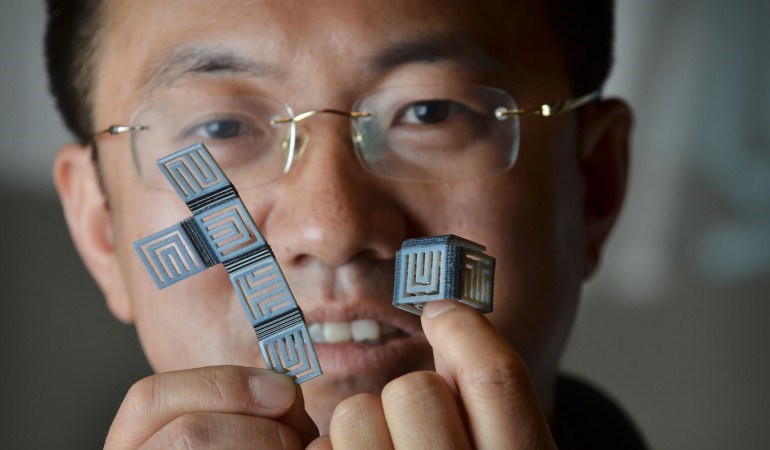 3-D printing has already triggered a revolution in manufacturing by allowing people to determine the length, width and depth of an object that they want to create. But thanks to research being conducted at the University of Colorado, Boulder, a fourth dimension can now be included – time. Might sounds like science fiction, until you realize that the new manufacturing process will make it possible to print objects that change their shape at a given time.
Led by Prof. H. Jerry Qi, the scientific team have developed a “4D printing” process in which shape-memory polymer fibers are deposited in key areas of a composite material item as it’s being printed. By carefully controlling factors such as the location and orientation of the fibers, those areas of the item will fold, stretch, curl or twist in a predictable fashion when exposed to a stimulus such as water, heat or mechanical pressure.
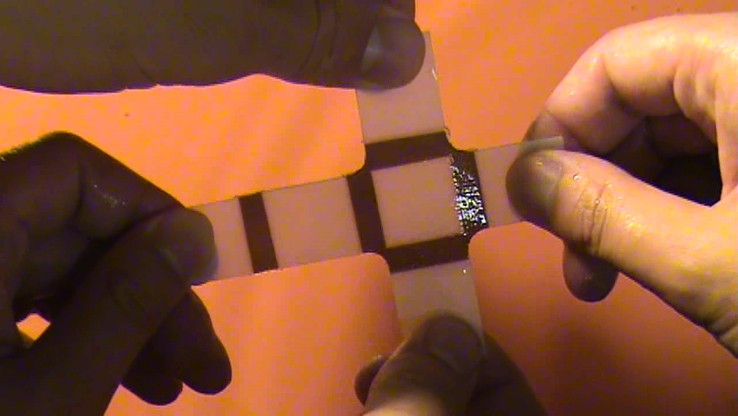 The concept was proposed earlier this year by MIT’s Skylar Tibbits, who used his own 4D printing process to create a variety of small self-assembling objects. Martin L. Dunn of the Singapore University of Technology and Design, who collaborated with Qi on the latest research, explained the process:
We advanced this concept by creating composite materials that can morph into several different, complicated shapes based on a different physical mechanism.
This means that one 4D-printed object could change shape in different ways, depending on the type of stimulus to which it was exposed. That functionality could make it possible to print a photovoltaic panel in a flat shape, expose it to water to cause it to fold up for shipping, and then expose it to heat to make it fold out to yet another shape that’s optimal for catching sunlight.
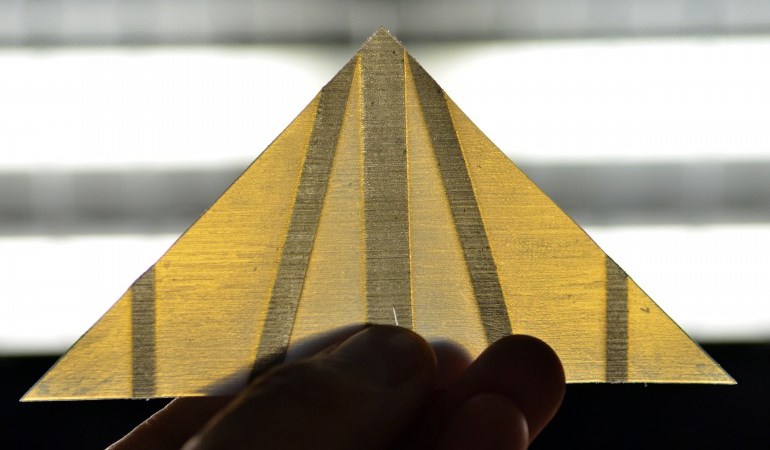 This principle may sound familiar, as it is the basis of such sci-fi concepts as polymorphic alloys or objects. It’s also the idea behind the Milli-Motein, the shape-shifting machine invented by MITs Media Labs late last year. But ultimately, it all comes back to organic biology, using structural biochemistry and the protein cell as a blueprint to create machinery made of “smart” materials.
The building block of all life, proteins can assume an untold number of shapes to fulfill an organism’s various functions, and are the universal workforce to all of life. By combining that concept with the world of robotics and manufactured products, we could be embarking upon an era of matter and products that can assume different shapes as needed and on command.
 And if these materials can be scaled to the microscopic level, and equipped with tiny computers, the range of functions they will be able to do will truly stagger the mind. Imagine furniture made from materials that can automatically respond to changes in pressure and weight distribution. Or paper that is capable of absorbing your pencil scratches and then storing it in its memory, or calling up image displays like a laptop computer?
And let’s not forget how intrinsic this is to the field of nanotechnology. Smarter, more independent materials that can change shape and respond to changes in their environment, mainly so they can handle different tasks, is all part of the Fabrication Revolution that is expected to explode this century. Here’s hoping I’m alive to see it all. Sheldon Cooper isn’t the only one waiting on the Technological Singularity!
Source: gizmag.com
The Walking Dead – Season 4 Episode 8
 We come to the mid-season finale at last! And what began as a bit of question mark has now come full circle and ended in a way that was consistent with the source material. At least in theory. As I’m sure I’ve said a million times by now, season three ended in a way that was not only different from the comics, but WAY different. And because of that, I was really wondering what would happen this season.
At first, it looked like they were going to go with a simple route, kill off all the new people to the prison and have them abandon it. Instead, they exploited a loophole in the original text to make it so the Governor would come back, albeit with a different army and some new hardware, and attempt to take the prison by force once again.
This has brought the show back to where it left off, or rather where it stopped following the original script and began dragging things out. Granted, there were some significant differences yet again, but the theme of things is basically back to where it was by the end of Volume 8: Made to Suffer. As such, I tuned in this week with big anticipation…
Too Far Gone:
 The episode opens with a quick recap of how the Governor found himself outside of the prison last episode, faced with Michonne and Hershel as they disposed of their dead. After taking them both hostage, things cut back to his camp, where he is busy explaining to his own people that they need to find a safer place to live, how the prison is being held by evil people, and how they can take it without bloodshed.
He then goes off to prepare and talks to his prisoners, Michonne and Hershel. While the former threatens him, the latter tries to talk him down and find a way to live in peace. But of course, the Governor rebuffs this, saying they can’t possibly live together in peace, and will do anything to protect his own. He meets with Lilly and Meghan one last time and says goodbye.
 Over at the prison, Glenn is still recovering from the flu and Rick finally tells Daryl about how he let Carol go. Daryl is upset, but the bigger concern appears to be how Tyreese will deal with the news. They find him below, and he shows them what someone did with the remains of a rat and thinks whoever is responsible is the one luring Walkers to the fence. They are about to tell him about Carol, when they hear a loud crash and the walls shake…
They run outside and the see the Governor’s army, complete with the tank, arrayed at the gates. The Governor asks him to come down and talk. Rick replies that he is not solely in charge any more, and the Governor drags out Hershel and Michonne and puts them on their knees. Rick is then given the ultimatum: leave by sundown and no one gets hurt.
 Back at the Governor’s camp, Lilly sees a Walker step into the river and begin walking across towards them, but is relieved when is is washed away. Meghan is busy digging in the mud and digs up a sign which reads “Warning Flash Flood”. An arm then reaches out of the mud and grabs her. Lilly shoots the Walker, but not before it manages to bite Meghan’s shoulder.
While Rick and the Governor parlay, Daryl talks to Sasha and Tyreese about getting their people onto a bus and out the back, quietly brings out their weapon’s stash and starts discreetly arming their people. Down at the fence, Walkers begin to converge, and the Governor tells him that the longer they wait, the harder it will be for Rick and his people to get out safely.
 Daryl and Carl take aim from the fence and wait, while Lizzy and Mika bring Judith out to the bus. They are told to load up, but Lizzy suggests they get guns and try to help out. Rick suggests that they live together in peace, but the Governor once again rejects this – citing what happened at Woodbury and Andrea. Rick finally says they are not leaving, end of story, and if they start shooting, it will only draw Walkers into the prison.
The Governor responds by drawing Michonne’s sword and threatening to cut Hershel’s head off. Rick pleads with the Governor’s people to see reason, saying that no matter what they’ve done to survive, they “aren’t too far gone”. The Governor says “Liar” and slices Hershel’s neck open. Everyone opens fire, Rick draws is pistol and falls back to cover, and both he and the Governor are wounded.
 Michonne rolls away and cuts her bonds, killing one man in the process, and the Governor pulls Hershel aside and finishes cutting off his head. When he looks up, he sees Lilly standing before him with Meghan’s dead body. Tara meanwhile throws her gun down and tries to reason with Alisha, telling her this is not what they signed on for. The Governor shoots Meghan’s body, and then orders everyone to drive through the fence and kill everyone.
The tank drives through the fence and begins opening fire on the buildings. The prison crew begin falling back, and Maggie and Beth begin herding people onto a bus to escape. Maggie is told Beth went to look for Judith and is caught outside as the bus leaves. She, Sasha and Bob falls back again. Rick tackles the Governor and the two begin to fight in the yard. Cornered, Daryl uses a Walker that’s been drawn by the noise as cover and takes out several of the Governor’s people with a grenade.
 In the confusion, Tara runs off and Tyreese is pinned, but Lizzy and Mika intervene and shoot his attackers, which includes Alisha. Walkers begin to converge on the yard from all directions and feed off the dead bodies. In the yard, the Governor gets the upper hand on Rick and seems poised to deliver the death blow, but is impaled from behind by Michonne, who has retrieved her sword.
Daryl converges on the tank and drops a grenade down its cannon. Mitch manages to get out in time, but Daryl takes him out with an arrow to the chest. Beth finds Axel and they head off to find the survivors who didn’t make it onto the bus. Rick stumbles back into the yard and finds Carl shooting Walkers. He asks him where Judith is and the two find her bassinet sitting empty and bloody on the ground.
The Governor, still alive, looks up to see Lilly above him, and she shoots him in the face. The chess piece that Meghan made for him, with one eye blackened out, is then trampled underfoot by a herd of Walkers that are now converging on the prison. Crying and disheveled, Rick and Carl head into the woods. Rick tells Carl “don’t look back”
Summary:
 Overall, I was pretty damn impressed with this midseason finale. Full of action, destruction, and consequence, it was what the Season Three finale should have been but wasn’t. Not only did the Governor finally attack the prison in a way that mirrored the comic, people died – including himself – and things ended on a very sad note. I honestly didn’t think the show’s producers would have the guts to do it up like this, but they did!
Not only that, but a lot of key elements from the original comic were there. The way the governor pulled up with an militarized, mobilized force that included an armored vehicle: check! The way he executed a hostage in order to get Rick to comply: check! The way Judith died as a result of the confused, chaotic mess: check! The Governor being shot by one of his own after they realized what a monster he was: check!
 Hell, they even included some of the original dialogue from the comic, almost word for word, to make this finale more genuine. The way the Governor motivated his people by claiming Rick and his followers were evil, murdering folks who had “mutilated” him was there. Of course, in the original comic, the Governor was less an arm, one eye, and his genitals, so it made more sense coming from that guy, but whatever…
The way the episode ended with Rick telling Carl, “don’t look back” was also straight from the comic. However, there too it was a bit more meaningful since Carl and him had lost both Lori AND Judith. But considering that the show’s producers actually killed off Judith was so ballsy that I didn’t care about that difference at all. Honestly, I can’t foresee how “Little Ass Kicker” could have survived under the circumstances, so I don’t imagine that was a misdirect and we’ll learn she’s just fine when the show starts up again.
 But above all, I am impressed that they closed the chapter on the prison as they did. I thought for sure that season four (or at least this half of it ) would end with them willingly abandoning the prison because of disease and falling gates. Them being forced to flee because the gates were crushed and the place overrun in the wake of the Governor’s attack is in keeping with the script, something I thought they had abandoned.
And I have to admit that I’m kind of impressed with how they managed to do all this. At the end of last season and for all of this one, I’ve been complaining how they abandoned the original comic. But in truth, the show’s writers and producers were exploiting a loophole. You see, in the comic, the Governor’s assault didn’t happen all at once, but in three separate attempts. At first, he pulled up with his attack force and they were forced to withdraw.
 The second time around, he tried to get in using a hostage (Tyreese, in this case), which failed when Rick would not open the gates and he decapitated the poor man for all to see. On the third occasion, he ordered his tank to crush the fence and brought the attack inside the prison grounds, which ended in his and just about everyone else’s death.
In the show, something similar has now occurred. The Governor’s first attempt took place at the midseason finale of Season Three, where him and his men shot up the front yard of the prison and let some Walkers in. The second was the abortive assault that sent his people running and made him snap and shoot them all. This third attempt, which took place months later, mirrored his last push, and ended in much the same way.
 Granted, there were several scriptural differences, like how Tyreese didn’t die, or how Michonne stabbed him before he was shot, how Lori, Andrea, and Dale were already dead, and the like. But the basic tenor and tone was the same. So let me upgrade my critical stance of what they were doing from “going totally off script” to merely “dragging things out” yet again. Seriously, what should I have expected, given that this is precisely what they did with the two previous seasons?
And there were some badass bits to how they ended things. Daryl taking down that tank with a grenade down its cannon and finishing off Mitch (I hated that dumbass!), how Michonne finally impales the Governor after waiting so long to finish him, and how they actually killed off main characters like Hershel and Judith, and didn’t leave things open ended the way they’ve done so often before.
So the Governor is finally dead, and the prison story arc is finally over. And now, much like Volume 9: Here We Remain, Rick are Carl will now be wandering in the wilderness while Rick tries to get his shit together, before meeting up with the others to resume their little experiment in post-post-apocalyptic living. This time around, more people will be alive since more people got away, but the show is effectively back on the right page!
The rest, in this case at least, is properly summed up with a Walking Dead internet meme:

Major biological discovery…inside the Chernobyl reactor??
Could it be?


The abandoned town of Pripyat, the Chernobyl reactor in the background.
There has been an exciting new biological discovery inside the tomb of the Chernobyl reactor. Like out of some B-grade sci fi movie, a robot sent into the reactor discovered a thick coat of black slime growing on the walls. Since it is highly radioactive in there, scientists didn’t expect to find anything living, let alone thriving. The robot was instructed to obtain samples of the slime, which it did, and upon examination…the slime was even more amazing than was thought at first glance.
This slime, a collection of several fungi actually, was more than just surviving in a radioactive environment, it was actually using gamma radiation as a food source. Samples of these fungi grew significantly faster when exposed to gamma radiation at 500 times the normal background radiation level. The fungi appear to use melanin, a chemical…
View original post 513 more words
The Future is Here: The Space-Age Wheelchair
 For people suffering from full or partial paralysis, interacting with the physical world can be constant source of frustration. Not only is said world designed by and for people who do not suffer from the same physical limitations, the devices used to restore mobility are so often limited themselves. Luckily, the technology is improving, thanks to input from people who have mobility issues themselves.
That’s what Satoshi Sugie, a former Japanese car designer, decided to do when he became interested in the mobility industry. After meeting a frustrated wheelchair user in Japan in 2010, he became inspired to come up with something that would address the wheelchair’s limitations and the stigma people who used them continue to suffer with.
 As Sugie describes the encounter:
He said he gave up going even two blocks away. One reason was he didn’t want to be seen. There is a negative stigma attached to the wheelchair. The second one is the functional limitation. If there is a bump, he has to avoid it. He was really scared to go outside.
Sugie was working for Nissan at the time, designing futuristic models for motor shows, but this encounter inspired him to try his hand at futuristic wheelchair design as well. His first prototype – known as the WHILL – was released in 2011. This was a sort of turbo-charger for existing wheelchairs, and was described as a pair of enormous “headphones” given its appearance.
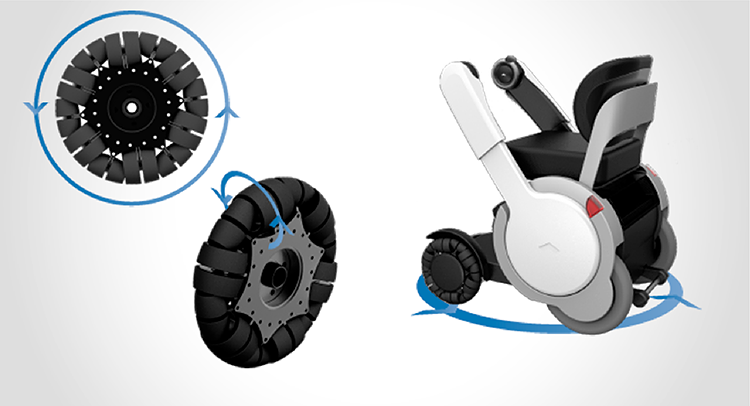 The latest version, known as the Whill Type-A, is a standalone chair aimed not just at wheelchair users, but power chair and mobility scooters riders as well. The new model is different from normal wheelchairs in several key ways. First of all, people can naturally lean forward in this chair, as they would riding a bike. This eliminates slouching and therefore makes for a more comfortable ride.
Second, the front wheel is composed of 24 separate tires, giving the vehicle very tight turning ability. And three, it looks “modern and sleek,” like something you would expect from a Japanese car designer. Riders control the Whill with a right-hand joystick while the left-hand has a simple fast- and slow-mode switch. It can also handle obstacles up to three inches high with easy, and seat rolls forwards and backwards, making getting in and out easy.
 Sugie, who recently relocated to Menlo Park, California, is still working out pricing, but he hopes it won’t be too expensive. The wheelchair will be officially unveiled this February, and is likely to be cost a premium penny. Still, the advantages it offers are sure to go over well with wheelchair users and become something of the norm for the next-generation of such vehicles.
In addition to ease of use and the mobility it provides, it also lend users a certain high-tech chic, which may go a long way towards combatting the sense of social stigma many users feel.
Sources: fastcoexist.com, gizmag.com
China launches lunar probe carrying ‘Jade Rabbit’ moon buggy
China’s latest venture into space, courtesy of CDM!
Climate Crisis: The Ongoing Case of Big Subsidies
 One of the most recurring talking points in the Climate Change debate is the issue of renewable energy. Particularly, those who take issue with proposed changes for dealing with the problem continue to cite how solar, wind and tidal power are not viable replacements at this juncture. While this talking point is a convenient way of dismissing needing reforms, it neglects two self-evident realities.
For one, it ignores the immense amount of progress being made in the fields of renewable energy. Whereas inefficiency and high costs remained as stumbling blocks in previous decades, an exponential drop in costs and a rise in efficiency has made solar increasingly attractive for power companies in recent years. Wind and tidal are in similar situations, with countries like Scotland and the United Arab Emirates leading the way in making them profitable.
 Second, it ignores the fact that developed nations continue to stymie growth in renewables by the continued way in which they commit billions to subsidizing oil and coal. According to a new report from the Overseas Development Institute, public subsidies for fossil fuels totaled $523 billion in 2011. That’s six times the level of support for the renewable energy industry, despite those technologies being less mature than oil and coal.
Among richer countries, the top 11 heaviest carbon emitters spent $74 billion in subsidies in 2011, with Russia, the United States, Australia, Germany, and the United Kingdom leading the way. In the U.S., these included a $1 billion fuel tax exemption for farmers, $1 billion for the Strategic Petroleum Reserve, and $500 million for fossil fuel R&D.
 In so doing, these governments are:
…shooting themselves in both feet [by subsidizing] the very activities that are pushing the world towards dangerous climate change… [and] creating barriers to investment in low-carbon development.
According to the British think-tank, this works out a spending of $112 per adult in these nations. But of course, the richest nations are not the only offenders, which nations like Pakistan, Egypt, and Indonesia spending more than twice as much on fossil fuel subsidies as on health. The ODI says the poorest 20% of households typically receive just 7% of overall handouts.
 But the ODI may be underestimating the true size of the subsidies in the U.S., depending on how you look at it. Earlier this year, the International Monetary Fund calculated subsidies at $502 billion, a figure which includes the true cost of carbon emissions calculated at a price of $25 a ton. By that measure, global subsidies equal $1.9 trillion.
The report also advises that governments should cut handouts to oil and coal as soon as they can and begin looking after the genuinely poor:
Phasing out fossil fuel subsidies would create a win-win scenario. It would eliminate the perverse incentives that drive up carbon emissions, create price signals for investment in a low-carbon transition and reduce pressure on public finances.
 A timely and sound recommendation, and one which cuts to the heart of the matter. In order to address the problem of Climate Change, we must not only adopt better methods for meeting our needs, we must acknowledge the truth of the issue. At the same time, we must acknowledge how ending these subsidies, or redistributing them, would alter the current balance of power on the whole issue of energy.
It’s one thing to claim that alternative methods are unviable when the playing field is level, but since it is not, the argument is essentially hypocrisy. By continuing to finance fossil fuels and coal, we are ensuring that clean energy will remain underdeveloped as an alternative, and hence undermining any chance it has at becoming a true alternative.
So the next time someone tells you that solar or other means of renewable energy are at least 50 years away, or that gas and coal are the only economical means of meeting our energy needs, be sure to ask them why we need to spend half a trillion dollars on them annually.
Sources: fastcoexist.com, odi.org.uk
Cyberwars: Stuxnet and Cryptolocker
 It’s been quite the year for cybercops, cybercriminals, and all those of us who are caught in between. Between viruses which continue to involve and viruses that target sensitive information in new ways, it seems clear that the information age is fraught with peril. In addition to cyberwars raging between nations, there is also the danger of guerrilla warfare and the digital weapons running amok.
Consider the Stuxnet virus, a piece of programming that made headlines last year by sabotaging the Iranian nuclear enrichment program. At the time, the target – not to mention its source (within the US) – seemed all too convenient to have been unintentional. However, this year, Stuxnet is once again garnering attention thanks to its latest target: the International Space Station.
 Apparently, this has been the result of the virus having gone rogue, or at least become too big for its creators to control. In addition to the ISS, the latest reports state that Stuxnet is hitting nuclear plants in countries for which the virus was not originally intended. In one case, the virus even managed to infect an internal network at a Russian power planet that wasn’t even connected to the internet.
According to Eugene Kaspersky, famed head of IT security at Kaspersky Labs, the virus can travel through methods other than internet connectivity, such as via optical media or a USB drive. Kaspersky claims that this is apparently how it made its way aboard the ISS, and that it was brought aboard on more than one occasion through infected USB drives.
 For the moment, it is unclear how this virus will be taken care of, or whether or not it will continue to grow beyond any single organization’s ability to control it. All that is clear at this point is that this particular virus has returned to its original handlers. For the time being, various nations and multinational corporations are looking to harden their databases and infrastructure against cyber attack, with Stuxnet in mind.
And they are not the only ones who need to be on their guard about protecting against intrusion. Average consumers are only at risk of having their databases being accessed by an unwanted digital visitor, one that goes by the name of Cryptolocker. Designed with aggressive salesmanship – and blackmail – in mind, this virus is bringing fears about personal information being accessed to new heights.
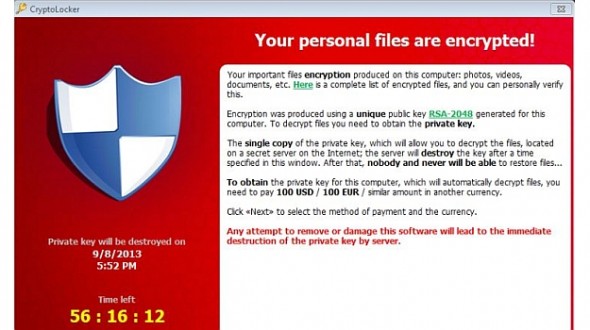 Basically, the Cryptolocker works by finding people’s most important and sensitive files and selling it back to them. After obtaining the files its needs, it then contacts a remote server to create a 2048-bit key pair to encrypt them so they cannot be recovered, and then contacts the owner with an ultimatum. People are told to pay up, or the virus will begin deleting the info.
When the virus first emerged in October of this year, victims were given three days to cough up roughly $200 via BitCoin or MoneyPak currency transfer. If the virus’ authors did not receive payment within 72 hours, they said, a single line would be deleted from a text file on some hidden foreign server, forever erasing the only string of numbers that could ever bring the affected files back from the dead.
 Some users responded by simply setting their system’s internal clock back. A temporary measure, to be sure, but one which worked by tricking the virus into thinking the deadline had not expired. In addition, the three-day deadline worked against the viruses makers, since it’s proven restrictive to the types of people who mostly contract a virus like this – i.e. senior citizens and people working on corporate networks.
Such people are more vulnerable to such scams, but seldom have the computer-savvy skills to to set up BitCoin or other such accounts and transfer the money in time. Meanwhile, infecting a corporate server means that a bloated corporate bureaucracies will be responsible for making the decision of whether or not to pay, not an individual who can decide quickly.
 So basically, the designers of Cryptolocker were facing a catch-22. They could not extend the deadline on the virus without diminishing the sense of panic that makes many people pay, but would continue to lose money as long as people couldn’t pay. Their solution: If a victim does not pay up in time, the hackers simply raise the ransom – by a factor of 10!
This allows people more time to mull over the loss of sensitive data and make a decision, but by that time – should they decide to pay up – the price tag has gone up to a bloated $2000. Luckily, this has revealed a crucial bluff in the virus’s workings by showing that all the keys to the encrypted files are in fact not deleted after the three day time limit.
 As such, the security industry is encouraging people to hold on to the useless, encrypted files and waiting for the criminal server to be someday seized by the authorities. Since any ransom paid is a de-facto encouragement to hackers to write a similar virus again — or indeed to re-infect the same companies twice – people are currently being told to simply hold out and not pay up.
What’s more, regular backups are the key to protecting your database from viruses like Cryptolocker. Regular backups to off-network machines that do not auto-sync will minimize the virus’ potential for damage. The best defense is even simpler: Cryptolocker infects computers via a bogus email attachment disguised as a PDF file, so simple email safety should keep you immune.
Alas, its a world of digital warfare, and there there are no discernible sides. Just millions of perpetrators, dozens of authorities, and billions of people fearing for the safety and integrity of their data. One can only wonder what an age of quantum computers, graphene and nanotube processors will bring. But more on that later!
Sources: extremetech.com, (2), fastcoexist.com
Papa Zulu Proof Ordered!
 Step two semi-complete! After finishing my edits on Papa Zulu, I have gone ahead and ordered a proof copy so that my darling wife (i.e. chief editor) can give it a second pass. I’ve also sent the PDF off to my beta readers/other editors, so they too can tell me exactly what’s wrong with it and why I should stick to writing and avoid proofreading.
And while I was working on that, I fashioned a cover for the third book. All this work on book II, as expected, has gotten the ball rolling on book III. And as always, I feel the need to visualize the end product, even before I’ve committed to writing the manuscript. Once again, I’ve gone with a cover image from Shutterstock, which now provides the bulk of my cover art.
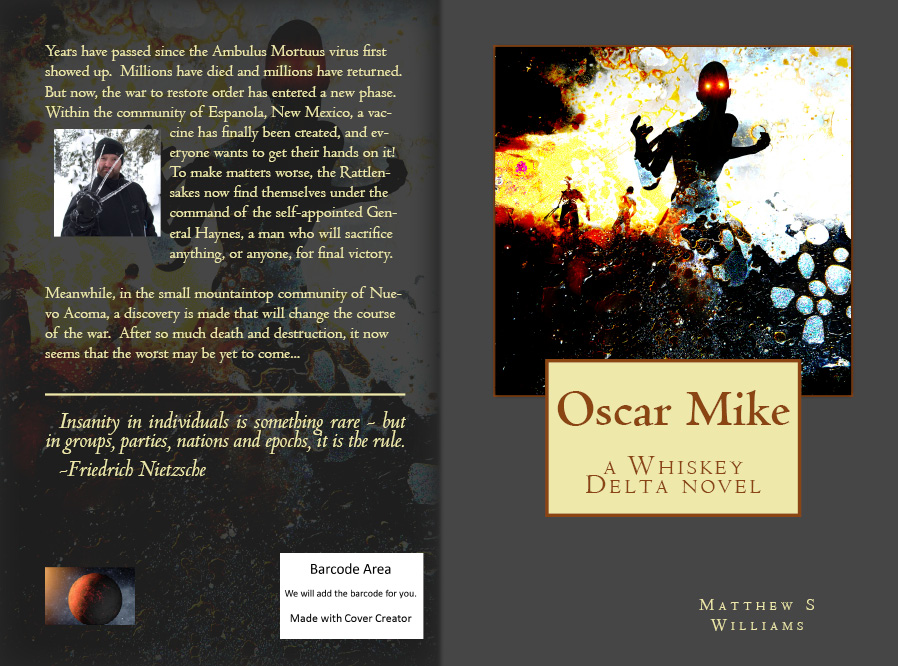 What do you think? Too much green going on here? I really like this cover template because of the solid front cover, the watermarked back, and the balance created by the text boxes, images, and quote section. Can’t wait to get moving on that one too! I hope to augment as time goes on with more favorable reviews, which is what I did with the jacket for book II.
Good luck to all us indie writers! May the sales be plentiful, the reviews favorable, and the inspiration unending!
The Future of Transit: (More) Robotaxis and Podcars!
 In the course of the past century, science fiction has provided us with many interesting visions of what the future of transportation will look like. And whereas not long ago, many of these seemed like hopeless fantasy – such as the failure of flying cars or robotic automated vehicles to become a reality by 2000 – recent years and developments have seen reality slowly catching up.
Case in point, last year, the European company named “2GetThere” installed a small fleet of automated podcars (aka. robotaxis) in the eco-friendly community of Masdar City. Similarly, the town of San Jose began work on the Personal Rapid Transit System – a series of on-call, point to point transit cars designed to replace the town’s system of taxis and buses, providing an environmentally friendly alternative to traditional mass transit.
 And most recently, the town of Milton Keynes – a sleepy city north of London – that is planning on conducting a podcar system trial run by 2015. Similar to the system at Heathrow Airport, which uses 21 on-call podcars on a 4 km (2.5 mile) stretch of track, the system will consist of a series of pods that will be able to carry two passengers, plus baggage, from the town’s train station to its downtown offices and the shopping district.
Milton Keynes’ plans is much more ambitious, calling for a fleet of 100 vehicles that will travel with far ore independently, albeit in a designated lane with curbs. The trial will assess safety and how people (and animals) react to them. The pods travel at up to 19 km/h (12 mph) and will contain GPS, cameras, and sensors to ensure they don’t crash into anything.
 And if all goes well, the system will be adopted by 2017 and residents will pay little more than a bus fare ($3.20) to travel in automated luxury. Purpose-built in the 1960s, Milton Keynes has an unusual grid layout that makes it an ideal testing ground for a plan that other British cities are seriously considering. Given the dual issues of congestion and pollution in British cities, a system of robotaxis seems like the perfect solution.
In fact, such a solution is ideal when it comes to all major cities around the world. The state of robotics, automation, centralized grids, and the reduced impact electrical transit has compared to gasoline-powered cars and buses, we could be looking at a world where every major city has its own system of robotaxis in the near future.
And I imagine a massive grid of Hyperoops lines will be connecting every major city… The future is likely to be mighty cool! In the meantime, enjoy this video of Heathrow’s podcar system in action:
Sources: fastcoexist.com, heathrowairport.com
 Stories by Williams