Powered by the Sun: Bringing Solar to the Developing World

Magnificent CME Erupts on the Sun - August 31All over the world, the goal of bringing development to impoverished communities and nations – but in ways that won’t cause additional harm to the natural environment – remains problematic. As the cases of China and India demonstrate, the world’s fastest growing economies in the 21st century, rapid industrialization may bring economic development, but it comes with a slew of consequences.

These include urban sprawl, more emissions from cars and public transit, and the poisoning of waterways through toxic runoff, chemicals and fertilizers. With seven billion people living in the world today, the majority of which live in major cities and are dependent on fossil fuels, it is important to find ways to encourage growth that won’t make a bad situation worse.

solar_quetsolBut to paraphrase an old saying, crisis is the mother of creative solutions. And amongst forward-looking economist and developers, a possible solution is take the latest advancements in solar, wind, tidal power and biofuels, and tailor them to meet the needs of local communities. In so doing, it is hoped that the developing world could skip over the industrial phase, reaping the benefits of modernization without all the dirty, unhealthy consequences.

Two such men are Juan Rodriguez – a young man who was studying for his business administration at the Universidad Francisco Marroquin in and cut his teeth working for major multinationals like Pampers, Pepto Bismol and Pantene – and his childhood friend Manuel Aguilar, a Harvard graduate with a degree in astrophysics who had gone on to manage a global hedge fund.
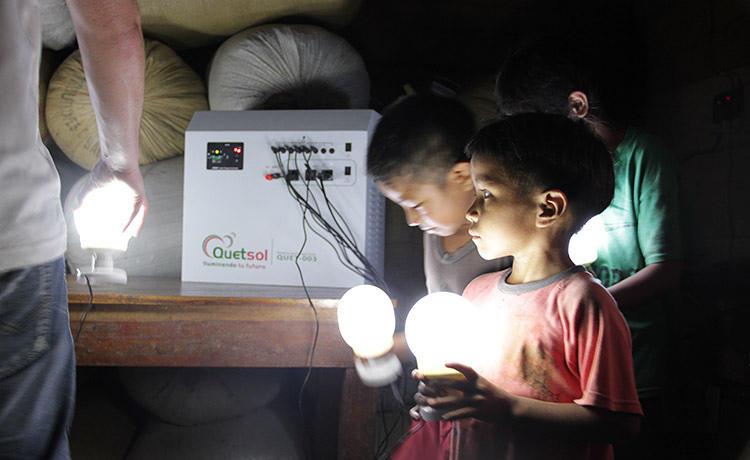
solar_quetsol1Three years ago, the two agreed that they were looking for something else and began investigating renewable energy. The result was Quetsol, a company that uses solar energy to improve the quality of life of poor communities living off the electrical grid. In Rodriguez’s and Aguilar’s native Guatemala, such poverty is widespread, with close to 20% of the population living without electricity and relying primarily on candles for light.

This picture of poverty is not exactly news. But after spending a year visiting close to 100 such communities, Rodriguez and Aguilar began to get a clear picture of why solar hadn’t yet succeeded. As Rodriguez put it:

Going to a community and talking about solar power isn’t like going into a community and talking about space travel. It is something that people have already seen, because NGOs have donated solar systems to these communities for decades. In many cases, the systems worked perfectly, but eventually the batteries died, and nobody was there to service them.
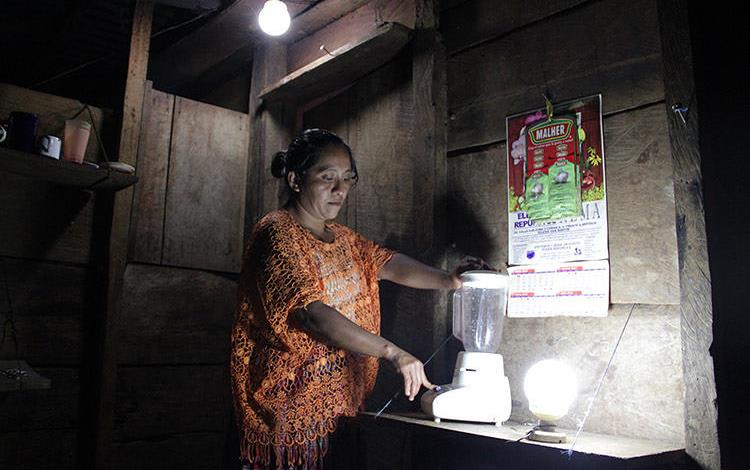
solar_quetsol2There solution was to start from the bottom up, using the free-market principle of adapting their approach to meet local needs. This would involve identifying communities before visiting them, taking into account how many people were living without electricity, and what the housing situation was like. When they then visited these communities, they sought out community leaders and held public meetings to learn about them and present their ideas.

Buildings relationships with local communities was a challenge, but so was creating a product for a market whose needs ranged from basic lighting and cell phone charging to powering a refrigerator all day. What they found was that unelectrified communities were relying on terribly inefficient means, ranging from diesel generators to walking to the nearest electrified community to plug in a phone.

solar_quetsol3What was resulted was a Solar Kit, consisting of a 10W Solar Panel, a control box with 7 Amp Battery, 2  LED Bulbs  (and a third optional bulb), and a universal cell phone charger. This kit has the ability to provide five hours of electricity to a house made up of two rooms that measure roughly 25 square meters (225 square feet) each. This is the typical design of homes in rural Guatemala, with one room serving as the bedroom and the other as the kitchen.

With that done, they began working on their sales strategy. Initially, this consisted of working with microfinance credit institutions to help families and communities purchase their solar kits. But after watching too many credit applications get rejected, they took a page from the telecom companies that have made cell phones ubiquitous in Guatemala, Basically, they switched to a pay-as-you-go plan.
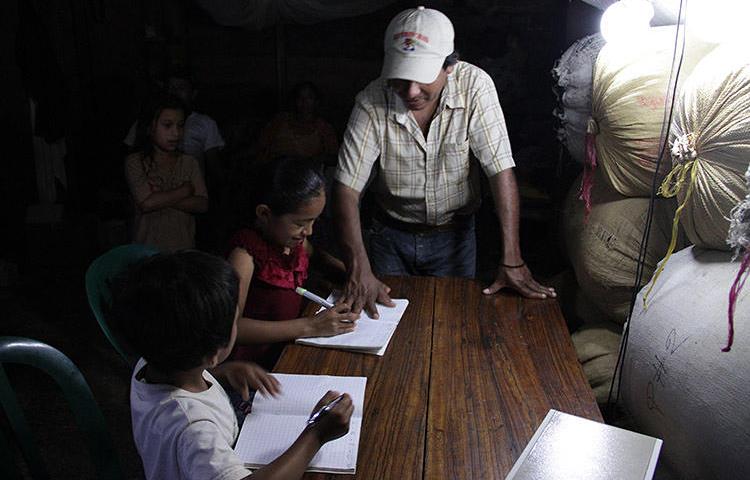
solar_quetsol4Today, Quetsol employs a staff of 20 people and boasts board members like Google’s Tom Chi. There product line has also expanded, with the Q1 Solar Kit being supplemented by the Q3, a heavier model that boasts a 75W solar panel, an 85 Amp Battery, and five LED bulbs. The Q2 Kit – a middle of the road model with a 30W panel, 34 amp battery and 3 bulbs – is soon to be released.

But most importantly of all, they have electrified more than 3,500 homes in Guatemala thus far. But that is just a drop in the bucket compared to their long-term goal. Basically, the organization is viewing Guatemala as a stepping stone to all of Latin America as well as Africa by 2015. By 2016, they’d like to tackle the nearly 700 million off-the-grid homes in Asia.

Might sound ambitious, but Rodriguez and Marroquin feel they have the business acumen and social entrepreneurial savvy to pull it off. And given their background and business model, I’d say they are about right. Combined with other technologies that merge local needs with clean, efficient, and renewable means, development in the developing world might actually be an eco-friendly possibility.

Sources: fastcoexist.com, quetsol.com


Timeline of the Future…

hyperspace4I love to study this thing we call “the future”, and began to do so as a hobby the day I made the decision to become a sci-fi writer. And if there’s anything I’ve learned, its that the future is an intangible thing, a slippery beast we try to catch by the tail at any given moment that is constantly receding before us. And when predict it, we are saying more about the time in which we are living than anything that has yet to occur.

As William Gibson famously said: “…science fiction was always about the period in which it was written.” At every juncture in our history, what we perceive as being the future changes based on what’s going on at the time. And always, people love to bring up what has been predicted in the past and either fault or reward the authors for either “getting it right” or missing the mark.

BrightFutureThis would probably leave many people wondering what the point of it all is. Why not just wait and let the future tend to itself? Because it’s fun, that’s why! And as a science fiction writer, its an indispensable exercise. Hell, I’d argue its absolutely essential to society as a whole. As a friend of one once said, “science fiction is more of a vehicle than a genre.” The point is to make observations about society, life, history, and the rest.

And sometimes, just sometimes, predictive writers get it right. And lately, I’ve been inspired by sources like Future Timeline to take a look at the kinds of predictions I began making when I started writing and revising them. Not only have times changed and forced me to revise my own predictions, but my research into what makes humanity tick and what we’re up to has come a long way.

So here’s my own prediction tree, looking at the next few centuries and whats likely to happen…

21st Century:

2013-2050:

  • Ongoing recession in world economy, the United States ceases to be the greatest economic power
  • China, India, Russia and Brazil boast highest rates of growth despite continued rates of poverty
  • Oil prices spike due to disappearance of peak oil and costs of extracting tar sands
  • Solar power, wind, tidal power growing in use, slowly replacing fossil fuel and coal
  • First arcologies finished in China, Japan, Russia, India and the United States

arcology_lillypad

  • Humanity begins colonizing the Moon and mounts manned mission to Mars
  • Settlements constructed using native soil and 3D printing/sintering technology
  • NASA tows asteroid to near Earth and begins studies, leading to plans for asteroid mining
  • Population grows to 9 billion, with over 6 living in major cities across the all five continents
  • Climate Change leading to extensive drought and famine, as well as coastal storms, flooding and fires
  • Cybernetics, nanotech and biotech leading to the elimination of disabilities
  • 3D Construction and Computer-Assisted Design create inexpensive housing in developing world

europa_report

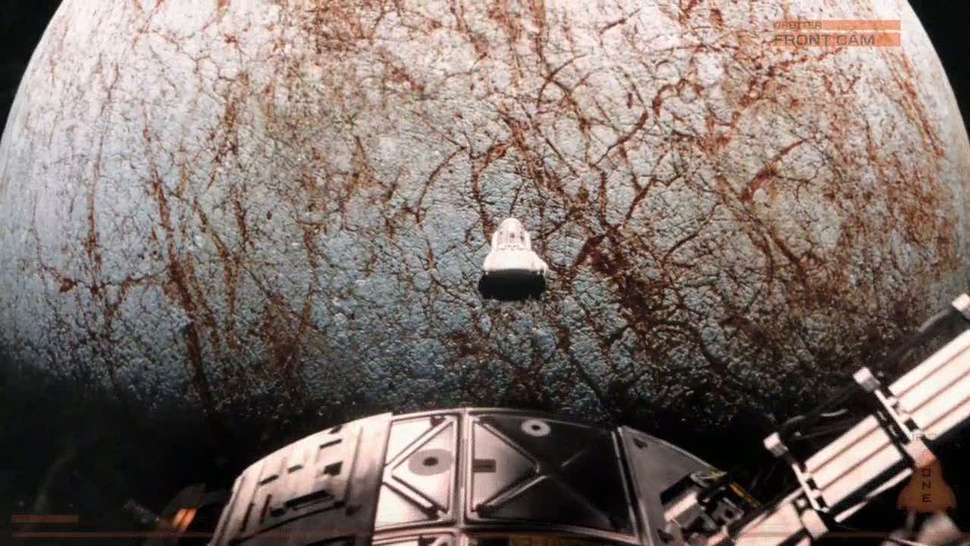
  • First exploratory mission to Europa mounted, discovers proof of basic life forms under the surface ice
  • Rome ordains first openly homosexual priests, an extremely controversial move that splits the church
  • First semi-sentient, Turing compatible AI’s are produced and put into service
  • Thin, transparent, flexible medical patches leading to age of “digital medicine”
  • Religious orders formed opposed to “augmentation”, “transhumanism” and androids
  • First true quantum computers roll off the assembly line

quantum-teleportation-star-trails-canary-islands-1-640x353

  • Creation of the worldwide quantum internet underway
  • Quantum cryptography leads to increased security, spamming and hacking begins to drop
  • Flexible, transparent smartphones, PDAs and tablets become the norm
  • Fully immersive VR environments now available for recreational, commercial and educational use
  • Carbon dioxide in the upper atmosphere passes 600 ppm, efforts to curb emissions are redoubled
  • ISS is retired, replaced by multiple space stations servicing space shuttles and commercial firms
  • World’s first orbital colony created with a population of 400 people

2050-2100:

  • Global economy enters “Second Renaissance” as AI, nanomachinery, quantum computing, and clean energy lead to explosion in construction and development
  • Commercial space travel become a major growth industry with regular trips to the Moon
  • Implant technology removes the need for digital devices, technology now embeddable
  • Medical implants leading to elimination of neurological disorders and injuries
  • Synthetic food becoming the rage, 3D printers offering balanced nutrition with sustainability

3dfood2

  • Canada, Russia, Argentina, and Brazil become leading exporters of foodstuffs, fresh water and natural gas
  • Colonies on the Moon and Mars expand, new settlement missions plotted to Ganymede, Europa, Oberon and Titan
  • Quantum internet expanding into space with quantum satellites, allowing off-world connectivity to worldwide web
  • Self-sufficient buildings with water recycling, carbon capture and clean energy becomes the norm in all major cities
  • Second and third generation “Martians” and “Loonies” are born, giving rise to colonial identity

asteroid_foundry

  • Asteroid Belt becomes greatest source of minerals, robotic foundries use sintering to create manufactured products
  • Europe experiences record number of cold winters due to disruption of the Gulf Stream
  • Missions mounted to extra-Solar systems using telexploration probes and space penetrators
  • Average life expectancy now exceeds 100, healthy children expected to live to 120 years of age
  • NASA, ESA, CNSA, RFSA, and ISRO begin mounting missions to exoplanets using robot ships and antimatter engines
  • Private missions to exoplanets with cryogenically frozen volunteers and crowdfunded spaceships

daedalus_starship_630px

  • Severe refugee crises take place in South America, Southern Europe and South-East Asia
  • Militarized borders and sea lanes trigger multiple humanitarian crises
  • India and Pakistan go to war over Indus River as food shortages mount
  • China clamps down on separatists in western provinces of Xinjian and Tibet to protect source of the Yangtze and Yellow River
  • Biotechnology begins to grow, firms using bacteria to assemble structural materials

geminoid

  • Fully sentient AIs created and integrated into all aspects of life
  • Traditionalist communities form, people seeking to disconnect from modern world and eschew enhancement
  • Digital constructs become available, making neurological downloads available
  • Nanotech research leading to machinery and materials assembled at the atomic level
  • Traditional classrooms giving way to “virtual classrooms”, on-demand education by AI instructors
  • Medical science, augmentation, pharmaceuticals and uploads lead to the first generation of human “Immortals”

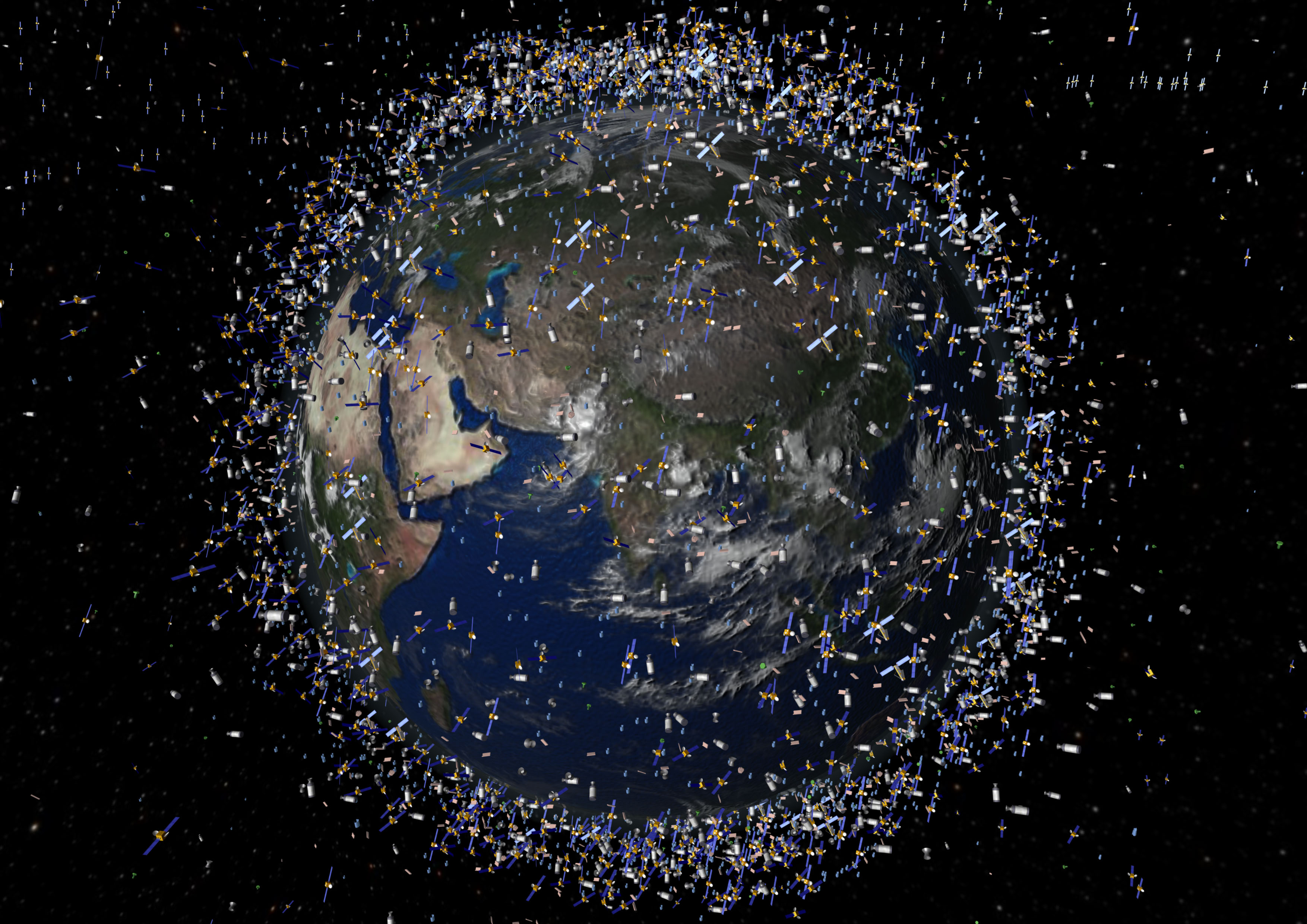
space_debris

  • Orbital colonies gives way to Orbital Nexus, with hundreds of habitats being established
  • Global population surpasses 12 billion despite widespread famine and displacement
  • Solar, wind, tidal, and fusion power replace oil and coal as the dominant power source worldwide
  • Census data shows half of world residents now have implants or augmentation of some kind
  • Research into the Alcubierre Drive begins to bear experimental results

alcubierre-warp-drive-overview22nd Century:

2100-2150:

  • Climate Change and global population begin to level off
  • First “Neural Collective” created, volunteers upload their thought patterns into matrix with others
  • Transhumanism becomes established religion, espousing the concept of transcendence
  • Widespread use of implants and augmentation leads to creation of new underclass called “organics”
  • Solar power industry in the Middle East and North Africa leading to growth in local economies
  • Biotech leads to growth of “glucose economy”, South American and Sub-Saharan economies leading in manufacture of biomaterials
  • Population in Solar Colonies and Orbital Nexus reaches 100,000 and continues to grow

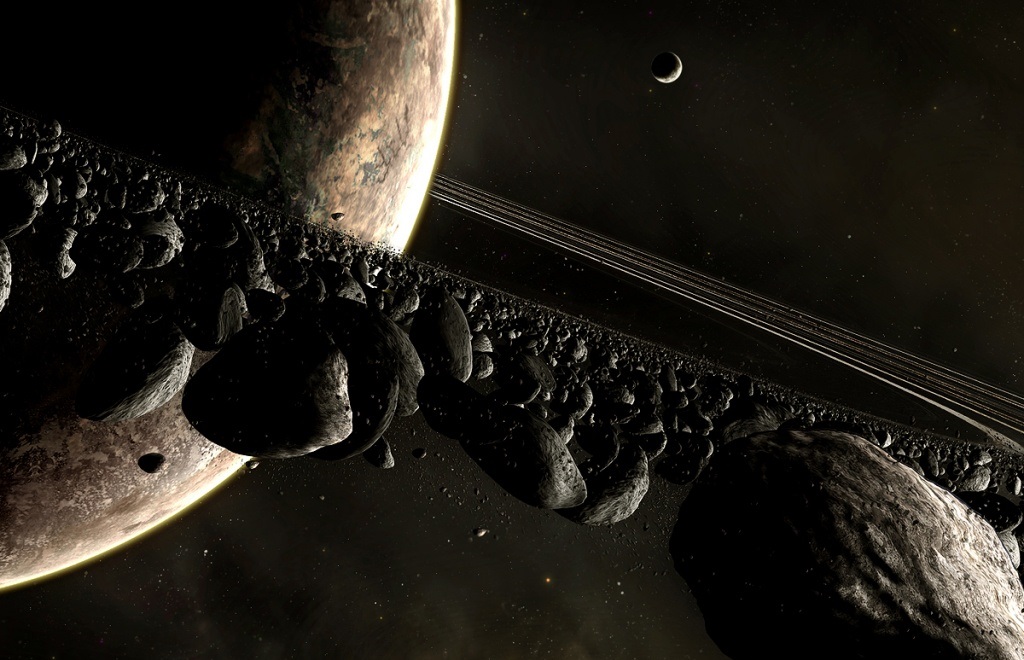
asteroid_belt1

  • Off-world industry continues to grow as Asteroid Belt and colonies provide the majority of Earth’s mineral needs
  • Famine now widespread on all five continents, internalized food production in urban spaces continues
  • UN gives way to UNE, United Nations of Earth, which has near-universal representation
  • First test of Alcubierre FTL Drive successful, missions to neighboring systems planned
  • Tensions begin to mount in Solar Colonies as pressure mounts to produce more agricultural goods
  • Extinction rate of wild animals begins to drop off, efforts at ecological restoration continue
  • First attempts to creating world religion are mounted, met with limited success

networked_minds

  • Governments in most developed countries transitioning to “democratic anarchy”
  • Political process and involvement becoming digitized as representation becomes obsolete
  • “Super-sentience” emerges as people merge their neural patterns with each other or AIs
  • Law reformed to recognize neural constructs and AIs as individuals, entitled to legal rights
  • Biotech research merges with AI and nanotech to create first organic buildings with integrated intelligence

2150-2200:

  • Majority of the world’s population live in arcologies and self-sufficient environments
  • Census reveals over three quarters of world lives with implants or augmentation of some kind
  • Population of Orbital Nexus, off-world settlements surpasses 1 million
  • First traditionalist mission goes into space, seeking world insulated from rapid change and development
  • Labor tensions and off-world riots lead to creation of Solar policing force with mandate to “keep the peace”

Vladivostok-class_Frigate

  • First mission to extra=Solar planets arrive, robots begin surveying surface of Gliese 581 g, Gliese 667C c, HD 85512 b, HD 40307 g, Gliese 163 c, Tau Ceti e, Tau Ceti f
  • Deep space missions planned and executed with Alcubierre Drive to distant worlds
  • 1st Wave using relativistic engines and 2nd Wave using Alcubierre Drives meet up and begin colonizing exoplanets
  • Neighboring star systems within 25 light years begin to be explored
  • Terraforming begins on Mars, Venus and Europa using programmed strains of bacteria, nanobots, robots and satellites
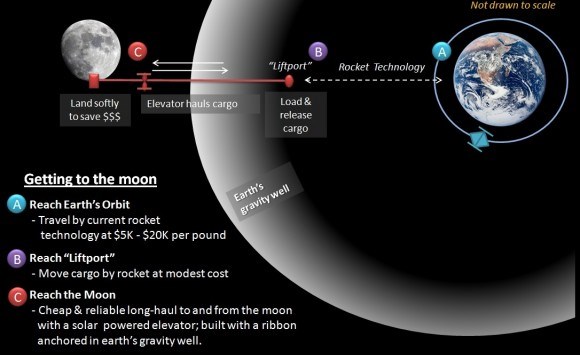
  • Space Elevator and Slingatron built on the Moon, used to transport people to space and send goods to the surface

space_elevator_lunar1

  • Earth’s ecology begins to recover
  • Natural species are reintroduced through cloning and habitat recovery
  • Last reported famine on record, food production begins to move beyond urban farms
  • Colonies within 50 light years are established on Gliese 163 c, Gliese 581 g, Gliese 667C c, HD 85512 b, HD 40307 g, Tau Ceti e, Tau Ceti f
  • Off-world population reaches 5 million and continues to grow
  • Tensions between Earth and Solar Colonies continue, lead to demands for interplanetary governing body
  • Living, breathing cities become the norm on all settled worlds, entire communities build of integrated organic materials run by AIs and maintained by programmed DNA and machinery

self-aware-colony

23rd Century and Beyond:

Who the hell knows?

*Note: Predictions and dates are subject to revision based on ongoing developments and the author’s imagination. Not to be taken literally, and definitely open to input and suggestions.

Climate Crisis: Population Growth in Coming Years

trafficWhen it comes to populations and environmental problems, cities are at the very heart of the issue. Not only are they where the majority of humanity lives, a reality which will only get worse as time goes on, they are also the source of most of our pollution, waste, and land use. People require space to live and work, as well as food, water and

Last year, the world’s population increased to 7 billion, which represents a seven-fold increase in the space of the last two centuries. What’s more, the proportion of people living in urban centers (as opposed to rural) shot up from 3% to almost half of the world’s people. This rate of population growth and redistribution is unprecedented, and is not likely to slow down anytime soon.

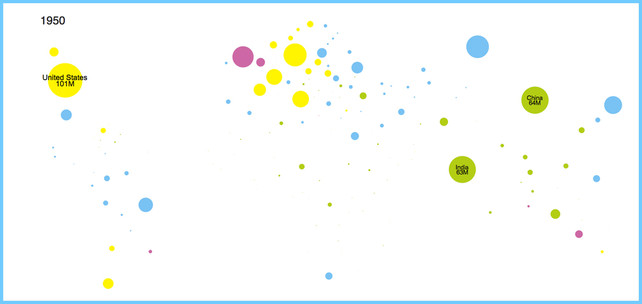
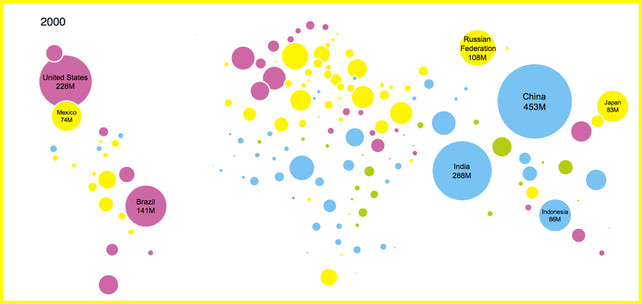
urbanworld_50Consider the following series of infographics which were released by Unicef with the help of the design studio Periscopic. Titled “An Urban World”, they illustrate the issues of population growth and distribution. This interactive, HTML5 visualization of the world covers the years of 1950-2050. But rather than showing our geographic boundaries, every country* is depicted only by their population living in urban environments.

As you can see, each country is represented by a circle that depicts the number of people living in urban environments. As these populations grow, the circles get bigger. And as urban populations get more dense, the circles shift from green to blue to yellow to fuchsia. Immediately, a glaring fact is made clear: the problem is getting worse and at an alarming rate.

urbanworld_2000In addition, there are several nuggets of info which are staggering and particularly worrisome. For example, by 2050, both China and India will have about a billion people living in cities alone. In addition, since the 1990s, more than 75% of the U.S. population has lived in cities. At one time, the US was an outlier in this regard, but found ourselves joined over the next two decades by France, Spain, the U.K., Mexico, Korea, Australia, and Brazil.

But of course, this growth need not be a bad thing. When all is said and done, humanity has a choice. One the one hand, these megacities can take the form of smartly scaled communities of loosely populated expanses and efficient agriculture. On the other, they could easily take the form of urban slums and underdeveloped countrysides that are stricken by poverty and filthy.

urbanworld_2050It’s a complex issue, no doubt about it, especially when you consider the flip side to the whole equation. As the saying goes, every new life means a new mouth to feed, but also a pair of working hands. What’s more, studies have shown that people living in cities tend to be far more energy efficient, and that energy surplus is usually directed toward more and more technological growth and innovation.

Seen in this light, the massive cities of the future could be hubs for the ongoing development of new energies and creative living solutions. And with more people living in large, connected, interdependent environments, the more business startups, ideas, and contributions were likely to get. Part of the reason we have seen so much progress in solar, piezoelectric motors, and bio-electricity is because of this trend. More growth will conversely mean more clean energy.

overpopulation Quite the paradox, really. Who knew people could be both the cause and solution to the world’s worst problem! In the meantime, feel free to head on over to the Unicef site and watch this interactive infographic. Just press play, and watch the cities of the world swell at the edges, competing for room on the page as they compete for room on this planet.

Also, be sure to take a gander at this infographic from BBC Future that demonstrates the current population of the world’s major cities per square meter, the projected population per square meter by 2050, and the livability rating of the city in question. They even provide some context at the bottom by showing the size of relative spaces – from prison cells to Olympic swimming pools, and comparing that to the average space an urban dweller enjoys.

city_spaces
Sources:
bbc.com, fastcodesign.com
, unicef.org

Climate Crisis: India Flood Death Toll Passes 1,000

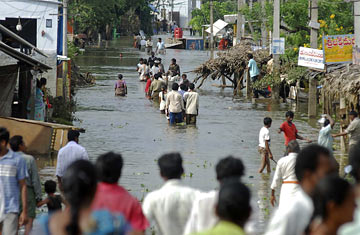
india-floodIn recent days, my attention has been pretty firmly fixed on Alberta and the Canadian Priaries, due to the flooding that’s been taking place and forced the evacuation of 175,000 people – some of whom I’m related to. However, this morning I learned that other regions of the world, one’s which are far more accustomed to natural disasters, are also being effected, and more severely so.

This story comes from India, where once again, unpredictable weather patterns are causing a mass displacement of human beings. Every year, people living on the subcontinent are forced to deal with torrential rains – monsoons – which lead to overflowing river banks. However, in recent years, the unpredictable nature of these patterns have become a severe source of death, displacement and property damage.

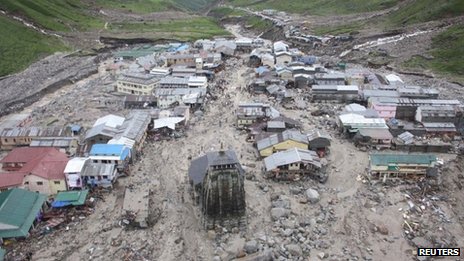
india-flood4The province of Uttarakhand is home to some of India’s holiest shrines, and is also one of many parts of India where the Ganges river traverses. During the Monsoon’s that come in late summer, flooding is common and even depended on for the sake of farming. Every year, hundreds of thousands of devout Hindus make the pilgrimage to Uttarakhand during the summer months hoping to get in before the rains begin.

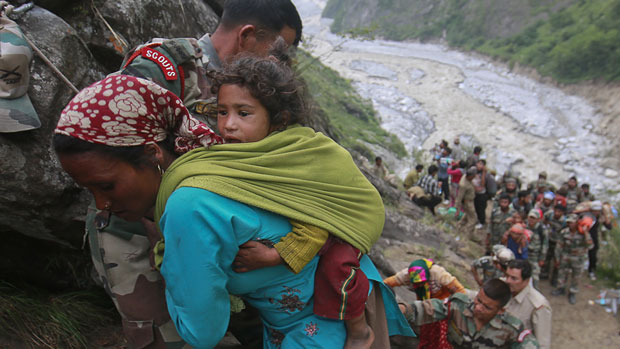
However, this year the monsoon rains arrived early, catching hundreds of thousands of tourists, pilgrims and local residents of guard. Tens of thousands of people remained stranded in high mountain passes and temple towns after the torrential rains washed away homes and roads and triggered landslides that cut off communication links with large parts of the state nearly a week ago.

india-flood1About 10,000 army and paramilitary troops, members of the disaster management agency and volunteers have taken part in six days of rescue and relief efforts. However, helicopter rescue efforts – which have been an essential part of the rescue effort so far – were suspended when dense fog descended on the Himalayan region this Sunday. Luckily, the army began resorting to building makeshift bridges and people were being rescued by road.

All told, some 80,000 people by road and air, according to a state government spokesman. The exact number of people who died in the heavy downpours and flooding of the Ganges River and its tributaries won’t be known until rescue efforts end. However, the state’s chief minister told reporters late on Saturday that the death toll had reached one-thousand.

india-flood2The rains in Uttarakhand were said to have been the heaviest in nearly 80 years and more rain is expected in the worst-hit districts of Chamoli and Uttarkashi over the next few days. According to meteorologists, an unusual clash of weather systems from opposite directions is to blame, as the monsoon advancing towards the west of South Asia combined with westerly winds for an unusually long time and with an extraordinary intensity, resulting in days of torrential rains.

And while India is no stranger to floods – over 3 million people were displaced when the Kosi river in Bihar burst its banks in 2008 – this year’s came as a shock due to their sudden appearance and intensity. Not only were the rains were six times more forceful than usual, they came on the heels of one of the weakest monsoon’s in 40 years, which left crops stricken by drought. Still, climate change experts are anything but surprises.

india-flood3In its fourth assessment report in 2007, the Inter- Government Panel on Climate Change (IPCC) predicted that more extreme droughts, floods, and storms, would become commonplace in the future, and that these intense weather conditions would follow in close succession to each other, often in the same areas. In addition to this latest flood, several other volatile weather patterns predicted by the IPCC are beginning to show in India.

In the northwest alone, the water table is falling by about 1.6 inches per year, according to the GRACE (Gravity Recovery and Climate Experiment) mission. At least half of India’s precipitation comes from the annual monsoon rains, and as they become increasingly diminished and unpredictable, the country faces an imminent threat of extreme water shortages.

Countries_by_population_density.svgChanging rainfall patterns aren’t the only climate- change effect threatening India’s water supply: Himalayan glaciers — the source for the many Indian rivers such as the Ganges — are melting at a rapid rate as a result of warmer temperatures. And the Doni river, whose water many consider no longer fit for human consumption, is gaining notoriety for its unpredictable nature — flash floods one day, barely a trickle the next.

This is just another indication of the effects Climate Change is having around the world. In developing regions of the world, especially those that are closer to the equator, rising temperatures mean weather systems that vacillate between drought and heavy rains, which has a devastating effect on agriculture. The combination of dry weather and powerful storms causes topsoil, the lifeblood of farming, to grow dry and then wash away.

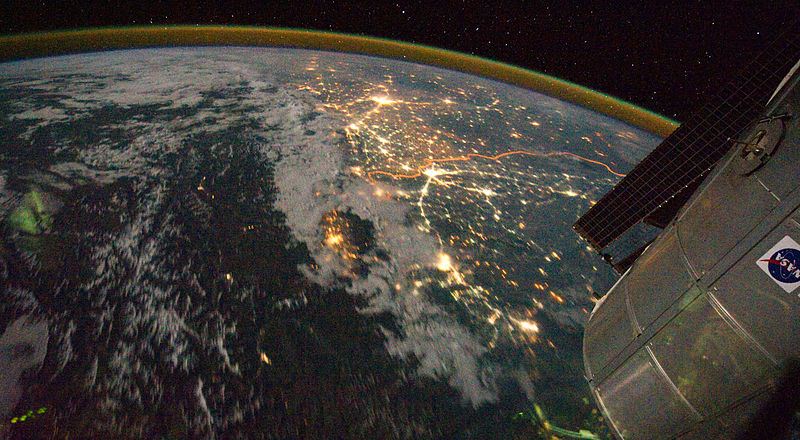
India-Pakistan_Borderlands_at_NightWhat’s more, the majority of humanity lives in this region, which encompasses Central America, the Caribbean, Sub-Saharan Africa,  the Middle East, South Asia and China. And in areas like the Indo-Gangetic Plain –  the densely-populated river valley that stretches from Pakistan to northern India – the combination of drought and floods will lead to hundreds of millions of deaths and refugees.

Factor in the number of deaths and displacements caused by rising tides and the effect on coastal regions, and you see why Climate Change experts are so very concerned about the problem. Not only is the environment and our way of life at stake here, our very existence is as well. The best we can hope for right now is that this season of crisis abates so we can get to the crucial work of getting our act together and developing cleaner ways of living.

And will somebody please start deploying those artificial trees and other carbon capture operations!

Sources: cbc.ca, bbc.co.uk, time.com

Dinosaur Eggs Found With Embryos Still Inside

Dinosaur-eggsThis past week, a Canadian group of paleontologists from the University of Toronto announced a rather amazing find. In the course of examining a large fossil bed in China’s Yunnan province, they discovered a series of fossilized dinosaur eggs that are apparently the oldest ever found. But it’s gets even better. Within the nest, they learned that many of these eggs had been crushed, and the remains of several dinosaur embryos perfectly preserved.

The eggs belong to the Late Jurassic, a geologic period that occurred roughly 190 million years ago. It was during this time that a group of huge, long-necked plant-eating dinosaurs called Lufengosaurus gathered together at the site in China’s Yunnan province to lay clutches of softball-sized eggs. It is here that Robert Reisz, leader of the paleontologist group, and his colleagues found the rare preserved remains.

UofT_reiszThese included the crushed eggshells —the oldest dinosaur eggshells ever found — and 200 tiny bones from at least 20 Lufengosaurus embryos, including some that amazingly still appeared to have some protein attached to them. Reisz said it appears that Lufengosaurus chose a nesting site close to a river and some years the nesting site flooded, smothering the embryos. At the time of the dinosaurs, the area had a tropical climate and was likely prone to monsoons during the wet season.

In an interview, Reisz claimed that “[the] eggs were caught at different stages of development. That’s what makes this project really exciting.” It’s exciting because it allows paleontologists to examine how dinosaurs grew while still in the earliest phase of their development. And already, the returns on this discovery are proving very intriguing.

UofT_fossilsFor example, by examining at the thigh bones of embryos of different ages, Reisz and his researchers found evidence that this particular species moved around inside their eggs as birds do, and similar to the way developing mammals move around inside the womb. This is the first time that phenomenon has been documented in a fossil animal, but the real breakthrough was the detection  of the chemical fingerprint of a protein inside the bones.

Ordinarily, paleontologist do not expect to find any protein samples in fossils dating back this far. However, the Taiwanese members of the research team were insistent that they look for proteins using synchrotron radiation and an infrared spectrometer, which looks for the telltale chemical signatures caused by specific molecules absorbing characteristic colours of light. Given what it turned up, Reisz was happy they did!

t-rexThe protein that was detected is believed likely to be collagen, a common protein found in connective tissues such as bones and tendons. Once again, the significance of this is in how it will allow future generations of researchers to examine the links between today’s species and those from previous eras. According to Reisz: “If this is collagen, then the potential for extracting collagen and comparing to those of living animals really opens a new area of research.”

And who knows? If the protein sample proves to be in good enough shape, this particular species of dinosaur might actually find itself being added to the list for de-extinction, right alongside Aurochs, Wooly Mammoths, Do Do birds, and Sabretooth Tigers. Hmm… I guess Jurassic Park isn’t as farfetched as previously thought. In fact, it could one of many geological era-themed parks put all over the world. Personally, I’d hate to be the zoning board that has to find places to host them!

Source: cbc.ca/news

Hacker Wars: The Invasion Continues!

cyber-war-1024x843State-sponsored hacking has been a major concern lately. From Russia’s “Red October” virus, which spied on embassies and diplomats in multiple countries, to China’s ongoing intrusion into government and corporate databases in the US, it seems as though private hackers are no longer the only ones we need to worry about.

The latest incident in this invasion of privacy and airing of personal information comes again from Russia, where a mysterious website has been posting personal information about some rather high-profile American figures. These include First Lady Michelle Obama, Vice-President Joe Biden, Jay-Z, Britney Spears, U.S. Attorney General Eric Holder, Sarah Palin, Arnold Schwarzenegger, and the head of the FBI.

michelle-obama_fullIn addition to taunting messages and unflattering pictures, the site includes Social Security numbers, credit reports, addresses and phone numbers. No reasons are listed on the site as to why these particular people were selected, but it seems clear at this point that they were chosen due to their high-profile nature and/or positions of importance within the US government. As of last Tuesday, both the FBI and Secret Service announced that they were investigating the website.

Though it is not definitively clear where the hackers are operating from, all indications point to Russia. The first clue came when it was revealed that site bore the internet suffix originally assigned to the Soviet Union (.su), a practice which is not uncommon with Russian hackers these days. In addition, it is also connected to a Twitter account, which carried an an anti-police message posted in Russian.

hackers_securityAt the moment, neither the White House or the Secret Service is offering assessments or comments on the matter. But some thoughts have been offered by Los Angeles Police Commander Andrew Smith, who spoke on behalf of Chief Charlie Beck, who’s information was also posted. According to Beck, this is not the first time that top police officials have had their private information posted online:

“People get mad at us, go on the Internet and try to find information about us, and post it all on one site. The best word I can use to describe it is creepy. It’s a creepy thing to do.”

Frank Preciado, assistant officer in charge of the LAPDs online division, added that the information on the police chief was likely taken from what is supposed to be a secure database of city employees. And it might just offer some insight into this latest, sweeping act of inforpiracy. When all is said and done, it appears that this may simply be a case of a small but qualified group of misfits engaging in public mischief.

internetHowever, of greater concern is the fact that with this latest act of high-profile hacking, a trend that citizens were forewarned might be coming true. In December of 2012, internet security company McAfee warned of an impending attack by Russian hackers against American banks. Dubbed “Project Blitzkrieg”, the threat of the attack surfaced on a Russian hacking forum in the previous September, and McAfee was quick to advised that it was a credible one.

As of December 2012, Russian hackers had effectively infected 500 databases in the US with the promise of more to come. The cybercriminal known as vorVzakone – whose name means ‘thief in law’ – was identified as the head of the operation, whose plans called for the release of a Trojan horse virus that would allow him and his accomplices to seize control of banks’ computers to steal information and money.

cold_war

Clearly, all of these incidents amount to a major public concern. But of greater concern to me is the fact the lines being drawn in this new era of cyber-warfare are eerily familiar. Not long ago, China and Russia were locked in an ongoing feud with the US and its allies, a war fueled by ideology but based on the cultivation of technology and espionage networks.

Granted, only China’s case of cyberwarfare against the US appears to be government-backed. But between the “Red October” virus,  “Project Blitzkrieg”, and the fact that Russian hackers are in the habit of using a Soviet-era suffix to designate their activities, it seems that Russia is fertile ground for a renewed standoff with the West as well. And given that the targets have been western governments and financial institutions, would it be so farfetched to assume the government might be marginally involved?

The means may have changed, but the overall purpose remains the same. Infiltrate, destabilize, and steal information from the enemy. Are we looking at a renewed Cold War, or just the last gasps of an ideological confrontation that was supposed to have died years ago? Only time will tell…

Sources: cbc.ca, dailymail.co.uk

Powered by the Sun: The Future of Solar Energy

Magnificent CME Erupts on the Sun - August 31Researchers continue to work steadily to make the dream of abundant solar energy a reality. And in recent years, a number of ideas and projects have begun to bear fruit. Earlier this year, their was the announcement of a new kind of “peel and stick” solar panel which was quite impressive. Little did I know, this was just the tip of the iceberg.

Since that time, I have come across four very interesting stories that talk about the future of solar power, and I feel the need to share them all! But, not wanting to fill your page with a massive post, I’ve decided to break them down and do a week long segment dedicated to emerging solar technology and its wicked-cool applications. So welcome to the first installment of Powered By The Sun!

spaceX_solararrayThe first story comes to us by way of SpaceX, Deep Space Industries, and other commercial space agencies that are looking to make space-based solar power (SBSP) a reality. For those not familiar with the concept, this involves placing a solar farm in orbit that would then harvest energy from the sun and then beam the resulting electricity back to Earth using microwave- or laser-based wireless power transmission.

Originally described by Isaac Asimov in his short story “Reason”, the concept of an actual space-based solar array was first adopted by NASA in 1974. Since that time, they have been investigating the concept alongside the US Department of Energy as a solution to the problem of meeting Earth’s energy demands, and the cost of establishing a reliable network of arrays here on Earth.

Constructing large arrays on the surface is a prohibitively expensive and inefficient way of gathering power, due largely to weather patterns, seasons, and the day-night cycle which would interfere with reliable solar collection. What’s more, the sunniest parts of the world are quite far from the major centers of demand – i.e. Western Europe, North America, India and East Asia – and at the present time, transmitting energy over that long a distance is virtually impossible.

NASA "Suntower" concept
NASA “Suntower” concept

Compared to that, an orbiting installation like the SBSP would have numerous advantages. Orbiting outside of the Earth’s atmosphere, it would be able to receive about 30% more power from the Sun, would be operational for almost 24 hours per day, and if placed directly above the equator, it wouldn’t be affected by the seasons either. But the biggest benefit of all would be the ability to beam the power directly to whoever needed it.

But of course, cost remains an issue, which is the only reason why NASA hasn’t undertaken to do this already. Over the years, many concepts have been considered over at NASA and other space agencies. But due to the high cost of putting anything in orbit, moving up all the materials required to build a large scale installation was simply not cost effective.

spacex-dragon-capsule-grabbed-by-iss-canadarm-640x424However, that is all set to change. Companies like SpaceX, who have already taken part in commercial space flight (such as the first commercial resupply to the ISS in May of 2012, picture above) are working on finding ways to lower the cost of putting materials and supplies into orbit. Currently, it costs about $20,000 to place a kilogram (2.2lbs) into geostationary orbit (GSO), and about half that for low-Earth orbit (LEO). But SpaceX’s CEO, Elon Musk, has said that he wants to bring the price down to $500 per pound, at which point, things become much more feasible.

And when that happens, there will be no shortage of clients looking to put an SBSP array into orbit. In the wake of the Fukushima accident, the Japanese government announced plans to launch a two-kilometer-wide 1-gigawatt SBSP plant into space. The Russian Space Agency already has a a working 100-kilowatt SBSP prototype, but has not yet announced a launch date. And China, the Earth’s fastest-growing consumer of electricity, plans to put a 100kW SBSP into Low-Earth Orbit by 2025.

space-based-solarpowerMost notably, however, is John Mankins, the CTO of Deep Space Industries and a 25-year NASA vet, who has produced an updated report on the viability of SBSP. His conclusion, in short, is that it should be possible to build a small-scale, pilot solar farm dubbed SPS-ALPHA for $5 billion and a large-scale, multi-kilometer wide power plant for $20 billion. NASA’s funding for SPS-ALPHA dried up last year, but presumably Mankins’ work continues at Deep Space Industries.

Cost and the long-term hazards of having an array in space remain, but considering its long-term importance and the shot in the arm space exploration has received in recent years – i.e. the Curiosity Rover, the proposed L2 Moon outpost, manned missions to Mars by 2030 – we could be looking at the full-scale construction of orbital power plants sometime early in the next decade.

And it won’t be a moment too soon! Considering Earth’s growing population, its escalating impact on the surface, the limits of many proposed alternative fuels, and the fact that we are nowhere near to resolving the problem of Climate Change, space-based solar power may be just what the doctor ordered!

Thanks for reading and stay tuned for the next installment in the Powered By The Sun series!

Source: Extremetech.com

“The Moonlight”: China’s Hills get the Mega-City Treatment

moonlightArtist Yang Yongliang recently unveiled a new series of picture art in the gallery at the Galerie Paris-Beijing. In The Moonlight series,  he depicts China’s rolling hills in a hyper-futuristic context. With The Moonlight series, he combines his skills in traditional Chinese artistry with a little “urban romance”, adding a sprawling, shimmering megalopolis to the traditional setting and motifs.

Having studied traditional Chinese painting and calligraphy at the Shanghai Fine Arts Institute, Yang has long shown a preference for art that juxtaposes the natural with the man-made. As you scroll through the collection, you notice close ups of the cliff-scaling domiciles, crisscrossed patterns of roads, and even what appears to be cranes standing on mountain tops.

silentvalleyAnd of course, this is just the latest in a long line of Yang’s classic-modern masterpieces. In fact, Moonlight is quite similar to his earlier piece, The Silent Valley, where we see a woman in a white silk robe looking at hills in the distance. In two pictures, we see those hills are alive with brilliant lights, a clear indication of habitation.

moonlight2And then there’s Bowl of Taipei, where the Taiwanese mega-city – situated again on mountainous terrain – is depicted as a small island contained within a bowl. Resembling a world within a world, the clouds that wrap the hillside estates and waterfalls look very much like steam wafting up from a hot bowl of noodles!

Follow the links below to take a gander at the collection. And if you should find yourself in Paris, Brussels or Beijing in the near future, the show will be running from March 14th to April 27th of this year.

Source: IO9, thiscoloassal.com

Now Appearing at China Daily Mail!

China_dailymailSome news to share! Your humble yours-truly has been invited by the good folks over at China Daily Mail to join their cast of writers and bloggers. For those not familiar with their work, this is a site dedicated to sharing new about the nation of China that is free from state censorship and monitoring.

It is run by Craig Hill, a longtime educator and world traveller who has worked extensively in Australia and China, addressing issues of corruption, education, reconciliation and social justice. So over the coming weeks and months, don’t be too surprised if you see some additional post reblogged from that sight. That’s just me promoting work I’m doing in some other locale 😉

Thanks for the opportunity Mr. Hill and the good people of CDM! Glad to be aboard!

IT giants admit to being hacked by China

Cyberwarfare: Not Just for Anarchists Anymore!

Hack the Planet by von Shin Kurohoshi

For those deeply concerned about internet security and privacy, the year of 2013 certainly opened with a bang. First, there was the news that a cyberspy ring – apparently operating out of Russia – had been spying on embassies, governments and research institutions around the world for the past five years using a virus dubbed “Red October”. This was back in January, when the Moscow-based antivirus firm known as Kaspersky Lab announced the discovery of the international intrigue.

Then, on Jan. 30th, the New York Times announced that they too have been the target of hackers, this time from China. In a statement released by the newspaper, the company claimed that Chinese hackers have been persistently attacking their publication for the last four months, infiltrating its computer systems and getting passwords for its reporters and other employees.

Jin_jiaboaThe timing of the attacks coincided with a Times investigation, published online on Oct. 25, that found that the relatives of Wen Jiabao, China’s prime minister, had accumulated a fortune worth several billion dollars through business dealings. The hackers tried to cloak the source of the attacks on The Times by first penetrating computers at United States universities and routing the attacks through them.

With the help of  Mandiant, the internet security company hired by The Times, they were able track the intruders, study their movements and help erect better defenses to block them. In the end, The Times reported that they had successfully expelled the attackers and kept them from breaking back in. However, the fact these hackers were able to infiltrate the network of a private news organization in the first place was much cause for worry.

Cyber-WarFor one, this is not the first time that hackers, originating in China, have used these sort of subterfuge tactics to hack US databases. According to experts at Mandiant, their company has tracked many such intrusions back to the Chinese mainland, all of which used the same approach of cloaking their efforts using US servers. In addition, this incident, which smacked of state-involvement, did not occurr in a vacuum.

Back in 2008, internet security experts indicated that Chinese hackers had begun targeting Western journalists as part of a wider campaign to identify and intimidate their sources and contacts, and to anticipate stories that might damage the reputations of Chinese leaders. The purpose behind this far-reaching and growing spy campaign aimed at corporations, government agencies, activist groups and media organizations inside the US seemed to be for the purpose of controlling China’s public image, domestically and abroad, as well as stealing trade secrets.

cyber-war-1024x843But of course, China is hardly alone in these sorts of covert cyber-warfare. As already mentioned, Russia has already shown signs of developing cyber weapons to assist in spying abroad, and there’s mounting evidence that Israel, Iran and the US are on board too. Starting in 2008, Iran’s main nuclear enrichment plant was hit by a sophisticated computer worm that caused damage to it, thus putting a crink in their efforts to become a nuclear power.

While no one took responsibility for this incident, the evidence seemed to indicate that the worm originated from sources within Israel and the US. Attacks which took place later on American banks and oil companies within the US were believed to have been caused by Iran, in retaliation for the worm that hurt their main source of enriched uranium and a key component in their nuclear program.

anonymous_flagFor some time now, hacking federal databases has become something of a sport for various groups and causes who are seeking to reveal government secrets and expose their inner workings to public scrutiny. The “Hacktivist” group known as Anonymous is a perfect example, a group closely linked to Assange (of Wikileaks) who’s most recent infiltration of the Federal Reserve Bank made the news earlier this month as well.

But as I’m sure all will agree, it’s one thing when private citizen attack domestic and foreign databases, and quite another when nations attack each others. While cyber criminals may constitute a vague and slippery enemy, one which is much harder to identify and prosecute, nation-states constitute a far more frightening one. Not only are their resources far more vast, the consequences of battling them are far greater.

Knowing who your enemy is, and that they have nuclear capabilities and the ability to strike at you physically… Yes, I think that’s a much scarier prospect! While the old ways of plausible deniability and covert action may apply, no one likes the idea of subtle attacks which could escalate into a full-scale conflict. Even if it is waged entirely by computer, the effects are still likely to be felt!

Source: NYTimes.com, money.cnn.com