Nukemap 3D: Bringing Nuclear War to your Home!

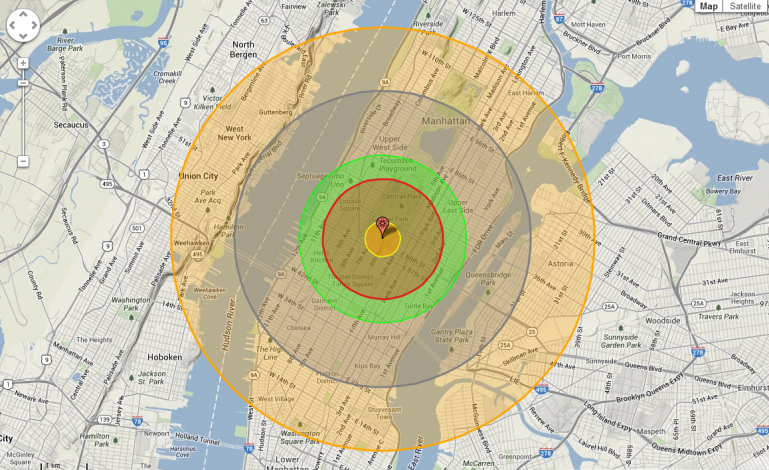
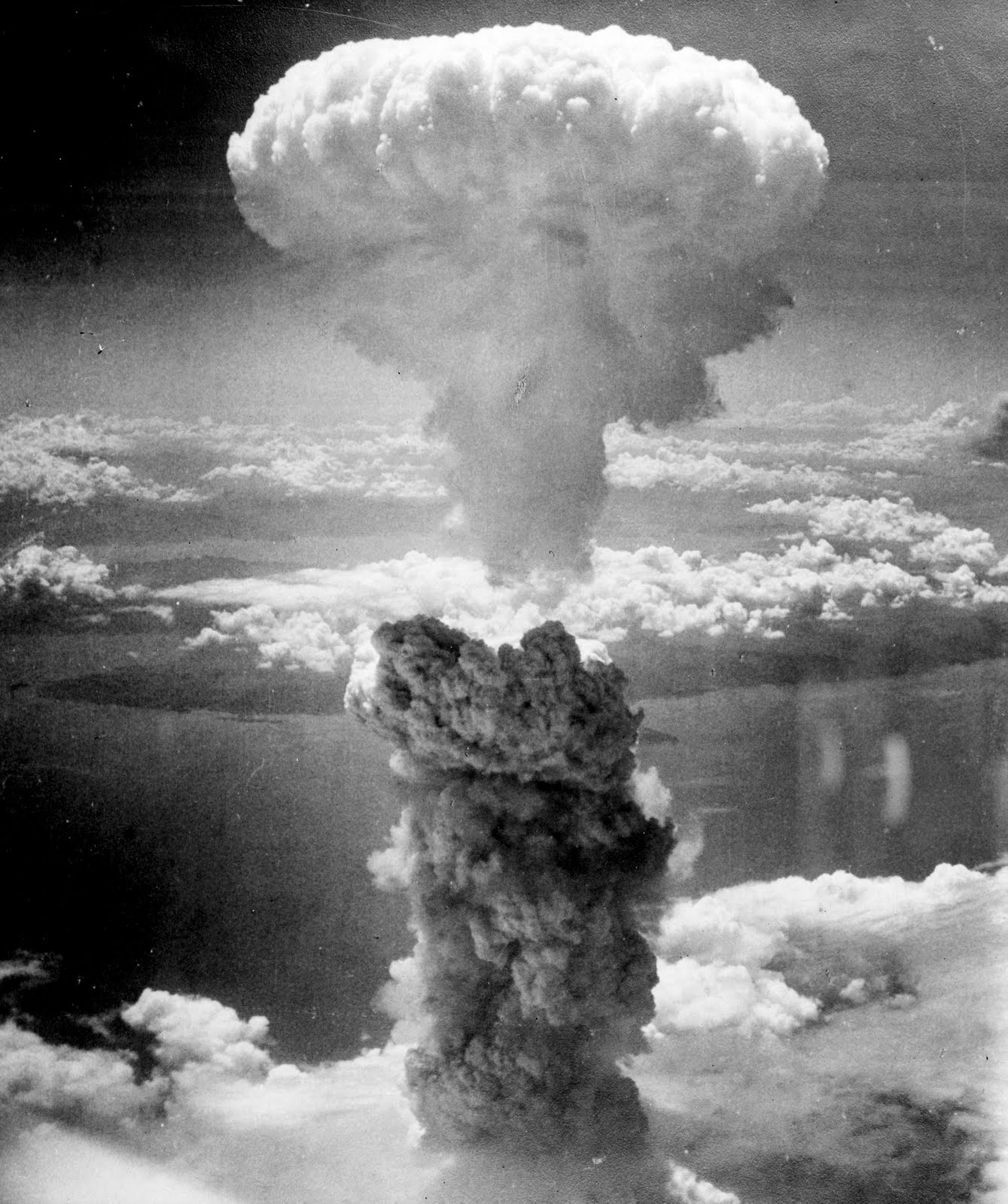
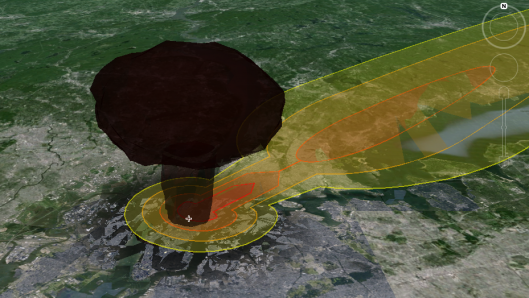
nukemap3Ever wonder what it would look like if a thermonuclear device hit your hometown? Yeah, me neither! But let’s pretend for a moment that this is something you’ve actually considered… sicko! There’s an online browser-based program for that! It’s called Nukemap3D, and uses a Google Earth plug in to produce a set of graphics that show the effects of a nuclear weapon on your city of choice.

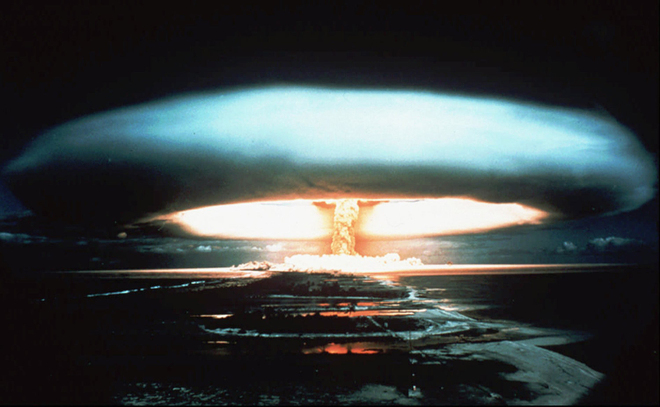
All you have to do is pick your target, select your favorite thermonuclear device, and you can see an animated mushroom cloud rising over ground zero. The creator was Dr. Alex Wellerstein, an Associate Historian at the Center for History of Physics at the American Institute of Physics in College Park, Maryland, who specializes in the history of nuclear weapons and nuclear secrecy.

nukemap3-1Interestingly enough, Wellerstein’s inspiration for developing Nukemap 3D came from his experience of trying to teach about the history of nuclear weapons to undergraduates. As people who had completely missed the Cold War, these students naturally didn’t think about the prospect of nuclear war much, and had little to no cultural association with them.

Events like Hiroshima and the Cuban Missile Crisis were essentially ancient history to them. For him and his wife, who teaches high school, it was always a challenge to get students to relate to these issues from the past and seeing how they related to the present. Specifically, he wanted his students to address the larger issue of how one controls a dangerous technology that others find desirable.

nukemap3-2And given how inundated young people are today with technology, he believed an online browser that allowed children to visualize the effects of a nuclear attack seemed just like the thing. The concept originally grew out of his own research to determine the size of the Hiroshima bomb versus the first hydrogen bomb versus a modern nuclear weapon.

After producing a web page with the relevant info in 2012, he began receiving millions of hits and felt the need to expand on it. One of the things he felt was missing was info on additional effects of nuclear blasts, such as radioactive debris that comes down as fallout, contamination that can extend for hundreds of kilometers in all directions, and how this can spread with prevailing winds.

NuclearDetonationsIn addition to being a pedagogical tool which can help students appreciate what life was like during the Cold War, Wellerstein also hopes his site could help combat misinformation about modern nukes. All too often, people assume that small devices – like those being developed by North Korea – could only cause small-scale damage, unaware of the collateral damage and long-term effects.

Another use of the program is in helping to combat ideas of “instant apocalypse” and other misconceptions about nuclear war. As we move farther and farther away from an age in which nuclear holocaust was a distinct possibility, people find themselves turning to movies and pop culture for their information on what nuclear war looks like. In these scenarios, the end result is always apocalyptic, and by and large, this is not the case.

nuclear1In a war where nuclear confrontation is likely, civilization does not simply come to an end and mutants do not begin roaming the Earth. In reality, it will mean mass destruction within a certain area and tens of thousands of deaths. This would be followed by mass evacuations of the surrounding areas, the creation of field hospitals and refugee camps, and an ongoing state of emergency.

In short, a nuclear exchange would not means the instantaneous end of civilization as we know it. Instead, it would lead to an extended period of panic, emergency measures, the presence of NGOs, humanitarian aid workers, and lots and lots of people in uniform. And the effects would be felt long after the radiation cleared and the ruins were rebuilt, and the memory would be slow to fade.

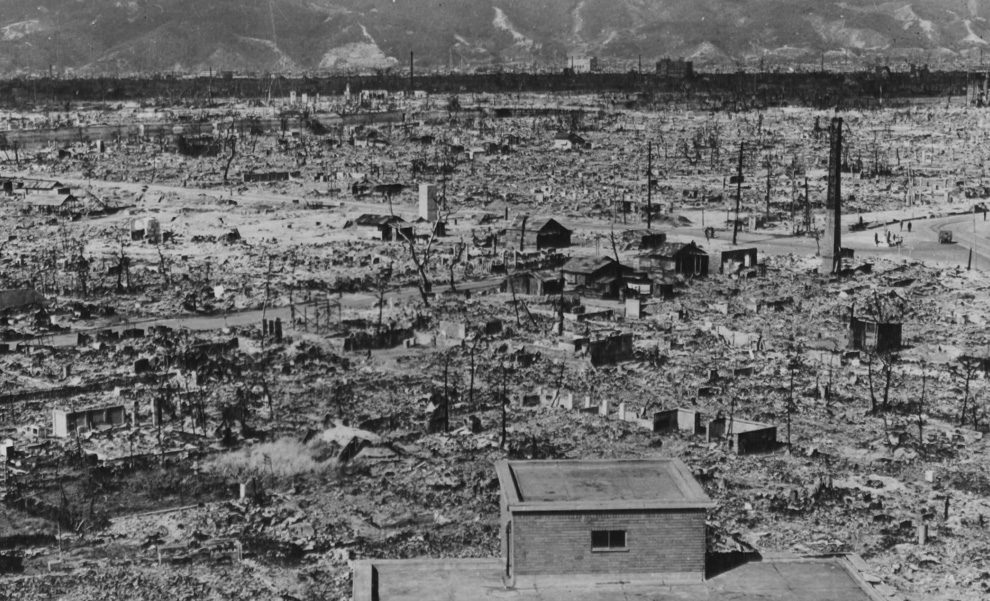
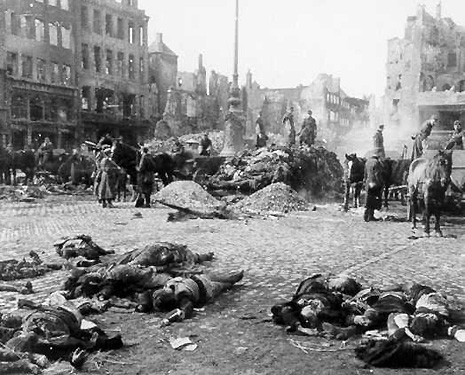
Hiroshima, after the blast

Basically, Wellerstein created Nukemap 3D in the hope of finding a middle ground between under exaggeration and over exaggeration, seeking to combat the effects of misinformation on both fronts. In a nuclear war, no one is left unaffected; but at the same time, civilization doesn’t just come to an abrupt end. As anyone who survived the horrors of Hiroshima and Nagasaki can attest, life does go on after a nuclear attack.


The effects are felt for a very long time, and the scars run very deep. And as those who actually witnessed what a nuclear blast looks like (or lived in fear of one) grow old and pass on, people need to be educated on what it entails. And a graphic representation, one that utilizes the world’s most popular form of media, is perhaps the most effective way of doing that.

In the meantime, be sure to check out Nukemap 3D and see exactly what your hometown would look like if it were hit by a nuclear device. It’s quite… eye-opening!

Source: gizmag.com


The Truth of Yuri Gagarin’s Tragic Death Revealed

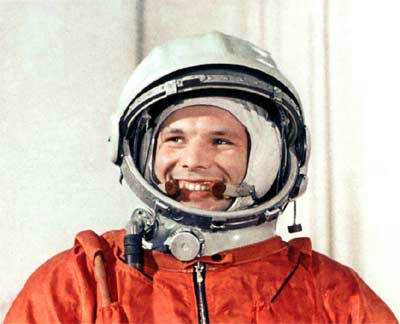
yuri_gagarin1On the morning of April 12, 1961, Soviet cosmonaut Yuri Gagarin lifted off aboard Vostok 1 to become the first human in space, becoming an instant hero to many and an historic figure. Tragically, his life was cut short when just seven years later (on March 27th, 1968) the MiG-15 UTI he was piloting crashed. Ever since, his death has been shrouded in confusion and controversy, with many theories being posited as to what actually cause.

And now, some 45 years after the fact, the details about what really happened to cause the death of the first man in space have come out — from the first man to go out on a spacewalk, no less. In an article published online on Russia Today, former cosmonaut Aleksey Leonov — who performed the first EVA on March 18, 1965 — has revealed details about the accident that killed both Yuri Gagarin and his flight instructor Vladimir Seryogin in March 1968.

yuri_gagarinA soft-spoken and well-mannered man, Gagarin began his journey into space in 1960 when he and 19 other pilots were selected to take part in the Soviet space program. Just three years after making history with the launch of the first artificial satellite into space (Sputnik-1), the Russians were eager to follow this up with a mission that would put a man into low-Earth orbit.

After a grueling selection process involving physical and psychological tests, Gagarin was selected to take the pioneering flight inside the Vostok-1 space capsule. The launch, which was eagerly monitored by people all over Russia and around the world, took place at exactly 9:07 am local time (06:07 UT) on 12 April 1961. After spending just under two hours in orbit, the capsule made reentry, Gagarin exited it and parachuted to the ground, landing at around 11:05 am (08:05 UT) in a farmer’s field outside of Engels.

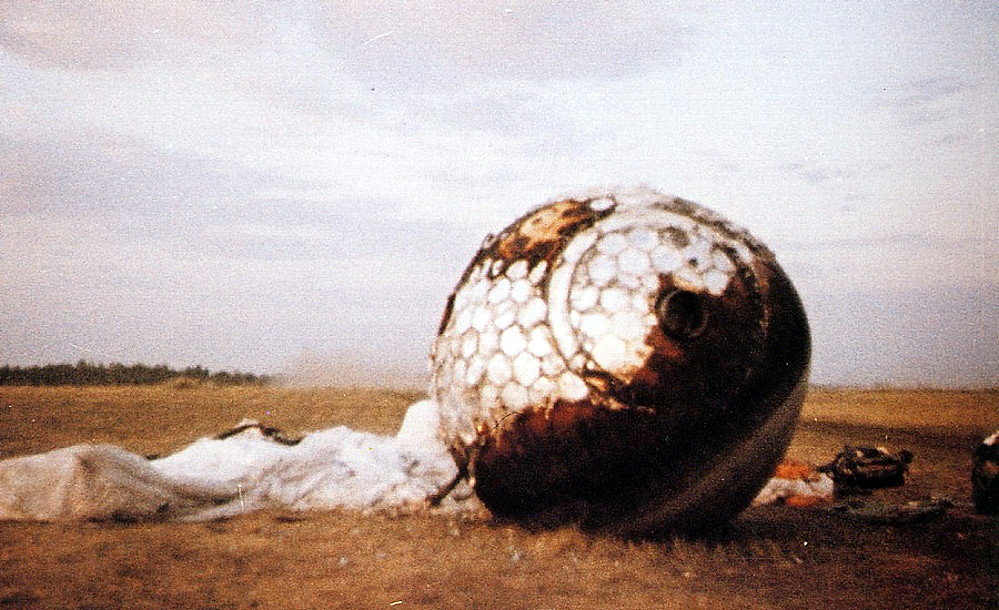
vostok-1_landingObserving the landing of Vostok-1 were two school girls, who recalled the site of the capsule hitting the ground with a combination of fascination and fear:

It was a huge ball, about two or three metres high. It fell, then it bounced and then it fell again. There was a huge hole where it hit the first time.

Elsewhere, a farmer and her daughter observed the strange scene of a figure in a bright orange suit with a large white helmet landing near them by parachute. Gagarin later recalled:

When they saw me in my spacesuit and the parachute dragging alongside as I walked, they started to back away in fear. I told them, ‘Don’t be afraid, I am a Soviet like you, who has descended from space and I must find a telephone to call Moscow!’

After the flight, Gagarin became a worldwide celebrity, touring widely abroad to promote the Soviet’s accomplishment in putting a man into space. Upon returning home, he found himself relegated to training and other tasks, due in part to the death of his friend, Vladimir Komarov in the first flight involving a Soyuz spacecraft. Shortly thereafter, he began to re-qualify to become a fighter pilot, and died during one of his training flights.

Su-15_FlagonOfficially, reports about Gagarin and Seryogin’s death claim that the plane crashed when Gagarin manuevered the two-seated training version of the MiG-15 fighter craft to avoid a “foreign object”. The report does not specify what this object was, but the term refers to  anything from balloons and flocks of birds to airborne debris or another airborne craft. And as you can imagine, people have made some very interesting suggestions as to what this object could have been.

Now, a declassified report, which Leonov has been permitted to share, shows what actually happened during the training flight. Apparently, an “unauthorized Su-15 fighter” flew too close to Gagarin’s MiG, disrupting its flight and sending it into a spin. In his article, Leonov went on to explain in further detail:

In this case, the pilot didn’t follow the book, descending to an altitude of 450 meters. While afterburning the aircraft reduced its echelon at a distance of 10-15 meters in the clouds, passing close to Gagarin, turning his plane and thus sending it into a tailspin — a deep spiral, to be precise — at a speed of 750 kilometers per hour.

The pilot of the SU-15 survived the incident, is apparently still alive, and was not named – a condition of Leonov’s permission to share the information.

valentina_tereshkova_1Afterwards, the first woman into space, Valentina Tereshkova (also a Soviet cosmonaut) was officially grounded by the government after Gagarin’s death to avoid a loss of another prominent cosmonaut. After the revelation was made about the true cause of Gagarin’s death, she responded by saying that the details come as a bittersweet relief. “The only regret here is that it took so long for the truth to be revealed,” Tereshkova said. “But we can finally rest easy.

Indeed. Rest in peace, Yuri. Like many who have since come and gone, you’re a part of an extremely select few who went into space at a time when doing so was still considered by many to be an impossible dream. And regardless of the Cold War atmosphere in which this accomplishment occurred, it remains an historic first and one of the greatest accomplishments ever made by a human being.

Source: universetoday.com

Hacker Wars: The Invasion Continues!

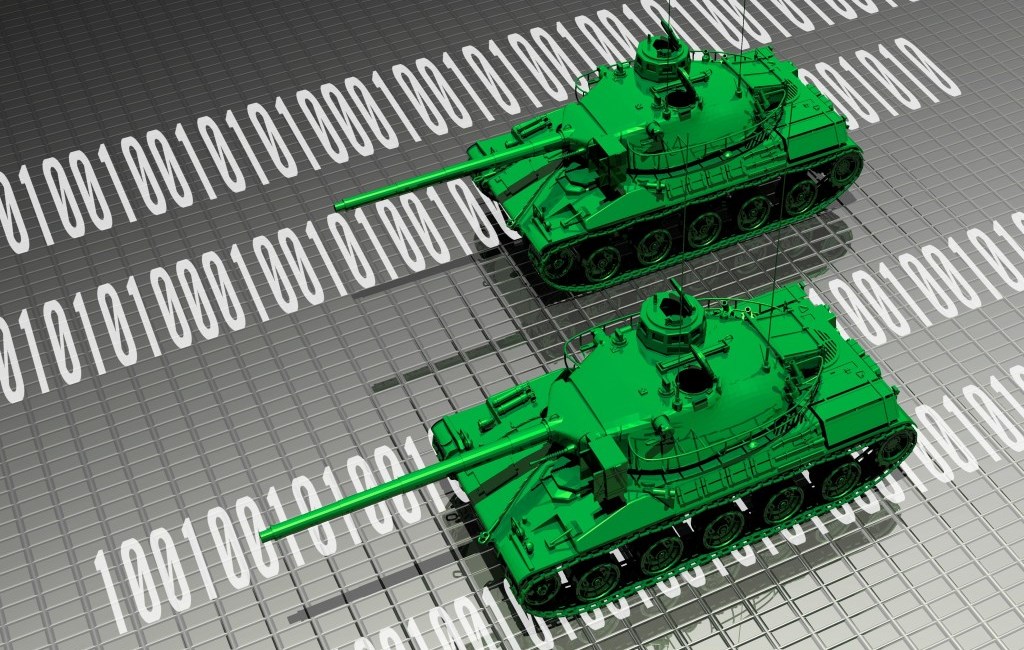
cyber-war-1024x843State-sponsored hacking has been a major concern lately. From Russia’s “Red October” virus, which spied on embassies and diplomats in multiple countries, to China’s ongoing intrusion into government and corporate databases in the US, it seems as though private hackers are no longer the only ones we need to worry about.

The latest incident in this invasion of privacy and airing of personal information comes again from Russia, where a mysterious website has been posting personal information about some rather high-profile American figures. These include First Lady Michelle Obama, Vice-President Joe Biden, Jay-Z, Britney Spears, U.S. Attorney General Eric Holder, Sarah Palin, Arnold Schwarzenegger, and the head of the FBI.

michelle-obama_fullIn addition to taunting messages and unflattering pictures, the site includes Social Security numbers, credit reports, addresses and phone numbers. No reasons are listed on the site as to why these particular people were selected, but it seems clear at this point that they were chosen due to their high-profile nature and/or positions of importance within the US government. As of last Tuesday, both the FBI and Secret Service announced that they were investigating the website.

Though it is not definitively clear where the hackers are operating from, all indications point to Russia. The first clue came when it was revealed that site bore the internet suffix originally assigned to the Soviet Union (.su), a practice which is not uncommon with Russian hackers these days. In addition, it is also connected to a Twitter account, which carried an an anti-police message posted in Russian.

hackers_securityAt the moment, neither the White House or the Secret Service is offering assessments or comments on the matter. But some thoughts have been offered by Los Angeles Police Commander Andrew Smith, who spoke on behalf of Chief Charlie Beck, who’s information was also posted. According to Beck, this is not the first time that top police officials have had their private information posted online:

“People get mad at us, go on the Internet and try to find information about us, and post it all on one site. The best word I can use to describe it is creepy. It’s a creepy thing to do.”

Frank Preciado, assistant officer in charge of the LAPDs online division, added that the information on the police chief was likely taken from what is supposed to be a secure database of city employees. And it might just offer some insight into this latest, sweeping act of inforpiracy. When all is said and done, it appears that this may simply be a case of a small but qualified group of misfits engaging in public mischief.

internetHowever, of greater concern is the fact that with this latest act of high-profile hacking, a trend that citizens were forewarned might be coming true. In December of 2012, internet security company McAfee warned of an impending attack by Russian hackers against American banks. Dubbed “Project Blitzkrieg”, the threat of the attack surfaced on a Russian hacking forum in the previous September, and McAfee was quick to advised that it was a credible one.

As of December 2012, Russian hackers had effectively infected 500 databases in the US with the promise of more to come. The cybercriminal known as vorVzakone – whose name means ‘thief in law’ – was identified as the head of the operation, whose plans called for the release of a Trojan horse virus that would allow him and his accomplices to seize control of banks’ computers to steal information and money.

cold_war

Clearly, all of these incidents amount to a major public concern. But of greater concern to me is the fact the lines being drawn in this new era of cyber-warfare are eerily familiar. Not long ago, China and Russia were locked in an ongoing feud with the US and its allies, a war fueled by ideology but based on the cultivation of technology and espionage networks.

Granted, only China’s case of cyberwarfare against the US appears to be government-backed. But between the “Red October” virus,  “Project Blitzkrieg”, and the fact that Russian hackers are in the habit of using a Soviet-era suffix to designate their activities, it seems that Russia is fertile ground for a renewed standoff with the West as well. And given that the targets have been western governments and financial institutions, would it be so farfetched to assume the government might be marginally involved?

The means may have changed, but the overall purpose remains the same. Infiltrate, destabilize, and steal information from the enemy. Are we looking at a renewed Cold War, or just the last gasps of an ideological confrontation that was supposed to have died years ago? Only time will tell…

Sources: cbc.ca, dailymail.co.uk

Chuck Yeager Breaks the Sound Barrier… Again!

A very interesting anniversary came to pass this past October 14th. It was exactly 65 years ago to the day that pilot and daredevil Chuck Yeager became the first man to break the sound barrier. Yeager was just 24 years old when he made history on that day, and his exploits went on to be  chronicled in the book (and film) “The Right Stuff”. And wouldn’t you know it; Yeager, now 89, chose to make the occasion by breaking the sound barrier again.

But before getting into that, I would like to provide a recap on the events surrounding Yeager’s historic accomplishment. The year was 1947, the Second World War had ended just two years before, and for those old enough to remember, the world was a pretty scary place as Russian and American scientists competed to be the first to break scientific and technological barriers. In this particular race, the US was the first, when from his Bell X-1 rocket craft, Yeager reached a speed of 1126 km/h (700 miles per hour), or Mach 1.06, at an altitude of 13100 meters (43,000 feet).

For many years, Yeager found himself being chased by younger pilots in newer craft as they sought to challenge him and break new records in speed. Never the one to shy away from a fight, Yeager continually outdid them, setting new records for supersonic speed until his eventual retirement, by which time the astronauts were making the big headlines by being the first human beings to make it into space and orbit the planet.

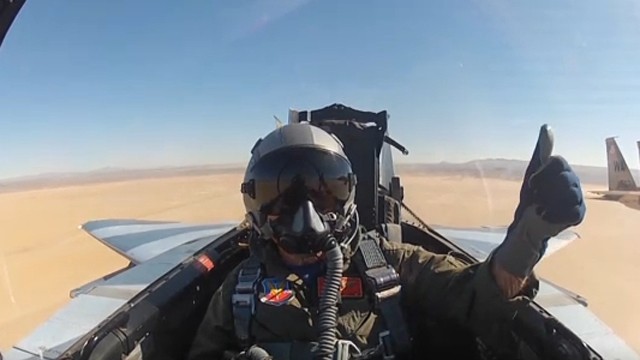
Yeager retired with honors, having earned himself the rank of Brigadier General in the Air Force. And just the other day, Yeager celebrated the anniversary of his historic flight by stepping into the back seat of a retired F-15 fighter that broke the sound barrier at 10:24 a.m. on Sunday.

Check out the video of Yeager’s latest flight below.

Relaunching an Idea: Red Sky At Night

Many months ago, I was struck by an idea. It is one which has been percolating in my mind for some time, but never really occurred to me as a reason to write. But then, I began to get into the whole “Alternate History” sub-genre of science fiction, examining such works as The Man In The High Castle, Fatherland, The Guns Of The South, and A Rebel In Time. It made me think that there was a good precedent for this kind of idea, and room for expansion.

But first, let me explain what I was thinking. Ever since University I’ve been fascinated by Russian history, particularly the interwar years. It was at this time that the most auspicious achievements and crimes took place in the former Soviet Union, after the death of Lenin and the ascent to power of Joseph Stalin, one of history’s greatest monsters.

Shortly thereafter, Russia became involved in World War II, during which time another monster – Adolf Hitler – committed unspeakable crimes against the Russian people. Over twenty six million people died on the Eastern Front, most of them civilians who had already witnessed such terrible suffering at the hands of their own dictator. In addition, many were victims of Soviet wartime oppression, killed by Stalin for the crime of not fighting hard enough or attempting to find liberation from their Nazi invaders.

From the point of view of Soviet propaganda, the years between 41 and 45 were portrayed as a the “Great Patriotic War”, a heroic struggle for the defense of the Motherland. In some respects this was true, but mainly it was a war between two nations being led by very petty and cynical men, with countless good and innocent souls caught in between. Those Germans who died in the East did so because of a fool’s dream of Lebensraum and racial purity, whereas the Russians who died did so in the defense of their families from both the invaders and the reprisals of NKVD officers.

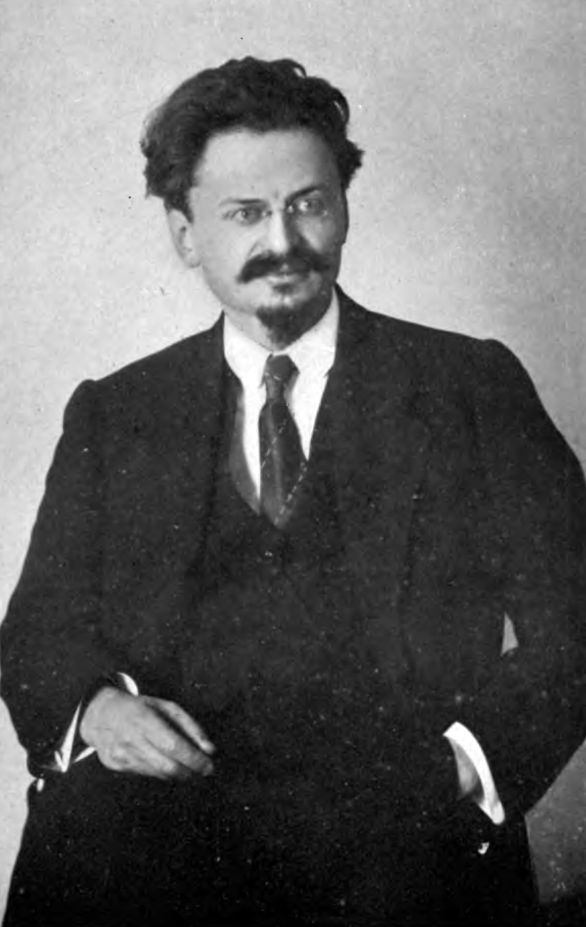
Reading of all this, I often wondered, what if Leon Trotsky, Lenin’s intended successor, had led Russia during the interwar years? What if he had won the leadership race, instead of the scheming Stalin, and became the man to lead Russia against the Nazi invaders? Would things have worked out differently? Would Russia have still stood and ground up the Nazis, but in a way that didn’t lead to the death of so many millions of innocent Russians. The question is not a new one. In fact, historians have been pondering it for some time, and the entire question hinges on a single event.

This is where the concept of my own alternate history came in. In my story, a single event happens differently, thus giving rise to an alternate history. At the 13th Party Congress in Russia 1924, Trotsky had an historic opportunity. Lenin, before his death, had published his “Last Will And Testament” where, amongst other things, he singled out Stalin as a rude and ruthless character who should never be allowed to come to power. During the years following Lenin’s death, Trotsky was seen as the natural successor, which made him the natural rival of Stalin and his followers.

During the 12th Party Congress, Stalin’s allies helped suppress news of the Testament, but by the 13th, Trotsky was in possession of it and could released it, causing irreparable harm to Stalin’s reputation. Why he did not, and instead chose to make a conciliatory speech calling for unity, is something which historians have debated ever since. In so doing, he essentially guaranteed Stalin’s rise to power and his own exile, which culminated in his murder in Mexico some years later.

Red Sky At Night:
This is the basis of my idea. Instead of asking for reconciliation, Trotsky released Lenin’s Testament to the Party and asked for Stalin’s removal. He was successful, which guaranteed that it was he who would become the new leader of Soviet Russia and its chief planner during the interwar years. As a result, Stalin’s crash industrialization programs (aka. the Five Year Plans) were never launched.

Instead, he maintained Lenin’s New Economic Policy (NEP) and even appointed Bukharin (whom Stalin murdered) to oversee reform and expansion of state-owned industry. This led to a degree of slow recovery for the Soviet economy and improved the lot of its farmers and small private enterprises. And when the Great Depression hit in 1929, Russia would still spared the worst ravages of it while similarly showing signs of growth.

What’s more, Trotsky maintained close ties to foreign communist movements, rather than focusing so heavily on matters at home. As a result, in 1933 when the Nazis demanded a non-confidence vote against the Social Democratic Party, Trotsky ordered the KDP (Communist Party of Germany) to stand shoulder to shoulder with the Social Democrats, a move which did not alter the Nazi seizure of power, but which ensured that they were aligned with the anti-Nazi movement from early on.

In China, rather than advising Mao to go along with the Nationalist government (which turned on them) Trotsky advised that Mao and his cadres remain committed to resisting Japanese invasion and not trusting in Chiang Kai Shek. This prevented the massacre of Chinese Communists, which came in handy when the Sino-Japanese war began in 1937.

When the Spanish Civil War began, Trotsky and the Comintern became the most vocal and committed supporters of the Loyalists, sending them weapons, advisers, volunteers and funds. Much as in our own timeline, this had the effect of making the Soviets look like the chief supporters of anti-fascism, but since the effort didn’t suffer from Stalin’s paranoia and cynicism, the efforts were much more effective and popular. And thanks to Trotsky’s focus on foreign affairs, Commissar Maxim Litvinov, the champion of Collective Security, received the support he needed when he made his pitches to the League of Nations.

But most importantly of all, no purges or Great Terror took place during the late 30’s, which had the effect of undermining Russia’s efforts abroad, embarrassing Russia politically, decimating the Soviet officer corps, and devastating Russia’s agriculture. Russia therefore was in a much better position to coordinate alliances with the Czechs, the French, and rally public opinion towards ensuring that the Nazis were contained rather than appeased.

However, things really came down to the 1938 Sudetenland Crisis. For years, the Russians had been railing against coming to an accommodation with Hitler, largely for their own purposes. However, when Hitler demanded that Prime Minister Benes of Czechoslovakia cede the Sudetenland under threat of war, things finally came together for them. Facing harsh public opinion, Prime Minister Neville Chamberlain found that he had little support for his policy of appeasement. French, Czech and League opinion were similarly opposed to any deal with Hitler, having been empowered by Russia’s example. As a result, instead of demanding that Benes give Hitler what he wanted, England and France instead demanded that Poland and Romania agree to allow Russian troops to pass their territory to mobilize against Germany, should the need arise.

These efforts did not materialize, but the appearance of unity on behalf of the League gave Hitler pause. His Generals advised that he back down, facing the likely prospect of war on all fronts, and Hitler was forced to concede. Afterward, Germany suffered from renewed economic problems, and Hitler lost virtually all support. The Nazis fell from power, World War II did not happen, the Holocaust never occurred, and the post-war division of the world between two superpowers not happen.

In the East, Japan found itself trapped as the League closed in to issue economic sanctions and demand that it withdraw from China. Soon, the Japanese Imperial government fell as well, and the threat of war was neutralized. In Italy and Spain, Mussolini and Franco remained in power, but were sure to behave themselves and even rejoined the League of Nations. And of course, Mao and his cadres did not seize power in the immediate post-war years, but instead came to an accommodation with the Nationalists, forming a powerful bloc within the government.

However, there was a downside to all of this as well. For starters, the economic boom caused by the war did not happen. Instead, the global economy recovered slowly throughout the 1940’s and 50’s. What’s more, the accommodation that took place between Russia and mainland Europe after the war, which saw the election of Social Democratic parties in every country and the de-radicalizing of Soviet power at home, caused a rift to form between the Anglo-American world and Eurasia. By 1950, fearing socialist revolution at home, England and America withdrew from the League and formed their own bloc, the Anglo-American Alliance.

Towards the end of the 1950’s, relations began to worsen, as the Alliance condemned what they saw as attempts at subversion in their own sphere while the League condemned the persecution of dissidents and revolutionaries. Both sides became retrenched and a new arms race began, the League and the Alliance scrambling to recruit the best and brightest minds to help them create new and better weapons. By the end of the 1950’s, scientists on both sides of the Atlantic were close to creating the first atomic weapons.

This is where the story opens. It’s 1963, twenty-five years since the Sudetenland Crisis took place, and the world is putting aside its difference to mark the occasion. East and West are coming together in a series of festivals, diplomatic summits, and tourist expos. However, behind the happy veneer of entente, the usual preparations for war continue. And in time, a series of events will trigger a crisis that could very well lead to another war. Much like in 1914, the world is sitting on a powder keg, and all that’s needed for another Great War to take place is for someone to provide the spark.

This idea got back-benched with my coming to join Writer’s Worth and all our anthology work, but I want to pick it back up. Much like Fascio Ardens (that’s its new title), I’m in the mood to write some genuine alternate history. It requires some staggering research to make these kinds of speculative works seem authentic and plausible, but I want to make it work. Call me crazy, especially since I’ve got it in my head to tackle two separate ideas. But as my grandpa used to say, “Lord hates a coward!”

Stealth Aircraft of the World

F-35Like many guys, I went through a period in which I was highly fascinated by aircraft, to the point that I wanted to be a fighter pilot. Years later… well, not much has changed. I still love aircraft and sometimes entertain fantasies of flying one! Perhaps an aerospace fighter if and when aliens try to invade us! But I digress…

Of all the aircraft that I’ve ever studied, stealth aircraft remain the coolest and most interesting. And in honor of this ongoing fascination, I’ve decided to do a list of the world’s various stealth fighters, stealth bombers, and miscellaneous stealth craft. Due to the fact that many new ones are under development and the subject of much secrecy, I’ve decided to stick to those that are currently or have been in operation.

I present them now in alphabetical order. Enjoy!

B-2 Spirit:
B-2There’s nothing like a classic… a big, bad classic! A strategic stealth bomber, the Spirit is one of the first stealth craft to be developed, though its entry into service was overshadowed by the F-117 (see below). A long-range aircraft, the Spirit is capable of carrying both conventional and nuclear weapons. Developed in conjunction being Boeing and Northrop Grumman, development began during the late 70s and continued into the ’80s.

Its original purpose was to penetrate Soviet anti-aircraft defenses and deploy nuclear weapons against high-value targets. With the end of the Cold War, the program was scaled back, and the B2 did not see active service until 1997. It was has participated in the Kosovo War in 99 and was deployed to both Afghanistan and Iraq for conventional, long-range bombing missions.

The Spirit requires a crew of two and contains two internal bomb bays in which munitions are stored, either on a rotary launcher or two bomb racks. The B2 was the first to carry weapons in this fashion, which results in less radar visibility than externally-mounted munitions. These internal weapons bays are capable of equipping conventional bombs, cruise missiles, and nuclear weapons. However, the bomber carries no surface-to-air missiles or guns, relying on its stealth technology to avoid encounters with enemy fighters.

Chengdu J-20:
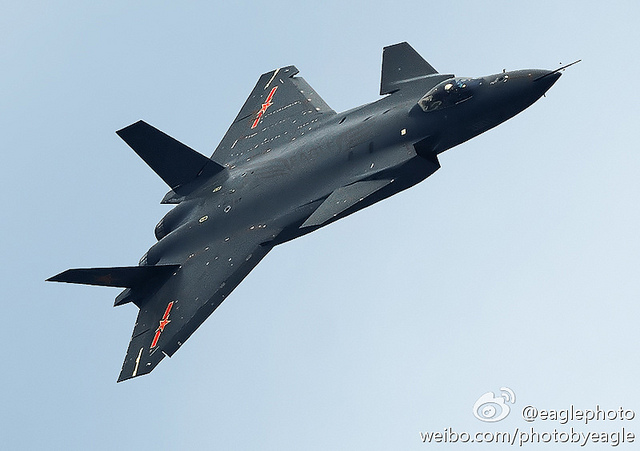
Chendu-J20China’s been making a lot of waves in the news lately thanks to the development of its stealth fighter program. And though they may be thirty years late to the party, they are in a perfect position to take advantage of all the latest developments. Much like all 5th generation stealth craft, the J-20 is based on the concept of a twin-engine multi-role fighter aircraft that is stealthy, not undetectable.

Beginning in the 1990s, the J-20 was unveiled in 2011, though it is not expected to enter service between 2017 to 2019. However, China has publicized the creation of this fighter extensively as part of its modernization efforts. The source of the technology remains unknown, though some speculate that it was reverse-engineered from samples taken from the downed F-117 in Serbia (see below). Chinese sources deny this, however, claiming it was the result of home-grown innovation.

And like other 5th Generation aircraft, the J-20 has a belly-mounted internal weapons bay for short and long-range air-to-air missiles and two smaller lateral weapon bays behind the air inlets for short-range weapons. From some photos obtained of the fighter, the armament capacity appears to be the same as the F-22 Raptor, with six weapons mounts.

F-117 Nighthawk:
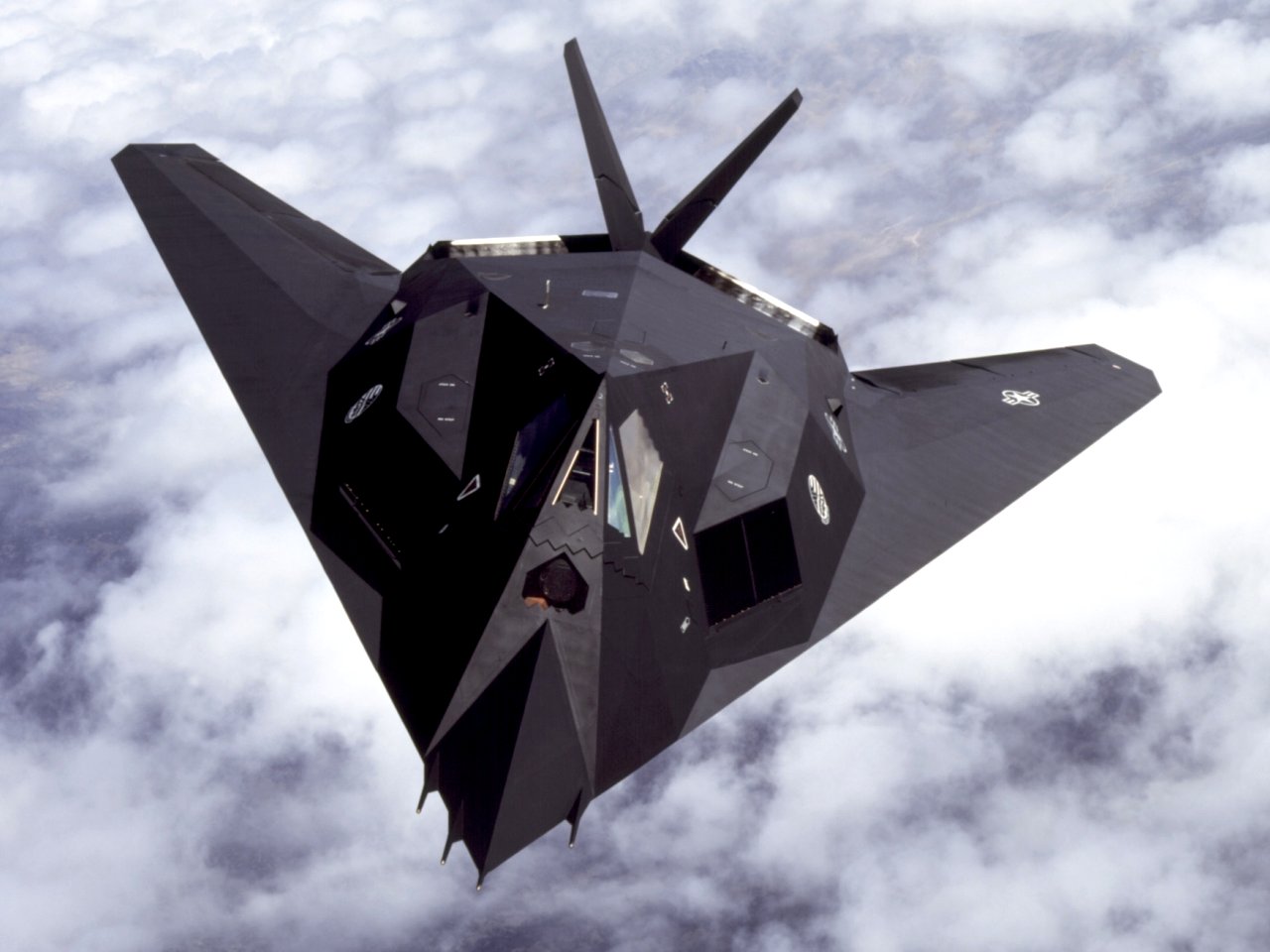
F117-NighthawkThe first ever stealth craft to be unveiled, the Nighthawk will forever be known as the “Stealth Fighter”, despite its ground-attack role. A single-seat, twin-engine craft, the Nighthawk was developed in the late ’70s by Lockheed Martin. By 1983, it was introduced to the US Air Force but was not officially unveiled until 1988, when it began participating in military operations.

The first was in 1989 during the US invasion of Panama. However, this would be overshadowed by its more publicized role in the 1991 Persian Gulf War. There, it took part in 1,300 sorties, scored direct hits on 1,600 high-value targets in Iraq and was one of the few US and Allied aircraft to actually take part in strikes on downtown Baghdad. Throughout that war, and despite the proliferation of AAA, not a single craft was shot down.

During the Kosovo War in 1999, the first F-117 was shot down outside of Belgrade by a Serbian missile brigade that had been experimenting with short-wave detection. This one incident remains the only combat loss in the aircraft’s operational history, which ended in 2003 due to the introduction of the F-22 and other newer generations of stealth aircraft.

F-22 Raptor:
F-22A_Raptor_-03-4058
The original 5th generation fighter, the Raptor is a single-seat, twin-engine supermaneuverable fighter aircraft that uses stealth technology in a revolutionary way. Unlike previous generations of fighters, like the F-117, that attempted to be invisible on radar, the F-22 was designed to be difficult to detect, thus affording it a tactical advantage against enemy aircraft. Hence, it was designed primarily as an air superiority fighter but has additional capabilities that include ground attack, electronic warfare, and signals intelligence roles.

Development of this fighter craft began in the early 80s with the intention of replacing the older F-15 and F-16 fighters, largely in response to the development of newer Soviet aircraft (such as the SU-27 and MiG-29). By the early ’90s, the first prototypes were released and highly publicized, with the first test flight taking place in 1997. In addition to its internal bays, thrust vectoring, and state-of-the-art control systems, the F-22 also incorporated stealthy materials and molded surfaces to minimize radar signature.

Since it entered service in 2005, the production of F-22’s has been stalled and restarted a few times over, largely in response to the development of the F-35. In 2010, funding for further production was officially cut. Nevertheless, the F-22 remains one of the most imitated designs in the world, inspiring the Sukhoi PAK FA and the Chengdu J-20.

F-35 Lightning II:
f-35s
The latest 5th generation stealth craft to be developed in the US, the Lighting II is a revolutionary design that incorporates all previous innovations in the field of stealth fighters. Developed in the ’90s as part of the Joint Strike Fighter (JSF) program, the F-35 was intended to replace the aging F-16, A-10, F/A-18, and the British and American Harrier jump jets.

Though not officially in service yet, it made its debut flight in 2006 and is expected to join the US Air Force by 2016. In total, three variants have been proposed, each designed to fill a different type of mission profile. The F-35A is a conventional take and landing fighter, the B variant incorporates short-take off and vertical-landing capabilities, while the C is designed to be a carrier-based model.

Much like its predecessor, the F-22, the Lightning II possesses thrust vectoring, meaning it can adjust the angle of its thruster to assist in difficult turns. In the F-35B model, the engine nozzle is capable of being aimed straight down and, combined with a centrally-mounted turbofan, allows the craft to hover in place and land vertically. Its internal weapons bays, stealthy shape, and materials – all of which are adapted from the F-22 – also give it a low radar signature. In summary, it is the most advanced and versatile stealth fighter yet to be introduced to the world.

Sukhoi T-50:
Sukhoi_T-50
Last, we have Russia’s answer to the 5th generation stealth fighter challenge. Beginning in the late 1980s as a successor to the Mig-29 and SU-27, the T-50 is the culmination of Russia’s PAK FA (Prospective Airborne Complex of Frontline Aviation) program. A single-seat, twin-engine jet fighter, the T-50 represents the former Soviet bloc’s efforts to develop weapons comparable to the Western Allies.

The T-50 made its first flight in 2010 and is expected to join the Russian Air Force by 2015/16. Much like all 5th generation fighters currently in development or in operation, its armaments consist of two internal bays for missiles and either one or two GSh-301 30mm cannons.

In terms of its profile, the T-50 bears a striking resemblance to the F-22. It also takes advantage of some of the latest in avionics technology. These include three X-band arrays planted in the front and sides of the plane, as well as two L-band placed in the wings. This allows for greater detection abilities, especially where stealth aircraft are involved. What’s more, the new technology enables fighter-to-fighter information sharing.

Final Thoughts:
Pretty cool huh? Given the advance of technology over the years, it seems like only a matter of time before fighters incorporate direct control through neural links, and polymorphic frames that can change shape based on altitude and air resistance. What’s more, in a few years time, we’re likely to see aircraft that can take advantage of the latest in adaptive camouflage and real-life cloaking technology, making the terms “stealth fighter” and “undetectable” quite literal! Cool indeed!

Remembering Neil Armstrong

“That’s one small step for man… one giant leap for mankind.”

-Neil Armstrong, July 20th, 1969

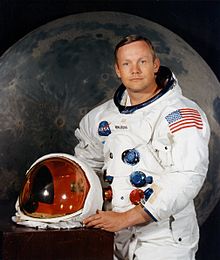
This iconic statement is the most famous to ever be uttered by a human being and still serve to inspire hope and fire the imagination, even after 43 years. Today, the world has lost one of the greatest historical figures of the 20th century, the man who was the first to walk on the moon and speak the words that signaled the beginning of a new era.

Yes, after decades of living large and inspiring countless people all over the world, Neil Armstrong passed away at the age of 82. According to statements made by the Armstrong family earlier today, Neil died following complications from heart-bypass surgery he underwent earlier this month, just two days after his 82nd birthday on August 5.

Best known for being the commander of Apollo 11, the NASA mission that sent a manned spacecraft to the moon, Neil will forever be remembered for doing what countless people have dreamed of doing since the dawn of time. After years of training, planning, development and testing, he and astronaut Edward “Buzz” Aldrin became the first to not only slip the bonds of Earth’s gravity, but the first to walk on a celestial body that was not Earth.

This achievement, great in its own right, was also of extreme historical significance. Taking place during the height of the Cold War, only six years after the Cuban Missile Crisis, Armstrong’s first steps on the moon provided a generation beguiled by arms races and fear with a sense of accomplishment and pride. His words, which were spoken on behalf of, and directed to, all of mankind even helped bridge the gap between East and West. Though there was a race on to see who could reach the Moon first, all of humanity shared in the celebration that a man, any man, had actually attained what many thought was unattainable.

And although he never retired from the public eye after that momentous achievement, Neil was nevertheless a very private man compared to his peers. Whereas Edward Aldrin and astronauts like John Glenn and Harrison Schmitt went on to become public figures, doing guest appearances on TV shows and running for political office, Neil did very little to draw attention to himself. This was, according to his closest friends and family, because of his intensely private nature.

In fact, according to James Hansen, author of “First Man: The Life of Neil A. Armstrong,” Neil was often confounded by all the attention and accolades he received as a result of his historic accomplishments. As Hansen stated in an interview with CBS, “All of the attention that … the public put on stepping down that ladder onto the surface itself, Neil never could really understand why there was so much focus on that.” Wow. Humility on top of everything else, that’s the way to go!

Apparently, attempts were even made to try and coax Armstrong into running for public, but he repeatedly refused. Instead, Neil spent his post-Apollo 11 career committed to furthering the fields of aviation and space explorations from behind the scenes and never once tried to exploit his fame. In fact, his last known public appearance was in November of 2011 when he appeared before Congress to received the the Congressional Gold Medal (pictured above).

I think I speak for us all when I say he will be missed, and definitely not forgotten. I think I speak for us all when I say that the remembrance ceremonies and honors conferred on his name will be tremendous! Ironic, considering Neil probably would have refused them all 😉 RIP Neil Armstrong. May you forever walk amongst the stars!

***As a side note, I would also like to say that I hope the various conspiracy theorist of the world, the people who insist that this historic achievement was a hoax, or that it was actually filmed in a studio, take the time to bow their heads and hold their tongues. We are all entitled to our opinions, but such conspiracy theories are not only an insult to history and the intelligence of people who witnessed the event, its also an insult to this man’s memory. Please take this day to focus on something else, like the conspiracy behind putting fluoride in the water, Area 51, or 9/11 being an inside job, k? Many thanks, weirdos!***

Red Dawn Relaunch

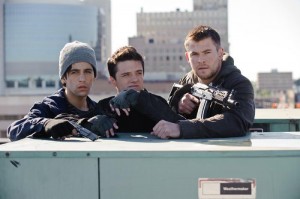
Oh boy, I thought as when I heard about this preview. Another reboot of a cult-classic huh? As I’m sure I’ve said a million times before, why doesn’t Hollywood just admit that they are out of ideas. Sure, this relaunch of the movie about a possible Soviet Invasion will star Thor (Chris Hemsworth), and sure they are taking a slightly more realistic take by making at least one of the “Wolverines” an actual combat veteran (as opposed to say, a bunch of teenagers and Patrick Swayze).

However, beyond that, there doesn’t appear to be anything new or remotely realistic about this movie. For one, the plot has been updated so that small town America is invaded by Cuba and North Korea. Really? Two tottering Soviet-era dictatorships that can’t even feeds their own people and are on the brink of collapse manage to circumvent America’s coastal defenses and occupy the United States? Really? This movie sounds like Cold War propaganda, sans the actual Cold War!

At first, I thought I saw some meager potential here. But that was before I read the actual description of the plot. After that, I felt like grabbing the producers and execs who thought this was a good idea and giving them a good shake. “This is why you can’t reboot Cold War Era ideas in the post-Cold War world!” I’d say. The first movie made sense in that it resonated with Americans who were hearing about Russia’s fortunes in Afghanistan. Red Dawn played to the imagery coming out of that war, where young fighters were running around, their heads wrapped in bandanas, and taking out Russian tanks and helicopters with Stingers and RPGs.

But this? This just seems like another excuse by Hollywood producers to do something that’s been done, throw in some cool new action sequences, and sit back and count their money. If they had any guts, they’d have made it China invading instead of Cuba and North Korea. But then again, you gotta hedge your bets right? Can’t piss off the real threats if you’re currently tied at the hip economically. Better to talk about the marginal countries that are under embargo and no one worries about anymore.

Ah well, at least the trailer looks cool. Might even be a good candidate for download.

The Post-Apocalypse in Sci-Fi (Part III)

The Book of Eli:
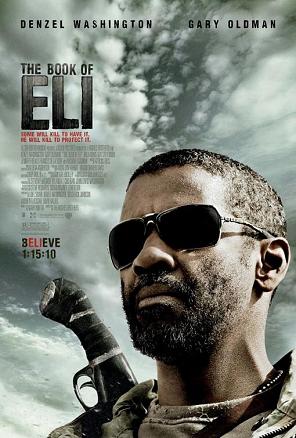
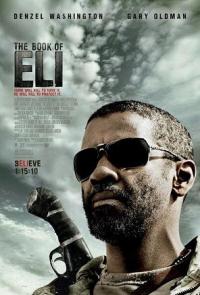
This 2010 movie – starring Denzel Washington, Gary Oldman and directed by the Hughes Brothers – takes place in a post-apocalyptic United States thirty years after nuclear war has left it a scarred and desolate place. Enter into this a wandering nomad named Eli (Washington), a man who is wandering to the West Coast with a mysterious book that “a voice” commanded him to take there. As he travels, the importance of his task is made clear, as the history of the post-war world he is making his way through.

Along the way, he encounters a town run by Carnegie (Oldman), a  man who dreams of building more towns and controlling their residents through the power of a (again) a mysterious book he has heard about. His men are busy at work, searching the surrounding countryside for this book, but so far to no avail. When Eli arrived in town, Carnegie forces him to stay, as he is the only other literate person he has ever encountered.

Ultimately, it is learned that Eli has the book Carnegie is seeking, and that this book is none other than the Bible. He escapes from town and is pursued by Carnegie’s daughter, Solara (Mila Kunis). He explains to her that the Bible he carries is the last remaining copy since all others were destroyed after the nuclear holocaust. He was guided to it by a voice, he says, and has since been making his way across the country, guided by his newfound faith.

Eventually, Carnegie catches up to them, mortally wounds Eli and takes the Bible for himself. However, Solara manages to escape from his custody and begins transporting Eli to San Francisco so he can complete his mission. They come at last to Alcatraz where a group of survivors has been holding up under the watch of the curator named Lombardi (Malcolm McDowell). When Solara reveals they have a copy of the King James Bible, they let them in. Eli, who for the first time is revealed to be blind, begins reciting the Bible from memory.

Back in Carnegie’s town, he manages to unlock the Bible and is horrified to see it is in braille and that his wounds will soon kill him. Meanwhile, Eli dies in Alacatraz just as the printing press there begins printing copies of the Bible and the curator puts the original on a shelf next to the Torah, Tanakh and the Qur’an. Solara decides to leave and head back home, taking with her Eli’s possessions in the hopes of making a difference. She, like him, has become a wanderer guided by faith.

Granted, the message of this movie might seem a little over the top. I, for one, can’t imagine why post-apocalyptic people would destroy Bibles. If anything, I would think they would take their frustrations out on science and turn to religion for solace. Still, the point is made very clear through several key acts of symbolism. Eli, though blind, is guided by faith and it keeps him alive. And though he is robbed of the Book, the true source of it’s power, which Carnegie wants to abuse for the sake of power, lies in Eli’s own self. Really, the message couldn’t be more clear, and yet it is demonstrated with a degree of subtly that one would not ordinarily expect from a movie with a religious message. But it’s not so much about the Bible itself, it’s about maintaining hope and faith in a world where these things have been abandoned.

A Canticle for Leibowitz:

Published in 1960 and written by Walter M. Miller Jr., this novel is a considered a classic of post-apocalyptic sci-fi by genre fans and literary critics alike. Renowned for its themes of religion, recurrence, and church versus state, this book has generated a significant body of scholarly research, yet it was strangely the only novel Miller wrote in his lifetime.

Inspired by Miller’s own participation in the bombing of the monastery  at Monte Cassino in WWII, the story takes place in a Catholic Monastery in the South-Western US after a nuclear war – known as the “Flame Deluge” – takes place. Known as the Albertian order, the monks who inhabit this monastery are dedicated to preserving humanity’s scientific knowledge and rebuilding civilization over the course of thousands years.

The story opens roughly 600 years after the war takes place, in a time when science and technology, even the idea of literacy itself, has been almost wiped out by a campaign known as “Simplification”. At around the same time, a Jewish electrical engineer named Isaac Edward Leibowitz, who worked for the military, converted to Christianity and founded the Albertan order.

After generations of hiding and smuggling books to safety within the orders walls, Leibowitz was betrayed and sacrificed by “Simpletons”, at which time the Catholic Church had him sainted and ordered the monastery beatified. Centuries after his death, the abbey is still preserving “Memorabilia”, the collected writings that have survived the Flame Deluge and the Simplification, in the hope that they will help future generations reclaim forgotten science. The story is structured in three parts titled: “Fiat Homo”, “Fiat Lux”, and “Fiat Voluntas Tua” (Let There Be Man, Let There Be Light, Thy Will Be Done), with each part comprising six centuries each.

In Fiat Homo, which takes place in the 26th century, events revolve around a young novice who while on a Vigil, finds his way to a bomb shelter with the help of a mysterious Wanderer. The discovery triggers an uproar at the Monastery, as it seems that the shelter contains relics belonging to Leibowitz himself. Some fear the sensationalism triggered by the discovery will hurt Leibowiz’s canonization, which is still being debated. After many years, the canonization is given the green light and Francis is sent to New Rome to represent the order at the Mass. Unfortunately, he is murdered in the wilderness and is buried, by none other than the Wanderer himself!

Fiat Lux opens up  in the 32nd century, 6 centuries later, when the New Dark Age is coming to an end and a New Renaissance beginning. At this point in time, the Abbey is coming into conflict with the city-state of Texarkana, a metropolis’ who’s growth was hinted at in the last pages of Fiat Homo. The mayor, Hannegan, is essentially an upstart dictator who intends to become ruler of the entire region my manipulating alliances and gaining access to the Abbey’s own stores of knowledge. In the end, Hannegan’s intentions to occupy the abbey and make war on his neighbours leads to a schism whereby Hannegan is excommunicated by the Pope and he declares loyalty to the Pope to be a crime in his domain.

In the last part, which takes place towards the end of the 38th century, humanity has once again returned to a state of advanced technology, complete with nuclear power, weapons, and even starships and extra-solar colonies. As a state of cold war sets in between the Atlantic Confederacy and the Asian Coalition, the Order begins to enact a contingency plan known as “Quo Peregrinatur Grex Pastor Secum” (“Whither Wanders the Flock, the Shepherd is with Them”). As the nuclear bombs begin to fall, members of the Order board a starship and launch for deep space. With Earth about to succumb to nuclear war yet again, the Order is heading out to ensure that both humanity and its knowledge survives.

The stories central themes, which include the rivalries between church and state and the cyclical nature of history, are what make it such a memorable and enduring classic. Even though it is set in a fictitious future, it is loaded with allegories that connect it to the past. Nuclear war in the near future is the fall of Rome, the ensuing New Dark Ages a reiteration of the last, and the final nuclear holocaust between the Coalition and Confederacy represented contemporary fears of nuclear Armageddon.

By the Waters of Babylon:
Also known as “The Place of the Gods”, this short story was originally published in 1937 by Stephen Vincent Benét. Taking place in a future where industrial civilization has been destroyed, the story is narrated by a young man named John, a son of a priest who’s people live in the hills. In his day and age, John’s people believe that past civilizations were in fact Gods. There homes are considered hallowed ground and only priests are permitted to handle metal artifacts taken from them.

Eventually, John decides that he will go to the Place of the Gods, an abandoned city that was once part of industrial civilization. In order to gain his father’s approval, he claims he is going on a spiritual quest, but keeps the intended location a secret. John then journeys through the forest for eight days and crosses the river Ou-dis-sun to make his way to the sacred place.

Once he gets to the Place of the Gods, he finds abandoned buildings, statues and countless indications that the “Gods” were in fact human. When he finally finds the remains of a dead person in an apartment, he comes to realize the truth. The Gods were in fact humans whose power overwhelmed their better judgement, hence they fell.

Upon returning to his tribe, John tells his father of the place called “New York”. It is at this point that it is made clear that the “hill people” live in the Appalachians, and the river he crossed was the Hudson. In the end, his father warns him that recounting the experience to the other tribe members will have destructive consequences. The truth, he claims, can be bad if not conveyed discretely and in small doses. The story ends with John promising that once he becomes the head priest, “We must build again.”

Farnham’s Freehold:
Based on his own experiences in building a fallout Shelter, this 1964 novel by Heinlein involves a family that is transported to the future after a nuclear explosion puts a dent in their reality. In addition to the thematic elements of nuclear war and time travel, the book also contains some rather interesting commentary on race relations and segregation in the United States at the time.

The story begins with the Farnham family holding a bridge game in their home, which is attended by Hugh, his alcoholic wife Grace, their son and daughter (Duke and Karen), her friend Barbara, and a black domestic servant named Joe. After they are alerted to the fact that nuclear war is commencing, the people rush to the bomb shelter and wait for it to pass. When it seems that the bombs have stopped falling and their oxygen is running low, they walk out and begin to investigate.

What they find is that they’ve been transported to Africa, where an advanced civilization now exists that uses white people as slaves. Initially, they suspected they had been sent into an alternate dimension, but quickly realize that they are in the future. They are spared because Joe, their black domestic servant, is able to communicate to their captors in French.

In time, Hugh and Barbara agree to take part in a time-travel experiment in exchange for their freedom. They are sent back to their own time, where they escape from the bomb shelter just as the bombs begin to fall. However, they soon realize that they are not in their own time, but an alternate dimension where things are just slightly different. They survive the war and agree to spend the rest of their lives trying to prevent the future they saw from coming to pass.

The Quiet Earth:
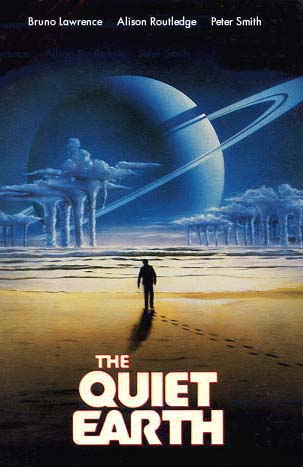
Originally a novel written by New Zealand author Craig Harrison in 1981, this story went on to inspire the loosely-adapted film of the same name which was released four years later. In both cases, the story revolves around a small group of survivors who awaken to find that the world is now devoid of humans and most other forms of life, and that time itself seems to have stopped.

The story begins with John Hobson, a geneticist who was experimenting with using radiation to activate dormant genes, which was meant to have an accelerating effect on human evolution. He wakes up in a hotel room from a nightmare where he was falling, only to find all clocks stopped at 6:12. Upon leaving the hotel, he finds that all clocks have stopped at 6:12 and that everyone appears to have simply vanished. He dubs this phenomena “The Effect” and begins looking for other survivors.

His journey takes him back to his research facility where he finds the corpse of his partner, Perrin, inside the radiation chamber. Retrieving Perrin’s locked box of papers and grabbing some weapons and supplies he sets out for Wellington. Eventually, he finds someone, a Māori lance-corporal named Apirana Maketuin, who agrees to accompany him. They eventually reach the capitol and settle in, hoping to find other survivors and run tests on “The Effect”.

Things deteriorate before long, as Hobson begins to worry that Api might be a psychopath due to his wartime experiences in Vietnam (he finds pictures of him posing with the mutilated corpses of Viet Cong). His plans to kill him with sleeping pills are interrupted when they accidentally run over a woman in the street while joyriding. They return to the hotel and make her comfortable but know she will inevitably die. This leads to a further breakdown between Hobson and Api and they fight. Api dies in the confrontation after apparently giving up.

Finally, Hobson breaks open Perrin’s box and realizes that his partner had him under surveillance because he considered him unstable. Hobson comes to the conclusion that the Effect was his doing since the the project cause the unraveling of animal DNA, and hence only those with the dormant gene pair would be spared. It is at this time that Hobson begins to have flashbacks from his last days at the facility, during which time he sabotaged the machine because of growing misgiving about the project and mistrust for his Perrin’s motivations. It was this sabotage that caused the Effect, and the reason Hobson slept through it was because he took what he thought was a fatal dose of sleeping pills.

Maddened with grief and guilt, Hobson jumps from the window and begins to fall to his death. But then, he wakes up in the same hotel room he found himself in at the beginning, recalling the same dream where he was falling. He checks his watch and it says it’s 6:12… Spooky! Though it bears a strong resemblance to such works as I Am Legend, The Quiet Earth went beyond in that it chose to focus on the themes of perception, culpability, and alternate states of consciousness. All throughout the book, it is not quite clear if Hobson is dreaming, in an alternate dimension, the last man on Earth who is responsible for the death of countless life forms, or just plain crazy.

Shadow on the Hearth:
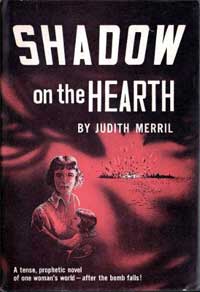
This post-apocalyptic novel, which was the first novel to be released by Canadian sci-fi author Judith Merril (1950), takes place a week after nuclear bombs have devastated, but not destroyed, civilization as we know it. The plot revolves around a mother named Gladys Mitchell and her two daughters – Barbara and Ginny, who are fifteen and five years of age – as they struggle to deal with worsening conditions and a system that is quickly becoming an abusive dictatorship.

For starters, all civil authority has broken down in the wake of the war and been replaced by the Security Office, a form of emergency services that exercises all power. Gladys’ contact with the services is the local “emergency squadman”, Jim Turner, a neighbor who begins to display a rather creepy fascination with Gladys along with a desire to turn the emergency to his own advantage.

Similarly, the difficult situation breeds suspicion and intolerance on behalf of the authorities who begins see enemies everywhere. The Mitchell’s maid, a woman named Veda, comes under suspicion when it is learned that she was off sick during the time of the attack. Much the same is true of Gladys’ old science teacher, who predicted that nuclear war would be inevitable and now fears the paranoid Security Office might suspect him.

Meanwhile, Gladys tried to maintain a disposition of stoic calm, mainly because she believes its her role as a mother to act as though everything is fine. While her intentions are good, she’s slow to admit that Turner and the authorities are corrupt, that their situation is bleak, or that she might need to manipulate certain people to get her way. But in the end, she is willing to go to great lengths to protect her family, from both external threats and the threat of dissolution.

In several key aspects, this story demonstrates some of the overriding themes and feelings that were present during the early cold war. We have the specter of war and dictatorship, the focus on the single-parent family, the idea of domesticity and sexism, and the affirmation of the mother figure who will do whatever it takes, even if she seems naive and silly, to keep her family safe and secure. While it might seem dated by modern standards, it is nevertheless a fitting and accurate portrayal of life in the 1950’s and the likelihood of what would come of it if the bombs started to fall.

The Time Machine:
Last, but not least, we have the story that has made my lists in one form or another on numerous occasions. In addition to being an example of utopian and dystopian fiction, The Time Machine is also a fitting example of post-apocalyptic science fiction. This is part of what makes H.G. Wells novella a timeless classic, in that it transcends or jumps between genres and can therefore be read from a number of different perspectives.

In this respect, the Time Traveler’s trip to the distant future, where the world has degenerated into a two-tier structure between the monstrous Morlocks and the stagnant but beautiful Eloi, can be seen as an example of post-apocalyptic society. What’s more, their respective degeneration is seen as the result of humanity’s obsession with class distinction, the masters becoming lazy and ineffectual while the workers have become cannibalistic and brutish.

Another apocalyptic element in the story comes towards the end when the Time Travelers recovers his machine from the Morlocks and travels another 30 million years into the future. Once there, he sees some of the last living things on a dying Earth, a red landscape similar to that of Mars which is covered by lichenous vegetation and crab-like creatures wandering across blood-red beaches. As he jumps further, he sees the Earth’s rotation gradually cease and the sun die out, the world falling silent and freezing as the last organisms die off.

In a deleted section of text, which H.G. Wells apparently included in the original serial version at the behest of his editor, but cut from the novel once it was published. Here, Wells demonstrated “the ultimate degeneracy” of man by having the Time Traveler escape from the Morlocks and jump once more before traveling 300 millions years into the future. Here, he found an unrecognizable Earth populated by furry, hopping herbivores, which he interpreted to be the descendents of the Morlocks and Eloi. Thus, in addition to first losing the instincts that defined humanity at its greatest, the Morlocks and Eloi, themselves descended from humans, even reverted to an earlier state of evolution in the end.

Though not a post-apocalyptic tale in the strictest sense, this story does contain the necessary elements of such a story. You have humanity degenerating as a result of cataclysmic events or its own inherent weaknesses, civilization as we know it being destroyed or disappearing, and even the world itself coming to an end.

Final Word:
And that’s all I got for post-apocalyptic sci-if. Sure, there are countless more examples that could be included, but three lists is enough for me and I’m neck deep in other concepts that are vying for page time. In the coming weeks, expect more news on technology, space exploration, the upcoming anthology, Data Miners (set for release in August) and plenty of assorted tidbits on stuff that relates to the world of science and science fiction. Take care all and see you again soon!

Sickness, more Alternate History, and some coming reviews…

Sickness, more Alternate History, and some coming reviews…

I hate being sick! Whenever the seasons change for me, I tend to come down with one of those colds that comes on hard and takes forever to leave. Well, this Fall season has been a double whammy, seems I’ve gotten sick twice in the last four weeks, which has meant a month of convalescing I could totally do without! But at least its given me time to ponder future writing projects.

For starters, I had an idea for an alternate history novel of my own. Its been something I’ve been interested in of late, as my reviews of Man in the High Castle, Fatherland and Guns of the South will attest. Reviewing Rabbletown by Mr. Attwood also gave me another push; somehow reading other people’s work always inspires me to write more of my own. And if there’s one thing I learned from reading other works of historical fiction, it is that there are two basic trends to every story.

1. History diverges due to key events happening just a little bit differently.
2. Ultimately, things converge again and familiar patterns reassert themselves.

Or, to put it mathematically, H = (Ce + Ha) / Env, where H is history, Ce is the Confluence of Events, Ha is human agency and Env is environmental (i.e. external) mitigating factors. Alteration of one (i.e. human agency) is what allows for divergence, but in the end, the other factors assert themselves and balance is restored. Okay, I totally made that up and it was unbelievably geeky! But also kinda cool, right? Ah whatever, my idea:

Red Sky At Night:

A working title, but one which was suggested to me by the maestra of title work (hi Katrina!) And given the title, one might suspect that Communism and/or Communists are the focus. They would be right! My story deals with a question that I’ve been pondering for a long time and with all the fiction I’ve read of late, stuff that deals with similar questions and “what ifs”, I began to turn it into an idea. In short, my story is based on the question of what would have happened had Leon Trotsky come to be leader of the Soviet Union instead of Stalin?

To be fair, this question has been asked by generations of historians and communists alike, particularly the latter group who wanted to distance themselves from Stalin after the full weight of his crimes and megalomania had been exposed. But for historians, the question is more academic, motivating by genuine interest instead of personal beliefs. Overall, they are simply interested in whether or not Trotsky would have been any gentler, or the course of Soviet history any different, had he been in charge.

But first, a little preamble. You see, it is one of the great questions of history why Trotsky did not disavow Stalin when he had the chance. Before his death, Vladimir Ilyich Ilyanov (aka. Lenin) wrote in his “Final Will and Testament” that Stalin was a rude, ruthless man who should never be allowed to have power. Trotsky was seen as the natural successor, and this Will could have shattered Stalin’s support. Stalin’s allies helped him to prevent the Will from being revealed at the 12th Party Congress; however, at the 13th, Trotsky could have revealed it to the Party and done irreperable harm to Stalin’s reputation. Instead, he made conciliatory speech that was intended to heal the rift between himself and Stalin’s followers.

However, this did not prevent Trotsky from being ejected from the Party, put into exile and murdered some years later. So the question of why – why DIDN’T Trotsky denounce Stalin when he had the chance? – has never been successfully answered. We can assume any number of things, but it is at this point irrelevant. The real question, as far as my idea is concerned, is what would have happened had he gone through with it? And that’s where things get fun… if you’re a history geek anyway!

For one, Trotsky wouldn’t have launched Stalin’s crash industrialization programs (aka. the Five Year Plans) in the later 20’s. In all likelihood, he would have continued Lenin’s New Economic Policy (NEP, which allowed for a degree of privatization) and when the big economic crisis loomed, have appointed Bukharin to deal with it (as opposed to purging him as Stalin did). This would have led to the slow recovery of the Soviet economy, and when the Great Depression hit in 1929, Russia would have continued to be spared the worst ravages of it while similarly showing signs of growth.

In addition, the Communists in China would not have been cut off as they had been by Stalin in the 1920’s. Chiang Kai-shek would have continued to fight them, but there would have been no massacre, meaning the Chinese communists would have been stronger and in a better position to dictate terms to Chiang when the Japanese invaded in the late 20’s. As a result, the Japanese army would have encountered stiffer, unified resistance as it fought its way south years later.

Similarly, in Europe, when the Nazi’s come to power in 33, Trotsky would have thrown his country’s support behind the German Social Democrats and would have committed the Comintern (Communist International Organization) to fighting Hitler once he seized power. Over the course of the next few years, during the re-militarizing of the Rhineland, the Anschluss, the Spanish Civil War, and the Sudenten crisis, Russia would have been the most outspoken advocate for resistance.

This had the effect of inspiring people from other nations, particularly France, England and Czechoslovakia, into doing the same, often in defiance of their own governments who sought accommodation. Combined with the fact that Russia’s heavily regulated economy had avoided the scourges of the Depression, these acts of support would convince many foreign nationals of the need to stand with Russia. And without Stalin’s own paranoia and megalomania to discredit and embarrass the Soviet Union and its supporters, these efforts were far more successful.

Finally, after years of advocating Collective Security through the United Nations, Trotsky’s Foreign Commissar – Maxim Litvinov – saw his efforts to create an anti-fascist alliance comes together. During the Sudeten Crisis of 38, Hitler found himself being resisted on all sides. France declared that it would mobilize to help the Czechs since Russia was promising the same. Britain, fearing a Communist victory in the next election, mobilized to pressure Poland and Romania to come to a right of passage agreement with Russia, rather than pressuring Czech president Benes to concede the Sudetenland to Germany. As a result, Hitler was overruled by his own commanders and forced to stand down.

Hilter was unable to recover from this political setback, and when Germany similarly suffered an economic recession a year later, his support dwindled further. By the end of 1939, he found himself ousted from power and the SPD was restored. Mussolini and Franco, one-time allies of Hitler’s, were also brought to heal, the Italian dictator going as far as to relinquish his countries control of Abyssinia (Ethiopia) and remove all his troops from the Balkans. In Asia, Japan also found itself without a friend and was forced to withdraw from the Chinese mainland. Europe and the world celebrated as it seemed that the aggressors had been contained and another world war had been averted.

But this jubilant mood did not last long. Without World War II and the post-war reconstruction to stimulate the economies of the western nations, the Depression continued for several more years. The post-war population boom similarly did not take place. Instead, Europe and the Anglosphere witnessed slow recovery as nations on the continent resorted to increasingly socialist measures to address their economic woes and closer trade ties were established with Russia. Russia, now enjoying cordial ties to most European nations, similarly began to open its economy and its borders to foreign investment and tourism. By the late 40’s, most economies had pulled out of the Depression through a combination of social programs and regulated trade.

This had the added effect of creating a rift between the Continent and Britain, a country that prided itself on its free markets and traditional liberal approach. As socialism began to take root from Lisbon to Vladivostok, Britain sought new alliances to protect its way of life. They found it in the US, which was once again experiencing a Red Scare and cracking down on communists, labor leaders and protesters. Together, they created a secret alliance to protect their mutual interests and continued to eye the Continent with suspicion.

Relations were further strained when in the 1950’s, India began to demand independence. Without the threat of Hitler, the British government had never come to an agreement with Ghandi for the sake of independence. What’s more, agitation on behalf of Europe’s new socialist organizations became a constant source of irritation. Though France was loath to give up its own Empire, pressure from the League and its own populace was mounting. In time, France gave up trying to work with Britain to find a common solution, began disbanding its own empire and urged Britain to do the same. Britain refused and held on to its possessions, but by the early 60’s, virtually every French speaking colony was free and joined the League of Nations.

Which brings me to the opening of my story. It is the early 60’s, the world is divided between two major blocs – the League of Nations and the Anglo-American Alliance – and in between are dozens of nations that are either neutral or part of one or the others sphere of influence. Relations between the two sides are strained as competition for markets, alliances and weapons have reached a tipping point, and some are beginning to fear the possibility of open war. Within this talk of war are even more frightening rumors that both sides are researching advanced technologies – rockets, jet engines, super computers, and even (God forbid!) atomic weapons…

So as you can see, history unfolded quite differently due to the presence of one man instead of another. However, in time, the familiar patterns reasserted themselves. While World War II did not take place from 39-45, it does appear on the horizon by 1960. While there was no Cold War to speak of after 45′ between two nuclear-armed superpowers, a state of detente exists between two similar global powers by the late 50’s with the prospect of a nuclear war by the early 60’s.

That’s all I got for now. More to follow just as soon as Data Miners is complete and my others ideas have panned out. That’s the fun thing about alternate histories though isn’t it? Since they have to do with past events, no one can ever accuse you of not being “current”, right? Who knows? If its successful, I might even write a sequel, Red Sky At Morning, about the aftermath. Thank you honey (my wife) for THAT title idea!

Coming Reviews:

On top of that, tackling “McDune” franchise in a more comprehensive way inspired me to do a more in-depth review of both the Legends and Hunters/Sandworms of Dune series. I’ve shellacked the latter ones before, but I’d like nothing better than giving them a good, specific thrashing! Fans of the elder Herbert, unite and hear me shellack! So, in the coming weeks, I hope to do a review of Hunters, the Machine Crusade, and possibly the Battle of Corrin and Sandworms as well. And since I’m almost finished with the A Song of Fire and Ice series (i.e. Game of Thrones, etc) I might publish some thoughts on them too. Can’t wait for season two of the miniseries! Go Starks! Screw the Lannisters!

P.S. for those who don’t know, Katrina runs a fun and fascinating website named Were You Wondering? She even lets me contribute for some reason… Here’s the link:
wereyouwondering.com

And don’t forget to support Wikipedia! Free flow of information! Fight the power!
Support Wikipedia