A few days ago, I went looking for pictures which I felt perfectly encapsulated the story I was going for. I wanted something that spoke of desperation, of shock, awe and terror, yet also captured the drive and determination of people who had to continue no matter what. This print is what I found…
Beautiful isn’t it? Not to mention inspiring. It is for this reason that I chose to post it as the chapter header for Crashland – chapter 2, which is appearing now at Story Time.me. For those who don’t know, this is serial website where audiences get to vote on how they want the story to unfold. The first chapter is a set-up for the rest of the story which develops through audience participation.
In the case of Crashlands, the audience was given an apocalyptic scenario where the world of the near future was brought to its knees through infopocalypse. In the opening chapter, the story’s main character, William Holden, found himself along in the streets of the darkened city hoping to find help. It ended with him being confronted by a series of dark shadows, men he suspected meant to do him harm. Audiences were asked what Holden should try to do… Run away, attack the men, or try to reason with them.
After days of letting the votes come in, it seems the audience has spoken. Option C is how things will unfold! Come on by and check out Chapter 2 and see what comes of Holden’s attempts to talk his way out of this mess!
The following are the core concepts of the novel The Repossession Mambo, by Eric Garcia (the same guy who brought us Matchstick Men and the Anonymous Rex series). It’s 2025. Thanks to a company known as “The Union”, society has been flooded with artificial organs and just about everyone has one. They have saved and prolonged many a life, and cost a mint! And if you fall behind on your payments, a Repossession agent will come to your house, slit you from your navel to your neck, and retrieve it.
In short, its a dystopian future where a single company an unrealistic amount of power – the power to save live, the power to take it away. Most people are struggling just to make ends meet and as a result, the debt-ridden masses struggle to make their payments and stay alive. Right out of the annals of classic sci-fi. And with all the other cyberpunk concepts that have been done, I’m surprised someone didn’t tackle the issue of artificial organs sooner.
And, let’s face it, the premise is very much in tune with our day in age, released at a time when homeowners and families are struggling to avoid foreclosure on their houses thanks to a series of bad mortgages (and re-mortgages) that they were sweet talked and pressured in taking them in first place. Yes, for people coming through the worst economic crisis since the Great Depression, and who are used to dealing with punitive cost of privatized health care, this movie was sure to resonate. A wonder then why it did so poorly at the box office!
PlotSynopsis: As already noted, the story opens on the US in the near future. Artificial organs, joints, and even a neurological matrix, have revolutionized life by ensuring that the terminally ill, crippled and people near brain death can live on happily, assuming they can pay of course!
Small hints are given as to what is going on in the world at large, all of it quite familiar and relateable to today. On the one hand, there is loose talk of an ongoing debt crisis and a crippled economy. There’s also the passing mention of US soldiers gearing up to go into Nigeria in what has been deemed “Operation: Hope Springs Eternal” (a parody on “Operation: Restore Hope” or “Operation: Iraqi Freedom” perhaps?)
Into all this, we get Remy (Jude Law) who appears to be writing a manifesto of sorts. He opens it with a reference to Schrodinger’s Cat, which any fan of Big Bang Theory will instantly recognize. He wonders how anything could be considered both alive and dead in the same instant, clearly alleging that his story illustrates just that. The movie then opens in a flashback sequence, all things building towards his session in a slum with an antiquated typewriter.
Basically, Remy was a Repo Man who, alongside his age-old friend and army buddy Jake Freivald (Forest Whitaker), is considered the best in the business. However, Remy’s wife would prefer it if he transferred to sales and stopped doing the grisly work of harvesting people’s organs for money. He agrees, but also tells Jake he will do one last job. He is nearly killed when his equipment (a defibrillator) shorts out and nearly kills him. He wakes up in the hospital and is told that he will need an artificial heart now. His angry, panicked reaction tells us all we need to know about his feelings on that 😉 After years of watching others get screwed over by The Union, he now is facing that very thing himself.
Naturally, he tries to go back to Repo’ing since his wife has already left him and he needs the money. But somehow, he just can’t bring himself to do it anymore. What’s more, time is running out on him making his payments. During a final attempt, he goes into a “Nest” – a slum area where people go to flee The Union’s repo men – where he is attacked and knocked unconscious.
He awakens to find a woman named Beth (Alice Braga) – a lounge singer that he’s seen playing clubs before – living in one of the abandoned buildings and decides to help her. After standing watch as she goes through withdrawal, he agrees to help her since they are in the same boat. Seems she has mucho enhancements, including artificial joints, organs, eyes, and ears.
He breaks into the company storeroom and begins filing the bar codes off of all the spare parts they currently have. No bar codes, no scans will be able to detect that they have organs with are past due. However, Remy is caught by his friend and told to get out while he can. Back at their slum lair, Beth has set him up with an old typewriter she found. He sets to work banging out a “cautionary tale” about what he did and what he’s learned, until at last a repo man finds them and they are forced to kill him. Naturally, Remy outsmarts the man and he dies, but Beth is injured in the course of things. They are then forced to find a black market dealer who will fix her up, which takes them to another “Nest”.
Unfortunately, Jake finds them there and reveals to Remy that he is responsible for shorting out his defibrillator. By forcing him to meet the payments of an artificial organ, he figured his friend would never leave the business. The two fight, and in the course of it, Remy is knocked unconscious. What follows is a total mind-f*** which is comparable only to Inception! I shall break it down succinctly.
Basically, Remy wakes up to find that Beth incapacitated Jake. They then flee together and decide the only way they can resolve this is to break into corporate HQ, find the “Pink Door” where repo personnel make their returns, and physically scan their organs. After an over-the-top scene where Remy fights everyone between him and the “Pink Door” (which is ridiculously labeled as such), they break in and begin performing field surgery on themselves so they can scan the bar-codes.
Jake and their boss walk in a moment later, and Jake decides to switch sides and kills their boss. They blow up the repossession machine together and escape to the tropics, where Remy has apparently published his manuscript under the name The Repossession Mambo. However, this idyllic scene is interrupted when things begin to get fuzzy and some hiccups appear, as if it were all a recording…
Oh wait, it is! You see, in real life, Remy was rendered near brain-dead from the blow Jake gave him. The medics who arrived shortly thereafter hooked him up to one of the new neurological matrix’s in order to keep up his brain function. Hence, all this stuff about beating the company and escaping to the tropics was all a lie. Jake also tells them to leave Beth (unconscious but not dead) alone for him to deal with later. He then picks up Remy’s manuscript and notices the title, the same one featured in his little reverie.
I seriously wasn’t expecting that, but respected the movie more for the little dystopian twist at the end. It was in keeping with the whole tradition of cyberpunk tales, making sure that things like happy endings only happen in the movies… or not!
Final Thoughts:
I’ll be honest, this movie didn’t suck. It was very hard to take Jude Law seriously as a cynical, bad-guy, but for the most part, it was ably acted. It was also hard to believe that a former jarhead turned repo man, a man who for all intents and purposes seemed to like killing and didn’t care about the pain he caused, could maintain a marriage and a family. Somehow, these two sides of his personality didn’t fit. And lastly, the gore level, especially in that scene behind the “Pink Door” seemed gratuitous. It’s like, if they can invent scanners that can read a bar code through flesh and clothing, why do they need to slice opens their own bodies to scan the bar-codes for the big machine? I might have mentioned that the fight scene which brought them there was also pretty stupid, but of course, that was all in a dream! Technically, it doesn’t count 😉
But other than that, I actually liked this movie. It had plenty of thematic elements which landed for me. For one, there was the issue of a company pressuring people to sign-up for a product no one seemed to be able to afford. The scenes where we see the salespeople do their thing, or the boss’s BS about “you owe it to your family to do this” and “we can come up with a plan that fits your financial standing” were just too perfect. Tell me that wasn’t a parody of the banking industry, pressuring people into taking sub-prime mortgages when they could barely afford their current payments!
What’s more, the high costs of the new organs, which people had to turn to payment plans, credit, and whatever else to afford were clearly a reference to the health care crisis in America. People need life-saving procedures, have no choice but to sign up for them unless they want to die and leave their families behind. But in the end, its more than they can afford, and all the smarmy reassurances of the salespeople can’t change that very fact.
Yeah, it kind of bombed at the box office, but I’m thinking that rentals, DVD sales and Netflix might help it recoup its losses. And I strongly recommend people, at least those who aren’t turned off by blood and gore, take the time to watch it. If you’re a fan of dystopian sci-fi, you might just like it. And if you’re a writer of dystopian sci-fi (for example, me!) then you might just find it inspiring.
Repo Men: Entertainment Value: 7/10 (not really a nail-biter, but definitely not boring)
Plot: 8/10
Direction: 7/10 (nothing special, but ably shot)
Overall: 7.5/10
Time’s running out to get your votes in. Crashland, my cyberpunk contribution to the serial novel site of Story Time.com has been up for a week and the votes have been trickling in. In Chapter 1, the great crash occured, and the story’s protagonist found himself wandering in the dark towards the only lights still on in the city. It ended with him being confronted by a group of men in the street, and they seemed intent on stopping him…
From that chapter, I asked voters what they wanted to see next. Would Holden try to reason with them, would he attack them, or would he run away? All of this is pursuant to his making his way to the middle of the town where there appears to be some kind of rescue effort in effect. What he does here could either end his chances of reuniting with his family or simply be a diversion along a long and difficult path.
Out of ten votes so far, seven said they wanted to see Holden try to reason with the men. One said to attack, two said to run away. But there’s still time to determine his fate. You have the power readers, after all, this is a serial novel. What you say, goes!
“An author should always seek to engage their audience making them care about the characters and invest in the worlds those characters inhabit, be they current or future versions of our world or other worlds entirely. A good story relies on forming a connection with the reader that will make the conflicts expressed in the narrative mean something.
Story Time will try to take that engagement further, where readers decide how the story will unfold.”
That is how Story Time’s founder, Goran Zidar, describes this new serial novel site. Here, audiences are encouraged to read the opening chapter of a story, then become active participants in how it will unfold. Simply go to the site, select a story, then choose from a list of options. The votes are then tabulated, and the next chapter is created released!
This site, I should note, began as part of Writer’s Worth/Grim5next. Those who are participating are member, and as one such person, I myself decided to join. This I did partly for fun, but mainly so I could head up its Cyberpunk division 😉 The first installment in that division, and the third story to open on the site, is titled “Crashland”. This is a future-tale I just started, set in an apocalyptic near-future where a killer virus has struck and is crippling the world’s information networks, bringing civilization as we know it to an end.
I invite all people to come on by and be part of the creative process! I’m excited myself since this is the first time I’ve ever taken part in a serial novel. Follow the link below to find the story in progress!:
Yaaaaay! This means you love me! You really love me! Alright, now that I got that out of the way, let me explain what this means and thank those responsible. The Kreative Blogger Award, which is much like the Versatile Blogger Award, is now making the rounds. I would personally like to thank versipellusfenris for the nod, and in accordance with the rules of the KBA, I will now share seven things about myself and nominate seven other worthy candidates:
1. I look good in golf shirts!:Years ago, I amassed a pretty respectable collection of short sleeve, three button shirts, most of which had a logo over the right breast. These are otherwise known as golf shirts, and I kind of went through a phase with them. Then I kind of got of that wagon, only to realize again more recently that they really suit me! Somehow, they just seem to hang off my shoulders and chest in a way that’s quite flattering.
2. I am vain: Yep, whenever I walk by a mirror, I can’t help but stop and wonder about my appearance. I don’t put much work into my hair, face, or wardrobe really. And hell, I can go days without shaving! But I will always wonder how my current getup makes my midsection look. Yes, I hate looking like I have a paunch or a beer gut, which is probably the biggest reason I work out. Call me vain or insecure, but I’ve found that when my abs are flat, the ladies give me way more second looks!
3. I start way more things than I can finish:When it comes to my writing, I often joke that I have a combination of ADD and OCD. A more accurate diagnosis would be that I will get into a project, become totally focused on it… for a few days, and then lose interest and move onto something else. I have about three dozen open projects in my documents folder as a result of this, many of which are undeveloped sequels or ideas that have been abandoned in their infancy. Some might say this is a natural part of the process, but frankly I’d like to be able to finish my ideas so I would have a wide selection to choose from!
4. I am all about Dystopian lit: This kind of goes without saying, but I just love stories that are dark, gritty and painfully realistic. I especially love writing them. While I’m not a misanthropist and I tend to think that humanity has plenty of redeeming features, I prefer to read and write stories that contain death, destruction, and don’t end with tidy little resolutions. Human beings are morally ambiguous, and there is no such thing as “happily ever after”!
5.The most important thing to me is friends and family: Many years ago, my family and I experienced several losses within a relatively short space of time. The one thing I took from this experience is that in the end, all we have is each other. When one of us dies, it becomes all the more important to pull each other closer. Years later, when my family moved all the way across the country (which is far since I live in Canada!) I found that being alone in the big city was not too nice. Lucky for me, I had my best friends close at hand. Now that I live on the other side of the country from them, I miss them terribly. Every time I go back for a visit is a very heartfelt time and I try to do it as often as possible. And of course, I can’t imagine life without my wife and kitty cat! They are the most important thing in my life and I would do anything for them, within reason of course 😉
6. The parable of the man in the hole:I’m not a very religious person. But there’s a parable I have done my best to live by, a sort of variation on the Golden Rule: A man is walking down a street when suddenly, he falls into a deep hole. He looks up and realizes there’s no possible way he can climb out on his own. One by one, he calls to passersby and asks them for help. One by one, the people try to help him, but fail. First someone tries to pass him a rope, but the rope breaks. Second, someone tells him to crawl up, spider-style, but he falls back down. Third, a priest tells him he can’t help, but that he can pray for him. Finally, the man’s best friend comes along, he jumps down into the hole with him. The man asks, “Why did you do that? I want to get out, not for you to come in!” His friends answers, “I’ve been down here before, I know the way out.” Make sense? Sure did to me! If there’s one rule I try to live by, it to help others who are in need out. Chances are, we’ve all been where they are, or may be someday in the future, and its what we’d want for ourselves.
7. I love beer!:Sure, lots of people love the combined result of malted grains, hops, water and yeast, not the least of which is for its deleterious effects, but I love it for so much more than that! I love the history, the process, and the culture of beer and beer making and could tell you volumes about it if prompted. Hell, I even started a website dedicated to it, check it out! The same is true of wine and other spirits, but not quite to the same extent. Maybe its the fact that its an organic process, or that it’s really dated, or that it is such a part of our social history. Whenever I go to a new place, I love to soak up the culture, and part of that is sampling its peculiar kinds of drink 😉
Okay, enough about me. Let’s get to who I want to see win this award (in alphabetical order)!
Ash Silverlock Fantasy enthusiast and someone who’s articles I’ve been known to read and find very interesting. Seriously, the guy combines an attention to detail and a working knowledge of fantasy and sci-fi with some mad research skills. Look him up!
David Arthur Beatson Aka. Literary Dormouse, a spritely writer and fan of fantasy fiction who’s love for the written word is reflected in the fact that he’s about to complete his Bachelors Degree in English Lit. Good luck!
David DeMar A recent acquaintance of mine who’s witty insights on the daily world and the grind we go through are sure to inspire, insight, and make you laugh.
Joachim Boaz A fellow lover of science fiction who’s interest and dedication to the genre are apparent from the very first post!
Nonoy Manga An artist and enthusiast of the popular Manga style. Check out the illustrations, they are real beauts!
The Tousled Apostle My buddy, fellow writer and literary enthusiast, Jamie A Hughes. Her insights on life, books, spirituality and family constantly leave me with a warm feeling in my heart!
Vandhana Snape A new discovery, first she found me and then I found her back! Though I’ve only known about her for a short time, I have found her perspective on several key global issues to be both fascinating and relevant.
“On receiving an interrupt, decrement the counter to zero.” -Programming The Z80 by Rodnay Zaks (1982).
The other night, I finally finished book II in the Sprawl series by William Gibson. Kindle for iPad, not paperback, which in itself was kind of a bummer. Somehow, I still haven’t made the transition for hard copies to ebooks. Probably never will. In any case, it was a rewarding experience which reminded me why I like Gibson in the first place. After getting through the Bigend Trilogy and the Bridge Trilogy and having somewhat mixed feelings, I got back to the trilogy that started it all, and was interested by what I found…
Count Zero is number two in the series that picks up after Neuromancer, the book which started it all for Gibson and which I read first. Set in the Sprawl – a.k.a. the Boston-Atlanta Metropolitan Axis (or BAMA) – this cyberpunk story deals with themes familiar to classic Gibson fans. Cyberpsace jockeys, freelance mercenaries, corporate monopolies, the street, and people so wealthy that they are able to cheat death and transcend humanity. In between, there’s all the familiar lexicon which Gibson invented himself: microsofts, biosofts, decks, trodes, jacking, jockying, ice, black ice, icebreaker, the matrix, Turing Police, cores, and all that good stuff.
However, there were also a few elements which put me in mind of his later work. Really, I could dedicate an entire post to the parallels between this book and his Bigend Trilogy. Again, there was the notion of the transformative power of wealth, how it means so much more than just having money and the freedom to use it. Given how much importance is placed on this in the book, how it serves as a sort of motivation in itself, one would get the impression that this is a serious preoccupation of Gibson’s. But then again, it was serious preoccupations of Fitzgerald’s, and for good reason! As he and Hemingway are rumored to have said to each other:
F: “The rich are different than you and me.” H: “Yes, they have more money.”
Plot Synopsis:
The story takes place seven years after the events of Neuromancer and centers on the lives of three people: First, a mercenary named Turner who has just recovered from a near-death experience and is beginning to question what he does. However, while attempting to flee his life, he is picked up and told he must do one final job. A scientist named Mitchell, working the company of Maas, wants to defect from his job and join the rival company of Hosaka. It’s up to Turner to pick him up and transport him back to Japan where, presumably, he will be safe to pursue his work in biosofts – a revolutionary biological form of technology. However, the run goes terribly awry when they find that the evacuee is in fact his daughter, and the company destroys its own fortress and kills Mitchell rather than let him fall into their rivals hands.
Second, we have a disgraced Parisian art dealer named Marly Krushkova who has been hired by a fabulously wealthy man named Virek to track down the maker of some mysterious art boxes. One of these boxes, which are based on Joseph Cornell’s artwork, apparently contain indication of biosoft construction. Virek, who is currently alive in a vat somewhere in Scandinavia, wants the technology so he can ressurrect his body and live forever. Using his dime and his contacts, Marly begins to follow the clues which will lead her to the abandoned station of Freeside, the once proud holding of the Tessier-Ashpool clan, where she will learn the shocking truth of the boxes.
Third, a young New Jersey boy named Bobby Newmark, hacker alias “Count Zero”, who is new to the jockeying game and comes across some “black ice” that nearly kills him. He discovers that the friend who gave it to him, “Two-A-Day”, received it from a questionable source and pawned it off on him to test it. When looking into this, he finds that Two-A-Day’s backers are a group of Haitain hackers who are interested in investigating a bunch of apparitions in cyberspace that appear as Voodoo gods. One of these “gods”, it seems, was responsible for saving Bobby’s life when he jacked and encountered the black ice, which was apparently of Maas construction. Their group must now move quickly, because it becomes clear that anyone who knows about the ice is being murdered.
Sound familiar? Well it should. This is classic Sprawl Gibson at his best! In time, all three threads, supposedly unrelated, weave together to the point where it becomes clear that Josef Virek, the wealthy mogul is pulling all their strings. For starters, we learn that Mitchell is not the genius he was rumored to be. Apparently, he was being fed all the information he needed to produce the biosoft technology. The person feeding him this info was apparently working from Freeside, and turns out to be one of the “apparitions” that is haunting cyberspace.
In addition, this same apparition instructed Mitchell to place biosoft technology in his daughter (Angie’s) head. Turner learns of these enhancements shortly after rescuing Angie and performing a routine scan on her. As a result, she is able to access the matrix anytime she wants without the need for a deck. Often, when she’s asleep, she is heard muttering things in Creole and having odd dreams which appear to coincide with events in cyberspace. For one, she remembers helping a boy named Bobby when he was being attacked by a malicious program. In short, she is the one who saved Bobby when he got into the black ice.
Last, Marly’s adventure to discover the box maker is related to the whole Maas/apparitions thing because Virek’s true agenda is to find the maker of the biosoft technology so he can use it to repair his dying body. As is made clear early on, he is alive only in the strictest sense, his remains being vet in a vat that keeps his vitals steady, and his brain wired to a Sim-Stim link that allows him to communicate with the outside world. It is also revealed that he intervened in Mitchell’s defection by paying off some of the mercenaries. However, his plans were upset somewhat when Mitchell chose to free his daughter instead of himself. So for the remainder of the novel, it becomes a race to capture her.
In time, she asks to be brought to the Sprawl where Bobby and his Voodoo friends are holding up inside a club. When they see Angie, Bobby recognizes her as the girl who saved his life. The Voodoo hackers also recognize her as one of the chief deities they have been observing in cyberspace. With some outside help, they make a stand against Virek and the mercenary Captain that was helping him and take them down. This they do by locating them both in cyberspace and arranging for their hiding places to be destroyed.
In the course of all this, it is revealed that these “apparitions” or Voodoo deities are in fact the splintered personality of the AI’s from book I that went by the names of Wintermute and Neuromancer. After coming together at the end of the story to form the first, fully-functional AI, the combined personality split itself up into several smaller constructs so that it would not be alone in the matrix. They adopted the form of Voodoo deities because they felt these suited them best, which is what attracted the interest of the Haitain hackers in the first place.
In addition, it was they who sent the Maas icebreak down from Freeside, as part of their wider plan to smoke out Virek. Knowing that he was trying to cheat death, they decided to intervene so that he wouldn’t be able to achieve the immortality and godlike power he had been seeking. A sort of “Tower of Babel” or Icarus-type scenario there, where a god or gods punish mortals for overreaching and trying to taste divinity.
Strength/Weaknesses:
As I said before, this book reminded me of why I turned to Gibson in the first place. His abilities at world-building, at submerging the reader in a world of megacities, megacorporations and cool and potentially frightening technologies is what established him as a master of cyberpunk in the first place. I was also happy to return to his world of familiar gadgets and tools, a la simstims, microsofts, decks, jockeys and mercenaries; not to mentions shadowy agendas and double-crosses. After having read through the Bigend Trilogy where the agendas were pretty benign and unclear, and the Bridge Trilogy where the settings were kind of inconsistent and really not that dark, it was a real treat to get back to the dirty, dystopian world of the Sprawl!
However, there were some bumps along the way as well. For one, Gibson’s penchant for portraying wealthy moguls as people who have ridiculous amounts of control and influence was something I was overly-familiar with at this point. In fact, substitute a desire to cheat death with immense curiosity and Virek easily becomes Bigend. However, I could see how this was the result of reading his later works first. Had I read the Sprawl Trilogy in its entirety before tackling the more recent Bigends, I might have seen this a bit less critically.
Ah, but there was another signature Gibson trait in this book. The anti-climactic ending! After quite a bit of action in getting Turner, Angie, Bobby and the Voodoo priests all in the same place, after all the growing tension as we are told that the club is surrounded by goons, not much happens. Bobby contacts another jockier who lost her boyfriend in the raid on Maas, because of the Mercenary Captain’s betrayal, she kills both him and Virek, and the goons dissipate as they realize the people they are working for are gone. The word “abortive” seems appropriate here, for that’s what you call an ending that is building towards and explosive climax, then fizzles out!
Still, I loved the setting, the themes, and the feel of the story. It reminds me of why I love cyberpunk and was the perfect addition to a month that has been characterized by dark, dystopian and technologically-driven literature! Much of what I had to say about Gibson’s Sprawl in my Dystopian Literature post was taken from this very book. After Neuromancer, it helped to complete the picture of what Gibson was all about in his early writing career. In building the world of tomorrow, where corporate monopolies rule, people live in dirty, overcrowded environments, where the rich are barely human and the poor struggle just to live and retain some essence of their humanity, Gibson epitomized the cyberpunk ideal of “high tech and low life”!
Well, after many, many suggestions on how my list of dystopian franchises could be augmented – this mainly consisted of poeple asking me “what about (blank)?” – I decided there were a few that I really couldn’t proceed without mentioning. This will be my last tour of the dystopia factory, lord knows that place gets depressing after awhile! But one thing at a time. Here’s my final installment in dystopian science fiction series, a hybrid list of novels, graphic novels, and movies!
A Clockwork Orange: This dystopian novella was originally written in 1962 and was adapted into film by the great Kubrick almost a decade later. In addition, it was adapted into play after the author realized he didn’t like how the adapted movie ended. Having experienced all three, I can tell you that the movie was probably the best. In addition to the rather ingenious ideas presented by Anthony Burgess, it also benefited from Kubrick’s directorial genius and the superb acting of Malcolm McDowell.
Set in the not-too-distant future, the story revolves around a British youth named Alex who is growing up in a world permeated by youth violence. He is the leader of a group of thugs known as “The Droogs”, young men who go about committing acts of “ultra-violence” which consists of them beating up homeless people, random strangers and other gangs, as well as committing theft and gang rape.
In time, Alex and his friends go to far (even for them!) and an innocent woman is murdered during a break-in. His friends, who are already angry over his bullying and strong arming of them, decide to betray him and leave him to the police. Once in prison, Alex decides to cut his sentence short by undergoing a radical government experiment – an artificially created conscience through Pavlovian conditioning!
The result of this conditioning is that Alex is no longer capable of committing any acts of violence. In fact, even the mere thought of violence produces a reaction so strong that he breaks down and is overwhelmed by nausea. This renders him benign, but also helpless. And in time, all his past crimes begin to catch up with him and he is nearly killed. Once he wakes up in the hospital, he discovers the conditioning has worn off, and he can either resume his old ways, or strike out on a new path…
Another interesting side effect of the conditioning is that he can no longer listen to Beethoven without getting sick either. This has to be one of the most curious and intriguing scenes in the movie, where a restrained and helpless Alex begs the doctors to turn off the symphony because he can’t stand the idea of not being able to listen to it. Much like everything else he does, it speaks volumes of his sociopathic nature.
Ultimately, the movie differed from the novel in that the final chapter was omitted. Immediately before this, we see how Alex is now freed from the conditioning. He also seems intent on blaming the current government, which will oust them from power. But beyond that it not quite clear what’s going to happen. However, the following chapter shows how Alex has realized, independently, that he doesn’t want to live a life of violence anymore. Human freedom, he’s determined, is the ability to make choices for oneself, free of persuasion and operate conditioning.
As I said, I truly think the movie was an improvement on the novel, which is a rare thing with adaptations. Still, it is was in the film that the point of the story really came through, thanks to Kubrick’s usual attention to detail and subtlety. Whether it was through those long, close-up shots of McDowell and his crazy eyes, the combination of wide angle action shots in slow motion, or the way that it played to the tune of Beethoven, you really got a sense of the odd combination of genius and madness that is the anti-hero Alex. The reliance on white, sterile settings also helped to punctuate the sociopathic nature of the story – how underneath the veneer of domesticity, brutality and violence can exist! And last, by leaving the ending a mystery, the moral was more ambiguous, which made for a far more effective dystopian feel!
A Scanner Darkly: Next up, we have Philip K Dicks seminal novel about drug abuse, self-destruction and the various hypocrisies arising out of America’s war on drugs. In this near-future scenario, which takes place in California in 1994 (seventeen years after it was written), a new drug has hit the streets known as Substance D – or SD, which stands for Slow Death. This powerful hallucinogenic is a great high, is violently addictive, and can render users brain damaged after too much use and abuse. And as a result of its popularity and impact, society is gradually becoming a full-blown police state, where cameras – or “Scanners” – are on every street corner and in the home of every suspected dealer.
Written from the point of view of an undercover narcotics agent, the story follows his descent into addiction and his eventual inability to tell reality from fantasy. Through repeated use of Substance D, he gradually becomes brain damaged himself, is released from the police department, and must go to a privately run recovery-center known as “New-Path”. There, he discovers that these centers, which operate like franchises, are actually growing the plant that Substance D is synthesized from. An interesting twist in which we learn that the people profiting from the side effects are the one’s providing the drugs. A stab at strong-arm governments or the pharmaceuticals industry, perhaps?
For the sake of adapting the movie to film, director Richard Linklater shot the entire thing digitally and then had it animated through the use of interpolated rotoscope. The effect of this was to render every single image in a vivid, almost cartoon-like format, which could only be interpreted as an attempt to mimic the effects of hallucinogens. This animation also came in handy with the rendering of the “scramble suit”, a sort of cloak-like device that PKD invented to ensure that undercover agents in his story could completely disguise their appearance, voice, and any other identifying characteristics.
In addition to being science fiction genius, these cloaks were a clear allegory to the anonymity of undercover agents and a faceless system of justice. While responsible for infiltrating and busting up the narcotics subculture, PKD clearly understood that this sort of profession can lead to an identity crisis, especially if the agents in question find themselves using drugs and becoming over-sympathetic to the people they are spying on. This, of course, is precisely what happens to the main character in the story!
In short, the novel was a commentary on the dangers of recreational drug use, but also on the reasons for why such subcultures come into existence in the first place. In addition to ruining lives and causing crime, repression, domestic surveillance, and other extra-legal practices can become quite commonplace. All of this mirrored PKD’s own experiences with the drug subculture and the law, which is why he dedicated the book to all the friends he had who succumbed to drug abuse and died as a result. Very sad!
And let’s not forget the name, a play on the words from the Biblical passage, 1 Corinthians 13:12 : “Through a mirror darkly.” In this day and age, where “scanners” are the means for monitoring society and police officers spend hours looking at their feeds, the scanner has become a sort of means through which people attempt to gaze into other peoples’ souls. But, as with the Biblical passage, this title is meant to refer to how, when we look at the problems of drug use in our society, we are seeing it all through a haze, the result of our own prejudices and preconceptions.
Akira: How the hell did I forget this one last time? I mean seriously, this is one of my favorite movies and one of the most inspired Mangas of all time! Not only that, it’s a pretty good example of a dystopian franchise. And yet, I forgot it! WHAT THE HELL WAS I THINKING?! But enough self-flagellation, I came here to talk about Akira! So, here goes…
In 1988, famed Japanese writer, director and comic book creator Katsuhiro Otomo undertook the rather monumental task of adapting his Manga series Akira to the big screen. Though some predicted that a two hour movie could never do justice to the six-volume series he had written, most fans were pretty pleased with the end product. And the critical response was quite favorable as well, with the film being credited for its intense visualizations, cyberpunk theme, its post-apocalyptic feel, and the exploration of some rather heavy existential questions.
To break it down succinctly, Akira takes place in Neo-Tokyo, a massive urban center that was literally build up from the ruins of the original. According to the story’s background, WWIII took place in 1989, and after twenty years of rebuilding, the world once again appears to be one the brink. However, as we come to learn, the destruction of Tokyo was not the result of the nuclear holocaust per se. It’s destruction merely heralded it in after the world witnessed the city’s obliteration, assumed it to have been the result of a nuclear attack, and starting shooting their missiles at each other. The real cause was a phenomena known as “Akira”, an evolutionary leap that scientists had been studying and lost control of…
Quite the story, but what I loved most about the adapted movie and the manga on which it was based was the level of detail. Set in 2019 (the same year as Blade Runner, coincidentally!) this series incorporated a lot of concepts which made for a far more intricate and interesting tale. First off, there’s the concept of a post-apocalyptic generation that is filled with unrest and angst, having grown up in a world permeated by the horrors of nuclear war. Second, there’s the ever-present element of gang warfare that has sprung up amidst the social decay. Third, there’s a government slouching towards dictatorship in response to all the protests, unrest and chaos that is consuming the city.
Into all this, you get a secret military project in which the Akira phenomena is once again being studied. Though motivated by a desire to control it and prevent what happened last time from happening again, it seems that history is destined to repeat itself. Once again, the survivors must crawl from the wreckage and rebuild, their only hope being that somehow, they will get it right next time… A genuine dystopian commentary if ever I heard one!
But what was also so awesome about the series, at least to me, was the underlying sense of realism and tension. You really got the sense that Otomo was tapping into the Zeitgeist with this one, relating how after decades of rebuilding through hard work and conformity, Japan was on the verge of some kind of social transformation. Much like in real life, the characters of the story have been through a nuclear holocaust and have had to crawl their way back from the brink, and a sense of “awakening” is one everybody’s lips and they are just waiting for it to manifest.
A clear allusion to post-war Japan where the country had been bombed to cinders and was left shattered and confused! Not to the mention the post-war sense of uniformity where politicians, corporations and Zaibatsu did their best to repress the youth movements and demands for social reform. Well, that was my impression at any rate, others have their own. But that’s another thing that worked so well about Akira. It is multi- layered and highly abstract, relying on background, visuals and settings to tell the story rather than mere dialogue. In many ways, it calls to mind such classics as 2001, Clockwork Orange, and other Kubrick masterpieces.
Children of Men: Made famous by the 2006 adaptation starring Clive Owen, this dystopian science fiction story was originally written by author P.D. James in 1992. The movie was only loosely based on the original text, but most of the particulars remained the same. Set in Britain during the early 21st century, the story takes place in a world where several subsequent generations have suffered from infertility and population growth has dropped down to zero. The current generation, the last to be born, are known as “Omegas” and are a lost people.
What’s more, the growing chaos of the outside world has also led to the creation of a dictatorial government at home. This is due largely to the fact that people have lost all interest in politics, but also because the outside world has become chaotic due to the infertility crisis. Much like in V for Vendetta, the concept of “Lifeboat Britain” makes an appearance in this story and acts as one of the main driving forces for the plot.
In any case, this also leads to the birth of a resistance which wants to end the governments tyrannical control over society, and which comes to involve the main character and his closest friends. In time, the plot comes to revolve around a single woman who is apparently pregnant. Whereas some of the rebels want to smuggle her out of Britain and hand her over to the international Human Project, others want to use her as a pawn in their war against the government. It thus falls to the main character to smuggle her out, protecting her from resistance fighters and the military alike.
Naturally, the movie drew on all the novels strongest points, showing how society had effectively decayed once childbirth effectively ended. It also portrayed the consequences of impending extinction very well – chaos, withdrawal, tyranny, etc. However, when it came time to adapt it to the screen, Mexican film director Alfonso Cuaron (who brought us such hits as A Little Princess, Y Tu Mama Tambien, and Harry Potter and the Prisoner of Azkaban), also used a variety of visual techniques and sets to convey the right mood.
For example, most of the sets were designed to look like near-future versions of today. In Cuaron’s estimation, all technological progress would have ceased once the implications of the crisis had fully hit, hence all cars, structures, weapons and gadgets were only slightly altered, or used sans modification. So while the billboards, newspapers and signs were all updated and carried messages appropriate for the period, cars, guns and other assorted background pieces looked entirely familiar.
In addition, much of the movie is shot in such a way so that the images are grey and the light effect seems piercing. This conveys a general mood of drab sadness, which is very accurate considering the setting! Last, Cuaron and his camera crews made many continuous action shots using wide angle lenses in order to capture a sense of crisis and how it effected so many people. Never was there a sequence in which you only saw the main actors and their immediate surroundings. The focus, like the scope of the story, was big and far-reaching.
Ghost in the Shell: Much like Akira, this franchise comes to us by way of Japan and is cyberpunk-themed. In addition, it also came in the form of a manga, then onto a film, but with a television series to follow. And in many respects, it qualifies as dystopian, given that it took place in a dark future where technology has forever blurred the line between what is real and what is artificial. In addition, it also tapped into several cyberpunk trends which would prove to be quite apt (i.e. cyberspace).
Again, this story takes place in Japan in the early 21st century, a time when cybernetic enhancements and technological progress have seriously altered society. The main character is named Motoko Kusanagi, a member of a covert operations division of the Japanese National Public Safety Commission known as Section 9. She is affectionately known as “Major” given her previous position with the Japanese Self-Defense Forces. And did I mention she’s a cyborg? Yes, aside from her brain and parts of her spinal cord, she is almost entirely machine, and this plays into the story quite often.
In addition to facing external threats, Kusanagi and her companions also face conflicts that arise out of their own nature. These deal largely with issues relating to their own humanity, whether or not a person and their memories can even be considered real anymore if they have been replaced by digital or cybernetic enhancements. These questions were explored in depth in the movie, where events revolve around a sentient program that was developed by the government, but which has since gone rogue and is seeking an independent existence.
However, another thing that makes Ghost in the Shell a possible candidate for the category of dystopia is the setting. Whether it was the manga, the movie, or the television series, the look and feel of the world in which it takes place is quite telling. Always there is a dirty, gritty, and artificial quality to it all, calling to mind The Sprawl, Mega City One, and Neo-Tokyo.
As in these settings, things look futuristic, but also rustic, poor and improvised, hinting at extensive overcrowding and poverty amidst all the advanced technology. This is a central element to cyberpunk, or so I’m told. In addition to being futuristic, it also anticipates dystopia, being of the opinion that this “advancement” has come at quite a cost in human terms.
Logan’s Run: Considered by many to be a classic dystopian story, Logan’s Run takes place in a 22st century society where age and consumption are strictly curtailed to ensure that a population explosion – like the one experience in the year 2000 – never happens again. In addition, society is controlled by a computer that runs the global infrastructure and makes sure that the all the dictates of population and age control are obeyed.
In any case, the story revolves around this concept of an age ceiling, where people are monitored by a “palm flower” that changes color every seven years. When they reach 21 – on a person’s Lastday – the crystal turns black and they are expected to report to a “Sleepshop” where they will be executed. Those who refuse to perform this final duty are known as “Runners”, and it falls to “Deep Sleep Operatives” (aka. Sandmen) to track down and terminate these people.
The main character – Logan 3 – is one such operative. On his own Lastday, he is charged with infiltrated the underground railroad of Runners and finding the place they call “Sanctuary”. This is a place where they are able to live out their lives without having to worry about society’s dictates and controls. However, in time, Logan comes to sympathize with these people, due largely to the influence of a woman named Jessica 6. In the end, the two make plans to escape together for Sanctuary, which turns out to be a colony on Mars.
Right off the bat, some additional elements can be seen here. In addition to the concepts of Malthusian controls and ageism, there is also the timeless commentary on how rationalization and regimentation can lead to inhumanity and repression. Much like in We or Anthem (by Ayn Rand), people do not have names as much as designations. All life is monitored and controlled by a central computer, and it is made clear towards the end that the computer is in fact breaking down. I can remember this last theme appearing in an episode of Star Trek TNG, where a planet of advanced people are beginning to die off because their “Custodian” is malfunctioning and no one knows how to fix it.
Metropolis: A true classic of both film and expressionist art, this movie also has the added (and perhaps dubious) honor of being a classic of dystopian science fiction! Created in Weimar Germany in 1927 by Fritz Lang, this movie tells the story of a dystopian future where society is ruled by elites who live in vast tower complexes and the workers lives in the recesses of the city far below them where they operate the machinery that powers it all.
This physical divide serves to mirror the main focus of the story, which is on class distinction and the gap between rich and poor. To illustrate this artistic vision, director Fritz Lang relied on a combination of Gothic, classical, modern and even Biblical architecture. In an interview, Fritz claimed that his choices for the set design were based largely on his first trip to New York where he witnessed skyscrapers for the first time. In addition, the central building of the futuristic city was based on Brueghel’s 1563 painting of the Tower of Babel (right>).
The theme of class conflict is further illustrated by the fact that the workers who live in the bowels of the city are also responsible for maintaining the machinery that makes the city run. One is immediately reminded of H.G. Wells’ The Time Machine and the divide between the Morlocks and the Eloi. This comes through even more when the workers decide to revolt and begin ransacking the neighborhoods of the elites. Ultimately, it is only through the love of the two main characters – Freder and Mariah – that the gulf between the two is sealed and order is restored, a fitting commentary on how society must come together in order to survive and achieve social justice.
In another act of blatant symbolism, we learn early on in the movie that the workers have taken to congregating in a series of tunnels that run under the city. It is here that they meet with Maria, their inspirational leader, and makes plans to change society. So in addition to tall, Babel-like buildings illustrated the gap between rich and poor, we have workers who are literally meeting underground! Wow…
In addition, several other dystopian elements weave their way into the story. The line between artifice and reality also makes an appearance in the form of the robot which the movie is best known for. This robot was created by Rotwang, a scientist who is in the service of the main character’s father – Joh Fredersen, the master of the city. Apparently, this robot is able to take human form and was created to replace his late wife. Once this robot was released into the city, she began sowing chaos amongst men who begin to lust after her, and is the very reason the workers began revolting in the first place. She even causes the character of Rotwang to go insane when he can no longer distinguish between the robot and the woman she’s impersonating.
Neuromancer/Sprawl Trilogy: Gibson is one of the undisputed master’s of cyberpunk and future noire lit and it was this novel – Neuromancer – that started it all for him. In it, he coined the terms cyberspace, the matrix, and practically invented an entire genre of Gothic, techno-noire terminology which would go on to inspire several generations of writers. His work is often compared to Blade Runner given the similar focus on urban sprawl, cybernetic enhancements, the disparity between rich and poor, and the dark imagery it calls to mind.
The first installment in the “Sprawl Trilogy”, this book takes place in the BAMA – the Boston-Atlanta Metropolitan Axis (aka. The Sprawl). In this world of the 21st century, cyberspace jockeys or cowboys use their “decks” – i.e. consoles – to hack into corporate databases and steal information. The purpose is, as always, to sell off the information to the highest bidder, usually another corporate power. In addition, guerrilla tactics and domestic terrorism are often used to get employees out of their contracts, seeing as how most companies have no intention of ever letting their talent go!
picture by Maxim-Lysak on deviantArt
Also, there is the massive gulf that exists between the rich and the poor in these novels. Whereas the main characters tend to live in overcrowded tenements and dirty neighborhoods, the rich enjoy opulent conditions and control entire parts of the world. In addition, the richest clans, such as the Tessier-Ashpools and Vireks, actively use cloning and clinical immortality to cheat death, and often live in orbital colonies that they have exclusive rights to. Much like in his “Bigend Trilogy”, much attention is dedicated to the transformative power of wealth and how it affords one better access to the latest in technology.
But always, the focus is on the street. Here, jockeys, freelancers and Yakuza agents are at work, pulling jobs so they can buy themselves the latest enhancements and the newest gear. In the case of Molly Millions, a freelance lady-ninja, this includes razor nails that extend from her fingertips. In the case of Yakuza enforcer from the short-story (and movie) Johnny Mnemonic, it consists of a filament of monomolecular razor wire hidden inside his thumb. For others, it might consist of artificial limbs, new organs, implants of some kind. Whatever ya need, they got it in the Sprawl. If not, you go to Chiba City or Singapore, chances are it was made there anyway!
*Interesting Fact: according to Gibson, Blade Runner came out when he was still tinkering with the manuscript for this novel. After seeing it, he nearly threw the manuscript out because he was afraid Ridley Scott had pre-empted him! Funny how things work out, huh?
Final Thoughts: Gee, there really isn’t much more to say is there? One thing I have noticed is that much of modern dystopia comes to us in the form of the cyberpunk genre. Though the definition of cyberpunk appears to constantly be evolving, it is generally acknowledged that it is a postmodern form of science fiction that combines “high tech and low life.” Having sorted through several modern examples of dystopian sci-fi, I can say that this is certainly an apt description.
In essence, it assumed that the presence of high tech would entail the emergence of a dystopian society, that the endless march of progress would lead to the destruction of the environment, the devaluing of human life, the elimination of privacy, and the line between real and fake. This last aspect was especially important, embracing cybernetics, virtual reality, and things like cloning and clinical mortality. Since the 1980’s, all of these notions have infiltrated science fiction movies, television, and have even become cliches to some extent.
This genre has given rise to new kinds of science fiction as well. For example, it is generally acknowledged that a sub genre known as post-cyberpunk emerged in the 1990’s which broke away from its predecessor in one key respect. Whereas it too focused on the rise of technology, it did not anticipate dystopia as part of the process. This is best exemplified by books such as Neal Stephenson’s The Diamond Age, a 21st century bildungsroman which predicted vast social and political changes as a result of nanotechnology.
Other sub genres that have emerged in recent years include “Steampunk”, a literary form that combines Victorian era technologies with the punk genres noire sensibilities. Other derivatives include Dieselpunk, Nanopunk, Biopunk, and even fantasy-punk crossovers like Elfpunk. Yes, like most things in the post modern era, it seems that literary genres are becoming fragmented and tribalistic!
But alas, I still feel the need to ask the question, what’s happened to dystopian literature of late? In my initial post, I got a lot of people asking me if I could include some more modern examples. You know, stuff that’s come out since 1984 and The Handmaids Tale. But unfortunately, what I’ve found tends to be more of the same. Just about every example of dystopian fiction appears to draw its inspiration from such handy classics as the one’s I’ve already mentioned, or is in some way traceable to them. Does this mean that we’ve hit bottom on the whole genre, or could it just be we’ve moved away from it for the time being?
Well, I recently learned from an article on IO9 that Neal Stephenson himself stated that science fiction needed to stop being so pessimistic and had to start getting inspirational again. Perhaps he’s onto something… Maybe we’ve gone too far with the whole cautionary tale and need to steer things back towards a brighter future, urging people on with common sense and technological solutions rather than laments. Maybe we need to let them know that such problems as world hunger, overpopulation, pollution, climate change, poverty, war, licentiousness and greed can all be overcome.
Then again, I’m working on a couple dystopian tales right now… Is it too much to ask that this craze last just a few years longer?
Thanks to all who’ve written in and “liked” my dystopian series! Hope to see y’all again soon as I get into ore cheerful things…
Well, it finally happened. After many interruptions, thanks to other books that made it into my reading pile, I finally capped off Gibson’s Bridge Trilogy with All Tomorrow’s Parties. And as usual, Gibson’s combination of high-tech gadgets, low-tech environments, and an assorted crew of characters are all there in full force. And, interestingly enough, I also noticed some decidedly Gibsonian traits that appear in his other trilogies.
For one, there’s that tendency of his where he switches main characters between the first and second novel, then bring them all together again for the third. And then there is his ability to end a story abruptly and in a way that’s both confusing and a little short on explanations. As you might be able to guess, I had a few problems with this book, but none to write home about. Mainly, I thought it was a fitting and faithful ending to his second trilogy, chock-full of insights, ideas, and cool concepts.
Synopsis:
The novel takes its name from the song of the same name by Velvet Underground, which was apparently inspired by their contact with the Andy Warhol clique. The story opens in a Tokyo subway station, where the character of Colin Laney (the protagonist of Idoru) is now living in an improvised “cardboard city” with other misfits. Inside this assemblage of boxes, he spends all of his time online, following the exploits of a media baron known as Cody Harwood. Consistent with the effects of 5-SB, the drug that gives Laney his ability to discern patterns of information, he has become obsessed with this celebrity figure. However, he also sees that a nodal point is fast approaching, and that Harwood is at the center of it.
What this node is and what it entails, he cannot say exactly. All he knows for sure is it will change everything, and is set to go down in San Fransisco. To uncover the details of this , and perhaps stop it as well, he enlists help from the people of the Walled City – a virtual environment in cyberspace – Rei Toei (the Idoru), and Berry Rydell (the protagonist from Virtual Light). Meanwhile, Chevette Washington, the bike courier from Virtual Light, is also on her way to the bridge. Her new roommate, a film maker named Tessa, wants to go there so she can do a documentary on the people, how they live, and study the phenomena known as “interstitial places”. Pursued by her jealous ex-boyfriend, she agrees to accompany Tessa and show her around, and maybe reconnect with some of her fellow Bridge dwellers.
In time, and with the help of his hacker friends from the Walled City, Laney learns that Harwood has also taken 5-SB. He too has seen the nodal point approaching, and wants to shape its outcome to his liking. Although it not quite clear what its about, it seems to involve the Lucky Dragon franchise, and their incorporation or nano-assemblers in each of their outlets. In time, Rydell and Chevette arrive on the bridge, which is becoming a tourist attraction, and has a Lucky Dragon located just beyond it, with Rei Toei’s mobile projector. Several men show up and try to kill him, but he is helped unexpectedly by an assassin named Konrad – a man who is ostensibly in Harwood’s employ, but has chosen to switch sides.
After rescuing him from the first assassin, Rydell and Konrad run into Chevette at a club. She takes them her old friend Fontaine’s watch shop, where he and a young boy named Silencio – an apparent mute who is obsessed with researching watches – take them in. When Harwood is informed that they are holed up and their assassins are dying off, he orders them to set fire to the bridge. Meanwhile, in cyberspace, Laney and his Walled City friends find him and confront him. He manages to escape into the folds, but Rei Toei comes to the little boy and tells him to find a special watch – a task which is in reality a trek to find where Harwood is hiding. They track him down, and he is neutralized.
Laney and Chevette narrowly escape to Skinner’s old hideout at the top of the bridge, where they kill the last of the assassins and wait out the fire. Rescue trucks and airships begin dousing the flames, just in time to save the bulk of the population. Meanwhile, Rei uploads her program to the Lucky Dragon’s database, and when the nanoassemblers go online, they produce endless copies of her! As the nodal point comes and passes, things have changed, though not in the way Harwood wanted, and in a small cardboard box in Tokyo, Laney is found dead by some of his old associates.
Good Points/Weak Points: Much like its predecessors, this book advances the nanotechnology angle and brings it to an apparent conclusion. In book I, it was nanotech that was meant to be the means through which San Fransico was going to be rebuild after the Little Grande (aka. the Big One). It was also the means through which Tokyo was rebuild after said same earthquake. And many hints were dropped in Idoru that the character of Rei Toei, whose existence is strictly virtual, would be relying on it to manifest herself in reality. Alas, this finally seems to take place in this novel, where Rei uses the nanoassembly units in every Lucky Dragon around the world to produce copies of herself.
In addition, the concept of the nodal point is brought to its climax, where Laney and Harwood, both people who are sensitive to such things, are able to see one which will mean the end of the world. Not in the apocalyptic sense, merely that it will be the end of the world as they know it. From this description it is strongly implied that this will amount to a technological singularity, an event where advancement will speed up to the point where no one can predict the outcome. And given all the mentions of nanotech, it is entirely possible that it will be central to this transformation.
However, as I said earlier, this was not made clear. Much like with everything else at the end, explanations were lacking. What the big change-up involved, how Harwood planned to benefit, and how Silencio prevented that from happening… unclear! And Rei Toei’s involvement, her transformation and what purpose that served, also unclear. In essence, the climax just happens as describes, a few more short (really short) chapters tell what happened to all the characters once it was over, and the story ends. Little epilogue? Little conversation between the main characters explaining what they did and maybe what happened with Rei Toei? People learn the hero’s journey isn’t always an easy one?
Ah, I enjoyed reading it. Like all of Gibson’s work, it did a good job of contrasting high-tech and low, commercial applications and the streets use for them. The disparity of wealth and power also makes it in, as well as the average Joe’s ongoing attempts to subvert and resist it. In the end, Laney (the gifted social outcast), Rydell (the bewildered everyman), and Chevette (the streetwise survivor), all play a role in bringing down a major tycoon who’s only goal is to put himself at the center of the new order. Still, some indication of what that new order was and the meaning behind all his moves would have been nice!
And of course, the Walled City and Rei Toei make it back for their final appearances. Much like in Idoru, they are a shout out to the idea of artificial spaces, artificial constructs, and the line that separates them from that which is physically real. But rather than take a moralistic stance on the issue, Gibson’s approach was clearly towards the anthropological and sociological side of things. Mainly, he sought to show how humanity lives and adapts in an increasingly complex and changing world, and how the process is tied to the issue of control. Whereas everyone is effected by technological change and the social impact it has, it is clear that some are merely adapting whereas others have a degree of control over it.
And as with much of his other works, it is the disparity between the rich and the poor that is most central to Gibson. Whereas the rich occupy the top tier of society in his books, living on the cutting edge of development in comfortable, state of the art environments, the poor wait for development to trickle down to them and use it for their own purposes, meanwhile living in improvised environments made out of what’s available. In the middle, there are the “freelancers” who understand the conspiracies and agendas and do their best to expose them, hoping to do right by all the people who occupy the bottom rungs of society.
Nowhere is this more apparent than in the Bridge itself. Much as with the real life Walled City of Kowloon that inspired it, it all comes down to corporate interests who are trying to destroy, gentrify or commercialize it. Whereas in the first novel, the story revolved around a plot to gentrify San Fransisco through nanotechnology, in the third, those same interests try to demolish the Bridge itself because it is clearly beyond their control. It is only through the know-how and the sacrifice of those who see the larger agenda at work that it is saved, unlike the real Walled City (which was demolished between 1993/4).
It is little wonder then why this trilogy was seen as a sort of graduation for Gibson, moving from cyberpunk themed science-fiction to predictive social commentary. And while we might not be exactly where Gibson put us (2012 and we still don’t have nanomachines dammit!), the ideas he put forth in this trilogy are still on our minds. These days, people are practically holding their breaths, waiting for the day when an artificial personality will finally be realized and machines small enough to manipulate matter at the atomic level can be built. And when that happens, we can still expect that the effects will be felt unequally. Some people will be living in seamless building made from carbon nanotubes and run by AI’s, others will be living shanty’s, making appliances out of spare parts. Or, to put it as Gibson once said “the future is here, it’s just not widely distributed yet.”
Yesterday, I got into one of my all-time favorite sci-fi novels, Snow Crash! And, as I believe I mentioned, that was the novel that put Neal Stephenson on everyone’s radar as the new voice of post-cyberpunk. Well, if that novel established that reputation for him, it was his very next novel, The Diamond Age, that cemented it for him. Years back, a friend recommended I check it out. It was the first of Stephenson’s novels I would ever pick up, and since that time, I’ve been pretty much hooked on what he has to say.
In fact, a little over a year later, I picked this book back up and re-read it. It’s narrative, themes and content are rich to the point that you can read it multiple times and still feel entertained, intrigued and even a little blown away. What’s more, the premise of the book, which is of nanotechnology and the effect it will have on politics, economics and human interaction, could not have been more timely. Whereas Snow Crash came to us in 1992 and predicted the rise of internet communities, information control and the breakup of the US, The Diamond Age came out in 1995 and tackled what is sure to be the “technological singularity” of the coming century, the big game changer that will forever alter the course of human development.
Plot Synopsis:
The story opens in the Leased Territories, a slum-like community that exists outside of New Chusan – an artificial island built off the coast of Shanghai. This setting is clearly meant to allude to the European trading colonies of the 19th century, which is something the story comes back to repeatedly. Here, we see Bud, a “thete” (tribeless person) making his way through the world of freelance thuggery, body enhancements and tribal loyalties. This is another ever-present theme of the novel – the sense of ethnic and synthetic tribalism that has arisen now that the nation-states of the world have ceased to exist.
We also meet Nell, the main character of the novel and the daughter of Bud’s girlfriend, Tequila. Through a confluence of events, she finds herself in possession of a revolutionary piece of technology, The Young Lady’s Illustrated Primer. This is a fully-interactive book meant to educate young girl’s by taking elements of their own lives, combining them with culturally-relevant mythology, and serving as a source of primary education. How she inherits this piece and technology and its role in the story provides the inciting event to the story and helps to introduce the other main characters.
There’s John Percival Hackworth, an engineer who designed the Primer and was trying to smuggle an advanced, illegal copy to his daughter when he was mugged by Nell’s brother, Harv. He is a member of the Victorian phyle, a group of Anglo-Americans looking to recreate a golden age of stability, morality and technological advancement. His activities on the side bring him into contact with Doctor X, a Chinese nanotechnologist and Confucian leader looking to reunite China and free it from foreign entanglements. He manufactures the book for Hackworth, but when he gets into trouble, uses this to blackmail him into designing similar primer’s for the thousands of orphaned Chinese girls he takes care of.
Then there’ Judge Fang, the criminal prosecutor who lives in the Coastal Republic of China and who sentences Bud to death after he’s caught mugging some people. He is also suspicious of Dr. X and is looking to arrest him for what he suspects is human trafficking. However, when he learns that Dr. X has actually created a haven for orphaned girls and is using copies of the Primer to raise them, he comes to enlist with him. Finally, there’s Miranda, a “ractor” (actor in interactive movies) who performs for various clients out of a theater in the Leased Territories. However, her work soon involves performing in the stories of Nell’s Primer, and in time she comes to know her and develops a strong emotional attachment to her.
In between all this, we get a full account of what life is like in a world dominated by nanotechnology. In addition to the phyles and “claves” (enclaves) which have replaced the old system of nation states, people also rely on MC’s (Matter Compilers) to manufacture all of their needs. This has freed people from the traditional problems of manufacturing, supply and demand; but there is still the problem of access, as all MC’s require Feeds (lines that connect them to supplies of raw material) and the more desirable items still cost money.
Things come together when Nell, on the Primer’s urging, leaves her home and joins the clave of New Chusan, effectively becoming a Victorian. Meanwhile, Hackworth, once his own people realize he’s being blackmailed, begins playing the role of double agent so he can find out what Dr. X is up to. His efforts soon lead to his disappearance outside of Vancouver, where he is taken in by a strange society known as “The Drummers”. These people operate in underwater compounds located off the coasts of major centers, perform rhythmic, hypnotic dances and engage in ritualized sex. This act, we learn later, is actually for the sake of information exchange, which is done through the transmission of nanomachines contained within their bodily fluids.
These particular Drummers are working for Dr. X, their purpose being to tap Hackworth’s vast knowledge of engineering so he will be able to complete Dr. X’s secret project for him. For years, Hackworth is amongst them, contributing his knowledge (unwittingly) before he finally wakes up and returns to his people. In that time, he finds that his own daughter, who is roughly Nell’s age, has grown up and his people have all but disavowed him. However, his newly acquired knowledge proves quite useful and he is grudgingly readmitted to Victorian society.
Shortly thereafter, Nell is shown to be all grown up and decides to leave the clave of New Chusan and head back to the Coastal Republic, becoming a ractor just like Miranda. However, before this happens, we continue to see her interaction with the Primer. Gradually, it enhances her numeracy, literacy and problem solving skills. Turing machines make an ongoing appearance, and its clear that Nell is being educated on the evolution of technology by being made to understand increasingly complex machines. Eventually, the story culminates with “Princess Nell” becoming the leader of the “Mouse Army”, a army that when freed, becomes an army of young women. As it turns out, this army are the young girls Dr. X was raising who are in contact with her through their own Primers.
All this takes place against a background of increased tensions as the “Fists of Righteous Harmony” (a reference to 19th century China’s “Boxer Rebellion”) are growing in power and threatening to revolt. Shortly before this happens, Hackworth meets with Dr. X one last time to discuss his plans and what’s to come. Dr. X reveals his intentions which take the form of “The Seed”, a nanotechnological device that grows things out of the Earth like a real seed, and does not rely on Feeds the way the Victorian nanotechnological devices do. The purpose of all this was to arm China with technology that is consistent with its “Chi” (Qi), thus freeing them from having to import foreign technologies that are not compatible with their culture.
Things all come together when the Fists mount their final assault on the Coastal Republic. Hackworth is caught behind their lines and Nell and several clients and coworkers are trapped in their building. They fight their way out, but Nell and her companions are saved with the appearance of the Mouse Army. Seems the girls are now grown, like Nell, and have mobilized to find their leader (Nell) and defeat the Fists. Their army defeats the Fist rebellion just as Hackworth and the other characters escape the violence by heading to another “Drummer” compound located off the coast.
However, there entrance into the compound coincides with another act of ritualized sex. During these rituals, the female participant has sex with several male partners in turn, receiving a store of information which they have in their fluids. When it is done, said female usually undergoes combustion from the sheer amount of heat and energy involved in the process. Hackworth and the others are temporarily pulled in by the hypnotic music, but manage to break away just in time. The story ends with them emerging on the shores of the Leased Territory of New Chusan, hearing the bells coming from the Victorian clave in the background.
Strengths:
Needless to say, I-loved-this-book! It’s exploration of science, society, epistemology, technology, and its many cultural and historical references were both profoundly interesting and downright cool! One could also feel the literary inspirations just piling up throughout, ranging from Charles Dickens and H.G. Wells to the Wizard of Oz and other old Hollywood classics. But what I loved best was the profound sense of historicism that made it into this book.
Take for example the repeated allusions to 19th century China, a time marked by rapid change, growing resentment, and attempts at cultural revival. Stephenson’s predictions for the future played a key role in this respect, predicting that China would split between the interior and the coastal regions, that Communism would be denounced as a “Western philosophy” and the country would return to the state of division and confusion wherein it would be vulnerable to foreign influences. The concept that it would also need or want to find its own way, that it would desire technology that was compatible with its sense of culture, was also very interesting.
In addition, the actual references to historical periods – 19th century China, the original Boxer Rebellion, Confucianism, the Cultural Revolution – were also VERY interesting. As was his explanation of how the moral relativism of the previous century (i.e. 20th) is what led to the creation of the Victorian phyle, a group built on the idea of discipline and moral absolutes (much like their predecessors). His exploration of cultural differences, and how some were “better than others” was also though-provoking, though its not entirely clear if this was a rhetorical or a firm statement.
I was somewhat confounded by this last aspect of the book. True, Stephenson’s predictions have so far been wrong, rather than experiencing collapse and division, China has taken to the path of rapid industrialization and privatization that is likely to make it a solid, albeit polarized and radicalized, competitor in any future world. In addition, I was not entirely clear on whether or not he believed in the idea of cultural superiority, namely how through a commitment to hard work, repression of emotion and the imposition of moral strictures. However, I do believe the point here was meant to be rhetorical and allegorical. Mainly, I think he meant to show how history is full of repeats, how the pendulum swings back and forth and how technology can have a regressive as well as progressive effect on cultures. And in this respect, he was quite apt!
This is not to say that I didn’t love the technological aspects too. Holy crap were they cool! Feeds, Matter Compilrers, nanomachines, rod logic, nanomaterials, etc etc etc. It was to have a profound influence on my own writing as well!
Weaknesses:
I’ve already mentioned one of the main weaknesses of the book, and that is the predictive aspects which felt like they missed. But as I indicated, it’s not exactly a weakness. Nevertheless, for anyone who was old enough to remember the nineties and has seen what’s become of modern-day China, the notion that they would regress to a revamped 19th century version of themselves, or indeed that they would look backwards for solutions instead of forwards, seemed a tad off. But as they say, hindsight is 20-20 and you can’t exactly fault an author for making predictions that didn’t come true. More often than not, these things are meant to illustrate a point, not as valid predictions they would stake their career on!
And this really was not the big weakness of this book, which was (once again) the ending! As I mentioned in the previous review, Snow Crash established Stephenson’s reputation for writing awkward endings. And this book cemented that too! This time around, the ending was even more truncated and odd, the reader being left with the feeling that not one but several chapters were being left out! For example, what became of Nell and the other main characters? Did she stick around in China to lead the Mouse Army, did the country reunite, and what became of Hackworth and his fellow Victorians once they washed up on shore? What happened with Dr. X’s plans for the Seed? Did China become a powerhouse in its own right like the Victorians, Japan, Hindustan, et al?
There was plenty of room for things to still go wrong and several key decisions that felt like they still needed to be made. In addition, readers were given the distinct impression that Miranda and Nell would come together in the end, but this really didn’t happen. Like everything else, I guess we were meant to imagine what would take place next, being left with a cliffhanger of sorts. Still, even the last sentence felt like the closing scene out of The Sopranos, where everything just ends abruptly and no one has any idea what’s supposed to happen.
The story can also be a bit hard to follow at times and feel a bit hokey. This latter part can easily be forgiven simply by reminding oneself that this is Stephenson, a man who mixes wit, satire and genius so freely that it can oftentimes feel a bit comical. But the complexity of the story and narrative is somewhat more daunting. This is one of the reasons I re-read the book, hoping it would be less vague the second time around. I was marginally correct.
Still, these weakness hardly detract from what it a work of genius and in my opinion, a thumping good read! For anyone interested in what the next great technological leap will look like, or who’s interested in a futuristic tale full of cultural/philosophical/technological/psychological and educational departures, I strongly recommend this novel!
You know how everyone has a set of favorite authors, people that they feel inspired them more than anyone else? Some people are lucky and have just one. Others, the “well-read” type, can name about ten, twenty or more! Me? I guess I’m lucky in that that list comes down to about five names. For me, that list includes George Orwell, Aldous Huxley, Frank Herbert, William Gibson, and Neal Stephenson.
Like many people I know, I enjoy Stephenson’s books because they are entertaining and interesting, but also because he inspires thought. Upon writing this, I’ve read Snow Crash, The Diamond Age, Cryptonomicon, and just started Anathema. And I can honestly say that each one is a timely creation, combining a cutting-edge knowledge of technology and computer science with a profound sense of history, politics, anthropology, and philosophy.
So, I thought it high time that I actually review one of his books, and what better place to start than with his first big hit, Snow Crash! Although it was his third book to date, released in 1992 and preceded by The Big U and Zodiac, it was arguably this book that established his reputation and put him on the radar of every fan of the post-cyberpunk genre.
Snow Crash:
The story takes place in Los Angeles during the early 21st century. The United States has effectively disintegrated, the vast majority of society now living in privatized areas known as “franchulates” (which are clearly meant to satirize gated communities) and the federal government maintaining islands of influence in between it all. Enter into this world Hiro Protagonist, a comically named freelance hacker/swordfighter, who lives in a storage closet and spends much of his free time in the virtual environment known as the Metaverse.
After an abortive delivery working for Uncle Enzo’s Pizza, he meets a young woman named Y.T. (short for Yours Truly) who works for a the “Kourier” delivery company. In this day, couriers get around by riding high-tech skateboards and “pooning” (i.e. harpooning) their way through traffic. After making Hiro’s delivery for him, she becomes a personal friend of Uncle Enzo himself, a friendship which proves lucrative as the story goes on. Since she also saved his butt, Hiro and her decide to become partners in the “intelligence business”, meaning they now work together to obtain and sell information through the CIC (Central Intelligence Company, the leftovers of the CIA).
Things begin to get interesting when Hiro becomes aware of a new pseudo-narcotic that is making the rounds in the Metaverse. It’s called Snow Crash, the use of which causes anyone’s system to crash and emit total static (hence the name). In the real world, a hard version of the drug is making the rounds which alters the minds of users and causes them to utter some kind of “glossolalia” – i.e. speaking in tongues – and become disconnected from reality. Upon investigating, Hiro and Y.T. learn that the drugs are being distributed by a chain of Pentecostal churches known as “Reverend Wayne’s Pearly Gates”, which is owned by software magnate L. Bob Rife.
Rife is currently at sea and in possession of the USS Enterprise, which has become part of a massive flotilla of ships that makes periodic crossings from Asia-Pacific to North America. Apparently, everyone on board is infected with this virus as well, the people speaking in strange, monosyllabic tongues whenever they are interviewed. After being encouraged to look into this by his Catholic and linguist ex-girlfriend, Juanita Marquez, Hiro begins to uncover that Rife is at the center of Snow Crash and what his plan is. Essentially, it relates back to the mythology of ancient Sumer when the myth of Babel took place (language becoming confounded and splintered).
According to Stephenson, Sumerian is to modern languages what binary is to programming languages. It affects the user at a far more basic level than acquired/programming language. Unlike modern language, Sumerian was rooted in the brain stem and its culture was ruled and controlled via “me”, the human equivalent of software which contains the rules and procedures for various cultural activity (harvesting grains, baking bread, making beer, etc.). The keepers of these important documents were priests referred to as “en”; some of them, like the god/semi-historical-figure Enki, could write new me, making them the equivalent of programmers or hackers.
In any case, the connection between past and present is demonstrated when Hiro learns how the ancient goddess Ashera created a dangerous biolinguistic virus that infected all peoples. This virus was stopped by Enki, another god, who used his skills as a “neurolinguistic hacker” to create an inoculating “nam-shub”, an anti-virus, that would protect humanity by destroying its ability to use and respond to the Sumerian tongue.
It was this creation, a modern take on the Babel myth, that created modern language as we know it today. However, Asherah’s meta-virus did not disappear entirely, as the “Cult of Asherah” continued to spread it by means of cult prostitutes who spread it through sex and the breast-feeding of orphaned infants. This is turn was countered by the ancient Hebrew priests, men who quashed the cult of Ashera and introduced sanitized, reproducible information with their written testaments.
Furthermore, Hiro learns that Rife has been sponsoring archaeological expeditions to the Sumerian city of Eridu, and has found enough information on the Sumerian tongue to reconstruct it and use it to work his will on humanity. He has also found the nam-shub of Enki, which he is protecting at all costs since it can counter the virus. After making their way to the Raft with the help of the Mafia, Hiro and Y.T. set about trying to find the Enki tablet so Hiro can upload its nam-shub to the Metaverse.
However, their efforts are frustrated somewhat by the presence of Raven, a massive Aleut freelancer who is in possession of his own thermonuclear weapon (which he acquired from a Russian sub and intends to use on America). He is helping Rife because of a score he wants to settle, being the child of people who endured exposure to two nuclear bombs (Hiroshima and nuclear testing in the Aleutians).
In the end, Hiro engages Raven in a virtual battle in the Metaverse while Y.T., Uncle Enzo and his men are forced to take down Bob Rife. Hiro manages to successfully upload the “nam-shub” of Enki, the world is saved, and Rife is brought down. There is also a brief side story of a budding romantic relationship between Y.T. and Raven, but that doesn’t work out in the end. She’s a young girl, he’s a homicidal, giant maniac… what can you do? Also, Hiro gets back together with Juanita and just about everyone lives happily ever after.
Strengths:
In a previous post, I believe I compared Gibson’s Virtual Light, the first book in the Bridge Trilogy, to this story, and for good reason. Both stories took place in an America where the country had become Balkanized, marked by privatization, major corporations and weird religious sects. The themes of hyperinflation, hard-living, overcrowding and urban sprawl were also consistent. And finally, the main characters – one a freelance agent and the other a delivery girl – were virtually identical.
However, when it comes right down to it, Stephenson’s take on the whole thing was better. His mix of satirical wit and social commentary was far more effective at critiquing the process whereby America is becoming increasingly privatized and polarized in terms of wealth and power. His fictional money, “Ed Meeses” and “Gippers” – the trillion and very rare quadrillion dollar note – were a nice very touch; and his use of “franchulates” in the story, a clear reference to gated communities, was nothing short of brilliant. His concept for the Metaverse, a virtual environment contained in cyberpace, and the spread of computer viruses also predicted several developments that would be taking place with the World Wide Web up to a decade later.
On top of all that, Stephenson managed to weave a great deal of history, philosophy and a fascinating take on neuro-linguistics into the story. Essentially, he demonstrated how human language and programming language are similar, when viewed in the right light – language is to the human brain what software is to the hardware. In addition, the story was replete with clever tidbits of history – WWII, the Vietnam War, nuclear testing, Biblical myths – and some rather hilarious twists and plot devices. “Reason”, a miniature Gatling gun used by the Mafia as a heavy-duty persuader, takes the cake for me (“I’m sure they’ll listen to Reason”)
Weaknesses:
However, it was also the mythological elements of this story which kind of brought it down in a way. While the allegorical similarities between programming language and spoken language was fascinating – as was the exploration of its biological and psychological aspects – one could not help but feel that the line between literal and figurative was being overstepped. In short, the idea was brilliant when considered from a metaphorical perspective – i.e. that the Babel myth might accord to some primordial event whereby language and human psychology became more complex.
However, the story is clearly presented in literal terms, the reader being told point blank that there really was an Tower of Babel-type event just a few thousand years ago that confounded our language, that made us what we are today and beforehand we were all slaves to social programming. Kind of seems a bit odd, but that’s Stephenson’s thing, using satire that is at once brilliant and at the same time a bit hokey. One can never tell where one ends and the other begins.
The only other weakness, and this is something Stephenson is a bit notorious for, is the ending. Stephenson himself laments that this is something he’s become known for, largely because he feels that its a jinx that’s haunted his subsequent work. Basically, he writes odd endings, ones that feel cut off and sudden. In Snow Crash, that is certainly the case. After a long chase scene, which ends when Rife’s helicopter is brought down by a dozen Kourier harpoons, Y.T. simply says goodbye to Raven (flips him the bird) and then calls her mom to tell her she’s coming home.
An additional chapter where Hiro gets to meet up with his friends in the Metaverse and reunites with Juanita would have been a good addition. Much was made of how his friends, hackers like him, were being specifically targeted by Snow Crash since they were the biggest threat to Rife’s plans. Given all that, it would have been nice to show how they all came through the crisis, not to mention a final romantic scene between Hiro and his ex. Similarly, it would have been nice to see Y.T. actually make it home, her give her usual reassurances to her worried mother (who works for the feds), and for her to see her romantically challenged boyfriend, maybe realize he was okay after all the time she spent with Raven. Just saying…
But overall, Snow Crash was an awesome read and a real tour de force for me. I highly recommend it to anyone who’s a fan of cyberpunk, post-cyberpunk, or is just intrigued by history, hacking, computer science, and gritty science fiction. It’s got it all, and some pretty cool departures for the philosophically inclined along the way!

 A few days ago, I went looking for pictures which I felt perfectly encapsulated the story I was going for. I wanted something that spoke of desperation, of shock, awe and terror, yet also captured the drive and determination of people who had to continue no matter what. This print is what I found…
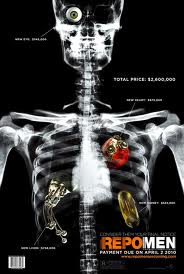



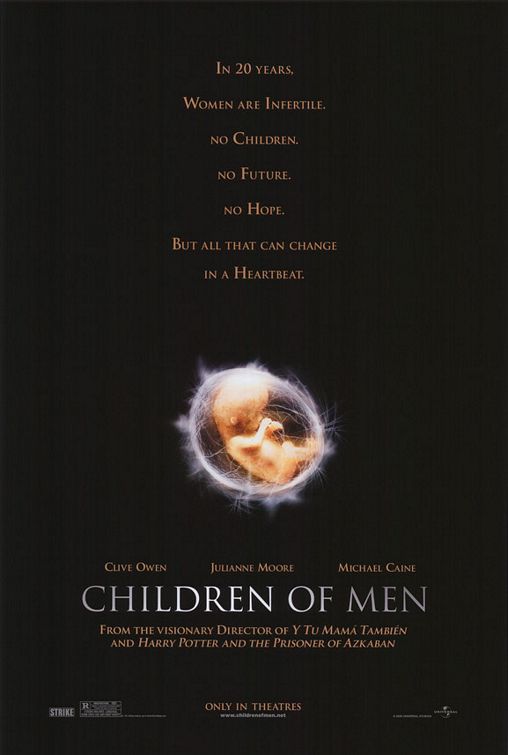
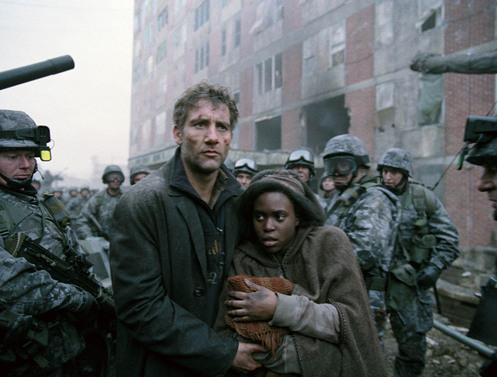


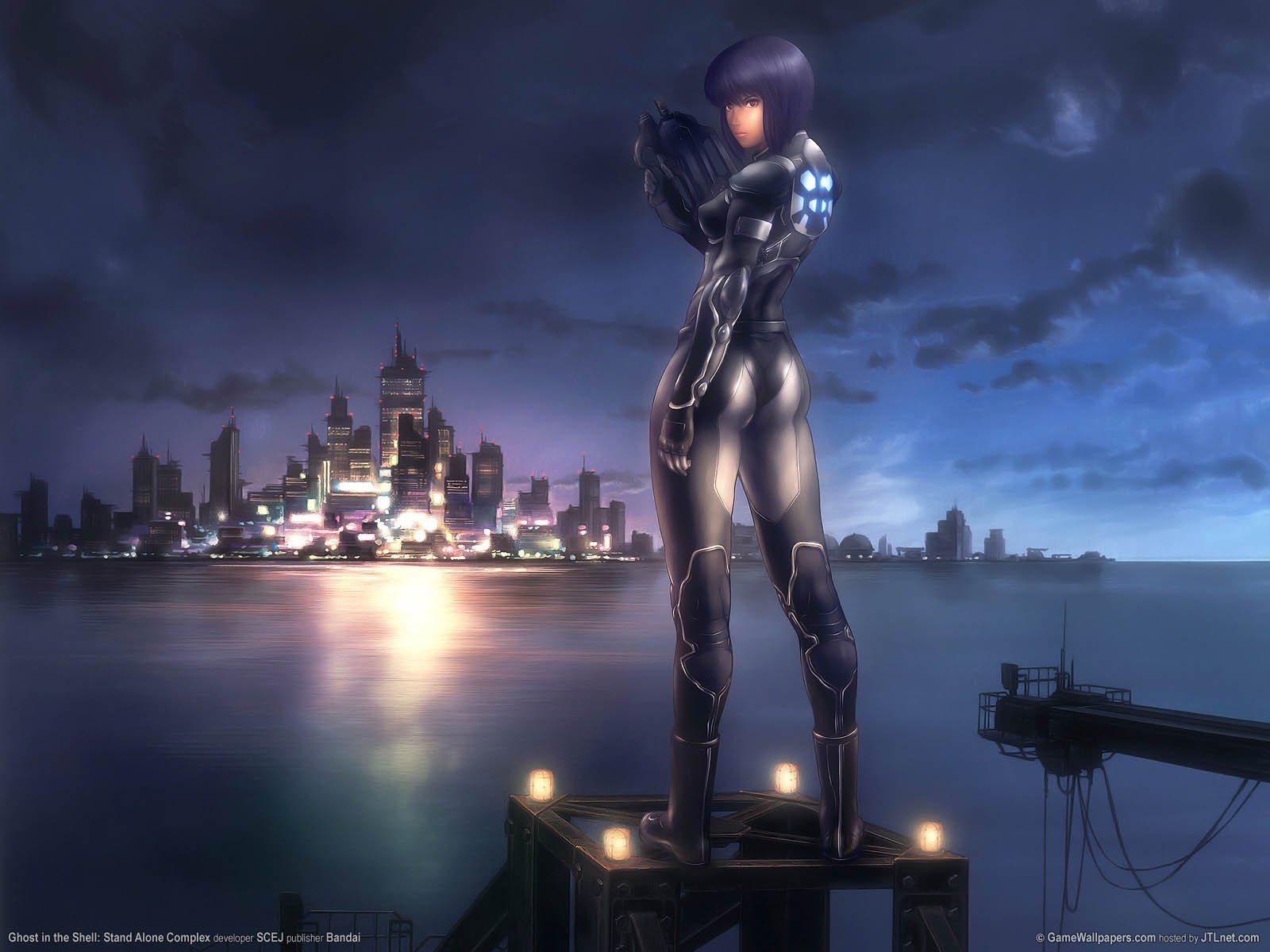


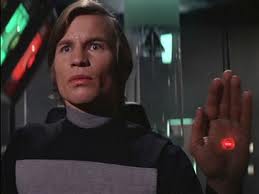


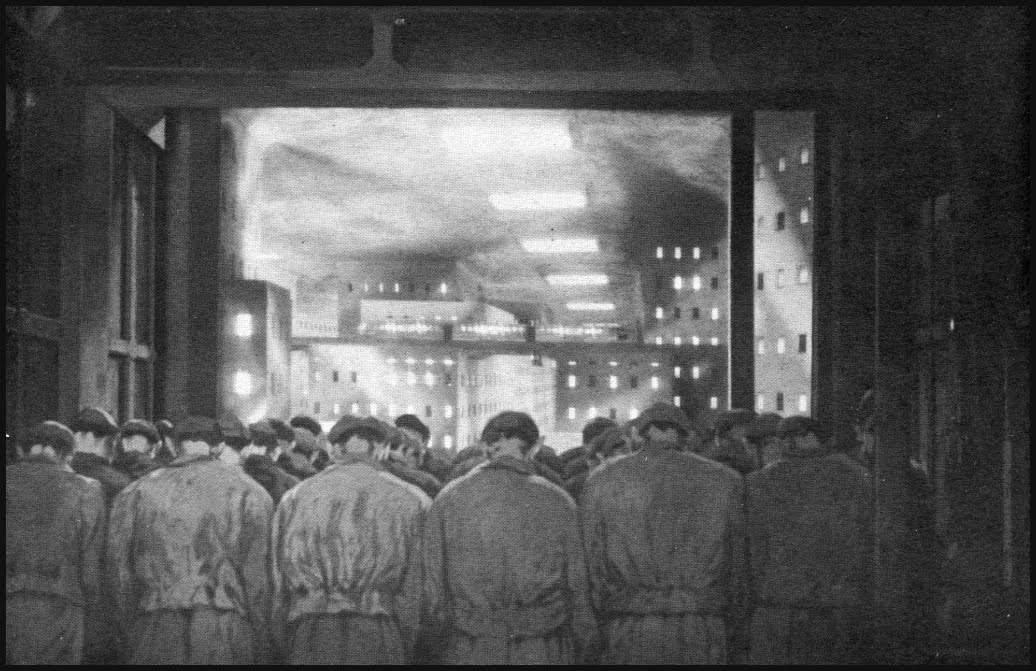
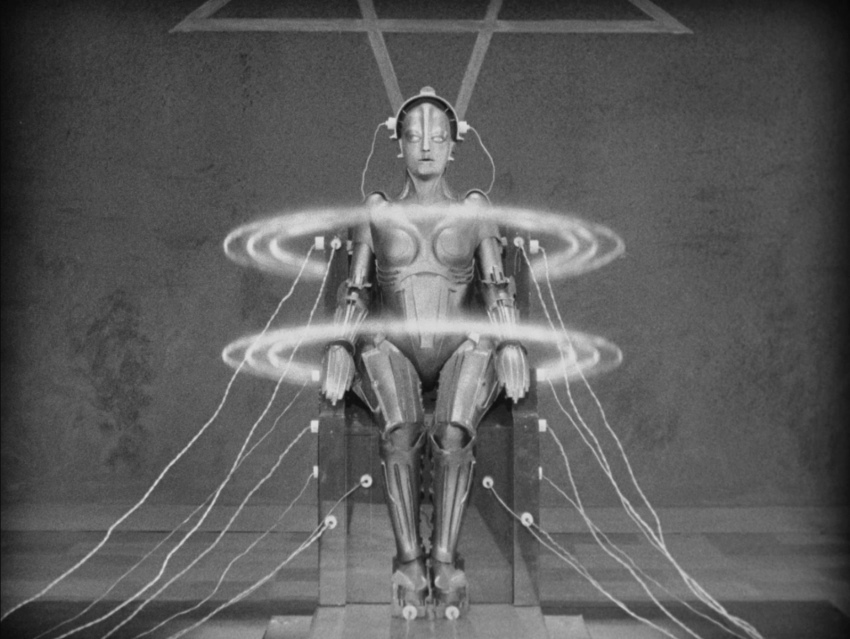





 Stories by Williams