Cyberwars: Massive Government Surveillance Uncovered!

wire_tappingOn Friday, Washington DC found itself embroiled in controversy as revelations were made about the extent to which US authorities have been spying on Americans in the last six years. This news came on the heels of the announcement that the federal government had been secretly cataloging all of Verizon’s phone records. No sooner had the dust settled on that revelation that it became known that the scope of the Obama administration’s surveillance programs was far greater than anyone had imagined.

According to updated information on the matter, it is now known that The National Security Agency (NSA) and the FBI have been tapping directly into the central servers of nine leading U.S. Internet companies, extracting everything from audio and video chats, photographs, e-mails, documents, and connection logs that would enable their analysts to track foreign targets.

prism3This information was revealed thanks to a secret document that was leaked to the Washington Post, which shows for the first time that under the Obama administration, the communication records of millions of US citizens are being collected indiscriminately and in bulk – regardless of whether they are suspected of any wrongdoing. Equally distressing is the names being named: U.S. Service Providers such as Microsoft, Yahoo, Google, Facebook, PalTalk, AOL, Skype, YouTube, Apple.

The document further indicates that all of this has been taking place since 2007, when news disclosures, lawsuits and the Foreign Intelligence Surveillance Court forced then-president George W. Bush to look for new authority to justify his program warrantless domestic surveillance. It’s continuance and expansion under Obama has created a great deal of understandable intrigue, and not only because of promises made that “illegal wiretapping” would not take place under his watch.

prism1The joint FBI-NSA program responsible for mining all the data is known as PRISM, and it may very well be the first of its kind. While the NSA and FBI have a long history of monitoring suspects via phone records and computer activity, and are both accustomed to corporate partnerships that help it divert data traffic or sidestep barriers, such a vast program has never before been possible. In the current information age, there is an immense wealth of information out there, and where better to access all of this than in Silicon Valley?

Not long after the news broke in Washington, London’s Guardian reported that GCHQ, Britain’s equivalent of the NSA, also has been secretly gathering intelligence from the same internet companies through an operation set up by the NSA. According to the same leaked information, PRISM appears to allow the GCHQ to circumvent the formal legal process required in Britain to seek personal material such as emails, photos and videos from an internet company based outside of the country.

prism2But perhaps worst of all is the fact that this process is entirely above board, at least for the companies involved. Back in 2007, Congress passed the Protect America Act, and then in 2008 followed it up with the FISA Amendments Act, both of which immunized private companies that cooperated voluntarily with U.S. intelligence collection against prosecution. And late last year, when critics in Congress sought changes in the FISA Amendments Act, the only lawmakers who knew about PRISM were bound by oaths of office to hold their tongues.

An anticipated, a bi-partisan amalgam of Senators came out to defend the initial reports of phone record monitoring shortly after it was announced. In a rare display of solidarity that cut across party lines, Democrats and Republicans from both the Senate and House came forward to say that the program was justified, only spied on terrorists, and that law-abiding citizens need not worry.

National Security Agency - aerial view
National Security Agency – aerial view

Once again, the argument “if you’ve done nothing wrong, you’ve got nothing to fear” finds itself employed by people who do not want to voice criticisms about a government spying program. Echoes of the Bush administration and McCarthy era all over again. Needless to say, all of this has many people worried, not the least of which are people opposed to government intrusion and the protection of privacy for the past decade.

Ever since it became possible to “mine data”  from numerous online digital sources, there has been fear that corporations or governments might try to ascertain the habits and comings and goings of regular people in order to effectively monitor them. For some time now, this sort of monitoring has been somewhat benign, in the form of anticipating their spending habits and using targeted advertising. But always, the fear that something more sinister and totalitarian might emerge.

government-surveillanceAnd with the “War on Terror”, the Patriot Act, domestic warrantless wiretapping, the legitimization of torture, and a slew of other crimes the Bush administration was indicted in, people all over the world have become convinced that “Big Brother” government is just around the corner, if indeed it is not already here.

The fact that such processes have continued and even expanded under Obama, a man who originally pledged not to engage in such behavior, has made a bad situation worse. In many ways, it demonstrates that fears that he too would succumb to internal pressure were justified. Much as he was won over by the Pentagon and CIA to continue the war in Afghanistan and UAV programs, it seems that the constellation of FBI and NSA specialists advising him on domestic surveillance has managed to sway him here as well.
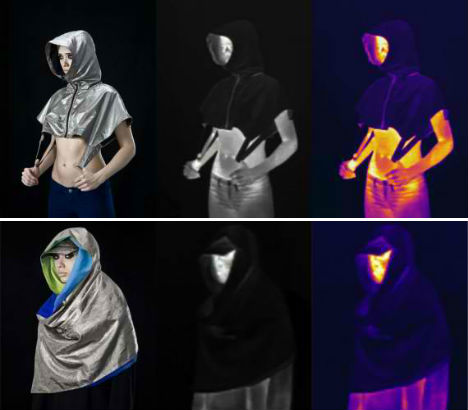
Stealth-Wear1One can only hope that this revelation causes the federal government and the Obama administration to reconsider their stances. After all, these are the same people who were convinced to stand down on the use of UAVs in oversees operations and to take measures that would ensure transparency in the future. We can also hope that the NSA and FBI will be required to once again have to rely on the court system and demonstrate “just cause” before initiating any domestic surveillance in the future.

Otherwise, we might all need to consider getting our hands on some stealth wear and personal cameras, to shield ourselves and create an environment of “sousveillance” so we can spy on everything the government does. Might not hurt to start monitoring the comings and goings of every telecommunications and Silicon Valley CEO while were at it! For as the saying goes, “who watches the watchers?” I’ll give you a hint: we do!

Also, be sure to check out the gallery of artist Adam Harvey, the man who pioneered “stealth wear” as a protest against the use of drones and domestic surveillance. To learn more about sousveillance, the concept of a society monitored by common people, check out Steve Mann’s (inventor of the EyeTap) blog.

Sources: washingtonpost.com, guardian.co.uk, policymic.com, ahprojects.com, eyetap.blogspot.ca


The Future of Cities and Urban Planning

future-city-1With the development of vertical farms, carbon capture technology, clean energy and arcologies, the future of city life and urban planning is likely to be much different than it does today. Using current trends, there are a number of people who are determined to gain some understanding of what that might look like. One such group is Arup, a design and engineering firm that produced a mockup that visualizes what urban environments will look like in 2050.

Based on the world as it is today, certain facts about the future seem relatively certain. For starters, three-quarters of the population will live in cities, or 6.75 billion of the projected 9 billion global total. In addition, everyone will have grown up with the Internet, and its successors, and city residents will have access to less natural resources than they do today, making regeneration and efficiency more of a priority.

Add to this several emerging technologies, and our urban environments are likely to look something like the building mockup below. As you can see, it has its own energy systems (“micro-wind,” “solar PV paint,” and “algae facade” for producing biofuels). There is an integrated layer for meat, poultry, fish, and vegetable farming, a “building membrane” that converts CO2 to oxygen, heat recovery surfaces, materials that phase change and repair themselves, integration with the rest of the city, and much more.

future_urban_planning

Most futuristic of all is the fact that the structure is completely modular and designed to be shifted about (by robots, of course). The building has three layer types, with different life-spans. At the bottom is a permanent layer – with a 10 to 20-year lifespan – which includes the “facade and primary fit-out walls, finishes, or on-floor mechanical plant” – and a third layer that can incorporate rapid changes, such as new IT equipment.

As Arup’s Josef Hargrave described the building when unveiling the design:

[A]ble to make informed and calculated decisions based on their surrounding environment… [a] living and breathing [structure] able to support the cities and people of tomorrow.

In short, the building is designed with personal needs in mind, based on information gleamed from a person’s behaviors, stated preferences, and even genetic information.

aircleaning_skyscraper3But what is even more interesting is how these buildings will be constructed. As countless developments are made in the field of robotics, biotechnology and nanotechnology, both the materials used and the processes involved are likely to be radically different. The rigid construction that we are used to is likely to give way to buildings which are far more flexible, adaptive, and – best of all – built by robots, drones, tiny machines and bacteria cultures.

Once again, this change is due mainly to the pressures that are being placed on urban environments, and not just technological advances. As our world becomes even more densely populated, greater proportions of people live in urban environments, and resources become more constrained, the way we build our cities must offer optimum efficiency with minimal impact.

nanomachineryTowards this end, innovations in additive manufacturing, synthetic biology, swarm robotics, and architecture suggest a future scenario when buildings may be designed using libraries of biological templates and constructed with biosynthetic materials able to sense and adapt to their conditions.

What this means is that cities could be grown, or assembled at the atomic level, forming buildings that are either living creatures themselves, or composed of self-replicated machines that can adapt and change as needed. Might sound like science fiction, but countless firms and labs are working towards this very thing every day.

It has already been demonstrated that single cells are capable of being programmed to carry out computational operations, and that DNA strains are capable of being arranged to carry out specialized functions. Given the rapid progress in the field of biotech and biomimetics (technology that imitates biology), a future where the built environment imitates organic life seems just around the corner.

biofabrication For example, at Harvard there is a biotech research outfit known as Robobees that is working on a concept known as “programming group dynamics”. Like corals, beehives, and termite colonies, there’s a scalar effect gained from coordinating large numbers of simple agents to perform complex goals. Towards this end, Robobees has been working towards the creation of robotic insects that exhibit the swarming behaviors of bees.

Mike Rubenstein leads another Harvard lab, known as Kilobot, which is dedicated to creating a “low cost scalable robot system for demonstrating collective behaviors.” His lab, along with the work of researcher’s like Nancy Lynch at MIT, are laying the frameworks for asynchronous distributed networks and multi-agent coordination, aka swarm robotics, that would also be capable of erecting large structures thanks to centralized, hive-mind programming.

nanorobot1

In addition to MIT, Caltech, and various academic research departments, there are also scores of private firms and DIY labs looking to make things happen. For example, the companies Autodesk Research and Organovo recently announced a partnership where they will be combining their resources – modelling the microscopic organic world and building bioprinters – to begin biofabricating everything from drugs to nanomachines.

And then there are outfits like the Columbia Living Architecture Lab, a group that explores ways to integrate biology into architecture. Their recent work investigates bacterial manufacturing, the genetic modification of bacteria to create durable materials. Envisioning a future where bacterial colonies are designed to print novel materials at scale, they see buildings wrapped in seamless, responsive, bio-electronic envelopes.

ESA_moonbaseAnd let’s not forget 3D printing, a possibility which is being explored by NASA and the European Space Agency as the means to create a settlement on the Moon. In the case of the ESA, they have partnered with roboticist Enrico Dini, who created a 3-D printer large enough to print houses from sand. Using his concept, the ESA hopes to do the same thing using regolith – aka. moon dust – to build structures on Earth’s only satellite.

All of these projects are brewing in university and corporate labs, but it’s likely that there are far more of them sprouting in DIY labs and skunkworks all across the globe. And in the end, each of them is dedicated to the efficiency of natural systems, and their realization through biomimetic technology. And given that the future is likely to be characterized by resources shortages, environmental degradation and the need for security, it is likely to assume that all of these areas of study are likely to produce some very interesting scenarios.

As I’ve said many times before, the future is likely to be a very interesting place, thanks to the convergence of both Climate Change and technological change. With so many advances promising a future of post-scarcity, post-mortality, a means of production and a level of control over our environment which is nothing short of mind-boggling – and a history of environmental degradation and resource depletion that promises shortages, scarcity, and some frightening prospects – our living spaces are likely to change drastically.

The 21st century is going to be a very interesting time, people. Let’s just hope we make it out alive!

Sources: fastcoexist.com, (2)

Drone Wars: New Promises, Same Problems

(U.S. Air Force photo/Staff Sgt. Brian Ferguson)(Released)The practice of using UAV’s as part of a targeted strategy in Pakistan, Afghanistan, Somalia and Yemen has become so frequent that its come to characterize the Obama administration’s handling of the “War on Terror”. Reaction to this policy has been increasingly critical, due in no small part to unanswered questions surrounding civilian death tolls and the rapid escalation of deployment. In response, the Obama administration announced this past week that the surge is at an end.

In a speech made to the National Defense University in Washington on Thursday, Obama emphasized that from now on, the use of UAV’s would be in the hand of the military instead of clandestine intelligence organizations such as the CIA. He also indicated that the rules for launching the strikes would be stricter. For instance, there must be a “near certainty” that no civilians will be killed, and the strikes are to become less frequent.

predator_profileWhile Obama would not declare an end to the war on terrorism, he did offer to work with Congress to constrain some of his own authorities for waging it, which may include the creation of a court modeled on the secretive one used by the NSA to oversea the surveillance of suspected foreign agents. He also expressed a preference to constrain “and ultimately repeal” the broad latitude of warmaking powers granted in the Authorization to Use Military Force (AUMF), an act that was created in 2001 by the Bush administration which is considered the wellspring of the “War on Terror”.

And above all, issues of legality are to take a backseat to the moral and ethical implications raised by ongoing use. Or as he put it: “To say a military tactic is legal, or even effective is not to say it is wise or moral in every instance.”

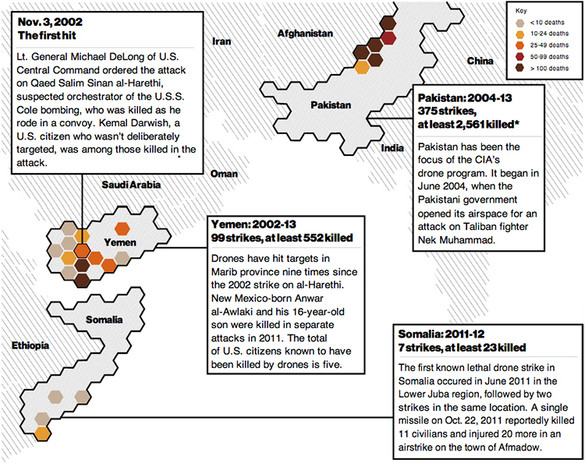
Naturally, a great many questions remain. In addition to how drones will be used in the years to come to combat terrorism and militants, there’s also questions surrounding their use thus far. Despite pledges made by Obama that changes will be made, the history of the program is still shrouded in mystery. Fittingly, Bloomberg Businessweek created a map to serve as a reminder of the scope of that program, calling it the first ever “comprehensive compilation of all known lethal U.S. drone attacks.”

drone_map

It should be noted though that the numbers represent an estimate which were compiled with the help of the nonprofit Bureau of Investigative Journalism. Sources in Washington apparently offer a wide range of numbers, and the State Department remains hush hush on the issue of casualties. However, the estimates presented in this infographic still present a stark and sobering picture:

  • Yemen: at least 552 killed between 2002 and 2013. The site of the first ever drone strike in 2002.
  • Pakistan: at least 2,561 killed between 2004 and 2013.
  • Somalia: at least 23 killed between 2011 and 2012.

drone_map1Naturally, it is hoped that Obama’s promise to curb the use of drones represents a renewed commitment to comply with international law, treaties and human rights. However, what was apparently missing from the speech was an indication about how easy it will be to get information about strikes that are made in the future. According to the New York Times’ Mark Mazzetti, who provided live analysis of the speech, Obama’s speech didn’t address the issue:

One of the big outstanding questions is just how transparent the Obama administration will be about drone strikes in the future. Will administration officials begin to publicly confirm strikes after they happen?

There was no mention of this in the speech, and it is telling that the president did not mention the C.I.A. at all. It seems quite certain that past operations in Pakistan, Yemen and elsewhere are not going to be declassified anytime soon.

Also, moving operations from the C.I.A. to the Pentagon does not automatically mean that the strikes will be publicly discussed. The Pentagon is carrying out a secret drone program in Yemen right now, and it is very difficult to get information about those operations.

So… promises to curb the use of drones have been made, as well as promises to create some kind of oversight for future operations. And this does seem consistent with many of the criticisms made about the ongoing war on terrorism, specifically the Bush administrations handling of it and how his reliance on special executive powers were unlawful and unconstitutional.

But until such time as information on how these strikes occur and who is being killed, the issue will remain a contentious and divisive one. So long as governments can wage war with automated or remote machinery and kill people without transparency and in secrecy, will this not constitute a form of illegal – or at the very least, a very opaque – warfare?

Sources: wired.com, fastcoexist.com, businessweek.com

Drone Wars: Hiding Your Home from a UAV

(U.S. Air Force photo/Staff Sgt. Brian Ferguson)(Released)In a world increasingly permeated by surveillance systems, especially ones that are airborne and remotely operated, it was only a matter of time before some struck back. Much like Steve Mann’s concept of sousveillance – using camera devices and wearable computers to help people spy back against “Big Brother” – it seems that there are individuals out there looking for ways to help the common people avoid UAV detection.

In this case, the individual is Tim Faucett, CEO of APlus Mobile. When his company is not manufacturing mobile computer units that manage robots and UAVs for clients like the U.S. Navy and Lockheed Martin, they are contemplating ways to shield us from the technology they help create. Might seem a bit ironic, but looking to the future, Faucett and his colleagues are concerned about people other than government and military having access to the technology.

drone_target_1Alongside the FAA, which estimates that there could be tens of thousands of unmanned aircrafts circling overhead by the end of this decade, Faucett believes the future will be permeated by privately-owned unmanned aerial vehicles:

There are going to be private drones, there’s going to be commercial drones. Everybody’s going to have access to a drone. And people are going to have good intentions with them, and people are going to have bad intentions with them.

An interesting idea, and not one the public has fully considered yet. Most concerns vis a vis UAVs and their unlawful use are targeted at the governments who use them, mainly with the intention of “combating terrorism” overseas. But to Faucett, the real threat comes from our neighbors and private groups, people who are harder to discern, identify and fight than a monolithic organization.

drone-laser-targeting_620x374In keeping with this mindset, a few weeks ago, his startup Domestic Drone Countermeasures filed its first of what he said would be nine patents for a system that will detect and disable drones before they have the chance to film their targets. Few details have been made available yet as to what these systems involve, mainly because it’s new and Faucett hopes to keep the cat in the bag until its time to unveil.

Still, some details have managed to trickle out, such as Faucett’s own reference to a system that includes software and sensors that will be able to identify nearby UAVs based on their electromagnetic signature, alert the owner of the system, and then “neutralize the drone’s capability to see you with its camera.” But Faucett was also sure to emphasize the non-military nature of all this, responding to rumors that his company is developing some sort of weaponry:

We don’t interfere with the drones navigation in any way. We don’t jam anything. We don’t intercept anything … This is non-combative. That’s really important. We’ve taken great pains to design systems that aren’t going to get shut down or be outlawed or become illegal. … We’ve taken the combat elements out so [the former military technology] can’t be viewed as unlawful.

???????????????????In fact, the new system may actually be capable of doing something creative and comical, should anyone attempt to spy on you. And all without causing harm to the camera that’s attempting to see you :

The camera just won’t be able to look at you. Actually, at some point, we can show the operator at the other end a little movie or something.

So try to misuse a UAV, and you may end with an eye full of porn bombs, or several hours of Desperate Housewives, playing on a loop. Take that, nosy neighbor! You too, Big Brother!

Faucett says his team of three full-time engineers and several part-time staffers should be able to bring the system to market in a matter of months. It’ll be scalable to suit the needs of someone who just wants their home protected, ranging from a home owner who some added security, to larger property owners or institutional clients. You might say, spying will become the new type of Cold War, with government, security and surveillance companies all engaged in a game of one-upmanship.

And as usual, I sense an idea for a novel… Patent Pending!

Source: fastcoexist.com


New Drones Art Campaign

UAVsOver at deviantART, a constant source of inspired art for me, there’s an interest new campaign designed to raise awareness and stimulate debate on a rather controversial issue. I am referring, as the topic line would suggest, to the use of drones and UAV’s and all that it entails.

As one of the greatest concerns facing developed nations today, not to mention the developing world where they are being increasingly used, this campaign is not only timely and relevant, but an intriguing display of artwork motivated by social conscience. In short, it asks the question: how is this debate reflected in art and what will future generations think of it?

looking for a hole, by arcas art

Inspired by similar projects which are taking place around the world, the purpose of the campaign is to draw attention to the fact that were are living in a world increasingly characterized by surveillance and killing machines. Or as technognotic puts it:

Drones have become the white hot center of debate for a multitude of deeply consequential concerns for the entire Earth Sphere. No matter the digital end point or theatre of conversation, whether it be politics, war, privacy, pop culture, or the rise of machines – Drones or UAV’s (unmanned aerial vehicles) are the current catalyst du jour in any number of flashpoint discussions…

Even more interesting is the tone of inevitability of outcome. Core discussion seems to focus on a coming drone-filled sky and how we might govern our selves accordingly as this fact becomes a reality… Is this the dark side of human creativity and inquisitiveness that will ultimately one day spell our doom or the first signs of a coming technological Utopia.

galaxy saga - white gryphon, by ukitakumuki
galaxy saga – white gryphon, by ukitakumuki

In addition, the campaign features the thoughtful essay of the same name by Jason Boog (deviantART handle istickboy), who takes a look at how killing machines and drones have been explored through art and popular culture. Beginning with a short romp through history, identifying the first “drone” to ever be used, he goes on to examine how several generations of artists chose to portray them and their use.

Things culminate in the modern age, where spending on drone development and humanitarian concerns have culminated to make this a truly global and auspicious concern. With remote-controlled drones giving way to autonomous models and UAV’s being used for domestic surveillance, there’s no telling where things could go.

mysterious journals, by sundragon83

On the one hand, a concerned and mobilized public could place limits and controls on them, or counter using their own form of “sousveillance” (public counter-surveillance). On the other hand, we could be headed for a police state here privacy is non-existent and robots decide who lives and who dies – maybe entirely on their own!

As you can certainly imagine, when I first learned of this campaign I could tell that it was right up my alley. Being such an obsessive geek for all things technological and how innovation and progress affect us, I knew I had to post about it. And as you can certainly tell from the samples posted here, the artwork is pretty damn badass!

I would recommend checking it out for the aesthetic appeal alone. Knowing you’re taking part in a campaign dedicated to public awareness is just a big bonus!

For more information, and to take a gander at some galleries, visit the campaign at techgnotic.deviantart.com.

The Future is Here: The Autonomous Robotic Jellyfish!

Matt Russiello submerges the RoboJelly. Remember the Medusoid, that creepy robot jellyfish creature that debuted in July of 2012? Well, it seems that Virginia Tech was working on their own, with help from the military. Yes, whereas the medusoid was a project in organic-synthetic interfacing, a collaborative effort between Harvard University and Caltech researchers, this one is the result of ongoing work by the United States Navy.

After years of working on their own model for a robot jellyfish, they unveiled the fruits of that labor earlier this month. Named Cyro – a contraction of robot and Cyanea capillata (the species name for the lion’s mane jellyfish) – this 170 pound biomimetic machine looks and act like a jellyfish, but is in fact an autonomous robot.

cyro1And much the Medusoid and Robojelly – Cyro’s hand-sized predecessor – this second-generation model utilizes what is called “Bio-Inspired Shape memory Alloy Composites (BISMAC)” in order to mimic the motions of the real thing. This consists of a
layer of smart materials (aka. shape memory alloy) that is soft and shaped in such a way to maximize deformation and propulsion.

Underneath this layer of composite material are a number of actuators (i.e. robotic arms) that control the movements of the Cyro. These in turn are mounted on a central body that contains enough hardware to allow the robot to communicate, gather information, and make decisions. What’s more, the developers envisage a fleet of networked Cyros, conducting surveillance and research and sharing the results with each other.

cyro2And as the video below explains, this robot jellyfish is likely to have numerous applications. These included environmental monitoring, cleaning up oil spills, or conducting military surveillance. Of course, it seems pretty obvious what the primary use of the Cyro is going to be, given that the ONR and the U.S. Naval Undersea Warfare Center are responsible for funding it!

No telling how Human Right Watch will react to this, though. How safe would you feel, knowing that the next time you’re snorkeling, swimming or ocean kayaking that a perfectly innocent looking Man-of-War could be spying on you? Check out the video of the Cyro being tested below:


Sources:
fastcoexist.com, emdl.mse.vt.edu

The Future is Here: Web-Based “Brain” for Robots

AI_robotMy gratitude once again to Nicola Higgins for beating me to the punch yet again! I hope she doesn’t mind that I’m totally posting a separate article, but something like this is just too good to reblog! In what is sure to excite Singularitarians and Futurists and scare the holy bejeezus out of technophobes and those fearing the Robopocalypse, a new web-based artificial brain went online recently, allowing robots to share information and seek help whenever they need it.

It’s called Rapyuta (or the The RoboEarth Cloud Engine), a part of the European Robo Earth project that began in 2011 with the hope of standardizing the way robots perceive the human world. Basically, it is an online database that robots can consult in order to get information about their world and help them make sense of their experiences, post-activation.

robot_internetThe name Rapyuta is taken from the Japanese film by Hayao Miyazaki known as Castle in the Sky, and refers to a place where all the robots live. The project, which involves researchers at five separate European research labs, has produced the database as well as software that robot owners can upload to their machines so that they can connect to the system at any time.

You might say the “brain” is an expression of sympathy for robots, who are no doubt likely to find the world intimidating and confusing once they come online. Now, instead of every robot building up their own idiosyncratic catalog of how to deal with the objects and situations it encounters, Rapyuta would be the place they ask for help when confronted with a novel situation, place or thing.

googlecarIn addition, the web-based service is able to do complicated computation on behalf of a robot. For example, if it needs to work out how to navigate a room, fold an item of clothing or understand human speech, it can simply do an online consultation rather than try to figure it out on its own. In addition, it is believed that robots will be cheaper thanks to this system since it will mean they won’t need to carry all their processing power on board.

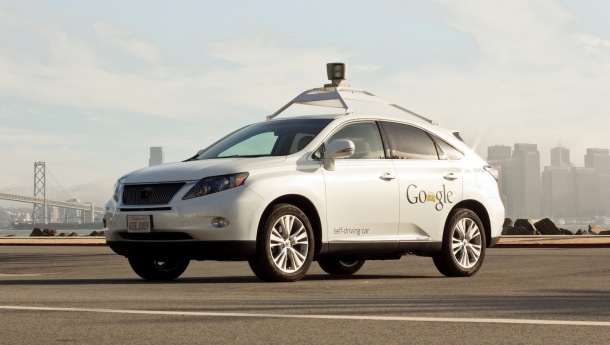
Looking ahead, Mohanarajah Gajamohan, technical head of the project at the Swiss Federal Institute of Technology in Zurich, says that the designers believe the system could be particularly useful for drones, self-driving cars or other mobile robots who have to do a lot of number crunching just to get round.

internetDr Heico Sandee, Robo Earth program manager at the Dutch University of Technology in Eindhoven, also highlighted the economic benefits of this new concept. “On-board computation reduces mobility and increases cost,” he said, adding that as wireless data speeds increase, more and more robotic thinking could be offloaded to the web.

But above all, the aim here is about integration. As robots become more and more common and we human beings are forced to live with them amongst us, there could be difficulties. Without access to such a database, those involved in the project and roboticists at large fear that machines will remain on production lines and never live easily alongside humans.

robots_earthAs for those who support and await the Technological Singularity, this could be one such means through which it is achieved. The idea of machines that are capable of network and constantly upgrade their software is a step in the direction of machines that are capable of self-assembling, evolving and upgrading themselves constantly, which will basically result in a rate of progress that we can currently predict.

But on the other side of the debate, there are those who say this smacks of a Skynet-like supercomputer that could provide machines with the means to network, grow smarter, and think of ways of overthrowing their human masters. While I don’t consider myself the technophobic sort, I can certainly see how this invention could be perceived that way.

robots_ideaCreating a means for robots to communicate and contribute to a growing sense of knowledge, effectively letting them take ownership of their own world, does seem kinda like the first step in creating a world where robots no longer need human handlers. Then again, if we’re going to be creating AI, we might want to consider treating them like sentient, dignified beings beforehand, and avoiding any “controversy” when they begin to demand them later.

Gotta admit, when it comes to technophobes and paranoiacs, this kind of stuff is certainly fertile territory! For more information on the Rapyuta Engine, simply click here. And may God help us all!

terminator_judgement_daySource: bbc.co.uk

Lobby Congress to Illegalize the use of Surveillance Drones

X-47BCall me concerned, but some recent news items have made more than a few people frightened that unmanned drones could be peaking in their windows and watching them as they go to work very soon. The first came back in September when US Congress passed the Modernization and Reform Act of 2012 which, among other things, required the Federal Aviation Administration (FAA) to accelerate drone flights in U.S. airspace.

A number of US law enforcement agencies have also adopted the use of drones for the sake of police work. Amongst them are the Miami-Dade Police Department, the Texas Department of Public Safety, and the Alameda Sheriff’s Department is likely to follow. The Seattle Police Department also maintained a small fleet as well, but grounded them due to public outcry and concerns over privacy.

As it stands, the Obama Administration has already adopted legislation that prevents drones from being armed and would demand that law enforcement agencies register drones, adopt privacy polices, and only use them in criminal matters for which warrants would be required.

https://petitions.whitehouse.gov/petition/make-illegal-use-unmanned-aerial-vehicles-sake-surveillance-within-us/Fqq2C9Wb

The Future is Here: MMI Electronic Tattoos!

patchIt’s known as Mind-Machine-Interface, the ability to interface and control machines using only your mind. And thanks to a number of dedicated researchers in various fields, it’s no longer the stuff of science fiction. With mind-controlled prosthetics, bionic limbs, and the growing field of machine-enabled telepathy, the day may soon come when people can interface, access and control machinery with just a few thoughts.

But of course, that raises all kinds of concerns about invasive procedures, whether surgery will be needed in order to implant devices into the human brain that can translate brainwaves into commands. Alternately, where non-invasive means are involved, it can take some time to calibrate the machinery to respond to the user’s nerve impulses. As those awful infomercials say, “there has be a better way!”

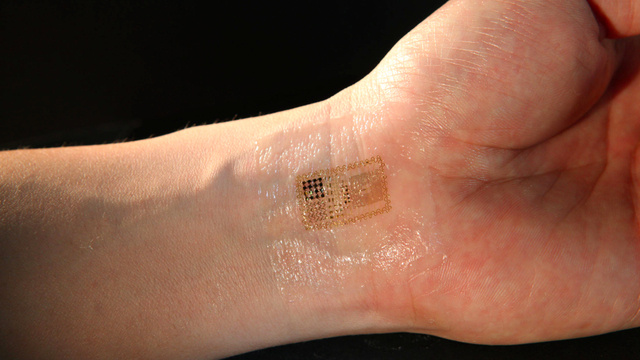
patch_headAs it turns out, electrical engineer Todd Coleman and his team at the University of California at San Diego has been working on a way to use wireless flexible electronics that one can apply on the forehead just like temporary tattoos. Building on the emerging field of biomedical electronics, these tattoos will be able to read brainwaves and allow a person to control electronic devices without the need for surgery or permanent implants.

The devices are less than 100 microns thick, the average diameter of a human hair, and consist of circuitry embedded in a layer or rubbery polyester that allow them to stretch, bend and wrinkle. The devices can detect electrical signals linked with brain waves and incorporate solar cells for power and antennas that allow them to communicate wirelessly or receive energy.

patch_breakdownOf course, other elements can be added as well, like thermal sensors to monitor skin temperature and light detectors to analyze blood oxygen levels, making it both a health monitoring patch and a fully-integrated control device. Combined with health patches that are being developed for use internally, an entire health network can be created that allows for every aspect of a patients health to monitored in real-time, anticipating and predicting health problems before they flare up.

Currently, Coleman and his colleagues are pursuing the application of using these patches to monitor premature babies to detect the onset of seizures that can lead to epilepsy or brain development problems. The devices are also being commercialized for use as consumer, digital health, and medical device. But the potential for their use is staggering, even alarming.

droneFor example, these devices can also be put on other parts of the body, such as the throat. When people think about talking, their throat muscles move even if they do not speak, a phenomenon known as subvocalization. Electronic tattoos placed on the throat could therefore behave as subvocal microphones through which people could communicate silently and wirelessly to each other.

However, a more alarming application is in the industrial and defense field, which is being pursued by the startup MC10 in Cambridge, Mass. In the course of their research, Coleman and his colleagues found that individuals who were hooked up to a computer through large caps studded with electrodes were able to remotely control airplanes and a UAV over cornfields in Illinois. Such is not possible with these tattoos at present, but Coleman admits that he and his colleagues are “working on it”.

telepathyBut even more alarming than this is the long term implications of what this could mean for us as a species, which is that electronics could one-day enable wireless peer-to-peer brain communication – aka. machine-enabled telepathy. With devices that can read and transmit brainwaves and vocal information, it would no longer be necessary for people to use radios, phones, email, or any other means of communication to talk to one another.

Simply tune in, subvocalize or think what you want to convey – and boom! instant messaging and perfected! Lord knows the art of diplomacy might suffer, and we can forget about sarcasm, tact, or shades of meaning. Society may very well breakdown or people will just have to grow thicker skin as everyone is forced to communicate what they really think to each other!

Source: txchnologist.com

Criminalizing Transhuman Soldiers

biosoldiersIt seems to be the trend these days. You take a predictions that was once the domain of science fiction and treat it as impending science fact. Then you recommend that before it comes to pass, we pre-emptively create some kind of legal framework or organization to deal with it once it does. Thus far, technologies which are being realized have been addressed – such as autonomous drones – but more and more, concepts and technologies which could be real any day now are making the cut.

It all began last year when the organization known as Human Rights Watch and Harvard University teamed up to release a report calling for the ban of “killer robots”. It was soon followed when the University of Cambridge announced the creation of the Centre for the Study of Existential Risk (CSER) to investigate developments in AI, biotechnology, and nanotechnology and determine if they posed a risk.

X-47BAnd most recently, just as the new year began, a report funded by the Greenwall Foundation examined the legal and ethical implications of using biologically enhanced humans on the battlefield. This report was filed in part due to advances being made in biotechnology and cybernetics, but also because of the ongoing and acknowledged efforts by the Pentagon and DARPA to develop super-soldiers.

The report, entitled “Enhanced Warfighters: Risks, Ethics, and Policy”, was written by Keith Abney, Patrick Lin and Maxwell Mehlman of California Polytechnic State University.  The group, which investigates ethical and legal issues as they pertain to the military’s effort to enhance human warfighters, received funding from the Greenwall Foundation, an organization that specializes in biomedicine and bioethics.

In a recent interview, Abney expressed the purpose of the report, emphasizing how pre-emptive measures are necessary before a trend gets out of hand:

“Too often, our society falls prey to a ‘first generation’ problem — we wait until something terrible has happened, and then hastily draw up some ill-conceived plan to fix things after the fact, often with noxious unintended consequences. As an educator, my primary role here is not to agitate for any particular political solution, but to help people think through the difficult ethical and policy issues this emerging technology will bring, preferably before something horrible happens.”

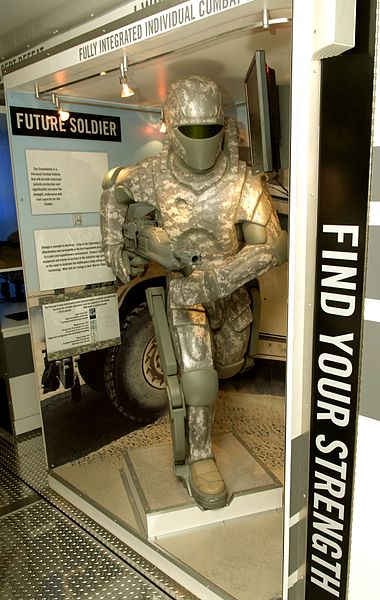
US_Army_powered_armorWhat’s more, he illustrated how measures are necessary now since projects are well-underway to develop super soldiers. These include powered exoskeletons to increase human strength and endurance. These include devices like Lockheed Martin’s HULC, Raytheon’s XOS, UC Berkeley’s BLEEX, and other projects.

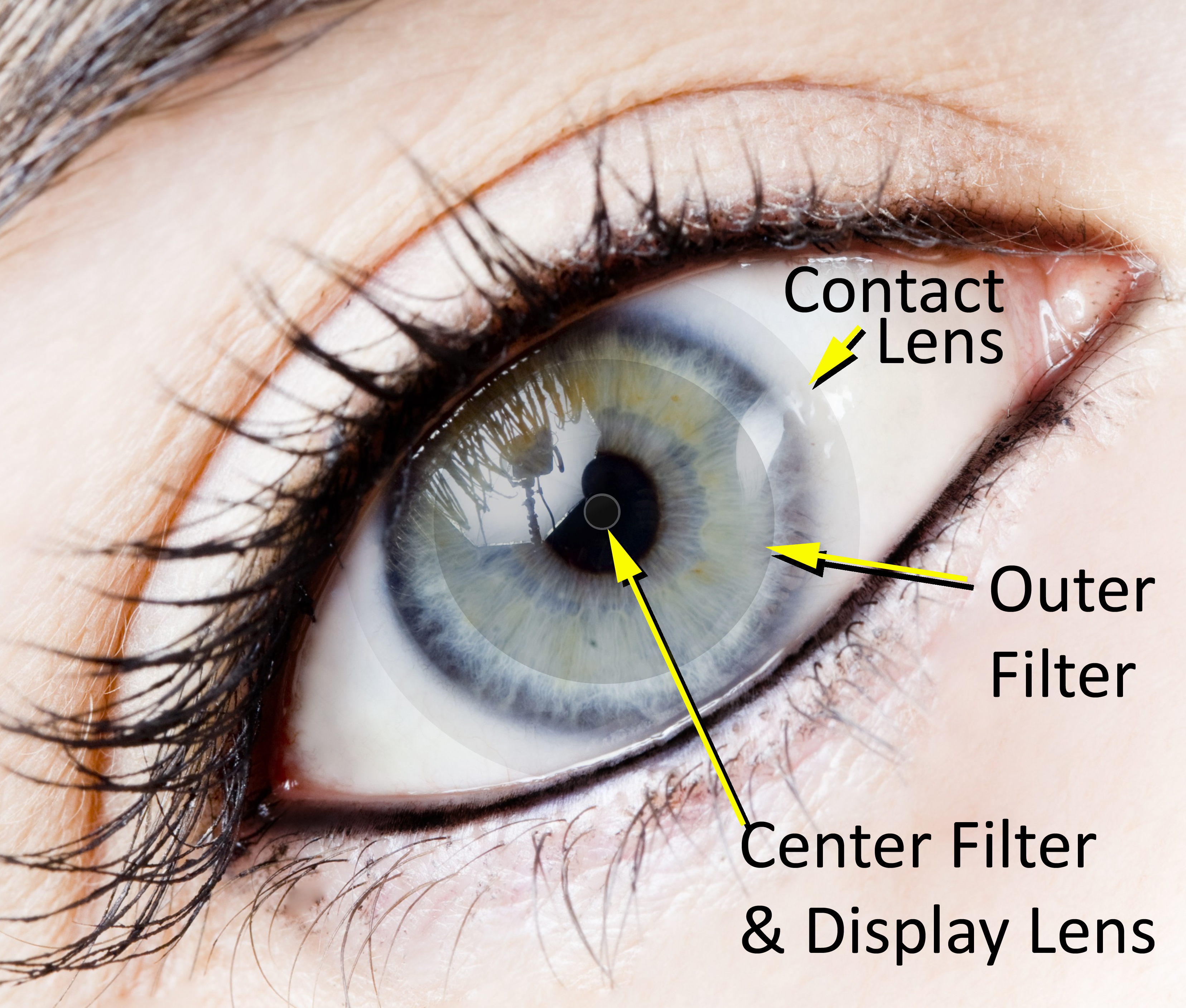
In addition, DARPA has numerous projects on the books designed to enhance a soldiers abilities with cybernetics and biotech. These include VR contact lenses, basic lenses that enhance normal vision by allowing a wearer to view virtual and augmented reality images without a headset of glasses. There’s also their Cognitive Technology Threat Warning System (CT2WS), which is a computer-assisted visual aid that instantly identifies threats by augmenting their visual faculties.

CREATOR: gd-jpeg v1.0 (using IJG JPEG v62), quality = 90And in the cognitive realm, there are such programs as Human Assisted Neural Devices (HAND) that seeks to strengthen and restore memories and the Peak Soldier Performance (PSP) program that will  boosthuman endurance, both physical and cognitive. But of course, since post-traumtic stress disorder is a major problem, DARPA is also busy at work creating drugs and treatments that can erase memories, something which they hope will give mentally-scarred soldiers a new lease on life (and military service!)

And of course, the US is hardly alone in this regard. Every industrialized nation in the world, from the EU to East Asia, is involved in some form of Future Soldier or enhanced soldier program. And with nations like China and Russia catching up in several key areas – i.e. stealth, unmanned aerial vehicles and aeronautics – the race is on to create a soldier program that will ensure one nation has the edge.

bionic_handsBut of course, as Abney himself points out, the issue of “enhancement” is a rather subjective term. For example, medical advancements are being made all the time that seek to address disabilities and disorders and also fall into the category of “enhancement”. Such ambiguities need to be ironed out before any legal framework can be devised, hence Abney and his associates came up with the following definition:

“In the end, we argued that the best definition of an enhancement is that it’s ‘a medical or biological intervention to the body designed to improve performance, appearance, or capability besides what is necessary to achieve, sustain or restore health.”

Working from this starting point, Abney and his colleagues made the case in their report that the risk such enhancements pose over and above what is required for normal health helps explain their need for special moral consideration.

These include, but are not limited to, the issue of consent, whether or not a soldier voluntary submits to enhancement. Second, there is the issue of long-term effects and whether or not a soldier is made aware of them. Third, there is the issue of what will happen with these people if and when they retire from the services and attempt to reintegrate into normal society.

It’s complicated, and if it’s something the powers that be are determined to do, then they need to be addressed before they become a going concern. Last thing we need is a whole bunch of enhanced soldiers wandering around the countryside unable to turn off their augmented killer instincts and super-human strength. Or, at the very least, it would be good to know we have some kind of procedure in place in case they do!

What do you think of when you hear the word "super soldier"? Yeah, me too!
What do you think of when you hear the word “super soldier”? Yeah, me too!

Source: IO9.com