
 Desertification is one of the biggest threats associated with Climate Change. In places like North Africa and the Middle East, where countries already import up to 90% of their food, the spread of the desert due to increasing temperatures and diminished rainfall is made worse by the fact that cities in the region continue to grow. It’s a situation that is getting more expensive and energy-intensive at a time when things need to be getting more cost-effective and sustainable.
Luckily, a team of architects hopes to create a new agricultural system that could grow and deliver food in the desert. It’s called OAXIS, a conceptual design for a modular set of prefab greenhouses, covered in solar panels, which would extend from a city into the desert. The design of the buildings aims to keep out intense summer heat while the solar panels would power the rest of the building’s infrastructure and send extra energy back into the city.
 Conceived by Forward Thinking Architecture, a Barcelona-based firm, the concept seeks to combine flexibility with a minimal carbon footprint. Towards this end, they chose to forgo usual transportation and create a unique conveyor system that would deliver produce without the use of any fossil fuels. The conveyor belt would be underground so it could keep running in a straight line even if buildings were in the way.
Inside the prefab greenhouses, farmers would grow crops like tomatoes, lettuce, and strawberries using a hydroponic system that can reduce fertilizers and pesticides and save 80% of the water used in traditional agriculture, in part by recycling and reusing it. As for where the water comes from, the designers suggest that groundwater could supply the farm’s needs, but many Middle Eastern countries already rely on desalination.
 Ideally, desert populations would be small enough that the region’s sparse rainfall could support local crops. But that’s not the reality. In addition, a small part of the recycled water would also be used to create an outdoor garden for education. As architect Javier Ponce, principal and founder of Forward Thinking Architecture, explained:
We thought it cannot only be a farming-only building, it must have a pedagogical approach and have to be attractive in order to become a biodiversity hub which can be visited by the local people and visitors… The cities should be smaller, denser, and compact, but this is not the current situation for some of the Arabian peninsula cities since they have exponentially grown and attract more people and workers. There has been a rapid urbanization in the area since the middle of the 20th century.
The project, he hopes, could help supply food as climate change makes the situation even more challenging. Already, countries in the worst-affected regions are desperately looking for solutions. For example, Qatar has already invested hundreds of millions in a plan to grow as much local food as possible by 2030. Other countries in the region, like Kuwait, Dubai, Abu Dhabi, Jordan, and the desert-locked Saudi Arabia are expected to follow.
 These regions in particular have felt the pressure brought on by the escalating price of importing food. This pressure is exacerbated due to the disappearance of peak oil, which accounted for the vast majority of this region’s wealth. However, the project has farther-reaching implications, as Climate Change threatens to turn much of the world’s arable land into dry, drought-ridden plains.
At the same time, it takes into account the need to reduce reliance on water and fossil-fuels. As our population continues to skyrocket, a smarter and more sustainable use of available resources are always needed. As Ponce explained:
The OAXIS project is an alternative or complementary way to respond to the food insecurity and water scarcity of the region in a self-sufficient way. It aims to help reduce the food imports to feed part of the people in a nearby future based on renewable energies.
And be sure to check out this OAXIS promotional video, courtesy of Forward Thinking Architecture:
Sources: fastcoexist.com, forwardthinkingarchitecture





 The acquisition makes sense given that Silevo’s technology has the potential to reduce the cost of installing solar panels, Solar City’s main business. But the decision to build a huge factory in the U.S. seems daring – especially given the recent failures of other U.S.-based solar manufacturers in the face of competition from Asia. Ultimately, however, Solar City may have little choice, since it needs to find ways to reduce costs to keep growing.
 Silevo isn’t the only company to produce high-efficiency solar cells. A version made by Panasonic is just as efficient, and SunPower makes ones that are significantly more so. But Silevo claims that its panels could be made as cheaply as conventional ones if they could scale their production capacity up from their current 32 megawatts to the factory Musk has planned, which is expected to produce 1,000 megawatts or more.


 Chu conceived of the idea while working as a professor of physics and molecular and cellular biology at the University of California, Berkeley. In short, the plan calls for fast-growing crops to be planted in the tropics – where sunlight is abundant – converted into glucose (of which cellulose, which makes up much of the dry weight of a plant, is a polymer). The resulting glucose and cellulose would then be shipped around much as oil is today, for eventual conversion into biofuels and bioplastics.
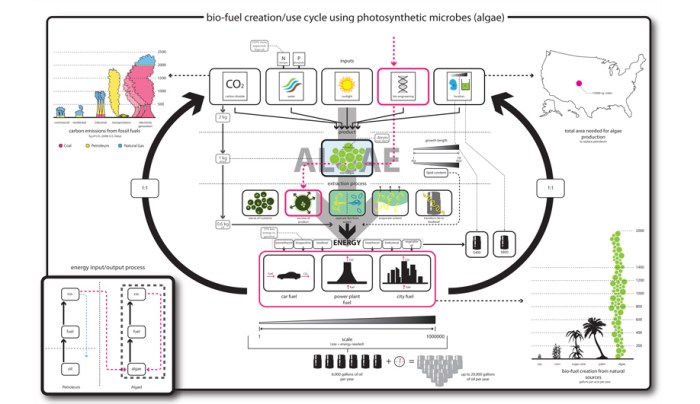 Another benefit of the this new model is the economic development it will bring to the tropical regions of the world. As far as production is concerned, those regions that stand to benefit the most are Sub-Saharan Africa, Central and South America, and South-East Asia. These regions are already seeing significant economic growth, and a shift like this would ensure their continued growth and development (not to mention improved quality of life) for many generations to come.
 Not only would this shave decades off the development process, but also hundreds of millions of dollars. What’s more, Benjamin claims it could take only 8 to 10 years to see this type of biotechnology enter commercial production. Naturally, there are those who oppose the development of a “glucose economy” as advocated by Chu. Beyond the proponents of fossil fuel energy, there are also those advocate nationally self-sufficient resources bases, rather than foreign dependence.















 Stories by Williams