News From Space: Cassini Snaps Shots of Distant Earth

You are there
You are here

For those who follow my site, or just pay attention to a reliable news source, you may recall that NASA announced an opportunity to take part in a long-range photo op. REALLY long range. A few weeks ago, in an attempt to raise awareness about Jupiter and space exploration, NASA announced that the Cassini Space Probe would be rounding Saturn and snapping photos of a distant Earth.

The worldwide “Wave at Saturn” campaign encouraged people to look up at the skies as the probe took its shots. Junior astronomers were also encouraged to watch with their telescopes to see if they could spot the distant satellite performing its route around the massive, ringed planet. This marked the first time that NASA was able to give the people of Earth advanced warning about a space photo op, and the turnout was impressive.

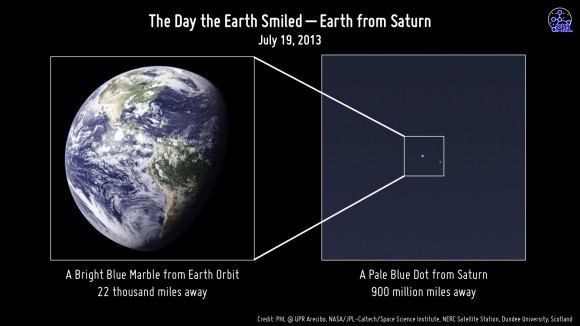
Earth_July_19_2013_Saturn-580x326Granted, North America and part of the Atlantic Ocean were the only illuminated parts of Earth at the time, but NASA claims that more than 20,000 people came out to wave at Saturn and post pictures of themselves online. Given the enormous distance involved, Earth itself appeared only 1.5 pixels wide in the photos. So congratulations if you got in the picture, but don’t expect to be able to see you face.

Not to be left out, members of NASA’s Jet Propulsion Laboratory in Pasadena gathered outside of the facility to wave at Cassini on July 19th as it rounded the Saturnalian system and snapped shots of North America. Camping out on the front lawn, researchers and scientists set up a pavilion for the afternoon and enjoyed some outdoor fun until the moment arrived to wave at the heavens.

cassini-wave20130After being beamed back to Earth from 1.5 billion km away (over a billion miles), NASA science teams got right to work processing the many photos shot by Cassini so they could create individual color composites and a panoramic view of the ‘pale blue dot’ of Earth as well as the entire Saturnalian system. And as you can see from the image posted at the beginning of this article, the first color composite was pretty damn spectacular!

Cassini took a total of 323 images using different spectral filters. The snapshots it took of Earth happened between 2:27 and 2:42 p.m. PDT on Friday, July 19 from a distance of about 1.44 billion kilometers (898 million miles). The images show the Earth and the Moon as dots barely about a pixel wide but do reveal the ‘pale blue dot’ that is home to all of humanity and our whitish colored neighbor.

saturn_cassini2006Distant views of the Earth from robotic space probes, especially from the outer reaches of our Solar System, are few and far between, and are therefore events for space and astronomy enthusiasts and everyone else to savor. The last time Cassini took mosaic pictures of Saturn and Earth was back in 2006, and those were pretty spectacular too. But on this occasion, the benefits went beyond stunning photographs.

Linda Spilker, Cassini project scientist of NASA’s Jet Propulsion Laboratory, explained:

One of the most exciting Cassini events in 2013 will be the unusual opportunity on July 19 to image the whole Saturn system as it is backlit by the sun. With Saturn covering the harsh light of the sun, we will be gathering unique ring science and also catching a glimpse of our very own home planet.

Coincidentally, the first humans (Neil Armstrong and Buzz Aldrin) set foot on the Moon 44 years ago nearly to the day of Cassini’s new images on July 20, 1969. In short, this occasion reminds us that not only do we live in a very vast universe, but that we are part of a very proud and ongoing tradition of exploration.

I Saw Sunspots Today!

solar1Today, I achieved a personal first and got to see an astronomical phenomena that few people will. While attending an open house event at my local Aviation Museum, I managed to meet up with a man who had set up a stargazing station and was showcasing some serious equipment. After waiting my turn, I got to peer through his special telescope with a sun filter. And what I saw, as the title would suggest, was something truly amazing – sunspots!

As some may know, sunspots have remained something of a mystery to astronomers and philosophers until the Scientific Revolution of the 16th century. It was at this time that Galileo observed them using his own telescope, which he did by projecting the image onto sheets of paper and recording the imperfections in the light.

sunspots1The discovery was important in helping to disprove the prevailing theory that the Earth was at the center of the universe – aka. the Geocentric theory. Up until this time, European philosophers were living under the impression that the Sun, like all celestial bodies that were believed to orbit the Earth, was a perfect sphere. By showing it to be riddled with imperfections, Galileo placed an additional nail in the philosophical basis of this idea.

This in turn helped pave the way for the acceptance of Copernicus’ theory of a Heliocentric universe. As with his observations that Jupiter had its own set of moons, that the Moon itself did not have a polished crystalline surface, and that Copernicus’ theory resolved numerous logical inconsistencies in the other model, Galileo helped to establish the field of truly scientific astronomy.

sunspot_activityToday, I learned that observing sunspots continues to be a difficult thing, since direct observation with a telescope is impossible without sun filter. Not only that, but many people mistake high-magnification for high-power, which in turn leads to images that are not of the best quality. And observing them can by difficult since they go through cycles.

As the kind host of the solar observation explained, and this NASA graph shows, sunspot activity goes through a cycle that repeats every eleven years. As we are currently at the edge of a peek in the cycle, its prime time to get a look at sunspots in the sky. The last time anyone could get a good look was in 2001, and the next opportunity won’t come until 2023.

So I feel pretty privileged, both as a geeky, space-enthusiast and a regular person. If you know someone who has access to a telescope with a solar filter, or just happen to live near an observatory that conducts tours, get out there and spot those surface imperfections. I’m not exaggerating when I say its a rare treat!

News from Space: The Orion MPCV gets a Manned Mission

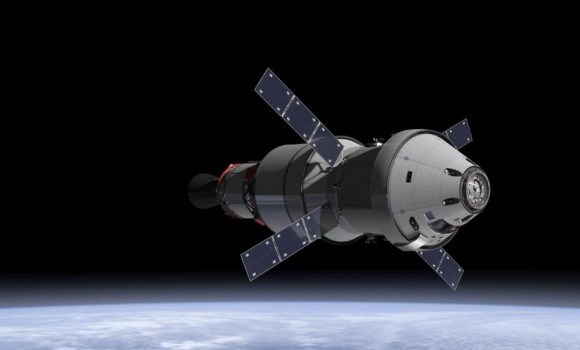
Orion_arraysIt’s known as the Orion Multi-Purpose Crew Vehicle (MPCV), and it represents NASA’s plans for a next-generation exploration craft. This plan calls for the Orion to be launched aboard the next-generation Space Launch System, a larger, souped-up version of the Saturn V’s that took the Apollo teams into space and men like Neil Armstrong to the Moon.

The first flight, called Exploration Mission 1 (EM-1), will be targeted to send an unpiloted Orion spacecraft to a point more than 70,000 km (40,000 miles) beyond the Moon. This mission will serve as a forerunner to NASA’s new Asteroid Redirect Initiative – a mission to capture an asteroid and tow it closer to Earth – which was recently approved by the Obama Administration.

orion_arrays1But in a recent decision to upgrade the future prospects of the Orion, the EM-1 flight will now serve as an elaborate harbinger to NASA’s likewise enhanced EM-2 mission. This flight would involve sending a crew of astronauts for up close investigation of the small Near Earth Asteroid that would be relocated to the Moon’s vicinity. Until recently, NASA’s plan had been to launch the first crewed Orion atop the 2nd SLS rocket to a high orbit around the moon on the EM-2 mission.

However, the enhanced EM-1 flight would involve launching an unmanned Orion, fully integrated with the SLS, to an orbit near the moon where an asteroid could be moved to as early as 2021. This upgrade would also allow for an exceptionally more vigorous test of all the flight systems for both the Orion and SLS before risking a flight with humans aboard.

orion_arrays2It would also be much more technically challenging, as a slew of additional thruster firings would be conducted to test the engines ability to change orbital parameters, and the Orion would also be outfitted with sensors to collect a wide variety of measurements to evaluate its operation in the harsh space environment. And lastly, the mission’s duration would also be extended from the original 10 to a full 25 days.

Brandi Dean, NASA Johnson Space Center spokeswoman, explained the mission package in a recent interview with Universe Today:

The EM-1 mission with include approximately nine days outbound, three to six days in deep retrograde orbit and nine days back. EM-1 will have a compliment of both operational flight instrumentation and development flight instrumentation. This instrumentation suite gives us the ability to measure many attributes of system functionality and performance, including thermal, stress, displacement, acceleration, pressure and radiation.

The EM-1 flight has many years of planning and development ahead and further revisions prior to the 2017 liftoff are likely. “Final flight test objectives and the exact set of instrumentation required to meet those objectives is currently under development,” explained Dean.

orion_spacecenterThe SLS launcher will be the most powerful and capable rocket ever built by humans – exceeding the liftoff thrust of even the Saturn V, the very rocket that sent the Apollo astronauts into space and put Neil Armstrong, Buzz Aldrin and Michael Collins on the Moon. Since NASA is in a hurry to reprise its role as a leader in space, both the Orion and the SLS are under active and accelerating development by NASA and its industrial partners.

As already stated by NASA spokespeople, the 1st Orion capsule is slated to blast off on the unpiloted EFT-1 test flight in September 2014 atop a Delta IV Heavy rocket. This mission will be what is known as a “two orbit” test flight that will take the unmanned Multi-Purpose Crew Vehicle to an altitude of 5800 km (3,600 miles) above the Earth’s surface.

After the 2021 missions to the Moon, NASA will be looking farther abroad, seeking to mount manned missions to Mars, and maybe beyond…

And in the meantime, enjoy this video of NASA testing out the parachutes on the Orion space vehicle. The event was captured live on Google+ on July 24th from the U.S. Army’s Yuma Proving Ground in Arizona, and the following is the highlight of the event – the Orion being dropped from a plane!:

News from Mars: Evidence of Falling Snow

Mars-snow-header-640x353Ever since astronomers first looked up at Mars, they discerned features that few could accurately identify. For many years, speculations about irrigation, canals, and a Martian civilization abounded, firing people’s imaginations and fiction. It was not until more recently, with the deployment of the Viking probe, that Mars’ surface features have come to be seen for what they are.

Thanks several more probes, and the tireless work of rover such as Opptorunity and Curiosity, scientists have been able to amass evidence and get a first hand look at the surface. Nevertheless, they are still hard-pressed to explain everything that they’ve seen. And while much evidence exists that rivers and lakes once dotted the landscape, other geological features exist which don’t fit that model.

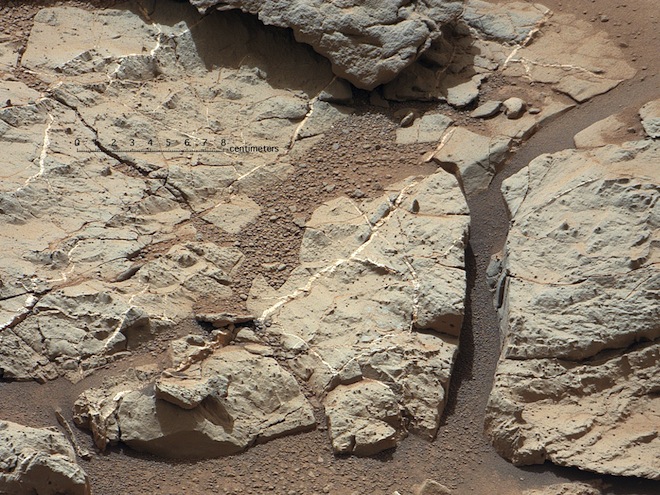
curiosity_rocksHowever, a recent report from Brown University has presented evidence that snowfall may be one answer. It has long been known that ice exists at the polar caps, but actual snowfall is a very specific meteorological feature, one that has serious implications for early Martian conditions. This is just another indication that Mars hosted an environment that was very much like Earths.

And this is not the first time that snow on Mars has been suggested. In 2008, NASA announced having detected snow falling from Martian clouds, but it was entirely vaporized before reaching the ground. The Brown researchers claim that snowfall in the past, and buildup on the surface leading to melting and runoff, could have created many of the tributary networks observed near tall mountain-ranges.

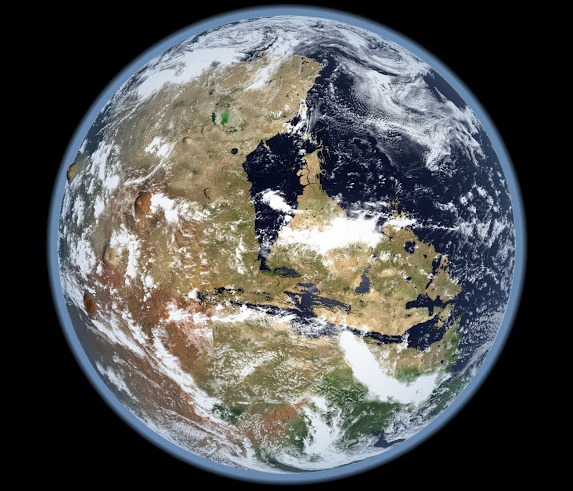
mars_atmoTo back this claim up, the team used a computer simulation from the Laboratoire de Météorologie Dynamique called the Mars global circulation model (GCM). This model compiles evidence about the early composition of the red planet’s atmosphere to predict global circulation patterns. And since other models predict that Mars was quite cold, the program indicated the highest probability of snowfall over the densest valley systems.

Lead researcher Kat Scanlon also relied on her background in orographic studies (science for “studying mountains”) in Hawaii to arrive at this hypothesis. This includes how tall mountains lead to divergent weather patterns on either side, with warm, wet conditions one and cold, dry ones on the other. NASA’s Curiosity rover also was intrinsic, thanks to recent information that might explain why Mars no longer displays this kind of behavior.

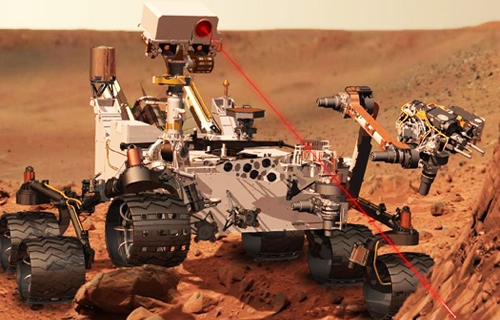
Curiosity-Laser-BeamIn short, Curiosity determined that the planet is losing its atmosphere. It has taken detailed assays of the current atmosphere, which is almost entirely carbon dioxide and about 0.6% the pressure of Earth’s at sea-level. More notably, it has used its ability to laser-blast solid samples and analyze the resulting vapor to determine that Mars has an unusually high ratio of heavy to light isotopes — most importantly of deuterium to hydrogen.

The main explanation for this is atmospheric loss, since light isotopes will escape slightly more quickly than heavy. Over billions of years, this can lead to non-standard isotope levels the show a loss of atmosphere. One major theory that might explain this loss say that about 4.2 million years ago Mars collided with an object about the size of Pluto. An impact from this body would have caused a huge expulsion of atmosphere, followed by a slow, continued loss from then on.

All of this plays into the larger question of life on Mars. Is there, or was there, ever life? Most likely, there was, as all the elements – water, atmosphere, clay minerals – appear to have been there at one time. And while scientists might still stumble upon a Lake Vostok-like reserve of microbial life under the surface, it seems most likely that Mars most fertile days is behind it.

However, that doesn’t mean that it can’t once again host life-sustaining conditions. And with some tweaking, of the ecological engineering – aka. terraforming – variety, it could once again.

Living-Mars.2Source: extremetech.com

News from Space: Dream Chaser Begins Testing

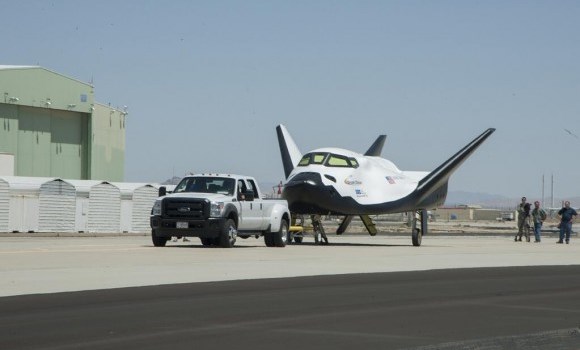
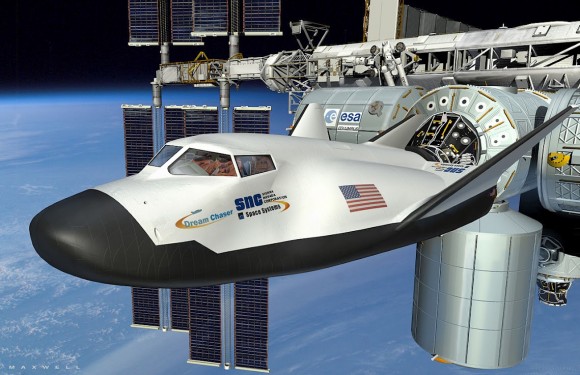
dream_chaserEver since their Space Shuttle program was forcibly shut down in 2011, NASA has been forced to look to the private sector to restore their ability to put human beings into orbit from American soil. This consists of providing the seed money needed for companies to develop a new race of “space taxis”.  One such program is the Dream Chaser, a reusable shuttle that will fly astronauts into low Earth orbit (LEO) and to the International Space Station (ISS).

Much like a standard Space Shuttle, the Dream Chaser is designed to launch atop a United Launch Alliance Atlas V rocket and land on a shuttle landing facility. And after lengthy periods of research and development, the Dream Chaser is now moving forward with a series of ground tests at NASA’s Dryden Flight Research Center in California that will soon lead to dramatic aerial flight tests throughout 2013.

dream-chaser-testThis consisted of putting the shuttle together and then conducting a series of what’s known as “Pathfinding tow tests” on Dryden’s concrete runway. The purpose here is to validate the performance of the vehicles’ nose skid, brakes, tires and other systems to prove that it can safely land an astronaut crew after surviving the searing re-entry from Earth orbit. For the initial ground tests, the ship was pulled by a tow truck at 16 and 32 km/h (10 to 20 mph).

Later this month, the next leg of the test will consist of towing it up to speeds of 64 to 95 km and hour (40 to 60 mph). The next phases of testing will take place later this year in the form of airborne captive carry tests, where an Erickson Skycrane helicopter will fly the fuselage around to see how it holds up. Approach and Landing Tests (ALT) will follow to check the aerodynamic handling, which will consist of atmospheric drop tests in autonomous free flight mode.

dream-chaser-test1In an interview with Universe Today, Marc Sirangelo – Sierra Nevada Corp. vice president and SNC Space Systems chairman – spoke on record about the shuttle and where it is in terms of development:

It’s not outfitted for orbital flight. It is outfitted for atmospheric flight tests. The best analogy is it’s very similar to what NASA did in the shuttle program with the Enterprise, creating a vehicle that would allow it to do significant flights whose design then would filter into the final vehicle for orbital flight.

In short, the Dream Chaser has a long way to go, but the program shows great promise. And as already noted, they are not the only ones benefiting from this public-private agreement that seeks to develop commercial vehicles for the sake of kick starting space travel.

dream-chaser-dockedOther companies include Boeing and SpaceX, companies that were also awarded contracts under NASA’s Commercial Crew Integrated Capability Initiative, or CCiCap. All three have their own commercial vehicles under development, such as the Boeing CST-100, SpaceX’s Dragon, which are similarly designed to bring a crew of up to 7 astronauts to the ISS and docking with it for up to 6 months.

Dream_Chaser_launchBut of course, everything depends on NASA’s approved budget, which seems headed for steep cuts in excess of a billion dollars if a Republican dominated US House has its way.This is the third contract in NASA’s Phase 1 CCiCap contracts, who’s combined value is about $1.1 Billion and runs through March 2014. Phase 2 contract awards will eventually lead to actual flight units after a down selection to one or more of the companies. The first orbital flight test of the Dream Chaser is not expected before 2016 and could be further delayed if NASA’s commercial crew budget is again slashed by the Congress – as was done in the past few years.

But as William Gerstenmaier – NASA’s associate administrator for human exploration and operations in Washington – indicated in a statement, the larger goal here is one of repatriation. As it stands, US astronauts are totally dependent on Russia’s Soyuz capsule for rides to the ISS, which costs upwards of $70 million a trip. NASA hopes to change that by rekindling the “good old days” of space travel:

NASA centers around the country paved the way for 50 years of American human spaceflight, and they’re actively working with our partners to test innovative commercial space systems that will continue to ensure American leadership in exploration and discovery.

And I for one wish NASA luck. Lord knows thirty-years of post-Cold War budget cutbacks hasn’t been easy on them. And hitching rides into space above Cold War era rockets is not the best way of getting your astronauts into space either!

In the meantime, check out this concept video of the Dream Chaser in action, courtesy of the Sierra Nevada Corporation:


Source:
universetoday.com

News from Space: The Canadarm2!

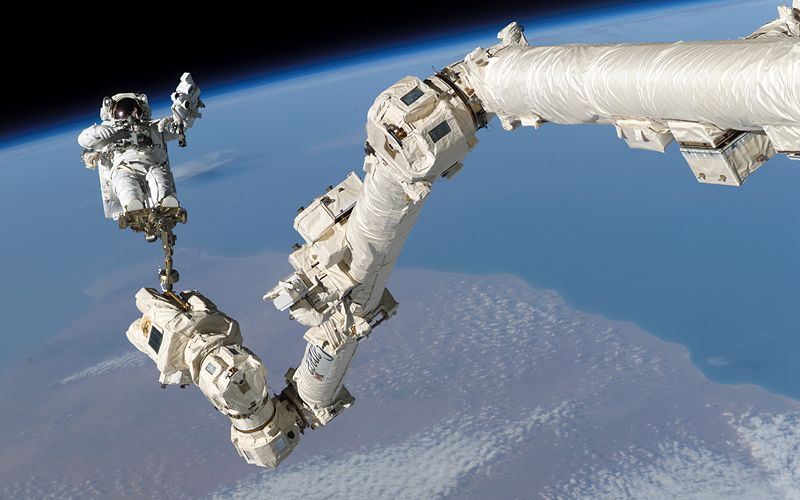
Astronaut Steve K. Robertson during STS-114

For decades, the Canadian Space Agency has been building the Shuttle Remote Manipulator System (SRMS) – also known as the Canadarm. Since 1981, aboard the shuttle STS-2 Columbia, this model of robotic arm has come standard on all NASA shuttles and was used as its main grasper. However, due to the progress made in the field of robotics over the past thirty years and the need for equipment to evolve to meet new challenges, the Canadarm was retired in 2011.

Luckily, the CSA is busy at work producing its successor, the Mobile Service System – aka. Canadarm2. The latest versions are in testing right now, and their main purpose, once deployed, will be to save satellites. Currently, an earlier version of this arm serves as the main grasper aboard the ISS, where it is used to move payloads around and guide objects to the docking port.

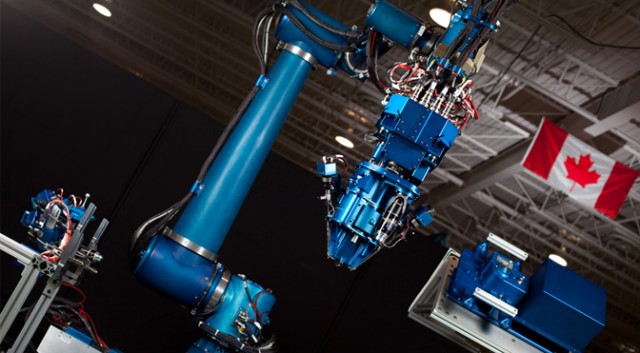
canadarm2However, the newest models – dubbed Next Generation Canadarm (NGC) – are somewhat different and come in two parts. First, there is the 15 meter arm that has six degrees of freedom, extreme flexibility, and handles grappling and heavy lifting. The second is a 2.58 meter arm that comes attached to the larger arm, is similarly free and flexible, and handles more intricate repair and replacement work.

This new model improves upon the old in several respects. In addition to being more intricate, mobile, and handle a wider array of tasks, it is also considerably lighter than than its predecessor. When not in use, it is also capable of telescoping down to 5 meters of cubic space, which is a huge upshot for transporting it aboard a shuttle craft. All of this is expected to come in handy once they start the lucrative business of protecting our many satellites.

canadarm2_missioncontrolIt’s no secret that there is abundance of space junk clogging the Earth’s upper atmosphere. This moving debris is a serious danger to both manned and unmanned missions and is only expected to get worse. Because of this, the ability to repair and retool satellites to keep them in operation longer is of prime importance to space agencies.

Naturally, every piece of equipment needs to undergo rigorous testing before its deployed into space. And the Canadarm2 is no exception, which is currently being put through countless simulations. This battery of tests allows operators to guide dummy satellites together for docking using the arms in both full manual and semi-autonomous mode.

canadarm2_chrishadfieldNo indication on when they will be ready for service, but it seems like a safe bet that any manned missions to Mars will likely feature a Canadarm2 or two. And as you can see, Chris Hadfield – another major Canadian contribution to space – is on hand to help out. Maybe he and the new arm can perform a duet together, provided it can handle a guitar!

And be sure to check out this video of the NGC Canadarm2 in action, courtesy of the Canadian Space Agency:


Source:
Wired.com

News From Space: First Blue Exoplanet Discovered!

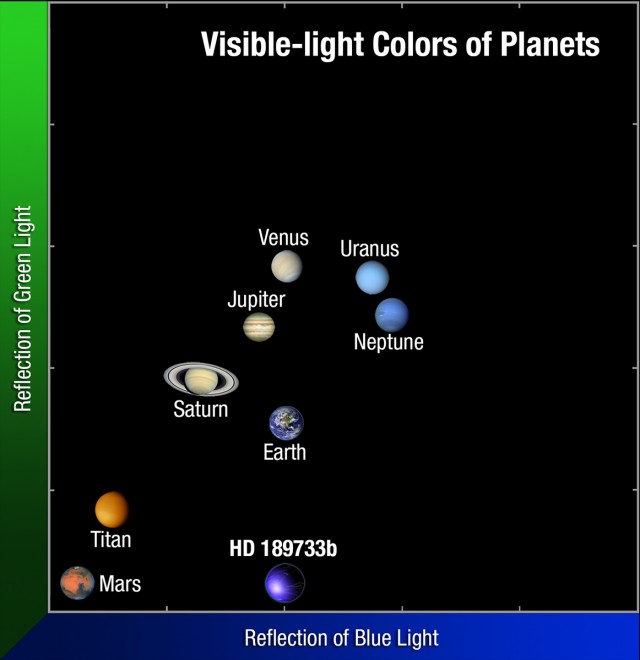
HD_189733_b_deep_blue_dotEver since our astronomers have gained the ability to see into deep space and discern what lies in distant solar systems, a total of 910 extra-solar planets have been discovered. Of those, only a handful have been confirmed as potentially habitable by Earth scientists. Despite these discovered, it was not until recently that a “blue planet” outside of the Solar System, thanks to NASAs Hubble telescope.

But here’s the kicker: as it turns out, the planet is not blue due to the presence of liquid water. The blue color likely comes from clouds in the atmosphere made of molten glass. The planet is known as HD 189733 b, located roughly 63 light years away from Earth in the constellation of Vulpecula (aka. the Fox). Initially discovered in 2005 by French astronomers who observed it passing in front of its star, HD 189733 b is one of the best-studied exoplanets.

Hd189733b_blue_planet_artPrior to this new finding, it was already known that the planet was a hot Jupiter — a massive gas giant that orbits very close to its parent star — and that, using polarimetry, it was most likely blue. Since that time, the blue color has been confirmed by a spectrograph aboard Hubble which scanned the planet during an eclipse. As it passed behind its parent star and out of our vision, Hubble recorded less blue light coming from the star, while the other colors remained the same.

This strongly indicates that the light reflected by HD 189733 b’s atmosphere is blue and thus, if we were close enough to directly observe the planet, it would appear blue. This is an apparent first for astrophysicists and astronomers, who wouldn’t normally be able to observe such a fluctuation from 63 light years away. But the size of the planet, plus the amount of light reflecting off it from its very-close-by star, mean that Hubble can do its thing.

blue_planet_image2-640x660As for the cause of the color itself, the current theory is that the planets atmosphere is full of clouds that contain tiny silicate particles, which absorb some light frequencies but reflect and scatter blue light. In the words of NASA, because the surface of the planet is around  815 Celsius (1,500 Fahrenheit), these particles are likely in a molten, liquid state that periodically turn into rain. Yes, you read that right, the planet experiences periods of molten glass rain!

In addition to that, it is also known that its orbital period (length of a year) is only 2.2 days. The planet is also tidally locked, meaning that one side is always facing towards the sun while the other experiences perpetual night. So basically, outside of its blue color, HD 189733 b is about as uninhabitable as it gets.

Ah well, the search for a truly Earth-like exoplanet continues I guess! And in the meantime, enjoy this short video from Hubble ESA – a computer graphic representation of the universe’s other “blue planet”:

Source: Extremetech.com

Feeding the Future: 3D Printing to End World Hunger?

3DfoodThe Systems & Materials Research Corporation, a 3D printing development firm, received a lot of attention after it became revealed that NASA had hired him (to the tune of $125,000) to develop a printer that could create pizza. Looking ahead to the era of deep-space exploration, NASA wanted something that could provide its astronauts with food that was tasty, nutritious, and not subject to a shelf life.

But to Anjan Contractor, the head of SMRC, 3D printing also presents a solution to a much more terrestrial problem: world hunger. He sees a day when every kitchen has a 3D printer, and the earth’s 12 billion people feed themselves customized, nutritionally-appropriate meals synthesized one layer at a time, from cartridges of powder and oils they buy at the corner grocery store.

3dfood1Contractor’s vision would mean the end of food waste, because the powder his system will use is shelf-stable for up to 30 years. Each cartridge, whether it contains sugars, complex carbohydrates, protein or some other basic building block, would therefore be fully exhausted before ever needing to be returned to the store. So in addition to providing for our daily needs, this process would also eliminate a massive proportion of the waste we generate on a daily basis.

In addition, the proliferation of food synthesizers is also likely lead to new and diverse ways of producing the basic calories on which we rely. Since a powder is a powder, the inputs could be anything that contain the right organic molecules. And with open source software, where people can upload and download recipes all the time, people will have a chance to get creative and expand the repertoire.

OLYMPUS DIGITAL CAMERAAnd in addition to alleviating hunger, there is the added (and arguably bigger) bonus of relieving pressure on the natural environment. Already, environmentalists are gravelly concerned about the amount of land that is consumed every year by urban sprawl. But even more disconcerting is the amount of land, forests, wetlands, and natural habitats, that are consumed and destroyed by the need to farm food for these environments, and dispose of their waste.

And he is hardly alone when it comes to the concept of turning powdered ingredients and pastes into food. The Dutch holding company known as TNO Research, which owns several technology firms, has also been contemplating the possibilities of turning any food-like starting material into an edible meal. According to an outline provided by their researchers, 3D printed meals of the future could include any of the following “alternative ingredients”:

  • algae
  • duckweed
  • grass
  • lupine seeds
  • beet leafs
  • insects

As long as the biological properties of the base materials are appropriate – meaning they have the requisite carbohydrates, protein, fatty acids, etc – than it should be possible to synthesize just about anything.

3dfood2In addition, companies like Philips and institutions like MIT have been working on the concept of food printers for many years. In Philip’s case, this research led to the creation of the Diagnostic Kitchen program. This led to ideas for a Food Printer, which was inspired by the concept of ‘molecular gastronomists’, chefs who deconstruct meals and then reassemble it in completely different ways.

In much the same way, a Food Printer would take various edible ingredients and then combine and ‘print’ them in the desired shape and consistency. The nutritional value and relevance of what was being ‘printed’ would also be adjusted based on input from the diagnostic kitchen’s nutrition monitor. If, for example, you were trying to carbo-load for an athletic event, wanted to build muscle, or lower your cholesterol, you could tweek the levels of carbs, protein, or fatty acids to suit your needs.

MIT_3DprinterAnd there’s the Cornucopia,  a 3D printer that was unveiled by MIT’s gastronomy geeks back in 2010. Here, a series of refrigerated food canisters provide the food ingredients, which are then deposited into a built-in mixer which delivers concoctions that can be either heated or cooled thanks to a temperature controlled print head. A touch screen allows users to dial in what they want, and adjust ingredients to get the desired end.

Granted, there are those who won’t likely see this as an appetizing prospect. But as Contractor notes, that’s probably because they haven’t tried the high-end stuff yet. As the technology improves, attitudes about printed food products are likely to change. What’s more, he also believes overpopulation might add a little incentive to the mix:

I think, and many economists think, that current food systems can’t supply 12 billion people sufficiently. So we eventually have to change our perception of what we see as food.

Quite right. When the world is bursting at the seems and so many people are forced to live together in close quarters, hardly anyone is likely to raise a fuss about assembled food. Not when the alternative is an empty belly or a planet that will collapse from the weight of so much farming and waste. So if you’re the kind of person who likes their meat, veggies and fruits to be farmed locally and organically, you may want to consider moving to the country!

And be sure to check out this concept video produced by NTO that showcases the future of 3D printing, which of course includes food production:


Source:
qz.com, popucity.net, geek.com

News from Mars: Oxygen-Rich Atmosphere

marsEver since the Opportunity and Curiosity Rovers began their research stint on the red planet, evidence has been pouring in that indicates that the planet once supported life. And now, by examining the compositions of Martian meteorites found on Earth and data provided by the Mars rovers, Scientists from the Department of Earth Sciences at the University of Oxford have determined that the planet once boasted an oxygen-rich atmosphere.

The key determinant was the fact that the Martian surface rocks were five times richer in nickel than the meteorites found on Earth, a find which cast doubt on whether the meteorites were typical volcanic products. Whilst it is possible that the geological composition of Mars varies immensely from region to region, the team believes that it is more likely that the differences arise through a process known as subduction – in which material is recycled into the interior.

mars_oxygenThe scientists suggest that the Martian surface was oxidized very early in the history of the planet and that, through subduction, this oxygen-rich material was drawn into the shallow interior and recycled back to the surface during eruptions 4 billion years ago. The meteorites, by contrast, are much younger volcanic rocks that emerged from deeper within the planet and so were less influenced by this process.

As Professor Bernard Wood, the senior author of a study that appeared in Nature magazine, put it:

What we have shown is that both meteorites and surface volcanic rocks are consistent with similar origins in the deep interior of Mars but that the surface rocks come from a more oxygen-rich environment, probably caused by recycling of oxygen-rich materials into the interior. This result is surprising because while the meteorites are geologically young, around 180 million to 1.4 billion years old, the Spirit rover was analyzing a very old part of Mars, more than 3.7 billion years old.

In addition to evidence that Mars once had a sizable amount of surface water, in the form of rivers and lakes, this latest study demonstrates that Mars was once very much like Earth. In all likelihood, it would have been home to countless forms of bacteria, single-celled organisms, and possibly larger creatures as well. But being at the edge of our Sun’s habitable zone, it was unable to maintain the conditions for life to thrive.

terraforming-hswmarsSad news, but encouraging when it comes to the prospect of making Mars able to sustain life again. And in the coming years and decades, that’s precisely what a number of space agencies, private companies and citizens want to do. And if these plans are to succeed long term, the planet will have to be converted into something that can independently support life.

In short, the colonization of Mars requires that the planet become something akin to its old self.

Source: sci-news.com

Tweeting Aliens: The Lone Signal Array

gliese-581-eIn what could be called a case of serious repurposing – beating swords into plowshares and so forth – or something out of science-fiction, a crowdfunded project has sought to turn a Cold War era dish into a deep-space communications array. This array will send messages to that’s relatively near to us, and potentially inhabited. And assuming anything sufficiently advanced lives there, we could be talking to them soon enough.

dishantennaThe project is known as Lone Signal, a crowdfunded effort to send a continuous stream of messages to the folks at Gliese 526, a red dwarf star 17.6 light-years away in the constellation of Bootes (aka Wolf 498). And the dish with which they intend to do this is known as the Jamesburg Earth Station, a nuke-proof satellite relay station in California that dates from the 1960s and even helped broadcast images of Neil Armstrong on the moon.

Long Signal, it should be noted, is the brainchild of The Blue Marble Space Institute of Science, non-profit virtual research institute that networks scientists from across the globe and multiple disciplines for the purpose of expanding the boundaries of knowledge, science and astronomy and promoting an open dialogue on the subject of exploration and settlement.Towards this end, they arranged for a 30-year lease on the Cold War-era dish (for a cool $3 million) and set up a project that will allow participants who contribute money to send a personalized message into space.

exoplanetsUltimately, they plan to direct two beams at Gliese 526: a continuous wave with fundamental physics laws and basic information about Earth, and another consisting of crowdsourced greetings. The project is open to anyone and a series of initial short message (the equivalent of a 144-character tweet) will be available free of charge. Subsequent messages, images, and longer greetings, however, will cost money (about $1 for four texts) that will help the project fund itself.

The project’s website also lets participants track their messages and share them via social media, dedicate messages to others, and view signal stats. In an interview with Universe Today, Lone Signal co-founder Pierre Fabre, told people:

Our scientific goals are to discover sentient beings outside of our solar system. But an important part of this project is to get people to look beyond themselves and their differences by thinking about what they would say to a different civilization. Lone Signal will allow people to do that.

Indeed. Nothing like the prospect of facing another life form, a potential space invader even, to make people forget about all their petty bickering!

Gliese_581_-_2010As our knowledge of the universe expands, we are becoming aware of the existence of more and more exoplanets. Many of these exist within the Habitable Zones of their parent star, which means two things. On the one hand, they may be candidates for potential settlement in the future. On the other, they may already be home to sentient life. If said life is sufficiently advanced, its entirely possible they could be looking back at us.

For some time, the human race has been contemplating First Contact with potential extra-terrestrial life, which was the very purpose behind the creation of NASA’s SETI (Search for Extra-Terrestrial Intelligence) program in 1961. The Pioneer space probes were another attempt at making contact, both of which carried small metal plaques identifying their time and place of origin for the benefit of any other spacefarers that might find them in the distant future.

SETIFollowing in that tradition, Voyager 1 and 2 space probes contained even more ambitious messages, otherwise known as the Golden Record. These phonograph records – two 12-inch gold-plated copper disks – contained both sounds and images selected to portray the diversity of life and culture on Earth that would give any civilization that found them a good idea of what the people of Earth were capable of.

The contents of the records were selected for NASA by a committee chaired by Carl Sagan of Cornell University, and consisted of 115 images and a variety of natural sounds – surf, wind, thunder, birds, whales, and other animals. To this they added musical selections from different cultures and eras, and spoken greetings from Earth-people in fifty-five languages, and printed messages from then-President Carter and U.N. Secretary General Waldheim.

golden_record_cover_smIn this respect, Lone Signal represents the latest step in promoting contact and communication with other life forms. And in keeping with the trend of modern space exploration, it is being opened to the public via crowdfunding and personalized messages. But unlike SETI, which lost its government funding in 1995 and had to turn to private supporters, crowdfunded space exploration is something directly accessible by all citizens, not just corporate financiers.

Update: The Lone Signal project is now operational and on 9:00 PM EDT Monday, June 17 at a press event in New York, the team announced the transmission of the first interstellar message. The message was sent by none other than Ray Kurzweil, noted Futurist and science guru. That message was then read during his welcome talk to the Singularity University class of 2013, from the Computer History Museum in Mountain View, California:

Greetings to Gliese 526 from Singularity University. As you receive this, our computers have made us smarter, the better to understand you and the wisdom of the universe.

What he means by this is that by the time the message is recieved – roughly 18 years from now, assuming it ever is – humanity is likely to have taken the first steps towards merging our brains with computers via biotech, artificial intelligence, or other means of computer-assisted brain augmentation. At least, that’s what guys like Kurzweil hope for.

Other “alpha beamers” — including Dan Aykroyd, Alicia Keys, and Jason Silva — also sent beams Monday night. And for the time being, anyone can send a “crowdsourced” 144-character beam and pic. Better get on it before they start charging. If texting and phone rates are any indication, the price is likely to go up as the plan improves!

And be sure to enjoy this promotional video from Lone Signal:


And also check out this time-lapse video of the Jamesburg Earth Station in operation:

Sources: cnet.news.com, universetoday.com, voyager.jpl.nasa.gov, bmsis.org, kurzweil.net