Feeding the Future: 3D Printing to End World Hunger?

3DfoodThe Systems & Materials Research Corporation, a 3D printing development firm, received a lot of attention after it became revealed that NASA had hired him (to the tune of $125,000) to develop a printer that could create pizza. Looking ahead to the era of deep-space exploration, NASA wanted something that could provide its astronauts with food that was tasty, nutritious, and not subject to a shelf life.

But to Anjan Contractor, the head of SMRC, 3D printing also presents a solution to a much more terrestrial problem: world hunger. He sees a day when every kitchen has a 3D printer, and the earth’s 12 billion people feed themselves customized, nutritionally-appropriate meals synthesized one layer at a time, from cartridges of powder and oils they buy at the corner grocery store.

3dfood1Contractor’s vision would mean the end of food waste, because the powder his system will use is shelf-stable for up to 30 years. Each cartridge, whether it contains sugars, complex carbohydrates, protein or some other basic building block, would therefore be fully exhausted before ever needing to be returned to the store. So in addition to providing for our daily needs, this process would also eliminate a massive proportion of the waste we generate on a daily basis.

In addition, the proliferation of food synthesizers is also likely lead to new and diverse ways of producing the basic calories on which we rely. Since a powder is a powder, the inputs could be anything that contain the right organic molecules. And with open source software, where people can upload and download recipes all the time, people will have a chance to get creative and expand the repertoire.
OLYMPUS DIGITAL CAMERAAnd in addition to alleviating hunger, there is the added (and arguably bigger) bonus of relieving pressure on the natural environment. Already, environmentalists are gravelly concerned about the amount of land that is consumed every year by urban sprawl. But even more disconcerting is the amount of land, forests, wetlands, and natural habitats, that are consumed and destroyed by the need to farm food for these environments, and dispose of their waste.

And he is hardly alone when it comes to the concept of turning powdered ingredients and pastes into food. The Dutch holding company known as TNO Research, which owns several technology firms, has also been contemplating the possibilities of turning any food-like starting material into an edible meal. According to an outline provided by their researchers, 3D printed meals of the future could include any of the following “alternative ingredients”:

  • algae
  • duckweed
  • grass
  • lupine seeds
  • beet leafs
  • insects

As long as the biological properties of the base materials are appropriate – meaning they have the requisite carbohydrates, protein, fatty acids, etc – than it should be possible to synthesize just about anything.
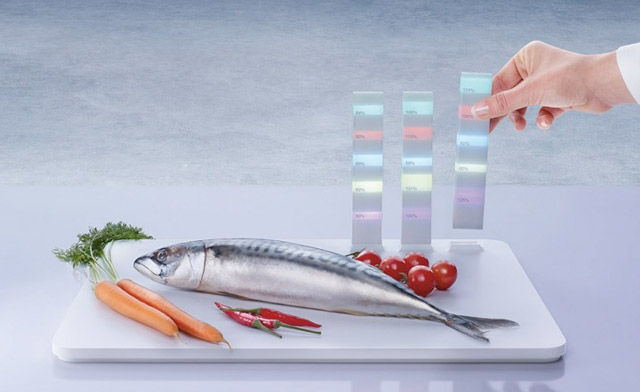
3dfood2In addition, companies like Philips and institutions like MIT have been working on the concept of food printers for many years. In Philip’s case, this research led to the creation of the Diagnostic Kitchen program. This led to ideas for a Food Printer, which was inspired by the concept of ‘molecular gastronomists’, chefs who deconstruct meals and then reassemble it in completely different ways.

In much the same way, a Food Printer would take various edible ingredients and then combine and ‘print’ them in the desired shape and consistency. The nutritional value and relevance of what was being ‘printed’ would also be adjusted based on input from the diagnostic kitchen’s nutrition monitor. If, for example, you were trying to carbo-load for an athletic event, wanted to build muscle, or lower your cholesterol, you could tweek the levels of carbs, protein, or fatty acids to suit your needs.

MIT_3DprinterAnd there’s the Cornucopia,  a 3D printer that was unveiled by MIT’s gastronomy geeks back in 2010. Here, a series of refrigerated food canisters provide the food ingredients, which are then deposited into a built-in mixer which delivers concoctions that can be either heated or cooled thanks to a temperature controlled print head. A touch screen allows users to dial in what they want, and adjust ingredients to get the desired end.

Granted, there are those who won’t likely see this as an appetizing prospect. But as Contractor notes, that’s probably because they haven’t tried the high-end stuff yet. As the technology improves, attitudes about printed food products are likely to change. What’s more, he also believes overpopulation might add a little incentive to the mix:

I think, and many economists think, that current food systems can’t supply 12 billion people sufficiently. So we eventually have to change our perception of what we see as food.

Quite right. When the world is bursting at the seems and so many people are forced to live together in close quarters, hardly anyone is likely to raise a fuss about assembled food. Not when the alternative is an empty belly or a planet that will collapse from the weight of so much farming and waste. So if you’re the kind of person who likes their meat, veggies and fruits to be farmed locally and organically, you may want to consider moving to the country!

And be sure to check out this concept video produced by NTO that showcases the future of 3D printing, which of course includes food production:


Source:
qz.com, popucity.net, geek.com

News from Mars: Oxygen-Rich Atmosphere

marsEver since the Opportunity and Curiosity Rovers began their research stint on the red planet, evidence has been pouring in that indicates that the planet once supported life. And now, by examining the compositions of Martian meteorites found on Earth and data provided by the Mars rovers, Scientists from the Department of Earth Sciences at the University of Oxford have determined that the planet once boasted an oxygen-rich atmosphere.

The key determinant was the fact that the Martian surface rocks were five times richer in nickel than the meteorites found on Earth, a find which cast doubt on whether the meteorites were typical volcanic products. Whilst it is possible that the geological composition of Mars varies immensely from region to region, the team believes that it is more likely that the differences arise through a process known as subduction – in which material is recycled into the interior.

mars_oxygenThe scientists suggest that the Martian surface was oxidized very early in the history of the planet and that, through subduction, this oxygen-rich material was drawn into the shallow interior and recycled back to the surface during eruptions 4 billion years ago. The meteorites, by contrast, are much younger volcanic rocks that emerged from deeper within the planet and so were less influenced by this process.

As Professor Bernard Wood, the senior author of a study that appeared in Nature magazine, put it:

What we have shown is that both meteorites and surface volcanic rocks are consistent with similar origins in the deep interior of Mars but that the surface rocks come from a more oxygen-rich environment, probably caused by recycling of oxygen-rich materials into the interior. This result is surprising because while the meteorites are geologically young, around 180 million to 1.4 billion years old, the Spirit rover was analyzing a very old part of Mars, more than 3.7 billion years old.

In addition to evidence that Mars once had a sizable amount of surface water, in the form of rivers and lakes, this latest study demonstrates that Mars was once very much like Earth. In all likelihood, it would have been home to countless forms of bacteria, single-celled organisms, and possibly larger creatures as well. But being at the edge of our Sun’s habitable zone, it was unable to maintain the conditions for life to thrive.

terraforming-hswmarsSad news, but encouraging when it comes to the prospect of making Mars able to sustain life again. And in the coming years and decades, that’s precisely what a number of space agencies, private companies and citizens want to do. And if these plans are to succeed long term, the planet will have to be converted into something that can independently support life.

In short, the colonization of Mars requires that the planet become something akin to its old self.

Source: sci-news.com

Tweeting Aliens: The Lone Signal Array

gliese-581-eIn what could be called a case of serious repurposing – beating swords into plowshares and so forth – or something out of science-fiction, a crowdfunded project has sought to turn a Cold War era dish into a deep-space communications array. This array will send messages to that’s relatively near to us, and potentially inhabited. And assuming anything sufficiently advanced lives there, we could be talking to them soon enough.

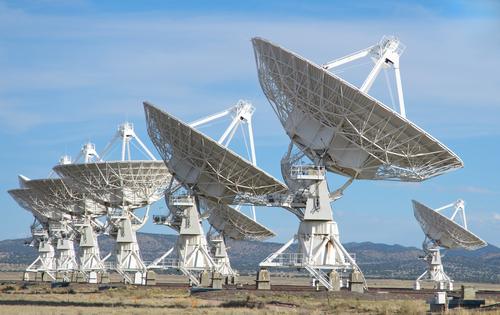
dishantennaThe project is known as Lone Signal, a crowdfunded effort to send a continuous stream of messages to the folks at Gliese 526, a red dwarf star 17.6 light-years away in the constellation of Bootes (aka Wolf 498). And the dish with which they intend to do this is known as the Jamesburg Earth Station, a nuke-proof satellite relay station in California that dates from the 1960s and even helped broadcast images of Neil Armstrong on the moon.

Long Signal, it should be noted, is the brainchild of The Blue Marble Space Institute of Science, non-profit virtual research institute that networks scientists from across the globe and multiple disciplines for the purpose of expanding the boundaries of knowledge, science and astronomy and promoting an open dialogue on the subject of exploration and settlement.Towards this end, they arranged for a 30-year lease on the Cold War-era dish (for a cool $3 million) and set up a project that will allow participants who contribute money to send a personalized message into space.

exoplanetsUltimately, they plan to direct two beams at Gliese 526: a continuous wave with fundamental physics laws and basic information about Earth, and another consisting of crowdsourced greetings. The project is open to anyone and a series of initial short message (the equivalent of a 144-character tweet) will be available free of charge. Subsequent messages, images, and longer greetings, however, will cost money (about $1 for four texts) that will help the project fund itself.

The project’s website also lets participants track their messages and share them via social media, dedicate messages to others, and view signal stats. In an interview with Universe Today, Lone Signal co-founder Pierre Fabre, told people:

Our scientific goals are to discover sentient beings outside of our solar system. But an important part of this project is to get people to look beyond themselves and their differences by thinking about what they would say to a different civilization. Lone Signal will allow people to do that.

Indeed. Nothing like the prospect of facing another life form, a potential space invader even, to make people forget about all their petty bickering!

Gliese_581_-_2010As our knowledge of the universe expands, we are becoming aware of the existence of more and more exoplanets. Many of these exist within the Habitable Zones of their parent star, which means two things. On the one hand, they may be candidates for potential settlement in the future. On the other, they may already be home to sentient life. If said life is sufficiently advanced, its entirely possible they could be looking back at us.

For some time, the human race has been contemplating First Contact with potential extra-terrestrial life, which was the very purpose behind the creation of NASA’s SETI (Search for Extra-Terrestrial Intelligence) program in 1961. The Pioneer space probes were another attempt at making contact, both of which carried small metal plaques identifying their time and place of origin for the benefit of any other spacefarers that might find them in the distant future.

SETIFollowing in that tradition, Voyager 1 and 2 space probes contained even more ambitious messages, otherwise known as the Golden Record. These phonograph records – two 12-inch gold-plated copper disks – contained both sounds and images selected to portray the diversity of life and culture on Earth that would give any civilization that found them a good idea of what the people of Earth were capable of.

The contents of the records were selected for NASA by a committee chaired by Carl Sagan of Cornell University, and consisted of 115 images and a variety of natural sounds – surf, wind, thunder, birds, whales, and other animals. To this they added musical selections from different cultures and eras, and spoken greetings from Earth-people in fifty-five languages, and printed messages from then-President Carter and U.N. Secretary General Waldheim.

golden_record_cover_smIn this respect, Lone Signal represents the latest step in promoting contact and communication with other life forms. And in keeping with the trend of modern space exploration, it is being opened to the public via crowdfunding and personalized messages. But unlike SETI, which lost its government funding in 1995 and had to turn to private supporters, crowdfunded space exploration is something directly accessible by all citizens, not just corporate financiers.

Update: The Lone Signal project is now operational and on 9:00 PM EDT Monday, June 17 at a press event in New York, the team announced the transmission of the first interstellar message. The message was sent by none other than Ray Kurzweil, noted Futurist and science guru. That message was then read during his welcome talk to the Singularity University class of 2013, from the Computer History Museum in Mountain View, California:

Greetings to Gliese 526 from Singularity University. As you receive this, our computers have made us smarter, the better to understand you and the wisdom of the universe.

What he means by this is that by the time the message is recieved – roughly 18 years from now, assuming it ever is – humanity is likely to have taken the first steps towards merging our brains with computers via biotech, artificial intelligence, or other means of computer-assisted brain augmentation. At least, that’s what guys like Kurzweil hope for.

Other “alpha beamers” — including Dan Aykroyd, Alicia Keys, and Jason Silva — also sent beams Monday night. And for the time being, anyone can send a “crowdsourced” 144-character beam and pic. Better get on it before they start charging. If texting and phone rates are any indication, the price is likely to go up as the plan improves!

And be sure to enjoy this promotional video from Lone Signal:


And also check out this time-lapse video of the Jamesburg Earth Station in operation:

Sources: cnet.news.com, universetoday.com, voyager.jpl.nasa.gov, bmsis.org, kurzweil.net

3D Printing to Turn Aircraft Carriers Into Mobile Factories

nimitz-class-carrier-640x424It’s no secret that NASA has turned to 3D printing as a way of opening up new frontiers of space exploration and resolving potential problems – like building moon bases or feeding astronauts. And now, it seems that the only other organization that can rival the space agency in terms of funding and scale – the US Navy- has something similar in mind.

The US Navy already boasts most of the world’s largest moveable structures – the Nimitz-class aircraft carrier taking the cake. Whats more, modern aircraft carriers are basically floating cities already, complete with conventional manufacturing facilities to provide a good portion of what the crew might need while at sea. It therefore makes perfect sense to incorporate a high-quality 3D printer into the mix.

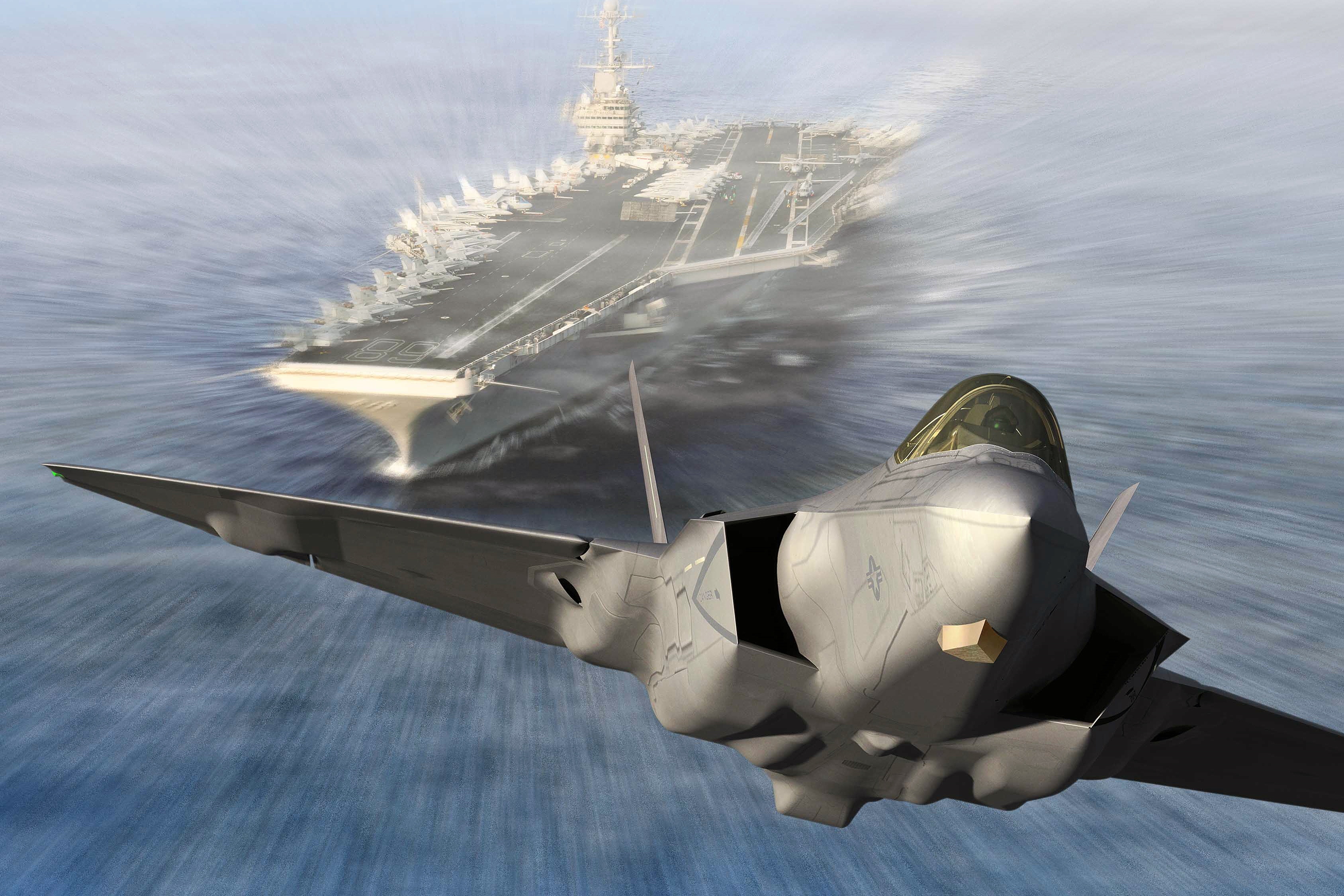
F_35_navyWhile the ultimate goal may be the ability to print actual replacement fighters and ordinance, the current plan is to incorporate printers that can print off replacement parts and possibly even small drones. With the technology already in place, it is not difficult to imagine a carrier, or perhaps even a large land vehicle, outfitted with a high-quality 3D printer, several tons of raw materials, and a few pre-fabricated cameras and circuit boards.

What’s more, this could also make transport of basic supplies more efficient, holding powder and casing materials separately and combining them to make bullets and munitions as needed, rather than storing them in a way that takes up vast amounts of space. Researchers at Virginia Tech even told the Armed Forces Journal that they believe 3D printing could produce high-quality propellants themselves – meaning an aircraft carrier could produce its own supplies of fuel and missiles.

cyber-war-1024x843This idea drives home a number of things that are likely to become the mainstay with military technology. One is the increasing gap between the military haves and have-nots, and the increasing importance of cyber warfare in the modern world. No army or insurgent militia is likely to be able to withstand a mobile drone factory, nor is a nation that does not possess the technology be able to compete with one that does.

At the same time, simple defects, caused by cybernetic intrusion, could render such a mobile factory useless and counterproductive. In any future arms race between nations where 3D manufacturing is part of the arsenal, hacking will certainly be a factor. And last, but certainly not least, the ability to independently produce components, weapons and tools also opens up the possibility to create fully-autonomous ships and bases, complete with recycling programs that can turn waste into reusable raw material.

Cuban-Missile-CrisisSuch are the concerns of today’s military and all those who need to plan for the future. And as always, the prospects are frightening for all – not only because they make the nature of future conflicts uncertain, but because any serious advancement on one side is likely to cause others to scramble to get their hands on it as well. As any student of history knows, arms races lead to escalation and increased tension, and those rarely end well!

Source: extremetech.com
Food From Space: NASA’s 3D Pizza Printer
3DpizzaNASA has made some buzz with its announcement to print 3D pizza in space. And while this might sound like an awesome and appetizing use of the pioneering technology, it also has some pretty exciting implications for space exploration. For decades, astronauts have relied on freeze dried and thermostabilized food to meet their nutritional needs. But with 3D printing being considered, astronauts of the future could be using something akin to a replicator out of Star Trek.

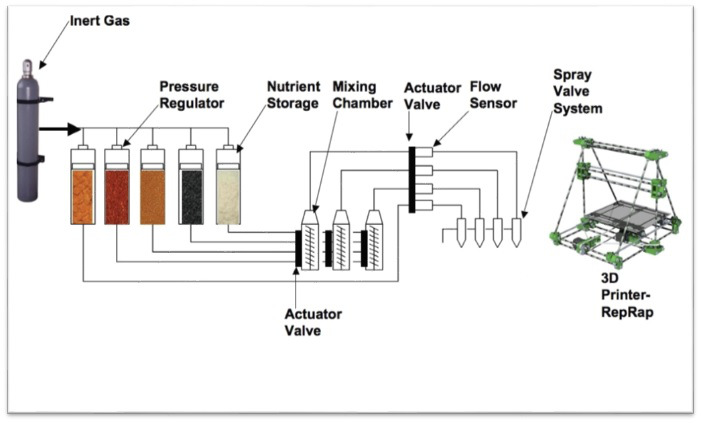
Earlier this month, Quartz broke the news that NASA’s Systems & Materials Research Corporation received a $125,000 grant to spend six months building a prototype of a 3-D food printer- one that will be able to print out a tasty pizza before venturing on to other food items. According to his NASA proposal, the printer spits out starches, proteins, fats, texture, and structure, while the inkjet sprays on flavor, smell, and micronutrients.

3d-pizza_printerThe pizza printer is the brainchild of Anjan Contractor, a mechanical engineer at the Systems & Materials Research Corporation who has long worked on 3-D printing technologies. In an interview with Quartz, he explained the process:

It works by first “printing” a layer of dough, which is baked at the same time it’s printed, by a heated plate at the bottom of the printer. Then it lays down a tomato base, “which is also stored in a powdered form, and then mixed with water and oil,” says Contractor. Finally, the pizza is topped with the delicious-sounding “protein layer,” which could come from any source, including animals, milk or plants.
As already mentioned, astronauts currently rely on food that is freeze dried prepackaged so that it can be eaten in microgravity. Astronauts get supplies when necessary from the International Space Station, where cargo vehicles transport their “fresh” food. But future astronauts who go to more distant places, like Mars, won’t be able to resupply. And that’s where the Advanced Food Project really comes into play.

pizzaWhen considering missions to Mars and farther into space, multiple issues need to be addressed. Grace Douglas, an Advanced Food Technology Project scientist at NASA, explains what these are and how 3D food can address them:

This is the only food that the crew members will have, so it needs to maintain its nutrition content for the length of the mission, and it has to be acceptable. If they don’t want to eat it, they won’t eat enough… 3-D food printers are looking at providing powdered forms of ingredients, and these would not be processed ahead.

That’s a good thing: minimally processed food has more nutrients, and it’s tastier. It also allows for even more options than what’s available today. And to address another key problem – printing in microgravity – NASA already has the option of using some of the more advanced prototypes.

anti-grav3d2Consider the Mataerial, a recently-developed 3D printer that is capable of printing in zero-gravity. NASA is exploring other processing technologies outside of the 3-D printing realm as well. High-pressure processing, which uses high pressures with a low-heat treatment to sterilize foods, is one option. Another is microwave sterilization–a process that uses high-heat treatments for a shorter period of time.

These latter technologies would make fresh foods accessible by ensuring that they are perfectly sterile, thus removing the need for food that needs to be dried or processed in advance. While all three technologies are still in the early phases of development, Douglas and others expect that they will off the ground and running by the time a manned mission to Mars is being planned.

And space is really just the tip of the iceberg when it comes to printing food. Here on Earth, it is a potential solution for ending world hunger. But that’s another, very interesting story. Stay tuned for it…

In the meantime, watch this video of a 3-D printer creating chocolate:


Sources:
fastcoexist.com, qz.com

NASA’s Vision: Robots to Help Mine Asteroids

asteroid_mining_robotIn a recent study, NASA shared a vision that sounds like something out of a science fiction novel. Basically, the plan calls for the creation of robots that could be sent to a nearby asteroid, assemble itself, and then begin mining the asteroid itself. The scientists behind this study say that not only will this be possible within a few generations of robotics, but will also pay for itself – a major concern when it comes to space travel.

A couple of factors are pointing to this, according to the researchers. One, private industry is willing and able to get involved, as attested to by Golden Spike, SpaceX and Planetary Resources. Second, advances in technologies such as 3-D printing are making off-world work more feasible, which can be seen with plans to manufacture a Moon base and “sintering”.

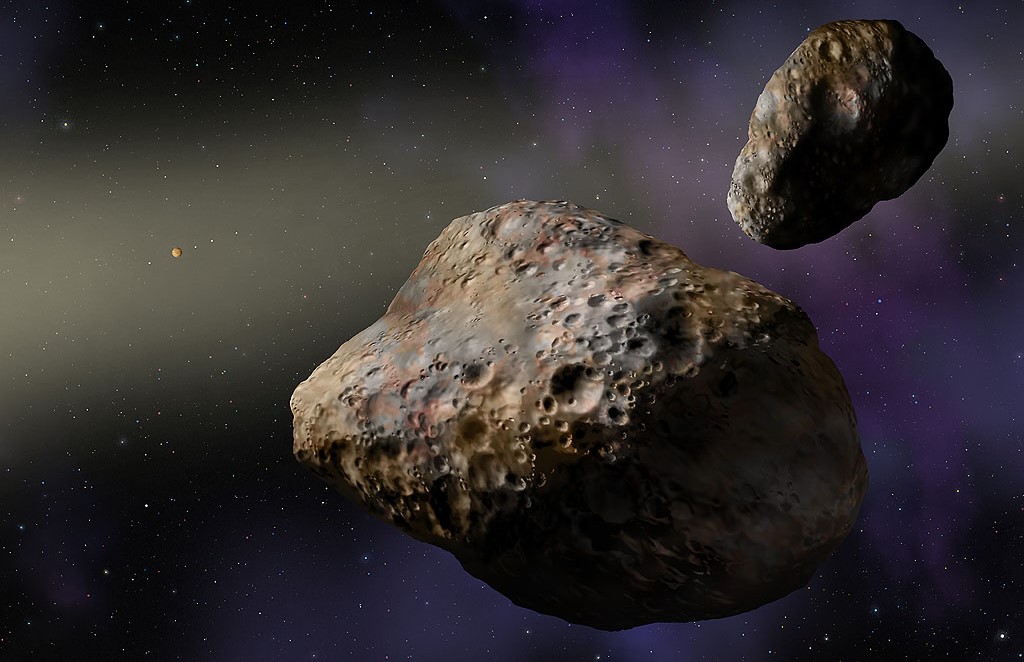
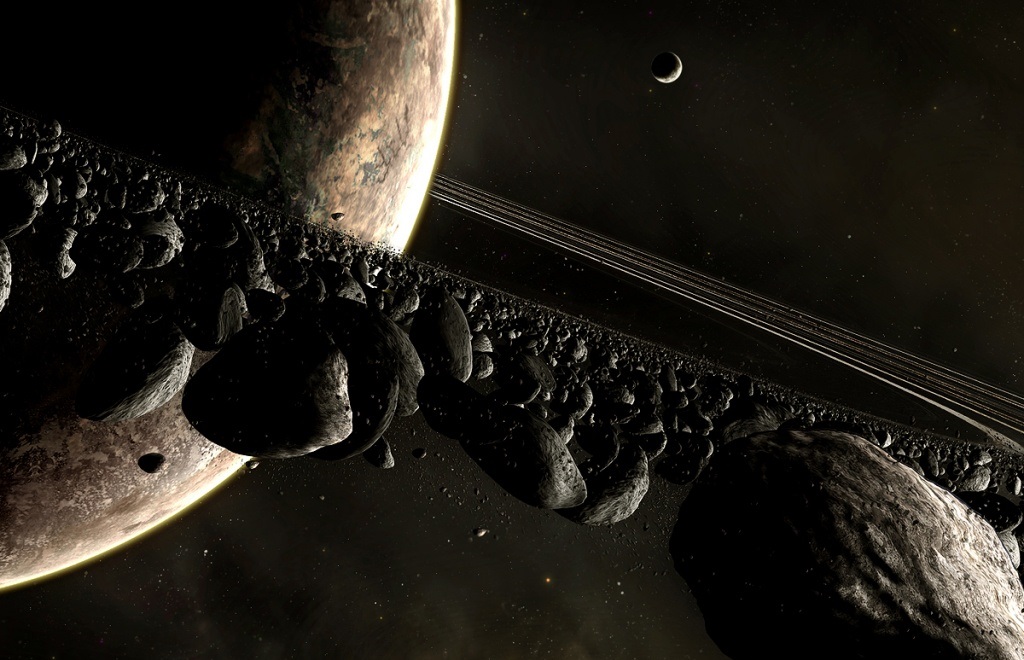
asteroidsBut also, humanity’s surveys of space resources – namely those located in the asteroid belt – have revealed that the elements needed to make rubber, plastic and alloys needed for machinery are there in abundance. NASA proposes that a robotic flotilla could mine these nearby space rocks, process the goods, and then ship them back to Earth.

Best of all, the pods being sent out would save on weight (and hence costs) by procuring all the resources and constructing the robots there. They caution the technology won’t be ready tomorrow, and more surveys will need to be done of nearby asteroids to figure out where to go next. There is, however, enough progress to see building blocks. As the agency stated in their research report:

Advances in robotics and additive manufacturing have become game-changing for the prospects of space industry. It has become feasible to bootstrap a self-sustaining, self-expanding industry at reasonably low cost…

asteroid_belt1Phil Metzger, a senior research physicist at NASA’s Kennedy Space Center, who led the study, went on to explain how the process is multi-tiered and would encompass several generations of progress:

Robots and machines would just make the metal and propellants for starters… The first generation of robots makes the second generation of hardware, except the comparatively lightweight electronics and motors that have to be sent up from Earth. It doesn’t matter how much the large structures weigh because you didn’t have to launch it.

A computer model in the study showed that in six generations of robotics, these machines will be able to construct themselves and operate without any need of materials from Earth.

asteroid_foundryAt least two startups are likely to be on board with this optimistic appraisal. For example, Deep Space Industries and Planetary, both commercial space companies, have proposed asteroid mining ideas within the past year. And since then, Planetary Resources has also unveiled other projects such as a public space telescope, in part for surveying work and the sake of prospecting asteroids.

And this latest research report just takes thing a step farther. In addition to setting up autonomous 3D manufacturing operations on asteroids, these operations would be capable of setting themselves up and potentially upgrading themselves as time went on. And in the meantime, we could look forward to a growing and increasingly complex supply of manufactured products here on Earth.

Source: universetoday.com

A Tribute to Valentina Tereshkova

valentina_tereshkovaOn June 16th, 1963, in what was to become a first amongst firsts, Russian Cosmonaut Valentina Tereshkova made history by being the first woman to go into space. Today, exactly fifty years later, Tereshkova’s achievements continue to serve as a reminder that all people – regardless of their gender – are capable of doing just about anything. And at the age of 76, Tereshkova lives on as a national and historic icon, inspiring younger generations of women to follow their dreams.

On Friday, President Vladimir Putin praised Tereshkova during a meeting at his residence. Tereshkova was on hand for the event, which was covered by several major networks and global news agencies, during which time Putin awarded her accomplishments in space by giving her the Order of Alexander Nevsky for meritorious public service, one of the highest Russian honors.

tereshkova_putin_50thannHer historic flight came a little more than two years after the Soviet Union put the first man – Cosmonaut Yuri Gagarin – into orbit. Shortly thereafter, Soviet space officials started considering a space mission by a woman, seeing it as another chance to advertise the nation’s prowess. Much like Gagarin, Tereshkova was part of the Vostok program, the earliest Soviet space missions, and her flight (Vostok-6) was the final mission of the program.

Vostok-6 rocket
Vostok-6 rocket

Of over four hundred candidates, Tereshkova was selected for a number of reasons. In addition to conforming to the height and weight specifications needed to fit within the Vostok capsule, she was also a qualified parachutist – which given the nature of the Vostok space craft (the re-entry craft was incapable of landing) was absolutely essential. But perhaps most important reason was her background, since she was the daughter of war hero Vladimir Tereshkova who died in Finland during the Second World War.

To make the mission even more spectacular for propaganda purposes, Moscow decided to score another first by making it the first simultaneous flight of two spaceships. Valery Bykovsky blasted off aboard the Vostok-5 ship on June 14, 1963, and Tereshkova followed him on June 16. During her flight, Tereshkova orbited the Earth forty-eight times and spent almost three whole days in space.

Vostok-6 craft
Vostok-6 craft

Aside from some nausea, which she would later claim was the result of tainted food, she maintained herself for the full duration and successfully parachuted down upon re-entry. Her landing was a little rough, however, and she experienced some serious bruising of her face. Tereshkova also claimed that during the flight, she noticed a fault in the ship’s controls, which she corrected to prevent from being stranded in space.

With this single flight, Tereshkova logged more flight time than the combined times of all American astronauts who had flown before that date. Tereshkova also maintained a flight log and took photographs of the horizon, which were later used to identify aerosol layers within the atmosphere. Many of the details of her flight, including her nausea, the technical problems, and the hard landing she made, were kept a secret until the collapse of the Soviet Union, since government officials feared they would expose flaws in their program.

tereshkova_historicTereshkova received a hero’s welcome after the flight and was showered with awards. A few months later she married cosmonaut Andrian Nikolayev with Soviet leader Nikita Khrushchev presiding over the wedding party. She now holds a Parliament seat on the ticket of the main Kremlin party, serving as deputy chairman of the foreign affairs committee in the lower house.

Tereshkova’s story is all the more poignant due to the fact that none of the other planned missions involving female cosmonauts took place and the Soviet’s cancelled the pioneering woman cosmonaut program in 1969. It would be many years before another woman would go into space, once again with the Soviet space program when Svetlana Savitskaya participated in the Soyuz-T7/T5 space mission on August 19th, 1982. Less than a year later, Sally Ride would become the first American woman to go into space as part of the STS-7  mission that went up on Jun. 18, 1983.

???????????????????????????????????????????????????????????????????????????????????????????????????????????????????????????????????????????????????????????????????????????????????????????????????????????????????????????????????????????????????????????????????????????????????????????????????????????????????????????????????????????????????????????????????????????????????????????????????????????????????????????????????????????????????????????????????????????????????????????????????????????????????????????????However, as time progressed, more and more women have come to join the space profession, and Tereshkova has been on hand to honor some of them. One such person was South Korea’s first astronaut, biosystems engineering student Yi So-Yeon (picture above). Tereshkova is seen accompanying her while she boards the spacecraft that would take her to the ISS on April 8th, 2008 from the Baikonur Cosmodrome in modern-day Kazakhstan.

Since her time, a total of 56 women have gone into space, and that doesn’t even count the female astronauts who have taken part in mission that didn’t go up or offered technical assistance to crewed missions from the ground. In all cases, these women owe an undeniable debt to Tereshkova, the first woman to enter what was (and still is) considered a man’s profession and who helped pave the way for all those that followed.yuri_gagarin1And in what is an interesting twist, the anniversary of her spaceflight comes just days after the release of a series of declassified documents which reveal the truth of Yuri Gagarin’s death. This seems appropriate since Tereshkova and Gagarin’s stories are connected in so many ways. In truth, it’s virtually impossible to speak of one without mentioning the other, as their careers and destinies were so very intertwined.

In addition to both individuals being pioneering space cosmonauts with the Soviet space program, Gagarin’s death also led to some serious changes in Tereshkova’s career in space. Though she remained an important figure within the program, she was barred from taking part in any more space missions, and for obvious reasons. Having lost one historic figure to tragic circumstances, the Soviet government did not want to lose her as well.

valentina_tereshkova_1However, Tereshkova expressed nothing but relief to hear the truth about Gagarin’s death, which was apparently caused by a mid-air collision when another pilot accidentally steered his jet plane into the path of Gagarin’s training plane. After 45 years of official silence on the matter, she claimed that “The only regret here is that it took so long for the truth to be revealed. But we can finally rest easy.”

At 76, she is still a model of dignity and class, and in pretty good health too for someone her age! I think I speak for all of us in wishing her many more years of health, happiness and accomplishments. One of the most tragic realities of our time is the loss of people who not only witnessed major turning points in history, but made them happen. As such, I hope the world can continue to hang on to Valentina a little while longer…

Source: cbc.ca

Ending Cancer: Cell-Phone Sized Cancer Detector!

ISEF2012-Top-Three-WinnersThe name Jack Andraka is already one that researchers and medical practitioners are familiar with. Roughly a year ago, the 16-year old boy developed a litmus test that was capable of detecting pancreatic cancer, one of the most lethal forms of the disease and one of the most difficult to treat. And given that his method was 90% accurate, 168 times faster than current tests and 1/26,000th the cost, it’s title wonder why he’s considered something of a wonder kid.

Well, it seems boy genius is at it again! Shortly after receiving first place at the 2012 Intel International Science and Engineering Fair (ISEF), Andraka assembled a crack team of young scientists and began working on a handheld, non-invasive device that could help detect cancer early on. Much like Scanadu, the company that recently release a sensor for testing vitals, Andraka and his team were looking to create a genuine tricorder-like device.

Tricorder X_prizeAnd while their group – known as Generation Z and which was formed from the other 2012 finalists – is working towards such a device, Andraka presented his own concept at this year’s ISEF. Apparently, what he built is modeled on a tradition raman spectrometer –  a device that can be used to detect explosives, environmental contaminants, and cancer in the human body.

A conventional raman spectrometer is extremely delicate, can be as large as a small car, and cost up to $100,000. By contrast, the one designed by Andraka costs only $15 and is the size of a cell phone. According to Andraka, a raman spectrometer works by “[shooting] a powerful laser at a sample and tells the exact chemical composition.” Such a device also relies on a liquid nitrogen cooled photodector to examine the chemical composition of whatever material is currently being examined.

Those powerful lasers alone can cost up to $40,000, so Andraka swapped out the big lasers for an off-the-shelf laser pointer and replaced the photodetector with an iPhone camera. According to Andraka, the results are comparable, at a fraction of the size and, more importantly, the cost. So once more, the boy genius has presented medical science with a cheap, effective means of early detection, something which could save lives and millions in health care costs.

Tricorder XAndraka admits that this device was pretty much all his, but he plans to incorporate it into the tricorder design that he and his colleagues in Generation Z are developing. Once realized, the resulting device will be competing for the Tricorder X Prize – a ten million dollar grant that is given to any entrant that can create a handheld mobile platform that can diagnose 15 diseases across 30 patients in just three days.

But of course, they will have some stiff competition, not the least of which will come from Scanadu, which just happens to have the backing of NASA’s Ames Center.  But then again, the world loves an underdog. And when it comes to medical devices, cancer, and other diseases of the body, its clear that Andraka and his peers are just getting started!

And be sure to check out this video with highlights from the 2013 ISEF:


Sources:
fastcoexist.com(2)

News From Space: China’s Launches Shenzou 10 Manned Spaceship

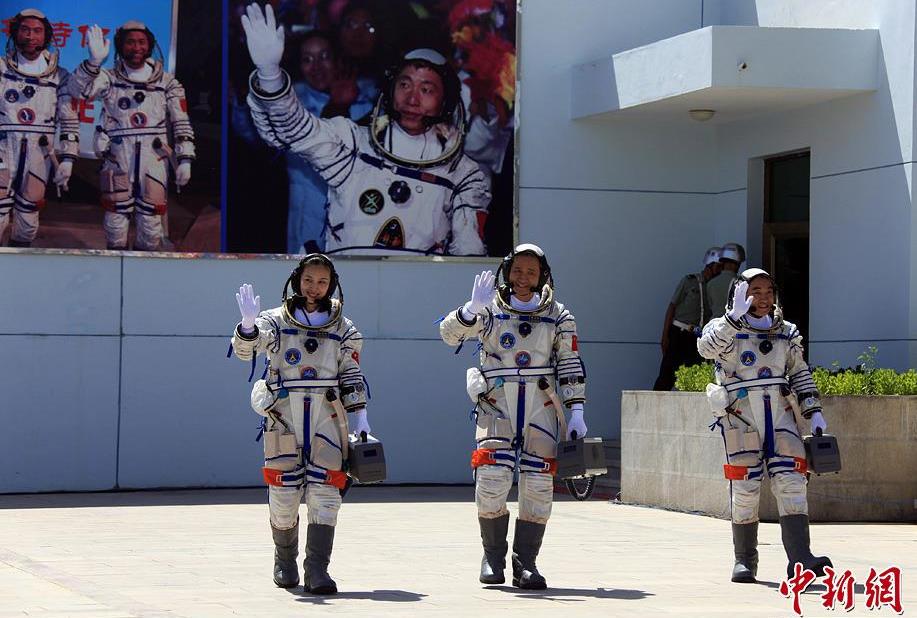
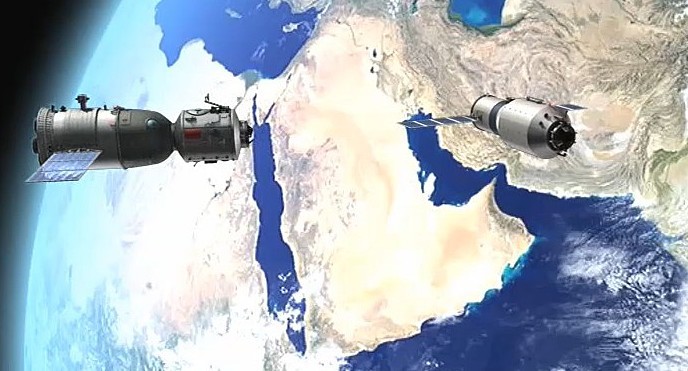
shenzou_10Yesterday, at approximately 5:38 am ET, China took yet another step towards establishing itself as a major player in space. It’s latest manned spacecraft, known as the Shenzhou 10, departed the Jiuquan Satellite Launch Center at the edge of the Gobi Desert, carrying three astronauts on what is planned to be a fifteen day mission that will see them rendezvousing with the prototype Tiangong-1 space lab in Earth’s orbit.

This is China’s fifth manned mission into space and will be its longest to date. The purpose of the mission is to educate young people about science, but for the Chinese state, it also presents an opportunity to flex its muscles as one of the new leaders in space exploration. Much of this has to do with the Tiangong-1, which is intended to serve as an experimental prototype for a much larger Chinese space station that will be launched in 2020.

shenzhou-10-crewIn this respect, China is hoping to reach beyond its membership as on the three nations to send manned craft into space and join the United States and Russia by being able to send independently maintained space stations into orbit as well. If all goes well, China’s space station will join the likes of Mir and the ISS in Earth’s lower orbit. And with this kind of infrastructure in place, China will be well suited to play a role in future missions to Mars and the outer Solar System.

The craft carried two men, mission commander Nie Haisheng and Zhang Xiaoguang, and China’s second female astronaut, Wang Yaping. After rendezvousing with the space lab, the crew will spend a total of 12 days living in zero-gravity and conducting scientific experiments, the results of which will be shared with people on Earth.

shenzou_10_dockBorrowing a page from astronaut Chris Hadfield and his many popular Youtube videos that cataloged his crew’s mission aboard the ISS, the Chinese crew plans to deliver a series of talks to students while aboard the Tiangong. This development of “space classrooms” marks the boldest step so far for the Chinese space program, turning what was a military-backed program into something that will impact on the lives of ordinary Chinese citizens.

Here too, China is following in the footsteps of NASA, which uses student outreach to inspire interest in space exploration and sustain support for its budgets. At a news conference on Monday, Wang said she was “eager to explore and feel the magic and splendor of space with young friends.” Her fellow astronaut Zhang told reporters they would conduct dozens of space science experiments and would “enjoy personalized space foods especially designed by our nutritionists.

China_launchcenterOn the day of the launch, President Xi Jinping was shown live on television at the launch center. State television showed Xi watching the launch, as well as Premier Li Keqiang who was at the space command center in Beijing. Prior to the launch, Xi delivered a statement to the astronauts, commending them on their efforts and wishing them luck on their journey:

You have made [the] Chinese people feel proud of ourselves. You have trained and prepared yourselves carefully and thoroughly, so I am confident in your completing the mission successfully. I wish you success and look forward to your triumphant return.

The space program is a source of enormous national pride for China, reflecting its rapid economic and technological progress and ambition to rank among the world’s leading nations. Little wonder then why the launch was met with such fanfare and overseen by both the President and Premier. The mission comes at the height of ten years of Chinese space exploration and if successful, will mark China as a true superpower in the space race of the 21st century.

And be sure to check out the video of the launch of the Shenzou 10:


Source:
cbc.ca, news.xinhuanet.com

News From Mars: Curiosity Leaving “Mars Rat” Behind

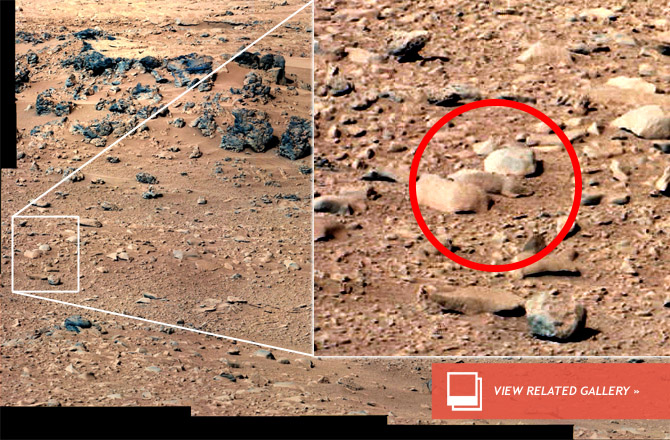
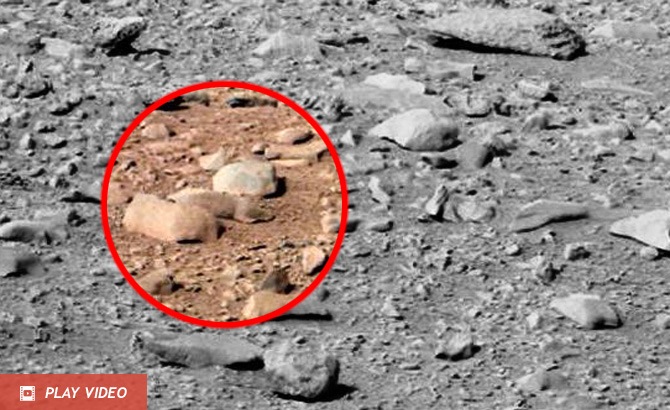
mars_ratIt seems that a new field of study was threatening to emerge with the “discovery” of what appeared to be a Martian rat. The technical term for it is Martian mammology, the study of mammals that are native to Mars. Luckily, proponents of this field did not manage to overpower the good people at NASA, who remain dedicated to serious scientific research. And now, the Curiosity rover is moving on to study bigger and better things.

Yes, the appearance of this would-be rodent did generate a lot of buzz on the internet of late, with some UFO buffs claiming that it may be an indigenous Red Planet lifeform or an Earth rodent Curiosity carried to Mars as part of a secret experiment. But Curiosity scientists were relatively certain that the rat, which was spotted in a zoomed-in portion of a photo taken by the rover in September 2012, was just a rock.

mars_rat1Curiosity deputy project scientist Joy Crisp, of NASA’s Jet Propulsion Laboratory in Pasadena, Calif., told reporters on Wednesday, June 5, what they believed the curiously-shaped rock was the result of:

Clearly, it results from, you know, a lot of things like wind erosion and mechanical abrasion and breakdown chemical weathering of the rocks, as to why they get these weird shapes.

Under the circumstances, NASA does not feel the need to conduct any further studies. And the window to do so will last just a few more weeks, as the Curiosity rover is set to begin an epic drive that will take it far away from the petrified rodent. At the moment, the robot is gearing up for a year-long trek that will take it to the base of Mount Sharp, a mysterious mountain that rises 5.5 km (3.4 miles) into the Red Planet sky.

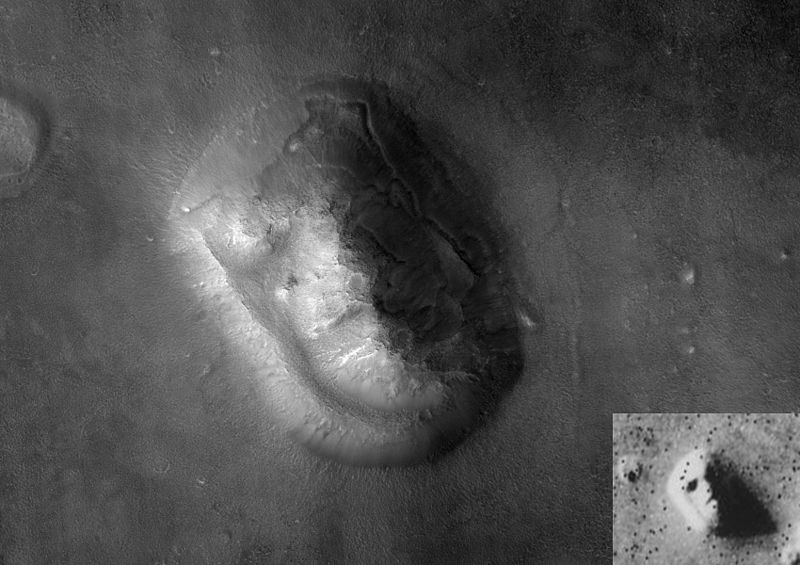
mars_faceCuriously (no pun!), this is not the first time people have seen faced in the rock surfaces of Mars. Remember the elusive “Face on Mars”? Originally taken by the Viking 1 spacecraft in 1976, this low-resolution picture of the Cydonia region of Mars ignited the imaginations of people all over the world. For years, the face was mentioned in feature films, television series’, video games, comics, and even pop music.

Even after a series of high-resolution photos – taken some twenty years later by a succession of space craft – proved it to just be a simple rock formation, many people still insisted that the “face” was real and proved the existence of intelligent life on Mars. And such examples are hardly reserved to the Red Planet. Every year, there are stories of people witnessing “miracles” as divine visions appear to them in seemingly random objects, either of religious figures or personal heroes.

pareidoliaIt’s whats known as pareidolia, a psychological phenomenon which refers to the human brain’s tendency to spot familiar things in random images. According to Crisp, this is not necessarily a bad thing. In truth, she claims NASA scientists get amused when this happens:

It’s fun in a way, too, in that it will attract a lot of the public to look at the images and learn a little bit about Mars by pulling them in this way.

So much like people seeing the Virgin Mary in a wall-stain, Mother Teresa in a cinnamon bun, or the face of Jesus and/or Elvis in their grilled cheese sandwich, the Mars Rat is likely to be with us for awhile yet. Perhaps he’ll go beyond the current internet meme and start a trend, with t-shirts and apparel for all. All he needs is a slogan: “Mars Rat Says ‘That’s My Cheese!'” …I’ll work on it 😉

Source: space.com