NASA: The World Will Not End on Dec. 21st, 2012

Worlds CollidingIt seems NASA spends untold resources trying to debunk conspiracy theories and doomsday predictions. Sad, when you consider all the wonderful uses this time and energy could be dedicated towards, like putting people on Mars! In any case, and in anticipation for this coming Friday (and Saturday, if all goes well!), I thought I’d share this video NASA released to put people’s minds at ease. The world will NOT end on Dec. 21st, 2012, it claims, and presents the scientific findings that say so.

Set on Dec. 22nd, 2012, the video approaches the apocalypse as if it is something that has already come and gone and proceeds to explain how the myth of the 2012 End of the World scenario began in the first place. In examining the actual Mayan Calendar, the reasons for why the calendar ends when it does, and taking a look at all the stellar and terrestrial phenomena which are believed to coincide with the date (but which won’t), NASA shows why we have nothing to worry about.

In fact, if anything, the date in question will be a time of rejoicing. Not only is it the holiday season for people worldwide, it is also the natural turning point in the Mayan Calendar, the date at which the ancient astronomers reckoning of time would “reset” in accordance with their ancient theology. This was a regular pattern as far as the Yucatan-based civilization was concerned, and is a testament to their long and expansive concepts of time and cosmology.

Nothing destructive was ever mentioned or implied in the Mayan belief system, merely a rolling over of the odometer and an entrance into a new age. If anything, it was western apocalyptics and cultists, with their preconceived notions of the End of Days and astrology, that attached this significance to the date. Astrological phenomena, such a meteor striking Earth, an inversion of our gravitational field, a massive solar flare, or another planet colliding with us, were all added as a means of explaining how. But, as the experts as NASA show, none of this stuff is happening or in danger of happening in the next few days.

In short, we can all look forward to another holiday season with plenty of food, family, in-laws and swag. As my grandpa used to say “the sun will still rise in the east and set in the west”, the world will keep on spinning, and people will keep on waiting for the end of the days to come. Fear not the End of Days, fear waking up tomorrow and realizing that you still have to get up, go to your job, and tolerate all the little annoyances we all deal with on a daily basis. And while your at it, be thankful you’re alive and STOP WISHING FOR IT ALL TO END!

And if that is still not enough to convince the doomsayers that life will go on, perhaps a quick look at their track record will be enough to convince the rest of us of how often they are wrong. Consider…

30-36 – 2012 C.E: After the death of Jesus and the spread of early Christianity, believers begin to prepare for the “coming of the Lord”. After several centuries, it is clear that the End of Days isn’t just around the corner, so believers begin to settle in and create Monasteries in the hopes of living how the Savior would have wanted. Two-thousand years later, we’re all still waiting!

410 C.E.: Rome is sacked, leading many Christians to fear that the Barbarian hordes are the harbingers of the Apocalypse. However, St. Augustine of Hippo allays much of these fears with his book City of God, where he states that though the corporeal capital of Christianity may have been sacked, the city of God abides. People promptly calm down…

900 C.E.: The fall of the Western Roman Empire leads to renewed fears that the world is ending. However, despite the decline in education, wealth, central leadership, life expectancy, and an upsurge in violence, life goes on…

1000 C.E.: Europe becomes consumed by apocalyptic predictions with the coming of the Millennium. On Dec. 31st, 999, nothing happens! The sun rises on the following day and people go back about their business…

1206-1294 C.E.: The Mongol Hordes, a vast and terrible army, reach Europe from Asia and begin a campaign of conquest and slaughter. People everywhere believe they are the Four Horsemen of the Apocalypse foretold in the Book of Revelation. However, Mongol expansion soon ceases, the Empire is subdivided amongst Ghengis Khan’s sons and vassals, and life continues. Just another Horde from the East that failed to deliver on the Apocalypse I guess!

1348-1350 C.E.: The Black Death strikes Europe. People everywhere believe this is God’s judgement and the Rapture is sure to follow. Flagellants punish themselves for the good of humanity, witches are burned, Jews are murdered, cats hung, and any and all traces of “wicked behavior” and people are scapegoated and purged. However, within two years, the plague passes, one-third of Europe has died, but life goes on and a period of rapid recovery soon follows.

1914 C.E.: The outbreak of the Great War leads many to believe that Armaggedon, the last great battle that will signal the end of time, is upon them! After four years of brutal, protracted warfare, all sides agree to a ceasefire and previously held romantic notions of warfare are shattered. Henceforth, Remembrance Day, Veteran’s Day, Memorial Day, and a series of other national and international holidays mark the occasion and remind us how foolish and horrible war really is. However, the world does not end…

1918 C.E.: “Red October” shakes the world, with many predicting that the victory by the “Godless Communists” is a sign of the Apocalypse. However, despite the terrible crimes that follow in the Marxist-Leninists wake, especially where Joseph Stalin, Mao Zedong and Pol Pot are concerned, the world keeps on spinning, even after the conflict becomes nuclear in scope (see next).

1945  – 1991 C.E.: The advent of nuclear weapons and the beginning of the Cold War lead to a resurgence in Apocalyptic predictions, with many claiming that “The End is Near” on a regular basis. However, numerous close shaves pass without incident, the Cold War ends by 1991, and all predictions as to how “Nuclear Holocaust” will take place fail to be realized. In the end, many people realize that the human race isn’t suicidal or quite as stupid as previously thought. Others continue to ponder how WWIII will happen, but produce no realistic scenarios.

1948 C.E. – : The Arab-Israeli Conflict begins and escalates with such events as the Suez Crisis (1956), the Six Day War (1967), and Yom Kipper (1973). Religious scholars and believers begin to claim that these events were foretold in Scripture, and foretell of the coming battle of Armageddon – which will take place at Tel Meggido in modern day Israel. However, land for peace and a detente have prevented any full-scale wars since 1973, and the Oslo Accords of 1992 seem to suggest that a permanent peace between Israel and the Palestinians is just a matter of time.

1980’s C.E.: The growing awareness of the AIDS virus prompts many religious nuts and homophobes to claim that “Gods Judgement is Here” and is taking the form of a virus that strikes down sinners. However, public education and about thirty years with no Rapture lead most to conclude that this is a terrible disease which merits no religious condemnation. Public decrying of victims remains, but few people take them seriously.

1994/5 C.E.: Renewed outbreaks of the Ebola virus leads to new fears of a global pandemic. Movies like The Stand, Outbreak and just about any scenario involving biological warfare do great at the box office, but the apocalyptic nightmare never comes true. And when people realize that casualties are largely reserved to African nations, they generally stop caring!

1990 – 2000 C.E.: Y2K histeria sets in as people get wind of a possible bug that could shut down the world’s computers. People begin hoarding and stocking their shelves in preparation for the pandemonium and chaos that is expected. When the clock strikes midnight of Dec. 31st 1999, nothing happens! The world keeps spinning, the computers keep working, and the nuts go looking for another reason to panic. There are still plenty to choose from…

And let’s not forget 9/11, Hurricane Katrina, the Bath Salts Zombies and every other major disaster that has befallen the world in recent years. Seems every day weirdos and nutjobs are finding reasons to think we’re all going to die. One would think they wanted it to happen or something…

In the meantime, enjoy the video and all its sane and sensible points!

Source: Nasa.org, gaurdian.co.uk

Nile-Like River Spotted on Titan

titan_nileOut in the far reaches of the Solar System, the Cassini Space Probe continues to send us mind-bogging images of Saturn and it’s moons. This latest was released by NASA just two days ago, a photograph which shows a massive river on Titan, Saturn’s appropriately-named largest moon. Already, Cassini confirmed the existence of a large, methane lake in Titan’s “tropical” region. But this latest find would seem to indicate the Titan is even more Earth-like than previously thought.

For example, the river is not only comparable in relative size and shape to the Nile here on Earth, it is also filled with a cold, hydrocarbon liquid (most likely ethane or methane). This is a historic find, since it is the first time images have revealed a river system this vast and in such high resolution anywhere beyond Earth. But of course, it’s what the river implies that has many scientists especially excited. For example, Jani Radebaugh, a Cassini radar team associate at Brigham Young University, USA, claims that the river may be an indication of plate tectonics:

“Though there are some short, local meanders, the relative straightness of the river valley suggests it follows the trace of at least one fault, similar to other large rivers running into the southern margin of this same Titan sea. Such faults – fractures in Titan’s bedrock – may not imply plate tectonics, like on Earth, but still lead to the opening of basins and perhaps to the formation of the giant seas themselves.”

In short, the river is another indication that Titan may be an early version of Earth. At one time, it is believed Earth’s own surface was covered with lakes that were much different in chemical composition than the one’s we know today. The process of change is what may have given rise to certain colonies of cell bacteria, which in turn created more complex organisms and eventually vertebrates. Intrinsic to all of this were shifts in the planet’s plates, which corresponded to several life-creating epochs in Earth’s history – the most notable being the “Cambrian Explosion”.

Naturally, there are plenty of difference between this “alien” river and it’s Earth-bound cousin too. For one, the Nile extends for a whopping 6,650 kilometers (4,132 miles), whereas Titan’s big river is roughly 400 km long. What’s more, Titan cycles hydrocarbons instead of water, as our life-friendly planet does. On top of all that, Titan is able to maintain these hydrocarbons in a liquid state because of its cold temperatures, much colder than what we enjoy here on the comparatively balmy Earth.

nileStill, I think you’ll agree, the resemblance is quite startling 😉 Stay tuned for more news from our Solar System. It becomes more exciting every day!

Source: Universe Today.com

Asteroid Toutatis Narrowly Misses Earth

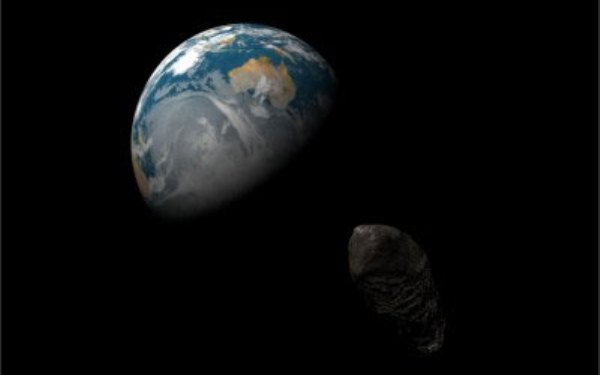
Asteroid-ToutatisAstronomers were keeping their eyes on the skies yesterday as the asteroid known as 4179 Toutatis passed Earth by. While it was never a direct threat to Earth, its passage presented an opportunity for scientists to study it and the history of the early Solar System.

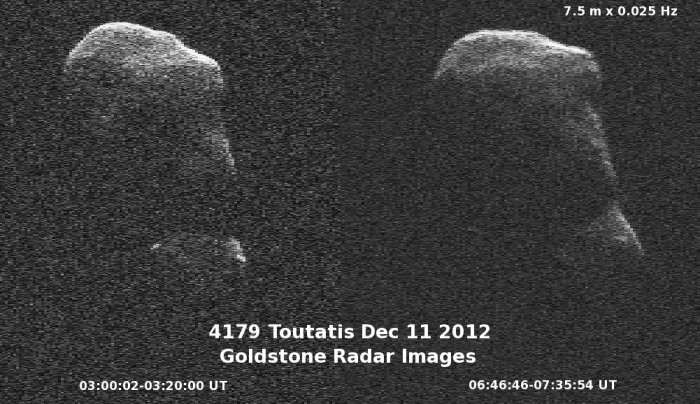
At its closest approach, 4179 Toutatis was 7 million km away from Earth, or roughly 18 times farther than the Moon. But that was close enough for NASA’s Goldstone Observatory to snap some radar images of the object (shown below). The timing could not have been more fortuitous, since NASA had recently upgraded to a new digital imaging system. And numerous amateur astronomers were able to get some interesting pics and even video.

Already, there are some preliminary findings from this 4.5-kilometer- long (3-mile-long) asteroid’s flyby. According to Michael Busch, a radar team member of the National Radio Astronomy Observatory: “Toutatis appears to have a complicated internal structure. Our radar measurements are consistent with the asteroid’s little lobe being ~15% denser than the big lobe; and they indicate 20% to 30% over-dense cores inside the two lobes.”

In truth, this is not the first time that Toutatis has passed Earth by. As it passes by Earth’s orbit every 4 years, it is one of the largest known potentially hazardous asteroids (PHAs) to have an orbit around the Sun so closely resembling our own. This presents another opportunity for study of the object. As Lance Benner of NASA’s Near Earth Object Program (NEOP) puts it: “We already know that Toutatis will not hit Earth for hundreds of years. These new observations will allow us to predict the asteroid’s trajectory even farther into the future.”

As they say, “an ounce of preservation…” And in the meantime, check out the photos and video taken of 4179 Toutatis as it passed Earth between the days of Dec. 11th and 12th, 2012.

Toutatis.dec11.13runs.and_.25runs.p05us.p025Hz.chirp_.s446Source: Universe Today

News From The Center of the Galaxy!

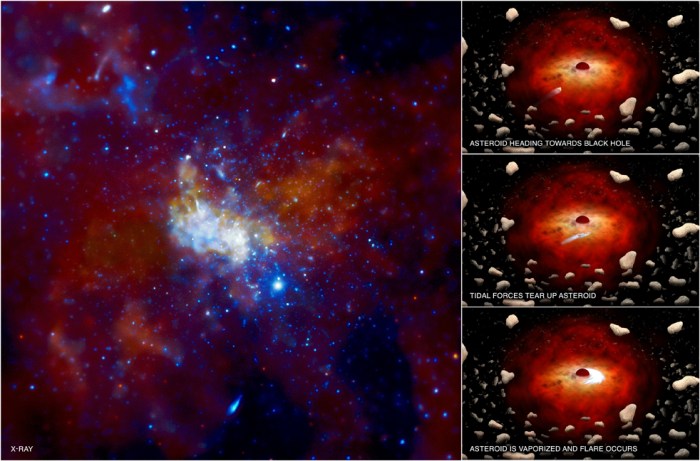
sagittarius A_flareAt least once a day, the black hole that resides at the center of the Milky Way Galaxy – aka. Sagittarius A* – shoots out an x-ray flare. These flares range in luminosity and intensity, but are usually only on the magnitude of a few dozens times its normal output. However, back in February of 2012, astronomers using the Chandra X-Ray Observatory detected the brightest flare ever observed from the central black hole, measured at 150 times its normal output.

Located some 26,000 light years from Earth, Sagittarius A* emits X-rays on a regular basis, and no one is sure why. However, a group of researchers postulated that it may be the results of asteroids or planets that wander too close to the hole and are consumed. Essentially, they believe Sagittarius A* is taking in rocky objects, eating them up, and then shooting out x-rays as exhaust.

The supermassive black hole at the center of the Milky Way galaxy.According to Michael Nowak, a research scientist at MIT Kavli and co-author of a new paper in the Astrophysical Journal, a sudden increase in consumption might explain the flare. “Suddenly, for whatever reason, Sagittarius A* is eating a lot more,” he said. “One theory is that every so often, an asteroid gets close to the black hole, the black hole stretches and rips it to pieces, and eats the material and turns it into radiation, so you see these big flares.”

This is the standard procedure that astronomers use to detect black holes – i.e. by the light energy given off as they swallow nearby matter – since they are invisible to the naked eye. Not only are black holes notorious for consuming matter, even light and gravity, the very fabric of time and space, are consumed in their maws. However, through an x-ray telescope, the centers of galaxies can appear extremely bright, giving off massive amounts of energy as they devour their surroundings. As they age, they tend to slow down, consuming less and appearing fainter.

Another MIT alumnist, Frederick K. Baganoff, has been conducting observations on Sagittarius A* with the Chandra X-ray Observatory since 2003, and in that time he has noted some interesting things. For example, he calculated that, given the amount of gas in its surroundings, Sagittarius A* should be about a million times brighter than it is — a finding that suggested the black hole throws away most of the matter they would otherwise consume.

Or as he puts it: “Everyone has this picture of black holes as vacuum sweepers, that they suck up absolutely everything. But in this really low-accretion-rate state, they’re really finicky eaters, and for some reason they actually blow away most of the energy… We’re really studying the great escape, because most of the gas escapes, and that’s not what we expect.”

The physics that underlie this process are still a mystery, but researchers like Baganoff hope to learn more through more observation. In the end, the real pay off is that it will help us to understand the history of activity at the center of our Galaxy, a history which goes back billions of years and can tell us volumes about the formation of our Milky Way and even the universe itself.

News From The Red Planet!

mars_lifeIt’s been quite the busy month for NASA and the Curiosity Rover Team. In addition to the hectic research schedule and the excitement over all the potential finds, there’s also been a lot of planning as to what future mission will be like. Already, NASA announced that they plan to send another rover (InSight) to Mars in 2016, this one for the purpose of conducting interior planet studies. But given the success of Curiosity thus far, NASA announced recently that the multi-year, robotic rover program will continue, and will include an additional launch in 2020.

Apparently, this has much to do with the reelection of Barack Obama, whose commitment to space exploration also means that NASA can go ahead with its plans to create an outpost on the Moon. According to NASA Administrator Charles Bolden, this and the planned 2020 launch will ensure that “America remains the world leader in the exploration of the Red Planet, while taking another significant step toward sending humans there in the 2030s.”

The planned mission portfolio includes the Curiosity and Opportunity rovers, two NASA spacecraft and contributions to one European spacecraft currently orbiting Mars, the 2013 launch of the Mars Atmosphere and Volatile EvolutioN (MAVEN) orbiter to study the Martian upper atmosphere, the Interior Exploration using Seismic Investigations, Geodesy and Heat Transport (InSight) mission, and participation in the European Space Agency’s 2016 and 2018 ExoMars missions.

That alone is pretty exciting  news. But in and around these grand announcements, the Mars Science Labs also released some information a week ago concerning the Martian soil samples which were thought to contain organics. Though the samples did prove to be “earthshaking” as was hoped, they did present some rather interesting findings which are now being released.

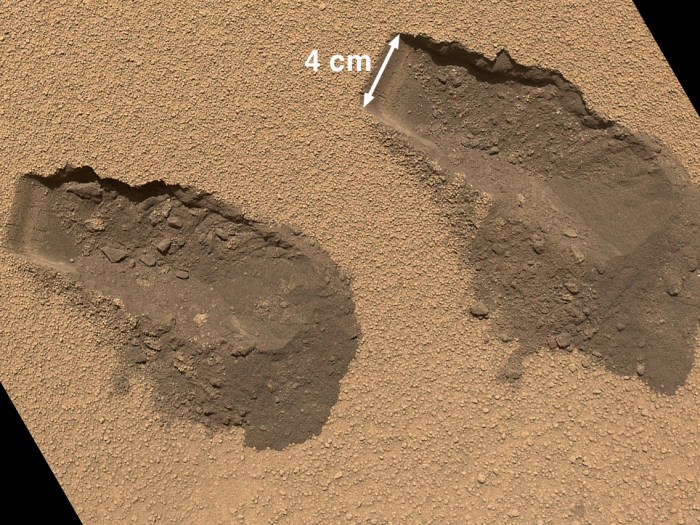
curiosity_samplesApparently, the samples taken with the “Rocknest” inside the Gale Crater showed signs of water, sulfur and chlorine-containing substances, among other ingredients, that were delivered by Curiosity’s arm to the analytical laboratory inside the rover. Lamentably, this does not confirm the existence of organic compounds, as the team hoped. But the find does confirm what Curiosity team and NASA scientists have been postulating for some time – which includes the existence of water on Mars and the existence of complex chemical compounds.

Also, it’s important to note that this kind of soil surveying was not possible with any previous rovers or exploratory missions in space. Curiosity is the first Mars rover that is able to scoop soil into analytical instruments and conducts tests in the way it has, so really, any findings should be considered a windfall. Detection of the substances during this early phase of the mission also demonstrated the ability of the rover laboratory to analyze diverse soil and rock samples, which will continue over the course of the next two years.

And as the team was sure to mention in a Tweet made shortly after the “earthshaking” discovery did not materialize, there’s still plenty of time to find all that they are looking for. Curiosity’s mission is far from over, and she will hardly be the last surveyor – man-made or manned – that will be roving the landscape of the Red Planet.

Source: NASA Jet Propulsion Laboratory

NASA’s Next Mission to the Moon

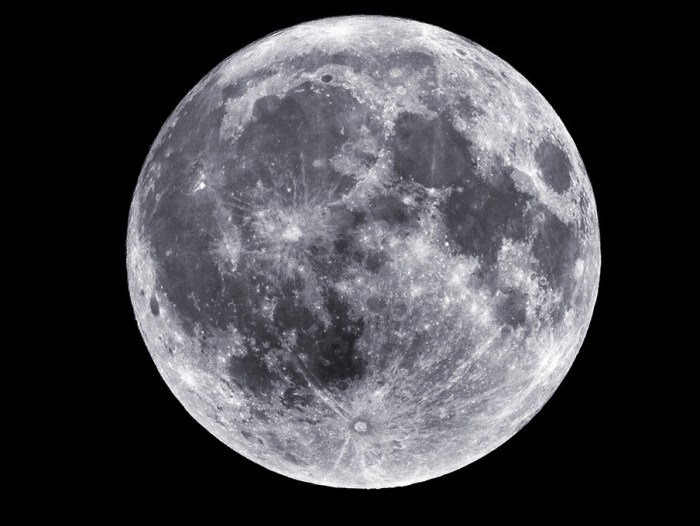
moonThe buzz about NASA is that the human race is once again going to the moon, and planning to stay there! According to space policy expert John Logsdon, there are plans to establish a manned base on the dark side of the moon under the Obama administration. He further indicated that with the election pending, this news has been kept under wraps. But with Obama now secure in a second term, it is expected that there will be an announcement soon.

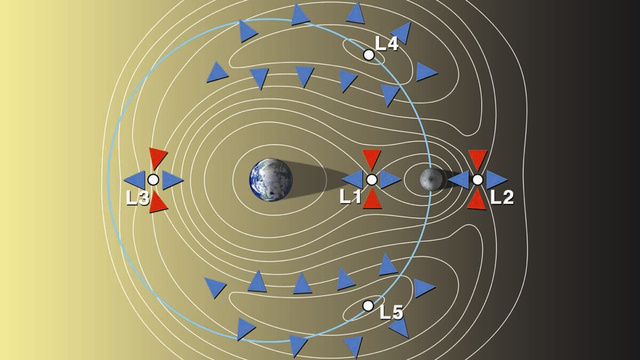
“NASA has been evolving its thinking, and its latest charts have inserted a new element of cislunar/lunar gateway/Earth-moon L2 sort of stuff into the plan,” said Logsdon in a recent interview with SPACE.com. “They’ve been holding off announcing that until after the election, noting that NASA’s mission, direction, and budget could have been revised under a Romney administration.”

For those who have been following the Obama administration’s plans for space, this should not come as a surprise. In 2010, the president signed the NASA 2010 Authorization Act into law, a bill which freed up $60 billion for NASA through 2013. This move was intended to reignite space exploration at a time when the US found itself lagging behind Russia, China, the European Union and India in terms of bold new space projects.

These project include a planned asteroid visit by 2025 and a manned mission to Mars in 2030. A manned outpost at the Earth-moon L2 “gateway” (shown in the diagram below) could serve as an important stepping stone to the outer solar system. But right now, NASA’s eyes are firmly fixed on Mars itself, since a manned mission is the next logical step in their research of the Red Planet.

NASA_moon“There are many options – and many routes – being discussed on our way to the Red Planet. In addition to the moon and an asteroid, other options may be considered as we look for ways to buy down risk – and make it easier – to get to Mars.” At a conference held this past September, NASA deputy chief Lori Garver went even further to outline NASA’s goals for the coming years:

“We just recently delivered a comprehensive report to Congress outlining our destinations which makes clear that SLS  – NASA’s new heavy-lift “Space Launch System” – will go way beyond low-Earth orbit to explore the expansive space around the Earth-moon system, near-Earth asteroids, the moon, and ultimately, Mars. Let me say that again, we’re going back to the moon, attempting a first-ever mission to send humans to an asteroid and actively developing a plan to take Americans to Mars.”

Suffice it to say, NASA is happy the election turned out the way it did. With their budget secure, the course of future space exploration has been set and remains in effect. Who’s to say where it will take us beyond Mars? To the Jovian satellites of Europa, Ganymede and Io? The Saturnalian moons of Titan, Rhea, Dione and Enceladus? I call Gliese 581 after that. I want to know for sure if the fourth planet (the setting of our story Yuva) is inhabitable or not already!

These are exciting times we live in, aren’t they?

Source: IO9, Space.com

NASA Designing World’s First FTL

alcubierre-warp-drive-overviewA few months ago, physicist Harold White shocked and stunned the world when he announced that he and his team at NASA were beginning work on the world’s first faster-than-light warp drive. Naturally, this produced a whole slew of questions, not the least of which was what model his team would be considering. After all, there have been countless theories put forth over the years as to how humanity could one day break the “light barrier”. Which theory White and his team would pursue was naturally the first on everybody’s mind.

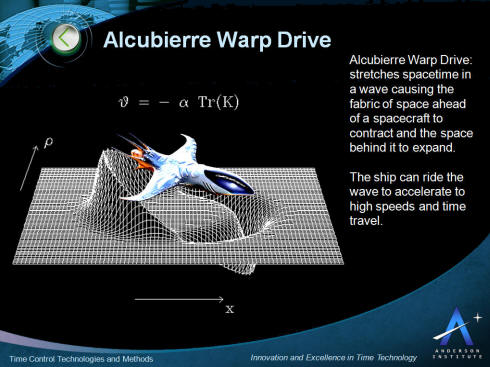
Apparently, White’s proposed design will be a re-imagining of the Alcubierre Drive, a concept which has already been extensively popularized in science fiction and pop culture. Proposed by Miguel Alcubierre in 1994 in his seminal paper: “The Warp Drive: Hyper-Fast Travel Within General Relativity,” Alcubierre suggested a mechanism by which space-time could be “warped” both in front of and behind a spacecraft. After going over the equations in detail, White believed he found a way to make the theory work.

All of this began in October of last year, where White was preparing for a talk he was to give as part of the kickoff of the 100 Year Starship project in Orlando, Florida. While putting together his presentation on warp, he began toying with Alcubierre’s field equations, mainly out of curiosity. After making some adjustments, he came to the conclusion that something truly workable was there, and presented his findings this past October in Atlanta, where the 100 Year Starship project was meeting once again.

alcubierre-warp-drive-overviewThe equations and theory postulates that since space-time can be contracted and expanded, empty space behind a starship could be made to expand rapidly, pushing the craft in a forward direction. Passengers would perceive it as movement despite the complete lack of acceleration, and vast distances (i.e. light years) could be passed in a matter of days and weeks instead of decades. What’s more, this “warp drive” would allow for FTL while at the same time remaining consistent with Einstein’s theory of Relativity.

This has been a major hurdle for physicists looking for ways around the speed of light, since all previous theories required a cosmic model where Relativity – fundamental to our understanding of the universe – would not apply. At the same time, the physics described in the Alcubierre process sound like something directly out of Star Trek, something all sci-fi geeks are sure to notice! It begins with a spheroid object being placed between two regions of space-time (one expanding and one contracting), which in turn generates a “warp bubble” that moves space-time around the object, effectively repositioning it.

The end result is faster-than-light travel without the spheroid having to move with respect to its local frame of reference. In short, those aboard the object would notice the repositioning of their spacecraft, but would experience no “time dilation”, where their perception of time differs greatly from those in a different frame of reference. Or to put it another way, the Alcubierre drive could transport people from Earth to Mars and back again, and for all concerned (the passengers and people Earthside) there would be little difference in the amount of time experienced. None of this, “I’m a year older, but everybody I knew is dead!” stuff. You have to admit, that’s a real perk!

But of course, there are a lot of challenges ahead for White and his team. For example, in an interview with IO9, White said: “Remember, nothing locally exceeds the speed of light, but space can expand and contract at any speed. However, space-time is really stiff, so to create the expansion and contraction effect in a useful manner in order for us to reach interstellar destinations in reasonable time periods would require a lot of energy.” Luckily, his reworking of the equations has brought that requirement done somewhat, but the amounts required mean that a great deal of research and development is still needed.

Perhaps if we can find a way to work cold fusion in the mix, or build an anti-matter reactor. Maybe some hydrogen ramscoops and a Heisenberg compensator, then we’d be in business! Might we need some dilithium crystals too? I’ll call Jordie LaForge and tell him to get on it! 😉

warp_drive

Curiosity Rover’s First X-Ray Analysis of Martian Soil

Curiosity_cheminanalysisA bit of retro news from the Curiosity front here. Roughly one month ago, before the big announcement about “earthshaking news” was made, there was some other news regarding Curiosity’s ongoing soil analyses. And given all the attention that was dedicated to the possibility of organic molecules, this is one news story that might have been overlooked.

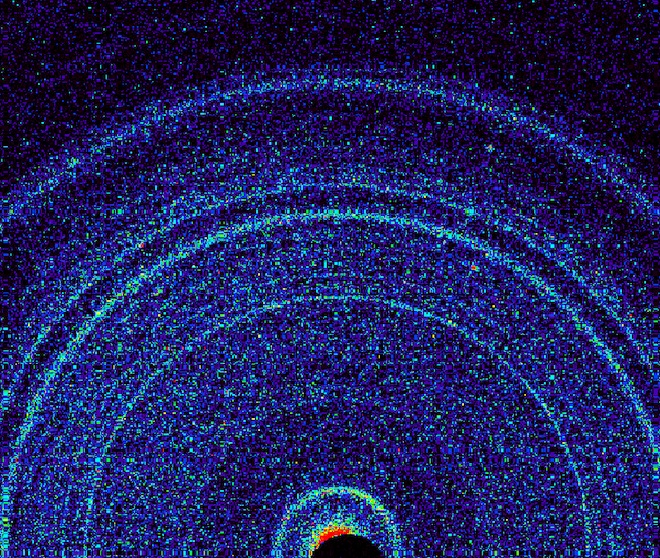
Put simply, Curiosity performed tests that were previously impossible on Mars, using an x-ray scanner that was roughly the size of shoebox in order to conduct detailed analyses of Martian soil. The purpose, of course, was to determine what kinds of minerals it contains and how its soils first came into being.

The device in question, called CheMin, takes a sample of sand – just a thimbleful – and shakes it 2,000 times a second, all the while bombarding it with x-rays. The rays then penetrate the grains, and the way in which they diffract can tell scientists about their constituent atoms. The results are then scanned to see just what kind of mineral composition it has (take a look up top to see the results rendered in stunning technicolor!)

Up until now, this technique has been impossible simply because the equipment needed to carry out such operations were far too large and clunky to fit on a rover. But thanks to NASA engineers, the device in question was shrunk down exponentially in size and even boasts improved electronics, ensuring it is both portable and energy-efficient.

As a result, the Curiosity rover has made some very interesting discoveries. For starters, Curiosity has determined that the soils in the area are extremely similar to those found around the Mauna Kea shield volcano in Hawaii. In fact, it’s identified crystalline feldspar, pyroxenes, and olivine – all of which are common to the soil here on Earth.

Yes, not exactly earthshaking news is it? But it’s interesting nonetheless, and let’s us know once again that Mars and Earth have plenty in common.

Source: Wired.com

Ice and Organics Found on Another Planet!

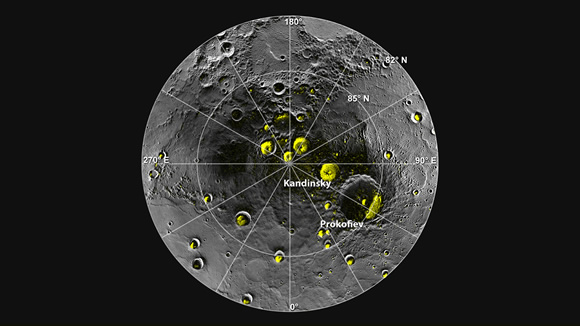
mercury_messengerYes, the announcement from the Curiosity team yesterday that no organics have been found on Mars (yet) certainly came as a big disappointment. However, people may be interested to hear that organic molecules were discovered on a different planet in our Solar System, along with water and ice. Would you believe it, the planet is Mercury? Yes, the world famous for lakes of molten metal and extreme heat may actually boast the building blocks of life.

This information is the latest to come from NASA’s MESSENGER spacecraft, which is now orbiting the closest planet to our Sun. It confirms what was postulated 20 years ago, after images were taken of the polar region and detected radar-bright materials which were beleived to be water and ice. And where water and ice occur, organic molecules are often sure to follow. Though Mercury boasts the hottest environment of any planet in the Solar System, the area in question lies within a permanent shadowed series of craters on the northern pole.

Scientists today said that Mercury could hold between 100 billion to 1 trillion tons of water ice at both poles, and the ice could be up to 20 meters deep in places. Additionally, intriguing dark material which covers the ice could hold other volatiles such as organics. Unfortunately, all of this water comes in the form of ice, as surface temperatures in the poles are too cold to allow for a thaw. In addition, the total lack of atmosphere on Mercury would mean that any liquid would evaporate and be sucked into space very quickly.

At a briefing which was held yesterday, Sean Solomon – MESSENGER Principal Investigator – has this to say about the news: “These findings reveal a very important chapter of the story of how water ice has been delivered to the inner planets by comets and water rich asteroids over time.” In short, it is believed that these ice deposits and organic molecules were delivered to the planet through a series of meteor impacts, and which have survived thanks to the existence of Mercury’s permanently shadowed polar regions.

Granted, no settlers are ever likely to be making a home on Mercury – not without some serious technological innovations! – but the discovery is a very interesting find and does help scientists to understand how life may have begun here on Earth. What’s more, this news may help Curiosity and other science teams to determine where and how organic molecules and ice could be found on Mars. The challenges there are similar to those on Mars, since she too is an inner planet that has virtually no atmosphere and a great deal of surface radiation, not to mention that she too would have been the recipient of water ice and organics through meteoric impacts.

So c’mon Mars! Show us what you got. You don’t want to be outdone by your Hermian cousin do ya?

News From Mars!

An interesting slew of news has been coming from NASA recently, courtesy of the Curiosity Rover and its mission to Mars. First, there was the announcement by John Grotzinger on NPR radio that Curiosity’s science team had discovered something potentially “earth-shattering” on the Red Planet, which came just two days ago. Since then, researchers over at NASA have been keeping a tight lip on what that might be, though it seems to be taking an extraodinary effort to do so. One can only imagine what they’re dying to tell us…

But it seems more stories are coming in the wake of this. First, there was the revelation by the Curiosity Rover that Mars radiation levels, once thought to be problematic for life, are actually safe for humans. According to Don Hassler, the principal investigator on Curiosity’s Radiation Assessment Detector instrument (RAD), Curiosity determined that “the Mars atmosphere is acting as a shield for the radiation on the surface and as the atmosphere gets thicker, that provides more of a shield and therefore we see a dip in our radiation dose.”

Apparently, the levels are equal to what astronauts deal with on the International Space Station, which means people in suits will be able to walk on the Red Planet safely once a manned mission is mounted. Knowing that they can conduct surveys on the surface without additional radiation shields should prove to be a boon for colonization as well. More settlers will certainly be drawn to Mars now that they know they can settle in without having to worry about little things like radiation sickness or mutations!

Third, there was the news that in the wake of making its “one for the history books” discovery, that Curiosity has finished collecting and analyzing soil samples and is preparing to move on. The final checks and preps were made amidst ethereal whirlwinds and twisters, which are characteristic of the region known as the “Gale Crater”, where it has been conducting its research for the past month. The rover is now being prepared to move on in search of suitable targets for a compact rock drill, the final major sample acquisition system to be tested.

Ashwin Vasavada, the deputy project scientist for the Mars Science Laboratory rover at the Jet Propulsion Laboratory in Pasadena, Calif, had this to say on the next phase of the mission: “We still would like to get a little further into this Glenelg region where we see this diversity of rocks and layered rocks and other really interesting terrain. And then we still have a goal in the next month or two of doing the big U-turn and heading up to Mount Sharp.”

Mount Sharp is a 3-mile-high mound of layered terrain that sits in the center of the Gale Crater, where Curiosity is expected to spend the bulk of its planned two-year mission. In the meantime, the research team needs to go over all the information Curiosity has sent back, including an ongoing analysis of the martian weather.

On top of all that, there’s still the matter of that “earth shaking news”. How about it NASA? You too, Grotzinger? We’re ready and waiting… how much more time do your researchers need before they’re sure and are free to break the news they are so clearly dying to share? I still say its organic molecules, but what do I know?

Source: news.cnet.com