The Post-Apocalypse in Sci-Fi (Part III)

The Book of Eli:
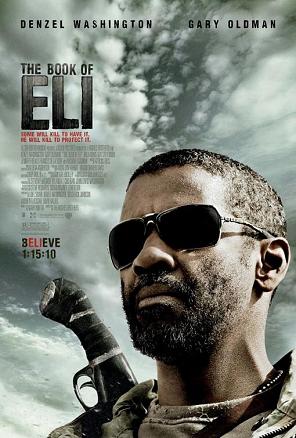
This 2010 movie – starring Denzel Washington, Gary Oldman and directed by the Hughes Brothers – takes place in a post-apocalyptic United States thirty years after nuclear war has left it a scarred and desolate place. Enter into this a wandering nomad named Eli (Washington), a man who is wandering to the West Coast with a mysterious book that “a voice” commanded him to take there. As he travels, the importance of his task is made clear, as the history of the post-war world he is making his way through.

Along the way, he encounters a town run by Carnegie (Oldman), a  man who dreams of building more towns and controlling their residents through the power of a (again) a mysterious book he has heard about. His men are busy at work, searching the surrounding countryside for this book, but so far to no avail. When Eli arrived in town, Carnegie forces him to stay, as he is the only other literate person he has ever encountered.

Ultimately, it is learned that Eli has the book Carnegie is seeking, and that this book is none other than the Bible. He escapes from town and is pursued by Carnegie’s daughter, Solara (Mila Kunis). He explains to her that the Bible he carries is the last remaining copy since all others were destroyed after the nuclear holocaust. He was guided to it by a voice, he says, and has since been making his way across the country, guided by his newfound faith.

Eventually, Carnegie catches up to them, mortally wounds Eli and takes the Bible for himself. However, Solara manages to escape from his custody and begins transporting Eli to San Francisco so he can complete his mission. They come at last to Alcatraz where a group of survivors has been holding up under the watch of the curator named Lombardi (Malcolm McDowell). When Solara reveals they have a copy of the King James Bible, they let them in. Eli, who for the first time is revealed to be blind, begins reciting the Bible from memory.

Back in Carnegie’s town, he manages to unlock the Bible and is horrified to see it is in braille and that his wounds will soon kill him. Meanwhile, Eli dies in Alacatraz just as the printing press there begins printing copies of the Bible and the curator puts the original on a shelf next to the Torah, Tanakh and the Qur’an. Solara decides to leave and head back home, taking with her Eli’s possessions in the hopes of making a difference. She, like him, has become a wanderer guided by faith.

Granted, the message of this movie might seem a little over the top. I, for one, can’t imagine why post-apocalyptic people would destroy Bibles. If anything, I would think they would take their frustrations out on science and turn to religion for solace. Still, the point is made very clear through several key acts of symbolism. Eli, though blind, is guided by faith and it keeps him alive. And though he is robbed of the Book, the true source of it’s power, which Carnegie wants to abuse for the sake of power, lies in Eli’s own self. Really, the message couldn’t be more clear, and yet it is demonstrated with a degree of subtly that one would not ordinarily expect from a movie with a religious message. But it’s not so much about the Bible itself, it’s about maintaining hope and faith in a world where these things have been abandoned.

A Canticle for Leibowitz:
Published in 1960 and written by Walter M. Miller Jr., this novel is a considered a classic of post-apocalyptic sci-fi by genre fans and literary critics alike. Renowned for its themes of religion, recurrence, and church versus state, this book has generated a significant body of scholarly research, yet it was strangely the only novel Miller wrote in his lifetime.

Inspired by Miller’s own participation in the bombing of the monastery  at Monte Cassino in WWII, the story takes place in a Catholic Monastery in the South-Western US after a nuclear war – known as the “Flame Deluge” – takes place. Known as the Albertian order, the monks who inhabit this monastery are dedicated to preserving humanity’s scientific knowledge and rebuilding civilization over the course of thousands years.

The story opens roughly 600 years after the war takes place, in a time when science and technology, even the idea of literacy itself, has been almost wiped out by a campaign known as “Simplification”. At around the same time, a Jewish electrical engineer named Isaac Edward Leibowitz, who worked for the military, converted to Christianity and founded the Albertan order.

After generations of hiding and smuggling books to safety within the orders walls, Leibowitz was betrayed and sacrificed by “Simpletons”, at which time the Catholic Church had him sainted and ordered the monastery beatified. Centuries after his death, the abbey is still preserving “Memorabilia”, the collected writings that have survived the Flame Deluge and the Simplification, in the hope that they will help future generations reclaim forgotten science. The story is structured in three parts titled: “Fiat Homo”, “Fiat Lux”, and “Fiat Voluntas Tua” (Let There Be Man, Let There Be Light, Thy Will Be Done), with each part comprising six centuries each.

In Fiat Homo, which takes place in the 26th century, events revolve around a young novice who while on a Vigil, finds his way to a bomb shelter with the help of a mysterious Wanderer. The discovery triggers an uproar at the Monastery, as it seems that the shelter contains relics belonging to Leibowitz himself. Some fear the sensationalism triggered by the discovery will hurt Leibowiz’s canonization, which is still being debated. After many years, the canonization is given the green light and Francis is sent to New Rome to represent the order at the Mass. Unfortunately, he is murdered in the wilderness and is buried, by none other than the Wanderer himself!

Fiat Lux opens up  in the 32nd century, 6 centuries later, when the New Dark Age is coming to an end and a New Renaissance beginning. At this point in time, the Abbey is coming into conflict with the city-state of Texarkana, a metropolis’ who’s growth was hinted at in the last pages of Fiat Homo. The mayor, Hannegan, is essentially an upstart dictator who intends to become ruler of the entire region my manipulating alliances and gaining access to the Abbey’s own stores of knowledge. In the end, Hannegan’s intentions to occupy the abbey and make war on his neighbours leads to a schism whereby Hannegan is excommunicated by the Pope and he declares loyalty to the Pope to be a crime in his domain.

In the last part, which takes place towards the end of the 38th century, humanity has once again returned to a state of advanced technology, complete with nuclear power, weapons, and even starships and extra-solar colonies. As a state of cold war sets in between the Atlantic Confederacy and the Asian Coalition, the Order begins to enact a contingency plan known as “Quo Peregrinatur Grex Pastor Secum” (“Whither Wanders the Flock, the Shepherd is with Them”). As the nuclear bombs begin to fall, members of the Order board a starship and launch for deep space. With Earth about to succumb to nuclear war yet again, the Order is heading out to ensure that both humanity and its knowledge survives.

The stories central themes, which include the rivalries between church and state and the cyclical nature of history, are what make it such a memorable and enduring classic. Even though it is set in a fictitious future, it is loaded with allegories that connect it to the past. Nuclear war in the near future is the fall of Rome, the ensuing New Dark Ages a reiteration of the last, and the final nuclear holocaust between the Coalition and Confederacy represented contemporary fears of nuclear Armageddon.

By the Waters of Babylon:
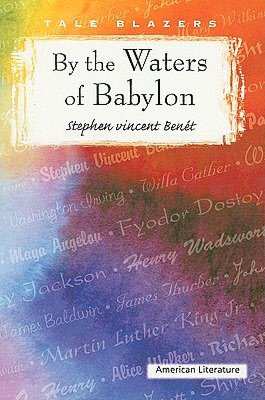
Also known as “The Place of the Gods”, this short story was originally published in 1937 by Stephen Vincent Benét. Taking place in a future where industrial civilization has been destroyed, the story is narrated by a young man named John, a son of a priest who’s people live in the hills. In his day and age, John’s people believe that past civilizations were in fact Gods. There homes are considered hallowed ground and only priests are permitted to handle metal artifacts taken from them.

Eventually, John decides that he will go to the Place of the Gods, an abandoned city that was once part of industrial civilization. In order to gain his father’s approval, he claims he is going on a spiritual quest, but keeps the intended location a secret. John then journeys through the forest for eight days and crosses the river Ou-dis-sun to make his way to the sacred place.

Once he gets to the Place of the Gods, he finds abandoned buildings, statues and countless indications that the “Gods” were in fact human. When he finally finds the remains of a dead person in an apartment, he comes to realize the truth. The Gods were in fact humans whose power overwhelmed their better judgement, hence they fell.

Upon returning to his tribe, John tells his father of the place called “New York”. It is at this point that it is made clear that the “hill people” live in the Appalachians, and the river he crossed was the Hudson. In the end, his father warns him that recounting the experience to the other tribe members will have destructive consequences. The truth, he claims, can be bad if not conveyed discretely and in small doses. The story ends with John promising that once he becomes the head priest, “We must build again.”

Farnham’s Freehold:
Based on his own experiences in building a fallout Shelter, this 1964 novel by Heinlein involves a family that is transported to the future after a nuclear explosion puts a dent in their reality. In addition to the thematic elements of nuclear war and time travel, the book also contains some rather interesting commentary on race relations and segregation in the United States at the time.

The story begins with the Farnham family holding a bridge game in their home, which is attended by Hugh, his alcoholic wife Grace, their son and daughter (Duke and Karen), her friend Barbara, and a black domestic servant named Joe. After they are alerted to the fact that nuclear war is commencing, the people rush to the bomb shelter and wait for it to pass. When it seems that the bombs have stopped falling and their oxygen is running low, they walk out and begin to investigate.

What they find is that they’ve been transported to Africa, where an advanced civilization now exists that uses white people as slaves. Initially, they suspected they had been sent into an alternate dimension, but quickly realize that they are in the future. They are spared because Joe, their black domestic servant, is able to communicate to their captors in French.

In time, Hugh and Barbara agree to take part in a time-travel experiment in exchange for their freedom. They are sent back to their own time, where they escape from the bomb shelter just as the bombs begin to fall. However, they soon realize that they are not in their own time, but an alternate dimension where things are just slightly different. They survive the war and agree to spend the rest of their lives trying to prevent the future they saw from coming to pass.

The Quiet Earth:
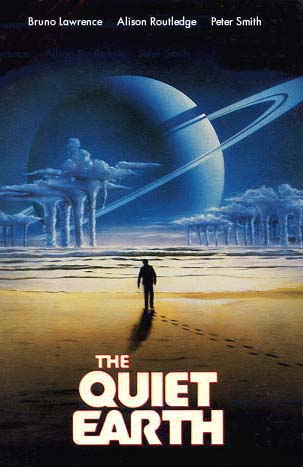
Originally a novel written by New Zealand author Craig Harrison in 1981, this story went on to inspire the loosely-adapted film of the same name which was released four years later. In both cases, the story revolves around a small group of survivors who awaken to find that the world is now devoid of humans and most other forms of life, and that time itself seems to have stopped.

The story begins with John Hobson, a geneticist who was experimenting with using radiation to activate dormant genes, which was meant to have an accelerating effect on human evolution. He wakes up in a hotel room from a nightmare where he was falling, only to find all clocks stopped at 6:12. Upon leaving the hotel, he finds that all clocks have stopped at 6:12 and that everyone appears to have simply vanished. He dubs this phenomena “The Effect” and begins looking for other survivors.

His journey takes him back to his research facility where he finds the corpse of his partner, Perrin, inside the radiation chamber. Retrieving Perrin’s locked box of papers and grabbing some weapons and supplies he sets out for Wellington. Eventually, he finds someone, a Māori lance-corporal named Apirana Maketuin, who agrees to accompany him. They eventually reach the capitol and settle in, hoping to find other survivors and run tests on “The Effect”.

Things deteriorate before long, as Hobson begins to worry that Api might be a psychopath due to his wartime experiences in Vietnam (he finds pictures of him posing with the mutilated corpses of Viet Cong). His plans to kill him with sleeping pills are interrupted when they accidentally run over a woman in the street while joyriding. They return to the hotel and make her comfortable but know she will inevitably die. This leads to a further breakdown between Hobson and Api and they fight. Api dies in the confrontation after apparently giving up.

Finally, Hobson breaks open Perrin’s box and realizes that his partner had him under surveillance because he considered him unstable. Hobson comes to the conclusion that the Effect was his doing since the the project cause the unraveling of animal DNA, and hence only those with the dormant gene pair would be spared. It is at this time that Hobson begins to have flashbacks from his last days at the facility, during which time he sabotaged the machine because of growing misgiving about the project and mistrust for his Perrin’s motivations. It was this sabotage that caused the Effect, and the reason Hobson slept through it was because he took what he thought was a fatal dose of sleeping pills.

Maddened with grief and guilt, Hobson jumps from the window and begins to fall to his death. But then, he wakes up in the same hotel room he found himself in at the beginning, recalling the same dream where he was falling. He checks his watch and it says it’s 6:12… Spooky! Though it bears a strong resemblance to such works as I Am Legend, The Quiet Earth went beyond in that it chose to focus on the themes of perception, culpability, and alternate states of consciousness. All throughout the book, it is not quite clear if Hobson is dreaming, in an alternate dimension, the last man on Earth who is responsible for the death of countless life forms, or just plain crazy.

Shadow on the Hearth:
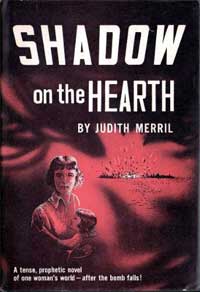
This post-apocalyptic novel, which was the first novel to be released by Canadian sci-fi author Judith Merril (1950), takes place a week after nuclear bombs have devastated, but not destroyed, civilization as we know it. The plot revolves around a mother named Gladys Mitchell and her two daughters – Barbara and Ginny, who are fifteen and five years of age – as they struggle to deal with worsening conditions and a system that is quickly becoming an abusive dictatorship.

For starters, all civil authority has broken down in the wake of the war and been replaced by the Security Office, a form of emergency services that exercises all power. Gladys’ contact with the services is the local “emergency squadman”, Jim Turner, a neighbor who begins to display a rather creepy fascination with Gladys along with a desire to turn the emergency to his own advantage.

Similarly, the difficult situation breeds suspicion and intolerance on behalf of the authorities who begins see enemies everywhere. The Mitchell’s maid, a woman named Veda, comes under suspicion when it is learned that she was off sick during the time of the attack. Much the same is true of Gladys’ old science teacher, who predicted that nuclear war would be inevitable and now fears the paranoid Security Office might suspect him.

Meanwhile, Gladys tried to maintain a disposition of stoic calm, mainly because she believes its her role as a mother to act as though everything is fine. While her intentions are good, she’s slow to admit that Turner and the authorities are corrupt, that their situation is bleak, or that she might need to manipulate certain people to get her way. But in the end, she is willing to go to great lengths to protect her family, from both external threats and the threat of dissolution.

In several key aspects, this story demonstrates some of the overriding themes and feelings that were present during the early cold war. We have the specter of war and dictatorship, the focus on the single-parent family, the idea of domesticity and sexism, and the affirmation of the mother figure who will do whatever it takes, even if she seems naive and silly, to keep her family safe and secure. While it might seem dated by modern standards, it is nevertheless a fitting and accurate portrayal of life in the 1950’s and the likelihood of what would come of it if the bombs started to fall.

The Time Machine:
Last, but not least, we have the story that has made my lists in one form or another on numerous occasions. In addition to being an example of utopian and dystopian fiction, The Time Machine is also a fitting example of post-apocalyptic science fiction. This is part of what makes H.G. Wells novella a timeless classic, in that it transcends or jumps between genres and can therefore be read from a number of different perspectives.

In this respect, the Time Traveler’s trip to the distant future, where the world has degenerated into a two-tier structure between the monstrous Morlocks and the stagnant but beautiful Eloi, can be seen as an example of post-apocalyptic society. What’s more, their respective degeneration is seen as the result of humanity’s obsession with class distinction, the masters becoming lazy and ineffectual while the workers have become cannibalistic and brutish.

Another apocalyptic element in the story comes towards the end when the Time Travelers recovers his machine from the Morlocks and travels another 30 million years into the future. Once there, he sees some of the last living things on a dying Earth, a red landscape similar to that of Mars which is covered by lichenous vegetation and crab-like creatures wandering across blood-red beaches. As he jumps further, he sees the Earth’s rotation gradually cease and the sun die out, the world falling silent and freezing as the last organisms die off.

In a deleted section of text, which H.G. Wells apparently included in the original serial version at the behest of his editor, but cut from the novel once it was published. Here, Wells demonstrated “the ultimate degeneracy” of man by having the Time Traveler escape from the Morlocks and jump once more before traveling 300 millions years into the future. Here, he found an unrecognizable Earth populated by furry, hopping herbivores, which he interpreted to be the descendents of the Morlocks and Eloi. Thus, in addition to first losing the instincts that defined humanity at its greatest, the Morlocks and Eloi, themselves descended from humans, even reverted to an earlier state of evolution in the end.

Though not a post-apocalyptic tale in the strictest sense, this story does contain the necessary elements of such a story. You have humanity degenerating as a result of cataclysmic events or its own inherent weaknesses, civilization as we know it being destroyed or disappearing, and even the world itself coming to an end.

Final Word:
And that’s all I got for post-apocalyptic sci-if. Sure, there are countless more examples that could be included, but three lists is enough for me and I’m neck deep in other concepts that are vying for page time. In the coming weeks, expect more news on technology, space exploration, the upcoming anthology, Data Miners (set for release in August) and plenty of assorted tidbits on stuff that relates to the world of science and science fiction. Take care all and see you again soon!

Crashland Chapter 14, Now Appearing at Story Time

Wow, it’s been awhile since I updated this story last. And I believe it was even longer before I updated it before that. But as I’m sure I’ve said, I’ve taken on some other writing responsibilities of late and it seems I’ve finally reached my creative limit. That’s what you get for constantly pushing your boundaries I guess.

Still, today I managed to tear myself away from my other writing and editing commitments and dedicate some much needed attention to Story Time and this unfolding serial novel. And I’m sure you’ll agree, this one’s also a doozy! Much like the last one, the choice is once again a matter of life and death.

Last time, William found himself trapped in a collapsing subway tube and slowly dying from internal injuries. Slipping into unconsciousness, he once again experienced an intense dream that seemed to be speaking to him, almost as if someone else were inside his head and using his memories to give him instructions.

He then woke to find Jacobs standing over him and urging him to follow him out. Though he practically had to be carried, William and Jacobs managed to struggle their way out of the collapsing tube just as the last of it came crashing down. Unfortunately, Jacobs appeared to be mortally wounded, and the people tending to William mentioned that one other person in their party had died as a result of the cave in. Readers were asked to decide which person that would be.

The choice was a tough one. Would it be Simon, the cybernetically enhanced post-human that all their efforts depended on? Would it be Molya, the team’s gunman who never seems to stray far? Or would it be Jorka, the team’s medic and the only woman William had set eyes on since the Crash began. As it turned out, audiences decided on Jorka, the female medic who was intrinsic in saving William’s life. Thus, chapter 14 opens with the revelation that not only was she killed, but that Jacobs was mortally wounded while attempting to save William’s life.

The story is on the move once more. So come on by and check it out, and as usual, stick around to vote on what happens next! It’s all happening over at Story Time.me.

The Post-Apocalypse in Sci-Fi (Part II)

Akira:
This futuristic tale takes place in Neo-Tokyo, an ultra-modern city that was built on the ruins of the old after an incident touched off World War III. This is a major them in the movie Akira and manga it was adapted from. Throughout the entire story, there is a pervasive sense of shock and horror over the destruction of the old city, and a sense of dread that it might happen again very soon…

Enter into this story the characters of Kaneda and Tetsuo, two orphan boys who belong to a biker gang that is constantly engaged in battles with other gangs for control of the streets. Being children of the system after their parents died in the war, all they really have is each other and the other members of their biker gang. These surrogate families and their ongoing feuds provide a sense of community and an outlet for their pent-up energies, living in a world characterized by boredom and angst and haunted by a past filled with horror.

In addition, you have Colonel Shikishima, a man who witnessed WWIII and has dedicated himself to the rebuilding and ensuring that it never happens again. In addition to being a main character, he is representative of the generational gap in the story. As a stern, disciplined military man who was shaped by apocalyptic events, he is appalled by the sense 0f self-indulgence which he feels has set in with the younger generation.

And the apocalyptic nature of the story is something which is demonstrated over and over through intense scenes and nightmarish visions. In short, it’s an awesome take on the post-apocalyptic scenario, which could only come from firsthand experience.

Alas, Babylon:
This 1959 novel by Pat Frank is one of the first post-apocalyptic stories of the nuclear age and has remained a science fiction ever since. Taking place in small town in Central Florida, Fort Repose, the story opens with a veteran-turned-lawyer named Randy Bragg who gets a cryptic telegram from his brother who works for the Strategic Air Command. He informs his brother that he will be sending his wife and kids to stay with his Randy, and ends it with “Alas Babylon”, a biblical reference which his brother uses as a euphemism ford disaster.

In time, he learns that the bad news concerns a potential Soviet attack, which inevitably takes place after much escalation. After bringing his sister-in-law and her kids to their home, they are all awoken in the night to the sounds of Miami being bombed. They residents awake to witness a mushroom cloud forming over Tampa shortly thereafter, and the events which characterize the following 24 hours they come to name “The Day” – i.e. a one day war.

The story delves into the effects of “The Day”, which are felt differently by people in Fort Repose. Tourists are trapped in their hotels, convicts escape from jails and prisons, the local retirement homes are filled with panicked people, and just about everyone tries to withdraw their money from the local bank and buy up supplies. The only reliable means of news comes through short wave radio.

As chaos begin to set in, Randy begins to organize neighbors to provide housing, food, and water for themselves and organizes the community to defense itself against highwaymen. As an active Army Reserve officer, Randy learns that he has the legal right to exercise martial law, and an order comes in over the short wave from the acting Chief Executive (who is governing from a bunker in Colorado) for any surviving officers to form local militias.

In the end, military helicopters arrive to evacuate people, but are refused as the locals tell them that they want to stay in the new home they have built. They learn the war is over, that the USA prevailed, and that country is now being run from Denver. However, the victory came at a tremendous cost, Millions are dead, entire stretches of the country are irradiated and won’t be habitable for a thousand years, and the US is now a third-rate power that is dependent on third world countries for aid. Faced with this prospect, the people of Fort Repose settle in and decide to face the “thousand year” night that is coming.

This book not only introduced readers to the likely prospect of what would happen in the event of WWIII, it also presented a likely scenario of how that was going to happen. While it the Soviets were apparently planning an attack in the first place, it was an accident that touched everything off. And in the end, how people went about rebuilding and trying to restore some semblance of normalcy was quite classic. In addition to inspiring numerous generations of nuclear holocaust fiction, numerous apocalyptic franchises owe an allegiance to him, not the least of which is the re-imagined series of Battlestar Galactica.

The City of Ember:
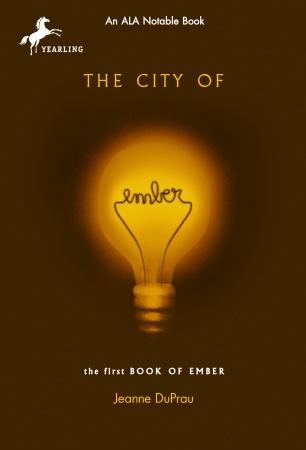
This post-apocalyptic story, written by Jeanne DuPrau in 2003, takes place in an underground city named Ember. After many years of continuous habitation, the city is slowly running out of power and supplies. Similar to in tone and structure to Suzanne Martel’s 1963 story The City Under Ground, this city was apparently built to ensure that humanity had a place to live and wait out the effects of nuclear war.

The story begins when a two protagonists, Lina Mayfleet and Doon Harrow, receive a message which is apparently left by “the Builders” containing clues that could lead them back to the outside world. This message was kept in a box that was passed down from mayor to mayor, with instructions that it be opened after two hundred years. Until recently, the box had been lost, but as soon as Mayfleet and Harrow find it, the race is on to decipher it and find a way to the surface.

In the end, the children follow the note’s instructions through a series of caves that lead them towards the surface. When they see the city from above, they realize that they are underground, something which they never knew before. This scene, which calls to mind Plato’s “Allegory of the Cave”, provides the story’s big revelation. The story then ends on a cliffhanger note with the girls trying to alert the other inhabitants of what they’ve found.

The Matrix:
The setting and back story of the Matrix revolve around two fundamental facts: One, that a terrible war between humanity and AI’s took place in the future; and two, that what is left of humanity lives underground due to the devastation wrought on the planet’s surface. Enter into this the concept of the Matrix, a simulated reality where humans are kept docile by being fed the lie that they live in the pre-millenial world, at a time when human’s were still in charge.

But of course, not all human beings are able to accept the program and experience a sort of existential crisis as a result. When Mr. Anderson, hacker alias Neo, is presented with the answers he so desperately seeks, he is horrified to learn the terrible truth. Not only was it the year significantly later than he thought, but the world as he knows it was destroyed long ago. All major cities reduced to rubble, the sky itself has been “scorched”, and the surface rendered a cold, uninhabitable shadow of its former self.

This is a crucial element of the Matrix, which is not just a sci-fi story set in a post-apocalyptic world, but a metaphor for truth and “false consciousness”. With reality so displeasing and harsh, there are many who would prefer the warm comfort of a simulated world, which just happens to be a recreation of happier, stabler times. The metaphor is not just thick, but multi-layered!

It is for this reason that the majority of human beings accept the programming of the Matrix, even if they are only aware of this acceptance on an unconscious level. It is also the reason why those who choose to opt out of it, due to an innate feeling that their reality isn’t real, is a choice which must be made many times over. As Cypher himself demonstrated in the first movie, not everyone has the stomach for the real world, and will willingly betray their comrades for a chance to be put back inside. Others however, find hope in the prophecy of “The One”, the person who’s arrival will herald the end of the war and peace for humanity at last… or so it seems!

The Omega Man:
Released in 1971 and starring (once again) Charlton Heston, this movie post-apocalyptic film is a classic amongst film buffs. Based on the 1954 novel, I Am Legend, this story has gone through many adaptations over the years and has been spoofed and imitated endlessly. Though the plot was updated for the most recent version (2007, starring Wil Smith), much of the elements – a post-apocalyptic world, a lone human survivor, fighting against mutants – have remained the same.

Essentially, the plot takes place in a world that has been devastated after a terrible plague was unleashed and wreaked havoc on the world. In the film versions, this involved biological warfare between the Soviet Union and China – or a mutated cure for cancer – but was only hinted at in the book. In any case, the story revolves around a man named Robert Neville, a doctor who seems to be the last man on Earth, hence the term “Omega Man”.

Though technically not the last living creature, Neville appears to be the last human being who has not succumbed to the most dreaded aspect of the plague – transformation into a flesh-eating mutant. Whereas most of humanity died after exposure, a small minority was converted, leaving an even smaller minority of infected to be hunted as prey. Living in a fortified apartment with an arsenal, Neville spends his days patrolling the abandoned city and killing members of “The Family” – the albino mutants who are hunting him.

At the same time, Neville is dedicated to finding other survivors who have not turned. Eventually, he is saved by one such group of people, but discovers that they are not immune as he is. He decides to treat others using his own blood as a serum, while at the same time escaping to the wilderness to start a new life while leaving the mutants to die in the city. Ultimately, Neville is forced to sacrifice himself to stop the Family from overtaking the rest of them, but the survivors make it out, carrying with them a vial of his blood.

Though significantly different from the original novel, all versions of the story deal with a world in which all of humanity has been wiped out by a biological agent, not nuclear war or a natural disaster.

The Road:
This 2006 novel by Cormac McCarthy, which was adapted into a 2009 movie of the same name, takes place in a post-apocalyptic world where a father and son wander the landscape together. Though it is not specified what caused the destruction they are forced to witness and endure, what is clear is the effect it had on the survivors. Most people have given up hope in the ashen landscape, while others struggle to stay alive and some even turn to cannibalism to survive.

The plot involves an unnamed father and son who are venturing south towards the coast because they have realized that they will not survive the winter where they lived. Though the father is dying and they have barely any possessions to speak of, and the land in between is filled with horrors, the two keep going, fending off roving bands of cannibals and raiders and maintaining hope that the coast will be their deliverance.

All along, is father assures his son that they are the “good guys” who are “carrying the fire” through a dark terrible land. In the end, they find no refuge when they reach the sea and are forced to venture back inland, but the father finally succumbs to his illness and dies. He tells his son to maintain hope and to speak to him in his mind after he is gone, and the boy holds a vigil for days over his father’s body when he finally passes on.

With no idea what to do or where to go, he is eventually found by another family who claim to have been tracking them. The father of the group assures him he is one of the “good guys” and asks the son to join them. With no other options available to him, he agrees to join them and they set off together to find a new home.

Inspired by McCarthy’s own relationship with his son, and a great deal of speculation about what the apocalypse would look like, this story is a very personal take on the end civilization and the struggle to survive. Whereas a great deal of the survivors have resorted to unspeakable acts in order to stay alive, McCarthy redeems humanity by showing the lengths to which regular people will go to protect their families and ensure that good people live on when all the world goes to hell.

The Scarlet Plague:
Here we have a post-apocalyptic classic that predates the nuclear age. Written by Jack London and published in 1912, this story was the original “last man on Earth” scenario which inspired such works as I Am Legend and many others. In addition to being based on the idea of a plague wiping out nearly all of humanity, the stories resolution involves the main character imparting his knowledge to others to ensure that something survives when he is gone.

The story is set in San Francisco in the year 2073, sixty-years after a terrible epidemic, known as the Red Death,has depopulated the planet. Enter into this the story’s protagonist, a man named James Howard Smith, a survivors from the pre-plague era. As an aging man living in the San Francisco area, he is faced with the unpleasant question of what will happen when he dies. As one of the few people who is old enough to remember the pre-plague days, he possesses rare knowledge which will be lost.

Through Howard’s narrative, we learn how the plague spread throughout the world and of the struggles of the handful of survivors it left in its wake. This is apparently being told to his grandchildren, who he has decided to teach everything he knows to ensure that his knowledge will not be lost.

Much like the novels it helped inspire, the Scarlet Plague’s real value lies in its personal nature, relating how the struggle to survive goes beyond the mere physical. In the end, it is when people are facing death that what is most important in life is realized and affirmed. Or to put it is as Commander Adama did, “It’s not enough to survive. One must be worthy of survival.” Sorry! My mind keeps going back to BSG with all this post-apocalyptic talk. More on that one later…

The Terminator:
Central to the story of the Terminator franchise is “Judgement Day”, the day when humanity was nearly destroyed in a nuclear holocaust that was triggered by the sentient machine known as “Skynet”. This serves as the backdrop to the story, along with the ensuing war between the human resistance and the machines its spawned.

Though the majority of the story takes place in modern-day Los Angeles, a great deal of attention is dedicated to the war in the future and what life is like for those who survived Judgement Day. Kyle Reese described his life in the following way: “There was a nuclear war… There were survivors. Here, there. Nobody even knew who started it. It was the machines… I grew up after. In the ruins… starving… hiding from [Hunter-Killers]. Patrol machines built in automated factories. Most of us were rounded up, put in camps for orderly disposal. ”

Eventually, these camps were liberated by John Conner, the leader of the Resistance. After training and equipping the survivors, effectively turning them into a fighting force, Conner led them in a protracted war against the machines. For the most part, the resistance lived and operated out of underground facilities and went out at night to fight HK’s and Terminator’s, guerrilla-style. Survivors and refugees were gathered in these facilities, and their defenders were forced to constantly be on guard against infiltrators. Eventually, John Conner organized all his fighters into a massive offensive force and led them against the Skynet’s central HQ, destroying it and winning the war for humanity.

It was for this exact reason that the machines built their time machine and began sending Terminators back into the past. Since they could not defeat Resistance in the present, they reasoned that eliminating their commander before he was even born was their only recourse. This provides the set up for the entire franchise, with both the machines and the Resistance sending people back in time; the former to kill him and the latter to protect him and ensure that the war could be prevented.

The Walking Dead:
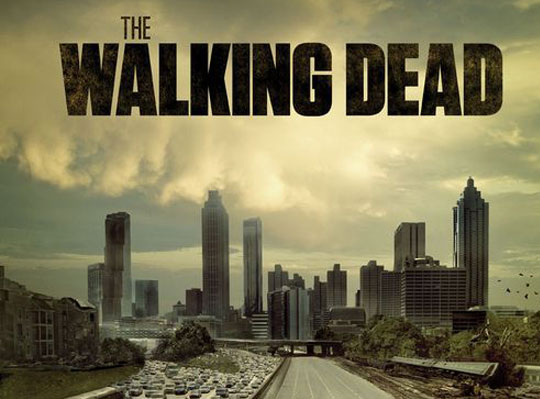
Fans of this franchise will know instantly why I’ve chosen to include it on this list. Not only is it a gritty, realistic take on the zombie apocalypse, but it also manages to capture the essence of survival and the struggle to stay human when everything around you has fallen. Part of what makes this show so bang on is the fact that the character’s personal struggles go well beyond the need to stay alive.

In addition to finding food, ammo, and a place to set down, there’s also the constant battle to keep hope alive. This takes them at first to the CDC, where the expect to find answers, a cure, and some protection. But of course, all they find is a single scientist who can explain how the zombie illness works, but has no idea how to cure it.

And of course, the familiar and realistic themes of loss, suicide, procreation, betrayal, and brutalization play a central role to the development of the story. Everyone who has survived the zombie apocalypse has lost people near and dear to their heart. As a result, many people have a hard time going on, some of whom commit or actively contemplate suicide. Rick and Sarah, the show’s main protagonists, also face a tough choice when they realize she is pregnant. Essentially, they’re not sure it would a good idea to bring a baby into this post-apocalyptic world. Much like the decision to carry on, it often seems that embracing death would be a far more merciful decision.

Amongst the other main characters, there is also the extremely difficult choice between survival at all costs and maintaining one’s humanity. Whereas Shane seems to favor survival, and becomes a hardened, amoral man who will kill anyone who gets in his way, the elderly Dale is committed to not being pulled down into a world of misery and letting it change him. With everyone else, the decision is the same, with people falling to one side or the other and divisions setting in.

Crashland – Chapter 13!

After about a week and a half on hiatus, I’ve finally returned to Story Time to pick up my serial novel of Crashland. Last time, things ended on a cliffhanger as the tube station Holden and his compatriots were hiding out in began to collapse. Still recovering from his injuries, Holden was forced to find his way down a dark tunnel while the others carried the cybernetic Simon out on a stretcher.

Unfortunately, Holden fell behind and got lost in the dark. His only hope was to either retreat back the way he came, try to navigate based on the glow tubes strewn about the tunnel, or just sit and wait for the trouble to pass. And of course, audiences voted and the choice was clear! Holden would try to navigate his way out the only way he could.

And now, chapter 13 is ready! Come on by and see what happens, then stick around to vote on the next chapter. I have to say that it is one of the most consequential chapters I’ve written yet! Yes, the ending is not only a cliffhanger, but a matter of life and death. When it’s done, one of the story’s characters will be killed off. Tune in to decide which one!

Dystopia and Deathmatches in Sci-Fi

Battle Royale:
This controversial story, also adapted into a film, takes place in an alternate universe where Japan is a member region of a totalitarian state named the Republic of Greater East Asia. Alluding to the Greater East Asia Co-Prosperity Sphere of WWII, it is clear that this a world in which Japan won the Second World War and continued on the path of fascist Imperialism.

In any case, the story revolves around what is called “The Program”. Under the guise of a “study trip”, a group of junior high school students from a fictional town are gassed on a bus. They awaken in the school of an isolated, evacuated island and learn that they have been placed in an event where they must battle each other to the death, or all will die.

Officially a military research project, it is a means of terrorizing the population, of creating such paranoia as to make organized insurgency impossible. Every year, fifty classes are selected to participate where students from a single class are isolated and are required to fight the other members. It ends when only one student remains, with that student being declared the winner.

Their movements are tracked by metal collars, which contain tracking and listening devices; if any student should attempt to escape the Program, or enter declared forbidden zones, a bomb will be detonated in the collar. If no one dies within any 24-hour period, all collars will be detonated simultaneously and there will be no winner.

Banned in many countries (the novel and the film) because of its controversial and graphic nature, Battle Royale has gone on to inspire such books as The Hunger Games.  Combining a Lord of the Flies-style appraisal of human psychology with a indictment of reality TV, this story remains one of the most effective pieces of modern dystopian literature featuring death matches.

Dune:
Fans of Dune will remember the lovely scene in the novel where Count Fenrig travels to Geidi Prime to speak with the Baron. Once he arrived, and in honor of Feyd Rathau’s birthday, he was treated to a gladiator match between Feyd and a slave gladiator. This is a common feature on Geidi Prime where death matches are considered public entertainment and every major city has its own arena.

And what better place for this kind of entertainment than Geidi Prime, a world run by ruthless overlords and characterized by harsh, perverse brutality? And that was the point after all. The Harkonnen’s were the bad guys in this tale and everything about them, their appearances, ethics, and homeworld was designed to match.

Robot Jox:
Taking place in a post-apocalyptic world where conventional warfare is forbidden between nations, Robot Jox tells the tale of a gladiator-style sport where giant mechs do battle in open arenas. This is how the two super-nations – the American-influenced Western Market and the Russian Confederation – work out their differences.

Of course, espionage and betrayal remain an integral part of the games, mirroring the Cold War. What’s more, the games often rigged to ensure that one bloc can get a leg up on the other. And in the end, the entertainment factor is also a driving force behind the games. In a post-apocalyptic world, the masses need some form of entertainment to distract them from the shock and horror of their daily lives.

The Hunger Games:
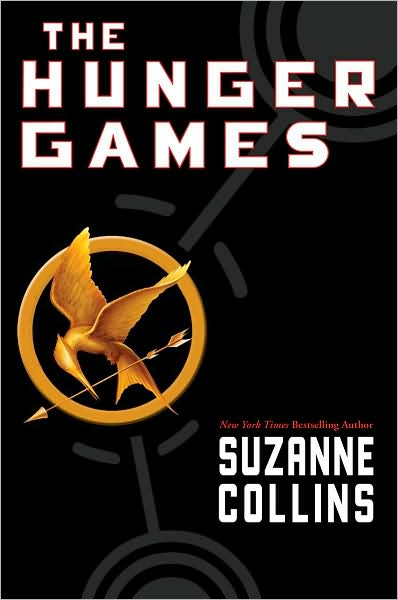
Following in the same vein as Battle Royale and Lord of the Flies, The Hunger Games tells the tale of a not-too-distant future where the United States has degenerated into a tyrannical government ruled from a political seat known only as “The Capitol”. Every year, the rulers of this city force all the outlying districts to send two young people – one boy and one girl – to compete in a free-for-all known as the Hunger Games.

The purpose of these games is simple, to keep all districts in a state of awe and fear so they won’t be able to contemplate another uprising. Years back, it is said that the 13 districts committed to one such uprising, the result being that District 13 was destroyed. The remaining twelve now send their competitors and try to exploit the incentives, which just happen to be rations.

Throughout the book, several things are made clear about the games which highlight its satirical nature. Satirizing reality TV shows, we learn that the games are televised, incentives are offered to keep the games going, and contestants draw sponsors based on their popularity. In addition, extra elements like romances and collaborations are encouraged to ensure that the games remain interesting and dramatic.

In the end, the games serve the purpose of keeping people down but also exploiting their destitute nature by offering them a shot at something better. When the games are over and only one person remains, they will receive enough rations to last them a lifetime. Many times over, it is also shown how life in the capitol is opulent and comfortable, whereas the outlying districts are malnourished and must do things like hunt illegally for food. And of course, the farther the district from the capitol, the more difficult life is, another aspect which the capitol exploits to ensure its continued survival.

The Running Man:
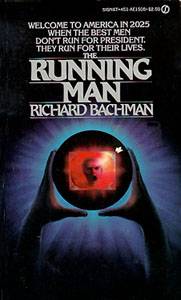
Written by Stephen King under the pen name Richard Bachman, The Running Man is also a near-future dystopian tale set in 2025 where the US has become a totalitarian state because of economic fallout and wide-scale starvation. For a population dogged by hunger and martial law, the only real source of enjoyment is a televised TV show where convicts are forced to engage in gladiator-style combat against seasoned “hunters”.

Aptly named “The Running Man”, the show begins when a series of “enemies of the state” – i.e. convicts – are released into a massive arena where they are pursued by a group of network-employed hitmen. For every hour they remain alive, they earns 100 dollars, plus a bonus for every Hunter they kill. If they survive 30 days, they earn a total of 1 billion “New Dollars” and a full pardon. Or so they say…

Though the novel and the movie differ in terms of plot and resolution, the basic elements are the same. In a future where the vast majority of the population is indigent and desperate, brutal spectator sports are seen as the only outlet. In both versions, much is made of how popular the games are and how important they are to both the network and the government, hence why every attempt is made to ensure that the Hitmen always win.

This serves to reinforce the notion that enemies of the state will always lose when faced with the governments brand of justice, which in this respect is similar to a show trial. It also ensures that the most profitable business in that day and age, since the show grosses billions of dollars in sponsorship and betting on convicts is also a big side-business, stays up and running. So in addition to serving as a source of social control, the games are also an example of corporatism, where the government has a lucrative arrangement with its biggest corporations.

Unreal Tournament:
Don’t laugh! Yes, this may have been a glorified (and gory) first-person shooter in it’s time, but that doesn’t mean it wasn’t also inspired. Though gamers cared little for the storyline, the fact remains that Unreal Tournament actually had a dystopian theme that drew from several classical sources. Set in a future where the Earth government creates a no-holds-barred arena deathmatch game to settle disputes between deep space miners.

However, when it became clear just how profitable and popular the games were, the games expanded to become an interstellar affair where anyone could fight and the prizes were astronomical. In turn, the corporate responsible for creating the games also became incredibly powerful and used every tool in its crooked arsenal to make sure that competitors were in good supply and things always worked in their favor.

Any player who survived long enough to make it to the end would square off against the companies own cyborg. If they were fortunate enough to kill him too, they received the grand prize and rank of Tournament Champion! All of this, though it took the form of a first-person shooter, calls to mind all the previously mentioned examples of dystopian science fiction and psychological realism. By pitting the desperate, the brutal and the avaricious against each other, a company was able to make an obscene amount of money and keep people blind to the true abuses of power in their universe.

Final Thoughts:
In the end, all of these examples have one thing in common. Whether the setting is a post-apocalyptic world or just a destitute nation dealing with economic downturn, the element of social control is always there. By throwing the powerless, hungry and greedy into an arena and ordering them to kill or be killed, a government ensures that it not eliminates potential threats but channels discontent into something truly atavistic and brutal. Though this is in many ways inspired by the Roman example, modern developments seem to be the true inspiration.

Like all dystopian literature, it seems that developments within the late 19th and early 20th century were the crucial factor. It was here that writers and social commentators truly came face to face with humanity’s abundant capacity for distraction, atavistic behavior, and indifference to suffering. That is another thing that all these pieces of literature have in common. Whether it is the brutal cynicism of those who profit from the games, or the uncaring nature of those who enjoy them, a disgusting lack of empathy runs through them all like a vein.

For what is worse than exploiting misery for the sake of entertainment? It’s one thing to persecute people directly, but making the oppressed and exploited fight each other for the scraps off your own table? That’s a real dick move!

Speaking of which, stay tuned for my review of The Hunger Games. I’ve finally gotten to the end of the book and will sharing my long-promised thoughts on them real soon! Thank you all, and remember: don’t let the bastards pit you against each other! FIGHT THE POWER!

Crashland – Chapter 12 Now Appearing at Story Time!

The votes are in and chapter 12 of Crashland is now available at Story Time. Last time around, the protagonist William Holden was being introduced to the final member of the crew. This, he discovered, was a cybernetic being known as Simon, a breed of human being designed to monitor cyberspace at all times. He also deduced what Jacobs plan was… unfortunately he didn’t tell the rest of us what it was. Yeah, I know, but I aint telling neither!

In any case, their discussion was interrupted when one of Jacobs men came to announce that they had a problem. When he learned what it was, he conveyed to Holden that they did indeed have a problem! The only question was, what was the nature of it? I asked audiences to decide. Was it: a. a rival gang attacking their hideout, b. an unruly mob that was threatening their friends who are camped out near the entrance, or c. the tube collapsing?

Well, the votes are in and audiences have once again decided. It’s C! The tube is collapsing, and now Holden, Jacobs, and his little band of agents will have to evacuate quickly! Come and by and see what happens, then stick around to vote on the next chapter! It’s all happening over at Story Time.

Crashland – Chapter 11, Now Appearing at Story Time!

Alright! After days and days of sinking my teeth into utopian lit, I’ve finally managed to get back to my dystopian ways! Which means that Chapter 11 of Crashlands is now available over at Story Time. And as promised, things are getting tense!

Last time, Holden was introduced to the being known as “Simon”. As usual it was up to the voting audience to determine what Simon was. Was he a cyborg that could interface with any machine on the planet? Was he a Nexus, a special type of Cyborg that authorities use to monitor the infobahn? Or was he a cyber terrorist that they had captured and turned to their cause?

Well, after some deliberation and a plea from the author, audiences got their votes in, a tie was broken, and Simon was declared a Nexus! Now, in chapter 11, we get to learn more about him, what his purpose is in their mission, and how Holden is expected to help him out. He also learns, now and for the first time, exactly where they will be heading to.

And so the question is once again posed to you, the voting audience: what happens next? Come on over and see what happens in this chapter, then stick around to decide on the next outcome. It’s in your hands people, whatever you say goes!

Crashland – Chapter 11, coming soon!

Why does this keep happening? Over at Crashland, we once again have a deadlock between options A and B. What is it with my readers? Are they really so of two minds or do people just like keeping the odds even? Or perhaps I just give really good options… No, it’s got to be the readers!

In any case, this tie must be broken if the story is to proceed. And I don’t need to tell those who’ve been keeping up with the story that things are about to get interesting.

Last time, Holden finally met the mysterious “other” Jacobs had been alluded to. This other, as it turns out, was a frail, sickly looking post-human named Simon. Enhanced with all kinds of cybernetic gear and kept alive with battery packs and nutritional hookups, the question remained: what exactly is Simon?

Well, the options are all ready. Option A said that he’s a cybernetic being who can interface with any machine. Option B claimed he was a Nexus, a specialized form of cyborg that is used to monitor regional networks. Option C, which no has been choosing, had it that he was a specialized weapon designed for cyberterrorism that they had picked up and turned to their agenda.

A and B remain neck in neck. Help break the deadlock by coming on over to Story Time and voting on your favorite outcome. And, well, you know the rest!

Crashland – Chapter 10, Now Appearing at Story Time!

Well, it’s about that time again. Audiences have once again voted, indicated what they want to see happen, and the story goes on. But before I get into what chapter 10 of Crashland is going to be like, I want to thank all the people who take time out of their busy day schedules to come on by and read my work. You are the life blood of the serial novel industry, so take a bow!

To recap, chapter 9 ended with Holden once again facing a choice. The mysterious man Jacobs who saved him has now explained exactly who he and his friends are and what they do. Exigencies, they are called, a global anti-terrorism task force that specializes in dealing with clean-ups. When the worst happens, they get called in to put it right. Infopocalypse is just one of many scenarios they are trained to deal with.

With a series of safehouses across the world, and armories stacked with analogue and virus-proof weapons, they are about to set out and reign in the people responsible for the Crash. They have asked for Holden’s help, but only if he’s prepared to make the ultimate sacrifice: not only must he be prepared to die, he must be prepared to kill! With all that in mind, the only question for Holden was yes, no, or some possible third option.

Well, audiences decided they wanted Holden to come up with a third option. Somewhere between saving the world and taking out anyone who got in his way, the majority of voters seemed to think that some kind of provisions needed to be met first. And so the next chapter opens with a little negotiation, followed by an introduction that has been coming for some time. Yes, in the last chapter, there was a mysterious new character alluded to, someone without whom Jacobs and his men would never be able to rebuild society. This mysterious “other” is about to be introduced…

So come on by to Story Time, have a look at chapter 10, and once again stick around to vote on what happens next! Things are coming together, and it’s all thanks to you fine folks. Give yourselves a hand, man! If you were closer, I’d say let’s finish this chapter and hit the bar. Author buys first round!

Crashland – Chapter 9, now appearing at Story Time!

Apocalyptic soldiers it is! Last time, Crashland ended with a tough call. Who were the mystery men who had saved Holden and were now seeking his help? The choice was a toss-up, cybercops, apocalyptic soldiers, or terrorists? Audiences voted and were clear that they wanted.

And now, the big revelation is happening over at Story Time. Holden is being shown just what it means to be a soldier who’s duty is in dealing with the end of days. He’s also being asked to make a choice. And it seems there’s one last surprise in store for him…

Come on by and vote once more! Chapter 10 is on the way, more revelations, and some big time action to follow. And be sure to check out our newest member Leif Notae and his fantasy tale, Craster’s Web of Deceit.