News from Mars: Put Your Name on a Crater!

mars_lifeMars is a interesting and varied place, with enough mysteries to sate appetites both subtle and gross. But as we come to study it up close and get to know it better, a peculiar challenge arises. Basically, there are thousands of geological features on the Martian surface that don’t yet have names. Up until now, only those mountains, hills and craters that are observable from space have been designated.

With the Mars rovers pouring over the surface, each new feature is being named and designated by NASA scientists – The Gale Crater, Yellowknife Bay, Mount Sharp, etc. But what of the public? Given that this is the age of public space travel where regular people have access to the process, shouldn’t we be able to toss our hats in the ring and get a chance at naming Martian features?

Mars_impact_craterThat’s the goal of Uwingu, a non-profit organization dedicated to increasing public participation in space exploration. In addition to naming exoplanets, they have begun a project to that gives people the opportunity to name over 550,000 craters on Mars. By getting people to pledge donations in exchange for naming rights, the company hopes to raise over $10M to help fund space science and education.

The project touched off in late February, with their map of Mars uploaded to the site and half a million plus craters indicated. Just like how Apollo astronauts have named landing site landmarks during their Moon missions or how Mars scientists have named features they’ve encountered on robotic missions, Uwingu proclaims that, “Now it’s your turn.”

Mars_cratersNot only are there craters to name, but people can also help name the map grid rectangles of all the Districts and Provinces in Uwingu’s “address system” – which they say is the first ever address system for Mars. Prices for naming craters vary, depending on the size of the crater, and begin at $5 dollars apiece. For each crater a person purchases and names, Uwingu gives them a shareable Web link and a naming certificate.

In the past, Uwingu has been a source of controversy, particularly with the International Astronomical Union (IAU), which is responsible for naming celestial objects and planetary features. In general, they are opposed to Uwingu’s methods of selling naming rights to the public. As the organization states on their website:

The IAU is the internationally recognized authority for naming celestial bodies and surface features on them. And names are not sold, but assigned according to internationally accepted rules.

Mars_craters1But Alan Stern, NASA’s former science program and mission director, claims that Uwingu is independent. He also stated that in 50 years of Mars exploration, only about 15,000 features have ever been named. What’s more, he and the rest of the Uwingu team – which includes several space notables, historians and authors – know that the names likely won’t officially be approved by the IAU.

Nevertheless, they claim that they will be similar to the names given to features on Mars by the mission science teams (such as Mt. Sharp on Mars –the IAU-approved name is Aeolis Mons) or even like Pike’s Peak, a mountain in Colorado which was named by the public, in a way. As early settlers started calling it that, it soon became the only name people recognized. Uwingu hopes that their names will also stick, given time.

mountsharp_galecraterIn the past, Stern has admitted that having people pay to suggest names with no official standing is sure to be controversial, but that he’s willing to take the chance – and the heat – to try and innovative ways to provide funding in today’s climate of funding cuts. As he stated in a series of recent interviews:

Mars scientists and Apollo astronauts have named features on the Red Planet and the Moon without asking for the IAU’s permission… We’re trying to do a public good. It’s still the case that nobody in this company gets paid. We really want to create a new lane on that funding highway for people who are out of luck due to budget cuts. This is how we’re how we’re trying to change the world for a little better.

He also pointed out that Uwingu is independent, and that this map is one they are generating themselves through crowdfunding and public participation. Whether or not the names stick is anybody’s guess, but the point is that the process will not be determined by any single gatekeeper or authority – in this case, the IAU. It will reflect a new era of public awareness and involvement in space.

mars-mapIn the past, Uwingu’s procedure has been to put half of the money they make into a fund to be given out as grants, and since they are a commercial company, the rest of the money helps pay the their bills. So no matter what – even if you pitch a name and its outvoted by another, or the names just fail to stick when the cartographers finish mapping Mars – you’ll still be raising money for a good cause.

For those interested in naming a crater on the Red Planet, click on the link here to go to Uwingu’s website. Once there, simply click on a spot on the map, select the crater you want (the price for the crater is indicated when you select it), offer a name and explain why you’ve chosen it. And be sure to check out some of the one’s that have been named already.

Sources: news.cnet.com, universetoday.com, uwingu.com

News From Mars: Jelly Donut Rock Mystery Solved

mars_donut1In the course of investigating the surface of Mars, NASA has uncovered some rather interesting and curious rock formations. And if once in awhile those rocks should resemble something odd and Earth-like then one should expect the media maelstrom that follows. And the sudden appearance of what people referred to as the “jelly doughnut” rock in January was no exception to this rule.

Much the Martian “rat” discovered last summer, the appearance of the doughnut rock was met with all kinds of speculation. The rock – now dubbed “Pinnacle Island” – first appeared on January 8th in a series of pictures taken by the Opportunity Rover. Measuring only about 4 centimeters (1.5 inches) in diameter with a noticeable white rim and red center, the rock quickly picked up the nickname “jelly doughnut”.

mars_donutAccording to pictures taken just four days earlier by Opportunity, during which time it had not moved an inch, that area had been free of debris. In response, wild theories began to emerge, with some thinking it was an indication that rocks were falling from the sky. Others, looking to explain how something so odd in appearance could suddenly have appeared, claimed it was a heretofore undetected Martian surface beings.

Luckily, the ongoing work of mission scientists solved the by determining that the rock was actually created by an “alien invader” – the Opportunity Rover! Apparently, the mysterious rock was created when Opportunity unknowingly drove over a larger rock formation on Solander Point, where she is currently located. It then crushed the rock, sending fragments across the summit.

Opportunity-Route-map_Sol-3560_Ken-KremerOne piece, the ‘Pinnacle Island’ fragment, unwittingly rolled downhill where Opportunity caught it on camera a few days later. This explanation became apparent when the Opportunity was moved a tiny stretch and took some look-back photographs. Another fragment of the rock that was eerily similar in appearance to the ‘Pinnacle Island’ doughnut appeared, indicating that it had left a trail of such debris in its wake.

Ray Arvidson, Opportunity’s Deputy Principal Investigator, explained in a recent NASA statement:

Once we moved Opportunity a short distance, after inspecting Pinnacle Island, we could see directly uphill an overturned rock that has the same unusual appearance. We drove over it. We can see the track. That’s where Pinnacle Island came from.

Opportunity-and-Pinnacle-Island_Sol-3540_1_Ken-KremerTo gather some up-close clues before driving away, the rover deployed its robotic arm to investigate ‘Pinnacle Island’ with her microscopic imager and APXS mineral mapping spectrometer. According to Arvidson, the results revealed high levels of the elements manganese and sulfur which suggest that:

[these] water-soluble ingredients were concentrated in the rock by the action of water. This may have happened just beneath the surface relatively recently, or it may have happened deeper below ground longer ago and then, by serendipity, erosion stripped away material above it and made it accessible to our wheels.

The Solander Point mountaintop is riven with outcrops of minerals, including clay minerals, that likely formed in flowing liquid neutral water conducive to life – a potential scientific goldmine. Thus, the presence of such water-soluble minerals in this particular rock indicates quite strongly that the Opportunity brought it with her while rolling through the area.

mars-map

Meanwhile, on the opposite side of Mars, Opportunity’s younger sister rover Curiosity is trekking towards gigantic Mount Sharp and just crested over the Dingo Gap sand dune. She celebrated 500 days (Sols) on Mars on New Years Day, 2014. And a pair of new orbiters are streaking to the Red Planet to fortify Earth’s invasion fleet- NASA’s MAVEN and India’s MOM.

So expect more surprises from the Red Planet soon enough, which will include more information on surface conditions and the history of Mars’ atmosphere and how it disappeared. And maybe, just maybe, one of the rovers will uncover the existence of the long-sought after organic molecules – thus demonstrating unequivocally that life still exists on Mars.

Stay tuned!


Source: universetoday.com

News From Mars: New Impact Crater and Landslides

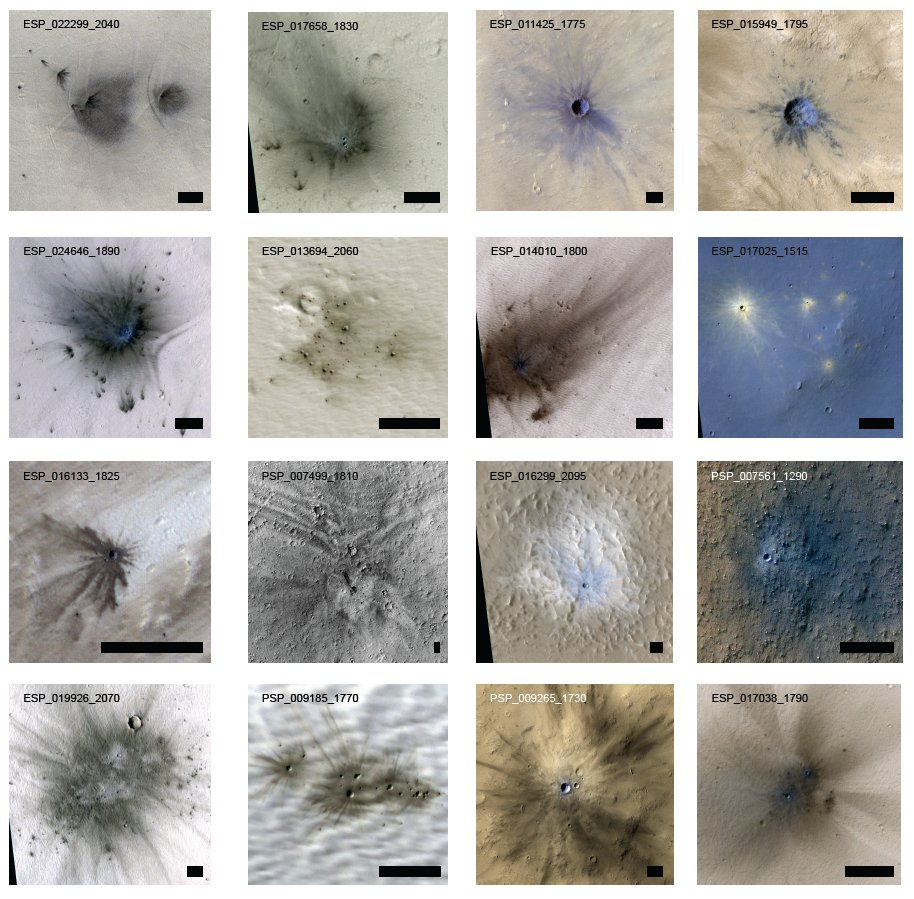
Mars_impact_craterThe Mars Reconnaissance Orbiter, which has been in operation around Mars since March of 2006, has provided ongoing observation of the planet. Because of this, scientists and astronomers have been able to keep track of changes on the surface ever since. This new impact crater, which was formed by a recent meteor impact, is just the latest example.

The image was taken by the Orbiter’s High Resolution Imaging Science Experiment (HiRISE) camera on Nov. 19, 2013. Since that time, NASA scientists have been working to enhance the image and rendering it in false color so the fresh crater appears.The resulting image shows the stunning 30-meter-wide crater with a rayed blast zone and far-flung secondary material surrounding.

Mars_Reconnaissance_OrbiterResearchers used HiRISE to examine this site because the orbiter’s Context Camera had revealed a change in appearance here between observations in July 2010 and May 2012, when the impact was thought to have occurred. After examining the impact site, scientists estimate the impact and resulting explosion threw debris as far as 15 kilometers in distance.

Before-and-after imaging that brackets appearance dates of fresh craters on Mars has indicated that impacts producing craters at least 12.8 feet (3.9 meters) in diameter occur at a rate exceeding 200 per year globally. But most of those are much smaller than this new one, and leave scars are as dramatic in appearance. This latest impact was definitely one for the history books.

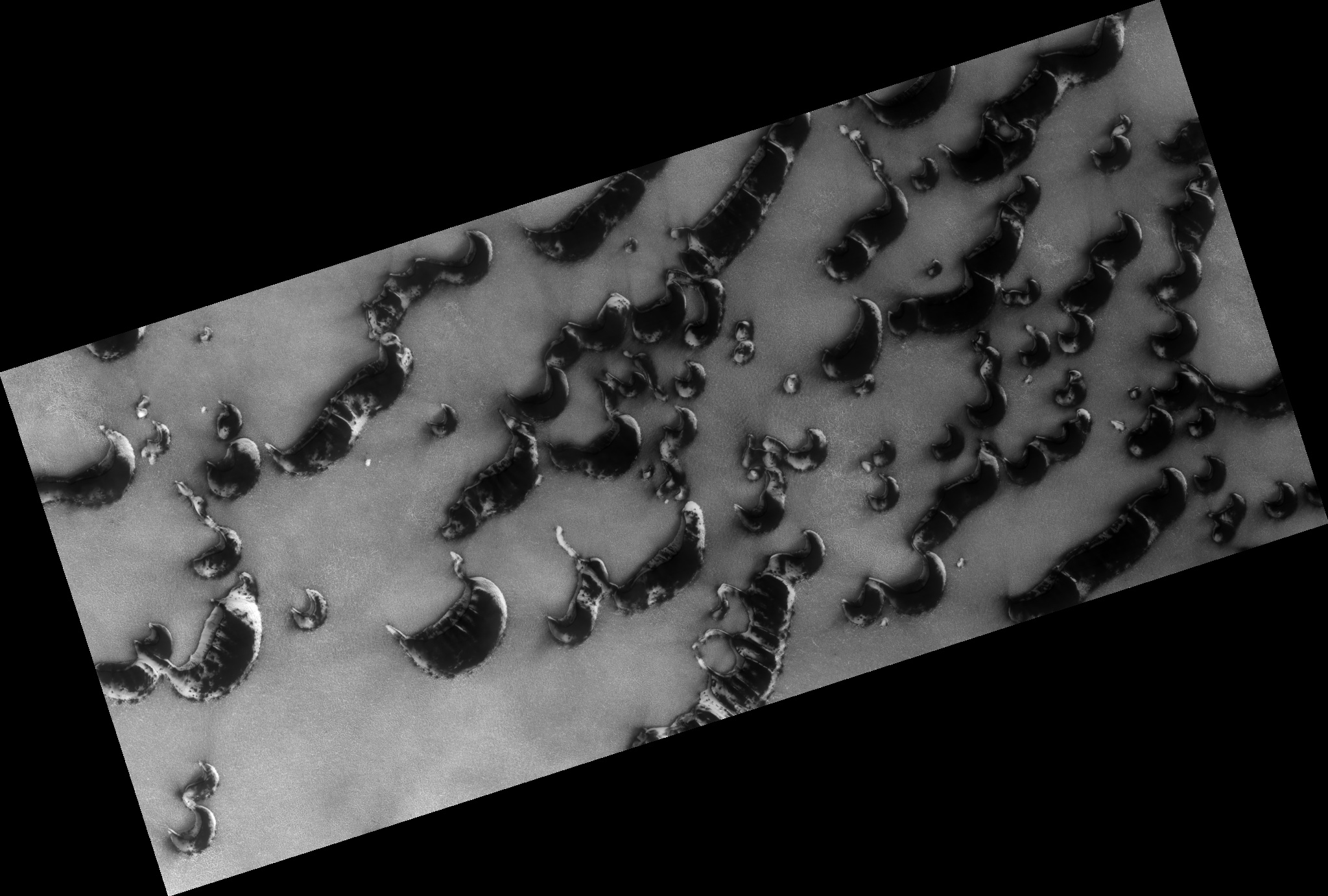
Mars_dunesSpeaking of dramatic, these recent releases from the HiRISE laboratory captured some truly magnificent activity, which included a series of avalanches and defrosting dunes on the surface. Snow, dust and wind are combining to make the incredible images that were captured. The raw images appear in black and white (as the snowy dunes pictured above).

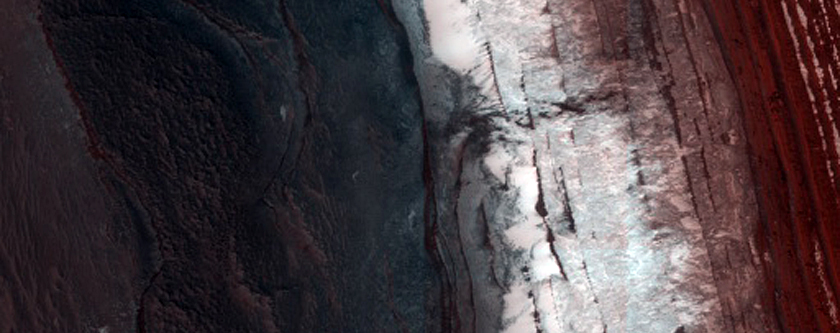
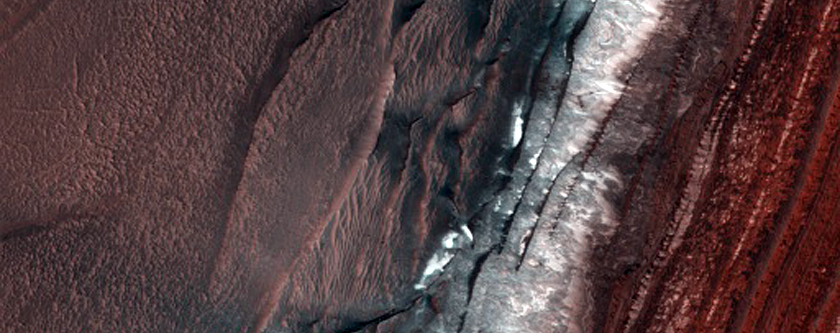
The colorized versions, as show below, indicate the presence of snow, ice and red surface dust. These latest pictures, perhaps more than any previous, illustrate the awe and wonder the Red Planet holds. And as humanity’s contact and involvement with the planet and continues, they remind us that nothing from that world is to be taken for granted.

mars_avalanche mars_avalanche1 mars_avalanche2 mars_avalanche3And as we get closer to 2030, when a manned mission is scheduled to take place – not to mention private missions that aim to put colonists there by 2023 – chance encounters with the surface like this are certain to inspire excitement and anticipation. Right now, these events and surface features are being watched from above or by rovers on the surface.

But someday soon, people will be standing on the surface and looking upon it with their own eyes. Their feet will be crushing into red sand, romping through Martian snow and ice, and standing in the middle of craters and looking up at Olympus Mons. What will they be thinking as they do it? We can only wonder and hope that we’ll be able to share it with them…

News From Space: Mars Needs Money!

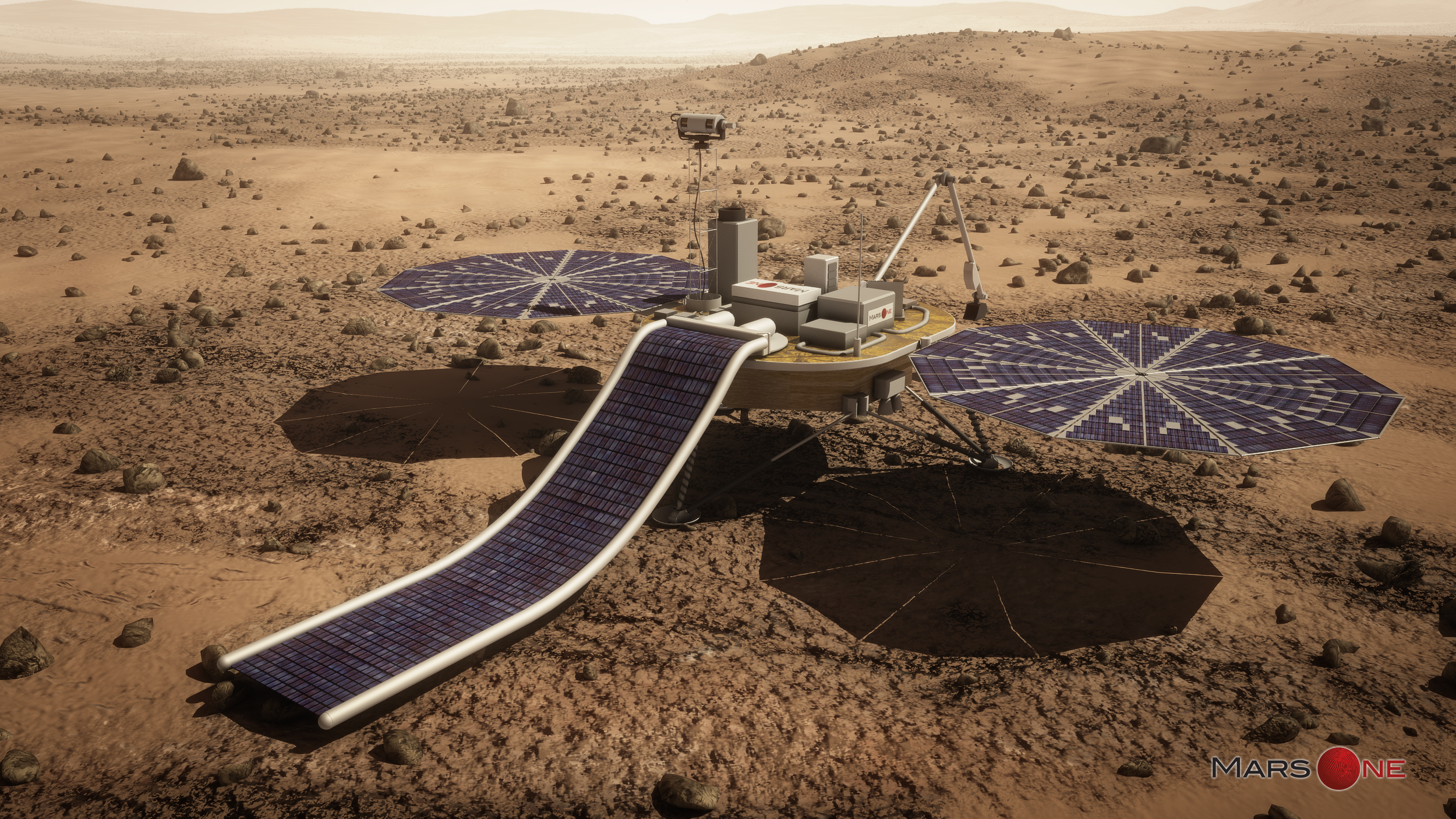
Mars_OneRemember Mars One, the Netherlands-based nonprofit that began seeking recruits for a one-way trip to the Red Planet during the summer of 2012? Well, it turns out the company is looking to take the next step towards its goal of establishing a human settlement on Mars by 2023. Basically, they are looking to raise the funds to get the ball rolling on the eventual manned mission.

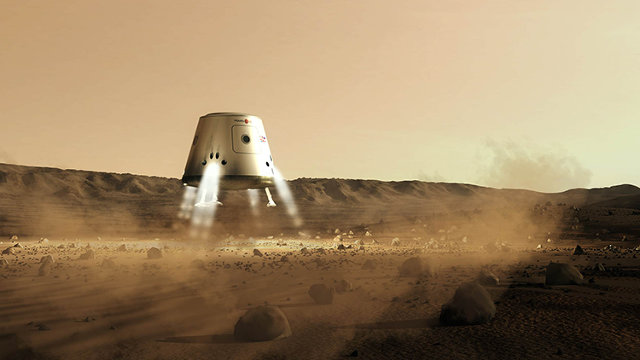
Towards this end, they have started a crowdfunding campaign through Indiegogo – and in partnership with Lockheed Martin – to raise the money for some concept studies, which will test the lander and a satellite that will conduct a demonstration mission in just four years time. The lander is based on Lockheed’s design for the NASA lander successfully used on Mars in 2007 (pictured below).

Mars-One-2018-LanderTheir campaign is seeking to raise $400,000, which will cover the costs of the concept studies, and is a mere drop in the bucket compared to the $6 billion the team estimates will be necessary to get humans to Mars. However, most of that money is expected to come from media broadcasting rights as citizen astronauts are selected and, if all goes as planned, start living on the Martian surface.

As has been stated many times over, Mars One is an evolving idea that seeks to make something historic happen. A future, larger crowdfunding campaign will allow universities to compete to send a full experiment to Mars on the 2018 mission, which will be unmanned. Mars One hopes to send four human colonists to the planet by 2025, selected from a pool of more than 200,000 people who have already applied.

mars_one1And as Hans Lansdorp, CEO of Mars One recently said, this crowdfunding campaign is important to the team to get more people involved. Not only does the project require public interest and participation in order for it to become a reality, Lansdorp and his colleagues also want it to be as international and inclusive as possible:

We really see this as a break with the history of space exploration, and especially Mars exploration, because in this mission anyone can participate in some way… For the U.S., Mars exploration is pretty common. But all of Asia has never sent an experiment to Mars. Now, suddenly we allow anyone, everywhere in the world, to send something to Mars. That’s a complete break with Mars exploration in the past.

Naturally, there are plenty of issues that need to be worked out before anything real can happen, and plenty of naysayers who emphasize the stumbling blocks in sending a manned mission to Mars. These include, but are not restricted to, radiation, microgravity, technological limitations, and the sheer amount of time involved.

mars_one2Despite all that, Lansdorp and the Mars One team remain committed and dedicated to their goal, and have been taking on all challengers with their usual combination of optimism and entrepreneurial spirit. And they firmly believe that given time, all of these hurdles will be negotiable. What’s more, they’ve convinced more than a few critics of the validity of the mission:

If we have some time to talk to people and explain the details of our plan, and as long as they’re commenting on their own field of expertise, I’ve never met someone who could not be convinced that this is possible. It will be very difficult of course–there are thousands of hurdles on the road between now and landing on Mars–but there are no hurdles that we can identify that we cannot take.

As of the penning of this article, the Mars One campaign has been open since December 10th and has raised $209,677 of its $400,000 goal, with 18 more days to go. And there are certainly no shortage of volunteers, as the company is currently processing applications from 150,000 people. So even if it can’t happen by the proposed date, it is clear that they have grabbed the world’s attention.

And in the meantime, enjoy these videos of the proposed Mars One lander design (which will take place in the 2018 demo mission) and the company’s latest promotional video:

Mars One 2018 Lander:


Mars One 2018 Mission:


Sources: fastcoexist.com, theguardian.com, mars-one.com, indiegogo.com

Life on Mars: What it Once Looked Like

mars_oxygenBillions of years ago when the Red Planet was young, it appears to have had a thick atmosphere that was warm enough to support oceans of liquid water, and perhaps even life. Thanks to past and ongoing research conducted by the Spirit, Opportunity and Curiosity rovers, NASA scientists are certain that Mars once boasted conditions that would have supported life.

To dramatize these discoveries, NASA’s Goddard Space Flight Center has created a video representation of what the environment might have looked like billions of years ago. The artist’s concept opens with Mars appearing as a warm, wet place, and then transitioning to the climate that we know today.  As the atmosphere gradually disappears, it changes from the Earthlike blue to the dusty pink and tan hues of Mars today.

As the description reads on NASA Goddard’s Youtube page:

The animation shows how the surface of Mars might have appeared during this ancient clement period, beginning with a flyover of a Martian lake. The artist’s concept is based on evidence that Mars was once very different. Rapidly moving clouds suggest the passage of time, and the shift from a warm and wet to a cold and dry climate is shown as the animation progresses.

By the end, Mars has transformed to the acrid environment of 2013 – all “dusty pink and tan hues”. One day, NASA believes it may be possible to bring the environment back from this fate. Though its a mere theory at this point, terraforming could transform Mars back into a warm, wet, and life-sustaining planet once more. Enjoy the clip!


Source: fastcoexist, svs.gsfc.nasa.gov

News From Space: Luna Rings and Spidersuits!

space_cameraSpace is becoming a very interesting place, thanks to numerous innovations that are looking ahead to the next great leap in exploration. With the Moon and Mars firmly fixed as the intended targets for future manned missions, everything from proposed settlements and construction projects are being plotted, and the requisite tools are being fashioned.

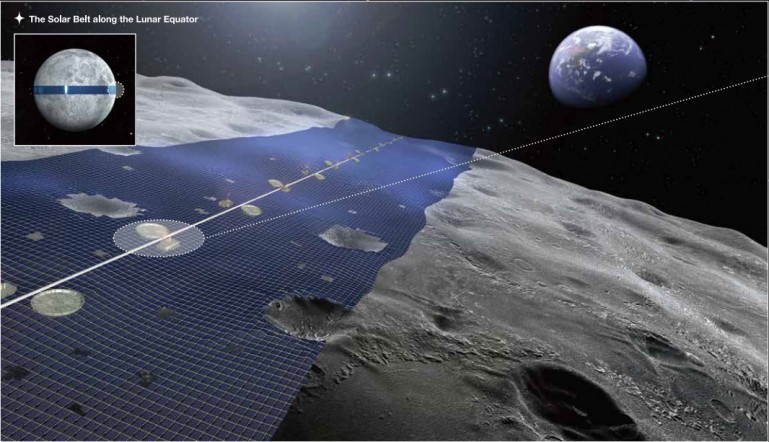
For instance, the Shimizu Corporation (the designers of the Shimizu Mega-City Pyramid), a Japanese construction firm, has proposed a radical idea for bringing solar energy to the world. Taking the concept of space-based solar power a step further, Shimizu has proposed the creation of a “Luna Ring” – an array of solar cells around the Moon’s 11000 km (6800 mile) equator to harvest solar energy and beam it back to Earth.

lunaringThe plan involves using materials derived from lunar soil itself, and then using them to build an array that will measure some 400 km (250 miles) thick. Since the Moon’s equator receives a steady amount of exposure to the Sun, the photovoltaic ring would be able to generate a continuous amount of electricity, which it would then beam down to Earth from the near side of the Moon.

It’s an ambitious idea that calls for assembling machinery transported from Earth and using tele-operated robots to do the actual construction on the Moon’s surface, once it all arrives. The project would involve multiple phases, to be spread out over a period of about thirty years, and which relies on multiple strategies to make it happen.

lunaring-1For example, the firm claims that water – a necessary prerequisite for construction – could be produced by reducing lunar soil with hydrogen imported from Earth. The company also proposes extracting local regolith to fashion “lunar concrete”, and utilizing solar-heat treatment processes to fashion it into bricks, ceramics, and glass fibers.

The remotely-controlled robots would also be responsible for other construction tasks, such as excavating the surrounding landscape, leveling the ground, laying out solar panel-studded concrete, and laying embedded cables that would run from the ring to a series of transmission stations located on the Earth-facing side of the Moon.

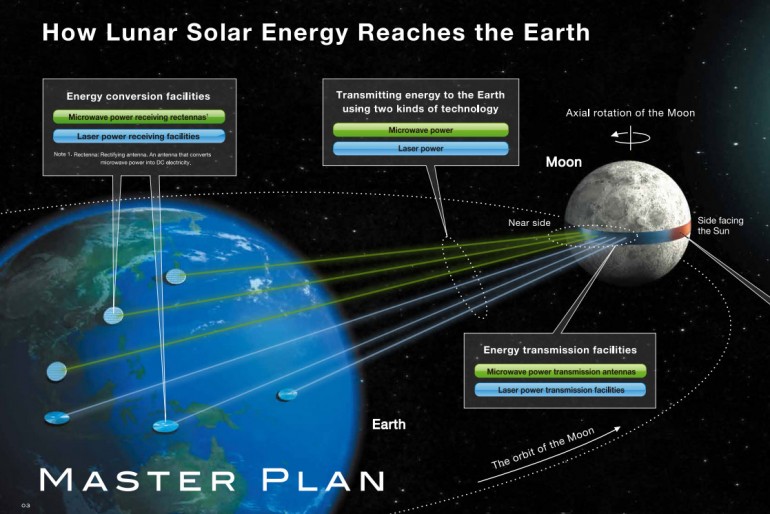
space-based-solarpowerPower could be beamed to the Earth through microwave power transmission antennas, about 20 m (65 ft) in diameter, and a series of high density lasers, both of which would be guided by radio beacons. Microwave power receiving antennas on Earth, located offshore or in areas with little cloud cover, could convert the received microwave power into DC electricity and send it to where it was needed.

The company claims that it’s system could beam up to 13,000 terawatts of power around-the-clock, which is roughly two-thirds of what is used by the world on average per year. With such an array looming in space, and a few satellites circling the planet to pick up the slack, Earth’s energy needs could be met for the foreseable future, and all without a single drop of oil or brick of coal.

The proposed timeline has actual construction beginning as soon as 2035.

biosuitAnd naturally, when manned missions are again mounted into space, the crews will need the proper equipment to live, thrive and survive. And since much of the space suit technology is several decades old, space agencies and private companies are partnering to find new and innovative gear with which to equip the men and women who will brave the dangers of space and planetary exploration.

Consider the Biosuit, which is a prime example of a next-generation technology designed to tackle the challenges of manned missions to Mars. Created by Dava Newman, an MIT aerospace engineering professor, this Spiderman-like suit is a sleeker, lighter alternative to the standard EVA suits that weigh approximately 135 kilograms (300 pounds).

biosuit_dava_newmanFor over a decade now, Newman has been working on a suit that is specifically designed for Mars exploration. At this year’s TEDWomen event in San Francisco, she showcased her concept and demonstrated how its ergonomic design will allow astronauts to explore the difficult terrain of the Red Planet without tripping over the bulk they carry with the current EVA suits.

The reason the suit is sleek is because it’s pressurized close to the skin, which is possible thanks to tension lines in the suit. These are coincidentally what give it it’s Spiderman-like appearance, contributing to its aesthetic appeal as well. These lines are specifically designed to flex as the astronauts ends their arms or knees, thus replacing hard panels with soft, tensile fabric.

biosuit1Active materials, such as nickel-titanium shape-memory alloys, allow the nylon and spandex suit to be shrink-wrapped around the skin even tighter. This is especially important, in that it gets closer Newman to her goal of designing a suit that can contain 30% of the atmosphere’s pressure – the level necessary to keep someone alive in space.

Another benefit of the BioSuit is its resiliency. If it gets punctured, an astronaut can fix it with a new type of space-grade Ace Bandage. And perhaps most importantly, traditional suits can only be fitted to people 5′ 5″ and taller, essentially eliminating short women and men from the astronaut program. The BioSuit, on the other hand, can be built for smaller people, making things more inclusive in the future.

Mars_simulationNewman is designing the suit for space, but she also has some Earth-bound uses in mind . Thanks to evidence that showcases the benefits of compression to the muscles and cardiovascular system, the technology behind the Biosuit could be used to increase athletic performance or even help boost mobility for people with cerebral palsy. As Newman herself put it:

We’ll probably send a dozen or so people to Mars in my lifetime. I hope I see it. But imagine if we could help kids with CP just move around a little bit better.

With proper funding, Newman believes she could complete the suit design in two to three years. It would be a boon to NASA, as it appears to be significantly cheaper to make than traditional spacesuits. Funding isn’t in place yet, but Newman still hopeful that the BioSuit will be ready for the first human mission to Mars, which are slated for sometime in 2030.

In the meantime, enjoy this video of the TEDWomen talk featuring Newman and her Biosuit demonstration:

Sources: gizmag, fastcoexist, blog.ted

Looking Forward: Science Stories to Watch for in 2014

BrightFutureThe year of 2013 was a rather big one in terms of technological developments, be they in the field of biomedicine, space exploration, computing, particle physics, or robotics technology. Now that the New Year is in full swing, there are plenty of predictions as to what the next twelve months will bring. As they say, nothing ever occurs in a vacuum, and each new step in the long chain known as “progress” is built upon those that came before.

And with so many innovations and breakthroughs behind us, it will be exciting to see what lies ahead of us for the year of 2014. The following is a list containing many such predictions, listed in alphabetical order:

Beginning of Human Trials for Cancer Drug:
A big story that went largely unreported in 2013 came out of the Stanford School of Medicine, where researchers announced a promising strategy in developing a vaccine to combat cancer. Such a goal has been dreamed about for years, using the immune system’s killer T-cells to attack cancerous cells. The only roadblock to this strategy has been that cancer cells use a molecule known as CD47 to send a signal that fools T-cells, making them think that the cancer cells are benign.

pink-ribbonHowever, researchers at Stanford have demonstrated that the introduction of an “Anti-CD47 antibody” can intercept this signal, allowing T-cells and macrophages to identify and kill cancer cells. Stanford researchers plan to start human trials of this potential new cancer therapy in 2014, with the hope that it would be commercially available in a few years time. A great hope with this new macrophage therapy is that it will, in a sense, create a personalized vaccination against a patient’s particular form of cancer.

Combined with HIV vaccinations that have been shown not only to block the acquisition of the virus, but even kill it, 2014 may prove to be the year that the ongoing war against two of the deadliest diseases in the world finally began to be won.

Close Call for Mars:
A comet discovery back in 2013 created a brief stir when researchers noted that the comet in question – C/2013 A1 Siding Springs – would make a very close passage of the planet Mars on October 19th, 2014. Some even suspected it might impact the surface, creating all kinds of havoc for the world’s small fleet or orbiting satellites and ground-based rovers.

Mars_A1_Latest_2014Though refinements from subsequent observations have effectively ruled that out, the comet will still pass by Mars at a close 41,300 kilometers, just outside the orbit of its outer moon of Deimos. Ground-based observers will get to watch the magnitude comet close in on Mars through October, as will the orbiters and rovers on and above the Martian surface.

Deployment of the First Solid-State Laser:
The US Navy has been working diligently to create the next-generation of weapons and deploy them to the front lines. In addition to sub-hunting robots and autonomous aerial drones, they have also been working towards the creation of some serious ship-based firepower. This has included electrically-powered artillery guns (aka. rail guns); and just as impressively, laser guns!

Navy_LAWS_laser_demonstrator_610x406Sometime in 2014, the US Navy expects to see the USS Ponce, with its single solid-state laser weapon, to be deployed to the Persian Gulf as part of an “at-sea demonstration”. Although they have been tight-lipped on the capabilities of this particular directed-energy weapon,they have indicated that its intended purpose is as a countermeasure against threats – including aerial drones and fast-moving small boats.

Discovery of Dark Matter:
For years, scientists have suspected that they are closing in on the discovery of Dark Matter. Since it was proposed in the 1930s, finding this strange mass – that makes up the bulk of the universe alongside “Dark Energy” – has been a top priority for astrophysicists. And 2014 may just be the year that the Large Underground Xenon experiment (LUX), located near the town of Lead in South Dakota, finally detects it.

LUXLocated deep underground to prevent interference from cosmic rays, the LUX experiment monitors Weakly Interacting Massive Particles (WIMPs) as they interact with 370 kilograms of super-cooled liquid Xenon. LUX is due to start another 300 day test run in 2014, and the experiment will add another piece to the puzzle posed by dark matter to modern cosmology. If all goes well, conclusive proof as to the existence of this invisible, mysterious mass may finally be found!

ESA’s Rosetta Makes First Comet Landing:
This year, after over a decade of planning, the European Space Agency’s Rosetta robotic spacecraft will rendezvous with Comet 67P/Churyumov-Gerasimenko. This will begin on January 20th, when the ESA will hail the R0setta and “awaken” its systems from their slumber. By August, the two will meet, in what promises to be the cosmic encounter of the year. After examining the comet in detail, Rosetta will then dispatch its Philae lander, equipped complete with harpoons and ice screws to make the first ever landing on a comet.

Rosetta_and_Philae_at_comet_node_full_imageFirst Flight of Falcon Heavy:
2014 will be a busy year for SpaceX, and is expected to be conducting more satellite deployments for customers and resupply missions to the International Space Station in the coming year. They’ll also be moving ahead with tests of their crew-rated version of the Dragon capsule in 2014. But one of the most interesting missions to watch for is the demo flight of the Falcon 9 Heavy, which is slated to launch out of Vandenberg Air Force Base by the end of 2014.

This historic flight will mark the beginning in a new era of commercial space exploration and private space travel. It will also see Elon Musk’s (founder and CEO of Space X, Tesla Motors and PayPal) dream of affordable space missions coming one step closer to fruition. As for what this will make possible, well… the list is endless.
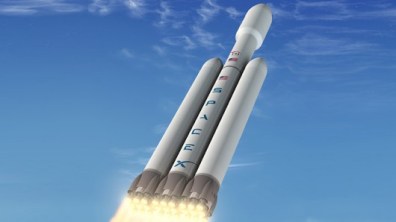
spaceX-falcon9Everything from Space Elevators and O’Neil space habitats to asteroid mining, missions to the Moon, Mars and beyond. And 2014 may prove to be the year that it all begins in earnest!

First Flight of the Orion:
In September of this coming year, NASA is planning on making the first launch of its new Orion Multi-Purpose Crew Vehicle. This will be a momentous event since it constitutes the first step in replacing NASA’s capability to launch crews into space. Ever since the cancellation of their Space Shuttle Program in 2011, NASA has been dependent on other space agencies (most notably the Russian Federal Space Agency) to launch its personnel, satellites and supplies into space.

orion_arrays1The test flight, which will be known as Exploration Flight Test 1 (EFT-1), will be a  short uncrewed flight that tests the capsule during reentry after two orbits. In the long run, this test will determine if the first lunar orbital mission using an Orion MPCV can occur by the end of the decade. For as we all know, NASA has some BIG PLANS for the Moon, most of which revolve around creating a settlement there.

Gaia Begins Mapping the Milky Way:
Launched on from the Kourou Space Center in French Guiana on December 19thof last year, the European Space Agency’s Gaia space observatory will begin its historic astrometry mission this year. Relying on an advanced array of instruments to conduct spectrophotometric measurements, Gaia will provide detailed physical properties of each star observed, characterising their luminosity, effective temperature, gravity and elemental composition.

Gaia_galaxyThis will effectively create the most accurate map yet constructed of our Milky Way Galaxy, but it is also anticipated that many exciting new discoveries will occur due to spin-offs from this mission. This will include the discovery of new exoplanets, asteroids, comets and much more. Soon, the mysteries of deep space won’t seem so mysterious any more. But don’t expect it to get any less tantalizing!

International Climate Summit in New York:
While it still remains a hotly contested partisan issue, the scientific consensus is clear: Climate Change is real and is getting worse. In addition to environmental organizations and agencies, non-partisan entities, from insurance companies to the U.S. Navy, are busy preparing for rising sea levels and other changes. In September 2014, the United Nations will hold another a Climate Summit to discuss what can be one.

United-Nations_HQThis time around, the delegates from hundreds of nations will converge on the UN Headquarters in New York City. This comes one year before the UN is looking to conclude its Framework Convention on Climate Change, and the New York summit will likely herald more calls to action. Though it’ll be worth watching and generate plenty of news stories, expect many of the biggest climate offenders worldwide to ignore calls for action.

MAVEN and MOM reach Mars:
2014 will be a red-letter year for those studying the Red Planet, mainly because it will be during this year that two operations are slated to begin. These included the Indian Space Agency’s Mars Orbiter Mission (MOM, aka. Mangalyaan-1) and NASA’ Mars Atmosphere and Volatile EvolutioN (MAVEN) mission, which are due to arrive just two days apart – on September 24th and 22nd respectively.
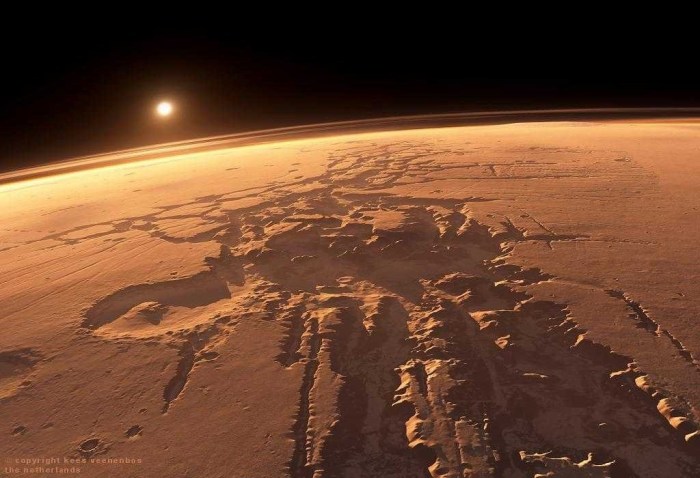
mars_lifeBoth orbiters will be tasked with studying Mars’ atmosphere and determining what atmospheric conditions looked like billions of years ago, and what happened to turn the atmosphere into the thin, depleted layer it is today. Combined with the Curiosity and Opportunity rovers, ESA’s Mars Express,  NASA’s Odyssey spacecraft and the Mars Reconnaissance Orbiter, they will help to unlock the secrets of the Red Planet.

Unmanned Aircraft Testing:
A lot of the action for the year ahead is in the area of unmanned aircraft, building on the accomplishments in recent years on the drone front. For instance, the US Navy is expected to continue running trials with the X-47B, the unmanned technology demonstrator aircraft that is expected to become the template for autonomous aerial vehicles down the road.

X-47BThroughout 2013, the Navy conducted several tests with the X-47B, as part of its ongoing UCLASS (Unmanned Carrier Launched Airborne Surveillance and Strike) aircraft program. Specifically, they demonstrated that the X-47B was capable of making carrier-based take offs and landings. By mid 2014, it is expected that they will have made more key advances, even though the program is likely to take another decade before it is fully realizable.

Virgin Galactic Takes Off:
And last, but not least, 2014 is the year that space tourism is expected to take off (no pun intended!). After many years of research, development and testing, Virgin Galactic’s SpaceShipTwo may finally make its inaugural flights, flying out of the Mohave Spaceport and bringing tourists on an exciting (and expensive) ride into the upper atmosphere.
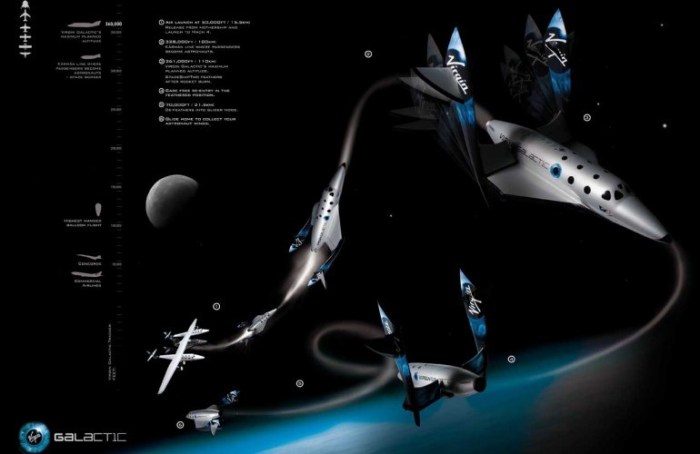
spaceshiptwo-2nd-flight-2In late 2013, SpaceShipTwo and passed a key milestone test flight when its powered rocket engine was test fired for an extended period of time and it achieved speeds and altitudes in excess of anything it had achieved before. Having conducted several successful glide and feathered-wing test flights already, Virgin Galactic is confident that the craft has what it takes to ferry passengers into low-orbit and bring them home safely.

On its inaugural flights, SpaceShipTwo will carry two pilots and six passengers, with seats going for $250,000 a pop. If all goes well, 2014 will be remembered as the year that low-orbit space tourism officially began!

Yes, 2014 promises to be an exciting year. And I look forward to chronicling and documenting it as much as possible from this humble little blog. I hope you will all join me on the journey!

Sources: Universetoday, (2), med.standford.edu, news.cnet, listosaur, sci.esa.int

News from Mars: Spirit Rover’s Tenth Anniversary

opportunityTwo days ago, another major milestone passed for one of NASA’s famed rovers. But this time around, it wasn’t the spotlight-hogging Curiosity or the die-hard Opportunity rover that was the subject of interest. It was the Spirit rover, the other half of NASA’s now legendary Mars Exploration Rovers (MER) that landed on the Red Planet over a decade ago.

Yes, January 3rd of this year marks the 10th anniversary since the safe landing of NASA’s renowned Spirit rover on the plains of Mars, making her the oldest rover in operation on the planet’s service. Opportunity, her twin sister, landed on the opposite side of the Mars three weeks later – on Jan. 24, 2004. The goal was to “follow the water” as a potential enabler for past Martian microbes if they ever existed.

mars_roverTogether, the long-lived, golf cart sized robots proved that early Mars was warm and wet, billions of years ago – a key finding in the search for habitats conducive to life beyond Earth. It was these findings that have since been followed up on by Curiosity rover in its ongoing search for water and organic particles in the soil, and MAVEN’s planned surveys of the Martian atmosphere.

And it was a decade ago that the famous robot survived the 6 minute plunge through the thin Martian atmosphere, which involved scorching atmospheric heating, and then bounced some two dozen times inside cushioning airbags before coming to a stop. It then gradually rolled to a stop inside 161 km (100 mile) wide Gusev Crater. This landing was known as the “6 minutes of Terror”.

spiritrover_landerThe three petaled landing pad then opened and Spirit was deployed in what was a milestone event. This deployment will be forever remembered in the annuls of history, mainly because of the groundbreaking scientific discoveries that ensued, not to mention the unbelievable longevity of the twins. And while Spirit did not make it past 2010 – effectively remaining in service for six years – she accomplished quite a bit in that time.

Before they were launched atop a series of Delta II rockets in the summer of 2003 from Cape Canaveral, the dynamic, solar powered robo duo were expected to last for only 90 Martian days (Sols). NASA engineers firmly believed that dust accumulation on the life-giving solar panels, an engineering issue or the extremely harsh Martian environment would terminate them before long.

SpiritAndOpportunity_ByTheNumbers1-580x423But in reality, both robots enormously exceeded expectations and accumulated a vast bonus time of exploration and discovery in numerous extended mission phases. In part, the harsh Martian winds occasionally cleaned their solar panels to give them both a new lease on life. And more importantly, the rovers’ components just kept working miraculously.

And she kept working faithfully for six years until communications officially ceased in 2010. Altogether, Spirit drove 7.73 kilometers (4.8 miles) across the Martian surface – about 12 times more than the original goal set for the mission – and transmitted over 128,000 images. And shortly after landing, Spirit scaled Husband Hill and found evidence for the flow of liquid water at the Hillary outcrop.

Columbia_Hills_from_MER-A_landing_site_PIA05200_br2This was especially impressive, seeing as how the rovers were not designed to climb hills. But eventually, she managed to scale the 30 degree inclines and collect a series of rock samples using her Rock Abrasion Tool (RAT). The samples were then inspected using her on-board spectrometers and a microscopic imager. Eventually she drove back down the hill and made even greater scientific discoveries.

These occurred in 2007 in an area known as “Home Plate”, where she unexpectedly got mired thanks to an ancient volcanic feature named ‘Home Plate’ that prevented the solar arrays from generating. In the process, her right front wheel churned up a trench of bright Martian soil that exposed a patch of nearly pure silica, which was formed in a watery hot spring or volcanic environment.

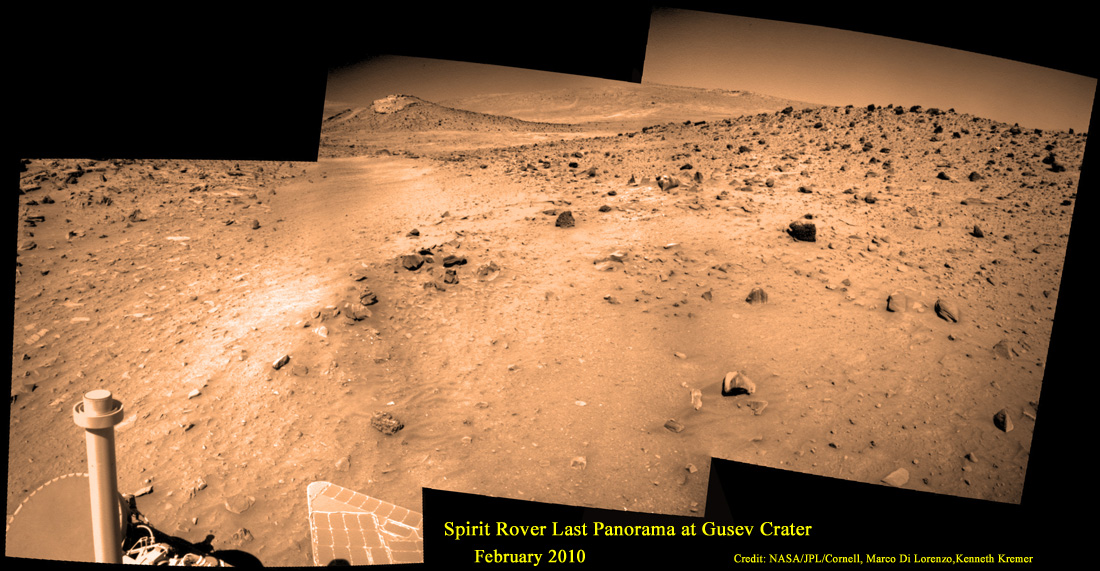
Spirit-Sol-2175c-_Ken-KremerThree years later, in February of 2010, Spirit once again got mired and took her last panorama (pictured above), which was stitched together from raw images by Marco Di Lorenzo and Ken Kremer. After several attempts to save her, NASA eventually declared Spirit dead in the water, her last resting place being the same as where she made her landing – the Gustev Crater in the Aeolis quadrangle.

At one time, many billions of years ago, the Ma’adim Vallis channel – a natural river-like depression running from the crater – probably carried liquid water and/or ice into Gutev. NASA scientists believe this has left sediments in the crater that could be up to 915 meters (3000 feet) thick. Spirit all but confirmed this when her tire turned up a patch of silica in 07, thus providing the first conclusive evidence of this theory.

Mosaic image taken on Jan. 4, 2004 after deployment

The rovers’ principal investigator, Steve Squyres of Cornell University, Ithaca, N.Y., described some of the key findings in a NASA statement, starting with what Spirit found after driving from the crater floor where it landed into the Columbia hills to the east:

In the Columbia Hills, we discovered compelling evidence of an ancient Mars that was a hot, wet, violent place, with volcanic explosions, hydrothermal activity, steam vents — nothing like Mars today.

At Opportunity’s landing site, we found evidence of an early Mars that had acidic groundwater that sometimes reached the surface and evaporated away, leaving salts behind. It was an environment with liquid water, but very different from the environment that Spirit told us about.

When Opportunity got to the rim of Endeavour Crater, we began a whole new mission. We found gypsum veins and a rich concentration of clay minerals. The clay minerals tell us about water chemistry that was neutral, instead of acidic — more favorable for microbial life, if any ever began on Mars.

Because of the rovers’ longevity, we essentially got four different landing sites for the price of two.

maven_orbitMeanwhile, NASA’s new Curiosity rover just celebrated 500 Sols on Mars and is speeding towards Mount Sharp from inside Gale Crater – which is about the same size as Gusev crater. And a pair of newly launched orbiters are streaking towards the Red Planet as we speak – NASA’s Mars Atmosphere and Volatile EvolutioN (MAVEN) and India’s Mars Orbiter Mission (MOM).

In short, we are not finished with Mars yet. And the past, ongoing and future efforts of our many rovers, orbiters and (someday) astronauts are likely to keep providing us with a slew of new discoveries and revelations about our celestial neighbor.

Source: universetoday.com

Cassini, MESSENGER, and MOM: A Space Probe Odyssey

Cassini_Saturn_Orbit_InsertionIt had has been a big month in the field of space probes and satellites. Whether they are in orbit around Mercury, on their way to Mars, or floating in the outer Solar System, there’s been no shortage of news and inspirational footage to be had. And it is a testament to the age we live in, where space news is accessible and can instantly be shared with millions of people around the world.

First up, there’s the recent release of Cassini’s magnificent image of Saturn’s rings shining in all their glory. Back in July, Cassini got a good look back at Earth from about 1.5 billion kilometers (932 million miles) away. Known as
“The Day The Earth Smiled”, NASA has spent the past few months cobbling together this picture from numerous shots taken during Cassini’s circuitous orbit around Saturn.

cassini-jupiter-annotatedCassini has always been able to take impressive pictures in Earth’s general direction, but this picture was special since it used the enormous bulk of Saturn to block the usually confounding brightness of the Sun. Cassini, which was launched to survey the outer planets in 1997, captured an absolutely incredible image of both the Earth as a pale blue dot, and of Saturn as a striking, luminous apparition.

As part of NASA’s latest awareness campaign, which tried to get everyday citizens to smile at the sky for the first posed interplanetary photo most of us have ever experienced, the photo captured the halo effect that makes our sixth planet look truly breathtaking. In the annotated version (pictured above), you can also see Venus, Mars, and some of Saturn’s moons.


Next up, there’s the MESSENGER probe, which managed to capture these impressive new videos of Mercury’s surface. As part of the NASA Advisory Council (NAC) ride-along imaging campaign, these videos were captured using the Mercury Dual Imaging System (MDIS). Even though the original high-res images were captured four seconds apart, these videos have been sped up to a rate of 15 images per second.


The views in each video are around 144-178 km (90-110 miles) across. The large crater visible in the beginning of the second video is the 191-km (118-mile) wide Schubert basin. In related news, there are new maps of Mercury available on the US Geological Survey website! Thanks to MESSENGER we now have the entirety of the first planet from the Sun imaged and mapped.

MESSENGER launched from Cape Canaveral Air Force Station back in August of 2004 and established orbit around Mercury on March 18th, 2011. It was the first man-made spacecraft ever to do so, and has provided the most comprehensive mapping of Mercury to date, not to mention evidence of ice, organic molecules, and detailed conditions on the surface.

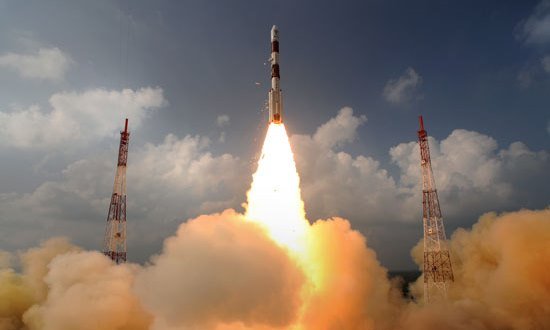
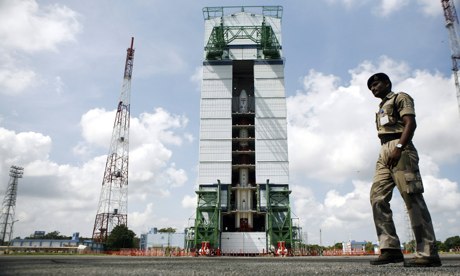
India_Mars_Orbiter1And last, but not least, there was the recent launch of the Indian Space Research Organization’s (ISRO) new Mars Orbiter Mission (aka. MOM). The launch took place on Tuesday, November 5th from the Indian space port located on a small island in the Bay of Bengal. As the nation’s first attempt to reach the Red Planet, the aim of the $70 million mission goes beyond mere research.

In addition to gathering information that might indicate if life has ever existed or could exist on Mars, the mission is also meant to showcase India’s growing prowess in the field of space and to jump ahead of its regional rival (China) in the big interplanetary march. As Pallava Bagla, one of India’s best known science commentators, put it:

In the last century the space race meant the US against the Soviets. In the 21st century it means India against China. There is a lot of national pride involved in this.

India Mars probeIn addition, there has been quite a bit of speculation that the missionw as designed to stimulate national pride in the midst of an ongoing economic crisis. In recent years, a plunging currency, ailing economy and the state’s seeming inability to deliver basic services have led many Indians to question whether their nation is quite as close to becoming a global superpower as it seemed in the last decade.

MOM is expected to arrive in the vicinity of Mars on September 24th, 2014 where it will assume an elliptical orbit around the planet and begin conducting atmospheric surveys. If all continues to goes well, India will the elite club of only four nations that have launched probes which successfully investigated the Red Planet from orbit or the surface – following the Soviet Union, the United States and the European Space Agency (ESA).

India_Mars_Orbiter2MOM was also the first of two new Mars orbiter science probes that left Earth and began heading for Mars this November. The second was NASA’s $671 million MAVEN orbiter, which launched on November 18th atop an Atlas V rocket from Cape Canaveral in Florida. MAVEN is slated to arrive just two days before MOM, and research efforts will be coordinated between the two agencies.

Much like MAVEN, MOM’s goal is to study the Martian atmosphere , unlock the mysteries of its current state and determine how, why and when the atmosphere and liquid water were lost – and how this transformed Mars climate into its cold, desiccated state it is in today. In addition to aiding our scientific understanding of the world, it may help us to transform the planet into a liveable environment once again.

For many people, these developments are an indication of things to come. If humanity ever intends to become an interplanetary species, an expanding knowledge of our Solar System is an absolute prerequisite. And in many respects, making other planets our home may be the only way we can survive as a species, given our current rate of population growth and consumption.

Sources: extremetech.com, nasa.gov, universetoday.com, planetarynames.wr.usgs.gov, theguardian.com, www.isro.org

Robot Snakes to Explore Mars?

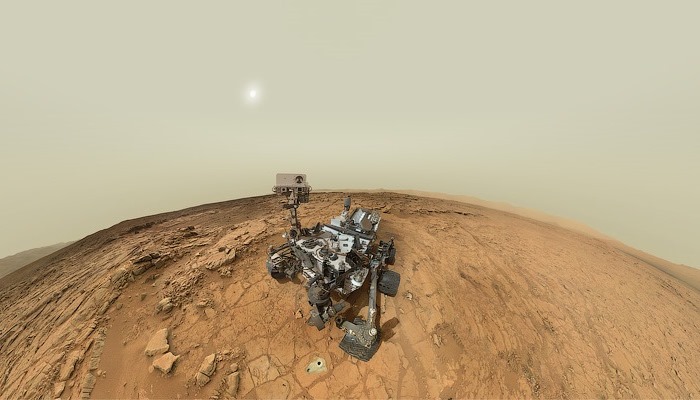
curiosity_sol-177-1The recent discoveries and accomplishments of the Curiosity and Opportunity rovers have been very impressive. But for some, these successes have overshadowed the limitations that are part of the rover designs. Yes, despite their complexity and longevity (as evidenced by Opportunity’s ten years of service) the robot rovers really aren’t that fast or agile, and are limited when it comes to what they can access.

Case in point, Curiosity is currently on a year-long trek that is taking it from the Glenelg rocky outcropping to Mount Sharp, which is just over 8 km (5 miles) away. And where crevices, holes and uneven terrain are involved, they’ve been known to have trouble. This was demonstrated with the Spirit Rover, which was lost on May 1st, 2009 after getting stuck in soft soil.

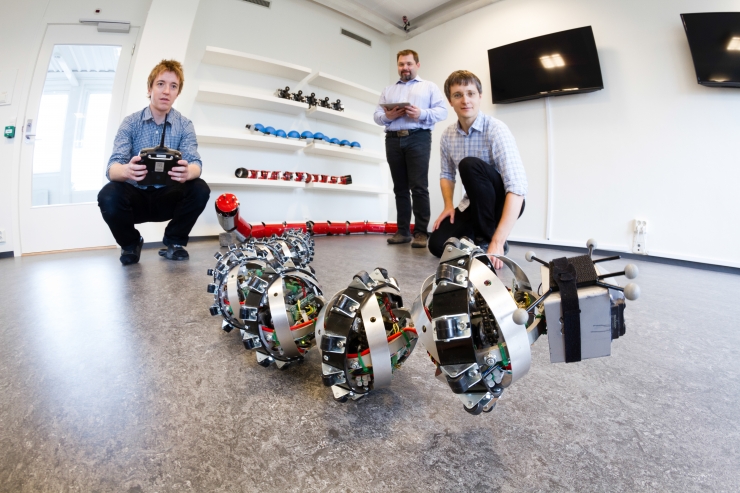
robotsnakesAs a result, the European Space Agency is planning on a sending a different type of rover to Mars in the future. Basically, their plan calls for the use of robot snakes. This plan is the result of collaborative study between the ESA and SINTEF – the largest independent research organization in Scandinavia – that sought to create a rover that would be able to navigate over long distances and get into places that were inaccessible to other rovers.

They concluded that a snake-like robot design would open up all kinds of possibilities, and be able to collect samples from areas that other rovers simply couldn’t get into. In addition to being able to move across challenging surfaces, these snake-bots would also be able to tunnel underground and get at soil and rock samples that are inaccessible to a land rover. Curiosity, which despite its advanced drill, is limited in what it can examine from Mars’ interior.

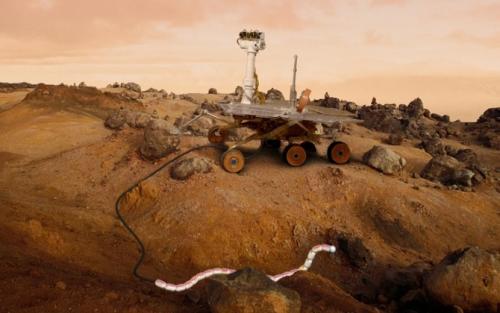
robotsnakes1The researchers envisage using the rover to navigate over large distances, after which the snake robot can detach itself and crawl into tight, inaccessible areas. A cable will connect the robot to the vehicle and will supply power and tractive power – i.e. it can be winched back to the rover. Communication between the pair will be also be facilitated via signals transmitted down the cable.

According to Pål Liljebäck, one of the researchers developing the snake robot at SINTEF, the challenge presents several opportunities for creative solutions:

We are looking at several alternatives to enable a rover and a robot to work together. Since the rover has a powerful energy source, it can provide the snake robot with power through a cable extending between the rover and the robot. If the robot had to use its own batteries, it would run out of power and we would lose it. One option is to make the robot into one of the vehicle’s arms, with the ability to disconnect and reconnect itself, so that it can be lowered to the ground, where it can crawl about independently.

An additional benefit of this rover-snake collaboration is that in the event that the rover gets stuck, the snake can be deployed to dig it out. Alternately, it could act as an anchor by coiling itself about a rock while the rover using the cable as a winch to pull itself free.

robotsnake2Liljebäck and his colleague, Aksel Transeth, indicate that SINTEF’s Department of Applied Cybernetics has been working closely with the Norwegian University of Science and Technology’s (NTNU) Department of Engineering Cybernetics for many years. However, it was only recently that these efforts have managed to bear fruit in the form or their robot snake-rover design, which they hope will trigger a long-term partnership with the ESA.

In addition to researching rover design, Transeth, Liljebäck and other researchers working with the ESA are looking for ways to bring samples from Mars back to Earth. At present, soil and other materials taken from Mars are analyzed on board the rover itself, and the results communicated back to Earth. If these samples could be physically transported home, they could be studied for years to come, and yield much more fascinating information.

And be sure to enjoy this video of the robot snake in action:


Sources: dvice.com, sintef.no, phys.org,

The researchers are busy working on a feasibility study assigned to them by the ESA. The ESA and the researchers believe that by combining a rover that can navigate over large distances with a snake robot that can crawl along the ground and can get into inaccessible places, so many more possibilities could be opened up.