2013, As Imagined By 1988

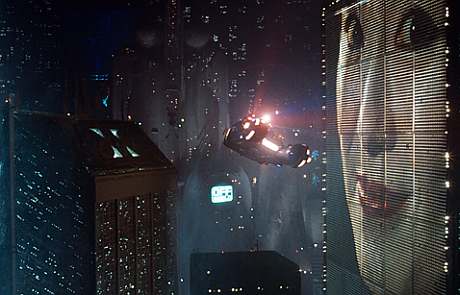
bladerunnerTwenty-five years ago, Los Angeles magazine envisioned what the world would look like in the current decade. And unlike Blade Runner, they avoided the cool but standard science fiction allegories – like massive billboards, flying cars and sentient robots – and went straight for the things that seemed entirely possible by contemporary standards.

The cover story of the magazine’s April 3, 1988 edition showed a futuristic downtown L.A. crisscrossed with electrically charged, multi-tiered freeways permeated by self-driving cars. The article itself then imagined a day in the life of the fictional Morrow family of the L.A. suburb Granada Hills, as “profiled” by the magazine in 2013 by science fiction writer Nicole Yorkin.

LAtimes_2013aIronically, the magazine did not envision that it would one day go out of business, or that print media would one day be lurching towards extinction. Nevertheless, the fictional article and the world it detailed were interesting reading. Little wonder then why, earlier this month, the LA Times along with an engineering class at USC, revisited the archives to assess what it predicted correctly versus incorrectly.

Together, pro­fess­or Jerry Lock­en­our and his class made a list of the hits and misses, and what they found paints a very interesting picture of how we predict the future and how its realization so often differs from what we expect. Of the major predictions to be found in LA of the 2013, as well as in the lives of the Morrow family (get it?), here is what they got right:

Smart-Houses:
smart-house_vCe6I_25016In the article, the Morrows are said to begin every morning when their “Smart House” automatically turns on. This consists of all the appliances activating and preparing them breakfast, and no doubt turning on all the environmental controls and opening the shades to get the temperature and ambient lighting just right.

While this isn’t the norm for the American family yet, the past few years have proved a turning point for home devices hooking up with the Internet, to become more programmable and serve our daily needs. And plans are well under way to find a means of networking them all together so they function as one “smart” unit.

Self-Driving Cars:

chevy_env_croppedThe writers of the article predicted that by 2013, cars would come standard with computers that control most of the settings, along with GPS systems for navigation. They also predict self-driving cars, which Google and Chevy are busy working on. In addition to using clean, alternative energy sources, these cars are expected to be able t0 self-drive, much in the same way a pilot puts their plane on auto-pilot. Drivers will also be able to summon the cars to their location, connect wirelessly to the internet, and download apps and updates to keep their software current.

But of course, they got a few things wrong as well. Here they are, the blots on their predictive record:

Homeprinted newspapers:
news_appThe article also predicts that each morning the Morrows would begin their day with a freshly printed newspaper, as rendered by their laser-jet printer. These would be tailor-made, automatically selecting the latest news feeds that would be of most interest to them. What this failed to anticipate was the rise in e-media and the decline of printed media, though hardly anyone would fault them for this. While news has certainly gotten more personal, the use of tablets, ereaders and smartphones is the way the majority of people now read their selected news.

Robot servants and pets:
kenshiro_smallIn what must have seemed like a realistic prediction, but which now comes across as a sci-fi cliche, the Morrows’ home was also supposed to come equipped with a robotic servant that had a southern accent. The family’s son was also greeted every morning by a robot dog that would come to play with him. While we are certainly not there yet, the concept of anthropomorphic robot assistants is becoming more real every day. Consider, for example, the Kenshiro robot (pictured at right), the 3D printed android, or the proposed Roboy, the Swiss-made robotic child. With all of these in the works, a robotic servant or pet doesn’t seem so far-fetched does it?

Summary:
Between these four major predictions and which came to be true, we can see that the future is not such an easy thing to predict. In addition to always being in motion, and subject to acceleration, slowing and sudden changes, the size and shape of it can be very difficult to pin down. No one can say for sure what will be realized and when, or if any of the things we currently take for granted will even be here tomorrow.

Alpha Moon Base at http://www.smallartworks.ca

For instance, during the 1960’s and 70’s, it was common practice for futurists and scientists to anticipate that the space race, which had culminated with humans setting foot on the moon in 1969, would continue into the future, and that humanity would be seeing manned outposts on the moon by and commercial space flight by 1999. No one at the time could foresee that a more restrictive budget environment, plus numerous disasters and a thawing of the Cold War, would slow things down in that respect.

In addition, most predictions that took place before the 1980’s completely failed to predict the massive revolution caused by miniaturization and the explosion in digital technology. Many futurist outlooks at the time predicted the rise in AI, but took it for granted that computers would still be the size of a desk and require entire rooms dedicated to their processors. The idea of a computer that could fit on top of a desk, let alone on your lap or in the palm of your hand, must have seemed farfetched.

CyberspaceWhat’s more, few could predict the rise of the internet before the late 1980’s, or what the realization of “cyberspace” would even look like. Whereas writer’s like William Gibson not only predicted but coined the term, he and others seemed to think that interfacing with it would be a matter of cool neon-graphics and avatars, not the clean, page and site sort of interface which it came to be.

And even he failed to predict the rise of such things as email, online shopping, social media and the million other ways the internet is tailored to suit the average person and their daily needs. When it comes right down to it, it is not a dangerous domain permeated by freelance hacker “jockeys” and mega-corporations with their hostile counter-intrusion viruses (aka. Black ICE). Nor is it the social utopia promoting open dialogue and learning that men like Bill Gates and Al Gore predicted it would be in the 1990’s. If anything, it is an libertarian economic and social forum that is more democratic and anarchistic than anyone could have ever predicted.

But of course, that’s just one of many predictions that came about that altered how we see things to come. As a whole, the entire thing has come to be known for being full of shocks and surprises, as well as some familiar faces. In short, the future is an open sea, and there’s no telling which way the winds will blow, or what ships will make it to port ahead of others. All we can do is wait and see, and hopefully trust in our abilities to make good decisions along the way. And of course, the occasional retrospective and issue congratulations for the things we managed to get right doesn’t hurt either!

Sources: factcoexist.com, LATimes.com

1000th Post! Yaaaaaay!

fireworks1Gee, I don’t know what to say here… Aside from the fact that this post coincides quite nicely with the 2nd anniversary of this blog, which just came and went, and comes what I can only assume will be a week before the site reaches the milestone of 250,000 hits. So I guess there are a few reasons to celebrate. And at times like this, when we take the time to look back, I also like to look ahead and see about what goals need to be set.

Well, in the last year I wrote two zombie stories which still need to be edited and released. And on top of that, I’ve already begun plotting the third and final one in the trilogy. When they are complete, I hope to release them individually and as a box set, so zombie fans can decide for themselves just how much reading they want to do! Trust me, I’m not sparing with my use of words, but I do like to think I keep them interesting.

Whiskey_DeltaThen there’s Yuva, which is coming along nicely, but needs a big push to get to the finish line. And who better than yours truly, el editore-en-hefe (that’s editor-in-chief for those who don’t speak mangled Spanish)? Of the sixteen stories in the anthology (we started with twelve), fourteen are spoken for. Not bad, but as the editor, I need to whoop some butts to make sure we make our summer deadline!

Ah, which is itself a bit of news. After talking it over with my co-editor and inspirational muse, Khaalidah Muhammed-Ali, we decided that a hard deadline was needed. Some people specifically asked for one when initially signing on, but I’ve left that somewhat open, as I’m kind of loosely-goosey when it comes to timetables. I’m more of a flex-hours kind of guy, task-oriented rather than time-oriented. But as it stands, summer of 2012 is when I hope everyone will have their homework in!

gliese-581.jpgAnd of course, Data Miners had just come out, and it’s proposed sequel, Data Pirates, has been sitting on the shelf for some time. DM took me three years to write, so naturally I’m hoping for a speedier turnover on this one! And whereas the first one focused on the subject of “white-hat” hackers, people who believe in freedom and information, Pirates will focus on the darker aspects of hacker culture, on the so-called “black-hats”.

DatapiratesAssuming I can get all that done in a timely manner, there’s the matter or revisiting a very long-term project, one which I’ve been working on since late in 2009. As some may know, I released a novel called Source some time ago. Almost immediately after I finished writing it, before it was even published, I began work on the sequel, entitled Fortress.

As part of the dystopian, distant-future collection, it’s a old-school sci-fi romp that is dark, gritty, and has lots of war, struggle, and mysanthropic impulses. However, I decided to commit to some sequels to it in order to ensure some measure of a happy ending. No dystopian story, unless its purpose is to issue a stern warning (see 1984 or Brave New World), should offer its readers some slim ray of hope (see Catch 22).

FortressYeah, I design covers before the work is even complete. What can I say, I like to see how a book will look, long before it’s even finished! Hopefully, these covers will pack a good 40,000 plus words in between their two folds. Oh, and if anyone knows a good editor who works for cheap, I could sure use their help! I like to write, I do multiple projects, but when it comes to my own work, I suck horribly!

And of course, there’s the editing that needs to be done for Rami and other friends, still yet to be completed. And always, the research into the future and what course it will take must continue. Always, always continue. The world is not slowing down and neither is the future, despite what some weirdos might say! 🙂

Movie Trailer Monday: Star Trek Into Darkness!

StartrekintodarknessposterHey guys, thought I’d get into a new habit around here and start posting previews for new movies on a regular basis. Might prove difficult to find a new preview every week, but the way I see it, people like a routine they get in on. And what’s nicer on a Monday than catching a trailer that makes you excited for an upcoming flick. Tell me that doesn’t beat the Monday blahs!

And here is the latest trailer from JJ Abram’s upcoming Star Trek sequel. Unlike the first which was resoundingly dark (had to be with a name like Into Darkness!) and focused on Benedict Cumberbatch – who plays bad guy Khan – this one is more centered on Kirk. And what’s also nice is the mention of a future city other than San Fransisco. And of course, plenty of action too!

Enjoy, and see you next Monday!

Descent: Freespace! Classic or Best Simulator Ever?

freespaceNot exactly a wide range of choices is it? But that pretty much tells you what I think about this game doesn’t it? Freespace came along at a time when I was pretty much losing interest in flight simulators. Civilization II was growing stale, Unreal had yet to come out, and the Star Wars franchise was still busy producing Rebellion.

What’s more, Descent: Freespace and its sequel were two of the most awesomely conceived, inspired and original flight simulators I ever played. It presented some truly classic and hard science fiction, combined with just enough commercial appeal, and some genuinely fun fight and flight sequences to keep me entertained for months!

And it’s sequel was equally awesome, adding to the mix with more missions, more story, more ships, and more storyline. Like most gamers, my only disappointment came in the form of their not being a third and final chapter. Because of this, fans have taken it upon themselves of maintaining and enhancing the game engine until a third game does come out. But more on that later…

First up, Descent: Freespace, the game that started it all!

Descent: Freespace – The Great War:
Freespace1boxThe game takes place in the distant future, where humanity has spread into the cosmos thanks to the discovery of subspace travel and formed the Galactic Terran Alliance (GTA). As the game opens, we learn that the GTA is at war with an alien species known as the Vasudans. The war is in its fourteenth year and you, a green pilot, have just joined the Galactic Terran Defense Forces (GTDF) and been assigned to the GTD (Galactic Terran Destroyer) Galatea.

The game also begins with an intro movie which prologues the story. In it, a Terran installation is destroyed by an unidentified alien force that jump into the Ross 128 system and obliterates everything in sight. Before your first mission, the subject of this “phantom attack” is addressed and dismissed, with Command claiming that the Vasudans were responsible.

freespace_deckWhat follows is a series of missions against the Vasudan armada. However, this ends when a new type of ship arrives and begins attacking you and the Vasudans indiscriminately. After a series of such attacks, Command names this new threat the “Shivans” (after Shiva, the Hindu God of Destruction) and arranges a ceasefire with the Vasudan government. Henceforth, all efforts are dedicated to finding out what this new species is and where they come from.

The next few missions involve extensive intelligence gathering, as it is clear that the Shivans are immensely superior in terms of weaponry and technology. Not only are their ships shielded and virtually impervious to your weapons, their systems make them incredibly difficult to track. But after a series of recon and capture missions, Terran and Vasudan scientists begin to incorporate their technology into our own.

Shivans_-_ColorMatters are also complicated somewhat when a new death cult emerges known as the Hammer of Light. Made up of Vasudans who believe that the Shivans are a race of holy destroyers foretold in prophecy, this group begins assisting the Shivans by attacking anyone who resists them. Henceforth, they too must be fended off while you and your Vasudan allies continue in your efforts to study the enemy. The next step in undertaking is the capture of the Shivan Destroyer Taranis.

After you and your squad disable it, the ship is towed back to Terran space, where a landing team goes in and gets first hand look at the Shivan species. They appear to be a race of large, quadruped creatures with a claw-like appendage that have weaponry embedded in their faces. However, no one can be sure if this is the actual species, some form of robotic avatar, or cybernetic war machines. In any case, the landing crew is killed very quickly.

Sd_lucifer-oldShortly thereafter, a new ship appears, dubbed the Lucifer, which destroys the Taranis and the Terran station nearby. The ship begins to make appearances all along the front, destroying ships with its two giant beam emitters, and eventually destroys the Galatea. In time, the Lucifer makes its way to the Vasudan homeworld, lays waste to it, and appears to be headed for Earth next. All attempts to stop it fail, as the ship appears protected by impenetrable shields.

Throughout the game, monologues are told which begin to provide some deep back story to the game. After several cut scenes, it becomes clear that the narrator is a member of an extinct species known as the Ancients, which were wiped out by the Shivans millenia ago. This informs the player that the Shivans are very ancient themselves, foreshadows the destruction they will bring, and also hints at what the Shivans weakness is.

Subspace_TunnelThe Vasudans stumble upon all this information when a group of refugees land on a world once inhabited by the Ancients. Within a vast alien archive, they discover the records which are shown in the cut scenes and discover that the Shivan’s shields do not work in subspace. After being reassigned to the GTD Bastion, a plan is mounted to track the Shivan vessel as it makes the jump for Earth and disable its jump engines while it is in transit.

A pitch battle takes place after you and your squad race to intercept the ship as it jumps, which is almost thwarted by the last-minute arrival of a Hammer of Light destroyer. You and yours barely make it into the node, pursue the Lucifer into subspace, and engage it and its fighter squads until you can take out its jump engines. The jump node then collapses and the Shivan vessel is destroyed.

The game then ends with a monologue by the main character, who explains that Earth is now cut off from the rest of space and safe for the time being. He also says that the Shivans, in being destroyers were actually preservers, in that they destroyed the Ancients who would otherwise have been too poweful to beat once humanity and the Vasudans encountered them. It is also said that the Shivans will be returning, though not within the narrators lifetime, a bit of knowledge which he describes as “bliss”.

Summary:
In case it wasn’t already obvious, I loved this game. In fact, I even consider it to be one of my biggest inspirations when it comes to writing science fiction. The gameplay was fun, realistic, and structured in such a way as to make it all engrossing and suspenseful. Add to that a sense of genuine realism, and you can see why this franchise became so popular. It was the kind of science fiction game that was made by hard sci-fi fans for hard sci-fi fans.

FS_HUDStarting with the gameplay, the fighters and spacecraft are very much realistic, not looking at all like airplanes or ships. None of this aerodynamic crap or old-world paradigm stuff; all vessels looked like they were designed for space only. And the weapons and combat sequences are nothing short of cool! Not only do you shoot things up, you are required to take out ship’s subsystems using EMP’s, scan things using your close-range sensors, and even resupply and repair yourself with support ships. And the display is a very realistic looking HUD that is very well laid out and practical.

You also have a cool command interface with your ships, being able to order them in and out of the fight, to attack various targets, and/or cover you when you’re under fire. Ah, and those explosions… when you light up an enemy capitol ship, it not only blows up. It goes nova! Check it out below. Though it might seem a bit tried by modern standards, it was certainly groundbreaking for its time!

DF_Explosion

The aliens were also created with some genuine attention to detail, and avoided all the Star Trek-like mistakes which are so common to science fiction. For one, the aliens don’t speak English or have crazy names that are just strings of consonants. The language they speak is gibberish as far as we are concerned and requires a translation matrix. And with the exception of the name Vasudan, the aliens are given designations or equivalencies in English which approximate their meaning in alien languages.

For example, since the Vasudans live on a predominantly desert planet, they are all given names from ancient Egyptian culture. The Vasudans approve of this, as they are a culture that respects longevity, spiritualism, and ancient wisdom. The Shivans, consistently, are all named in accordance with mythological references to destroyers and hostile forces – i.e. Shivans, Lucifer, Sathanas, Cain, etc. They do not speak to us, since we have no basis for cultural exchange, or use their real names.

FS_Concept_ArtAnd another realistic feature: even by game’s end, virtually nothing is known about the Shivans aside from that which is gleamed from their captured technology. And though hints are dropped as to their nature and history, no clear answers are even given. For example, its clear the Shivans have advanced subspace technologies and seem solely concerned with controlling nodes and destroying other sentients. At the same time, subspace is where they are most vulnerable. From this, we are led to believe that perhaps they are from another dimension, and are left wanting more…

B5_destroyerOh yes, and another aspect of this game which I attracted me to it was the similarities it had with Babylon 5, my favorite show at the time and one of the best sci-fi series ever! One of the aspects of the back story to B5 was the war which takes place between humanity and the race known as the Mimbari. The war went very badly for humanity, due to the fact that the Mimbari were more advanced and Earth’s ships couldn’t lock on to them due to some kind of stealth technology.

All of these elements seemed to inform the concept of the Shivans. Not only are their weapons more powerful than yours – at least initially – their ships also possess shields are impossible to track until you gather the intel on how they work. So for the first few missions you see them, they appear as squiggling dots on your radar, are virtually immune to your gunfire, and cannot be tracked by missiles. Much like in the B5, you are told early on that a victory, any victory, is needed against the enemy to bolster morale.

Ultimately, people other than myself were left demanding more and got it almost right away. Not only was there an expansion that followed on the heels of this game, it was also followed by a much-anticipated and muchly awesome sequel (more on that later). On top of that, the game also featured a series of campaign missions that were user-designed and contributed, making Freespace one of the most fan-friendly simulators of all time.

FS_Portal

That tradition has continued well into the franchise quasi-retirement, thanks to the creation of the Freespace 2 Source Code Project – a group of programmers currently maintaining and enhancing the game engine since 2002. This engine has been used for games based on Babylon 5 and the relaunched Battlestar Galactica franchise. So in addition to keeping this fan-favorite game alive, the F2SCP also helps other cult favorites come to life in space simulator form.

Stay tuned for more on the Descent: Freespace front, continuing with the aforementioned sequel!

New Anthology Sample: Arrivals!

Yuva_coverGood morning ladies and gentlemen, or evening depending on your time zone. As it stands, my cold endures, even after a whole week! I tell you, we need to learn how to weaponize little kids and use them in bio-warfare. No one will ever fire a bullet again because entire countries will be too busy nursing colds and flus to fight…

But I digress. One upside to this down time is that it has allowed me to catch up on some projects which have been sorely neglected of late. And one such project is my the anthology collection that my writing group and I are working on. After many months of recruiting and beating the bushes for more members, the authors and I decided to double up and take on some additional stories.

And I picked the story idea named “Arrivals”. Taking place in Part III of the anthology, Arrivals deals with the coming of the Second Wave of colonists, people who are at least a century more advanced than their First Wave brethren who left Earth some two hundred years beforehand. Naturally, there are some difficulties merging the new people in with the world, given that a great deal of time and space separates the two.

And what’s more, the new wave arrive telling stories of Earth, stories that aren’t exactly encouraging. It seems that amidst the Climate Change-fueled crises that was rocking the Solar System when the First Wave left, a new group of neo-fascists have taken power on Earth. A war was imminent between Earth and its Solar Colonies when they left, which is now believed to be underway.

Knowing that war is happening at home does not bode well for the colonists of Yuva, especially if the neo-fascists win and begin looking in Yuva’s direction. Anyhoo, here is the first sample of the story, an introduction for the story I intend to write. Enjoy!

*                    *                    *

Andrewartha Monitoring Station
New Darwin, Bonfils

He walked the length of the catwalk, his every step clanging loudly against the grating. Each one made the headache he was nursing that much worse, and every breath yielded the same taste of oxidized metals and machine lubricant. But it was better than the taste of grain alcohol that still lingered on his tongue.

All in all, it was a typical day for Strauss, tending to the machinery that kept an ear open on this half of the planet’s ecology after a night of hard drinking.

Rounding the corner and scraping his elbow against a pile of crates, he removed the Tab from his chest and checked the readout on it again. It took a second for the screen to power up, him having run down the cells last night listening to music and interfacing with his favorite virtual environments. After a few cups of hootch, he had been known to get a little too engaged in sensory simulations involving cowgirls and a little rolling in the hay.

And of course, he had been thoughtless, leaving it rather than sticking it in a window to draw some meager power from the sun, or attaching to the bulkhead to let it get a charge from an embedded circuit.

Luckily, the cells were in a forgiving mood and powered up. With the display now bright enough for him to read, he selected the message from PR central and gave it another read.

Anomalous readings reported on the following dates.

A series of numerics followed, indicating to the very second when the readings were recorded at Andrewartha based on Vogt Standard Time. The message continued thereafter:

Check comm array for possible malfunction. If specs green, consult relay nodule in 7-B for possible false readings.

Touching the screen with his finger, he drew a line through the first part of the message. The comm array was working just fine, according to his earlier diagnostic. Not that it mattered much, there was very little to report from this station at any given time. The most exciting readings they ever got where when the Bonfils Cluster emitted the high-pitched frequencies that seemed to accord to their mating cycle, right before they blew their stacks and sent embers every which way across the continent.

It was like clockwork too, given that the diurnal cycle had very little in the way of an effect this far south. In addition to being land-locked on this ball of rock, they were also tilt-locked, ensuring that the long nights and dim days barely ever got longer or brighter.

Which brought him to the second part of the message. Possible false readings… The implication being that the fault in the readings he’d sent was on his end. Assuming that the transmission hadn’t somehow garbled the data due to some solar interference or jamming, the techs back home could only assume that a glitch had to be the result of a defective scanner. Not until they ruled out all that would they be prepared to admit that maybe something was going on in the Bonfils plant community that they couldn’t account for. The arrogance of established minds!

Then again, he wasn’t too crazy about the idea of that being the case himself right now. Activity outside that was out of the ordinary could only mean something was up. Eerily, strangely, possibly dangerously up. There was so much they didn’t know about the Deveroza at this point, other than the fact that they could be most lethal when studied without the proper care. Any changes in their behavior could not be considered a good thing.

And until his year was complete at this outpost, he didn’t want anything to happen that would disrupt his schedule. Monotony by day, sound sleep at night, the occasional drunken release, and it would be over before he knew it. No, anything that altered his humdrum lifestyle and threatened to prolog his stay was surely less preferable than a mere technical glitch right now.

Strauss folded up his Tab up and placed it around the wrist of his uniform, knowing that he’d need at least one hand free for what he was about to do. And reaching the terminus of the hallway, he set his eyes on the pressure sealed door before him and took a deep breath. In order to keep the higher ups satisfied, he would once again need to conduct a little hazardous duty and do what he both hated and loved, which was to go outside.

Such was the nature of being confined inside a husk of metal like this one, forbidden to go outside for anything other than the most necessary of missions. He was sure someone back home ought to write a dissertation on it, how it conditioned a certain bipolar fixation among its attendants, making them both simultaneously claustrophobic and agoraphobic. Getting out was the only way to stave off insanity, but doing so required a level of daring and bravado that seemed borderline insane itself.

He would be sure to talk it over with some people in the Social Psych department when he returned home.

Detaching the mask from his belt and placing it on, he pulled the uniform’s hood segment over his head and waited for the seal to form. The goggles powered up next and indicated that he had a prefect pressure seal. Sighing happily, he spoke into his suit’s uplink.

“Andie, are you online?”

A moot question, as the station’s beta-level custodian was always online. Never farther away than a simple voice command.

“Of course, Marcellin. How may I assist you?”

“Need to go outside to reconnoiter,” he replied. “Can you open door 7-B for me?”

“Of course. One moment please.”

He heard a loud hiss coming from the door as inside, the pressure equalized with the station’s interior environment. On the status panel located next to the doorway, a light turned green, followed shortly thereafter by Andie’s chipper voice.

“You may step in when ready.” The door let out a loud thud, the seals opening only with serious force. “Be advised, the pressure change will be noticeable and is considered unfit for human exposure. Advise you have you suit done up in advance.”

“Already done,” he said with mild annoyance, and stepped inside. The door slid shut behind him, the hissing noise returning as the room changed its pressure once again. He got the strange feeling of wind blowing around him, the feeling of sudden cold as outside air filled the room and prepared him for what was to come. When it stopped abruptly, Strauss took another deep breath.

“Pressure equalized with external atmosphere. Have a nice day.”

The outer door opened. He set his boot onto the outer surface and stepped out…

It was like walking into some kind of surreal or psychedelic work of art. At this altitude, the sky was in a perennial state of twilight, never quite day or night, just different shades of dawn or dusk. And the embers against that sky, they made it look as though the entire horizon had been set ablaze. Strauss would get the oddest feeling sometimes, looking out at this sky. It was as if it were speaking to something deep inside him, a memory buried deep within his cellular memory.

His boots became magnetized the moment he began moving across the external surface, a precaution against getting blown away by the high winds that were so prevalent at this altitude. Each step was labored and slow as the magnets kept pace with his movements, anchoring his each step but releasing when he commanded his leg to move. All the while, he could feel the outside wind tugging on his getup and the tiny sparks flying by.

His goggles beeped at him, feeding climatological data directly into his sensory cortex. He could tell without needing to check any instruments that the ambient temperature was well below human comfort levels, that the air pressure was slightly lower than what the average human body was accustomed to, and that the concentrations of ember pollen were normal given recent activity. Everything seemed in the green, an appraisal which didn’t change when he finally reached the array.

He brushed at the main panel when he arrived, removing half an inch of dust and caked embers from the surface. Accessing it from the Tab now wrapped around his wrist, he punched in the command to open it. The panel made a loud clunk as the door slid free, revealing a large compartment filled with various electronics. Peering inside, he found the port he wanted and detached a small strand from his Tab, waiting for it to form into a coupling cable that could be patched in.

Activating his comm, he called on Andie again to assist.

“Andie, pal, you still with me?”

With the exception of a few clicks, his voice came through his sensory link, loud and clear:

“I am here, Marcellin. How may I assist you?”

“Prepare transmission for Planetary Research, care of Doctor Gordian.”

He connected the Tab’s cable into the port inside and waited for it to finish interfacing. It was also a second more before Andie was finished moving the transmission dish into position and connecting to the PR band at Zarmina. He chimed back when all was set.

“Transmission link established.”

“Good, now link up to my Tab. All data provided here is to be attached with the diagnostic performed on the main dish earlier. Merge both into an attachment and include it in the transmission. Ready?”

“Ready, Marcellin. Recording now and preparing all data. Do you wish to add a personal message?”

Turning to his cuff, he took a gander at the diagnostic readings coming through. He tapped at it a few times to enter in some parameters, selecting the readings that fell within the dates specified. Even unrefined, the diagnostic search seemed to be reporting nothing out of the ordinary. Day after day, week after week, month after month since he’d been here, the array reported a solid line of green functionality.

It was more than a little depressing to see the time which he had spent here summed up so succinctly. Had it really been that long?

“Gladly, Andie. Begin recording, audio only, please.” He cleared his throat and began speaking slowly and deliberately. “Doctor Gordian, this is Marcellin Strauss. Further to your transmission regarding anomalous readings, I have performed the requisite diagnostic checks and am pleased to announce that there are no technical glitches on this end. Both the signal dish and the scanning arrays are functioning well within established parameters. Whatever you noticed, it must be at your end, or due to something else entirely.”

He waited for a second for Andie to sense his intent and stop recording.

“Are you finished, Marcellin?” he asked.

“Yes, Andie. Send it now.”

“Right away.”

Detaching the cable from the inside, Strauss retracted it into his cuff and closed the panel shut. Within seconds, a new layer of sparkling dust was forming and he was already well on his way inside.

On his way back, his headache let up long enough for him to have a single lucid thought. What if the signals they were reading weren’t coming from the fields and field of Deverosa located inland? What if it were coming from somewhere else entirely, a transmitter or a beacon somewhere outside Bonfils? That would certainly explain the duration and intensity of the signals the scanners had picked up. Short and focused, like nothing the flora ever put out.

He paused at the airlock and considered it a second longer. As much as he hated the prospect of making any additional work for himself, he couldn’t deny that the thought was proving quite intriguing. Already it was burning through his hangover and threatening to bring something akin to clarity to his mind.

“Andie, are you there?”

“I am,” the computerized voice said. “Are you wanting to come back in?”

“Uh, yes, Andie. Please open the door. But while you’re doing that, can you access those readings specified in the original message from Gordian? I want to run some tests on those.”

“Certainly. What would you like me to look for?”

He thought that one over for a second as the door opened to admit him and he stepped inside. As Andie cycled the air and conducted decontamination procedures, he did his best to remember all the elementary lessons he had received back in primary. At some point in his youth, he had heard how the Flotilla had used a free-space optical communication system when they first made to the trip from Sol. Such methods were not used since planetfall, but if it someone were out there trying to make contact…

It was a long shot. But if correct, it would certainly payoff, maybe even get him a transfer sooner than expected.

“Structure,” he said finally. “Isolate the readings and assume they represent an optical transmission. I think someone out there might be trying to talk to us down here.”

Searching for a new name…

KeplerIt was put to me recently that this site was in need of some rebranding. And I had to admit, she had a point. Storiesbywilliams doesn’t exactly paint an accurate picture of all that goes on here does it? It was a fair name back when I first started it, as a humble indie author hoping to showcase his own writing. But this site has evolved since then, so its only fair that the name evolve too.

So then… what to call this site? I’ve been thinking on it for the past day and have been coming up with too many possibilities, and yet none of them seem like a perfect fit. So I thought I’d do something that’s in keeping with the theme of this site and crowdsource it! I have a list of prepared names, but would love some suggestions.

I’m going to something that says science fiction, science and tech, astronomy, current events, fandom, nerdom, geekdom, video games, comic books, movies, literature, history, and the travails of writing. But nothing else! Don’t want to be overstepping my bounds here…

The Singularity: The End of Sci-Fi?

singularity.specrepThe coming Singularity… the threshold where we will essentially surpass all our current restrictions and embark on an uncertain future. For many, its something to be feared, while for others, its something regularly fantasized about. On the one hand, it could mean a future where things like shortages, scarcity, disease, hunger and even death are obsolete. But on the other, it could also mean the end of humanity as we know it.

As a friend of mine recently said, in reference to some of the recent technological breakthroughs: “Cell phones, prosthetics, artificial tissue…you sci-fi writers are going to run out of things to write about soon.” I had to admit he had a point. If and when he reach an age where all scientific breakthroughs that were once the province of speculative writing exist, what will be left to speculate about?

Singularity4To break it down, simply because I love to do so whenever possible, the concept borrows from the field of quantum physics, where the edge of black hole is described as a “quantum singularity”. It is at this point that all known physical laws, including time and space themselves, coalesce and become a state of oneness, turning all matter and energy into some kind of quantum soup. Nothing beyond this veil (also known as an Event Horizon) can be seen, for no means exist to detect anything.

The same principle holds true in this case, at least that’s the theory. Originally coined by mathematician John von Neumann in the mid-1950’s, the term served as a description for a phenomenon of technological acceleration causing an eventual unpredictable outcome in society. In describing it, he spoke of the “ever accelerating progress of technology and changes in the mode of human life, which gives the appearance of approaching some essential singularity in the history of the race beyond which human affairs, as we know them, could not continue.”

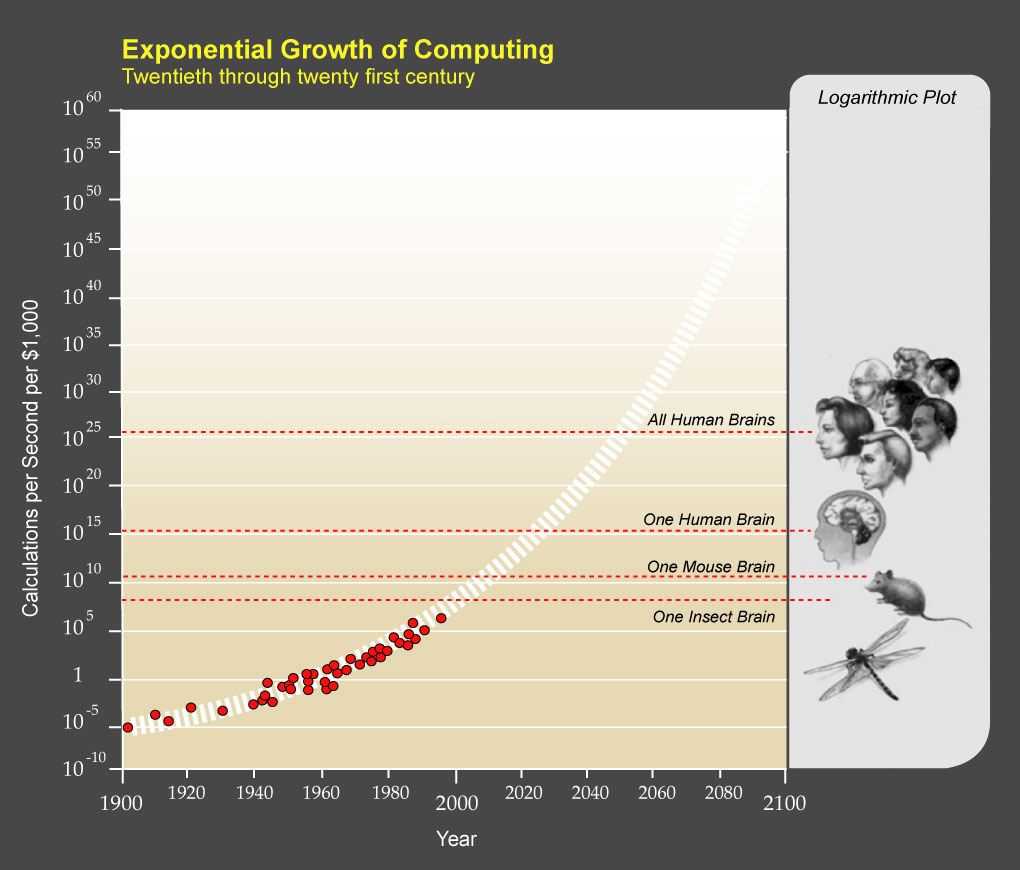
exponential_growth_largeThe term was then popularized by science fiction writer Vernor Vinge (A Fire Upon the Deep, A Deepness in the Sky, Rainbows End) who argued that artificial intelligence, human biological enhancement, or brain-computer interfaces could be possible causes of the singularity. In more recent times, the same theme has been picked up by futurist Ray Kurzweil, the man who points to the accelerating rate of change throughout history, with special emphasis on the latter half of the 20th century.

In what Kurzweil described as the “Law of Accelerating Returns”, every major technological breakthrough was preceded by a period of exponential growth. In his writings, he claimed that whenever technology approaches a barrier, new technologies come along to surmount it. He also predicted paradigm shifts will become increasingly common, leading to “technological change so rapid and profound it represents a rupture in the fabric of human history”.

kurzweil-loglog-bigLooking into the deep past, one can see indications of what Kurzweil and others mean. Beginning in the Paleolithic Era, some 70,000 years ago, humanity began to spread out a small pocket in Africa and adopt the conventions we now associate with modern Homo sapiens – including language, music, tools, myths and rituals.

By the time of the “Paleolithic Revolution” – circa 50,000 – 40,000 years ago – we had spread to all corners of the Old World world and left evidence of continuous habitation through tools, cave paintings and burials. In addition, all other existing forms of hominids – such as Homo neanderthalensis and Denisovans – became extinct around the same time, leading many anthropologists to wonder if the presence of homo sapiens wasn’t the deciding factor in their disappearance.

Map-of-human-migrationsAnd then came another revolution, this one known as the “Neolithic” which occurred roughly 12,000 years ago. By this time, humanity had hunted countless species to extinction, had spread to the New World, and began turning to agriculture to maintain their current population levels. Thanks to the cultivation of grains and the domestication of animals, civilization emerged in three parts of the world – the Fertile Crescent, China and the Andes – independently and simultaneously.

All of this gave rise to more habits we take for granted in our modern world, namely written language, metal working, philosophy, astronomy, fine art, architecture, science, mining, slavery, conquest and warfare. Empires that spanned entire continents rose, epics were written, inventions and ideas forged that have stood the test of time. Henceforth, humanity would continue to grow, albeit with some minor setbacks along the way.

The_Meeting_of_Cortés_and_MontezumaAnd then by the 1500s, something truly immense happened. The hemispheres collided as Europeans, first in small droves, but then en masse, began to cross the ocean and made it home to tell others what they found. What followed was an unprecedented period of expansion, conquest, genocide and slavery. But out of that, a global age was also born, with empires and trade networks spanning the entire planet.

Hold onto your hats, because this is where things really start to pick up. Thanks to the collision of hemispheres, all the corn, tomatoes, avocados, beans, potatoes, gold, silver, chocolate, and vanilla led to a period of unprecedented growth in Europe, leading to the Renaissance, Scientific Revolution, and the Enlightenment. And of course, these revolutions in thought and culture were followed by political revolutions shortly thereafter.

IndustrialRevolutionBy the 1700’s, another revolution began, this one involving industry and creation of a capitalist economy. Much like the two that preceded it, it was to have a profound and permanent effect on human history. Coal and steam technology gave rise to modern transportation, cities grew, international travel became as extensive as international trade, and every aspect of society became “rationalized”.

By the 20th century, the size and shape of the future really began to take shape, and many were scared. Humanity, that once tiny speck of organic matter in Africa, now covered the entire Earth and numbered over one and a half billion. And as the century rolled on, the unprecedented growth continued to accelerate. Within 100 years, humanity went from coal and diesel fuel to electrical power and nuclear reactors. We went from crossing the sea in steam ships to going to the moon in rockets.

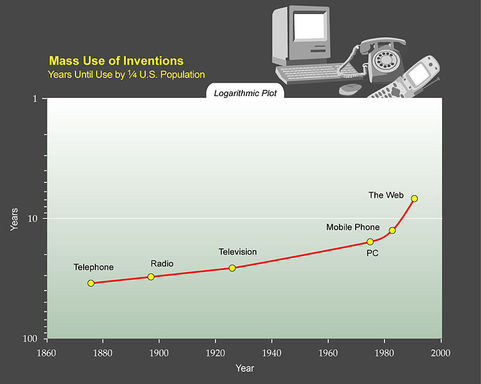
massuseofinventionsAnd then, by the end of the 20th century, humanity once again experienced a revolution in the form of digital technology. By the time the “Information Revolution” had arrived, humanity had reached 6 billion people, was building hand held devices that were faster than computers that once occupied entire rooms, and exchanging more information in a single day than most peoples did in an entire century.

And now, we’ve reached an age where all the things we once fantasized about – colonizing the Solar System and beyond, telepathy, implants, nanomachines, quantum computing, cybernetics, artificial intelligence, and bionics – seem to be becoming more true every day. As such, futurists predictions, like how humans will one day merge their intelligence with machines or live forever in bionic bodies, don’t seem so farfetched. If anything, they seem kind of scary!

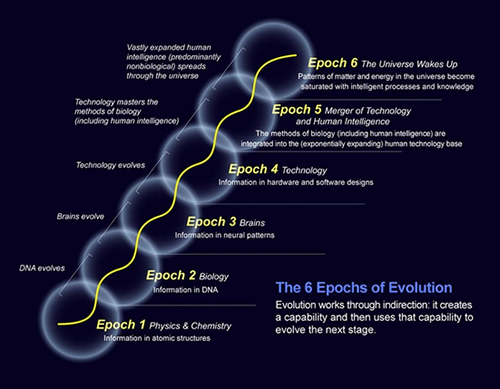
singularity-epocksThere’s no telling where it will go, and it seems like even the near future has become completely unpredictable. The Singularity looms! So really, if the future has become so opaque that accurate predictions are pretty much impossible to make, why bother? What’s more, will predictions become true as the writer is writing about them? Won’t that remove all incentive to write about it?

And really, if the future is to become so unbelievably weird and/or awesome that fact will take the place of fiction, will fantasy become effectively obsolete? Perhaps. So again, why bother? Well, I can think one reason. Because its fun! And because as long as I can, I will continue to! I can’t predict what course the future will take, but knowing that its uncertain and impending makes it extremely cool to think about. And since I’m never happy keeping my thoughts to myself, I shall try to write about it!

So here’s to the future! It’s always there, like the horizon. No one can tell what it will bring, but we do know that it will always be there. So let’s embrace it and enter into it together! We knew what we in for the moment we first woke up and embraced this thing known as humanity.

And for a lovely and detailed breakdown of the Singularity, as well as when and how it will come in the future, go to futuretimeline.net. And be prepared for a little light reading 😉

Pappa Zulu Complete!

zombie_goreAnd it’s done! The second installment of my zombie apocalypse is finally complete, and I’m set for a break! My thanks to those who’ve been following the story for lo’ these many months, and my hopes that you will be available when it comes time to start work on the third and (presumably) final chapter. But we’ll see how that goes. Could be this series is more of a “trilogy in four parts” kind of thing. You never know 😉

Anyway, onto the business of this novel. This one was even longer than the last! At 305 typed pages and 109,442 words, compared to Whiskey Delta which weighed in at 261 pages and 93,746 words. As I’m sure I’ve mentioned before, the Science Fiction and Fantasy Writers of America guidelines specify that a novel is any book with 40,000 words or more. At what point does a book become a tomb?

And much like before, I prepared a write-up and a cover for it’s eventual release in ebook and paperback, which I want to run by people now. As you can see, the cover is a mish-mash of army colors and a scene of paratroopers on the attack, while the back sports my usual “bio” pic and a small blurb on the book itself. Here’s what it says:

“Men rise from one ambition to another: first, they seek to secure themselves against attack, and then they attack others.” -Niccolo Machiavelli

In the barren deserts of New Mexico, the war against the Whiskey Delta continues. After years of fighting, the “Mage” and his Rattlesnakes have managed to get the upper hand on the undead, while back at their base, “Doc” Cooper and his team are getting close to producing a vaccine from the Patient Zero strain. But things quickly change when a new opponent enters the arena. Ever since their encounter with rogue forces in LA, the Mage has worried that there are military forces back East, people who owe allegiance to another master and want the Patient Zero strain for themselves…

Pappa_Zulu

Now comes the next part… At this point in time, I still need to finish doing edits for a Mr. Rami Ungar who’s made it clear he wants his new book Reborn City, to make the birthday deadline of November. In addition, I’ll be busying myself with the Yuva Anthology, which has expanded in recent months to take on more authors and now comprises five full-length short stories.

And once that is all done, I think I’ll get to work on that Apocrypha tale I’ve been reminiscing about. And of course there’s the matter of keeping up with all the cool science, tech, entertainment news and book reviews from the wide, wide world of science fiction. No slowing down over here! I’m just that awesome! Yeah, not really, but I do what I can… stay tuned!

The Future is Here: The VR Cave!

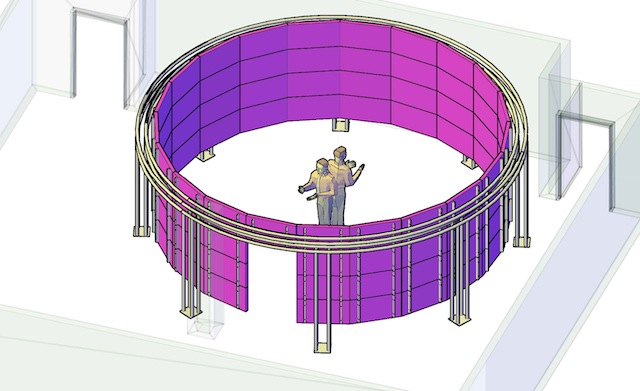
Cave2It’s called the CAVE2, a next-generation virtual reality platform that is currently the most advanced visualization environment on Earth. Whereas other VR platforms are either in 2D or limited in terms of interactive capability, the CAVE2 is about the closest thing there is to a real-life holodeck. This is accomplished through a series of panoramic, floor-to-ceiling LCD displays and an optical tracking interface that is capable of rendering remarkably realistic 3D environments.

Developed by the Electronic Visualization Laboratory (EVL) at the University of Illinois at Chicago, CAVE2 is a direct follow up to the VR platform the university created back in 1992. Like the original, the name stands for “Cave Automatic Virtual Environment”; but whereas its predecessor was set in a cube-shaped room, the new environment is set within a cylindrical, 320 degree immersive space. In addition, the screens, sounds, and resolution have all been vastly upgraded.

ModelFor example, the 7.5 by 2.5 meter space (24 feet x 8 feet) is covered floor-to-ceiling with 72 3D LCD screens, each of which outputs images at 37-megapixels (that’s 7,360 x 4,912 pixels, twice that of 2D). This allows for a pixel density that is on par with the human eye’s own angular resolution at 20/20 vision. Headgear is needed to get the full 3D effect, and the entire apparatus is controlled by a hand-held wand.

Yes, in addition to the holodeck, some other science fiction parallels are coming to mind right now. For example, there’s the gloved-controlled holographic interface from Minority Report, the high-tech nursery in Ray Bradbury’s short story The Veldt, and the parlor walls he envisioned in Fahrenheit 451. And apparently, this is no accident, since director Jason Leigh, the head of the project, is a major sci-fi geek!

mars_lifeBut of course, all this technology was designed with some real-life, practical applications in mind. These range from the exploration of outer space to the exploration of inner space, particularly the human body. As Ali Alaraj, a noted neuroscientist who used the CAVE2 put it:

“You can walk between the blood vessels. You can look at the arteries from below. You can look at the arteries from the side. …That was science fiction for me. It’s fantastic to come to work. Every day is like getting to live a science fiction dream. To do science in this kind of environment is absolutely amazing.”

All of this bodes well for NASA’s plans for space exploration that would involve space probes, holographics, and avatars. It would also be incredibly awesome as far as individual hospitals were concerned. Henceforth, they could perform diagnostic surgery using nanoprobes which could detail a patients body, inch for inch, from the inside out.

And of course, the EVL has provided a cool video of the CAVE2 platform in action. Check them out:

Source: IO9, evl.uic.edu

How It Should Have Ended: The Terminator Franchise!

terminator_judgement_dayAs usual, HISHE has graced us with a silly, scathing and common-sense analysis of how a movie franchise was so full of plot holes so big, you could drive a truck through them! And in this installment, they tackle the ongoing (and worsening) Terminator series. Lucky for all of us this franchise is getting a reboot, because the last two movies really did a number on its credibility!

And doing a little crossover with Back to the Future, they pretty much tackled the central premise which emerged with the ongoing Terminator movies. Why send killing machines back in time to epochs that are closer and closer to the future in question? Why not go back in time to when they were a toddler and still toilet training? You could catch them while they’re on the potty instead of all grown up and qualified to use firearms!

Enjoy the clip!