
 In addition to becoming cheaper, and increasing in efficiency and yields, solar cell technology is also growing in terms of innovative design. By going beyond the conventional design of silicon panels and electrical cables, researchers are ensuring that solar technology can go farther. And the latest advances in design are especially far-sighted, aiming to merge solar technology with just about any surface, and even sending it into space.
In the former case, researchers at Michigan State University have created a fully transparent solar concentrator, which could turn any window or sheet of glass – from highrise buildings to the screens on smartphones and tablets – into a photovoltaic solar cell. And whereas other “transparent” solar panels have been designed in the past, this one is the first that truly lives up to the word.
 Scientifically, a transparent solar panel is something of an oxymoron. Solar cells, specifically the photovoltaic kind, make energy by absorbing photons and converting them into electrons. If a material is transparent, by definition it means that all of the light passes through the medium. This is why previous transparent solar cells have actually only been partially transparent, and usually cast a colorful shadow.
To get around this limitation, the Michigan State researchers use a slightly different technique for gathering sunlight. Instead of trying to create a transparent photovoltaic cell, they used a transparent luminescent solar concentrator (TLSC), which consists of organic salts that absorb specific non-visible wavelengths of ultraviolet and infrared light, which they then luminesce (glow) as another wavelength of infrared light (also non-visible).
 This emitted infrared light is guided to the edge of plastic, where thin strips of conventional photovoltaic solar cell convert it into electricity. Currently, the Michigan TLSC has an efficiency of around 1%, but they think 5% should be possible. On their own, these aren’t huge figures, but on a larger scale — every window in a house or office block — the numbers quickly add up to a significant electrical yield.
Moreover, the researchers are confident that the technology can be scaled all the way from large industrial and commercial applications, down to consumer devices, while remaining “affordable.” So far, one of the larger barriers to large-scale adoption of solar power is the intrusive and ugly nature of solar panels. But if large amounts of solar power can be produced from sheets of glass and plastic, it would go a long way to making the scaling process feasible.
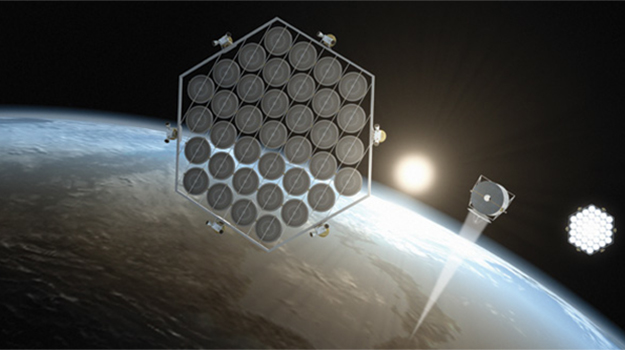
 Another major innovation comes from Brigham Young University, where researchers have been working with NASA’s Jet Propulsion Laboratory to address the challenge of Space-Based Solar Power. For some time, scientists have understood that a solar array in orbit of Earth would be ideally suited for solar power collection, since it would be immune to weather, cloud cover or diurnal cycles (aka. nighttime).
Unfortunately, getting solar cells into space is a bit of a problem. In order to be effective, solar panels need to be thin have a large surface area to soak up more rays. This makes it difficult to transport them into orbit, and requires that they be broken down,and flown up piece by piece, and then assembled once in orbit. Given the cost of mounting a sending a single rocket into orbit, this prospect becomes very costly very fast.
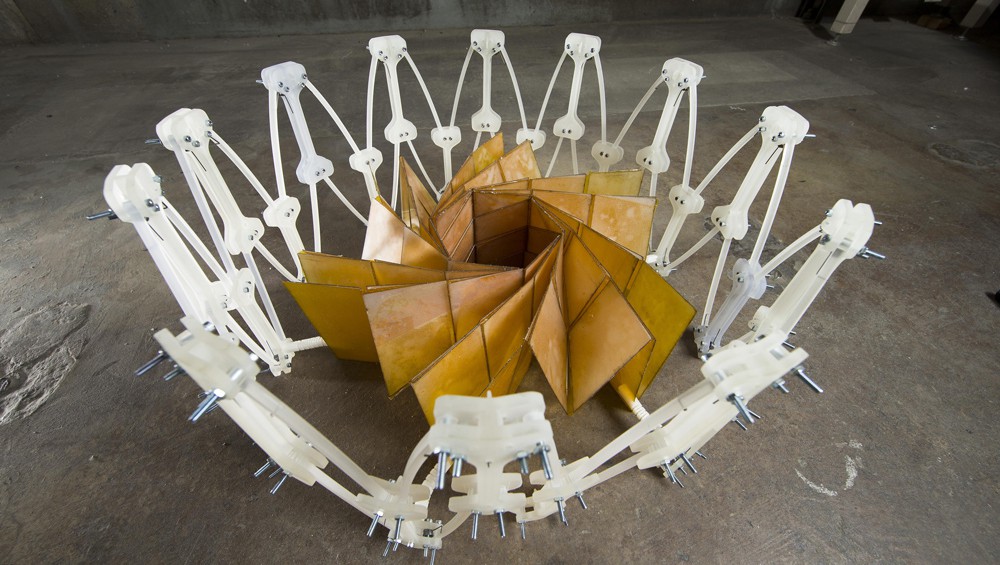 However, the Brigham team came up with a simple and elegant solution to this problem, and found it in the form of origami. By working with complex origami folds, they were able to design a solar array that can shrink down to one-tenth of its original size. Folded up, the device is 2.7 meters (8.9 feet) across and can easily wrap around a spacecraft. Once it reaches space, the array would then unfold to become as wide as 25 meters (82 feet).
Given that solar panels deal with large, flat, thin structures, the origami concept seems like a natural fit. And this is not the first time that it has been used in space equipment design – in the 1990’s, Japanese astrophysicist Koryo Miura created a prototype for another folding solar panel. However, that project was abandoned for various reasons, not the least of which was lack of funding.
 To make the concept work and renew interest in the application, he Brigham team worked with Robert Lang, a world-renowned origami expert who also happens to be a mathematician and engineer and once worked at JPL himself. As Brian Trease, a mechanical engineer at the Jet Propulsion Laboratory, said:
He was trained as a physicist, used to work at JPL, and then got tired of the formal bureaucracy and left to start folding paper. Now he’s a world expert… We see value in going directly to any artist, even if they don’t have his credentials, because they have the thousands of hours or folding and tinkering to realize what can and can’t be done. Anytime you can bring in other disciplines, they just visualize things differently and bring in different solutions to your problems.
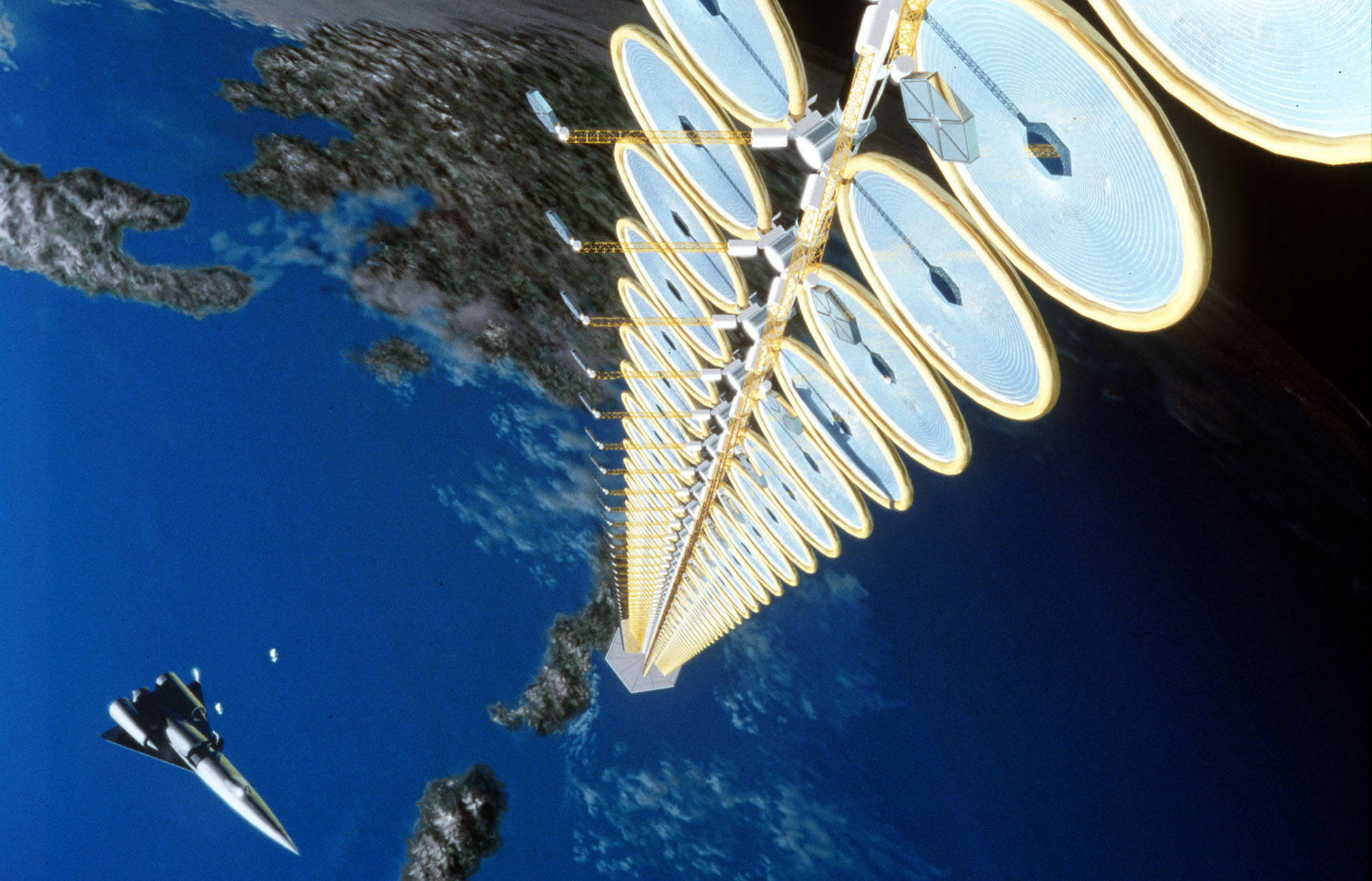
The new solar panels could be used to power spacecraft and potentially also on orbiting power stations that could wirelessly send energy to Earth via microwaves. A similar design could also be used on Earth to provide new options for portable solar power in remote locations. The same type of design might also be used in architecture or product design because of its unusual looks and function.
 According to Trease, the Department of Defense has already been in touch with them regarding applications for soldiers in the field:
Soldiers right now might carry around 100 pounds, 15 of those pounds are batteries and fuel. If you can eliminate that, you’ve dramatically reduced their load… It’s different from opening an umbrella, because it can accommodate rigid material. You could do something like a deployable glass chandelier or a table. When it’s deployed, it looks like a flower blooming–it’s got a nice aesthetic to it.
In the next few weeks, Trease will also meet with other experts to consider different potential applications for space equipment, like antennas and reflectors, that could also deploy using origami. And given the rapidly-dropping prices associated with placing objects into orbit, this could prove to be the basis for the dream of Space-Based Solar Power – where all our energy needs are met by solar arrays in orbit that then beam them to Earth.
Source: extremetech.com, fastcoexist.com
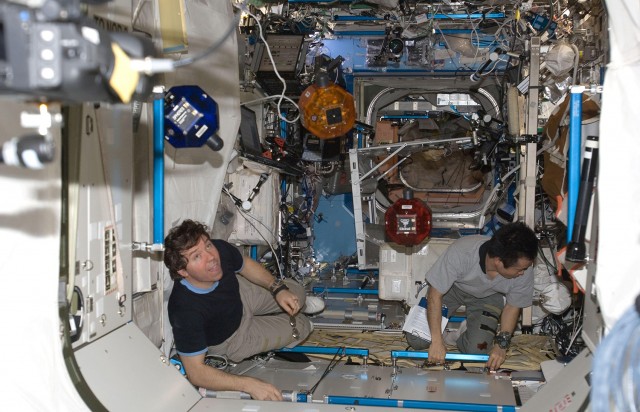

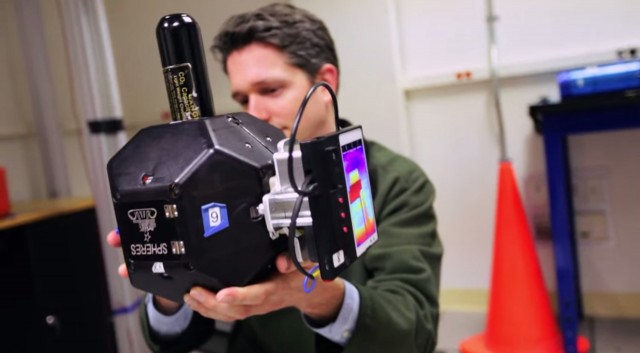 In true science fiction fashion, the SPHERES project began in 2000 after MIT professor David W. Miller was inspired by the “Star Wars” scene where Luke Skywalker is being trained in handling a lightsaber by a small flying robot. Miller asked his students to create a similar robot for the aerospace Industry. Their creations were then sent to the ISS in 2006, where they have been ever since.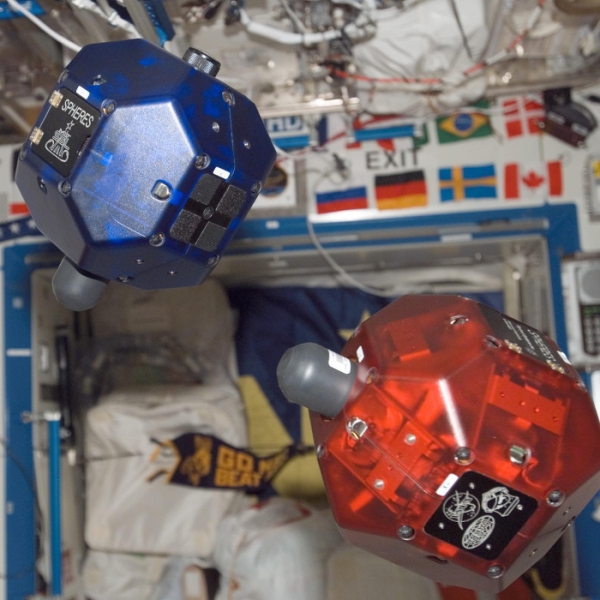
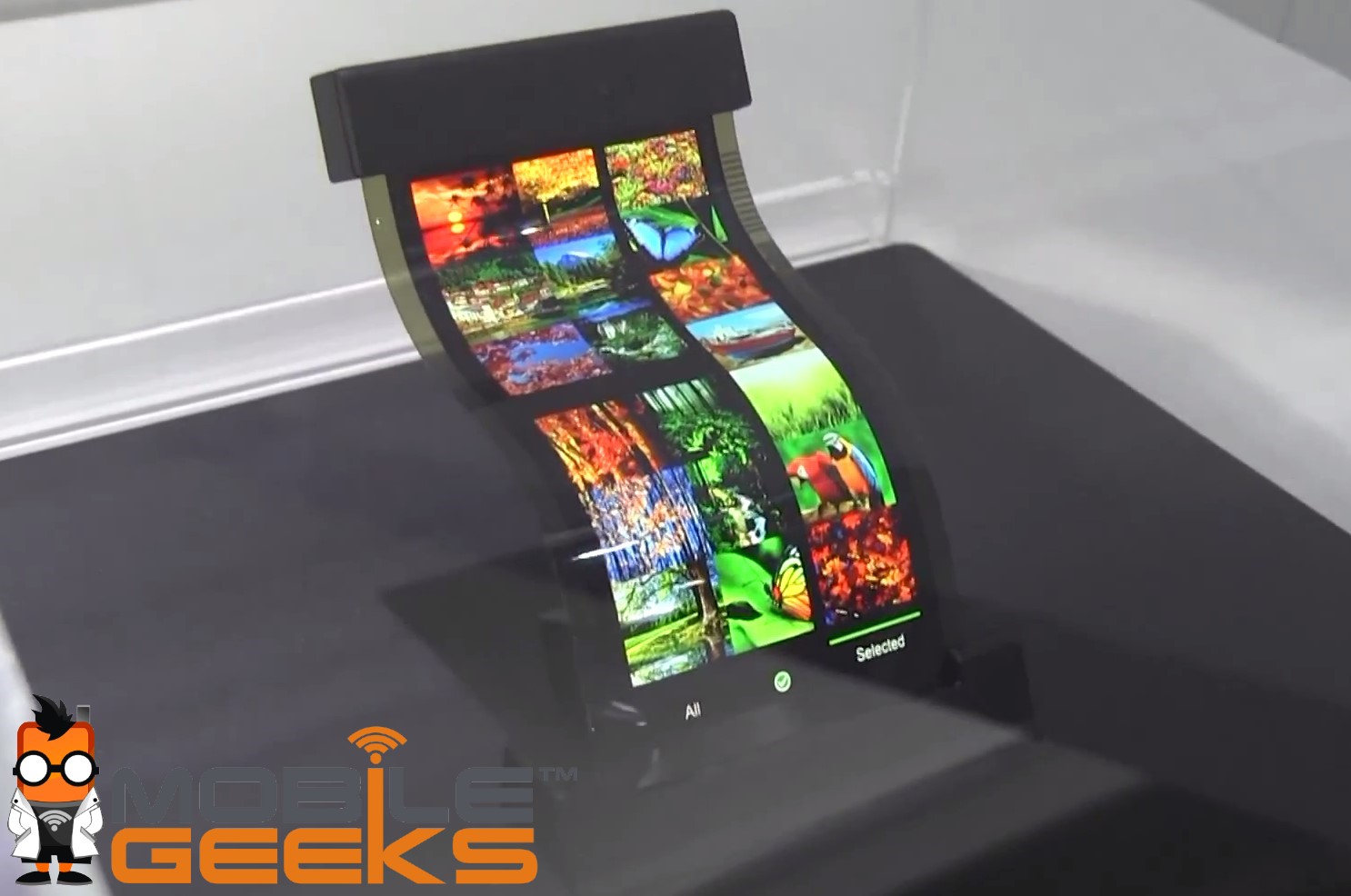
 The explosion in computing and personal devices in recent years has led to a world where we are constantly surrounded by displays. Whether they belong to personal computers, laptops, smartphones, LCDs, PDAs, or MP3 players, there is no shortage to the amount of screens we can consult. In turn, this proliferation has led computer scientists and engineers to address a number of imperfections these displays have.
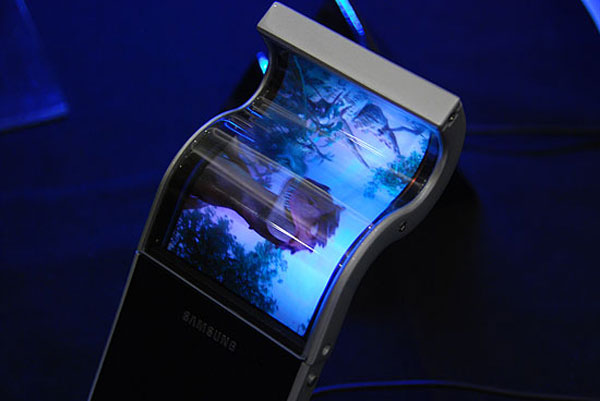 The first examples of this concept were rolled out at the 2011 Consumer Electronics Show, where Samsung unveiled its revolutionary new
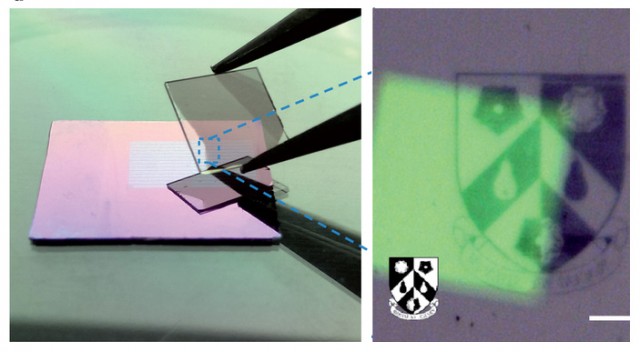
 To make the new displays, the research team – led by Harish Bhaskaran, a nanoscale manufacturing expert from Oxford University – used a 35-year-old machine developed by the semiconductor industry. They then laid down three layers that were a few nanometers thick of conducting glass, GST, and another layer of conducting glass. Then they used current from the tip of an atomic force microscope to draw pictures on the surface.
 Turning this technology into products will require years of labor and hundreds of millions of dollars. Nevertheless, Bhaskaran and his colleagues are optimistic. The electronics industry has lots of experience with all the components, so there are plenty of well-known tricks to try to improve this first draft. And they are hardly alone in their efforts to bring flexible displays to market.
 As In-Byung Kang, Senior Vice President and Head of the R&D Center at LG Display, explained:


 In its ruling, the court also rejected prosecutors’ notion that the ability to remotely wipe or lock a phone required police to search the devices immediately upon arrest before evidence could be destroyed. The court responded that police can easily prevent evidence from being remotely destroyed by turning the phone off or removing its battery, or putting it into a Faraday cage that blocks radio waves until a search warrant can be obtained.
 Earlier this month, Computex 2014 wrapped up in Taipei. And while this trade show may not have all the glitz and glamor of its counterpart in Vegas (aka. the Consumer Electronics Show), it is still an important launch pad for new IT products slated for release during the second half of the year. Compared to other venues, the Taiwanese event is more formal, more business-oriented, and for those people who love to tinker with their PCs.
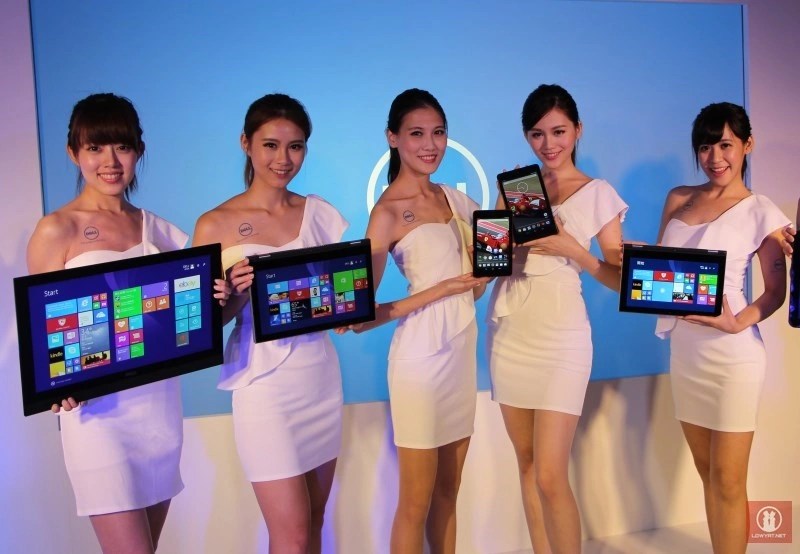 For example, big name brands like Asus typically use the event to launch a wide range of products. This year, this included such items as the super-slim Asus Book Chi and the multi-mode Book V, which like their other products, have demonstrated that the company has a flair for innovation that easily rivals the big western and Korean names. In addition, Intel has been a long stalwart at Computex, premiered its fanless reference design tablet that runs on the Llama Mountain chipset.
 And then there was the Asus wireless storage, a gadget that looks like an air freshener, but is actually a wireless storage device that can be paired with a smartphone using near-field communication (NFC) technology – essentially being able to transfer info simply by bringing a device into near-proximity with it. And as always, there were plenty of cameras, display headsets, mobile devices, and wearables. This last aspect was particularly ever-present, in the form of look-alike big-name wearables.
 In his keynote speech, Microsoft’s Nick Parker talked about the age of ubiquitous computing, and the “devices we carry on us, as opposed to with us.” What this means is, we may very well be entering a PC-less age, where computing is embedded in devices of increasingly diminished size. Eventually, it could even be miniaturized to the point where it is stitched into our clothing as accessed through contacts, never mind glasses or headsets!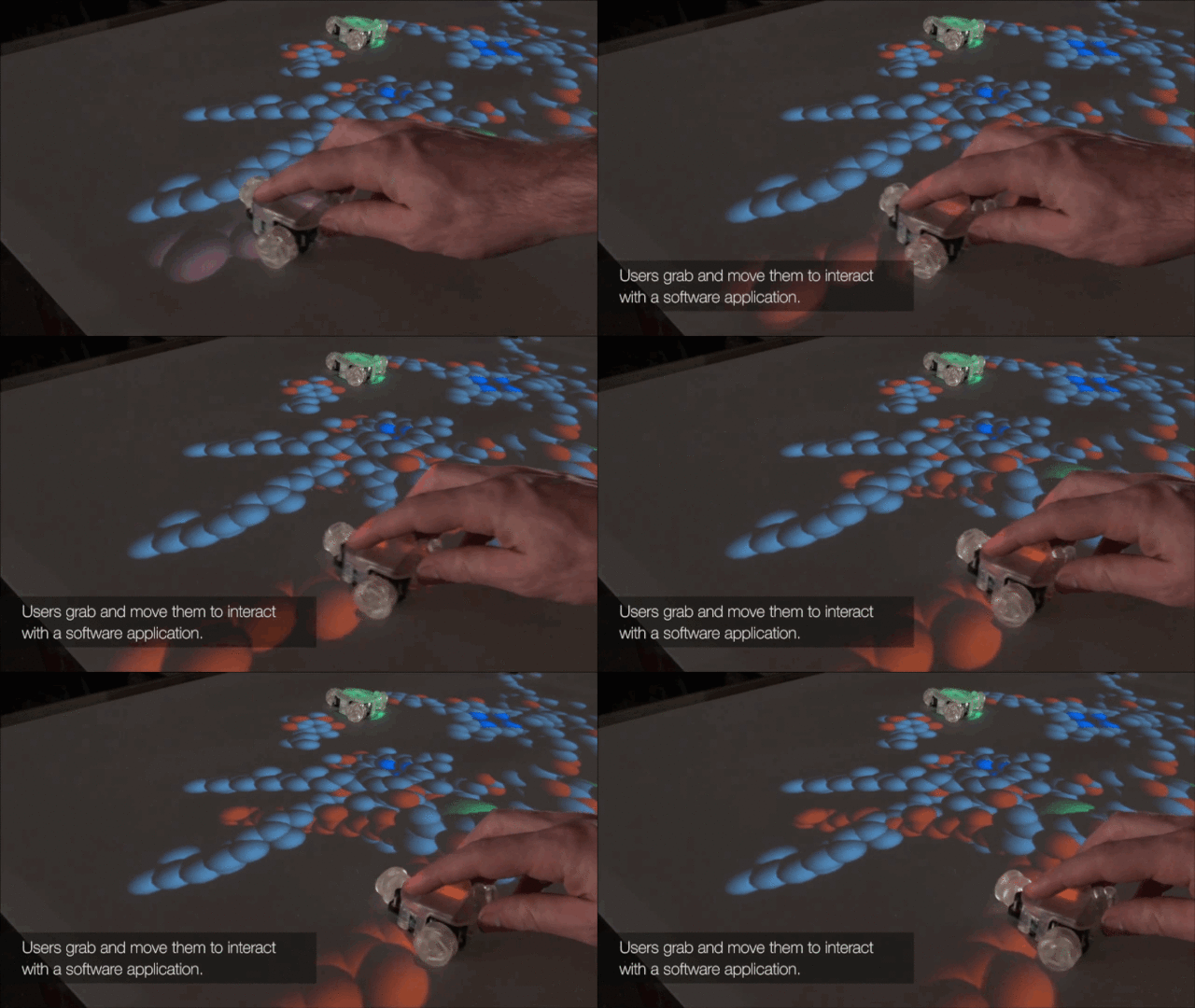










 Stories by Williams