News from Mars: Put Your Name on a Crater!

mars_lifeMars is a interesting and varied place, with enough mysteries to sate appetites both subtle and gross. But as we come to study it up close and get to know it better, a peculiar challenge arises. Basically, there are thousands of geological features on the Martian surface that don’t yet have names. Up until now, only those mountains, hills and craters that are observable from space have been designated.

With the Mars rovers pouring over the surface, each new feature is being named and designated by NASA scientists – The Gale Crater, Yellowknife Bay, Mount Sharp, etc. But what of the public? Given that this is the age of public space travel where regular people have access to the process, shouldn’t we be able to toss our hats in the ring and get a chance at naming Martian features?

Mars_impact_craterThat’s the goal of Uwingu, a non-profit organization dedicated to increasing public participation in space exploration. In addition to naming exoplanets, they have begun a project to that gives people the opportunity to name over 550,000 craters on Mars. By getting people to pledge donations in exchange for naming rights, the company hopes to raise over $10M to help fund space science and education.

The project touched off in late February, with their map of Mars uploaded to the site and half a million plus craters indicated. Just like how Apollo astronauts have named landing site landmarks during their Moon missions or how Mars scientists have named features they’ve encountered on robotic missions, Uwingu proclaims that, “Now it’s your turn.”

Mars_cratersNot only are there craters to name, but people can also help name the map grid rectangles of all the Districts and Provinces in Uwingu’s “address system” – which they say is the first ever address system for Mars. Prices for naming craters vary, depending on the size of the crater, and begin at $5 dollars apiece. For each crater a person purchases and names, Uwingu gives them a shareable Web link and a naming certificate.

In the past, Uwingu has been a source of controversy, particularly with the International Astronomical Union (IAU), which is responsible for naming celestial objects and planetary features. In general, they are opposed to Uwingu’s methods of selling naming rights to the public. As the organization states on their website:

The IAU is the internationally recognized authority for naming celestial bodies and surface features on them. And names are not sold, but assigned according to internationally accepted rules.

Mars_craters1But Alan Stern, NASA’s former science program and mission director, claims that Uwingu is independent. He also stated that in 50 years of Mars exploration, only about 15,000 features have ever been named. What’s more, he and the rest of the Uwingu team – which includes several space notables, historians and authors – know that the names likely won’t officially be approved by the IAU.

Nevertheless, they claim that they will be similar to the names given to features on Mars by the mission science teams (such as Mt. Sharp on Mars –the IAU-approved name is Aeolis Mons) or even like Pike’s Peak, a mountain in Colorado which was named by the public, in a way. As early settlers started calling it that, it soon became the only name people recognized. Uwingu hopes that their names will also stick, given time.

mountsharp_galecraterIn the past, Stern has admitted that having people pay to suggest names with no official standing is sure to be controversial, but that he’s willing to take the chance – and the heat – to try and innovative ways to provide funding in today’s climate of funding cuts. As he stated in a series of recent interviews:

Mars scientists and Apollo astronauts have named features on the Red Planet and the Moon without asking for the IAU’s permission… We’re trying to do a public good. It’s still the case that nobody in this company gets paid. We really want to create a new lane on that funding highway for people who are out of luck due to budget cuts. This is how we’re how we’re trying to change the world for a little better.

He also pointed out that Uwingu is independent, and that this map is one they are generating themselves through crowdfunding and public participation. Whether or not the names stick is anybody’s guess, but the point is that the process will not be determined by any single gatekeeper or authority – in this case, the IAU. It will reflect a new era of public awareness and involvement in space.

mars-mapIn the past, Uwingu’s procedure has been to put half of the money they make into a fund to be given out as grants, and since they are a commercial company, the rest of the money helps pay the their bills. So no matter what – even if you pitch a name and its outvoted by another, or the names just fail to stick when the cartographers finish mapping Mars – you’ll still be raising money for a good cause.

For those interested in naming a crater on the Red Planet, click on the link here to go to Uwingu’s website. Once there, simply click on a spot on the map, select the crater you want (the price for the crater is indicated when you select it), offer a name and explain why you’ve chosen it. And be sure to check out some of the one’s that have been named already.

Sources: news.cnet.com, universetoday.com, uwingu.com

Remembering the Shuttle Challenger Disaster

Challenger_explosionToday marks the 28th anniversary of the Shuttle Challenger Disaster, an incident which has lived on in the memories of people around the world and to many, signaled the end of an era. The shuttle’s explosion, which took place at 11:39:13 am EST on January 28th, 1986, occurred just 73 seconds into flight after it took off from Cape Canaveral on the Florida coast.

According to investigators, the accident occurred when the O-ring seal in the shuttle’s solid rocket booster failed during liftoff, which allowed pressurized hot gas from within the solid rocket motor to reach the outside. This malfunction led to the separation of the right-hand solid rocket booster’s aft attachment and the structural failure of the external tank.

Challenger_flight_51-l_crewThe fallen crew members included NASA astronauts Greg Jarvis, Ronald McNair, Ellison Onizuka, Judith Resnik, Michael J. Smith and Dick Scobee, as well as school teacher Christa McAuliffe. It was because of McAuliffe’s presence on the shuttle –  as the first member of the Teacher in Space Project – that roughly 17 percent of Americans were tuned to their TVs during the time of the accident and witnessed the tragedy.

The disaster resulted in a 32-month hiatus in the shuttle program and the formation of the Rogers Commission, a presidential commission charged with investigating the accident. It revealed, amongst other things, that NASA’s organizational culture was in part responsible for the disaster. In short, NASA managers had known that the O-Rings in the Solid Rocket Booster (SRB) design contained a fatal flaw, one which was overlooked.

???????????????????????????????????????????????????????????????????????????????????????????????????????????????????????????????????????????????????????????????????????????????The investigation also revealed that engineers at Morton Thiokol, the manufacturer of the rocket boosters, had warned them prior to the launch of the flaw. One such engineer was Roger Boisjoly, who realized that a shuttle launch in the cold weather that Florida was experiencing would pose a grave danger. As he had indicated, the rockets weren’t designed to launch safely in weather below 40 degrees Fahrenheit.

NASA officials at the time rejected Boisjoly’s warning, saying that he was acting on a gut feeling rather than science. Boisjoly told The Times in an interview in 2003 that NASA tried to blacklist him from the industry, and  went so far as to argue that some NASA officials should be indicted for manslaughter charges, and the agency should be abolished.

Challenger_learning_centerThere are many memorials to the fallen crew, but one of the most cited in education is the 40 Challenger Learning Centers that are located in the United States, Canada, United Kingdom and South Korea. The network was founded by June Scobee Rogers (the widow of commander Scobee) and includes participation from other Challenger family members.

According to their website, their goal is to:

[G]ive students the chance to become astronauts and engineers and solve real-world problems as they share the thrill of discovery on missions through the Solar System.

As a result of the disaster, the Air Force decided to cancel its plans to use the Shuttle for classified military satellite launches from Vandenberg Air Force Base in California, deciding to use the Titan IV instead. Media coverage of the accident was also extensive, with one study indicating that 85 percent of Americans had heard the news within an hour of the accident.

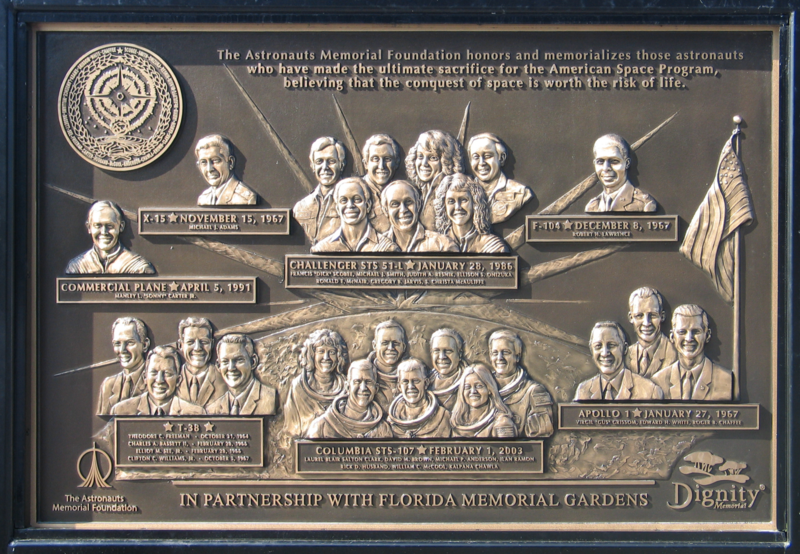
astronaut_memorial_foundationChallenger’s anniversary comes in a week that includes other tragic anniversaries, including the Apollo 1 pad fire that occurred on Jan. 27th, 1967 and claimed the lives of three astronauts’ lives; the Columbia shuttle breakup that happened on Feb. 1st, 2003 and killed seven. Many other astronauts have died in training accidents, and their names are listed at the Astronaut Memorial Foundation.

The disaster has also been used as a case study in many discussions of engineering safety and workplace ethics. And it serves as a constant reminder of the bravery of those who choose to go into space for the sake of advancing science and our understanding of the cosmos. It’s also a reminder that the only safeguard against tragic accidents is eternal vigilance!

Let us all hope and pray no such incidents happen as we embark on a renewed age of space exploration and discovery!

News From Space: Mars Needs Money!

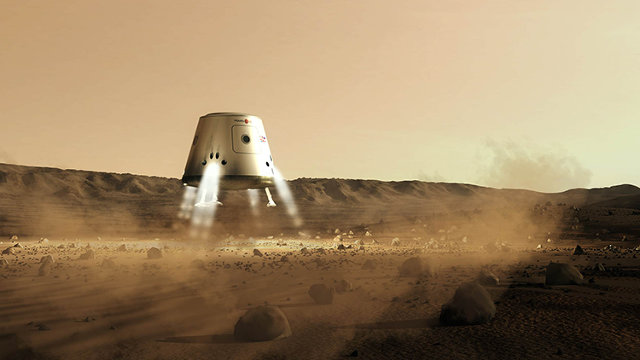
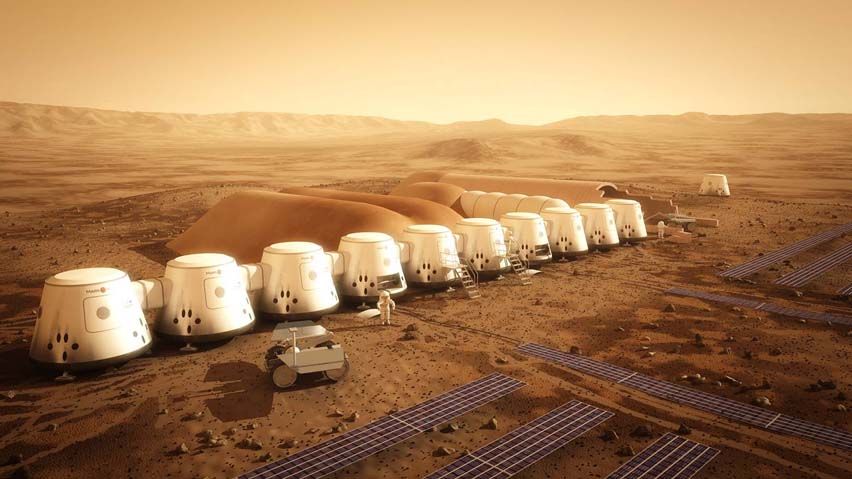
Mars_OneRemember Mars One, the Netherlands-based nonprofit that began seeking recruits for a one-way trip to the Red Planet during the summer of 2012? Well, it turns out the company is looking to take the next step towards its goal of establishing a human settlement on Mars by 2023. Basically, they are looking to raise the funds to get the ball rolling on the eventual manned mission.

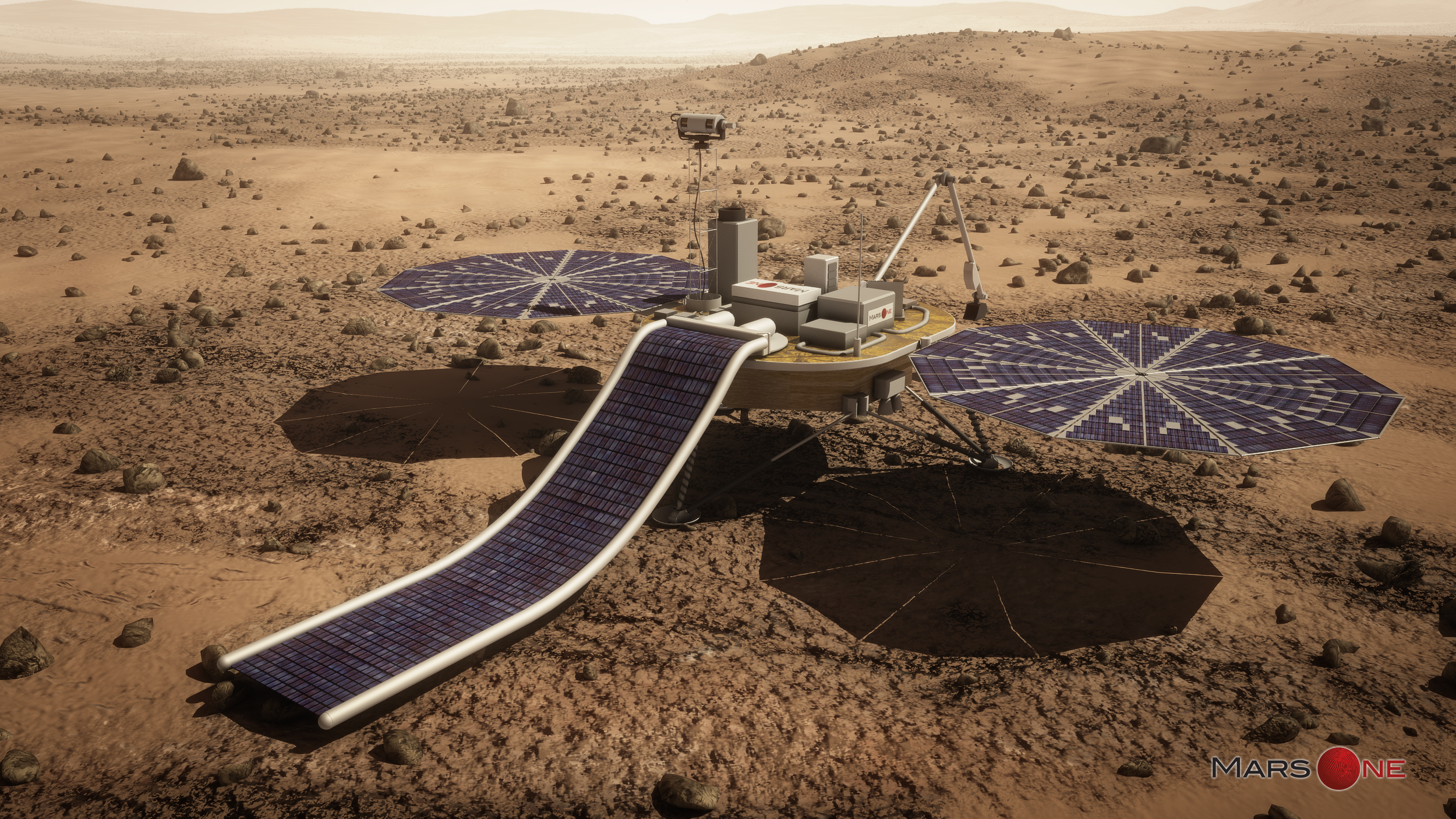
Towards this end, they have started a crowdfunding campaign through Indiegogo – and in partnership with Lockheed Martin – to raise the money for some concept studies, which will test the lander and a satellite that will conduct a demonstration mission in just four years time. The lander is based on Lockheed’s design for the NASA lander successfully used on Mars in 2007 (pictured below).

Mars-One-2018-LanderTheir campaign is seeking to raise $400,000, which will cover the costs of the concept studies, and is a mere drop in the bucket compared to the $6 billion the team estimates will be necessary to get humans to Mars. However, most of that money is expected to come from media broadcasting rights as citizen astronauts are selected and, if all goes as planned, start living on the Martian surface.

As has been stated many times over, Mars One is an evolving idea that seeks to make something historic happen. A future, larger crowdfunding campaign will allow universities to compete to send a full experiment to Mars on the 2018 mission, which will be unmanned. Mars One hopes to send four human colonists to the planet by 2025, selected from a pool of more than 200,000 people who have already applied.

mars_one1And as Hans Lansdorp, CEO of Mars One recently said, this crowdfunding campaign is important to the team to get more people involved. Not only does the project require public interest and participation in order for it to become a reality, Lansdorp and his colleagues also want it to be as international and inclusive as possible:

We really see this as a break with the history of space exploration, and especially Mars exploration, because in this mission anyone can participate in some way… For the U.S., Mars exploration is pretty common. But all of Asia has never sent an experiment to Mars. Now, suddenly we allow anyone, everywhere in the world, to send something to Mars. That’s a complete break with Mars exploration in the past.

Naturally, there are plenty of issues that need to be worked out before anything real can happen, and plenty of naysayers who emphasize the stumbling blocks in sending a manned mission to Mars. These include, but are not restricted to, radiation, microgravity, technological limitations, and the sheer amount of time involved.

mars_one2Despite all that, Lansdorp and the Mars One team remain committed and dedicated to their goal, and have been taking on all challengers with their usual combination of optimism and entrepreneurial spirit. And they firmly believe that given time, all of these hurdles will be negotiable. What’s more, they’ve convinced more than a few critics of the validity of the mission:

If we have some time to talk to people and explain the details of our plan, and as long as they’re commenting on their own field of expertise, I’ve never met someone who could not be convinced that this is possible. It will be very difficult of course–there are thousands of hurdles on the road between now and landing on Mars–but there are no hurdles that we can identify that we cannot take.

As of the penning of this article, the Mars One campaign has been open since December 10th and has raised $209,677 of its $400,000 goal, with 18 more days to go. And there are certainly no shortage of volunteers, as the company is currently processing applications from 150,000 people. So even if it can’t happen by the proposed date, it is clear that they have grabbed the world’s attention.

And in the meantime, enjoy these videos of the proposed Mars One lander design (which will take place in the 2018 demo mission) and the company’s latest promotional video:

Mars One 2018 Lander:


Mars One 2018 Mission:


Sources: fastcoexist.com, theguardian.com, mars-one.com, indiegogo.com

News From Space: Luna Rings and Spidersuits!

space_cameraSpace is becoming a very interesting place, thanks to numerous innovations that are looking ahead to the next great leap in exploration. With the Moon and Mars firmly fixed as the intended targets for future manned missions, everything from proposed settlements and construction projects are being plotted, and the requisite tools are being fashioned.

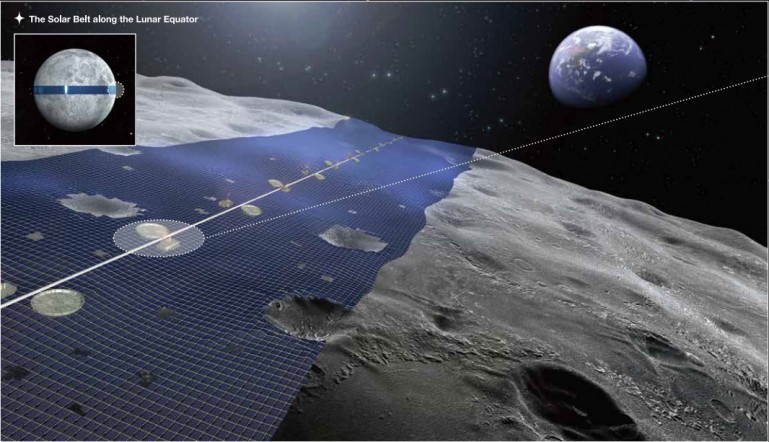
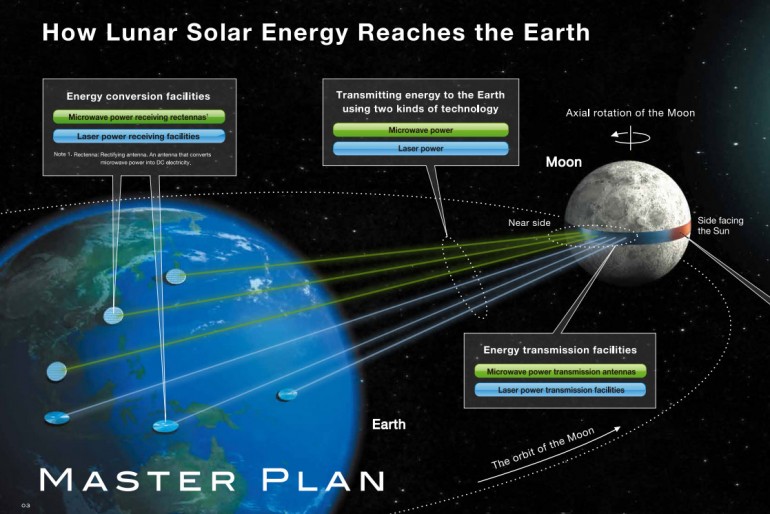
For instance, the Shimizu Corporation (the designers of the Shimizu Mega-City Pyramid), a Japanese construction firm, has proposed a radical idea for bringing solar energy to the world. Taking the concept of space-based solar power a step further, Shimizu has proposed the creation of a “Luna Ring” – an array of solar cells around the Moon’s 11000 km (6800 mile) equator to harvest solar energy and beam it back to Earth.

lunaringThe plan involves using materials derived from lunar soil itself, and then using them to build an array that will measure some 400 km (250 miles) thick. Since the Moon’s equator receives a steady amount of exposure to the Sun, the photovoltaic ring would be able to generate a continuous amount of electricity, which it would then beam down to Earth from the near side of the Moon.

It’s an ambitious idea that calls for assembling machinery transported from Earth and using tele-operated robots to do the actual construction on the Moon’s surface, once it all arrives. The project would involve multiple phases, to be spread out over a period of about thirty years, and which relies on multiple strategies to make it happen.

lunaring-1For example, the firm claims that water – a necessary prerequisite for construction – could be produced by reducing lunar soil with hydrogen imported from Earth. The company also proposes extracting local regolith to fashion “lunar concrete”, and utilizing solar-heat treatment processes to fashion it into bricks, ceramics, and glass fibers.

The remotely-controlled robots would also be responsible for other construction tasks, such as excavating the surrounding landscape, leveling the ground, laying out solar panel-studded concrete, and laying embedded cables that would run from the ring to a series of transmission stations located on the Earth-facing side of the Moon.

space-based-solarpowerPower could be beamed to the Earth through microwave power transmission antennas, about 20 m (65 ft) in diameter, and a series of high density lasers, both of which would be guided by radio beacons. Microwave power receiving antennas on Earth, located offshore or in areas with little cloud cover, could convert the received microwave power into DC electricity and send it to where it was needed.

The company claims that it’s system could beam up to 13,000 terawatts of power around-the-clock, which is roughly two-thirds of what is used by the world on average per year. With such an array looming in space, and a few satellites circling the planet to pick up the slack, Earth’s energy needs could be met for the foreseable future, and all without a single drop of oil or brick of coal.

The proposed timeline has actual construction beginning as soon as 2035.

biosuitAnd naturally, when manned missions are again mounted into space, the crews will need the proper equipment to live, thrive and survive. And since much of the space suit technology is several decades old, space agencies and private companies are partnering to find new and innovative gear with which to equip the men and women who will brave the dangers of space and planetary exploration.

Consider the Biosuit, which is a prime example of a next-generation technology designed to tackle the challenges of manned missions to Mars. Created by Dava Newman, an MIT aerospace engineering professor, this Spiderman-like suit is a sleeker, lighter alternative to the standard EVA suits that weigh approximately 135 kilograms (300 pounds).

biosuit_dava_newmanFor over a decade now, Newman has been working on a suit that is specifically designed for Mars exploration. At this year’s TEDWomen event in San Francisco, she showcased her concept and demonstrated how its ergonomic design will allow astronauts to explore the difficult terrain of the Red Planet without tripping over the bulk they carry with the current EVA suits.

The reason the suit is sleek is because it’s pressurized close to the skin, which is possible thanks to tension lines in the suit. These are coincidentally what give it it’s Spiderman-like appearance, contributing to its aesthetic appeal as well. These lines are specifically designed to flex as the astronauts ends their arms or knees, thus replacing hard panels with soft, tensile fabric.

biosuit1Active materials, such as nickel-titanium shape-memory alloys, allow the nylon and spandex suit to be shrink-wrapped around the skin even tighter. This is especially important, in that it gets closer Newman to her goal of designing a suit that can contain 30% of the atmosphere’s pressure – the level necessary to keep someone alive in space.

Another benefit of the BioSuit is its resiliency. If it gets punctured, an astronaut can fix it with a new type of space-grade Ace Bandage. And perhaps most importantly, traditional suits can only be fitted to people 5′ 5″ and taller, essentially eliminating short women and men from the astronaut program. The BioSuit, on the other hand, can be built for smaller people, making things more inclusive in the future.

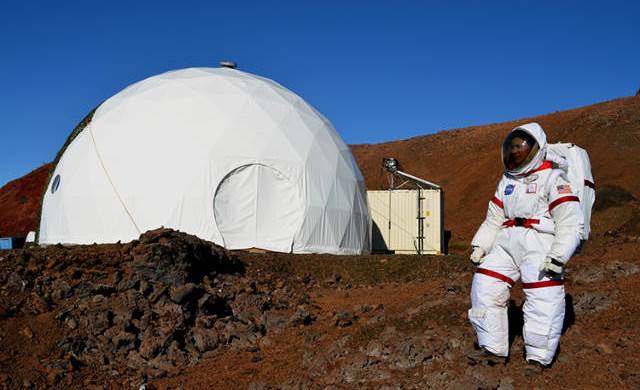
Mars_simulationNewman is designing the suit for space, but she also has some Earth-bound uses in mind . Thanks to evidence that showcases the benefits of compression to the muscles and cardiovascular system, the technology behind the Biosuit could be used to increase athletic performance or even help boost mobility for people with cerebral palsy. As Newman herself put it:

We’ll probably send a dozen or so people to Mars in my lifetime. I hope I see it. But imagine if we could help kids with CP just move around a little bit better.

With proper funding, Newman believes she could complete the suit design in two to three years. It would be a boon to NASA, as it appears to be significantly cheaper to make than traditional spacesuits. Funding isn’t in place yet, but Newman still hopeful that the BioSuit will be ready for the first human mission to Mars, which are slated for sometime in 2030.

In the meantime, enjoy this video of the TEDWomen talk featuring Newman and her Biosuit demonstration:

Sources: gizmag, fastcoexist, blog.ted

Judgement Day Update: Google Robot Army Expanding

Atlas-x3c.lrLast week, Google announced that it will be expanding its menagerie of robots, thanks to a recent acquisition. The announcement came on Dec. 13th, when the tech giant confirmed that it had bought out the engineering company known as Boston Dynamics. This company, which has had several lucrative contracts with DARPA and the Pentagon, has been making the headlines in the past few years, thanks to its advanced robot designs.

Based in Waltham, Massachusetts, Boston Dynamics has gained an international reputation for machines that walk with an uncanny sense of balance, can navigate tough terrain on four feet, and even run faster than the fastest humans. The names BigDog, Cheetah, WildCat, Atlas and the Legged Squad Support System (LS3), have all become synonymous with the next generation of robotics, an era when machines can handle tasks too dangerous or too dirty for most humans to do.

Andy-Rubin-and-Android-logoMore impressive is the fact that this is the eight robot company that Google has acquired in the past six months. Thus far, the company has been tight-lipped about what it intends to do with this expanding robot-making arsenal. But Boston Dynamics and its machines bring significant cachet to Google’s robotic efforts, which are being led by Andy Rubin, the Google executive who spearheaded the development of Android.

The deal is also the clearest indication yet that Google is intent on building a new class of autonomous systems that might do anything from warehouse work to package delivery and even elder care. And considering the many areas of scientific and technological advancement Google is involved in – everything from AI and IT to smartphones and space travel – it is not surprising to see them branching out in this way.

wildcat1Boston Dynamics was founded in 1992 by Marc Raibert, a former professor at the Massachusetts Institute of Technology. And while it has not sold robots commercially, it has pushed the limits of mobile and off-road robotics technology thanks to its ongoing relationship and funding from DARPA. Early on, the company also did consulting work for Sony on consumer robots like the Aibo robotic dog.

Speaking on the subject of the recent acquisition, Raibert had nothing but nice things to say about Google and the man leading the charge:

I am excited by Andy and Google’s ability to think very, very big, with the resources to make it happen.

Videos uploaded to Youtube featuring the robots of Boston Dynamics have been extremely popular in recent years. For example, the video of their four-legged, gas powered, Big Dog walker has been viewed 15 million times since it was posted on YouTube in 2008. In terms of comments, many people expressed dismay over how such robots could eventually become autonomous killing machines with the potential to murder us.

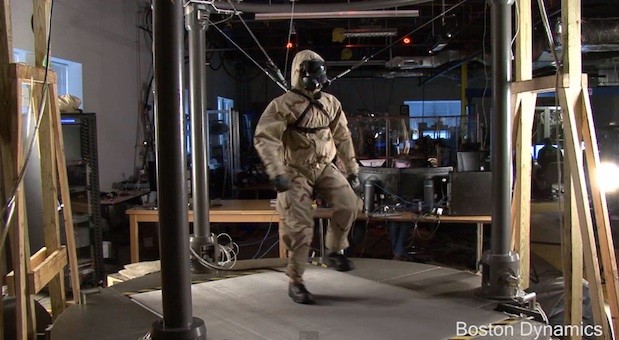
petman-clothesIn response, Dr. Raibert has emphasized repeatedly that he does not consider his company to be a military contractor – it is merely trying to advance robotics technology. Google executives said the company would honor existing military contracts, but that it did not plan to move toward becoming a military contractor on its own. In many respects, this acquisition is likely just an attempt to acquire more talent and resources as part of a larger push.

Google’s other robotics acquisitions include companies in the United States and Japan that have pioneered a range of technologies including software for advanced robot arms, grasping technology and computer vision. Mr. Rubin has also said that he is interested in advancing sensor technology. Mr. Rubin has called his robotics effort a “moonshot,” but has declined to describe specific products that might come from the project.

Cheetah-robotHe has, however, also said that he does not expect initial product development to go on for some time, indicating that Google commercial robots of some nature would not be available for several more years. Google declined to say how much it paid for its newest robotics acquisition and said that it did not plan to release financial information on any of the other companies it has recently bought.

Considering the growing power and influence Google is having over technological research – be it in computing, robotics, neural nets or space exploration – it might not be too soon to assume that they are destined to one day create the supercomputer that will try to kill us all. In short, Google will play Cyberdyne to Skynet and unleash the Terminators. Consider yourself warned, people! 😉

Source: nytimes.com

News From Space: Canada’s Plans for 2014

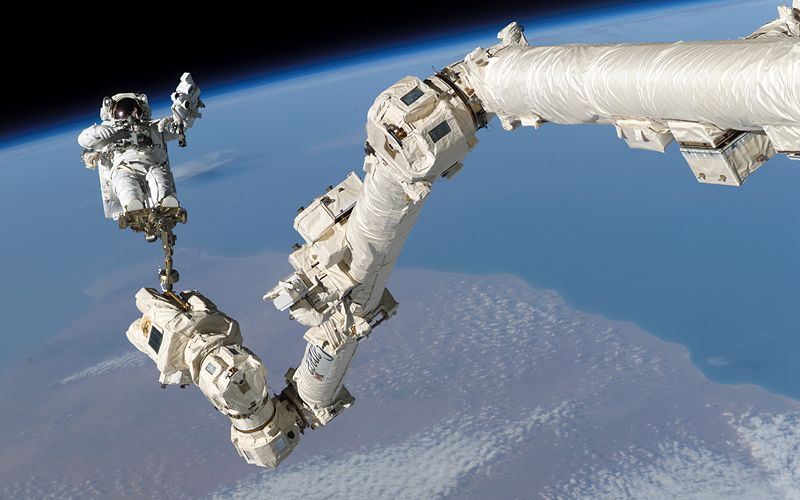
canadarm2_chrishadfieldEarlier this month, Industry Minister James Moore announced that Canada’s new space plan will be made public in early in the new year. The announcement came on Monday Dec. 2nd at an aerospace forum in Montreal which also brought together leaders of Canada’s space industry. Emphasizing the achievements of Canada’s space industry, he also went on to claim that next year’s goals would reach beyond these traditional areas:

Our companies are leaders in optics, in robotics, radar imagery and satellite communications, but we will not stop at this success… The industry has spoken up, has worked collaboratively, has given the government advice on how to proceed (and) we’ve taken the advice and we’re putting it into action.

A background paper provided by Moore outlined the government’s strategic goals for its space activities, which include jobs and growth, sovereignty, security and the advancement of knowledge. Moore also told the space industry executives assembled that the government will examine all opportunities to work with the private sector and Canada’s international partners to encourage innovation in the country’s space activities.

Canadarm2_Steve_RobinsonFollowing up on the Emerson report’s recommendations, Moore announced various actions, including the establishment of a space advisory board composed of industry leaders and chaired by Walt Natynczyk, head of the Canadian Space Agency.

This framework will provide the foundation for the next phase of our government’s space program. It will be based on the principles of partnership with other countries and the private sector, catering to our strengths and inspiring Canadians.

The industry minister also said the government will double current support for its space technologies development program to $20 million annually by 2015-2016:

This will bring the kind of predictability and stability of funding that you asked for. And (it) will help develop more groundbreaking space technologies that Canadian space companies are so recognized for.

spacex-dragon-capsule-grabbed-by-iss-canadarm-640x424Beyond these stated objectives, its not quite clear what in store’s for the Canadian Space Agency (CSA). After Hadfield’s high-profile tour as the mission commander aboard the ISS, it is safe to say that interest in this field is growing. And with our nation’s ongoing commitment to providing new robotic arms (aka. Canadarm’s) for the ISS, parts and technical workers and astronauts for manned missions, any increase in public interest is likely to have positive results.

What’s more, with the Obama government dedicated to pursuing some extremely ambitious objectives – towing an asteroid to Near-Earth Orbit, a manned mission to Mars, establishing an outpost on the Moon – it would seem obvious that one of their greatest colleagues in space exploration and research would want to get on board.

Source: cbc.ca

The Future is Here: The Factory in a Box

factory_box3-D Printing has proven itself quite useful when it comes to creating components, toys, and models. But when it comes to assembling complicated parts, or full-on products, other machines are often necessary. That’s where the Microfactory comes in, a veritable “multi-tool” machine that merges the best of 3-D printing and machining.

Being touted as “a machine shop in a box”, the creators of the device (the Mebotics company) were inspired to create this multi-tool kit after collaborating at the Boston-area Artisans Asylum. Artisans Asylum is a non-profit organization dedicated to promoting hobbyists, artisans, fabricators and entrepreneurs through a series of open maker space presentations.

factory_box2In addition, the team was also inspired by the fact that most manufacturing systems suffer from two major downfalls: noise and mess. By “closing the system”, as they put it, they eliminated both hassles while still ensuring that their device is capable of both producing tailor-made objects and altering them to order.

The Microfactory dramatically expands the range of products a person with no other equipment could make. It is basically able to 3-D print in four colors, out of multiple materials, and also etch, and mill the final products. This process, which combines machining and printing, is what the makers refer to as “hybrid manufacturing.”

3D-printing-in-spaceAs Co-founder of Mebotics, Jeremy Fryer-Biggs, explains:

I wanted to have a machine that was capable of making parts for all the crazy stuff people people would ask me [to make]. I wanted a tool that would allow me to do a whole wide range of things.

As Fryer-Biggs and the team envision it, the Microfactory could also offer users the ability to create devices and components where they are needed, regardless of the location. With a fully-functional computer incorporated to provide the blueprints, they foresee some extreme scenarios where objects could be created and finished where no stores are available:

You’re at base camp in the Himalayas, you’re in the middle of Afghanistan and you wanna make a part. So you connect this thing to a Wi-Fi hotspot–if you have a Wi-Fi card in the machine that you put in. You can then download from the server whatever the replacement part is you need, and in the middle of nowhere, get your replacement.

3d_ISSThis vision is in keeping with what many scientific organizations – such as NASA, the ESA, and other space agencies – are foreseeing. Already, such devices are being considered for use on the International Space Station and on future space missions, where astronauts will always be in need of specialized tools and may not have the ability to have them shipped out to them.

The team currently has several working prototypes but is planning to bring the project to market by raising $1 million through Kickstarter. MicroFactory units are being pre-sold for between $4,000 and $10,000 in several models. Though the team admits that the price is high, the science fiction appeal alone is well worth it! As Marie Staver, a project manager on the team, put it: “The science fiction future is officially here.”

Couldn’t agree more. And in the meantime, check out this video of the Microfactory in action:

Sources: fastcoexist.com, mebotics.com, artisansasylum.com

News From Space: XS-1 Reusable Spacecraft

sx-1_spaceplaneWhen it comes to the future of space exploration, the ongoing challenge has been to find a way to bring down the costs associated with getting things into orbit. In recent years, a number of solutions have been presented, many of which have been proposed by private companies like SpaceX and Reaction Engines. Not to be outdone, the US government has its own proposal, known as the XS-1.

Developed by DARPA, the XS-1 is the latest in a string of designs for a reusable spacecraft that would be capable of taking off and landing from an airfield. But unlike its predecessors, this craft would be a two-stage craft that has no pilot and is controlled much like a drone. By combining these two innovations, DARPA foresees an age where a “one day turnaround,” or daily launches into space, would be possible.

skylon-orbit-reaction-enginesBasically, the XS-1 will work as a two-stage flyer, beginning as a regular high-altitude drone meant to fly as high as possible and reach hypersonic speed. Once this has been achieved, the payload will separate along with an expendable launch system with a small tank of rocket fuel which will then be automatically delivered to its final destination. The plane, meanwhile, will automatically return to base and begin prep for the next day’s mission.

In addition to being cheaper than rockets and space shuttles, an XS-1 space plane would also be much faster than NASA’s now-retired STS shuttles. Much like Reaction Engines Skylon concept, the ship is designed for hypersonic speeds, in this case up to Mach 10. While this might sound incredibly ambitious, NASA has already managed to achieve a top speed of Mach 9.8 with their X-43A experimental craft back in 2004 (albeit only for ten seconds).

x-43a The XS-1′s payload capacity should be around 2300 kilograms (5000 pounds) per mission, and DARPA estimates that a single launch would cost under $5 million. Currently, it costs about $20,000 to place a single kilo (2.2lbs) into geostationary orbit (GSO), and about half that for low-Earth orbit (LEO). So while DARPA’s requirements are certainly stringent, they would cut costs by a factor of ten and is within the realm of possibility.

As it stands, all ideas being forth are centered around reinventing the rocket to make launches cheaper. When it comes to long-term solutions, grander concepts like the space elevator, the slingatron, or space penetrators may become the norm. Regardless, many of the world’s greatest intellectual collectives have set their sights on finding a more affordable path into space. These advanced launch jets are just the first step of many.

Sources: extremetech.com, news.cnet.com

News From Space: 3-D Printed Spacecraft

3D_spaceprinting13D-Printing has led to many breakthroughs in the manufacturing industry in recent years. From its humble beginnings assembling models out of ABS plastic, the technology has been growing by leaps and bounds, with everything from construction and food printing to bioprinting becoming available. And as it happens, another major application is being developed by a private company that wants to bring the technology into orbit.

It’s called SpiderFab, a system of technologies that incorporates 3-D printing and robotic assembly to create  “on-orbit” structures and spaceship components (such as apertures, solar arrays, and shrouds). Developed by tech firm Tethers Unlimited, Inc. (TUI), the project is now in its second phase and recently landed a $500,000 development contract from NASA.

spiderfabOne of the greatest challenges of space exploration is the fact that all the technology must first be manufactured on Earth and then shuttled into orbit aboard a rocket or a shroud. The heavier the cargo, the larger the rocket needs to be. Hence, any major undertaking is likely to have a massive price tag attached to it. But by relocating the manufacturing process to a place on-site, aka. in orbit, the entire process will be much cheaper.

Towards this end, the SpiderFab, incorporates two major innovations in terms of transportation and manufacture. The first makes it possible to pack and launch raw materials, like spools of printable polymer, in a cost-effective way using smaller rockets. The second uses patented robotic fabrication systems that will process that material and aggregate it into structural arrangements.

3D_spaceprintingDr. Rob Hoyt, CEO of TUI, had this to say of his company’s brainchild in a recent interview with Co.Design:

SpiderFab is certainly an unconventional approach to creating space systems, and it will enable significant improvements for a wide range of missions.

The unorthodox system is also a solution to the problem that Hoyt began working on two decades ago when he first began working with NASA. While there, he experimented with on-orbit fabrication as a concept, but was limited due to the fact that there were no means available to make it reality. However, once 3-D printing became mainstream, he seized the opportunity presented. As he explains:

I didn’t strike on anything dramatically better than [previous investigations] until about six years ago, when additive manufacturing was really starting to take off. I realized that those techniques could be evolved to enable some dramatic improvements in what we can build in space.

spiderfab3At present, TUI is working on several different models of what the SpiderFab will eventually look like. The first of these is known as the Trusselator, one of many building blocks that will form the factory responsible for producing spacecraft components. The Trusselator is designed to print high-performance truss elements, while another, the Spinneret, will use 3-D printing-like techniques to connect and fuse together clusters of trusses.

Hoyt says that the TUI team will be further testing these processes in the next couple of months, first in the lab and then in a thermal-vacuum chamber. He hopes, however, that they will be able to conduct an on-orbit demonstration of SpiderFab a few years down the line. And with any luck, and more funding, NASA and other agencies may just convert their production process over to orbital 3-D printing facilities.

Alongside concepts like the SpaceX Grasshopper reusable rocket and reusable space craft, 3-D space printing is yet another revolutionary idea that is likely to bring the astronomical (no pun!) costs of space exploration down considerably. With affordability will come growth; and with growth, greater exploration will follow…

Star-Trek-universe

Sources: fastcodesign.com, tethers.com

News From Space: Manned Europa Mission!

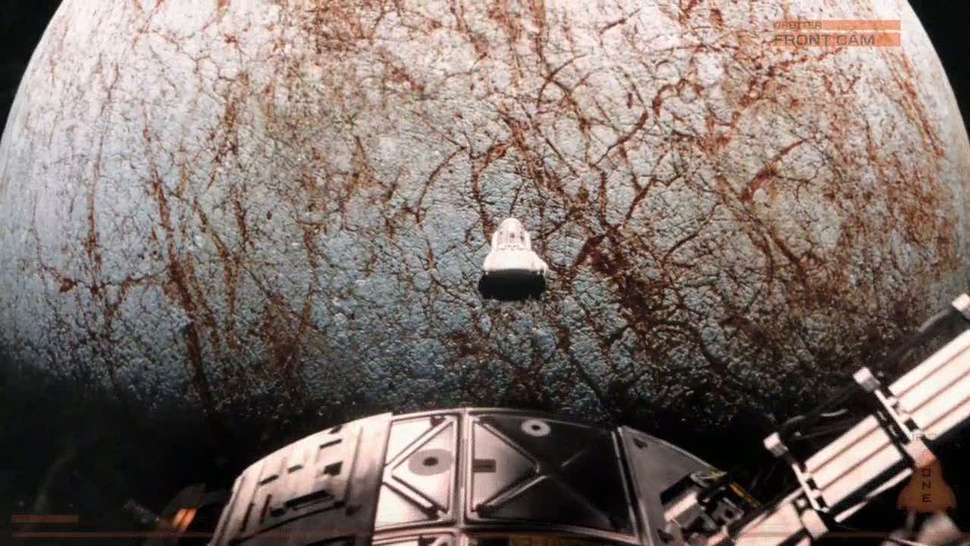
europa-landerWith so much attention focused on Mars in recent years, the other planets of the Solar System have a hard time getting noticed. But lately, Europa has found itself the subject of some interest. In addition to NASA proposing to send a lander there in the near future, a private space organization is thinking of mounting a manned mission to the Jovian moon in search of knowledge and extra-terrestrial life.

This organization is known as Objective Europa, a group made up of  volunteer scientists, conceptual artists, and social-media experts. At the moment, they exist only on the internet. But with time and financial backing, they hope to form a volunteer corps of settlers that would make a one-way trip to Europa and settle the planet while they researched it.

europa-lander-2Inspired by the recent missions to Mars, Objective Europa also believes a mission to this moon would be worthwhile since it is a far better candidate for extra-terrestrial life. Mars, though it is thought to have once hosted life, is a barren and dry world in its present state. Though many are holding out for the discovery of organic particles in the near future, the likelihood of finding any complex organisms larger than a microbe remains extremely low.

Not surprisingly, their group has attracted some big-name celebrities. This includes Kristian von Bengtson, a Danish architect and co-founder of Copenhagen Suborbitals, a nonprofit focused on launching humans into space. Then there’s Michele Faragalli, a rover mobility specialist for a NASA private contractor. Scientist and diver Pierre-Yves Cousteau, son of legendary explorer Jacques Cousteau, is also on the team as an ambassador for the group.

europa_reportCurrently, the group is in Phase 1 of their plan, which is geared towards the gathering of ideas. Towards this end, they have opened up a variety of research topics for discussion on their website. These include investigating the feasibility of a manned mission versus a robotic mission, launch vehicle studies, and cost analysis.Future phases would involve raising funds, and prototyping and testing technology.

What’s more, while they have not yet stated outright how they plan to fund the mission, it seems likely at this point that crowdfunding and sponsorship will come into play. As the goal statement reads on their site:

“Our purpose is to establish the foundation for and carry out a crewed mission to Jovian ice moon Europa through international crowd-research and participation.”

mars-one-brian-versteegIf this is beginning to sound a little bit like Mars One – a similar space organization looking to send volunteers to Mars – then chances are you’ve been paying attention! In terms of their purpose, objectives, and the fact that the trips they are planning would be a one-way, the two organizations are very similar. But even more interesting is what these and other space organizations like them represent.

In an age when private space travel and exploration are beginning in earnest, crowdfunded, volunteer groups are emerging with the common goal of making things happen ahead of anyone else’s schedule. Whereas space was once the exclusive province of government-sanctioned and funded agencies, now the public is stepping in to assume a measure of control.

And thanks to new media and communications, the money, talent, and energy needed are all available. It’s just a matter of bringing them all together!

Source: news.cnet.com