Want to See Your Home from the ISS?

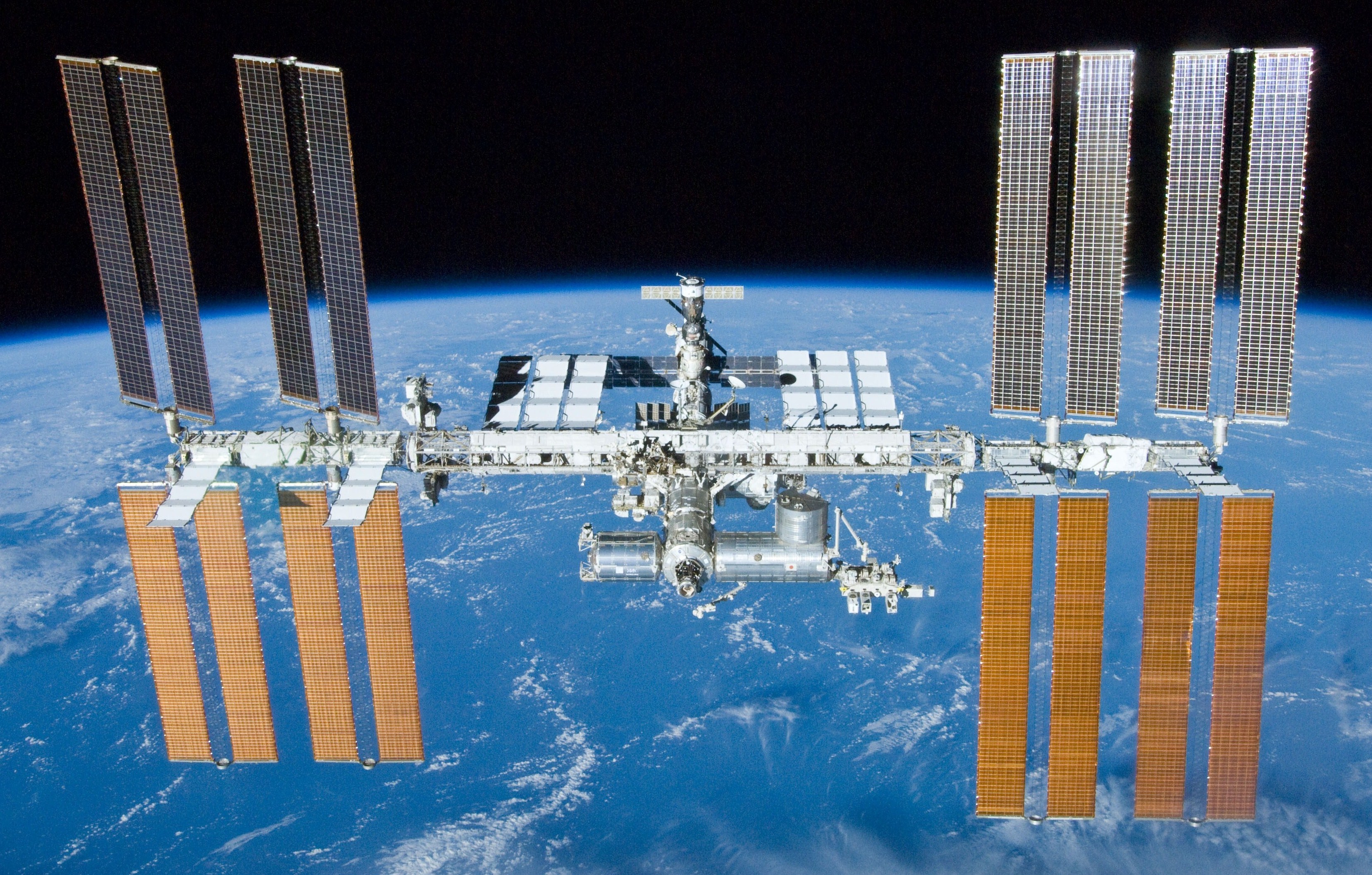
ISSA Vancouver-based company recently announced that it would be streaming images from the ISS to Earth, giving people a rare glimpse of what astronauts in orbit see on a daily basis. In an age where space travel is becoming increasingly public, thanks in part to social media, it now appears that at least one company want to get in on the ground floor of making space more accessible.

Scott Larson, CEO of Urthecast (get it?), said in a recent interview with CBC’s Curt Petrovich how his company is making this happen. This past Sunday, Urthecast launched a platform to the space station aboard the unmanned Russian Progress M-20M spacecraft as part of a delivery of 2.4 tonnes of supplies – including food, water, fuel and scientific equipment.

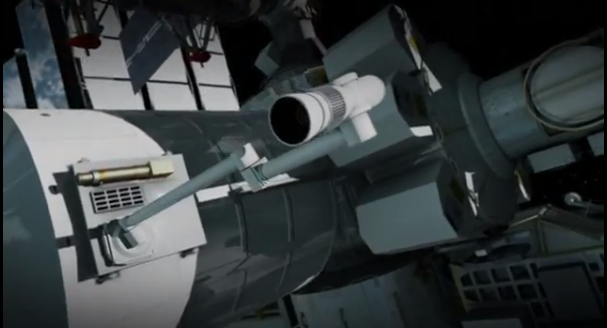
urthecaste.gifThis platform will soon be attached to the outside of the station and augmented with two HD cameras that will allow people to see things on Earth as small as one meter wide. One will be fixed will take a continuous video panorama of Earth 50 kilometers wide as the space station orbits Earth while the other will be a pointable one that customers will be able to aim at a particular spot on Earth, for a price.

These cameras will be launched aboard a different Progress flight on Nov. 20 and attached to the platform upon arrival. Though Urthecast has not specified what kind of fees will be involved for those looking to download pics of Earth, it has claimed that it intends to sell the video to corporations, governments and non-governmental organizations such as the United Nations for a wide range of need.

urthecaste_cameraHowever, these customers will not include the military since the apparatus will be on the International Space Station, which by law can only be used for “peaceful purposes”. Canadian law also requires the company to shut off the cameras as they pass over sensitive targets, if requested to do so by the federal government. Nevertheless, at least some investors are confident the company will make money of this idea. Since it first went public last month, Urthecast has raised some $46 million.

As part of what the company calls the “world’s first near-live HD video feed of Earth”, their cameras are expected to cover the planet between the latitudes of 51 degrees north (covering northern Canada, Russia and Scandinavia) and 51 degrees south (the southern tip of Chile and Argentina, South Africa and Australia). Once captured, the images will be downloaded to ground stations on Earth and be made available just a few hours later.

earth-from-ISSSo, between the accuracy of the cameras and the range they have to survey the planet, people will be able to capture images of their homes, neighborhoods, and even people that are accurate to a single meter. My advice? Get a portable device, lie down in your driveway, and then punch in your coordinates. And be sure to wave for a long time, so that when you download your images, you can see you waving back at yourself!

In the meantime, check out this video produced by Urthecast, and be sure to check out the company’s website to see how you can get in on this.

Sources: cbc.ca, extremetech.com, urthecast.com

News from Space: Dream Chaser Begins Testing

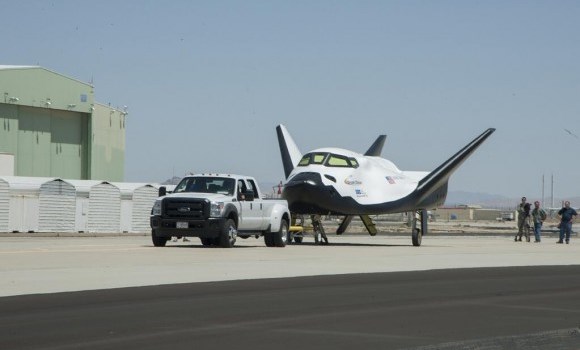
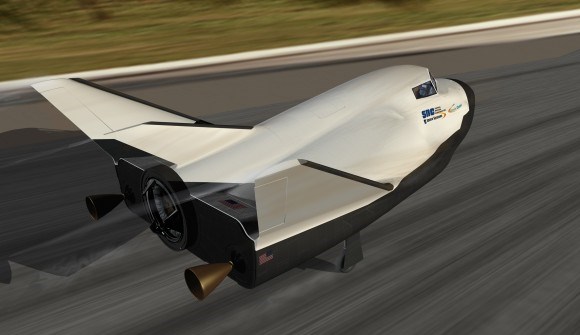
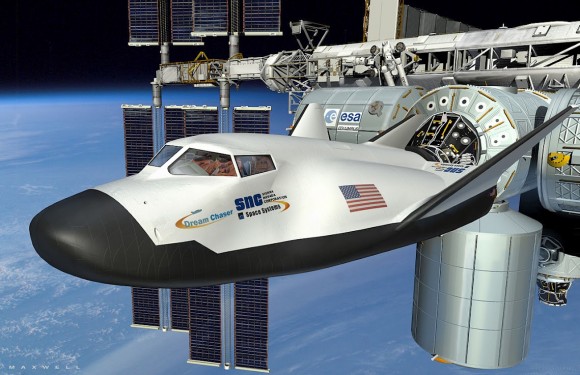
dream_chaserEver since their Space Shuttle program was forcibly shut down in 2011, NASA has been forced to look to the private sector to restore their ability to put human beings into orbit from American soil. This consists of providing the seed money needed for companies to develop a new race of “space taxis”.  One such program is the Dream Chaser, a reusable shuttle that will fly astronauts into low Earth orbit (LEO) and to the International Space Station (ISS).

Much like a standard Space Shuttle, the Dream Chaser is designed to launch atop a United Launch Alliance Atlas V rocket and land on a shuttle landing facility. And after lengthy periods of research and development, the Dream Chaser is now moving forward with a series of ground tests at NASA’s Dryden Flight Research Center in California that will soon lead to dramatic aerial flight tests throughout 2013.

dream-chaser-testThis consisted of putting the shuttle together and then conducting a series of what’s known as “Pathfinding tow tests” on Dryden’s concrete runway. The purpose here is to validate the performance of the vehicles’ nose skid, brakes, tires and other systems to prove that it can safely land an astronaut crew after surviving the searing re-entry from Earth orbit. For the initial ground tests, the ship was pulled by a tow truck at 16 and 32 km/h (10 to 20 mph).

Later this month, the next leg of the test will consist of towing it up to speeds of 64 to 95 km and hour (40 to 60 mph). The next phases of testing will take place later this year in the form of airborne captive carry tests, where an Erickson Skycrane helicopter will fly the fuselage around to see how it holds up. Approach and Landing Tests (ALT) will follow to check the aerodynamic handling, which will consist of atmospheric drop tests in autonomous free flight mode.

dream-chaser-test1In an interview with Universe Today, Marc Sirangelo – Sierra Nevada Corp. vice president and SNC Space Systems chairman – spoke on record about the shuttle and where it is in terms of development:

It’s not outfitted for orbital flight. It is outfitted for atmospheric flight tests. The best analogy is it’s very similar to what NASA did in the shuttle program with the Enterprise, creating a vehicle that would allow it to do significant flights whose design then would filter into the final vehicle for orbital flight.

In short, the Dream Chaser has a long way to go, but the program shows great promise. And as already noted, they are not the only ones benefiting from this public-private agreement that seeks to develop commercial vehicles for the sake of kick starting space travel.

dream-chaser-dockedOther companies include Boeing and SpaceX, companies that were also awarded contracts under NASA’s Commercial Crew Integrated Capability Initiative, or CCiCap. All three have their own commercial vehicles under development, such as the Boeing CST-100, SpaceX’s Dragon, which are similarly designed to bring a crew of up to 7 astronauts to the ISS and docking with it for up to 6 months.

Dream_Chaser_launchBut of course, everything depends on NASA’s approved budget, which seems headed for steep cuts in excess of a billion dollars if a Republican dominated US House has its way.This is the third contract in NASA’s Phase 1 CCiCap contracts, who’s combined value is about $1.1 Billion and runs through March 2014. Phase 2 contract awards will eventually lead to actual flight units after a down selection to one or more of the companies. The first orbital flight test of the Dream Chaser is not expected before 2016 and could be further delayed if NASA’s commercial crew budget is again slashed by the Congress – as was done in the past few years.

But as William Gerstenmaier – NASA’s associate administrator for human exploration and operations in Washington – indicated in a statement, the larger goal here is one of repatriation. As it stands, US astronauts are totally dependent on Russia’s Soyuz capsule for rides to the ISS, which costs upwards of $70 million a trip. NASA hopes to change that by rekindling the “good old days” of space travel:

NASA centers around the country paved the way for 50 years of American human spaceflight, and they’re actively working with our partners to test innovative commercial space systems that will continue to ensure American leadership in exploration and discovery.

And I for one wish NASA luck. Lord knows thirty-years of post-Cold War budget cutbacks hasn’t been easy on them. And hitching rides into space above Cold War era rockets is not the best way of getting your astronauts into space either!

In the meantime, check out this concept video of the Dream Chaser in action, courtesy of the Sierra Nevada Corporation:


Source:
universetoday.com

Bad News From Space!

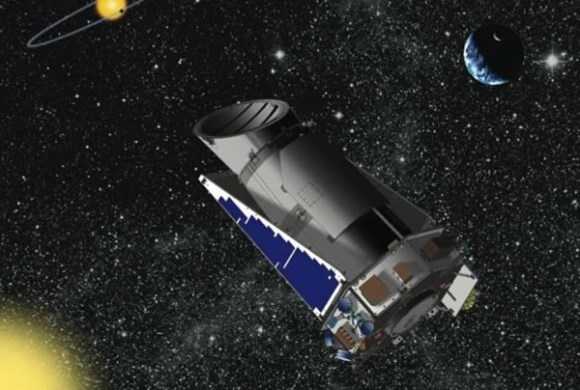
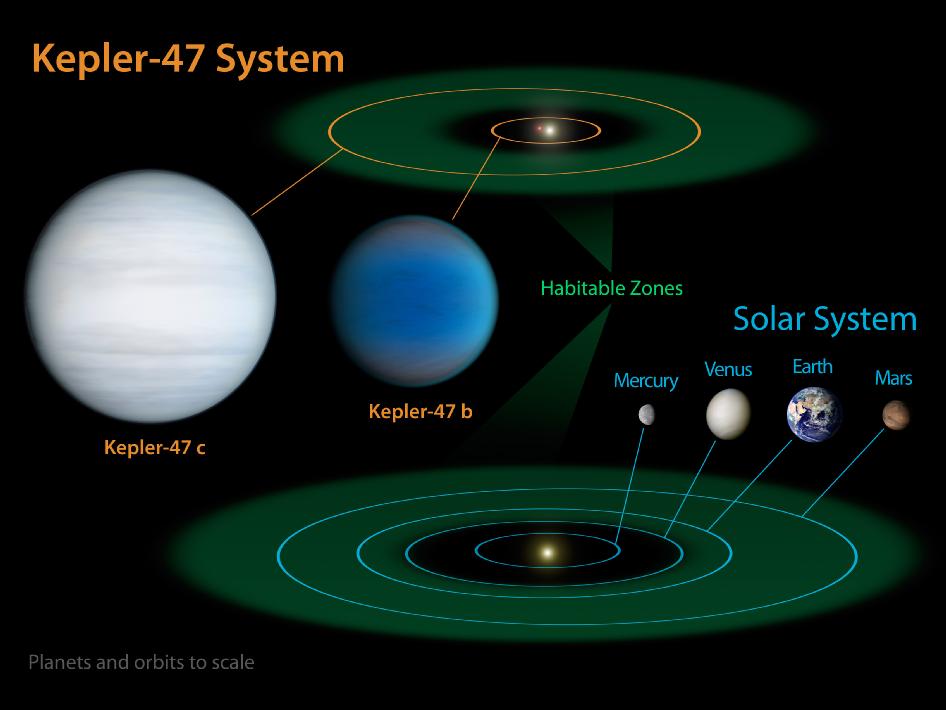
Kepler-telescope-580x448Between the Mars rovers, deep space probes, and long-term plans to mine asteroids and colonize Earth’s neighbors, there’s just no shortage of news from space these days. Unfortunately, not all of it is good. For instance, NASA recently announced that the Kepler space telescope, which was launched back in 2009 for the purpose of identifying Earth-like exoplanets, is suffering from malfunctions and may be broken down.

And in the course of its operational history, it did manage to identify a number of exoplanets that existed within the habitable zones of their parent stars. In fact, it had found a total of 2,740 candidate exoplanets spread across 2,046 stars systems, and a confirmed total of 132 that have the potential to support life. Unfortunately, during the early month of April during its weekly communication, NASA  found that the space observatory was in safe mode, a sign that something was amiss.

keplerAfter looking into the problem, they realized that it had lost its ability to precisely point toward stars because one of the reaction wheels – devices which enable the spacecraft to aim in different directions without firing thrusters – had failed. This was especially bad since last year an different wheel failed, meaning it only had two wheels remaining. The probe needs at least three working in order to properly aim itself, but now that seems impossible.

But the Kepler team said there are still possibilities of keeping the spacecraft in working order, or perhaps even finding other opportunities for different scientific pursuits. Either way, the team is not ready to throw in the towel on the telescope. And since NASA already approved to keep the mission going through 2016, a lot is still riding on it remaining functional.

Charles Sobeck, the Kepler deputy project manager, addressed the team’s efforts to get the telescope working again during their daily briefing earlier in May:

Initially, they did see some movement on the wheel but it quickly went back to zero speed, indicative of internal failure on the wheel. Our next step is to see what we can do to reduce the fuel consumption, as we would like to extend the fuel reserve as long as we can.

In terms of the malfunctioning wheel, he indicated that there are a few things they can still do to get it working again. One possibility is “jigging it” or running it in reverse.

We can try jiggling it, like you’d do with any wheel here on Earth, commanding it to move back and forth, so we can try to bring the wheel back in service. Or perhaps since wheel #2 hasn’t been turned on for eight months, it may come back if we turn it on. It will take us awhile to come up with a plan.

Sobeck also explained they are currently using thrusters to stabilize the spacecraft, and in its current mode, the onboard fuel will last for several months. But they hope to soon put the spacecraft into what is called a “Point Rest State” – a loosely-pointed, thruster-controlled state that minimizes fuels usage while providing a continuous X-band communication downlink. This ought to keep the fuel consumption down to the point where the telescope could keep going for several more years.

kepler47.jpgWhat’s more, the team also indicated that there is still terabytes of information gathered by the probe that has yet to be sifted through. They estimate that it will take at least two years for them to process it all and determine what other exoplanets exist nearby in our galaxy. And as Paul Hertz – NASA’s astrophysics director – put it, with the work it has already performed, Kepler has essentially carried out its task:

We’ll continue to analyze the data to get the science that Kepler was designed to do. Even though Kepler is in trouble, it has collected all the data necessary to answer its scientific objectives. Kepler is not the last exoplanet mission, but the first. It has been a great start to our path of exoplanet exploration.

In the end, its too soon to say if Kepler is deep in space (literally), or just experiencing a lull while her technicians get her back on track. And even if this does prove to be the end of her, the many thousands of planet she managed to identify during her years of service will certainly prove useful to humanity as we begin to set our sights on interstellar exploration and, God willing, colonization. And I imagine more than a few will bare the proud name of Kepler, in honor of her namesake and the telescope itself!

Sources: universetoday.com, Wired.com

Preventing the Apocalypse: NASA’s Asteroid Lasso Mission

asteroid_lasso

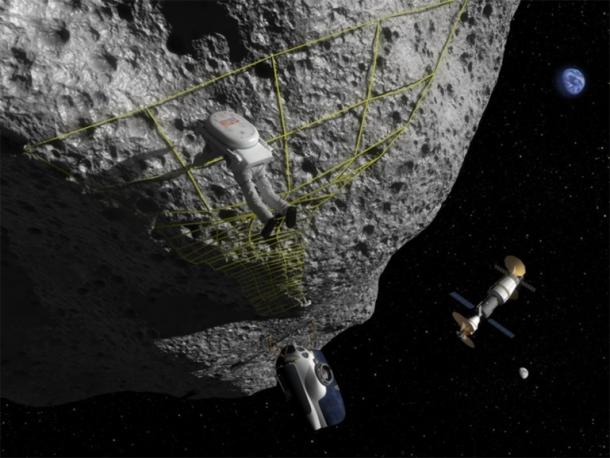
Shortly after that large meteor hit Russia, President Obama and NASA administrator Charles Bolden both announced that work would begin on a series of asteroid tracking technologies that would ensure that more severe Earth collisions would be prevented. Earlier this month, Bolden spoke at the Mars Summit in Washington, D.C. and said that a robotic spacecraft mission is currently being planned with this goal in mind.

The plan calls to mind such films as Armageddon and Deep Impact, but differs in that it involves lassoing an asteroid instead of detonating a small nuke inside it. The ultimate goal here is to tow an asteroid out of the path of Earth, but then to deposit it in orbit so that it can be visited by astronauts. These astronauts will then collect samples and conduct research that could one day assist in a mission to Mars or save Earth from a catastrophic collision.

Asteroid-Toutatis

This is in keeping with the Obama administrations’ pledge of putting a man on a near-Earth asteroid by 2025 and a manned mission to Mars by 2030. It’s also in the same vein as NASA’s plan to catch and deposit an asteroid around the Moon, an idea that was proposed back in January of this year as part of the agencies plan to establish an outpost at Lagrange Point 2 early in the next decade.

And even though NASA has expressed that the massive 22 million ton asteroid Apophis will not impact planet Earth in 2036, it didn’t rule out that other, smaller rocks could possibly reach us in that time. Capturing them and towing them to where they could be safely deposited in orbit would present many opportunities, not the least of which could be commercial.

asteroid_foundry

For example, asteroid prospecting is slated to begin in 2015, with companies like SpaceX and Deep Space Industries leading the charge. Once property rights are assigned to various celestial bodies, these and other companies hope to send missions out to mine them and establish automated 3D manufacturing facilities, places that use “sintering” to process ore into metal and other materials that can then be shipped back.

NASA’s science mission directorate associate administrator John Grunsfeld also spoke about the importance of the lasso mission at the Human to Mars Summit on Monday. Above all else, he emphasized the importance of using the knowledge and skills gained from the research to achieve the long-term goal of survival:

We have a pretty good theory that single-planet species don’t survive. We don’t want to test it, but we have some evidence of that happening 65 million years ago [when an asteroid killed much of Earth’s life]. That will happen again someday … we want to have the capability [to leave the planet] in case of the threat of large scale destruction on Earth.

Yeah, its a rocky universe. And if we intend to survive in it, we had best learn how to deflect, capture and destroy any that come our way and get too close. And of course, we need to learn how to harness their endless supply of minerals and trace elements.

asteroid_belt1Source: news.cnet.com

Neil Armstrong’s EKG Available for Auction

apollo17

The video of Neil Armstrong taking man’s first step onto the Moon is perhaps the most iconic pieces of footage humanity has ever produced. To Armstrong, seeing the Earth shining back at him must have been the most gorgeous, awe-inspiring sight ever. But to the crews manning Mission Control, Armstrong’s electrocardiogram reading was what they were looking at the moment he set his foot down.

And though we will never be able to see things from Armstrong’s perspective, you can see what Mission Control saw during those seminal moments. The six-inch strip of readout is going up for auction at the RR Auction site, and for the starting price of $200 you can own this piece of history. The strip comes in a presentation frame along with an Armstrong autopen signature and various mission patches.

apollo_ekg

RR Auction has a tremendous stash of space-related memorabilia going up for bid. Many of the pieces are autographs from luminaries of the space program, but the Armstrong EKG isn’t the only unusual piece on offer. There is also a Constant Wear Garment from 1968 that was issued to Buzz Aldrin. This garment is kind of like a space onesie designed to be worn under the in-flight coveralls.

Other interesting lots include a set of Challenger Spacelab screws, a Space Shuttle commemorative Pepsi can, a flown heat shield fragment from Apollo 8, and a chunk of seat fabric from Apollo 13. Bidding starts on May 16 for the EKG reading along with the other space items. The opening bid for the EKG is $200, but the last time an Armstrong EKG went up for action back in 2004, bidding ended at $12,500.

Apollo_11

As the description on the EKG reads:

After the landing, this EKG report was saved by the Manager of Medical Administration for the Space Center. It was cut up into five pieces; four were presented to the attending physicians on the medical team.

And interestingly enough, the EKG indicates that Armstrong was very calm as he gazed at Earth from the Moon. But then again, how could such a sight not inspire feelings of deep serenity? And it only seems fitting that even in death, Armstrong continues to impress, amaze and exert a strong influence.

Apollo_11_bootprint

Source: news.cnet.com

News From Space: SpaceShipTwo Completes First Test Flight!

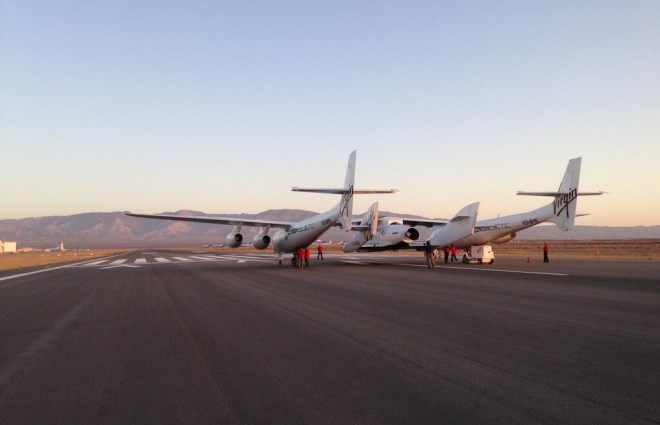
spaceshiptwo_flightWell, technically this news come from the lower atmosphere, but seeing as how the ultimate purpose is to get into space, I think it qualifies. Earlier this week, Virgin Galactic made history when it’s aerospace carrier, SpaceShipTwo, conducted its first powered test flight and broke the sound barrier. As the latest in a long series of successful flights, it shouldn’t be too long before Virgin Galactic conducts its maiden flight and flies actual passengers into low orbit.

The test flight took place on Monday as the plane took off from the Mojave Air and Space Port in southern California, not far from where the Bell X-1 piloted by the then Capt. Chuck Yeager first broke the sound barrier in 1947. This latest test comes on the heels of the SS2’s first glide test with its rocket engine on board, which it conducted back in December of 2012, and its first glide flight in 2010.

spaceshiptwoThe flight began after the SS2 was carried to a ceiling of 14,300 meters (47,000 feet) by its mothership, WhiteKnightTwo, where it was then released at 7:48 a.m. PDT. Shortly thereafter, pilots Mark Stucky and Mike Alsbury ignited the rocket engine and accelerated to a speed of Mach 1.2 as they climbed to over 17,000 meters (55,000 feet). According to Virgin Galactic, the rocket burn lasted 16 seconds, and demonstrated the efficacy of their engine design.

Granted, in order to get into the realm of the sub-orbital, the engine will have to make longer burns, most likely in the vicinity of 80 or 90 seconds. SS2’s predecessor, SpaceShipOne, had to run its engine this long in order to break the 100 kilometer (328,000 feet) back in 2004, when it reached what the international community holds as the accepted altitude for reaching the soft edge of space.

spaceshiponeIt’s has been over eight years since Virgin Galactic’s space tourism program began, and though progress has come slower than planned, Branson was nevertheless enthusiastic about the flight test and expressed his feelings on his blog after the flight:

It marks the moment when we put together two key elements of our spaceflight system – the spacecraft and its rocket motor, which have both been tested extensively by themselves over several years. And start the phase of testing that will demonstrate our vehicle’s ability to go to space (hopefully later this year).

More than 500 people have signed up for sub-orbital rides aboard the six passenger SpaceShipTwo once it becomes operational. Those who go will have the chance to float weightlessly for a few minutes while enjoying the spectacular view of the edge of space. Tickets go for $200,000 a pop, quite the price tag for a plane flight. But in return, those who go will get to experience something only astronauts have ever had the pleasure of.

Richard Branson has said all along that he plans on being on the maiden voyage, something he reiterated after the test flight was done:

Like our hundreds of customers from around the world, my children and I cannot wait to get on board this fantastic vehicle for our own trip to space and am delighted that today’s milestone brings that day much closer.

Check out the video of the SpaceShipTwo conducting its first engine test below:


Zodiac

????????????

Zodiacal light, the kind that takes millions of years to come

What revelations will it share, which are already so old?

The edge of the universe, the boundary of creation

Pulsing with the same power that once beget it all.

How can it be, when a billion are swirled into one,

And a billion more circle each other ad infinitum,

That I can think myself the paragon of creation?

But a billion billion voices still seem to cry out with one voice,

To letting me know how small and insignificant I truly am

And at the same time, so very rare and precious.

But more than this, how very much I am not alone.

Xeno

fractal_dyson_sphere_by_eburacum45-d2yum16The size and shape of the deep space field resolved itself into a million piercing points of light. From a mottled mass of brilliance, it slowly transitioned into the blue spectrum, then white, keeping pace with the Relativistic Engines that powered their vessel. As soon as they finished powering down, the instruments starting humming, beeping, and generally carrying out their functions. And all hands aboard her bridge began to listen very carefully for the desired sounds of contact.

For several minutes, sensor returns came back negative. The far-flung planet in the system, its many moons, and the thin trail of asteroids that constituted all stellar mass this far out were about the only things they were picking up. In time, the Captain began to wonder if they were even in the right place.

“We’re sure about these coordinates?” said Mikka, addressing Thoreau at the nav terminal. His hands waved above his touchscreen, absorbing information through contact and assimilating it at near-instantaneous speed. His eyes cleared as he looked up to see her, momentarily breaking from his sensory link.

“The shippers said they found it at the edge of the space lanes. They said it interfered with their nav console, but they made a note of it after they returned to port.”

“I read the report,” Mikka said. “Not very encouraging stuff.”

A few heads turned towards her. Not every member of her crew was privy to the details and she was sure not to say anything more. Hearing about a strange, floating shape in space, one which had given a hauler some serious lumps and its crew nightmares was not something that would go over well with them.

Taking her seat, the Captain accessed the memory file and ran the briefing notes through her mind again. The particulars were a bore, but the holographic representation, reconstructed from what scanner data could be retrieved from the haulers records, were quite interesting. And naturally, the Chairman’s voice droned on in the background, providing the relevant details…

[“…from the basic outline, it appears that what the ship detected has structure to it. It’s roughly spherical in shape… and though it’s dimensions are unclear, our technicians believe that it should measure the size of a small meteoroid.]

Structure, Mikka thought. A buzzword the xeno-types loved to use, employed whenever they found something they thought conformed to their expectations. Chairman Bukhari continued…

[“what is less mysterious is the effect it had on the commercial ship that made the approach. As soon as they got within a single AU of the object, they detected some high-energy gravimetric field. But instead of being pulled in, the ship was essentially pushed away. The crew tried to engage their engines to fight against the force of it, but that only made things worse. By the time they stopped spinning backwards and regained control of their vessel, they hightailed it back to Lagos station and filed a report.”]

And Explorations decided to send us out, the good old guinea pigs, she thought.

[“Luckily, our astrophysicists have a theory. We believe an approach will be possible if done by a ship that does not have significant mass and is simultaneously running in on minimal power. I don’t pretend to understand the physics, but I’m counting on you and your crew to get it done. Getting within close proximity is key, since we plan…]

“Captain,” said Thoreau, interrupting her Recall. “Sensor returns are coming back and it looks like we have something.”

“Something,” said Mikka. “Care to elaborate?”

Thoreau chuckled, his eyes staring at something far off that on one else could see. “It’s got a gravimetric signature, which is why its coming up at all. But from the looks of it, its not much bigger that a commsat.”

“Helmsman,” she said, calling out to the man in the pilot’s chair. “Plot an intercept course and bring us to within five AUs.”

“Yes, Captain,” said Joshan, relaying the coordinates provided by Thoreau and bringing the sublights on line. The ship slowly began to move forward, her hull shuttering slightly as the engines fired off a burst of ionic propulsion.

The sensors pinged loudly, each chime getting more pronounced the closer they got. Outside the bridge window, the starfield shifted as the ship tilted and groaned as Joshan altered their course periodically. Every course change brought them closer, dodging between major stellar objects and avoiding their gravitational influences.

The chimes reached a crescendo. Thoreau looked up with a start when something new entered into his augmented perceptions.

“Captain, I’ve got the object on my screens. Shall I bring up a visual?”

“Yes,” she replied. “And turn off that damn noise, we all know we’re in the ballpark.”

In the center of the bridge, an image formed as billions of targeted photons came together to form the shape of a red sphere. The surface was mottled and opaque, indicating that they were too far out to get an accurate reading on its features. It appeared the reports had been semi-accurate. At this distance, their sensors should have been able to map out every nook and cranny on its surfaces. Only a powerful gravity well, concentrated in such a small object.

However, they had been off in one respect. Bukhari had said in his briefing that it was “roughly spherical” in shape. But even through an incomplete visual construct, Mikka could tell its shape was anything but rough. In fact, she was willing to bet good money, perhaps even her entire commission from this find, that it was a perfect sphere, right down to its microscopic dimensions.

One had to assume there was something especially significant about that. Perhaps the xeno-freaks would finally have something to pour over after all…

“Coming up on five astronomical units, Captain. Firing reverse-thrusters now.”

There was a quick burst of white light as the stopping thrusters fired, the ionic trails showing up just outside the bridge window. When they came to a total stop, the ship issued one last groan as the structure flexed to absorb the change in inertia. 

“We’ve reached pre-specified distance, Captain. Retro thrusters firing to maintain position and attitude.”

“Very good, pilot,” she said. “Maintain our position and prep a shuttle. We’re going in for a retrieval.”

Joshan and everyone else on the bridge turned to look at her. Everyone except Thoreau, who’s senses were too inundated with sensor data to look at her directly. However, he still leered over his shoulder.

“Captain, are you sure about this?”

“Company order,” she said, standing up from her chair. “Whatever this thing is, its need to be brought back.”

“But Captain…” said Thoreau. “How are we going to get close to this thing? The last people who tried we sent back home with their tails tucked between their legs.”

“A theory,” she said. “One which we’re forced to carry out.”

_____

The bay doors slid open to admit the man himself. For those watching, the techs and security personnel called in to guard the object, the sudden presence of the boss was the perfect reason to straighten up and either look busy or vigilant. Of course, none of them could fail to notice the presence of the woman walking beside him. Not exactly prim or proper, and from her flight jacket and slacks to the small protrusions on her face that indicated sub-dermal implants, she looked every bit the spacer.

No one could say why the boss would have a grunt in tow with him, but then again, the day staff didn’t ask questions. They simply tended to “the artifact” – the spherical object that sat within a series of restraints in the center of the room – and kept their speculations to themselves.

Only those who had entered together really knew what was going on and who stood to benefit. And only they were talking on this particular morning as they stepped into the containment area.

“I imagine this is not quite as exciting as seeing it for the first time, no?” said Bukhari to Mikka.

“Well… it’s hard to recreate the thrill of first contact. But this was still very kind of you.”

“Nonsense,” said Bhukari with a wave of the hand. “We all owe its capture to you, so I thought it only fitting you get another look at it before its shipped off to an undisclosed facility, to be poured over by legions of specialists and xenologists.”

She chuckled. “Yeah, we did suspect it would disappear the moment we brought it back to port. Good to see it didn’t.”

“And yet, I imagine when it does move on, we won’t learn a thing. Even I can expect the findings to be classified beyond my level of clearance. Pity.”

She knew exactly what he meant. Seeing it again, she could recall with perfect clarity just how awestruck she was when she first saw it. Hell, she didn’t even need to go through Recall to experience it again, playing the memory back courtesy of the digital backup she had archived. It had been that memorable that she only needed to see it again to remember exactly how small and insignificant it made her feel.

Considering the that sphere was less than a meter across, that was no small feet. But the size was not the issue. It was the intricate patterns it had all over the surface. These consisted of winding lines that seemed to delineate grid spaces, each of which was etched with symbols and grooves off different sizes, lengths, and depths. And at what had been designated the center of the thing, three circles were placed, tiny indentations in a small triangle formation. Nobody in Explorations had been able to make heads or tails of it all. She wondered if anybody back in the Colonies would fare any better…

It was strange, but she felt the oddest feeling again, looking at it. Somehow, the spacing and placement of those three indentations made her think about an interface terminal. Could it be that the species that had created this, whoever they were, possessed this idiosyncrasy as well? Simply place your hand to a touchscreen or finger sized portal, and be able to transmit or receive information?

Looking to her right, she noticed that Bukhari was busy speaking to the head of the security detail. She couldn’t hear what they were saying at the moment, and really didn’t care much. The technicians appeared to be on the other side of the sphere, and the remaining security guards all seemed blissfully unaware of what was going on. No doubt, they were deliberately attempting to not notice the presence of the Chairman and the strange woman he had arrived with.

It was a standard underling thing, she knew. Standing still and doing nothing when the boss was around reduced the chance of making a mistake, and hence being reprimanded.

Looking to the sphere again, she carefully stepped towards it, obsessively checking over her shoulder to make sure no one was looking. She eyed the three holes, once again appraising them to be perfectly spaced apart for her purpose. Three holes, three fingers, making direct contact, achieving a union that would –

“Captain!” The shout rang out just as her fingers landed. Not in time to stop her. She felt a curious sensation, like a big thump or some kind of tremor. No pain, but the sensation of a force strong enough to break her contact with the waking world…

_____

The sounds of hands clapping and a bright light were what she remembered next. She couldn’t tell how long she had been under, whether it had been seconds or days. But she was aware of the fact that she was lying on the deck, and Bukhari and the rest were all standing over her.

“Captain… are you alright?” he asked.

She let out a loud utterance, then drew a deep breath. She could faintly recall something dark and terrible, hanging on her mind and pushing her downward. That darkness seemed to last for some time, stretching on from the last moment she had had before. She looked up again and saw the sphere… and remembered.

Yes, she had reached out to it. Everything after that point was shrouded and black, but she could feel something terrible lurking beneath. And that point in her mind stretched onwards for some time. And now she was back in the light. It was piercing and the sounds around her quite intense, but she could feel her body and mind adjusting. Something was demanding she come back and do something… say something…

After taking several breaths, Bukhari and one of the guards sat her up.

“Why did you do that? Why did you touch the artifact?”

“Artifact?” she said. The word didn’t seem to fit somehow. “What are you talking about?”

“The artifact. You touched it,” he said, pointing. “Why did you do that? No one has touched it since it was procured without protection. You know that!”

She could feel something else rising up from the depths. Slowly, the sense of purpose she had felt a moment ago was taking shape. The word artifact made even less sense to her now, and she was even beginning to understand why…

“Captain, are you sure you’re alright? We have a med tech coming, but I need you tell me, why would you expose yourself like that to the artifact like that?”

“It’s not an artifact!” she said finally. “It’s a message…”

There was a moment of silence. Those around her looked at each other incredulously. “What do you mean, a message?”

“That’s what it contains,” she added, placing her fingers to her temples. The dark space in her mind was becoming perfectly clear now. The transmission, the way it had overwhelmed her when it passed into her body. Never before had anything been so clear, even through Recall.

Slowly, she found the strength to get to her feet and share with the rest of them the terrible knowledge that had come into possession of.

“This thing is some kind of emissary. It contains a message in it, and I made contact when I touched it.”

Bukhari drew a deep breath and stepped closer to her, his eyes now fixed on the sphere with a sudden, reverential fear. “What was the message?”

“The people that built this,” she said, with a slight pause. “They just demanded our unconditional surrender. It says they have an armada heading towards us as we speak, and asks that we lay down our weapons and welcome them.”

“And if we don’t?” asked Bukhari, though unnecessarily. For the tremble in his voice, it was clear he knew the answer.

“Or else, we all die.” Mikka nodded, her face grim and white. “We just made contact with an extra-terrestrial intelligence, sir. And they saw fit to give us an ultimatum…”

“An ultimatum,” Bukhari echoed, his voice barely more than a whisper.

And for what felt like an eternity, every face in the room remained fixed on the sphere that hung before them. Whatever trace of awe and wonder they had once felt for it were now gone, replaced instead with a horrid understanding, and plenty of dread!

News From Space: SpaceXs Reusable “Grasshopper” Rocket

spaceX_elonmuskThe concept of commercial spaceflight has been growing considerably in recent years. Basically, the idea is that it would be private aerospace companies that would responsible for ferrying people to and from space and putting commercial satellites in orbit, thus leaving space agencies free to conduct more crucial research and deep space exploration missions.

Intrinsic to this dream is the creation of a cheaper, reusable rocket system, something that can be deployed, landed, and redeployed. This will not only save the companies responsible for this new age of space travel billions of dollars, it will make a whole series of projects possible – like Space-Based Solar Power (SBSP) arrays, commercial trips to the Moon, and bigger, more elaborate space stations in orbit.

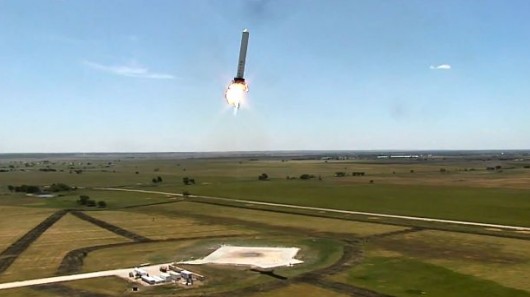
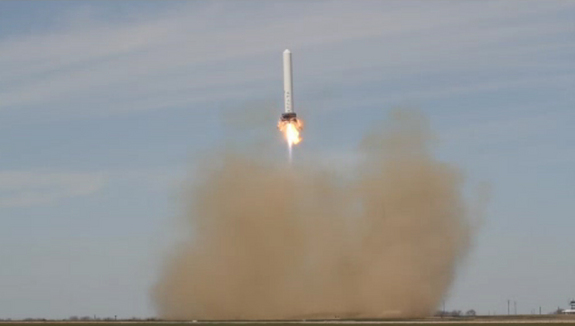
spacex_grasshopperAnd that’s precisely what SpaceX founder Elon Musk is working on with his “Grasshopper” rocket system. Designed to be reusable, the company has been running the Grasshopper through an ongoing series of tests to make sure it can take off, achieve orbit, and then successfully return to the Earth and land in one piece. In the latest test, the Grasshopper achieved its highest flight yet – reaching 80 meters (263 feet) – before sticking its landing.

The flight took place on March 7th, and it was the fourth of its kind to be conducted at the SpaceX’s rocket development facility in McGregor, Texas. And though the flight was unmanned, the crews placed a dummy dressed like Johnny Cash into the side, which might explain why the footage of the test featured the song “Ring of Fire” in the background.

spacex-grasshopper-highest-leapWhile this achievement might seem modest to some, its necessary to keep in mind that this is a very new concept. In addition, with each successive flight, the altitudes achieved have increased exponentially. In its first test flight in September of last year, the Grasshopper reached a height of only 2.5 meters (8.2 feet). In the two following tests in November and December, the rocket reached a height of 5.4 meters (17.7 feet) and 40 meters (131 feet) respectively.

With this latest flight, SpaceX believes it is getting close to their goal of a reusable rocket and its ultimate goal of making space travel cheaper and easier. Upon completion of this latest test, the company had positive things to say about the new rocket system:

With Grasshopper, SpaceX engineers are testing the technology that would enable a launched rocket to land intact, rather than burning up upon reentry to the Earth’s atmosphere.

Who knows? Given a few more tests, they might just be able to break atmo and land successfully. Then, all SpaceX has to do is sit back and watch their stock price jump by about a million points. At which time, I’m thinking missions will pour in for the deployment of just about any bit of space gear imaginable! Welcome to the era of renewed space exploration, my friends!

And be sure to check out this video of the Grasshopper makings its most recent jump!

Source: space.com

Apollo Rocket Engines Recovered from Seafloor

apollo_rocketThis past week, history was made when Jeff Bezos (founder of Amazon.com) and his privately funded company, Bezos Expeditions, announced that they had successfully retrieved pieces of the very engines that had once launched Apollo astronauts to the moon. Using remotely operated vehicles and a series of slings, the crew members recovered enough parts to reconstruct the majority of two F-1 rocket boosters.

Bezos Expeditions announced last year that using state-of-the-art deep sea sonar, that they had discovered the remains off the coast of Cape Canaveral off the coast of Florida. And this past Thursday, and with NASA’s help, Bezos located the fragments at a depth of almost 4.8 kilometers (3 miles) and began hauling them to the surface. Bezos claims they belonged to the historic Apollo 11 spaceflight, but further study and restoration will be needed before their identity can be confirmed.

apollo_rocket1Regardless, this is an exciting find, and the nature of the rocket boosters confirms that they were at least part of the Apollo program. Between 1968 and 1972, ten missions were conducted that flew out of the Kennedy Space Center, each one using the Saturn V rocket, that used five F-1 engines to boost them into orbit. Once the rockets had spent their fuel, they were detached and fell into the sea.

That means that approximately sixty five F-1 engines reside in the ocean off the coast of Florida. No telling which of those these ones could be, but it is hoped that serial numbers will be retrieved from the engines that can connect them to a specific Apollo mission. But regardless, this is an exciting find, and could not have come at a better time since NASA is looking to embark on a renewed era of exploration.

saturn-v-rocket-engines-recovered-ocean-installed_65442_600x450All told, Bezos and his team spent three weeks at sea, working almost 5 kilometers below the surface. During this time, Bezos claims that his team found so much:

We’ve seen an underwater wonderland – an incredible sculpture garden of twisted F-1 engines that tells the story of a fiery and violent end, one that serves testament to the Apollo program. We photographed many beautiful objects in situ and have now recovered many prime pieces. Each piece we bring on deck conjures for me the thousands of engineers who worked together back then to do what for all time had been thought surely impossible.

Naturally, NASA was pretty impressed with the find as well. After the find was announced, NASA Administrator Charlie Bolden made the following statement on behalf of the Agency:

This is a historic find and I congratulate the team for its determination and perseverance in the recovery of these important artifacts of our first efforts to send humans beyond Earth orbit. We look forward to the restoration of these engines by the Bezos team and applaud Jeff’s desire to make these historic artifacts available for public display.

Apollo_11Needless to say, this is an exciting find, regardless of whether or not these rockets were the same ones that sent Neil Armstrong, Buzz Aldrin and Michael Collins to the Moon. Naturally, I hope it is. I can think of no greater tribute to Armstrong’s memory so soon after his passing. I can imagine him looking down on this from the stars, where he now resides, with a big old smile!

And be sure to check out this video taken by the Bezos Expedition of the undersea find:

Source: nationalgeographic.com, universetoday.com