Cyberwars: Massive Government Surveillance Uncovered!

wire_tappingOn Friday, Washington DC found itself embroiled in controversy as revelations were made about the extent to which US authorities have been spying on Americans in the last six years. This news came on the heels of the announcement that the federal government had been secretly cataloging all of Verizon’s phone records. No sooner had the dust settled on that revelation that it became known that the scope of the Obama administration’s surveillance programs was far greater than anyone had imagined.

According to updated information on the matter, it is now known that The National Security Agency (NSA) and the FBI have been tapping directly into the central servers of nine leading U.S. Internet companies, extracting everything from audio and video chats, photographs, e-mails, documents, and connection logs that would enable their analysts to track foreign targets.

prism3This information was revealed thanks to a secret document that was leaked to the Washington Post, which shows for the first time that under the Obama administration, the communication records of millions of US citizens are being collected indiscriminately and in bulk – regardless of whether they are suspected of any wrongdoing. Equally distressing is the names being named: U.S. Service Providers such as Microsoft, Yahoo, Google, Facebook, PalTalk, AOL, Skype, YouTube, Apple.

The document further indicates that all of this has been taking place since 2007, when news disclosures, lawsuits and the Foreign Intelligence Surveillance Court forced then-president George W. Bush to look for new authority to justify his program warrantless domestic surveillance. It’s continuance and expansion under Obama has created a great deal of understandable intrigue, and not only because of promises made that “illegal wiretapping” would not take place under his watch.
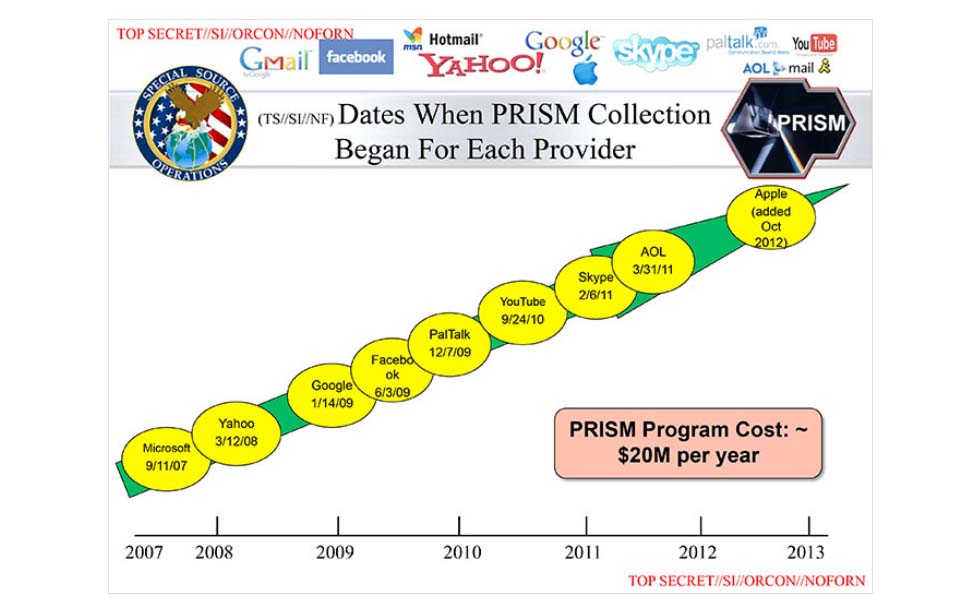
prism1The joint FBI-NSA program responsible for mining all the data is known as PRISM, and it may very well be the first of its kind. While the NSA and FBI have a long history of monitoring suspects via phone records and computer activity, and are both accustomed to corporate partnerships that help it divert data traffic or sidestep barriers, such a vast program has never before been possible. In the current information age, there is an immense wealth of information out there, and where better to access all of this than in Silicon Valley?

Not long after the news broke in Washington, London’s Guardian reported that GCHQ, Britain’s equivalent of the NSA, also has been secretly gathering intelligence from the same internet companies through an operation set up by the NSA. According to the same leaked information, PRISM appears to allow the GCHQ to circumvent the formal legal process required in Britain to seek personal material such as emails, photos and videos from an internet company based outside of the country.

prism2But perhaps worst of all is the fact that this process is entirely above board, at least for the companies involved. Back in 2007, Congress passed the Protect America Act, and then in 2008 followed it up with the FISA Amendments Act, both of which immunized private companies that cooperated voluntarily with U.S. intelligence collection against prosecution. And late last year, when critics in Congress sought changes in the FISA Amendments Act, the only lawmakers who knew about PRISM were bound by oaths of office to hold their tongues.

An anticipated, a bi-partisan amalgam of Senators came out to defend the initial reports of phone record monitoring shortly after it was announced. In a rare display of solidarity that cut across party lines, Democrats and Republicans from both the Senate and House came forward to say that the program was justified, only spied on terrorists, and that law-abiding citizens need not worry.

National Security Agency - aerial view
National Security Agency – aerial view

Once again, the argument “if you’ve done nothing wrong, you’ve got nothing to fear” finds itself employed by people who do not want to voice criticisms about a government spying program. Echoes of the Bush administration and McCarthy era all over again. Needless to say, all of this has many people worried, not the least of which are people opposed to government intrusion and the protection of privacy for the past decade.

Ever since it became possible to “mine data”  from numerous online digital sources, there has been fear that corporations or governments might try to ascertain the habits and comings and goings of regular people in order to effectively monitor them. For some time now, this sort of monitoring has been somewhat benign, in the form of anticipating their spending habits and using targeted advertising. But always, the fear that something more sinister and totalitarian might emerge.

government-surveillanceAnd with the “War on Terror”, the Patriot Act, domestic warrantless wiretapping, the legitimization of torture, and a slew of other crimes the Bush administration was indicted in, people all over the world have become convinced that “Big Brother” government is just around the corner, if indeed it is not already here.

The fact that such processes have continued and even expanded under Obama, a man who originally pledged not to engage in such behavior, has made a bad situation worse. In many ways, it demonstrates that fears that he too would succumb to internal pressure were justified. Much as he was won over by the Pentagon and CIA to continue the war in Afghanistan and UAV programs, it seems that the constellation of FBI and NSA specialists advising him on domestic surveillance has managed to sway him here as well.
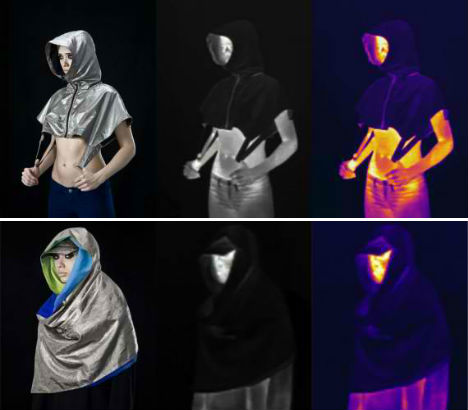
Stealth-Wear1One can only hope that this revelation causes the federal government and the Obama administration to reconsider their stances. After all, these are the same people who were convinced to stand down on the use of UAVs in oversees operations and to take measures that would ensure transparency in the future. We can also hope that the NSA and FBI will be required to once again have to rely on the court system and demonstrate “just cause” before initiating any domestic surveillance in the future.

Otherwise, we might all need to consider getting our hands on some stealth wear and personal cameras, to shield ourselves and create an environment of “sousveillance” so we can spy on everything the government does. Might not hurt to start monitoring the comings and goings of every telecommunications and Silicon Valley CEO while were at it! For as the saying goes, “who watches the watchers?” I’ll give you a hint: we do!

Also, be sure to check out the gallery of artist Adam Harvey, the man who pioneered “stealth wear” as a protest against the use of drones and domestic surveillance. To learn more about sousveillance, the concept of a society monitored by common people, check out Steve Mann’s (inventor of the EyeTap) blog.

Sources: washingtonpost.com, guardian.co.uk, policymic.com, ahprojects.com, eyetap.blogspot.ca
 

Drone Wars: New Promises, Same Problems

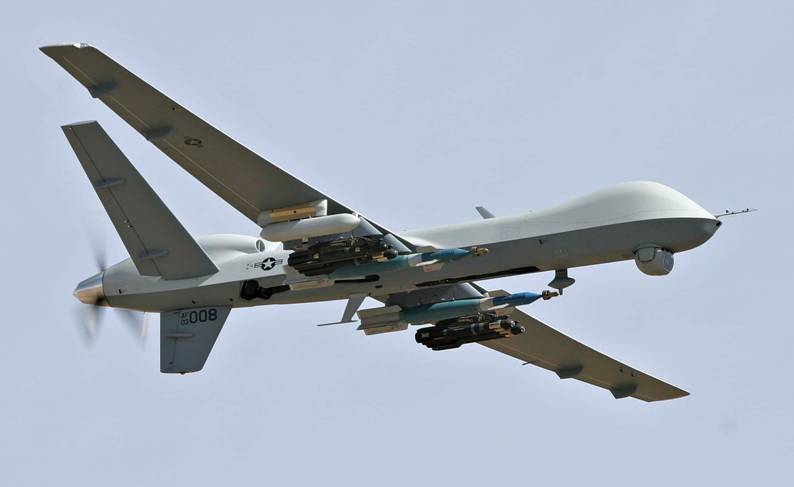
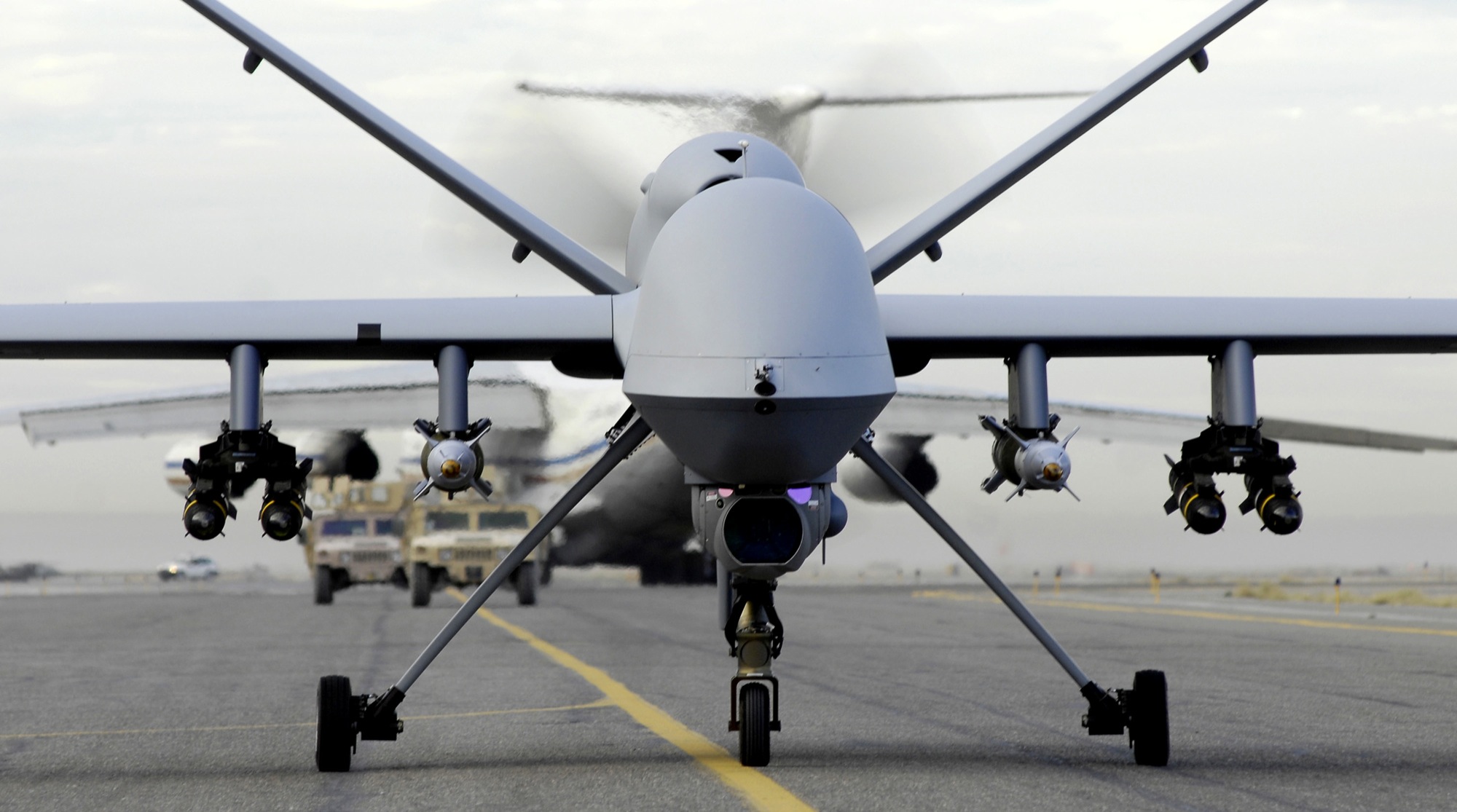
(U.S. Air Force photo/Staff Sgt. Brian Ferguson)(Released)The practice of using UAV’s as part of a targeted strategy in Pakistan, Afghanistan, Somalia and Yemen has become so frequent that its come to characterize the Obama administration’s handling of the “War on Terror”. Reaction to this policy has been increasingly critical, due in no small part to unanswered questions surrounding civilian death tolls and the rapid escalation of deployment. In response, the Obama administration announced this past week that the surge is at an end.

In a speech made to the National Defense University in Washington on Thursday, Obama emphasized that from now on, the use of UAV’s would be in the hand of the military instead of clandestine intelligence organizations such as the CIA. He also indicated that the rules for launching the strikes would be stricter. For instance, there must be a “near certainty” that no civilians will be killed, and the strikes are to become less frequent.

predator_profileWhile Obama would not declare an end to the war on terrorism, he did offer to work with Congress to constrain some of his own authorities for waging it, which may include the creation of a court modeled on the secretive one used by the NSA to oversea the surveillance of suspected foreign agents. He also expressed a preference to constrain “and ultimately repeal” the broad latitude of warmaking powers granted in the Authorization to Use Military Force (AUMF), an act that was created in 2001 by the Bush administration which is considered the wellspring of the “War on Terror”.

And above all, issues of legality are to take a backseat to the moral and ethical implications raised by ongoing use. Or as he put it: “To say a military tactic is legal, or even effective is not to say it is wise or moral in every instance.”

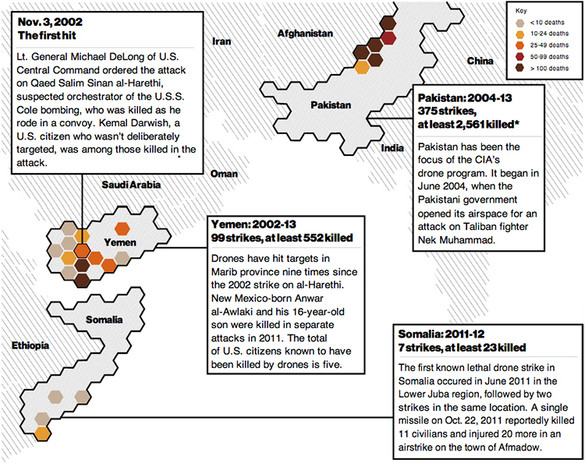
Naturally, a great many questions remain. In addition to how drones will be used in the years to come to combat terrorism and militants, there’s also questions surrounding their use thus far. Despite pledges made by Obama that changes will be made, the history of the program is still shrouded in mystery. Fittingly, Bloomberg Businessweek created a map to serve as a reminder of the scope of that program, calling it the first ever “comprehensive compilation of all known lethal U.S. drone attacks.”

drone_map

It should be noted though that the numbers represent an estimate which were compiled with the help of the nonprofit Bureau of Investigative Journalism. Sources in Washington apparently offer a wide range of numbers, and the State Department remains hush hush on the issue of casualties. However, the estimates presented in this infographic still present a stark and sobering picture:

  • Yemen: at least 552 killed between 2002 and 2013. The site of the first ever drone strike in 2002.
  • Pakistan: at least 2,561 killed between 2004 and 2013.
  • Somalia: at least 23 killed between 2011 and 2012.

drone_map1Naturally, it is hoped that Obama’s promise to curb the use of drones represents a renewed commitment to comply with international law, treaties and human rights. However, what was apparently missing from the speech was an indication about how easy it will be to get information about strikes that are made in the future. According to the New York Times’ Mark Mazzetti, who provided live analysis of the speech, Obama’s speech didn’t address the issue:

One of the big outstanding questions is just how transparent the Obama administration will be about drone strikes in the future. Will administration officials begin to publicly confirm strikes after they happen?

There was no mention of this in the speech, and it is telling that the president did not mention the C.I.A. at all. It seems quite certain that past operations in Pakistan, Yemen and elsewhere are not going to be declassified anytime soon.

Also, moving operations from the C.I.A. to the Pentagon does not automatically mean that the strikes will be publicly discussed. The Pentagon is carrying out a secret drone program in Yemen right now, and it is very difficult to get information about those operations.

So… promises to curb the use of drones have been made, as well as promises to create some kind of oversight for future operations. And this does seem consistent with many of the criticisms made about the ongoing war on terrorism, specifically the Bush administrations handling of it and how his reliance on special executive powers were unlawful and unconstitutional.

But until such time as information on how these strikes occur and who is being killed, the issue will remain a contentious and divisive one. So long as governments can wage war with automated or remote machinery and kill people without transparency and in secrecy, will this not constitute a form of illegal – or at the very least, a very opaque – warfare?

Sources: wired.com, fastcoexist.com, businessweek.com

Drone Wars: Hiding Your Home from a UAV

(U.S. Air Force photo/Staff Sgt. Brian Ferguson)(Released)In a world increasingly permeated by surveillance systems, especially ones that are airborne and remotely operated, it was only a matter of time before some struck back. Much like Steve Mann’s concept of sousveillance – using camera devices and wearable computers to help people spy back against “Big Brother” – it seems that there are individuals out there looking for ways to help the common people avoid UAV detection.

In this case, the individual is Tim Faucett, CEO of APlus Mobile. When his company is not manufacturing mobile computer units that manage robots and UAVs for clients like the U.S. Navy and Lockheed Martin, they are contemplating ways to shield us from the technology they help create. Might seem a bit ironic, but looking to the future, Faucett and his colleagues are concerned about people other than government and military having access to the technology.

drone_target_1Alongside the FAA, which estimates that there could be tens of thousands of unmanned aircrafts circling overhead by the end of this decade, Faucett believes the future will be permeated by privately-owned unmanned aerial vehicles:

There are going to be private drones, there’s going to be commercial drones. Everybody’s going to have access to a drone. And people are going to have good intentions with them, and people are going to have bad intentions with them.

An interesting idea, and not one the public has fully considered yet. Most concerns vis a vis UAVs and their unlawful use are targeted at the governments who use them, mainly with the intention of “combating terrorism” overseas. But to Faucett, the real threat comes from our neighbors and private groups, people who are harder to discern, identify and fight than a monolithic organization.

drone-laser-targeting_620x374In keeping with this mindset, a few weeks ago, his startup Domestic Drone Countermeasures filed its first of what he said would be nine patents for a system that will detect and disable drones before they have the chance to film their targets. Few details have been made available yet as to what these systems involve, mainly because it’s new and Faucett hopes to keep the cat in the bag until its time to unveil.

Still, some details have managed to trickle out, such as Faucett’s own reference to a system that includes software and sensors that will be able to identify nearby UAVs based on their electromagnetic signature, alert the owner of the system, and then “neutralize the drone’s capability to see you with its camera.” But Faucett was also sure to emphasize the non-military nature of all this, responding to rumors that his company is developing some sort of weaponry:

We don’t interfere with the drones navigation in any way. We don’t jam anything. We don’t intercept anything … This is non-combative. That’s really important. We’ve taken great pains to design systems that aren’t going to get shut down or be outlawed or become illegal. … We’ve taken the combat elements out so [the former military technology] can’t be viewed as unlawful.

???????????????????In fact, the new system may actually be capable of doing something creative and comical, should anyone attempt to spy on you. And all without causing harm to the camera that’s attempting to see you :

The camera just won’t be able to look at you. Actually, at some point, we can show the operator at the other end a little movie or something.

So try to misuse a UAV, and you may end with an eye full of porn bombs, or several hours of Desperate Housewives, playing on a loop. Take that, nosy neighbor! You too, Big Brother!

Faucett says his team of three full-time engineers and several part-time staffers should be able to bring the system to market in a matter of months. It’ll be scalable to suit the needs of someone who just wants their home protected, ranging from a home owner who some added security, to larger property owners or institutional clients. You might say, spying will become the new type of Cold War, with government, security and surveillance companies all engaged in a game of one-upmanship.

And as usual, I sense an idea for a novel… Patent Pending!

Source: fastcoexist.com


New Drones Art Campaign

UAVsOver at deviantART, a constant source of inspired art for me, there’s an interest new campaign designed to raise awareness and stimulate debate on a rather controversial issue. I am referring, as the topic line would suggest, to the use of drones and UAV’s and all that it entails.

As one of the greatest concerns facing developed nations today, not to mention the developing world where they are being increasingly used, this campaign is not only timely and relevant, but an intriguing display of artwork motivated by social conscience. In short, it asks the question: how is this debate reflected in art and what will future generations think of it?

looking for a hole, by arcas art

Inspired by similar projects which are taking place around the world, the purpose of the campaign is to draw attention to the fact that were are living in a world increasingly characterized by surveillance and killing machines. Or as technognotic puts it:

Drones have become the white hot center of debate for a multitude of deeply consequential concerns for the entire Earth Sphere. No matter the digital end point or theatre of conversation, whether it be politics, war, privacy, pop culture, or the rise of machines – Drones or UAV’s (unmanned aerial vehicles) are the current catalyst du jour in any number of flashpoint discussions…

Even more interesting is the tone of inevitability of outcome. Core discussion seems to focus on a coming drone-filled sky and how we might govern our selves accordingly as this fact becomes a reality… Is this the dark side of human creativity and inquisitiveness that will ultimately one day spell our doom or the first signs of a coming technological Utopia.

galaxy saga - white gryphon, by ukitakumuki
galaxy saga – white gryphon, by ukitakumuki

In addition, the campaign features the thoughtful essay of the same name by Jason Boog (deviantART handle istickboy), who takes a look at how killing machines and drones have been explored through art and popular culture. Beginning with a short romp through history, identifying the first “drone” to ever be used, he goes on to examine how several generations of artists chose to portray them and their use.

Things culminate in the modern age, where spending on drone development and humanitarian concerns have culminated to make this a truly global and auspicious concern. With remote-controlled drones giving way to autonomous models and UAV’s being used for domestic surveillance, there’s no telling where things could go.

mysterious journals, by sundragon83

On the one hand, a concerned and mobilized public could place limits and controls on them, or counter using their own form of “sousveillance” (public counter-surveillance). On the other hand, we could be headed for a police state here privacy is non-existent and robots decide who lives and who dies – maybe entirely on their own!

As you can certainly imagine, when I first learned of this campaign I could tell that it was right up my alley. Being such an obsessive geek for all things technological and how innovation and progress affect us, I knew I had to post about it. And as you can certainly tell from the samples posted here, the artwork is pretty damn badass!

I would recommend checking it out for the aesthetic appeal alone. Knowing you’re taking part in a campaign dedicated to public awareness is just a big bonus!

For more information, and to take a gander at some galleries, visit the campaign at techgnotic.deviantart.com.

Lobby Congress to Illegalize the use of Surveillance Drones

X-47BCall me concerned, but some recent news items have made more than a few people frightened that unmanned drones could be peaking in their windows and watching them as they go to work very soon. The first came back in September when US Congress passed the Modernization and Reform Act of 2012 which, among other things, required the Federal Aviation Administration (FAA) to accelerate drone flights in U.S. airspace.

A number of US law enforcement agencies have also adopted the use of drones for the sake of police work. Amongst them are the Miami-Dade Police Department, the Texas Department of Public Safety, and the Alameda Sheriff’s Department is likely to follow. The Seattle Police Department also maintained a small fleet as well, but grounded them due to public outcry and concerns over privacy.

As it stands, the Obama Administration has already adopted legislation that prevents drones from being armed and would demand that law enforcement agencies register drones, adopt privacy polices, and only use them in criminal matters for which warrants would be required.

https://petitions.whitehouse.gov/petition/make-illegal-use-unmanned-aerial-vehicles-sake-surveillance-within-us/Fqq2C9Wb

Fears of a Police-Drone State

UAVsIn a decision which has been decried by countless community activists and civil rights leaders, the Alameda  County Sheriff’s Department announced plans last month to deploy up to two small, lightweight drones to assist in police surveillance. Despite resistance from the community, the town seems poised to join many other cities in using UAV’s for domestic security, effectively steam-rolling over concerns over privacy and “Big Brother” government.

As it stands, several police agencies across the US are currently using drones, including the Miami-Dade Police Department and the Texas Department of Public Safety. Until recently, the Seattle Police Department also employed a two-drone fleet, but grounded them amidst growing concerns over privacy and a recent government report, which warned that drone use could become even more commonplace.

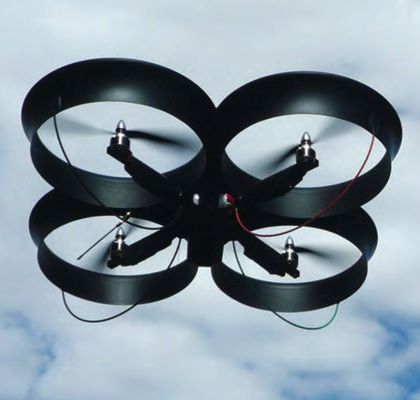
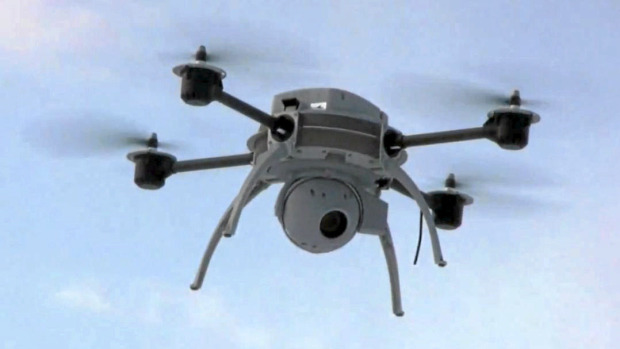
california_dronesBefore anyone gets too worried, rest assured that the drones in question are a far cry from the UAV’s currently conducting armed missions overseas. Unlike the Predator and Reaper drones that carry multiple Hellfire missiles and can level entire villages, these drones are relatively benign, weighing only a few pounds and relying on a series of propellers to keep them aloft. But of course, the potential for harm resides in their ability to monitor, not to kill…

UAV_scoutConcerns over domestic drone surveillance reached a sort of climax  last February after federal lawmakers signed the Modernization and Reform Act of 2012 into law. Among other things, the act required the Federal Aviation Administration (FAA) to accelerate drone flights in U.S. airspace. In response, the Government Accountability Office (GAO) warned that the act would allow drone use to become commonplace in the US.

In accordance with that law, drones, known in the report as “unmanned aerial systems,” are currently limited in the United States to law enforcement activities, search and rescue, forensic photography, monitoring or fighting forest fires, border security, weather research, scientific data collection and even hobbies. However, the law calls for expansion so drones can be used for commercial, utility and public  uses.

UAV_dom1Naturally, the FAA feels that the new law doesn’t take into account several key problems – notably concerns surrounding privacy, security and even GPS jamming and spoofing. In short, they pointed out that despite drone’s on-board navigation and detection system that allow them to avoid crashes, said systems could cause complications if and when drones share airspace with private aircraft.

Among other things, the FAA recommended that drone GPS systems undergo encryption so they would be resistant to jamming and hacking, which is apparently a danger in non-military unencrypted drones. They also advised that the government set up secure operation centers for unmanned drones, and recommended that the government formulate privacy protections to head off potential “abuses”.

UAV_domObviously, the FAA’s report and public concern struck a note. Just last month, federal lawmakers introduced legislation regulating state and federal government use of unmanned drones in the United States. This legislation prohibits drones from being armed, and would demand that agencies register drones and adopt privacy polices. What’s more, the proposal would allow drones to be used only in criminal matters, in which warrants would be required.

Once again, it appears that the Obama administration is willing to step in where public concerns over developing technology are concerned. Recall the instruction signed by Defense Secretary Ashton Carter back in December of last year designed to limit the development of autonomous aerial drones? Well here too, instructions have been given, but the general sense of worry is far from alleviated.

X-47BIt puts me in mind of a prediction Arthur C. Clarke made shortly before he died in 2008. He predicted that despite concerns over “Big Brother”-type monitoring, that digital surveillance would be adopted by every city within the civilized world, until such time that crime was virtually eliminated. Much like many predictions he made, this one proved a little optimistic and futurist for some of his fans (including this one!).

As it stands, the use of remote machines to monitor our world is an ongoing and growing concern, and the debate will hardly be decided so easily. In the end, we all just have to ask if we really want to live in a post-privacy state, what the costs of living in that kind of world will be, and whether or not it will truly mean the emergence of dystopian scenarios, as envisioned by George Orwell and others.

Source: Wired.com, (2)

DARPA’s New Sub-Hunting Robot

robot_sub-hunterWhen it comes to planning for the next possible conflict, military planners are often forced to take into account emerging trends in technology, and find both uses and countermeasures for them. And when it comes to future wars at sea, possibly fought in the Straight of Hormuz or the Sea of Japan, a number of startling developments are being taken into account, and solutions drawn up!

One such “solution” is the new robot sub-hunter being jointly created by the Science Applications International Corporation and DARPA – the Defense Advanced Research Projects Agency. That unmanned maritime robot, called the Anti-Submarine Warfare Continuous Trail Unmanned Vehicle, or ACTUV, doesn’t exist yet and won’t for years. But the SAIC’s plan does have the backing it needs, and presents an idea that is likely to inspire fear in submariners everywhere!

knifefish-drone-640x353For one, the unmanned vehicle will be capable of operating for periods ranging between 60 and 90 days, significantly longer than any aerial drone is capable of staying airborne. What’s more, SAIC is designing the ACTUV to be way more autonomous than contemporary drone aircraft. Once powered up, all a ship need do is release the drone and allow it to rely on its long-range acquisition sonar and other advanced sensors to scan for submarines, while at the same time steering clear of any nearby surface ships.

And then there is the advanced technology powering the drone’s sonar arrays. Unlike other ships, the ACTUV’s sensors create an acoustic image of its target to know it has the right one. Once the ACTUV thinks it’s got something, it pings nearby Navy ships through a satellite link, which they can either confirm or deny, either giving the ship the green light to hunt or instructions to search elsewhere.

And last, but not least, the ACTUV can operate alongside its surface fleet, remain in constant communication with a mothership as well as naval aircraft as they deploy sonar charges to help it hunt subs. This is a level of coordination that is rarely seen in aerial drones, which are either sent into action far from the front lines or controlled remotely by infantry in the field to offer fire support.

X-47BAh, but there’s one thing: the drone isn’t armed. Primarilyy developed to help Naval ships with hunting silent subs and/or cheap diesel-electric models, the ship may be capable of operating autonomously, but cannot take action to end lives. This feature may be the result of the Pentagon’s recent decision to limit the killing powers of UAV and autonomous drones, which amounted to ensuring that a human being will always be at the helm wherever the death of human beings is involved.

What’s more, the drone is designed with all kinds of futuristic and present-day scenarios in mind. While silent subs – ones that use advanced drive systems to generate little to no noise (a la The Hunt for Red October) – are one likely scenario, there is also the possibility of the US Navy running into the cheap diesel models which are technologically inferior, but can be much quieter and harder to track than anything nuclear. Russia is known to sell them and Iran claims to have them, so any military analyst worth his salt would advise being prepared to meet them wherever they present themselves.

And of course, the SAIC was sure to create a video showing the ACTUV in action:


Source:
Wired.com

The Future is Here: The AirMule!

urbanaero_muleMilitary necessity has been an engine for creation since the beginnings of recorded history. With soldiers constantly looking for new ways to kill each other, as well as save the lives of their own, one can always expect to see new and exciting technologies taking the field. And often as not, these developments have a way of trickling down and impacting society as a whole.

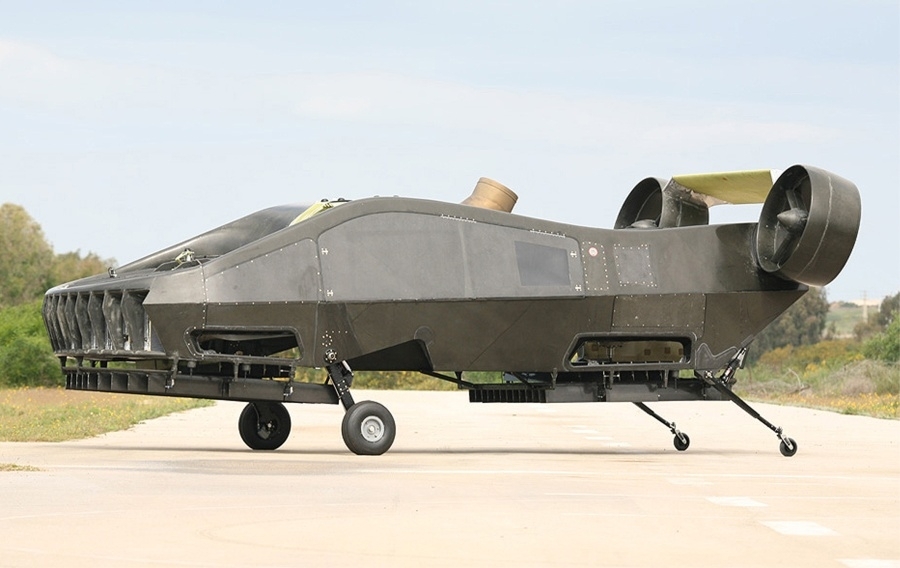
Take the AirMule, a compact, unmanned, single-engine vehicle that is being developed by Urban Aeronautics. Based in Israel, this company is dedicated to the creation of Vertical-Takeoff-and-Landing (VTOL) craft that utilize internal lift rotors to get in and out of tight areas, ostensibly for the purpose of supporting military personnel,  evacuating the wounded, and conducting remote reconnaissance missions.

airmuleIn an age where military forces are relying increasingly on unmanned aerial vehicles, the AirMule is designed to be used in operations that fit the 3 D’s: Dirty, Dangerous or Dull. In addition, it is controlled through remote operation and Tele-Presence, meaning the pilots who operate it do so from the safety of a base behind the front lines. The addition of this technology allows remote operators to stay safe while still feeling like they are physically on the scene.

The immediate benefits of this vehicle lie in the fact that it is able to fly at extremely low altitudes, allowing it to pass beneath enemy fields of fire and radar. At the same time, it is capable of taking off and landing in regions that are not accessible by conventional CasEvac craft, such as helicopters. This represents another concern for military planners, who are forced to contend with the fact that wars are increasingly fought against insurgents in places like cities, villages and other inaccessible environments.

The vehicle is capable of airlifting a 500 kg load, which can take the form of wounded personnel or 500 kilos of supplies. In this way, the AirMule is able to provide point to point logistic support as well as life-saving evac missions for wounded soldiers. However, it also has a number of applications for non-military use, such as assisting EMTs in rescuing injured people, delivering supplies to disaster-stricken areas, and offering assessment capabilities to companies who need to conduct inspections in potentially hazardous zones.

No telling when the AirMule will be taking the field, but in all likelihood, it won’t be more than a few years. What’s more, with the nature of military engagements changing and unmanned technology on the rise, just about every advanced military on the planet is likely to be following suit. And as always, we can expect the technology to trickle down to society as a whole, with robotic hovercraft replacing ambulances and medevac choppers within a decade’s time.

Check out the video of the AirMule concept and its field tests. It’s a few minutes long, but quite interesting:

Should We Be Afraid? A List for 2013

emerg_techIn a recent study, the John J. Reilly Center at University of Notre Dame published a rather list of possible threats that could be seen in the new year. The study, which was called “Emerging Ethical Dilemmas and Policy Issues in Science and Technology” sought to address all the likely threats people might face as a result of all developments and changes made of late, particularly in the fields of medical research, autonomous machines, 3D printing, Climate Change and enhancements.

The list contained eleven articles, presented in random order so people can assess what they think is the most important and vote accordingly. And of course, each one was detailed and sourced so as to ensure people understood the nature of the issue and where the information was obtained. They included:

1. Personalized Medicine:
dna_selfassemblyWithin the last ten years, the creation of fast, low-cost genetic sequencing has given the public direct access to genome sequencing and analysis, with little or no guidance from physicians or genetic counselors on how to process the information. Genetic testing may result in prevention and early detection of diseases and conditions, but may also create a new set of moral, legal, ethical, and policy issues surrounding the use of these tests. These include equal access, privacy, terms of use, accuracy, and the possibility of an age of eugenics.

2. Hacking medical devices:
pacemakerThough no reported incidents have taken place (yet), there is concern that wireless medical devices could prove vulnerable to hacking. The US Government Accountability Office recently released a report warning of this while Barnaby Jack – a hacker and director of embedded device security at IOActive Inc. – demonstrated the vulnerability of a pacemaker by breaching the security of the wireless device from his laptop and reprogramming it to deliver an 830-volt shock. Because many devices are programmed to allow doctors easy access in case reprogramming is necessary in an emergency, the design of many of these devices is not geared toward security.

3. Driverless zipcars:
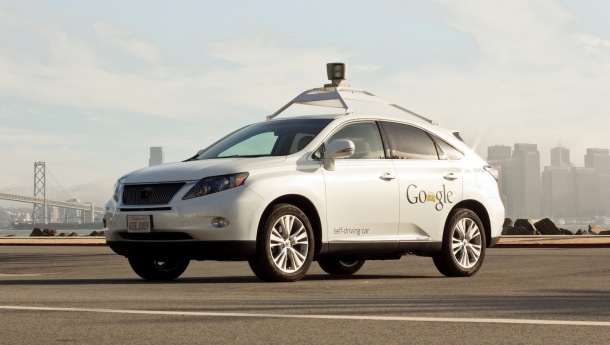
googlecarIn three states – Nevada, Florida, and California – it is now legal for Google to operate its driverless cars. A human in the vehicle is still required, but not at the controls. Google also plans to marry this idea to the zipcar, fleets of automobiles shared by a group of users on an as-needed basis and sharing in costs. These fully automated zipcars will change the way people travel but also the entire urban/suburban landscape. And once it gets going, ethical questions surrounding access, oversight, legality and safety are naturally likely to emerge.

4. 3-D Printing:
AR-153D printing has astounded many scientists and researchers thanks to the sheer number of possibilities it has created for manufacturing. At the same time, there is concern that some usages might be unethical, illegal, and just plain dangerous. Take for example, recent effort by groups such as Distributed Defense, a group intent on using 3D printers to create “Wiki-weapons”, or the possibility that DNA assembling and bioprinting could yield infectious or dangerous agents.

5. Adaptation to Climate Change:
climatewarsThe effects of climate change are likely to be felt differently by different people’s around the world. Geography plays a role in susceptibility, but a nation’s respective level of development is also intrinsic to how its citizens are likely to adapt. What’s more, we need to address how we intend to manage and manipulate wild species and nature in order to preserve biodiversity.This warrants an ethical discussion, not to mention suggestions of how we will address it when it comes.

6. Counterfeit Pharmaceuticals:
Syringe___Spritze___by_F4U_DraconiXIn developing nations, where life saving drugs are most needed, low-quality and counterfeit pharmaceuticals are extremely common. Detecting such drugs requires the use of expensive equipment which is often unavailable, and expanding trade in pharmaceuticals is giving rise to the need to establish legal measures to combat foreign markets being flooded with cheap or ineffective knock-offs.

7. Autonomous Systems:
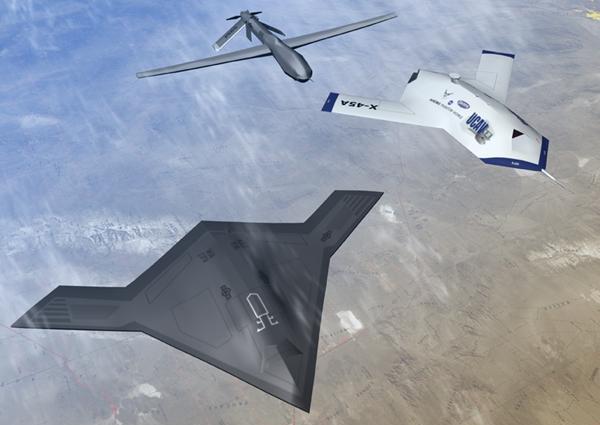
X-47BWar machines and other robotic systems are evolving to the point that they can do away with human controllers or oversight. In the coming decades, machines that can perform surgery, carry out airstrikes, diffuse bombs and even conduct research and development are likely to be created, giving rise to a myriad of ethical, safety and existential issues. Debate needs to be fostered on how this will effect us and what steps should be taken to ensure that the outcome is foreseeable and controllable.

8. Human-animal hybrids:
human animal hybrid
Is interspecies research the next frontier in understanding humanity and curing disease, or a slippery slope, rife with ethical dilemmas, toward creating new species? So far, scientists have kept experimentation with human-animal hybrids on the cellular level and have recieved support for their research goals. But to some, even modest experiments involving animal embryos and human stem cells are ethical violation. An examination of the long-term goals and potential consequences is arguably needed.

9. Wireless technology:
vortex-radio-waves-348x196Mobile devices, PDAs and wireless connectivity are having a profound effect in developed nations, with the rate of data usage doubling on an annual basis. As a result, telecommunications and government agencies are under intense pressure to regulate the radio frequency spectrum. The very way government and society does business, communicates, and conducts its most critical missions is changing rapidly. As such, a policy conversation is needed about how to make the most effective use of the precious radio spectrum, and to close the digital access divide for underdeveloped populations.

10. Data collection/privacy:
privacy1With all the data that is being transmitted on a daily basis, the issue of privacy is a major concern that is growing all the time. Considering the amount of personal information a person gives simply to participate in a social network, establish an email account, or install software to their computer, it is no surprise that hacking and identity theft are also major conerns. And now that data storage, microprocessors and cloud computing have become inexpensive and so widespread, a discussion on what kinds of information gathering and how quickly a person should be willing to surrender details about their life needs to be had.

11. Human enhancements:
transhumanismA tremendous amount of progress has been made in recent decades when it comes to prosthetic, neurological, pharmaceutical and therapeutic devices and methods. Naturally, there is warranted concern that progress in these fields will reach past addressing disabilities and restorative measures and venture into the realm of pure enhancement. With the line between biological and artificial being blurred, many are concerned that we may very well be entering into an era where the two are indistinguishable, and where cybernetic, biotechnological and other enhancements lead to a new form of competition where people must alter their bodies in order to maintain their jobs or avoid behind left behind.

Feel scared yet? Well you shouldn’t. The issue here is about remaining informed about possible threats, likely scenarios, and how we as people can address and deal with them now and later. If there’s one thing we should always keep in mind, it is that the future is always in the process of formation. What we do at any given time controls the shape of it and together we are always deciding what kind of world we want to live in. Things only change because all of us, either through action or inaction, allow them to. And if we want things to go a certain way, we need to be prepared to learn all we can about the causes, consequences, and likely outcomes of every scenario.

To view the whole report, follow the link below. And to vote on which issue you think is the most important, click here.

Source: reilly.nd.edu

U.N. Launches Drone Investigation

Predator_drone_2In a move which will surely strike some as predictable and others overdue, the U.N. announced that it would begin an investigation into the legality of the US’s drone program. For years now, unmanned aerial vehicles have been the mainstay of the United States anti-terrorism efforts overseas, sparking controversy and leading to demands for more oversight and transparency. And as of this past Thursday, it will be the subject of a major international investigation.

Led by special rapporteur on counterterrorism and human rights Ben Emmerson, the investigation is expected to focus on the legal justification for America’s expansive drone program, which has largely remained secretive and unexamined. What’s more, Emmerson and his team are expected to examine exactly how much collateral damage and civilian deaths the use of drones has caused, which is a major point for those opposed to their use.

In a statement released from Emmerson’s office, he outlines the parameters of the issue and the investigation to be mounted as follows:

“The exponential rise in the use of drone technology in a variety of military and non-military contexts represents a real challenge to the framework of established international law. It is therefore imperative that appropriate legal and operational structures are urgently put in place to regulate its use in a manner that complies with the requirements of international law, including international human rights law, international humanitarian law (or the law of war as it used to be called), and international refugee law.”

Other groups were quick to chime in on the decision to launch an investigation, not the least of which were Americans themselves. For example, Dennis Blair, the former director of national intelligence under President Barack Obama and the current chairman of the Council on Foreign Relations, has urged the administration to make more of its drone policies public. “There’s been far too little debate [about the tactics of drone use] said Blair. “The United States is a democracy, we want our people to know how we use military force and that we use it in ways the United States is proud of.”

The American Civil Liberties Union, which has been waging a years-long effort to compel the Obama administration to release its internal legal considerations, also welcomed the U.N. investigation, and urged the U.S. to participate in it. Hina Shamsi, the director of the Union’s National Security Project, released a statement encompassing the ACLU’s position:

“Virtually no other country agrees with the U.S.’s claimed authority to secretly declare people enemies of the state and kill them and civilian bystanders far from any recognized battlefield. To date, there has been an abysmal lack of transparency and no accountability for the U.S. government’s ever-expanding targeted killing program.”

Naturally, the US is not the only nation under scrutiny in this investigation. And neither is the issue of civilian deaths the only focus. The use of drones has increased exponentially in recent years, thanks in no small part to extensive development of UAV technology in a number of countries. And with countries like China and Iran following suit, drone use is only expected to grow and expand. By Investigating the legality and implications of their use now, the potential exists to establish a framework before they become widespread.

Source: Huffingtonpost.com